
Regulations
SpaceX IPO 2026: Inside the $85.7 Billion Listing That Made Elon Musk the World’s First Trillionaire

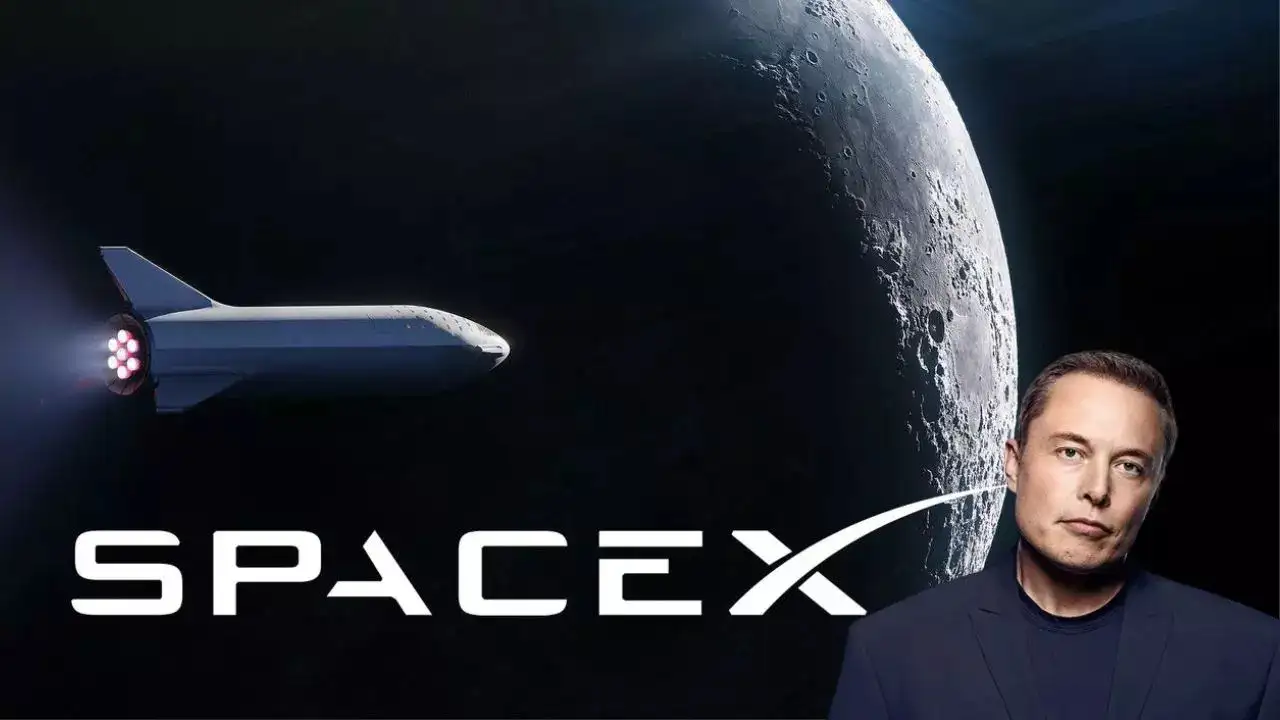
SpaceX completed the largest IPO in history on June 12, 2026, raising $85.7 billion under ticker SPCX on the Nasdaq. Here’s everything investors need to know about the valuation, risks, and what comes next.
Key Takeaways
- SpaceX priced its IPO at $135/share, opened at $150, and closed at $161.11 on debut day — a 19% single-session gain
- The offering raised $85.7 billion — more than triple the size of Alibaba’s prior U.S. record
- Market cap surged toward $2.6 trillion within days, briefly making Elon Musk the world’s first trillionaire
- Starlink remains the only consistently profitable segment; xAI integration produced a $4.94 billion net loss in 2025
- Bears warn of a 115x price-to-sales multiple; bulls cite orbital AI data centres as a once-in-a-generation opportunity
The Day History Was Made
When the opening bell rang at the Nasdaq on June 12, 2026, audible cheers broke out from the crowd gathered outside in Times Square. Space Exploration Technologies Corp. — trading under the ticker SPCX — had finally arrived on public markets after 24 years as a private company, and it wasted no time rewriting the record books.
Shares opened at $150, representing an 11% premium to the $135 IPO price, before running to an intraday high of $176.52 and closing the session at $161.11 — a 19% gain that added over $300 billion to the company’s market capitalisation in a single trading day (CNBC, June 12, 2026). Class A volume topped 207 million shares, with dollar volume surpassing $33 billion — dwarfing the combined turnover of QQQ and SPY ETFs on the same session (CNBC Live Updates).
By Monday, shares extended their gains to $192.50, pushing SpaceX’s market capitalisation toward $2.6 trillion and leapfrogging Amazon to become the sixth-largest U.S. company by value (Intellectia AI). As of June 22, SPCX trades at approximately $185, with a 52-week range of $135–$225.64 (Investing.com).
The Numbers Behind the Hype
SpaceX’s prospectus revealed a company of extraordinary contradictions. On one hand, the revenue trajectory is genuinely impressive: the company recorded $18.7 billion in revenue in 2025, up 33% year-on-year, driven almost entirely by Starlink, which now counts more than 10 million subscribers across 160 countries and contributes approximately 60% of total revenues (Prof G Media, May 2026).
On the other hand, the bottom line tells a more complicated story. Despite Starlink generating $1.2 billion in operating income in a single quarter at a 36% margin, the company swung from a $791 million net profit in 2024 to a $4.94 billion net loss in 2025 (Prof G Media). The culprit: an aggressive $21 billion capital expenditure programme, of which $12.7 billion was directed toward building out data centres for xAI — more than the company spent on rockets or satellites combined.
The offering structure itself was historic. SpaceX raised $85.7 billion selling over 555 million Class A shares, with underwriters exercising their full greenshoe overallotment option — a mechanism SpaceX employees celebrated by literally wearing green shoes on the trading floor (Fortune, June 12, 2026). The deal was led by a 21-bank syndicate with Goldman Sachs as lead-left bookrunner, having drawn $250 billion in orders during the roadshow (Fortune).
The Valuation Debate: $63 or $310?
No question is generating more debate on Wall Street than what SPCX is actually worth. The analyst community is extraordinarily divided, with price targets spanning from $62 (Morningstar) to $401 (Arete Research) — a range that reflects genuine uncertainty about how to value a company simultaneously running established profitable businesses and pursuing transformative but entirely unproven technologies (The VC Corner; Yahoo Finance).
The bull case, articulated by Goldman Sachs and ARK Invest, positions SpaceX as a generational investment comparable to early-stage Amazon or Apple. Analysts project revenue of $25 billion for 2026, with Elon Musk himself suggesting the company could reach $1 trillion in annual revenue by 2030 (Intellectia AI). The orbital AI data centre thesis — wherein SpaceX leverages its unique launch capacity to host compute infrastructure in low-earth orbit, bypassing terrestrial power and cooling constraints — represents the kind of platform optionality that public markets have historically rewarded with premium multiples.
The bear case is equally compelling. At its current price, SPCX trades at approximately 115 times trailing twelve-month sales — far exceeding even Palantir Technologies, the S&P 500’s richest-valued constituent at 59 times sales (Yahoo Finance, June 2026). Historical precedent is discouraging for buyers at these levels: among the 15 largest U.S. IPOs since 2006, the average stock declined 50% at some point during its first year and finished 33% below its IPO price after twelve months (Yahoo Finance / Motley Fool analysis).
One structural factor the bears may be underweighting: MSCI’s early-inclusion methodology kicked in on June 13, one day after listing. At its post-debut valuation, SpaceX became one of the 10 largest constituents of the MSCI World and MSCI ACWI indices, triggering an estimated $15–20 trillion of passive funds needing to buy SPCX — with only a 4% float currently available (The VC Corner). That structural demand imbalance is a near-term price floor the valuation models are not capturing.
Governance Concerns: One Man’s Rocket
Any serious analysis of SPCX must reckon with its governance structure. Elon Musk serves simultaneously as CEO, CTO, and Chairman of the Board, holding 85% of total voting power — meaning he effectively cannot be removed without his own consent (Prof G Media). Public investors purchasing Class A shares are, in practical terms, providing capital for a vision they have no ability to meaningfully influence.
The S-1 itself is a document unlike any in recent IPO history. Its first 14 pages consist entirely of photographs of rockets. A direct quote from the filing: “We do not want humans to have the same fate as dinosaurs.” The document positions SpaceX not as a company seeking a return on capital but as a civilisational project that happens to have a balance sheet (Prof G Media).
There is also the unresolved Starship question. SpaceX’s most ambitious growth projections rest on the commercial viability of Starship — a vehicle that remains grounded while the FAA conducts a mishap investigation into its most recent test flight (Fortune). The timeline for FAA clearance is uncertain, and any further delay compresses the window for the launch economics that underpin the orbital data centre thesis.
What It Means for Capital Markets
SpaceX’s debut is not just a company story. It marks the opening act of what Bloomberg and Fortune are calling “IPO Summer 2026.” Anthropic confidentially filed its S-1 on June 1, followed by OpenAI on June 8, with the latter targeting a September debut at an $852 billion valuation (Fortune). SpaceX, Anthropic, and OpenAI together could demand north of $200 billion from public markets in a single calendar year — against a backdrop where the entire U.S. IPO market raised just $45 billion in all of 2025 (IndMoney, June 2026).
For institutional investors, the displacement risk is real. Money rotating into SPCX has to come from somewhere, and that somewhere is likely existing Magnificent 7 positions. Even investors who never touch an IPO stock may feel this as a headwind in portfolios they already hold.
SpaceX also received investment-grade credit ratings from all three major agencies — Moody’s, Fitch, and S&P Global — on June 18, strengthening its standing in debt markets and opening the door to lower-cost financing for its capital-intensive expansion plans (Investing.com).
The Bottom Line
SpaceX is, by almost any measure, a genuinely remarkable company. Its achievements in reusable rocketry and satellite internet are revolutionary, and Starlink’s unit economics — 36% operating margins, 10 million subscribers, no serious competitor — would justify a premium valuation on their own. The question is not whether SpaceX deserves to be a large, valuable public company. It almost certainly does.
The question is whether it deserves to be a $2.5 trillion public company today, pricing in flawless execution across Starship commercialisation, orbital AI infrastructure, and xAI integration simultaneously, with a governance structure that concentrates all decision-making in a single individual and a float so thin that price discovery remains structurally impaired.
For investors with a long time horizon and a high tolerance for volatility, SPCX offers direct exposure to the commercialisation of space — a genuinely novel asset class that no other publicly traded vehicle provides. For those expecting near-term returns to match opening-day enthusiasm, history offers a cautionary note.
Discover more from The Economy
Subscribe to get the latest posts sent to your email.



As rapid demographic aging, falling birth rates, and rising national debt pressures converge, governments worldwide face an unprecedented retirement security crisis. According to comprehensive benchmark research from the Mercer CFA Institute Global Pension Index, national pension architectures vary dramatically in their capacity to deliver adequate retirement income, long-term financial viability, and institutional trust.
While top-performing European and Asian nations have built resilient, multi-pillar retirement models, several major economies lag significantly behind, leaving millions of future retirees exposed to poverty and financial volatility.
The Global Evaluation Framework: How Pensions Are Measured
Comparative pension research published by the Monash University Centre for Financial Studies evaluates national retirement frameworks using 50+ individual indicators divided into three sub-indices:
- Adequacy (40% Weighting): Assesses base benefit levels, net pension replacement rates, tax incentives, homeownership rates, and personal savings structures.
- Sustainability (35% Weighting): Evaluates demographic dependency ratios, mandatory retirement ages, state debt levels, labor force participation among older workers, and economic growth potential.
- Integrity (25% Weighting): Examines regulatory oversight, governance standards, plan communication, operational transparency, and systemic trust.
Systems earning an A-Grade (Score > 80) feature first-class, robust retirement frameworks that deliver comprehensive benefits with strong future viability. Conversely, systems receiving a D-Grade (Score 35–50) exhibit structural vulnerabilities that threaten future retiree welfare without urgent reform.
Global Pension Systems Index Comparison
| Country | Overall Grade | Index Score | Adequacy Score | Sustainability Score | Integrity Score | Primary Architecture Type |
| Netherlands | A | 85.4 | 85.6 | 82.4 | 89.1 | Quasi-Mandatory Occupational / Public State |
| Iceland | A | 83.5 | 82.7 | 84.6 | 86.0 | Universal Mandatory Occupational & State |
| Denmark | A | 81.6 | 81.1 | 82.5 | 81.4 | Fully Funded Mandatory Occupational (ATP) |
| Singapore | A | 80.5 | 79.8 | 74.0 | 88.5 | Central Provident Fund (CPF) Mandatory Savings |
| Israel | A | 80.2 | 73.6 | 76.1 | 83.9 | Mandatory Pension Law & State Safety Net |
| United Kingdom | B | 72.2 | 68.5 | 65.2 | 87.1 | Auto-Enrolment Workplace & State Pension |
| United States | C+ | 61.1 | 63.9 | 60.1 | 59.5 | Social Security + Voluntary 401(k)/IRA |
| Japan | C | 56.3 | 60.2 | 46.5 | 68.1 | Two-Tier Public System & Corporate Plans |
| Argentina | D | 45.5 | 50.7 | 40.0 | 50.0 | Pay-As-You-Go Public Pension |
| Philippines | D | 42.7 | 38.9 | 52.5 | 35.0 | Social Security System (SSS) & Private Plans |
| India | D | 43.8 | 33.5 | 41.8 | 61.0 | National Pension System (NPS) & Provident Fund |
The World’s Top 5 Pension Frameworks (Grade A)
[Level 1: Universal Basic State Safety Net]
                 ↓
[Level 2: Mandatory Occupational / Workplace Pensions]
                 ↓
[Level 3: Voluntary Private Supplemental Savings]
1. Netherlands (Overall Score: 85.4)
The Dutch retirement system consistently sets the benchmark for global excellence. Combining a collective basic state pension (AOW) with quasi-mandatory, industry-wide occupational plans, the Netherlands yields net income replacement rates exceeding 80% for long-term workers. Extensive collective risk-sharing and stringent regulation by the Central Bank ensure high solvency and trust.
2. Iceland (Overall Score: 83.5)
Iceland’s system excels in long-term financial viability and labor participation. It relies on a multi-tiered framework comprising a basic state pension alongside mandatory occupational pension funds where both employers (minimum 11.5%) and employees (4%) contribute. Iceland maintains high labor force participation among workers aged 55 to 74, reinforcing systemic sustainability.
3. Denmark (Overall Score: 81.6)
Denmark relies on a basic public pension supplemented by fully funded occupational schemes (ATP) negotiated through collective labor agreements. High national savings rates, income redistribution for lower-wage earners, and transparent governance yield high marks across all three sub-indices.
4. Singapore (Overall Score: 80.5)
Reaching A-grade status for the first time in recent index evaluations, Singapore’s model centers around the state-administered Central Provident Fund (CPF). Mandatory contribution rates—up to 37% of wages split between employer and employee—are channeled into dedicated accounts for retirement, housing, and healthcare, delivering a high integrity rating.
5. Israel (Overall Score: 80.2)
Israel’s pension infrastructure combines a universal state old-age allowance with mandatory contributions to pension funds, provident funds, or insurance policies established under its Mandatory Pension Law. Strong capital accumulation and clear participant reporting underpin its top-tier status.
The World’s Struggling Pension Frameworks (Grade D)
India (Overall Score: 43.8)
India’s low score stems primarily from limited coverage within its large informal labor force. While the formal sector is served by the Employees’ Provident Fund Organisation (EPFO) and the National Pension System (NPS), the vast majority of workers lack access to formal retirement savings. According to World Bank Pension Data, expanding social pension safety nets for unorganized workers remains an urgent policy challenge.
The Philippines (Overall Score: 42.7)
The Philippine system, governed by the Social Security System (SSS) for private-sector workers and the Government Service Insurance System (GSIS) for public employees, faces challenges regarding benefit adequacy and regulatory integration. Low voluntary savings rates and limited coverage among self-employed individuals constrain its performance.
Argentina (Overall Score: 45.5)
Argentina’s pay-as-you-go (PAYGO) public pension structure has been heavily affected by high inflation, currency devaluation, and fiscal instability. Macroeconomic headwinds periodically erode the real purchasing power of monthly payouts, impacting its overall sustainability score.
Macro Trends Reshaping Retirement Security
   Demographic Aging           DB-to-DC Shift          Economic Volatility
(Higher Dependency Ratio)   (Risk Moves to Worker)    (Inflation & Debt)
           │                         │                         │
           └─────────────────────────┼─────────────────────────┘
                                     ▼
                     [Heightened Longevity & Savings Risk]
Data from the OECD Pensions at a Glance Report highlights three overarching structural pressures impacting pension systems worldwide:
- Shift from Defined Benefit (DB) to Defined Contribution (DC): Governments and employers continue transitioning away from guaranteed DB pensions toward DC plans (like 401(k)s and superannuation). While this reduces liabilities for employers, it transfers market investment, inflation, and longevity risks directly to individual retirees.
- Demographic Aging & Population Inversion: Extended life expectancies paired with declining fertility rates are compressing old-age dependency ratios. In many developed nations, the ratio of active workers supporting each retiree is projected to drop from 3.5:1 down to nearly 1.5:1 over the coming decades.
- The Gender Pension Gap: Policy analysis by the World Economic Forum reveals that women face retirement benefit gaps of 20% to 35% compared to men globally. Career breaks for caregiving, lower lifetime earnings, and part-time employment patterns contribute to lower accumulated retirement balances.
Strategic Blueprint: Policy Recommendations for Reform
To enhance long-term retirement security, policy experts recommend five key structural interventions:
- Implement Auto-Enrolment: Introduce mandatory or auto-enrolment workplace pension schemes to broaden coverage among private and gig-economy workers.
- Increase Retirement Ages: Align statutory retirement ages with life expectancy projections to support system sustainability.
- Protect Minimum Benefits: Establish non-contributory basic pensions to protect low-income and informal workers from poverty in old age.
- Promote Financial Literacy: Provide accessible financial advice and clear, mandatory benefit statements to empower employees in managing Defined Contribution accounts.
- Phase Out Early Withdrawal Provisions: Restrict access to retirement funds prior to official retirement age to prevent capital depletion.
Discover more from The Economy
Subscribe to get the latest posts sent to your email.

The 2026 AI governance conversation has largely been framed as a contest between great powers — the United States, China, and the European Union pursuing incompatible regulatory visions. That framing captures only part of the picture. A parallel and increasingly consequential dynamic involves non-state actors — from terrorist organizations exploiting open-weight AI models to civil society groups and industry consortia shaping the rules themselves — operating both as subjects of the emerging global guardrail push and, in some cases, as active participants in building it.
Key Takeaways
- The UN’s Global Dialogue on AI Governance and Independent International Scientific Panel on AI, launched from the 2024 Global Digital Compact, convened its first substantive session in Geneva in 2026 — described by the Council on Foreign Relations as a test of whether global AI governance can move beyond fragmented national approaches.
- A benchmark pilot by Tech Against Terrorism found that almost one-third of AI model responses provided meaningful uplift when prompted to assist malicious actors preparing terrorist activity, despite existing guardrails — and researchers assessed that guardrails are likely removable for all open-weight models, a structural, not merely operational, vulnerability.
- Recorded drone strike events rose 115-fold between 2018 and 2025, with 565 distinct armed groups — including non-state actors and criminal networks alongside state militaries — carrying out at least one drone attack in that period, according to the 2026 Global Peace Index.
- AI-enabled target-to-fire times have compressed from roughly a day using 1990s cruise missile systems to as little as five seconds with autonomous selection systems now in active use in conflicts including Ukraine — a compression the Global Peace Index explicitly warns is outpacing the international legal and diplomatic frameworks needed to govern it.
- A May 2026 terrorism case filed by India’s National Investigation Agency documented a defendant linked to al Qaeda in the Indian Subcontinent using YouTube and ChatGPT to learn improvised explosive device construction and mixture ratios — illustrating how AI reduces informational friction for less experienced non-state actors even as researchers note operational execution barriers remain significant.
Two Distinct Meanings of “Non-State Actors” in the 2026 AI Governance Debate
Precision matters here, because “non-state actors” spans two substantively different categories in current policy discourse, each with distinct guardrail implications.
Non-state actors as governance participants include large technology companies (Google, Meta, Microsoft, and others), multistakeholder organizations like the Partnership on AI, and civil-society watchdog groups such as the Civil Liberties Union for Europe — entities with formal or informal access to shape AI regulatory processes at the OECD, the EU, and increasingly at the UN level. Research on this dimension has found that large tech companies possess the monetary resources and technical expertise to actively promote their regulatory preferences within legislative and bureaucratic processes, while civil society organizations have played a documented, vocal role in specific negotiations — including the EU AI Act process.
Non-state actors as security threats include terrorist organizations, insurgent groups, criminal networks, and militias exploiting increasingly accessible AI capabilities to enhance operational effectiveness — the category most directly implicated in the “global guardrails” security debate, and the focus of the remainder of this analysis.
The Democratization Problem: Why Open-Source AI Changes the Threat Calculus
A recurring, structural concern across 2026 security research is that the proliferation of sophisticated open-source AI models has lowered the barrier to entry for non-state actors — including terrorist groups and armed militias — to acquire meaningful operational capability. Open-source and commercial foundation models can be repurposed relatively easily for military or paramilitary applications, a dynamic that Belfer Center research explicitly warns contributes to a “race to the bottom” on safety and reliability standards among both states and non-state actors competing for tactical or strategic advantage from early adoption.
The severity of this concern is directly quantified by a 2026 benchmark pilot from Tech Against Terrorism, which found that almost one-third of AI model responses provided meaningful uplift when prompted to assist malicious actors preparing terrorist activity — despite guardrails explicitly designed to prevent exactly this outcome. The research’s most strategically significant finding is not the uplift rate itself but the assessment that guardrails are probably removable for all open-weight models, meaning the release of a capable open-weight model is potentially catastrophically irreversible from a governance standpoint: once released, the safety measures built into the model cannot be reliably re-imposed by any subsequent regulatory action.
Documented Cases: From Tactical Planning to Explosive Device Instruction
The 2026 evidence base for non-state actor AI exploitation has moved from theoretical concern to documented case material. CSIS research cites a May 2026 charge sheet filed by India’s National Investigation Agency in connection with a November 2025 bombing in Delhi, in which the accused principal — linked to al Qaeda in the Indian Subcontinent — reportedly used YouTube and ChatGPT to learn how to construct an improvised explosive device and determine correct mixture proportions.
Separately, reporting drawing on the 2026 Global Terrorism Index describes AI reportedly helping a designated terrorist organization refine unit sizing, protect explosive components delivered by drone, and plan raids with greater tactical precision — part of a broader pattern the 2026 Global Peace Index frames not as AI inventing new categories of violence, but as making existing violence more efficient. This distinction matters directly for governance strategy: if AI is primarily an efficiency multiplier on existing threat patterns rather than a source of categorically new threats, the governance priority becomes controlling the technology’s diffusion pathways rather than searching for entirely novel threat vectors.
Importantly, CSIS research also notes meaningful operational limits remain: violence is difficult to execute successfully, and untrained individuals frequently fail during operational execution due to stress, inexperience, poor tradecraft, or logistical shortcomings that AI assistance does not eliminate. Advanced terrorist operations still typically require organizational trust, coordination, operational security, financing, and real-world experience that AI-generated technical instructions alone cannot substitute for.
The Speed Problem: Autonomous Systems and the Governance Gap
Beyond informational uplift for individual actors, the 2026 Global Peace Index identifies a second, more systemic non-state actor dynamic: the militarization of AI in ongoing conflicts, where target-to-fire times have compressed dramatically — from approximately a day using 1990s-era cruise missile systems to as little as five seconds with autonomous target-selection systems now in active use in conflicts including Ukraine. Recorded drone strike events rose 115-fold between 2018 and 2025, with 565 distinct armed groups — a category explicitly including non-state actors and criminal networks alongside state militaries — carrying out at least one documented drone attack during that period.
The Global Peace Index’s central warning is structural: this speed of technological change is arriving well ahead of the international legal and diplomatic frameworks needed to govern it, creating a widening gap between what autonomous and semi-autonomous systems can now do operationally and what international oversight mechanisms exist to meaningfully constrain their use — a gap that applies with particular force to non-state actors operating outside the state-level arms control and export regimes that, however imperfectly, still apply some constraint to national militaries.
The Institutional Response: Building Global Guardrails in 2026
The primary multilateral response to this landscape has centered on the UN’s Global Dialogue on AI Governance, launched from the 2024 Global Digital Compact alongside a companion Independent International Scientific Panel on AI. UN Secretary-General António Guterres has framed the effort’s core rationale directly: no single country can see the full picture of AI risk alone, and shared understanding is necessary to build effective guardrails, unlock AI’s benefits, and foster cooperation. The Global Dialogue represents, per Council on Foreign Relations analysis, a genuine test of whether international AI governance can move beyond fragmented, incompatible national approaches toward a more coordinated and inclusive form — though early indications suggest not all countries support this coordinated model equally, and the effort unfolds against a backdrop of the EU’s rights-based regulatory approach, the US’s preference for voluntary standards, and China’s emphasis on state control existing in active tension with one another.
This tension matters directly for the non-state-actor security dimension: a genuinely global guardrail regime capable of constraining terrorist or criminal exploitation of AI capabilities requires exactly the kind of coordinated, cross-jurisdictional cooperation that great-power regulatory competition currently undermines. Smaller and developing states, meanwhile, gain a formal voice in these new UN-backed forums but remain structurally dependent on the small number of major powers that control the bulk of global AI talent, capital, and computing infrastructure — limiting their practical influence over how any eventual guardrail regime is designed and enforced.
Implications for Foreign Policy and Technology Governance Stakeholders
- Open-weight model release policy deserves treatment as an irreversible governance decision, not an incremental product choice. Given the finding that guardrails are likely removable from any open-weight model post-release, policy frameworks evaluating AI model release should weight this irreversibility explicitly rather than treating open-weight releases as equivalent in risk profile to controllable, API-gated model access.
- Governance frameworks should target diffusion pathways, not solely model capability. Since the 2026 evidence base suggests AI is primarily amplifying existing non-state actor threat efficiency rather than creating unprecedented threat categories, policy resources may generate more impact by controlling how capable models reach less-resourced or less-vetted actors than by attempting to cap frontier model capability alone.
- The autonomous-systems governance gap requires urgency independent of the broader UN Dialogue timeline. With target-to-fire compression already operational in live conflicts and 565 armed groups (including non-state actors) already engaged in drone warfare, the multilateral governance process’s more deliberate, consensus-building pace may not match the operational speed of the threat it aims to address.
- Civil society and industry non-state actors remain a meaningful, underutilized lever for governance influence. Given documented civil-society influence in processes like the EU AI Act negotiation, foreign policy and technology governance stakeholders should treat multistakeholder engagement — not only formal state-to-state negotiation — as a genuine channel for shaping eventual global guardrail design.
Frequently Asked Questions
Are terrorist groups actually using AI for operational planning in 2026?
Yes, with documented cases: a May 2026 Indian terrorism case involved a defendant who used ChatGPT and YouTube to learn explosive device construction, and broader reporting describes AI assisting a designated terrorist organization with unit sizing and raid planning — though researchers note significant operational execution barriers remain independent of AI assistance.
Can AI safety guardrails be removed from open-source models?
Research from Tech Against Terrorism’s 2026 benchmark pilot assessed that guardrails are likely removable for all open-weight AI models, making open-weight model releases a potentially irreversible governance risk once safety measures can no longer be reliably enforced post-release.
What is the UN doing about global AI governance in 2026?
The UN launched the Global Dialogue on AI Governance and an Independent International Scientific Panel on AI, stemming from the 2024 Global Digital Compact, aiming to build coordinated international guardrails — though the effort operates amid significant tension between the EU’s rights-based, the US’s voluntary-standards, and China’s state-control regulatory approaches.
Conclusion
The 2026 non-state actor dimension of AI governance defies a simple narrative: the same technology lowering barriers for terrorist groups to plan attacks with greater precision is also, through civil society and multistakeholder participation, actively shaping the emerging global guardrail frameworks meant to constrain that very misuse. With autonomous weapons systems already compressing target-to-fire times to single-digit seconds in live conflicts, and open-weight model guardrails assessed as fundamentally removable once released, the core tension facing foreign policy and technology governance stakeholders is one of speed: whether the deliberate, consensus-driven pace of UN-backed multilateral coordination can keep pace with a threat landscape that is, by the clearest available evidence, evolving considerably faster.
Discover more from The Economy
Subscribe to get the latest posts sent to your email.
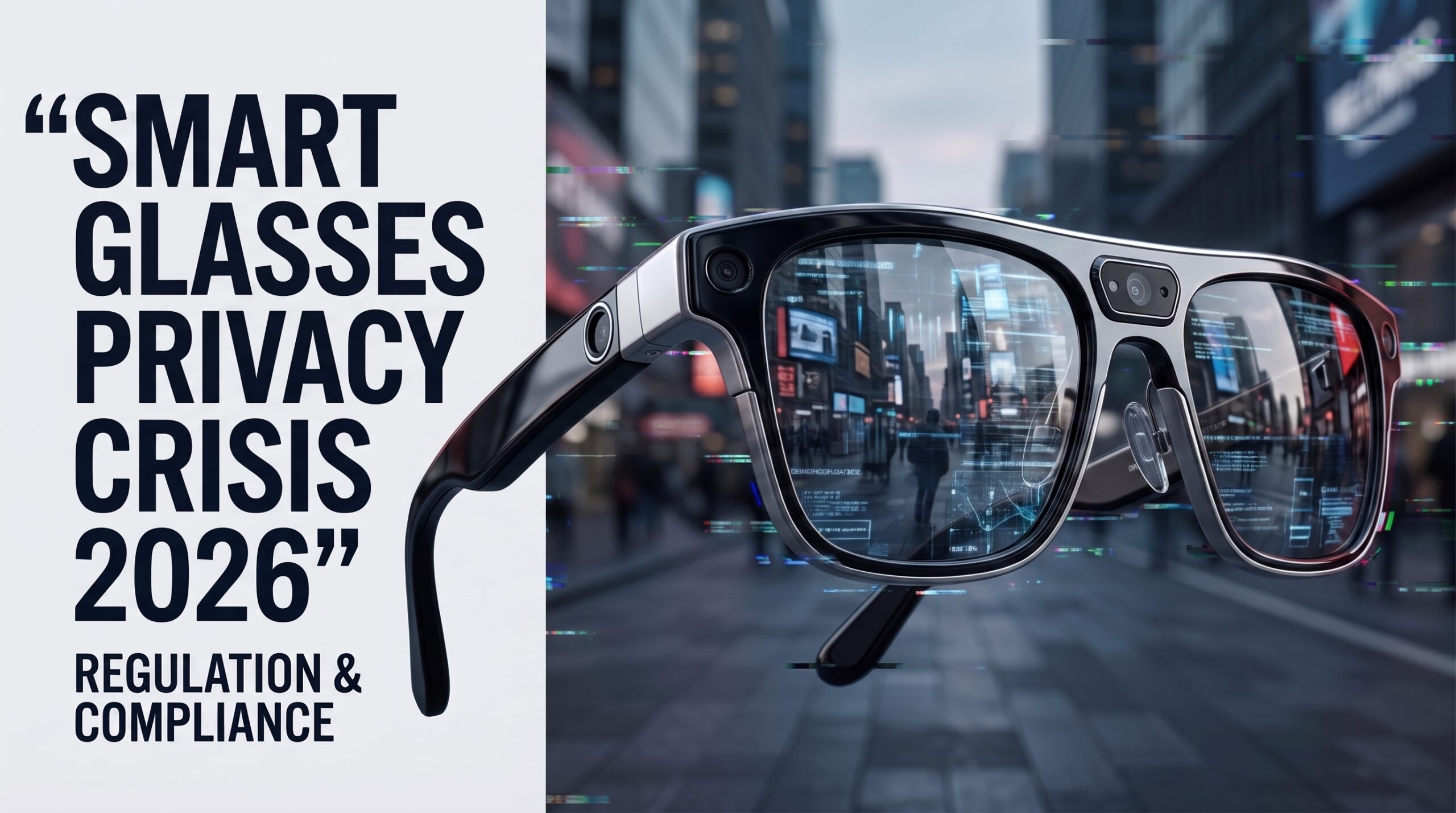
For most of the past decade, smart glasses were a philosophical privacy concern — a hypothetical about what might happen if cameras became wearable and identity recognition became instant. The first half of 2026 turned that hypothetical into a documented chain of concrete events: whistleblower reports, federal class-action lawsuits, regulatory investigations spanning three continents, a confirmed facial-recognition code deployment inside a consumer app, and a first-of-its-kind statewide court ban — all within roughly six months. For corporate compliance and legal teams, smart glasses have moved from an emerging-technology curiosity to an active regulatory exposure.
Key Takeaways
- The EU AI Act’s Article 5 prohibitions on real-time remote biometric identification in public spaces became fully applicable on August 2, 2026, directly implicating facial-recognition-capable smart glasses across the European Union.
- Several European countries — including France, Germany, and the Netherlands — are actively considering bans on Meta’s smart glasses, with the European Data Protection Board conducting a dedicated “social acceptability” review of the category in 2026.
- A Swedish media investigation found contractors in Nairobi, Kenya reviewing smart glasses footage for AI training had seen recordings of bathroom visits, banking details, and intimate moments — a finding that triggered a US class action, formal European Parliament questions, and a Renew Europe group letter to the European Commission.
- Harvard students demonstrated in 2024 (with continued relevance through 2026 policy debates) that consumer smart glasses combined with publicly available facial-recognition tools could identify a stranger’s name, address, and phone number in just over a minute — using entirely off-the-shelf, publicly available components, not custom hardware.
- 75 civil liberties, domestic violence, and worker rights organizations formally called on Meta to halt facial recognition plans for its Ray-Ban and Oakley product lines, while EPIC has separately urged the FTC and a nine-state regulatory consortium to block the feature.
The 2026 Timeline: How a Philosophical Concern Became a Regulatory Crisis
The acceleration of smart glasses privacy scrutiny in 2026 did not stem from a single triggering event but from a sequence in which each incident amplified the next. The starting point was a Swedish media investigation — reported by Svenska Dagbladet and Göteborgs-Posten — that found subcontractors in Nairobi, Kenya reviewing footage captured by Ray-Ban Meta users as part of Meta’s AI model training pipeline had encountered recordings including bathroom visits, banking details, and people having sex. This reporting directly triggered a US class-action lawsuit, formal questions from Members of the European Parliament to the European Commission, and a letter from the Renew Europe political group specifically asking what regulatory action the EU could take.
Separately, and around the same period, Wired reported finding facial recognition code already built into the mobile companion app used to connect smart glasses to a user’s phone — even though the feature had not been publicly activated. This “dormant capability” finding is legally significant: it shifts the regulatory question from whether a company might add facial recognition in the future to whether the infrastructure for that capability already exists inside a shipped consumer product.
The Regulatory Response: A Fragmented but Intensifying Patchwork
European Union: GDPR and the AI Act Converge
Camera-equipped smart glasses trigger overlapping EU legal regimes. Basic camera capture invokes GDPR Article 6 transparency requirements and member-state recording consent statutes. Facial recognition processing that extracts biometric templates for identification purposes goes further, triggering GDPR Article 9’s special category provisions for biometric data. Critically, the EU AI Act’s Article 5 prohibitions on real-time remote biometric identification in public spaces for law enforcement purposes became fully applicable on August 2, 2026 — a hard regulatory deadline that directly implicates any facial-recognition-capable consumer wearable operating in EU public spaces.
France’s data protection authority (CNIL) and the European Data Protection Board both opened dedicated regulatory workstreams on smart glasses in 2026, with an EDPB report specifically addressing the “social acceptability” of the category expected by the end of summer 2026. This is not the EU’s first engagement with the category: when Meta launched the original Ray-Ban Stories in September 2021, both Ireland’s Data Protection Commission and Italy’s Garante raised concerns about whether people being recorded would realistically notice a small LED recording indicator light — a concern that has only intensified as devices have become more capable and less visually distinguishable from ordinary eyewear.
United States: A Regulatory Patchwork With No Federal Framework
There is currently no federal law in the United States specifically governing smart glasses. Devices instead fall under a patchwork of existing frameworks never designed with always-on, AI-integrated wearables in mind: state-level recording consent laws (some states require all-party consent to recordings), wiretapping statutes, and state biometric privacy laws such as Illinois’s Biometric Information Privacy Act (BIPA), which imposes specific obligations around biometric data collection and consent.
This patchwork has produced uneven but escalating enforcement activity:
- EPIC (Electronic Privacy Information Center) has formally urged the FTC and a bipartisan nine-state regulatory consortium to block Meta from adding facial recognition to its smart glasses line, arguing the feature would violate the FTC Act and state unfair/deceptive trade practice laws.
- A March 2026 class-action complaint filed in the US District Court for the Northern District of California (Bartone and Canu v. Meta Platforms and Luxottica of America) alleges Meta’s “designed for privacy, controlled by you” marketing claims were materially false.
- 75 organizations — spanning domestic violence advocacy, worker rights, and civil liberties groups — jointly called on Meta to halt and publicly disavow any plans to add facial recognition to its Ray-Ban and Oakley product lines.
- Institutional bans have emerged independently of federal or state legislation, including a first-of-its-kind statewide court ban and exclusion from major industry conferences (one Las Vegas conference banned camera-equipped smart glasses with zero exceptions, including prescription versions, during its August 2026 event).
Why This Category of Device Presents a Unique Risk Profile
The core technical concern, as articulated by privacy researchers, is structural rather than incidental: putting a camera into glasses is already an inherent privacy risk because it normalizes covert recording in public and private spaces alike; adding facial recognition on top of that camera compounds the risk into what one privacy law expert described as “an intolerable escalation.” Without any opt-in mechanism for the person being recorded or identified, this technology fundamentally changes what a stranger in public can learn about an individual — from effectively nothing to a complete identity dossier, generated in seconds.
The Harvard student demonstration (I-XRAY), which combined consumer smart glasses, a facial image search engine (PimEyes), and a large language model, proved this is not a theoretical risk requiring sophisticated technical resources: the entire mechanism relied exclusively on publicly available tools, and the students identified dozens of individuals — including fellow students — without those individuals ever being aware. The researchers deliberately withheld their code from public release specifically because of this ease of replication.
Corporate Compliance Implications
For organizations navigating this environment in 2026, several compliance considerations are now concrete rather than speculative:
- Facial-recognition capability, whether active or dormant, is now a material legal fact. The discovery of inactive facial recognition code inside a companion app demonstrates that regulators and plaintiffs’ counsel will scrutinize latent capability, not merely activated features.
- Workplace and public-facing business policies need explicit smart glasses provisions. Institutions managing sensitive populations — healthcare facilities, courts, financial institutions handling in-person transactions, and any business subject to two-party consent recording laws — face direct exposure from customer- or employee-worn recording devices that may not be visually identifiable as recording equipment.
- AI training data pipelines involving human review require jurisdiction-specific scrutiny. The Kenya-based content review scandal illustrates that offshoring sensitive video review work does not insulate a company from EU or US regulatory and reputational consequences.
- Marketing claims about privacy design are now litigation-tested. The pending California class action demonstrates that “privacy by design” marketing language is being treated as a potentially actionable representation, not mere puffery.
Frequently Asked Questions
Is facial recognition currently active on consumer smart glasses like Ray-Ban Meta?
As of the most recent public statements, Meta has indicated no facial recognition feature has been launched on its Ray-Ban glasses, though reporting has found dormant facial recognition code within the companion mobile app and internal plans reportedly under consideration.
What does the EU AI Act say about smart glasses and facial recognition?
The EU AI Act’s Article 5 prohibits real-time remote biometric identification in public spaces for law enforcement purposes, and this provision became fully applicable on August 2, 2026 — directly relevant to any facial-recognition-capable wearable device operating within the EU.
Is there a federal law regulating smart glasses in the United States?
No. Smart glasses in the US currently fall under a patchwork of state-level recording consent laws, wiretapping statutes, and biometric privacy laws like Illinois’s BIPA, none of which were specifically designed for always-on, AI-integrated wearable devices.
Conclusion
The 2026 smart glasses privacy crisis illustrates a recurring pattern in technology regulation: a capability that was philosophically debated for years becomes a concrete legal and compliance problem only once a documented chain of real-world incidents — a whistleblower report, a demonstrated exploit, a discovered dormant feature — converts abstract risk into evidence. With the EU AI Act’s biometric provisions now fully in force, US litigation actively testing corporate privacy marketing claims, and civil society organizations coordinating pressure across continents, corporate legal and compliance teams can no longer treat smart glasses as a future risk to monitor — it is a present regulatory and reputational exposure requiring active policy response.
Discover more from The Economy
Subscribe to get the latest posts sent to your email.

Silver Price Today: Why the Xi-Trump AI Standoff Is Fueling a Safe-Haven Rally

Citibank & Dólar Estadounidense: Forex Playbook After the Xi-Trump Truce

How the Trump-Xi White House Summit Is Reshaping Mortgage Rates Today for Real Estate Investors

Indonesia Navigates Mega-Project Risks as China and Russia Eye the 2,772km Trans-Kalimantan Railway

Trump-Xi 2026 Summit Takeaways: The Trade Truce, Taiwan, and the AI Divide

Solar Panel Installation Cost in 2026: Why the Math Changed Overnight

Business Insurance: What Coverage You Actually Need and What It Costs in 2026

Auto Insurance Quotes: How to Get the Lowest Rate Without Losing Coverage

Huntington Online Banking: Full Features, Fees, and How It Compares in 2026

Apply for a Bank Account Online: What You Need and How Long It Actually Takes

World’s Largest Economies: Ranking the Top Global Powers

Business Loan: A Complete 2026 Guide to Rates, Types, and Qualifying

Fast Invoice Factoring: How to Turn Unpaid Invoices Into Cash Within 24 Hours

Investment Banking Services: What They Cost and How to Choose the Right Firm in 2026

Top 30 Stocks for Investment in PSX for Massive ROI in 2026

SpaceX Starship Flight 14: First Orbital Attempt & Starlink V3 Launch Explained

Oil Prices Break $100 in 2026: Middle East Conflict & Energy Markets

BRICS+ Cross-Border Payments 2026: Interoperability Explained

AI Chip Stocks 2026: The Best Semiconductor Investments Beyond Marvell

Fidelity Investments Review 2026: SPAXX Yields & Zero-Fee Funds

Tween Back-to-School Trends 2026: What’s Driving the $85B Season

10-Year Treasury Yield Hits 4.80%: What It Means for Rates & Portfolios

Shein Clothes Quality & Safety in 2026: What Lab Tests Show

IMF & World Bank 2026 Global Economic Outlook: Growth, Inflation, Debt

China’s US$10.8 Billion Trade Shortcut: Why the Pinglu Canal Matters

High-CPM Finance Niches 2026: Publisher Monetization Blueprint

Middle East War Economics 2026: Oil Prices & Energy Markets

China Stocks Today: Are Big Economies in Asia Nearing a Market Bottom?
-

 Markets & Finance9 months ago
Top 15 Stocks for Investment in 2026 in PSX: Your Complete Guide to Pakistan’s Best Investment Opportunities
-

 Analysis7 months ago
Johor’s Investment Boom: The Hidden Costs Behind Malaysia’s Most Ambitious Economic Surge
-

 Analysis7 months ago
Top 10 Stocks for Investment in PSX for Quick Returns in 2026
-

 Banks8 months ago
Best Investments in Pakistan 2026: Top 10 Low-Price Shares and Long-Term Picks for the PSX
-

 Analysis8 months ago
Brazil’s Rare Earth Race: US, EU, and China Compete for Critical Minerals as Tensions Rise
-

 Investment9 months ago
Top 10 Mutual Fund Managers in Pakistan for Investment in 2026: A Comprehensive Guide for Optimal Returns
-

 Global Economy9 months ago
15 Most Lucrative Sectors for Investment in Pakistan: A 2025 Data-Driven Analysis
-

 Global Economy9 months ago
Pakistan’s Export Goldmine: 10 Game-Changing Markets Where Pakistani Businesses Are Winning Big in 2025