
Markets & Finance
Southeast Asia’s LNG Dilemma: Navigating Price Volatility, Infrastructure Gaps, and Energy Security


Southeast Asia’s accelerating industrial growth and rapid depletion of domestic gas fields have transformed the region into a critical frontier for global Liquefied Natural Gas (LNG) demand. However, this transition exposes emerging Asian economies to severe spot-market price volatility, geopolitical supply chain disruptions, and critical regasification infrastructure deficits. Balancing near-term power stability with long-term decarbonization pledges requires a strategic recalibration of LNG procurement, terminal development, and regional pipeline connectivity.
The Macro Demand Shift: Depleting Reserves & Domestic Shortfalls
For decades, countries like Thailand, Malaysia, and Indonesia relied on domestic natural gas to power grid expansion and industrial development. Today, maturing legacy fields are experiencing steep natural decline rates. According to analysis from the International Energy Agency (IEA), Southeast Asia’s net energy trade deficit is projected to widen significantly as indigenous production drops below domestic demand thresholds.
To prevent acute power shortages, regional utilities are turning to imported LNG as a bridge fuel to phase out coal-fired generation. Yet, substituting domestic piped gas with imported LNG exposes power markets directly to international supply-demand shocks:
- Supply Chokepoint Vulnerabilities: Maritime trade routes remain highly sensitive to geopolitical tensions, particularly across critical transit corridors like the Strait of Hormuz and the Malacca Strait, as reported by Reuters.
- Fiscal Exposure: Price spikes directly impact state-subsidized utility markets, straining national budgets in price-sensitive developing economies such as Vietnam and the Philippines.
- Contractual Mismatches: Many regional buyers remain over-indexed on short-term spot markets rather than long-term Sale and Purchase Agreements (SPAs), leaving them vulnerable to market squeezes during peak winter heating cycles in North Asia and Europe.
Infrastructure Bottlenecks Across the ASEAN Energy Landscape
Importing LNG requires capital-intensive midstream infrastructure—including onshore regasification terminals, Floating Storage Regasification Units (FSRUs), break-bulk distribution facilities, and high-pressure transmission pipelines. Infrastructure deployment across the region remains fragmented:
1. Archipelagic Geography & Storage Limits
The island geography of the Philippines and Indonesia severely complicates central grid distribution. Small-scale LNG distribution requires specialized shallow-draft carriers and modular FSRUs, which carry higher capital expenditure per unit of energy delivered compared to centralized world-scale onshore terminals.
2. Grid Interconnection & Pipeline Gaps
While the proposed Trans-ASEAN Gas Pipeline (TAGP) aims to interlink regional gas grids, progress remains stymied by regulatory mismatches, cross-border tariff disputes, and physical infrastructure deficits. Without interconnectivity, surplus regasification capacity in one nation cannot cushion supply deficits in another.
3. Terminal Offtake Financing Hurdles
Financial institutions evaluating midstream gas projects require bankable, long-term power purchase agreements (PPAs). Uncertainty surrounding electricity tariff reform and currency fluctuation delays Final Investment Decisions (FIDs) for major regasification projects, according to market intelligence from S&P Global Energy.
Country-by-Country LNG Infrastructure & Import Trajectory
The operational realities, regasification capacities, and procurement strategies differ substantially across key Southeast Asian markets:
| Country | Key Demand Drivers | Active/Planned Regas Capacity | Primary Procurement Strategy | Major Infrastructure Challenge |
| Singapore | 95% gas-fired power generation; industrial bunkering hub | ~10 MTPA (SLNG expansion underway) | Long-term SPAs + Portfolio Hedging | Land constraints for large-scale onshore storage expansion |
| Thailand | Depleting Gulf of Thailand gas fields; power generation | ~19 MTPA (Map Ta Phut Phase 1 & 2) | Mixed long-term contracts & spot purchases | High exposure to spot JKM price spikes during summer cooling peaks |
| Vietnam | Transitioning from coal; industrial power demand | ~1–3 MTPA (Thi Vai terminal live; Son My planned) | High spot-market dependency | Absence of cost-reflective retail power tariffs for gas-to-power projects |
| Philippines | Depletion of Malampaya gas field | ~5 MTPA (Batangas FSRUs operational) | Short-to-medium term contracts | Archipelagic gas transport; lack of cross-island pipeline links |
| Malaysia | Regional LNG exporter transitioning to domestic importer in Peninsular West | ~7.3 MTPA (Pengerang & Melaka terminals) | Internal portfolio balancing via Petronas | Internal geographical demand split between Sabah/Sarawak and Peninsular Malaysia |
Strategic Framework: De-Risking Southeast Asia’s Gas Transition
To mitigate price volatility and bridge infrastructure deficits, regional energy planners and corporate buyers must adopt a multi-tiered procurement and structural framework:
+-----------------------------------------------------------------------------------+
|                        REGIONAL LNG RISK MITIGATION FRAMEWORK                     |
+------------------------------------+----------------------------------------------+
| 1. Contract Portfolio Optimization | Balance 70-80% Long-Term SPAs with Spot JKM  |
+------------------------------------+----------------------------------------------+
| 2. Midstream Agility               | Deploy Modular FSRUs to shorten FID timelines |
+------------------------------------+----------------------------------------------+
| 3. Regional Pricing Benchmarks    | Develop an ASEAN Gas Index to decouple oil   |
+------------------------------------+----------------------------------------------+
| 4. Hybrid Grid Integration         | Pair Gas-to-Power with Solar/Energy Storage  |
+------------------------------------+----------------------------------------------+
1. Rebalancing Contract Portfolios
Energy buyers must shift away from pure spot exposure. Securing long-term SPAs indexed to Henry Hub or Brent crude provides price stability, while retaining a 15–20% spot allotment maintains operational flexibility. Market outlooks published by Shell Global emphasize that long-term contracting remains the primary shield against geopolitical price shocks.
2. Accelerated Deployment of Modular Infrastructure
FSRU technology offers a significantly shorter lead time (18–24 months) compared to onshore terminals (4–5 years). Developing nations can leverage leased FSRUs to initiate import capabilities while onshore pipeline networks are built out.
3. Constructing an ASEAN LNG Pricing Hub
Establishing localized regional trading hubs (such as Singapore’s SLNG expansion) enables the creation of an ASEAN-specific price benchmark. This reduces over-reliance on the North Asian Japan Korea Marker (JKM) and better reflects local market dynamics, a strategy actively analyzed by the U.S. Department of Energy.
4. Co-Optimization with Renewable Energy
Gas-to-power infrastructure should not be viewed in isolation. Gas turbines must be deployed as flexible, quick-start balancing units alongside expanding solar and wind capacity, ensuring system reliability without locking utilities into unmanageable fossil fuel import bills.
Outlook: The Balancing Act Ahead
Southeast Asia’s demand for LNG is structural and unavoidable over the coming decade. However, transforming LNG from a volatile financial burden into a secure transition fuel requires disciplined infrastructure planning, tariff reforms, and sophisticated procurement strategies. Without regional coordination and strategic long-term contracting, ASEAN power markets remain exposed to global market dynamics beyond their control.
Discover more from The Economy
Subscribe to get the latest posts sent to your email.


Markets & Finance
Analytical Review of The Economist’s “What is the Right Tax System for the 21st Century?”
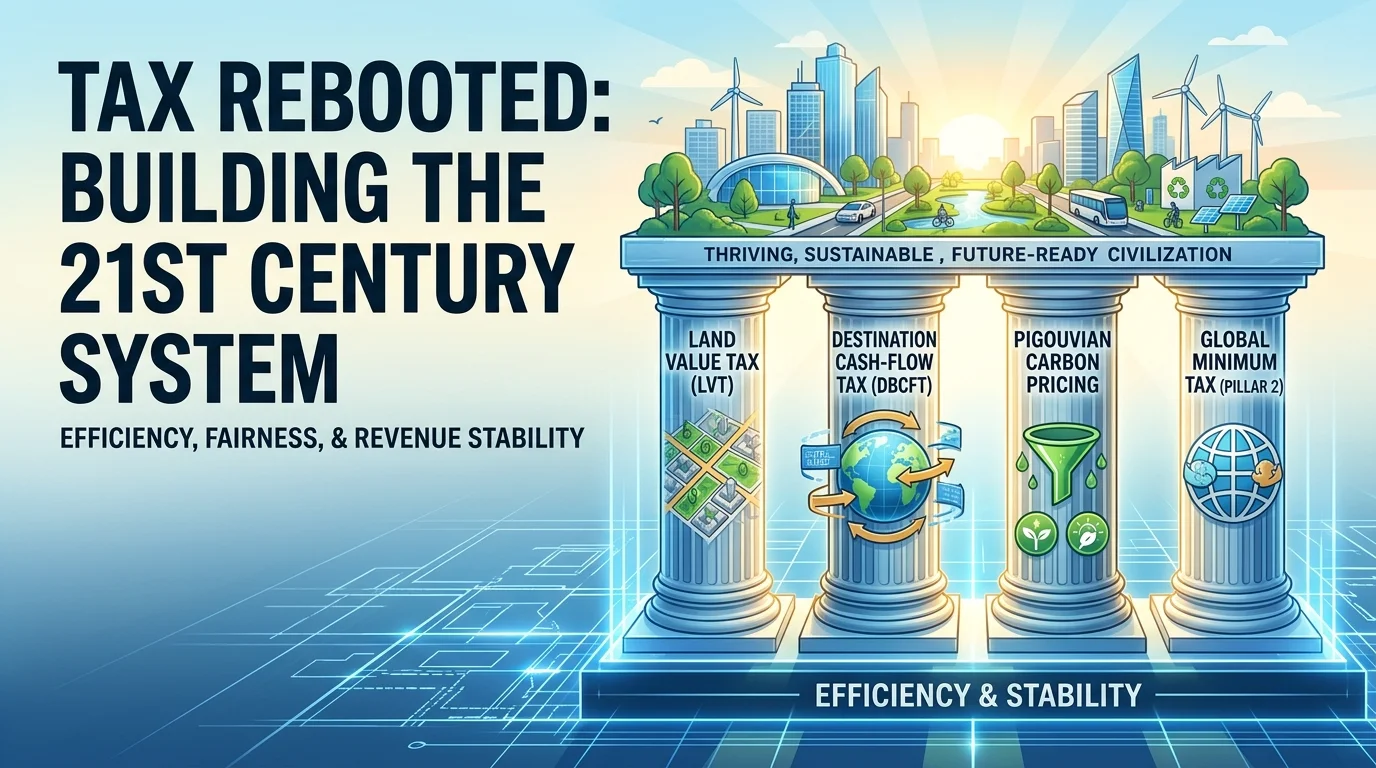
Core Premise & Scope
The Economist correctly diagnoses the structural breakdown of 20th-century tax systems across advanced economies. As sovereign debt loads surge, long-term bond yields remain elevated, demographic aging inflates entitlements, and defense and climate commitments expand, standard fiscal architectures are failing. The article argues that current systems rely too heavily on distortive income and labor taxes while ignoring immobile wealth, land, and environmental negative externalities.
Critical Analytical Gaps
While The Economist identifies key symptoms, its analysis exhibits four primary operational gaps:
- Failure to Address the AI Labor Tax Erosion: High-income nations derive over 40–60% of total tax revenues from Personal Income Tax (PIT) and Social Security Contributions (SSCs). As artificial intelligence and autonomous workflows displace high-wage cognitive labor, standard income tax bases will erode. The Economist treats labor taxation as static rather than declining.
- Abstract Land & Wealth Taxation Without Transition Economics: Advocating for Land Value Taxes (LVT) and property tax overhauls is theoretically sound but politically non-viable without explicit transitional mechanisms (such as tax credits against capital gains or phased revenue-neutral shifts).
- Over-reliance on OECD Consensus Enforcement: The piece assumes smooth global coordination via the OECD Inclusive Framework. In reality, jurisdictional profit-shifting and implementation friction between market nations and headquarters hubs create major enforcement leaks.
- Omission of Cash-Flow Expenditure Architectures: The analysis fails to evaluate Destination-Based Cash-Flow Taxation (DBCFT), which removes incentives for corporate inversion while exempting marginal investment from capital distortion.
Designing the Optimal Tax System for the 21st Century
Tax codes across the developed world are relics of a 1950s industrial economy. Built on the assumption of immobile domestic corporations, fixed physical factories, and stable wage labor, 20th-century tax models create massive deadweight losses, disincentivize capital formation, and fuel wealth inequality.
A modern tax architecture must maximize economic efficiency and neutrality while maintaining progressive distribution and fiscal solvency. Achieving this requires shifting the tax base away from productive inputs (labor and investment) toward unearned economic rents, immobile assets, and negative externalities.
       TRADITIONAL TAX BASE                   21ST-CENTURY TAX ARCHITECTURE
┌─────────────────────────────────┐       ┌─────────────────────────────────┐
│ • High Marginal Income Taxes   │       │ • Land Value Taxation (LVT)     │
│ • Corporate Income Tax (CIT)   │  ───► │ • Progressive Expenditure Tax   │
│ • Payroll & SSC Distortions    │       │ • Pigouvian Carbon Pricing      │
│ • Capital Gains Penalties       │       │ • Destination Cash-Flow Model   │
└─────────────────────────────────┘       └─────────────────────────────────┘
Structural Failures of Current Fiscal Architectures
Modern sovereign states face a structural triad of fiscal pressures:
- Demographic Entitlement Creep: Aging populations reduce the working-age tax base while accelerating expenditures on public pensions and healthcare.
- Labor Income Erosion: Technological displacement and the growth of independent digital work dismantle traditional payroll tax collection mechanisms.
- Capital Mobility & Base Erosion: Intangible assets (IP, algorithms, digital platforms) allow multinational entities to shift taxable profits across borders, undermining standard corporate income taxes.
According to data from the Urban-Brookings Tax Policy Center, high marginal tax rates on capital and labor depress long-run economic growth by creating deadweight loss wedges between pre-tax returns and post-tax rewards.
The Four Pillars of the Modern Tax System
                  ┌─────────────────────────────────────────┐
                  │    21st Century Tax Architecture        │
                  └────────────────────┬────────────────────┘
                                       │
        ┌──────────────────┬───────────┴───────────┬──────────────────┐
        ▼                  ▼                       ▼                  ▼
┌───────────────┐  ┌───────────────┐       ┌───────────────┐  ┌───────────────┐
│  Land Value   │  │  Destination  │       │   Pigouvian   │  │  Global Min   │
│ Tax (LVT)     │  │  Cash-Flow    │       │ Carbon Pricing│  │  Pillar 1/2   │
└───────────────┘  └───────────────┘       └───────────────┘  └───────────────┘
1. Land Value Taxation (LVT)
Land is inelastic in supply. Taxing the unimproved value of land creates zero economic deadweight loss because land cannot relocate or shrink in response to taxation.
- Abolish Standard Property Taxes on Improvements: Traditional property taxes penalize building construction and urban development. Taxing only the underlying land value incentivizes efficient land use and infill development.
- Recapture Unearned Location Value: Urban land values appreciate primarily due to public infrastructure (transit, utilities, public safety) and community growth. An LVT captures these economic rents for public revenue without taxing private capital improvements.
2. Progressive Destination-Based Consumption Tax
Replacing corporate income taxes and high personal income brackets with a progressive cash-flow consumption tax removes the double-taxation penalty on savings and investment.
- Destination-Based Cash-Flow Tax (DBCFT): Tax is levied where goods or services are consumed, rendering corporate tax avoidance via offshore profit-shifting obsolete.
- Full Expensing of Capital Investments: Businesses immediately deduct all capital expenditures, removing investment distortions and accelerating productivity growth.
- Individual Progressive Consumption Tax: Individuals report total income minus net savings. The remaining spending is taxed at progressive rates, shielding low-income households via prebates or personal allowances.
3. Pigouvian Externality Pricing
Taxes should actively discourage activities that impose unpriced costs on society. Pigouvian levies convert social harms into direct fiscal revenue.
- Upstream Carbon Taxation: Implementing a border-adjusted carbon tax prices environmental damage directly into energy and goods production. As outlined in the IMF Fiscal Policy Frameworks, pricing carbon provides market signals for green technology transitions while generating revenue to offset lower income taxes.
- Resource and Congestion Levies: Variable tolling on urban roadways and extraction fees on finite natural resources internalize spatial and environmental costs.
4. Coordinated Multilateral Corporate Minimum Taxes
To address profit-shifting by digital multinationals, international tax law must transition from physical presence rules to destination-based profit allocation.
- Implementation of OECD Pillar 1 & Pillar 2: Adopting a global minimum corporate tax rate of 15% eliminates race-to-the-bottom tax competition, as detailed in the OECD Global Tax Framework.
- Formula Apportionment for Digital Services: Allocating multinational taxable income based on sales destination and active user bases ensures fair revenue distribution without requiring physical offices.
Comparative Analysis of Tax Regimes
| Tax Model | Economic Efficiency | Distributional Equity | Evasion Resilience | Administrative Complexity |
| Traditional Income & Corporate Tax | Low (High deadweight loss, double taxation of savings) | Moderate (Progressive on paper, vulnerable to deductions) | Low (Prone to offshore shifting and tax shelters) | High (Requires extensive compliance and auditing) |
| Wealth & Inheritance Taxation | Low-Moderate (Risks capital flight and valuation disputes) | High (Targets accumulated asset concentration) | Low (Capital moves to non-reporting jurisdictions) | Very High (Requires complex annual asset valuations) |
| Land Value Taxation (LVT) | Maximum (Zero supply distortion on unimproved land) | High (Progressive; land ownership is heavily concentrated) | Maximum (Immobile physical asset) | Low (Requires transparent cadastral land valuation) |
| Destination Cash-Flow Consumption Tax | High (Promotes investment, eliminates capital penalties) | High (Progressive spending tiers + prebates) | High (Border adjustments eliminate transfer pricing) | Moderate (Relies on border adjustments and financial transaction data) |
Mitigating AI-Driven Disruption to Public Finance
As AI tools and automation displace labor income, tax systems relying on payroll fees face declining receipts. Attempting to tax AI directly through “robot taxes” slows innovation and distorts technical adoption.
┌────────────────────────────────────────────────────────────────────────┐
│                        AI DISRUPTION & TAX BASE                        │
├──────────────────────────────────┬─────────────────────────────────────┤
│  Flawed Approach: Robot Taxes    │  Optimal Approach: Cash-Flow Tax    │
├──────────────────────────────────┼─────────────────────────────────────┤
│ • Penalizes technology adoption  │ • Taxes economic output at spending │
│ • Arbitrary definition of "robot" │ • Captures AI super-normal rents    │
│ • Slows productivity growth      │ • Neutral to technology choice      │
└──────────────────────────────────┴─────────────────────────────────────┘
The solution is to decouple public revenues from labor payrolls altogether:
- Shift Base to Corporate Cash-Flow and Land: As capital yields an increasing share of national income relative to wages, taxation must target corporate economic rents and land values rather than wage receipts.
- Eliminate Payroll Tax Caps: Remove income thresholds on social insurance contributions to maintain equity during structural shifts in high-earner distributions.
- Expand Universal Citizen Dividends: Fund social safety nets using revenues generated from Pigouvian carbon taxes and land value capture rather than taxing wage transactions.
Political Execution & Transition Roadmap
Reforming a tax code requires managing transition shocks to prevent capital flight or political paralysis.
Phase 1: Stabilization (Years 1-2)
├── Introduce upstream Carbon Tax with dividend returns
└── Enact OECD Pillar 2 15% global minimum tax

Phase 2: Base Shift (Years 3-5)
├── Replace local property taxes with Land Value Tax (LVT)
└── Allow 100% immediate expensing for business investments

Phase 3: Structural Realignment (Years 6-10)
├── Consolidate Personal Income Tax into Progressive Consumption Tax
└── Phase down distortionary corporate income tax rates
- Revenue-Neutral Phase-In: Pair new Land Value Taxes and carbon levies with immediate rate reductions on wage income and full capital expensing for businesses.
- Granular Tax Prebates: Mitigate regressivity in consumption taxes by distributing monthly advance rebates to low-and-middle-income households.
- International Harmonization: Secure treaty compliance through the IMF International Tax Reform Guidelines, ensuring uniform adoption of destination-based rules across major trading blocs.
Discover more from The Economy
Subscribe to get the latest posts sent to your email.
Markets & Finance
Energy Crisis Action: G7 Agrees to Release 100 Million Barrels of Diesel and Crude
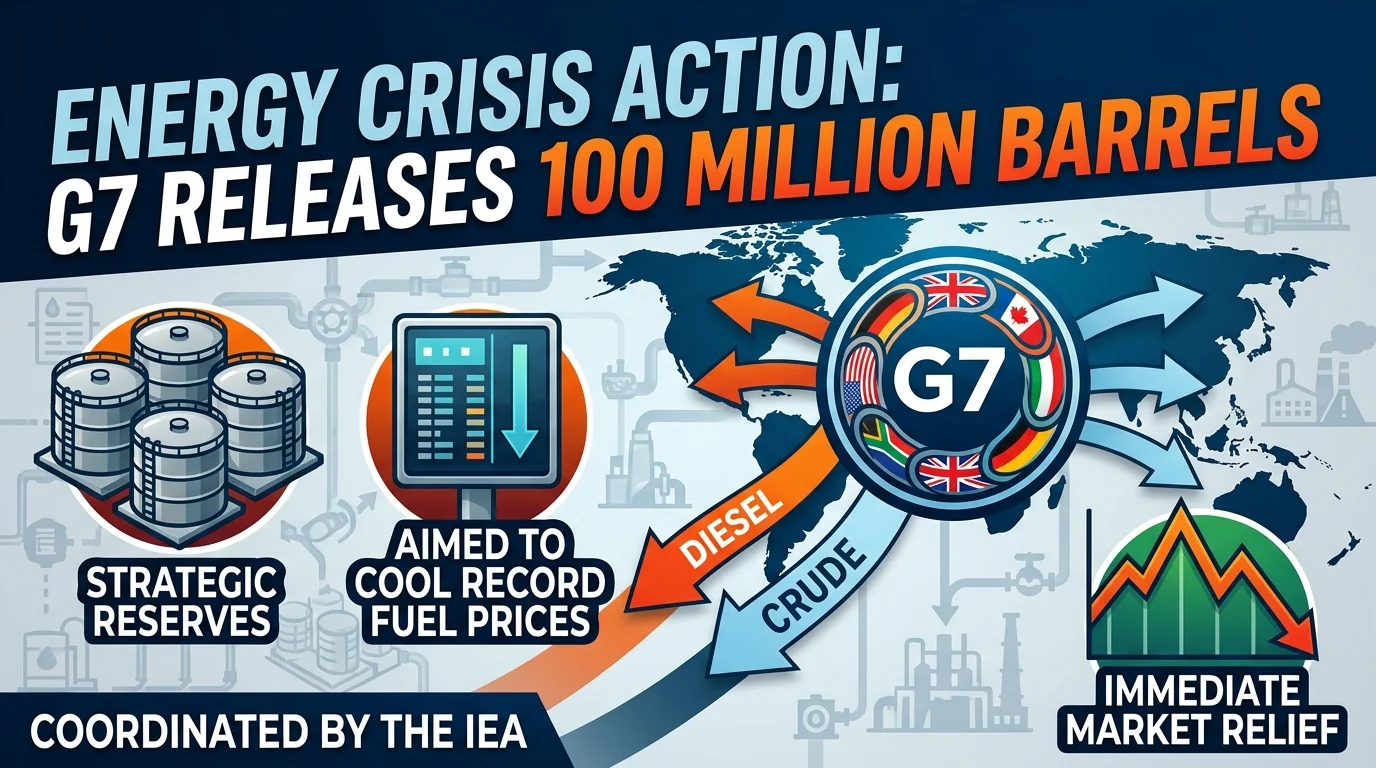
Executive Summary:The G7 nations have committed to releasing 100 million barrels of diesel and crude oil from strategic reserves over the next four months.
- Coordinated by the IEA, the emergency release aims to cool record-high fuel prices driven by geopolitical conflicts in Iran and damaged refinery infrastructure.
- A massive, front-loaded release of diesel is scheduled to hit the market within 20 days.
- Strategic diplomatic agreements successfully averted a US fuel export ban, ensuring a continued flow of energy to heavily dependent European markets.
The G7’s Historic Market Intervention
In a coordinated maneuver to stabilize deeply volatile global energy markets, the Group of Seven (G7) nations—comprising the US, France, Italy, Germany, Japan, Britain, and Canada—have agreed to release 100 million barrels of diesel and crude oil from their strategic stockpiles. The initiative, orchestrated in tandem with the International Energy Agency (IEA), will unfold incrementally over the next four months to act as a vital buffer against soaring global energy costs.
While 100 million barrels roughly equates to a single day of total global oil demand, the structural focus of this release sets it apart. The G7’s immediate priority is refined middle distillates. A “substantial” portion of the release, designated specifically as diesel, will flood the markets within the next 20 days, acting as a rapid-response measure to acute commercial fuel shortages.
Geopolitical Catalysts: Refinery Disruptions and the Middle East
The primary catalyst for this unprecedented market intervention is a severe, global refining bottleneck. Diesel and related fuels account for roughly 28% of global oil demand, according to historical IEA market data. Right now, the capacity to meet that demand is crippled.
Military strikes linked to the escalating war in Iran, combined with the ongoing degradation of energy infrastructure in Russia, have severely damaged critical regional refineries. The global market is not strictly suffering from a lack of unrefined crude; rather, it lacks the operational capacity to convert that crude into the refined fuels required to power supply chains, commercial logistics, and everyday vehicles.
Averting a Transatlantic Trade Crisis: The US Export Ban
The G7 agreement arrives at a politically fraught moment in the United States. With retail diesel prices recently skyrocketing to nearly $6.50 per gallon, US President Donald Trump faced intense domestic pressure to lower fuel costs ahead of the November midterm elections. Initial reports indicated the administration was preparing to impose a strict ban on American diesel exports to artificially lower domestic pump prices.
This proposed protectionist policy drew fierce opposition from domestic oil producers and sparked panic among European allies. Such a restriction would have been devastating for a European energy grid that pivoted heavily to American fuel imports following the 2022 bans on Russian energy. Current logistics indicate that Europe imports approximately 1.5 million barrels of fuel daily, with a full third originating from the United States, according to market tracking by S&P Global Commodity Insights.
Macron’s Diplomatic Push and Europe’s Reliance
French President Emmanuel Macron, the current chair of the G7, played a pivotal role in brokering the stockpile release and walking the US administration back from the export ban. Following a virtual summit of world leaders, Macron confirmed that the US had committed to abandoning the export restrictions, replacing the threat with a unified, multi-nation supply release.
Trump corroborated the shift in strategy via social media, highlighting that European nations had agreed to release a “massive amount of their heavily stocked diesel oil” to help balance the global market.
Analysts note that this unified action marks a significant shift in European strategy. Energy experts at Rapidan Energy Group pointed out that European nations generally prefer to hoard domestic supplies during prolonged geopolitical disruptions to protect against long-term shortages. However, the severity of the current pricing crisis—and the looming threat of losing US imports—forced a coordinated hand.
Immediate Market Reaction and Future Outlook
The immediate market response to the G7 announcement has delivered relief for commercial and retail consumers. US diesel futures plummeted by 8% in early trading immediately following the news, a trend closely monitored by Reuters energy coverage. While retail prices at the pump traditionally lag behind wholesale futures, energy economists anticipate a tangible drop for consumers within the month.
Despite the optimism, the global supply chain remains fragile. With China—another major global diesel supplier—recently reinstating restrictive fuel export quotas, the burden on Western stockpiles remains heavy. Analysts at Washington-based Clearview advised that while sweeping export bans are now highly unlikely, targeted destination constraints cannot be entirely ruled out as the northern hemisphere approaches peak winter demand.
Discover more from The Economy
Subscribe to get the latest posts sent to your email.
Global Economy
Johor Bahru-Singapore RTS Link Passenger Service Delayed to February 2027: Economic and Cross-Border Implications

The commencement of passenger operations for the highly anticipated Johor Bahru-Singapore Rapid Transit System (RTS) Link has been officially postponed to February 2027. Originally slated to launch by the end of 2026, the updated timeline reflects a necessary extension for independent safety certification and final regulatory approvals, shifting the debut past the critical Chinese New Year travel window.
Why the Launch Date Shifted
While physical construction has hit major milestones, the delay is strictly tied to operational safety testing and multi-national regulatory compliance. The project’s operator, RTS Operations (RTSO)—a joint venture between Singapore’s SMRT and Malaysia’s Prasarana—expects all system tests and trial runs to conclude by December 31, 2026.
However, translating completed tests into a live public service requires third-party vetting. According to The Straits Times, passenger service cannot commence until RTSO obtains independent safety certification, which must then be individually reviewed and approved by grantors from both nations: Singapore’s Land Transport Authority (LTA) and Malaysia’s Ministry of Transport (MOT).
Infrastructure and Technical Readiness
Despite the administrative timeline extension, the hard infrastructure on both sides of the Strait remains robustly on track.
- Substantial Completion: Authorities confirmed that civil infrastructure works on the 4-kilometer rail link between Bukit Chagar station in Johor Bahru and Woodlands North station in Singapore are substantially complete.
- Rolling Stock: As detailed by Malay Mail, the light rail system will operate utilizing eight trains manufactured by China Railway Rolling Stock Corporation (CRRC) Zhuzhou Locomotive.
- Border Control: The system will feature co-located customs, immigration, and quarantine (CIQ) facilities, a major legislative hurdle cleared earlier this year, allowing commuters to clear both authorities at their point of departure.
Project Status Overview
| Component | Status / Detail |
| System Tests & Trial Runs | Targeted completion by December 31, 2026 |
| Safety Certification | Pending independent 3rd-party review in early 2027 |
| Rolling Stock | 8 Trains (CRRC Zhuzhou Locomotive) |
| Signalling System | Siemens (Germany) |
| Revised Passenger Launch | February 2027 |
Economic Repercussions for the Johor-Singapore SEZ
The timeline revision is more than just an operational update; it carries notable macroeconomic implications. The RTS Link is heavily relied upon to alleviate chronic congestion on the Causeway and is structurally vital to the success of the upcoming Johor-Singapore Special Economic Zone (SEZ).
Pushing the launch to February 2027 means the rail link is at high risk of missing the peak travel and retail surge leading up to the Lunar New Year. According to coverage by Channel News Asia, this delay impacts cross-border commerce forecasts, extending the wait for businesses banking on enhanced consumer mobility and workforce fluidity between the two nations.
While the delay may temporarily stall the expected retail and real estate momentum in Johor Bahru, the strict adherence to independent safety certification underscores a long-term commitment to a reliable, high-capacity trade and transit corridor.
Discover more from The Economy
Subscribe to get the latest posts sent to your email.

Analytical Review of The Economist’s “What is the Right Tax System for the 21st Century?”

Southeast Asia’s LNG Dilemma: Navigating Price Volatility, Infrastructure Gaps, and Energy Security

Who Is Shivon Zilis? The Neuralink Executive at the Center of the Musk–OpenAI Trial

ChatGPT Traffic Rebounds in 2026: Why OpenAI’s AI Giant Is Winning Users Back

U.S.-Ireland Trade Dynamics: Trump’s Investment Push

Energy Crisis Action: G7 Agrees to Release 100 Million Barrels of Diesel and Crude

Johor Bahru-Singapore RTS Link Passenger Service Delayed to February 2027: Economic and Cross-Border Implications

Trump’s $15 Billion Iowa Steel Plant: What’s Confirmed, What’s Not, and Who Wins

iPhone Duo: Apple’s $1,999 Foldable Is Really a Bet on AI

AI vs. the Manhattan Project: Why the Comparison Breaks Down in 2026

U.S. Job Growth Decelerates to 29,000 in September as Unemployment Edges Up to 4.2%

Kai Cenat’s Rise to the Top: The Economics of Modern Streaming

How AI Is Reshaping the Future of Global Business Analytics

NASA Perseverance Rover Discoveries: The Search for Water in Jezero Crater

Oil Prices Break $100 in 2026: Middle East Conflict & Energy Markets

BRICS+ Cross-Border Payments 2026: Interoperability Explained

IMF & World Bank 2026 Global Economic Outlook: Growth, Inflation, Debt

Middle East War Economics 2026: Oil Prices & Energy Markets

High-CPM Finance Niches 2026: Publisher Monetization Blueprint

China’s US$10.8 Billion Trade Shortcut: Why the Pinglu Canal Matters

China Stocks Today: Are Big Economies in Asia Nearing a Market Bottom?

Global Pension Systems Ranked: The World’s Best and Worst Retirement Frameworks

Enterprise AI Platforms Disrupting B2B SaaS in 2026: Full Analysis

Social Security Trust Fund 2032: OASI Depletion Timeline Explained

Crypto Daily Outlook: Bitcoin, Altcoins, and the Future of Decentralized Finance

Elon Musk’s Next Moves: Disrupting the 2026 Global Economy

Global Equity Market Divergence: US Tech vs. European Dividend Stocks vs. Asian Growth

GasBuddy Market Insights: How Crude Price Shifts Impact Local Fuel Cost Averages
-

 Markets & Finance9 months ago
Top 15 Stocks for Investment in 2026 in PSX: Your Complete Guide to Pakistan’s Best Investment Opportunities
-

 Analysis7 months ago
Johor’s Investment Boom: The Hidden Costs Behind Malaysia’s Most Ambitious Economic Surge
-

 Analysis8 months ago
Top 10 Stocks for Investment in PSX for Quick Returns in 2026
-

 Banks9 months ago
Best Investments in Pakistan 2026: Top 10 Low-Price Shares and Long-Term Picks for the PSX
-

 Analysis8 months ago
Brazil’s Rare Earth Race: US, EU, and China Compete for Critical Minerals as Tensions Rise
-

 Investment9 months ago
Top 10 Mutual Fund Managers in Pakistan for Investment in 2026: A Comprehensive Guide for Optimal Returns
-

 Global Economy9 months ago
15 Most Lucrative Sectors for Investment in Pakistan: A 2025 Data-Driven Analysis
-

 Global Economy9 months ago
Pakistan’s Export Goldmine: 10 Game-Changing Markets Where Pakistani Businesses Are Winning Big in 2025