
Analysis
Sodium’s Moment: Why Sodium-Ion Batteries Matter Now

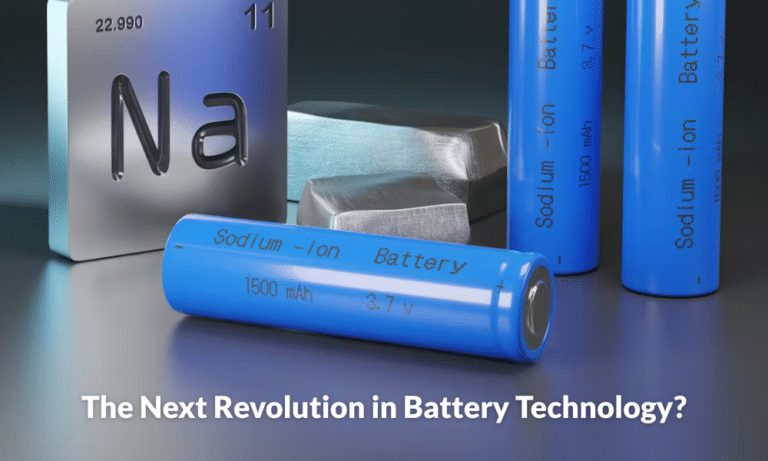
As CATL’s Naxtra cells hit passenger cars in 2026 and MIT names the technology a Breakthrough of the Year, sodium-ion batteries are poised to redraw the map of electrification—from winter-proof EVs to cheaper grid storage. Here’s why the shift is happening faster than anyone predicted.
It is February 2026, and in Inner Mongolia—one of the coldest inhabited regions on Earth—a sedan rolls off an assembly line fitted with a battery that contains no lithium. The car is the Changan Nevo A06, its chemistry is sodium-ion, and its cells are stamped with the name Naxtra, the new flagship battery brand of CATL, the world’s largest battery producer. Outside, the temperature hovers around minus thirty Celsius. Inside the pack, the discharge power at that temperature is roughly triple what an equivalent lithium iron phosphate battery could deliver. The car drives away. In a single uneventful moment, an idea that spent two decades circling the perimeter of serious energy science became a commercial product.
This is the context behind a deceptively simple observation that has begun circulating among investors, policymakers, and grid planners in early 2026: sodium-ion batteries are finally arriving, and they are arriving faster than almost anyone predicted. On January 12, MIT Technology Review included sodium-ion batteries in its annual list of 10 Breakthrough Technologies, a roster whose alumni include mRNA vaccines and deep learning. By January 23, CATL’s CTO had publicly confirmed that the Naxtra line would enter mass-market passenger vehicles in Q2 2026, starting with a GAC Aion model. The acceleration is not coincidental. It is the product of converging forces—technical, economic, and geopolitical—that have been building for years and are now, simultaneously, reaching maturity.
Why Sodium-Ion Batteries Matter Now: The Chemistry in Plain Language
A sodium-ion battery (sodium ion battery, or SIB) works on precisely the same principle as a lithium-ion cell: ions shuttle between a cathode and an anode through an electrolyte, releasing or storing electrical energy as they move. Swap lithium for sodium and the physics remain largely intact. The crucial difference lies not in electrochemistry but in raw materials.
Lithium is a geographically concentrated element. Roughly 60 percent of the world’s economically extractable lithium reserves sit in Chile, Australia, and Argentina, with China controlling the dominant share of refining capacity. Sodium, by contrast, is the sixth most abundant element in the Earth’s crust. It is present in seawater, rock salt, and the mineral deposits that underlie much of the inhabited world. It costs, on average, a fraction of lithium carbonate to source at the raw-material level, and it requires none of the cobalt or nickel that have historically plagued lithium-ion supply chains with ethical sourcing concerns and price volatility.
The practical limitation is equally clear: sodium ions are larger and heavier than lithium ions, making it harder to achieve the same energy density per kilogram. For much of the last decade, that gap was simply too large to overcome commercially. What has changed is not the fundamental physics, but the engineering response to it.
CATL Naxtra: From Lab to Road
The clearest evidence of sodium-ion batteries’ maturation is CATL’s Naxtra line, unveiled at the company’s inaugural Super Tech Day in April 2025. The Naxtra passenger-vehicle cell achieves an energy density of 175 Wh/kg—matching the higher end of lithium iron phosphate (LFP) performance and representing the highest energy density among commercialised sodium-ion batteries globally. By using a cell-to-pack architecture that eliminates intermediate modules, CATL extracts up to 400 kilometres of range on the Chinese driving cycle, with the company projecting that range will climb toward 600 km as the sodium supply chain matures.
The cold-weather story is even more striking. At minus 40 degrees Celsius, the Naxtra pack retains over 90 percent of its usable capacity. At minus 30 degrees, its discharge power is approximately three times higher than an equivalent LFP battery. Stable power delivery has been demonstrated down to minus 50 degrees. For context: standard lithium-ion EVs in Norwegian or Canadian winters routinely lose 30 to 40 percent of their stated range in sub-zero temperatures, a phenomenon that has slowed adoption in precisely the high-latitude markets that most need to decarbonise transport.
The deployment timeline is now concrete. Changan Automobile rolled out the world’s first mass-production sodium-ion passenger car in Inner Mongolia on February 5, 2026, with full market release targeted for mid-year. The GAC Aion line and JAC commercial vehicles are next in CATL’s confirmed schedule, with mass production of Naxtra cells across all segments expected to reach meaningful scale by July 2026. Simultaneously, CATL has deployed the Naxtra 24V heavy-duty truck start-stop battery, which the company claims reduces total lifecycle costs by 61 percent versus traditional lead-acid batteries and delivers reliable cold starts after a full year of idle storage.
Sodium Ion vs Lithium Ion 2026: Reading the Cost Curve
The price comparison between sodium-ion and lithium-ion is more nuanced than early headlines suggested. Sodium-ion cells currently average around $59 per kilowatt-hour, while LFP cells average $52 per kWh—meaning, counterintuitively, that today’s sodium-ion batteries are marginally more expensive than the cheapest lithium chemistry. The paradox is structural: sodium-ion’s material costs are genuinely lower, but production volumes remain small, keeping per-unit manufacturing costs elevated.
The crossover is coming, and it will be driven by two factors working simultaneously. First, lithium carbonate prices, which fell sharply through 2023 and 2024, have begun ticking upward again in early 2026, eroding LFP’s cost advantage. Second, sodium-ion manufacturing infrastructure does not require expensive retooling. The process for making sodium-ion cells closely mirrors that of lithium-ion production lines, allowing manufacturers to repurpose existing equipment. Industry research suggests sodium-ion cells can ultimately be manufactured at 20 to 30 percent below LFP cost once production scales to comparable volumes.
Several cost drivers that analysts often overlook reinforce this trajectory:
- No cobalt, no nickel. Sodium-ion cathodes—typically layered oxide or Prussian blue analogue structures—use inexpensive, widely available materials.
- Aluminium current collectors. Unlike lithium-ion cells, which require copper foil for the anode current collector (copper trading at around $9,000 per tonne), sodium-ion cells can use aluminium throughout, since sodium does not alloy with aluminium at low potentials.
- Simpler thermal management. The superior thermal stability of sodium-ion cells reduces the cost of battery management systems and cooling infrastructure, particularly in stationary storage applications.
- Cycle life. CATL claims over 10,000 cycles for Naxtra cells, dramatically reducing lifetime cost calculations for grid storage operators.
Sodium-Ion Battery Market Projections 2030: Between Caution and Ambition
The forecasting range for sodium-ion batteries is exceptionally wide, which itself tells a story about the technology’s position: past proof-of-concept, not yet at predictable scale. IDTechEx projects global sodium-ion production capacity could exceed 100 GWh annually by 2030, up from an estimated 9 to 10 GWh shipped in 2025. IRENA analysts, surveying a wider set of industry sources, report projections ranging between 50 and 600 GWh per year by 2030—a fivefold spread that reflects genuine uncertainty about the speed of demand pull-through.
Chinese industry research is somewhat more bullish, projecting the country’s domestic sodium-ion market alone growing from roughly 10 GWh in 2025 to 292 GWh by 2034, at an average annual growth rate near 45 percent. China currently accounts for more than 95 percent of announced global production capacity, with the pipeline of sodium-ion factory construction projects expanding relentlessly.
In market value terms, the global sodium-ion battery sector was worth approximately $1.17 billion in 2024 and is projected to reach $6.83 billion by 2034. More conservative estimates place the 2030 figure at around $2 billion, reflecting uncertainty about the pace of passenger-vehicle adoption outside China.
Sodium-Ion Batteries EVs: Where the Technology Fits Today
The common mistake in early coverage of sodium-ion was to frame it as a direct challenger to premium lithium—a replacement for the long-range, high-performance packs in luxury EVs. That framing was always wrong. The more accurate picture, emerging clearly in 2026, is one of complementarity across a segmented market.
Where sodium-ion is most competitive right now:
- Urban passenger cars and city EVs. The 400 km range of the Naxtra system covers more than half of typical daily driving needs in China and Europe. For buyers who charge overnight and drive urban routes, energy density is not the binding constraint—cost is.
- Two- and three-wheelers. Scooter maker Yadea launched four sodium-ion-powered models in 2025, and delivery-fleet operators in Chinese cities have begun piloting battery-swap stations for sodium-ion two-wheelers. Low-speed EVs and cargo bikes represent a market of hundreds of millions of units where the energy-density penalty is irrelevant.
- Battery-swap infrastructure. CATL’s own Choco-Swap network—targeting over 2,500 stations in 120 Chinese cities by end of 2026—is explicitly designed to accommodate Naxtra sodium cells, making swap-station economics viable at lower capital cost per installed kWh.
- Grid storage. The most transformative near-term application may be stationary. In May 2025, China Southern Power Grid commissioned a 200 MW hybrid storage station in Yunnan Province, combining sodium-ion and lithium-ion cells to stabilise output from more than 30 wind and solar plants. In the United States, Peak Energy signed a multi-year agreement in late 2025 to supply 4.75 GWh of sodium-ion storage systems to Jupiter Power between 2027 and 2030.
Sodium-Ion Batteries Geopolitics: The Strategic Significance Beyond Chemistry
Energy security analysts have been slow to fully map the geopolitical implications of sodium-ion’s rise, but those implications are substantial. The lithium-ion battery value chain is, in blunt terms, a Chinese supply chain: China refines roughly 60 percent of the world’s lithium, produces the majority of cathode materials globally, and manufactures nearly three-quarters of the world’s battery cells.
Sodium-ion does not immediately disrupt that structure—CATL and BYD are, after all, the leading sodium producers. But it creates a structural opening. Because sodium is abundant on every continent, governments in Europe, Southeast Asia, South Asia, and sub-Saharan Africa can, in principle, build competitive sodium-ion industries without dependence on geographically concentrated upstream supply chains. The European Economic and Social Committee (EESC) formally called for sodium-ion batteries to be placed at the centre of EU industrial strategy in late 2025, with dedicated studies and stakeholder work under development. European startups—Faradion (UK, acquired by India’s Reliance Industries), Tiamat (France, backed by Stellantis), Altris (Sweden), and PHENOGY—are building an ecosystem designed to capture the technology before China fully locks in its advantage.
For emerging markets, the calculus is even more direct. A sodium-ion grid-storage industry requires no lithium imports, no cobalt sourcing from the Democratic Republic of Congo, and no dependence on deep-sea mining of manganese nodules. The raw material is, almost literally, salt. For economies in South and Southeast Asia seeking to build domestic energy-storage capability alongside rapidly expanding solar and wind generation, that is a genuinely transformative proposition.
Sodium-Ion Batteries Cold Weather Performance: The Nordic Opportunity
There is a particular irony in the fact that lithium-ion batteries perform worst precisely where electrification incentives are strongest. Scandinavian governments have offered among the world’s most generous EV subsidies, yet Norwegian and Swedish EV owners consistently report the most severe winter range anxiety. At minus 20 Celsius, a standard NMC lithium battery pack can lose 35 to 40 percent of its rated capacity. At minus 30, some LFP packs cease to accept meaningful charge at all.
The Naxtra system’s ability to charge at minus 30 degrees and retain 90 percent capacity at minus 40 addresses this problem at the chemistry level rather than through expensive thermal management additions. While CATL has not announced European distribution of the Naxtra passenger platform, its architecture is clearly designed with cold-climate markets in mind. LG Energy Solution’s decision to open a sodium-ion pilot line in China in late 2025 suggests the Korean battery sector—which supplies significant European and North American capacity—is preparing for western deployment.
BYD, the Hard-Carbon Bottleneck, and the Road Ahead
CATL’s Naxtra launch has attracted the most attention, but it is not operating alone. BYD began constructing its first sodium-ion battery factory in Xuzhou in January 2024, committing 10 billion yuan ($1.4 billion) to a facility targeting 30 GWh of annual output. The company is simultaneously advancing a third-generation sodium-ion platform designed for up to 10,000 charge cycles—significantly beyond the 2,000 to 3,000 cycles typical of LFP—though it has not yet disclosed energy density specifications for that generation. HiNa Battery Technology, a specialist firm backed by the Chinese Academy of Sciences, has four sodium-ion product lines in commercial production, including low-speed EV and energy-storage formats.
The most pressing technical constraint is not the cell itself but the anode material. Sodium-ion batteries require hard carbon—a disordered carbon structure derived from organic precursors like coconut shell, resin, or biomass—rather than the graphite used in lithium-ion cells. Hard-carbon supply chains remain nascent, and scaling them while maintaining quality and cost competitiveness is the principal bottleneck limiting how quickly sodium-ion can move beyond its current deployment envelope. Several Chinese chemical companies are building hard-carbon anode plants—Wuhan Tian Na Technology is constructing a 130,000-tonne-per-year facility backed by CNY 58 billion in investment—but the timelines are measured in years, not months.
A balanced assessment must also acknowledge that sodium-ion is not, and may never be, the right chemistry for every application. Long-range premium EVs, aviation electrification, and high-density portable electronics will continue to demand the energy-per-kilogram performance that advanced lithium chemistries—and eventually solid-state cells—can provide. The future of electrification is not a single chemistry triumphant, but a diversified portfolio of technologies, each matched to the application for which its properties are best suited.
The Dual-Chemistry Era: What Comes Next
The image that best captures sodium-ion’s trajectory is not displacement but diversification. CATL itself calls this the “Multi-Power Era”—a strategic framing in which Naxtra sits alongside LFP, NMC, and the company’s next-generation Shenxing superfast-charging cells, each addressing a different layer of the market. The company’s own Freevoy Dual-Power battery combines a sodium-ion cell with an LFP cell in a single pack, using sodium’s cold-temperature superiority for low-state-of-charge winter performance while relying on LFP for energy density at moderate temperatures.
For grid operators, policymakers, and infrastructure investors, the practical near-term message is this: sodium-ion batteries are now commercially available, cost-competitive with LFP at the system level in stationary storage, and improving on a steep cost-and-performance curve. Projects planned today for 2027 and 2028 delivery should evaluate sodium-ion seriously. For EV markets, the chemistry fills a genuine gap in the cost and climate-resilience spectrum that neither LFP nor NMC currently addresses. And for governments with ambitions to build domestic battery industries without the geopolitical baggage of lithium dependence, sodium-ion represents the most accessible entry point in the history of electrochemical storage.
The car that rolled out of Inner Mongolia in February was unremarkable to look at. Salt-based chemistry, sub-zero temperatures, commercial-grade engineering. But the uneventfulness was the point. Technologies only truly arrive when they stop being surprising.
FAQ: Sodium-Ion Batteries 2026
What makes sodium-ion batteries different from lithium-ion batteries in 2026?
Sodium-ion batteries use sodium ions—derived from abundant, inexpensive salt-based materials—instead of lithium to store and release electrical energy. The core electrochemical process is nearly identical to lithium-ion, but sodium-ion cells offer superior cold-weather performance, simpler supply chains with no cobalt or nickel dependency, and lower projected manufacturing costs at scale. The main trade-off remains lower energy density compared to high-end lithium-ion chemistries.
Why do sodium-ion batteries perform better in cold weather than lithium-ion?
Sodium ions have faster ionic conductivity at low temperatures relative to the electrochemical constraints of lithium intercalation in graphite. CATL’s Naxtra cells retain over 90 percent of usable capacity at minus 40 degrees Celsius and can charge at minus 30 degrees—conditions under which LFP batteries experience severe power and capacity degradation. This makes sodium-ion batteries particularly valuable for EVs in Nordic, Canadian, and high-altitude Asian markets.
What are the sodium-ion battery market projections for 2030?
Projections vary widely. IDTechEx estimates global production capacity could exceed 100 GWh per year by 2030. IRENA surveys of industry sources place the range at 50 to 600 GWh annually. Chinese industry analysts project China’s domestic market alone could reach nearly 300 GWh by 2034. The market’s value is projected to grow from roughly $1.2 billion in 2024 to between $2 billion and $6.8 billion by 2030 to 2034, depending on EV adoption rates and grid storage deployment speed.
When will CATL’s Naxtra sodium-ion batteries be available in passenger vehicles?
CATL began mass production of Naxtra sodium-ion batteries for passenger vehicles in Q2 2026. The first mass-production car equipped with Naxtra cells—the Changan Nevo A06—was unveiled in Inner Mongolia in February 2026, with market release targeted for mid-year. The GAC Aion line and JAC commercial vehicles are also confirmed for Naxtra deployment, with CATL targeting full volume production across passenger, commercial, and energy storage segments by July 2026.
What are the geopolitical implications of sodium-ion batteries for global energy supply chains?
Because sodium is one of the most abundant elements on Earth, sodium-ion batteries can, in principle, be manufactured without the geographically concentrated supply chains that characterise lithium-ion. This reduces dependence on lithium from Chile, Argentina, and Australia, cobalt from the Democratic Republic of Congo, and Chinese refining capacity. European governments and the EESC have identified sodium-ion as a strategic priority for building domestic battery industries. For emerging markets in South Asia, Southeast Asia, and Africa, sodium’s ubiquity offers a realistic pathway to energy storage self-sufficiency without the political and economic entanglements of lithium procurement.
Discover more from The Economy
Subscribe to get the latest posts sent to your email.


The era of the verbose central banker may be nearing its end, if a growing faction of monetary conservatives has its way. For the better part of two decades, the Federal Reserve has operated under a simple, seemingly unassailable premise: more transparency equals less market volatility. The institution transitioned from the cryptic briefcase-watching days of the Alan Greenspan era to a modern regime of dot plots, forward guidance, and post-meeting press conferences that parse every syllable of economic data. Yet, former Federal Reserve governor Kevin Warsh has emerged as the loudest voice calling for a radical reversal. His prescription for the central bank is startling in its simplicity. He wants them to stop explaining everything.
What follows, however, is not a call for renewed secrecy, but a structural critique of how monetary policy transparency has inadvertently cornered the world’s most powerful financial institution. Since the 2008 financial crisis, the volume of central bank communication has exploded. The average length of an FOMC post-meeting statement grew from roughly 130 words in 1999 to over 800 words by the early 2020s, a symptom of an institution desperately trying to script the future. Warsh, currently a visiting fellow at the Hoover Institution, argues that this hyper-communication has transformed the Fed from a reactive stabiliser into an anxious market manager. By pre-committing to future policy paths through extensive forward guidance, the central bank has severely limited its own optionality when macroeconomic conditions inevitably change.
The core of the argument surrounding Kevin Warsh Fed communication reforms rests on the idea that the central bank has become a prisoner of its own forward guidance. In the post-Bernanke era, the Federal Reserve adopted the philosophy that explaining future policy intentions would smooth out market reactions and anchor yield curves. Warsh contends this approach has fundamentally backfired. Instead of calming markets, hyper-transparency has created a brittle financial system highly reactive to minor shifts in the Fed’s linguistic tone.
When the Fed attempts to narrate the economic future, it invites Wall Street to trade the narrative rather than the underlying economic reality. Warsh has repeatedly warned that central banks are not omniscient forecasting agencies. When policymakers issue detailed dot plots projecting interest rates three years into the future, they project a false certainty. If inflation spikes or employment drops unexpectedly, the Fed is forced into a humiliating retreat, damaging its institutional credibility. A report by the Bank for International Settlements recently highlighted that over-reliance on forward guidance during periods of high inflation actually delayed necessary policy tightening, as central banks hesitated to break their own public promises.
By retreating from the microphone, Warsh suggests the Federal Reserve can reclaim its tactical flexibility. If markets are given less explicit guidance, they must revert to doing their own price discovery based on incoming data, rather than waiting to be spoon-fed by Jerome Powell. This forces market participants to price in risk more accurately. The current regime, Warsh argues, acts as a psychological subsidy to financial markets, encouraging risk-taking because traders believe the Fed has broadcast its entire playbook in advance.
To understand the mechanics of this critique, one must examine the specific tools the Fed uses to broadcast its intentions. The most controversial is the Summary of Economic Projections, colloquially known as the dot plot. Introduced in 2012, the dot plot was designed to provide a visual representation of where each FOMC member expects interest rates to be in the coming years. Warsh views the dot plot not as a tool of clarity, but as an engine of confusion that central bank forward guidance relies on too heavily.
What is forward guidance in monetary policy? Forward guidance is a communication tool used by central banks to signal the future path of interest rates to the public and financial markets. By clearly stating their long-term policy intentions, central banks aim to influence current financial conditions, lower long-term borrowing costs, and stimulate or cool economic activity.
When 19 different Fed officials publish 19 different interest rate trajectories, the result is often chaotic. Markets fixate on the median dot, treating it as a blood oath rather than a fleeting estimate. If a single official alters their projection, the median shifts, triggering billions of dollars in algorithmic trading volume. This creates a feedback loop where the Fed is constantly managing market reactions to its own theoretical forecasts. According to research published by the International Monetary Fund, central bank communications that provide excessively narrow path projections often result in higher bond market volatility when those paths inevitably change.
Warsh’s proposed alternative is a return to an older, quieter style of central banking. The Fed should state what it is doing today, provide a brief rationale based on current data, and remain largely silent on what it might do six months from now. This approach acknowledges the inherent unpredictability of the global macroeconomy. It shifts the burden of forecasting back to private markets, where it belongs. The Federal Reserve, in this model, speaks through its actions—its rate adjustments and balance sheet mechanics—rather than its press releases.
If the Federal Reserve were to adopt this doctrine of strategic silence, the immediate downstream consequence would be a structural repricing of risk across global markets. For the past 15 years, a vast ecosystem of analysts, commentators, and algorithmic trading models has been built entirely around parsing Fed rhetoric. A sudden reduction in central bank forward guidance would strip away the guardrails that equity and bond markets have come to rely on.
In the short term, this shift would almost certainly spike the VIX and drive up bond yields, as investors demand a higher premium for the uncertainty of an unscripted Fed. Traders would no longer have the luxury of perfectly timed rate cut expectations. Instead, they would be forced to closely monitor real-time economic indicators—wage growth, supply chain bottlenecks, and capital expenditure trends—to anticipate monetary policy adjustments. This represents a return to fundamental investing. As noted by The Economist in a recent briefing, stripping away the Fed’s vocal safety net could ultimately create a more resilient financial system, one less prone to the speculative bubbles that form when borrowing costs are transparently guaranteed.
For policymakers, adopting Warsh’s approach would require immense institutional discipline. Central bankers are naturally inclined to manage expectations. Stepping back to the podium and saying less during a crisis runs contrary to modern political instincts. Yet, for businesses and citizens, a quieter Fed might actually be a more effective one. When the central bank constantly shifts its rhetoric to manage daily market sentiment, it risks losing the public’s trust. A Fed that speaks rarely, but acts decisively, projects a far greater sense of authority than one that issues a 3,000-word justification for every 25-basis-point move.
The push for a quieter Federal Reserve is not without its fierce detractors. Many prominent economists and former policymakers argue that retreating from the current communication framework would be a catastrophic step backward. The modern era of monetary policy transparency was hard-won, largely driven by Ben Bernanke’s desire to democratise the institution and prevent the kind of market panic that occurs when investors are caught entirely off guard.
Defenders of the status quo argue that forward guidance is not just a communication strategy; it is an active monetary policy tool. When short-term interest rates hit zero, as they did after 2008 and again in 2020, the Fed’s only remaining lever to stimulate the economy was the promise to keep rates low for a prolonged period. Abandoning this tool deprives the central bank of crucial ammunition during a severe downturn. A working paper from the Brookings Institution defends the dot plot, noting that while it is imperfect, it successfully lowers long-term bond yields during crises by anchoring public expectations.
Furthermore, critics of Warsh note that financial markets are vastly more complex and interconnected today than they were in the 1990s. The idea that markets will efficiently discover prices without central bank guidance ignores the reality of modern algorithmic trading, which can trigger cascading liquidity crises in the absence of clear institutional signals. From this perspective, the Fed’s verbose explanations are a necessary public utility, preventing systemic shocks by ensuring all market participants have equal access to the central bank’s baseline assumptions.
The debate over the Federal Reserve’s communication strategy is ultimately a debate about the limits of economic forecasting and institutional humility. Warsh’s critique cuts to the heart of a modern technocratic fallacy: the belief that if you simply explain a complex system in enough detail, you can control its outcome. The reality of the past few years—marked by transitory inflation narratives that proved dramatically wrong—suggests that excessive transparency can sometimes resemble institutional hubris.
By pre-committing to future actions, the Fed has traded long-term credibility for short-term market placation. Whether the institution will willingly surrender the microphone remains to be seen. But the argument for doing so is gaining traction among those who remember a time when central banks commanded respect not by forecasting the future, but by acting decisively when the future arrived. Silence, in the realm of central banking, may soon be a premium asset.
Discover more from The Economy
Subscribe to get the latest posts sent to your email.

The financial architecture linking London and Tokyo just received its most significant structural reinforcement in a generation. With the formalization of the £18 billion UK Japan investment agreement, a massive influx of East Asian capital is officially bound for British soil, targeting critical sectors from offshore wind farms to next-generation semiconductor facilities. This capital deployment isn’t a sudden twist of diplomatic fortune. It represents the culmination of multi-year bilateral negotiations designed to insulate both island nations from shifting geopolitical alliances and volatile global energy supply lines. For the British economy, long starved of transformative capital expenditure, the scale of this commitment marks a decisive shift in how whitehall secures cross-border corporate commitments.
The macroeconomic backdrop framing this arrangement is one of mutual necessity. Britain is racing against its own ambitious net-zero deadlines while grappling with a tight domestic fiscal environment that limits direct public subsidies. Japan, conversely, possesses massive institutional liquidity and corporate balance sheets eager to find yield outside an ultra-low-interest domestic arena. By matching Japanese private liquidity with British green assets, the two nations are pioneering a model of co-dependent economic security.
Recent data from the Office for National Statistics shows that foreign direct investment UK inflows have faced structural headwinds over the past five years. This capital injection acts as an economic shock absorber. This agreement solidifies a trend where sovereign economic survival relies less on sweeping multilateral treaties and more on highly targeted, sector-specific investment pipelines between trusted democratic allies.
The operational reality of the UK Japan investment agreement centers on massive infrastructure commitments led by some of Japan’s largest trading conglomerates, or sogo shosha. Chief among these is the Marubeni Corporation, which has committed approximately £10 billion over the next decade to develop offshore wind and green hydrogen projects in Scotland and Wales. Simultaneously, Sumitomo Corporation intends to deploy £4 billion into the UK’s electrical grid infrastructure, targeting subsea cabling projects that are vital for connecting remote maritime energy generation to urban industrial centers.
+-----------------------------------------------------------------+
|               £18 Billion Total Capital Allocation              |
+-----------------------------------------------------------------+
| [===================] Marubeni Corp: £10bn (Wind & Hydrogen)    |
| [========] Sumitomo Corp: £4bn (Grid Infrastructure)            |
| [====] Mitsubishi Estate & Others: £4bn (Tech & Real Estate)    |
+-----------------------------------------------------------------+
These numbers represent a significant scale of capital commitment. According to an official press release from the UK Department for Business and Trade, this coordinated deployment will directly support thousands of supply chain jobs from the Humber estuary down to the tech clusters of Bristol. On June 11, 2026, corporate executives from Tokyo finalized the project timelines during a closed-door summit at Lancaster House, ensuring that initial capital drawdowns begin before the end of the current fiscal quarter.
What makes this development distinct from previous corporate expansions is its deep integration into domestic industrial planning. The funds won’t merely acquire existing portfolios; they are explicitly earmarked for greenfield engineering developments. This includes funding for the specialized manufacturing vessels required by the offshore wind supply chain, a bottleneck that has routinely slowed down British maritime energy expansion. By anchoring these investments in physical supply chains, the agreement creates a structural relationship that cannot easily be undone by future political transitions or shifting market cycles.
What is the UK Japan investment deal?
The UK-Japan investment deal is a formal economic pact securing £18 billion in private Japanese capital for the UK economy. It prioritizes clean energy infrastructure spending, offshore wind supply chains, and semiconductor technology, strengthening bilateral trade while reducing supply chain reliance on autocratic states.
Moving beyond the immediate numbers reveals how clean energy infrastructure spending reshapes bilateral alliances in an era dominated by economic de-risking. Historically, Anglo-Japanese trade relations focused heavily on the automotive sector, defined by Nissan’s massive manufacturing footprint in Sunderland or Toyota’s operations in Derbyshire. Yet, the transition to electric vehicles and the fragmentation of global microchip logistics have forced a pivot toward structural energy security and technological independence.
       [ Tokyo Liquid Capital ] -----------> [ London Energy Assets ]
                  |                                     |
                  v                                     v
       Insulation from East Asian             Diversified Power Grid &
         Geopolitical Volatility               Supply Chain Resilience
The corporate strategy driving Marubeni and Sumitomo reflects a desire to lock in long-term regulatory yields. The UK’s Contracts for Difference (CfD) framework provides a predictable revenue model that appeals to institutional investors seeking alternatives to volatile equity markets.
Still, the strategic benefit for Tokyo is as much geopolitical as it is financial. By positioning themselves at the center of the UK’s energy transition, Japanese firms secure a foundational role in Western European critical infrastructure. This reality was highlighted in an analytical briefing by Chatham House, which noted that mid-sized democratic economies are increasingly forming exclusive technological and energy corridors to insulate themselves from supply shocks originating in East Asia.
The emphasis on microelectronics within this pact further illustrates this trend. A portion of the £18 billion is directed toward joint R&D ventures between British chip designers and Japanese materials manufacturers. As global technology supply chains splinter along ideological lines, this bilateral channel ensures both nations retain access to proprietary lithography techniques and specialized chemical inputs, independent of broader global market disruptions.
The downstream consequences of this investment will be felt most acutely across the UK’s fractured energy transport system. For years, the slow pace of grid connections has hindered the commercial viability of renewable projects, leaving finished wind arrays waiting up to a decade to feed power into the national network. The £4 billion injection from Sumitomo targeting subsea cabling and high-voltage direct current (HVDC) systems changes this dynamic entirely, accelerating the decarbonisation of the National Grid.
Current Bottleneck:
[ Wind Generation ] ---> [ 10-Year Grid Connection Delay ] ---> [ Consumers ]

With Sumitomo Capital Deployment:
[ Wind Generation ] ---> [ Fast-Tracked Subsea HVDC Cables ] ---> [ Consumers ]
This development will fundamentally alter the competitive profile of the domestic energy sector. As foreign direct investment UK flows concentrate in specialized infrastructure, domestic developers will find themselves forced to scale up or risk being sidelined by well-capitalized international consortiums. Data from the International Energy Agency suggests that countries adopting this type of concentrated external infrastructure financing see a 30% acceleration in actual project delivery times, though it often results in long-term infrastructure profits leaving the host nation.
What follows, however, is a complex labor challenge. The engineering skill sets required to deploy deep-water offshore platforms and advanced HVDC converters are in short supply globally. The influx of capital will trigger immediate wage inflation within the British engineering sector as firms compete for a finite pool of technical talent.
Educational institutions in northern England and Scotland will face immediate pressure to produce specialized technicians. The success of this £18 billion deployment ultimately hinges on whether the domestic workforce can scale alongside the incoming capital, turning financial commitments into operational infrastructure before the end of the decade.
Critics of the agreement argue that celebrating an influx of foreign capital masks a deeper structural vulnerability within the British state. Relying so heavily on external corporate actors to build and own core national infrastructure can be viewed as a failure of domestic capital mobilization. Figures published by the London School of Economics indicate that the UK continues to lag behind its G7 peers in domestic corporate investment, leaving it perpetually dependent on foreign balance sheets to achieve basic state objectives like net-zero carbon generation.
There is also the real risk of execution friction driven by Britain’s restrictive planning laws. While Tokyo has promised the capital, the UK’s planning system has historically acted as a graveyard for large-scale infrastructure ambitions. Local opposition and lengthy judicial review processes can delay offshore grid connections for years.
If Marubeni’s capital becomes trapped in bureaucratic inertia, the reputational damage could chill future post-Brexit foreign direct investment UK trends. This would turn a celebrated diplomatic victory into a cautionary tale of institutional paralysis.
The £18 billion agreement between the United Kingdom and Japan represents more than a routine commercial arrangement. It is a calculated exercise in strategic economic alignment between two nations attempting to secure their futures in an unstable global environment. By linking British natural resources with Japanese financial assets, the deal offers a viable path toward infrastructure modernization and supply chain security.
The true test, however, will not be found in the signing of agreements at Lancaster House, but in the ground-breaking ceremonies and engineering deployments across Britain’s industrial landscape.
Discover more from The Economy
Subscribe to get the latest posts sent to your email.

The ledger books of Silicon Valley have rarely seen such aggressive arithmetic. In the last quarter alone, venture capital flowing into generative AI firms shattered previous benchmarks, with total commitments eclipsing $25 billion. For the architects of Wall Street, this is not merely a surge in venture activity; it is a fundamental recalibration of asset allocation. Institutional investors, once wary of the opaque valuations surrounding unproven LLMs, are now viewing the compute-heavy nature of this transition as a defensible moat. The race has moved beyond the prototype phase and into an industrial-scale battle for infrastructure.
The macro environment remains taut. With central banks maintaining higher-for-longer interest rate stances, the cost of capital should theoretically stifle speculative exuberance. Yet, AI has proven to be a notable exception to traditional fiscal gravity. According to data from the International Monetary Fund, the productivity potential of artificial intelligence is decoupling from broader tech-sector stagnation, drawing capital into a singular, high-velocity vortex. This shift is not incidental; it is systemic. When the Bank for International Settlements released its latest quarterly review, the focus rested heavily on the concentration risk inherent in these massive, multi-billion-dollar funding rounds. The money isn’t just seeking innovation; it’s funding the construction of a new digital grid.
The mechanics of current AI fundraising trends
The primary driver behind these AI fundraising trends is the sheer physical cost of the transition. We aren’t just building software; we are building data centers, cooling systems, and specialized semiconductor foundries. Each round is a down payment on a proprietary pipeline of GPU access. As reported by Bloomberg, the scale of investment in infrastructure-layer startups now rivals the R&D budgets of the entire mid-cap tech sector combined.
This capital is coming from a coalition of traditional venture firms and balance-sheet-heavy tech incumbents. The distinction between “venture” and “corporate strategy” is blurring. When a major cloud provider anchors a $5 billion round for a foundation model startup, it isn’t just an investment; it’s a customer acquisition strategy. This creates a feedback loop: investors provide the capital, the startup buys the hardware, and the hardware provider books the revenue. This circular flow of liquidity is what allows valuations to reach dizzying heights despite a lack of clear, recurring enterprise revenue. Still, the participants are not blind. They are betting that the first-mover advantage in compute volume will dictate the winners of the next decade of digital commerce.
Analytical layer: The search for enterprise ROI
The market is currently wrestling with a simple, brutal question: When does the speculative phase end, and the utility phase begin? Investors are increasingly prioritizing companies that demonstrate tangible enterprise ROI rather than those that simply offer impressive model benchmarks.
How much is being invested in AI startups? Global investment in AI-focused startups surged to over $25 billion in the most recent quarter, representing a 30% increase year-over-year. This concentration of capital is directed primarily toward foundational model builders and specialized semiconductor design firms, as investors look to secure a stake in the core infrastructure powering the next generation of enterprise software applications.
What follows, however, is the structural reality of adoption. Many firms have moved past the “pilot” phase, yet the integration of these tools into core business processes remains fragmented. The secondary keyword, venture capital deployment, is now shifting toward “agents”—autonomous software that performs tasks rather than just generating text. Wall Street is watching closely. The valuation of a model startup is now tethered to its ability to integrate with legacy ERP systems. If a firm cannot demonstrate that its LLM reduces headcount costs or accelerates sales cycles, its ability to secure a Series D or E round is effectively neutralized. The era of “growth at any cost” has been replaced by a rigorous, metric-driven demand for operational efficiency.
Implications for capital markets
The downstream consequences of this capital concentration are profound. For traditional equity markets, the influx of liquidity into private AI firms creates a “talent and capital drain” from public markets. Why go public when private capital is available at such scale and with fewer reporting requirements? This trend risks hollowing out the public equity pipeline, leaving retail investors with limited exposure to the true growth engines of the AI economy.
Furthermore, policymakers are beginning to weigh in. The OECD has recently flagged the potential for market monopolization, noting that the sheer cost of AI infrastructure creates an almost insurmountable barrier to entry. If only four or five entities control the compute backbone of the global economy, the competitive landscape narrows significantly. We are seeing a move toward a high-fixed-cost environment where only the largest, best-capitalized firms can compete. This is a departure from the “garage startup” ethos of the early internet era. That said, the velocity of innovation remains high, as open-source competitors continue to chip away at the moat established by the proprietary titans. The market is betting on a winner-take-most outcome, but history suggests that technological shifts are rarely that clean.
The counter-argument: The bubble hypothesis
Critics of the current trajectory suggest we are in a classic capital-expenditure bubble. They point to the disconnect between the billions spent on training runs and the actual subscription revenue generated by generative tools. The skeptic’s view, often echoed by The Financial Times, is that many of these startups are “compute-traps”—entities that burn through endless cash to maintain their place in the GPU queue without a sustainable path to profitability.
These dissenters argue that when the interest rate cycle eventually turns or the enthusiasm for LLM output plateaus, the market will face a significant correction. They highlight the danger of “zombie” models—firms that survive only on the anticipation of an exit or a strategic acquisition, rather than genuine market demand. It is a cautionary tale that echoes the dot-com era, yet with one critical difference: the infrastructure being built today has immediate utility for high-end enterprise clients. The physical capacity for compute is a real, tangible asset, even if the current valuations assigned to software layers are arguably inflated.
The tension between speculative fervour and structural necessity will define the next eighteen months. Capital is not fleeing the sector, but it is becoming more discerning, more transactional, and significantly more demanding of proof. We are witnessing the maturation of a technological revolution, moving from the chaotic excitement of the inception phase to the cold, hard reality of industrial integration. The winners won’t just be those who raise the most capital; they will be those who survive the inevitable pruning of the current landscape. As the dust settles, the focus will shift from the sheer volume of funds raised to the cold calculation of the balance sheet.
Discover more from The Economy
Subscribe to get the latest posts sent to your email.

Kevin Warsh Wants the Fed to Stop Explaining Everything

UK Japan Investment Agreement: Inside the £18bn Deal

AI Fundraising Trends: Wall Street’s Record Capital Influx

China Tungsten Export Curbs: Is Japan’s AI Chip Supply at Risk?

Pakistan Textile Body Welcomes FY27 Budget, Seeks FTR

US Economic Resilience: Why the Economy Keeps Defying the Odds

Global Strategic Oil Reserves Depletion: The Empty Vaults

Dubai Consumer Protection: 155,000+ Inspections Secure Price Stability

18% Shipping Sales Tax Abolition Sparks Maritime Economy Growth

Bank Indonesia Rate Hike 2026: New Mandate’s First Market Test

The Silicon Silk Road: How Memory Chips Rewrote the Retail Map

France opposes ‘anglicisation’ of EU trade talks

Anthropic Suspends Latest AI Models After US Blocks Foreign Access

Goldman and JPMorgan Ease Office Working Rules to Counter World Cup Disruption

China Overhauls the World’s Biggest Surveillance Network with Advanced AI

Kevin Warsh Takes the Fed’s Helm — and Walks Straight Into a Rate-Hike Storm

S&P 500 Slips Back to 7,408 as Oil Storms Past $109, Bond Yields Clock 19-Year Highs

SpaceX IPO: Inside the $2 Trillion Market Debut

SpaceX, OpenAI & Anthropic IPOs: Wall Street’s $200B AI Test

How AI Is Forcing McKinsey and Its Peers to Rethink Pricing

KPMG Australia CEO Resigns After Whistleblower Claims Exposed Investigation Failures

Pakistan Budget FY 2026-27: Relief, Prospects, and the Tightrope Walk

Broadcom Market Value Loss: Revenue Forecast Disappoints

The Guardrails Are Down: How Meta and Google’s AI Models Fold Under Pressure

Is AI Already Putting Graduates Out of Work? The Grim Reality Facing the Class of 2026

Stock Market Correction Risk Mounts as Bond Yields Defy the Bull Case

Five PSX Stocks Worth Owning Before the Second Quarter Ends

Benefitbay Raises $18M to Build the Plumbing for America’s ICHRA Shift
-

 Markets & Finance5 months ago
Top 15 Stocks for Investment in 2026 in PSX: Your Complete Guide to Pakistan’s Best Investment Opportunities
-

 Analysis4 months ago
Top 10 Stocks for Investment in PSX for Quick Returns in 2026
-

 Analysis4 months ago
Brazil’s Rare Earth Race: US, EU, and China Compete for Critical Minerals as Tensions Rise
-

 Banks5 months ago
Best Investments in Pakistan 2026: Top 10 Low-Price Shares and Long-Term Picks for the PSX
-

 Investment5 months ago
Top 10 Mutual Fund Managers in Pakistan for Investment in 2026: A Comprehensive Guide for Optimal Returns
-

 Analysis4 months ago
Johor’s Investment Boom: The Hidden Costs Behind Malaysia’s Most Ambitious Economic Surge
-

 Global Economy6 months ago
15 Most Lucrative Sectors for Investment in Pakistan: A 2025 Data-Driven Analysis
-

 Global Economy6 months ago
Pakistan’s Export Goldmine: 10 Game-Changing Markets Where Pakistani Businesses Are Winning Big in 2025