
Analysis
Sodium’s Moment: Why Sodium-Ion Batteries Matter Now

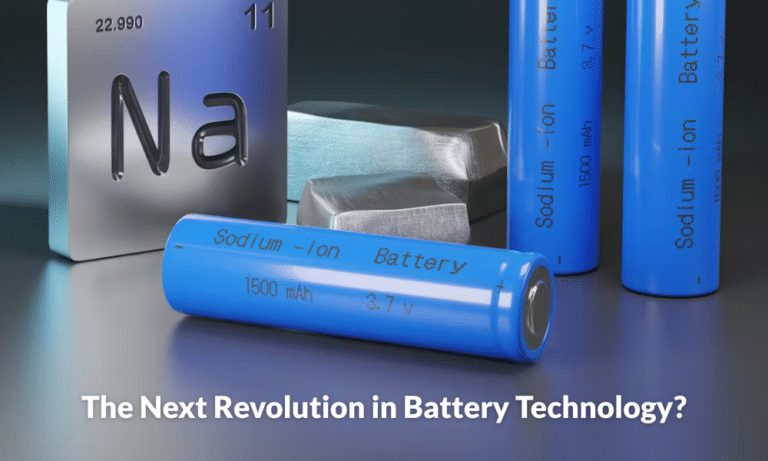
As CATL’s Naxtra cells hit passenger cars in 2026 and MIT names the technology a Breakthrough of the Year, sodium-ion batteries are poised to redraw the map of electrification—from winter-proof EVs to cheaper grid storage. Here’s why the shift is happening faster than anyone predicted.
It is February 2026, and in Inner Mongolia—one of the coldest inhabited regions on Earth—a sedan rolls off an assembly line fitted with a battery that contains no lithium. The car is the Changan Nevo A06, its chemistry is sodium-ion, and its cells are stamped with the name Naxtra, the new flagship battery brand of CATL, the world’s largest battery producer. Outside, the temperature hovers around minus thirty Celsius. Inside the pack, the discharge power at that temperature is roughly triple what an equivalent lithium iron phosphate battery could deliver. The car drives away. In a single uneventful moment, an idea that spent two decades circling the perimeter of serious energy science became a commercial product.
This is the context behind a deceptively simple observation that has begun circulating among investors, policymakers, and grid planners in early 2026: sodium-ion batteries are finally arriving, and they are arriving faster than almost anyone predicted. On January 12, MIT Technology Review included sodium-ion batteries in its annual list of 10 Breakthrough Technologies, a roster whose alumni include mRNA vaccines and deep learning. By January 23, CATL’s CTO had publicly confirmed that the Naxtra line would enter mass-market passenger vehicles in Q2 2026, starting with a GAC Aion model. The acceleration is not coincidental. It is the product of converging forces—technical, economic, and geopolitical—that have been building for years and are now, simultaneously, reaching maturity.
Why Sodium-Ion Batteries Matter Now: The Chemistry in Plain Language
A sodium-ion battery (sodium ion battery, or SIB) works on precisely the same principle as a lithium-ion cell: ions shuttle between a cathode and an anode through an electrolyte, releasing or storing electrical energy as they move. Swap lithium for sodium and the physics remain largely intact. The crucial difference lies not in electrochemistry but in raw materials.
Lithium is a geographically concentrated element. Roughly 60 percent of the world’s economically extractable lithium reserves sit in Chile, Australia, and Argentina, with China controlling the dominant share of refining capacity. Sodium, by contrast, is the sixth most abundant element in the Earth’s crust. It is present in seawater, rock salt, and the mineral deposits that underlie much of the inhabited world. It costs, on average, a fraction of lithium carbonate to source at the raw-material level, and it requires none of the cobalt or nickel that have historically plagued lithium-ion supply chains with ethical sourcing concerns and price volatility.
The practical limitation is equally clear: sodium ions are larger and heavier than lithium ions, making it harder to achieve the same energy density per kilogram. For much of the last decade, that gap was simply too large to overcome commercially. What has changed is not the fundamental physics, but the engineering response to it.
CATL Naxtra: From Lab to Road
The clearest evidence of sodium-ion batteries’ maturation is CATL’s Naxtra line, unveiled at the company’s inaugural Super Tech Day in April 2025. The Naxtra passenger-vehicle cell achieves an energy density of 175 Wh/kg—matching the higher end of lithium iron phosphate (LFP) performance and representing the highest energy density among commercialised sodium-ion batteries globally. By using a cell-to-pack architecture that eliminates intermediate modules, CATL extracts up to 400 kilometres of range on the Chinese driving cycle, with the company projecting that range will climb toward 600 km as the sodium supply chain matures.
The cold-weather story is even more striking. At minus 40 degrees Celsius, the Naxtra pack retains over 90 percent of its usable capacity. At minus 30 degrees, its discharge power is approximately three times higher than an equivalent LFP battery. Stable power delivery has been demonstrated down to minus 50 degrees. For context: standard lithium-ion EVs in Norwegian or Canadian winters routinely lose 30 to 40 percent of their stated range in sub-zero temperatures, a phenomenon that has slowed adoption in precisely the high-latitude markets that most need to decarbonise transport.
The deployment timeline is now concrete. Changan Automobile rolled out the world’s first mass-production sodium-ion passenger car in Inner Mongolia on February 5, 2026, with full market release targeted for mid-year. The GAC Aion line and JAC commercial vehicles are next in CATL’s confirmed schedule, with mass production of Naxtra cells across all segments expected to reach meaningful scale by July 2026. Simultaneously, CATL has deployed the Naxtra 24V heavy-duty truck start-stop battery, which the company claims reduces total lifecycle costs by 61 percent versus traditional lead-acid batteries and delivers reliable cold starts after a full year of idle storage.
Sodium Ion vs Lithium Ion 2026: Reading the Cost Curve
The price comparison between sodium-ion and lithium-ion is more nuanced than early headlines suggested. Sodium-ion cells currently average around $59 per kilowatt-hour, while LFP cells average $52 per kWh—meaning, counterintuitively, that today’s sodium-ion batteries are marginally more expensive than the cheapest lithium chemistry. The paradox is structural: sodium-ion’s material costs are genuinely lower, but production volumes remain small, keeping per-unit manufacturing costs elevated.
The crossover is coming, and it will be driven by two factors working simultaneously. First, lithium carbonate prices, which fell sharply through 2023 and 2024, have begun ticking upward again in early 2026, eroding LFP’s cost advantage. Second, sodium-ion manufacturing infrastructure does not require expensive retooling. The process for making sodium-ion cells closely mirrors that of lithium-ion production lines, allowing manufacturers to repurpose existing equipment. Industry research suggests sodium-ion cells can ultimately be manufactured at 20 to 30 percent below LFP cost once production scales to comparable volumes.
Several cost drivers that analysts often overlook reinforce this trajectory:
- No cobalt, no nickel. Sodium-ion cathodes—typically layered oxide or Prussian blue analogue structures—use inexpensive, widely available materials.
- Aluminium current collectors. Unlike lithium-ion cells, which require copper foil for the anode current collector (copper trading at around $9,000 per tonne), sodium-ion cells can use aluminium throughout, since sodium does not alloy with aluminium at low potentials.
- Simpler thermal management. The superior thermal stability of sodium-ion cells reduces the cost of battery management systems and cooling infrastructure, particularly in stationary storage applications.
- Cycle life. CATL claims over 10,000 cycles for Naxtra cells, dramatically reducing lifetime cost calculations for grid storage operators.
Sodium-Ion Battery Market Projections 2030: Between Caution and Ambition
The forecasting range for sodium-ion batteries is exceptionally wide, which itself tells a story about the technology’s position: past proof-of-concept, not yet at predictable scale. IDTechEx projects global sodium-ion production capacity could exceed 100 GWh annually by 2030, up from an estimated 9 to 10 GWh shipped in 2025. IRENA analysts, surveying a wider set of industry sources, report projections ranging between 50 and 600 GWh per year by 2030—a fivefold spread that reflects genuine uncertainty about the speed of demand pull-through.
Chinese industry research is somewhat more bullish, projecting the country’s domestic sodium-ion market alone growing from roughly 10 GWh in 2025 to 292 GWh by 2034, at an average annual growth rate near 45 percent. China currently accounts for more than 95 percent of announced global production capacity, with the pipeline of sodium-ion factory construction projects expanding relentlessly.
In market value terms, the global sodium-ion battery sector was worth approximately $1.17 billion in 2024 and is projected to reach $6.83 billion by 2034. More conservative estimates place the 2030 figure at around $2 billion, reflecting uncertainty about the pace of passenger-vehicle adoption outside China.
Sodium-Ion Batteries EVs: Where the Technology Fits Today
The common mistake in early coverage of sodium-ion was to frame it as a direct challenger to premium lithium—a replacement for the long-range, high-performance packs in luxury EVs. That framing was always wrong. The more accurate picture, emerging clearly in 2026, is one of complementarity across a segmented market.
Where sodium-ion is most competitive right now:
- Urban passenger cars and city EVs. The 400 km range of the Naxtra system covers more than half of typical daily driving needs in China and Europe. For buyers who charge overnight and drive urban routes, energy density is not the binding constraint—cost is.
- Two- and three-wheelers. Scooter maker Yadea launched four sodium-ion-powered models in 2025, and delivery-fleet operators in Chinese cities have begun piloting battery-swap stations for sodium-ion two-wheelers. Low-speed EVs and cargo bikes represent a market of hundreds of millions of units where the energy-density penalty is irrelevant.
- Battery-swap infrastructure. CATL’s own Choco-Swap network—targeting over 2,500 stations in 120 Chinese cities by end of 2026—is explicitly designed to accommodate Naxtra sodium cells, making swap-station economics viable at lower capital cost per installed kWh.
- Grid storage. The most transformative near-term application may be stationary. In May 2025, China Southern Power Grid commissioned a 200 MW hybrid storage station in Yunnan Province, combining sodium-ion and lithium-ion cells to stabilise output from more than 30 wind and solar plants. In the United States, Peak Energy signed a multi-year agreement in late 2025 to supply 4.75 GWh of sodium-ion storage systems to Jupiter Power between 2027 and 2030.
Sodium-Ion Batteries Geopolitics: The Strategic Significance Beyond Chemistry
Energy security analysts have been slow to fully map the geopolitical implications of sodium-ion’s rise, but those implications are substantial. The lithium-ion battery value chain is, in blunt terms, a Chinese supply chain: China refines roughly 60 percent of the world’s lithium, produces the majority of cathode materials globally, and manufactures nearly three-quarters of the world’s battery cells.
Sodium-ion does not immediately disrupt that structure—CATL and BYD are, after all, the leading sodium producers. But it creates a structural opening. Because sodium is abundant on every continent, governments in Europe, Southeast Asia, South Asia, and sub-Saharan Africa can, in principle, build competitive sodium-ion industries without dependence on geographically concentrated upstream supply chains. The European Economic and Social Committee (EESC) formally called for sodium-ion batteries to be placed at the centre of EU industrial strategy in late 2025, with dedicated studies and stakeholder work under development. European startups—Faradion (UK, acquired by India’s Reliance Industries), Tiamat (France, backed by Stellantis), Altris (Sweden), and PHENOGY—are building an ecosystem designed to capture the technology before China fully locks in its advantage.
For emerging markets, the calculus is even more direct. A sodium-ion grid-storage industry requires no lithium imports, no cobalt sourcing from the Democratic Republic of Congo, and no dependence on deep-sea mining of manganese nodules. The raw material is, almost literally, salt. For economies in South and Southeast Asia seeking to build domestic energy-storage capability alongside rapidly expanding solar and wind generation, that is a genuinely transformative proposition.
Sodium-Ion Batteries Cold Weather Performance: The Nordic Opportunity
There is a particular irony in the fact that lithium-ion batteries perform worst precisely where electrification incentives are strongest. Scandinavian governments have offered among the world’s most generous EV subsidies, yet Norwegian and Swedish EV owners consistently report the most severe winter range anxiety. At minus 20 Celsius, a standard NMC lithium battery pack can lose 35 to 40 percent of its rated capacity. At minus 30, some LFP packs cease to accept meaningful charge at all.
The Naxtra system’s ability to charge at minus 30 degrees and retain 90 percent capacity at minus 40 addresses this problem at the chemistry level rather than through expensive thermal management additions. While CATL has not announced European distribution of the Naxtra passenger platform, its architecture is clearly designed with cold-climate markets in mind. LG Energy Solution’s decision to open a sodium-ion pilot line in China in late 2025 suggests the Korean battery sector—which supplies significant European and North American capacity—is preparing for western deployment.
BYD, the Hard-Carbon Bottleneck, and the Road Ahead
CATL’s Naxtra launch has attracted the most attention, but it is not operating alone. BYD began constructing its first sodium-ion battery factory in Xuzhou in January 2024, committing 10 billion yuan ($1.4 billion) to a facility targeting 30 GWh of annual output. The company is simultaneously advancing a third-generation sodium-ion platform designed for up to 10,000 charge cycles—significantly beyond the 2,000 to 3,000 cycles typical of LFP—though it has not yet disclosed energy density specifications for that generation. HiNa Battery Technology, a specialist firm backed by the Chinese Academy of Sciences, has four sodium-ion product lines in commercial production, including low-speed EV and energy-storage formats.
The most pressing technical constraint is not the cell itself but the anode material. Sodium-ion batteries require hard carbon—a disordered carbon structure derived from organic precursors like coconut shell, resin, or biomass—rather than the graphite used in lithium-ion cells. Hard-carbon supply chains remain nascent, and scaling them while maintaining quality and cost competitiveness is the principal bottleneck limiting how quickly sodium-ion can move beyond its current deployment envelope. Several Chinese chemical companies are building hard-carbon anode plants—Wuhan Tian Na Technology is constructing a 130,000-tonne-per-year facility backed by CNY 58 billion in investment—but the timelines are measured in years, not months.
A balanced assessment must also acknowledge that sodium-ion is not, and may never be, the right chemistry for every application. Long-range premium EVs, aviation electrification, and high-density portable electronics will continue to demand the energy-per-kilogram performance that advanced lithium chemistries—and eventually solid-state cells—can provide. The future of electrification is not a single chemistry triumphant, but a diversified portfolio of technologies, each matched to the application for which its properties are best suited.
The Dual-Chemistry Era: What Comes Next
The image that best captures sodium-ion’s trajectory is not displacement but diversification. CATL itself calls this the “Multi-Power Era”—a strategic framing in which Naxtra sits alongside LFP, NMC, and the company’s next-generation Shenxing superfast-charging cells, each addressing a different layer of the market. The company’s own Freevoy Dual-Power battery combines a sodium-ion cell with an LFP cell in a single pack, using sodium’s cold-temperature superiority for low-state-of-charge winter performance while relying on LFP for energy density at moderate temperatures.
For grid operators, policymakers, and infrastructure investors, the practical near-term message is this: sodium-ion batteries are now commercially available, cost-competitive with LFP at the system level in stationary storage, and improving on a steep cost-and-performance curve. Projects planned today for 2027 and 2028 delivery should evaluate sodium-ion seriously. For EV markets, the chemistry fills a genuine gap in the cost and climate-resilience spectrum that neither LFP nor NMC currently addresses. And for governments with ambitions to build domestic battery industries without the geopolitical baggage of lithium dependence, sodium-ion represents the most accessible entry point in the history of electrochemical storage.
The car that rolled out of Inner Mongolia in February was unremarkable to look at. Salt-based chemistry, sub-zero temperatures, commercial-grade engineering. But the uneventfulness was the point. Technologies only truly arrive when they stop being surprising.
FAQ: Sodium-Ion Batteries 2026
What makes sodium-ion batteries different from lithium-ion batteries in 2026?
Sodium-ion batteries use sodium ions—derived from abundant, inexpensive salt-based materials—instead of lithium to store and release electrical energy. The core electrochemical process is nearly identical to lithium-ion, but sodium-ion cells offer superior cold-weather performance, simpler supply chains with no cobalt or nickel dependency, and lower projected manufacturing costs at scale. The main trade-off remains lower energy density compared to high-end lithium-ion chemistries.
Why do sodium-ion batteries perform better in cold weather than lithium-ion?
Sodium ions have faster ionic conductivity at low temperatures relative to the electrochemical constraints of lithium intercalation in graphite. CATL’s Naxtra cells retain over 90 percent of usable capacity at minus 40 degrees Celsius and can charge at minus 30 degrees—conditions under which LFP batteries experience severe power and capacity degradation. This makes sodium-ion batteries particularly valuable for EVs in Nordic, Canadian, and high-altitude Asian markets.
What are the sodium-ion battery market projections for 2030?
Projections vary widely. IDTechEx estimates global production capacity could exceed 100 GWh per year by 2030. IRENA surveys of industry sources place the range at 50 to 600 GWh annually. Chinese industry analysts project China’s domestic market alone could reach nearly 300 GWh by 2034. The market’s value is projected to grow from roughly $1.2 billion in 2024 to between $2 billion and $6.8 billion by 2030 to 2034, depending on EV adoption rates and grid storage deployment speed.
When will CATL’s Naxtra sodium-ion batteries be available in passenger vehicles?
CATL began mass production of Naxtra sodium-ion batteries for passenger vehicles in Q2 2026. The first mass-production car equipped with Naxtra cells—the Changan Nevo A06—was unveiled in Inner Mongolia in February 2026, with market release targeted for mid-year. The GAC Aion line and JAC commercial vehicles are also confirmed for Naxtra deployment, with CATL targeting full volume production across passenger, commercial, and energy storage segments by July 2026.
What are the geopolitical implications of sodium-ion batteries for global energy supply chains?
Because sodium is one of the most abundant elements on Earth, sodium-ion batteries can, in principle, be manufactured without the geographically concentrated supply chains that characterise lithium-ion. This reduces dependence on lithium from Chile, Argentina, and Australia, cobalt from the Democratic Republic of Congo, and Chinese refining capacity. European governments and the EESC have identified sodium-ion as a strategic priority for building domestic battery industries. For emerging markets in South Asia, Southeast Asia, and Africa, sodium’s ubiquity offers a realistic pathway to energy storage self-sufficiency without the political and economic entanglements of lithium procurement.
Discover more from The Economy
Subscribe to get the latest posts sent to your email.



Navigating Mortgage and Loan Refinancing in a High-Yield Environment
Global public debt crossing critical thresholds has kept central bank policies volatile, resulting in fluctuating US Treasury yields throughout 2026. For homeowners and commercial property holders burdened by previous high-interest borrowing cycles, finding optimal refinance windows has become a high-stakes financial puzzle. Stalled disinflation and stubborn employment numbers mean rate cuts are incremental, requiring borrowers to act with precision.
Timing your mortgage or commercial loan refinance in this environment requires a deep understanding of yield curve movements and lender risk appetites.
Decoding 2026 Refinance Dynamics
The 10-Year Treasury Yield Benchmark
Mortgage rates continue to track closely with the 10-year US Treasury yield. When macroeconomic anxiety spikes debt issuance, yields rise, tightening consumer borrowing capacity. Savvy borrowers monitor weekly Treasury auctions to lock in rates during brief dip windows.
Hybrid ARMs and Alternative Structures
With fixed rates remaining elevated, 7/1 and 10/1 adjustable-rate mortgages (ARMs) have surged in popularity. These products offer lower initial monthly payments, giving borrowers breathing room until central bank easing cycles fully materialize.
| Loan Product | Current Rate Range | Best For | Key Risk Factor |
| 30-Year Fixed Mortgage | 6.2% – 6.8% | Long-term predictability | Higher initial monthly outlay |
| 7/1 Hybrid ARM | 5.5% – 5.9% | Short-term ownership / flipping | Rate reset risk after year 7 |
| Commercial Refinance | 7.0% – 8.2% | Corporate asset restructuring | Strict DSCR lender covenants |
Actionable Steps for Successful Refinancing
To maximize your chances of securing favorable refinance terms in a volatile market, follow a disciplined preparation strategy.
Boost Your Credit Score Immediately: Lenders in 2026 are applying stringent credit tiering; a 20-point increase can drop your APR by a crucial quarter-point.
Shop Regional Credit Unions: Smaller financial institutions often offer portfolio loans with more flexible underwriting than major national banks.
Calculate the Break-Even Point: Ensure your total closing costs are recouped through monthly savings within 24 months of closing.
“Market Strategist View: Refinancing in 2026 is an exercise in opportunistic timing. Borrowers must maintain immaculate financial profiles ready to strike the moment Treasury yields dip.”
Mastering the complexities of today’s debt environment ensures you can successfully lower your debt service costs and protect your long-term financial stability.
Discover more from The Economy
Subscribe to get the latest posts sent to your email.

The days of pulling generic auto insurance quotes based purely on your zip code and age are officially over. In 2026, insurance comparison engines are powered entirely by generative AI and real-time telematics. These platforms digest thousands of live data points—ranging from your driving smoothness via connected vehicle sensors to real-time traffic congestion patterns—to generate hyper-personalized premiums instantly.
For consumers, this evolution represents both a massive opportunity for savings and a hidden trap for penalty pricing. Understanding how AI algorithms evaluate risk is essential for anyone looking to lower their monthly auto insurance premiums.
How AI Comparison Engines Evaluate Your Risk Profile
Behavioral Telematics and Connected Cars
Modern cars stream performance data directly to insurance aggregators. Generative AI models analyze braking sharpness, acceleration curves, cornering G-forces, and phone distraction metrics. Drivers who maintain smooth, defensive habits are rewarded with dynamic rate cuts of up to 40% compared to traditional rating tiers.
Predictive Traffic and Weather Modeling
AI tools now cross-reference your daily commute route with predictive weather and accident probability models. If your standard parking location or driving corridor has a statistically higher incidence of uninsured motorist claims, your quotes will reflect that hyper-local risk assessment.
| Comparison Factor | Traditional Rating Model | 2026 Generative AI Model | Impact on Premium |
| Mileage & Usage | Annual estimated odometer reading | GPS tracking & live trip duration | High (up to 35% savings) |
| Driving Behavior | MVR driving record & accidents | Real-time braking, speed, & G-force | Critical (determines tier) |
| Vehicle Tech | Make, model, and safety rating | ADAS calibration & repair cost data | Moderate |
Strategies to Lower Your AI-Driven Insurance Quote
To outsmart the algorithm and secure the lowest possible premium in 2026, drivers must proactively manage their digital footprint on insurance platforms.
Opt-In for Telematics Trial Periods: Many insurers offer immediate 15% discounts just for installing their driving app; let it track safe habits for 30 days to lock in permanent savings.
Scrub Unverified Public Records: Ensure your motor vehicle report is free of clerical errors that AI risk models misinterpret as reckless behavior.
Compare AI Aggregators: Use platforms that integrate multi-carrier API feeds rather than single-brand comparison sites to find the best risk-adjusted rate.
“Industry Note: AI-driven pricing rewards transparency and precision. Drivers who actively manage their telematics data consistently out-save those relying on legacy quote calculators.”
Embracing AI comparison tools allows savvy policyholders to customize coverage limits precisely to their driving habits, eliminating wasted premium spend while ensuring robust protection.
Discover more from The Economy
Subscribe to get the latest posts sent to your email.

Despite decades of bans and strict handling mandates, asbestos remains a silent killer across legacy manufacturing plants, shipyards, and modern green-energy infrastructure retrofits. In 2026, regulatory changes by the EPA and tightened occupational health standards have triggered a fresh wave of mesothelioma litigation. Manufacturers attempting to fast-track industrial transitions are encountering catastrophic oversight, exposing workers to legacy toxins and opening corporate parent companies to unprecedented liability.
Navigating a mesothelioma claim in 2026 requires understanding how modern industrial supply chains intersect with historical exposure. Trusts established decades ago are being audited under stricter transparency laws, altering payout ratios and accelerating fast-track settlements for terminally ill plaintiffs.
Modern Industrial Exposure Hotspots
Green Retrofitting and Renewable Energy Infrastructure
A primary source of 2026 asbestos exposure occurs during the decommissioning and retrofitting of older industrial facilities for renewable energy production. Workers insulating electrical grids, modernizing HVAC systems, or upgrading manufacturing floors frequently disturb encapsulated asbestos materials that were improperly documented or ignored during facility audits.
Automotive and Aerospace Supply Chains
With advanced manufacturing booming, workers handling specialized friction materials, gaskets, and heat shields face ongoing risks. Supply chain tracing has become more sophisticated, allowing legal teams to pinpoint exact corporate entities responsible for raw material distribution across multinational borders.
| Industry Sector | Primary Exposure Risk | Legal Venue / Trust | Avg. Claim Value Range |
| Green Energy Retrofit | Disturbed insulation, pipe lagging | Federal Tort / Manufacturer Trust | $1.2M – $3.5M |
| Shipbuilding & Marine | Boiler insulation, structural seals | Asbestos Bankruptcy Trusts | $800K – $2.4M |
| Automotive Manufacturing | Brake components, high-heat gaskets | Third-Party Product Liability | $600K – $1.8M |
Securing Maximum Compensation: Steps for Plaintiffs
Time is of the essence in mesothelioma cases. Plaintiffs and their families must act decisively to secure financial recovery before statutes of limitations expire.
Retain Specialized Counsel: Work exclusively with national mesothelioma law firms possessing deep historical databases of asbestos-containing products.
Audit Employment History: Document every job site, supervisor name, and equipment brand encountered throughout your career.
Expedite Medical Filings: Secure a formal pathological diagnosis quickly to qualify for expedited trust fund distribution and priority trial settings.
“Expert Insight: Modern asbestos litigation is no longer just about historical tracking; it is about holding modern corporations accountable for failing to conduct rigorous environmental safety audits before initiating industrial retrofits.”
By combining meticulous work history reconstruction with aggressive multi-trust filings, victims can secure substantial financial relief to cover specialized immunotherapy and family support.
Discover more from The Economy
Subscribe to get the latest posts sent to your email.

Balance of Payments (BOP)

The Falkland Islands Dispute: Sovereign Wealth, Offshore Drilling, and Market Impacts

Gross Domestic Product (GDP): Nominal vs. Real

What is Inflation and the Consumer Price Index (CPI)?

US-China Trade Competition 2026: Supply Chain Relocation Guide

Oil Prices Break $100 in 2026: Middle East Conflict & Energy Markets

South-South Trade Expansion: Digital Integration and Emerging Market Growth

$166B Tariff Refund Tapering Fast: Is Your Business Missing Out?

Stock Market Today: Dow Climbs 500 Points as Markets Shake Off Inflation Jitters

14th WTO Conference 2026: Tariffs & Global Supply Chain Impact

Swish Secures $24M Funding to Disrupt India’s $100B Food Market

Physical AI and Driverless Tech: The Next Trillion-Dollar Industrial Revolution

Enterprise AI Platforms Disrupting B2B SaaS in 2026: Full Analysis

Crypto vs. Safe Haven Assets 2026: Where Institutions Are Hedging

State Farm’s $5B Dividend 2026: Who Qualifies & Payout Dates

US-China Relations in Q3 2026: Trade Tariffs and Supply Chain Risks

Gold’s Wild 2026: From a Record $5,600 Peak to a 24% Crash and Back Toward $4,500

Oil Surges as Strait of Hormuz Traffic Collapses Again

The Rocket That Won’t Quit: Inside SpaceX’s Falcon 9 Launch Machine

Bank of England Set to Hold Rates Through Year-End, Reuters Poll Shows

SpaceX Starship Flight 14: First Orbital Attempt & Starlink V3 Launch Explained

The 2026 Crypto Regulatory Shift: What It Means for Institutional Investors

AI Chip Stocks 2026: The Best Semiconductor Investments Beyond Marvell

Retail Earnings Week: What Home Depot, Target & Walmart Reveal

AI-Powered Training: The Next Multi-Billion Dollar Ecosystem in Fitness

Russia’s Black Sea Oil Exports Fall for a Fifth Straight Week

Top 30 Stocks for Investment in PSX for Massive ROI in 2026

Global Chip Selloff Deepens: What’s Driving the Aug. 19 Semiconductor Rout
-

 Markets & Finance8 months ago
Top 15 Stocks for Investment in 2026 in PSX: Your Complete Guide to Pakistan’s Best Investment Opportunities
-

 Analysis7 months ago
Johor’s Investment Boom: The Hidden Costs Behind Malaysia’s Most Ambitious Economic Surge
-

 Analysis7 months ago
Top 10 Stocks for Investment in PSX for Quick Returns in 2026
-

 Analysis7 months ago
Brazil’s Rare Earth Race: US, EU, and China Compete for Critical Minerals as Tensions Rise
-

 Banks8 months ago
Best Investments in Pakistan 2026: Top 10 Low-Price Shares and Long-Term Picks for the PSX
-

 Investment8 months ago
Top 10 Mutual Fund Managers in Pakistan for Investment in 2026: A Comprehensive Guide for Optimal Returns
-

 Global Economy9 months ago
15 Most Lucrative Sectors for Investment in Pakistan: A 2025 Data-Driven Analysis
-

 Global Economy9 months ago
Pakistan’s Export Goldmine: 10 Game-Changing Markets Where Pakistani Businesses Are Winning Big in 2025