
Markets & Finance
Is the Stock Market Open on Columbus Day 2026? NYSE, Nasdaq and Bonds Explained


NYSE and Nasdaq are scheduled to trade their regular session on Monday, October 12, 2026, although the U.S. bond-market holiday schedule differs from that for stocks. Research cutoff: October 12, 2026; confirm developing facts before publication.
What is happening and why readers are searching
Yes. Monday, October 12, 2026 is Columbus Day, also observed by many as Indigenous Peoples’ Day, and the New York Stock Exchange and Nasdaq are scheduled to trade during their standard 9:30 a.m.–4 p.m. Eastern session. The bond market follows a different holiday schedule: SIFMA recommends a full closure in U.S. dollar fixed-income trading. Sources: NYSE and SIFMA holiday schedule.
The important context competitors can overlook
This distinction matters for more than trivia. A trader may see stocks move while some bond markets and banks are closed. Brokerage funding, transfer cutoffs and market data from less-liquid products can behave differently from a typical Monday. International exchanges observe their own holidays and may not follow the U.S. calendar. The federal holiday label alone does not tell a reader whether a particular financial instrument trades. For primary-source checks and current reporting, see NYSE and Kiplinger. The key distinction is separate equity, bond, bank and settlement schedules.
A practical way to use this information
Check your brokerage’s trading notice for options, mutual-fund cutoffs, fixed income and account funding. Avoid saying “the market is closed” without naming the asset class. Readers with urgent cash needs should confirm transfer and settlement arrangements directly with their institution. The next scheduled full U.S. stock-market holiday after October 12 is Thanksgiving Day, November 26, according to the exchange holiday calendars.
A holiday-hours comparison worth saving
| Market or service | October 12, 2026 | What to check |
|---|---|---|
| NYSE-listed shares | Regular session scheduled | Your broker and exchange notices |
| Nasdaq-listed shares | Regular session scheduled | Trading hours and order type |
| U.S. dollar bond market | SIFMA recommends closure | Fixed-income trading desk |
| Banks and transfers | Federal holiday may affect services | Your bank’s payment timetable |
NYSE exchange trading hours and the SIFMA holiday recommendation are different types of evidence. Neither establishes that every retail intermediary will offer normal transfer processing.
What to verify before making a decision
The right next step is to identify the source, timestamp and applicable market or jurisdiction. Check whether a number is a historical observation, official announcement, target, forecast or scenario. If you intend to act financially, legally or commercially, use the relevant provider’s current terms and obtain professional advice where appropriate. The sources cited here establish context; they are not a substitute for live prices, individual eligibility checks or binding agreements.
Reader questions
Can I buy U.S. stocks on Columbus Day?
Yes, the regular NYSE and Nasdaq session is scheduled.
Are Treasury bonds trading normally?
SIFMA recommends a U.S. bond-market holiday closure.
What “the market is open” actually means
The NYSE and Nasdaq trading session and the U.S. federal-holiday calendar are separate systems. On Monday, October 12, 2026, their standard core trading hours are scheduled to run from 9:30 a.m. to 4 p.m. Eastern Time. A share of a widely traded U.S. company can therefore change hands while many bank branches and government offices remain closed. But that statement does not tell you whether your brokerage’s customer-service desk is staffed normally, whether a fund values assets at its usual time, or whether a particular bond has a reliable two-sided quote. Those details depend on instrument, venue and broker.
For an investor outside the United States, convert Eastern Time carefully. Some countries move clocks on different dates, while others do not observe daylight saving time. A calendar showing “9:30” without a time zone is insufficient. Use the NYSE official market calendar as the first reference for exchange trading hours and your broker’s order preview for instrument-specific handling.
Stocks, Treasuries, funds and cryptocurrency are not interchangeable
A company’s listed common stock may trade normally even when the recommended U.S. bond-market session is closed. Treasury bonds, municipal bonds and corporate bonds do not operate in exactly the same way as exchange-listed shares. Fixed-income markets are fragmented, and a limited or irregular quoting environment can produce wider bid-ask spreads. Placing a market order in a thinly traded security can be more expensive than expected. Investors considering a bond trade should ask about dealer liquidity, execution timing and whether prices are executable rather than merely indicative.
Mutual funds, exchange-traded funds, stock-index futures and cryptocurrencies each have their own pricing mechanics. An ETF can trade on the stock exchange, but its underlying holdings could include instruments in markets observing a holiday. Mutual funds normally process orders according to their published prospectuses and cutoff policies. Futures venues publish product-specific schedules. Cryptocurrency markets trade around the clock, but uninterrupted availability does not guarantee tight spreads. Checking one “market open” headline is not enough to infer all these schedules.
Order types and settlement around a federal holiday
Imagine an investor who places an order for shares on Monday morning. The exchange may execute it during the ordinary equity session, but settlement and cash-transfer processing can be affected by banking holidays and applicable business-day conventions. A trade confirmation, settled-cash display and withdrawal availability are not the same event. The safest approach is to check the brokerage’s holiday operations notice rather than assuming that an executed trade instantly creates withdrawable cash. Different account types may impose additional restrictions.
For a volatile security, an investor can compare the displayed bid and ask before trading and consider a limit order rather than automatically accepting an uncertain market price. This does not guarantee execution. It does specify the least favorable purchase price or sale price the investor is willing to accept. Orders entered outside the core session may also have distinct participation, duration and execution rules, which a broker should disclose.
The practical Columbus Day checklist
A useful market-hours answer should cover more than the yes-or-no question. Check the exact date and year, the trading venue, the time zone, the security type, your brokerage’s processing calendar and any early-closing notice. For dollar-denominated fixed income, consult the SIFMA holiday schedule. For your specific bank, inspect its branch and electronic-transfer information. Do not assume a bank holiday means cards stop working or electronic trading becomes impossible; these are distinct operations.
Holiday headlines can also expire quickly. A search result from 2025 or 2027 might display the same Columbus Day keywords yet give the wrong weekday or market specifics. Editors should include “Monday, October 12, 2026” near the top and remove any blanket claim that all financial markets are open. If the story is reused next year, the date and all supporting calendars need new verification.
What to do if a trade or transfer is urgent
For an urgent payment, ask the receiving institution about cutoff times and whether it recognizes the holiday as a processing day. For an urgent investment order, verify the specific instrument’s status directly in the broker interface and review the quote rather than trusting a static article. Where timing is not essential, waiting for ordinary liquidity can be more sensible than accepting a large spread. These are general execution considerations, not recommendations to buy or sell any particular security.
The broader lesson is that exchange trading, dealer liquidity and banking settlement are three separate clocks. Columbus Day demonstrates why a short market-hours answer is useful as a starting point but inadequate for every investor’s operational decision.
Discover more from The Economy
Subscribe to get the latest posts sent to your email.


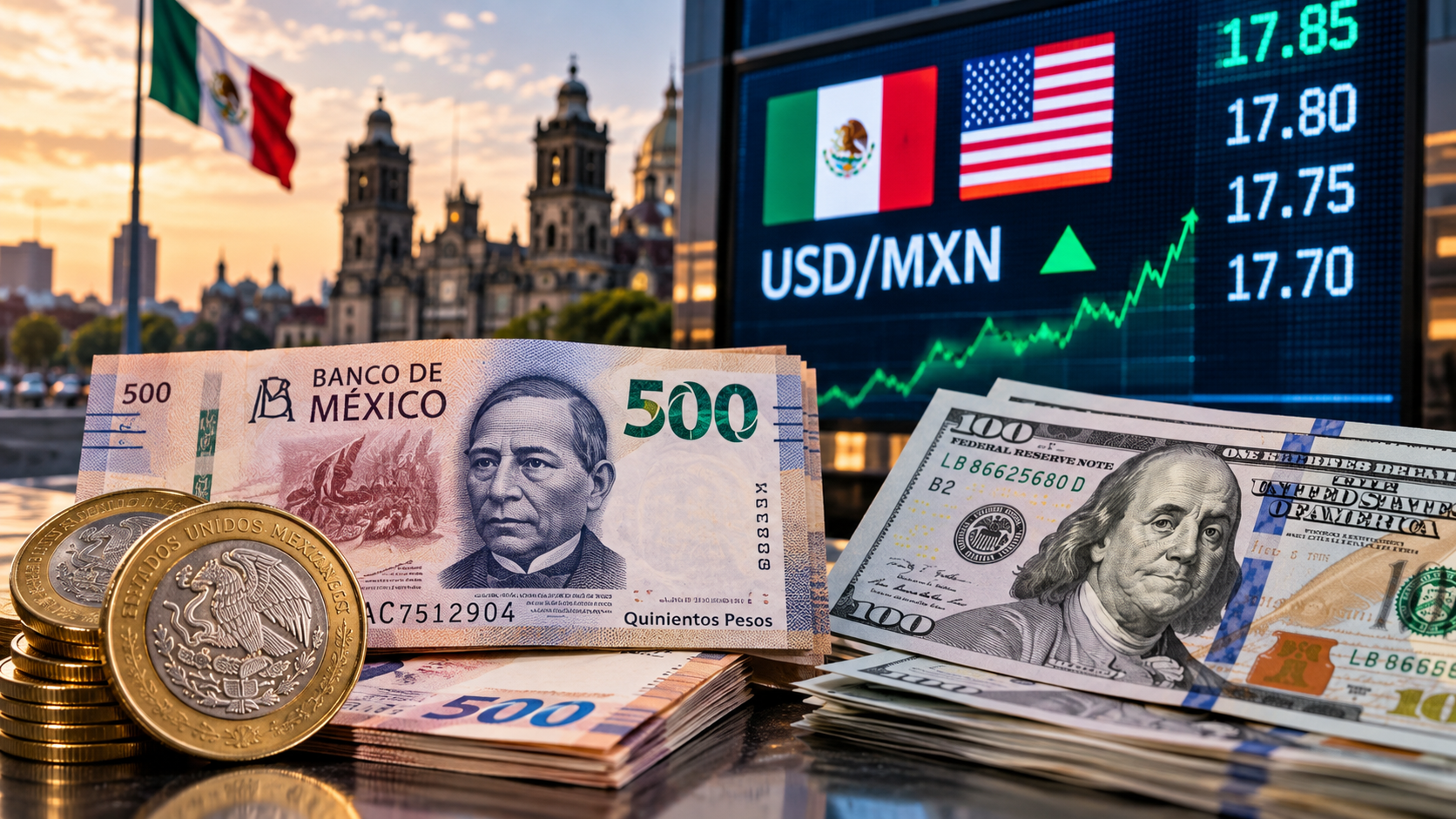
USD/MXN measures pesos per U.S. dollar. Compare the live exchange quote with transfer fees and the actual peso amount delivered, rather than relying on a headline rate. Research cutoff: October 12, 2026; confirm developing facts before publication.
What is happening and why readers are searching
The peso mexicano versus dólar estadounidense question is not just about a currency quote. It is about how many pesos arrive after an American sends money, what a Mexican importer pays in dollars and how a trader interprets movements in USD/MXN. As of October 12, the U.S. dollar is drawing support from geopolitical risk and expectations surrounding the next American inflation report, although that broad dollar trend cannot alone establish the peso’s intraday direction. Sources: Reuters currency coverage and BLS CPI.
The important context competitors can overlook
USD/MXN measures pesos per U.S. dollar: when the number rises, the dollar strengthens against the peso; when it falls, the peso gains. Mexico’s interest rates, inflation, trade flows, risk appetite and the relative direction of Federal Reserve policy all matter. Remittance services add a second layer: the advertised exchange rate and the transaction fee can change the amount a family receives even if the interbank quote is unchanged. For primary-source checks and current reporting, see Reuters currency coverage and World Trade Organization. The key distinction is separate fx price, bank spread and transfer cost.
A practical way to use this information
For a remittance, request an all-in quote from at least two providers at the same time and compare the final MXN delivered, not the headline “zero-fee” claim. For business invoices, set a clear payment date and decide whether locking a rate is worth the cost. For market commentary, label the observation time and data source; never publish an unverified live USD/MXN price or a one-way prediction as a fact.
The remittance calculation that matters
Suppose a provider quotes 18.00 pesos per dollar and charges a $5 fee on a $500 transaction. If the fee is deducted from the sending amount, the recipient would receive 495 × 18.00 = 8,910 MXN. A competing provider might quote 17.90 with no fee, delivering 8,950 MXN. These are invented teaching rates, not October 2026 exchange quotes. The second provider wins this narrow example even though its quoted exchange rate looks worse.
This is why a reader searching peso mexicano may need more than a Reuters market chart: the consumer question is about the effective rate. State fees, settlement speed and delivered pesos together, and use a current live provider quotation before publishing a recommendation.
What to verify before making a decision
The right next step is to identify the source, timestamp and applicable market or jurisdiction. Check whether a number is a historical observation, official announcement, target, forecast or scenario. If you intend to act financially, legally or commercially, use the relevant provider’s current terms and obtain professional advice where appropriate. The sources cited here establish context; they are not a substitute for live prices, individual eligibility checks or binding agreements.
Reader questions
Does a rising USD/MXN mean a stronger peso?
No. More pesos per dollar indicates a weaker peso relative to the U.S. currency.
Is the mid-market exchange rate what customers receive?
Usually not; providers may add a spread or fee.
How to read USD/MXN without reversing the direction
USD/MXN is conventionally quoted as the number of Mexican pesos required to purchase one U.S. dollar. If the quote rises from a hypothetical 18.00 to 18.50, the dollar has strengthened against the peso: one dollar buys more pesos. If it falls to 17.50, the peso has strengthened because fewer pesos are needed to buy a dollar. The exchange rate can change during the day, so comparisons should specify the timestamp, data provider and whether the quote is a wholesale mid-market price or a consumer rate.
The inverse quote, MXN/USD, tells a different story in presentation but describes the same relationship. A casual reader may see a number move downward and call it a “currency crash,” even though that direction means peso appreciation in the USD/MXN convention. Explaining the quote first prevents misleading conclusions in headlines, charts and transfer decisions. For monetary-policy background, compare official material from Banco de México and the Federal Reserve.
Interest-rate differences are important, not decisive
A higher Mexican policy rate relative to the U.S. rate can make peso-denominated assets attractive to some international investors. The appeal depends on expected exchange-rate moves, transaction costs, risk appetite and access to local instruments, not simply a subtraction of headline interest rates. If investors fear abrupt currency depreciation or escalating global conflict, the apparent interest-rate advantage may be overwhelmed by the exchange-rate loss. Expectations about future central-bank decisions often move the market before either institution changes its benchmark rate.
Mexico’s economic connections to the United States complicate any simple theory. Manufacturing exports, remittances, tourism receipts, foreign investment and import payments create flows into and out of pesos. A slowing U.S. economy could affect Mexican exporters while simultaneously altering expectations for U.S. rates. The peso may therefore respond to employment, trade and geopolitical news in ways that do not align neatly with the daily dollar index. Currency forecasts should acknowledge competing drivers rather than state a one-way outcome as inevitable.
The real cost of sending money to Mexico
A remittance comparison must combine the fee and the provider’s exchange rate. Suppose someone sends $500 when an illustrative mid-market exchange rate is 18.00 pesos per dollar. Before charges, the theoretical value is 9,000 pesos. Provider A offers 17.75 and charges $4; if the fee is deducted from the amount exchanged, the recipient receives 496 × 17.75 = 8,804 pesos. Provider B offers 17.85 with an $8 deducted fee, yielding 492 × 17.85 = 8,782.20 pesos. The provider advertising the better exchange rate does not necessarily deliver the larger amount.
This comparison is hypothetical and ignores any receiving-bank deductions. For genuine comparisons, require a final “recipient gets” figure at the same moment and for the same payment method. Some providers promote the first transfer, then use different rates afterward. Others offer faster delivery at a higher cost. The family receiving the funds should also check whether a mobile-wallet, bank-account or cash-pickup method suits its needs and whether the quoted conversion remains locked until delivery.
A simple scenario map for consumers and companies
Consider three scenarios rather than a single USD/MXN prediction. In a calmer global market, investors might place more weight on Mexican yields and economic fundamentals. During a global risk-off event, a rush toward dollar liquidity may dominate even if Mexican domestic indicators have not materially changed. Under a sharp change in U.S.-Mexico trade expectations, importers and exporters could adjust demand for foreign currency independently of speculative flows. The probability and timing of these scenarios cannot be read directly from a single chart.
An importer paying suppliers in dollars generally benefits from a stronger peso when other variables are unchanged; a Mexican exporter receiving dollars can face the opposite currency translation. A U.S. family sending dollars to Mexico usually receives fewer pesos when the peso strengthens, although improved purchasing power or local inflation trends may change how far those funds go. Each reader must identify which side of the exchange is relevant before deciding whether a move is favorable.
Before exchanging or transferring
Write down the amount, recipient currency, exact provider fee, offered exchange rate, receipt deadline and whether cancellation is allowed. Compare at least two actual all-in quotes, not screenshots taken hours apart. If the funds are needed for rent or medical treatment, certainty of delivery may outweigh a marginal rate improvement. Traders should separately consider position sizing, liquidity and overnight risk; a retail-remittance guide is not a strategy for leveraged currency speculation.
For updated context, consult a current Banxico economic release alongside verified currency-market reporting. An article can explain currency mechanisms for months, but a quoted USD/MXN price without a fresh timestamp can mislead within minutes.
Discover more from The Economy
Subscribe to get the latest posts sent to your email.

Stocks approached record territory as the third-quarter 2026 corporate earnings season gathered pace. Investors have substantial optimism about profits but also a complicated set of risks: borrowing costs, geopolitical energy shocks, narrow market leadership and doubts about whether AI spending will keep producing attractive returns. Earnings reports offer something social-media commentary cannot: company-specific numbers against which expectations can be tested.
The S&P 500 closed at 7,811.54 on Friday, October 9, according to the Associated Press, after gaining 0.6% for the session. A high stock index can be supported by improving fundamentals, improving valuations, or a combination. Earnings season helps reveal how much of the rally is backed by actual revenue, profits and revised guidance. AP market close.
FactSet’s key estimate: 29.6% expected growth
In research published October 9, FactSet said the S&P 500’s current third-quarter earnings growth rate was 29.6%. That is a blended or estimated earnings-season measure, not the final result for the entire index. FactSet further argued that normal patterns of companies beating estimates could push final reported growth above 35%. It is critical to attribute the higher figure as an analytical expectation, not a fact already achieved. FactSet, October 9.
The difference matters for both investors and editorial credibility. A reader seeing “S&P profits rose 35%” may assume results have been reported, while much of the quarter’s company-level information remains forthcoming. A good headline preserves tense: analysts expect, companies reported, or estimates imply. Numbers should be revised after additional disclosures, with the article’s update date changed accordingly.
Why AI is a major source of expected growth
Technology suppliers and businesses selling into AI infrastructure have seen demand for chips, networking and cloud capabilities. Large AI-oriented firms can deliver unusually fast earnings growth that influences aggregate S&P performance. A Financial Times analysis reported strong profit expectations driven in significant part by AI investment and cited Goldman Sachs forecasting a 27% year-on-year increase for the September quarter at the time of publication. Different forecasting organizations may report somewhat different estimates because of timing, methodologies and index coverage. Financial Times analysis.
AI’s influence cuts both ways. If capital spending accelerates, infrastructure providers may enjoy better near-term sales. But the companies purchasing equipment may experience pressure on future cash flows. A positive earnings result from an upstream chip supplier does not establish that a downstream AI application has produced attractive returns. For an earnings season described as “AI-led,” these layers must be kept distinct.
Banks are an early window into the rest of the economy
Major U.S. banks are among the firms expected to report prominently as the season develops. Their results can reveal changes in loan demand, deposits, interest margins, consumer credit and corporate investment appetite. A bank’s profits are influenced by trading activity as well as household borrowing, making financials a useful but imperfect proxy for overall economic strength.
Barron’s reported cautious investor sentiment ahead of results from institutions including JPMorgan and Bank of America, with questions around loan growth, trading, investment banking and funding costs. That coverage highlights an important distinction: strong analyst estimates can coexist with weak bank share prices when the market is concerned about sustainability. Barron’s banks preview.
For editors, bank earnings offer a chance to connect a headline number to the drivers underneath it. A trading-revenue surprise is not the same thing as a broad increase in customer lending. A favorable quarter from reserve releases is not the same as accelerating underlying demand.
Profit margins are the stress test
Corporate profit growth can result from faster sales, lower expenses, favorable mix or accounting effects. When revenue rises quickly but expenses rise more slowly, margins improve. Yet companies experiencing higher energy, borrowing or labor costs may face pressure even if total sales are still rising. Margin changes deserve as much scrutiny as earnings per share.
To compare businesses fairly, separate operating margins from net margins and GAAP results from management-adjusted metrics. Adjusted profitability measures can illuminate recurring performance but can also exclude substantial compensation or restructuring costs. Reconciliations in company filings matter. Commentary should not declare a new efficiency era solely because one adjusted metric rose.
Earnings beats are relative to expectations
A company can report growing profit and see its shares fall. Markets care about results relative to estimates and about forward guidance. If management announces a large revenue increase but expects slower future growth, the stock may decline because investors had anticipated an even stronger outlook. Conversely, a weak quarter can generate a share-price rise if the news is less bad than investors feared.
This is why a quality earnings article should answer at least four questions: What did the company report? What had analysts expected? What guidance changed? How did the share price move after the report, with a precise time reference? Avoid relying on a single social-media reaction or prematurely attributing every market move to one headline.
Does the rest of the market benefit from AI-driven profits?
A major issue is whether profit improvements are spreading beyond the highest-profile technology companies. Large index members have greater weight in the S&P 500, and strong results from a handful of leaders can dominate its earnings trajectory. The wider market may experience more uneven conditions, especially where debt costs, weak pricing power or shrinking demand weigh on smaller firms.
MarketWatch described an improvement in market breadth in the latest week, despite prior concentration in AI-linked shares. That provides a possible counterpoint to fears of permanently narrow leadership. MarketWatch breadth update. But a sustained broadening should be confirmed through both price data and profit revisions across sectors.
The strongest earnings season would be one in which more industries deliver genuine revenue gains, margins remain defensible and corporate guidance does not depend on endlessly rising financing commitments. The weaker version is one in which aggregate growth looks impressive but relies on relatively few extraordinary businesses.
Energy and rates could change management guidance
Energy prices influence transport, production and consumer spending. October’s Russian diesel arrangement temporarily reshaped fuel-market expectations, while conflict risks continued to cloud future supply. Those variables could affect management commentary even when reported September-quarter financial results predate the latest announcement. Reuters diesel reporting.
Interest rates are another powerful influence. In September, the Fed raised its policy target to 3.75%–4.00%, and the 10-year Treasury yield traded at elevated levels by October. Higher financing costs may constrain businesses with weak cash flows and significant borrowing requirements. However, stronger economic growth can also support profits despite those costs. An earnings season should test which companies actually have the pricing power and balance sheets to navigate this environment. Federal Reserve.
The earnings dashboard worth publishing each week
For each major reporting wave, show the percentage of S&P companies that have announced results, the blended earnings growth rate, revenue growth, the fraction beating estimates, and the direction of full-year guidance. Then include a sector table highlighting technology, financials, energy, industrials, health care and consumer-facing companies. A static earnings estimate from early October must not be presented as though it already incorporates late-October results.
Separate reported financials from projections. Update coverage at meaningful milestones and retain a revision history when numbers change materially. Cite primary investor-relations releases and SEC filings wherever possible, using analysts or data providers for consensus figures. This publication method is better for readers than repeating an aggressive headline each time a single company exceeds expectations.
Can profits keep the rally alive?
They could help, especially if earnings growth proves durable and broadens. But market outcomes will also depend on valuation, bond yields, policy uncertainty and what management teams say about future capital expenditure. The most productive question for investors is not whether Q3 growth looks large in isolation. It is whether the incremental profit justifies the market prices investors are already paying and whether cash flow supports further expansion.
For a finance news site, the editorial advantage is to follow those tests in real time. A disciplined tracker of estimates versus actual results can offer more repeat value than a one-off prediction about how high the S&P 500 will climb.
Frequently asked questions
What was FactSet’s Q3 2026 S&P 500 earnings-growth estimate on October 9?
The reported estimated growth rate was 29.6%.
Has S&P 500 Q3 earnings growth already exceeded 35%?
No final index-wide outcome was established by that analysis; FactSet said the rate might exceed 35% after companies report.
Why do banks matter early in earnings season?
Their reports can illuminate credit quality, deposit costs, corporate activity and risk appetite.
Does an earnings beat mean the stock will rise?
No. Market reaction depends on expectations, guidance, valuation and many other factors.
Discover more from The Economy
Subscribe to get the latest posts sent to your email.

Energy prices can move quickly through transportation costs, consumer inflation, political debate and expectations for interest rates. That is why an announcement about diesel shipments from Russia can matter far beyond the oil industry. On October 9, U.S. President Donald Trump announced an arrangement under which Russia would provide diesel to U.S. and global markets, with an initial amount reported as more than 300,000 metric tons and additional volumes proposed for later delivery. Reuters reporting.
The announcement is consequential, but editors must separate agreed or promised supplies from cargoes that have actually arrived and been processed. The arrangement is also politically contentious because it involves easing restrictions on Russian energy revenue while Russia continues its war in Ukraine. Understanding both parts is essential; a pure pump-price article would miss the diplomatic stakes, while a pure geopolitical article could overlook how households and manufacturers feel a fuel shock.
What has been announced—and what remains uncertain
Reuters reported an initial quantity exceeding 300,000 metric tons, with 500,000 tons in November and 1 million tons thereafter discussed as additional supplies. The exact rollout, cargo destinations and future deliveries depend on logistics and policy implementation. The Associated Press reported that the U.S. Treasury issued a temporary license easing relevant sanctions for the arrangement. A license is not the same thing as a permanent, unrestricted return to normal trading. Reuters; Associated Press.
The most useful next questions are practical. Which grades of diesel are eligible? Which ports and refineries can receive shipments? What insurance, shipping and payment channels will be used? Could other fuel trade be displaced rather than global supply increased? Without answers, it is premature to calculate a permanent reduction in pump prices from announced tonnage alone.
Why diesel prices are different from crude-oil prices
Crude oil is a raw feedstock; diesel is a refined product. Diesel availability depends on crude supply, refinery configuration, maintenance, fuel standards, transportation infrastructure and regional inventories. Diesel and crude prices often move together, but refining margins can expand or contract independently. A disruption to refineries or fuel exports may produce a sharp diesel-price shock even if crude prices move less dramatically.
Diesel is essential for commercial trucking, agriculture, heavy equipment and some industrial processes. Higher diesel costs can feed into freight rates and food-delivery expenses, though the timing and degree of pass-through depend on contracts and competition. Household inflation may also be affected indirectly through goods prices, making diesel a politically sensitive indicator even for people who never personally buy the fuel.
The market’s immediate response isn’t a long-term forecast
Reuters said U.S. diesel futures fell nearly 5% following the announcement. A futures move shows how traders adjusted near-term expectations; it does not prove the eventual physical shipments will achieve the stated pricing objective. Reuters October 9.
Markets move on surprises relative to what investors had expected. If traders had anticipated even more supply, prices could still rise despite the announcement. Conversely, an unexpected license can depress futures before a single new cargo is loaded. A fair article reports the change in futures separately from retail diesel prices, which are influenced by local taxes, inventories, refining margins and distribution conditions.
Iran adds a second layer of energy uncertainty
Regional instability involving Iran has intensified concerns about energy routes and supply availability. Risk to strategic waterways, shipping costs, tanker insurance and refinery operations can feed into global prices. But forecasts that any particular route will remain closed, reopen at a specified time or cause a precise percentage increase in inflation require reliable, current verification.
The October diesel plan has been discussed against the backdrop of high fuel prices and broader conflict-related disruptions. Reuters. These events should not be reduced to a single causal statement such as “Iran caused all fuel inflation.” Refinery outages, industrial demand, inventories, government policy and seasonal factors also matter. A successful news explainer distinguishes contributing factors rather than presenting an exclusively geopolitical cause.
Ukraine’s refinery strikes complicate the diplomacy
Ukrainian attacks on Russian energy infrastructure have become an important part of the conflict and the diplomatic debate over the diesel arrangement. Axios reported claims from a U.S. official about disagreements with Kyiv over those attacks and Washington’s decision to pursue a deal with Moscow. The report attributed its characterization of the president’s motives to that official; it should not be presented as an uncontested account of every participant’s intentions. Axios investigation.
Ukraine’s government has objected to measures it sees as providing Russia additional revenue during the war. AP and Reuters reported strong criticism of the sanctions relief. The administration’s stated rationale emphasizes lowering fuel costs. These are distinct policy positions, and a responsible treatment can explain both without treating an announced supply transaction as a negotiated peace settlement. Associated Press.
The sanctions trade-off is economic as well as strategic
Sanctions can restrict access to buyers, financing, shipping and technology. Easing them may improve market liquidity and encourage new fuel flows. But it may also reduce economic pressure on the sanctioned country and alter bargaining incentives. The relevant evaluation must include what was licensed, for how long, and whether the transaction can be reversed if conditions change.
Policy effects are not always immediate. A temporary legal authorization could unlock inventories already available elsewhere, making market prices react sooner than actual shipping. On the other hand, operational barriers can still slow delivery despite a license. Reporting should distinguish market permission from physical production capacity and avoid making unsupported claims about how revenue will be used by a government.
How fuel prices reach headline inflation
A fuel shock has direct and indirect channels. Direct effects show up in categories such as diesel and gasoline purchases. Indirect effects travel through freight, agricultural machinery, heating and the cost of distributing goods. For firms with thin margins, a prolonged fuel-price rise can reduce profitability before consumer prices fully adjust.
The macroeconomic response is more ambiguous. High energy costs can weaken demand, while simultaneously pushing measured inflation upward. Central banks must judge whether the shock will persist and influence broad wage and price expectations. The Fed’s September 2026 statement described inflation as elevated and raised the policy rate to 3.75%–4.00%, underscoring the importance of future energy outcomes for monetary conditions. Federal Reserve policy statement.
A balanced scenario framework
In an easing scenario, announced shipments arrive, existing inventories are accessible, and shipping disruptions diminish. Diesel prices could soften, with some relief passing into freight costs. In a stress scenario, logistics fail, sanctions arrangements face reversal or regional conflict interrupts supply, extending the inflation problem. A mixed scenario is also possible: near-term futures soften but consumer prices remain stubborn because local markets are slow to adjust.
These are scenarios, not verified outcomes. Publishing a precise fuel-price forecast without a model, input assumptions and uncertainty range would be misleading. A stronger publication follows actual cargo movements, inventory reports, refinery output, wholesale crack spreads and retail price data to see which scenario is materializing.
What journalists and readers should verify next
First, read the exact terms and expiration of the relevant U.S. Treasury license. Second, compare company and government announcements with cargo-tracking or customs evidence when available. Third, distinguish oil benchmarks from diesel futures and average retail pump prices. Fourth, update reporting on conditions affecting Iran-linked maritime routes. Fifth, document the responses of Ukraine, Russia and U.S. lawmakers with accurate attribution.
A brief daily update can be more useful than a speculative “end of the energy crisis” headline. It should state what changed since yesterday and what remains unknown. That discipline also helps readers distinguish temporary market relief from a lasting normalization of energy trade.
Frequently asked questions
Did the United States announce a Russian diesel arrangement in October 2026?
Yes. Reuters and AP reported the October 9 announcement and temporary sanctions relief. The delivery schedule still requires verification as supplies move.
Did diesel futures fall after the news?
Reuters reported an initial decline of nearly 5%. Retail prices will not necessarily change by the same amount or on the same day.
Why does Ukraine object?
Ukrainian officials have argued that easing restrictions could generate revenue benefiting Russia while the war continues.
Can a diesel agreement reduce inflation permanently?
Not on its own. Lasting effects depend on supply, demand, logistics, refinery conditions and broader inflation pressures.
Discover more from The Economy
Subscribe to get the latest posts sent to your email.

Peso Mexicano vs Dólar Estadounidense: A Practical USD/MXN Guide for October 2026

Is the Stock Market Open on Columbus Day 2026? NYSE, Nasdaq and Bonds Explained

Concert Ticket Prices in 2026: Dynamic Pricing, Fees and How to Buy Safely

High-Yield Savings Accounts in 2026: How to Compare APY Without Chasing a Headline

EU-China Trade Deal 2026: How Beijing and Brussels Avoided a Trade War—and Who Wins

Social Security 2027 COLA Announcement: Date, Formula and What Retirees Should Check

China’s AI Microdrama Boom: How Beijing Is Reshaping Global Media

Q3 2026 Earnings Preview: Can Record Profit Expectations Keep Wall Street’s Rally Alive?

Russia Diesel Deal 2026: Oil Prices and Inflation Risks

Fed Rates 2026: Treasury Yields, Bonds and SGOV Explained

S&P 500 Market Breadth 2026: Weak Rally or Rotation?

The AI Capex Boom: Data Centers Reshaping Growth

Palantir Stock in 2026: Extraordinary AI Growth

Tesla Physical AI 2026: Robotaxis, Optimus and TSLA Risks

PSX Forecast 2026: KSE-100, IMF Reviews & Geopolitics

Middle East War Economics 2026: Oil Prices & Energy Markets

China Stocks Today: Are Big Economies in Asia Nearing a Market Bottom?

Crypto Daily Outlook: Bitcoin, Altcoins, and the Future of Decentralized Finance

Global Pension Systems Ranked: The World’s Best and Worst Retirement Frameworks

World’s Largest Economies: Ranking the Top Global Powers

Elon Musk’s Next Moves: Disrupting the 2026 Global Economy

Pakistan Economy 2026: Inside the SBP’s Balancing Act

GasBuddy Market Insights: How Crude Price Shifts Impact Local Fuel Cost Averages

World Bank & IMF Reports 2026: Why the “3% Growth” Consensus Is Actually a Debate

Global Equity Market Divergence: US Tech vs. European Dividend Stocks vs. Asian Growth

IMF & World Bank Global Economic Outlook: Growth Forecasts Across Europe and Asia

Crude Oil & Petroleum Market Analysis: OPEC+ Decisions and Price Forecasts

Silver Price Today: Why the Xi-Trump AI Standoff Is Fueling a Safe-Haven Rally
-

 Markets & Finance9 months ago
Top 15 Stocks for Investment in 2026 in PSX: Your Complete Guide to Pakistan’s Best Investment Opportunities
-

 Analysis8 months ago
Johor’s Investment Boom: The Hidden Costs Behind Malaysia’s Most Ambitious Economic Surge
-

 Analysis8 months ago
Top 10 Stocks for Investment in PSX for Quick Returns in 2026
-

 Banks9 months ago
Best Investments in Pakistan 2026: Top 10 Low-Price Shares and Long-Term Picks for the PSX
-

 Analysis8 months ago
Brazil’s Rare Earth Race: US, EU, and China Compete for Critical Minerals as Tensions Rise
-

 Investment9 months ago
Top 10 Mutual Fund Managers in Pakistan for Investment in 2026: A Comprehensive Guide for Optimal Returns
-

 Global Economy10 months ago
15 Most Lucrative Sectors for Investment in Pakistan: A 2025 Data-Driven Analysis
-

 Global Economy10 months ago
Pakistan’s Export Goldmine: 10 Game-Changing Markets Where Pakistani Businesses Are Winning Big in 2025