
Policy
Warsh’s Fed Kills the Rate-Cut Trade:Inflation, and Your Money

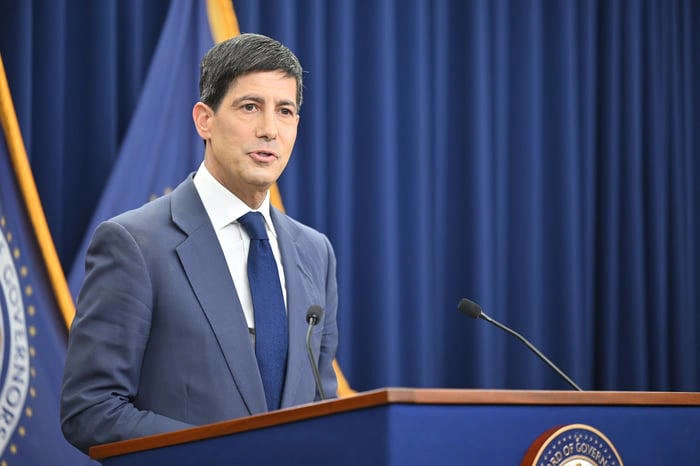
New Fed Chairman Kevin Warsh’s first FOMC meeting has flipped the dot plot from projected cuts to projected hikes, eliminated forward guidance, and sent markets reeling. Here is the complete breakdown of what happened and what comes next.
The Rate-Cut Trade Is Dead
On June 17, 2026, Kevin Warsh chaired his first Federal Open Market Committee meeting as the new Chairman of the Federal Reserve. What followed was one of the most consequential shifts in US monetary policy communication in years.
The rate hold was widely anticipated. What was not anticipated was the magnitude of the hawkish signal embedded in the updated economic projections — and the fundamental change in how the Fed communicates with markets.
The Dot Plot Stunner: From Cuts to Hikes in One Quarter
The Fed’s “dot plot” — a chart showing where each FOMC member expects interest rates to be in coming years — delivered a stunning reversal. Nine of the 18 voting members now project an interest rate hike before end of 2026, with six projecting two 25-basis-point hikes. The dot plot median jumped from a projected year-end rate of 3.4% to 3.8% in a single quarter.
To appreciate the full significance of this shift, consider where markets were at the start of 2026: pricing in three rate cuts by December. That expectation has now been completely reversed. CME FedWatch data now shows virtually no probability of rate cuts in 2026, with a 60%+ chance of at least one hike by October.
Warsh’s Communication Revolution: Killing Forward Guidance
Perhaps more significant than the dot plot shift was Warsh’s deliberate dismantling of the Fed’s forward guidance regime — the practice of pre-signaling future rate moves that Jerome Powell had used throughout his tenure.
Warsh’s rationale was explicit: “I think financial markets perform best when they react to incoming data.” That is a structural change with profound implications. Markets that have spent 15 years pricing assets based on Fed forward guidance now face a fundamentally different environment — one where every data release carries maximum uncertainty.
The immediate market reaction was sharp. The S&P 500 dropped, the Nasdaq fell, the Dow lost over 500 points in afternoon trading. The 2-year Treasury yield surged 16 basis points to 4.21%.
Why Warsh Did Not Submit His Own Dot
One of the most unusual and closely watched aspects of the June meeting was Warsh’s decision to withhold his own rate projection from the dot plot — an unprecedented step for a sitting Fed Chairman.
The dot plot confirmed that even one rate cut in 2026 is not the base case. Warsh announced five task forces to review the Fed’s monetary policy operations, communications, data sources, productivity and the labor market. The task force review suggests Warsh may also be questioning the dot plot tool itself — potentially with plans to restructure or eliminate it as part of a broader overhaul of Fed communications.
His silence spoke loudest of all. Markets interpreted the missing dot as Warsh reserving maximum flexibility — unwilling to commit to a path before his task forces have completed their assessment.
What This Means for Investors and Borrowers
The hawkish pivot reshapes the financial landscape across multiple dimensions:
Equities: Elevated rates for longer compress valuations on growth stocks. Technology and AI companies — which have led the market higher on expectations of rate cuts — face increased pressure as the discount rate for future earnings rises.
Fixed Income: Treasury yields rising means existing bond holders face mark-to-market losses. However, new buyers lock in attractive yields. The 2-year Treasury note is now offering yields not seen since early 2025.
Mortgages and Housing: Higher-for-longer rates keep mortgage rates elevated, suppressing housing affordability and transaction volumes — a continued drag on construction and related industries.
The Dollar: A more hawkish Fed relative to other central banks (the Bank of England held at 3.75%, the Swiss National Bank at 0%) supports dollar strength — which in turn creates headwinds for emerging market economies with dollar-denominated debts.
FAQs
Q: Who is Kevin Warsh? Kevin Warsh is a former Federal Reserve Governor (2006–2011) and private sector financier who was nominated by President Trump and confirmed by the Senate as Fed Chair on May 13, 2026. He succeeded Jerome Powell, who remains a voting member of the FOMC.
Q: Will the Fed actually raise rates in 2026? As of June 2026, nine of 18 FOMC members project at least one hike before year-end, and CME FedWatch shows greater than 60% probability of a hike by October. Whether this materializes depends heavily on incoming inflation data, particularly whether oil price declines translate into lower core PCE readings.
Q: What is the dot plot? The “dot plot” is a chart released quarterly by the Fed showing each FOMC member’s projection for where the federal funds rate will be at the end of each year and in the longer run. It is used by markets to gauge the central bank’s collective rate outlook.
Q: Why did Warsh eliminate forward guidance? Warsh believes that pre-committing to rate paths can distort market pricing and reduce the Fed’s flexibility to respond to incoming data. By removing forward guidance, he is returning to a more traditional model of responding to economic conditions rather than managing expectations about future policy.
Discover more from The Economy
Subscribe to get the latest posts sent to your email.


Mortgage
How the Trump-Xi White House Summit Is Reshaping Mortgage Rates Today for Real Estate Investors
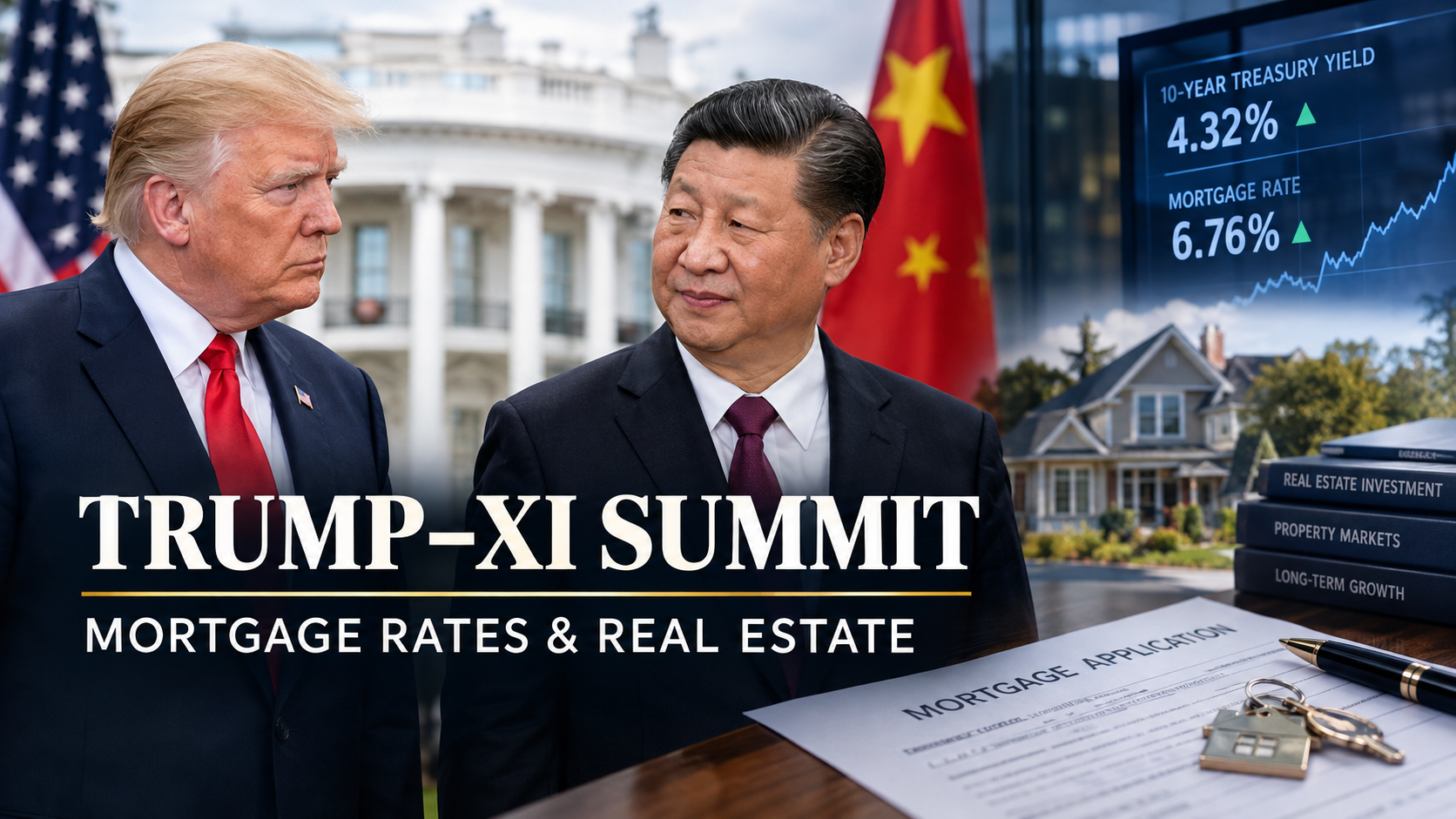
The September 24 Trump-Xi summit produced a two-month trade-truce extension rather than a durable deal — and that ambiguity, not a headline breakthrough, is what’s now keeping the 10-year Treasury yield elevated and mortgage rates parked near 7% heading into the fourth quarter.
Mortgage Rates Today: The Q4 2026 Baseline
Freddie Mac’s benchmark survey put the 30-year fixed-rate mortgage at 6.95% for the week of September 17, 2026 — the fourth consecutive weekly increase and the highest reading since January 2025. The 15-year fixed climbed in tandem to 6.26%. A year earlier, the 30-year average sat more than half a point lower, near 6.26%.
| Loan Type | Rate (week of Sept. 17, 2026) | Rate (1 year prior) |
|---|---|---|
| 30-year fixed | 6.95% | 6.26% |
| 15-year fixed | 6.26% | 5.41% |
| 5/1 ARM | ~6.8%–7.0% | — |
| 30-year VA | ~6.2%–6.3% | — |
Source: Freddie Mac Primary Mortgage Market Survey; Zillow daily rate tracker.
The proximate driver is the bond market, not the housing market. Mortgage pricing tracks the 10-year Treasury yield, and that yield has been climbing toward the high-4% range through September on a combination of heavy government issuance and a Federal Reserve that has signaled it is in no hurry to cut. Layer geopolitical risk on top — oil above $90 a barrel amid Middle East disruption, plus unresolved US-China friction — and lenders are pricing in a wider risk premium.
Why the Summit Matters to Your Rate Lock
Real estate investors tend to treat foreign policy as background noise. That’s a mistake in Q4 2026. The Trump-Xi relationship is now the single largest swing factor in how bond markets price forward risk, because it touches three things that feed directly into Treasury yields: tariff policy, rare-earth and technology export controls, and the credibility of the disinflation narrative the Fed needs to justify future rate cuts.
What Actually Happened at the September 24 Summit
Xi Jinping’s September 24 visit to the White House was the second Trump-Xi meeting of 2026, following a May 14–15 state visit to Beijing where the two sides agreed to pursue what they termed a “constructive, strategically stable relationship.” The Washington leg was shorter on ceremony and shorter on breakthroughs. According to Reuters’ pool reporting, Treasury Secretary Scott Bessent confirmed the two sides extended their trade truce — originally due to lapse in November — by roughly two months, buying time rather than locking in a structural agreement.
That is the detail markets are trading on. An extension without resolution leaves tariff rates, Chinese purchasing commitments, rare-earth export licenses, and technology restrictions all still in play heading into the new year. For bond investors, unresolved trade risk is inflationary risk: tariffs raise input costs, and rare-earth bottlenecks squeeze manufacturers that feed into consumer prices. Both push against the case for near-term Fed easing, and Fed policy is the single biggest lever on where mortgage rates land.
Three Summit Threads With Direct Rate Impact
- The 60-day trade truce clock. With the new deadline now sometime in early 2026’s first quarter, expect renewed rate volatility as that date approaches — mortgage desks should treat any lock decision inside that window as elevated-risk.
- AI and export-control friction. Both sides used the September summit to air disagreements over AI development and chip/technology export controls, an area CSIS analysts have flagged as the least-resolved dimension of the relationship. Unresolved tech friction keeps a geopolitical risk premium baked into yields.
- No durable tariff resolution. Core tariff and purchasing questions were pushed into the next round of talks, meaning the inflation uncertainty that has kept the Fed cautious remains unresolved.
Featured Snippet: What Is the Average Mortgage Rate Today?
As of mid-to-late September 2026, the average 30-year fixed mortgage rate in the US is running just under 7%, per Freddie Mac’s weekly survey — the highest level since January 2025, driven by rising Treasury yields tied to heavy government borrowing and unresolved US-China trade risk following the September 24 Trump-Xi summit.
Asian Growth and the Global Rate Picture
The mortgage story doesn’t stop at the US border. The Asian Development Bank’s September 2026 outlook nudged developing Asia’s 2026 growth forecast up slightly to 5.0%, even as regional inflation stays elevated near 4.2%. Stronger Asian growth alongside sticky inflation is broadly consistent with the “higher for longer” global rate environment that’s keeping US mortgage rates elevated — it’s not just a domestic story.
Q4 2026 Predictive Outlook
- Base case: 30-year fixed rates hold in the 6.7%–7.1% band through year-end, with volatility clustering around the new US-China truce deadline and the next two Fed meetings.
- Upside risk (higher rates): A breakdown in the truce, renewed tariff escalation, or a hawkish surprise from the Fed pushes the 30-year toward 7.25%–7.5%.
- Downside risk (lower rates): A durable trade framework or a faster-than-expected inflation cooldown could pull rates back toward the low 6% range, though nothing in current Fed communication points to that in Q4.
FAQ
Will mortgage rates go down before the end of 2026?
Most forecasters, including those tracked by Freddie Mac and major bank research desks, see rates holding near current levels through Q4 2026 absent a clear resolution to US-China trade tensions or a faster Fed pivot.
How does the Xi-Trump summit affect US mortgage rates?
It affects rates indirectly, through Treasury yields. Unresolved trade and tech-export issues keep an inflation and geopolitical-risk premium in bond markets, which raises the yields that mortgage-backed securities are priced against.
What is a good mortgage rate right now?
Relative to the current national average near 6.9%–7.0%, well-qualified borrowers securing rates half a point or more below the weekly Freddie Mac average are getting a comparatively strong deal in today’s market.
Discover more from The Economy
Subscribe to get the latest posts sent to your email.
Executive Summary
- Trade Truce Extension: Washington and Beijing extended the Busan economic truce by two months to January 10, 2027, establishing a bilateral Board of Trade mechanism with a $30 billion cap on tariff reductions for non-sensitive goods.
- Taiwan Policy Stance: President Xi Jinping pressed the U.S. administration to shift from “not supporting” to explicitly “opposing” Taiwan independence, while a U.S. $14 billion arms package to Taipei remains on hold.
- AI & Governance Divergence: Trump advocated for minimal federal AI regulation relying on existing legal channels, whereas Xi emphasized international norm-setting and human-controlled AI governance.
- Conflict Prevention: Both leaders highlighted shared WWII historical ties, but underlying systemic friction over technology controls and critical supply chains remains unhedged.
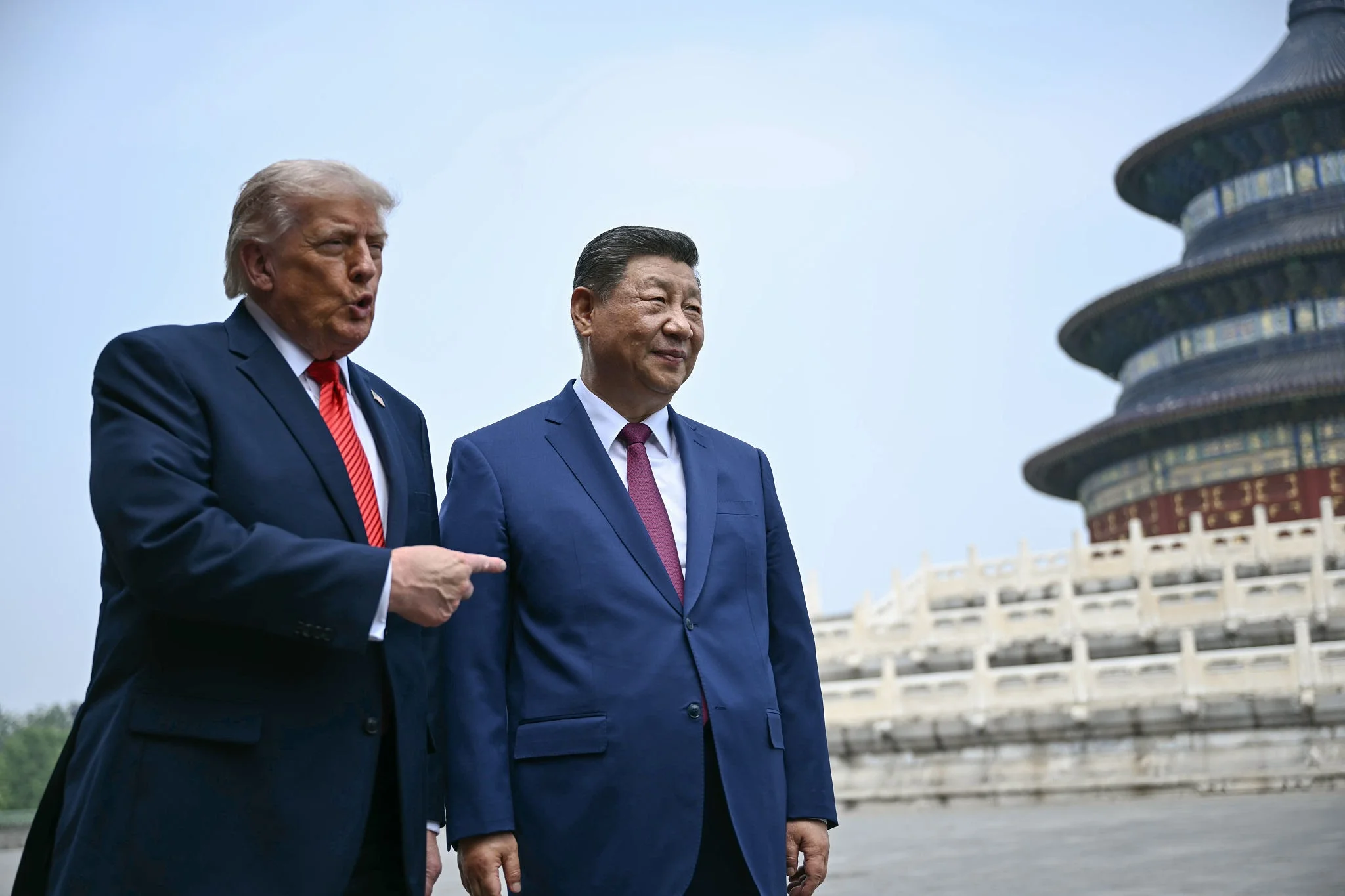
Presidents Xi Jinping and Donald Trump met in Washington, D.C., marking President Xi’s first official state visit to the United States in over a decade. The 43-hour diplomatic engagement combined high-profile ceremonial gestures with intense negotiations over economic policy, regional security, and emerging technologies.
1. Trade Deliverables & Managed Economic Detente
The core economic outcome of the summit was a mutual decision to extend the trade truce originating from the Busan agreements by an additional two months, pushing the negotiation window to January 10, 2027. According to analysis published by The Business Times, this temporal buffer buys critical space for both economies to formalize structured frameworks before political shifts take hold following the U.S. midterm elections.
Key Economic Components:
- Board of Trade Framework: Establishing a structured mechanism to oversee managed bilateral commerce.
- Tariff Cap Reductions: A planned mutual tariff reduction capped at US$30 billion per side, targeting non-sensitive consumer and industrial goods.
- Agricultural Commitments: China continues to meet its baseline commitments for purchasing 25 million metric tons of U.S. soybeans.
However, friction points persist below the surface. U.S. trade officials noted that Beijing remains behind on its broader pledge to purchase $17 billion in other U.S. agricultural exports. Furthermore, delivery quotas for critical rare-earth elements—essential for high-tech manufacturing—have fallen short of target allocations. As detailed by the Chicago Council on Global Affairs, reliance on personalistic leader-to-leader negotiations creates short-term pauses but leaves structural trade imbalances and supply chain dependencies unaddressed.
2. The Taiwan Question & Strategic Security
Diplomatic maneuvering over Taiwan represented the most sensitive geopolitical dynamic of the summit. President Xi reiterated Beijing’s core stance, urging Washington to handle the Taiwan issue with “extreme prudence” and asking the U.S. to actively oppose Taiwan independence rather than maintaining its traditional diplomatic posture of simply “not supporting” it.
Strategic assessments from the Institute for the Study of War indicate that Beijing views the current economic detente as a key window to influence U.S. security commitments in the Indo-Pacific. A planned U.S. $14 billion arms transfer package to Taiwan remains paused, delivering a tactical diplomatic win for Beijing ahead of upcoming multilateral regional gatherings.
3. Divergent Visions on AI Governance & High-Tech Competition
The summit exposed contrasting philosophies regarding the regulation of Artificial Intelligence and advanced computing capabilities. While both leaders acknowledged AI’s transformative influence on global power balances, their proposed paths forward reflect fundamental governance differences.
| Dimension | United States Stance | China Stance |
| Regulatory Model | Market-driven with minimal federal intervention; oversight through existing DOJ frameworks. | State-directed guardrails emphasizing central oversight and alignment with national strategy. |
| Global Governance | Defense of competitive edge and strict export controls on advanced hardware. | Multilateral norm-setting under international organizations (“AI for Good”). |
| Core Objective | Commercial freedom, innovation velocity, and technological superiority. | Human control, risk mitigation, and preventing technological decoupling. |
Reporting from The Federal highlighted that while Xi urged joint international responsibility to ensure AI remains under human control, the U.S. side favored preserving flexibility for domestic technological developers without introducing international regulatory mechanisms.
4. “Thucydides Trap” Avoidance & Strategic Guardrails
Throughout the summit, President Xi repeatedly warned against falling into the “Thucydides Trap”—the historical tendency toward conflict when a rising power challenges an established power. Calling for “constructive strategic stability,” Xi emphasized that global competition should resemble a “race of catching up with one another, not a wrestle in which one wins and the other loses.”
Institutional Takeaways:
- Regular Military Communications: Reaffirming bilateral crisis-prevention channels to prevent miscalculations in air and maritime corridors.
- Historical Commemoration: Leveraging shared World War II history during visits to national monuments to emphasize foundational ties.
- Corporate Engagement: Hosting state dinners with executive leadership to reinforce commercial interdependencies as a stabilizing buffer.
Strategic Outlook
While the 43-hour Washington summit succeeded in projecting stability and securing short-term economic extensions, fundamental strategic competition remains unresolved. The coming months will test whether temporary trade truces and managed tariff caps can withstand broader geopolitical rivalries in technology supply chains, semiconductor export policies, and Pacific security dynamics.
Discover more from The Economy
Subscribe to get the latest posts sent to your email.
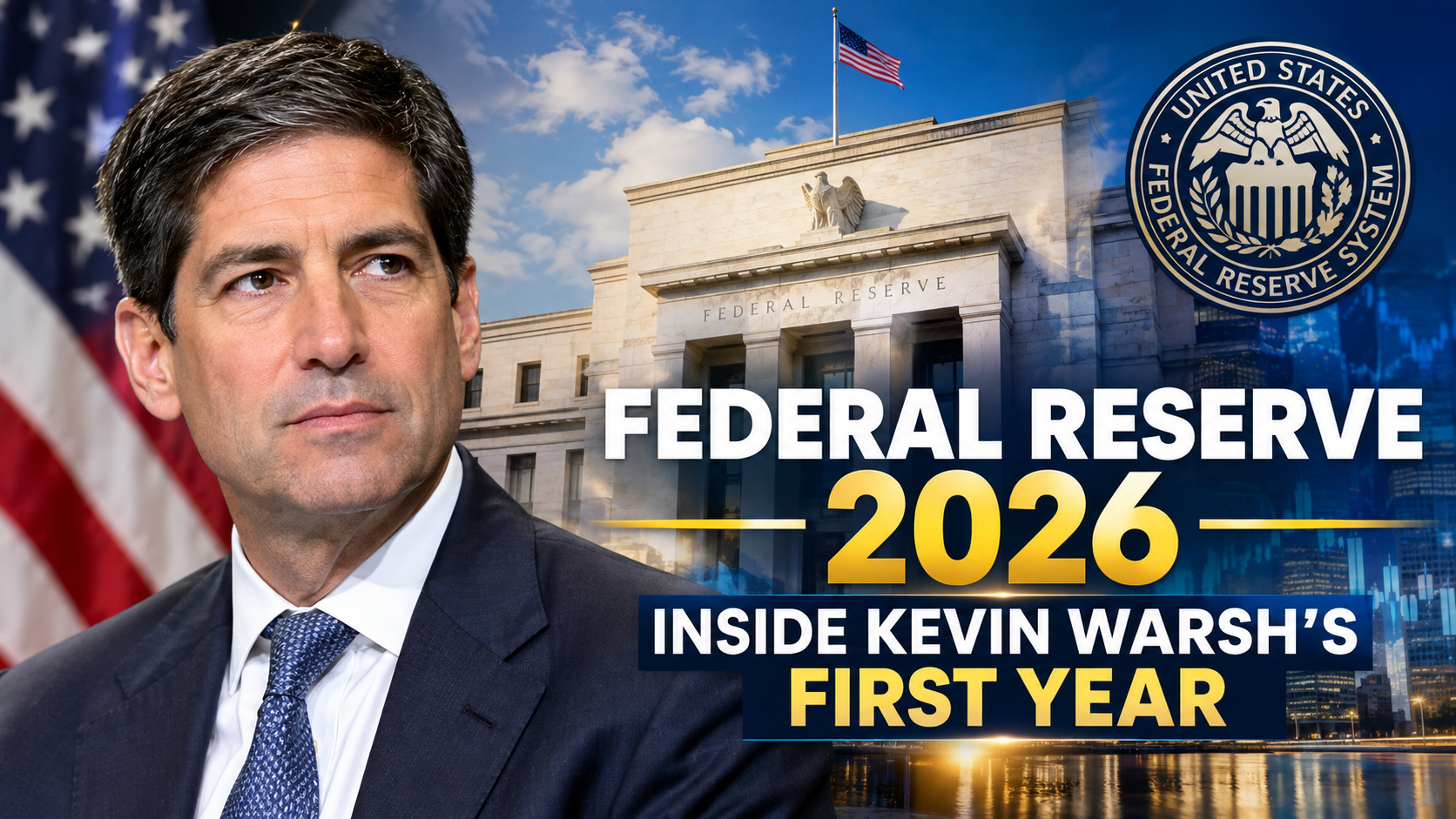
Who is the Federal Reserve chair in 2026? Kevin Warsh was confirmed as the 17th chair of the Federal Reserve in a narrow 54-45 Senate vote on May 13, 2026 — the most divisive confirmation in the Fed’s history — with his term officially beginning when Jerome Powell’s term expired two days later, according to J.P. Morgan Wealth Management’s analysis. Warsh, who at 35 had been the youngest person ever appointed to the Fed’s Board of Governors back in 2006, returned to the central bank after years in the private sector, including a stint as a partner at Duquesne Family Office.
His confirmation followed months of tension between President Trump and outgoing Chair Powell over the pace of rate cuts, and markets immediately began parsing Warsh’s public statements for clues about where he would steer policy.
What Warsh Actually Believes About Inflation
Featured Snippet Target: Fed Chair Kevin Warsh has signaled tighter inflation discipline through a “trimmed averages” approach to measuring price changes — removing the most extreme price movements from the inflation basket before calculating overall trends — while also arguing in a pre-confirmation Wall Street Journal op-ed that artificial intelligence could act as a significant disinflationary force on the broader economy.
That combination puzzled Fed-watchers who expected Warsh, nominated by a president who had repeatedly pushed for lower rates, to simply deliver the dovish policy Trump wanted. Instead, according to analysis from The Motley Fool, Warsh has been notably tight-lipped in his first months, by design — he has stated he wants the Fed to take more of a “back seat” in market communication, believing markets function more efficiently digesting economic data directly rather than reacting to Fed guidance.
The First Meeting: A Hawkish Surprise
Warsh’s debut as chair came at the June 16-17, 2026 FOMC meeting, and it delivered a genuine surprise to markets pricing in continued easing. The Fed held its federal funds rate steady at 3.50%-3.75% for a third consecutive meeting, but new quarterly projections showed nine Fed officials now anticipating a rate hike by the end of 2026 — a sharp reversal from the cutting cycle markets had expected — with the median forecast raised to 3.6% by year-end, according to reporting from The Daily Record. The updated policy statement also removed all forward guidance language about future rate moves, adopting a shortened format reminiscent of the Alan Greenspan era — an early, tangible sign of Warsh’s stated preference for a more narrowly focused, less communicative central bank.
That hawkish pivot came against a genuinely difficult inflation backdrop. Inflation had been running stubbornly above the Fed’s 2% target even before Warsh’s arrival, and the eruption of the Iran conflict in late February 2026 pushed oil prices sharply higher, adding a fresh layer of cost-push inflation pressure just as the new chair was settling in.
Why the FOMC Itself Is Divided
Warsh inherited a genuinely split committee. The 19-member FOMC had signaled openness to a prolonged pause after delivering three rate cuts in the prior fall, with many policymakers believing those cuts had sufficiently addressed slowing job growth, according to analysis from ChannelChek. April 2026’s meeting — held before Warsh’s confirmation — brought the most policy disagreement among committee members in decades, reflecting a genuine intellectual split between officials worried about persistent inflation and those worried about a weakening, “low-hire, low-fire” job market.
Convincing that divided committee to resume cutting rates, rather than hike as the June projections suggested, will likely be one of Warsh’s most consequential early challenges — particularly if inflation data continues running hot on the back of elevated energy costs.
The Bigger Structural Agenda
Beyond the immediate rate debate, Warsh has signaled an intent to reshape how the Fed operates more broadly. He has stated a goal of shrinking the central bank’s balance sheet and strengthening coordination between the Fed, the Treasury, and the White House on economic policy, according to reporting on his confirmation. That coordination goal is itself a departure from the traditional emphasis on Fed independence from fiscal policymakers — a shift some economists have flagged as worth watching closely, given how central bank independence has historically been treated as a bulwark against politically-driven inflation.
The Market Reaction
Markets initially reacted to Warsh’s nomination with genuine uncertainty rather than a clear directional bet. Following his January 2026 nomination, Fed funds futures were pricing a 65.3% probability of at least one rate cut by June — up from 61.8% the prior day — with markets pricing in a total of 52 basis points of cuts for all of 2026 at that point, according to fixed-income commentary from Asset Allocation & Management Company. That dovish pricing has since been substantially unwound by the actual June hawkish pivot — a reminder that a new Fed chair’s confirmed policy stance, once articulated in an actual meeting, matters far more to markets than pre-confirmation speculation about political allegiance.
The Bottom Line
Kevin Warsh’s first months as Fed chair have defied the simple “Trump appointee cuts rates” narrative that dominated coverage of his nomination. Instead, he has delivered a genuinely hawkish debut meeting, adopted a more hands-off communication style, and articulated an inflation-measurement philosophy that gives him intellectual cover to hold rates higher for longer if energy-driven inflation persists. Whether that stance holds through the rest of 2026 will depend heavily on how the Iran conflict’s economic fallout evolves and whether the divided FOMC can coalesce around a consistent direction.
Next step: Track the Fed’s quarterly Summary of Economic Projections alongside actual CPI and PCE inflation prints — the gap between the two, more than any single Warsh public statement, is the clearest signal of whether the Fed’s late-2026 rate path tilts toward the hike some officials now anticipate or back toward the cuts markets originally expected.
Discover more from The Economy
Subscribe to get the latest posts sent to your email.

SpaceX Starship Achieves First Full Orbit on Historic 10-Hour Test Flight 14

Google’s $15B Finland AI Investment: Data Centers, Nuclear Power & Jobs

Fast Invoice Factoring: Rates, APR Math & Contract Traps

SOC 2 Type II Guide: Cost, Timeline & Compliance Companies

Hong Kong Wages Surge 3.4% in June: Sector Data & Analysis

Silver Price Today: Why the Xi-Trump AI Standoff Is Fueling a Safe-Haven Rally

Citibank & Dólar Estadounidense: Forex Playbook After the Xi-Trump Truce

How the Trump-Xi White House Summit Is Reshaping Mortgage Rates Today for Real Estate Investors

Indonesia Navigates Mega-Project Risks as China and Russia Eye the 2,772km Trans-Kalimantan Railway

Trump-Xi 2026 Summit Takeaways: The Trade Truce, Taiwan, and the AI Divide

Solar Panel Installation Cost in 2026: Why the Math Changed Overnight

Business Insurance: What Coverage You Actually Need and What It Costs in 2026

Auto Insurance Quotes: How to Get the Lowest Rate Without Losing Coverage

Huntington Online Banking: Full Features, Fees, and How It Compares in 2026

Top 30 Stocks for Investment in PSX for Massive ROI in 2026

Oil Prices Break $100 in 2026: Middle East Conflict & Energy Markets

BRICS+ Cross-Border Payments 2026: Interoperability Explained

Fidelity Investments Review 2026: SPAXX Yields & Zero-Fee Funds

10-Year Treasury Yield Hits 4.80%: What It Means for Rates & Portfolios

Shein Clothes Quality & Safety in 2026: What Lab Tests Show

IMF & World Bank 2026 Global Economic Outlook: Growth, Inflation, Debt

China’s US$10.8 Billion Trade Shortcut: Why the Pinglu Canal Matters

High-CPM Finance Niches 2026: Publisher Monetization Blueprint

Middle East War Economics 2026: Oil Prices & Energy Markets

China Stocks Today: Are Big Economies in Asia Nearing a Market Bottom?

Social Security Trust Fund 2032: OASI Depletion Timeline Explained

Gavin Baker AI Outlook: Why the Compute Shortage Persists Through 2028

Crypto Daily Outlook: Bitcoin, Altcoins, and the Future of Decentralized Finance
-

 Markets & Finance9 months ago
Top 15 Stocks for Investment in 2026 in PSX: Your Complete Guide to Pakistan’s Best Investment Opportunities
-

 Analysis7 months ago
Johor’s Investment Boom: The Hidden Costs Behind Malaysia’s Most Ambitious Economic Surge
-

 Analysis7 months ago
Top 10 Stocks for Investment in PSX for Quick Returns in 2026
-

 Banks8 months ago
Best Investments in Pakistan 2026: Top 10 Low-Price Shares and Long-Term Picks for the PSX
-

 Analysis8 months ago
Brazil’s Rare Earth Race: US, EU, and China Compete for Critical Minerals as Tensions Rise
-

 Investment9 months ago
Top 10 Mutual Fund Managers in Pakistan for Investment in 2026: A Comprehensive Guide for Optimal Returns
-

 Global Economy9 months ago
15 Most Lucrative Sectors for Investment in Pakistan: A 2025 Data-Driven Analysis
-

 Global Economy9 months ago
Pakistan’s Export Goldmine: 10 Game-Changing Markets Where Pakistani Businesses Are Winning Big in 2025