
Analysis
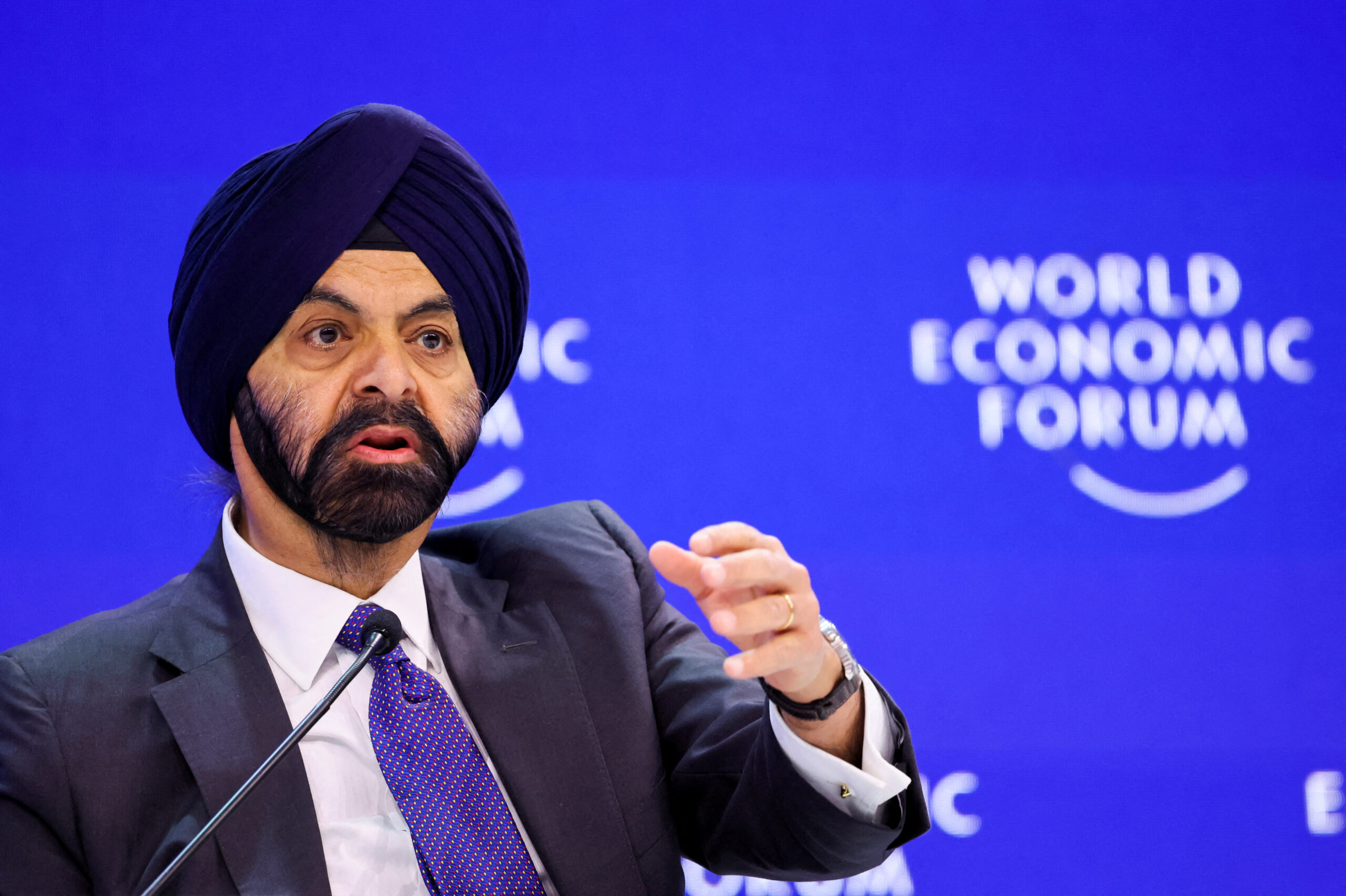
World Bank Chief Ajay Banga Warns of 800-Million-Job Deficit Time Bomb in Developing World

Picture Amara Osei. He is 22 years old, born in Accra the same year the Millennium Development Goals were signed with such fanfare at the United Nations. He graduated from secondary school with decent grades, has a smartphone, a fluent command of English, and the kind of restless, entrepreneurial hunger that economists like to call a “demographic dividend.” He has been looking for formal work for fourteen months. He is not alone. Across sub-Saharan Africa, South Asia, and the Middle East, hundreds of millions of young people like Amara are about to collide with an economic wall — not the Iran war, not Donald Trump’s tariff regime, not even the Strait of Hormuz blockade that sent oil above $100 a barrel last week. What they are colliding with is something far older, far deeper, and far more dangerous: a structural jobs deficit that will leave 800 million of them without a formal economic future by 2040.
That is the alarm that World Bank President Ajay Banga has been ringing with increasing urgency in Washington this week, even as finance ministers and central bank governors flood the capital for the IMF-World Bank Spring Meetings consumed — understandably — by the fires of the present crisis.
The 800 Million Job Gap: What the Numbers Actually Mean
The Middle East war will dominate global finance officials’ talks this week in Washington, but Banga is sounding the alarm about a bigger, looming crisis: a huge gap in jobs for the 1.2 billion people who will reach working age in developing countries in the next 10 to 15 years. At current trajectories, those economies will generate only about 400 million jobs, leaving a deficit of 800 million jobs, Banga told Reuters. Asharq Al-Awsat
Let that arithmetic settle for a moment. One point two billion people. Four hundred million jobs. Eight hundred million human beings — more than twice the population of the United States — entering adulthood in economies structurally incapable of absorbing them. With current projections indicating only 420 million jobs will be created, nearly 800 million young people face the risk of unemployment — a threat to societal stability and economic growth. World Bank
This is not a forecast derived from pessimistic modelling. It is, as Banga noted with characteristic directness at Davos in January, a near-mathematical certainty: AI and some other technology in the future could lead to some change, but the World Bank is “unlikely to be wrong about 800 million people.” Business Today
That phrase — “unlikely to be wrong about 800 million people” — is worth lingering on. It is the kind of statement that, in any era other than ours, would have ignited emergency sessions, restructured aid architecture, and commanded front pages. Instead, we are watching oil prices and naval coordinates.
Walking and Chewing Gum — Except We Keep Dropping the Gum
Banga admits that focusing people on the long-term is daunting, given a series of short-term shocks that have buffeted the global economy since the COVID-19 pandemic, the most recent being the war in the Middle East. He says he’s determined to ensure that finance officials stay focused on those longer-term challenges like creating jobs, connecting people to the electricity grid, and ensuring access to clean water. “We have to walk and chew gum at the same time. Short-velocity cycle is what we’re going through. Longer velocity is this jobs circumstance or water,” Banga said in an interview taped on Friday. The Irish Times
The metaphor is useful, but the political economy is brutal. Since 2020, global policymakers have collectively sprinted from Covid’s lockdowns to supply-chain chaos to Russia’s invasion of Ukraine to the inflation surge to the banking stress of 2023 to Trump’s tariff volleys to, now, a Middle East war that has paralysed the Strait of Hormuz. Each crisis consumed the entire bandwidth of Treasury secretaries, finance ministers, and IMF programme teams. Each time, the structural agenda — jobs, climate, digital infrastructure, debt sustainability for the poorest — was placed politely on the back burner.
The cumulative cost of this perpetual triage is enormous. Many developing countries also have high debt levels and interest rates remain high, which constrains their ability to borrow money to fund measures to respond to the jump in energy costs and other goods caused by the war. The Manila Times In other words, the very fiscal space needed to invest in schools, roads, and the enabling environment for job creation has been progressively hollowed out by crisis response. Each short-term shock leaves the structural problem slightly harder to solve.
How the Iran War Makes It Worse — Without Solving Anything
The World Bank’s baseline estimate now projects growth in emerging markets and developing economies of 3.65 percent in 2026, compared to 4 percent in October, dropping as low as 2.6 percent in an adverse scenario with a longer-lasting war. Inflation in those countries was now forecast to hit 4.9 percent in 2026, up from the previous estimate of 3 percent. The extreme scenario could see inflation rising as high as 6.7 percent. Arab News PK
For a 22-year-old in Lagos or Dhaka, those abstract percentage points translate into something painfully concrete: higher food prices, more expensive fertilizer for the family plot, airlines cutting routes to secondary cities, tourism revenue evaporating, the microenterprise that was barely viable now underwater. The war has sent the price of oil up by 50 percent while disrupting supplies of oil, gas, fertilizer, helium, and other goods, as well as tourism and air travel. The Manila Times
The cruelest irony is that many of the regions facing the sharpest near-term economic pain from the Hormuz blockade are the same ones facing the steepest long-run jobs cliff. Sub-Saharan Africa, South Asia, the Levant — oil-importing economies already strained by post-Covid debt overhangs are now absorbing an energy shock that will squeeze the private investment and fiscal capacity required to build the job-creating infrastructure of the next decade.
And when — if — a durable ceasefire eventually arrives and oil prices retreat, there will be no peace dividend for Amara Osei and his generation. The 800 million job gap will still be there, compounded by whatever human capital was lost during this interval of disruption.
The Post-Iran War Jobs Crisis: Why Recovery Won’t Be Enough
There is a seductive narrative that tends to follow every geopolitical shock: once the crisis ends, growth returns, investment recovers, and the structural problems resolve themselves in the updraft. It happened, more or less, after the Gulf War. After the Asian financial crisis. Even, partially, after Covid.
This time, the demographics make that narrative untenable. The 800 million job deficit is not a cyclical shortfall that rebounds when oil falls back to $70. It is structural — the product of a mismatch between the world’s fastest-growing youth populations and the institutional, infrastructural, and capital environments their economies have failed to build.
Six hundred million people in Africa are without electricity. “In 2026? It’s got to stop,” Banga said at the Atlantic Council. Atlantic Council You cannot build a manufacturing sector without reliable power. You cannot sustain a digital economy without connectivity. You cannot create a credible agricultural transition without logistics. These are not arguments about aid. They are arguments about the basic preconditions for job creation — preconditions that remain absent across vast swathes of the developing world regardless of what happens in the Strait of Hormuz.
Meanwhile, United Nations data showed more than 117 million people were displaced worldwide as of 2025. Asharq Al-Awsat Displacement is both a consequence and an accelerant of the jobs crisis — when conflict and climate stress hollow out local economies, the young leave, migration pressure builds on Europe and the United States, and the political backlash fuels the very nationalist policies that reduce development finance and foreign direct investment in the places that need it most. It is a doom loop that no ceasefire breaks.
What Banga’s Three-Pillar Framework Gets Right — and Where It Falls Short
Banga laid out what he described as a practical framework for closing the global jobs gap, with a sharp focus on how governments, multilateral institutions, and private capital can work together to support businesses of different sizes. CNBC Africa
Banga outlined the three “pillars” of the World Bank’s approach to supporting job growth: (1) building infrastructure to help people access opportunities; (2) strengthening governance; and (3) mobilizing “catalytic capital” to encourage entrepreneurship and, therefore, demand for labor. Banga stressed the importance of governments implementing reforms that “enable business to work,” pointing to demands from companies of various sizes around permitting, access to capital, and trade predictability. Atlantic Council
It is a sensible framework — and in Banga’s framing of it, admirably honest about which levers actually create jobs at scale. He also identified five key sectors for employment generation: infrastructure, agriculture, primary healthcare, value-added manufacturing, and tourism. Prokerala The emphasis on value-added manufacturing — not just raw materials extraction — and on agricultural value chains is particularly significant. This is where the demographic dividend either materialises or becomes a demographic disaster.
But the framework has a political economy problem: it depends on governments implementing reforms that decades of evidence suggest many will resist, and on private capital flowing to places where return volatility, political risk, and infrastructure gaps have historically deterred it. The World Bank’s catalytic tools — blended finance, junior equity, political risk insurance — are well-designed, but they are operating in a global environment where the US is retreating from multilateralism, aid budgets in Europe are under fiscal pressure, and China’s Belt and Road — whatever its flaws — is the only serious infrastructure investor in many of these markets.
IDA has become the largest provider of concessional climate financing, investing $85 billion globally in the last 10 years, with over half dedicated to climate adaptation. World Bank And the record $24 billion IDA21 fundraising round CNBC Africa is a genuine achievement in an era of shrinking multilateral ambition. But $100 billion in total IDA21 financing spread across 78 countries over three years, against an 800 million person shortfall, is a beginning — not a solution.
The Geopolitical Risk Nobody Is Pricing
Here is the scenario that keeps development economists and security analysts up at night, and that polite Washington conversation tends to elide: what happens when 800 million young people in developing countries find no legitimate economic future?
History offers uncomfortable answers. Youth unemployment at scale is among the most reliable predictors of political instability, insurgency, and mass migration. The Arab Spring was, at its structural root, a jobs crisis wearing a political mask. The extraordinary expansion of jihadist movements across the Sahel is inseparable from the absence of economic alternatives for young men in a belt stretching from Mauritania to Sudan. Central American migration — which dominates US political debate — is largely driven by the inability of Guatemalan, Honduran, and Salvadoran economies to absorb their own young people.
“I don’t know that you can ever get to a situation of utopia and everybody is taken care of in the coming 15 years. I would doubt that’s going to happen, but if you don’t do it, the implications are quite severe in terms of illegal migration and instability,” Banga said. Asharq Al-Awsat
That is as close to an apocalyptic warning as a World Bank president is institutionally permitted to give. Translate it: if the 800 million job gap is not substantially closed, the political earthquakes of the 2010s and 2020s — the populist wave, the migration crisis, the democratic backsliding — will look, in retrospect, like a prelude.
What Leaders Must Do This Week in Washington
The Spring Meetings are not a summit. They are, as veterans of the process know, a convergence of bilateral conversations, board preparations, and communiqué negotiations where real commitments are made in hotel corridors rather than plenary halls. But this week’s agenda — dominated by the Iran war’s immediate fallout — offers a genuine opportunity if leaders choose to take it.
First, finance ministers must resist the temptation to let this Spring Meeting become purely a crisis-management exercise. Banga warned that inflation could notch 0.9 percent higher and growth could fall 0.4 percent lower as a result of the Iran war and its impact on shipping and energy. Atlantic Council Those numbers demand attention. But so does the 800 million figure. Both deserve agenda space.
Second, the G20 and G7 must accelerate the implementation of the Global Infrastructure and Investment Partnership with concrete, country-level commitments in Africa and South Asia — not just rhetorical endorsements of “quality infrastructure.”
Third, the World Bank and IMF should jointly publish a jobs-focused “country stress test” — analogous to the financial system stress tests of the post-2008 era — quantifying which developing economies are most at risk of the demographic dividend turning into a demographic disaster, and what the geopolitical consequences would be.
Fourth, the private sector — represented this week by executives from Mastercard, JPMorgan, BlackRock, and others attending the Spring Meetings’ side events — must move beyond blended finance pilot programmes to genuine risk-taking in the sectors Banga identifies. Banga said companies in developing countries themselves were starting to expand globally, including India’s Reliance Industries, the Mahindra Group, and Dangote in Nigeria. Asharq Al-Awsat These South-South investors understand the markets and the risks better than Western fund managers sitting in New York. They need regulatory environments and capital access that enable scaling.
Fifth, on energy: Banga argued that it is “really important to embed” climate-change adaptation and mitigation in development projects. “So when you build a school, build it to be hurricane resistant. When you build a road, build it to be monsoon resistant,” Atlantic Council he said. Green industrial policy in developing economies — not as a Western import but as a genuine development strategy — is the single most powerful alignment of climate and jobs imperatives available. Every solar installation, every wind farm, every climate-resilient water system in a developing country is simultaneously a job, an infrastructure asset, and a climate mitigation measure.
The Slow Burn That Becomes an Inferno
Ajay Banga is not an alarmist. He is a former corporate CEO — pragmatic, data-driven, institutionally cautious in his language. When he tells Reuters that the implications of inaction are “quite severe in terms of illegal migration and instability,” he is not engaging in advocacy rhetoric. He is reading a balance sheet.
The Iran war will eventually end. Diplomats will negotiate, the Strait will reopen, oil prices will fall, and the global economy will begin to recover — unevenly, imperfectly, but directionally. The ceasefire talks, the blockade, the crude above $100: these are events with visible endpoints.
The 800 million job gap has no such endpoint. It is a slow accumulation of unmet potential, unrealised investment, and postponed political attention. It does not explode in a single crisis moment. It erodes — steadily, across a thousand cities and a million families — until the erosion becomes irreversible.
Banga said: “Development isn’t a charity. It’s a strategy.” Prokerala He is right. And the corollary is equally true: ignoring it is not pragmatism. It is a choice — one whose costs will be paid not by the finance ministers in Washington this week, but by Amara Osei and eight hundred million young people who were never consulted about the priorities of the global economic order.
The Spring Meetings end April 17th. The job crisis does not.
The author writes on international economics and development finance.
Discover more from The Economy
Subscribe to get the latest posts sent to your email.



Key Takeaways
- Rolex’s secondary market rose approximately 7.9% year-over-year as of 2026 (per WatchCharts data) — trailing Patek Philippe (+16.2%) and Tudor (+11.4%) but still outperforming Audemars Piguet (+3.4%).
- Rolex raised U.S. retail prices 4–9% in January 2026 (steel models ~5.6%, gold models ~8.7%), narrowing the historical gap between retail and pre-owned pricing.
- Not every model appreciates: steel sports references (Submariner, GMT-Master II, Daytona) have held value far better than two-tone or widely available dress references like the standard Datejust.
- The Lady-Datejust posted the sharpest 2026 gain among tracked collections — up 22.73%, from roughly $9,269 to $11,376 — driven by demand for smaller, “everyday luxury” watches.
- Gold’s rise past $2,400/oz has directly lifted the investment case for Rolex’s precious-metal references (Day-Date, Sky-Dweller, Yacht-Master).
The Model-by-Model Picture
| Category | 2026 Trend |
|---|---|
| Lady-Datejust | +22.73% (strongest performer among tracked collections) |
| Steel sports models (Submariner, GMT-Master II) | Held value well; corrected from 2022 peak but stabilized above retail |
| Daytona | Corrected from highs above $50,000 to the mid-$30,000s; still among the most sought-after references |
| Two-tone/widely available Datejust | Flat to negative — “holds value” is an overstatement for this category |
| Gold references (Day-Date, Sky-Dweller) | Lifted by gold’s rise above $2,400/oz |
Why the “Rolex Always Appreciates” Myth Is Fading
The pandemic-era boom pushed some references — the Daytona above all — to speculative highs disconnected from historical norms. Since the March 2022 peak, steel sports models have compressed meaningfully, and dealers who bought inventory near the top have in some cases faced 20–40% markdowns on liquidation. The lesson for 2026 buyers: Rolex as a category is not a monolith. Value retention depends heavily on specific reference, condition, and whether the piece comes with box and papers (“full set”).
What’s Actually Driving 2026 Strength
- Retail price increases raise the floor. When a new Submariner retails at $10,050 (up from $9,500), a pre-owned example at $11,000–$12,000 suddenly represents a smaller premium — narrowing the gap without secondary prices actually moving.
- Supply discipline remains Rolex’s core lever. The brand has never confirmed production numbers, and secondary-market premiums remain entirely a function of Rolex’s own manufacturing decisions — a risk factor as much as a support.
- Certified Pre-Owned rollout. Rolex’s now fully rolled-out CPO program has changed how buyers transact in the used market, adding a layer of brand-verified legitimacy that supports pricing.
The Case for Rolex as a Portfolio Diversifier
Financial advisors increasingly frame luxury watches not as a replacement for equities or bonds, but as a tangible, historically low-correlation diversifier — one that carries its own risks (illiquidity, condition-dependent pricing, no yield) but has demonstrated multi-decade resilience for specific references.
Is Rolex a good investment in 2026?
It depends heavily on the specific reference. Steel sports models like the Submariner and Daytona have held or grown in value; two-tone and widely available dress models generally have not. Overall, Rolex’s secondary market rose about 7.9% year-over-year in 2026, trailing Patek Philippe but ahead of Audemars Piguet.
Discover more from The Economy
Subscribe to get the latest posts sent to your email.

Navigating Mortgage and Loan Refinancing in a High-Yield Environment
Global public debt crossing critical thresholds has kept central bank policies volatile, resulting in fluctuating US Treasury yields throughout 2026. For homeowners and commercial property holders burdened by previous high-interest borrowing cycles, finding optimal refinance windows has become a high-stakes financial puzzle. Stalled disinflation and stubborn employment numbers mean rate cuts are incremental, requiring borrowers to act with precision.
Timing your mortgage or commercial loan refinance in this environment requires a deep understanding of yield curve movements and lender risk appetites.
Decoding 2026 Refinance Dynamics
The 10-Year Treasury Yield Benchmark
Mortgage rates continue to track closely with the 10-year US Treasury yield. When macroeconomic anxiety spikes debt issuance, yields rise, tightening consumer borrowing capacity. Savvy borrowers monitor weekly Treasury auctions to lock in rates during brief dip windows.
Hybrid ARMs and Alternative Structures
With fixed rates remaining elevated, 7/1 and 10/1 adjustable-rate mortgages (ARMs) have surged in popularity. These products offer lower initial monthly payments, giving borrowers breathing room until central bank easing cycles fully materialize.
| Loan Product | Current Rate Range | Best For | Key Risk Factor |
| 30-Year Fixed Mortgage | 6.2% – 6.8% | Long-term predictability | Higher initial monthly outlay |
| 7/1 Hybrid ARM | 5.5% – 5.9% | Short-term ownership / flipping | Rate reset risk after year 7 |
| Commercial Refinance | 7.0% – 8.2% | Corporate asset restructuring | Strict DSCR lender covenants |
Actionable Steps for Successful Refinancing
To maximize your chances of securing favorable refinance terms in a volatile market, follow a disciplined preparation strategy.
Boost Your Credit Score Immediately: Lenders in 2026 are applying stringent credit tiering; a 20-point increase can drop your APR by a crucial quarter-point.
Shop Regional Credit Unions: Smaller financial institutions often offer portfolio loans with more flexible underwriting than major national banks.
Calculate the Break-Even Point: Ensure your total closing costs are recouped through monthly savings within 24 months of closing.
“Market Strategist View: Refinancing in 2026 is an exercise in opportunistic timing. Borrowers must maintain immaculate financial profiles ready to strike the moment Treasury yields dip.”
Mastering the complexities of today’s debt environment ensures you can successfully lower your debt service costs and protect your long-term financial stability.
Discover more from The Economy
Subscribe to get the latest posts sent to your email.

The days of pulling generic auto insurance quotes based purely on your zip code and age are officially over. In 2026, insurance comparison engines are powered entirely by generative AI and real-time telematics. These platforms digest thousands of live data points—ranging from your driving smoothness via connected vehicle sensors to real-time traffic congestion patterns—to generate hyper-personalized premiums instantly.
For consumers, this evolution represents both a massive opportunity for savings and a hidden trap for penalty pricing. Understanding how AI algorithms evaluate risk is essential for anyone looking to lower their monthly auto insurance premiums.
How AI Comparison Engines Evaluate Your Risk Profile
Behavioral Telematics and Connected Cars
Modern cars stream performance data directly to insurance aggregators. Generative AI models analyze braking sharpness, acceleration curves, cornering G-forces, and phone distraction metrics. Drivers who maintain smooth, defensive habits are rewarded with dynamic rate cuts of up to 40% compared to traditional rating tiers.
Predictive Traffic and Weather Modeling
AI tools now cross-reference your daily commute route with predictive weather and accident probability models. If your standard parking location or driving corridor has a statistically higher incidence of uninsured motorist claims, your quotes will reflect that hyper-local risk assessment.
| Comparison Factor | Traditional Rating Model | 2026 Generative AI Model | Impact on Premium |
| Mileage & Usage | Annual estimated odometer reading | GPS tracking & live trip duration | High (up to 35% savings) |
| Driving Behavior | MVR driving record & accidents | Real-time braking, speed, & G-force | Critical (determines tier) |
| Vehicle Tech | Make, model, and safety rating | ADAS calibration & repair cost data | Moderate |
Strategies to Lower Your AI-Driven Insurance Quote
To outsmart the algorithm and secure the lowest possible premium in 2026, drivers must proactively manage their digital footprint on insurance platforms.
Opt-In for Telematics Trial Periods: Many insurers offer immediate 15% discounts just for installing their driving app; let it track safe habits for 30 days to lock in permanent savings.
Scrub Unverified Public Records: Ensure your motor vehicle report is free of clerical errors that AI risk models misinterpret as reckless behavior.
Compare AI Aggregators: Use platforms that integrate multi-carrier API feeds rather than single-brand comparison sites to find the best risk-adjusted rate.
“Industry Note: AI-driven pricing rewards transparency and precision. Drivers who actively manage their telematics data consistently out-save those relying on legacy quote calculators.”
Embracing AI comparison tools allows savvy policyholders to customize coverage limits precisely to their driving habits, eliminating wasted premium spend while ensuring robust protection.
Discover more from The Economy
Subscribe to get the latest posts sent to your email.

Neocloud Economics in 2026: GPU Debt, Utilization and Power

What Is a Neocloud? How AI GPU Clouds Work and Compare

Lula Re-elected in 2026: What Changes for the Dollar, Brazilian Stocks, and Interest Rates?

Lula Wins Brazil’s 2026 Election: Five Economic Tests for 2027

SSI November 2026 Payment: Why Benefits Arrive October 30

Russia Sanctions Waiver: What Asian Oil Buyers Gain

Asia Markets Weekly: How Oil, US Yields and the Fed Reach Tokyo, Kuala Lumpur and Karachi

Gold Near $4,000: Buy, Hold or Wait? A Pakistan Tola Price Guide

US 10-Year Treasury Yield Near 5%: The Hidden Cost for Pakistani Investors

Fed Meeting on October 28: Hike or Hold—and Why Pakistan Investors Should Care

Can Pakistan Turn US–Iran Mediation Into an Economic Dividend?

Oil Above $100: How Higher Crude Prices Reach Pakistan’s Rupee, Petrol and Imports

SBP Interest Rate at 11.5%: What Will Decide Pakistan’s Next Policy Move?

The Global South: Debt, Climate Finance and Investment in 2026

Crude Oil & Petroleum Market Analysis: OPEC+ Decisions and Price Forecasts

Top US Convenience Store Chains: Store Counts, EV Charging, and Sales Trends

Algorithmic Dogfights: Why the U.S. and China Must Establish Rules of Engagement for Autonomous Air Power

Who Is Shivon Zilis? The Neuralink Executive at the Center of the Musk–OpenAI Trial

Social Security Extra $90 Deposit: Who Qualifies for the October 2026 Medicare Rebate?

Global Economic Outlook 2026: 7 Forces Reshaping Markets, Trade and Business

Corporate America Faces a New Debt Test as US Borrowing Costs Surge

Gold Price Outlook 2026: The Forces Behind the Forecasts—and What Could Reverse Them

Gold Falls 3.7% as Yields Surge: Is Gold Still a Safe Haven in 2026?

Stock Market Crash in 2026? Warning Signs, Scenarios and a Calm Investor Checklist

MAS Allocates S$1.45 Billion to Five Asset Managers in Third EQDP Batch: Total Deployment Reaches S$5.4 Billion

Stock Market Today: Dow, S&P 500, and Nasdaq Retreat as Treasury Yields

Anthropic Bans Sustained Abuse of Claude AI Under New Usage Policy Effective November 12, 2026

Geopolitics and Your Portfolio: How International Affairs Move Global Markets
-

 Markets & Finance10 months ago
Top 15 Stocks for Investment in 2026 in PSX: Your Complete Guide to Pakistan’s Best Investment Opportunities
-

 Analysis8 months ago
Johor’s Investment Boom: The Hidden Costs Behind Malaysia’s Most Ambitious Economic Surge
-

 Analysis8 months ago
Top 10 Stocks for Investment in PSX for Quick Returns in 2026
-

 Banks9 months ago
Best Investments in Pakistan 2026: Top 10 Low-Price Shares and Long-Term Picks for the PSX
-

 Analysis9 months ago
Brazil’s Rare Earth Race: US, EU, and China Compete for Critical Minerals as Tensions Rise
-

 Investment10 months ago
Top 10 Mutual Fund Managers in Pakistan for Investment in 2026: A Comprehensive Guide for Optimal Returns
-

 Global Economy10 months ago
15 Most Lucrative Sectors for Investment in Pakistan: A 2025 Data-Driven Analysis
-

 Global Economy10 months ago
Pakistan’s Export Goldmine: 10 Game-Changing Markets Where Pakistani Businesses Are Winning Big in 2025