
Analysis
The Strait of Hormuz Gambit: France and Italy Court Tehran as $100 Oil Reshapes Europe’s Energy Calculus

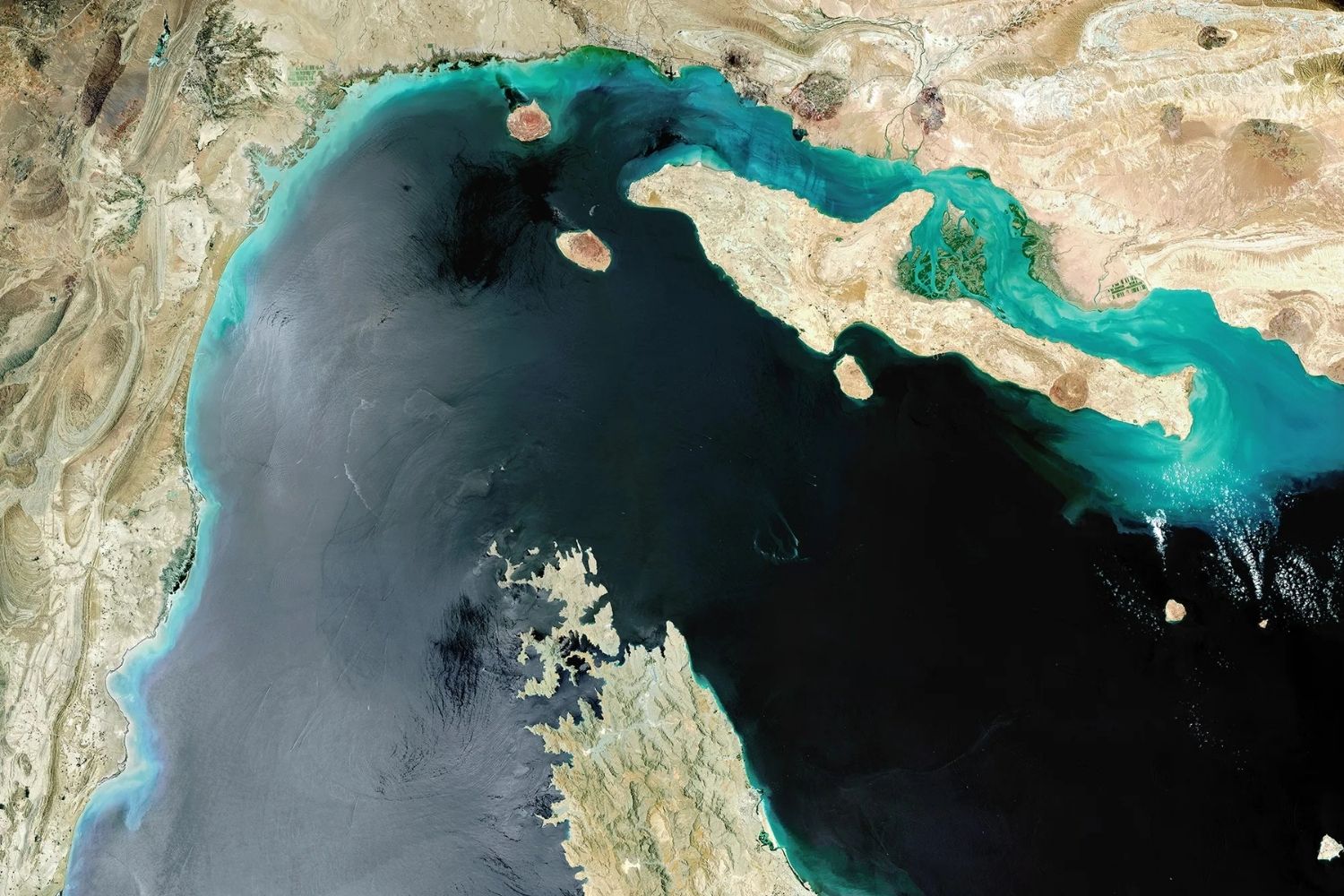
As Iran’s new Supreme Leader Mojtaba Khamenei hardens his vow to keep the world’s most critical chokepoint sealed, Paris and Rome are quietly probing backdoor channels to Tehran — gambling that economic pragmatism can outlast ideological defiance.
It begins, as most modern crises do, with a tanker. The MV Rozana, a Turkish-flagged bulk carrier, sat motionless in the Gulf of Oman for eleven days — impounded, warned off, then finally released — a floating symbol of the geopolitical paralysis that has descended on the most consequential 21 miles of ocean on earth. The Strait of Hormuz blockage 2026 has ceased to be a contingency scenario whispered about in insurance boardrooms. It is, as of this writing, an operative fact of the global economy — and its gravitational pull on European energy policy is becoming impossible to ignore.
Crude oil prices have now surged past $100 per barrel, a threshold that once triggered recessions and reshuffled governments. European natural gas prices have spiked 75 percent since January 1st, according to market data tracked by the International Energy Agency, straining household budgets from Lisbon to Warsaw and throwing a wrench into the European Central Bank’s already fragile inflation projections.
Against this backdrop, two of the eurozone’s largest economies have done something that would have been unthinkable twelve months ago: they have opened, cautiously and without fanfare, exploratory diplomatic talks with the Islamic Republic of Iran — not through formal channels, but through the kind of back-room conversations that rarely appear in official readouts. The stakes, for both sides, could not be higher.
A Closed Strait and a Continent Holding Its Breath
The decision by Iran’s new Supreme Leader, Mojtaba Khamenei, to maintain his predecessor’s posture of maximum pressure — and indeed to double down on it with a formal vow that the strait will remain closed to vessels deemed complicit with U.S.-Israeli operations — has effectively transformed the Hormuz crisis from a military standoff into a long-term structural shock. Roughly 20 percent of the world’s traded oil and a significant share of liquefied natural gas flows through the strait. Every additional week of closure compounds the damage.
The European energy crisis Iran has exposed the limits of the continent’s post-Ukraine diversification strategy. European buyers rerouted toward American LNG and Norwegian pipeline gas after 2022; those supplies are now strained, over-contracted, and insufficiently elastic to absorb the Gulf shock. Storage levels in Germany, France, and Italy — typically robust heading into spring — are running below their five-year seasonal averages.
For Italy in particular, the exposure is acute. Rome has over recent years cultivated significant energy trade relationships with Gulf producers, and the abrupt disruption of those flows has landed with particular force on industrial consumers in the Po Valley. Italy’s Defense Minister Guido Crosetto, a pragmatist by instinct and a straight-talker by reputation, has become an unexpectedly prominent voice in framing the terms of Europe’s dilemma.
| “We are not naive about who we are dealing with. But a closed Hormuz is not in anyone’s interest — including Iran’s. There are conversations worth having.” — Italy’s Defence Minister Guido Crosetto, in remarks to Italian broadcasters, March 2026 |
The French Equation: Macron’s ‘Defensive’ Pivot
French President Emmanuel Macron has been characteristically careful with his public framing. In a statement delivered following an Élysée briefing with senior defense and energy advisers, Macron described France’s posture in the region as strictly “defensive” — emphasizing the protection of commercial shipping and European crews rather than any offensive alignment with the U.S.-Israeli operation. He pointedly left the door open to France providing naval escorts to commercial vessels, “should conditions allow and tensions meaningfully ease.”
That conditional phrasing is doing considerable diplomatic work. Read one way, it signals to Tehran that Paris is not irrevocably committed to a militarized approach — that there remains a lane for negotiation. Read another way, it reassures domestic audiences and NATO allies that France has not abandoned solidarity with Western partners. This studied ambiguity is a Macron signature, and in the current context it functions as an invitation to talk.
Behind the scenes, according to sources familiar with the discussions who declined to be named given their sensitivity, French diplomatic envoys have made informal contact with Iranian interlocutors through third-country intermediaries — a channel that has historically run through Oman and, more recently, through Qatar. The substance of those contacts, if substantive at all, has not been disclosed. But their mere existence marks a significant departure from the EU’s public stance of solidarity with sanctions enforcement.
The EU Aspides Mission: Naval Shield or Diplomatic Liability?
The EU’s Operation Aspides, the naval protection mission currently deployed in the Red Sea, was designed to guard commercial shipping against Houthi drone and missile attacks — a mission whose mandate does not formally extend to the Persian Gulf. Its presence has, however, created a complicated optics problem for European capitals now seeking to signal non-belligerence toward Tehran.
Iran’s foreign ministry has repeatedly characterized Aspides as a de facto extension of the U.S.-Israeli operational posture — a charge European commanders categorically reject, pointing to Aspides’ defensive rules of engagement and its documented refusals to intercept Houthi assets targeting non-European vessels. The distinction may be legally sound and operationally meaningful, but it carries little weight in the information environment that shapes Tehran’s calculus.
For France and Italy, the challenge is to decouple their energy diplomacy from their security posture without appearing to fracture NATO or EU cohesion. Both governments have signaled, with varying degrees of subtlety, that they are willing to explore a functional separation: Aspides continues its mandated mission in the Red Sea, while separate bilateral diplomatic tracks pursue safe passage Iran talks focused on restoring civilian shipping through Hormuz under a temporary, negotiated framework.
What Would a ‘Safe Passage’ Framework Actually Look Like?
The theoretical architecture being discussed — according to three diplomatic sources and one senior EU official spoken to for this piece — would involve a time-limited, monitored arrangement under which designated commercial vessels carrying European cargo would be granted passage through the strait in exchange for a package of economic inducements to Iran. These could include the unfreezing of certain EU-held Iranian assets, partial suspension of specific financial sanctions, and a European commitment to formally distance itself from any expanded military operations in the Gulf theater.
The model draws, loosely, on historical precedents: the 1987-88 convoy arrangements during the first Tanker War, and more recently on the JCPOA’s phased confidence-building mechanisms. Whether Mojtaba Khamenei — whose authority is still consolidating and whose ideological positioning has been markedly harder than his father’s in recent months — would entertain such an arrangement is deeply uncertain.
Energy market analysts at Wood Mackenzie and S&P Global Commodity Insights are currently assigning a less than 30 percent probability to a meaningful Hormuz reopening within the next 90 days. That number is doing serious work in European government budget offices, where the fiscal cost of sustained high energy prices is now being modeled as a structural rather than transitory shock.
$100 Oil and the European Fiscal Reckoning
The economic arithmetic is brutal and familiar. The crude oil price surge Middle East has pushed headline inflation figures in the eurozone back above 4 percent after two years of painstaking disinflation — a development the ECB’s governing council will be forced to address at its next scheduled meeting. Rate cut expectations that were fully priced in for the second quarter of 2026 have now been effectively repriced out, dealing a secondary blow to heavily indebted sovereigns like Italy, which carries a debt-to-GDP ratio comfortably above 140 percent.
France is navigating its own version of fiscal constraint. The government’s 2026 budget, already the subject of a bruising parliamentary fight, was constructed on an oil-price assumption of $75 per barrel. Every $10 increment above that baseline translates into approximately €4 billion in additional subsidy and relief expenditure if Paris chooses to shield consumers — which, heading into a domestic political cycle, it almost certainly will.
The German economy, still digesting the structural trauma of the 2022 energy shock, is particularly exposed through its industrial sector. German industrial output data published by the Federal Statistics Office showed a renewed contraction in February — the third consecutive monthly decline — with energy-intensive manufacturers citing input cost volatility as the primary brake on investment decisions. The Hormuz crisis has, in other words, arrived at the worst possible moment for European economic momentum.
| “The strait is not merely a geographic fact. It is a lever. And right now, Tehran is the only hand on it.” — Senior EU energy security official, speaking on background, Brussels, March 2026 |
Tehran’s Leverage — and Its Limits
It would be a mistake to read Iran’s position as one of pure strategic strength. The Hormuz closure has inflicted significant self-harm on the Iranian economy, which depends on the strait not only for its own oil exports — currently illegal under sanctions but practically disrupted regardless — but for the import of essential goods including foodstuffs and industrial inputs. The humanitarian and economic pressure on the Iranian population, already considerable after years of sanctions, has intensified sharply.
Mojtaba Khamenei’s vow to keep the strait closed is as much a consolidation move as it is a strategic calculation — a signal to hardliners within the Islamic Revolutionary Guard Corps that the new supreme leadership will not repeat what they characterize as his predecessor’s willingness to make concessions under pressure. Walking back that vow, even partially, carries significant domestic political risk. Any framework that Europe proposes must therefore offer Tehran a face-saving mechanism — language that frames any reopening as a sovereign Iranian decision rather than a capitulation to foreign pressure.
That framing challenge is, arguably, where European diplomacy has its most distinctive comparative advantage. Unlike Washington, which is formally a party to the ongoing conflict, or Jerusalem, whose relationship with Tehran is structurally zero-sum, Paris and Rome can present themselves as neutral economic interlocutors — parties whose primary interest is the restoration of commercial normality rather than regime change or strategic containment. Whether Tehran finds that framing credible is another matter entirely.
The Broader Geopolitical Fault Lines
Washington’s Shadow
Any European diplomatic initiative toward Iran will need to navigate the weight of the transatlantic relationship. Washington has not publicly objected to European exploratory contacts with Tehran — partly because the Biden-era diplomatic architecture never entirely foreclosed dialogue tracks, and partly because the current administration has its own quiet interest in off-ramps that do not require a formal U.S. climbdown. But private communications from the State Department to European capitals have been notably pointed about the risks of being seen to undercut coordinated pressure.
The Gulf Arab Calculus
Saudi Arabia and the UAE — both of which have significant economic interests in the restoration of Hormuz traffic — are watching the European initiative with a mixture of hope and anxiety. Riyadh has its own backchannel to Tehran, normalized through the 2023 Chinese-brokered rapprochement, but that channel has gone cold since the current conflict escalated. A successful European mediation that restored Hormuz passage without addressing Iran’s regional posture more broadly would leave Gulf states in a structurally worse position — bearing the geopolitical cost without benefiting from the strategic reconfiguration.
China’s Quiet Role
Beijing, characteristically, is playing a longer game. China remains Iran’s largest oil customer and has the most direct economic interest in Hormuz reopening. Its influence over Tehran is real but not unlimited, and it has been notably reluctant to spend that influence in ways that benefit European or American interests without reciprocal concessions on Taiwan or South China Sea policy. The absence of Chinese pressure on Tehran has been, from a European perspective, one of the more frustrating strategic facts of the past three months.
The Road Ahead: Scenarios and Probabilities
Three broad scenarios are worth mapping. The first — a relatively rapid negotiated framework producing a partial Hormuz reopening within 60 days — remains possible but requires alignment between European economic incentives, Iranian domestic politics, and U.S. acquiescence that is difficult to engineer simultaneously. Energy market futures are not currently pricing this scenario.
The second scenario — a prolonged closure lasting through Q3 2026, with intermittent partial openings tied to tactical Iranian leverage plays — is where the balance of probability currently sits. In this scenario, European governments face sustained fiscal pressure, the ECB’s pivot is delayed further, and the diplomatic initiatives from Paris and Rome produce incremental but insufficient progress.
The third scenario — an escalation that extends the conflict into the broader Gulf theater, potentially drawing in additional regional actors and further disrupting global energy infrastructure — is the tail risk that keeps energy security planners awake. Its probability is low but non-negligible, and its consequences would dwarf the current disruption.
Conclusion: The Limits of Backdoor Diplomacy in an Age of Hard Constraints
France and Italy’s tentative courtship of Tehran is less a coherent diplomatic strategy than an improvised response to an energy emergency with no clean solutions. It reflects the structural vulnerability of European economies to Middle Eastern energy dynamics — a vulnerability that two decades of diversification initiatives have ameliorated but not eliminated. It also reflects a harder truth: that in a multipolar world where the United States has chosen active belligerence and China has chosen studied abstention, Europe’s window of diplomatic utility may be narrower than its ambitions.
The Strait of Hormuz blockage 2026 is, in the final analysis, a stress test of European strategic autonomy — not in the military sense that has dominated EU defence debates, but in the more fundamental sense: can European governments translate economic weight and diplomatic credibility into influence over a crisis they did not create and cannot unilaterally resolve? The answer, over the coming weeks, will carry consequences extending well beyond the energy balance sheets of Paris and Rome.
For international economists and strategic risk analysts, the key variable to watch is not the headline oil price — which is a lagging indicator of decisions already made — but the state of the Omani and Qatari intermediary channels. When those channels begin to produce substantive rather than exploratory dialogue, markets will know before governments announce it. And the shape of that dialogue will determine whether 2026 is remembered as the year Europe finally converted economic interdependence into geopolitical leverage, or the year it discovered, again, how far those two things can diverge.
KEY SOURCES & FURTHER READING
• Reuters: Oil Markets & Hormuz Closure Coverage (March 2026)
• Financial Times: Europe’s Backdoor Iran Talks (FT Energy Security)
• S&P Global Commodity Insights: Hormuz Risk Assessment Q1 2026
• Reuters: German Industrial Output Contraction, March 2026
Discover more from The Economy
Subscribe to get the latest posts sent to your email.


Federal Reserve Chair Kevin Warsh is expected to break with recent central bank tradition by withholding the so-called “dot plot” from the Fed’s upcoming rate outlook, according to market reporting. The move, if it happens, would mark a meaningful shift in how the Fed communicates its policy intentions to markets — and investors are already trying to read between the lines.
What the Dot Plot Actually Does
The Fed’s dot plot is a closely watched chart in which individual policymakers anonymously indicate where they expect interest rates to be at various points in the future. It has become one of the most scrutinized pieces of Fed communication, often moving markets within seconds of release as traders parse shifts in the median projection.
Withholding it — even temporarily — would strip markets of a tool they’ve relied on for years to gauge the Fed’s collective thinking on the path of rates.
Why Warsh Might Make This Call
Central bank watchers see a few possible explanations. One is that policymakers themselves are deeply divided on the path forward, given competing pressures: inflation risk tied to energy markets and geopolitical tension, against a backdrop of economic data that has sent mixed signals. Publishing a dot plot under those conditions risks creating a misleading sense of consensus — or worse, an overly wide dispersion of dots that itself becomes a market-moving story.
Another possibility is a deliberate strategic choice by Warsh to reduce the market’s reliance on point-in-time projections that have a track record of being revised significantly as conditions change.
Markets Don’t Like a Vacuum
Whatever the reasoning, removing a key piece of forward guidance tends to inject uncertainty rather than calm it. Traders who have built models and positioning around anticipated dot-plot signals will need to rely more heavily on the Fed’s statement language and the chair’s press conference comments to infer policy intentions — a less precise exercise that could increase volatility around the announcement itself.
What to Watch Next
The real test will come at the actual policy meeting. If Warsh does withhold the dot plot, attention will shift to whether this becomes a one-time decision tied to unusual circumstances, or a more lasting change in how the Powell-era tool is used going forward.
Discover more from The Economy
Subscribe to get the latest posts sent to your email.

Michael Burry, the investor who rose to fame for correctly predicting the 2008 housing market collapse, has revealed he considered betting against Elon Musk’s SpaceX — but ultimately decided against it. The admission, surfacing just as SpaceX moves toward a long-anticipated public listing, has quickly become one of the most talked-about lines in markets this week.
Why Burry’s Words Carry Weight
Few investors generate headlines the way Burry does. His reputation as a contrarian who isn’t afraid to bet against popular narratives means that even a passing comment about being “tempted” to short a company is enough to move conversation across trading desks and social media alike. The fact that he chose not to follow through only adds intrigue, leaving observers to speculate about what gave him pause.
The SpaceX Backdrop
The comments land at a notable moment for SpaceX, which has been the subject of growing market attention as talk of an eventual IPO continues to build. SpaceX has become one of the most closely watched private companies in the world, with a valuation that has climbed steadily on the back of its dominance in commercial launch services and its expanding satellite internet business.
A short bet against a company of SpaceX’s scale and momentum would be a high-risk, high-conviction move — exactly the kind of trade Burry has built his reputation on, which is part of why his decision to pass is drawing as much attention as the idea itself would have.
Reading Between the Lines
Without elaborating on his specific reasoning, Burry’s comment leaves room for interpretation. It could reflect genuine respect for SpaceX’s fundamentals and growth trajectory, or simply an acknowledgment that shorting a company with no current public listing — and significant insider control — is a structurally difficult trade to execute profitably.
The Takeaway
Whether or not Burry ever acts on the instinct, the episode is a reminder of how much weight markets still place on the views of investors with a track record of contrarian calls — even when, as in this case, the headline is really about a bet that didn’t happen.
Discover more from The Economy
Subscribe to get the latest posts sent to your email.

Global financial markets are fixated on a single question this week: will the US-Iran ceasefire hold? The answer carries outsized consequences for oil prices, inflation expectations, and the Federal Reserve’s next move — and investors are already repositioning in anticipation of either outcome.
Why the Ceasefire Matters to Your Portfolio
The logic is straightforward but high-stakes. A breakdown in the truce and renewed military strikes would almost certainly push oil prices sharply higher, reigniting an inflation problem the Federal Reserve is still working to contain. That scenario would complicate the central bank’s policy path just as it appeared to be gaining clarity.
In response, investors have already begun shifting capital out of richly valued technology shares and into steadier, more defensive sectors — a classic risk-off rotation that reflects caution rather than panic.
A Familiar Market Split
That caution showed up clearly in recent trading. A bounce in chip stocks early in the week faded quickly, dragging the technology-heavy Nasdaq down nearly 1%, while financial and industrial names that dominate the Dow Jones Industrial Average held their ground. The Nasdaq slipped 0.97% to 25,678.82 as the chip-stock recovery lost steam, while the S&P 500 dropped 0.26%, with technology and energy the only two sectors finishing in negative territory. The Dow, by contrast, edged up 0.17%.
The Dollar’s Role in the Deal
Beyond the immediate market mechanics, the ceasefire arrangement reportedly carries broader implications for the US dollar’s standing in global trade and reserve systems, with reporting suggesting the deal includes provisions aimed at protecting the dollar’s international role even as the geopolitical landscape shifts.
Treasury Demand Adds to the Unease
The geopolitical uncertainty is landing at an awkward moment for US debt markets. A recent three-year Treasury note auction cleared at a yield of 4.192%, up from 3.965% at the prior auction — the latest in a string of weaker-than-expected demand signals. When the Treasury has to offer higher yields to attract buyers, it typically signals softening appetite for US government debt, adding another layer of complexity for policymakers already juggling geopolitical risk and inflation concerns.
The Bottom Line
For now, markets are in a holding pattern — repositioning rather than panicking, but clearly pricing in the possibility that the ceasefire could unravel. Energy markets, the bond market, and Federal Reserve policy all sit downstream of how the situation develops in the coming days.
Discover more from The Economy
Subscribe to get the latest posts sent to your email.

Fed Chair Warsh Expected to Withhold the ‘Dot Plot’ — Here’s Why That’s a Big Deal

Michael Burry Says He’s Tempted to Short SpaceX — But He’s Passing, For Now

Weak Demand at Treasury Auctions Is Quietly Rattling Bond Investors

Markets Hold Their Breath as US-Iran Ceasefire Faces Its First Real Test

Fiserv Names New CEO as Industry Veteran Takis Georgakopoulos Takes the Helm

Japan’s Property Sector Looks Strong. So Why Are Investors Going Abroad?

17 Fusion Startups Have Now Raised Over $100M Each — and the Total Keeps Climbing

Warren Raises €10M to Fix Belgium’s Broken Workplace Pensions

Finance Bill 2026: Extraction Cannot Deliver

Big Tech and the UK’s Unrest: Algorithm, Not Conspiracy

BankIslami Launches BIPL Exchange: What It Means

ABHI MFB, NADRA Technologies to Accelerate Digital Transformation

Top 7 Banking Stocks for Investment in PSX: Pakistan’s Lenders Are Still Printing Money

Top 5 Best Performing Islamic Banks in Pakistan

China Overhauls the World’s Biggest Surveillance Network with Advanced AI

Kevin Warsh Takes the Fed’s Helm — and Walks Straight Into a Rate-Hike Storm

SpaceX, OpenAI & Anthropic IPOs: Wall Street’s $200B AI Test

How AI Is Forcing McKinsey and Its Peers to Rethink Pricing

SpaceX IPO: Inside the $2 Trillion Market Debut

KPMG Australia CEO Resigns After Whistleblower Claims Exposed Investigation Failures

PwC China Partner Payouts Cut Amid Evergrande Audit Fraud

Broadcom Market Value Loss: Revenue Forecast Disappoints

Pakistan Budget FY 2026-27: Relief, Prospects, and the Tightrope Walk

The Guardrails Are Down: How Meta and Google’s AI Models Fold Under Pressure

Nasdaq Tumbles 4% as Chip and Memory Stocks Sink: A $1.2 Trillion Wipeout

Benefitbay Raises $18M to Build the Plumbing for America’s ICHRA Shift

Here’s How Much It’ll Cost You to Be Part of SpaceX’s Record-Breaking $75 Billion IPO

Japanese Mid-Sized Firms Flock to Southeast Asia for Growth
-

 Markets & Finance5 months ago
Top 15 Stocks for Investment in 2026 in PSX: Your Complete Guide to Pakistan’s Best Investment Opportunities
-

 Analysis4 months ago
Top 10 Stocks for Investment in PSX for Quick Returns in 2026
-

 Analysis4 months ago
Brazil’s Rare Earth Race: US, EU, and China Compete for Critical Minerals as Tensions Rise
-

 Banks5 months ago
Best Investments in Pakistan 2026: Top 10 Low-Price Shares and Long-Term Picks for the PSX
-

 Investment5 months ago
Top 10 Mutual Fund Managers in Pakistan for Investment in 2026: A Comprehensive Guide for Optimal Returns
-

 Analysis4 months ago
Johor’s Investment Boom: The Hidden Costs Behind Malaysia’s Most Ambitious Economic Surge
-

 Global Economy6 months ago
15 Most Lucrative Sectors for Investment in Pakistan: A 2025 Data-Driven Analysis
-

 Global Economy6 months ago
Pakistan’s Export Goldmine: 10 Game-Changing Markets Where Pakistani Businesses Are Winning Big in 2025