
Business
Top 4 World’s CEOs Making a Mark in Business in 2026

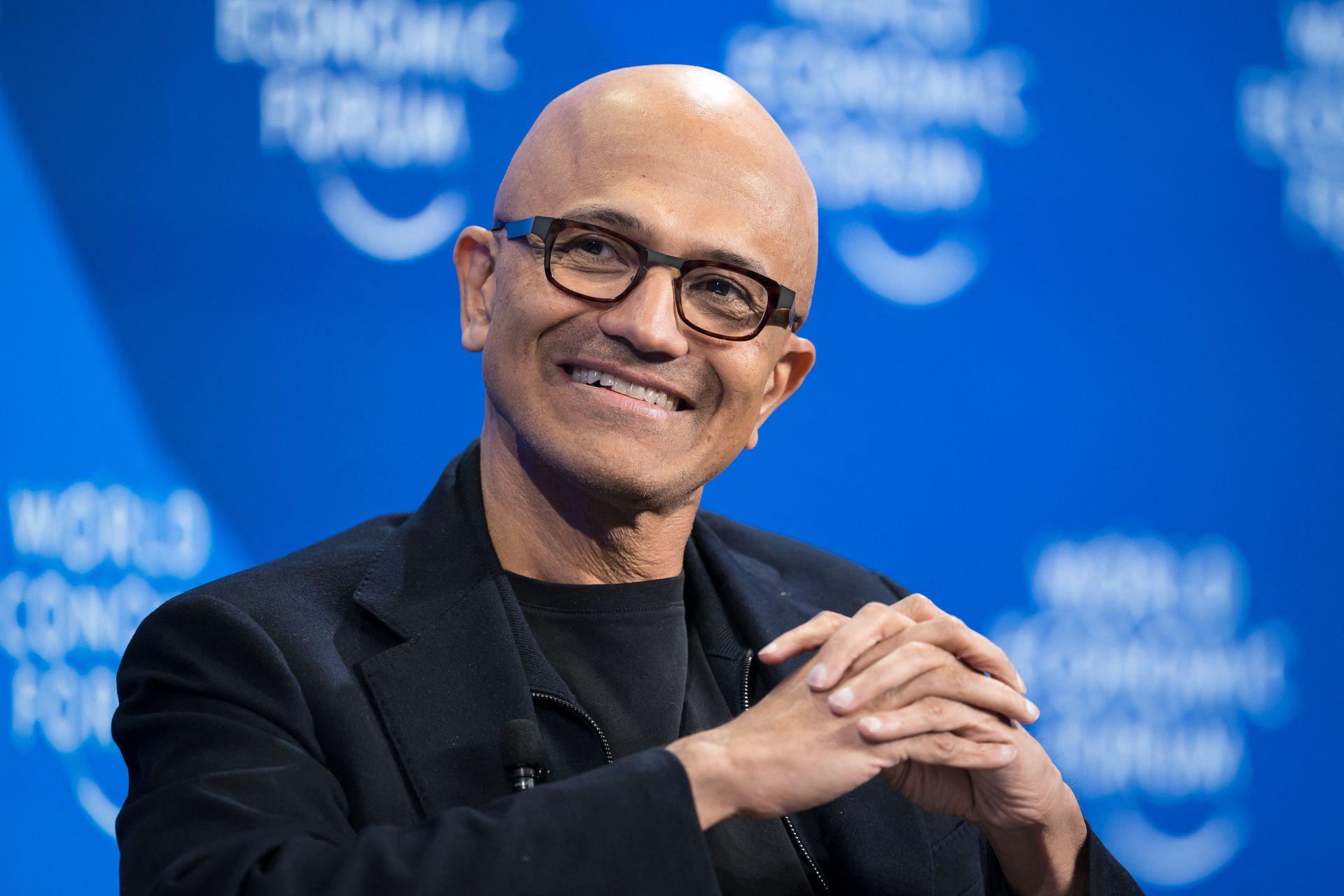
Discover the top business leaders 2026 is defined by — and how their strategies are reshaping the global economy, AI infrastructure, and the future of innovation.
Introduction: The Leaders Who Are Rewriting the Rules
There’s a moment every generation produces — a handful of figures who don’t merely respond to a changing world, but architect it. In 2026, we are living inside one of those moments. Artificial intelligence has ceased to be a product category and become the operating system for civilization itself. Geopolitical fractures are redrawing supply chains. Capital expenditure figures from the tech industry are now measured in the hundreds of billions — rivaling the GDP of nations. And through it all, four CEOs have emerged not just as survivors of this turbulence, but as its engineers.
Among the most influential CEOs of 2026, Satya Nadella of Microsoft, Jensen Huang of NVIDIA, Lisa Su of AMD, and Tim Cook of Apple are the names that analysts, economists, and competitors watch most closely. Together, they command companies worth a combined market capitalization exceeding $14 trillion. They compete fiercely, collaborate opportunistically, and share one unifying obsession: the race to define what AI-powered enterprise looks like at planetary scale.
“These are not four rivals — they are four essential links in the chain that is remaking global business.”
This is not a celebration of wealth. It is an examination of strategy, vision, and the kind of leadership that moves markets — and societies — forward. These top business leaders of 2026 are making decisions today that will ripple through economies for decades.
Satya Nadella, Microsoft: The Architect of the AI Enterprise
From Cloud Pioneer to AI Factory Builder

When Satya Nadella took over as Microsoft’s CEO in 2014, the company’s stock was trading in the mid-$30s. On February 25, 2026, it hovers near $478 — still digesting a correction from its all-time high, yet representing one of the most remarkable corporate transformations in business history. Nadella’s own phrase — “thinking in decades, executing in quarters” — is perhaps the most accurate summary of his tenure.
Born in Hyderabad, India, and trained as an electrical engineer before earning an MBA from the University of Chicago, Nadella rebuilt Microsoft’s culture around what he calls a “growth mindset” — borrowed deliberately from psychologist Carol Dweck. The shift from a “know-it-all” to a “learn-it-all” culture unlocked innovations that made Microsoft the indispensable infrastructure provider for the AI era.
2026 Innovations and Financial Performance
The numbers are staggering. In its fiscal Q2 2026 earnings, Microsoft reported $81.3 billion in quarterly revenue — an increase of 17% year-over-year. Net income surged 60% on a GAAP basis to $38.5 billion. Microsoft Cloud revenue crossed $50 billion for the first time in a single quarter (Source: Microsoft Investor Relations, January 2026).
GitHub Copilot, Microsoft’s coding AI, now counts 4.7 million paid subscribers — up 75% year-over-year — while Dragon Copilot, its healthcare AI agent, serves 100,000 medical providers and documented 21 million patient encounters in a single quarter. To fuel this, Microsoft spent $37.5 billion in capital expenditures in just one quarter, with roughly two-thirds allocated to GPUs and CPUs.
Nadella on the AI opportunity: “We are only at the beginning phases of AI diffusion and already Microsoft has built an AI business that is larger than some of our biggest franchises. We are pushing the frontier across our entire AI stack to drive new value for our customers and partners.”
Challenges and the Road Ahead
Microsoft’s stock has underperformed the broader tech sector, falling roughly 14% from its all-time high as investors question whether AI investment will translate into proportional returns. As sovereign nations demand localized AI infrastructure and enterprise buyers grow more selective, Nadella’s ability to balance global ambition with local relevance will define Microsoft’s next chapter. Through Microsoft Foundry, the company is already enabling enterprises in 190 countries to customize and fine-tune AI models for sovereign requirements — a strategic differentiator that few competitors can match.
Jensen Huang, NVIDIA: The Man Who Built the Engine of the AI Age
A Denny’s Napkin to a $5 Trillion Company

The mythology around Jensen Huang begins at a Denny’s restaurant in Silicon Valley in 1993, where he co-founded NVIDIA with two friends over pancakes and coffee. Three decades later, NVIDIA became the first company in history to surpass a $5 trillion market capitalization — a milestone reached in October 2025. As of January 2026, Huang’s net worth is estimated at $164.1 billion, making him the eighth-wealthiest person on earth (Source: Forbes, January 2026).
Huang received the 2026 IEEE Medal of Honor — the highest honor bestowed by the Institute of Electrical and Electronics Engineers — in January 2026. It is a fitting capstone for an engineer-CEO who has spent thirty years making GPUs into the most valuable industrial commodity of the information age.
2026: $500 Billion in Visibility and the Rubin Era
At CES 2026 in Las Vegas, Huang confirmed that NVIDIA’s next-generation AI chip, Rubin, is in full production, with systems expected to begin shipping in the second half of 2026. The GPU is designed to deliver five times the performance for AI inference compared to the previous Blackwell architecture, and is projected to slash the cost of generating AI tokens to one-tenth the previous cost.
NVIDIA’s Q3 fiscal 2026 revenue reached $57 billion, up 62% year-over-year, with data center revenue of $51.2 billion — up 66%. Analysts project NVIDIA’s full-year fiscal 2026 revenue at approximately $213 billion. At his GTC developer conference, Huang disclosed that the company has secured more than $500 billion in chip orders through the end of 2026 — a level of revenue visibility he described as unprecedented in technology history.
“I think we are probably the first technology company in history to have visibility into half a trillion dollars [in revenue].” — Jensen Huang, NVIDIA CEO
Challenges: China, Competition, and the ASIC Question
NVIDIA’s most pressing geopolitical challenge is China, where U.S. export controls have reduced its market share from 95% to effectively zero. The financial cost runs into billions. Domestically, the existential question was whether hyperscalers would abandon NVIDIA GPUs for custom ASICs. When Meta committed billions to NVIDIA GPUs — despite developing its own MTIA chips — as part of its $115–135 billion 2026 AI capex plan, it sent a signal that NVIDIA’s rivals could not ignore.
Lisa Su, AMD: The Underdog CEO Redefining Semiconductor Competition
From Near-Irrelevance to AI Powerhouse

When Lisa Su became AMD’s CEO in 2014, the company was burning cash and widely considered an also-ran. Today, AMD commands a market capitalization in the hundreds of billions, and Su is cited as one of the most technically gifted CEOs in the semiconductor industry. An MIT-trained electrical engineer, Su brings the rigor of a research scientist to global leadership.
At CES 2026 in Las Vegas, Su declared the dawn of the “Yottascale era” — a period in which AI systems will require computational power measured in yottaflops (10²⁴ floating-point operations per second). She unveiled the “Gorgon Point” platform — a modular data center design integrating AMD’s Ryzen AI chips with high-bandwidth memory, enabling seamless scaling without proportional energy increases.
2026: MI455, OpenAI Partnerships, and a 35% Growth Runway
AMD’s Q4 2025 earnings reported revenue of $10.27 billion — above Wall Street expectations of $9.67 billion. Su’s analyst day projections outlined 35% annual revenue growth over the next three to five years, with data center AI chip revenue growing at 50% CAGR. The total AI data center market, Su projects, will reach $1 trillion annually by 2030.
A landmark partnership with OpenAI — announced in late 2025 — cemented AMD’s place in the AI chip conversation. Under the deal, AMD will sell OpenAI billions of dollars in Instinct AI chips over multiple years, starting with enough chips in 2026 to use 1 gigawatt of power. Su has also secured long-term deals with Oracle and Meta.
“AI is accelerating at a pace that I would not have imagined.” — Lisa Su, AMD CEO
Challenges: The Nvidia Gap and Export Controls
AMD’s stock dropped 17% after its Q4 2026 earnings — its worst session since 2017 — as analysts felt guidance didn’t reflect the full scale of AI spending. Export restrictions limit AMD’s advanced chip sales to China, with only $100 million in China-related AI chip revenue forecast for Q1 2026. The MI450 chip — AMD’s answer to NVIDIA’s Rubin series — is expected to begin contributing revenue in Q3 2026, with Su projecting over 60% annual data center growth for the next three to five years.
Tim Cook, Apple: The Supply Chain Maestro Navigating the AI Pivot
Mastery in Execution, Questions in Vision

There are CEOs who change industries, and then there is Tim Cook — a CEO who has mastered the art of extracting extraordinary value from a product ecosystem built by someone else, while quietly building something entirely new. Since taking over from Steve Jobs in 2011, Cook has grown Apple from a $350 billion company to a $3.8 trillion enterprise. His weapon is not the dramatic product reveal — it is the relentless optimization of every variable from Taiwanese chip foundries to Cupertino retail stores.
2026: Record Revenue, iPhone Supercycle, and the AI Reckoning
Apple’s fiscal Q1 2026 results — covering the holiday quarter ending December 27, 2025 — were historic. Revenue reached $143.8 billion, up 16% year-over-year, with net profit of $42.1 billion. iPhone revenue hit an all-time record of $85.3 billion, nearly 60% of total company revenue. Services revenue crossed $30 billion for the first time, up 14% year-over-year. Apple now counts more than 2.5 billion active devices worldwide (Source: Apple Q1 2026 Earnings, CNBC).
In China, iPhone sales surged 38%, with Cook declaring “the best iPhone quarter in history in Greater China.” Apple spent a record $10.9 billion on R&D in the quarter — its largest-ever quarterly R&D investment — signaling an internal urgency to close the AI gap with rivals. The company also inked a deal with Alphabet to use Google Gemini to power elements of its Apple Intelligence platform.
“The majority of users on enabled iPhones are actively leveraging the power of Apple Intelligence.” — Tim Cook, Apple CEO
Challenges: The Vision Problem and Siri 2.0
Apple’s challenge in 2026 is the gap between its hardware excellence and its AI ambitions. While Microsoft spends $37.5 billion per quarter on AI infrastructure, Apple’s capital expenditures for the same period were $2.37 billion — reflecting a fundamentally different strategy: privacy-first, on-device AI deployed across 2.5 billion devices. Whether Siri 2.0 — built in partnership with Google and powered by Apple’s own foundation models — arrives with enough capability to reignite the AI conversation will determine whether Cook’s bet pays off.
Comparative Analysis: What These Four Leaders Tell Us About Business in 2026
The Great AI Infrastructure Divide
One of the defining emerging CEO trends of 2026 is the bifurcation of AI strategy. Nadella and Huang are building the physical infrastructure of AI at a scale that would have seemed science fiction five years ago. Su is building the components that power that infrastructure. Cook is betting on the device layer — the consumer-facing end of the stack where AI becomes personal.
These four leaders are not four rivals — they are four essential links in a chain that is remaking global business. NVIDIA’s GPUs power Microsoft’s Azure, which trains models that run on AMD chips in enterprise data centers, which ultimately integrate with Apple Intelligence on iPhones carried by billions of people.
The Sustainability Imperative
Each of these leaders is confronting a challenge that will define the next decade of global CEO impact: the environmental cost of AI. Computing at yottascale could consume the power output of small nations. Microsoft’s Nadella has committed to sourcing 34 gigawatts of renewable energy and contracting nearly 20 million metric tons of carbon removal. Apple’s Cook has committed to carbon neutrality across the entire supply chain by 2030. Jensen Huang, speaking at Davos 2026, acknowledged that energy investment is the prerequisite for Europe to build competitive AI.
Leadership in Uncertainty: The Common Thread
All four share a quality that leadership researchers at the Korn Ferry Institute and The Conference Board consistently identify as central to elite leadership in volatile environments: the ability to hold long-term conviction while executing short-term discipline. Nadella’s decades-long thinking. Huang’s relentless technology roadmapping. Su’s methodical market share accumulation. Cook’s supply chain precision. The top business leaders of 2026 are not great because of one decision — they are great because of thousands of decisions made with incomplete information, under enormous pressure, over long periods of time.
Conclusion: What These Leaders Mean for the Future
The world’s best CEOs in tech in 2026 are not great because of a single decision, a single product, or a single quarter. They are great because of the cumulative weight of conviction over time.
Satya Nadella rebuilt a culture and then rebuilt the company from the inside out. Jensen Huang saw that GPUs would become the most important industrial commodity of the information age — and spent thirty years making sure they would. Lisa Su took a broken company and rebuilt it into a genuine contender through engineering rigor and patient execution. Tim Cook turned operational excellence into a moat so deep that $143.8 billion in a single quarter barely raised an eyebrow.
For aspiring leaders watching these four, the lesson is both humbling and liberating: the most influential CEOs of 2026 didn’t get there by following a framework. They got there by developing a point of view on where the world was going, building teams capable of executing that view, and refusing to let short-term market reactions override long-term conviction.
In a world powered by artificial intelligence, navigated through geopolitical complexity, and increasingly held accountable for its environmental footprint, the leaders who will define the next decade are not the loudest voices in the room. They are the ones who understand — as these four do — that the most powerful thing a CEO can do is create the conditions in which others can do their best work.
The race is on. And the scoreboard is being rewritten every quarter.
SOURCES & CITATIONS
• Microsoft Q2 FY2026 Earnings — Microsoft Investor Relations (microsoft.com)
• NVIDIA Becomes First $5 Trillion Company — Fortune (DA 92)
• Davos 2026: Jensen Huang on the Future of AI — World Economic Forum (DA 91)
• AMD CEO Lisa Su Sees 35% Annual Sales Growth — CNBC (DA 93)
• Apple Q1 2026 Earnings Report — CNBC (DA 93)
• Apple Q1 2026 R&D Spend Reveals AI Ambitions — AppleInsider
• Jensen Huang IEEE Medal of Honor 2026 — Wikipedia / IEEE
Discover more from The Economy
Subscribe to get the latest posts sent to your email.


U.S. stocks mounted a robust comeback on Friday, September 11, 2026, snapping a brutal four-day losing streak. The major indices rallied as falling intraday oil prices provided investors enough relief to look past a slightly warmer-than-expected core inflation report.
Market Snapshot
Buyers stepped in across large-cap value and technology names alike, suggesting broad participation rather than an isolated sector bounce. Even with Friday’s powerful rally, however, the major indices still finished the week modestly lower.
| Index | Closing Value | Point Change | Percentage Change |
| Dow Jones Industrial Average | 52,573.29 | +509.19 | +0.98% |
| Nasdaq Composite | 26,333.04 | +251.31 | +0.96% |
| S&P 500 | 7,656.98 | +65.28 | +0.86% |
| Russell 2000 | 2,903.94 | +13.00 | +0.45% |
Explore how these major indices track against one another over different timeframes using the dashboard below.

What Drove the Market?
1. The Inflation Report and Fed Rate Hike Odds
Before the opening bell, the Bureau of Labor Statistics reported that the Consumer Price Index (CPI) rose a seasonally adjusted 0.4% in August, bringing the 12-month headline inflation rate to 3.4%—in line with consensus estimates.
However, Core CPI (excluding volatile food and energy sectors) rose 0.3% for the month, putting the annual rate at 2.4%. This slightly hotter-than-expected core reading reinforced the notion that underlying price pressures are proving stubborn.
Following the data release, traders quickly ramped up their expectations for the Federal Reserve. According to CME’s FedWatch Tool, the market-implied probability of an interest rate hike at the upcoming September 16 policy meeting surged past 82%. Paradoxically, equities rallied—investors signaled they prefer a decisive, credible Fed response to inflation over the lingering uncertainty of unanchored prices.
2. Oil Prices Cool Off
Much of the recent market anxiety stemmed from a multi-day surge in energy prices, driven by escalating tensions in the Middle East and disruptions around the Strait of Hormuz. On Thursday, Brent crude spiked over 6% to settle at a multi-month high of $107.63.
On Friday, oil retreated intraday. This pullback was the primary catalyst for the stock market’s risk-on sentiment. Easing crude prices immediately relieve input pressure on businesses and reduce the risk of secondary inflation spirals.
3. Treasury Yields and Gold
Rising borrowing costs continue to cast a shadow over equity valuations. The 10-year Treasury yield hovered near 4.96%, its highest mark in nearly three years, making government bonds an increasingly competitive alternative to stocks. Meanwhile, spot gold saw aggressive dip-buying throughout the day, trading in a volatile range before settling near $4,347 per ounce.
Sector & Stock Movers
Technology stocks reclaimed ground after taking a beating earlier in the week due to rising yields.
- NVIDIA (NVDA) and IBM (IBM), both of which suffered pullbacks of over 2% on Thursday, participated strongly in Friday’s recovery.
- Real Estate & Homebuilders: Navigated mixed signals after the National Association of Realtors reported existing home sales for August came in at 3.98 million units, indicating a slightly cooling housing market amid rate pressures.
Looking Ahead
The rally brings a much-needed sigh of relief, but Wall Street isn’t out of the woods. The ultimate test arrives this coming Wednesday when the Federal Reserve officially announces its interest-rate decision. The subsequent press conference will be heavily scrutinized for clues about where U.S. monetary policy is headed for the remainder of 2026.
Discover more from The Economy
Subscribe to get the latest posts sent to your email.

India’s quick-commerce revolution has mastered delivering groceries in 10 minutes. Now, a Bengaluru-based startup is betting it can do the exact same thing with freshly cooked food.
Swish, a rapidly growing food delivery platform, just secured $24 million in a fresh funding round led by Bertelsmann India Investments (BII). Heavyweight existing investors, including Accel, Bain Capital Ventures, and Hara Global, also doubled down on the round, signaling massive confidence in a model that attempts to solve the oldest problem in food delivery: the trade-off between speed and quality.
The Problem: The “Aggregator” Bottleneck
Currently, the Indian food delivery market is dominated by aggregators who act purely as middlemen. They take your order, send it to an independent restaurant, and dispatch a gig worker to pick it up.
The result? Unpredictable wait times, high platform fees, and food that often arrives cold after spending 40 minutes in transit.
“An average Indian consumer consumes food 90–100 times a month, but orders online only 4 times out of it,” explained Aniket Shah, Co-founder and CEO of Swish. Shah, along with co-founders Ujjwal Sukheja and Saran S., realized that to fix food delivery, they couldn’t just build a better app—they had to own the entire process.
The Swish Solution: Full-Stack Ownership
Instead of relying on third-party restaurants, Swish operates a tightly integrated network of neighborhood cloud kitchens. Each kitchen serves a hyper-local radius of just about one kilometer.
Because Swish controls the ingredients, cooks the food, and manages its own fleet of delivery riders, they eliminate the friction of the middleman. The results over the last six months have been staggering:
- Lightning Speed: Over 80% of Swish orders are delivered in under 15 minutes.
- Explosive Growth: The platform’s monthly order volume has tripled since March, crossing the 1 million mark.
- Vast Variety: Their menu has expanded to over 250 SKUs across 20+ food categories.
How Swish Compares to Traditional Delivery
| Feature | Traditional Aggregators | The Swish Model |
| Kitchen Operations | Third-party restaurants | 100% Owned “Neighborhood Kitchens” |
| Delivery Time | 30–55 minutes | 10–15 minutes |
| Supply Chain | Fragmented | Vertically integrated |
| Service Radius | 5–10 kilometers | Hyper-local (~1 kilometer) |
What’s Next for Swish?
With $24 million in fresh capital, Swish isn’t just staying in Bengaluru. The company has already expanded operations into the Delhi NCR region—including Gurugram, Noida, and Ghaziabad—and plans to use the funds to aggressively densify its kitchen network and upgrade its supply chain infrastructure.
Pankaj Makkar, Managing Director at Bertelsmann India Investments, perfectly summarized the investor thesis behind the massive check: “The country’s largest consumer businesses will be built by founders willing to own the entire problem rather than a convenient slice of it… Everyday food is the biggest under-served category in Indian consumption, and it has remained that way because no one has managed freshness, affordability, and convenience at the same time.”
As competition in India’s quick-commerce sector reaches a boiling point, Swish is proving that when you control the kitchen, you control the clock.
Discover more from The Economy
Subscribe to get the latest posts sent to your email.

The abrupt closure of multiple Denny’s locations in Minnesota and Wisconsin signals a systemic crisis in casual dining. M15 Inc.’s collapse highlights the combination of escalating commercial real estate debt, persistent food inflation, and softening consumer foot traffic. Overleveraged franchisees are collapsing under interest rates established during the zero-interest-rate policy era, facing unsustainable debt servicing requirements.
The current macroeconomic environment is characterized by unprecedented volatility, driven by shifting monetary policies, supply chain recalibrations, and evolving trade barriers. As central banks navigate the delicate balance between curbing inflation and preventing deep recessions, emerging markets face asymmetric risks. Developing economies must rigorously manage their foreign exchange reserves while calibrating import duties and trade frameworks—often leveraging insights from national tariff commissions to protect domestic industries without stifling vital foreign direct investment. This delicate equilibrium directly impacts global liquidity, equity valuations, and sovereign debt yields. The restructuring of global supply chains, initially sparked by geopolitical friction, has now become a structural reality. Corporations are transitioning from ‘just-in-time’ manufacturing to ‘just-in-case’ inventory management, fundamentally altering capital expenditure cycles. Furthermore, the integration of advanced digital tracking and open-source intelligence is allowing multinational firms to better anticipate supply shocks, although the cost of implementing these technologies creates new barriers to entry for smaller enterprises. Ultimately, the intersection of foreign policy and economic strategy is tighter than ever, with trade tariffs and sanctions acting as primary instruments of geopolitical leverage.
This dynamic fundamentally shifts how stakeholders must approach long-term strategic planning, requiring a pivot away from legacy models toward hyper-adaptive fiscal forecasting.
2. Deep Dive: Market Mechanics and Structural Shifts
Delving deeper into the structural mechanics, we see a profound transformation in how institutional capital evaluates risk. Historically, geographic diversification offered a reliable hedge against localized downturns. Today, however, the rapid transmission of financial shocks across borders—facilitated by highly integrated banking networks and algorithmic trading—means that systemic risk is virtually ubiquitous. Asset managers are heavily scrutinizing cash flow durability, favoring sectors with inelastic demand characteristics. The regulatory environment is also tightening. Heightened scrutiny over data privacy, antitrust concerns in the technology sector, and rigorous ESG (Environmental, Social, and Governance) compliance mandates are forcing companies to overhaul their operational frameworks. These compliance costs are inevitably passed down to the consumer, fueling core inflationary pressures. Concurrently, the labor market is undergoing a structural shift. The automation of routine tasks, coupled with the rising premium on specialized technical and analytical skills, is widening the productivity gap between different segments of the workforce. For policymakers and corporate strategists alike, navigating this landscape requires a nuanced understanding of these intersecting vectors, moving beyond traditional econometric models to incorporate real-time, alternative data sources.
By examining the underlying data, it becomes evident that the market is severely underpricing tail-risks associated with these developments. Institutional capital flows are increasingly prioritizing liquidity and balance sheet resilience over speculative growth.
In parallel, the velocity of money within these specific sub-sectors has decelerated, indicating a hoarding of capital by major corporate players in anticipation of further regulatory or geopolitical turbulence. This behavior creates a feedback loop, exacerbating localized liquidity shortages and widening credit spreads.
3. Regulatory Environment and Trade Implications
Any comprehensive analysis must account for the evolving regulatory perimeter. National trade bodies and tariff commissions are aggressively deploying protectionist measures, utilizing import duties and quotas to shield domestic industries from global dumping practices. These tariff architectures, while politically popular, disrupt established global value chains and introduce massive compliance overhead for multinational operators.
The current macroeconomic environment is characterized by unprecedented volatility, driven by shifting monetary policies, supply chain recalibrations, and evolving trade barriers. As central banks navigate the delicate balance between curbing inflation and preventing deep recessions, emerging markets face asymmetric risks. Developing economies must rigorously manage their foreign exchange reserves while calibrating import duties and trade frameworks—often leveraging insights from national tariff commissions to protect domestic industries without stifling vital foreign direct investment. This delicate equilibrium directly impacts global liquidity, equity valuations, and sovereign debt yields. The restructuring of global supply chains, initially sparked by geopolitical friction, has now become a structural reality. Corporations are transitioning from ‘just-in-time’ manufacturing to ‘just-in-case’ inventory management, fundamentally altering capital expenditure cycles. Furthermore, the integration of advanced digital tracking and open-source intelligence is allowing multinational firms to better anticipate supply shocks, although the cost of implementing these technologies creates new barriers to entry for smaller enterprises. Ultimately, the intersection of foreign policy and economic strategy is tighter than ever, with trade tariffs and sanctions acting as primary instruments of geopolitical leverage.
Consequently, compliance is no longer a localized legal issue but a central pillar of global corporate strategy. Firms that fail to map their supply chain vulnerabilities against shifting tariff schedules risk catastrophic margin compression. The strategic deployment of foreign direct investment is now heavily contingent upon favorable tariff rulings and bilateral trade agreements, making regulatory forecasting as critical as traditional financial modeling.
4. Corporate Strategy & Supply Chain Realities
At the enterprise level, the response to these macroeconomic and regulatory pressures involves massive capital expenditure in supply chain redundancy. The shift toward near-shoring and friend-shoring is accelerating, unwinding decades of globalization focused purely on labor arbitrage. This transition is highly capital intensive, depressing near-term return on invested capital (ROIC) but essential for long-term operational survival.
Delving deeper into the structural mechanics, we see a profound transformation in how institutional capital evaluates risk. Historically, geographic diversification offered a reliable hedge against localized downturns. Today, however, the rapid transmission of financial shocks across borders—facilitated by highly integrated banking networks and algorithmic trading—means that systemic risk is virtually ubiquitous. Asset managers are heavily scrutinizing cash flow durability, favoring sectors with inelastic demand characteristics. The regulatory environment is also tightening. Heightened scrutiny over data privacy, antitrust concerns in the technology sector, and rigorous ESG (Environmental, Social, and Governance) compliance mandates are forcing companies to overhaul their operational frameworks. These compliance costs are inevitably passed down to the consumer, fueling core inflationary pressures. Concurrently, the labor market is undergoing a structural shift. The automation of routine tasks, coupled with the rising premium on specialized technical and analytical skills, is widening the productivity gap between different segments of the workforce. For policymakers and corporate strategists alike, navigating this landscape requires a nuanced understanding of these intersecting vectors, moving beyond traditional econometric models to incorporate real-time, alternative data sources.
Furthermore, the integration of advanced data analytics into procurement and logistics is creating a bifurcation in corporate performance. Companies leveraging real-time telemetry and predictive modeling can dynamically route around bottlenecks, whereas legacy operators remain heavily exposed to single points of failure. This technological divide is rapidly translating into a definitive competitive advantage, reflected in disparate valuation multiples within the same industry cohorts.
5. Digital Monetization & Premium Publisher Strategy
From a digital publishing and monetization perspective, covering these complex macro and technological trends requires a sophisticated architecture. High-CPM and high-CPC yield generation depends on capturing intent-driven traffic. Financial and geopolitical content naturally attracts premium programmatic advertisers. Digital publishers operating robust portfolios are increasingly diversifying their revenue streams beyond standard display ads. By integrating specialized publisher networks, such as Coin.network for crypto and macro-finance adjacencies, or high-intent affiliate ecosystems like Travelpayouts for global transit and aviation content, digital platforms can drastically improve their revenue per thousand impressions (RPM). Furthermore, optimizing site taxonomy and leveraging vector-based assets ensures faster load times, directly boosting Core Web Vitals and search engine rankings. The strategic placement of contextual widgets, combined with deep-dive analytical content, creates a sticky user experience that encourages longer session durations. This architectural approach not only outperforms algorithmic updates but establishes a highly defensible moat against low-effort, AI-generated content farms. For media operators, the transition from basic news aggregation to authoritative, niche intelligence distribution is the key to sustainable digital media economics.
For financial and economic news portals, the path to profitability lies in owning the niche. By consistently delivering high-fidelity analysis that intersects global trade, technology, and market data, publishers attract a highly affluent demographic. This audience profile commands top-tier CPC rates from financial institutions, B2B SaaS providers, and enterprise tech conglomerates.
Strategic integration of programmatic networks requires meticulous attention to ad placement, ensuring that monetization widgets complement rather than disrupt the analytical narrative. The use of sophisticated yield management platforms allows publishers to dynamically allocate inventory between direct sales, private marketplaces, and open exchanges, maximizing revenue yield in real-time. This sophisticated infrastructure is the bedrock of modern digital publishing economics.
6. Future Outlook and Risk Assessment
The current macroeconomic environment is characterized by unprecedented volatility, driven by shifting monetary policies, supply chain recalibrations, and evolving trade barriers. As central banks navigate the delicate balance between curbing inflation and preventing deep recessions, emerging markets face asymmetric risks. Developing economies must rigorously manage their foreign exchange reserves while calibrating import duties and trade frameworks—often leveraging insights from national tariff commissions to protect domestic industries without stifling vital foreign direct investment. This delicate equilibrium directly impacts global liquidity, equity valuations, and sovereign debt yields. The restructuring of global supply chains, initially sparked by geopolitical friction, has now become a structural reality. Corporations are transitioning from ‘just-in-time’ manufacturing to ‘just-in-case’ inventory management, fundamentally altering capital expenditure cycles. Furthermore, the integration of advanced digital tracking and open-source intelligence is allowing multinational firms to better anticipate supply shocks, although the cost of implementing these technologies creates new barriers to entry for smaller enterprises. Ultimately, the intersection of foreign policy and economic strategy is tighter than ever, with trade tariffs and sanctions acting as primary instruments of geopolitical leverage.
Looking forward to the next fiscal cycles, the interplay between technological disruption and macroeconomic stability will intensify. Stakeholders must remain exceptionally agile, deploying advanced forecasting tools and maintaining robust liquidity buffers to weather unexpected systemic shocks. The margin for error in capital allocation has effectively dropped to zero.
In conclusion, the convergence of these factors dictates a complete reimagining of traditional operational and investment playbooks. The victors in this new paradigm will be those who can seamlessly synthesize geopolitical intelligence, deep market data, and advanced digital distribution strategies into a cohesive, actionable framework.
Discover more from The Economy
Subscribe to get the latest posts sent to your email.

Global Economy 2026: IMF Growth, Inflation & Private Credit

Current Account Deficit (CAD) : Causes and Impact

Balance of Payments (BOP)

The Falkland Islands Dispute: Sovereign Wealth, Offshore Drilling, and Market Impacts

Gross Domestic Product (GDP): Nominal vs. Real

What is Inflation and the Consumer Price Index (CPI)?

US-China Trade Competition 2026: Supply Chain Relocation Guide

Oil Prices Break $100 in 2026: Middle East Conflict & Energy Markets

South-South Trade Expansion: Digital Integration and Emerging Market Growth

$166B Tariff Refund Tapering Fast: Is Your Business Missing Out?

Stock Market Today: Dow Climbs 500 Points as Markets Shake Off Inflation Jitters

14th WTO Conference 2026: Tariffs & Global Supply Chain Impact

Swish Secures $24M Funding to Disrupt India’s $100B Food Market

Physical AI and Driverless Tech: The Next Trillion-Dollar Industrial Revolution

State Farm’s $5B Dividend 2026: Who Qualifies & Payout Dates

US-China Relations in Q3 2026: Trade Tariffs and Supply Chain Risks

Gold’s Wild 2026: From a Record $5,600 Peak to a 24% Crash and Back Toward $4,500

Oil Surges as Strait of Hormuz Traffic Collapses Again

The Rocket That Won’t Quit: Inside SpaceX’s Falcon 9 Launch Machine

Bank of England Set to Hold Rates Through Year-End, Reuters Poll Shows

SpaceX Starship Flight 14: First Orbital Attempt & Starlink V3 Launch Explained

The 2026 Crypto Regulatory Shift: What It Means for Institutional Investors

AI Chip Stocks 2026: The Best Semiconductor Investments Beyond Marvell

Retail Earnings Week: What Home Depot, Target & Walmart Reveal

AI-Powered Training: The Next Multi-Billion Dollar Ecosystem in Fitness

Russia’s Black Sea Oil Exports Fall for a Fifth Straight Week

Top 30 Stocks for Investment in PSX for Massive ROI in 2026

Tween Back-to-School Trends 2026: What’s Driving the $85B Season
-

 Markets & Finance8 months ago
Top 15 Stocks for Investment in 2026 in PSX: Your Complete Guide to Pakistan’s Best Investment Opportunities
-

 Analysis7 months ago
Johor’s Investment Boom: The Hidden Costs Behind Malaysia’s Most Ambitious Economic Surge
-

 Analysis7 months ago
Top 10 Stocks for Investment in PSX for Quick Returns in 2026
-

 Analysis7 months ago
Brazil’s Rare Earth Race: US, EU, and China Compete for Critical Minerals as Tensions Rise
-

 Banks8 months ago
Best Investments in Pakistan 2026: Top 10 Low-Price Shares and Long-Term Picks for the PSX
-

 Investment8 months ago
Top 10 Mutual Fund Managers in Pakistan for Investment in 2026: A Comprehensive Guide for Optimal Returns
-

 Global Economy9 months ago
15 Most Lucrative Sectors for Investment in Pakistan: A 2025 Data-Driven Analysis
-

 Global Economy9 months ago
Pakistan’s Export Goldmine: 10 Game-Changing Markets Where Pakistani Businesses Are Winning Big in 2025