
Tariffs
US Tariff Investigation 2026: 60 Countries, Forced Labor Claims and the EU Trade Fight

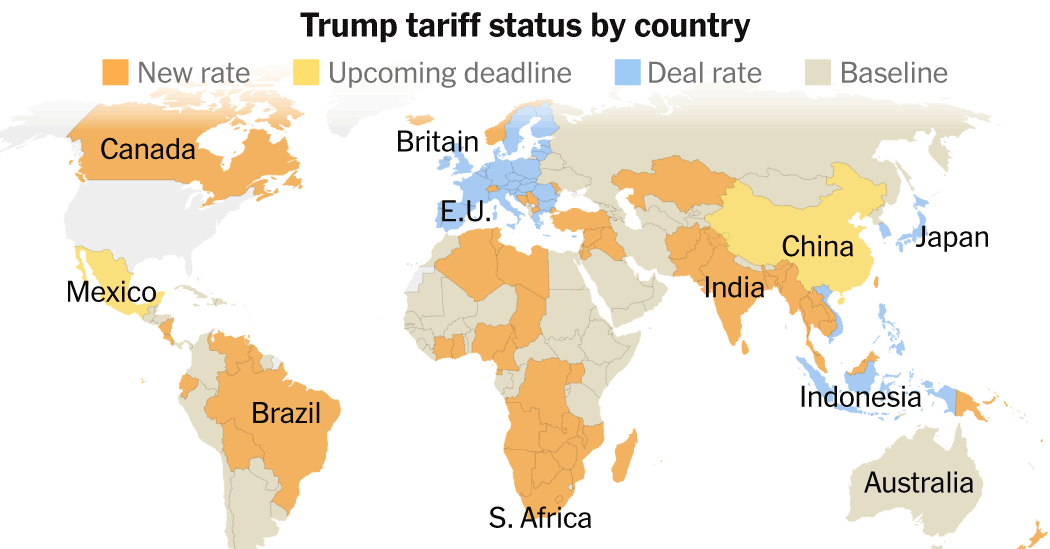
The US administration has launched an investigation into 60 countries — including the European Union — to determine whether they are permitting imports of goods produced with forced labor, setting the stage for new tariffs ranging from 10% to 12.5% and reopening a trade fight many assumed was settled, according to Deloitte’s Weekly Global Economic Update.
From Historic Tariffs to Legal Setbacks to a New Workaround
The administration spent much of 2025 attempting to construct a new global trading regime built around historically high tariffs and the constant threat of additional duties. That effort hit turbulence in 2026 when court decisions challenged the legality of certain tariff actions. Rather than retreat, the administration has pivoted to a forced-labor investigation as an alternative legal basis for imposing new duties — a maneuver that effectively route around the same legal constraints that felled its earlier tariff architecture, according to Deloitte’s tracking of the policy shift.
TD Economics notes the new Section 301 tariffs, covering the 60 countries under investigation, are set to take effect in late July 2026, replacing temporary Section 122 tariffs that had themselves replaced earlier IEEPA-based tariffs back in February — a rapid succession of legal justifications that underscores how central tariff policy remains to the administration’s trade strategy despite repeated judicial pushback, according to TD’s Canadian Quarterly Economic Forecast.
The EU Is Back on the List
Perhaps the most consequential detail is the inclusion of the European Union among the 60 countries under investigation, despite the US and EU having reached a trade agreement the previous year that was subsequently ratified by the European Parliament. The renewed scrutiny threatens to reopen a trade relationship both sides had treated as stabilized, introducing fresh uncertainty for European exporters already navigating elevated energy costs tied to the Middle East conflict.
The Broader Tariff Landscape Businesses Are Now Operating In
TD Economics estimates that despite the legal churn, the overall effective US tariff rate is likely to hold steady around 10% once the new Section 301 measures take effect — meaning that for most businesses, “peak uncertainty” over the shape of US trade policy is now behind them even if the specific legal mechanism keeps changing. Canadian exports, by comparison, face a lower roughly 6% average effective tariff rate given extensive CUSMA-compliance exemptions, according to RBC’s tariff impact analysis.
Knock-On Effects Across Asia and North America
The tariff churn has already reshaped global trade flows. RBC Economics notes that global trade patterns have reoriented dramatically to route around higher-tariff regions such as China, even as global trade volumes overall continued to rise through 2025 and the US trade deficit widened slightly despite the tariff push, according to RBC’s year-one tariff retrospective. For Asian exporters, exposure to the US market varies widely — from around 30% of exports for Vietnam to roughly 15% for China — meaning the forced-labor investigation’s ultimate impact will fall unevenly depending on each economy’s US trade concentration.
What Comes Next
With the investigation’s findings expected to determine tariff levels within the 10%-12.5% range for affected countries, businesses across the EU, and potentially exporters in Asia and Latin America caught up in the 60-country review, face a fresh compliance burden: documenting labor-sourcing practices deep into their supply chains to avoid punitive duties, even in sectors with no direct history of forced-labor allegations.
Discover more from The Economy
Subscribe to get the latest posts sent to your email.


Ottawa’s trade negotiators are running out of runway. With President Donald Trump’s threatened 50% tariffs on a broad swath of Canadian exports set to take effect on August 19, 2026, Canadian and American officials have met three times in as many weeks in a last-ditch effort to strike a deal before the deadline turns from threat to reality.
What’s Actually at Stake
The numbers are significant but not existential — which is precisely what makes the standoff so tense. According to the U.S. Trade Representative’s office, the proposed tariffs would apply to nearly $20 billion of Canadian imports, roughly 5.2% of the $383 billion in goods the U.S. imported from Canada in 2025 (U.S. News & World Report).
The affected sectors read like a cross-section of everyday Canadian commerce: autos, alcohol, dairy, wine, and manufactured goods such as hockey sticks and cement, according to Doane Grant Thornton’s tariff impact briefing (Doane Grant Thornton). Notably, energy, potash, fish, and critical minerals are excluded — a carve-out that shields Canada’s most strategically important export categories even as consumer-facing industries brace for impact.
What makes this round different from earlier tariff waves is the absence of a CUSMA (USMCA) safety net. The Doane Grant Thornton analysis notes the new levies would hit many goods that currently qualify for duty-free treatment under the trade pact — a direct challenge to the framework that has underpinned North American commerce for years.
Inside the Negotiations
Canada’s Minister responsible for Canada-U.S. trade, Dominic LeBlanc, met U.S. Trade Representative Jamieson Greer in Washington on Tuesday, August 11 — the third such meeting in three weeks. “We remain committed at the negotiating table and continue to work diligently to advance and staunchly defend Canadian interests,” LeBlanc said afterward (Reuters, via U.S. News).
Canada’s Chief Trade Negotiator Janice Charette also attended, and both sides are reportedly racing to present a framework agreement to President Trump ahead of the deadline, according to reporting cited by BNN Bloomberg. On the table: eliminating Canada’s retaliatory auto tariffs, lifting provincial restrictions on American alcohol sales, and restructuring dairy quota arrangements — concessions Ottawa has signaled it could offer in exchange for Washington scrapping the new levies.
Prime Minister Mark Carney has framed the talks broadly, telling reporters that “all strategic sectors,” including autos, are on the table, and that he remains personally “very involved” in the Washington negotiations (CBC News).
How We Got Here
The current threat traces back to proclamations Trump signed last month imposing 50% tariffs across the auto, alcohol, and dairy sectors, which the administration justified as a response to what it called discriminatory treatment of American products, according to Bloomberg’s trade reporting (Bloomberg). It’s the latest escalation in a relationship that has cycled between confrontation and detente since 2024, when a separate Canada-China tariff dispute over EVs and canola was resolved only in January 2026 after Carney’s Beijing visit (Wikipedia: Canada–China trade war).
An Economy That Has, So Far, Held Up
Remarkably, Canada’s broader economy has proven more resilient than many forecasters expected even as tariff threats have multiplied. TD Bank noted that June inflation cooled on lower energy prices, though it cautioned that tariff timing ahead of the August deadline could distort summer trade data as firms rush to front-load shipments before the levies land (Finimize).
Global Affairs Canada’s own State of Trade 2026 report frames the bigger structural story: Canadian goods trade with the U.S. declined through 2025 amid tariff uncertainty, but exports to non-U.S. markets — driven largely by gold and energy — pushed the non-U.S. share of Canadian exports to its highest level in more than four decades (Government of Canada). In other words, Ottawa’s diversification strategy, however reluctantly adopted, may be cushioning the blow.
What Happens on August 19
If no deal is reached, the 50% tariffs take effect automatically, and Canadian officials have warned of an “ugly new phase” of the trade dispute, according to Bloomberg’s sourcing. Should talks succeed, expect a framework built around reciprocal concessions — Canada easing retaliatory measures and provincial alcohol restrictions in exchange for Washington standing down on the broader levy.
Either way, the coming week will be decisive for Canadian exporters, and the outcome will likely set the tone for U.S.-Canada trade relations well into 2027.
When do new US tariffs on Canada take effect?
New 50% U.S. tariffs on a range of Canadian exports — including autos, alcohol, and dairy — are set to take effect on August 19, 2026, unless Ottawa and Washington reach a negotiated framework beforehand.
Discover more from The Economy
Subscribe to get the latest posts sent to your email.
Having lost its most powerful tariff tool in the Supreme Court, the Trump administration has found a new one — and it comes with a moral argument attached.
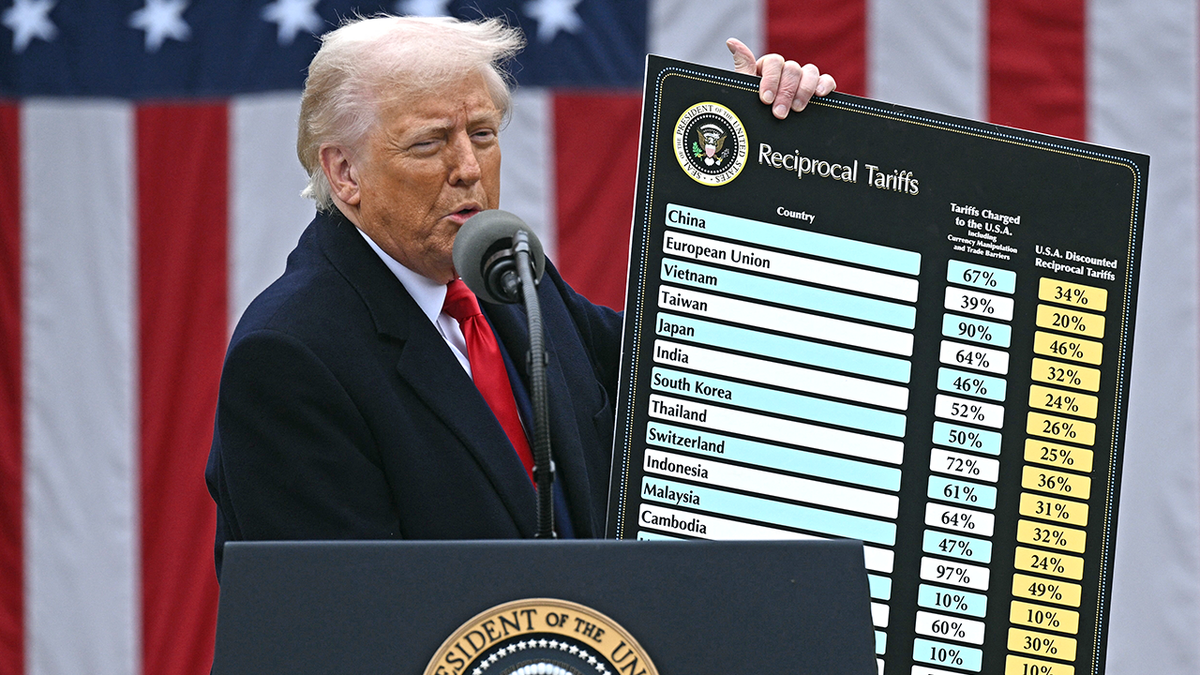
On June 2, 2026, the Office of the United States Trade Representative concluded 60 simultaneous Section 301 investigations, finding that each of the targeted economies had failed to impose or effectively enforce a prohibition on the importation of goods produced with forced labour. The proposed remedy: additional tariffs of 10% to 12.5% on all imports from those economies, covering 99.4% of total US imports by origin. The scope is unprecedented. It sweeps in China, the European Union, Japan, India, Vietnam, Australia, South Korea, and 52 other trading partners in a single action.
The Legal Architecture Post-Supreme Court
The context matters. In February 2026, the US Supreme Court struck down most of President Trump’s “Liberation Day” emergency tariffs, ruling that they exceeded the executive’s authority under the International Emergency Economic Powers Act (IEEPA). That decision dismantled the headline tariff architecture the administration had built over 2025. Rather than abandon the strategy, the Trump administration pivoted to legal frameworks with stronger statutory grounding. Section 301 of the Trade Act of 1974 authorises the president to impose levies to counter foreign trade practices that are “unreasonable or discriminatory and burden or restrict U.S. commerce” — a standard that the USTR has now applied to forced labour enforcement failures.
The investigations were formally initiated on March 12, 2026, with public hearings drawing testimony from nearly 60 witnesses and 500 written comments over April and May. The USTR’s findings drew a direct causal link between inadequate forced labour enforcement and competitive harm to US companies and workers.
The Rate Architecture
The proposed tariff structure creates two tiers. Economies that have adopted full or partial forced labour import prohibitions — notably Canada, Mexico, and a handful of others — would face 10% additional duties. The remaining 45 economies, including China, India, Japan, Vietnam, Australia, and New Zealand, would face 12.5% additional duties. A separate textile mechanism would allow a capped volume of apparel and textile imports from certain economies at a reduced rate. Electronics and AI-related products are widely expected to carry significant exemptions, according to the Economist Intelligence Unit.
The public comment period closes July 6, 2026, with hearings beginning July 7. The duties are not yet in effect — but for companies sourcing from any of the 60 targeted economies, the window to map exposure and file comments is rapidly closing.
Trading Partners Push Back
Responses from affected governments were swift and uniformly dismissive of the USTR’s reasoning. Beijing‘s commerce ministry spokesperson stated flatly that “there is no so-called forced labor in China,” and that Washington and Beijing should “meet each other halfway.” China’s foreign ministry called the accusations politically motivated.
The European Union is in a particularly complex position. Brussels signed a broad bilateral trade agreement with Washington in 2025, which the European Parliament ratified. The proposed new tariffs — which the EU called “unjustified” — would come on top of the existing 15% tariff framework from that deal. The USTR’s own report acknowledged that the EU’s anti-forced-labour regulation only entered into force in December 2027 and lacks certain enforcement elements — giving the administration its statutory foothold. The chair of the European Parliament’s trade committee described the determination as “utterly absurd” given the 2024 EU forced labour import ban law.
France‘s government questioned whether the investigation reflected genuine concerns, with officials suggesting a tariff measure was “sought first, and only then is a suitable legal justification found.”
The Supply Chain Reality for Multinationals
For global supply chain managers, the practical implications are immediate regardless of the final duty levels. The Clark Hill law firm’s trade practice advised clients to map exposure against the 60 targeted economies by HTS code, model the 10% and 12.5% rate scenarios, and test exclusion eligibility before assuming coverage — noting that even partial exposure in electronics supply chains could run to billions in added costs at scale.
Nick Marro of the Economist Intelligence Unit told CNBC that he expects the Trump administration to “unleash further investigations and tariff announcements in preparation for renewed rounds of trade talks,” characterising the Section 301 action as part of a broader pattern of building leverage ahead of bilateral negotiations. The July 24 expiration of the separate 10% baseline tariff imposed under Section 122 adds another inflection point to the calendar.
For the global trading system, the implication is clear: the US high-tariff era is not over; it has simply found a new statutory vehicle.
Discover more from The Economy
Subscribe to get the latest posts sent to your email.
Trump’s 2026 tariffs represent the largest US tax increase as a share of GDP since 1993, costing households $1,500 on average. Here’s how the trade war is reshaping global supply chains, prices, and growth.
The tariff regime assembled by the Trump administration since 2025 now constitutes the largest U.S. tax increase as a share of GDP since 1993—a fact that took more than a year to fully register in household budgets, but whose full weight is being felt with increasing force in the middle months of 2026.
The average American household will pay an estimated $1,500 more in 2026 as a direct consequence of elevated import duties, according to Tax Foundation analysis—up from roughly $1,000 in 2025. The costs are not distributed evenly. Lower-income households, which spend a higher proportion of their income on goods (particularly apparel, electronics, and food), absorb a larger relative burden.
A Legal Architecture Under Pressure
The tariff program has faced serious legal challenges. On February 20, 2026, the Supreme Court ruled that the President cannot use the International Economic Emergency Powers Act—IEEPA—to impose tariffs. The decision stripped the administration of the legal vehicle it had used to impose much of its most aggressive tariff architecture.
But the administration adapted rather than retreated. In the same week as the ruling, President Trump signed an executive order imposing a 10% tariff on all countries under Section 122—a different statutory authority tied to balance-of-payments deficits—covering approximately $1.2 trillion worth of imports. The administration also initiated multiple Section 301 investigations into 60 countries on March 11, examining whether those nations allow imports of products made by forced labor. The list includes the European Union, positioning both parties for a potential renewal of the transatlantic trade conflict that a deal in 2025 had temporarily paused.
On pharmaceuticals, the administration signaled that tariffs on imported drugs could rise toward 200% by mid- to late-2026—a figure that would represent an extraordinary disruption to global pharmaceutical supply chains, though J.P. Morgan analysts noted that inventory builds and domestic manufacturing announcements by large biopharma companies should limit near-term exposure for major producers.
The China Equilibrium
U.S.-China trade relations have settled into an uneasy equilibrium. Following the June 11, 2025 trade deal announcement that left in place 20% fentanyl-related tariffs and 10% reciprocal tariffs for a combined 30%, and a subsequent series of extensions and escalations that included a 100% tariff imposed in November 2025, the two countries entered 2026 with a tense but functional trading relationship.
Chinese exporters responded to U.S. tariffs not by collapsing but by redirecting. China’s semiconductor exports surged 110% year-over-year in May 2026. That strength reflects both genuine demand from AI-related industries globally and a deliberate Chinese strategy of deepening trade relationships with Southeast Asia, the Gulf, and Europe to reduce dependence on U.S. market access.
The economic cost of U.S. tariffs on China, per J.P. Morgan Global Research, was to reduce Chinese GDP growth by roughly 0.6 percentage points through the combined effect of export drag and weaker domestic investment. But China’s export machine proved more resilient than many forecasters expected, partly because third countries absorbed Chinese goods that could not reach the U.S. market directly.
Inflation Is the Tariff’s Most Persistent Legacy
The clearest economic consequence of the tariff regime is its contribution to inflation. Businesses faced with import tariffs have three choices: absorb the cost and compress margins; pass it to consumers in higher prices; or reshore production in the U.S. at significantly higher labor costs. All three options carry economic costs, and in practice most companies have pursued a combination.
Atlanta Fed President Raphael Bostic noted in research published late 2025 that U.S. firms expected tariffs to account for 40% of their total unit cost growth in 2025 and 2026. That contribution to inflation is structural rather than transitory—unlike oil prices, which can fall as conflict dynamics ease, tariff-driven cost increases remain embedded in supply chain economics until the tariffs themselves are removed or the supply chains are restructured.
The Council on Foreign Relations analysis of tariff-Treasury interactions found that tariff uncertainty—independent of the tariffs themselves—was raising the risk premium in U.S. Treasury markets: “An eventual court ruling against the administration’s reliance on IEEPA could significantly alter the implementation path,” J.P. Morgan’s Nora Szentivanyi noted, adding that even without IEEPA, alternative statutory pathways would keep elevated tariffs in place.
Where the Trade War Goes Next
The Section 301 investigations launched in March against 60 countries—including EU members—signal that the tariff posture is not an emergency measure being wound down but a permanent feature of U.S. trade policy. Many market participants expect that Treasury will need to increase issuance of longer-term bonds starting in Q4 2026 partly to ensure liquidity along the yield curve—with tariff revenue being one of the contested variables in fiscal planning.
For U.S. businesses, the clearest strategic message from the tariff regime’s staying power is that supply chain localization is no longer a nice-to-have contingency plan. It is a competitive necessity in an environment where trade routes can change with a single executive order and where the legal found
Discover more from The Economy
Subscribe to get the latest posts sent to your email.

Luxury Wellness: The Monetization and Expansion of Boutique Low-Impact Training

Leveraging Viral AI & Climate Hashtags for Brand Growth on X

The Medicaid Churn: Front-End Revenue Cycle Risks for Enterprise Hospitals

The 2026 Crypto Regulatory Shift: What It Means for Institutional Investors

AI-Powered Training: The Next Multi-Billion Dollar Ecosystem in Fitness

BRICS Summit 2026: Economic Implications of the India-China Diplomatic Thaw

Emerging Market Debt: The Ripple Effect of China’s Sovereign Refinancing Role

Dropping Oil & Surging Gold: Navigating Safe-Haven Investments in Q3

2026 AI Stock Frenzy: How to Position Your Portfolio

The AI Disruption in Financial Risk Management: Moving Beyond Record Banking Profits

The Rise of Green Aviation: Balancing High Fuel Prices with Sustainable Infrastructure

US-China Relations in Q3 2026: Trade Tariffs and Supply Chain Risks

Emerging Markets Rebound: Top Stock Strategies for the Gulf and South Asia

Tackling the 2026 Global Food Crisis: Policy Shifts and Market Speculation

China Politburo July 2026: Stimulus Signals Explained

Russia Fuel Shortages 2026: Inside a Cracking War Economy

State Farm’s $5B Dividend 2026: Who Qualifies & Payout Dates

Top 15 Financial Stocks for Investment in PSX

Pakistan Passed Its Third IMF Review

SpaceX Stock Lockup Expiration Explained: Why $123B in Shares Could Hit the Market

Pakistan IMF Program 2026: Inside the Push Toward an Interest-Free Economy

Russia Oil Revenue 2026: How Sanctions on Rosneft and Lukoil Are Draining the War Chest

Andy Burnham, UK Gilts and Mortgages: July 2026 Explainer

Gold Price 2026: Why Bullion Has Fallen 25% From Its January Record High

Pakistan’s 2026 Monsoon Floods Threaten Fragile Economic Recovery as Inflation Nears 9%

Russia Oil Revenue 2026: The Iran War Windfall and What a Hormuz Deal Means for Moscow

Russia’s Budget Deficit Blew Past Its Full-Year Target in Three Months

Canada US Trade War 2026: Inside Carney’s Push to Cut Ties With Trump’s Tariffs
-

 Markets & Finance8 months ago
Top 15 Stocks for Investment in 2026 in PSX: Your Complete Guide to Pakistan’s Best Investment Opportunities
-

 Analysis6 months ago
Johor’s Investment Boom: The Hidden Costs Behind Malaysia’s Most Ambitious Economic Surge
-

 Analysis6 months ago
Top 10 Stocks for Investment in PSX for Quick Returns in 2026
-

 Analysis7 months ago
Brazil’s Rare Earth Race: US, EU, and China Compete for Critical Minerals as Tensions Rise
-

 Banks7 months ago
Best Investments in Pakistan 2026: Top 10 Low-Price Shares and Long-Term Picks for the PSX
-

 Investment8 months ago
Top 10 Mutual Fund Managers in Pakistan for Investment in 2026: A Comprehensive Guide for Optimal Returns
-

 Global Economy8 months ago
15 Most Lucrative Sectors for Investment in Pakistan: A 2025 Data-Driven Analysis
-

 Global Economy8 months ago
Pakistan’s Export Goldmine: 10 Game-Changing Markets Where Pakistani Businesses Are Winning Big in 2025