
Analysis
US Inflation Hits 4.2% in May 2026 on Energy Shock

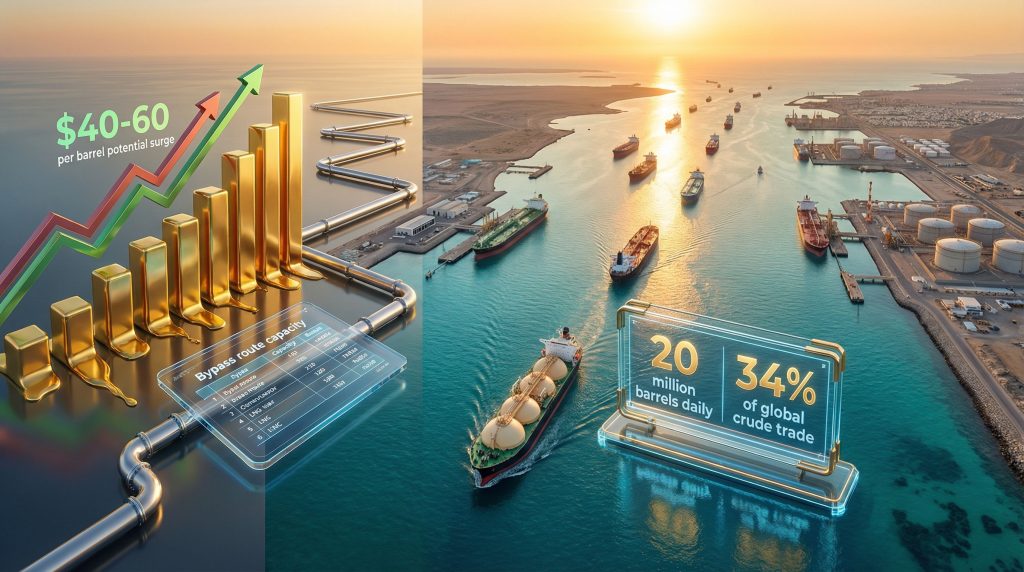
The numbers landed like a thunderclap across trading floors at 8:30 a.m. Eastern on June 10. Headline consumer prices in the United States had leapt 4.2% in the year through May, the Bureau of Labor Statistics reported, rocketing past every consensus forecast. The print — the highest since the inflationary inferno of 2022 — was powered by a 17.3% monthly surge in gasoline, itself the shockwave of a military blockade in the Strait of Hormuz that had throttled global crude flows for 37 days and counting. In Chicago, soybean futures halted limit-down. In Washington, the phones inside the Eccles Building began ringing before the data hit the wire.
The 4.2% figure ends a fragile, hard-won disinflation that had taken the consumer price index from 9.1% in June 2022 to 3.8% as recently as April 2026. For 22 months, the Federal Reserve had held the federal funds rate at 5.25%–5.50%, betting that restrictive policy could finish the job without cracking the labour market. May’s report — a 0.9% month-on-month jump in the headline index — suggests that bet has been overrun by events 6,200 nautical miles away. Core CPI, which strips out food and energy, rose 0.4% for the month and 3.7% year-on-year, a sobering reminder that underlying price pressures have not been vanquished. The energy shock is now bleeding into services, shelter, and transportation, the categories that determine whether inflation becomes embedded in the daily life of every American.
The catalyst is no mystery. On 3 May, Iran’s Revolutionary Guard Corps mined the western approaches of the Strait of Hormuz and deployed fast-attack craft after the collapse of the Vienna 3 nuclear talks. Within 48 hours, Brent crude had vaulted from $78 to $124 a barrel. The physical market seized up: 21 million barrels a day of crude and condensate transit the strait, and insurers declared most hulls uninsurable north of Fujairah. By the final week of May, the US national average retail price for regular gasoline touched $5.12 a gallon, [according to AAA](https://gasprices.aaa.com/), up $1.44 from the week before the blockade. Jet fuel and diesel rose even faster, compressing airline margins and adding a fresh layer of freight costs to an economy still scarred by the logistics snarls of 2021–22. The BLS energy index climbed 12.4% in May alone — the largest one-month increase since March 2022, when Russia’s invasion of Ukraine scrambled global hydrocarbons.
For motorist Carla Jefferson, filling the tank of her 2019 Honda CR-V at a Shell station on West Florissant Avenue in St. Louis, the arithmetic was brutal. “It was $91. I’ve never paid $91 for a tank of regular,” she said on the morning of the CPI release, studying the receipt as though it might contain a clerical error. “I manage a daycare. I can’t just not drive.” Her experience is the granular translation of an index number that, in Washington and New York, is traded and hedged and dissected in decimal points. For households earning under $60,000, energy and food together consume roughly 22% of post-tax income, more than double the share of the top quintile. When gasoline gallops, those households have no alternative: demand is inelastic, and the price is paid in forgone prescriptions, skipped credit-card payments, and cheap calories that often worsen health outcomes. The 4.2% headline is an average that conceals a regressive tax.
What caused the jump in US inflation to 4.2% in May 2026? The Strait of Hormuz disruption sent gasoline prices up 18.3% and overall energy costs up 12.4%, adding roughly 1.8 percentage points to headline CPI. Core services inflation stayed stubborn at 4.1%, driven by shelter, insurance, and medical care, confirming that even without the energy shock, price stability was not assured. The BLS release noted that shelter costs, the largest component of core CPI, rose 0.5% for the month and 5.2% year-on-year, propelled by a lagged pass-through of home prices and a multi-year insurance premium spiral in coastal states exposed to climate-linked disasters.
The bond market’s reaction was swift and brutal. The two-year Treasury yield, the most sensitive to Fed policy expectations, leapt 28 basis points to 4.89% within an hour of the release — the sharpest intraday move since March 2023, when regional banks were failing. The ten-year yield pierced 4.70% for the first time in 16 months, and the yield curve bear-steepened in a way that historically signals markets pricing a policy error. Fed funds futures, which as late as April implied two rate cuts in the second half of 2026, abruptly flipped to price a 62% probability of a quarter-point hike at the July meeting, according to CME FedWatch. Rate traders are now assigning a non-trivial chance — 14%, by one options-based model — that the terminal rate could breach 6% before year-end.
What follows, however, is not a straightforward replay of 2022. The American economy of June 2026 is more leveraged, more fiscally constrained, and more politically brittle than the one that absorbed the post-pandemic price surge. Federal debt held by the public has crossed $38 trillion, and net interest outlays are running at an annualised $1.4 trillion, exceeding the defence budget. Every additional 100 basis points of Fed tightening adds roughly $380 billion to annual interest costs within two years, a fiscal accelerator that the Congressional Budget Office has flagged as the single largest risk to long-term solvency. The political calendar compounds the arithmetic: midterm elections are five months away, and a Democratic president is defending a single-digit House majority. The White House released a statement at 9:12 a.m. pledging to “use every tool at our disposal,” including a new round of Strategic Petroleum Reserve releases, but the SPR holds just 19 days of net import cover after the drawdowns of 2022 and the replenishment delays of 2024–25. The powder is damp.
Fed Chair Jerome Powell, speaking at a European Central Bank forum in Sintra on 9 June, acknowledged the inflation spike as “a supply-driven shock that complicates the path to our 2% objective,” but his words were carefully hedged. “We will not overreact to a single print, however uncomfortable, when the source is clearly a geopolitical event whose duration we cannot forecast,” he said. “But we will not hesitate to act if expectations become unanchored.” The University of Michigan’s preliminary June survey of consumers, released on the same day as the CPI, offered an early warning: five-to-ten-year inflation expectations ticked up to 3.4%, the highest since 1995, from 3.0% in May. That metric, which the Fed’s own research identifies as a critical leading indicator of wage-price dynamics, will likely dominate the internal debate at the Federal Open Market Committee’s 17–18 June meeting.
The picture is more complicated than a mechanical pass-through from oil to inflation. The US economy is running hotter than most models recognised. Payrolls grew by 287,000 in May, and average hourly earnings accelerated to 4.4% year-on-year, a pace inconsistent with 2% inflation unless productivity growth has accelerated well beyond its current 1.6% trend. The Atlanta Fed’s GDPNow model was tracking 3.1% real growth for the second quarter as of 6 June, driven by a consumption binge that household balance sheets cannot sustain indefinitely. This is not stagflation; it’s an overheating economy absorbing a supply shock, a combination that leaves monetary policymakers with no clean choices. If they hike into the shock, they risk crushing demand at precisely the moment the economy needs flexibility to reallocate resources. If they wait, they risk letting the 1970s genie out of the bottle — and the 1970s genie, once freed, required a 20% funds rate and a double-dip recession to re-cork.
A competing view, articulated forcefully by Mohamed El-Erian, chief economic adviser at Allianz and president of Queens’ College, Cambridge, insists the Fed should hold steady and accept a temporarily higher inflation rate rather than compound the supply shock with demand destruction. “The central bank cannot print oil, it cannot reopen a strait, and it cannot unilaterally cool shelter inflation that is driven by a decade of underbuilding,” El-Erian wrote in a Bloomberg opinion column on 9 June. “Tightening now would be an unforced error — the equivalent of shooting the patient because the fever hasn’t broken.” The argument has intellectual heft: core goods inflation actually declined 0.2% in May, and the supply-chain pressures index maintained by the New York Fed remains below its long-run average. If the Strait of Hormuz reopens — and diplomatic backchannels between Oman and Tehran have intensified in recent days — energy prices could fall as fast as they rose, pulling headline inflation back toward 3.5% by September.
Yet that position assumes that the inflation expectations genie stays docile. The Michigan survey suggests it’s already stirring. And there is a deeper, more structural worry: the energy shock is not a one-off. It is the third major supply disruption in five years, following COVID-era factory closures and the Russia-Ukraine commodity crisis. Firms that spent the 2010s optimising for just-in-time efficiency are now aggressively reconfiguring for resilience — reshoring, dual-sourcing, building inventory buffers. That insurance carries a cost, and the cost is structurally higher prices. A working paper published by the Bank for International Settlements in April 2026 estimated that the shift from efficiency to resilience in global supply chains could add 0.8 to 1.2 percentage points to advanced-economy inflation over the medium term, independent of cyclical forces. If the BIS is even half right, the Fed’s 2% target may be incompatible with the geopolitical realities of the mid-2020s.
The second-order effects are already cascading. Mortgage rates, which had drifted down to 6.3% in April on hopes of Fed easing, shot back above 7% in the first week of June, freezing the spring housing market. The National Association of Realtors’ affordability index dropped to its lowest level since October 1985. In corporate credit markets, spreads on high-yield bonds widened 65 basis points in two weeks, and a major airline — already squeezed by jet fuel costs — postponed a $3.2 billion debt refinancing, citing “adverse market conditions.” Emerging-market currencies, from the Indonesian rupiah to the South African rand, sold off sharply as the dollar index climbed 2.7% in five trading sessions. A strong dollar, coupled with expensive energy, is a classic recipe for balance-of-payments stress in the developing world. The IMF’s managing director warned on 8 June that the institution is “preparing for a wave of emergency lending requests” if crude prices stay elevated beyond the third quarter.
For American businesses, the calculus is simple and unforgiving. The producer price index for May, released 24 hours after the CPI, showed a 0.9% monthly rise, with goods inputs up 1.6% — nearly all of it energy and energy-linked chemicals. Margins, which cushioned the early phase of the post-pandemic inflation, are now compressing. The S&P 500’s aggregate operating margin fell to 11.9% in the first quarter, the lowest since late 2020, and second-quarter guidance from consumer-discretionary CEOs has been laced with warnings about “elasticity exhaustion” — the point at which customers simply stop accepting price increases. Procter & Gamble, which has raised prices in 17 of the last 19 quarters, reported a 1.8% volume decline in its North American segment for the three months to March. If energy costs persist, the next round of earnings calls will be a stress test for the pricing power that Wall Street has taken for granted.
The disinflation that preceded May’s shock was real but fragile. It rested on three pillars: healing supply chains, a cooling labour market, and anchored expectations. The Middle East crisis has knocked out the first pillar. The second pillar is wobbling: the quits rate, a reliable predictor of wage pressure, rose to 2.6% in April from 2.3% in January, and the ratio of job openings to unemployed workers ticked back above 1.6. The third pillar — expectations — is now under direct assault. History suggests that once expectations begin to drift, the cost of restoring them rises nonlinearly. The Fed’s own 2022 Tealbook simulations showed that a one-percentage-point increase in expected inflation, if not countered quickly, adds 0.7 points to actual inflation within 12 months. The Michigan reading of 3.4% is not yet a one-point jump, but its trajectory is steeper than anything observed since 1991.
What makes this episode distinct is the speed with which the energy shock has transmitted into core services. In the 1973–74 oil embargo, it took roughly six quarters for higher crude prices to fully work their way into non-energy consumer prices. In 2026, that lag has compressed to what San Francisco Fed economists estimate as three to four months, owing to the prevalence of energy surcharges in service contracts, algorithmic pricing software that reprices airline seats and hotel rooms in real time, and indexed wage agreements in logistics and healthcare. The “stickier” the inflation becomes, the more painful the cure. Diane Swonk, chief economist at KPMG US, captured the anxiety in a client note on the morning of the release: “This is not 1973, but it is also not 2022. We are in a third regime — one where supply shocks are more frequent, pass-through is faster, and the Fed’s margin for patience is thinner than markets assume.”
The thin margin is evident in the options market. The Cboe Volatility Index, the VIX, closed at 29.8 on 10 June, its highest since the regional banking turmoil of March 2023. But more telling was the move in the MOVE index, which tracks Treasury volatility: it hit 158, a level that historically has preceded recessions. Bond traders are not merely pricing a rate hike; they are pricing a regime change in the structure of the economy. The term premium on the ten-year note — the compensation investors demand for bearing the risk that inflation and rates could deviate from expectations — turned positive in May for the first time since 2020 and has since widened to 42 basis points. That shift alone has added roughly $120 billion to the present value of the federal debt stock, a figure that will quietly appear in the Treasury’s next quarterly refunding announcement.
What comes next will hinge on three variables: the duration of the Strait of Hormuz closure, the reaction function of the FOMC, and the resilience of the American consumer. The first is unknowable. The second will be revealed on 18 June, when the committee releases its Summary of Economic Projections; traders will scrutinise the “dot plot” for any shift in the 2026 median. The third is measurable in real time. Real average hourly earnings, adjusted for the May CPI, fell 0.6% for the month and are now down 1.3% year-on-year. Households are drawing down the last of their pandemic-era savings buffers; the San Francisco Fed estimates that excess savings, which peaked at $2.3 trillion in mid-2021, fell below $150 billion in April. Credit card delinquencies at smaller banks have risen to 7.1%, the highest in data going back to 1991. The consumer is not broken, but the cracks are widening.
The afternoon of the CPI release, a modest two-paragraph statement from the Treasury Department confirmed that Secretary Wally Adeyemo had convened an emergency meeting of the President’s Working Group on Financial Markets. The statement named no date, no agenda. It didn’t need to. The silence was the message.
The US economy has absorbed energy shocks before, and it has absorbed inflation before. It has rarely absorbed both while sitting on a federal debt-to-GDP ratio above 120%, a housing market frozen by 7% mortgage rates, and a geopolitical map that grows more incendiary by the quarter. The 4.2% print is not a crisis. It is a warning, printed in the only language financial markets truly respect. Whether Washington and the Eccles Building heed it is a question that will be answered not in the coming weeks, but in the long, brittle months ahead. The only certainty is that the margin for error has vanished.
Discover more from The Economy
Subscribe to get the latest posts sent to your email.



Chancellor Rachel Reeves stepped to the dispatch box on a crisp Tuesday morning with a distinctly unflashy proposition. Amidst the swirling noise of fiscal drag and corporate tax overhauls, the headline announcement was a highly targeted £4 million intervention. This UK government SME debt support package arrives not a moment too soon for the high street. Small and medium-sized enterprises are quietly buckling under the weight of historic borrowing, compounded by stubbornly high interest rates and anaemic consumer demand. The sum appears modest, almost a rounding error in the vast ledger of Whitehall. Yet, its structural intent signals a sharp pivot in how the Treasury approaches the impending wave of commercial insolvencies.
The Macroeconomic Weather System
The broader economic climate remains unforgiving for the British high street. Following the artificial life support of pandemic-era interventions, the hangover has been brutal. According to the Office for National Statistics, business insolvencies reached a 30-year peak in early 2026, largely driven by firms unable to service their immediate debt obligations. The era of cheap money is definitively over.
We are now witnessing the deferred consequences of the Bounce Back Loan Scheme (BBLS) and its successors. Over 1.5 million businesses took on state-backed debt, operating under the assumption that rates would remain suppressed indefinitely. That said, reality has bitten hard. The Bank of England reports that corporate debt servicing costs have tripled for the average manufacturer in the Midlands since 2022. This £4 million pledge is not designed to pay off those debts directly. Instead, it aims to fund the desperately overstretched advice networks—the financial triage units—tasked with keeping these companies out of administration.
Deconstructing the £4m Intervention
To understand the utility of this capital, one must look at the mechanics of insolvency. The HM Treasury allocation will be funnelled directly into independent debt advisory charities and approved corporate restructuring networks. The objective is to provide thousands of hours of free, high-tier financial counselling to directors who are currently paralyzed by their balance sheets. When a business owner reaches the brink of default, the cost of professional restructuring advice is often the final barrier to survival.
Martin McTague, National Chair of the Federation of Small Businesses (FSB), noted on October 14th that “advice deserts” have emerged across the North and Southwest. In these regions, struggling firms simply cannot access affordable counsel. By subsidising this specific bottleneck, the government hopes to facilitate widespread small business loan restructuring UK-wide, preventing viable businesses from collapsing due to temporary cash flow crises.
- Triage and Assessment: Firms will receive immediate viability assessments to separate illiquid but solvent companies from true “zombie” firms.
- Creditor Negotiation: Advisors will mediate between SMEs and tier-one lenders to extend loan terms or secure payment holidays.
- Insolvency Shielding: Providing legally sound frameworks for voluntary arrangements, keeping the courts unburdened.
This intervention acknowledges a grim reality: the state cannot afford another massive debt write-off. The Financial Times recently highlighted that commercial banks are already tightening their lending criteria, effectively locking highly geared SMEs out of the refinancing market. By funding the advisors rather than the debtors, the Treasury is attempting a highly leveraged policy maneuver. They are buying time.
The Analytical Layer: Zombie Firms and Capital Misallocation
The picture is more complicated when we assess the quality of the businesses being saved. British productivity has flatlined for over a decade, and a significant contributing factor is the proliferation of “zombie companies”—firms that generate just enough cash to service the interest on their debt, but lack the capital to invest, hire, or innovate.
How can UK SMEs get help with debt?
For directors staring down insurmountable arrears, the traditional route of hiring a Big Four consultancy is a mathematical impossibility. Sarah Jenkins, a Birmingham-based restructuring partner at BDO, observed last week that hourly rates for top-tier insolvency advice have surged by 15% year-on-year. The new funding democratises access to survival strategies. SMEs can now apply through the British Business Bank portal to be matched with a state-subsidised advisor who will negotiate with creditors on their behalf.
What is the UK government SME debt scheme?
The UK government SME debt scheme is a £4 million targeted funding initiative designed to expand free debt advisory services for small businesses. It provides grants to approved financial counsellors, enabling them to assist struggling enterprises with loan restructuring and insolvency prevention strategies.
Still, propping up technically insolvent firms presents a distinct moral hazard. If capital remains tied up in unproductive enterprises, it cannot flow to the high-growth disruptors that drive economic recovery. The Treasury is walking a tightrope. They must differentiate between a fundamentally sound hospitality business suffering a temporary dip in winter footfall, and a legacy manufacturer that has lost its competitive edge. The £4 million advisory boost effectively outsources this brutal sorting process to independent accountants.
Implications & Second-Order Effects
The downstream consequences of this policy will ripple through the commercial banking sector. Lenders abhor uncertainty, and the looming threat of mass SME defaults has already forced institutions to increase their bad debt provisions. By introducing state-funded mediators into the ecosystem, the government is subtly pressuring banks to accept more lenient restructuring terms.
Governor Andrew Bailey has previously warned about the fragility of the SME credit market. If commercial banks perceive that the government is systematically shielding bad debtors, they may restrict new lending even further. Yet, early indicators suggest the opposite might occur. A structured, professionally mediated workout is always preferable to a chaotic liquidation. The Organisation for Economic Co-operation and Development (OECD) estimates that orderly debt restructurings recover 30 pence more on the pound for creditors compared to forced liquidations.
Furthermore, this move acts as a pressure release valve for the mental health crisis quietly unfolding among small business owners. The psychological toll of unmanageable debt is a rarely quantified economic drag. By providing a clear, state-sanctioned pathway for advice, the Treasury is mitigating the localized economic shockwaves that occur when a community’s primary employer abruptly shuts its doors.
Will bounce back loans be written off?
The short answer is no. Successive chancellors have fiercely resisted any blanket amnesty for pandemic-era borrowing. Doing so would torch the government’s credibility with bond markets and set a disastrous precedent for future state interventions. Instead, the focus remains firmly on forbearance. The new £4 million package reinforces the doctrine of “pay back what you can, over a timeline you can survive.”
Competing Perspectives: A Drop in the Ocean?
Not everyone is convinced by the Treasury’s arithmetic. Critics argue that £4 million is a woefully inadequate sticking plaster for a multi-billion-pound hemorrhage. To put the figure into perspective, the National Audit Office estimated the total value of outstanding, at-risk SME debt to be closer to £18 billion.
Lord Nick Macpherson, former Treasury permanent secretary, offered a scathing assessment on Monday morning. He argued that micro-interventions of this size are performative rather than structural. In his view, if the government genuinely wanted to solve the SME debt crisis, they would mandate the retail banks to absorb a larger share of the restructuring costs, rather than tossing a few million pounds at charitable advisory networks.
It’s a compelling counter-narrative. Steel-manning the opposition requires us to acknowledge that £4 million divided across the estimated 300,000 SMEs currently in financial distress equates to barely a fraction of a billable hour per company. The policy relies entirely on the assumption that only a small percentage of these firms will actually seek help, and that the advice given will be uniformly excellent. If demand surges, the funding will evaporate in weeks.
The Final Reckoning
The chancellor’s announcement is a study in political and economic pragmatism. It is an acknowledgement that the state cannot bail out every failing pub, manufacturer, or logistics firm on the British Isles. The £4 million package is not a rescue fund; it is a navigational aid.
By funding the map-makers rather than building the bridges, the Treasury is forcing the private sector to resolve its own balance sheet crises, albeit with slightly better lighting. Whether this modest injection of capital can genuinely prevent a cascade of high street insolvencies remains an open question. Ultimately, cheap advice is no substitute for cheap credit, and for Britain’s beleaguered small businesses, the latter is gone for good.
Discover more from The Economy
Subscribe to get the latest posts sent to your email.

The era of the verbose central banker may be nearing its end, if a growing faction of monetary conservatives has its way. For the better part of two decades, the Federal Reserve has operated under a simple, seemingly unassailable premise: more transparency equals less market volatility. The institution transitioned from the cryptic briefcase-watching days of the Alan Greenspan era to a modern regime of dot plots, forward guidance, and post-meeting press conferences that parse every syllable of economic data. Yet, former Federal Reserve governor Kevin Warsh has emerged as the loudest voice calling for a radical reversal. His prescription for the central bank is startling in its simplicity. He wants them to stop explaining everything.
What follows, however, is not a call for renewed secrecy, but a structural critique of how monetary policy transparency has inadvertently cornered the world’s most powerful financial institution. Since the 2008 financial crisis, the volume of central bank communication has exploded. The average length of an FOMC post-meeting statement grew from roughly 130 words in 1999 to over 800 words by the early 2020s, a symptom of an institution desperately trying to script the future. Warsh, currently a visiting fellow at the Hoover Institution, argues that this hyper-communication has transformed the Fed from a reactive stabiliser into an anxious market manager. By pre-committing to future policy paths through extensive forward guidance, the central bank has severely limited its own optionality when macroeconomic conditions inevitably change.
The core of the argument surrounding Kevin Warsh Fed communication reforms rests on the idea that the central bank has become a prisoner of its own forward guidance. In the post-Bernanke era, the Federal Reserve adopted the philosophy that explaining future policy intentions would smooth out market reactions and anchor yield curves. Warsh contends this approach has fundamentally backfired. Instead of calming markets, hyper-transparency has created a brittle financial system highly reactive to minor shifts in the Fed’s linguistic tone.
When the Fed attempts to narrate the economic future, it invites Wall Street to trade the narrative rather than the underlying economic reality. Warsh has repeatedly warned that central banks are not omniscient forecasting agencies. When policymakers issue detailed dot plots projecting interest rates three years into the future, they project a false certainty. If inflation spikes or employment drops unexpectedly, the Fed is forced into a humiliating retreat, damaging its institutional credibility. A report by the Bank for International Settlements recently highlighted that over-reliance on forward guidance during periods of high inflation actually delayed necessary policy tightening, as central banks hesitated to break their own public promises.
By retreating from the microphone, Warsh suggests the Federal Reserve can reclaim its tactical flexibility. If markets are given less explicit guidance, they must revert to doing their own price discovery based on incoming data, rather than waiting to be spoon-fed by Jerome Powell. This forces market participants to price in risk more accurately. The current regime, Warsh argues, acts as a psychological subsidy to financial markets, encouraging risk-taking because traders believe the Fed has broadcast its entire playbook in advance.
To understand the mechanics of this critique, one must examine the specific tools the Fed uses to broadcast its intentions. The most controversial is the Summary of Economic Projections, colloquially known as the dot plot. Introduced in 2012, the dot plot was designed to provide a visual representation of where each FOMC member expects interest rates to be in the coming years. Warsh views the dot plot not as a tool of clarity, but as an engine of confusion that central bank forward guidance relies on too heavily.
What is forward guidance in monetary policy? Forward guidance is a communication tool used by central banks to signal the future path of interest rates to the public and financial markets. By clearly stating their long-term policy intentions, central banks aim to influence current financial conditions, lower long-term borrowing costs, and stimulate or cool economic activity.
When 19 different Fed officials publish 19 different interest rate trajectories, the result is often chaotic. Markets fixate on the median dot, treating it as a blood oath rather than a fleeting estimate. If a single official alters their projection, the median shifts, triggering billions of dollars in algorithmic trading volume. This creates a feedback loop where the Fed is constantly managing market reactions to its own theoretical forecasts. According to research published by the International Monetary Fund, central bank communications that provide excessively narrow path projections often result in higher bond market volatility when those paths inevitably change.
Warsh’s proposed alternative is a return to an older, quieter style of central banking. The Fed should state what it is doing today, provide a brief rationale based on current data, and remain largely silent on what it might do six months from now. This approach acknowledges the inherent unpredictability of the global macroeconomy. It shifts the burden of forecasting back to private markets, where it belongs. The Federal Reserve, in this model, speaks through its actions—its rate adjustments and balance sheet mechanics—rather than its press releases.
If the Federal Reserve were to adopt this doctrine of strategic silence, the immediate downstream consequence would be a structural repricing of risk across global markets. For the past 15 years, a vast ecosystem of analysts, commentators, and algorithmic trading models has been built entirely around parsing Fed rhetoric. A sudden reduction in central bank forward guidance would strip away the guardrails that equity and bond markets have come to rely on.
In the short term, this shift would almost certainly spike the VIX and drive up bond yields, as investors demand a higher premium for the uncertainty of an unscripted Fed. Traders would no longer have the luxury of perfectly timed rate cut expectations. Instead, they would be forced to closely monitor real-time economic indicators—wage growth, supply chain bottlenecks, and capital expenditure trends—to anticipate monetary policy adjustments. This represents a return to fundamental investing. As noted by The Economist in a recent briefing, stripping away the Fed’s vocal safety net could ultimately create a more resilient financial system, one less prone to the speculative bubbles that form when borrowing costs are transparently guaranteed.
For policymakers, adopting Warsh’s approach would require immense institutional discipline. Central bankers are naturally inclined to manage expectations. Stepping back to the podium and saying less during a crisis runs contrary to modern political instincts. Yet, for businesses and citizens, a quieter Fed might actually be a more effective one. When the central bank constantly shifts its rhetoric to manage daily market sentiment, it risks losing the public’s trust. A Fed that speaks rarely, but acts decisively, projects a far greater sense of authority than one that issues a 3,000-word justification for every 25-basis-point move.
The push for a quieter Federal Reserve is not without its fierce detractors. Many prominent economists and former policymakers argue that retreating from the current communication framework would be a catastrophic step backward. The modern era of monetary policy transparency was hard-won, largely driven by Ben Bernanke’s desire to democratise the institution and prevent the kind of market panic that occurs when investors are caught entirely off guard.
Defenders of the status quo argue that forward guidance is not just a communication strategy; it is an active monetary policy tool. When short-term interest rates hit zero, as they did after 2008 and again in 2020, the Fed’s only remaining lever to stimulate the economy was the promise to keep rates low for a prolonged period. Abandoning this tool deprives the central bank of crucial ammunition during a severe downturn. A working paper from the Brookings Institution defends the dot plot, noting that while it is imperfect, it successfully lowers long-term bond yields during crises by anchoring public expectations.
Furthermore, critics of Warsh note that financial markets are vastly more complex and interconnected today than they were in the 1990s. The idea that markets will efficiently discover prices without central bank guidance ignores the reality of modern algorithmic trading, which can trigger cascading liquidity crises in the absence of clear institutional signals. From this perspective, the Fed’s verbose explanations are a necessary public utility, preventing systemic shocks by ensuring all market participants have equal access to the central bank’s baseline assumptions.
The debate over the Federal Reserve’s communication strategy is ultimately a debate about the limits of economic forecasting and institutional humility. Warsh’s critique cuts to the heart of a modern technocratic fallacy: the belief that if you simply explain a complex system in enough detail, you can control its outcome. The reality of the past few years—marked by transitory inflation narratives that proved dramatically wrong—suggests that excessive transparency can sometimes resemble institutional hubris.
By pre-committing to future actions, the Fed has traded long-term credibility for short-term market placation. Whether the institution will willingly surrender the microphone remains to be seen. But the argument for doing so is gaining traction among those who remember a time when central banks commanded respect not by forecasting the future, but by acting decisively when the future arrived. Silence, in the realm of central banking, may soon be a premium asset.
Discover more from The Economy
Subscribe to get the latest posts sent to your email.

The financial architecture linking London and Tokyo just received its most significant structural reinforcement in a generation. With the formalization of the £18 billion UK Japan investment agreement, a massive influx of East Asian capital is officially bound for British soil, targeting critical sectors from offshore wind farms to next-generation semiconductor facilities. This capital deployment isn’t a sudden twist of diplomatic fortune. It represents the culmination of multi-year bilateral negotiations designed to insulate both island nations from shifting geopolitical alliances and volatile global energy supply lines. For the British economy, long starved of transformative capital expenditure, the scale of this commitment marks a decisive shift in how whitehall secures cross-border corporate commitments.
The macroeconomic backdrop framing this arrangement is one of mutual necessity. Britain is racing against its own ambitious net-zero deadlines while grappling with a tight domestic fiscal environment that limits direct public subsidies. Japan, conversely, possesses massive institutional liquidity and corporate balance sheets eager to find yield outside an ultra-low-interest domestic arena. By matching Japanese private liquidity with British green assets, the two nations are pioneering a model of co-dependent economic security.
Recent data from the Office for National Statistics shows that foreign direct investment UK inflows have faced structural headwinds over the past five years. This capital injection acts as an economic shock absorber. This agreement solidifies a trend where sovereign economic survival relies less on sweeping multilateral treaties and more on highly targeted, sector-specific investment pipelines between trusted democratic allies.
The operational reality of the UK Japan investment agreement centers on massive infrastructure commitments led by some of Japan’s largest trading conglomerates, or sogo shosha. Chief among these is the Marubeni Corporation, which has committed approximately £10 billion over the next decade to develop offshore wind and green hydrogen projects in Scotland and Wales. Simultaneously, Sumitomo Corporation intends to deploy £4 billion into the UK’s electrical grid infrastructure, targeting subsea cabling projects that are vital for connecting remote maritime energy generation to urban industrial centers.
+-----------------------------------------------------------------+
|               £18 Billion Total Capital Allocation              |
+-----------------------------------------------------------------+
| [===================] Marubeni Corp: £10bn (Wind & Hydrogen)    |
| [========] Sumitomo Corp: £4bn (Grid Infrastructure)            |
| [====] Mitsubishi Estate & Others: £4bn (Tech & Real Estate)    |
+-----------------------------------------------------------------+
These numbers represent a significant scale of capital commitment. According to an official press release from the UK Department for Business and Trade, this coordinated deployment will directly support thousands of supply chain jobs from the Humber estuary down to the tech clusters of Bristol. On June 11, 2026, corporate executives from Tokyo finalized the project timelines during a closed-door summit at Lancaster House, ensuring that initial capital drawdowns begin before the end of the current fiscal quarter.
What makes this development distinct from previous corporate expansions is its deep integration into domestic industrial planning. The funds won’t merely acquire existing portfolios; they are explicitly earmarked for greenfield engineering developments. This includes funding for the specialized manufacturing vessels required by the offshore wind supply chain, a bottleneck that has routinely slowed down British maritime energy expansion. By anchoring these investments in physical supply chains, the agreement creates a structural relationship that cannot easily be undone by future political transitions or shifting market cycles.
What is the UK Japan investment deal?
The UK-Japan investment deal is a formal economic pact securing £18 billion in private Japanese capital for the UK economy. It prioritizes clean energy infrastructure spending, offshore wind supply chains, and semiconductor technology, strengthening bilateral trade while reducing supply chain reliance on autocratic states.
Moving beyond the immediate numbers reveals how clean energy infrastructure spending reshapes bilateral alliances in an era dominated by economic de-risking. Historically, Anglo-Japanese trade relations focused heavily on the automotive sector, defined by Nissan’s massive manufacturing footprint in Sunderland or Toyota’s operations in Derbyshire. Yet, the transition to electric vehicles and the fragmentation of global microchip logistics have forced a pivot toward structural energy security and technological independence.
       [ Tokyo Liquid Capital ] -----------> [ London Energy Assets ]
                  |                                     |
                  v                                     v
       Insulation from East Asian             Diversified Power Grid &
         Geopolitical Volatility               Supply Chain Resilience
The corporate strategy driving Marubeni and Sumitomo reflects a desire to lock in long-term regulatory yields. The UK’s Contracts for Difference (CfD) framework provides a predictable revenue model that appeals to institutional investors seeking alternatives to volatile equity markets.
Still, the strategic benefit for Tokyo is as much geopolitical as it is financial. By positioning themselves at the center of the UK’s energy transition, Japanese firms secure a foundational role in Western European critical infrastructure. This reality was highlighted in an analytical briefing by Chatham House, which noted that mid-sized democratic economies are increasingly forming exclusive technological and energy corridors to insulate themselves from supply shocks originating in East Asia.
The emphasis on microelectronics within this pact further illustrates this trend. A portion of the £18 billion is directed toward joint R&D ventures between British chip designers and Japanese materials manufacturers. As global technology supply chains splinter along ideological lines, this bilateral channel ensures both nations retain access to proprietary lithography techniques and specialized chemical inputs, independent of broader global market disruptions.
The downstream consequences of this investment will be felt most acutely across the UK’s fractured energy transport system. For years, the slow pace of grid connections has hindered the commercial viability of renewable projects, leaving finished wind arrays waiting up to a decade to feed power into the national network. The £4 billion injection from Sumitomo targeting subsea cabling and high-voltage direct current (HVDC) systems changes this dynamic entirely, accelerating the decarbonisation of the National Grid.
Current Bottleneck:
[ Wind Generation ] ---> [ 10-Year Grid Connection Delay ] ---> [ Consumers ]

With Sumitomo Capital Deployment:
[ Wind Generation ] ---> [ Fast-Tracked Subsea HVDC Cables ] ---> [ Consumers ]
This development will fundamentally alter the competitive profile of the domestic energy sector. As foreign direct investment UK flows concentrate in specialized infrastructure, domestic developers will find themselves forced to scale up or risk being sidelined by well-capitalized international consortiums. Data from the International Energy Agency suggests that countries adopting this type of concentrated external infrastructure financing see a 30% acceleration in actual project delivery times, though it often results in long-term infrastructure profits leaving the host nation.
What follows, however, is a complex labor challenge. The engineering skill sets required to deploy deep-water offshore platforms and advanced HVDC converters are in short supply globally. The influx of capital will trigger immediate wage inflation within the British engineering sector as firms compete for a finite pool of technical talent.
Educational institutions in northern England and Scotland will face immediate pressure to produce specialized technicians. The success of this £18 billion deployment ultimately hinges on whether the domestic workforce can scale alongside the incoming capital, turning financial commitments into operational infrastructure before the end of the decade.
Critics of the agreement argue that celebrating an influx of foreign capital masks a deeper structural vulnerability within the British state. Relying so heavily on external corporate actors to build and own core national infrastructure can be viewed as a failure of domestic capital mobilization. Figures published by the London School of Economics indicate that the UK continues to lag behind its G7 peers in domestic corporate investment, leaving it perpetually dependent on foreign balance sheets to achieve basic state objectives like net-zero carbon generation.
There is also the real risk of execution friction driven by Britain’s restrictive planning laws. While Tokyo has promised the capital, the UK’s planning system has historically acted as a graveyard for large-scale infrastructure ambitions. Local opposition and lengthy judicial review processes can delay offshore grid connections for years.
If Marubeni’s capital becomes trapped in bureaucratic inertia, the reputational damage could chill future post-Brexit foreign direct investment UK trends. This would turn a celebrated diplomatic victory into a cautionary tale of institutional paralysis.
The £18 billion agreement between the United Kingdom and Japan represents more than a routine commercial arrangement. It is a calculated exercise in strategic economic alignment between two nations attempting to secure their futures in an unstable global environment. By linking British natural resources with Japanese financial assets, the deal offers a viable path toward infrastructure modernization and supply chain security.
The true test, however, will not be found in the signing of agreements at Lancaster House, but in the ground-breaking ceremonies and engineering deployments across Britain’s industrial landscape.
Discover more from The Economy
Subscribe to get the latest posts sent to your email.

The £4m Lifeboat: Why the Treasury is Treating SME Debt as a Structural Contagion

Kevin Warsh Wants the Fed to Stop Explaining Everything

UK Japan Investment Agreement: Inside the £18bn Deal

AI Fundraising Trends: Wall Street’s Record Capital Influx

China Tungsten Export Curbs: Is Japan’s AI Chip Supply at Risk?

Pakistan Textile Body Welcomes FY27 Budget, Seeks FTR

US Economic Resilience: Why the Economy Keeps Defying the Odds

Global Strategic Oil Reserves Depletion: The Empty Vaults

Dubai Consumer Protection: 155,000+ Inspections Secure Price Stability

18% Shipping Sales Tax Abolition Sparks Maritime Economy Growth

Bank Indonesia Rate Hike 2026: New Mandate’s First Market Test

The Silicon Silk Road: How Memory Chips Rewrote the Retail Map

France opposes ‘anglicisation’ of EU trade talks

Anthropic Suspends Latest AI Models After US Blocks Foreign Access

China Overhauls the World’s Biggest Surveillance Network with Advanced AI

Kevin Warsh Takes the Fed’s Helm — and Walks Straight Into a Rate-Hike Storm

S&P 500 Slips Back to 7,408 as Oil Storms Past $109, Bond Yields Clock 19-Year Highs

SpaceX, OpenAI & Anthropic IPOs: Wall Street’s $200B AI Test

SpaceX IPO: Inside the $2 Trillion Market Debut

How AI Is Forcing McKinsey and Its Peers to Rethink Pricing

KPMG Australia CEO Resigns After Whistleblower Claims Exposed Investigation Failures

Pakistan Budget FY 2026-27: Relief, Prospects, and the Tightrope Walk

Broadcom Market Value Loss: Revenue Forecast Disappoints

The Guardrails Are Down: How Meta and Google’s AI Models Fold Under Pressure

Is AI Already Putting Graduates Out of Work? The Grim Reality Facing the Class of 2026

Stock Market Correction Risk Mounts as Bond Yields Defy the Bull Case

Five PSX Stocks Worth Owning Before the Second Quarter Ends

Benefitbay Raises $18M to Build the Plumbing for America’s ICHRA Shift
-

 Markets & Finance5 months ago
Top 15 Stocks for Investment in 2026 in PSX: Your Complete Guide to Pakistan’s Best Investment Opportunities
-

 Analysis4 months ago
Top 10 Stocks for Investment in PSX for Quick Returns in 2026
-

 Analysis4 months ago
Brazil’s Rare Earth Race: US, EU, and China Compete for Critical Minerals as Tensions Rise
-

 Banks5 months ago
Best Investments in Pakistan 2026: Top 10 Low-Price Shares and Long-Term Picks for the PSX
-

 Investment5 months ago
Top 10 Mutual Fund Managers in Pakistan for Investment in 2026: A Comprehensive Guide for Optimal Returns
-

 Analysis4 months ago
Johor’s Investment Boom: The Hidden Costs Behind Malaysia’s Most Ambitious Economic Surge
-

 Global Economy6 months ago
15 Most Lucrative Sectors for Investment in Pakistan: A 2025 Data-Driven Analysis
-

 Global Economy6 months ago
Pakistan’s Export Goldmine: 10 Game-Changing Markets Where Pakistani Businesses Are Winning Big in 2025