
Budget
UK Business Confidence Hits a 4-Year Low — The Insolvency Wave Nobody’s Pricing In

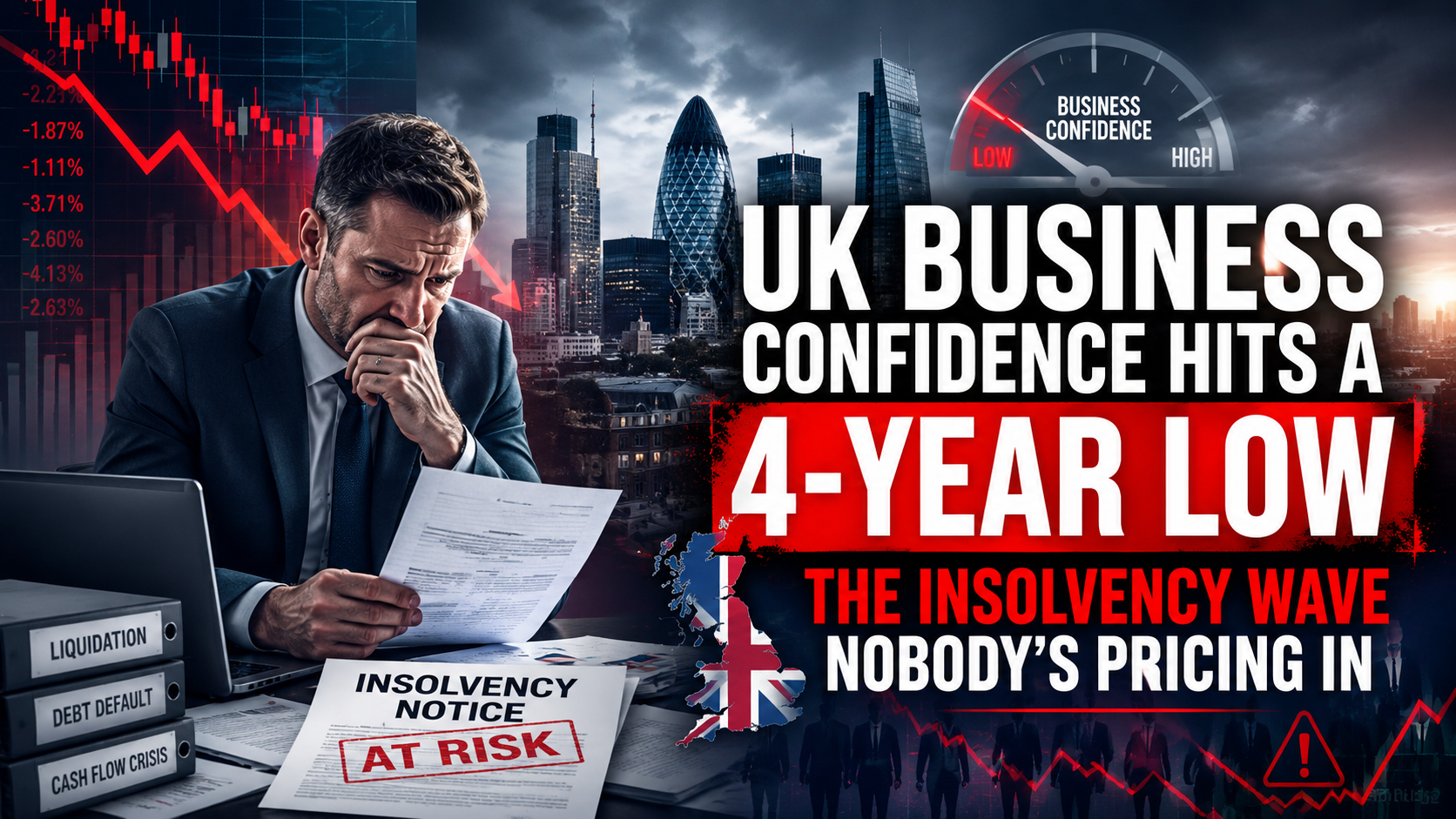
Britain’s headline economic data has looked defensible in 2026: the economy grew 0.6% in the first quarter, unemployment has stayed contained, and inflation, while above target, hasn’t spiralled. Yet underneath that data, business sentiment has collapsed to levels not seen since the post-mini-budget turmoil of 2022. The ICAEW Business Confidence Monitor recorded minus 14.6 for the second quarter — six consecutive quarters in negative territory, while the Institute of Directors’ sentiment index cratered to minus 61 in June, down from minus 53 in May, with the revenue-expectations sub-index collapsing to 11 from 27, its lowest reading of the year.
Most coverage has treated this as a generic “confidence is soft” story tied loosely to the Middle East conflict. The more precise and underreported explanation is a specific transmission mechanism: an energy-cost shock colliding with a Bank of England that cannot cut rates, arriving at the exact moment the UK is also absorbing a leadership transition.
The Mechanism: Energy Costs Meet a Frozen Bank Rate
The Bank of England has held its base rate at 3.75% through the summer, and Governor Andrew Bailey has been explicit that rate cuts once priced in for 2026 are now “off the table.” His reasoning: the US-Iran conflict pushed energy prices higher for months, and even as oil has since retreated, the inflationary pressure from that period is still working through the pipeline. Chief Economist Huw Pill went further, warning rates might need to rise again if inflation — currently at 2.8%, above the 2% target — proves persistent, noting the economy may still be running beyond its productive capacity.
For businesses, this is the worst combination: input costs that rose sharply during the conflict period, a central bank unwilling to ease borrowing costs to compensate, and — according to the IoD survey — 72% of businesses reporting rising energy and fuel costs, with a fifth facing increases of at least 25%. Falling confidence in this context isn’t sentiment noise; it’s a rational response to a genuine margin squeeze with no near-term monetary relief in sight.
The PMI Confirms It’s Not Just Survey Noise
S&P Global’s composite Purchasing Managers’ Index — a harder, transaction-based confidence signal — fell to 49.4 in June, its lowest level in 14 months, with services activity slumping to a 41-month low of 48.7. Anything below 50 signals contraction. The drop was driven specifically by weaker consumer discretionary spending and businesses delaying planned expenditure — the textbook pattern of firms battening down ahead of an anticipated downturn rather than merely feeling gloomy.
The Political Overlay Nobody’s Pricing Correctly
Compounding the energy-and-rates squeeze is a leadership transition most international coverage underweighted. Prime Minister Starmer’s decision to step down following poor local election results has cleared the way for Andy Burnham to become Prime Minister, securing nominations from more than 320 Labour MPs. Business Secretary Peter Kyle has separately floated the possibility of legislating to force UK pension funds to invest more domestically if voluntary commitments fall short — a policy signal that, regardless of its merits, adds a layer of regulatory uncertainty for institutional allocators at precisely the moment firms are already retrenching.
The Insolvency Risk This Points Toward
The Credit Protection Association’s own read on the data is the most operationally useful: falling confidence “often leads businesses to delay investment, tighten spending and become slower or more selective in paying suppliers” — a dynamic that shows up in payment-delay data before it shows up in headline insolvency statistics. With hospitality alone reporting nearly a quarter of venues operating at a loss and pub closures running at nearly two a day in early 2026, the sectors most exposed to discretionary consumer spending and energy costs are the ones most likely to show up in insolvency data over the coming two quarters — a lagging indicator that the confidence surveys are already flagging in real time.
What to Watch Next
Three signals will determine whether this is a temporary dip or the start of a genuine downturn: whether the Bank of England’s July Monetary Policy Report signals a rate rise rather than a hold; whether new Prime Minister Burnham’s tax proposals add or remove uncertainty for business investment; and whether the services PMI stabilises above 50 once the residual energy-price effects from the Middle East conflict fully clear the inflation pipeline.
Discover more from The Economy
Subscribe to get the latest posts sent to your email.



Shein’s fast-fashion model delivers $3 tops and $5 bottoms by compressing design-to-shelf timelines to days rather than months, but that speed comes with documented tradeoffs: independent lab tests have found PFAS, formaldehyde, and lead in some Shein garments, labor investigations have raised child-labor and unsafe-working-condition concerns in its supply chain, and EU regulators added the company to a list of digital firms facing stricter product-safety rules in 2024 — a status that still shapes scrutiny of the platform in 2026.
The Business Model Behind the Prices
Founded in Nanjing, China, in 2008, Shein has since relocated its official headquarters to Singapore while keeping its manufacturing supply chains and warehouses concentrated in China. The company’s core competitive advantage is speed: rather than committing to large production runs months in advance like traditional retailers, Shein uses a real-time, data-driven model that tests small batches of new designs, then rapidly scales production of whichever items generate strong early demand. This is what allows the platform to add thousands of new items daily and undercut nearly every competitor on price.
That speed has translated into extraordinary scale. Shein’s U.S. e-commerce sales reached approximately $19 billion in 2024, and the company topped download charts as the most popular fashion and beauty shopping app that year — a position it has largely defended into 2026 despite mounting regulatory and reputational pressure.
What Independent Lab Testing Has Found
Lab testing conducted by consumer-safety researchers and cited across multiple 2026 reviews has identified several categories of concern in specific Shein products, rather than across the platform uniformly:
- PFAS (“forever chemicals”): Found in some items marketed with stain-resistant or water-resistant properties.
- Formaldehyde: Detected in certain finished garments, typically tied to fabric-finishing chemistry used to reduce wrinkling.
- Elevated lead levels: Identified in some accessories, according to consumer testing organizations, alongside broader findings of inconsistent manufacturing quality across the platform’s vast supplier network.
Reviewers are careful to note these findings apply to specific tested products rather than Shein’s entire catalog, and that the underlying issue is inconsistency: because Shein’s supply chain spans an enormous and rapidly rotating number of third-party manufacturers, product-level quality and chemical safety vary far more than they would at a retailer sourcing from a smaller, more tightly audited supplier base.
Labor Conditions and Legal Exposure
Beyond product safety, Shein’s supply chain has drawn sustained scrutiny over labor practices. Investigative reporting cited in 2026 coverage describes workers in Shein’s supplier factories working long shifts — commonly from 8:00 a.m. to well past 10:00 p.m. — for low wages, with some reports raising concerns about child labor at points in the supply chain. Shein disputes the characterization of systemic abuse, maintaining that all suppliers are contractually required to sign its Supplier Code of Conduct, which prohibits forced and child labor, wage and working-hour violations, and workplace discrimination or harassment. The company also points to regular third-party audits conducted through firms including Bureau Veritas, Intertek, and Openview as evidence of active oversight.
Legal analysts tracking Shein labor exploitation lawsuits in 2026 note that the legal exposure facing ultra-fast-fashion companies has broadened beyond direct labor claims to include theories like negligent failure to monitor supply chains and unjust enrichment from cost savings tied to substandard labor conditions. This shift reflects a broader trend across the fast-fashion sector — including competitors like Temu — where regulators, consumers, and advocacy groups are increasingly treating supply-chain oversight itself, not just direct employment relationships, as a source of corporate liability.
Regulatory Response: The EU’s Digital Services Scrutiny
In May 2024, the European Union added Shein to a list of digital platforms subject to stricter product-safety rules, a designation that signaled particular concern about unsafe items reaching minors through the platform. Under continued EU digital-commerce scrutiny, Shein has reportedly removed flagged products temporarily pending investigation when safety claims arise, though transparency limitations persist — the company does not make the full results of its supplier audits publicly available, which independent reviewers flag as an ongoing gap between stated compliance commitments and verifiable outside oversight.
Environmental Footprint: The Overlooked Cost
Independent of labor and chemical-safety concerns, Shein’s core materials present their own environmental tradeoff. The majority of Shein garments are made from synthetic fabrics such as polyester and rayon, which are not biodegradable and shed microplastics into wastewater with every wash cycle. Combined with the platform’s global shipping footprint — moving huge order volumes from Chinese manufacturing hubs directly to consumers worldwide — the environmental cost of the ultra-fast-fashion model extends well beyond the immediate safety questions facing individual garments.
A Practical Buyer’s Framework
Given the platform’s scale and supply-chain complexity, safety-conscious shoppers have converged on a few practical screening habits rather than avoiding the platform entirely:
| Risk Factor | Higher-Risk Signal | Lower-Risk Signal |
|---|---|---|
| Chemical exposure | “Stain-resistant” or “wrinkle-free” claims | Plain, uncoated natural-fiber basics |
| Product-safety certification | No visible certification | OEKO-TEX or similar third-party certification listed |
| Children’s items | Bright synthetic finishes, novelty prints | Simple, undyed or lightly dyed natural fibers |
| Overall manufacturing consistency | New, unreviewed SKUs | Established listings with substantial verified review history |
Consumer-safety commentators generally advise treating any single-item purchase from an unfamiliar or newly listed SKU with more caution than an established brand’s certified product, regardless of which platform — Shein, Amazon, or otherwise — the listing appears on, since the underlying risk driver is manufacturer-level oversight rather than the marketplace brand itself.
Key Takeaways
- Shein’s speed-driven, data-tested production model enables extremely low prices but results in significant product-level quality and safety inconsistency across its enormous supplier base.
- Independent lab testing has identified PFAS, formaldehyde, and elevated lead levels in specific tested Shein products, not uniformly across the catalog.
- Labor investigations have raised concerns about long shifts, low wages, and potential child labor in parts of Shein’s supply chain, which the company disputes via its Supplier Code of Conduct and third-party audits.
- The EU added Shein to a stricter digital-platform product-safety oversight list in May 2024, a designation still shaping regulatory scrutiny in 2026.
- Shein’s reliance on non-biodegradable synthetic fabrics compounds its environmental footprint alongside the safety and labor concerns.
Frequently Asked Questions
Are Shein clothes safe to wear? Most Shein items pose no acute safety issue, but independent testing has found concerning chemical levels — including PFAS, formaldehyde, and lead — in specific products, making certification checks and label reading worthwhile before purchase, especially for children’s items.
Is Shein under regulatory investigation? Shein has faced sustained regulatory attention, including being added to the EU’s list of digital platforms subject to stricter product-safety rules in 2024, along with ongoing labor-practice scrutiny in multiple jurisdictions.
How does Shein keep prices so low? Shein uses a real-time, data-driven small-batch production model that only scales manufacturing of designs proven to sell, combined with a low-cost manufacturing base concentrated in China — a structure that also limits the depth of quality oversight per item.
Shein’s fast-fashion model delivers $3 tops and $5 bottoms by compressing design-to-shelf timelines to days rather than months, but that speed comes with documented tradeoffs: independent lab tests have found PFAS, formaldehyde, and lead in some Shein garments, labor investigations have raised child-labor and unsafe-working-condition concerns in its supply chain, and EU regulators added the company to a list of digital firms facing stricter product-safety rules in 2024 — a status that still shapes scrutiny of the platform in 2026.
The Business Model Behind the Prices
Founded in Nanjing, China, in 2008, Shein has since relocated its official headquarters to Singapore while keeping its manufacturing supply chains and warehouses concentrated in China. The company’s core competitive advantage is speed: rather than committing to large production runs months in advance like traditional retailers, Shein uses a real-time, data-driven model that tests small batches of new designs, then rapidly scales production of whichever items generate strong early demand. This is what allows the platform to add thousands of new items daily and undercut nearly every competitor on price.
That speed has translated into extraordinary scale. Shein’s U.S. e-commerce sales reached approximately $19 billion in 2024, and the company topped download charts as the most popular fashion and beauty shopping app that year — a position it has largely defended into 2026 despite mounting regulatory and reputational pressure.
What Independent Lab Testing Has Found
Lab testing conducted by consumer-safety researchers and cited across multiple 2026 reviews has identified several categories of concern in specific Shein products, rather than across the platform uniformly:
- PFAS (“forever chemicals”): Found in some items marketed with stain-resistant or water-resistant properties.
- Formaldehyde: Detected in certain finished garments, typically tied to fabric-finishing chemistry used to reduce wrinkling.
- Elevated lead levels: Identified in some accessories, according to consumer testing organizations, alongside broader findings of inconsistent manufacturing quality across the platform’s vast supplier network.
Reviewers are careful to note these findings apply to specific tested products rather than Shein’s entire catalog, and that the underlying issue is inconsistency: because Shein’s supply chain spans an enormous and rapidly rotating number of third-party manufacturers, product-level quality and chemical safety vary far more than they would at a retailer sourcing from a smaller, more tightly audited supplier base.
Labor Conditions and Legal Exposure
Beyond product safety, Shein’s supply chain has drawn sustained scrutiny over labor practices. Investigative reporting cited in 2026 coverage describes workers in Shein’s supplier factories working long shifts — commonly from 8:00 a.m. to well past 10:00 p.m. — for low wages, with some reports raising concerns about child labor at points in the supply chain. Shein disputes the characterization of systemic abuse, maintaining that all suppliers are contractually required to sign its Supplier Code of Conduct, which prohibits forced and child labor, wage and working-hour violations, and workplace discrimination or harassment. The company also points to regular third-party audits conducted through firms including Bureau Veritas, Intertek, and Openview as evidence of active oversight.
Legal analysts tracking Shein labor exploitation lawsuits in 2026 note that the legal exposure facing ultra-fast-fashion companies has broadened beyond direct labor claims to include theories like negligent failure to monitor supply chains and unjust enrichment from cost savings tied to substandard labor conditions. This shift reflects a broader trend across the fast-fashion sector — including competitors like Temu — where regulators, consumers, and advocacy groups are increasingly treating supply-chain oversight itself, not just direct employment relationships, as a source of corporate liability.
Regulatory Response: The EU’s Digital Services Scrutiny
In May 2024, the European Union added Shein to a list of digital platforms subject to stricter product-safety rules, a designation that signaled particular concern about unsafe items reaching minors through the platform. Under continued EU digital-commerce scrutiny, Shein has reportedly removed flagged products temporarily pending investigation when safety claims arise, though transparency limitations persist — the company does not make the full results of its supplier audits publicly available, which independent reviewers flag as an ongoing gap between stated compliance commitments and verifiable outside oversight.
Environmental Footprint: The Overlooked Cost
Independent of labor and chemical-safety concerns, Shein’s core materials present their own environmental tradeoff. The majority of Shein garments are made from synthetic fabrics such as polyester and rayon, which are not biodegradable and shed microplastics into wastewater with every wash cycle. Combined with the platform’s global shipping footprint — moving huge order volumes from Chinese manufacturing hubs directly to consumers worldwide — the environmental cost of the ultra-fast-fashion model extends well beyond the immediate safety questions facing individual garments.
A Practical Buyer’s Framework
Given the platform’s scale and supply-chain complexity, safety-conscious shoppers have converged on a few practical screening habits rather than avoiding the platform entirely:
| Risk Factor | Higher-Risk Signal | Lower-Risk Signal |
|---|---|---|
| Chemical exposure | “Stain-resistant” or “wrinkle-free” claims | Plain, uncoated natural-fiber basics |
| Product-safety certification | No visible certification | OEKO-TEX or similar third-party certification listed |
| Children’s items | Bright synthetic finishes, novelty prints | Simple, undyed or lightly dyed natural fibers |
| Overall manufacturing consistency | New, unreviewed SKUs | Established listings with substantial verified review history |
Consumer-safety commentators generally advise treating any single-item purchase from an unfamiliar or newly listed SKU with more caution than an established brand’s certified product, regardless of which platform — Shein, Amazon, or otherwise — the listing appears on, since the underlying risk driver is manufacturer-level oversight rather than the marketplace brand itself.
Key Takeaways
- Shein’s speed-driven, data-tested production model enables extremely low prices but results in significant product-level quality and safety inconsistency across its enormous supplier base.
- Independent lab testing has identified PFAS, formaldehyde, and elevated lead levels in specific tested Shein products, not uniformly across the catalog.
- Labor investigations have raised concerns about long shifts, low wages, and potential child labor in parts of Shein’s supply chain, which the company disputes via its Supplier Code of Conduct and third-party audits.
- The EU added Shein to a stricter digital-platform product-safety oversight list in May 2024, a designation still shaping regulatory scrutiny in 2026.
- Shein’s reliance on non-biodegradable synthetic fabrics compounds its environmental footprint alongside the safety and labor concerns.
Frequently Asked Questions
Are Shein clothes safe to wear?
Most Shein items pose no acute safety issue, but independent testing has found concerning chemical levels — including PFAS, formaldehyde, and lead — in specific products, making certification checks and label reading worthwhile before purchase, especially for children’s items.
Is Shein under regulatory investigation?
Shein has faced sustained regulatory attention, including being added to the EU’s list of digital platforms subject to stricter product-safety rules in 2024, along with ongoing labor-practice scrutiny in multiple jurisdictions.
How does Shein keep prices so low?
Shein uses a real-time, data-driven small-batch production model that only scales manufacturing of designs proven to sell, combined with a low-cost manufacturing base concentrated in China — a structure that also limits the depth of quality oversight per item.
Discover more from The Economy
Subscribe to get the latest posts sent to your email.
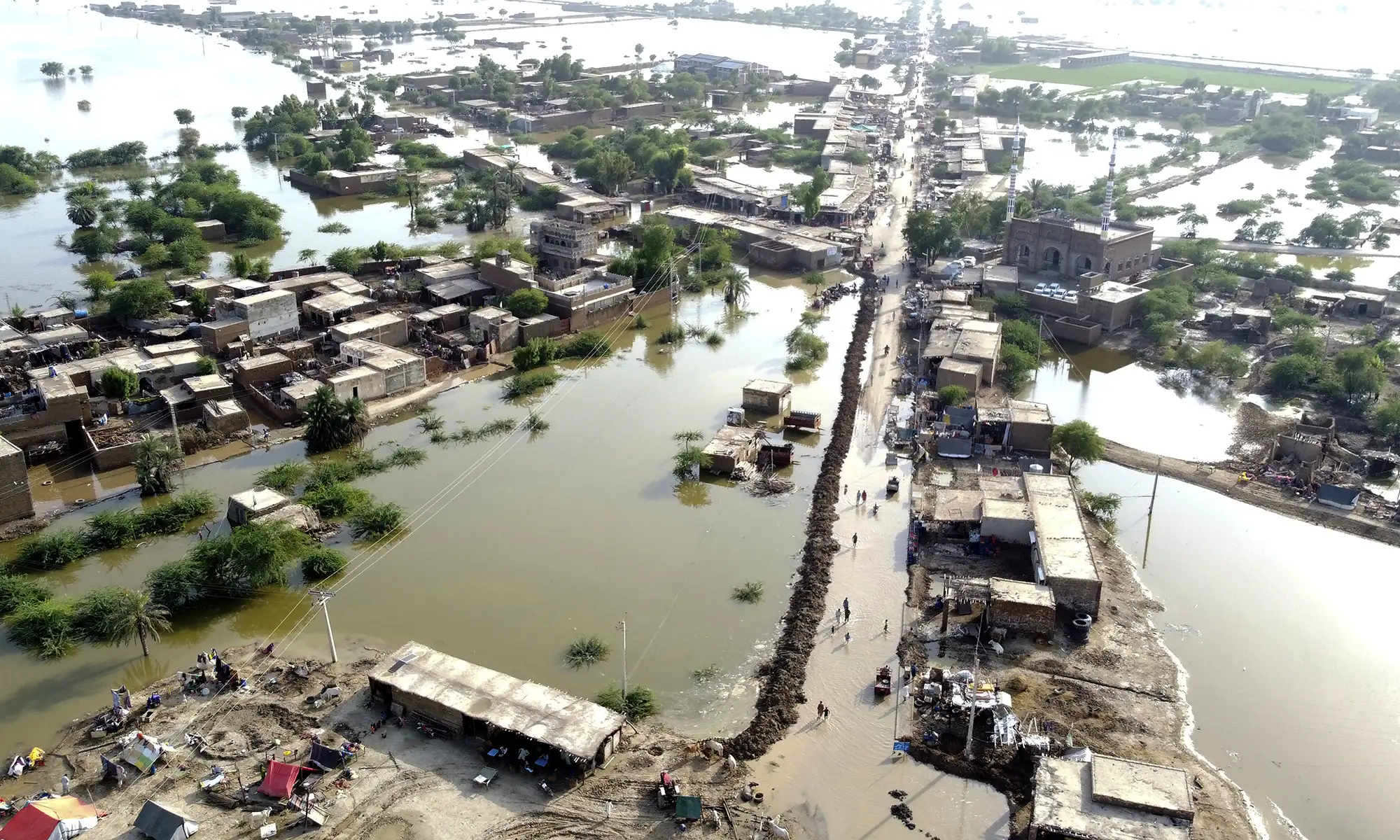
As Pakistan’s 2026 monsoon season continues to claim lives across Punjab, Khyber Pakhtunkhwa, Sindh and Balochistan, a harder question is coming into focus in Islamabad: whether the country’s fiscal priorities match the scale of the climate risk it now faces year after year — even as defence spending, driven by tensions with India, continues to climb.
The Human Toll Keeps Rising
Pakistan’s death toll from rain-related incidents since June 26 had climbed to 126 as of early August, according to the National Disaster Management Authority’s latest situation report, with Punjab and Khyber Pakhtunkhwa provinces bearing the heaviest losses at 47 and 55 deaths respectively. The NDMA has continued to warn of fresh flooding risk across Sindh, Punjab, KP and Balochistan as additional rain spells move through the country.
The federal Emergency Response Committee, chaired by Planning Minister Ahsan Iqbal, has stressed the importance of close coordination among stakeholders to ensure a timely and effective response to the unfolding emergency, while NDMA teams continue coordinating relief operations with national and international humanitarian partners.
A Pattern Pakistan Has Seen Before
This year’s floods carry unmistakable echoes of 2022, when record monsoon rains and glacial melt killed more than 1,700 people, affected over 33 million, and caused an estimated $30 billion in economic losses — one of Pakistan’s worst natural disasters on record. While this year’s death toll has so far been far lower, the pattern of institutional response has drawn sharp criticism from Pakistani commentators. A Business Recorder editorial argued that every monsoon exposes the same shortcomings — inadequately maintained drainage systems, encroachments blocking natural waterways, and construction proceeding in flood-prone areas with little regard for long-term risk, with administrative coordination typically strengthening only during the emergency itself rather than before it.
Compounding the risk, the World Meteorological Organization’s July 31 update flagged El Niño’s effect on rising temperatures and drought conditions in the coming months — suggesting Pakistan’s climate volatility is unlikely to ease even once this monsoon season passes.
The Fiscal Trade-off
What distinguishes this year’s flooding from a purely humanitarian story is the fiscal backdrop against which it is unfolding. Despite mounting climate risk, Pakistan raised defence spending by 20% for the 2025-2026 fiscal year, citing ongoing tensions with India, while cutting its overall federal budget by 6.9%, according to analysis of the country’s competing budget priorities.
The scale of the mismatch is stark when set against Pakistan’s long-term climate financing needs. The World Bank estimates Pakistan will require $348 billion by 2030 to address climate impacts, split between $152 billion for adaptation and resilience strategies and $196 billion toward reducing carbon emissions across the economy — a figure that dwarfs the country’s current fiscal capacity even before accounting for the defence-spending increase.
Agriculture Bears the Brunt
The economic exposure runs deep given Pakistan’s reliance on farming. Agriculture accounts for roughly 24% of Pakistan’s GDP and employs half of its labour force, meaning flood damage to Punjab’s farmland — a critical agricultural hub — carries outsized consequences for both rural livelihoods and the broader economy’s growth trajectory, coming just as the country posted its fastest GDP growth in four years for FY26.
Unlike the catastrophic 2022 floods, this year’s disaster has affected an even broader geographic swathe of the country, including areas of Punjab that were less severely hit three years ago — a reminder that flood risk is spreading rather than concentrating in historically vulnerable regions.
Why This Matters for Investors and Policymakers
For a country whose fiscal credibility with the IMF and international creditors already rests on a delicate balance of reform commitments, the collision between climate adaptation needs and defence spending pressures adds a new variable to Pakistan’s macroeconomic outlook. Every flood season that passes without meaningfully upgraded drainage infrastructure or flood-plain zoning enforcement effectively defers costs rather than avoiding them — costs that show up later as emergency relief spending, agricultural output losses, or renewed pressure on the current account through disrupted export crops like cotton.
Key Takeaways
- Pakistan’s 2026 monsoon death toll has climbed to at least 126 since June 26, with Punjab and Khyber Pakhtunkhwa hardest hit.
- The government raised defence spending 20% for FY26 citing India tensions, while cutting the overall federal budget by 6.9%.
- The World Bank estimates Pakistan needs $348 billion by 2030 for climate adaptation and emissions reduction — far exceeding current fiscal capacity.
- Agriculture, which accounts for 24% of GDP and employs half the labour force, remains acutely exposed to repeated flood damage.
- Commentators warn that recurring institutional shortcomings — poor drainage maintenance and flood-plain construction — are deferring rather than reducing long-term costs.
Frequently Asked Questions
How many people have died in Pakistan’s 2026 monsoon floods? Pakistan’s death toll from rain-related incidents since June 26, 2026 had reached at least 126 as of early August, according to the National Disaster Management Authority.
How much does Pakistan need for climate adaptation? The World Bank estimates Pakistan will require $348 billion by 2030, including $152 billion for adaptation and resilience and $196 billion for reducing emissions across the economy.
Why has Pakistan increased defence spending despite flood risks? Pakistan raised defence spending by 20% for FY26, citing ongoing tensions with India, while simultaneously cutting its overall federal budget by 6.9%, creating a fiscal trade-off with climate adaptation needs.
Discover more from The Economy
Subscribe to get the latest posts sent to your email.

The UK economy is sending genuinely mixed signals heading into autumn 2026, and the next six weeks will determine which signal wins out. Economists expect official data to confirm GDP grew around 0.4% between April and June, building on 0.6% growth in the first quarter, while the Composite PMI climbed to 52.2 in July, its strongest expansion reading in months (CPA).
That is the good news. The complicating news arrives from two directions simultaneously: a first Budget from Chancellor John Healey scheduled for 28 October 2026, and an increasingly public dispute with the Trump administration over North Sea energy policy.
The Budget that businesses are already pricing in
Tax expectations are rising well ahead of the actual announcement, and that anticipatory caution is itself acting as a drag on investment. Small-business growth expectations in England have fallen to 24%, the lowest reading in a 12-year survey history, according to Novuna Business Finance research, with construction, retail and hospitality recording the steepest declines (CPA). The Institute of Directors reported a similar softening in confidence through July, with chief economist Anna Leach warning that renewed Middle East conflict could intensify cost pressures on households before the Budget even lands (CPA).
Private-sector employment has now declined for 22 consecutive months even as headline output expands — a divergence that typically signals firms absorbing higher costs through headcount rather than passing them to customers (CPA).
The North Sea flashpoint
President Trump has escalated rhetoric toward the UK directly, describing the country as “a bankrupt country” and demanding the government authorise new North Sea oil and gas drilling — comments that have intensified international scrutiny of Britain’s energy and fiscal trajectory just as BP has put its own UK North Sea business up for sale (CPA; CPA). The timing is awkward for Westminster: a government trying to signal fiscal discipline ahead of a difficult Budget is simultaneously fielding a demand from Washington that would require reversing years of North Sea licensing policy.
Where the resilience is coming from
Not every signal is negative. Bank of England analysis points to UK firms developing and adopting artificial intelligence beginning to record materially stronger productivity, with software and IT consulting increasing their contribution to annual productivity growth roughly tenfold (CPA). Consumer-facing retailers including Next and Ryanair have benefited from resilient demand, and falling oil prices — while volatile around Strait of Hormuz tensions — have offered some transport and energy-cost relief to businesses (CPA).
Infrastructure is also providing a rare bright spot for regional growth: Gatwick’s expansion plans could accommodate roughly 100,000 additional flights annually, a scale of construction and hospitality opportunity that EY estimates will help the Premier League alone contribute £33bn to the UK economy over the next three seasons, two-thirds of it generated outside London (CPA).
The read for the next quarter
The UK’s Q2 GDP print will be treated as a referendum on whether the recovery is durable or borrowed time before the Budget bites. For businesses, the practical takeaway echoed across credit-risk analysts is to stress-test cash flow against higher finance costs and slower customer settlement now, rather than assume rates fall quickly once October’s fiscal statement lands (CPA).
Discover more from The Economy
Subscribe to get the latest posts sent to your email.

Stock Market Crash in 2026? Warning Signs, Scenarios and a Calm Investor Checklist

Peso Mexicano vs Dólar Estadounidense: A Practical USD/MXN Guide for October 2026

Is the Stock Market Open on Columbus Day 2026? NYSE, Nasdaq and Bonds Explained

Concert Ticket Prices in 2026: Dynamic Pricing, Fees and How to Buy Safely

High-Yield Savings Accounts in 2026: How to Compare APY Without Chasing a Headline

EU-China Trade Deal 2026: How Beijing and Brussels Avoided a Trade War—and Who Wins

Social Security 2027 COLA Announcement: Date, Formula and What Retirees Should Check

China’s AI Microdrama Boom: How Beijing Is Reshaping Global Media

Q3 2026 Earnings Preview: Can Record Profit Expectations Keep Wall Street’s Rally Alive?

Russia Diesel Deal 2026: Oil Prices and Inflation Risks

Fed Rates 2026: Treasury Yields, Bonds and SGOV Explained

S&P 500 Market Breadth 2026: Weak Rally or Rotation?

The AI Capex Boom: Data Centers Reshaping Growth

Palantir Stock in 2026: Extraordinary AI Growth

PSX Forecast 2026: KSE-100, IMF Reviews & Geopolitics

Middle East War Economics 2026: Oil Prices & Energy Markets

China Stocks Today: Are Big Economies in Asia Nearing a Market Bottom?

Crypto Daily Outlook: Bitcoin, Altcoins, and the Future of Decentralized Finance

Global Pension Systems Ranked: The World’s Best and Worst Retirement Frameworks

World’s Largest Economies: Ranking the Top Global Powers

Elon Musk’s Next Moves: Disrupting the 2026 Global Economy

Pakistan Economy 2026: Inside the SBP’s Balancing Act

GasBuddy Market Insights: How Crude Price Shifts Impact Local Fuel Cost Averages

World Bank & IMF Reports 2026: Why the “3% Growth” Consensus Is Actually a Debate

Global Equity Market Divergence: US Tech vs. European Dividend Stocks vs. Asian Growth

Crude Oil & Petroleum Market Analysis: OPEC+ Decisions and Price Forecasts

IMF & World Bank Global Economic Outlook: Growth Forecasts Across Europe and Asia

Silver Price Today: Why the Xi-Trump AI Standoff Is Fueling a Safe-Haven Rally
-

 Markets & Finance9 months ago
Top 15 Stocks for Investment in 2026 in PSX: Your Complete Guide to Pakistan’s Best Investment Opportunities
-

 Analysis8 months ago
Johor’s Investment Boom: The Hidden Costs Behind Malaysia’s Most Ambitious Economic Surge
-

 Analysis8 months ago
Top 10 Stocks for Investment in PSX for Quick Returns in 2026
-

 Banks9 months ago
Best Investments in Pakistan 2026: Top 10 Low-Price Shares and Long-Term Picks for the PSX
-

 Analysis8 months ago
Brazil’s Rare Earth Race: US, EU, and China Compete for Critical Minerals as Tensions Rise
-

 Investment9 months ago
Top 10 Mutual Fund Managers in Pakistan for Investment in 2026: A Comprehensive Guide for Optimal Returns
-

 Global Economy10 months ago
15 Most Lucrative Sectors for Investment in Pakistan: A 2025 Data-Driven Analysis
-

 Global Economy10 months ago
Pakistan’s Export Goldmine: 10 Game-Changing Markets Where Pakistani Businesses Are Winning Big in 2025