
Analysis
Asia’s Energy Triage Amid the Iran War

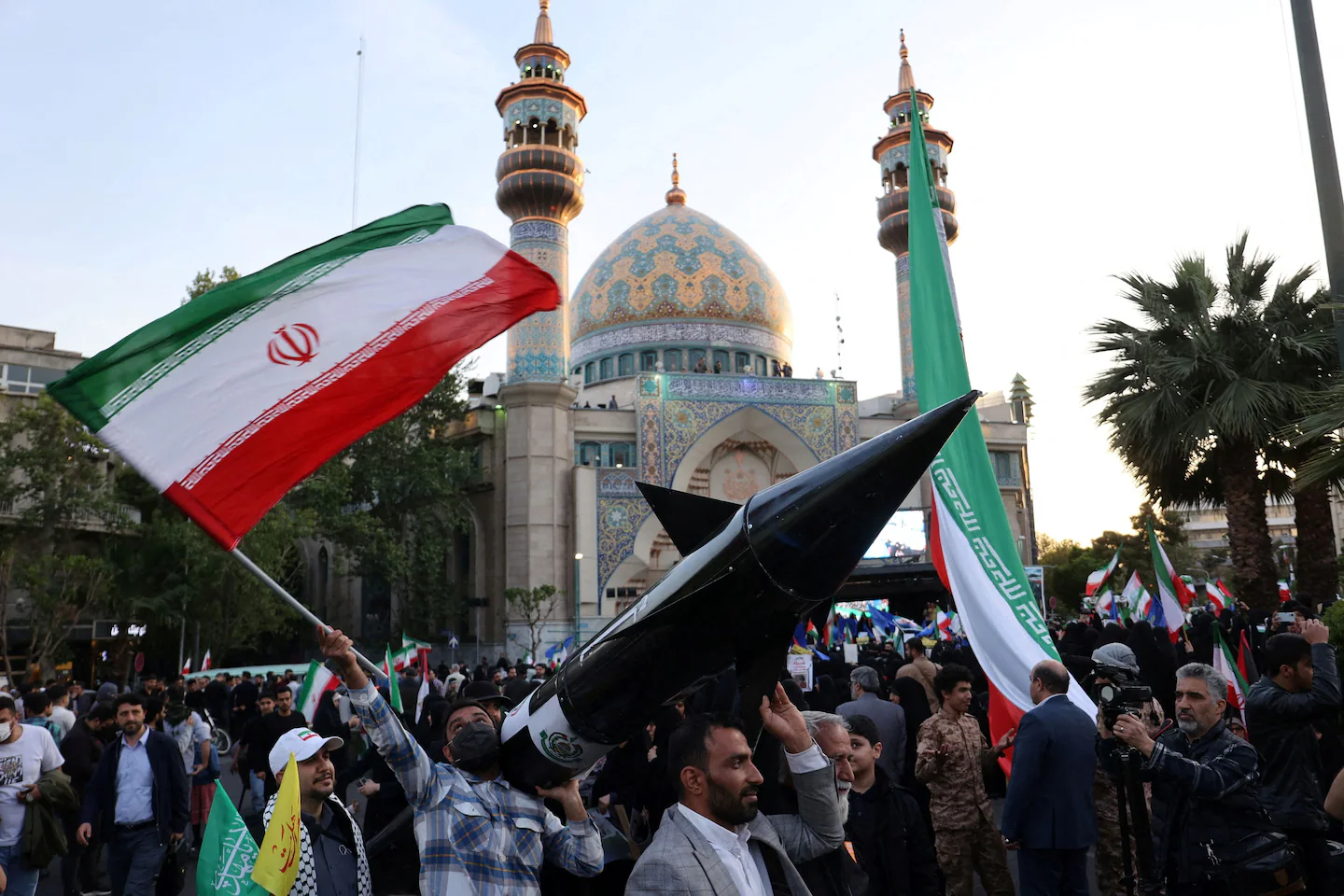
The Conflict Is Exposing a Hierarchy of Energy Vulnerability Across the Indo-Pacific
Live Data Snapshot — March 12, 2026
Indicator Figure Global oil & LNG offline ~20% Brent crude (bbl) ~$107 South Korea KOSPI (Mar 9) −6.0% Japan Nikkei 225 (Mar 9) −5.2% Hormuz oil bound for Asia 84% Effective Hormuz closure duration 12 days
On the morning of March 9, a trading floor in Seoul fell silent in the way that trading floors only fall silent when something truly systemic is breaking. South Korea’s KOSPI had already plunged 8 percent in early trading — its second circuit-breaker halt in four sessions — before closing down 6 percent at 5,251. Across the Korea Strait, Tokyo’s Nikkei 225 was off more than 5 percent. In Manila, the government had already announced a four-day workweek for public offices. In Bangkok, the prime minister had capped diesel prices. Brent crude, which had been $73 a barrel just two weeks before, was trading above $119 — its highest print since Russia’s 2022 invasion of Ukraine.
These are not coincidental data points. They are the first vital signs of a patient whose diagnosis is the same in every language: acute energy shock. Twelve days after U.S. and Israeli forces struck Iran on February 28, killing Supreme Leader Ali Khamenei and triggering retaliatory strikes across the Gulf, the Strait of Hormuz — through which roughly 20 percent of the world’s daily oil supply and an equivalent share of global LNG transits — is effectively closed. As RBC Capital Markets global commodity strategist Helima Croft told NPR, “We’re now facing what looks like the biggest energy crisis since the oil embargo in the 1970s.” Iran achieved it not with a naval armada, but with cheap drones and the credible threat of mines.
What those initial market readings are only beginning to reveal, however, is something more structural than a price spike: a hierarchy of energy vulnerability across the Indo-Pacific that this crisis is making impossible to ignore. Asia absorbs 84 percent of the crude oil and 83 percent of the LNG that normally transits the Strait, according to U.S. Energy Information Administration data. Four economies — China, India, Japan, and South Korea — accounted for nearly 69 percent of all Hormuz crude flows in 2024. Their factories, semiconductor fabs, petrochemical complexes, and power grids are all downstream of that 34-kilometer chokepoint. But their capacity to absorb the shock is radically unequal. That inequality is the real story of Asia’s energy triage amid the Iran War.
The Choke: How a 21-Mile Strait Became Asia’s Oxygen Line
The Strait of Hormuz is 21 miles wide at its narrowest. The navigable shipping lanes are barely two miles across in each direction. Iran achieved its effective closure not with an internationally illegal blockade, but with something far more economical: targeted drone strikes on vessels transiting its approach, the apparent laying of a modest number of naval mines, and a sustained VHF radio warning from the Islamic Revolutionary Guard Corps that “no ship will be permitted to pass.” Within hours of Tehran’s warnings, the world’s major Protection and Indemnity insurers withdrew war-risk coverage. Shipping companies, unwilling to send crews and vessels through an uninsured war zone, stood down. Tanker traffic dropped by 70 percent within 48 hours and fell to near zero within a week.
The immediate impact is well-documented: nearly 15 million barrels per day of crude and 4.5 million barrels of refined products are stranded inside the Gulf, filling storage tanks that were designed for throughput, not warehousing. Iraq has begun shutting down production in its largest fields because it has nowhere to send the oil. Qatar’s Ras Laffan complex — the world’s largest LNG export facility, responsible for roughly 20 percent of globally traded LNG — suspended operations after an Iranian drone strike in the facility’s vicinity in the opening days of the conflict. The IEA has announced its largest emergency reserve release in history, some 400 million barrels in coordination with member states. The U.S. alone is contributing 172 million barrels from the Strategic Petroleum Reserve. None of this is close to adequate for a disruption that, by the EIA’s own accounting, represents the largest supply interruption since the 1970s — double the Suez Crisis’s 9–10 percent share of global trade.
What makes the current crisis categorically different from previous Gulf emergencies is its LNG dimension. The world has never stress-tested a simultaneous disruption of both oil and LNG flows through Hormuz at scale. Qatar’s suspension of Ras Laffan operations — even if temporary — sent European natural gas prices up 45 percent and delivered a supply shock for which strategic reserves simply do not exist in the same way they do for crude oil. There are no LNG equivalents to the SPR. Liquefied natural gas cannot be easily stockpiled above a few weeks’ operational buffer. And it is here that the Indo-Pacific’s hierarchy of vulnerability becomes most stark.
“This is about as wrong as things could go at any single point of failure in global oil markets.”
— Kevin Book, Clearview Energy Partners, quoted in NPR (March 4, 2026)
The Hierarchy of Vulnerability: A Three-Tier Framework
Not all of Asia is equally exposed to this shock. Understanding the Indo-Pacific’s energy triage requires mapping the region not by geography but by a more revealing metric: the intersection of import dependency, reserve depth, portfolio diversification, and institutional capacity to respond. That map produces a clear three-tier structure.
Tier 1 — Stressed but Managed: Japan & South Korea
Deep strategic crude reserves. Critical LNG exposure.
Over 150–208 days of strategic crude cover. LNG is the binding vulnerability: Japan holds 2–4 weeks, South Korea 9–52 days of operational inventory. Both are activating reserves, seeking emergency spot LNG from Australia, Canada, and the U.S., and implementing price caps. Survival is not in question; rationing may be.
Tier 2 — Scale With Exposure: China & India
Stockpile cushion versus structural brittleness.
China holds an estimated 1.2–1.3 billion barrels in strategic and commercial reserves (~108–130 days of cover) and benefits from Russian supply independent of Hormuz. India holds ~15 days of strategic crude and has already begun LNG rationing. Both face acute LPG and LNG shortfalls and are pivoting further toward Russian supply, reshaping Indo-Pacific geopolitics in the process.
Tier 3 — Acute Crisis: Southeast Asia & the Pacific
Thin margins, thin reserves, no buffer.
The Philippines, Thailand, Vietnam, Myanmar, Laos, Cambodia, and Pacific Island nations face immediate rationing, four-day workweeks, and export bans. Qatar supplied 42.5% of Singapore’s LNG and 42.7% of Thailand’s in 2025. Several nations hold less than 30 days of crude cover and have no meaningful alternative supply. The civilian pain here is already severe.
Asia-Pacific Energy Exposure Profile — March 2026
| Economy | Middle East Oil Dependence | Hormuz Exposure | Strategic Crude Reserve | LNG Buffer | Vulnerability Tier |
|---|---|---|---|---|---|
| Japan | ~90% | ~70% | ~150 days | 2–4 weeks | Tier 1 (Stressed) |
| South Korea | ~70% | ~65% | ~208 days | 9–52 days | Tier 1 (Stressed) |
| China | ~50% | ~50% | ~108–130 days | Weeks (partial coal hedge) | Tier 2 (Cushioned) |
| India | ~45% | ~45% | ~15 days | <2 weeks | Tier 2 (Acute) |
| Thailand | High | ~42.7% LNG from Qatar | Low | Very thin | Tier 3 (Crisis) |
| Philippines | ~95% | Very high | Minimal | Days | Tier 3 (Crisis) |
| Singapore | High | ~42.5% LNG from Qatar | Regional hub | Weeks (hub buffer) | Tier 2/3 (Transition) |
Sources: EIA, Kpler, Atlantic Council, The Diplomat, parliamentary disclosures. Data as of March 12, 2026.
Tier 1: Japan and South Korea — The Illusion of Preparedness
Japan and South Korea look, on paper, like the region’s best-prepared economies. Japan holds national and commercial strategic petroleum reserves covering approximately 150 days of net crude imports, according to Atlantic Council analysis of Kpler data. South Korea holds roughly 208 days. Both governments have moved rapidly: Japan’s refiners have formally requested reserve releases; Seoul has imposed the first fuel price caps in nearly three decades and announced a 100 trillion won ($68.3 billion) economic stabilization fund. Given that both economies source 70–90 percent of their crude from the Middle East — with roughly 70 percent of Japan’s supply transiting Hormuz directly — the response has been considered and reasonably swift.
But crude oil is only half the story, and it is the easier half. LNG is the binding constraint, and it is here that both countries’ preparedness assumptions collapse. South Korea’s working LNG inventory at import terminals covers roughly nine days of consumption, according to a parliamentary disclosure last week — though the government’s own figure is closer to 52 days. Japan holds an estimated two to four weeks. These are not strategic reserves in any meaningful sense; they are operational buffers, maintained not for crisis but for routine supply chain management. And they are draining at a rate that no emergency spot LNG cargo from Australia, Canada, or the United States can replace in the near term. Arranging alternative LNG cargoes requires weeks of logistics, and the global spot market was already tight before the war.
The semiconductor dimension adds a further layer of systemic risk that most energy analyses have underweighted. South Korean lawmaker Kim Yong-bae told Reuters this week that the chip industry is alarmed not just by energy costs but by the potential loss of helium — a byproduct of natural gas processing in which the Gulf is a major producer — that is essential to semiconductor fabrication. Samsung Electronics fell 7.81 percent on March 9; SK Hynix shed 9.52 percent. For economies whose export competitiveness rests on fabrication nodes measured in nanometers, the energy triage is already a technology security problem.
Tier 2: China and India — Asymmetric Resilience
China occupies a paradoxical position in this crisis: on paper the most exposed, in practice the most insulated. The People’s Republic holds the world’s largest onshore crude stockpiles, estimated at 1.2 to 1.3 billion barrels in combined strategic and commercial reserves, according to data from Kpler and the Atlantic Council. At current refinery runs of 15.5 million barrels per day, that represents approximately 108 to 130 days of import cover — a buffer built deliberately and methodically over nearly a decade of strategic pre-positioning, accelerated sharply after tensions in the Taiwan Strait began rising in 2023 and 2024. Beijing had added approximately 100 million barrels to its stockpiles in the twelve months before the war broke out, taking advantage of lower global prices and deeply discounted Russian and Iranian supply.
China has also spent two decades building structural energy independence that is now proving its strategic value. Coal and renewables dominate its power mix. Half of all nuclear reactors under construction worldwide are in China. In 2024, virtually all electricity demand growth was met by clean sources. As Foreign Policy argued this week, China’s push to become an “electrostate” — reducing its exposure to liquid fuels for power generation — means that even a prolonged LNG disruption can be partially bridged with domestic coal, a hedge that Japan and South Korea, which have been actively winding down coal generation capacity, cannot easily replicate. Beijing has also ordered state refiners to suspend petroleum product exports to conserve domestic supply, a mercantilist move that tightens Tier 3’s already critical situation.
Yet China’s resilience has a structural floor — and possibly a geopolitical ceiling. LNG is Beijing’s soft underbelly. Qatar supplies approximately 30 percent of China’s LNG imports, and China’s rapidly growing gas-fired industrial and heating sector cannot be fully substituted by coal at speed. This is why Beijing moved with unusual diplomatic urgency within 48 hours of the war’s outbreak, pressing Tehran not to target LNG tankers or Qatari export infrastructure. China’s foreign ministry called for an end to hostilities; China’s special envoy Zhai Jun condemned attacks on civilian infrastructure. These are not the statements of a government indifferent to the crisis. They are the statements of a government that has bought itself time — but not immunity.
India’s position is the most acute of the major powers. New Delhi holds strategic crude reserves of approximately 39 million barrels across three underground caverns — roughly 15 days of total imports — in a reserve system that was designed for a smaller economy and has never been fully tested in a drawdown scenario. India has already begun rationing LNG, raised LPG prices, and watched the rupee slide to near-record lows. Its benchmark indices recorded their worst week in over a year. Prime Minister Modi’s visit to Israel in the days just before the strikes has generated significant diplomatic discomfort, complicating New Delhi’s traditional posture of strategic non-alignment. Almost half of India’s crude imports and roughly 60 percent of its natural gas supplies transit Hormuz. The pivot to Russian crude, already well underway since 2022, will now accelerate sharply — deepening a bilateral energy dependency that Washington will watch with considerable unease.
Tier 3: Southeast Asia’s Acute Pain — The Region Nobody Prepared For
If Japan and South Korea face a managed crisis and China a cushioned one, Southeast Asia and the Pacific face something rawer: an emergency without a safety net. The Philippines imports nearly all of its crude from the Middle East, holds minimal strategic reserves, and is entirely dependent on imported LNG for its gas-fired power generation. The four-day government workweek announced in Manila this week — ordering agencies to cut energy consumption by 10 to 20 percent — represents a war-footing conservation measure that peacetime governments rarely invoke. Emergency fuel subsidies are under study. Gas queues stretched for blocks in Metro Manila on March 9.
Thailand and Vietnam have moved to restrict official travel and encourage remote work. Myanmar has imposed alternating driving days. Thailand has already suspended crude exports — except to Cambodia and Laos, which lack refining capacity and depend on Bangkok’s surplus. China has ordered its state refiners to cease petroleum product exports entirely, a decision that will ripple through the informal supply chains feeding Laos, Cambodia, and Myanmar within weeks. Petrochemical companies including Singapore’s Aster Chemicals and Indonesia’s PT Chandra Asri Pacific have already begun declaring force majeure on contractual obligations.
The Economist Intelligence Unit estimated this week that global oil prices averaging around $80 per barrel in 2026 — a figure that already looks conservative against today’s Brent print of $107 — would “raise inflation and lower growth across much of Asia.” For Tier 3 economies, where energy subsidies have already strained fiscal space and where household energy costs represent 15 to 25 percent of disposable income for working families, this is not a macroeconomic abstraction. It is a rapidly deteriorating quality-of-life crisis with direct implications for political stability. The Pacific Island states, which import virtually all their fuel and have virtually no fiscal capacity to cushion price shocks, represent the most acute humanitarian dimension of the Indo-Pacific’s energy triage — the least discussed, and potentially the most damaging.
The Diplomatic Tightrope: Energy, Alignment, and the New Indo-Pacific Order
Every energy crisis is also a diplomatic crisis, and this one is reshaping the Indo-Pacific’s political geometry in real time. The most consequential realignment involves India and Russia. Moscow’s Deputy Prime Minister Alexander Novak has stated publicly that Russia is “ready to increase supplies” to both India and China. Russian crude, which does not transit Hormuz — reaching Asian markets via Baltic, Black Sea, and Pacific routes — has emerged as the war’s single most important alternative supply source. India, which had already been purchasing Russian crude at a significant discount since 2022, will now accelerate that dependence sharply. China, which had been moderating its Russian crude intake as relations with the Gulf states deepened, will now abandon that restraint.
The geopolitical mathematics are uncomfortable for Washington. As the Foreign Policy Research Institute has noted, Russian state oil and gas revenues had fallen to a four-year low in January 2026, creating meaningful pressure on the Kremlin to negotiate in Ukraine. The Iran war has reversed that trajectory overnight. Higher oil revenues will directly strengthen Russia’s capacity to finance its war in Ukraine, directly undercutting one of Washington’s stated policy objectives. The crisis that the Trump administration triggered by striking Iran has, as a side effect, bailed out Vladimir Putin’s war chest.
For China, the crisis presents a more complex set of opportunities and constraints. Beijing’s immediate interest is in reopening Hormuz — not to help Washington, but because China’s LNG exposure means a prolonged closure hurts it too, despite its stockpile cushion. Yet over the medium term, as Foreign Policy argued this week, the crisis may actually consolidate China’s strategic position. Its domestic renewables buildout — already the most ambitious in the world — now looks less like climate policy and more like military-industrial foresight. Every additional gigawatt of solar and wind generation is a unit of strategic autonomy that Japan, South Korea, and India currently lack at scale. The crisis accelerates China’s relative energy independence even as it deepens the dependence of its regional rivals.
India’s position is the most diplomatically contorted. New Delhi’s traditional doctrine of strategic autonomy — buying Russian oil while deepening U.S. security ties, investing in Iranian infrastructure while accepting Western sanctions constraints — is under simultaneous pressure from every direction. The rupee’s slide, the LNG rationing, and the optics of Modi’s Israel visit have narrowed India’s maneuvering room precisely at the moment when it needs maximum flexibility. Chinese Foreign Minister Wang Yi’s call for BRICS solidarity this week — urging India to “step up to the plate” within the bloc — is a reminder that Beijing intends to use the crisis to deepen its gravitational pull on New Delhi’s policy calculus.
The Clean Energy Paradox: Acceleration and Rebound
Energy crises historically trigger two simultaneous and contradictory responses: an acceleration of clean energy transition, as nations confront their import dependency, and a short-term rebound toward energy security at any cost — including coal. Both dynamics are visible in Asia today, and both will shape the region’s energy architecture for the next decade.
The acceleration case is powerful. Japan’s long-stalled nuclear restart program — which had recovered from near-zero post-Fukushima to roughly 8 percent of the electricity mix by 2025 — is now receiving an unexpected political tailwind. Every reactor that comes back online reduces LNG demand and extends the operational buffer that stands between Japan’s industrial economy and rationing. South Korea’s government, which had been navigating a politically fraught coal phaseout strategy, is now confronting the reality that its accelerated LNG dependency — the direct consequence of closing coal plants before equivalent renewables capacity was online — has dramatically worsened its position in the hierarchy of vulnerability.
The rebound risk is equally real. Thailand, the Philippines, and Vietnam have been among Southeast Asia’s most ambitious renewable energy markets. Under acute fiscal pressure, with energy subsidies straining budgets and foreign exchange reserves being drawn down to purchase spot LNG, the temptation to extend coal plant lifetimes rather than retire them — accepting the carbon cost in exchange for energy security and price certainty — will be significant. The crisis is creating conditions in which “energy security” and “clean transition” feel like opposing vectors, when the reality is that domestic renewables are the only durable solution to Hormuz dependency. That insight may take hold. Or it may arrive too slowly to prevent a decade of coal lock-in across precisely the economies that most need to decarbonize.
“Every kilowatt-hour generated from domestic renewables is now a unit of strategic autonomy.”
— The structural insight reshaping Indo-Pacific energy policy, March 2026
The Path Forward: Three Structural Shifts That Will Harden
The immediate crisis — the drone strikes, the insurance paralysis, the stranded tankers — will eventually resolve. Either a ceasefire will allow underwriters to reassess war-risk coverage, or a sustained U.S. naval escort regime will restore a partial flow of commercial vessels, or Iran’s own export calculus will create sufficient diplomatic leverage to broker a limited reopening. History suggests that the strait’s de facto closure is unlikely to persist beyond four to six weeks before some combination of military deterrence and economic necessity forces a partial resolution.
What will not resolve is the structural exposure that this crisis has exposed. Three shifts are likely to harden into permanent features of Indo-Pacific energy and security architecture.
First, energy security will be permanently redefined across the region as a core national security imperative, not merely an economic or environmental policy domain. Every Asian government that has watched its equity market fall 6 to 16 percent in two weeks will emerge from this crisis with a different calculation about the cost of import dependency.
Second, LNG supply diversification will accelerate sharply, and the beneficiaries will be American, Australian, and Canadian producers. Long-term contracts with non-Hormuz LNG suppliers — already rising before the crisis — will now command a strategic premium. The IEA’s post-crisis assessment will almost certainly recommend a formal LNG strategic reserve mechanism for the first time, analogous to the crude oil reserves that have been inadequately but meaningfully mobilized in the current emergency.
Third, and most consequentially for the Indo-Pacific’s geopolitical order, the crisis will accelerate the energy-driven reshaping of the U.S.-China-Russia triangle. American LNG will flow to Japan, South Korea, and eventually India at volumes that were commercially marginal before the war. Russian crude will flow to China and India at volumes that are strategically inconvenient for Washington. China’s domestic clean energy buildout will continue at a pace that, within a decade, will make Beijing significantly less vulnerable to the kind of chokepoint coercion that has just traumatized its neighbors.
The hierarchy of energy vulnerability that this crisis has exposed is not permanent. But the divergent trajectories it has revealed — and accelerated — will define who holds structural power in the Indo-Pacific for the next generation.
In a region that has long preferred to treat energy as a commercial matter and security as a separate domain, the Iran war’s twelve days of closed waters have delivered a lesson that will not be forgotten: the two were never separate. They were simply waiting for a drone strike in a narrow Gulf waterway to make the connection undeniable.
Frequently Asked Questions
What is the “hierarchy of energy vulnerability” exposed by the Iran war in Asia?
The hierarchy framework ranks Asia-Pacific economies by their structural capacity to absorb the Hormuz supply shock. Tier 1 (Japan and South Korea) hold deep strategic crude reserves but face acute LNG vulnerability. Tier 2 (China and India) benefit from scale and diversification respectively, but both face LNG constraints and import dependency. Tier 3 (Southeast Asia and Pacific Island states) have minimal reserves, thin fiscal buffers, and are experiencing immediate rationing, shorter workweeks, and export restrictions. The key insight is that exposure is asymmetric even among countries at comparable levels of import dependency.
Why is LNG more critical than crude oil in the current Asia energy crisis 2026?
Unlike crude oil, LNG cannot be stockpiled at the same scale. Most Asian economies hold only weeks of LNG operational buffer — compared to months of strategic crude reserves. Japan’s two-to-four weeks of LNG cover and South Korea’s nine-day parliamentary estimate underscore how quickly a protracted closure translates into electricity and industrial rationing. The global LNG spot market was already tight before the war, making emergency procurement both expensive and logistically constrained.
How has China managed to remain relatively insulated from the Strait of Hormuz closure impact on the Indo-Pacific?
China’s relative resilience reflects three deliberate structural choices made over the past decade: aggressive stockpiling (an estimated 1.2–1.3 billion barrels in combined strategic and commercial reserves); supply diversification including deep reliance on Russian crude arriving via non-Hormuz routes; and a domestic clean energy buildout that reduces dependence on gas-fired power. Its principal vulnerability remains LNG, where Qatar supplies roughly 30 percent of its imports — which is why China moved diplomatically within 48 hours to pressure Tehran not to target LNG tankers or Qatari export infrastructure.
Will the Iran war accelerate the clean energy transition or trigger a coal rebound in Asia?
Both dynamics are underway simultaneously. The acceleration case is driven by Japan’s nuclear restart momentum and South Korea’s recognition that its coal phaseout worsened its crisis exposure. The rebound risk is driven by Southeast Asian economies — particularly Thailand, Vietnam, and the Philippines — that face acute fiscal pressure and may find coal plant life extensions more politically viable under emergency conditions. The structural argument for domestic renewables as strategic autonomy has never been stronger, but policy windows in a crisis are narrow.
What are the broader Indo-Pacific security implications of the energy supply shock from the Iran conflict?
The crisis is reshaping three geopolitical relationships simultaneously. Russia benefits directly: higher oil revenues reverse a budget squeeze that had been pressuring Moscow toward Ukraine negotiations. The U.S.-India relationship is complicated by New Delhi’s accelerated pivot to Russian energy. And China’s domestic clean energy leadership will compound over the next decade into a structural energy security advantage relative to Japan, South Korea, and Southeast Asia. The crisis has exposed Hormuz as Asia’s systemic single point of failure, and the geopolitical consequences will outlast any ceasefire.
Discover more from The Economy
Subscribe to get the latest posts sent to your email.



Key Takeaways
- Rolex’s secondary market rose approximately 7.9% year-over-year as of 2026 (per WatchCharts data) — trailing Patek Philippe (+16.2%) and Tudor (+11.4%) but still outperforming Audemars Piguet (+3.4%).
- Rolex raised U.S. retail prices 4–9% in January 2026 (steel models ~5.6%, gold models ~8.7%), narrowing the historical gap between retail and pre-owned pricing.
- Not every model appreciates: steel sports references (Submariner, GMT-Master II, Daytona) have held value far better than two-tone or widely available dress references like the standard Datejust.
- The Lady-Datejust posted the sharpest 2026 gain among tracked collections — up 22.73%, from roughly $9,269 to $11,376 — driven by demand for smaller, “everyday luxury” watches.
- Gold’s rise past $2,400/oz has directly lifted the investment case for Rolex’s precious-metal references (Day-Date, Sky-Dweller, Yacht-Master).
The Model-by-Model Picture
| Category | 2026 Trend |
|---|---|
| Lady-Datejust | +22.73% (strongest performer among tracked collections) |
| Steel sports models (Submariner, GMT-Master II) | Held value well; corrected from 2022 peak but stabilized above retail |
| Daytona | Corrected from highs above $50,000 to the mid-$30,000s; still among the most sought-after references |
| Two-tone/widely available Datejust | Flat to negative — “holds value” is an overstatement for this category |
| Gold references (Day-Date, Sky-Dweller) | Lifted by gold’s rise above $2,400/oz |
Why the “Rolex Always Appreciates” Myth Is Fading
The pandemic-era boom pushed some references — the Daytona above all — to speculative highs disconnected from historical norms. Since the March 2022 peak, steel sports models have compressed meaningfully, and dealers who bought inventory near the top have in some cases faced 20–40% markdowns on liquidation. The lesson for 2026 buyers: Rolex as a category is not a monolith. Value retention depends heavily on specific reference, condition, and whether the piece comes with box and papers (“full set”).
What’s Actually Driving 2026 Strength
- Retail price increases raise the floor. When a new Submariner retails at $10,050 (up from $9,500), a pre-owned example at $11,000–$12,000 suddenly represents a smaller premium — narrowing the gap without secondary prices actually moving.
- Supply discipline remains Rolex’s core lever. The brand has never confirmed production numbers, and secondary-market premiums remain entirely a function of Rolex’s own manufacturing decisions — a risk factor as much as a support.
- Certified Pre-Owned rollout. Rolex’s now fully rolled-out CPO program has changed how buyers transact in the used market, adding a layer of brand-verified legitimacy that supports pricing.
The Case for Rolex as a Portfolio Diversifier
Financial advisors increasingly frame luxury watches not as a replacement for equities or bonds, but as a tangible, historically low-correlation diversifier — one that carries its own risks (illiquidity, condition-dependent pricing, no yield) but has demonstrated multi-decade resilience for specific references.
Is Rolex a good investment in 2026?
It depends heavily on the specific reference. Steel sports models like the Submariner and Daytona have held or grown in value; two-tone and widely available dress models generally have not. Overall, Rolex’s secondary market rose about 7.9% year-over-year in 2026, trailing Patek Philippe but ahead of Audemars Piguet.
Discover more from The Economy
Subscribe to get the latest posts sent to your email.

Navigating Mortgage and Loan Refinancing in a High-Yield Environment
Global public debt crossing critical thresholds has kept central bank policies volatile, resulting in fluctuating US Treasury yields throughout 2026. For homeowners and commercial property holders burdened by previous high-interest borrowing cycles, finding optimal refinance windows has become a high-stakes financial puzzle. Stalled disinflation and stubborn employment numbers mean rate cuts are incremental, requiring borrowers to act with precision.
Timing your mortgage or commercial loan refinance in this environment requires a deep understanding of yield curve movements and lender risk appetites.
Decoding 2026 Refinance Dynamics
The 10-Year Treasury Yield Benchmark
Mortgage rates continue to track closely with the 10-year US Treasury yield. When macroeconomic anxiety spikes debt issuance, yields rise, tightening consumer borrowing capacity. Savvy borrowers monitor weekly Treasury auctions to lock in rates during brief dip windows.
Hybrid ARMs and Alternative Structures
With fixed rates remaining elevated, 7/1 and 10/1 adjustable-rate mortgages (ARMs) have surged in popularity. These products offer lower initial monthly payments, giving borrowers breathing room until central bank easing cycles fully materialize.
| Loan Product | Current Rate Range | Best For | Key Risk Factor |
| 30-Year Fixed Mortgage | 6.2% – 6.8% | Long-term predictability | Higher initial monthly outlay |
| 7/1 Hybrid ARM | 5.5% – 5.9% | Short-term ownership / flipping | Rate reset risk after year 7 |
| Commercial Refinance | 7.0% – 8.2% | Corporate asset restructuring | Strict DSCR lender covenants |
Actionable Steps for Successful Refinancing
To maximize your chances of securing favorable refinance terms in a volatile market, follow a disciplined preparation strategy.
Boost Your Credit Score Immediately: Lenders in 2026 are applying stringent credit tiering; a 20-point increase can drop your APR by a crucial quarter-point.
Shop Regional Credit Unions: Smaller financial institutions often offer portfolio loans with more flexible underwriting than major national banks.
Calculate the Break-Even Point: Ensure your total closing costs are recouped through monthly savings within 24 months of closing.
“Market Strategist View: Refinancing in 2026 is an exercise in opportunistic timing. Borrowers must maintain immaculate financial profiles ready to strike the moment Treasury yields dip.”
Mastering the complexities of today’s debt environment ensures you can successfully lower your debt service costs and protect your long-term financial stability.
Discover more from The Economy
Subscribe to get the latest posts sent to your email.

The days of pulling generic auto insurance quotes based purely on your zip code and age are officially over. In 2026, insurance comparison engines are powered entirely by generative AI and real-time telematics. These platforms digest thousands of live data points—ranging from your driving smoothness via connected vehicle sensors to real-time traffic congestion patterns—to generate hyper-personalized premiums instantly.
For consumers, this evolution represents both a massive opportunity for savings and a hidden trap for penalty pricing. Understanding how AI algorithms evaluate risk is essential for anyone looking to lower their monthly auto insurance premiums.
How AI Comparison Engines Evaluate Your Risk Profile
Behavioral Telematics and Connected Cars
Modern cars stream performance data directly to insurance aggregators. Generative AI models analyze braking sharpness, acceleration curves, cornering G-forces, and phone distraction metrics. Drivers who maintain smooth, defensive habits are rewarded with dynamic rate cuts of up to 40% compared to traditional rating tiers.
Predictive Traffic and Weather Modeling
AI tools now cross-reference your daily commute route with predictive weather and accident probability models. If your standard parking location or driving corridor has a statistically higher incidence of uninsured motorist claims, your quotes will reflect that hyper-local risk assessment.
| Comparison Factor | Traditional Rating Model | 2026 Generative AI Model | Impact on Premium |
| Mileage & Usage | Annual estimated odometer reading | GPS tracking & live trip duration | High (up to 35% savings) |
| Driving Behavior | MVR driving record & accidents | Real-time braking, speed, & G-force | Critical (determines tier) |
| Vehicle Tech | Make, model, and safety rating | ADAS calibration & repair cost data | Moderate |
Strategies to Lower Your AI-Driven Insurance Quote
To outsmart the algorithm and secure the lowest possible premium in 2026, drivers must proactively manage their digital footprint on insurance platforms.
Opt-In for Telematics Trial Periods: Many insurers offer immediate 15% discounts just for installing their driving app; let it track safe habits for 30 days to lock in permanent savings.
Scrub Unverified Public Records: Ensure your motor vehicle report is free of clerical errors that AI risk models misinterpret as reckless behavior.
Compare AI Aggregators: Use platforms that integrate multi-carrier API feeds rather than single-brand comparison sites to find the best risk-adjusted rate.
“Industry Note: AI-driven pricing rewards transparency and precision. Drivers who actively manage their telematics data consistently out-save those relying on legacy quote calculators.”
Embracing AI comparison tools allows savvy policyholders to customize coverage limits precisely to their driving habits, eliminating wasted premium spend while ensuring robust protection.
Discover more from The Economy
Subscribe to get the latest posts sent to your email.

VIX Index Explained: How to Trade Wall Street’s Fear Gauge Today

Commercial vs Residential Real Estate: Which Wins in 2026?

Presidential Stock Market Performance: How Trump’s Second Term Compares to History

2026 Real Estate Market News: Are We Heading for a Correction?

Bitcoin Price Forecast 2026–2027: Will the 4-Year Cycle Hold?

Fidelity Crypto vs. Traditional Brokerages: A Guide for Modern Investors

The 2026 Global Smartphone Market: AI Integration and Competitor Analysis

SpaceX IPO: How Aerospace Is Reshaping Tech Startup News

Fidelity Investments Review: Maximizing Returns in a Volatile Stock Market

How Crypto Transformed the Trump Fortune: A $1.4 Billion Financial Breakdown

Global Pension Systems Ranked: The World’s Best and Worst Retirement Frameworks

Global Supply Chain Vulnerabilities: From Eurasian Trade Corridors to Food Consumer Recalls

Why 5% U.S. Treasury Yields Signal a Global Market Regime Shift.

Federal Reserve Defies White House Pressure: Inside Trump’s Demand for Sub-1% Interest Rates After Historic 2026 Rate Hike

State Farm’s $5B Dividend 2026: Who Qualifies & Payout Dates

US-China Relations in Q3 2026: Trade Tariffs and Supply Chain Risks

Top 30 Stocks for Investment in PSX for Massive ROI in 2026

SpaceX Starship Flight 14: First Orbital Attempt & Starlink V3 Launch Explained

The 2026 Crypto Regulatory Shift: What It Means for Institutional Investors

AI Chip Stocks 2026: The Best Semiconductor Investments Beyond Marvell

Tween Back-to-School Trends 2026: What’s Driving the $85B Season

AI-Powered Training: The Next Multi-Billion Dollar Ecosystem in Fitness

Oil Prices Break $100 in 2026: Middle East Conflict & Energy Markets

10-Year Treasury Yield Hits 4.80%: What It Means for Rates & Portfolios

Fidelity Investments Review 2026: SPAXX Yields & Zero-Fee Funds

Shein Clothes Quality & Safety in 2026: What Lab Tests Show

BRICS+ Cross-Border Payments 2026: Interoperability Explained

MRVL Earnings 2026: Why Marvell Sank Despite Beating Estimates
-

 Markets & Finance9 months ago
Top 15 Stocks for Investment in 2026 in PSX: Your Complete Guide to Pakistan’s Best Investment Opportunities
-

 Analysis7 months ago
Johor’s Investment Boom: The Hidden Costs Behind Malaysia’s Most Ambitious Economic Surge
-

 Analysis7 months ago
Top 10 Stocks for Investment in PSX for Quick Returns in 2026
-

 Analysis8 months ago
Brazil’s Rare Earth Race: US, EU, and China Compete for Critical Minerals as Tensions Rise
-

 Banks8 months ago
Best Investments in Pakistan 2026: Top 10 Low-Price Shares and Long-Term Picks for the PSX
-

 Investment8 months ago
Top 10 Mutual Fund Managers in Pakistan for Investment in 2026: A Comprehensive Guide for Optimal Returns
-

 Global Economy9 months ago
15 Most Lucrative Sectors for Investment in Pakistan: A 2025 Data-Driven Analysis
-

 Global Economy9 months ago
Pakistan’s Export Goldmine: 10 Game-Changing Markets Where Pakistani Businesses Are Winning Big in 2025