
Analysis
Pakistan’s Domestic Power Sources Cushion LNG Supply Risk as Middle East Crisis Deepens

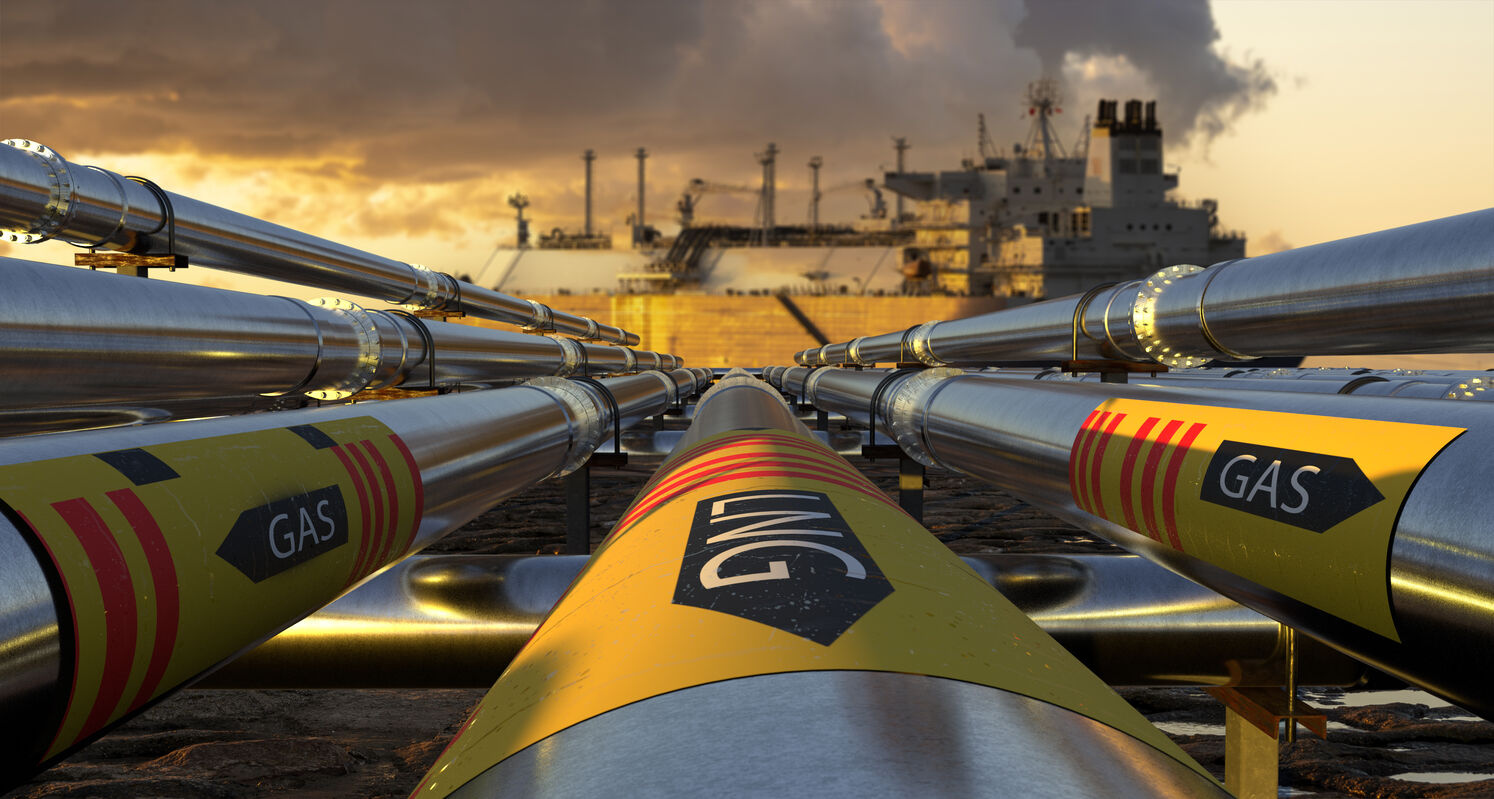
With 74% of electricity already generated at home and a roadmap to near-total energy self-reliance by 2034, Islamabad is repositioning itself as a rare emerging-market success story in the age of fossil-fuel fragility — but the solar revolution’s policy fault lines could yet undermine the gains.
A decade ago, Karachi spent summers in rolling darkness. Neighbourhoods that once hummed with air-conditioners fell silent for eight, ten, sometimes sixteen hours a day as grid power buckled under demand it could not meet. Today, those same rooftops bristle with solar panels — a bottom-up energy revolution, bought with household savings rather than state subsidies, that is quietly redrawing Pakistan’s geopolitical calculus at exactly the moment the Middle East is on fire.
In an exclusive interview with Reuters published on March 13, 2026, Power Minister Awais Leghari disclosed for the first time that approximately 74% of Pakistan’s electricity now comes from indigenous sources — solar, wind, nuclear, local coal, and hydropower — and that the government aims to push that figure above 96% by 2034. The numbers, Leghari said, had not been previously reported publicly. They matter enormously, because they reframe Pakistan not as a fragile LNG-dependent economy at the mercy of Qatari tanker routes, but as a country that has quietly — and largely organically — engineered a buffer against the precise geopolitical shock now rattling energy markets from the Persian Gulf to the Bay of Bengal.
“Pakistan has been steadily increasing its reliance on indigenous energy resources, and about 74% of our electricity generation now comes from local sources.” — Power Minister Awais Leghari, Reuters, March 2026
The LNG Equation: Marginal, Not Existential
Liquefied natural gas now accounts for roughly 10% of Pakistan’s power generation, down sharply from the 20%-plus share it commanded as recently as 2020-2023, according to Central Power Purchasing Agency data cited by Argus Media. Even within that shrinking slice, LNG’s role is increasingly narrow: it fires peaking plants that bridge the gap between sundown and the moment batteries or hydropower pick up the slack. ‘Even if LNG was disrupted or became too expensive,’ Leghari told Reuters, ‘the impact on production capacity, industry or agriculture would be minimal.’
That is a strikingly confident assertion from a minister whose country once scrambled for spot cargoes at crisis prices. Its credibility rests on arithmetic. If LNG were to disappear entirely from Pakistan’s grid for several months, Leghari acknowledged, the worst-case outcome would be one to two hours of load-shedding during peak summer evenings — primarily in urban residential areas, leaving industry and agriculture unaffected. Battery-storage projects currently in development are designed to shift excess daytime solar production into those very evening windows, eroding even that residual vulnerability.
The contrast with the early 2020s is stark. When Europe’s post-Ukraine energy scramble pulled LNG cargoes away from the developing world in 2022, Pakistan issued tender after tender that went unanswered, triggering blackouts of eight hours or more. The Institute for Energy Economics and Financial Analysis (IEEFA) warned then that rising LNG dependence was “a recipe for high costs, financial instability, and energy insecurity.” The recipe, it appears, has been quietly discarded.
Why Pakistan Cancelled 21 LNG Cargoes and Why That Is the Good News
In a signal that would have seemed surreal in 2022, Pakistan formally cancelled 21 LNG cargoes due under a long-term supply agreement with Italy’s Eni for 2026-27. The reason was not fiscal distress but surplus: domestic power generation and accelerating solar uptake had simply eroded the demand that LNG was meant to serve. Pakistan had already requested QatarEnergy, its primary supplier, to divert 24 cargoes from its 2026 delivery schedule back into the global market for resale, according to Gas Outlook, a London-based industry publication.
This is an extraordinary pivot. The country that was once described as a key source of incremental LNG demand — and that signed long-term contracts with Qatar and Eni to guarantee supply — is now paying capacity charges on fuel it does not need. Argus Media reported last October that regasified LNG had already fallen in Pakistan’s grid merit order, with coal and renewables displacing it even before the current Hormuz tensions. The geopolitical crisis has not created Pakistan’s energy resilience; it has merely revealed it.
The People-Led Solar Revolution: Scale the Statistics Cannot Capture
The most dramatic driver of Pakistan’s energy self-reliance is one that no government planned and no regulator foresaw: a mass adoption of rooftop solar, driven by household desperation in the face of soaring tariffs and frequent outages. Between 2019 and 2025, cumulative solar panel imports surpassed Pakistan’s total installed power plant capacity by two gigawatts — and most of it was not utility-scale but residential, installed on millions of individual rooftops from Karachi to Gilgit.
By April 2025, net-metered rooftop solar capacity had reached 5.3 GW, nearly a tenfold increase in just two years. Pakistan imported 17 GW of solar panels in 2024 alone — twice the volume of 2023 — making it the world’s largest importer of photovoltaic panels that year, according to REN21’s Global Status Report. Solar is now estimated to account for more than 25% of total national electricity production. The World Resources Institute noted that what began as an incentive programme in 2015 became a ‘mass phenomenon’ driven not by climate idealism but by economic survival — making Pakistan a rare case study in market-led energy transition within a lower-middle-income economy.
According to NEPRA data compiled by AHL Research, net metering output (excluding Karachi) surged from roughly 80 GWh per month in late 2024 to an average of 174 GWh per month by mid-2025, peaking above 300 GWh in April during peak sunlight hours. The consequence for the national grid is a transformed daytime load profile: afternoon demand valleys that once strained planners are now filled with cheap, distributed, domestic solar generation — exactly the kind of output that displaces LNG peaking plants.
In 2024, Pakistan imported more solar panels than any other country in the world — 17 GW of capacity, double the volume of 2023. The revolution was bought not with climate finance but with household savings.
The Broader Mix: Hydro, Nuclear, Coal — and CPEC’s Dividend
Solar is the most visible element of Pakistan’s indigenous energy story, but it is not the whole picture. Hydropower from rivers fed by Himalayan glaciers has long anchored Pakistan’s base load, with large facilities on the Indus and its tributaries providing stable, zero-fuel-cost generation. Nuclear power, expanded under successive civilian and military governments and built largely with Chinese cooperation, contributes a growing share of clean dispatchable capacity. Local coal — from the vast Thar coalfields in Sindh — provides a domestic alternative to imported fuel that, whatever its climate implications, adds to the self-reliance equation.
The China-Pakistan Economic Corridor (CPEC) has played an understated but significant role. Chinese investment in wind farms in Jhimpir (Sindh) and solar parks in Punjab helped build the utility-scale clean energy backbone alongside which the rooftop revolution has unfolded. With 55% of Pakistan’s electricity already coming from clean sources — and a target of above 90% by 2034 — CPEC’s energy legacy is, paradoxically, a green one. ‘The people-led solar revolution, and earlier decisions to invest in nuclear, hydropower and local coal,’ Leghari told Reuters, ‘have all played a role in increasing Pakistan’s self-reliance.’
The Hormuz Threat: Real But Contained
The geopolitical backdrop to Leghari’s disclosure is not abstract. A widening US-Israel conflict with Iran has placed Gulf energy infrastructure under unprecedented pressure. Iraqi Kurdistan’s oil fields suspended production in early March 2026 as a precautionary measure following Iranian drone activity in the region. Qatar — the world’s second-largest LNG producer after the United States, and Pakistan’s primary supplier — ships its cargoes through the Strait of Hormuz, the 21-mile chokepoint that Iran has repeatedly threatened to close.
Pakistani textile exporters’ lobby APTMA warned as recently as March 4, 2026 that constricted Gulf energy supplies were raising power costs and threatening export competitiveness. The industry association urged the government to remove production caps on domestic gas fields and allocate additional local gas to the power sector as a hedge. Leghari’s Reuters interview, timed to coincide with precisely this period of anxiety, appears calibrated to send a stabilising signal to markets: the risk is acknowledged but contained.
The arithmetic supports the reassurance. If LNG at 10% of generation were fully disrupted, the direct hit to electricity output would be material but not catastrophic — particularly when distributed solar, which generates during the daytime hours when industrial and commercial demand peaks, can absorb much of the slack. The remaining vulnerability sits in summer evenings, when air-conditioning load surges after dark. Battery storage, currently being deployed at scale, is the missing link that closes even that window.
Investment Implications: What the Numbers Mean for Capital
For international investors, Leghari’s disclosures reshape the Pakistan energy risk narrative in several ways. First, the LNG import bill — which has been a persistent drain on foreign exchange reserves and a source of circular-debt accumulation in the power sector — is structurally declining. The government’s decision to cancel Eni cargoes and defer Qatar deliveries is not a credit event but a demand signal: domestic generation is crowding out imports faster than contracts anticipated.
Second, the regulatory risk around net metering is the most significant near-term investment uncertainty. NEPRA has been debating a shift from net metering to a gross-metering or net-billing regime that would cut the buyback tariff for surplus solar generation from roughly Rs 27 per kWh to Rs 10-11 per kWh for new users — a reduction of more than 60%. If implemented in full, the measure would extend payback periods for new rooftop installations from three to five years to seven or more, potentially slowing adoption. The Friday Times estimated in January 2026 that without amendment, cumulative cost-shifting from solar prosumers to non-solar consumers could reach $48 billion by 2034, a fiscal argument the government finds increasingly hard to ignore.
Third, battery storage represents the next major investment opportunity. If Pakistan is to convert its solar surplus into round-the-clock supply security — and use that supply security to justify retiring residual LNG dependency — grid-scale and distributed battery systems are the indispensable bridge technology. Chinese manufacturers, already deeply embedded in Pakistan’s panel supply chain, are positioning aggressively in this space.
Regional Comparisons: India, Bangladesh, and the South Asian Energy Race
Pakistan’s trajectory invites comparison with its regional peers. India has pursued a more explicitly state-directed renewable expansion, with utility-scale solar parks in Rajasthan and Gujarat underpinned by massive public investment and industrial policy. Its LNG import exposure is smaller in proportional terms but growing, as urban gas demand rises. Bangladesh, by contrast, remains dangerously dependent on a single LNG terminal and Qatari cargoes, with domestic renewable capacity still nascent — a position that looks increasingly fragile as Hormuz risks mount.
Pakistan’s model — messy, market-driven, policy-inconsistent, yet fast — offers a counterintuitive lesson for energy planners in the developing world: consumer desperation, when combined with collapsing technology costs, can achieve in three years what decade-long state strategies fail to deliver. The WRI’s analysis credits Pakistan’s solar revolution to ‘market forces rather than climate-driven or state-led green policies.’ That is simultaneously the model’s strength and its vulnerability: what the market built, the regulator can complicate.
The Road to 96%: Scenarios and Risks
Reaching 96% indigenous electricity by 2034 requires Pakistan to sustain and extend its clean energy momentum across three fronts: continued rooftop solar adoption (or its replacement by utility-scale equivalents if net metering is curtailed), aggressive battery-storage deployment to solve the evening peak problem, and expansion of nuclear and large hydro base load. The government has signalled intent on all three but has a mixed record on policy consistency.
The net-metering reform is the most immediate variable. If the buyback rate is cut sharply for new users without a clear transition to battery-storage subsidies or low-cost financing for prosumers, the bottom-up momentum that delivered 6 GW of rooftop capacity could stall. Conversely, a well-managed transition to gross metering — with storage incentives built in — could accelerate the shift from export-centric solar to self-consumption-plus-storage, which is more grid-stable and less prone to cost-shifting complaints.
A second risk is transmission infrastructure. Pakistan’s north-south grid bottlenecks — flagged by Leghari himself in 2025 — mean that cheap Thar coal and Indus hydro cannot always flow to where demand is highest. Solving this requires capital-intensive grid upgrades that have historically moved slowly through the bureaucratic and fiscal system.
A third and underappreciated risk is the one that the current geopolitical crisis ironically postpones: what happens when LNG prices collapse? If Middle East tensions abate and global LNG supply surges — as large new US and Qatari liquefaction projects come online — import prices could drop enough to make LNG competitive again with domestic solar on a levelled basis. Pakistan’s power sector, with its legacy capacity payment obligations to independent producers, would then face renewed pressure to dispatch expensive contracted fuel rather than cheap domestic generation. Managing that transition will require contract renegotiation at scale.
The solar revolution’s greatest irony: the policy most likely to slow it is not geopolitical disruption but domestic regulatory revision.
Conclusion: A Buffer Built by Necessity, Now Tested by Design
Pakistan’s power sector transformation is not the product of visionary planning. It is the product of crisis, survival instinct, and falling technology costs — a combination that has, almost accidentally, produced one of the most dramatic energy transitions in the developing world. What began as households in Karachi and Lahore installing solar panels to escape unaffordable grid bills has aggregated into a 6 GW distributed generation network that is reshaping the country’s geopolitical exposure.
Power Minister Leghari’s message to Reuters on March 13, 2026 is, at its core, a statement about how the energy security calculus has shifted. Pakistan remains exposed to Middle East volatility — as any country with trade routes through the Gulf must be — but the specific exposure to LNG supply disruption has been substantially reduced, faster than most observers realised, and through channels that had little to do with state energy policy. The buffer is real. Whether it can be preserved and deepened over the next eight years depends less on geopolitics than on whether Pakistan’s government can resist the temptation to over-regulate the bottom-up revolution that built it.
Discover more from The Economy
Subscribe to get the latest posts sent to your email.



Key Takeaways
- Rolex’s secondary market rose approximately 7.9% year-over-year as of 2026 (per WatchCharts data) — trailing Patek Philippe (+16.2%) and Tudor (+11.4%) but still outperforming Audemars Piguet (+3.4%).
- Rolex raised U.S. retail prices 4–9% in January 2026 (steel models ~5.6%, gold models ~8.7%), narrowing the historical gap between retail and pre-owned pricing.
- Not every model appreciates: steel sports references (Submariner, GMT-Master II, Daytona) have held value far better than two-tone or widely available dress references like the standard Datejust.
- The Lady-Datejust posted the sharpest 2026 gain among tracked collections — up 22.73%, from roughly $9,269 to $11,376 — driven by demand for smaller, “everyday luxury” watches.
- Gold’s rise past $2,400/oz has directly lifted the investment case for Rolex’s precious-metal references (Day-Date, Sky-Dweller, Yacht-Master).
The Model-by-Model Picture
| Category | 2026 Trend |
|---|---|
| Lady-Datejust | +22.73% (strongest performer among tracked collections) |
| Steel sports models (Submariner, GMT-Master II) | Held value well; corrected from 2022 peak but stabilized above retail |
| Daytona | Corrected from highs above $50,000 to the mid-$30,000s; still among the most sought-after references |
| Two-tone/widely available Datejust | Flat to negative — “holds value” is an overstatement for this category |
| Gold references (Day-Date, Sky-Dweller) | Lifted by gold’s rise above $2,400/oz |
Why the “Rolex Always Appreciates” Myth Is Fading
The pandemic-era boom pushed some references — the Daytona above all — to speculative highs disconnected from historical norms. Since the March 2022 peak, steel sports models have compressed meaningfully, and dealers who bought inventory near the top have in some cases faced 20–40% markdowns on liquidation. The lesson for 2026 buyers: Rolex as a category is not a monolith. Value retention depends heavily on specific reference, condition, and whether the piece comes with box and papers (“full set”).
What’s Actually Driving 2026 Strength
- Retail price increases raise the floor. When a new Submariner retails at $10,050 (up from $9,500), a pre-owned example at $11,000–$12,000 suddenly represents a smaller premium — narrowing the gap without secondary prices actually moving.
- Supply discipline remains Rolex’s core lever. The brand has never confirmed production numbers, and secondary-market premiums remain entirely a function of Rolex’s own manufacturing decisions — a risk factor as much as a support.
- Certified Pre-Owned rollout. Rolex’s now fully rolled-out CPO program has changed how buyers transact in the used market, adding a layer of brand-verified legitimacy that supports pricing.
The Case for Rolex as a Portfolio Diversifier
Financial advisors increasingly frame luxury watches not as a replacement for equities or bonds, but as a tangible, historically low-correlation diversifier — one that carries its own risks (illiquidity, condition-dependent pricing, no yield) but has demonstrated multi-decade resilience for specific references.
Is Rolex a good investment in 2026?
It depends heavily on the specific reference. Steel sports models like the Submariner and Daytona have held or grown in value; two-tone and widely available dress models generally have not. Overall, Rolex’s secondary market rose about 7.9% year-over-year in 2026, trailing Patek Philippe but ahead of Audemars Piguet.
Discover more from The Economy
Subscribe to get the latest posts sent to your email.

Navigating Mortgage and Loan Refinancing in a High-Yield Environment
Global public debt crossing critical thresholds has kept central bank policies volatile, resulting in fluctuating US Treasury yields throughout 2026. For homeowners and commercial property holders burdened by previous high-interest borrowing cycles, finding optimal refinance windows has become a high-stakes financial puzzle. Stalled disinflation and stubborn employment numbers mean rate cuts are incremental, requiring borrowers to act with precision.
Timing your mortgage or commercial loan refinance in this environment requires a deep understanding of yield curve movements and lender risk appetites.
Decoding 2026 Refinance Dynamics
The 10-Year Treasury Yield Benchmark
Mortgage rates continue to track closely with the 10-year US Treasury yield. When macroeconomic anxiety spikes debt issuance, yields rise, tightening consumer borrowing capacity. Savvy borrowers monitor weekly Treasury auctions to lock in rates during brief dip windows.
Hybrid ARMs and Alternative Structures
With fixed rates remaining elevated, 7/1 and 10/1 adjustable-rate mortgages (ARMs) have surged in popularity. These products offer lower initial monthly payments, giving borrowers breathing room until central bank easing cycles fully materialize.
| Loan Product | Current Rate Range | Best For | Key Risk Factor |
| 30-Year Fixed Mortgage | 6.2% – 6.8% | Long-term predictability | Higher initial monthly outlay |
| 7/1 Hybrid ARM | 5.5% – 5.9% | Short-term ownership / flipping | Rate reset risk after year 7 |
| Commercial Refinance | 7.0% – 8.2% | Corporate asset restructuring | Strict DSCR lender covenants |
Actionable Steps for Successful Refinancing
To maximize your chances of securing favorable refinance terms in a volatile market, follow a disciplined preparation strategy.
Boost Your Credit Score Immediately: Lenders in 2026 are applying stringent credit tiering; a 20-point increase can drop your APR by a crucial quarter-point.
Shop Regional Credit Unions: Smaller financial institutions often offer portfolio loans with more flexible underwriting than major national banks.
Calculate the Break-Even Point: Ensure your total closing costs are recouped through monthly savings within 24 months of closing.
“Market Strategist View: Refinancing in 2026 is an exercise in opportunistic timing. Borrowers must maintain immaculate financial profiles ready to strike the moment Treasury yields dip.”
Mastering the complexities of today’s debt environment ensures you can successfully lower your debt service costs and protect your long-term financial stability.
Discover more from The Economy
Subscribe to get the latest posts sent to your email.

The days of pulling generic auto insurance quotes based purely on your zip code and age are officially over. In 2026, insurance comparison engines are powered entirely by generative AI and real-time telematics. These platforms digest thousands of live data points—ranging from your driving smoothness via connected vehicle sensors to real-time traffic congestion patterns—to generate hyper-personalized premiums instantly.
For consumers, this evolution represents both a massive opportunity for savings and a hidden trap for penalty pricing. Understanding how AI algorithms evaluate risk is essential for anyone looking to lower their monthly auto insurance premiums.
How AI Comparison Engines Evaluate Your Risk Profile
Behavioral Telematics and Connected Cars
Modern cars stream performance data directly to insurance aggregators. Generative AI models analyze braking sharpness, acceleration curves, cornering G-forces, and phone distraction metrics. Drivers who maintain smooth, defensive habits are rewarded with dynamic rate cuts of up to 40% compared to traditional rating tiers.
Predictive Traffic and Weather Modeling
AI tools now cross-reference your daily commute route with predictive weather and accident probability models. If your standard parking location or driving corridor has a statistically higher incidence of uninsured motorist claims, your quotes will reflect that hyper-local risk assessment.
| Comparison Factor | Traditional Rating Model | 2026 Generative AI Model | Impact on Premium |
| Mileage & Usage | Annual estimated odometer reading | GPS tracking & live trip duration | High (up to 35% savings) |
| Driving Behavior | MVR driving record & accidents | Real-time braking, speed, & G-force | Critical (determines tier) |
| Vehicle Tech | Make, model, and safety rating | ADAS calibration & repair cost data | Moderate |
Strategies to Lower Your AI-Driven Insurance Quote
To outsmart the algorithm and secure the lowest possible premium in 2026, drivers must proactively manage their digital footprint on insurance platforms.
Opt-In for Telematics Trial Periods: Many insurers offer immediate 15% discounts just for installing their driving app; let it track safe habits for 30 days to lock in permanent savings.
Scrub Unverified Public Records: Ensure your motor vehicle report is free of clerical errors that AI risk models misinterpret as reckless behavior.
Compare AI Aggregators: Use platforms that integrate multi-carrier API feeds rather than single-brand comparison sites to find the best risk-adjusted rate.
“Industry Note: AI-driven pricing rewards transparency and precision. Drivers who actively manage their telematics data consistently out-save those relying on legacy quote calculators.”
Embracing AI comparison tools allows savvy policyholders to customize coverage limits precisely to their driving habits, eliminating wasted premium spend while ensuring robust protection.
Discover more from The Economy
Subscribe to get the latest posts sent to your email.

VIX Index Explained: How to Trade Wall Street’s Fear Gauge Today

Commercial vs Residential Real Estate: Which Wins in 2026?

Presidential Stock Market Performance: How Trump’s Second Term Compares to History

2026 Real Estate Market News: Are We Heading for a Correction?

Bitcoin Price Forecast 2026–2027: Will the 4-Year Cycle Hold?

Fidelity Crypto vs. Traditional Brokerages: A Guide for Modern Investors

The 2026 Global Smartphone Market: AI Integration and Competitor Analysis

SpaceX IPO: How Aerospace Is Reshaping Tech Startup News

Fidelity Investments Review: Maximizing Returns in a Volatile Stock Market

How Crypto Transformed the Trump Fortune: A $1.4 Billion Financial Breakdown

Global Pension Systems Ranked: The World’s Best and Worst Retirement Frameworks

Global Supply Chain Vulnerabilities: From Eurasian Trade Corridors to Food Consumer Recalls

Why 5% U.S. Treasury Yields Signal a Global Market Regime Shift.

Federal Reserve Defies White House Pressure: Inside Trump’s Demand for Sub-1% Interest Rates After Historic 2026 Rate Hike

State Farm’s $5B Dividend 2026: Who Qualifies & Payout Dates

US-China Relations in Q3 2026: Trade Tariffs and Supply Chain Risks

Top 30 Stocks for Investment in PSX for Massive ROI in 2026

SpaceX Starship Flight 14: First Orbital Attempt & Starlink V3 Launch Explained

The 2026 Crypto Regulatory Shift: What It Means for Institutional Investors

AI Chip Stocks 2026: The Best Semiconductor Investments Beyond Marvell

Tween Back-to-School Trends 2026: What’s Driving the $85B Season

AI-Powered Training: The Next Multi-Billion Dollar Ecosystem in Fitness

Oil Prices Break $100 in 2026: Middle East Conflict & Energy Markets

10-Year Treasury Yield Hits 4.80%: What It Means for Rates & Portfolios

Fidelity Investments Review 2026: SPAXX Yields & Zero-Fee Funds

Shein Clothes Quality & Safety in 2026: What Lab Tests Show

BRICS+ Cross-Border Payments 2026: Interoperability Explained

MRVL Earnings 2026: Why Marvell Sank Despite Beating Estimates
-

 Markets & Finance9 months ago
Top 15 Stocks for Investment in 2026 in PSX: Your Complete Guide to Pakistan’s Best Investment Opportunities
-

 Analysis7 months ago
Johor’s Investment Boom: The Hidden Costs Behind Malaysia’s Most Ambitious Economic Surge
-

 Analysis7 months ago
Top 10 Stocks for Investment in PSX for Quick Returns in 2026
-

 Analysis8 months ago
Brazil’s Rare Earth Race: US, EU, and China Compete for Critical Minerals as Tensions Rise
-

 Banks8 months ago
Best Investments in Pakistan 2026: Top 10 Low-Price Shares and Long-Term Picks for the PSX
-

 Investment8 months ago
Top 10 Mutual Fund Managers in Pakistan for Investment in 2026: A Comprehensive Guide for Optimal Returns
-

 Global Economy9 months ago
15 Most Lucrative Sectors for Investment in Pakistan: A 2025 Data-Driven Analysis
-

 Global Economy9 months ago
Pakistan’s Export Goldmine: 10 Game-Changing Markets Where Pakistani Businesses Are Winning Big in 2025