
Loans
Student Loans and the 2026 Midterms: SAVE Plan Deadlines and Borrower Choices


Student-loan questions in October 2026 are about money due, deadlines and eligibility—not simply campaign promises. Federal Student Aid says a March 2026 court order ended the SAVE repayment plan, and loan servicers began sending individualized transition notices in July. Affected borrowers may have to choose among plans with different monthly payments and forgiveness conditions.
With congressional elections approaching, politicians may debate the policy, but today’s repayment obligations are governed by current rules and an individual’s servicer notice. The most useful article begins with that distinction and helps borrowers avoid an unwanted automatic placement. For primary-source background, consult Federal Student Aid SAVE transition FAQ; MOHELA SAVE Plan FAQ; Federal Student Aid repayment calculator. In a fast-moving topic, publication time and information cutoff matter: subsequent events may require updating the figures or legal status, not merely changing the date in the footer.
What changed for SAVE borrowers in 2026
Federal Student Aid states that a court order ended the SAVE Plan in March 2026 and that servicers began notifying affected borrowers on July 1. The agency instructs borrowers to work from the notice date set by their own servicer rather than relying on another person’s deadline. A borrower who has already received a 90-day notice may be close to or past the point at which an additional 30-day notice appears. Failing to choose a suitable plan can result in automatic placement into a fixed repayment option. Loan disbursement dates, employment and income influence eligibility for alternative plans.
Student-loan questions in October 2026 are about money due, deadlines and eligibility—not simply campaign promises.
Why the 2026 midterms do not suspend repayment
Elections can produce debate about loan policy but do not, by themselves, stop scheduled repayments or erase existing debt. A campaign proposal is not a final rule, and even legislation enacted later may contain effective dates or grandfathering provisions. Readers should separate five levels of evidence: a candidate’s statement, a bill introduced in Congress, a rule proposed by an agency, a measure signed into law, and an enforceable requirement communicated to borrowers. This distinction protects families from postponing necessary action based on a political headline. Our primary source for current deadlines is the official borrower FAQ, not a polling story.
Compare plans on total cost, not only the first bill
Income-based repayment may produce a lower required monthly amount than a fixed plan, but the long-run calculation depends on interest, time in repayment, expected earnings and eligibility for discharge. Federal Student Aid identifies repayment options including Income-Based Repayment, Pay As You Earn where eligible, Income-Contingent Repayment for certain borrowers and the newer Repayment Assistance Plan. Some plans are restricted by when loans were disbursed. A small monthly payment might extend repayment or allow a larger balance to remain for longer. Use the official loan simulator and record both the amount due now and the expected total repayment under plausible income paths.
Public Service Loan Forgiveness implications
For qualifying public-service employees, the number and type of qualifying payments can matter more than a superficial comparison of advertised rates. Federal Student Aid’s FAQ identifies which plans count toward PSLF and warns that certain automatic placements may not qualify. Employment certification, loan type and servicing records should be reviewed before changing the repayment arrangement. Never promise forgiveness based on a general description of someone’s occupation. Borrowers should keep dated copies of plan elections and confirmation emails, especially when switching servicers, consolidating loans or disputing payment-count errors.
What affected borrowers should do now
Sign in directly to StudentAid.gov and the assigned loan servicer. Identify the type and disbursement date of each federal loan, current repayment plan, outstanding notices and specific response deadline. Next, use the official repayment simulator to compare plans and assess any forgiveness goals. If the required payment becomes unaffordable, contact the servicer before the due date and ask about eligible options. Review autopay instructions and confirm any changed withdrawal amount. Avoid unsolicited debt-relief calls offering guaranteed forgiveness for an upfront fee. The factual priority is preventing missed deadlines, not forecasting which party will control Congress.
Worked example: how to interpret a difficult headline
Borrower A received a servicer transition notice early and has a deadline this month; Borrower B has not yet received a notice. The two borrowers should not infer that they share a deadline. A borrower pursuing PSLF should additionally verify that the intended plan generates qualifying payments. In each case, the correct comparison comes from the individual’s account, not a general headline saying every borrower must switch on the same day. This is a deliberately illustrative comparison unless explicit documented numbers are identified. It should not be mistaken for a real person’s financial circumstances, an unverified event, or a guaranteed forecast. Its purpose is to show how a reader can apply the underlying principle and identify which information still needs to be checked.
Three concepts that are often confused
| Concept | What it actually establishes |
|---|---|
| Political proposal | Expresses desired policy; does not alter current billing by itself. |
| Published federal guidance | Defines existing plan options and transition procedures. |
| Individual servicer notice | Specifies the account-specific deadline and next steps. |
These distinctions are more than technical niceties. They change the answer to the reader’s question. An estimate does not carry the same evidentiary weight as a final rule; an announcement does not have the same practical consequence as a completed transaction; and a provisional interpretation should not be presented as a confirmed event. Wherever a live source supplies a new fact, the editor should check whether the old text still describes the right stage of the process.
A reader’s verification workflow
Start by recording the precise claim and the date it was allegedly true. Open the primary announcement or filing rather than a social-media screenshot. Ask whether the source has an incentive to present only the most favorable interpretation, and corroborate material facts with reputable independent reporting where available. For numerical claims, note the denominator, timeframe and whether the number is a stock, a flow, a forecast or a realized result. For legal claims, note the court, agency, stage of proceedings and exact published document.
Next, separate information useful for immediate decisions from context that merely explains the headline. A person may need to act on a deadline even when the long-run political debate remains unresolved. Someone evaluating a security may need financing details, while a customer comparing technology products needs a tested specification and local warranty terms. The same headline can matter for different reasons; the article should therefore provide an actionable answer without implying that every reader faces the same circumstances.
Indicators and developments worth monitoring
- Official Federal Student Aid transition FAQ.
- Servicer messages and repayment-plan election deadlines.
- New enacted legislation or finalized Department of Education rules.
- Public Service Loan Forgiveness guidance and recertification changes.
Avoid treating these signals as a checklist that mechanically predicts the future. Some are leading indications and others are lagging measurements. A change becomes significant only after its magnitude, source and comparison period are understood. If two reputable sources disagree, explain the source of the difference—definitions, timing, jurisdiction, measurement or uncertainty—instead of selecting whichever number makes the strongest headline. That practice strengthens both reader trust and the article’s usefulness in search features that surface isolated paragraphs.
The specific information advantage of this article
An article about political promises cannot substitute for a borrower-specific payment decision. This coverage starts with the official SAVE termination and notice procedure, then explains why disbursement dates, forgiveness eligibility and the date on each servicer message change the practical answer for individual borrowers.
Frequently asked questions
Is SAVE still available in October 2026?
Federal Student Aid says the plan ended in March 2026; affected borrowers should choose another eligible plan. For individual decisions, consult the primary institution or product provider, and use the exact relevant date.
Is everyone facing the same deadline?
No. Deadlines depend on the servicer notice sent to each borrower. For individual decisions, consult the primary institution or product provider, and use the exact relevant date.
Will the midterm election cancel a loan bill?
No. Elections do not automatically cancel payment obligations. For individual decisions, consult the primary institution or product provider, and use the exact relevant date.
Can I compare alternative plans?
Use the Federal Student Aid loan simulator and verify eligibility, total costs and forgiveness considerations. For individual decisions, consult the primary institution or product provider, and use the exact relevant date.
Bottom line
Student-loan questions in October 2026 are about money due, deadlines and eligibility—not simply campaign promises. Federal Student Aid says a March 2026 court order ended the SAVE repayment plan, and loan servicers began sending individualized transition notices in July. Affected borrowers may have to choose among plans with different monthly payments and forgiveness conditions. With congressional elections approaching, politicians may debate the policy, but today’s repayment obligations are governed by current rules and an individual’s servicer notice. The most useful article begins with that distinction and helps borrowers avoid an unwanted automatic placement. The best next step is to identify which of the monitored developments could change this answer and use a current, authenticated record before acting. Clear distinctions between confirmed facts, estimates, proposals and contested claims are more valuable than dramatic certainty.
Discover more from The Economy
Subscribe to get the latest posts sent to your email.


Mortgage rates near 7% change the refinance math. Learn how to calculate your break-even point, weigh closing costs, and decide if refinancing still pays.
Key Takeaways
- Freddie Mac’s weekly average for a 30-year fixed mortgage reached 7.28% for the week ending October 1, 2026, up from 6.00% in early March.
- Refinancing pays off only when monthly savings recover closing costs within the years you plan to stay in the home.
- Use this formula: total closing costs ÷ monthly savings = months to break even.
- Closing costs commonly run 2% to 6% of the loan amount, so a $300,000 refinance could cost $6,000 to $18,000.
- A lower rate is not automatically a better deal. Term length, cash-out amounts, and how long you stay all change the answer.
Search Intent Summary
Most people searching for refinancing want to answer one question: “Will refinancing save me money, and when?” This guide gives you the calculation, the current rate context, and the questions to ask before you sign.
Where Mortgage Rates Stand Right Now
The rate environment has shifted sharply in 2026. Freddie Mac’s Primary Mortgage Market Survey, which averages rates for well-qualified borrowers on conventional loans, showed the 30-year fixed at 6.00% in early March. By September, rates had moved above 6.7%, and the survey put the 30-year at 7.28% for the week ending October 1.
That matters because many homeowners who refinanced in 2020 or 2021 locked in rates well below 4%. Those borrowers have little reason to refinance today. Others who bought in 2024 or 2025 may have hoped for a drop that has not arrived.
Rates set weekly averages, but your offer depends on your credit score, loan-to-value ratio, and loan type. Freddie Mac’s survey describes a strong borrower profile, so your actual quote may differ. The Federal Reserve Economic Data (FRED) series for the 30-year rate is useful if you want to track the long-run trend yourself.
Calculating Whether Refinancing Makes Sense
The core calculation is simple, and most lenders will give you the inputs.
Step 1: Add up your closing costs. These include lender origination fees, appraisal, title insurance, recording fees, and sometimes prepaid interest and escrow deposits. The Consumer Financial Protection Bureau’s Loan Estimate form lists each charge, and you should compare these forms from at least three lenders.
Step 2: Find your monthly savings. Subtract your new principal-and-interest payment from your current one. Don’t count changes to taxes or insurance, since those would apply either way.
Step 3: Divide. Closing costs divided by monthly savings gives your break-even point in months.
Here is a hypothetical example. Suppose your closing costs are $6,000 and your new payment is $250 lower each month. Dividing gives 24 months. If you plan to stay for ten years, you keep roughly $24,000 in savings beyond the break-even point, minus any interest you pay on a new loan term.
Now consider the reverse. If you expect to sell in two years, that same refinance produces almost no net benefit.
The Hidden Variables Most Guides Skip
Many refinance decisions go wrong because the monthly payment is the only number people compare. Several other factors matter.
Restarting the clock. If you were 8 years into a 30-year loan and refinance into another 30-year loan, you lower the payment but add years of interest. Shortening the term to 15 or 20 years can raise the payment while cutting total interest sharply. Choose the term based on your total cost, not just the monthly figure.
Rolling costs into the loan. No-closing-cost refinances are not free. The lender either charges a higher rate or adds fees to your balance. Adding fees to principal raises the amount you owe and pushes your break-even point later. Compare the two options side by side.
Cash-out refinancing. Taking equity out in cash raises your balance and usually your rate. The money may be useful for home improvements, but it turns a rate decision into a debt decision. Be honest about what the cash will fund.
Your time horizon. A refinance that takes four or five years to break even can still be a good move if you expect to stay for a decade. The Georgia state housing team’s refinancing guidance puts it plainly: you need to recover costs while you still own the home.
Comparing Your Options
| Scenario | Closing Costs | Monthly Savings | Break-Even | Works If You Plan To Stay |
|---|---|---|---|---|
| Rate-and-term, same term | $6,000 | $250 | 24 months | 2+ years |
| Shorter term (30 to 15 years) | $6,000 | $0 to -$100 | Not a savings play | Stays cheaper overall |
| No-closing-cost refi | $0 upfront | $250 | Depends on rate increase | Under 3 years |
| Cash-out | $6,000 | Varies | Often not a savings play | Only if cash has clear value |
The table shows why one number never settles the question. A shorter-term refinance can raise the monthly payment while still saving thousands in interest.
Practical Strategy Before You Apply
Start by pulling your current loan statement and checking the interest rate, remaining balance, and remaining term. Then request Loan Estimates from at least three lenders on the same day. Quotes that arrive on different days can differ because rates move daily.
Ask each lender for the exact closing cost total and the rate for each term option. Run the break-even math on each one. If the difference between offers is small, the lender’s service and speed matter more.
Check your credit before you apply. A higher score can lower your rate enough to change the break-even point. Pay down revolving balances if you can do so cheaply, and avoid opening new credit lines during the process.
Watch the Thursday Freddie Mac release, but treat it as a trend signal rather than a quote. Your lender’s daily rate is what you can lock.
Future Outlook
Nobody can reliably predict where rates go next. The Federal Reserve’s decisions, Treasury yields, and inflation data all feed into mortgage pricing. Waiting for a drop has a cost too, because a delayed refinance means fewer months of savings. The better question is whether the numbers work at today’s rate for the years you plan to stay.
Frequently Asked Questions
Is it worth refinancing when rates are above 7%?
It depends on your current rate. If your existing loan is at 6% or above, a refinance at today’s rates usually won’t save money. If your current rate is well above the market, run the break-even calculation before deciding. Staying in your home for a long time can still make a higher-rate refinance worthwhile, but only if the savings justify it.
How much do refinancing closing costs usually run?
Expect roughly 2% to 6% of your loan amount, according to Bankrate’s refinancing guide. On a $300,000 loan, that works out to about $6,000 to $18,000. Lenders vary, and some fees can be negotiated.
How do I calculate my refinance break-even point?
Divide your total closing costs by your monthly payment savings. For example, $6,000 in costs and $250 in monthly savings gives a 24-month break-even point. If you plan to move before that date, refinancing may cost you money.
Should I choose a shorter loan term when refinancing?
A shorter term usually reduces total interest but raises the monthly payment. It fits best if you can afford the higher payment without strain. A longer term lowers the monthly payment but increases the lifetime interest you pay, so compare total costs, not just the monthly figure.
Discover more from The Economy
Subscribe to get the latest posts sent to your email.
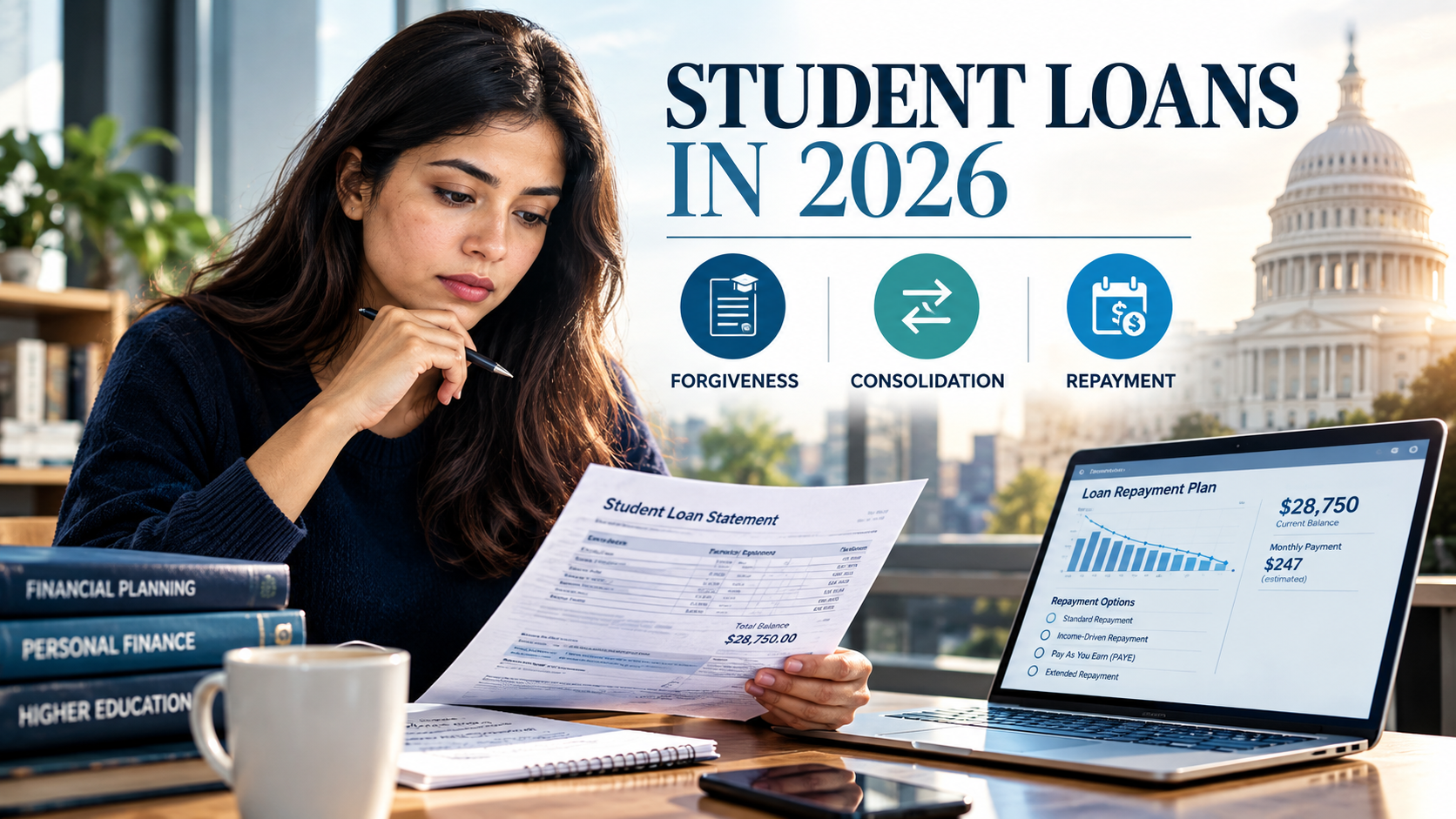
Key Takeaways
- SAVE is over. A court order ended the plan in March 2026, and the Department of Education told 7.5 million enrolled borrowers to move into a legal repayment plan.
- The clock is running right now. Servicers began sending 90-day notices on July 1, and the first wave of deadlines landed in late September. Miss yours and you will be placed in a Standard or Tiered Standard plan, usually with higher payments.
- A new plan exists. The Repayment Assistance Plan (RAP) launched July 1, 2026, with payments set at 1% to 10% of adjusted gross income and a $10 monthly minimum.
- New loans cost more. Undergraduate Direct Loans first disbursed this school year carry a 6.52% fixed rate, up from 6.39% a year earlier.
- Consolidation is no longer a casual move. Under the settlement that ended SAVE, consolidating restarts the clock on income-driven forgiveness, though not on Public Service Loan Forgiveness.
If you have federal student loans, 2026 is the year the rulebook got rewritten while you were still holding the pen. Plans closed, new ones opened, and deadlines started arriving by email.
This guide cuts through the noise. You’ll see what changed, how the remaining plans compare, when consolidation helps and when it hurts, and which strategy tends to fit which kind of borrower. It reflects the situation as of October 6, 2026, so confirm details with your servicer and on StudentAid.gov before you act.
What Changed in 2026, in Plain English
Congress passed sweeping changes in the 2025 reconciliation law, and 2026 is when they landed. Three events matter most.
| Date | What happened | Why it matters |
|---|---|---|
| March 2026 | A federal court order ended the SAVE plan | Roughly 7.5 million borrowers lost their plan |
| March 27, 2026 | The Department of Education announced the SAVE exit process | Borrowers get at least 90 days to choose a new plan |
| July 1, 2026 | RAP and the Tiered Standard plan launched; new loan rules began | Every borrower with new loans faces a different menu |
Meanwhile, SAVE borrowers had been sitting in a forbearance limbo. That limbo is ending, one notice at a time.
The SAVE Deadline: What to Do If You Haven’t Moved
Your 90 days start on the date of your notice, not on a universal calendar day. Notices have been going out in waves, so deadlines are staggered. The earliest hit at the end of September, and the last may stretch into early 2027.
If you do nothing, you won’t be left without a plan. The Department says non-responders are automatically enrolled in either the Standard Repayment Plan or the new Tiered Standard Plan. The catch is that those plans are not income-based, so your payment can jump.
Your move list:
- Find your notice. Check your servicer’s messaging portal and your email, including spam.
- Confirm your own deadline. Don’t rely on a date you saw online.
- Run the numbers in the Loan Simulator on StudentAid.gov.
- Apply for your chosen plan before the clock runs out.
Your Repayment Menu After SAVE
| Plan | Who can use it | How payments work | Forgiveness |
|---|---|---|---|
| Repayment Assistance Plan (RAP) | Direct Loan borrowers (Parent PLUS loans excluded) | 1% to 10% of AGI, $10 minimum; unpaid interest is waived | After 30 years of payments |
| Income-Based Repayment (IBR) | Borrowers whose loans were all made before July 1, 2026 | Typically 10% or 15% of discretionary income, capped at the 10-year standard amount | 20 or 25 years, depending on when you first borrowed |
| Standard (10-year) | Existing borrowers | Fixed monthly payment | None, because the loan is repaid in full |
| Tiered Standard | Borrowers with loans disbursed on or after July 1, 2026 | Fixed payment that scales with balance | None |
| SAVE | Nobody | Ended | Ended |
A few details deserve attention.
- RAP is stricter on pauses. Economic-hardship deferment is eliminated for new loans, so unemployed borrowers still owe at least the $10 minimum, according to Saving for College.
- IBR remains the safety valve. It stays available for older loans, which makes it a serious option if RAP produces a bigger bill.
- Parent PLUS is a special case. The only income-driven route was consolidating before July 1, 2026, a window that has now closed.
Interest Rates: What New Borrowers Pay
Federal rates reset every July 1 and stay fixed for the life of the loan. For loans first disbursed between July 1, 2026 and June 30, 2027, the Department of Education’s rate announcement sets statutory ceilings of 8.25% for undergraduate loans, 9.50% for unsubsidized graduate loans and 10.50% for PLUS loans.
| Loan type (2026-27) | Fixed rate |
|---|---|
| Undergraduate Direct (subsidized and unsubsidized) | 6.52% |
| Graduate and professional unsubsidized | 8.07% |
| PLUS loans (for the borrowers still eligible) | 9.07% |
Two practical points. First, a 6.52% rate is far above the pandemic-era lows, so prepaying high-rate debt now carries real value. Second, borrowers who sign up for autopay may qualify for a temporary interest-rate reduction, which NerdWallet reports as 1%. Borrower advocates say the sign-up window runs through the end of 2026, so ask your servicer to confirm the terms.
Consolidation: Helpful Tool or Expensive Mistake?
A Direct Consolidation Loan combines federal loans into one, with a weighted-average rate. It can simplify billing and, in some cases, unlock eligibility for a plan. But in 2026 it carries a new sting.
The settlement trap. Under the settlement that ended SAVE, consolidating restarts your progress toward income-driven forgiveness. Public Service Loan Forgiveness is treated differently, according to Massachusetts’ student loan guidance, but a restart on the IDR clock can cost years.
The RAP-only rule. For loans disbursed or consolidated after July 1, 2026, RAP is the only income-driven option. If you currently qualify for IBR on older loans, a rushed consolidation could close that door.
Consolidate when:
- You have older FFEL loans that need to become Direct Loans to qualify for a program.
- Your many servicers and due dates are causing missed payments.
Think twice when:
- You are already making progress toward IDR forgiveness or PSLF.
- Your current plan has a lower payment than the one consolidation would unlock.
Forgiveness: What Is Still Available
- Public Service Loan Forgiveness (PSLF) remains available for borrowers who work full time for qualifying government or nonprofit employers and make the required qualifying payments. Only Direct Loans qualify.
- Income-driven forgiveness arrives after 20 to 25 years under IBR and 30 years under RAP.
- Taxes are back in the picture. The temporary federal tax exclusion for income-driven forgiveness expired at the end of 2025, so forgiven balances discharged in 2026 and later may count as taxable income at the federal level. Talk to a tax professional before you plan around a discharge date.
Strategy by Borrower Type
| If you are… | A sensible starting point | Watch out for |
|---|---|---|
| A public servant pursuing PSLF | Stay on a qualifying plan and document every year of employment | Consolidating without checking how it affects your count |
| Low income with a large balance | Compare RAP and IBR payments and long-term forgiveness | Higher taxes on forgiveness |
| Higher income with a modest balance | Standard plan, or paying extra toward the highest-rate loans | Giving up federal protections by refinancing privately |
| A Parent PLUS borrower | Review options carefully, since RAP is not available | The lack of an income-driven path |
| A SAVE borrower | Pick a plan before your individual deadline | Auto-placement into a payment that jumps |
New Loan Limits Worth Knowing
The same law changed how much new borrowers can take. Grad PLUS is closed to new borrowers, and annual and aggregate caps now apply to graduate, professional and Parent PLUS borrowing. If your plan depends on borrowing federal dollars for graduate school, check the current caps on StudentAid.gov and price out the gap before you commit.
Asked & Answered
What happens if I miss my SAVE deadline?
You’re moved automatically into the Standard Repayment Plan, or into the Tiered Standard Plan if you have loans disbursed on or after July 1, 2026. You can usually still apply for a different plan afterward, but you’ll be billed under the default until your application is processed.
Does consolidation reset student loan forgiveness?
For income-driven forgiveness, yes, under the SAVE settlement terms. Public Service Loan Forgiveness is handled differently. Check your qualifying-payment count before you consolidate.
Can I still get Public Service Loan Forgiveness in 2026?
Yes. PSLF remains available to eligible Direct Loan borrowers who work for qualifying employers and make the required payments.
Is RAP better than IBR?
It depends on your income, family size and loan type. RAP can produce a larger payment for some borrowers and a smaller one for others, and its forgiveness timeline is longer. Run both through the Loan Simulator.
Is student loan forgiveness taxable in 2026?
Possibly. The federal exclusion that covered income-driven forgiveness ended after 2025, so discharged balances may be taxable at the federal level. State rules vary, so get tax advice for your situation.
Discover more from The Economy
Subscribe to get the latest posts sent to your email.

The interest rate gap between a well-qualified business loan and a poorly-qualified one can exceed 10 percentage points — meaning the same $100,000 loan could cost a business tens of thousands of dollars more in interest depending entirely on how the application is structured and timed.
Business financing spans an enormous range of products — SBA loans, term loans, business lines of credit, equipment financing, and merchant cash advances — each with different rates, qualification standards, and best-use cases. Choosing the wrong product for your situation is one of the most common and costly mistakes business owners make, often driven by unfamiliarity with what’s actually available.
This guide breaks down the major business loan categories, current rate environments, and what lenders actually evaluate when deciding whether to approve an application.
How Business Loans Actually Work: The Core Categories
Not all business loans are structured the same way, and matching the loan type to your actual need — working capital, equipment, real estate, or a cash-flow bridge — is the single biggest factor in getting favorable terms.
Key takeaway: SBA loans are backed by the U.S. Small Business Administration, which reduces risk for lenders and allows them to offer better terms — lower rates, longer repayment periods, and smaller down payments — than most conventional business loans. But SBA loans also involve more extensive documentation and longer approval timelines than online or conventional lenders.
The Major Business Loan Categories
- SBA 7(a) Loans — the most flexible SBA program, usable for working capital, equipment, refinancing, and acquisitions, up to $5 million.
- SBA 504 Loans — specifically for major fixed assets like commercial real estate and heavy equipment, structured as a partnership between a bank, a Certified Development Company, and the borrower.
- SBA Microloans — smaller loans, up to $50,000, distributed through nonprofit intermediary lenders, well-suited to startups and newer businesses.
- Conventional term loans — bank or online-lender loans with fixed terms and rates, typically requiring stronger credit and financial history than SBA products.
- Business lines of credit — revolving credit for ongoing working capital needs, where interest accrues only on the amount drawn.
- Equipment financing — loans secured by the equipment being purchased, often with faster approval since the collateral is built into the structure.
Step-by-Step: The Business Loan Application Process
- Determine the right loan type for your specific need — working capital, real estate, equipment, or a cash-flow bridge each point toward different products.
- Gather financial documentation — typically tax returns, bank statements, profit and loss statements, and a business plan for newer businesses.
- Check personal and business credit — most lenders weigh both, particularly for smaller businesses without an extensive standalone credit history.
- Compare multiple lenders — rates and terms vary significantly between banks, credit unions, SBA-preferred lenders, and online lenders.
- Submit the application and respond promptly to underwriting requests — delays in providing requested documentation are a leading cause of slower approval timelines.
- Review the full offer, not just the headline rate — origination fees, prepayment penalties, and personal guarantee requirements all affect true cost.
Financial and Strategic Implications: 2026 Business Loan Rate Landscape
Rates vary substantially by loan type, lender, and borrower qualifications. Understanding the current landscape helps set realistic expectations before applying.
| Loan Type | Typical 2026 Rate Range | Key Qualification Factors |
|---|---|---|
| SBA 7(a) Loan | Roughly 9.75%–13.25%, or 10.50%–15.50% depending on lender and structure | 680+ credit score, 2+ years in business typical |
| SBA 504 Loan | Fixed rates approximately 5.7%–5.9% on the CDC portion | Used for real estate/major equipment; not for working capital |
| SBA Microloan | 8%–13%, set by the intermediary lender | Best for startups needing modest capital (average loan around $13,000) |
| Conventional bank term loan | Varies by lender and borrower profile, often prime-plus-margin | Strongest credit and financial history typically required |
| Online/alternative lenders | Frequently higher than bank rates | Faster approval, more flexible qualification standards |
Expert insight: SBA loan rate tables published by the agency represent maximum allowable rates, not guaranteed pricing — strong borrowers routinely qualify for pricing meaningfully below the cap. Always ask a lender directly where your profile is likely to land within the allowable range rather than assuming the maximum rate applies to you.
SBA Loan Fees Beyond the Interest Rate
Beyond the quoted interest rate, SBA loans carry a guarantee fee that scales with loan size — no fee for loans under $150,000, roughly 3% for loans between $150,001 and $700,000, and 3.5% above that, which meaningfully affects the true cost of borrowing and should be factored into any loan comparison.
2026 Rate Environment Context
The Bank Prime Loan Rate, which underpins most variable-rate SBA 7(a) pricing, stood at 6.75% as of January 2026, with most SBA loans priced at Prime plus a capped lender spread that varies by loan size — smaller loans generally carry higher spreads than larger ones.
How to Choose the Right Business Loan
- Match the loan structure to the actual use of funds — real estate and equipment purchases favor SBA 504 or equipment financing; ongoing working capital favors a line of credit rather than a lump-sum term loan.
- Compare total cost, not just headline rate — factor in origination fees, guarantee fees, and any prepayment penalties.
- Weigh speed against cost — online and alternative lenders typically approve faster than SBA loans but often at a higher effective rate.
- Understand personal guarantee requirements — most small business loans, including SBA products, require a personal guarantee from owners with significant equity stakes.
- Get multiple offers before committing — rate and fee variation between lenders for the same borrower profile can be substantial.
- Confirm prepayment terms — some SBA loans carry prepayment penalties in the first several years, which matters if you expect to refinance or pay down the loan early.
Key takeaway: The lowest advertised rate isn’t always the lowest true cost once guarantee fees, origination charges, and repayment term length are factored in — always compare the total dollar cost of financing across the full loan term, not just the interest rate percentage.
Future Outlook: Business Lending Trends Through 2027
- SBA qualification standards have tightened. Recent SBA rule changes raised the minimum credit score requirement, tightened ownership and citizenship documentation, and reinstated guarantee fees that had previously been waived — meaning applicants should expect a somewhat more rigorous underwriting process than in prior years.
- Rate direction remains a key variable for borrowers. Market watchers continue to anticipate potential rate adjustments as economic conditions evolve, which could meaningfully affect the cost of variable-rate business loans over the life of a loan.
- Online lender competition continues to compress approval timelines. As more fintech lenders enter the small business space, speed-to-funding has become a meaningful competitive differentiator, though often still at a rate premium versus SBA and conventional bank products.
- Alternative financing products are gaining share for specific use cases. Revenue-based financing, invoice factoring, and merchant cash advances continue to expand as options for businesses that don’t fit traditional underwriting criteria, generally at a higher effective cost than conventional loans.
Frequently Asked Questions
What credit score do I need for a business loan?
Requirements vary by loan type and lender, but SBA 7(a) loans commonly require a credit score of roughly 680 or higher, while some online and alternative lenders accept lower scores at a higher rate.
What’s the difference between an SBA loan and a conventional business loan?
SBA loans are partially guaranteed by the federal government, which typically allows lenders to offer lower rates and longer terms, but they generally involve more documentation and a longer approval process than conventional bank or online loans.
How long does it take to get approved for a business loan?
Timelines vary significantly: online lenders can sometimes approve and fund within days, while SBA loans often take several weeks to a few months due to more extensive underwriting requirements.
Do all business loans require a personal guarantee?
Most do, particularly for small businesses and owners with significant equity stakes, meaning the business owner is personally liable for repayment if the business itself cannot repay the loan.
Is an SBA loan always cheaper than a conventional loan?
Often, but not always, once fees are included — SBA loans typically carry lower interest rates but include a guarantee fee that scales with loan size, which should be factored into any total-cost comparison.
Discover more from The Economy
Subscribe to get the latest posts sent to your email.

Stock Market Crash 2026: What the Inflation and AI Selloff Means

Student Loans and the 2026 Midterms: SAVE Plan Deadlines and Borrower Choices

KOSPI Crash October 2026: What Korea’s Chip Selloff Reveals

CoreWeave Stock 2026: CRWV, AI Infrastructure Debt and the Selloff Explained

OP-ED:The AI Race Has No Single Winner — And Pakistan Must Choose Its Own Future

VA Disability Rates Increase 2027: The Confirmed 3.6% COLA Explained

US–China AI Export Controls in 2026: Chips, Testing Rules and Corporate Risk

World Trade in 2026: Tariffs, Supply Chains and the Cost of Fragmentation

Global Economy Outlook 2026–27: What to Watch Ahead of the IMF October Report

Strait of Hormuz in 2026: Why Shipping Risks Matter for Oil, Insurance and Food Prices

US–China Critical Minerals Competition in 2026: Who Controls the Supply Chain?

Oil and Diesel Prices in October 2026: How Supply Shocks Can Reach Inflation

AI Chip Demand in 2026: What TSMC, Nvidia and Data-Center Spending Reveal

Q3 2026 Earnings Season: The Bank, AI and Consumer Signals That Really Matter

World’s Largest Economies: Ranking the Top Global Powers

Crude Oil & Petroleum Market Analysis: OPEC+ Decisions and Price Forecasts

Global Pension Systems Ranked: The World’s Best and Worst Retirement Frameworks

Pakistan Economy 2026: Inside the SBP’s Balancing Act

GasBuddy Market Insights: How Crude Price Shifts Impact Local Fuel Cost Averages

Global Equity Market Divergence: US Tech vs. European Dividend Stocks vs. Asian Growth

Bitcoin Price Forecast 2026–2027: Will the 4-Year Cycle Hold?

Silver Price Today: Why the Xi-Trump AI Standoff Is Fueling a Safe-Haven Rally

Asian Stock Markets 2026: Japan, China, Pakistan & More

SpaceX IPO: How Aerospace Is Reshaping Tech Startup News

SpaceX IPO 2026: History’s Biggest Stock Debut?

Oil Prices 2026: Inside the Hormuz Crisis That Won’t End

IMF Reports 2026: What the Latest Data Means for the Global Economy

Algorithmic Dogfights: Why the U.S. and China Must Establish Rules of Engagement for Autonomous Air Power
-

 Markets & Finance9 months ago
Top 15 Stocks for Investment in 2026 in PSX: Your Complete Guide to Pakistan’s Best Investment Opportunities
-

 Analysis8 months ago
Johor’s Investment Boom: The Hidden Costs Behind Malaysia’s Most Ambitious Economic Surge
-

 Analysis8 months ago
Top 10 Stocks for Investment in PSX for Quick Returns in 2026
-

 Banks9 months ago
Best Investments in Pakistan 2026: Top 10 Low-Price Shares and Long-Term Picks for the PSX
-

 Analysis8 months ago
Brazil’s Rare Earth Race: US, EU, and China Compete for Critical Minerals as Tensions Rise
-

 Investment9 months ago
Top 10 Mutual Fund Managers in Pakistan for Investment in 2026: A Comprehensive Guide for Optimal Returns
-

 Global Economy10 months ago
15 Most Lucrative Sectors for Investment in Pakistan: A 2025 Data-Driven Analysis
-

 Global Economy10 months ago
Pakistan’s Export Goldmine: 10 Game-Changing Markets Where Pakistani Businesses Are Winning Big in 2025