
Analysis
Stock Markets Today: Dow Jones Futures Signal Cautious Optimism Amid Global Uncertainty – Latest Stock Market News

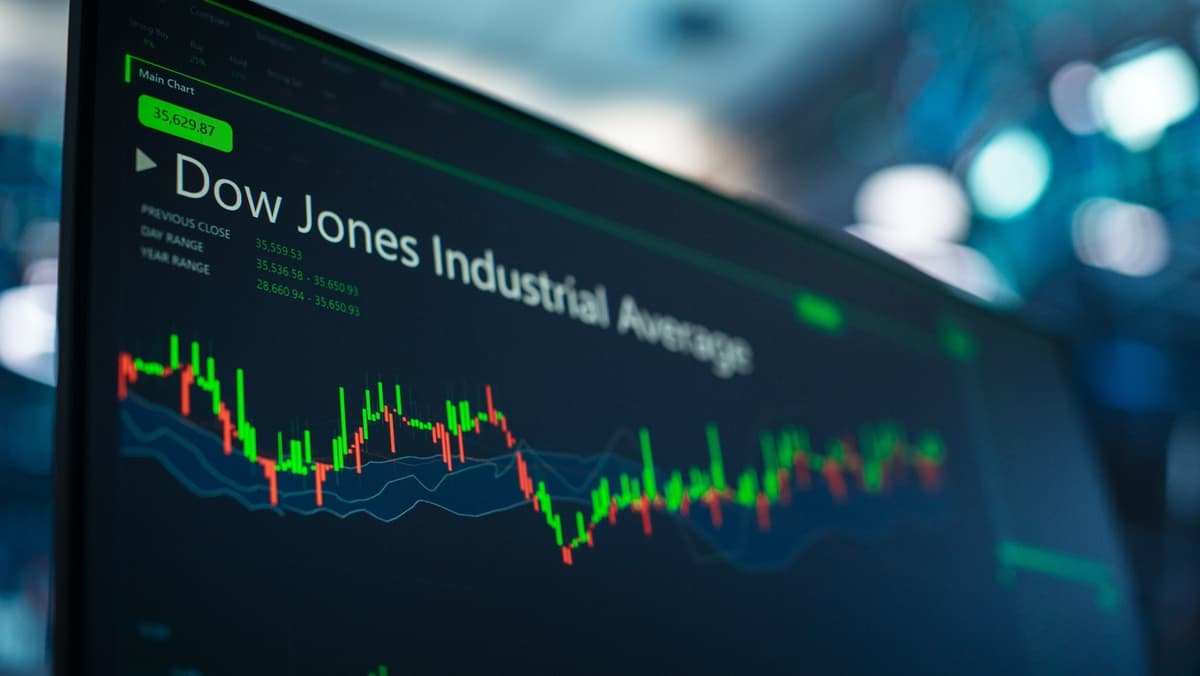
As geopolitical tremors and artificial intelligence volatility test investor resolve, U.S. equity markets demonstrate surprising resilience while traders navigate uncharted territory
The stock markets opened Friday with measured stability after a brutal Thursday sell-off, as Dow Jones stock markets futures climbed in morning trading Watcher Guru ahead of a critical inflation report. Following Thursday’s devastating 669-point plunge, the Dow Jones Industrial Average closed at 49,451.98, while futures contracts edged cautiously higher as investors braced for the January Consumer Price Index data that could reshape Federal Reserve policy expectations for the remainder of 2026.
Yet beneath these tentative gains lies a market psychology defined by contradiction: investors simultaneously embracing risk while hedging against catastrophic downside scenarios that few predicted just weeks ago. The S&P 500 and Nasdaq 100 slipped 1.6% and 2% respectively Bloomberg on Thursday, driven by mounting concerns that artificial intelligence’s disruptive potential extends far beyond Silicon Valley’s software corridors.
For Sarah Chen, a 38-year-old software engineer in Austin, Texas, recent volatility has transformed her relationship with investing entirely. “I used to check my 401(k) maybe once a quarter,” she explains. “Now I’m watching the Dow Jones today multiple times daily, trying to understand if I should be protecting what I’ve built or buying the dip everyone keeps talking about.” Her experience mirrors that of millions of retail investors caught between fear and opportunity in markets that seem to rewrite the rulebook weekly.
Understanding Today’s Stock Market Dynamics: The AI Disruption Paradox
The current state of stock markets reflects a complex interplay of technological disruption, monetary policy recalibration, and geopolitical fragmentation. According to analysis from Bloomberg, worries about artificial-intelligence disruption engulfed industries from logistics to commercial real estate Bloomberg, sending shockwaves through sectors previously considered immune to automation threats.
Cisco Systems slid 12% after the company issued disappointing guidance for the current quarter CNBC, crystallizing investor fears that even infrastructure providers servicing AI’s buildout aren’t insulated from margin compression. More alarmingly, C.H. Robinson tumbled 14.54% as AI replacement fears took hold in logistics The Motley Fool, while commercial real estate brokers like CBRE Group experienced significant selling pressure for the second consecutive session.
The paradox is striking: the very technology that propelled markets to record highs—the Dow briefly surpassed 50,000 earlier this month—now threatens to cannibalize entire business models. As The Wall Street Journal reported, the iShares Expanded Tech-Software Sector ETF (IGV) fell nearly 3%, with the fund now standing about 31% below its recent high after first entering a bear market last month CNBC.
Dow Jones Today: Futures Navigate the Federal Reserve’s Tightening Calculus
The stock market today faces a critical inflection point: Wednesday’s stronger-than-expected jobs report—130,000 jobs added in January versus economists’ expectations of 55,000 CNBC—has fundamentally altered the Federal Reserve’s rate-cutting timeline. Money markets now price in the Fed’s next cut in July rather than June, with two-year Treasury yields hovering near 3.5%.
Ross Mayfield, investment strategist at Baird, captured the sentiment shift: “CPI is a little bit less important now that we got the good jobs number, because it already allows the Fed to kind of pause for a substantial amount of time” Watcher Guru. This acknowledgment represents a dramatic recalibration from January’s consensus, when multiple rate cuts seemed probable.
For investors seeking stock trading tips for beginners, this environment demands particular caution. Market veterans emphasize three principles for investing in volatile markets:
1. Diversification Beyond Magnificent Seven
The concentration risk in mega-cap technology has become undeniable. All seven members of the so-called “Magnificent Seven” tech cohort finished in negative territory Yahoo Finance on Thursday, with Apple suffering its steepest one-day drop since April 2025, falling 5% Yahoo Finance. Defensive sectors—utilities, consumer staples, healthcare—warrant renewed attention.
2. Focus on Free Cash Flow Generators
In an environment where AI capital expenditure draws increasing skepticism, companies demonstrating strong free cash flow conversion are attracting institutional money. Walmart gained more than 2% while McDonald’s rose 2.7% after earnings CNBC, showcasing investor appetite for profitable, capital-light business models.
3. Monitor Valuation Compression Opportunities
The software sector’s 31% decline from recent highs has created selective opportunities. Bank of America maintains its buy rating on Cisco despite the stock’s 12% Thursday collapse, noting that “with total revenue growth accelerating to 8.5% in 2026, OM stable at 34%, and $6.6bn return in capital to shareholders YTD, we find the valuation attractive, trading at ~18.5x forward P/E” CNBC.
Stock Market Crash Reasons: Unpacking the Sell-Off’s Structural Triggers
Understanding stock market crash reasons requires examining both cyclical and structural factors. The current volatility stems from three converging pressures:
Artificial Intelligence’s Double-Edged Impact
While AI infrastructure spending continues unabated—evidenced by Applied Materials surging over 10% in premarket trading after delivering better-than-expected quarterly results Yahoo Finance—the technology’s disruptive implications have only begun manifesting. Financial Times analysts note that AI’s threat to high-margin professional services (real estate brokerage, freight logistics, financial advisory) represents trillions in potential market value destruction.
Monetary Policy Normalization
The Federal Reserve’s reluctance to cut rates amid resilient employment and stubborn inflation creates an uncomfortable backdrop for equity valuations. With short-dated Treasuries hit hardest, with two-year yields hovering near 3.5% Bloomberg, the risk-free rate remains elevated enough to challenge growth stock multiples.
Geopolitical Fragmentation
While Thursday’s sell-off centered on domestic factors, international tensions continue simmering. Oil markets reflect this uncertainty, with prices gaining roughly 10% year-to-date despite forecasts of oversupply, driven by geopolitical risk premiums that Reuters attributes to Venezuelan nationalization and Middle Eastern instability.
Best Stocks to Invest Now: Navigating Sector Rotation
For investors asking about best stocks to invest now, market structure suggests opportunities in three categories:
AI Infrastructure Beneficiaries
Companies providing picks-and-shovels for AI buildout continue outperforming. Shares of Vertiv surged 24% after the company posted a fourth-quarter earnings beat and issued a strong 2026 outlook CNBC. High-bandwidth memory chip providers like Micron, though volatile, benefit from insatiable AI demand for computational capacity.
Defensive Consumer Staples
In environments characterized by uncertainty, consumer staples historically outperform. The sector’s negative correlation with technology volatility makes it attractive for portfolio stabilization. Forbes strategists recommend companies with pricing power, consistent dividend growth, and recession-resistant demand profiles.
Energy Transition Plays
While traditional energy faces headwinds from oversupply projections, companies facilitating the energy transition—grid infrastructure, electrical equipment—demonstrate compelling fundamentals. Caterpillar, GE Vernova and Eaton were all higher in the session CNBC, reflecting institutional rotation into industrial names positioned for infrastructure spending.
Stock Market News: Forward-Looking Implications
The stock market news landscape heading into the weekend centers on Friday’s inflation report. Economists surveyed by Dow Jones expect the January report to show a 0.3% monthly increase for both headline and core CPI. Goldman Sachs expects headline CPI to come in slightly lighter at 2.4%, which could add to hopes that inflation is moderating Watcher Guru.
However, the market’s response depends less on the specific number than on the Federal Reserve’s interpretation. Dallas Federal Reserve President Lorie Logan recently suggested interest rates may not need to be adjusted any further based on current economic conditions CNBC, a hawkish signal that underscores policymakers’ comfort with restrictive policy persistence.
For investing in volatile markets, The Economist research emphasizes behavioral discipline: avoiding panic selling, maintaining systematic rebalancing protocols, and distinguishing between cyclical corrections and structural deterioration. The current environment likely represents the former—a healthy digestion period after extraordinary 2024-2025 gains—rather than the onset of a prolonged bear market.
Conclusion: Navigating the New Market Regime
As the Dow Jones stock markets futures stabilize Friday morning, investors face a market regime defined by elevated uncertainty and compressed return expectations. The days of indiscriminate technology sector outperformance appear finished, replaced by a more nuanced environment rewarding fundamentals, profitability, and capital discipline.
Yet opportunity persists. Markets climbing “walls of worry” historically generate sustainable returns, provided investors maintain appropriate diversification, valuation discipline, and emotional resilience. Whether Friday’s CPI report catalyzes relief rallies or extends Thursday’s sell-off, the fundamental trajectory of American enterprise—innovative, adaptive, resilient—remains intact.
For those seeking stock trading tips for beginners or grappling with investing in volatile markets, the current moment offers a masterclass in risk management, sector rotation, and the enduring importance of distinguishing signal from noise in financial markets that never cease surprising participants.
Discover more from The Economy
Subscribe to get the latest posts sent to your email.



Key Takeaways
- Rolex’s secondary market rose approximately 7.9% year-over-year as of 2026 (per WatchCharts data) — trailing Patek Philippe (+16.2%) and Tudor (+11.4%) but still outperforming Audemars Piguet (+3.4%).
- Rolex raised U.S. retail prices 4–9% in January 2026 (steel models ~5.6%, gold models ~8.7%), narrowing the historical gap between retail and pre-owned pricing.
- Not every model appreciates: steel sports references (Submariner, GMT-Master II, Daytona) have held value far better than two-tone or widely available dress references like the standard Datejust.
- The Lady-Datejust posted the sharpest 2026 gain among tracked collections — up 22.73%, from roughly $9,269 to $11,376 — driven by demand for smaller, “everyday luxury” watches.
- Gold’s rise past $2,400/oz has directly lifted the investment case for Rolex’s precious-metal references (Day-Date, Sky-Dweller, Yacht-Master).
The Model-by-Model Picture
| Category | 2026 Trend |
|---|---|
| Lady-Datejust | +22.73% (strongest performer among tracked collections) |
| Steel sports models (Submariner, GMT-Master II) | Held value well; corrected from 2022 peak but stabilized above retail |
| Daytona | Corrected from highs above $50,000 to the mid-$30,000s; still among the most sought-after references |
| Two-tone/widely available Datejust | Flat to negative — “holds value” is an overstatement for this category |
| Gold references (Day-Date, Sky-Dweller) | Lifted by gold’s rise above $2,400/oz |
Why the “Rolex Always Appreciates” Myth Is Fading
The pandemic-era boom pushed some references — the Daytona above all — to speculative highs disconnected from historical norms. Since the March 2022 peak, steel sports models have compressed meaningfully, and dealers who bought inventory near the top have in some cases faced 20–40% markdowns on liquidation. The lesson for 2026 buyers: Rolex as a category is not a monolith. Value retention depends heavily on specific reference, condition, and whether the piece comes with box and papers (“full set”).
What’s Actually Driving 2026 Strength
- Retail price increases raise the floor. When a new Submariner retails at $10,050 (up from $9,500), a pre-owned example at $11,000–$12,000 suddenly represents a smaller premium — narrowing the gap without secondary prices actually moving.
- Supply discipline remains Rolex’s core lever. The brand has never confirmed production numbers, and secondary-market premiums remain entirely a function of Rolex’s own manufacturing decisions — a risk factor as much as a support.
- Certified Pre-Owned rollout. Rolex’s now fully rolled-out CPO program has changed how buyers transact in the used market, adding a layer of brand-verified legitimacy that supports pricing.
The Case for Rolex as a Portfolio Diversifier
Financial advisors increasingly frame luxury watches not as a replacement for equities or bonds, but as a tangible, historically low-correlation diversifier — one that carries its own risks (illiquidity, condition-dependent pricing, no yield) but has demonstrated multi-decade resilience for specific references.
Is Rolex a good investment in 2026?
It depends heavily on the specific reference. Steel sports models like the Submariner and Daytona have held or grown in value; two-tone and widely available dress models generally have not. Overall, Rolex’s secondary market rose about 7.9% year-over-year in 2026, trailing Patek Philippe but ahead of Audemars Piguet.
Discover more from The Economy
Subscribe to get the latest posts sent to your email.

Navigating Mortgage and Loan Refinancing in a High-Yield Environment
Global public debt crossing critical thresholds has kept central bank policies volatile, resulting in fluctuating US Treasury yields throughout 2026. For homeowners and commercial property holders burdened by previous high-interest borrowing cycles, finding optimal refinance windows has become a high-stakes financial puzzle. Stalled disinflation and stubborn employment numbers mean rate cuts are incremental, requiring borrowers to act with precision.
Timing your mortgage or commercial loan refinance in this environment requires a deep understanding of yield curve movements and lender risk appetites.
Decoding 2026 Refinance Dynamics
The 10-Year Treasury Yield Benchmark
Mortgage rates continue to track closely with the 10-year US Treasury yield. When macroeconomic anxiety spikes debt issuance, yields rise, tightening consumer borrowing capacity. Savvy borrowers monitor weekly Treasury auctions to lock in rates during brief dip windows.
Hybrid ARMs and Alternative Structures
With fixed rates remaining elevated, 7/1 and 10/1 adjustable-rate mortgages (ARMs) have surged in popularity. These products offer lower initial monthly payments, giving borrowers breathing room until central bank easing cycles fully materialize.
| Loan Product | Current Rate Range | Best For | Key Risk Factor |
| 30-Year Fixed Mortgage | 6.2% – 6.8% | Long-term predictability | Higher initial monthly outlay |
| 7/1 Hybrid ARM | 5.5% – 5.9% | Short-term ownership / flipping | Rate reset risk after year 7 |
| Commercial Refinance | 7.0% – 8.2% | Corporate asset restructuring | Strict DSCR lender covenants |
Actionable Steps for Successful Refinancing
To maximize your chances of securing favorable refinance terms in a volatile market, follow a disciplined preparation strategy.
Boost Your Credit Score Immediately: Lenders in 2026 are applying stringent credit tiering; a 20-point increase can drop your APR by a crucial quarter-point.
Shop Regional Credit Unions: Smaller financial institutions often offer portfolio loans with more flexible underwriting than major national banks.
Calculate the Break-Even Point: Ensure your total closing costs are recouped through monthly savings within 24 months of closing.
“Market Strategist View: Refinancing in 2026 is an exercise in opportunistic timing. Borrowers must maintain immaculate financial profiles ready to strike the moment Treasury yields dip.”
Mastering the complexities of today’s debt environment ensures you can successfully lower your debt service costs and protect your long-term financial stability.
Discover more from The Economy
Subscribe to get the latest posts sent to your email.

The days of pulling generic auto insurance quotes based purely on your zip code and age are officially over. In 2026, insurance comparison engines are powered entirely by generative AI and real-time telematics. These platforms digest thousands of live data points—ranging from your driving smoothness via connected vehicle sensors to real-time traffic congestion patterns—to generate hyper-personalized premiums instantly.
For consumers, this evolution represents both a massive opportunity for savings and a hidden trap for penalty pricing. Understanding how AI algorithms evaluate risk is essential for anyone looking to lower their monthly auto insurance premiums.
How AI Comparison Engines Evaluate Your Risk Profile
Behavioral Telematics and Connected Cars
Modern cars stream performance data directly to insurance aggregators. Generative AI models analyze braking sharpness, acceleration curves, cornering G-forces, and phone distraction metrics. Drivers who maintain smooth, defensive habits are rewarded with dynamic rate cuts of up to 40% compared to traditional rating tiers.
Predictive Traffic and Weather Modeling
AI tools now cross-reference your daily commute route with predictive weather and accident probability models. If your standard parking location or driving corridor has a statistically higher incidence of uninsured motorist claims, your quotes will reflect that hyper-local risk assessment.
| Comparison Factor | Traditional Rating Model | 2026 Generative AI Model | Impact on Premium |
| Mileage & Usage | Annual estimated odometer reading | GPS tracking & live trip duration | High (up to 35% savings) |
| Driving Behavior | MVR driving record & accidents | Real-time braking, speed, & G-force | Critical (determines tier) |
| Vehicle Tech | Make, model, and safety rating | ADAS calibration & repair cost data | Moderate |
Strategies to Lower Your AI-Driven Insurance Quote
To outsmart the algorithm and secure the lowest possible premium in 2026, drivers must proactively manage their digital footprint on insurance platforms.
Opt-In for Telematics Trial Periods: Many insurers offer immediate 15% discounts just for installing their driving app; let it track safe habits for 30 days to lock in permanent savings.
Scrub Unverified Public Records: Ensure your motor vehicle report is free of clerical errors that AI risk models misinterpret as reckless behavior.
Compare AI Aggregators: Use platforms that integrate multi-carrier API feeds rather than single-brand comparison sites to find the best risk-adjusted rate.
“Industry Note: AI-driven pricing rewards transparency and precision. Drivers who actively manage their telematics data consistently out-save those relying on legacy quote calculators.”
Embracing AI comparison tools allows savvy policyholders to customize coverage limits precisely to their driving habits, eliminating wasted premium spend while ensuring robust protection.
Discover more from The Economy
Subscribe to get the latest posts sent to your email.

Asian Markets Analysis: Navigating Volatility in China, Japan, and Singapore Stocks

Stagflation vs. Soft Landing: How Central Bank Rates Are Reshaping European and Asian Economies

IMF & World Bank Global Economic Outlook: Growth Forecasts Across Europe and Asia

Fed Rate Hike Projections vs. Trump’s Interest Rate Policy: What Global Markets Expect Next

Singapore Stocks: The Ultimate Safe Haven for Markets and Finance in 2026?

Marie Gluesenkamp Perez: How a Former Shop Owner’s Moderate Politics Are Shaping Tech and Economy Bills

The Future of Silicon: Supply Chain Vulnerabilities in the 2026 Tech Sector

Rolex Perpetual Market Value 2026: Why Luxury Watches Remain a Top Alternative Asset

PSX and KSE-100: How Pakistan’s Market Became One of Asia’s Best Performers

China Stocks vs. Japan Stocks: Where World Bank and IMF Data Point for 2027

Beyond Rhetoric: How the EU Is Deploying ‘All Tools’ to Rebalance Its €1 Billion-a-Day Trade Deficit with China

Elon Musk’s Next Moves: Disrupting the 2026 Global Economy

INTC Stock Forecast 2026: Can Intel’s Government-Backed Turnaround Hold?

Bitcoin Price Action in Q4 2026: Safe-Haven Asset or High-Risk Tech Play?

State Farm’s $5B Dividend 2026: Who Qualifies & Payout Dates

US-China Relations in Q3 2026: Trade Tariffs and Supply Chain Risks

Oil Surges as Strait of Hormuz Traffic Collapses Again

SpaceX Starship Flight 14: First Orbital Attempt & Starlink V3 Launch Explained

Bank of England Set to Hold Rates Through Year-End, Reuters Poll Shows

Top 30 Stocks for Investment in PSX for Massive ROI in 2026

The 2026 Crypto Regulatory Shift: What It Means for Institutional Investors

AI Chip Stocks 2026: The Best Semiconductor Investments Beyond Marvell

AI-Powered Training: The Next Multi-Billion Dollar Ecosystem in Fitness

Tween Back-to-School Trends 2026: What’s Driving the $85B Season

Russia’s Black Sea Oil Exports Fall for a Fifth Straight Week

Shein Clothes Quality & Safety in 2026: What Lab Tests Show

Global Chip Selloff Deepens: What’s Driving the Aug. 19 Semiconductor Rout

10-Year Treasury Yield Hits 4.80%: What It Means for Rates & Portfolios
-

 Markets & Finance8 months ago
Top 15 Stocks for Investment in 2026 in PSX: Your Complete Guide to Pakistan’s Best Investment Opportunities
-

 Analysis7 months ago
Johor’s Investment Boom: The Hidden Costs Behind Malaysia’s Most Ambitious Economic Surge
-

 Analysis7 months ago
Top 10 Stocks for Investment in PSX for Quick Returns in 2026
-

 Analysis7 months ago
Brazil’s Rare Earth Race: US, EU, and China Compete for Critical Minerals as Tensions Rise
-

 Banks8 months ago
Best Investments in Pakistan 2026: Top 10 Low-Price Shares and Long-Term Picks for the PSX
-

 Investment8 months ago
Top 10 Mutual Fund Managers in Pakistan for Investment in 2026: A Comprehensive Guide for Optimal Returns
-

 Global Economy9 months ago
15 Most Lucrative Sectors for Investment in Pakistan: A 2025 Data-Driven Analysis
-

 Global Economy9 months ago
Pakistan’s Export Goldmine: 10 Game-Changing Markets Where Pakistani Businesses Are Winning Big in 2025