
Analysis
Singapore’s Bold Economic Bet: Why the City-State Must Learn to Fail

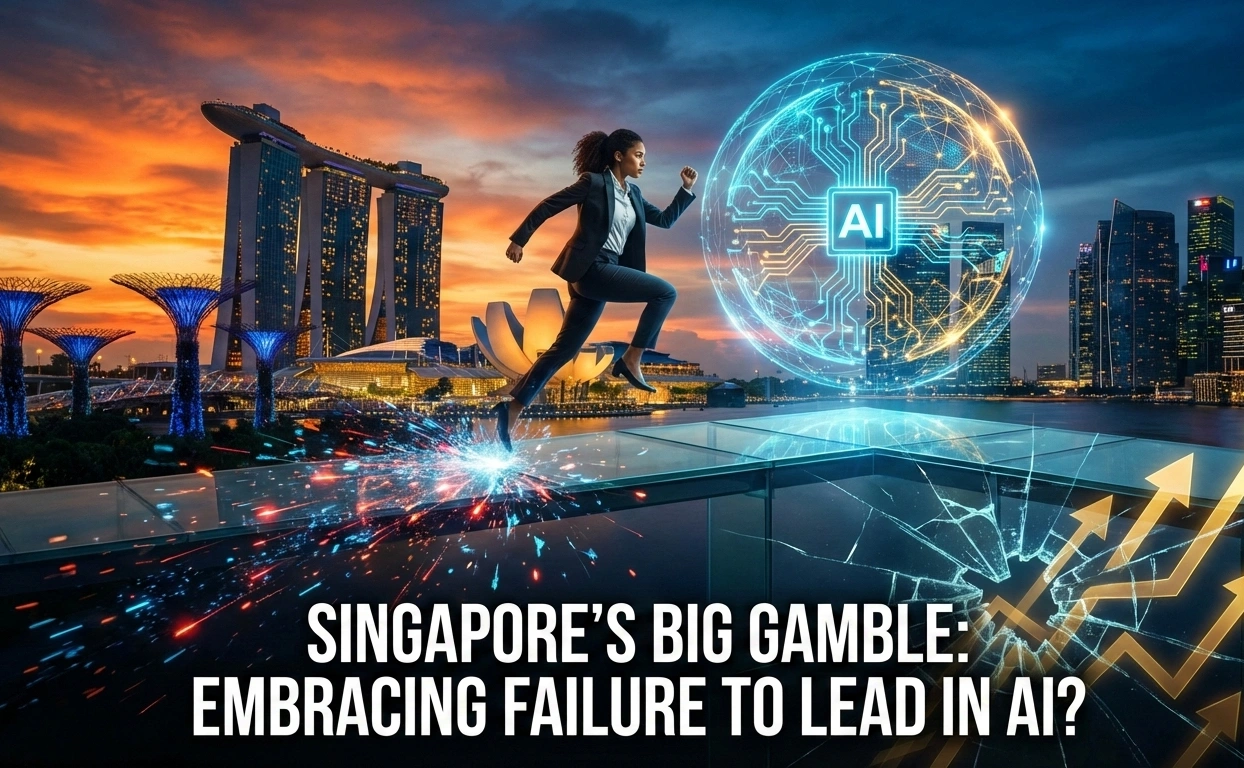
Singapore stands at an inflection point. For decades, the city-state has built its prosperity on precision, predictability, and prudent risk management—the very qualities that transformed a resource-poor island into one of the world’s wealthiest nations. But on January 29, 2026, Deputy Prime Minister Gan Kim Yong delivered a message that would have seemed heretical a generation ago: Singapore must learn to embrace failure.
The Singapore Economic Strategy Review 2026 mid-term update, unveiled after months of consultation with businesses and workers, marks a striking departure from the nation’s traditional playbook. At its core lies a fundamental recognition that in an era of geopolitical fragmentation, artificial intelligence disruption, and climate imperatives, playing it safe is the riskiest strategy of all. The question now is whether a society built on stability can genuinely cultivate the “spirit of risk-taking” its leaders insist is essential for survival.
A Changed World Demands Changed Thinking
“Today’s crisis is very different,” DPM Gan told reporters at the briefing. “It is going to be a different world that we are going to emerge from. We are never going to go back to where we were.” His words carried unusual weight, spoken by a minister who has spent decades navigating Singapore through economic turbulence—from the Asian financial crisis to the global pandemic.
The seven recommendations emerging from the five Economic Strategy Review committees read less like incremental policy adjustments and more like a cultural manifesto. Developed through over 60 engagements with stakeholders, they acknowledge uncomfortable truths: achieving economic growth will be challenging, and growth can no longer be assumed to generate jobs. The twin objectives—sustaining growth at the higher end of 2-3% annually over the next decade while creating good jobs for Singaporeans—require a fundamentally different approach.
What makes this Singapore ESR risk-taking agenda particularly striking is not just what it proposes, but what it admits. Singapore must move beyond simply attracting multinational corporations and instead nurture enterprises that “dream big and take risks.” The phrase appears repeatedly in committee documents—a deliberate rhetorical choice in a nation where failure has historically carried deep stigma. As Acting Minister Jeffrey Siow emphasized during the briefing, the global economy is being reshaped by forces Singapore cannot control: major power rivalry, security concerns supplanting free trade, and technological advancement that renders traditional comparative advantages obsolete within years rather than decades.
The Seven Pillars of Singapore’s Economic Reinvention
What Are the 7 ESR Recommendations?
The ESR recommendations Singapore announced on January 29 form an interconnected strategy to position the nation for a more volatile future:
1. Establish Global Leadership in Key Growth Sectors
Singapore aims to transform its manufacturing prowess in semiconductors, healthcare, specialty chemicals, and aerospace through aggressive investment in AI, automation, and emissions-reducing technologies. But ambition extends beyond making existing industries more efficient—the goal is “best-in-class and sustainable operations” that serve as global benchmarks. The recommendation includes directing national-level R&D resources toward securing leadership positions rather than merely participating in high-value industries.
2. Pursue Emerging Opportunities to Create New Economic Engines
This represents perhaps the boldest cultural shift. The ESR committees are urging Singapore to place bets on frontier technologies—quantum computing, decarbonization technologies, space exploration—where outcomes remain deeply uncertain. Committee member Lim Hock Heng, former vice-president of British pharmaceutical giant GSK, captured the ambition: “Singapore can be more than just a regional hub. We have the chance to become the global benchmark for advanced manufacturing and modern services, a place where the future of the industry takes shape.”
3. Position Singapore as an AI Leader with an AI-Empowered Economy
Building on the National AI Strategies launched in recent years, this recommendation pushes for Singapore to become “a location of choice for companies and talent to come together to develop, test, deploy, and scale innovative and impactful AI solutions.” Crucially, it emphasizes AI adoption across the entire economy to drive productivity, not just in elite tech sectors. This Singapore AI leader strategy recognizes that AI will reshape every industry—and nations that hesitate will be left behind.
4. Strengthen Connectivity and Support Firms to Internationalize
Rather than relying solely on its position as a regional hub, Singapore must actively help local firms expand abroad. The recommendation calls for enhanced transport links, deeper trade networks, and support for Singaporean companies pursuing international ventures—a recognition that in an age of protectionism, market access cannot be taken for granted.
5. Broaden the Range of Good Jobs
This tackles a more sensitive issue: the concentration of high-quality employment in a narrow band of sectors. The review proposes expanding opportunities in skilled trades, care services, and emerging fields created by AI and frontier technologies. It’s an acknowledgment that Singapore innovation growth 2026 must translate into broad-based prosperity, not just elite prosperity.
6. Make Lifelong Learning Practical
Workers will need to become more agile, acquiring new skills throughout their careers through flexible pathways that blend training and work. The proposal includes developing a national AI workforce strategy to build literacy and fluency across the workforce—not just among data scientists and engineers.
7. Enable Businesses to Navigate Transitions
Companies will receive support to assess their health, plan pivots, and reposition themselves for new opportunities. In a restructuring economy, this amounts to acknowledging that not all businesses will survive—and providing mechanisms to help those that can adapt do so successfully.
The Cultural Chasm: Can Singapore Truly Embrace Failure?
Here’s where theory meets the hard ground of cultural reality. Singapore’s success has been built on the opposite of the risk-embracing, failure-tolerant culture now being advocated. Students face intense pressure to excel in standardized exams. Civil servants advance through proven competence rather than bold experimentation. The bankruptcy laws, though reformed, still carry social stigma. Even the vaunted startup ecosystem tends to favor proven business models over moonshots.
The Singapore economy embrace failure message will require more than policy changes—it demands a generational shift in mindset. When ESR committees urge the government to “go beyond attracting multinational corporations and nurture a new generation of enterprises and start-ups that dream big and take risks,” they’re essentially asking Singapore to become something it has never been: comfortable with ambitious failure.
Consider the contrast with other innovation economies. Israel’s “Startup Nation” culture actively celebrates pivots and failures as learning experiences. Silicon Valley treats bankruptcy as a badge of honor, evidence that you swung for the fences. China’s tech giants grew by launching dozens of products simultaneously, killing the failures quickly. Singapore’s approach has historically been more like Japan’s: careful, consensus-driven, risk-averse.
Yet there are reasons for optimism. Singapore has demonstrated remarkable adaptability before—pivoting from entrepôt trade to manufacturing to financial services to tech hub within two generations. The government’s willingness to convene this review and publicly acknowledge the need for risk-taking is itself significant. As DPM Gan noted, the recommendations and measures being considered “have to be quite different from what we were doing before” precisely because the environment has fundamentally changed.
The AI Gambit: Singapore’s Biggest Bet Yet
If there’s one area where the Singapore economic update risk appetite is most evident, it’s artificial intelligence. The ESR committees are proposing that Singapore position itself as a global AI leader—not just in deployment, but in development and governance.
This is audacious. Singapore lacks the vast data lakes of China, the venture capital ecosystem of the United States, or the deep bench of AI researchers in London or Toronto. What it can offer is something potentially more valuable: a trusted regulatory environment where AI can be tested, deployed, and scaled with both innovation and accountability.
The proposal to create “a location of choice” for AI companies recognizes that geography matters less than governance in the AI era. If Singapore can establish itself as the jurisdiction where controversial applications get fair, intelligent oversight—where privacy, safety, and innovation are balanced—it could capture an outsized share of AI value creation. The Republic has form here: it did something similar with biotech in the 2000s, building Biopolis and attracting pharmaceutical giants through intelligent regulation and infrastructure investment.
But the AI strategy goes beyond attraction. The push for economy-wide AI adoption—helping SMEs integrate AI into operations, building AI literacy across the workforce—addresses a hard truth: the countries that thrive won’t be those with the most AI researchers, but those where AI amplifies human productivity most broadly.
The Global Context: Singapore’s Gamble in Historical Perspective
Singapore’s pivot toward risk-taking arrives at a peculiar moment in global economic history. The post-Cold War consensus that favored open trade, mobile capital, and integrated supply chains—the very system Singapore mastered—is fracturing. Countries are “reconfiguring trade networks and supply chains in the name of resilience and security”, Prime Minister Lawrence Wong warned in December. These aren’t temporary disruptions but “permanent features of a fragmented world.”
The irony is rich: just as protectionism makes Singapore’s traditional strengths less valuable, the ESR is urging the nation to double down on openness and risk-taking. It’s a calculated gamble that in a balkanized world economy, there will be even more value in being the trusted intermediary, the neutral ground where Chinese and American companies can still do business, the place willing to try things others won’t.
History suggests this could work. Small, trade-dependent nations have often thrived during periods of great power competition by becoming indispensable to all sides. The Netherlands did it during the religious wars of the 16th century. Switzerland managed it through two world wars. Singapore itself prospered during the Cold War by maintaining relationships with both camps.
But there’s a crucial difference: those historical examples involved managing existing strengths, not cultivating new ones. Singapore is attempting something harder—transforming its risk culture while maintaining the stability and trust that made it successful in the first place. It’s trying to become both the safe harbor and the daring adventurer simultaneously.
The Uncomfortable Questions
The ESR mid-term update raises questions that deserve frank examination. First, can a government engineer a culture of risk-taking, or is such a culture necessarily organic? Singapore’s top-down approach has worked brilliantly for infrastructure, education, and industrial policy. But risk-taking and innovation may be different beasts—less amenable to five-year plans and committee recommendations.
Second, is Singapore being realistic about the trade-offs? A genuine failure-tolerant culture means accepting that some high-profile bets will fail spectacularly and publicly. It means entrepreneurs will squander government grants. It means brilliant researchers will pursue dead ends. Singapore’s electorate, accustomed to efficiency and accountability, may find this difficult to stomach.
Third, can Singapore compete with economies that have natural advantages in risk-taking cultures? The United States produces more failed startups than successful ones—but it also produces Google, Amazon, and Tesla. China’s tech giants emerged from chaotic, under-regulated environments where failure was ubiquitous and cheap. Singapore cannot replicate either model even if it wanted to.
Perhaps the answer lies not in becoming Silicon Valley or Shenzhen, but in creating a distinctly Singaporean model: calculated risk-taking, not reckless gambling. Failure tolerance within guardrails. Innovation with governance. The ESR’s emphasis on supporting “high-potential, fast-growing start-ups” to scale globally suggests this middle path—identifying promising ventures early and backing them intelligently rather than throwing money at everything.
What Success Looks Like—And What It Costs
If the ESR succeeds, Singapore in 2035 will look different from Singapore in 2025. The economy will be more diversified, with clusters of globally competitive companies in quantum computing, space technology, and climate tech alongside the traditional strengths in finance and manufacturing. Workers will move fluidly between roles and sectors, armed with AI skills and comfortable with career pivots. The startup ecosystem will have produced a handful of global champions—companies valued in the tens of billions that choose to keep their headquarters in Singapore even as they expand worldwide.
The Singapore innovation growth 2026 trajectory will have created not just GDP expansion but meaningful social mobility. The “good jobs” the ESR promises will span a wider range of sectors and skill levels. Care workers and skilled tradespeople will earn professional wages. AI will have automated drudgery without devastating employment, because the workforce adapted fast enough.
But this optimistic scenario requires Singapore to overcome its hardest challenge: accepting that some bets won’t pay off. The quantum computing company that burns through billions before pivoting. The space venture that launches satellites into the wrong orbit. The AI startup whose promising technology fails to find product-market fit. These aren’t policy failures to be avoided—they’re the inevitable price of ambition.
As the government prepares its formal response to the ESR recommendations at Budget 2026 in February, the crucial test will be whether it’s willing to embrace this reality. Will ministers defend failed ventures as necessary learning experiences, or will they retreat to safe, incremental bets at the first sign of trouble?
The Verdict: A Necessary Gamble
The Singapore Economic Strategy Review 2026 represents either a courageous reimagining of what Singapore can become or a risky departure from proven success formulas—possibly both. What’s certain is that standing still isn’t an option. In DPM Gan’s phrasing, doing “more of the same” in a fundamentally changed world guarantees decline.
The review’s power lies not in any single recommendation but in its cumulative message: Singapore must transform its relationship with uncertainty. That means celebrating ambitious failure as much as steady success, supporting companies that dream big over those that play it safe, and accepting that 2-3% GDP growth in a volatile world represents triumph, not mediocrity.
Whether Singapore’s leaders and citizens are truly ready for this psychological shift remains the great unanswered question. The next decade will reveal whether a nation built on calculated prudence can learn to dance with risk—or whether the call to “embrace failure” will itself become a failure to embrace.
For now, Singapore is placing its bet. The world will be watching to see if a 728-square-kilometer city-state can write a new playbook for economic success in the 21st century—one where taking the leap matters more than landing perfectly every time.
Discover more from The Economy
Subscribe to get the latest posts sent to your email.



Key Takeaways
- Rolex’s secondary market rose approximately 7.9% year-over-year as of 2026 (per WatchCharts data) — trailing Patek Philippe (+16.2%) and Tudor (+11.4%) but still outperforming Audemars Piguet (+3.4%).
- Rolex raised U.S. retail prices 4–9% in January 2026 (steel models ~5.6%, gold models ~8.7%), narrowing the historical gap between retail and pre-owned pricing.
- Not every model appreciates: steel sports references (Submariner, GMT-Master II, Daytona) have held value far better than two-tone or widely available dress references like the standard Datejust.
- The Lady-Datejust posted the sharpest 2026 gain among tracked collections — up 22.73%, from roughly $9,269 to $11,376 — driven by demand for smaller, “everyday luxury” watches.
- Gold’s rise past $2,400/oz has directly lifted the investment case for Rolex’s precious-metal references (Day-Date, Sky-Dweller, Yacht-Master).
The Model-by-Model Picture
| Category | 2026 Trend |
|---|---|
| Lady-Datejust | +22.73% (strongest performer among tracked collections) |
| Steel sports models (Submariner, GMT-Master II) | Held value well; corrected from 2022 peak but stabilized above retail |
| Daytona | Corrected from highs above $50,000 to the mid-$30,000s; still among the most sought-after references |
| Two-tone/widely available Datejust | Flat to negative — “holds value” is an overstatement for this category |
| Gold references (Day-Date, Sky-Dweller) | Lifted by gold’s rise above $2,400/oz |
Why the “Rolex Always Appreciates” Myth Is Fading
The pandemic-era boom pushed some references — the Daytona above all — to speculative highs disconnected from historical norms. Since the March 2022 peak, steel sports models have compressed meaningfully, and dealers who bought inventory near the top have in some cases faced 20–40% markdowns on liquidation. The lesson for 2026 buyers: Rolex as a category is not a monolith. Value retention depends heavily on specific reference, condition, and whether the piece comes with box and papers (“full set”).
What’s Actually Driving 2026 Strength
- Retail price increases raise the floor. When a new Submariner retails at $10,050 (up from $9,500), a pre-owned example at $11,000–$12,000 suddenly represents a smaller premium — narrowing the gap without secondary prices actually moving.
- Supply discipline remains Rolex’s core lever. The brand has never confirmed production numbers, and secondary-market premiums remain entirely a function of Rolex’s own manufacturing decisions — a risk factor as much as a support.
- Certified Pre-Owned rollout. Rolex’s now fully rolled-out CPO program has changed how buyers transact in the used market, adding a layer of brand-verified legitimacy that supports pricing.
The Case for Rolex as a Portfolio Diversifier
Financial advisors increasingly frame luxury watches not as a replacement for equities or bonds, but as a tangible, historically low-correlation diversifier — one that carries its own risks (illiquidity, condition-dependent pricing, no yield) but has demonstrated multi-decade resilience for specific references.
Is Rolex a good investment in 2026?
It depends heavily on the specific reference. Steel sports models like the Submariner and Daytona have held or grown in value; two-tone and widely available dress models generally have not. Overall, Rolex’s secondary market rose about 7.9% year-over-year in 2026, trailing Patek Philippe but ahead of Audemars Piguet.
Discover more from The Economy
Subscribe to get the latest posts sent to your email.

Navigating Mortgage and Loan Refinancing in a High-Yield Environment
Global public debt crossing critical thresholds has kept central bank policies volatile, resulting in fluctuating US Treasury yields throughout 2026. For homeowners and commercial property holders burdened by previous high-interest borrowing cycles, finding optimal refinance windows has become a high-stakes financial puzzle. Stalled disinflation and stubborn employment numbers mean rate cuts are incremental, requiring borrowers to act with precision.
Timing your mortgage or commercial loan refinance in this environment requires a deep understanding of yield curve movements and lender risk appetites.
Decoding 2026 Refinance Dynamics
The 10-Year Treasury Yield Benchmark
Mortgage rates continue to track closely with the 10-year US Treasury yield. When macroeconomic anxiety spikes debt issuance, yields rise, tightening consumer borrowing capacity. Savvy borrowers monitor weekly Treasury auctions to lock in rates during brief dip windows.
Hybrid ARMs and Alternative Structures
With fixed rates remaining elevated, 7/1 and 10/1 adjustable-rate mortgages (ARMs) have surged in popularity. These products offer lower initial monthly payments, giving borrowers breathing room until central bank easing cycles fully materialize.
| Loan Product | Current Rate Range | Best For | Key Risk Factor |
| 30-Year Fixed Mortgage | 6.2% – 6.8% | Long-term predictability | Higher initial monthly outlay |
| 7/1 Hybrid ARM | 5.5% – 5.9% | Short-term ownership / flipping | Rate reset risk after year 7 |
| Commercial Refinance | 7.0% – 8.2% | Corporate asset restructuring | Strict DSCR lender covenants |
Actionable Steps for Successful Refinancing
To maximize your chances of securing favorable refinance terms in a volatile market, follow a disciplined preparation strategy.
Boost Your Credit Score Immediately: Lenders in 2026 are applying stringent credit tiering; a 20-point increase can drop your APR by a crucial quarter-point.
Shop Regional Credit Unions: Smaller financial institutions often offer portfolio loans with more flexible underwriting than major national banks.
Calculate the Break-Even Point: Ensure your total closing costs are recouped through monthly savings within 24 months of closing.
“Market Strategist View: Refinancing in 2026 is an exercise in opportunistic timing. Borrowers must maintain immaculate financial profiles ready to strike the moment Treasury yields dip.”
Mastering the complexities of today’s debt environment ensures you can successfully lower your debt service costs and protect your long-term financial stability.
Discover more from The Economy
Subscribe to get the latest posts sent to your email.

The days of pulling generic auto insurance quotes based purely on your zip code and age are officially over. In 2026, insurance comparison engines are powered entirely by generative AI and real-time telematics. These platforms digest thousands of live data points—ranging from your driving smoothness via connected vehicle sensors to real-time traffic congestion patterns—to generate hyper-personalized premiums instantly.
For consumers, this evolution represents both a massive opportunity for savings and a hidden trap for penalty pricing. Understanding how AI algorithms evaluate risk is essential for anyone looking to lower their monthly auto insurance premiums.
How AI Comparison Engines Evaluate Your Risk Profile
Behavioral Telematics and Connected Cars
Modern cars stream performance data directly to insurance aggregators. Generative AI models analyze braking sharpness, acceleration curves, cornering G-forces, and phone distraction metrics. Drivers who maintain smooth, defensive habits are rewarded with dynamic rate cuts of up to 40% compared to traditional rating tiers.
Predictive Traffic and Weather Modeling
AI tools now cross-reference your daily commute route with predictive weather and accident probability models. If your standard parking location or driving corridor has a statistically higher incidence of uninsured motorist claims, your quotes will reflect that hyper-local risk assessment.
| Comparison Factor | Traditional Rating Model | 2026 Generative AI Model | Impact on Premium |
| Mileage & Usage | Annual estimated odometer reading | GPS tracking & live trip duration | High (up to 35% savings) |
| Driving Behavior | MVR driving record & accidents | Real-time braking, speed, & G-force | Critical (determines tier) |
| Vehicle Tech | Make, model, and safety rating | ADAS calibration & repair cost data | Moderate |
Strategies to Lower Your AI-Driven Insurance Quote
To outsmart the algorithm and secure the lowest possible premium in 2026, drivers must proactively manage their digital footprint on insurance platforms.
Opt-In for Telematics Trial Periods: Many insurers offer immediate 15% discounts just for installing their driving app; let it track safe habits for 30 days to lock in permanent savings.
Scrub Unverified Public Records: Ensure your motor vehicle report is free of clerical errors that AI risk models misinterpret as reckless behavior.
Compare AI Aggregators: Use platforms that integrate multi-carrier API feeds rather than single-brand comparison sites to find the best risk-adjusted rate.
“Industry Note: AI-driven pricing rewards transparency and precision. Drivers who actively manage their telematics data consistently out-save those relying on legacy quote calculators.”
Embracing AI comparison tools allows savvy policyholders to customize coverage limits precisely to their driving habits, eliminating wasted premium spend while ensuring robust protection.
Discover more from The Economy
Subscribe to get the latest posts sent to your email.

Solar Panel Installation Cost in 2026: Why the Math Changed Overnight

Business Insurance: What Coverage You Actually Need and What It Costs in 2026

Auto Insurance Quotes: How to Get the Lowest Rate Without Losing Coverage

Huntington Online Banking: Full Features, Fees, and How It Compares in 2026

Apply for a Bank Account Online: What You Need and How Long It Actually Takes

World’s Largest Economies: Ranking the Top Global Powers

Business Loan: A Complete 2026 Guide to Rates, Types, and Qualifying

Fast Invoice Factoring: How to Turn Unpaid Invoices Into Cash Within 24 Hours

Investment Banking Services: What They Cost and How to Choose the Right Firm in 2026

Structured Settlement Loan: What “Cash Now” Offers Actually Cost You

DUI Attorney: Why Your First Call After an Arrest Should Never Be to the Court

Personal Injury Lawyer: A Complete Guide to Filing Your Claim in 2026

Commercial Vehicle Accident Lawyer: Holding Companies Accountable Beyond the Driver

Inside the White House Feud: How Trump’s Allies Are Painting Anthropic’s Dario Amodei as the Face of ‘AI Doomerism’

Top 30 Stocks for Investment in PSX for Massive ROI in 2026

SpaceX Starship Flight 14: First Orbital Attempt & Starlink V3 Launch Explained

Oil Prices Break $100 in 2026: Middle East Conflict & Energy Markets

Fidelity Investments Review 2026: SPAXX Yields & Zero-Fee Funds

AI Chip Stocks 2026: The Best Semiconductor Investments Beyond Marvell

BRICS+ Cross-Border Payments 2026: Interoperability Explained

Tween Back-to-School Trends 2026: What’s Driving the $85B Season

10-Year Treasury Yield Hits 4.80%: What It Means for Rates & Portfolios

Shein Clothes Quality & Safety in 2026: What Lab Tests Show

China’s US$10.8 Billion Trade Shortcut: Why the Pinglu Canal Matters

MRVL Earnings 2026: Why Marvell Sank Despite Beating Estimates

IMF & World Bank 2026 Global Economic Outlook: Growth, Inflation, Debt

High-CPM Finance Niches 2026: Publisher Monetization Blueprint

Middle East War Economics 2026: Oil Prices & Energy Markets
-

 Markets & Finance9 months ago
Top 15 Stocks for Investment in 2026 in PSX: Your Complete Guide to Pakistan’s Best Investment Opportunities
-

 Analysis7 months ago
Johor’s Investment Boom: The Hidden Costs Behind Malaysia’s Most Ambitious Economic Surge
-

 Analysis7 months ago
Top 10 Stocks for Investment in PSX for Quick Returns in 2026
-

 Banks8 months ago
Best Investments in Pakistan 2026: Top 10 Low-Price Shares and Long-Term Picks for the PSX
-

 Analysis8 months ago
Brazil’s Rare Earth Race: US, EU, and China Compete for Critical Minerals as Tensions Rise
-

 Investment9 months ago
Top 10 Mutual Fund Managers in Pakistan for Investment in 2026: A Comprehensive Guide for Optimal Returns
-

 Global Economy9 months ago
15 Most Lucrative Sectors for Investment in Pakistan: A 2025 Data-Driven Analysis
-

 Global Economy9 months ago
Pakistan’s Export Goldmine: 10 Game-Changing Markets Where Pakistani Businesses Are Winning Big in 2025