
Analysis
PwC China Partner Payouts Cut Amid Evergrande Audit Fraud

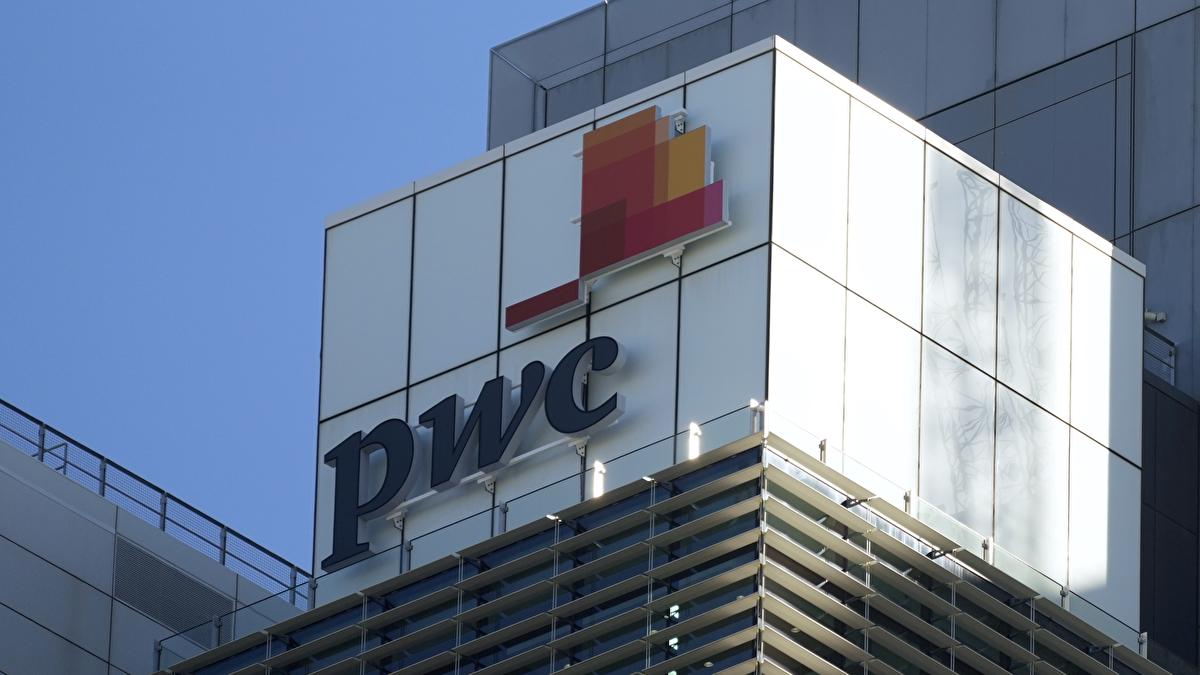
The partners at PwC’s mainland China practice, technically known as PricewaterhouseCoopers Zhong Tian LLP, are learning a brutal lesson in structural liability. The distribution pools that once minted multi-millionaires across Beijing and Shanghai have dried up. It isn’t just a bad quarter; it’s an institutional unraveling. Following the catastrophic collapse of China Evergrande Group and the subsequent regulatory hammer brought down by Beijing, the firm has enacted sweeping reductions to PwC China partner payouts. This is the financial hangover of a decade spent signing off on the books of the world’s most indebted property developer. The era of easy growth in China’s corporate audit market is dead.
The crisis stems from the sudden, spectacular implosion of China Evergrande Group, which defaulted in late 2021 with over $300 billion in total liabilities. When liquidators and state investigators began parsing the wreckage, they discovered a financial black hole. The China Securities Regulatory Commission found that Evergrande’s main mainland subsidiary had inflated its revenues by nearly $78 billion in the two years leading up to its collapse. For 14 years, PwC served as Evergrande’s gatekeeper, issuing clean audit opinions that allowed the developer to continuously tap international debt markets. According to data tracked by the Financial Times, the fallout has triggered a massive migration of state-owned clients away from the firm. Beijing’s regulatory apparatus had to make an example of the auditor to salvage international confidence in its domestic capital markets. The Ministry of Finance stepped in with punitive measures designed to reshape the compliance landscape for foreign entities operating within the country.
The Fiscal Squeeze: Inside the Partner Payout Slashing
The operational realities inside PwC China have grown bleak as the firm confronts the direct financial damage of its Evergrande engagement. Partners have been informed that their baseline compensation pools will be cut by as much as 50% for top earners, with mid-level equity partners facing reductions of 30% to 40%. These emergency measures reflect a stark reality: the firm must absorb a record-setting 441 million yuan ($62 million) fine levied jointly by the Ministry of Finance and the China Securities Regulatory Commission.
Worse than the immediate fine is the six-month business suspension that froze the firm’s mainland operations. During this period, PwC Zhong Tian was legally barred from signing off on any financial statements, hunting for new clients, or participating in public tendering processes. For an accounting giant, a six-month operational freeze acts as a corporate heart attack. Cash flow stopped while fixed overhead costs—including the salaries of thousands of non-partner staff members—remained constant.
To bridge this financial chasm, top management had to tap internal capital reserves and drastically reduce the variable distributions that make up the bulk of PwC China partner payouts. Reports from sources close to the firm indicate that the partnership compensation committee has adjusted the profit-per-partner metrics down to levels not seen since the global financial crisis of 2008. In some regional offices, senior partners have been asked to defer their equity draws entirely to ensure the firm maintains the statutory capital buffers required by Chinese corporate law.
The financial pain isn’t distributed evenly across the firm’s network. The core audit partners who directly supervised the real estate sector have seen their equity allocations wiped out entirely. In many cases, clawback provisions have been triggered, forcing retired or reassigned partners to return historical bonuses linked to the Evergrande accounts between 2014 and 2020. The firm’s management is using these drastic measures to stem a wider insolvency crisis within the local partnership, yet the long-term consequence is an unprecedented internal talent drain.
Why Did China Fine PwC Over Evergrande?
The regulatory action against PwC is a watershed moment for corporate oversight in emerging markets. It signals that the era of treating global accounting brands as untouchable infrastructure is over. Beijing’s move was calculated to demonstrate that systemic financial deception will carry existential costs for the gatekeepers who validate it.
Why did China fine PwC over Evergrande?
China fined PwC 441 million yuan and imposed a six-month business suspension because its mainland unit, Zhong Tian, failed to detect a $78 billion revenue inflation scheme at China Evergrande Group. Regulators determined that PwC auditors turned a blind eye to fraudulent accounting practices, helping the insolvent developer raise billions from international investors.
The structural breakdown of the audit was severe. According to reports from Bloomberg, PwC’s field auditors accepted Evergrande’s policy of recognizing revenue from property sales before the actual construction of the apartments was complete. This practice directly violated standard accounting rules regarding performance obligations. The developer booked revenue on units that were nothing more than concrete pillars or blueprint drawings. PwC signed off on these entries year after year, allowing the real estate empire to project an illusion of liquidity while building up unmanageable leverage.
This raises an obvious question: how did a Big Four firm miss a multibillion-dollar misstatement? The answer lies in the institutional capture of the local audit team. The Evergrande account was a cash cow, generating tens of millions of dollars in annual fees for the local partnership group. The internal quality control systems at PwC Zhong Tian failed to challenge management’s aggressive assumptions because the financial incentives aligned with keeping the client happy. By the time Beijing’s investigators scrutinized the workpapers, they found systemic failures in audit sampling, a lack of professional skepticism, and a complete breakdown of internal review protocols.
The penalty was structured to inflict maximum institutional pain without completely liquidating the firm. By pairing the 441 million yuan fine with a six-month operational ban, the Ministry of Finance effectively forced a restructuring of the firm’s domestic leadership. It sent a message to the other members of the Big Four—Deloitte, EY, and KPMG—that compliance with national financial security mandates takes precedence over global profit targets.
Systemic Contagion: The Corporate Exodus and Global Fallout
The true cost of the Evergrande scandal isn’t the regulatory fine; it’s the permanent destruction of PwC’s client roster in the region. In the wake of the regulatory penalties, a wave of state-owned enterprises (SOEs) systematically severed ties with the firm. This corporate exodus has permanently altered the market share dynamics of the Big Four accounting crisis China has experienced over the past two years.
| Defecting Client | Sector | Estimated Lost Annual Fee | New Auditor Appointed |
| Bank of China | Financial Services | $15.5 million | EY |
| China Telecom | Telecommunications | $7.2 million | KPMG |
| PetroChina | Energy & Resources | $6.8 million | Deloitte |
| China Life Insurance | Insurance | $9.1 million | EY |
This data shows that more than 30 major listed companies, including massive state-run conglomerates, have terminated their contracts with PwC. This client flight represents a direct loss of over $150 million in recurring annual audit fees. When an SOE drops an auditor, it isn’t merely a commercial decision; it is a clear political directive from the State-owned Assets Supervision and Administration Commission. The message is clear: PwC is no longer a trusted custodian of national financial data.
The downstream impact of this revenue collapse falls directly on the junior partners and senior managers who had no connection to the real estate audit teams. With the firm’s top-line revenue projected to shrink by 30% over the next fiscal cycle, management has begun cutting headcount across non-audit divisions, including management consulting and tax advisory services. This creates a secondary crisis of internal morale, as top performers in profitable units see their compensation cut to pay for the mistakes of the property audit team.
On a global scale, the reputational damage has forced the international leadership network of PricewaterhouseCoopers to step in. The global firm installed new leadership in the China practice, bringing in senior executives from the UK and US networks to oversee compliance and restructuring. Yet, because the Big Four operates as a network of legally independent local partnerships, the global entity cannot directly bail out the mainland firm without violating cross-border capital regulations. The domestic practice must survive on its own diminished cash flows, sealing a long-term decline in accounting partner compensation cuts that will likely take a decade to normalize.
The Auditor’s Defense: Was PwC a Scapegoat?
To understand the full scope of this institutional failure, one must consider the counterargument put forward by defenders of the accounting profession. The position held by some industry insiders is that PwC is being held to an impossible standard of forensic detection in an environment where corporate fraud was systemic and protected by local political interests.
The core of this defense rests on the distinction between a standard financial audit and a forensic fraud investigation. A traditional corporate audit relies on sampling techniques and the assumption that management is providing authentic documents in good faith. If an organization engages in top-down collusion, forging bank confirmations, land registries, and sales contracts, standard audit procedures may not detect the deception. Evergrande was not just a rogue corporation; it was a deeply connected entity with allies across various regional governments. For years, local officials had every incentive to assist the developer in painting a rosy economic picture to sustain land sales and employment figures.
Still, this argument does not completely clear the firm of its responsibilities. The evidence collected by the CSRC shows that the irregularities were not minor errors hidden deep in sub-ledgers. They were massive, structural deviations from accounting standards that should have flagged immediate warnings. When a company books revenue for apartments that have not been built, it requires an active decision by the auditor to look the other way. The picture is more complicated than simple victimhood; PwC became a victim of its own reliance on the lucrative fees generated by China’s hyper-leveraged property boom.
Re-Engineering Trust in Capital Markets
The structural dismantling of PwC’s dominance in the Chinese market marks the end of an era for global financial globalization. For 30 years, international investors relied on the branding of the Big Four to guarantee that the financial statements of Chinese corporations matched Western standards. That trust has been broken by the reality of the Evergrande fraud.
What follows, however, is a fundamental shift toward localized, state-controlled compliance frameworks. As the remaining Big Four firms adjust their risk profiles, the real winners will be domestic Chinese accounting firms, which are poised to take over the lucrative state-owned corporate accounts. For PwC, the path forward is one of survival and downsizing. The severe cuts to partner distributions are a necessary, painful correction for a firm that mistook a real estate bubble for permanent prosperity.
The final bill for the Evergrande audit has been delivered, and it is being paid out of the bank accounts of the partners who built their careers on the illusion of risk-free growth.
Discover more from The Economy
Subscribe to get the latest posts sent to your email.



Key Takeaways
- Rolex’s secondary market rose approximately 7.9% year-over-year as of 2026 (per WatchCharts data) — trailing Patek Philippe (+16.2%) and Tudor (+11.4%) but still outperforming Audemars Piguet (+3.4%).
- Rolex raised U.S. retail prices 4–9% in January 2026 (steel models ~5.6%, gold models ~8.7%), narrowing the historical gap between retail and pre-owned pricing.
- Not every model appreciates: steel sports references (Submariner, GMT-Master II, Daytona) have held value far better than two-tone or widely available dress references like the standard Datejust.
- The Lady-Datejust posted the sharpest 2026 gain among tracked collections — up 22.73%, from roughly $9,269 to $11,376 — driven by demand for smaller, “everyday luxury” watches.
- Gold’s rise past $2,400/oz has directly lifted the investment case for Rolex’s precious-metal references (Day-Date, Sky-Dweller, Yacht-Master).
The Model-by-Model Picture
| Category | 2026 Trend |
|---|---|
| Lady-Datejust | +22.73% (strongest performer among tracked collections) |
| Steel sports models (Submariner, GMT-Master II) | Held value well; corrected from 2022 peak but stabilized above retail |
| Daytona | Corrected from highs above $50,000 to the mid-$30,000s; still among the most sought-after references |
| Two-tone/widely available Datejust | Flat to negative — “holds value” is an overstatement for this category |
| Gold references (Day-Date, Sky-Dweller) | Lifted by gold’s rise above $2,400/oz |
Why the “Rolex Always Appreciates” Myth Is Fading
The pandemic-era boom pushed some references — the Daytona above all — to speculative highs disconnected from historical norms. Since the March 2022 peak, steel sports models have compressed meaningfully, and dealers who bought inventory near the top have in some cases faced 20–40% markdowns on liquidation. The lesson for 2026 buyers: Rolex as a category is not a monolith. Value retention depends heavily on specific reference, condition, and whether the piece comes with box and papers (“full set”).
What’s Actually Driving 2026 Strength
- Retail price increases raise the floor. When a new Submariner retails at $10,050 (up from $9,500), a pre-owned example at $11,000–$12,000 suddenly represents a smaller premium — narrowing the gap without secondary prices actually moving.
- Supply discipline remains Rolex’s core lever. The brand has never confirmed production numbers, and secondary-market premiums remain entirely a function of Rolex’s own manufacturing decisions — a risk factor as much as a support.
- Certified Pre-Owned rollout. Rolex’s now fully rolled-out CPO program has changed how buyers transact in the used market, adding a layer of brand-verified legitimacy that supports pricing.
The Case for Rolex as a Portfolio Diversifier
Financial advisors increasingly frame luxury watches not as a replacement for equities or bonds, but as a tangible, historically low-correlation diversifier — one that carries its own risks (illiquidity, condition-dependent pricing, no yield) but has demonstrated multi-decade resilience for specific references.
Is Rolex a good investment in 2026?
It depends heavily on the specific reference. Steel sports models like the Submariner and Daytona have held or grown in value; two-tone and widely available dress models generally have not. Overall, Rolex’s secondary market rose about 7.9% year-over-year in 2026, trailing Patek Philippe but ahead of Audemars Piguet.
Discover more from The Economy
Subscribe to get the latest posts sent to your email.

Navigating Mortgage and Loan Refinancing in a High-Yield Environment
Global public debt crossing critical thresholds has kept central bank policies volatile, resulting in fluctuating US Treasury yields throughout 2026. For homeowners and commercial property holders burdened by previous high-interest borrowing cycles, finding optimal refinance windows has become a high-stakes financial puzzle. Stalled disinflation and stubborn employment numbers mean rate cuts are incremental, requiring borrowers to act with precision.
Timing your mortgage or commercial loan refinance in this environment requires a deep understanding of yield curve movements and lender risk appetites.
Decoding 2026 Refinance Dynamics
The 10-Year Treasury Yield Benchmark
Mortgage rates continue to track closely with the 10-year US Treasury yield. When macroeconomic anxiety spikes debt issuance, yields rise, tightening consumer borrowing capacity. Savvy borrowers monitor weekly Treasury auctions to lock in rates during brief dip windows.
Hybrid ARMs and Alternative Structures
With fixed rates remaining elevated, 7/1 and 10/1 adjustable-rate mortgages (ARMs) have surged in popularity. These products offer lower initial monthly payments, giving borrowers breathing room until central bank easing cycles fully materialize.
| Loan Product | Current Rate Range | Best For | Key Risk Factor |
| 30-Year Fixed Mortgage | 6.2% – 6.8% | Long-term predictability | Higher initial monthly outlay |
| 7/1 Hybrid ARM | 5.5% – 5.9% | Short-term ownership / flipping | Rate reset risk after year 7 |
| Commercial Refinance | 7.0% – 8.2% | Corporate asset restructuring | Strict DSCR lender covenants |
Actionable Steps for Successful Refinancing
To maximize your chances of securing favorable refinance terms in a volatile market, follow a disciplined preparation strategy.
Boost Your Credit Score Immediately: Lenders in 2026 are applying stringent credit tiering; a 20-point increase can drop your APR by a crucial quarter-point.
Shop Regional Credit Unions: Smaller financial institutions often offer portfolio loans with more flexible underwriting than major national banks.
Calculate the Break-Even Point: Ensure your total closing costs are recouped through monthly savings within 24 months of closing.
“Market Strategist View: Refinancing in 2026 is an exercise in opportunistic timing. Borrowers must maintain immaculate financial profiles ready to strike the moment Treasury yields dip.”
Mastering the complexities of today’s debt environment ensures you can successfully lower your debt service costs and protect your long-term financial stability.
Discover more from The Economy
Subscribe to get the latest posts sent to your email.

The days of pulling generic auto insurance quotes based purely on your zip code and age are officially over. In 2026, insurance comparison engines are powered entirely by generative AI and real-time telematics. These platforms digest thousands of live data points—ranging from your driving smoothness via connected vehicle sensors to real-time traffic congestion patterns—to generate hyper-personalized premiums instantly.
For consumers, this evolution represents both a massive opportunity for savings and a hidden trap for penalty pricing. Understanding how AI algorithms evaluate risk is essential for anyone looking to lower their monthly auto insurance premiums.
How AI Comparison Engines Evaluate Your Risk Profile
Behavioral Telematics and Connected Cars
Modern cars stream performance data directly to insurance aggregators. Generative AI models analyze braking sharpness, acceleration curves, cornering G-forces, and phone distraction metrics. Drivers who maintain smooth, defensive habits are rewarded with dynamic rate cuts of up to 40% compared to traditional rating tiers.
Predictive Traffic and Weather Modeling
AI tools now cross-reference your daily commute route with predictive weather and accident probability models. If your standard parking location or driving corridor has a statistically higher incidence of uninsured motorist claims, your quotes will reflect that hyper-local risk assessment.
| Comparison Factor | Traditional Rating Model | 2026 Generative AI Model | Impact on Premium |
| Mileage & Usage | Annual estimated odometer reading | GPS tracking & live trip duration | High (up to 35% savings) |
| Driving Behavior | MVR driving record & accidents | Real-time braking, speed, & G-force | Critical (determines tier) |
| Vehicle Tech | Make, model, and safety rating | ADAS calibration & repair cost data | Moderate |
Strategies to Lower Your AI-Driven Insurance Quote
To outsmart the algorithm and secure the lowest possible premium in 2026, drivers must proactively manage their digital footprint on insurance platforms.
Opt-In for Telematics Trial Periods: Many insurers offer immediate 15% discounts just for installing their driving app; let it track safe habits for 30 days to lock in permanent savings.
Scrub Unverified Public Records: Ensure your motor vehicle report is free of clerical errors that AI risk models misinterpret as reckless behavior.
Compare AI Aggregators: Use platforms that integrate multi-carrier API feeds rather than single-brand comparison sites to find the best risk-adjusted rate.
“Industry Note: AI-driven pricing rewards transparency and precision. Drivers who actively manage their telematics data consistently out-save those relying on legacy quote calculators.”
Embracing AI comparison tools allows savvy policyholders to customize coverage limits precisely to their driving habits, eliminating wasted premium spend while ensuring robust protection.
Discover more from The Economy
Subscribe to get the latest posts sent to your email.

Neocloud Economics in 2026: GPU Debt, Utilization and Power

What Is a Neocloud? How AI GPU Clouds Work and Compare

Lula Re-elected in 2026: What Changes for the Dollar, Brazilian Stocks, and Interest Rates?

Lula Wins Brazil’s 2026 Election: Five Economic Tests for 2027

SSI November 2026 Payment: Why Benefits Arrive October 30

Russia Sanctions Waiver: What Asian Oil Buyers Gain

Asia Markets Weekly: How Oil, US Yields and the Fed Reach Tokyo, Kuala Lumpur and Karachi

Gold Near $4,000: Buy, Hold or Wait? A Pakistan Tola Price Guide

US 10-Year Treasury Yield Near 5%: The Hidden Cost for Pakistani Investors

Fed Meeting on October 28: Hike or Hold—and Why Pakistan Investors Should Care

Can Pakistan Turn US–Iran Mediation Into an Economic Dividend?

Oil Above $100: How Higher Crude Prices Reach Pakistan’s Rupee, Petrol and Imports

SBP Interest Rate at 11.5%: What Will Decide Pakistan’s Next Policy Move?

The Global South: Debt, Climate Finance and Investment in 2026

Crude Oil & Petroleum Market Analysis: OPEC+ Decisions and Price Forecasts

Top US Convenience Store Chains: Store Counts, EV Charging, and Sales Trends

Algorithmic Dogfights: Why the U.S. and China Must Establish Rules of Engagement for Autonomous Air Power

Who Is Shivon Zilis? The Neuralink Executive at the Center of the Musk–OpenAI Trial

Social Security Extra $90 Deposit: Who Qualifies for the October 2026 Medicare Rebate?

Global Economic Outlook 2026: 7 Forces Reshaping Markets, Trade and Business

Corporate America Faces a New Debt Test as US Borrowing Costs Surge

Gold Price Outlook 2026: The Forces Behind the Forecasts—and What Could Reverse Them

Gold Falls 3.7% as Yields Surge: Is Gold Still a Safe Haven in 2026?

MAS Allocates S$1.45 Billion to Five Asset Managers in Third EQDP Batch: Total Deployment Reaches S$5.4 Billion

Stock Market Today: Dow, S&P 500, and Nasdaq Retreat as Treasury Yields

Anthropic Bans Sustained Abuse of Claude AI Under New Usage Policy Effective November 12, 2026

Stock Market Crash in 2026? Warning Signs, Scenarios and a Calm Investor Checklist

Geopolitics and Your Portfolio: How International Affairs Move Global Markets
-

 Markets & Finance10 months ago
Top 15 Stocks for Investment in 2026 in PSX: Your Complete Guide to Pakistan’s Best Investment Opportunities
-

 Analysis8 months ago
Johor’s Investment Boom: The Hidden Costs Behind Malaysia’s Most Ambitious Economic Surge
-

 Analysis8 months ago
Top 10 Stocks for Investment in PSX for Quick Returns in 2026
-

 Banks9 months ago
Best Investments in Pakistan 2026: Top 10 Low-Price Shares and Long-Term Picks for the PSX
-

 Analysis9 months ago
Brazil’s Rare Earth Race: US, EU, and China Compete for Critical Minerals as Tensions Rise
-

 Investment10 months ago
Top 10 Mutual Fund Managers in Pakistan for Investment in 2026: A Comprehensive Guide for Optimal Returns
-

 Global Economy10 months ago
15 Most Lucrative Sectors for Investment in Pakistan: A 2025 Data-Driven Analysis
-

 Global Economy10 months ago
Pakistan’s Export Goldmine: 10 Game-Changing Markets Where Pakistani Businesses Are Winning Big in 2025