
Analysis
Malaysia Holds 2026 Growth at 4–4.5% Despite Geopolitical Headwinds — Resilience or Caution?

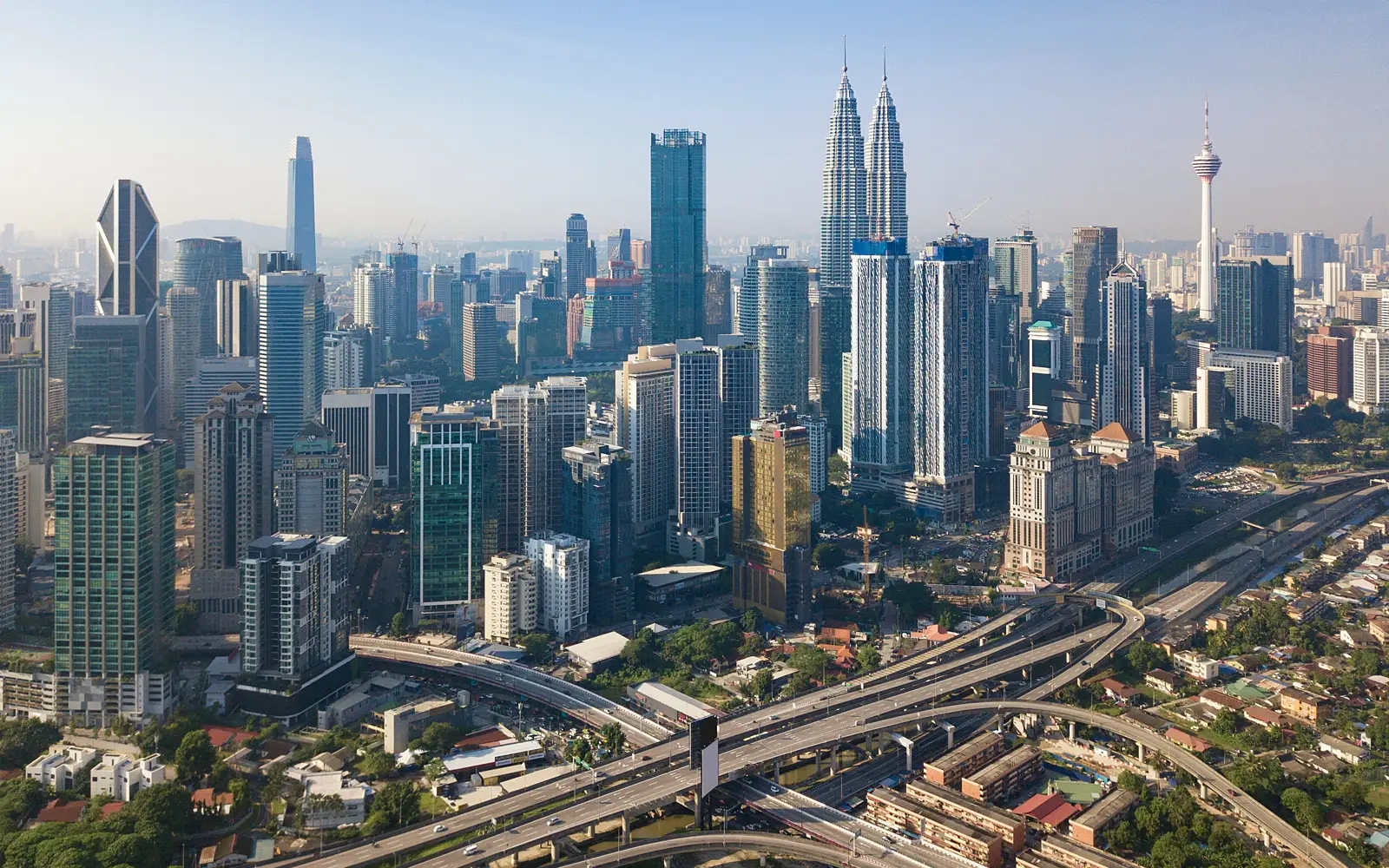
The scene outside Putrajaya’s Perdana Putra complex on Thursday morning said something quietly important about Malaysia’s mood.
Economy Minister Akmal Nasrullah Mohd Nasir stepped up to the lectern to launch the government’s new digital plan-monitoring tool — the 13th Malaysia Plan implementation tracker known as MyRMK — surrounded by the bureaucratic apparatus of a government that, for once, was not trying to manage expectations downward. The economy had just delivered its best back-to-back performance in a decade. The message from the minister, measured and deliberate, was: we are staying the course.
“This matter will always be reviewed by Bank Negara Malaysia and BNM will ultimately determine whether this target remains up or down. But so far, the indication is that we remain with this target,” Akmal told journalists after the event. The Star The target in question is Malaysia’s official 2026 GDP growth forecast of 4.0%–4.5% — a range the government has maintained since last year’s Budget and one that now sits conspicuously below where private-sector economists and multilateral institutions believe the economy is heading.
That gap — between official caution and analyst optimism — is the central question of Malaysia’s economic story in 2026. Is Putrajaya exercising prudent statecraft in a world clouded by Middle Eastern conflict and American tariff volatility? Or is the government, already eyeing a general election no later than February 2028, resisting the temptation to set a bar it might fail to clear?
2025: A Year That Surprised Everyone
To understand the government’s calculus, it helps to appreciate just how comprehensively Malaysia beat expectations last year.
Full-year GDP growth for 2025 was recorded at 5.2%, with the momentum accelerating sharply to 6.3% in the fourth quarter — the strongest quarterly print in years. The Star This Q4 surge was underpinned by services growth of 6.3% and manufacturing expansion of 6.1%, while on the demand side private consumption rose 5.3% and investment activity expanded by a striking 9.2%. Ram
The labour market delivered an equally striking result. The unemployment rate fell to 2.9% in Q4 2025 — the lowest level in 11 years, The Star a figure that carries genuine political weight for a Pakatan Harapan government that came to power on a cost-of-living mandate. Headline inflation remained subdued at 1.4% across the year, giving the Anwar administration a rare combination of strong growth and benign prices.
The country’s trade crossed a record RM3 trillion (~USD 780 billion) for the first time in 2025, Fortune driven in large part by Malaysia’s semiconductor and electrical equipment manufacturing base, which rode the global AI investment wave with exceptional timing. Approved investments surged 13.2% to RM285.2 billion in the first nine months of 2025, reflecting sustained investor confidence even as tariff turbulence shook regional supply chains. BusinessToday
In short: Malaysia outperformed not just its own official projections but also the preliminary estimates issued mid-year. The 2025 outturn has given Putrajaya both the confidence to reaffirm its 2026 target and the institutional credibility to resist inflating it.
Why the Government Is “Sticking” — Not Upgrading
Geopolitics: The Middle East Variable
Akmal was explicit that “the geopolitical situation is among the main challenges in 2026,” The Star a reference primarily to the escalating US-Israel-Iran confrontation that has injected acute uncertainty into global oil markets and seaborne trade routes.
US and Israeli military strikes against Iran, followed by Iranian retaliatory actions against US military bases across several Gulf states, have raised the spectre of sustained disruption to the Strait of Hormuz — the narrow chokepoint that handles close to 30% of global seaborne oil trade. Iran also accounts for roughly 3% of global crude output as the fourth-largest OPEC producer. Ram
For Malaysia, the transmission mechanism is not primarily via trade — the Middle East accounts for only 1.9% of Malaysian exports and 4.7% of imports. Ram The real exposure lies in oil prices and energy costs. Akmal noted that the ongoing conflict “does not provide strong indications for the government to make drastic changes to its existing policies or adjust domestic fuel prices,” The Star but the government is clearly not willing to assume the conflict will de-escalate quickly enough to justify a higher growth target.
The American Tariff Overhang
Export growth is expected to moderate in 2026 as the impact of US reciprocal tariffs and earlier front-loading activities begin to materialise. The IMF also projects global trade growth to slow from 3.6% in 2025 to 2.3% in 2026. Ram
While the US Supreme Court struck down the original reciprocal tariff measures, the US government swiftly introduced a new 10% global blanket tariff under alternative legislation, with a potential increase to 15% for some countries under consideration. The 150-day window for further tariff action under new legal frameworks keeps uncertainty elevated. Ram The most dangerous scenario for Malaysia specifically is a targeted levy on semiconductors — its single most valuable export category — which RAM Ratings flags as a key downside risk capable of materially impairing the country’s growth momentum.
After months of negotiations, Malaysia and the US reached a deal in 2025 whereby Malaysia reduced tariffs on certain American products in exchange for Washington lowering duties to 19%, with exemptions for key Malaysian exports including aviation components and electrical equipment. Fortune That agreement provides some floor of stability — but it does not eliminate the threat of new measures.
Where the Upside Lies
Despite these headwinds, the case for Malaysia outperforming its official 4.0–4.5% target is, if anything, stronger today than it was twelve months ago.
The Semiconductor and AI Supercycle
Malaysia is no longer merely a low-cost assembly hub in the global chip supply chain. It has become a mid-tier strategic node for advanced packaging, back-end testing, and increasingly for chip design — a repositioning driven partly by geopolitical necessity (as US-China tensions redirect investment) and partly by deliberate industrial policy under the New Industrial Master Plan 2030.
MBSB Research has projected that AI-related capital expenditure may be entering a “super cycle,” with AI infrastructure spending forecast to exceed USD 500 billion in 2026. Data centres are pushing global power demand up roughly 20% annually, creating significant equity opportunities in utilities and grid modernisation — sectors where Malaysia has major exposure. Notably, Malaysia captured 32% of Southeast Asia’s AI funding, Xinhua a market-share figure that would have seemed implausible five years ago.
The Johor-Singapore Special Economic Zone, which allows companies to tap Singapore’s financial and legal infrastructure while accessing Malaysia’s lower costs and larger land base, attracted almost one-third of all approved foreign direct investment into Malaysia in the first three quarters of 2025. Fortune Minister Akmal, himself a Johor native, has suggested the state may soon overtake Selangor as the country’s top FDI destination — a seismic shift in Malaysia’s economic geography that has not yet been fully priced by markets.
Visit Malaysia 2026: Tourism as a Structural Accelerant
The Visit Malaysia 2026 campaign targets up to 43 million tourists and aims to generate RM329 billion (~USD 83 billion) in revenue — potentially contributing 15% of GDP — with tourism already supporting 22% of jobs nationally as of 2024. Usasean That is not a niche catalyst; it is a full-scale services-sector expansion programme with multiplier effects across hospitality, transport, retail, and financial services.
Bank Negara expects this momentum to extend into early 2026, underpinned by the second round of the Sumbangan Asas Rahmah cash transfer programme, seasonal festival-related spending, and the Visit Malaysia 2026 campaign. New Straits Times The cash assistance programme itself has been upsized to RM15 billion in 2026 from RM13 billion in 2025, Ram providing a meaningful consumption floor for lower-income households even as external demand softens.
The 13MP Execution Dividend
Akmal has framed 2026 as a year of “execution and discipline,” with the 13th Malaysia Plan (RMK13) — which targets annual GDP expansion of 4.5% to 5.5% through structural reforms — serving as the government’s core organising framework. Fortune The MyRMK digital tracking system, launched this morning, is designed to hold agencies accountable to measurable KPIs in real time, reducing the chronic implementation gap that has plagued previous Malaysian development plans.
The 13MP’s emphasis on high-value industries, the ASEAN power grid, nuclear energy exploration, and talent development — Akmal noting pointedly that “capital can be injected by a government or investor, but talent is the one thing we need to build” Fortune — signals a government acutely aware that Malaysia’s middle-income trap cannot be escaped through investment incentives alone.
What the Analysts Are Saying
The divergence between official caution and market optimism is striking. Maybank Investment Bank projects GDP growth of 5.1% in 2026, maintaining the momentum of last year’s 5.2% outturn, and expects this to translate into 5.3% operating profit growth for the banking sector driven by 5% domestic loan expansion. Focus Malaysia
Apex Securities and Hong Leong Investment Bank have both revised their 2026 forecasts upward to 4.7%, driven by firmer growth momentum in late 2025. Kenanga Investment Bank holds at 4.5% with acknowledged upside potential toward 5.0% if current momentum holds. The Sun
The IMF revised its Malaysia growth forecast upward by 0.3 percentage points to 4.3% for 2026 and 2027 in its January World Economic Outlook update, itself a meaningful signal of improving fundamentals. The Edge Malaysia
The World Bank’s latest Malaysia Economic Monitor places growth at 4.1%, the most conservative of the major multilateral estimates, reflecting caution about the delayed tariff impact on export competitiveness.
RAM Ratings maintains its wider band of 4.0%–5.0%, with fiscal deficit projected to narrow to 3.5% of GDP in 2026 from 3.8% in 2025 as spending controls tighten, though government debt is expected to remain at 65.7% of GDP — a ratio that underscores the importance of continued fiscal discipline. Ram
HSBC ASEAN economist Yun Liu sits at 4.6%, citing the electrical equipment sector and tourism as the twin engines of outperformance.
The consensus arithmetic is clear: private-sector analysts expect Malaysia to beat the government’s own ceiling. The official 4.5% upper bound has become, in effect, a floor for institutional forecasters.
Regional Scoreboard: Malaysia in ASEAN Context
Malaysia’s growth trajectory looks respectable but not exceptional within Southeast Asia. The World Bank projects Vietnam at 6.3%, the Philippines at 5.3%, and Indonesia at 5.0% for 2026, with Thailand languishing at just 1.8% — the weakest performance among major ASEAN economies. Nation Thailand
Vietnam is ranked among the world’s fastest-growing economies for 2026 at 5.6–5.7%, trailing only India and the Philippines, StatisticsTimes.com bolstered by manufacturing diversification and rising FDI from export-relocated supply chains. Indonesia at 5.0% benefits from Prabowo Subianto’s fiscal stimulus and state-led investment programme, though governance risks remain a structural overhang.
Malaysia’s 4.3–4.5% positioning reflects a more mature economy with a higher GDP per capita base — but also the constraints of a relatively open economy more exposed to US trade policy volatility than Vietnam’s manufacturing-driven growth model. The comparison that should alarm policymakers most is with Vietnam, which has successfully climbed into higher-value electronics manufacturing while Malaysia risks being squeezed between Singapore’s services sophistication and Vietnam’s cost competitiveness in mid-range manufacturing.
Thailand’s 1.8% projection is a cautionary tale of what happens when structural reform stalls and political uncertainty persists — a trajectory Kuala Lumpur is determined to avoid as it approaches its own electoral moment.
Risks: The Three Scenarios
Base Case (4.3–4.5%): Middle East tensions persist but do not escalate to full Strait of Hormuz closure; US tariffs remain at current levels with no new semiconductor levies; Visit Malaysia 2026 delivers strong but not record-breaking tourism numbers; 13MP execution proceeds with typical government lag. BNM maintains the overnight policy rate with one possible 25 basis point cut in H2.
Upside Case (4.8–5.1%): AI data centre investment accelerates; Visit Malaysia 2026 beats arrival targets; Johor SEZ draws marquee technology investors; US-Malaysia tariff framework is extended and deepened; semiconductor upcycle spills over into the broader services sector. This is the Maybank scenario.
Downside Case (3.5–3.8%): A full escalation of the Iran-US-Israel conflict triggers an oil price spike above USD 120 per barrel; the US imposes sectoral tariffs on semiconductors; global trade growth slows below the IMF’s already-modest 2.3% projection; BNM is forced to hold rates higher to defend the ringgit. Maybank has estimated that a one percentage point reduction in world GDP growth would negatively impact Malaysia’s growth by approximately 0.8 percentage points — a coefficient that reveals the economy’s structural sensitivity to external shocks. Focus Malaysia
Investment Implications and Policy Recommendations
For international investors, the key insight from today’s announcement is not the headline 4.0–4.5% number but the direction of travel in Putrajaya’s risk calculus. A government that is confident enough to stand by its forecast while acknowledging geopolitical headwinds is a government that believes its domestic fundamentals are robust enough to absorb external shocks — and recent data supports that confidence.
Three investment themes deserve close attention:
First, the semiconductor and AI infrastructure complex — spanning Penang’s integrated circuit design clusters, Johor’s data centre corridor, and the Kulim Hi-Tech Park expansion — represents a multi-year structural opportunity that is only partially correlated with the government’s conservative GDP range. Malaysia’s 32% share of Southeast Asian AI funding is a durable competitive advantage, not a cyclical blip.
Second, the Visit Malaysia 2026 services trade is an underappreciated current account positive. A RM329 billion tourism revenue target, if even 70% achieved, would meaningfully narrow Malaysia’s services deficit and support the ringgit — reducing the currency risk premium that still deters some portfolio investors.
Third, 13MP execution risk cuts both ways. The MyRMK tracking system, launched this morning, is precisely the kind of institutional innovation that separates credible development plans from aspirational ones. If the system delivers genuine accountability — rather than the performative KPI dashboards that have historically adorned Malaysian public administration — the medium-term 4.5–5.5% annual growth target embedded in the 13MP becomes investable, not merely aspirational.
On policy, the central bank should be given room to act counter-cyclically if global headwinds intensify — a 25 basis point cut in H2 2026 would be defensible given benign inflation and the tariff-related drag on exports. The government, meanwhile, needs to resist the electoral temptation to front-load consumption transfers at the expense of the fiscal consolidation trajectory that RAM Ratings, the World Bank, and the IMF all identify as essential to Malaysia’s long-term credit credibility.
The 4.0–4.5% target, in the end, is less a forecast than a signal — a statement that Kuala Lumpur will not allow global turbulence to become a self-fulfilling prophecy. Whether it proves resilience or caution will be determined not in Putrajaya’s press conference rooms, but in the semiconductor fabs of Penang, the hotel lobbies of Langkawi, and the construction sites of Johor — where Malaysia’s actual 2026 story is already being written.
📊 Key Data at a Glance
- Malaysia 2025 full-year GDP growth: 5.2%
- Q4 2025 GDP growth: 6.3% (strongest quarter of the year)
- 2025 unemployment rate (Q4): 2.9% — lowest in 11 years
- 2025 headline inflation: 1.4%
- 2025 approved investments (Jan–Sep): RM285.2 billion (+13.2% YoY)
- 2025 total trade: Record RM3 trillion+
- Official 2026 GDP forecast: 4.0%–4.5%
- IMF 2026 forecast for Malaysia: 4.3%
- Maybank IB 2026 forecast: 5.1%
- Visit Malaysia 2026 target: 47 million visitors / RM329 billion receipts
- Cash transfers 2026: RM15 billion (up from RM13 billion)
- Fiscal deficit 2026 (RAM projection): 3.5% of GDP
🌏 ASEAN 2026 GDP Growth Comparison (World Bank / IMF)
| Economy | 2026 Forecast |
|---|---|
| Vietnam | 6.3% |
| Philippines | 5.3% |
| Indonesia | 5.0% |
| Malaysia | 4.1–4.5% |
| Thailand | 1.8% |
Sources & Further Reading
- Bank Negara Malaysia — Annual Report & Monetary Policy
- IMF World Economic Outlook — January 2026 Update
- World Bank Malaysia Economic Monitor
- RAM Ratings — Malaysia Quarterly Economic Update, March 2026
- Ministry of Finance Malaysia — Economic Outlook 2026
- 13th Malaysia Plan (MyRMK) — Economy Ministry
- Fortune — Akmal Nasrullah Interview, February 2026
- Visit Malaysia 2026 — Tourism Malaysia
- The Star — Government Maintains 2026 Growth Projection, 12 March 2026
❓ FAQ Schema (People Also Ask)
Q1: Why is Malaysia maintaining its 2026 GDP growth forecast at 4.0–4.5% instead of raising it? Economy Minister Akmal Nasrullah explained on 12 March 2026 that while 2025’s 5.2% growth demonstrates resilience, ongoing Middle Eastern geopolitical conflict and US tariff uncertainty justify a prudent, unchanged official target. Bank Negara Malaysia retains final authority to revise the figure upward or downward based on evolving conditions.
Q2: What are the biggest risks to Malaysia’s 2026 economic growth outlook? The three primary downside risks are: (1) an escalation of the Iran-US-Israel conflict disrupting global oil trade and raising energy costs; (2) the imposition of new US tariffs specifically targeting semiconductors — Malaysia’s largest export category; and (3) a sharper-than-expected global trade slowdown, which RAM Ratings estimates could reduce Malaysia’s growth by approximately 0.8 percentage points for every one percentage point drop in world GDP growth.
Q3: How does Malaysia’s 2026 GDP growth forecast compare to other ASEAN economies? Malaysia’s official 4.0–4.5% target and analyst consensus of 4.3–5.1% places it in the middle of the ASEAN pack. The World Bank forecasts Vietnam at 6.3%, the Philippines at 5.3%, and Indonesia at 5.0% for 2026, while Thailand trails significantly at 1.8%. Malaysia’s higher GDP per capita base partly explains the more moderate headline growth rate relative to frontier-stage peers like Vietnam.
Discover more from The Economy
Subscribe to get the latest posts sent to your email.



Key Takeaways
- Rolex’s secondary market rose approximately 7.9% year-over-year as of 2026 (per WatchCharts data) — trailing Patek Philippe (+16.2%) and Tudor (+11.4%) but still outperforming Audemars Piguet (+3.4%).
- Rolex raised U.S. retail prices 4–9% in January 2026 (steel models ~5.6%, gold models ~8.7%), narrowing the historical gap between retail and pre-owned pricing.
- Not every model appreciates: steel sports references (Submariner, GMT-Master II, Daytona) have held value far better than two-tone or widely available dress references like the standard Datejust.
- The Lady-Datejust posted the sharpest 2026 gain among tracked collections — up 22.73%, from roughly $9,269 to $11,376 — driven by demand for smaller, “everyday luxury” watches.
- Gold’s rise past $2,400/oz has directly lifted the investment case for Rolex’s precious-metal references (Day-Date, Sky-Dweller, Yacht-Master).
The Model-by-Model Picture
| Category | 2026 Trend |
|---|---|
| Lady-Datejust | +22.73% (strongest performer among tracked collections) |
| Steel sports models (Submariner, GMT-Master II) | Held value well; corrected from 2022 peak but stabilized above retail |
| Daytona | Corrected from highs above $50,000 to the mid-$30,000s; still among the most sought-after references |
| Two-tone/widely available Datejust | Flat to negative — “holds value” is an overstatement for this category |
| Gold references (Day-Date, Sky-Dweller) | Lifted by gold’s rise above $2,400/oz |
Why the “Rolex Always Appreciates” Myth Is Fading
The pandemic-era boom pushed some references — the Daytona above all — to speculative highs disconnected from historical norms. Since the March 2022 peak, steel sports models have compressed meaningfully, and dealers who bought inventory near the top have in some cases faced 20–40% markdowns on liquidation. The lesson for 2026 buyers: Rolex as a category is not a monolith. Value retention depends heavily on specific reference, condition, and whether the piece comes with box and papers (“full set”).
What’s Actually Driving 2026 Strength
- Retail price increases raise the floor. When a new Submariner retails at $10,050 (up from $9,500), a pre-owned example at $11,000–$12,000 suddenly represents a smaller premium — narrowing the gap without secondary prices actually moving.
- Supply discipline remains Rolex’s core lever. The brand has never confirmed production numbers, and secondary-market premiums remain entirely a function of Rolex’s own manufacturing decisions — a risk factor as much as a support.
- Certified Pre-Owned rollout. Rolex’s now fully rolled-out CPO program has changed how buyers transact in the used market, adding a layer of brand-verified legitimacy that supports pricing.
The Case for Rolex as a Portfolio Diversifier
Financial advisors increasingly frame luxury watches not as a replacement for equities or bonds, but as a tangible, historically low-correlation diversifier — one that carries its own risks (illiquidity, condition-dependent pricing, no yield) but has demonstrated multi-decade resilience for specific references.
Is Rolex a good investment in 2026?
It depends heavily on the specific reference. Steel sports models like the Submariner and Daytona have held or grown in value; two-tone and widely available dress models generally have not. Overall, Rolex’s secondary market rose about 7.9% year-over-year in 2026, trailing Patek Philippe but ahead of Audemars Piguet.
Discover more from The Economy
Subscribe to get the latest posts sent to your email.

Navigating Mortgage and Loan Refinancing in a High-Yield Environment
Global public debt crossing critical thresholds has kept central bank policies volatile, resulting in fluctuating US Treasury yields throughout 2026. For homeowners and commercial property holders burdened by previous high-interest borrowing cycles, finding optimal refinance windows has become a high-stakes financial puzzle. Stalled disinflation and stubborn employment numbers mean rate cuts are incremental, requiring borrowers to act with precision.
Timing your mortgage or commercial loan refinance in this environment requires a deep understanding of yield curve movements and lender risk appetites.
Decoding 2026 Refinance Dynamics
The 10-Year Treasury Yield Benchmark
Mortgage rates continue to track closely with the 10-year US Treasury yield. When macroeconomic anxiety spikes debt issuance, yields rise, tightening consumer borrowing capacity. Savvy borrowers monitor weekly Treasury auctions to lock in rates during brief dip windows.
Hybrid ARMs and Alternative Structures
With fixed rates remaining elevated, 7/1 and 10/1 adjustable-rate mortgages (ARMs) have surged in popularity. These products offer lower initial monthly payments, giving borrowers breathing room until central bank easing cycles fully materialize.
| Loan Product | Current Rate Range | Best For | Key Risk Factor |
| 30-Year Fixed Mortgage | 6.2% – 6.8% | Long-term predictability | Higher initial monthly outlay |
| 7/1 Hybrid ARM | 5.5% – 5.9% | Short-term ownership / flipping | Rate reset risk after year 7 |
| Commercial Refinance | 7.0% – 8.2% | Corporate asset restructuring | Strict DSCR lender covenants |
Actionable Steps for Successful Refinancing
To maximize your chances of securing favorable refinance terms in a volatile market, follow a disciplined preparation strategy.
Boost Your Credit Score Immediately: Lenders in 2026 are applying stringent credit tiering; a 20-point increase can drop your APR by a crucial quarter-point.
Shop Regional Credit Unions: Smaller financial institutions often offer portfolio loans with more flexible underwriting than major national banks.
Calculate the Break-Even Point: Ensure your total closing costs are recouped through monthly savings within 24 months of closing.
“Market Strategist View: Refinancing in 2026 is an exercise in opportunistic timing. Borrowers must maintain immaculate financial profiles ready to strike the moment Treasury yields dip.”
Mastering the complexities of today’s debt environment ensures you can successfully lower your debt service costs and protect your long-term financial stability.
Discover more from The Economy
Subscribe to get the latest posts sent to your email.

The days of pulling generic auto insurance quotes based purely on your zip code and age are officially over. In 2026, insurance comparison engines are powered entirely by generative AI and real-time telematics. These platforms digest thousands of live data points—ranging from your driving smoothness via connected vehicle sensors to real-time traffic congestion patterns—to generate hyper-personalized premiums instantly.
For consumers, this evolution represents both a massive opportunity for savings and a hidden trap for penalty pricing. Understanding how AI algorithms evaluate risk is essential for anyone looking to lower their monthly auto insurance premiums.
How AI Comparison Engines Evaluate Your Risk Profile
Behavioral Telematics and Connected Cars
Modern cars stream performance data directly to insurance aggregators. Generative AI models analyze braking sharpness, acceleration curves, cornering G-forces, and phone distraction metrics. Drivers who maintain smooth, defensive habits are rewarded with dynamic rate cuts of up to 40% compared to traditional rating tiers.
Predictive Traffic and Weather Modeling
AI tools now cross-reference your daily commute route with predictive weather and accident probability models. If your standard parking location or driving corridor has a statistically higher incidence of uninsured motorist claims, your quotes will reflect that hyper-local risk assessment.
| Comparison Factor | Traditional Rating Model | 2026 Generative AI Model | Impact on Premium |
| Mileage & Usage | Annual estimated odometer reading | GPS tracking & live trip duration | High (up to 35% savings) |
| Driving Behavior | MVR driving record & accidents | Real-time braking, speed, & G-force | Critical (determines tier) |
| Vehicle Tech | Make, model, and safety rating | ADAS calibration & repair cost data | Moderate |
Strategies to Lower Your AI-Driven Insurance Quote
To outsmart the algorithm and secure the lowest possible premium in 2026, drivers must proactively manage their digital footprint on insurance platforms.
Opt-In for Telematics Trial Periods: Many insurers offer immediate 15% discounts just for installing their driving app; let it track safe habits for 30 days to lock in permanent savings.
Scrub Unverified Public Records: Ensure your motor vehicle report is free of clerical errors that AI risk models misinterpret as reckless behavior.
Compare AI Aggregators: Use platforms that integrate multi-carrier API feeds rather than single-brand comparison sites to find the best risk-adjusted rate.
“Industry Note: AI-driven pricing rewards transparency and precision. Drivers who actively manage their telematics data consistently out-save those relying on legacy quote calculators.”
Embracing AI comparison tools allows savvy policyholders to customize coverage limits precisely to their driving habits, eliminating wasted premium spend while ensuring robust protection.
Discover more from The Economy
Subscribe to get the latest posts sent to your email.

Global Pension Systems Ranked: The World’s Best and Worst Retirement Frameworks

Global Supply Chain Vulnerabilities: From Eurasian Trade Corridors to Food Consumer Recalls

Why 5% U.S. Treasury Yields Signal a Global Market Regime Shift.

Federal Reserve Defies White House Pressure: Inside Trump’s Demand for Sub-1% Interest Rates After Historic 2026 Rate Hike

How Rising Interest Rates Impact Gig Economy Apps: DoorDash, Uber, and Urban Services

GasBuddy Market Insights: How Crude Price Shifts Impact Local Fuel Cost Averages

DoorDash Driver Payouts, Fee Structures, and Market Competition Analysis

OPINION:Breaking the 3.5% Growth Trap: How Pakistan Can Build a High-Productivity Export Economy

Global Equity Market Divergence: US Tech vs. European Dividend Stocks vs. Asian Growth

Asian Markets Analysis: Navigating Volatility in China, Japan, and Singapore Stocks

Stagflation vs. Soft Landing: How Central Bank Rates Are Reshaping European and Asian Economies

IMF & World Bank Global Economic Outlook: Growth Forecasts Across Europe and Asia

Fed Rate Hike Projections vs. Trump’s Interest Rate Policy: What Global Markets Expect Next

Singapore Stocks: The Ultimate Safe Haven for Markets and Finance in 2026?

State Farm’s $5B Dividend 2026: Who Qualifies & Payout Dates

US-China Relations in Q3 2026: Trade Tariffs and Supply Chain Risks

SpaceX Starship Flight 14: First Orbital Attempt & Starlink V3 Launch Explained

Top 30 Stocks for Investment in PSX for Massive ROI in 2026

The 2026 Crypto Regulatory Shift: What It Means for Institutional Investors

AI Chip Stocks 2026: The Best Semiconductor Investments Beyond Marvell

AI-Powered Training: The Next Multi-Billion Dollar Ecosystem in Fitness

Tween Back-to-School Trends 2026: What’s Driving the $85B Season

10-Year Treasury Yield Hits 4.80%: What It Means for Rates & Portfolios

Oil Prices Break $100 in 2026: Middle East Conflict & Energy Markets

Shein Clothes Quality & Safety in 2026: What Lab Tests Show

Fidelity Investments Review 2026: SPAXX Yields & Zero-Fee Funds

MRVL Earnings 2026: Why Marvell Sank Despite Beating Estimates

China’s US$10.8 Billion Trade Shortcut: Why the Pinglu Canal Matters
-

 Markets & Finance9 months ago
Top 15 Stocks for Investment in 2026 in PSX: Your Complete Guide to Pakistan’s Best Investment Opportunities
-

 Analysis7 months ago
Johor’s Investment Boom: The Hidden Costs Behind Malaysia’s Most Ambitious Economic Surge
-

 Analysis7 months ago
Top 10 Stocks for Investment in PSX for Quick Returns in 2026
-

 Analysis7 months ago
Brazil’s Rare Earth Race: US, EU, and China Compete for Critical Minerals as Tensions Rise
-

 Banks8 months ago
Best Investments in Pakistan 2026: Top 10 Low-Price Shares and Long-Term Picks for the PSX
-

 Investment8 months ago
Top 10 Mutual Fund Managers in Pakistan for Investment in 2026: A Comprehensive Guide for Optimal Returns
-

 Global Economy9 months ago
15 Most Lucrative Sectors for Investment in Pakistan: A 2025 Data-Driven Analysis
-

 Global Economy9 months ago
Pakistan’s Export Goldmine: 10 Game-Changing Markets Where Pakistani Businesses Are Winning Big in 2025