
Oil Markets
Oil Trades Close to $100 After Attacks in Gulf — Ships and Energy Infrastructure

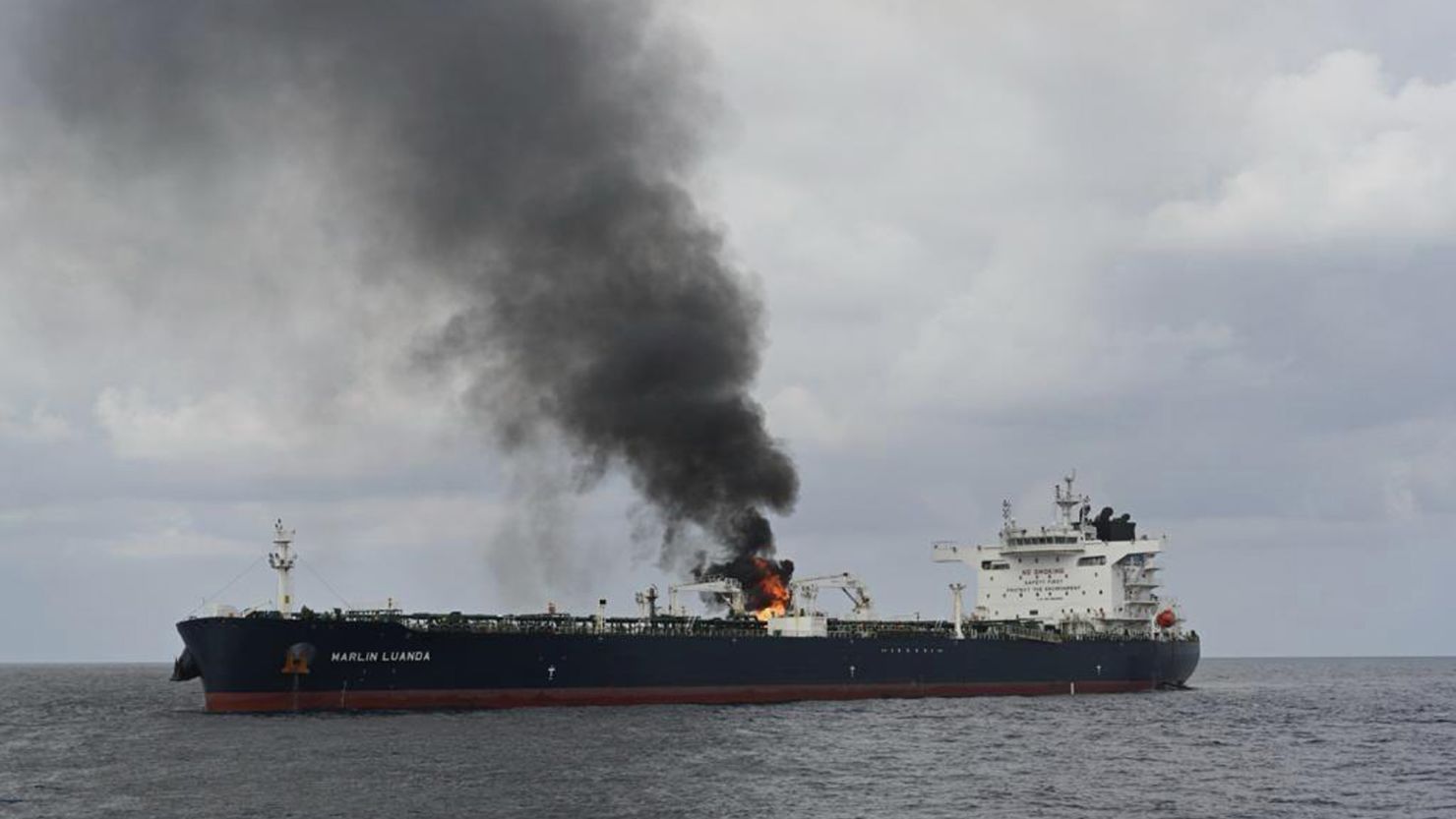
The Persian Gulf woke before dawn to the glow of burning tankers.
By the time London’s oil traders logged their terminals on Thursday morning, Brent crude futures had surged 6.2% to $97.66 a barrel at around midday London time, after earlier breaching the $100 threshold CNBC — a psychologically devastating milestone that analysts had warned of since the first U.S. and Israeli bombs fell on Iranian territory thirteen days ago. Brent is now up approximately 38% over what it cost when the war started on February 28. Spectrum News 1 For the global economy, still nursing the wounds of post-pandemic inflation, the arithmetic is brutal.
This is no longer a regional skirmish. It is a systemic energy shock of a kind not witnessed since the Arab oil embargo of 1973 — and, on several metrics, already surpassing it.
The Anatomy of Thursday’s Attacks: From Basra to Dubai Creek
Three ships were hit by unknown projectiles in the Persian Gulf early Thursday, according to the United Kingdom Maritime Trade Operations Center. One container ship was struck off the coast of Jebel Ali, United Arab Emirates, causing a small fire onboard. Two tankers were also hit near Al Basrah, Iraq, and were set ablaze — though all crew members were reported safe. UPI
Iran’s Islamic Revolutionary Guard Corps claimed one of those strikes with characteristic theatricality. IRGC footage showed the moment the Safesea Vishnu, a Marshall Islands-flagged vessel, was struck. In the footage, a man can be heard shouting declarations of victory in Khamenei’s name. U.S. News & World Report The vessel’s operators and cargo have not been publicly confirmed, but maritime intelligence sources say it was carrying refined products bound for South Asia.
The strikes on Iraqi waters represent a significant escalation. The two tankers hit near Basra’s southern port area marked the first oil-related strike reported in Iraqi waters since the war began. KPBS Iran, which maintains deep influence over Baghdad, appeared willing to inflict economic pain on a nominal ally — a signal of how far Tehran is prepared to go.
Iran also caused a blaze near Bahrain’s international airport on Muharraq Island, targeted a major Saudi oil field with a drone, and forced Iraq to halt operations at all of its oil terminals. In Kuwait, a drone struck a residential building, wounding two people. In Dubai, firefighters extinguished a blaze at a tower in Dubai Creek Harbour after a drone hit. Washington Times
Iran flouted a U.N. Security Council resolution from the previous day demanding that it halt strikes on its Gulf neighbours. Spectrum News 1 Tehran’s message, delivered not in diplomatic cables but in drone wreckage, was unmistakable: no external legal architecture will constrain its campaign.
The Hormuz Chokepoint: 20 Million Barrels a Day on the Knife’s Edge
The Strait of Hormuz — a 33-kilometre-wide channel between the Iranian coast and the tip of Oman — is the jugular vein of the global oil economy. About 20% of global oil consumption passes through the strait. NPR That is roughly 20 million barrels per day, supplying refineries from Rotterdam to Riyadh to Yokohama.
Iran has not needed a formal naval blockade to achieve an effective halt. By deploying selective drone and rocket attacks, Tehran has been enough to make shipping companies and the insurers who underwrite them balk at the risk of sending ships through the strait, resulting in what amounts to a total halt of tanker traffic. NPR
Strategists noted oil prices were trading higher precisely because there appears to be no end in sight to supply disruptions through the Strait of Hormuz. Dutch bank ING stated in a research note: “The only way to see oil prices trade lower on a sustained basis is by getting oil flowing through the Strait of Hormuz. Failing to do so means that the market highs are still ahead of us.” CNBC
Prices have already demonstrated what “ahead of us” can look like. Brent crude spiked to nearly $120 a barrel on Sunday before retreating NBC News — a foretaste of what a prolonged closure portends.
| Brent Crude Price | Date / Context |
|---|---|
| ~$72/barrel | February 27, 2026 (pre-war) |
| ~$80/barrel | March 1–2 (war day 1–2, Hormuz halts) |
| ~$120/barrel | March 8 (Sunday spike, infrastructure fears) |
| $97–100/barrel | March 12 (current, post-IEA release) |
| $120–150/barrel | Analysts’ worst-case if closure persists 60+ days |
The IEA’s Historic Intervention — and Why Markets Are Unconvinced
In an attempt to calm markets, the International Energy Agency announced that its member countries will release a combined 400 million barrels of oil from emergency reserves — the largest coordinated stock drawdown in the organization’s history. IEA Executive Director Fatih Birol called the oil market challenges “unprecedented in scale.” UPI
The U.S. confirmed it will release 172 million barrels from the Strategic Petroleum Reserve, roughly 40% of the total, to be released gradually over about four months. KPBS
And yet: oil remains above $95 a barrel. The market’s verdict on the IEA intervention is, politely, sceptical.
The reasons are structural. Strategic stockpiles are held separately by each IEA member country, meaning technical and logistical constraints could slow the flow of barrels. As one analyst noted: “Four hundred million is a big number… but this is the largest oil supply disruption since at least the 1970s, so we need a lot of oil, and we need it quickly.” CNBC
The intervention also carries an inadvertent signal. The very scale of the release — unprecedented in the IEA’s 52-year history — telegraphs the severity of the threat. Releasing 400 million barrels does not inspire calm when markets understand it implies a supply hole that may be measured in billions.
Iran’s Strategic Logic — and the Pressure Calculus
Understanding Tehran’s campaign requires understanding its objective. Iran is attempting to inflict enough global economic pain to pressure the United States and Israel to halt their bombardment, which started the war on February 28. Iran’s president has said its attacks would continue until Iran receives security guarantees against another assault — indicating that even a ceasefire or U.S. declaration of victory might not halt the conflict. Spectrum News 1
Iran’s parliamentary speaker, Mohammad Bagher Qalibaf, threatened that any attempt to take Iranian islands would “make the Persian Gulf run with the blood of invaders,” adding that “the blood of American soldiers is Trump’s personal responsibility.” Spectrum News 1
President Trump, for his part, has sent contradictory signals. He told supporters “we won” but also vowed to “finish the job,” claiming Iran is “virtually destroyed.” NBC News Markets, which require clarity above all, have responded to this ambiguity with volatility.
Iran has been able to load an estimated 18.5 million barrels of oil for shipment since the start of the war, the vast majority from Kharg Island in the Persian Gulf and bound for China U.S. News & World Report — indicating Tehran retains some export capacity even as it attacks its neighbours’ shipping. The asymmetry is deliberate: Iran exports through the Gulf while making the Gulf uninhabitable for everyone else.
Ripple Effects: Insurance, Inflation, and the Hidden Costs
The price of crude is only the most visible wound. The secondary and tertiary effects are spreading through the global economy with the relentless logic of a supply shock.
War-Risk Insurance Premiums have become prohibitive for voyages anywhere near the Arabian Sea. Lloyd’s of London market sources indicate war-risk surcharges have risen by a factor of ten since February 28 for Gulf-adjacent routes. Ships rerouting around the Cape of Good Hope add 10 to 14 days and roughly $1–2 million in additional fuel and operating costs per voyage.
Aviation Fuel Surcharges are already being quietly implemented by Gulf carriers and Asian airlines with heavy Middle East exposure. Jet fuel, which tracks closely to crude oil, has surged in sympathy. Carriers operating long-haul routes through Dubai, Abu Dhabi, and Doha face acute cost pressures.
Fertiliser and Food Prices face an underappreciated risk. The Gulf region is a critical source of sulphur, a by-product of petroleum refining used to produce sulphuric acid and ultimately fertiliser. Disruptions to Gulf refinery output will tighten sulphur markets within weeks, creating a secondary shock to agricultural input costs that will appear in food prices two to three seasons later.
Emerging Market Vulnerability is acute. India and Pakistan — both heavily dependent on Gulf crude — face twin shocks: higher import bills in depreciating currencies and rising food inflation. South Asian central banks that have spent years rebuilding post-pandemic credibility now face a demand for rate increases at precisely the moment their economies are most fragile.
Meanwhile, banks across the region have stepped up precautions after Iran threatened Gulf banking interests linked to the U.S. and Israel. HSBC closed all branches in Qatar until further notice, and Citibank told staff to evacuate offices in the Dubai International Financial Centre. NBC News The financial system, not just the energy system, is beginning to price in sustained conflict.
Three Scenarios: Where Oil Goes From Here
Base Case ($95–110/barrel, 4–8 weeks): Conflict continues at current intensity. The IEA reserve release provides partial relief. Strait of Hormuz remains de facto closed but Iran does not formally announce a blockade. OPEC’s spare capacity — concentrated in Saudi Arabia and the UAE, both now directly under Iranian drone attack — is partially mobilised but logistics constrain delivery. Brent oscillates between $95 and $110. Global GDP growth loses 0.5–0.8 percentage points. Recession risk remains elevated but contained.
Best Case ($75–85/barrel, 6–10 weeks): A U.S.-brokered ceasefire, possibly via Qatari intermediaries, produces a temporary halt. Iran receives informal security assurances. Hormuz reopens to commercial traffic under a naval escort regime. Reserve releases bridge the supply gap. Markets price relief rapidly and overshoot to the downside before stabilising.
Worst Case ($130–160/barrel, 3–6 months): U.S. strikes on Kharg Island — currently the subject of intense speculation — destroy Iran’s primary export terminal. Tehran responds with a formal naval blockade and mine-laying operation in Hormuz. Saudi Aramco’s Shaybah field suffers serious damage. The global economy enters recession. Central banks face their worst nightmare: a stagflationary spiral demanding simultaneously higher rates to fight inflation and lower rates to combat recession.
ING’s strategists have noted that market highs are “still ahead” if the strait remains blocked CNBC — a warning that the $100 threshold breached Thursday may, in retrospect, look like a modest data point on a chart still heading north.
The Geopolitical Dimension: China, India, and Europe’s Scramble
Iranian oil shipments bound for China continued even as Tehran attacked Gulf shipping U.S. News & World Report, creating an extraordinary diplomatic tension. Beijing has deep financial exposure to Iranian crude under long-standing shadow-fleet arrangements, and a genuine interest in seeing the conflict end — but not at the price of publicly endorsing American military objectives.
For Europe, the calculus is different and more immediately painful. The continent spent three years weaning itself off Russian gas after Ukraine; it cannot afford a parallel crisis in its oil supply chains. German industry, already battered by high energy costs, faces a new existential test.
The Kremlin has said discussions are taking place between Moscow and Washington about ways of cooperating to stabilise energy markets reeling from the effective closure of the Strait of Hormuz NBC News — a geopolitical development of stunning irony, given that Russia and the United States remain adversaries across multiple other theatres.
The Bottom Line
Thirteen days into the most consequential Middle East conflict since the 2003 invasion of Iraq, the global energy system is operating without its most critical artery. Brent crude prices spiked to nearly $120 a barrel on Sunday before retreating UPI, and the forces that drove them there — Iranian drone capacity, Hormuz paralysis, infrastructure vulnerability, and political intransigence on all sides — have not diminished.
The IEA’s 400-million-barrel intervention is historic in scale and admirable in coordination. It is also, as markets are making plain, insufficient in isolation. Reserve releases buy time. They do not move tankers. They do not clear minefields. They do not negotiate peace.
Until a diplomatic architecture emerges that can credibly reopen twenty miles of international waterway, every metric of global economic health — inflation, growth, trade, food security — will be held hostage to the glow of burning ships on the Persian Gulf at dawn.
Discover more from The Economy
Subscribe to get the latest posts sent to your email.


GasBuddy forecast sub-$3 gas for 2026. The national average is $4.33. Inside the forecast that broke, and what drivers should expect through Q4.
Executive Summary / Key Takeaways
- The US national average for regular gasoline was $4.329 per gallon on 15 September 2026 — up from $4.07 a week earlier, $3.85 a month earlier and $3.14 a year earlier.
- GasBuddy’s annual outlook, published before the Middle East conflict, projected a 2026 national average of $2.97 — the first sub-$3 year since the pandemic — and a December average of $2.83.
- The gap between forecast and reality is roughly $1.35 a gallon, and the cause is entirely geopolitical.
- Houthi attacks shut a crucial Saudi crude pipeline bypassing the Strait of Hormuz in September 2026; WTI has traded near $102–103 and Brent near $107.
- AAA reports prices inching toward the year’s record high of $4.56, set on 21 May 2026.
1. Introduction & Immediate Context
In late 2025, GasBuddy published one of the more confident fuel forecasts in recent memory. The national average would fall to $2.97 in 2026, the first sub-$3 year since the pandemic and roughly 13 cents below the 2025 average, marking a fourth straight year of decline. Prices would peak in spring in the low $3.20 range as refiners switched to summer blends, then ease to an average of $2.83 in December. Diesel would average $3.55, down from $3.62. US drivers would spend $11 billion less on gasoline than in 2025, with the average household paying about $2,083 for the year.
Patrick De Haan, GasBuddy’s head of petroleum analysis, summarised it at the time: it was not a return to ultra-cheap fuel, but for the first time in a long while the wind was clearly behind drivers’ backs.
Nine months later, the national average is $4.329 per gallon, per AAA data compiled on 15 September 2026. Understanding why that forecast failed is more useful to commuters and logistics managers than any point prediction about the fourth quarter.
2. Core Market Analysis
2.1 Forecast versus outcome
| Metric | GasBuddy 2026 forecast | Actual (Sept 2026) | Gap |
|---|---|---|---|
| National average, regular | $2.97/gal (annual) | $4.329/gal (15 Sep) | +$1.36 |
| Spring peak | Low $3.20s | $4.56 record (21 May) | +$1.36 |
| December projection | $2.83/gal | — | Pending |
| Diesel average | $3.55/gal | — | Pending |
| Household annual spend | ~$2,083 | Materially higher | — |
2.2 What actually moved
Crude is the largest single cost in a gallon of gasoline, so pump prices generally track WTI and Brent with a one-to-two week lag. WTI has been trading near $103.30 and Brent near $107.56, per market data compiled alongside AAA averages.
The proximate trigger was infrastructure, not demand. Attacks by Iran-backed Houthi rebels shut down a crucial crude pipeline in Saudi Arabia that bypasses the Strait of Hormuz, according to Trading Economics market reporting. Saudi Arabia has indicated it could restore around half of the damaged East-West pipeline’s capacity within days and resume full operations within six weeks, while offering additional cargoes through ship-to-ship transfers near Oman.
US gasoline futures have held above $3.45 a gallon, close to their highest level in eight weeks. Gasoline itself fell to $3.46 on 18 September, down 1.22% on the day, but is up 6.43% over the past month and up 76.03% compared with the same time last year.
2.3 The domestic supply picture is not the problem
This is the part most local coverage gets backwards. EIA data showed US gasoline inventories unexpectedly rising for a second consecutive week, increasing by 800,000 barrels in the week ending 11 September, as refineries continued operating at elevated capacity — 96.8%, slightly lower than prior weeks — while delaying non-essential work. Demand rose by 300,000 barrels per day even as pump prices climbed.
Inventories building while prices rise is the signature of a crude-cost-driven move rather than a domestic shortage. The forward risk is maintenance: approaching seasonal fall refinery work remains a threat to refined-product supplies, and refiners have been deferring non-essential work to keep runs high. Deferred maintenance is borrowed capacity, and it gets repaid in October and November.
Earlier in the month, AAA reported that the Labor Day weekend set a record at the pump, with the national average at $4.14 — the first time it has exceeded $4 on Labor Day, against a previous record of $3.82 set in 2012. Gasoline demand had decreased from 9.04 to 8.92 million barrels per day, and crude inventories at 424.5 million barrels sat 1% above the five-year average. Prices rose anyway.
3. Structural Drivers and Competitor Gaps
Why state-level dispersion is widening. California’s regular gasoline reached $6.001 per gallon against Indiana at $3.586 — a spread of nearly $2.42. The drivers are the nation’s highest state gas taxes, a unique cleaner-burning CARB fuel blend that few refineries produce, and limited pipeline supply that isolates the state’s market. The top ten most expensive markets as reported by AAA were California ($6.08), Washington ($5.57), Hawaii ($5.48), Nevada ($5.19), Oregon ($5.11), Alaska ($5.07), Idaho ($4.85), Utah ($4.81), Illinois ($4.78) and Michigan ($4.75).
Crude shocks amplify dispersion rather than distributing evenly. Markets with constrained refining and unique blend requirements have the least ability to substitute supply, so the same $10 crude move produces a larger pump-price move in an isolated market than in a well-supplied one. Price-comparison apps deliver the most savings precisely in these markets, because station-level variance rises alongside regional variance.
What a forecast can and cannot do. GasBuddy’s outlook explicitly listed seasonal demand, refinery maintenance, hurricane season and geopolitical tensions as sources of fluctuation. The failure was not the analysis of the fundamentals — easing global economic pressure and added refining capacity were real — but that a supply-route disruption of this scale sits outside any statistical distribution built on normal conditions. Consumers reading annual fuel forecasts should treat them as conditional on geopolitical stability, not as point estimates.
The EV comparison held steady. The national average per kilowatt hour at a public EV charging station stayed at 42 cents through the period, unchanged week over week. When liquid fuel moves 76% year-on-year and electricity does not, the relative operating-cost calculation for fleet operators shifts materially — a second-order effect that will show up in 2027 procurement decisions.
4. Key Implications for Stakeholders
Daily commuters. The practical saving available from station-level price comparison rises with regional dispersion, and dispersion is currently near its widest. In high-variance markets the difference between the cheapest and most expensive station on a routine route can exceed 25 cents a gallon.
Logistics managers. Diesel was forecast at $3.55 for 2026 on pre-conflict assumptions. Any fuel-surcharge schedule or freight contract built on that number needs revisiting. The relevant forward risk through Q4 is deferred refinery maintenance, not crude.
Retail traders. Inventories rising while prices rise is a clean signal that the move is imported from crude rather than generated domestically. Watch Saudi East-West pipeline restoration progress — a six-week full-restoration timeline, if met, is the most likely source of relief.
Household budgeters. At $4.33 against a $3.14 average a year ago, the annual household fuel bill is running far above the roughly $2,083 projected. Budgets set in January on the sub-$3 forecast are materially understated.
5. Frequently Asked Questions
Q1: What is the national average gas price right now?
The US average for regular gasoline was $4.329 per gallon on 15 September 2026, up from $4.07 a week earlier and $3.14 a year earlier, according to AAA data.
Q2: Why did GasBuddy’s 2026 forecast miss?
The forecast of $2.97 per gallon was built on easing global economic pressure and expanded refining capacity, before Middle East conflict and attacks on a key Saudi pipeline bypassing the Strait of Hormuz pushed crude above $100 a barrel.
Q3: Why is California gas so much more expensive?
California combines the nation’s highest state gas taxes, a unique CARB cleaner-burning blend that few refineries produce, and limited pipeline access that isolates its market — currently producing a regular price near $6.00 against Indiana’s $3.59.
Q4: Will gas prices fall in late 2026?
That depends primarily on Saudi pipeline restoration, which the kingdom indicated could reach full capacity within six weeks. The countervailing risk is deferred seasonal refinery maintenance, which refiners have been postponing to keep runs near 97%.
Discover more from The Economy
Subscribe to get the latest posts sent to your email.
Key Takeaways
- Costco’s rationing of Kirkland Signature motor oil is a visible symptom of an industry-wide problem: the Independent Lubricant Manufacturers Association (ILMA) says roughly 44% of the US Group III base oil supply has been sidelined by Middle East conflict disruptions.
- Automakers Toyota and Nissan have already issued dealer guidance on oil-grade substitutions and allocation limits for low-viscosity synthetic formulations like 0W-8 and 0W-16, the grades most exposed to the shortage.
- Group III base oil prices have climbed to more than $10 per gallon, historically elevated levels, with some reports citing spot prices nearly tripling versus pre-conflict baselines.
- ILMA does not expect conditions to fully normalize until at least mid-2027, meaning this is a multi-quarter supply disruption rather than a temporary shelf-stocking issue.
- Retail-level “shortage” so far looks more like rising prices and shrinking selection than empty shelves nationwide — Costco’s rationing is currently one of the more extreme individual-retailer responses, not evidence that all synthetic oil is disappearing.
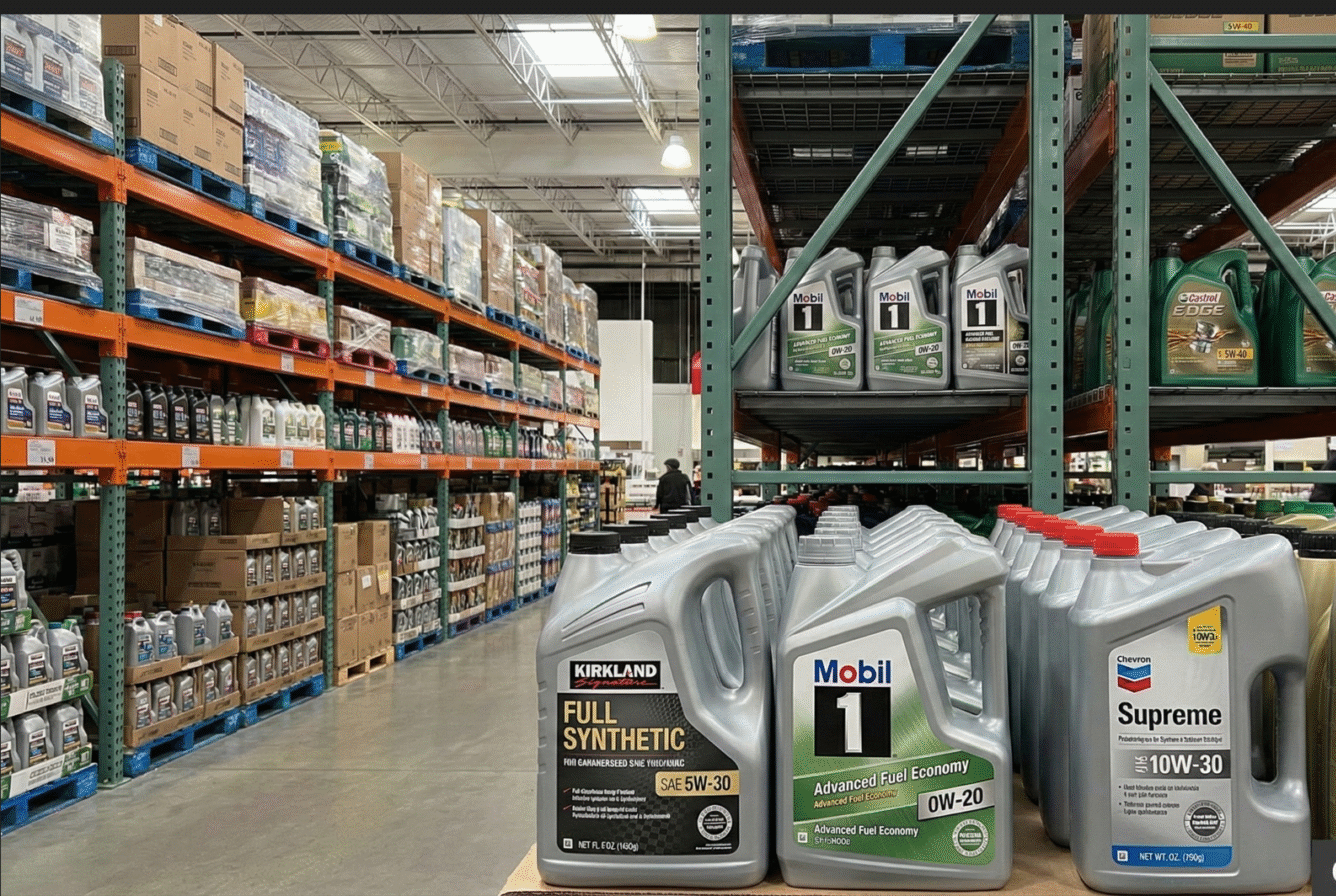
Costco’s decision to cap Kirkland Signature motor oil purchases made headlines, but it’s only the most visible data point in a much larger, months-long supply crunch that’s been building since the US-Iran conflict began disrupting Middle Eastern base-oil production and shipping. The real question for drivers isn’t whether one warehouse club is rationing — it’s whether all synthetic motor oil is headed toward sustained price increases and tighter supply, and the answer, based on the fullest available industry data, is a qualified yes.
The Scope of the Problem: It’s Not Just Costco
Executives at major lubricant and auto-parts companies — including Shell, Valvoline, and O’Reilly Automotive — have warned investors directly about cost pressure and supply-chain strain affecting synthetic motor-oil production. ILMA has characterized the situation as a “global base oil supply crisis,” attributing it to refinery outages and shipping disruptions through the Strait of Hormuz that have tightened the supply of Group III base oils — the refined lubricant feedstock used in most modern synthetic motor oil.
According to ILMA’s most detailed accounting, roughly 44% of US Group III base oil supply has been affected by the disruption, with the lightest viscosity grades — the 0W-20, 0W-16, and 0W-8 formulations increasingly required by modern, fuel-efficient engines — the most exposed. Group III base oil prices have climbed past $10 per gallon, a historically elevated level, with some reporting describing spot prices as having nearly tripled from pre-conflict baselines.
Automakers Are Already Rationing — Not Just Retailers
Perhaps the most telling sign that this is a supply-side, not retailer-side, problem: automakers themselves have begun rationing. Toyota has sent service departments guidance on substituting oil grades for certain hybrid models, while both Toyota and Nissan dealers reportedly received internal communications warning that allocations of genuine, factory-specified synthetic oils could become difficult to maintain consistently — particularly for lighter-viscosity grades like 0W-8 and 0W-16 used in newer, fuel-efficient engines.
A leaked memo reportedly circulated to AutoZone store managers in the Southeast described the situation bluntly, warning of “the largest supply shortage of lubricating fluids in the modern history of America” and cautioning that overall product availability could shrink by as much as 40%. Separately, industry sources indicated that Mobil and Shell informed both Costco and Walmart that they lacked sufficient packaged product to fulfill orders, raising the prospect of bare shelves in motor-oil sections at major retailers.
How Bad Is It At the Retail Level, Really?
Despite the alarming internal warnings, independent lubricant-industry analyst Tom Glenn, publisher of JobbersWorld, has cautioned against characterizing the situation as a full “broad retail shortage” — at least as of the disruption’s earlier stages. Consumer-quantity purchases (5-quart jugs at retailers like Walmart, AutoZone, and Amazon) had not been systemically constrained as of mid-2026, even as wholesale and dealer-allocation levels tightened significantly and prices rose 15–30% above 2025 baselines. Glenn’s assessment: “availability is beginning to matter as much as — and in some cases more than — price,” as suppliers increasingly operate defensively to protect access to approved synthetic formulations.
Costco’s explicit two-box, seven-day rationing policy, alongside its nearly doubled Kirkland Signature pricing, represents one of the more aggressive individual-retailer responses documented so far — suggesting either tighter supplier allocations specific to Costco’s bulk-purchase model, or a proactive anti-hoarding measure ahead of anticipated further tightening.
Price and Supply Snapshot
| Indicator | Pre-Conflict Baseline | Mid-2026 Status |
|---|---|---|
| Group III base oil price | Historically stable | $10+/gallon, up sharply |
| US Group III supply affected | 0% | ~44% |
| Retail 5-quart jug prices | Baseline | +15–30% |
| Kirkland Signature 10-qt box | ~$30 | $57.99 (rationed) |
| Expected normalization | N/A | Not before mid-2027 |
Which Vehicles Are Most Affected?
The shortage disproportionately affects owners of newer, fuel-efficient vehicles that require low-viscosity synthetic grades — particularly 0W-8, 0W-16, and 0W-20 formulations common in recent Toyota, Nissan, and other Asian-brand models. Owners of older vehicles using more conventional viscosity grades (5W-30, 10W-30) are somewhat less exposed, since those formulations rely less heavily on the specific Group III feedstock under the most severe supply pressure, though pricing pressure is being felt across nearly all synthetic categories.
Why This Matters: A Multi-Quarter Problem, Not a Blip
The most important data point for consumers planning ahead is ILMA’s own timeline: the association does not expect conditions to fully normalize until at least mid-2027, tying the recovery directly to when Middle East shipping and refining disruptions ease. That means this isn’t a short-term shelf-stocking hiccup tied to one retailer’s supply contract — it’s a structural, multi-quarter supply constraint that will likely keep upward pressure on oil-change pricing at dealerships, quick-lube chains, and DIY retail purchases well into 2027, regardless of whether any single retailer like Costco lifts its rationing policy sooner.
Frequently Asked Questions
Will all synthetic motor oil prices double, not just Costco’s?
Prices industry-wide have risen 15-30% at the consumer level as of mid-2026, with wholesale Group III base oil costs up far more sharply. Costco’s near-doubling of its Kirkland Signature product is among the more extreme individual cases rather than an industry-wide universal figure, but continued upward pressure across brands is expected through at least mid-2027.
Why are Toyota and Nissan rationing motor oil to dealerships?
Both automakers rely heavily on low-viscosity synthetic oil grades (0W-8, 0W-16) for newer, fuel-efficient engines, and these are the grades most exposed to the Group III base-oil supply disruption tied to the US-Iran conflict’s impact on Middle East shipping and refining.
When will the motor oil shortage end?
The Independent Lubricant Manufacturers Association does not expect conditions to fully normalize until at least mid-2027, meaning drivers should expect elevated prices and periodic availability issues for the coming several quarters.
Discover more from The Economy
Subscribe to get the latest posts sent to your email.
Six months into the war between the United States, Israel, and Iran, one pattern has become unmistakable to energy traders: every reported ceasefire has been followed, sooner or later, by a fresh escalation. What started as a limited conflict on February 28, 2026, has evolved into the most disruptive geopolitical shock to global oil supply since Russia’s invasion of Ukraine — and as of September 2026, it is still actively reshaping energy markets, shipping routes, and inflation forecasts worldwide.
The Ceasefire-and-Relapse Cycle
The conflict has produced at least three distinct ceasefire announcements since February, and none has held for more than a few weeks. In April 2026, a US-Iran arrangement briefly reopened the Strait of Hormuz and sent oil plunging below $100 a barrel, as reported by Euronews. Gold, which had surged as a safe haven, still traded near $4,750 an ounce that same week as investors openly doubted the truce would last, according to Trading Economics — key disputes remained unresolved and the Strait stayed effectively closed even after the announcement.
That skepticism proved warranted. By September 2026, oil had round-tripped decisively higher. Brent crude surpassed $100 a barrel for the first time in nearly six weeks after fresh attacks on oil facilities and tankers, settling at $97.89 before jumping 2.4% to $100.29, with WTI gaining to $94.77, according to reporting carried by the Washington Times. The proximate trigger: the U.S. military struck five Iranian tankers in response to attempted missile attacks on a Navy warship, while Iranian-backed Houthi forces ignited fires at Saudi Arabian oil facilities.
Oil price trajectory during the conflict:
| Date | Brent Crude | Context |
|---|---|---|
| Mar 21, 2026 | ~$106.77 | Fifth straight weekly gain amid escalation |
| Mar 20, 2026 | Forecast warning of $180+ | Saudi Aramco officials warned WSJ of extreme scenario |
| Apr 8, 2026 | Below $100 | Ceasefire announcement, Strait reopening pledge |
| Sept 7, 2026 | $97.31 | Six-week high; Iran vows to strike energy infrastructure |
| Sept 9, 2026 | $100.29 | Attacks on tankers and Saudi refineries |
| Sept 11, 2026 | ~$100, +9% week | Diplomatic talks announced on Hormuz shipping |
Why the Strait of Hormuz Is the Real Story
The Strait of Hormuz is the fulcrum of this entire crisis. Roughly 20% of the world’s oil supply passes through this chokepoint, including about half of Asia’s oil imports and a quarter of its LNG imports, according to TD Economics. Since the war began, fighting has halted most shipping through the strait, and — critically — markets have stopped believing repeated U.S. government proclamations that reopening is imminent. As one energy analyst told Marketplace, “The Strait of Hormuz won’t be what it was before. Now, we understand that Iran can and will block it.”
The physical impact on trade flows has been severe. Oil shipments out of the Middle East are running roughly 65% below year-ago levels, and the cost of shipping crude to Asia on the largest tankers has hit a record high, per the same Marketplace reporting. The United Arab Emirates has responded by actively building alternative export routes and trade corridors to avoid having its energy exports “held hostage” by the conflict, a senior UAE presidential adviser confirmed to Reuters in early September.
Demand Destruction Is Now the Dominant Theme
While supply disruption drove the initial price spike, the market’s focus by September 2026 has shifted decisively toward demand destruction. The International Energy Agency sharply lowered its 2026 global oil demand outlook, forecasting a contraction of 2.5 million barrels per day — the largest annual decline since the COVID-19 pandemic — as higher prices and tighter supply weigh on consumption, according to Trading Economics. OPEC has cut its own demand-growth forecast for a fifth consecutive month. Both organizations now agree that sustained triple-digit oil is actively destroying the demand it was created by.
OPEC+ itself has opted for caution rather than aggressive supply response, keeping its October output policy unchanged at its early-September meeting, pending agreement on new quotas before any further steps, Reuters reported.
The Inflation and Consumer Pass-Through
The war’s inflationary impact has already shown up in hard data. U.S. gasoline prices surged in March 2026 to an EIA-reported average of $3.638 per gallon, the highest since September 2023, with AAA data showing the national average briefly topping $4.02 per gallon — a monthly jump described by Trading Economics as exceeding even the spikes following Hurricane Katrina and Russia’s 2022 invasion of Ukraine. Euro-area inflation jumped to 2.5% in the same window, well above the European Central Bank’s 2% target, driven almost entirely by the energy component.
Who is most exposed:
| Category | Exposure | Why |
|---|---|---|
| Asian oil importers (Japan, India, Pakistan, China) | Very high | ~50% of Asia’s oil, 25% of LNG via Hormuz |
| European energy consumers | High | Already strained post-Russia diversification |
| Gulf oil exporters (Saudi, UAE, Qatar) | Mixed | Higher prices offset by direct attack risk on infrastructure |
| U.S. consumers | Moderate-high | Domestic production buffers some but not all of the shock |
| Global shipping/logistics | High | Record tanker rates, rerouting costs |
Diplomatic Off-Ramps Being Tested
The most significant near-term catalyst for de-escalation is the diplomatic track around Strait of Hormuz shipping management. Top diplomats from the six-member Gulf Cooperation Council were scheduled to meet their Iranian counterpart to negotiate a possible temporary arrangement for managing transit through the strait, according to Trading Economics. Iranian state media separately indicated Tehran would meet Gulf states in Oman for related talks. Markets have priced in modest optimism around these talks — crude paused its rally and settled near $100 on the news — but given the track record of failed ceasefires since February, traders are treating any de-escalation as tactical rather than durable until physical shipping data confirms a sustained reopening.
Final Verdict
The “ceasefire economics” of the 2026 Middle East war have proven to be a recurring, not a resolving, phenomenon: each truce has produced a short-lived relief rally in oil and a corresponding dip in inflation expectations, followed by renewed escalation that erases the gains. As of September 2026, Brent and WTI sit near six-week highs above $90–100, the Strait of Hormuz remains functionally impaired, and both the IEA and OPEC now forecast the sharpest demand contraction since the pandemic. For investors and policymakers, the actionable conclusion is that oil-price volatility itself — not a stable higher or lower price level — is the defining condition of this market, and near-term direction hinges almost entirely on whether the current Gulf-Iran diplomatic track produces a verifiable, physically confirmed reopening of shipping lanes rather than another rhetorical ceasefire.
Discover more from The Economy
Subscribe to get the latest posts sent to your email.

Global Pension Systems Ranked: The World’s Best and Worst Retirement Frameworks

Global Supply Chain Vulnerabilities: From Eurasian Trade Corridors to Food Consumer Recalls

Why 5% U.S. Treasury Yields Signal a Global Market Regime Shift.

Federal Reserve Defies White House Pressure: Inside Trump’s Demand for Sub-1% Interest Rates After Historic 2026 Rate Hike

How Rising Interest Rates Impact Gig Economy Apps: DoorDash, Uber, and Urban Services

GasBuddy Market Insights: How Crude Price Shifts Impact Local Fuel Cost Averages

DoorDash Driver Payouts, Fee Structures, and Market Competition Analysis

OPINION:Breaking the 3.5% Growth Trap: How Pakistan Can Build a High-Productivity Export Economy

Global Equity Market Divergence: US Tech vs. European Dividend Stocks vs. Asian Growth

Asian Markets Analysis: Navigating Volatility in China, Japan, and Singapore Stocks

Stagflation vs. Soft Landing: How Central Bank Rates Are Reshaping European and Asian Economies

IMF & World Bank Global Economic Outlook: Growth Forecasts Across Europe and Asia

Fed Rate Hike Projections vs. Trump’s Interest Rate Policy: What Global Markets Expect Next

Singapore Stocks: The Ultimate Safe Haven for Markets and Finance in 2026?

State Farm’s $5B Dividend 2026: Who Qualifies & Payout Dates

US-China Relations in Q3 2026: Trade Tariffs and Supply Chain Risks

SpaceX Starship Flight 14: First Orbital Attempt & Starlink V3 Launch Explained

Top 30 Stocks for Investment in PSX for Massive ROI in 2026

The 2026 Crypto Regulatory Shift: What It Means for Institutional Investors

AI Chip Stocks 2026: The Best Semiconductor Investments Beyond Marvell

AI-Powered Training: The Next Multi-Billion Dollar Ecosystem in Fitness

Tween Back-to-School Trends 2026: What’s Driving the $85B Season

10-Year Treasury Yield Hits 4.80%: What It Means for Rates & Portfolios

Oil Prices Break $100 in 2026: Middle East Conflict & Energy Markets

Shein Clothes Quality & Safety in 2026: What Lab Tests Show

Fidelity Investments Review 2026: SPAXX Yields & Zero-Fee Funds

MRVL Earnings 2026: Why Marvell Sank Despite Beating Estimates

China’s US$10.8 Billion Trade Shortcut: Why the Pinglu Canal Matters
-

 Markets & Finance9 months ago
Top 15 Stocks for Investment in 2026 in PSX: Your Complete Guide to Pakistan’s Best Investment Opportunities
-

 Analysis7 months ago
Johor’s Investment Boom: The Hidden Costs Behind Malaysia’s Most Ambitious Economic Surge
-

 Analysis7 months ago
Top 10 Stocks for Investment in PSX for Quick Returns in 2026
-

 Analysis7 months ago
Brazil’s Rare Earth Race: US, EU, and China Compete for Critical Minerals as Tensions Rise
-

 Banks8 months ago
Best Investments in Pakistan 2026: Top 10 Low-Price Shares and Long-Term Picks for the PSX
-

 Investment8 months ago
Top 10 Mutual Fund Managers in Pakistan for Investment in 2026: A Comprehensive Guide for Optimal Returns
-

 Global Economy9 months ago
15 Most Lucrative Sectors for Investment in Pakistan: A 2025 Data-Driven Analysis
-

 Global Economy9 months ago
Pakistan’s Export Goldmine: 10 Game-Changing Markets Where Pakistani Businesses Are Winning Big in 2025