
Analysis
inDrive Acquires KRRAVE: What Pakistan’s Grocery Delivery Shift Really Means

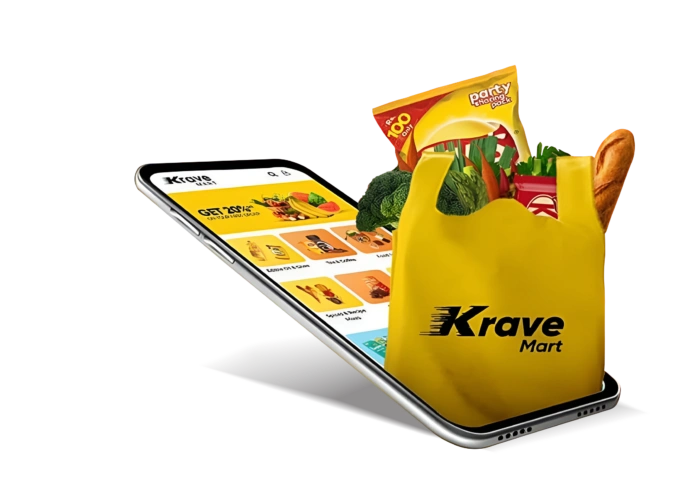
When a Siberian ride-hailing unicorn buys a Karachi grocery app, the story is never just about groceries.
On March 11, 2026, the Competition Commission of Pakistan formally authorized one of the more strategically revealing technology transactions in the country’s recent history: the acquisition of a majority shareholding in KRRAVE Technologies Pte. Ltd. by Suol Innovations Limited, the Cyprus-registered holding entity of the global inDrive Group. The price tag, confirmed at approximately $10 million, is modest by Silicon Valley standards. The implications for Pakistan’s digital economy are anything but.
This is, at its surface, a ride-hailing company buying an online grocery startup. Dig deeper and it becomes a case study in emerging-market super-app ambition, the evolving teeth of Pakistan’s competition watchdog, the geopolitics of foreign ownership in Pakistani tech, and a live experiment in whether Karachi — a megacity of 20 million people with notoriously fragmented last-mile logistics — can become ground zero for integrated mobility-commerce platforms.
The Deal Architecture: Cyprus, Singapore, and the Complexity of Modern Tech M&A
To understand this transaction properly, you need to follow the corporate geography. inDrive Holding Inc., headquartered in Mountain View, California, operates through a layered international structure. Its acquisition vehicle, Suol Innovations Limited, is incorporated in Cyprus. The target, KRRAVE Technologies Pte. Ltd., is a Singapore-registered holding entity whose Pakistani subsidiary, KRRAVE Technologies (Private) Limited, operates the Krave Mart platform in Karachi.
This multi-jurisdictional web is not unusual for global tech M&A — it reflects tax efficiency, investor preference for common-law jurisdictions, and the practical realities of capital flows into frontier markets. But it does place an added responsibility on Pakistani regulators to scrutinize not just the domestic competitive impact but the broader architecture of control and beneficial ownership.
The transaction was executed via call option agreements with multiple shareholders — a mechanism that grants the acquirer the right, but initially not the obligation, to purchase shares. That nuance matters: it suggests inDrive moved incrementally, watching Krave Mart’s performance before exercising full majority control, consistent with its broader venture-first, acquire-later playbook described to Bloomberg in December 2024.
The Regulator’s Uncomfortable Discovery: A Deal Done Before Permission Asked
Perhaps the most significant procedural detail in the CCP’s authorization notice is buried in its second paragraph: the transaction had already been completed before the Commission’s approval was sought. This triggered review under the CCP’s ex-post facto merger authorization framework — a mechanism that exists precisely because companies, particularly multinationals unfamiliar with Pakistan’s specific pre-merger notification thresholds, sometimes close deals first and seek clearance afterward.
The CCP did not penalize the parties in this instance, concluding instead that the merger posed no competitive threat. But it explicitly directed inDrive and KRRAVE to ensure strict compliance with merger notification requirements going forward. That directive is worth reading not as a rebuke but as a warning shot: as Pakistan’s digital economy matures, the CCP is signaling that regulatory patience with procedural shortcuts has limits.
This reflects a broader pattern in Pakistani competition law enforcement. The CCP, established under the Competition Act of 2010, has progressively tightened its merger review processes, particularly for technology transactions where market definition — always slippery in platform economics — requires more sophisticated analysis. The Commission’s identification of the “e-commerce B2C delivery platform for grocery” in Karachi as the relevant market demonstrates growing technical fluency. Five years ago, such granular market delineation would have been unlikely.
“The Commission observed that the acquirer operates primarily in mobility and logistics services, while the target operates in online grocery e-commerce — therefore, the transaction constitutes a conglomerate merger between businesses operating in distinct sectors.” — CCP Phase-I Assessment, March 2026
The conglomerate classification is analytically important. Unlike horizontal mergers — where two direct competitors combine — or vertical mergers, where a supplier acquires a customer — conglomerate mergers involve firms in distinct markets. Regulators worldwide have historically been more permissive about conglomerate deals, finding no immediate reduction in competition in any single market. But the economics literature, and recent enforcement in the EU and US, increasingly warns that conglomerate mergers by platform companies can create portfolio effects: the combined entity leverages dominance in one market (here, ride-hailing) to foreclose competitors in another (grocery delivery), through bundling, data integration, or preferential placement.
The CCP, for now, found no such risk. That determination may warrant revisiting as the inDrive-Krave Mart integration deepens.
inDrive’s Super-App Ambition: Why Grocery Is the Gateway
To appreciate why inDrive would pay $10 million for a Karachi grocery startup, you need to understand what the company is actually building. Founded in Yakutsk, Siberia in 2012 under the name inDriver, inDrive disrupted ride-hailing by doing the opposite of Uber: instead of algorithmic surge pricing, it lets passengers and drivers negotiate fares directly. That frugal, trust-based model proved magnetic in price-sensitive emerging markets. According to TechCrunch, the company now operates in 982 cities across 48 countries and is the world’s second-most downloaded ride-hailing app, having completed over 6.5 billion transactions globally.
But ride-hailing, even at scale, has a fundamental economics problem: low frequency. Most users summon a car a few times per week at most. Grocery delivery, by contrast, is a daily or near-daily behavior. It is the core insight behind every super-app thesis from Grab in Southeast Asia to WeChat in China: anchor users with high-frequency services, then monetize through lower-frequency, higher-margin verticals.
inDrive announced its $100 million venture capital arm in November 2023, specifically to fund startups aligned with this super-app vision. The Krave Mart investment, initially disclosed by Bloomberg in December 2024, was the most prominent deployment of that strategy to date in South Asia. Andries Smit, inDrive’s chief growth business officer, has been explicit about the logic: grocery delivery generates over 41 million orders globally for inDrive’s delivery segment annually, with more than 14 million in Q2 2025 alone, making it the fastest-scaling category in the company’s portfolio.
The planned integration is equally telling. Krave Mart is slated to be listed directly within the inDrive app, giving Karachi users the ability to order groceries through the same interface they use to book rides. That is the super-app flywheel in miniature: a single login, a shared customer profile, unified payment infrastructure, and — critically — a shared dataset on consumer behavior that neither company could generate alone.
Krave Mart: The Target’s Profile and Pakistan’s Quick-Commerce Landscape
Founded in 2021 by CEO Kassim Shroff, Krave Mart entered a market dominated by Delivery Hero’s Foodpanda and a constellation of informal delivery services. Its differentiation has been speed, product range — including hundreds of private-label items from bread to personal care — and a ruthlessly lean cash-burn model that allowed it to survive Pakistan’s brutal 2022–2023 funding winter, when venture capital dried up across South Asia as interest rates rose globally and inflation in Pakistan touched historic highs.
The $10 million from inDrive was transformative. Shroff confirmed to Profit Pakistan that Krave Mart tripled in size following the investment, improving delivery times and product assortment. The company currently serves urban households in Karachi, Pakistan’s largest city and commercial capital, through a quick-commerce model — meaning orders fulfilled in under 30 minutes from dark stores or micro-warehouses positioned close to demand clusters.
The broader market context is compelling. Pakistan’s B2C e-commerce market reached $14.11 billion in 2025, growing at a 22.2% CAGR between 2020 and 2024. It is projected to reach $20.41 billion by 2029. Online grocery, while still a fraction of that total, is among the fastest-growing sub-categories, driven by urban middle-class consumers, smartphone penetration exceeding 70% for mobile commerce traffic, and the rapid adoption of digital wallets like JazzCash and Easypaisa. Karachi, with its concentration of income and digital infrastructure, is the natural proving ground.
The Vertical Integration Question: Logistics as the Moat
The most strategically interesting dimension of this merger is what happens after the app integration. inDrive already operates courier delivery services in Pakistan through Sobo Tech (SMC-Private) Limited, its local subsidiary. Krave Mart operates its own last-mile logistics infrastructure in Karachi.
The combination creates the architecture for vertical integration across the mobility-delivery stack: a single company controlling the driver network, the logistics infrastructure, and the consumer-facing grocery marketplace. This is precisely the model that has made Grab a dominant force in Southeast Asia — and it is equally what makes competition regulators nervous when they look beyond the immediate market definition.
Consider the network effects at play. Drivers who ferry passengers also deliver groceries during downtime. That shared driver pool reduces idle time, increases earnings, and makes the combined platform more attractive to workers than any single-vertical operator. Consumer data gathered from grocery orders — what people buy, when, how often, at what price points — informs ride demand patterns and vice versa. Over time, a fully integrated inDrive-Krave Mart platform could offer personalization and pricing precision that standalone rivals simply cannot match, regardless of their product quality.
This is not a hypothetical concern. It is exactly the dynamic that led regulators in Singapore and the European Union to scrutinize Grab’s acquisitions more carefully after its initial super-app pivot. The CCP’s Phase-I clearance is a necessary but not sufficient determination. A Phase-II or follow-on review may eventually be warranted if the integrated platform begins to show market-foreclosing behavior.
Geopolitical Texture: Foreign Ownership, Digital Sovereignty, and the Emerging-Market Playbook
There is a broader geopolitical frame worth applying to this deal. Pakistan is a country where foreign investment in digital infrastructure is simultaneously courted — the government’s IT export targets, Special Technology Zones, and fintech liberalization signal genuine openness — and periodically scrutinized for sovereignty implications.
inDrive’s origins in Russia (the company relocated its headquarters to the US following the 2022 invasion of Ukraine) add a layer of complexity that Pakistani policymakers have not yet been required to articulate publicly but almost certainly discuss privately. The company’s VC arm, its super-app ambitions, and its accumulation of mobility and delivery data across 48 countries collectively constitute a data asset of considerable strategic value. That Pakistan’s competition law, unlike the EU’s Digital Markets Act or India’s emerging data localization frameworks, does not yet have robust provisions for data-related competitive concerns is a gap that will become increasingly relevant as this integration proceeds.
The more immediate sovereignty question is economic: as inDrive deepens its position in both ride-hailing and grocery delivery in Pakistan’s largest city, what leverage does that give a foreign-owned platform over Pakistani SME suppliers, local delivery workers, and ultimately Pakistani consumers? The answer depends entirely on how quickly domestic alternatives can scale, and on whether the CCP develops the analytical toolkit to monitor post-merger market dynamics rather than simply clearing transactions at the point of deal closure.
What This Means for Karachi Consumers — and Pakistan’s Startup Ecosystem
For the average Karachi household, the near-term picture is probably positive. Greater investment in Krave Mart means faster delivery times, wider product selection, better pricing from scale efficiencies, and the convenience of a single app for transport and groceries. Competition with Foodpanda should intensify, likely producing promotional pricing and improved service standards.
For Pakistan’s startup ecosystem, the signal is more complex. On one hand, inDrive’s $10 million bet validates the Pakistani grocery delivery market, potentially catalyzing further foreign investment interest. On the other, the acquisition path — a global unicorn acquiring a local startup as a distribution channel for its own platform ambitions — raises the perennial question of whether Pakistani tech companies are being built to be acquired rather than to become independent champions.
That question has no clean answer. Acquisition is a legitimate exit, provides liquidity for founders and early investors, and recycles capital into new ventures. But a digital economy that produces primarily acquisition targets rather than global-scale operators of its own is a structurally weaker one.
Key Takeaways
- The $10M deal is strategically asymmetric: For inDrive, it buys a distribution channel, a grocery dataset, and local logistics infrastructure in a market of 20 million potential users. For Krave Mart, it provides survival capital, global network effects, and a route to super-app integration.
- The CCP’s ex-post review is a procedural warning: The regulator’s directive for future compliance suggests it is watching this space carefully. Companies operating in Pakistan’s digital economy should treat pre-merger notification as non-negotiable.
- Conglomerate classification offers short-term protection, not permanent immunity: As the integration deepens, portfolio effects may warrant re-examination under Pakistani competition law.
- The super-app thesis faces execution risk: Every major platform that has attempted the super-app model outside of Asia — from Uber to Lyft to Rappi — has found that users resist forced bundling. inDrive’s success depends on genuine value creation in each vertical, not just cross-promotional mechanics.
- Pakistan’s regulatory framework needs to evolve: The CCP’s market definition capabilities are improving, but data-related competitive concerns and post-merger market monitoring remain underdeveloped relative to the speed of digital market consolidation.
Forward Scenarios for 2027
Scenario A — Successful Integration: Krave Mart becomes a top-three grocery delivery platform in Karachi within 18 months. The inDrive app’s grocery feature drives a 20–25% increase in monthly active users. inDrive expands Krave Mart to Lahore and Islamabad, replicating the model. Pakistan becomes inDrive’s showcase emerging-market super-app case study. Foreign VC interest in Pakistani grocery-tech reignites.
Scenario B — Execution Stumble: Integration complexity, regulatory friction, and competition from a resurgent Foodpanda (backed by Delivery Hero’s deeper pockets) slow momentum. Krave Mart remains a Karachi-only product. inDrive’s super-app ambition stalls in Pakistan, though the company retains its ride-hailing dominance. The acquisition is reclassified internally as a data and talent acquisition rather than a commercial scaling play.
Scenario C — Regulatory Tightening: The CCP, emboldened by the procedural precedent set in this review, introduces pre-merger notification thresholds that capture smaller digital transactions. Pakistan follows the broader global trend toward stricter scrutiny of platform conglomerate mergers. The cost of M&A in Pakistani tech rises, potentially cooling inbound acquisition interest but creating conditions for more domestically-owned scale players to develop.
The most likely outcome is a blend of Scenarios A and C: partial integration success combined with a more assertive regulatory posture. What is certain is that the inDrive-KRRAVE transaction is the opening move in a much longer game — one whose outcome will help determine whether Pakistan’s digital economy is built for its citizens or merely through them.
Discover more from The Economy
Subscribe to get the latest posts sent to your email.



Navigating Mortgage and Loan Refinancing in a High-Yield Environment
Global public debt crossing critical thresholds has kept central bank policies volatile, resulting in fluctuating US Treasury yields throughout 2026. For homeowners and commercial property holders burdened by previous high-interest borrowing cycles, finding optimal refinance windows has become a high-stakes financial puzzle. Stalled disinflation and stubborn employment numbers mean rate cuts are incremental, requiring borrowers to act with precision.
Timing your mortgage or commercial loan refinance in this environment requires a deep understanding of yield curve movements and lender risk appetites.
Decoding 2026 Refinance Dynamics
The 10-Year Treasury Yield Benchmark
Mortgage rates continue to track closely with the 10-year US Treasury yield. When macroeconomic anxiety spikes debt issuance, yields rise, tightening consumer borrowing capacity. Savvy borrowers monitor weekly Treasury auctions to lock in rates during brief dip windows.
Hybrid ARMs and Alternative Structures
With fixed rates remaining elevated, 7/1 and 10/1 adjustable-rate mortgages (ARMs) have surged in popularity. These products offer lower initial monthly payments, giving borrowers breathing room until central bank easing cycles fully materialize.
| Loan Product | Current Rate Range | Best For | Key Risk Factor |
| 30-Year Fixed Mortgage | 6.2% – 6.8% | Long-term predictability | Higher initial monthly outlay |
| 7/1 Hybrid ARM | 5.5% – 5.9% | Short-term ownership / flipping | Rate reset risk after year 7 |
| Commercial Refinance | 7.0% – 8.2% | Corporate asset restructuring | Strict DSCR lender covenants |
Actionable Steps for Successful Refinancing
To maximize your chances of securing favorable refinance terms in a volatile market, follow a disciplined preparation strategy.
Boost Your Credit Score Immediately: Lenders in 2026 are applying stringent credit tiering; a 20-point increase can drop your APR by a crucial quarter-point.
Shop Regional Credit Unions: Smaller financial institutions often offer portfolio loans with more flexible underwriting than major national banks.
Calculate the Break-Even Point: Ensure your total closing costs are recouped through monthly savings within 24 months of closing.
“Market Strategist View: Refinancing in 2026 is an exercise in opportunistic timing. Borrowers must maintain immaculate financial profiles ready to strike the moment Treasury yields dip.”
Mastering the complexities of today’s debt environment ensures you can successfully lower your debt service costs and protect your long-term financial stability.
Discover more from The Economy
Subscribe to get the latest posts sent to your email.

The days of pulling generic auto insurance quotes based purely on your zip code and age are officially over. In 2026, insurance comparison engines are powered entirely by generative AI and real-time telematics. These platforms digest thousands of live data points—ranging from your driving smoothness via connected vehicle sensors to real-time traffic congestion patterns—to generate hyper-personalized premiums instantly.
For consumers, this evolution represents both a massive opportunity for savings and a hidden trap for penalty pricing. Understanding how AI algorithms evaluate risk is essential for anyone looking to lower their monthly auto insurance premiums.
How AI Comparison Engines Evaluate Your Risk Profile
Behavioral Telematics and Connected Cars
Modern cars stream performance data directly to insurance aggregators. Generative AI models analyze braking sharpness, acceleration curves, cornering G-forces, and phone distraction metrics. Drivers who maintain smooth, defensive habits are rewarded with dynamic rate cuts of up to 40% compared to traditional rating tiers.
Predictive Traffic and Weather Modeling
AI tools now cross-reference your daily commute route with predictive weather and accident probability models. If your standard parking location or driving corridor has a statistically higher incidence of uninsured motorist claims, your quotes will reflect that hyper-local risk assessment.
| Comparison Factor | Traditional Rating Model | 2026 Generative AI Model | Impact on Premium |
| Mileage & Usage | Annual estimated odometer reading | GPS tracking & live trip duration | High (up to 35% savings) |
| Driving Behavior | MVR driving record & accidents | Real-time braking, speed, & G-force | Critical (determines tier) |
| Vehicle Tech | Make, model, and safety rating | ADAS calibration & repair cost data | Moderate |
Strategies to Lower Your AI-Driven Insurance Quote
To outsmart the algorithm and secure the lowest possible premium in 2026, drivers must proactively manage their digital footprint on insurance platforms.
Opt-In for Telematics Trial Periods: Many insurers offer immediate 15% discounts just for installing their driving app; let it track safe habits for 30 days to lock in permanent savings.
Scrub Unverified Public Records: Ensure your motor vehicle report is free of clerical errors that AI risk models misinterpret as reckless behavior.
Compare AI Aggregators: Use platforms that integrate multi-carrier API feeds rather than single-brand comparison sites to find the best risk-adjusted rate.
“Industry Note: AI-driven pricing rewards transparency and precision. Drivers who actively manage their telematics data consistently out-save those relying on legacy quote calculators.”
Embracing AI comparison tools allows savvy policyholders to customize coverage limits precisely to their driving habits, eliminating wasted premium spend while ensuring robust protection.
Discover more from The Economy
Subscribe to get the latest posts sent to your email.

Despite decades of bans and strict handling mandates, asbestos remains a silent killer across legacy manufacturing plants, shipyards, and modern green-energy infrastructure retrofits. In 2026, regulatory changes by the EPA and tightened occupational health standards have triggered a fresh wave of mesothelioma litigation. Manufacturers attempting to fast-track industrial transitions are encountering catastrophic oversight, exposing workers to legacy toxins and opening corporate parent companies to unprecedented liability.
Navigating a mesothelioma claim in 2026 requires understanding how modern industrial supply chains intersect with historical exposure. Trusts established decades ago are being audited under stricter transparency laws, altering payout ratios and accelerating fast-track settlements for terminally ill plaintiffs.
Modern Industrial Exposure Hotspots
Green Retrofitting and Renewable Energy Infrastructure
A primary source of 2026 asbestos exposure occurs during the decommissioning and retrofitting of older industrial facilities for renewable energy production. Workers insulating electrical grids, modernizing HVAC systems, or upgrading manufacturing floors frequently disturb encapsulated asbestos materials that were improperly documented or ignored during facility audits.
Automotive and Aerospace Supply Chains
With advanced manufacturing booming, workers handling specialized friction materials, gaskets, and heat shields face ongoing risks. Supply chain tracing has become more sophisticated, allowing legal teams to pinpoint exact corporate entities responsible for raw material distribution across multinational borders.
| Industry Sector | Primary Exposure Risk | Legal Venue / Trust | Avg. Claim Value Range |
| Green Energy Retrofit | Disturbed insulation, pipe lagging | Federal Tort / Manufacturer Trust | $1.2M – $3.5M |
| Shipbuilding & Marine | Boiler insulation, structural seals | Asbestos Bankruptcy Trusts | $800K – $2.4M |
| Automotive Manufacturing | Brake components, high-heat gaskets | Third-Party Product Liability | $600K – $1.8M |
Securing Maximum Compensation: Steps for Plaintiffs
Time is of the essence in mesothelioma cases. Plaintiffs and their families must act decisively to secure financial recovery before statutes of limitations expire.
Retain Specialized Counsel: Work exclusively with national mesothelioma law firms possessing deep historical databases of asbestos-containing products.
Audit Employment History: Document every job site, supervisor name, and equipment brand encountered throughout your career.
Expedite Medical Filings: Secure a formal pathological diagnosis quickly to qualify for expedited trust fund distribution and priority trial settings.
“Expert Insight: Modern asbestos litigation is no longer just about historical tracking; it is about holding modern corporations accountable for failing to conduct rigorous environmental safety audits before initiating industrial retrofits.”
By combining meticulous work history reconstruction with aggressive multi-trust filings, victims can secure substantial financial relief to cover specialized immunotherapy and family support.
Discover more from The Economy
Subscribe to get the latest posts sent to your email.

Crypto Daily Outlook: Bitcoin, Altcoins, and the Future of Decentralized Finance

Anthony Scaramucci’s Crypto Prediction: Why MicroStrategy’s Move Is Bitcoin’s “iPhone Moment”

Best Dividend Stocks 2026: European & Asian Blue Chips

World Bank & IMF Reports 2026: Why the “3% Growth” Consensus Is Actually a Debate

Elon Musk’s Boring Company Hits $23B Valuation After UAE-Led $3 Billion Series D

Middle East War Economics 2026: Oil Prices & Energy Markets

PSX Forecast 2026: KSE-100, IMF Reviews & Geopolitics

Asian Markets Outlook 2026: China, Japan & Singapore Stocks

Global Economy 2026: IMF Growth, Inflation & Private Credit

Current Account Deficit (CAD) : Causes and Impact

Balance of Payments (BOP)

The Falkland Islands Dispute: Sovereign Wealth, Offshore Drilling, and Market Impacts

Gross Domestic Product (GDP): Nominal vs. Real

What is Inflation and the Consumer Price Index (CPI)?

State Farm’s $5B Dividend 2026: Who Qualifies & Payout Dates

US-China Relations in Q3 2026: Trade Tariffs and Supply Chain Risks

Gold’s Wild 2026: From a Record $5,600 Peak to a 24% Crash and Back Toward $4,500

Oil Surges as Strait of Hormuz Traffic Collapses Again

The Rocket That Won’t Quit: Inside SpaceX’s Falcon 9 Launch Machine

Bank of England Set to Hold Rates Through Year-End, Reuters Poll Shows

SpaceX Starship Flight 14: First Orbital Attempt & Starlink V3 Launch Explained

The 2026 Crypto Regulatory Shift: What It Means for Institutional Investors

AI Chip Stocks 2026: The Best Semiconductor Investments Beyond Marvell

Retail Earnings Week: What Home Depot, Target & Walmart Reveal

AI-Powered Training: The Next Multi-Billion Dollar Ecosystem in Fitness

Russia’s Black Sea Oil Exports Fall for a Fifth Straight Week

Top 30 Stocks for Investment in PSX for Massive ROI in 2026

Tween Back-to-School Trends 2026: What’s Driving the $85B Season
-

 Markets & Finance8 months ago
Top 15 Stocks for Investment in 2026 in PSX: Your Complete Guide to Pakistan’s Best Investment Opportunities
-

 Analysis7 months ago
Johor’s Investment Boom: The Hidden Costs Behind Malaysia’s Most Ambitious Economic Surge
-

 Analysis7 months ago
Top 10 Stocks for Investment in PSX for Quick Returns in 2026
-

 Analysis7 months ago
Brazil’s Rare Earth Race: US, EU, and China Compete for Critical Minerals as Tensions Rise
-

 Banks8 months ago
Best Investments in Pakistan 2026: Top 10 Low-Price Shares and Long-Term Picks for the PSX
-

 Investment8 months ago
Top 10 Mutual Fund Managers in Pakistan for Investment in 2026: A Comprehensive Guide for Optimal Returns
-

 Global Economy9 months ago
15 Most Lucrative Sectors for Investment in Pakistan: A 2025 Data-Driven Analysis
-

 Global Economy9 months ago
Pakistan’s Export Goldmine: 10 Game-Changing Markets Where Pakistani Businesses Are Winning Big in 2025