
Analysis
KPMG and EY Demote Partners: The Definitive End of the Big Four Job-for-Life Model

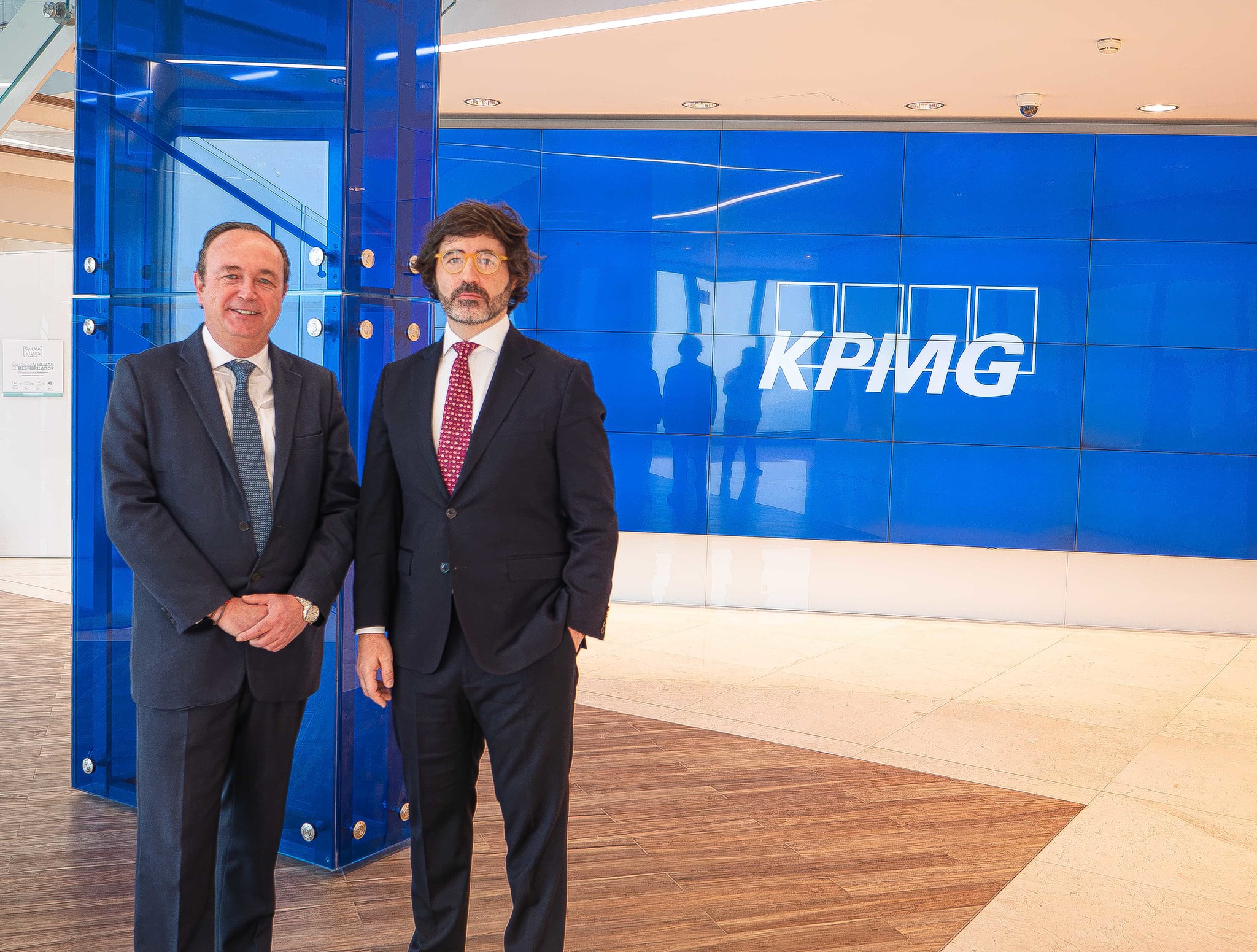
The call came, as these things often do, without warning. A seasoned equity partner at one of the Big Four — two decades of late nights, cross-border engagements, client dinners, and carefully cultivated relationships distilled into a six-figure “units” allocation — was summoned for what was framed as a career conversation. The language was collegial, the room was quiet. And then, politely but unmistakably, the message landed: you will no longer share in the firm’s profits. We are moving you to a salaried partner role.
No performance improvement plan. No transparent benchmark they had failed to meet. Just the quiet arithmetic of a partnership that needed fewer people at the table.
This is not an isolated anecdote. According to reporting by the Financial Times, both KPMG and EY have in recent years removed members of their UK equity partnerships and instead offered them “salaried partner” roles — a demotion wrapped in the same title, drained of its financial substance. And on April 23, 2026, the story took on transatlantic dimensions: KPMG announced it was cutting roughly 10% of its US audit partners — approximately 100 individuals — after years of failed voluntary retirement programmes. The message to the profession has never been louder: the partnership is no longer a destination. It is, increasingly, a temporary assignment.
The Golden Ticket, Tarnished
For generations, making partner at a Big Four firm was the legal and financial world’s closest equivalent to a tenured professorship. You had, in the popular imagination and in contractual reality, arrived. The equity partnership conferred ownership, profit-sharing, prestige, and an implicit understanding that barring catastrophic misconduct, your position was secure until mandatory retirement. It was, in the language of another era, a job for life.
That compact is dissolving — not with a dramatic rupture, but through a series of quiet institutional manoeuvres that, taken together, signal a structural reorientation of how these firms are governed, whom they reward, and what professional excellence is now expected to deliver.
The statistics are unambiguous. Big Four partner promotions across the UK fell to just 179 in 2025, a five-year low and a sharp retreat from the 276 promoted at the peak of the post-pandemic boom in 2022, according to analysis by the Financial Times of Companies House filings, press releases, and LinkedIn data. EY elevated only 34 equity partners, down from 74 in 2022. Deloitte made just 60 promotions, against 124 in 2022. Overall, the total number of equity partners across the four firms fell for the first time in five years, dropping by roughly 80 to approximately 3,050.
The belt-tightening is deliberate, and its beneficiaries are the incumbents. KPMG’s average UK partner pay reached £880,000 in 2025 — an 11% year-on-year increase — putting it ahead of both PwC (£865,000) and EY (£787,000) for the first time since 2014. Deloitte partners crossed the £1 million threshold. Revenue, meanwhile, has barely moved: EY reported 2% growth in what it called a “challenging market”, while KPMG posted just 1% growth after 9% in 2023, and Deloitte suffered its first annual revenue decline in 15 years.
The mechanism is elementary. When you constrain the denominator — fewer equity partners sharing the profit pool — the numerator rises for those who remain. Profit-per-equity-partner (PEP) is the prestige metric in professional services, the figure that determines lateral hire competitiveness, graduate recruitment marketing, and the partner’s own sense of institutional worth. And right now, the Big Four are protecting it with considerable ruthlessness.
Demotion Without Firing: A New Instrument of Control
What distinguishes the current moment from previous cycles of partner attrition is not the reduction in numbers per se — firms have always managed their equity pools — but the instrument being used. The introduction of a salaried or “non-equity” partner tier creates a new, lower rung on the ladder that can be used not merely as a holding pen for promising directors, but as a landing zone for underperforming incumbents.
Deloitte, EY, and KPMG have all introduced this salaried partner tier, widely regarded in the industry as a mechanism for retaining senior staff without sharing profits. PwC, the only firm still operating an equity-only partnership, has created a “managing director” grade as its structural equivalent. The title is preserved; the economics are fundamentally altered.
In the case of KPMG’s UK operation, multiple people with knowledge of the matter told the Financial Times that partners were called into rooms for what were “positioned as career conversations” but were in reality mechanisms to reduce equity partner headcount. Some received the news with little warning, having been given positive performance feedback until the conversation itself. Several chose to leave rather than accept what they experienced as a demotion, describing the process as blindsiding.
EY, meanwhile, has demoted a small number of equity partners to salaried roles since introducing the tier in 2022, according to three people familiar with the matter. The firm declined to comment.
To be clear, “departnering” is not unique to accountancy. Goldman Sachs has long managed partner membership with clinical precision; law firms regularly de-equitise underperforming partners, particularly in mid-tier practices. But the cultural signal from the Big Four is significant precisely because of the scale, the prestige mythology, and the professional pipeline implications. These are the firms that recruit tens of thousands of graduates annually on the implicit promise of a meritocratic climb toward a life-altering outcome.
Why Now? Three Interlocking Forces
1. The Consulting Hangover
The pandemic generated an extraordinary and, in retrospect, unsustainable surge in demand for advisory services. Governments needed economic modelling, corporations needed digital transformation, boards needed risk assessment. The Big Four expanded headcount aggressively. By 2022, PwC was promising to add 100,000 staff globally; KPMG was promoting equity partners at a rate it could not sustain.
The hangover has been severe. PwC’s revenue growth slowed to 2.9% in fiscal 2025, down from 9.9% in 2023. Consulting revenues have contracted across the sector as clients, now operating in a tighter macro environment, question the value of expensive advisory mandates. James O’Dowd, managing partner at Patrick Morgan, told City AM that the firms are “cutting jobs to protect partner profits and rebalance bloated teams” after years of aggressive post-pandemic hiring.
2. AI Restructuring the Audit Architecture
Perhaps more structurally significant than the revenue cycle is the accelerating role of artificial intelligence in reshaping what partners actually do. KPMG launched its Workbench multi-agent AI platform in June 2025, developed with Microsoft, connecting 50 AI agents with nearly 1,000 more in development. EY granted 80,000 tax staff access to 150 AI agents through its EY.ai platform, investing more than $1 billion annually in AI platforms and products. Deloitte struck a deal with Anthropic to deploy Claude AI to its 470,000 employees worldwide.
The point is not that AI will replace partners tomorrow. It is, rather, that the work historically required to justify a partner’s existence — managing audit workflows, overseeing large teams of junior staff performing repetitive compliance tasks, supervising structured data review — is increasingly automated. KPMG acknowledged as much in its US announcement, noting that artificial intelligence is “increasingly handling key steps of audits, spurring firms to rethink staffing and delivery”. At PwC, leadership has indicated that new hires will be doing the work of managers within three years, supervising AI rather than performing the audit tasks themselves.
This compression of the value chain has a direct implication for partner economics. If AI can execute the audit procedures that previously required six team members, you need fewer partners to supervise them. The case for a large partnership structure becomes harder to make.
3. The Future-Revenue Problem
Laura Empson, professor of management at Bayes Business School, has articulated the third driver with particular precision. The question being asked of potential partners has shifted from “can you generate enough business this year?” to something more existential: “Will this person generate a substantial stream of income for the foreseeable future — and right now the future is particularly hard to foresee?” A director with a strong practice in regulatory compliance was, five years ago, a safe bet. Today, as AI takes on compliance automation and regulatory technology firms encroach on traditional advisory turf, the projection is far murkier. The firms are not just managing the present — they are hedging against futures they cannot yet model.
Winners, Losers, and the Long Game
The winners in this restructuring are, in the near term, the incumbent equity partners who remain. By shrinking the pool and reweighting units toward rainmakers — under KPMG’s current leadership, the firm has reallocated profit units to place less weight on tenure and more on business generation — the firms are concentrating extraordinary wealth among a smaller group. KPMG’s UK partners, who were earning £816,000 on average in 2025’s reporting cycle and £880,000 in the most recent period, now out-earn their counterparts at EY for the first time in a decade.
The losers are harder to count but easier to identify. The most acute damage falls on the cohort of ambitious directors and senior managers who have spent a decade or more building toward equity partnership as their defining professional objective. James O’Dowd of Patrick Morgan noted that whereas 20 years ago, Big Four employees could make equity partner by around 35, they are now looking at their early 40s — if they get there at all. The salaried partner tier is, for many, not a staging post but a terminus.
There is also a diversity dimension that deserves sharper scrutiny than it typically receives. Research consistently shows that informal sponsorship, visibility networks, and the “cultural fit” judgements that govern partnership decisions tend to replicate existing demographic profiles. When promotion cycles compress and the bar rises, historically underrepresented groups — women, minorities, first-generation professionals — disproportionately absorb the attrition. The firms publish annual diversity data with admirable transparency; whether that transparency translates into accountability when the pressure is on remains a live and uncomfortable question.
More troubling still is the impact on institutional knowledge. Partnership models, whatever their flaws, created an incentive for long-term relationship stewardship. A partner who owned the firm had reasons to invest in client relationships, mentorship, and institutional culture that extended well beyond the quarterly cycle. When you strip equity from people who have spent twenty years building domain expertise, you create a class of high-skilled employees with diminished loyalty and a market incentive to take their networks elsewhere — to boutiques, to in-house roles, to competitors offering better economics. The knowledge transfer implications are real.
The Contrarian View: Are They Trading Resilience for Returns?
Here is the question the managing partners are not asking loudly enough: does concentrating profits in fewer hands make these firms better, or merely more profitable in the short term?
There is a credible argument that what looks like strategic discipline is actually a structural fragility in the making. The Big Four derive much of their value not from capital but from trust — the trust that a client places in an auditor’s independence, the trust that a regulator places in a firm’s quality controls, the trust that markets place in a signed opinion. That trust is accumulated slowly, through relationships, through institutional memory, through the kind of deep sectoral expertise that takes years to develop.
When you compress the partner class aggressively, you signal to the broader professional pipeline that the implicit social contract has changed. Junior auditors at KPMG UK, earning around £32,500 as new graduates while partners take home nearly £880,000, are already observing a ratio that strains credulity as a meritocratic proposition. Removing overtime pay for busy season, shrinking the equity pool, and quietly demoting long-tenured partners does not create the conditions for the recruitment and retention of the next generation of exceptional audit professionals.
There is also the audit independence question. The Financial Reporting Council and its international equivalents have long expressed concern that commercial pressures on audit firms compromise the independence of judgment that audits require. A partnership model explicitly oriented toward protecting PEP — where the primary signal of success is partner compensation rather than audit quality — does not obviously serve the public interest that audit is meant to protect.
What Comes Next: Three Scenarios for the Profession
The optimistic scenario holds that these are rational adjustments to a structural oversupply of partners accumulated during an anomalous boom period, and that AI will simultaneously create new value — in AI assurance, ESG verification, regulatory technology — that supports a leaner but higher-margin partnership in the medium term. EY’s vision of a “service-as-a-software” commercial model, where clients pay by outcome rather than hour, might indeed generate the next platform for partnership growth.
The bearish scenario holds that compression of the talent pipeline, combined with AI-driven commoditisation of core services, will accelerate the fragmentation of the Big Four’s market position. Boutique advisory firms, technology-native audit platforms, and specialist consultancies are already capturing the mid-market segments where the Big Four’s scale is a disadvantage rather than an asset. If the firms price themselves out of the talent market by narrowing the partnership pathway, the talent goes elsewhere — and so, eventually, do the clients.
The structural scenario — and the one with the most historical precedent — is that this marks not a temporary adjustment but a permanent restructuring of what professional partnership means. The partnership model of the 20th century was predicated on human capital scarcity: expertise was concentrated in senior people, and those people needed to be economically incentivised to stay. AI erodes that logic. The next model may look less like a traditional partnership and more like a technology firm with a professional services overlay — equity concentrated at the top, a salaried technical workforce in the middle, and an AI infrastructure doing much of the work below.
For Aspiring Partners, Directors, and Regulators
If you are a director or senior manager at a Big Four firm reading this, the strategic implication is uncomfortable but clear: the pathway to equity partnership is narrower, later, and more uncertain than at any point in the past two decades. The hedge is diversification — cultivating expertise in areas where AI augments rather than replaces human judgment (regulatory navigation, complex cross-border transactions, AI assurance itself), and building client relationships that are genuinely portable. The salaried partner tier may, for some, represent a viable and well-remunerated alternative. For others, the boutique and in-house markets have never been more attractive.
For regulators, the questions are structural. Does the concentration of equity in fewer, higher-paid partners improve or compromise audit quality? Do the oversight frameworks that govern partnership conduct need updating to reflect the new realities of AI-assisted audit and performance-managed equity pools? The FRC and PCAOB have the tools to ask these questions. The political will to pursue them publicly is another matter.
For the firms themselves, the most important question may be one they are reluctant to examine: is the protection of partner compensation a strategy, or a symptom? A strategy would involve investing in the next generation of talent and expertise with the same vigour applied to protecting the equity pool. A symptom would be the short-term extraction of value from a franchise whose long-term competitive position is quietly eroding.
The Covenant, Rewritten
There is a moment, in the mythology of professional services, when a young accountant or consultant first allows themselves to imagine making partner. It is a moment of ambition and delayed gratification — the belief that if you are good enough, disciplined enough, client-focused enough, the institution will eventually reward your investment with a share in its future.
What KPMG and EY are doing — quietly, through human resource conversations in unremarkable meeting rooms — is rewriting that covenant. The reward is no longer guaranteed by longevity or even by excellence across a career. It is contingent, performance-managed, and revocable. In that sense, they are asking their most senior professionals to accept an employment relationship that the most junior associates have always known.
That may be a more honest model. It is certainly a more anxious one. And whether the profession that emerges from this restructuring will be better equipped to serve the public interest — or merely better equipped to serve the interests of those already at the top — is the defining question for the decade ahead.
Discover more from The Economy
Subscribe to get the latest posts sent to your email.



Key Takeaways
- Rolex’s secondary market rose approximately 7.9% year-over-year as of 2026 (per WatchCharts data) — trailing Patek Philippe (+16.2%) and Tudor (+11.4%) but still outperforming Audemars Piguet (+3.4%).
- Rolex raised U.S. retail prices 4–9% in January 2026 (steel models ~5.6%, gold models ~8.7%), narrowing the historical gap between retail and pre-owned pricing.
- Not every model appreciates: steel sports references (Submariner, GMT-Master II, Daytona) have held value far better than two-tone or widely available dress references like the standard Datejust.
- The Lady-Datejust posted the sharpest 2026 gain among tracked collections — up 22.73%, from roughly $9,269 to $11,376 — driven by demand for smaller, “everyday luxury” watches.
- Gold’s rise past $2,400/oz has directly lifted the investment case for Rolex’s precious-metal references (Day-Date, Sky-Dweller, Yacht-Master).
The Model-by-Model Picture
| Category | 2026 Trend |
|---|---|
| Lady-Datejust | +22.73% (strongest performer among tracked collections) |
| Steel sports models (Submariner, GMT-Master II) | Held value well; corrected from 2022 peak but stabilized above retail |
| Daytona | Corrected from highs above $50,000 to the mid-$30,000s; still among the most sought-after references |
| Two-tone/widely available Datejust | Flat to negative — “holds value” is an overstatement for this category |
| Gold references (Day-Date, Sky-Dweller) | Lifted by gold’s rise above $2,400/oz |
Why the “Rolex Always Appreciates” Myth Is Fading
The pandemic-era boom pushed some references — the Daytona above all — to speculative highs disconnected from historical norms. Since the March 2022 peak, steel sports models have compressed meaningfully, and dealers who bought inventory near the top have in some cases faced 20–40% markdowns on liquidation. The lesson for 2026 buyers: Rolex as a category is not a monolith. Value retention depends heavily on specific reference, condition, and whether the piece comes with box and papers (“full set”).
What’s Actually Driving 2026 Strength
- Retail price increases raise the floor. When a new Submariner retails at $10,050 (up from $9,500), a pre-owned example at $11,000–$12,000 suddenly represents a smaller premium — narrowing the gap without secondary prices actually moving.
- Supply discipline remains Rolex’s core lever. The brand has never confirmed production numbers, and secondary-market premiums remain entirely a function of Rolex’s own manufacturing decisions — a risk factor as much as a support.
- Certified Pre-Owned rollout. Rolex’s now fully rolled-out CPO program has changed how buyers transact in the used market, adding a layer of brand-verified legitimacy that supports pricing.
The Case for Rolex as a Portfolio Diversifier
Financial advisors increasingly frame luxury watches not as a replacement for equities or bonds, but as a tangible, historically low-correlation diversifier — one that carries its own risks (illiquidity, condition-dependent pricing, no yield) but has demonstrated multi-decade resilience for specific references.
Is Rolex a good investment in 2026?
It depends heavily on the specific reference. Steel sports models like the Submariner and Daytona have held or grown in value; two-tone and widely available dress models generally have not. Overall, Rolex’s secondary market rose about 7.9% year-over-year in 2026, trailing Patek Philippe but ahead of Audemars Piguet.
Discover more from The Economy
Subscribe to get the latest posts sent to your email.

Navigating Mortgage and Loan Refinancing in a High-Yield Environment
Global public debt crossing critical thresholds has kept central bank policies volatile, resulting in fluctuating US Treasury yields throughout 2026. For homeowners and commercial property holders burdened by previous high-interest borrowing cycles, finding optimal refinance windows has become a high-stakes financial puzzle. Stalled disinflation and stubborn employment numbers mean rate cuts are incremental, requiring borrowers to act with precision.
Timing your mortgage or commercial loan refinance in this environment requires a deep understanding of yield curve movements and lender risk appetites.
Decoding 2026 Refinance Dynamics
The 10-Year Treasury Yield Benchmark
Mortgage rates continue to track closely with the 10-year US Treasury yield. When macroeconomic anxiety spikes debt issuance, yields rise, tightening consumer borrowing capacity. Savvy borrowers monitor weekly Treasury auctions to lock in rates during brief dip windows.
Hybrid ARMs and Alternative Structures
With fixed rates remaining elevated, 7/1 and 10/1 adjustable-rate mortgages (ARMs) have surged in popularity. These products offer lower initial monthly payments, giving borrowers breathing room until central bank easing cycles fully materialize.
| Loan Product | Current Rate Range | Best For | Key Risk Factor |
| 30-Year Fixed Mortgage | 6.2% – 6.8% | Long-term predictability | Higher initial monthly outlay |
| 7/1 Hybrid ARM | 5.5% – 5.9% | Short-term ownership / flipping | Rate reset risk after year 7 |
| Commercial Refinance | 7.0% – 8.2% | Corporate asset restructuring | Strict DSCR lender covenants |
Actionable Steps for Successful Refinancing
To maximize your chances of securing favorable refinance terms in a volatile market, follow a disciplined preparation strategy.
Boost Your Credit Score Immediately: Lenders in 2026 are applying stringent credit tiering; a 20-point increase can drop your APR by a crucial quarter-point.
Shop Regional Credit Unions: Smaller financial institutions often offer portfolio loans with more flexible underwriting than major national banks.
Calculate the Break-Even Point: Ensure your total closing costs are recouped through monthly savings within 24 months of closing.
“Market Strategist View: Refinancing in 2026 is an exercise in opportunistic timing. Borrowers must maintain immaculate financial profiles ready to strike the moment Treasury yields dip.”
Mastering the complexities of today’s debt environment ensures you can successfully lower your debt service costs and protect your long-term financial stability.
Discover more from The Economy
Subscribe to get the latest posts sent to your email.

The days of pulling generic auto insurance quotes based purely on your zip code and age are officially over. In 2026, insurance comparison engines are powered entirely by generative AI and real-time telematics. These platforms digest thousands of live data points—ranging from your driving smoothness via connected vehicle sensors to real-time traffic congestion patterns—to generate hyper-personalized premiums instantly.
For consumers, this evolution represents both a massive opportunity for savings and a hidden trap for penalty pricing. Understanding how AI algorithms evaluate risk is essential for anyone looking to lower their monthly auto insurance premiums.
How AI Comparison Engines Evaluate Your Risk Profile
Behavioral Telematics and Connected Cars
Modern cars stream performance data directly to insurance aggregators. Generative AI models analyze braking sharpness, acceleration curves, cornering G-forces, and phone distraction metrics. Drivers who maintain smooth, defensive habits are rewarded with dynamic rate cuts of up to 40% compared to traditional rating tiers.
Predictive Traffic and Weather Modeling
AI tools now cross-reference your daily commute route with predictive weather and accident probability models. If your standard parking location or driving corridor has a statistically higher incidence of uninsured motorist claims, your quotes will reflect that hyper-local risk assessment.
| Comparison Factor | Traditional Rating Model | 2026 Generative AI Model | Impact on Premium |
| Mileage & Usage | Annual estimated odometer reading | GPS tracking & live trip duration | High (up to 35% savings) |
| Driving Behavior | MVR driving record & accidents | Real-time braking, speed, & G-force | Critical (determines tier) |
| Vehicle Tech | Make, model, and safety rating | ADAS calibration & repair cost data | Moderate |
Strategies to Lower Your AI-Driven Insurance Quote
To outsmart the algorithm and secure the lowest possible premium in 2026, drivers must proactively manage their digital footprint on insurance platforms.
Opt-In for Telematics Trial Periods: Many insurers offer immediate 15% discounts just for installing their driving app; let it track safe habits for 30 days to lock in permanent savings.
Scrub Unverified Public Records: Ensure your motor vehicle report is free of clerical errors that AI risk models misinterpret as reckless behavior.
Compare AI Aggregators: Use platforms that integrate multi-carrier API feeds rather than single-brand comparison sites to find the best risk-adjusted rate.
“Industry Note: AI-driven pricing rewards transparency and precision. Drivers who actively manage their telematics data consistently out-save those relying on legacy quote calculators.”
Embracing AI comparison tools allows savvy policyholders to customize coverage limits precisely to their driving habits, eliminating wasted premium spend while ensuring robust protection.
Discover more from The Economy
Subscribe to get the latest posts sent to your email.

Neocloud Economics in 2026: GPU Debt, Utilization and Power

What Is a Neocloud? How AI GPU Clouds Work and Compare

Lula Re-elected in 2026: What Changes for the Dollar, Brazilian Stocks, and Interest Rates?

Lula Wins Brazil’s 2026 Election: Five Economic Tests for 2027

SSI November 2026 Payment: Why Benefits Arrive October 30

Russia Sanctions Waiver: What Asian Oil Buyers Gain

Asia Markets Weekly: How Oil, US Yields and the Fed Reach Tokyo, Kuala Lumpur and Karachi

Gold Near $4,000: Buy, Hold or Wait? A Pakistan Tola Price Guide

US 10-Year Treasury Yield Near 5%: The Hidden Cost for Pakistani Investors

Fed Meeting on October 28: Hike or Hold—and Why Pakistan Investors Should Care

Can Pakistan Turn US–Iran Mediation Into an Economic Dividend?

Oil Above $100: How Higher Crude Prices Reach Pakistan’s Rupee, Petrol and Imports

SBP Interest Rate at 11.5%: What Will Decide Pakistan’s Next Policy Move?

The Global South: Debt, Climate Finance and Investment in 2026

Crude Oil & Petroleum Market Analysis: OPEC+ Decisions and Price Forecasts

Top US Convenience Store Chains: Store Counts, EV Charging, and Sales Trends

Algorithmic Dogfights: Why the U.S. and China Must Establish Rules of Engagement for Autonomous Air Power

Who Is Shivon Zilis? The Neuralink Executive at the Center of the Musk–OpenAI Trial

Social Security Extra $90 Deposit: Who Qualifies for the October 2026 Medicare Rebate?

Corporate America Faces a New Debt Test as US Borrowing Costs Surge

Gold Price Outlook 2026: The Forces Behind the Forecasts—and What Could Reverse Them

Global Economic Outlook 2026: 7 Forces Reshaping Markets, Trade and Business

Gold Falls 3.7% as Yields Surge: Is Gold Still a Safe Haven in 2026?

Stock Market Crash in 2026? Warning Signs, Scenarios and a Calm Investor Checklist

MAS Allocates S$1.45 Billion to Five Asset Managers in Third EQDP Batch: Total Deployment Reaches S$5.4 Billion

Anthropic Bans Sustained Abuse of Claude AI Under New Usage Policy Effective November 12, 2026

Stock Market Today: Dow, S&P 500, and Nasdaq Retreat as Treasury Yields

Geopolitics and Your Portfolio: How International Affairs Move Global Markets
-

 Markets & Finance10 months ago
Top 15 Stocks for Investment in 2026 in PSX: Your Complete Guide to Pakistan’s Best Investment Opportunities
-

 Analysis8 months ago
Johor’s Investment Boom: The Hidden Costs Behind Malaysia’s Most Ambitious Economic Surge
-

 Analysis8 months ago
Top 10 Stocks for Investment in PSX for Quick Returns in 2026
-

 Banks9 months ago
Best Investments in Pakistan 2026: Top 10 Low-Price Shares and Long-Term Picks for the PSX
-

 Analysis9 months ago
Brazil’s Rare Earth Race: US, EU, and China Compete for Critical Minerals as Tensions Rise
-

 Investment10 months ago
Top 10 Mutual Fund Managers in Pakistan for Investment in 2026: A Comprehensive Guide for Optimal Returns
-

 Global Economy10 months ago
15 Most Lucrative Sectors for Investment in Pakistan: A 2025 Data-Driven Analysis
-

 Global Economy10 months ago
Pakistan’s Export Goldmine: 10 Game-Changing Markets Where Pakistani Businesses Are Winning Big in 2025