
Banks
Inside the Fed’s Most Divided Vote in Years: Why Warsh Held the Line on Rates

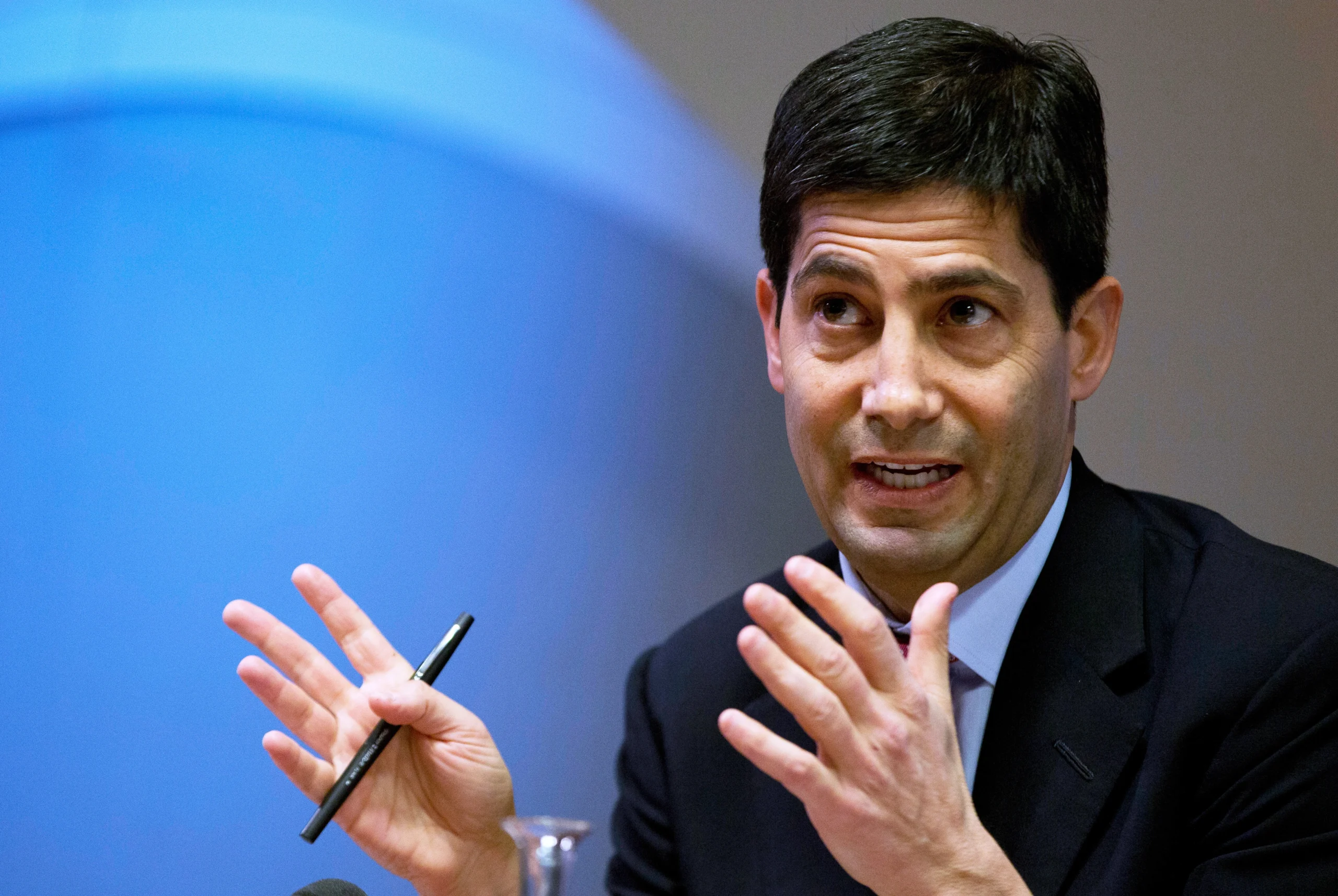
The Federal Reserve’s rate-setting committee held its benchmark borrowing rate steady on July 29, keeping it in a range of 3.5% to 3.75% — but the calm on the surface masked one of the most contested votes of the post-pandemic era. The Federal Open Market Committee split 9 to 3, with three members pushing to raise rates rather than hold, according to NPR’s coverage of the decision.
Chair Kevin Warsh, who took over the Eccles Building earlier this year after a nomination process that rattled bond markets, used his post-meeting press conference to make a point of not making a point. Rather than signal where rates are headed next, Warsh told reporters the Fed would judge market reaction “direct and unfiltered” instead of offering the rolling forecasts investors have come to expect, a stance detailed in CNBC’s meeting recap.
A rate hike was genuinely on the table
What made this meeting unusual wasn’t just the dissent — it was how close markets came to pricing in a hike rather than a cut. Fed funds futures tracked by CME Group put the odds of a rate increase at roughly 35% heading into the decision, up sharply from 26% a week earlier, according to CNBC’s markets analysis. That is a striking reversal from the rate-cutting cycle many investors had expected when Warsh’s nomination was first floated as a “productivity-led growth” pivot away from his predecessor’s caution.
The market reaction told its own story. The S&P 500 slid roughly 0.6% during Warsh’s press conference, the Dow shed more than 840 points intraday, and the 10-year Treasury yield rose to 4.657%, even as the Fed opted for a hold rather than a hike.
Why Warsh is playing it differently
Warsh’s approach reflects both economic and political calculus. Treasury yields have climbed since the Fed’s prior meeting despite the hold, a dynamic Warsh acknowledged directly. And unlike his predecessor, Warsh has been explicit that he intends to set policy independent of the White House’s preferences — even as he awaits a possible additional ally on the Board once a pending internal review concludes, according to CNBC’s analysis of the political backdrop.
Why this matters beyond Washington
A genuinely undecided Fed has knock-on effects well past US borrowers. Higher-for-longer Treasury yields pull global capital toward dollar assets, complicating rate paths in London, Ottawa, and emerging markets alike — a dynamic playing out in parallel with the UK’s own fiscal squeeze (see our companion report on the Autumn Budget) and China’s deflationary drag on global demand. For businesses and investors across the Gulf, Southeast Asia, and South Asia weighing dollar-denominated debt or dollar-pegged currencies, an unpredictable Fed chair is arguably a bigger variable than the rate level itself.
Discover more from The Economy
Subscribe to get the latest posts sent to your email.


Stagfaltion
Stagflation vs. Soft Landing: How Central Bank Rates Are Reshaping European and Asian Economies

Fed hiked, ECB hiked, BoE held 6-3, BoJ next. Inside the most divergent central bank week since 2022 and what it signals for stagflation risk.
Executive Summary / Key Takeaways
- Four major central banks moved within eight days: the ECB raised its deposit rate to 2.5% on 10 September, the Fed hiked to 3.75%–4.00% on 16 September, the Bank of England held at 3.75% on a 6-3 vote on 17 September, and the Bank of Japan is expected to move on 18 September.
- UK inflation has hit a five-month high of 3.1%, with the BoE warning it is likely to rise further over coming quarters.
- The Bank of England also announced an unexpected plan to sell £146 billion of UK government bonds directly to the Treasury to complete quantitative tightening.
- This is a supply-shock tightening cycle, not a demand-driven one — which is precisely what makes the stagflation question live.
- The soft-landing case rests on strong productivity and AI-driven capital investment; the stagflation case rests on energy prices that have not normalised.
1. Introduction & Immediate Context
Central banks almost never tighten into an energy shock. Doing so risks amplifying the output loss while doing little to address the price source. Over eight days in September 2026, three of the world’s four largest monetary authorities did exactly that — and the fourth is expected to follow.
The sequencing matters. The ECB raised its main rates by a quarter point at its 10 September meeting, lifting the deposit rate from 2.25% to 2.5%, and said inflationary pressures arising from the conflict in the Middle East would contribute to inflation remaining above its 2% target for an extended period, according to the House of Commons Library. That followed a June increase of the same size. The Fed moved on 16 September. The Bank of England broke the pattern on 17 September by holding.
For CFOs and macro investors the question is no longer whether policy is restrictive. It is whether restriction is being applied to the right problem.
2. Core Market / Strategic Analysis
2.1 The September policy grid
| Central Bank | Decision | Policy Rate | Vote / Signal | Source |
|---|---|---|---|---|
| Federal Reserve (16 Sep) | +25 bps | 3.75%–4.00% | Unanimous 12-0; 16 of 18 see another hike | Federal Reserve |
| ECB (10 Sep) | +25 bps | 2.50% deposit rate | Second hike since June 2026 | Commons Library |
| Bank of England (17 Sep) | Hold | 3.75% | 6-3, three voting for 4.00% | Euronews |
| Bank of Japan (18 Sep) | Expected +25 bps | 1.00% → 1.25% expected | Hike priced near certainty | FXStreet |
2.2 Why the Bank of England blinked — and why three members did not
The MPC voted six to three to leave borrowing costs unchanged, with the dissenting trio pushing for a quarter-point increase to 4%, Euronews reported. The energy shock from the Iran war has pushed UK inflation to a five-month high of 3.1%. The Committee said inflation is likely to rise further over coming quarters, pointing to crude and refined energy prices that have climbed again since its last meeting and remain more volatile and higher than pre-conflict levels.
That is a central bank telling markets it expects to miss its target by a widening margin — and choosing not to act. Bank Rate has stood at 3.75% since December 2025 following six consecutive quarter-point cuts, and the July meeting produced the same hawkish 6-3 split.
The balance-sheet news was the genuine surprise. Alongside the rate decision the Bank announced an unexpected plan to sell £146 billion of UK government bonds directly to the Treasury, Invezz reported. The proposal is intended to help complete quantitative tightening and could ease some pressure on the gilt market, though it requires the chancellor’s approval. The MPC is already reducing its asset purchase programme from a peak of £895 billion to £489 billion as of 9 September 2026.
Read together, the two decisions are coherent: hold the price of money steady, but remove duration risk from the market through a different channel.
2.3 Asia’s mirror-image problem
Japan’s position inverts everyone else’s. Its ultra-low rates financed trillions of dollars in global investment for more than a decade, making the yen one of the world’s cheapest funding currencies — an advantage that may be entering a new phase as the BoJ tightens again, FXStreet noted.
The carry-trade unwind is not a Japanese story. It is a global liquidity story, and it has already shown up in the US long end: the 10-year Treasury yield briefly crossed 5% in mid-September, driven by a combination of surging oil prices, a hotter-than-expected August CPI, heavy bond issuance and a possible unwinding of the yen carry trade as Japanese rates rise.
3. Structural Drivers and Competitor Gaps
The stagflation-versus-soft-landing frame is usually argued with sentiment. The honest version requires separating two questions.
Question one: is the inflation demand-driven? Largely not. The ECB, BoE and Fed all attribute the current impulse to energy. The IMF’s July update expects global inflation to pause its steady decline. Tightening against a supply shock compresses demand without addressing supply, which is the textbook path to a growth-inflation squeeze.
Question two: is the supply side strong enough to absorb it? Here the evidence cuts the other way. The Fed’s own statement describes productivity growth as strong and capital investment as robust, with domestic spending resilient. The IMF notes that accelerated demand-driven momentum in the global technology cycle, driven by AI advances and adoption, is partly offsetting the war’s effects.
That is the crux. A genuine stagflation requires weak supply-side growth alongside high inflation. What the data currently show is high inflation alongside unusually strong productivity and investment — an unusual and unstable combination, but not classic stagflation.
Three markers will resolve it:
- Whether energy prices normalise. Oil trading solidly above $100 per barrel around the Fed decision, per Yahoo Finance, keeps the shock live. The World Bank’s 2027 recovery scenario assumes it fades.
- Whether second-round effects appear in wages. The BoE explicitly flagged the risk of higher energy prices transmitting into household costs, wages and broader inflation.
- Whether the AI capex cycle holds. Both the IMF and the World Bank treat broader AI adoption as the principal upside risk to growth. If technology investment slows, the offset disappears and the stagflation case strengthens sharply.
4. Key Implications for Stakeholders
Corporate CFOs in Europe. Euro-area policy is still the loosest of the major blocs at a 2.5% deposit rate, but the ECB has now hiked twice since June and expects above-target inflation for an extended period. Refinancing windows are narrowing; the argument for terming out debt in Q4 2026 rather than waiting for 2027 is stronger than it was in June.
UK-exposed borrowers. A held Bank Rate does not mean held borrowing costs. With the MPC expecting inflation to rise further and three members already voting to hike, the November meeting is genuinely live. The £146 billion gilt transfer, if approved, is the variable to watch for long-end pricing.
Asian exporters. Yen weakness following the Fed’s decision improved the earnings outlook for Japan’s export-focused industries — but a BoJ hike cuts the other way. Currency hedging assumptions built on a persistently cheap yen need revisiting.
Multi-asset allocators. Divergence itself is the tradeable feature. The Fed is tightening into strength, the ECB into weakness, the BoE is paralysed by a split committee, and the BoJ is normalising from a near-zero base. Relative-value positioning in rates is more attractive than directional duration.
5. Frequently Asked Questions
Q1: Is the global economy heading into stagflation in 2026?
Not on current data. Inflation is elevated and energy-driven, but productivity growth and capital investment remain strong, which classic stagflation requires to be weak. The risk rises materially if the AI-led investment cycle slows while energy prices stay high.
Q2: Why did the Bank of England hold while the Fed and ECB hiked?
The MPC voted 6-3 to hold at 3.75% despite inflation hitting a five-month high of 3.1%, judging that the energy-driven inflation impulse did not yet warrant tightening. Three members dissented in favour of a quarter-point rise to 4%.
Q3: What is the ECB’s current interest rate?
The ECB raised its deposit rate to 2.5% on 10 September 2026, its second quarter-point increase since June. Its next scheduled policy meeting concludes on 29 October.
Q4: How does the Bank of Japan’s decision affect global markets?
A BoJ hike raises the cost of yen funding, which has underpinned global carry trades for over a decade. The unwind has already contributed to higher long-dated yields in the US and Europe.
Discover more from The Economy
Subscribe to get the latest posts sent to your email.

Key Takeaways
- Bloomberg Tax projects federal income tax brackets will rise 3.2% for 2027 — up from the 2.7% inflation adjustment applied for 2026.
- All seven federal tax tiers are expected to shift upward, meaning taxpayers can earn more before crossing into a higher bracket.
- The IRS has not yet confirmed these figures; an official announcement is typically made in October or November.
- Bracket creep — when income grows faster than the tax thresholds — is the core risk these adjustments are designed to offset.
- Bloomberg Tax’s 2026 projections proved accurate against the IRS’s final figures, lending the 2027 forecast reasonable credibility, though it remains unofficial.
What Is “Bracket Creep” and Why It Matters
Bracket creep happens when a raise or cost-of-living adjustment pushes your income into a higher marginal tax bracket, even though your real purchasing power hasn’t improved. The IRS’s annual inflation adjustment exists specifically to prevent this — recalibrating the income thresholds for each of the seven federal brackets so inflation alone doesn’t quietly raise your tax bill.
Projected 2027 vs. 2026: What’s Changing
| Factor | 2026 (Confirmed) | 2027 (Projected) |
|---|---|---|
| Inflation adjustment | 2.7% | 3.2% (projected) |
| Number of brackets adjusted | 7 | 7 (projected) |
| Filing deadline | April 15, 2026 | April 15, 2027 |
| Source of figures | Official IRS | Bloomberg Tax forecast |
Exact dollar thresholds for each of the seven brackets were not yet published by the IRS at the time of writing and should be sourced directly from irs.gov once released.
Why a 3.2% Increase, and Why It’s Larger Than Last Year
The projected jump from 2.7% to 3.2% reflects a modest reacceleration in the inflation data the IRS uses (chained CPI) through the summer of 2026. A larger adjustment is generally favorable for taxpayers — it means:
- More income taxed at lower marginal rates before hitting the next bracket.
- A modestly larger paycheck in 2027 for many W-2 earners once employers update withholding tables.
- Potential increases to related figures — the standard deduction, retirement contribution limits, and estate tax exemption — though the IRS calculates these separately and on its own timeline.
How to Plan Before the Official Numbers Land
- Don’t restructure your withholding yet. Projections aren’t official; wait for the IRS’s confirmed 2027 figures before making payroll changes.
- Revisit tax-advantaged account contributions. If you’re near a bracket threshold, year-end moves — retirement contributions, HSA funding, charitable giving — can still shift where 2026 income lands.
- Watch for the official release. The IRS historically publishes final brackets in Revenue Procedure form each October or November for the following tax year.
- Talk to a tax professional before making decisions based on projected, not confirmed, figures — this article is informational and not individualized tax advice.
Will 2027 tax brackets change?
Yes — Bloomberg Tax projects a 3.2% inflation adjustment across all seven federal income tax brackets for 2027, up from 2.7% in 2026. The IRS has not yet confirmed these figures; official numbers are expected in October or November 2026.
Discover more from The Economy
Subscribe to get the latest posts sent to your email.
Key Takeaways
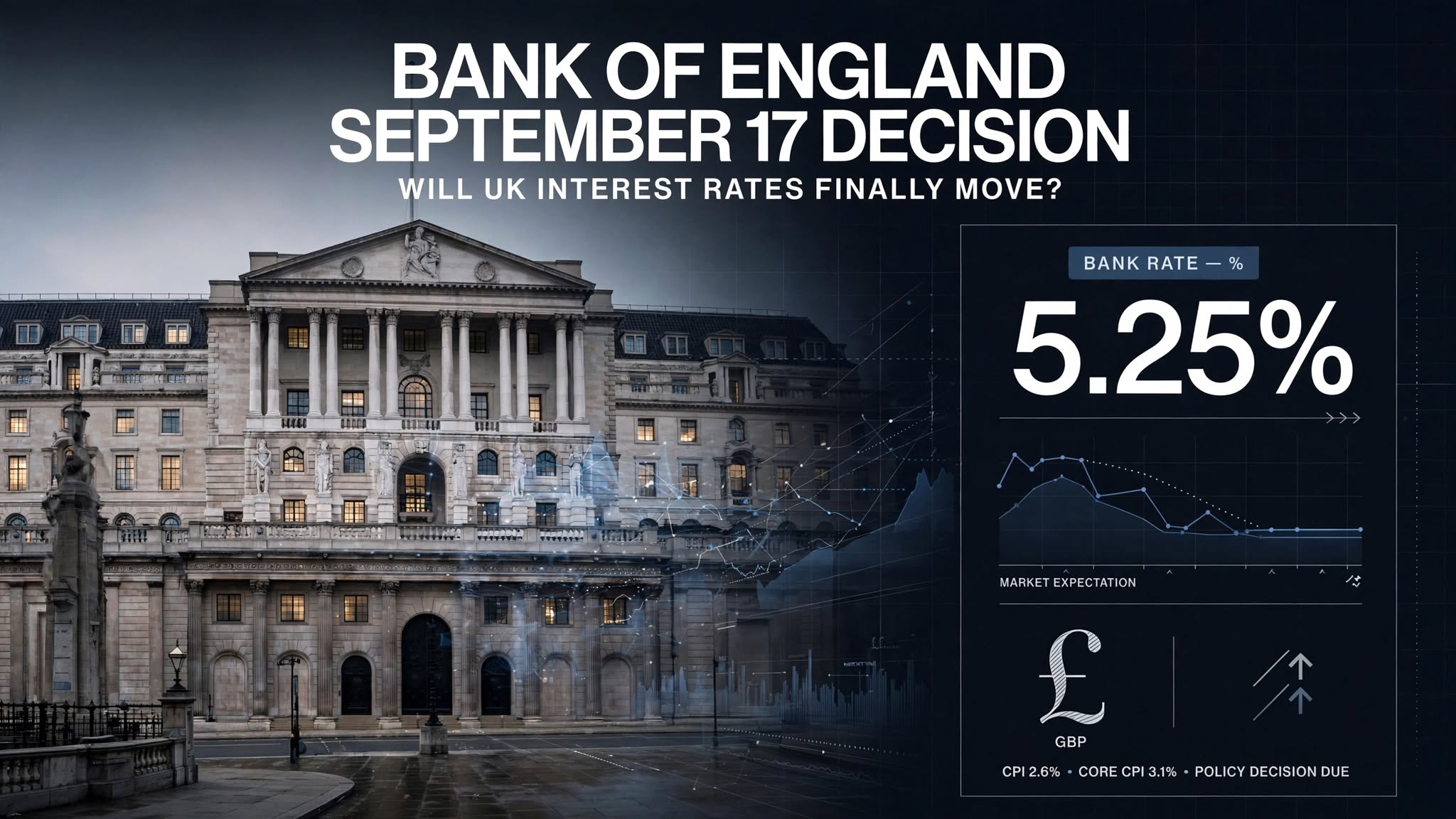
- The Bank of England’s Monetary Policy Committee (MPC) announces its next interest rate decision on Thursday, September 17, 2026, with Bank Rate having held at 3.75% for five consecutive meetings.
- At the July meeting, the MPC voted 6-3 to hold rates, with three members — including chief economist Huw Pill — voting for an immediate 25-basis-point hike, a rare degree of open division within the committee.
- UK inflation has been climbing steadily due to the Middle East conflict’s energy impact: 2.6% in June, rising to 2.9% in July, with the Bank’s own central projection showing CPI peaking around 3.2% in Q4 2026.
- Markets have swung sharply from pricing two rate cuts in 2026 before the Middle East war began, to now pricing the possibility of rate hikes, with some forecasts showing four quarter-point increases by July 2027 that could push Bank Rate to 4.75%.
- Unlike its US and Eurozone counterparts, the Bank of England has explicitly stated that “monetary policy cannot affect global energy prices” — its job is preventing the current energy-driven spike from becoming embedded in longer-term inflation expectations.
The Bank of England’s Monetary Policy Committee meets this Thursday, September 17, 2026, for a decision that carries more genuine uncertainty than it has in months — a marked shift from the largely telegraphed holds of earlier 2026. With inflation climbing on the back of the Middle East conflict and committee members increasingly split on the appropriate response, this meeting has become one of the more closely watched stock market today events for UK-exposed investors, mortgage holders, and businesses alike.
Where UK Rates Stand — And Why the Path Has Flipped
The Bank of England cut interest rates six times between August 2024 and December 2025 — roughly once a quarter, each by 0.25 percentage points — bringing Bank Rate down from a recent high of 5.25% to 3.75%. Since then, the MPC has held rates steady for five consecutive meetings, a pause that initially reflected a belief that rates were approaching the UK economy’s “neutral” level rather than any acute new concern.
That calculus has now shifted meaningfully. Before the Middle East conflict began, markets were pricing in two rate cuts for 2026. Since the war’s escalation and its energy-market spillover, market pricing has flipped toward the possibility of hikes instead — with some forecasts now showing as many as four quarter-point increases by July 2027, which would take Bank Rate to 4.75%.
The Inflation Trajectory Driving the Debate
UK headline inflation has been climbing steadily through the summer of 2026: 2.6% in June (a 15-month low at the time), rising to 2.9% in July, as higher energy costs tied to the Middle East conflict pushed price growth further above the Bank’s 2% target. The Bank’s own central projection, published alongside its July decision, showed CPI inflation peaking at around 3.2% in Q4 2026 — with the MPC explicitly cautioning that “risks to the inflation outlook are tilted to the upside.”
Governor Andrew Bailey summarized the Bank’s position bluntly following the July hold: “Inflation has fallen faster than we’d expected, but the conflict in the Middle East continues to mean high and volatile energy prices.” Crucially, the Bank has been explicit about the limits of its own policy tools in this situation: “Monetary policy cannot affect global energy prices; our job is to make sure that higher inflation does not persist and have long-lasting effects on the economy.”
A Divided Committee
Perhaps the clearest signal that Thursday’s decision is genuinely contested came from the July vote itself. The MPC split 6-3, with the majority voting to hold Bank Rate at 3.75%, while three members — Megan Greene, chief economist Huw Pill, and Catherine Mann — voted for an immediate 25-basis-point increase to 4%. Notably, Pill has publicly described himself as “uncomfortable with a ‘wait-and-see’ stance” from his fellow policymakers, an unusually direct public break from committee consensus for a sitting Bank of England chief economist.
What the Labour Market Says
Inflation isn’t the only variable feeding into the MPC’s calculus. UK unemployment held at 4.9% for the three months to June, unchanged for a third consecutive reading — a relatively stable labour market signal that hasn’t yet given policymakers a clear disinflationary counterweight to the energy-driven price pressure. A softer labour market with rising unemployment would typically argue for rate cuts; the current steady, if elevated, unemployment reading instead leaves the committee weighing inflation risk more heavily in isolation.
Comparing Central Banks’ Responses to the Same Shock
| Central Bank | Current Rate | Recent Move | Inflation Concern |
|---|---|---|---|
| Bank of England | 3.75% | Held 5 consecutive meetings | CPI to peak ~3.2% Q4 2026 |
| European Central Bank | 2.5% (deposit rate) | Hiked 25bps on Sept 10, 2026 | Inflation above 2% target, extended period |
| US Federal Reserve | TBD (decision imminent) | Markets pricing ~90% hike probability | August CPI at 3.4% |
Why This Matters for Mortgages and Markets
For UK homeowners and prospective buyers, the outcome directly affects fixed-rate mortgage pricing, since swap rates — which reflect market expectations for future Bank Rate moves — are the primary benchmark lenders use. Recent public surveys show genuine uncertainty among ordinary Britons too: roughly a quarter expect rates to rise, a similar share expect cuts, and nearly a quarter say they simply don’t know — reflecting how unsettled the broader economic picture has become since the Middle East conflict began reshaping every major central bank’s calculus simultaneously, from the Fed’s now-hawkish tilt to the ECB’s already-executed September hike.
Given the 6-3 split in July, the accelerating inflation trajectory toward a projected 3.2% Q4 peak, and Huw Pill’s public discomfort with further delay, Thursday’s decision is genuinely live in a way recent meetings have not been — markets, mortgage lenders, and UK-exposed investors will be watching closely for whether the committee finally moves, or extends its hold for a sixth consecutive meeting.
Frequently Asked Questions
What is the Bank of England’s current interest rate? Bank Rate has stood at 3.75% since December 2025, following six consecutive quarter-point cuts. The MPC has held that level for five consecutive meetings through July 2026, with the next decision due September 17, 2026.
Why might the Bank of England raise interest rates instead of cutting them? UK inflation has been climbing due to the Middle East conflict’s impact on energy prices, rising from 2.6% in June to 2.9% in July 2026, with the Bank’s own forecast showing a peak near 3.2% in Q4 — a reversal from earlier 2026 expectations of rate cuts.
How divided is the Bank of England’s rate-setting committee? Quite divided by recent standards — the July 2026 vote split 6-3, with three members including chief economist Huw Pill voting for an immediate rate hike rather than a hold, reflecting genuine disagreement about how to respond to the current inflation trajectory.
Discover more from The Economy
Subscribe to get the latest posts sent to your email.

Asian Markets Analysis: Navigating Volatility in China, Japan, and Singapore Stocks

Stagflation vs. Soft Landing: How Central Bank Rates Are Reshaping European and Asian Economies

IMF & World Bank Global Economic Outlook: Growth Forecasts Across Europe and Asia

Fed Rate Hike Projections vs. Trump’s Interest Rate Policy: What Global Markets Expect Next

Singapore Stocks: The Ultimate Safe Haven for Markets and Finance in 2026?

Marie Gluesenkamp Perez: How a Former Shop Owner’s Moderate Politics Are Shaping Tech and Economy Bills

The Future of Silicon: Supply Chain Vulnerabilities in the 2026 Tech Sector

Rolex Perpetual Market Value 2026: Why Luxury Watches Remain a Top Alternative Asset

PSX and KSE-100: How Pakistan’s Market Became One of Asia’s Best Performers

China Stocks vs. Japan Stocks: Where World Bank and IMF Data Point for 2027

Beyond Rhetoric: How the EU Is Deploying ‘All Tools’ to Rebalance Its €1 Billion-a-Day Trade Deficit with China

Elon Musk’s Next Moves: Disrupting the 2026 Global Economy

INTC Stock Forecast 2026: Can Intel’s Government-Backed Turnaround Hold?

Bitcoin Price Action in Q4 2026: Safe-Haven Asset or High-Risk Tech Play?

State Farm’s $5B Dividend 2026: Who Qualifies & Payout Dates

US-China Relations in Q3 2026: Trade Tariffs and Supply Chain Risks

Oil Surges as Strait of Hormuz Traffic Collapses Again

SpaceX Starship Flight 14: First Orbital Attempt & Starlink V3 Launch Explained

Bank of England Set to Hold Rates Through Year-End, Reuters Poll Shows

Top 30 Stocks for Investment in PSX for Massive ROI in 2026

The 2026 Crypto Regulatory Shift: What It Means for Institutional Investors

AI Chip Stocks 2026: The Best Semiconductor Investments Beyond Marvell

AI-Powered Training: The Next Multi-Billion Dollar Ecosystem in Fitness

Tween Back-to-School Trends 2026: What’s Driving the $85B Season

Russia’s Black Sea Oil Exports Fall for a Fifth Straight Week

Shein Clothes Quality & Safety in 2026: What Lab Tests Show

Global Chip Selloff Deepens: What’s Driving the Aug. 19 Semiconductor Rout

10-Year Treasury Yield Hits 4.80%: What It Means for Rates & Portfolios
-

 Markets & Finance8 months ago
Top 15 Stocks for Investment in 2026 in PSX: Your Complete Guide to Pakistan’s Best Investment Opportunities
-

 Analysis7 months ago
Johor’s Investment Boom: The Hidden Costs Behind Malaysia’s Most Ambitious Economic Surge
-

 Analysis7 months ago
Top 10 Stocks for Investment in PSX for Quick Returns in 2026
-

 Analysis7 months ago
Brazil’s Rare Earth Race: US, EU, and China Compete for Critical Minerals as Tensions Rise
-

 Banks8 months ago
Best Investments in Pakistan 2026: Top 10 Low-Price Shares and Long-Term Picks for the PSX
-

 Investment8 months ago
Top 10 Mutual Fund Managers in Pakistan for Investment in 2026: A Comprehensive Guide for Optimal Returns
-

 Global Economy9 months ago
15 Most Lucrative Sectors for Investment in Pakistan: A 2025 Data-Driven Analysis
-

 Global Economy9 months ago
Pakistan’s Export Goldmine: 10 Game-Changing Markets Where Pakistani Businesses Are Winning Big in 2025