
Analysis
Global Housing Crisis: Why Urban Rent Ceilings Fail to Fix the Crunch


In late May, a two-bedroom apartment in Lisbon hit the rental market for €2,500 a month. By noon, the listing agent had received 400 inquiries, crashed their internal server, and quietly pulled the advertisement. It is a mathematical certainty playing out daily from Dublin to Vancouver. The global housing crisis has fractured the social contract, pitting a generation fundamentally priced out of homeownership against a rental market functioning like a ruthless Dutch auction. Governments are panicking. Their immediate, desperate instinct is to cap rents by legislative decree.
The collision of macroeconomic forces over the past four years engineered this exact trap. When central banks abruptly ended the era of cheap money, mortgage rates climbed above the critical 6% threshold, effectively freezing the secondary housing market. Existing homeowners simply refused to sell and surrender their historic 2% fixed-rate mortgages. Prospective buyers, locked out by prohibitive borrowing costs, flooded back into the rental market, driving demand to historic highs.
Simultaneously, the pipeline of new construction stalled. Supply chains choked, timber and steel prices remained structurally elevated, and property developers faced financing costs that rendered new apartment blocks mathematically unviable. The OECD reports that housing investment across advanced economies dropped to its lowest sustained level in a decade. Against this bleak backdrop, political pressure to intervene became irresistible. Policymakers, facing furious electorates, resurrected a blunt, populist instrument: the rent ceiling. Yet what reads as a merciful intervention on a ballot measure often triggers a chain reaction that quietly dismantles the very housing stock it aims to protect.
The Anatomy of the Global Housing Crisis
The mechanics of the global housing crisis are rooted in a chronic, multi-decade failure to build. Across the G7, the deficit between household formation and housing completions has widened every single year since the 2008 financial crash. Cities have essentially run out of space that is legally permissible to develop, heavily constrained by labyrinthine planning permissions and local opposition.
Consider the sheer scale of the deficit. The International Monetary Fund estimates that advanced economies face a shortfall of more than 15 million homes. When supply is violently constricted and demand remains inelastic—because humans must live somewhere—prices detach entirely from local median incomes.
Rent controls are the political reflex to this detachment. From Scotland’s emergency rent freeze in 2022 to St. Paul, Minnesota’s strict 3% rent cap, local governments are attempting to legislate affordability into existence. The appeal is brutally obvious. For the tenant facing a 20% lease renewal spike, a government-mandated ceiling is a financial lifeline. It stops the immediate bleeding.
But capital is ruthlessly mobile. When a municipality artificially caps the yield on a residential asset, institutional capital simply walks away. Developers run pro forma models based on projected rental income against the cost of debt. If the state artificially limits that income while inflation drives up the cost of maintenance and debt, the project fails the math. Developers pivot to jurisdictions where the free market dictates the return, or they switch their asset class entirely, electing to build commercial logistics hubs or data centres instead of residential towers.
A striking example of this capital flight is currently playing out across European capitals. Following the implementation of strict rent controls and heavy tenant protection legislation, Bloomberg data shows a 42% collapse in residential building permits across heavily regulated urban centres in early 2024. The ceiling successfully protects the incumbent tenant, but it slams the door on anyone trying to enter the city. The queue for housing grows longer, and the stock of available housing begins to quietly degrade.
Why Urban Rent Ceilings Distort the Market
To understand the severe economic friction of urban rent ceilings, you have to look past the immediate relief and examine the secondary effects. Housing is not a static, geological resource. It is a depreciating asset that requires constant maintenance, recapitalisation, and physical expansion.
Do rent ceilings work? In the short term, rent ceilings successfully protect existing tenants from sudden price shocks and displacement. However, in the long term, they consistently reduce the overall supply of available housing, discourage new construction, and incentivize landlords to convert rental properties into luxury condos or short-term lets.
This is the central paradox of price controls. By suppressing the vital price signal, governments blind the market to the very geographic areas where new housing is needed most. If a landlord can’t recover the capital cost of a new boiler, roof repair, or energy-efficiency upgrade through marginal rent increases, the property is allowed to deteriorate. Over a decade, the city’s housing stock rots from the inside out.
We see this repeatedly in the data. The moment a city signals its intent to cap rents, a shadow market forms. Landlords withdraw properties from the long-term rental pool entirely. They pivot to Airbnb, or they sell the units to owner-occupiers, physically removing the dwelling from the rental market. The remaining, unregulated apartments then absorb the entirety of the city’s massive demand, driving up prices for newcomers at an accelerated rate.
We only need to look at Buenos Aires for a live control group. After years of catastrophic rent controls that effectively destroyed the city’s rental market—resulting in a scenario where desperate tenants were paying in offshore US dollars just to secure a lease—the newly elected government repealed the rent laws in late 2023. Within six months, the supply of rental housing in the Argentine capital surged by over 170%, and real rental prices finally began to stabilise.
Price controls create a permanent aristocracy of incumbent renters. If you secured an apartment in 2018, you are shielded. If you are a 24-year-old graduate arriving in the city today, you face a desolate landscape of zero vacancy and astronomical asking prices. The policy explicitly meant to democratise housing ultimately pulls the ladder up behind the people already inside.
The Downstream Damage to Labour and Growth
The consequences of a broken rental market extend far beyond the property sector. Severe housing immobility acts as a heavy brake on national economic growth. When workers can’t afford to move to the cities where the most productive, innovative jobs are located, the entire economy runs below its true potential.
We are witnessing the slow death of labour mobility. A software engineer in Manchester might be offered a 30% pay rise to relocate to London, but if the local rental market is throttled by a combination of low supply and gridlocked availability, the math fails. They decline the job. The company loses out on top talent, productivity stagnates, and the national treasury loses the additional tax revenue.
The World Bank explicitly links severe housing friction to lost GDP, calculating that spatial misallocation—where workers are trapped in low-productivity regions purely due to exorbitant housing costs—drags down economic output by up to 2% annually in major Western economies. It is a silent tax on innovation.
The corporate sector is beginning to react. Major employers are increasingly factoring housing affordability into their ten-year expansion plans. Tech firms and financial institutions are abandoning flagship headquarters in hyper-regulated, high-cost cities like San Francisco and London. They’ve opted instead to build campuses in secondary markets—Austin, Texas, or Warsaw, Poland—where their employees can actually afford a decent standard of living on a standard corporate salary.
Meanwhile, the global financial system faces its own reckoning. Pension funds and life insurance companies rely heavily on the steady, inflation-linked yields of residential real estate to meet their long-term liabilities to retirees. If governments arbitrarily cap those yields, institutional investors will systematically reallocate trillions of dollars away from housing construction and into infrastructure or private credit. Without that massive pool of institutional capital, the state is forced to step in and build the housing itself. Very few modern Western governments have the fiscal capacity, the land banks, or the operational competence to execute public housing at that scale.
The Case for Market Intervention
Yet the free-market orthodoxy has its own glaring blind spots. Critics of total deregulation argue quite rightly that housing is fundamentally different from other commodities like televisions or cars. Land in a metropolitan centre is perfectly finite. You can’t simply manufacture more waterfront property in Manhattan, central Paris, or Geneva.
Tenant advocacy groups point out that allowing the market to set rents entirely unchecked leads to aggressive gentrification, mass displacement, and the hollowing out of working-class communities. They argue that rent controls are not merely an economic tool, but a necessary public health and social cohesion measure. A city cannot function if the nurses, teachers, and transit workers who operate it are forced to commute two hours from the urban periphery.
Economists who support targeted interventions, such as those at the Roosevelt Institute, argue that moderate rent stabilisation laws do not halt construction if they are intelligently paired with aggressive zoning reforms. Their core argument hinges on exempting new builds from rent caps. If a developer knows their newly constructed building is legally free from rent controls for the first 15 or 20 years, the capital will still flow. The intervention merely stops predatory, speculative rent hikes on older, fully depreciated properties.
This perspective forces a necessary admission from supply-side purists: the private market, left entirely to its own devices, will naturally prioritise high-margin luxury units over affordable workforce housing. If a developer is paying a massive premium for urban land, materials, and union labour, the only way to satisfy their equity partners is to build high-end apartments.
Therefore, some form of state intervention is inescapable. But the most successful models—such as Vienna’s globally envied social housing system—do not rely on punishing private landlords. Instead, the state actively participates as a massive developer, directly subsidising construction and owning vast swathes of the city’s housing stock to artificially lower the median price.
The tension between protecting tenants today and building homes for tomorrow remains the defining urban policy challenge of the decade. The global housing shortage cannot be legislated away with the stroke of a mayoral pen. Rent ceilings treat the painful symptom of high prices while actively suffocating the only known cure: abundant, relentless supply.
The path forward requires a brutal political compromise. Governments must reform the archaic zoning laws that make building illegal in high-demand areas, whilst simultaneously providing direct fiscal subsidies to the most vulnerable renters—bypassing the destructive price mechanism entirely.
Until policymakers accept that housing affordability is a function of supply rather than a moral failing of landlords, the crisis will only deepen. You can’t mandate cheap housing into existence; you have to build it.
Discover more from The Economy
Subscribe to get the latest posts sent to your email.



Washington’s trade corridors used to hum with a predictable, almost mechanical rhythm: capital flowed where labor was cheapest, and supply chains stretched across the Pacific with little regard for political friction. That era is dead. Today, a shipment of advanced semiconductors or a contract for lithium carbonate carries the weight of a national security dossier. Corporate boardrooms from Frankfurt to Tokyo are quietly ripping up decades-old playbooks. They are no longer just optimizing for efficiency. They are pricing in geopolitical catastrophe. The world is retreating behind tariff walls and export controls, trading the lucrative certainty of globalization for the costly illusion of self-reliance.
The shift was not sudden, but the acceleration over the past 36 months is startling. What began as localized skirmishes over solar panels and 5G networks has hardened into an entrenched architecture of economic statecraft. Capital allocation now explicitly mirrors military alliances.
The International Monetary Fund recently quantified the damage, projecting that severe geoeconomic fragmentation could cost the global economy up to 7 percent of GDP—a staggering $7.4 trillion erasure roughly equivalent to the combined economies of France and Germany.
Still, governments are pushing forward. In Washington, Brussels, and Beijing, policymakers are subsidizing domestic industries at rates not seen since the Cold War. Supply chain decoupling is no longer a fringe theory discussed at think tanks; it is written into legislation. From the US CHIPS and Science Act to the European Critical Raw Materials Act, the legislative machinery of the West is actively unwinding the deeply integrated global market, willing to absorb vast inefficiencies in the pursuit of national security.
The Architecture of Geoeconomic Fragmentation
At the heart of this transition is a fundamental reassessment of risk. For 30 years, geoeconomic fragmentation was viewed as an irrational, self-inflicted wound. Today, political leaders view integration with strategic rivals as a systemic vulnerability. The math of global trade is being rewritten in real-time, and the primary metric is no longer profit margin, but sovereign control.
Consider the flow of foreign direct investment. FDI is increasingly concentrated among geopolitically aligned nations, with the World Bank tracking a sharp divergence between the investment trajectories of friendly blocs versus cross-bloc capital flows. Money is running to safety, and safety is now defined by diplomatic alignment rather than market fundamentals. US Treasury Secretary Janet Yellen crystallized this doctrine in early 2023 when she explicitly linked national economic policy to “friendshoring”—a strategy designed to reroute critical commerce away from adversaries and toward trusted allies.
This realignment is acutely visible in the critical minerals sector. China currently processes nearly 60 percent of the world’s lithium and 80 percent of its cobalt. Western automakers, suddenly aware that their electric vehicle transitions rely on the goodwill of Beijing, are scrambling to secure alternative offtakes. The US government is now directly financing mining operations in Africa and South America. They aren’t doing this for yield. They are doing it to ensure the industrial lights stay on when geopolitical tensions peak.
Corporate executives are caught in the crossfire. A chief executive can no longer source components based purely on unit economics. A factory built in Vietnam or Mexico to bypass US tariffs on Chinese goods often relies on the very same Chinese intermediate inputs it was meant to avoid. Yet, the optics of these shifts are strictly enforced by regulators. Global trade policies are fracturing into competing regulatory zones, the World Trade Organization warns, forcing multinational corporations to maintain redundant supply chains—one compliant with Western strictures, and one designed for the rest of the world.
These parallel systems come at an enormous capital cost. Building a semiconductor fabrication plant in Arizona costs roughly 30 percent more than building the exact same facility in Taiwan, simply due to labor availability and regulatory friction. Companies are absorbing these premiums because the alternative—being cut off from critical technology during a geopolitical shock—is an existential threat. The state has returned as the ultimate arbiter of market access.
Beyond the Tariffs: The True Cost of Decoupling
This brings us to the most misunderstood aspect of the current era. Much of the public debate focuses on visible barriers like import duties and explicit embargoes. The deeper structural shift is the weaponisation of capital, data, and intellectual property. The US Treasury’s expanding use of secondary sanctions forces global financial institutions to act as extensions of American foreign policy. If a foreign bank processes a transaction for a blacklisted entity, it risks losing access to the dollar clearing system.
That threat alone dictates the compliance architecture of every major bank on earth. We are seeing trade choke points shift from physical ports to digital ledgers and patent offices.
What are the economic costs of geoeconomic fragmentation? The primary costs include structurally higher inflation, reduced global output, and severely restricted technology diffusion. As nations duplicate supply chains and erect trade barriers, manufacturing becomes less efficient. This inefficiency creates a permanent inflationary drag while stifling innovation by preventing the cross-border sharing of vital research and development.
The inflationary consequences are already bleeding into consumer markets. When a government mandates that solar panels or battery cells must be manufactured domestically, it is effectively levying a hidden tax on the transition to green energy. European leaders are acutely aware of this bind. They want to protect their legacy automakers from a flood of cheap, heavily subsidized Chinese electric vehicles. Yet, if they impose punishing duties, they risk missing their own aggressive carbon-reduction targets.
It is a paradox of modern economic statecraft. In attempting to secure their economies from foreign coercion, states are artificially constricting their own growth potential. The focus has shifted from expanding the pie to aggressively guarding a shrinking slice.
We are also witnessing a subtle but profound shift in the labor market. As industrial policy directs hundreds of billions of dollars toward advanced manufacturing, the bottleneck is not capital. It is talent. A sophisticated microchip facility requires thousands of specialized chemical, electrical, and mechanical engineers. You cannot simply onshore a supply chain without onshoring the human capital required to run it. Immigration policy, therefore, becomes industrial policy. Yet, the political climate in most Western capitals remains hostile to the very high-skilled immigration required to make decoupling work.
Downstream Consequences for the Next Decade
The next 10 years will be defined by how markets absorb these political frictions. For investors, the old benchmarks of efficiency are dead. The premium will be placed on resilience, redundancy, and political proximity.
We will likely see the emergence of a two-tiered global market. Tier one will consist of strategic industries—semiconductors, artificial intelligence, biotechnology, aerospace, and clean energy—where trade is heavily restricted, subsidized, and policed by the state. Tier two will be the remnants of the old free-trade consensus: consumer goods, basic commodities, and low-tech manufacturing, where goods still cross borders with relative ease.
However, the boundary between these tiers is highly porous. A seemingly benign consumer technology, like a connected car, instantly becomes a national security issue when regulators realize it harvests mapping data and audio recordings. The definition of a “strategic asset” expands every time a new technology demonstrates dual-use potential.
Developing economies stand to lose the most in this paradigm. For decades, the proven path out of poverty was export-led industrialisation. A developing nation attracted foreign capital, built factories, and exported its way to middle-income status. If the US and Europe pull their supply chains inward, or restrict them only to a select group of geopolitical allies, that ladder is violently kicked away. The Bank for International Settlements has tracked a concerning increase in cross-border credit fragmentation, noting that lending flows are now highly sensitive to United Nations voting records. If a sovereign nation votes the wrong way in the General Assembly, the cost of its debt rises.
To survive, some emerging markets are weaponising their own resources. In 2020, President Joko Widodo enacted a total ban on raw nickel exports from Indonesia, forcing foreign battery manufacturers to build processing plants on Indonesian soil. It was a massive geopolitical gamble, and it worked, drawing billions in Chinese and Western capital. Other resource-rich nations are taking notes.
Corporate margins will inevitably compress. As the global economy fragments, the massive economies of scale that drove profitability in the 2010s will reverse. Companies will have to carry more inventory, hire vast compliance teams to track conflicting export controls, and build duplicate factories in less efficient jurisdictions. This cost will be passed directly to the consumer. The deflationary tailwinds of globalization have died. We are entering an era of permanent structural friction.
The Case for Managed Integration
Not everyone believes the sky is falling. A formidable counterargument suggests that what we are witnessing isn’t the death of global commerce, but a necessary and overdue correction.
Free-trade absolutists long ignored the systemic risks of concentrating 90 percent of the world’s advanced chip manufacturing on a single, geopolitically contested island. From this vantage point, current industrial policies are a rational insurance premium. According to the Organisation for Economic Co-operation and Development, diversified supply networks are inherently more shock-resistant than hyper-concentrated ones. Proponents of “de-risking” argue that once the initial capital expenditure of building new factories is absorbed, the global economy will emerge on a much sounder footing.
There is also the argument that state intervention accelerates technological breakthroughs. The Apollo program and the creation of the early internet were both products of massive, state-directed industrial policy driven by geopolitical competition. The billions pouring into green tech and quantum computing today, subsidized by competing governments, might force rapid innovation that a purely free market would have delayed by decades. Former ASML chief executive Peter Wennink noted that cutting off China from Western technology would simply force Beijing to develop its own sovereign semiconductor ecosystem—effectively doubling the global pool of capital dedicated to technological advancement.
Still, this optimistic view requires a delicate balancing act. It assumes politicians can surgically extract the risky parts of global trade without bleeding the patient dry. History suggests that tariff walls, once erected, are notoriously difficult to dismantle. The political incentives for protectionism are immediate and local, while the costs are diffuse and long-term.
The danger lies in escalation. A targeted export control on advanced AI chips can easily devolve into a tit-for-tat trade war covering critical minerals, agricultural products, and basic consumer electronics. In August 2023, Beijing retaliated against Western semiconductor restrictions by curbing exports of gallium and germanium—two obscure but vital metals used in chipmaking. The guardrails that previously contained these disputes—most notably the WTO’s appellate body—have been systematically dismantled. We are operating without a referee.
The Zero-Sum Future
The global economy is being rewired for conflict rather than commerce. We are abandoning the efficient frontiers of the late 20th century for a darker, more partitioned map. Policymakers are attempting to engineer prosperity through isolation, placing massive fiscal bets with capital they cannot afford to lose. The tragedy of this era won’t be a sudden systemic collapse, but a slow suffocation of global potential—a world that grows steadily poorer, less innovative, and more divided in the strict name of security. When efficiency is treated as a liability, friction becomes the only guarantee.
Discover more from The Economy
Subscribe to get the latest posts sent to your email.

The global macroeconomic consensus has fractured. In the quiet corridors of the Federal Reserve building in Washington and the ultra-modern glass towers of the European Central Bank in Frankfurt, two entirely different economic realities have taken hold. This structural divergence marks the end of the great synchronized monetary cycle that defined the post-pandemic era, introducing a volatile period of asymmetric policy execution.
Central Bank Divergence & The “Soft Landing” Verdict
The synchronized global monetary tightening cycle is officially dead. On June 3, 2026, the Federal Reserve opted to hold its benchmark interest rate steady at 5.25%, pointing to a stubborn core services inflation rate that refused to settle below 3.1%. Just 24 hours later, the European Central Bank delivered its third consecutive 25-basis-point cut, lowering its main deposit rate to 2.75% as Eurozone growth indicators continued to sag. This striking divergence between the world’s two most powerful monetary authorities signals a profound shift in the global financial architecture. For three years, central banks moved in lockstep to crush a historic inflation wave; now, domestic structural realities have forced an aggressive policy decoupling.
The concept of a uniform global economic soft landing has been disproven by these events. While the United States rides an exceptionalist wave of high productivity, massive fiscal expansion, and resilient consumer demand, Europe and the United Kingdom are wrestling with structural stagnation and energy-induced industrial deceleration. According to the latest IMF World Economic Outlook updates, global growth is projected to remain highly asymmetric, with the United States expanding at a 2.4% clip while the Eurozone limps forward at just 0.8%. This gap is no longer a temporary statistical aberration. It represents a fundamental divergence in structural economic health that complicates the task of global asset allocation and corporate strategic planning.
The Mechanics of Asymmetric Easing
This widening pattern of central bank divergence can be traced directly to contrasting labor market dynamics and supply-side developments. The American labor market has shown an extraordinary capacity to absorb higher interest rates without fracturing. Despite a policy rate that has sat above 5% for over two years, US unemployment has crawled up only marginally to 4.1%. This resilience is driven by structural factors, including an influx of prime-age workers and an ongoing boom in technology capital expenditure. Conversely, European labor markets, bound by rigid regulatory frameworks, are masking deeper corporate distress. Hours worked across the Eurozone remain below pre-pandemic trends, and corporate insolvencies in major economies like Germany have spiked by 18% over the past 12 months, according to data compiled by Reuters financial markets reporting.
Global Policy Rates & Growth Profiles (Mid-2026)
─────────────────────────────────────────────────────────────
Jurisdiction    Policy Rate    Core Inflation    GDP Growth
─────────────────────────────────────────────────────────────
United States     5.25%            3.1%             2.4%
Eurozone          2.75%            1.9%             0.8%
United Kingdom    3.50%            2.4%             1.1%
Japan             0.50%            2.2%             0.7%
─────────────────────────────────────────────────────────────
The inflation drivers themselves have decoupled. In Europe, the inflation shock was primarily a terms-of-trade crisis, driven by the historic energy shock of 2022. As import prices normalized, European headline inflation fell rapidly, approaching the central bank’s 2% target much faster than anticipated. The US inflation profile, however, is intensely domestic. It is fueled by sustained wage growth in the services sector and an acute housing shortage that continues to push shelter costs higher. Fed Chair Jerome Powell acknowledged this tension during his June press conference, noting that while goods prices have fully deflated, domestic services demand remains strong enough to keep price pressures well above target.
The Bank of England finds itself caught in the middle of this transatlantic tug-of-war. Governor Andrew Bailey and the Monetary Policy Committee elected to cut rates to 3.5% in May, prioritizing a fragile domestic economic recovery over the risk of currency depreciation. This move exposed the UK to significant capital flight pressures as international investors rotated funds out of sterling-denominated assets and into higher-yielding US Treasuries. The British experience highlights the acute danger facing mid-tier central banks: failing to match the Fed’s restrictive stance can lead to immediate currency penalties.
The Currency Crucible and Structural Allocations
This monetary policy decoupling has triggered an aggressive restructuring of global capital flows. The widening interest rate differentials between the Federal Reserve and its global peers have injected fresh momentum into the US dollar. As the yield spread between ten-year US Treasuries and German Bunds expanded beyond 220 basis points, the euro slipped to a multi-year low against the greenback. This foreign exchange dynamic operates as a powerful transmission mechanism, redistributing inflation across borders. A weaker euro drives up the cost of dollar-denominated imports for European businesses, effectively re-importing inflation into an economy that is already structurally weak.
How does central bank divergence affect global markets? Central bank divergence accelerates currency volatility and disrupts international capital flows. As the Federal Reserve maintains elevated interest rates while other central banks cut, capital migrates toward higher-yielding US assets. This movement strengthens the US dollar, increases import costs for easing regions, and places heavy financial strain on emerging market economies holding dollar-denominated debt.
This capital reallocation has profound consequences for sovereign debt markets. The global bond market, traditionally anchored by synchronized yields, is splitting along regional lines. European bonds are pricing in a sustained easing cycle, driving yields down and pushing institutional investors to seek return elsewhere. This trend is clearly visible in data published by Bloomberg fixed income analysis, which shows a record $45 billion flowing into US investment-grade corporate debt from European asset managers during the first five months of 2026 alone. Investors are actively sacrificing currency protection to capture the premium yield offered by American capital markets.
                  ┌──────────────────────────────┐
                  │   Fed Holds Rates at 5.25%   │
                  └──────────────┬───────────────┘
                                 │
                     Yield Differentials Widen
                                 │
                                 ▼
                  ┌──────────────────────────────┐
                  │ Capital Migrates to US Debt  │
                  └──────────────┬───────────────┘
                                 │
                     Dollar Strengthens vs Euro
                                 │
                                 ▼
                  ┌──────────────────────────────┐
                  │ Eurozone Import Costs Rise   │
                  └──────────────────────────────┘
This dynamic is further complicated by the actions of the Bank of Japan. Under Governor Kazuo Ueda, the Japanese central bank has pursued an independent path of monetary normalization, raising its short-term policy rate to 0.5% to combat persistent domestic wage pressures. This shift has disrupted the historic yen carry trade—a financial strategy where investors borrow cheaply in yen to purchase higher-yielding international assets. The unwinding of these positions has caused intermittent bouts of liquidity contraction in global equity markets, proving that divergence is not merely a bilateral issue between Washington and Frankfurt, but a multi-polar challenge.
Downstream Fractures: Emerging Markets and Corporate Debt
The second-order effects of this policy divergence are hitting emerging market economies with particular force. Developing nations that borrowed heavily in US dollars during the low-rate era are now facing a severe double whammy. They must service their debt using depreciating domestic currencies while competing against high risk-free returns available in the United States. A recent comprehensive study by the Bank for International Settlements warns that cross-border bank lending to emerging markets has contracted for three consecutive quarters. This represents the longest period of capital withdrawal since the pandemic outbreak, placing severe balance-of-payments strain on vulnerable economies.
Emerging Market Vulnerability Matrix
─────────────────────────────────────────────────────────────────
Country        USD Debt (% GDP)   Reserve Adequacy   Risk Status
─────────────────────────────────────────────────────────────────
Turkey              42%                Critical       High
Brazil              18%                Moderate       Stable
South Africa        14%                Low            Elevated
Indonesia           21%                High           Stable
─────────────────────────────────────────────────────────────────
Corporate refinancing strategies in developed markets are experiencing a similar structural split. North American corporations, benefiting from a highly liquid and deeply integrated domestic debt market, have largely managed to term out their liabilities. Many large US firms issued long-term bonds at sub-3% rates during 2020 and 2021, insulated from immediate policy shifts. European corporations, by contrast, rely much more heavily on bank financing with shorter maturities. As these loans come due in late 2026, European firms are forced to refinance at rates significantly higher than their initial borrowing costs, even with recent ECB rate cuts. This reality severely limits their capacity to fund capital investment or expand operations.
This financial divergence also shapes corporate competitive dynamics. US multinationals, supported by a strong domestic currency and superior access to capital, are aggressively pursuing market share in Europe and Asia through targeted acquisitions. The strong dollar acts as a cheap corporate currency for foreign investment. This trend is triggering quiet concern among European policymakers, who fear a permanent hollowing out of their domestic industrial base as local champions are acquired or outcompeted by well-capitalized American rivals.
The Case for Global Convergence
Still, a compelling counterargument suggests this period of central bank divergence will be shorter and more self-limiting than current market positioning implies. This view holds that global financial markets are too deeply interconnected for major economies to pursue opposing monetary paths indefinitely. Proponents of this thesis argue that the European Central Bank’s aggressive easing will eventually stimulate Eurozone domestic demand, leading to a recovery in global trade that will lift all regions. This perspective is frequently championed by researchers at institutions like the Peterson Institute for International Economics, who contend that exchange rate mechanisms will ultimately force a policy realignment.
       ┌────────────────────────────────────────────────────────┐
       │             Transmission Chain to Convergence          │
       └────────────────────────────────────────────────────────┘
          ECB Easing Cuts Rates ──> Stimulates Eurozone Demand
                                           │
                                           ▼
          Boosts Eurozone Imports ──> Increases Global Trade Volume
                                           │
                                           ▼
          Strengthens Global Activity ──> Fed Eventually Eases
A sharp depreciation of the euro and sterling could also prove self-correcting by boosting the export competitiveness of European manufacturers. A cheaper euro makes German machinery and French luxury goods significantly less expensive on the global market, potentially engineering an export-led recovery that eliminates the need for further dramatic rate cuts. Furthermore, if the Eurozone’s economic weakness deepens into a full recession, the resulting drop in global commodity demand would inevitably lower inflationary pressures in the United States. This structural shift would give the Federal Reserve the necessary breathing room to begin its own easing cycle, bringing the global monetary policy framework back into alignment by early 2027.
Balancing the Soft Landing Verdict
The divergence we are seeing in mid-2026 is a vivid reminder that the global economy is not a single, cohesive engine. The concept of a universal soft landing was always a comforting fiction that ignored deeply rooted regional imbalances. Instead, we are witnessing a fragmented economic landscape where domestic structural health dictates monetary policy. The United States is managing its inflation challenge from a position of clear economic strength, while Europe is using monetary easing as an emergency tool to avert a prolonged structural recession.
This division places immense stress on the global financial system. It tests the resilience of corporate balance sheets, challenges the stability of emerging market debt, and injects persistent volatility into foreign exchange markets. Policymakers no longer have the luxury of operating within a synchronized global framework. As central banks continue down these diverging paths, market participants must adapt to an environment where structural divergence is a permanent feature of the landscape, and where the verdict on the soft landing depends entirely on where you stand.
Discover more from The Economy
Subscribe to get the latest posts sent to your email.
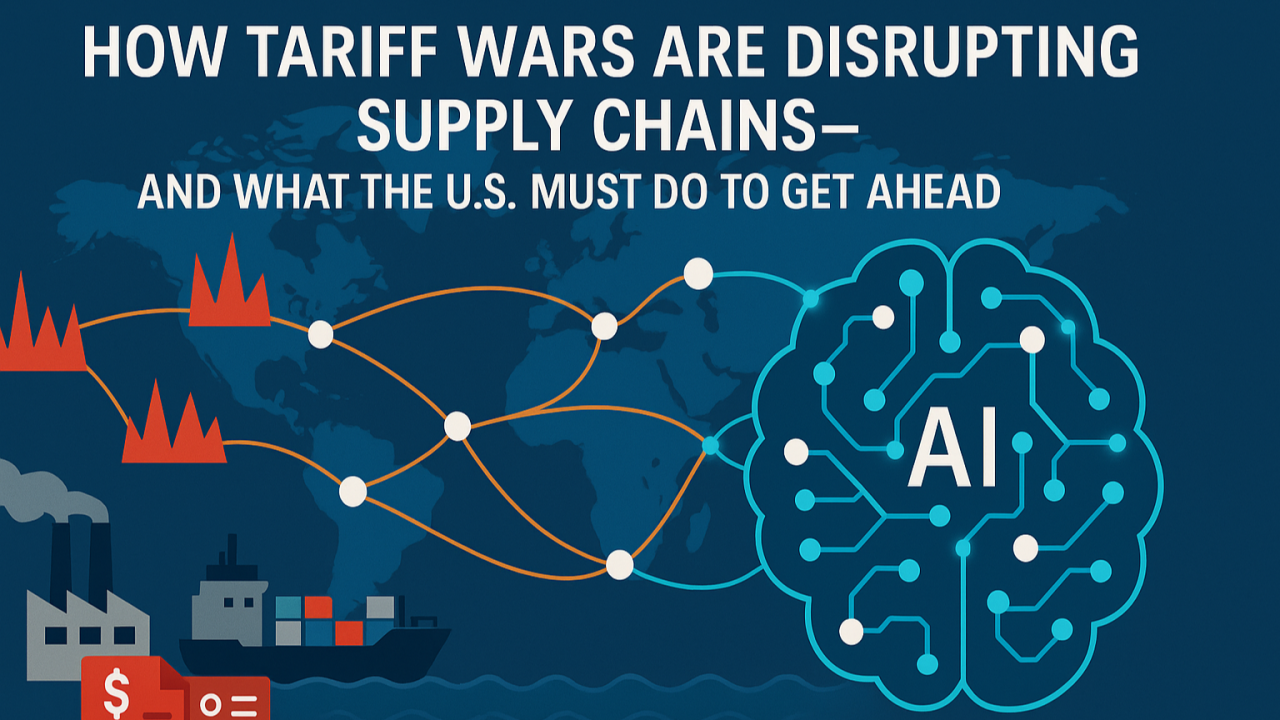
The docks at Long Beach are once again a barometer for a shifting global order. Where efficiency and just-in-time delivery once dictated the movement of goods, geopolitical strategy has taken the helm. Washington and Beijing are locked in a structural struggle that has moved past simple disputes over trade deficits into the harder territory of technological supremacy and industrial autonomy. Companies that spent decades optimizing for a frictionless world are now frantically remapping their dependencies. The era of hyper-globalization isn’t ending, but it is undergoing a profound, expensive, and chaotic renovation.
Global trade remains remarkably resilient, yet the underlying plumbing is being systematically re-engineered. According to the International Monetary Fund, trade fragmentation could cost the global economy up to 7% of GDP in a worst-case scenario. That figure isn’t merely a theoretical warning; it’s a reflection of the billions of dollars being redirected as firms hedge against the widening US-China trade war. Last year, World Bank data showed a distinct trend: while trade volume remains high, the composition of that trade is increasingly regionalized. Nations are choosing proximity over price, and security over speed.
The Logic of Industrial Sovereignty
The core development driving this shift is the transition from “free trade” to “secure trade.” The US-China trade war has evolved from an attempt to balance ledger sheets into a blunt instrument of national security. Policymakers in Washington have realized that reliance on a strategic rival for critical inputs—ranging from active pharmaceutical ingredients to gallium and germanium—creates an unacceptable vulnerability. Consequently, the focus has shifted toward supply chain reshoring. This isn’t just about moving factories back home; it’s about rebuilding the industrial base necessary to sustain a modern economy under duress.
In June 2026, the legislative push behind this is clearer than ever. The Department of Commerce has accelerated oversight on dual-use technology exports, effectively creating a “walled garden” around the semiconductor ecosystem. This creates a cascade effect. As tariffs climb, manufacturers aren’t just shifting production to Vietnam or Mexico; they are investing in advanced robotics to make domestic production cost-competitive despite higher labor costs. The Bureau of Economic Analysis reports a sustained surge in private investment for manufacturing structures, a clear indicator that the corporate sector has internalized the permanence of these trade barriers. When you cannot predict the tariff environment three years out, the only safe bet is to build closer to the end consumer.
Analytical Layer: Beyond the Tariff
The economic consequences of these tariffs are often misunderstood as purely inflationary, yet the reality is more granular. When a tariff is applied, the initial shock is indeed felt by the importer, but the long-term impact is a distortion of capital allocation. Markets are signaling that efficiency is no longer the primary KPI. Instead, companies are prioritizing “resilience,” a term that effectively translates to higher operational costs in exchange for lower systemic risk.
What are the economic consequences of US tariffs on China? The primary effect is the forced diversification of manufacturing hubs. By imposing high-tariff barriers, the US incentivizes firms to relocate production, leading to a “China Plus One” strategy. This raises costs for consumers in the short term, but provides the US economy with a buffer against supply chain shocks originating from the Asia-Pacific region.
This transformation requires a fundamental rethink of corporate strategy. Firms that once viewed geography as a logistics concern now view it as a political liability. The Federal Reserve has noted that firms are holding higher inventory levels—a move away from the lean manufacturing models that dominated the 2010s. This “just-in-case” inventory strategy, combined with the costs of building new facilities, acts as a structural weight on margins. Yet, for many boards, this is a price worth paying to avoid the existential threat of being caught on the wrong side of a future export ban.
Implications & Second-Order Effects
The downstream consequences of this shift are creating a “two-track” global economy. We are seeing the rise of parallel supply chains: one anchored in the US and its allies, and another focused on Chinese industrial integration. This bifurcation risks locking out innovation from global markets. When technologies can’t cross borders, the speed of development slows.
The OECD has warned that persistent trade friction reduces productivity growth, as firms spend more time managing regulatory compliance than innovating. Furthermore, we are witnessing a scramble for raw materials that are essential for the energy transition. As China limits the export of rare earth metals, the US is forced to subsidize domestic processing—an expensive, environmentally complex, and slow endeavor. The second-order effect here is a massive increase in public-private partnership activity, where the government effectively underwrites the risk of industrial expansion. This signals a return to a 1950s-style dirigisme, where the boundary between the state and the private sector is increasingly porous.
A Dissenting View: The Efficiency Mandate
Not all analysts agree that this pivot is sustainable. Critics, including many voices at the Peterson Institute for International Economics, argue that protectionism creates a “self-inflicted wound.” By forcing production home, the US risks becoming an island of high-cost, inefficient manufacturing. The argument here is that the global economy is too deeply entangled for a clean break. Any attempt to fully excise Chinese components from the US tech stack will result in a decade of suppressed growth and diminished competitiveness.
Even those who advocate for domestic capability admit that the timeline for “reshoring” is optimistic. Building a fabrication plant takes years of planning and permitting. During that lag, the US remains vulnerable. Steel-manning the opposition reveals a valid concern: if the cost of shielding the economy from China is a permanent 2% to 3% increase in consumer prices, the social friction could become as dangerous as the geopolitical risk. The trade-off is not between security and danger, but between two different types of risk: the risk of external dependence versus the risk of internal economic stagnation.
The tension between the desire for national security and the reality of global economic integration will define the next decade of fiscal policy. We are watching the messy, expensive divorce of two economies that once believed they could coexist through commerce. The new order won’t be defined by the elimination of trade, but by the tightening of its terms. As the machinery of the global economy is slowly disassembled and rebuilt along securitized lines, the companies that succeed will be those that view every border as a potential barrier and every supply chain as a matter of statecraft. The world has traded the seamlessness of the digital age for the friction of the industrial one. It is a transition that guarantees neither safety nor prosperity, only a relentless and costly pursuit of both.
Discover more from The Economy
Subscribe to get the latest posts sent to your email.
-

 Markets & Finance5 months ago
Top 15 Stocks for Investment in 2026 in PSX: Your Complete Guide to Pakistan’s Best Investment Opportunities
-

 Analysis4 months ago
Top 10 Stocks for Investment in PSX for Quick Returns in 2026
-

 Analysis4 months ago
Brazil’s Rare Earth Race: US, EU, and China Compete for Critical Minerals as Tensions Rise
-

 Banks5 months ago
Best Investments in Pakistan 2026: Top 10 Low-Price Shares and Long-Term Picks for the PSX
-

 Investment5 months ago
Top 10 Mutual Fund Managers in Pakistan for Investment in 2026: A Comprehensive Guide for Optimal Returns
-

 Analysis4 months ago
Johor’s Investment Boom: The Hidden Costs Behind Malaysia’s Most Ambitious Economic Surge
-

 Global Economy5 months ago
15 Most Lucrative Sectors for Investment in Pakistan: A 2025 Data-Driven Analysis
-

 Global Economy5 months ago
Pakistan’s Export Goldmine: 10 Game-Changing Markets Where Pakistani Businesses Are Winning Big in 2025