
Analysis
The New Tariff War & Supply Chain Reshoring

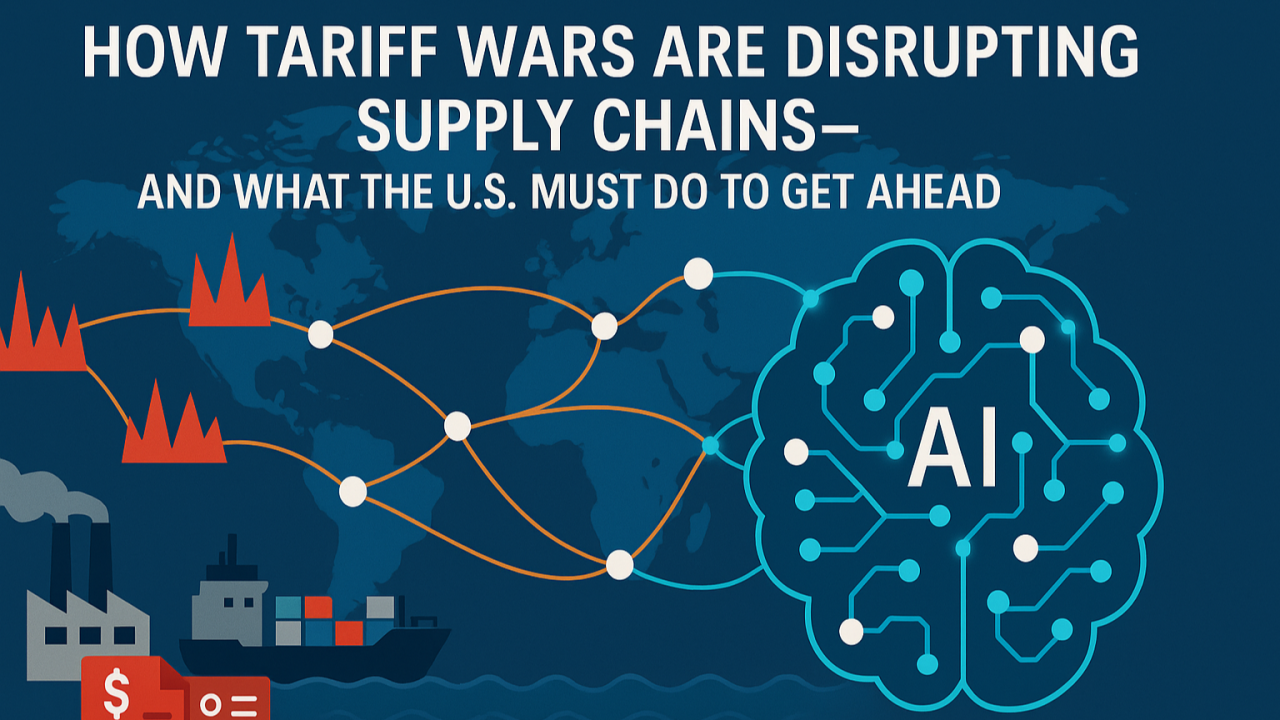
The docks at Long Beach are once again a barometer for a shifting global order. Where efficiency and just-in-time delivery once dictated the movement of goods, geopolitical strategy has taken the helm. Washington and Beijing are locked in a structural struggle that has moved past simple disputes over trade deficits into the harder territory of technological supremacy and industrial autonomy. Companies that spent decades optimizing for a frictionless world are now frantically remapping their dependencies. The era of hyper-globalization isn’t ending, but it is undergoing a profound, expensive, and chaotic renovation.
Global trade remains remarkably resilient, yet the underlying plumbing is being systematically re-engineered. According to the International Monetary Fund, trade fragmentation could cost the global economy up to 7% of GDP in a worst-case scenario. That figure isn’t merely a theoretical warning; it’s a reflection of the billions of dollars being redirected as firms hedge against the widening US-China trade war. Last year, World Bank data showed a distinct trend: while trade volume remains high, the composition of that trade is increasingly regionalized. Nations are choosing proximity over price, and security over speed.
The Logic of Industrial Sovereignty
The core development driving this shift is the transition from “free trade” to “secure trade.” The US-China trade war has evolved from an attempt to balance ledger sheets into a blunt instrument of national security. Policymakers in Washington have realized that reliance on a strategic rival for critical inputs—ranging from active pharmaceutical ingredients to gallium and germanium—creates an unacceptable vulnerability. Consequently, the focus has shifted toward supply chain reshoring. This isn’t just about moving factories back home; it’s about rebuilding the industrial base necessary to sustain a modern economy under duress.
In June 2026, the legislative push behind this is clearer than ever. The Department of Commerce has accelerated oversight on dual-use technology exports, effectively creating a “walled garden” around the semiconductor ecosystem. This creates a cascade effect. As tariffs climb, manufacturers aren’t just shifting production to Vietnam or Mexico; they are investing in advanced robotics to make domestic production cost-competitive despite higher labor costs. The Bureau of Economic Analysis reports a sustained surge in private investment for manufacturing structures, a clear indicator that the corporate sector has internalized the permanence of these trade barriers. When you cannot predict the tariff environment three years out, the only safe bet is to build closer to the end consumer.
Analytical Layer: Beyond the Tariff
The economic consequences of these tariffs are often misunderstood as purely inflationary, yet the reality is more granular. When a tariff is applied, the initial shock is indeed felt by the importer, but the long-term impact is a distortion of capital allocation. Markets are signaling that efficiency is no longer the primary KPI. Instead, companies are prioritizing “resilience,” a term that effectively translates to higher operational costs in exchange for lower systemic risk.
What are the economic consequences of US tariffs on China? The primary effect is the forced diversification of manufacturing hubs. By imposing high-tariff barriers, the US incentivizes firms to relocate production, leading to a “China Plus One” strategy. This raises costs for consumers in the short term, but provides the US economy with a buffer against supply chain shocks originating from the Asia-Pacific region.
This transformation requires a fundamental rethink of corporate strategy. Firms that once viewed geography as a logistics concern now view it as a political liability. The Federal Reserve has noted that firms are holding higher inventory levels—a move away from the lean manufacturing models that dominated the 2010s. This “just-in-case” inventory strategy, combined with the costs of building new facilities, acts as a structural weight on margins. Yet, for many boards, this is a price worth paying to avoid the existential threat of being caught on the wrong side of a future export ban.
Implications & Second-Order Effects
The downstream consequences of this shift are creating a “two-track” global economy. We are seeing the rise of parallel supply chains: one anchored in the US and its allies, and another focused on Chinese industrial integration. This bifurcation risks locking out innovation from global markets. When technologies can’t cross borders, the speed of development slows.
The OECD has warned that persistent trade friction reduces productivity growth, as firms spend more time managing regulatory compliance than innovating. Furthermore, we are witnessing a scramble for raw materials that are essential for the energy transition. As China limits the export of rare earth metals, the US is forced to subsidize domestic processing—an expensive, environmentally complex, and slow endeavor. The second-order effect here is a massive increase in public-private partnership activity, where the government effectively underwrites the risk of industrial expansion. This signals a return to a 1950s-style dirigisme, where the boundary between the state and the private sector is increasingly porous.
A Dissenting View: The Efficiency Mandate
Not all analysts agree that this pivot is sustainable. Critics, including many voices at the Peterson Institute for International Economics, argue that protectionism creates a “self-inflicted wound.” By forcing production home, the US risks becoming an island of high-cost, inefficient manufacturing. The argument here is that the global economy is too deeply entangled for a clean break. Any attempt to fully excise Chinese components from the US tech stack will result in a decade of suppressed growth and diminished competitiveness.
Even those who advocate for domestic capability admit that the timeline for “reshoring” is optimistic. Building a fabrication plant takes years of planning and permitting. During that lag, the US remains vulnerable. Steel-manning the opposition reveals a valid concern: if the cost of shielding the economy from China is a permanent 2% to 3% increase in consumer prices, the social friction could become as dangerous as the geopolitical risk. The trade-off is not between security and danger, but between two different types of risk: the risk of external dependence versus the risk of internal economic stagnation.
The tension between the desire for national security and the reality of global economic integration will define the next decade of fiscal policy. We are watching the messy, expensive divorce of two economies that once believed they could coexist through commerce. The new order won’t be defined by the elimination of trade, but by the tightening of its terms. As the machinery of the global economy is slowly disassembled and rebuilt along securitized lines, the companies that succeed will be those that view every border as a potential barrier and every supply chain as a matter of statecraft. The world has traded the seamlessness of the digital age for the friction of the industrial one. It is a transition that guarantees neither safety nor prosperity, only a relentless and costly pursuit of both.
Discover more from The Economy
Subscribe to get the latest posts sent to your email.



Navigating Mortgage and Loan Refinancing in a High-Yield Environment
Global public debt crossing critical thresholds has kept central bank policies volatile, resulting in fluctuating US Treasury yields throughout 2026. For homeowners and commercial property holders burdened by previous high-interest borrowing cycles, finding optimal refinance windows has become a high-stakes financial puzzle. Stalled disinflation and stubborn employment numbers mean rate cuts are incremental, requiring borrowers to act with precision.
Timing your mortgage or commercial loan refinance in this environment requires a deep understanding of yield curve movements and lender risk appetites.
Decoding 2026 Refinance Dynamics
The 10-Year Treasury Yield Benchmark
Mortgage rates continue to track closely with the 10-year US Treasury yield. When macroeconomic anxiety spikes debt issuance, yields rise, tightening consumer borrowing capacity. Savvy borrowers monitor weekly Treasury auctions to lock in rates during brief dip windows.
Hybrid ARMs and Alternative Structures
With fixed rates remaining elevated, 7/1 and 10/1 adjustable-rate mortgages (ARMs) have surged in popularity. These products offer lower initial monthly payments, giving borrowers breathing room until central bank easing cycles fully materialize.
| Loan Product | Current Rate Range | Best For | Key Risk Factor |
| 30-Year Fixed Mortgage | 6.2% – 6.8% | Long-term predictability | Higher initial monthly outlay |
| 7/1 Hybrid ARM | 5.5% – 5.9% | Short-term ownership / flipping | Rate reset risk after year 7 |
| Commercial Refinance | 7.0% – 8.2% | Corporate asset restructuring | Strict DSCR lender covenants |
Actionable Steps for Successful Refinancing
To maximize your chances of securing favorable refinance terms in a volatile market, follow a disciplined preparation strategy.
Boost Your Credit Score Immediately: Lenders in 2026 are applying stringent credit tiering; a 20-point increase can drop your APR by a crucial quarter-point.
Shop Regional Credit Unions: Smaller financial institutions often offer portfolio loans with more flexible underwriting than major national banks.
Calculate the Break-Even Point: Ensure your total closing costs are recouped through monthly savings within 24 months of closing.
“Market Strategist View: Refinancing in 2026 is an exercise in opportunistic timing. Borrowers must maintain immaculate financial profiles ready to strike the moment Treasury yields dip.”
Mastering the complexities of today’s debt environment ensures you can successfully lower your debt service costs and protect your long-term financial stability.
Discover more from The Economy
Subscribe to get the latest posts sent to your email.

The days of pulling generic auto insurance quotes based purely on your zip code and age are officially over. In 2026, insurance comparison engines are powered entirely by generative AI and real-time telematics. These platforms digest thousands of live data points—ranging from your driving smoothness via connected vehicle sensors to real-time traffic congestion patterns—to generate hyper-personalized premiums instantly.
For consumers, this evolution represents both a massive opportunity for savings and a hidden trap for penalty pricing. Understanding how AI algorithms evaluate risk is essential for anyone looking to lower their monthly auto insurance premiums.
How AI Comparison Engines Evaluate Your Risk Profile
Behavioral Telematics and Connected Cars
Modern cars stream performance data directly to insurance aggregators. Generative AI models analyze braking sharpness, acceleration curves, cornering G-forces, and phone distraction metrics. Drivers who maintain smooth, defensive habits are rewarded with dynamic rate cuts of up to 40% compared to traditional rating tiers.
Predictive Traffic and Weather Modeling
AI tools now cross-reference your daily commute route with predictive weather and accident probability models. If your standard parking location or driving corridor has a statistically higher incidence of uninsured motorist claims, your quotes will reflect that hyper-local risk assessment.
| Comparison Factor | Traditional Rating Model | 2026 Generative AI Model | Impact on Premium |
| Mileage & Usage | Annual estimated odometer reading | GPS tracking & live trip duration | High (up to 35% savings) |
| Driving Behavior | MVR driving record & accidents | Real-time braking, speed, & G-force | Critical (determines tier) |
| Vehicle Tech | Make, model, and safety rating | ADAS calibration & repair cost data | Moderate |
Strategies to Lower Your AI-Driven Insurance Quote
To outsmart the algorithm and secure the lowest possible premium in 2026, drivers must proactively manage their digital footprint on insurance platforms.
Opt-In for Telematics Trial Periods: Many insurers offer immediate 15% discounts just for installing their driving app; let it track safe habits for 30 days to lock in permanent savings.
Scrub Unverified Public Records: Ensure your motor vehicle report is free of clerical errors that AI risk models misinterpret as reckless behavior.
Compare AI Aggregators: Use platforms that integrate multi-carrier API feeds rather than single-brand comparison sites to find the best risk-adjusted rate.
“Industry Note: AI-driven pricing rewards transparency and precision. Drivers who actively manage their telematics data consistently out-save those relying on legacy quote calculators.”
Embracing AI comparison tools allows savvy policyholders to customize coverage limits precisely to their driving habits, eliminating wasted premium spend while ensuring robust protection.
Discover more from The Economy
Subscribe to get the latest posts sent to your email.

Despite decades of bans and strict handling mandates, asbestos remains a silent killer across legacy manufacturing plants, shipyards, and modern green-energy infrastructure retrofits. In 2026, regulatory changes by the EPA and tightened occupational health standards have triggered a fresh wave of mesothelioma litigation. Manufacturers attempting to fast-track industrial transitions are encountering catastrophic oversight, exposing workers to legacy toxins and opening corporate parent companies to unprecedented liability.
Navigating a mesothelioma claim in 2026 requires understanding how modern industrial supply chains intersect with historical exposure. Trusts established decades ago are being audited under stricter transparency laws, altering payout ratios and accelerating fast-track settlements for terminally ill plaintiffs.
Modern Industrial Exposure Hotspots
Green Retrofitting and Renewable Energy Infrastructure
A primary source of 2026 asbestos exposure occurs during the decommissioning and retrofitting of older industrial facilities for renewable energy production. Workers insulating electrical grids, modernizing HVAC systems, or upgrading manufacturing floors frequently disturb encapsulated asbestos materials that were improperly documented or ignored during facility audits.
Automotive and Aerospace Supply Chains
With advanced manufacturing booming, workers handling specialized friction materials, gaskets, and heat shields face ongoing risks. Supply chain tracing has become more sophisticated, allowing legal teams to pinpoint exact corporate entities responsible for raw material distribution across multinational borders.
| Industry Sector | Primary Exposure Risk | Legal Venue / Trust | Avg. Claim Value Range |
| Green Energy Retrofit | Disturbed insulation, pipe lagging | Federal Tort / Manufacturer Trust | $1.2M – $3.5M |
| Shipbuilding & Marine | Boiler insulation, structural seals | Asbestos Bankruptcy Trusts | $800K – $2.4M |
| Automotive Manufacturing | Brake components, high-heat gaskets | Third-Party Product Liability | $600K – $1.8M |
Securing Maximum Compensation: Steps for Plaintiffs
Time is of the essence in mesothelioma cases. Plaintiffs and their families must act decisively to secure financial recovery before statutes of limitations expire.
Retain Specialized Counsel: Work exclusively with national mesothelioma law firms possessing deep historical databases of asbestos-containing products.
Audit Employment History: Document every job site, supervisor name, and equipment brand encountered throughout your career.
Expedite Medical Filings: Secure a formal pathological diagnosis quickly to qualify for expedited trust fund distribution and priority trial settings.
“Expert Insight: Modern asbestos litigation is no longer just about historical tracking; it is about holding modern corporations accountable for failing to conduct rigorous environmental safety audits before initiating industrial retrofits.”
By combining meticulous work history reconstruction with aggressive multi-trust filings, victims can secure substantial financial relief to cover specialized immunotherapy and family support.
Discover more from The Economy
Subscribe to get the latest posts sent to your email.

World Bank & IMF Reports 2026: Why the “3% Growth” Consensus Is Actually a Debate

Elon Musk’s Boring Company Hits $23B Valuation After UAE-Led $3 Billion Series D

Middle East War Economics 2026: Oil Prices & Energy Markets

PSX Forecast 2026: KSE-100, IMF Reviews & Geopolitics

Asian Markets Outlook 2026: China, Japan & Singapore Stocks

Global Economy 2026: IMF Growth, Inflation & Private Credit

Current Account Deficit (CAD) : Causes and Impact

Balance of Payments (BOP)

The Falkland Islands Dispute: Sovereign Wealth, Offshore Drilling, and Market Impacts

Gross Domestic Product (GDP): Nominal vs. Real

What is Inflation and the Consumer Price Index (CPI)?

US-China Trade Competition 2026: Supply Chain Relocation Guide

Oil Prices Break $100 in 2026: Middle East Conflict & Energy Markets

South-South Trade Expansion: Digital Integration and Emerging Market Growth

State Farm’s $5B Dividend 2026: Who Qualifies & Payout Dates

US-China Relations in Q3 2026: Trade Tariffs and Supply Chain Risks

Gold’s Wild 2026: From a Record $5,600 Peak to a 24% Crash and Back Toward $4,500

Oil Surges as Strait of Hormuz Traffic Collapses Again

The Rocket That Won’t Quit: Inside SpaceX’s Falcon 9 Launch Machine

Bank of England Set to Hold Rates Through Year-End, Reuters Poll Shows

SpaceX Starship Flight 14: First Orbital Attempt & Starlink V3 Launch Explained

The 2026 Crypto Regulatory Shift: What It Means for Institutional Investors

AI Chip Stocks 2026: The Best Semiconductor Investments Beyond Marvell

Retail Earnings Week: What Home Depot, Target & Walmart Reveal

AI-Powered Training: The Next Multi-Billion Dollar Ecosystem in Fitness

Russia’s Black Sea Oil Exports Fall for a Fifth Straight Week

Top 30 Stocks for Investment in PSX for Massive ROI in 2026

Tween Back-to-School Trends 2026: What’s Driving the $85B Season
-

 Markets & Finance8 months ago
Top 15 Stocks for Investment in 2026 in PSX: Your Complete Guide to Pakistan’s Best Investment Opportunities
-

 Analysis7 months ago
Johor’s Investment Boom: The Hidden Costs Behind Malaysia’s Most Ambitious Economic Surge
-

 Analysis7 months ago
Top 10 Stocks for Investment in PSX for Quick Returns in 2026
-

 Analysis7 months ago
Brazil’s Rare Earth Race: US, EU, and China Compete for Critical Minerals as Tensions Rise
-

 Banks8 months ago
Best Investments in Pakistan 2026: Top 10 Low-Price Shares and Long-Term Picks for the PSX
-

 Investment8 months ago
Top 10 Mutual Fund Managers in Pakistan for Investment in 2026: A Comprehensive Guide for Optimal Returns
-

 Global Economy9 months ago
15 Most Lucrative Sectors for Investment in Pakistan: A 2025 Data-Driven Analysis
-

 Global Economy9 months ago
Pakistan’s Export Goldmine: 10 Game-Changing Markets Where Pakistani Businesses Are Winning Big in 2025