
Analysis
Are you financially ‘prepped’ for higher inflation?

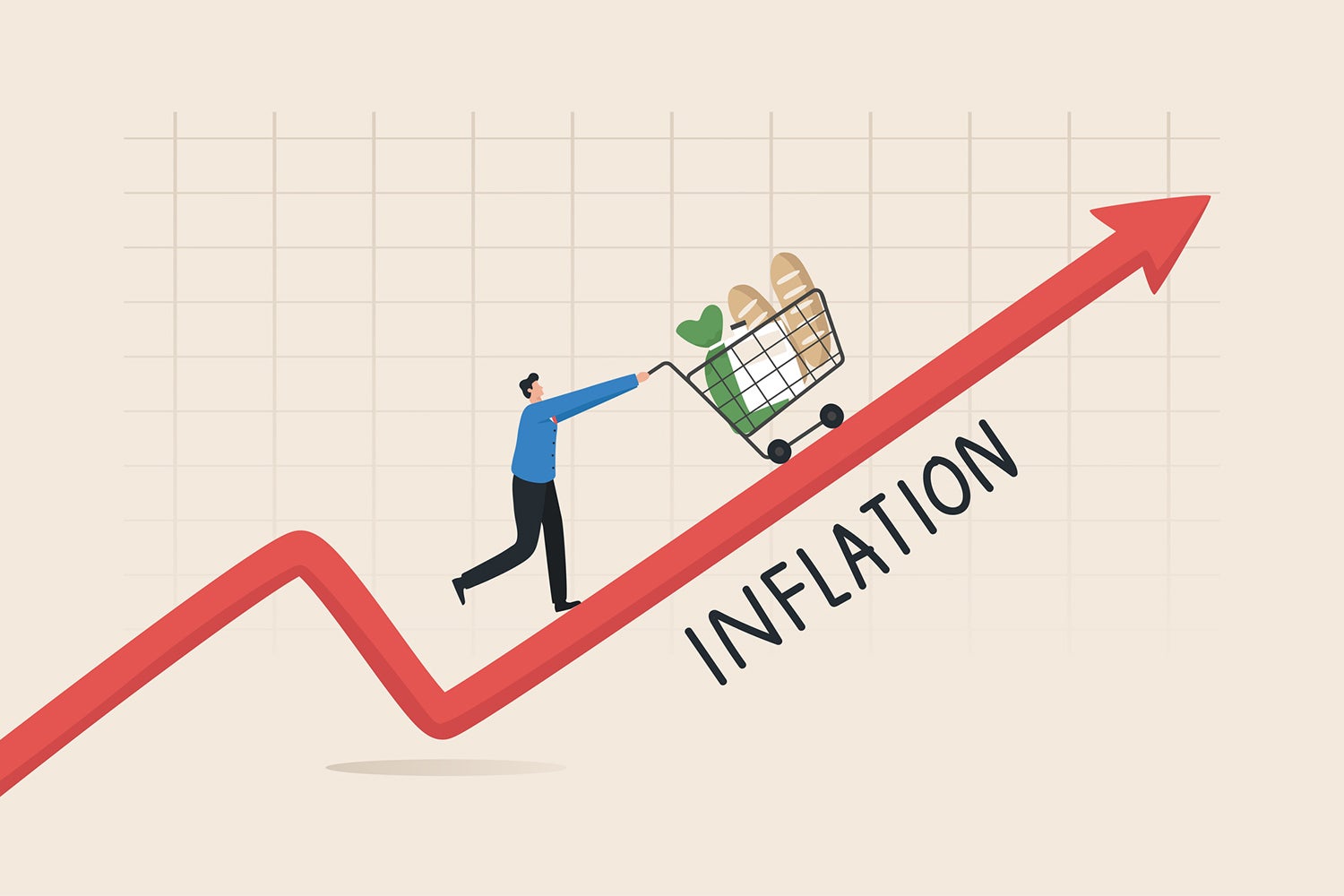
This 10-point personal finance checklist—grounded in real data—will actually protect your wealth.
Here is the thing about inflation anxiety: it tends to peak at precisely the wrong moment. Markets lurch. Cable news fills its chyrons with the word “stagflation.” Your neighbour emails you a link to a gold dealer. And somewhere in Washington, a Federal Reserve official who has said “data-dependent” eleven times in the same press conference is being asked, again, whether 2026 will look like 1979.
It will not. But that does not mean you should do nothing.
The US Consumer Price Index for All Urban Consumers rose 2.4 percent over the 12 months to January 2026—a figure that sounds almost quaint after the bonfire years of 2022. Yet beneath that headline sits a persistent ember. Core Personal Consumption Expenditure inflation, the Federal Reserve’s preferred measure, remains above target, and tariffs continue to threaten further goods-price pressure in the months ahead. Meanwhile, oil prices jumped more than 15 percent in a single week in early March 2026 as geopolitical tensions escalated, pushing the 10-year Treasury yield to around 4.14 percent and sending the VIX intraday to 28.15—a sharp reminder that markets can go from “Goldilocks” to “gyrating” in 72 hours.
The good news? Being financially prepped for higher inflation is not complicated. It requires neither a bunker nor a Bitcoin wallet. It requires a clear-eyed checklist, worked through calmly, once. Here is that checklist.
Why Higher Inflation Remains the Base Case in 2026
The story of inflation in 2026 is not a simple repeat of 2021–22’s supply-shock spiral. It is something more structural and, in some ways, more durable.
The Federal Reserve’s own staff projections note that tariff increases are still expected to provide some upward pressure on inflation in 2026, with inflation only projected to reach 2 percent in 2027. The Congressional Budget Office echoes this view: PCE inflation is projected to soften slightly in 2026 to approximately 2.7 percent as the full tariff effect begins to wane, but the return to the Fed’s 2 percent target is not expected until 2030.
The transmission channels are multiple. Import tariffs are repricing goods that households buy every month—consumer electronics, clothing, vehicle parts. Rabobank’s analysis flags that while higher goods prices are being partly offset by lower housing costs, the full impact of import tariffs has yet to materialize, with a meaningful decline in core inflation likely only in the second half of 2026. Shelter, the single largest component of the CPI basket, is cooling—but slowly. And energy is back as a wildcard: Brent crude near $84 a barrel on a single day in March 2026 showed how quickly the inflation channel can re-open via geopolitical shocks.
The picture in Europe is more complex still. The European Central Bank held its key deposit rate at 2 percent in early 2026, acknowledging that the inflation trajectory and wider economic conditions did not warrant a move, but cautioning that the outlook remains unpredictable. In the United Kingdom, the Bank of England cut to 3.75 percent, navigating between four hawks concerned about persistent 3.6 percent inflation and four doves focused on deteriorating labour market conditions.
The net global read: central banks are not rushing to rescue your purchasing power. That job falls to you.
The 10-Point “Financially Prepped for Higher Inflation” Checklist
1. Audit Your Emergency Fund—and Reprice It for 2026 Inflation
The emergency fund calculus has changed. Three to six months of expenses is the conventional benchmark—but which expenses? Most people set their fund target based on what they spent in 2022 or 2023. With the CPI shelter index still rising month-over-month in January 2026 and food costs up modestly too, your monthly burn rate is almost certainly higher today. Recalculate using your last three months of actual bank statements, multiply by six, and hold the result in a high-yield savings account currently yielding 4.5–5.0 percent annually (many online banks remain competitive at this level). This single step ensures your emergency fund for inflation 2026 is calibrated to reality, not memory.
Action: Open a dedicated HYSA. Move any emergency cash earning less than 3.5 percent. Review the target figure every January.
2. Lock in Real Yield With I-Bonds and TIPS
US Treasury I-Bonds adjust their interest rate every six months based on CPI. The composite rate resets each May and November; with headline inflation running above 2.4 percent and a fixed-rate component, current I-Bonds offer a risk-free real return unavailable in cash. The annual purchase limit is $10,000 per person per year (plus $5,000 via tax refunds). Treasury Inflation-Protected Securities (TIPS), available via TreasuryDirect.gov or a brokerage, adjust their principal with CPI and are ideal for amounts exceeding the I-Bond cap. With 10-year Treasury yields stabilising in the 4.10–4.20 percent range, a short-duration TIPS ladder running one to five years provides inflation protection without significant interest-rate risk.
Action: Maximise this year’s I-Bond purchase for every adult in your household. Add a TIPS allocation of 5–10 percent of your fixed-income sleeve.
3. Pressure-Test Your Mortgage or Rent Exposure
Homeowners with fixed-rate mortgages are, structurally, among the few winners in an inflationary environment: their debt shrinks in real terms while their asset appreciates. Mortgage rates stabilised near 6.2 percent in early 2026, creating a significant divide between those locked in below 4 percent and those refinancing or renting today. If you are renting, your landlord’s cost base is rising too—budget for a rental increase of 4–7 percent at your next renewal and build the contingency into your annual plan. Variable-rate mortgage holders should model a 100-basis-point shock to their monthly payment and ensure they can absorb it from savings alone, without touching investments.
Action: Model three mortgage-rate scenarios (flat, +100bp, +200bp) in a simple spreadsheet. Know your break-even point before you need it.
4. Review Your Equity Allocation for Inflation-Resilient Sectors
Not all equities perform equally when prices rise. Historically, energy, materials, consumer staples, and healthcare tend to outperform in inflationary periods because they can pass costs to customers. Utilities and highly leveraged growth stocks tend to underperform when real rates rise. The S&P 500 was up over 1.9 percent year-to-date in early 2026 after gaining 17.9 percent in 2025, but that index-level calm masks significant sector dispersion. Rebalancing into a modest tilt toward value and commodity-linked equities—perhaps 10–15 percent of your equity sleeve—is not a market-timing bet. It is a deliberate hedge against the inflation scenario that remains in play.
Action: Check your current sector weights. If financials, tech, and discretionary collectively exceed 60 percent of your equity exposure, consider a rebalancing conversation with your adviser. [Internal link placeholder: “Best inflation-resistant ETFs for 2026”]
5. Trim Floating-Rate Consumer Debt Immediately
This is the most urgent point on any personal finance checklist inflation 2026 should carry. With the Fed holding the funds rate at 3.50–3.75 percent in January 2026 and markets still pricing only two cuts this year, credit card rates—which track the prime rate—remain north of 20 percent at most US issuers. Carrying a $5,000 balance at 22 percent APR costs you $1,100 per year in interest alone. No investment strategy can reliably beat a guaranteed 22 percent return from eliminating that liability. Prioritise: credit cards, personal loans, then home equity lines of credit. Do it now, before any further tariff-driven price shocks widen the gap between what you earn and what you owe.
Action: Use the avalanche method—pay minimum on all debts, direct every extra dollar to the highest-rate balance first. Set a 90-day target to eliminate credit card balances entirely.
6. Renegotiate Discretionary Subscriptions and Insurance Premiums
Tariffs are feeding into goods prices, and insurance costs—auto, home, and health—have proved particularly sticky, rising faster than headline CPI in recent years. Most households have not reviewed their insurance premiums in 18 months or more. A 30-minute comparison exercise on auto and home insurance could realistically save $400–$800 annually—the equivalent of a half-point raise. Similarly, subscription services have quietly layered on price increases: the average American household now carries 12 active subscriptions, according to C+R Research. Audit your statement, cancel two or three, and redirect the savings to your HYSA.
Action: Set a calendar reminder for this weekend: compare home and auto insurance quotes online. Cancel any subscription not used in 30 days.
7. Negotiate Your Salary—With Inflation Data in Hand
Real wages—earnings adjusted for inflation—have only recently turned positive after being negative for much of 2022–24. The window to recapture lost ground is now. With the CPI running at 2.4 percent over the year to January 2026, asking for a 5–6 percent raise is both defensible and, in a tight labour market, increasingly achievable. The Bureau of Labor Statistics’ own wage tracker and sector-specific salary surveys (LinkedIn Salary, Glassdoor) arm you with the numbers. Walk into the conversation not with emotion but with data: “CPI is X, my sector median is Y, I am at Z—let’s close that gap.”
Action: Research your sector’s current median salary before your next performance review. Frame any ask in real terms, not nominal ones. Every 1 percent of annual salary left on the table compounds significantly over a career.
8. Diversify Into Real Assets—Modestly and Deliberately
Real assets—commodities, timberland, farmland, listed infrastructure—have a historical tendency to maintain or grow in value as prices rise. Gold is the most discussed: spot gold was trading near $5,150 per ounce on March 6, 2026, having reached an all-time high of $5,595 in late January before correcting. A 5–10 percent portfolio allocation to gold via a physically-backed ETF (iShares Gold Trust, SPDR Gold Shares) or commodity-linked fund is a reasonable hedge—not a speculation. Avoid leveraged commodity ETFs, which decay in value over time regardless of the underlying asset’s direction.
Action: Check whether your portfolio holds any real assets. If not, consider a modest gold or broad commodity allocation during the next rebalancing. Hold in a tax-advantaged account if possible.
9. Stress-Test Your Retirement Contributions Against Real Return
The insidious damage of persistent inflation is not what it does to your monthly grocery bill. It is what it does to your retirement projection. A 2.7 percent annual inflation rate over 20 years reduces the real value of a £100,000 or $100,000 nominal sum by more than 40 percent. If your pension or 401(k) statements still project returns in nominal terms without inflation adjustment, you may be significantly overestimating your retirement readiness. Maximise contributions to tax-advantaged accounts—401(k), IRA, ISA, SIPP—where compounding works hardest because taxes are deferred. The 2026 401(k) contribution limit is $23,500 (plus $7,500 catch-up for over-50s), per the IRS.
Action: Ask your pension provider or brokerage to model your projected balance in real, inflation-adjusted terms. Increase your contribution by at least one percentage point this year.
10. Build a “Prices-Paid” Baseline—Know Your Actual Inflation Rate
The CPI is a national average across a diverse population. Your personal inflation rate—shaped by your city, housing tenure, diet, commuting habits, and healthcare consumption—could be meaningfully higher or lower. A Londoner who rents, cycles to work, and eats plant-based food faces a very different price environment from a suburban American who drives, owns a home, and carries private health insurance. Tracking your spending by category for 60 days using a budgeting app (YNAB, Copilot, Emma) reveals your actual exposure. Once you know your personal inflation rate, every item on this checklist becomes more precisely targeted.
Action: Download a budgeting app this weekend. Tag every transaction for 60 days. Calculate your personal CPI. Revisit this checklist with your real number.
The Global Traveller’s Angle—Currency Hedging and the Beat Rising Inflation 2026 Strategy for International Readers
For internationally mobile readers—and for anyone who travels frequently for business or leisure—inflation has a second dimension: currency exposure.
The euro has appreciated nearly 14 percent against the dollar over the last 12 months amid rising concerns over the unpredictability of US economic policy, a shift that has both depressed returns on US-denominated assets held by European investors and made American holidays more affordable for Eurozone travellers. Conversely, the ECB is keeping rates at 2 percent while the Fed continues cutting toward 3 percent by year-end—a narrowing rate differential that many strategists believe will continue to support a stronger euro into the second half of 2026.
Practical tips for the internationally mobile reader:
- Multi-currency accounts. Services like Wise, Revolut, or Charles Schwab’s brokerage account (which refunds all foreign ATM fees) eliminate punitive currency conversion charges. If you travel or pay bills in more than one currency, holding balances in USD, EUR, and GBP simultaneously shields you from conversion-rate timing risk.
- Book flights and hotels in local currency. When booking internationally via platforms like Expedia, always pay in the destination currency rather than accepting dynamic currency conversion—the latter typically embeds a 3–5 percent markup. [Internal link placeholder: “How to avoid hidden FX fees when booking travel in 2026”]
- TIPS and gilts as currency hedges. UK readers holding inflation-linked gilts benefit not only from CPI protection but also from potential sterling appreciation as the Bank of England’s relatively higher rates attract capital inflows.
- Dollar-cost average into foreign equities. Rather than making a single large conversion at today’s rate, systematic monthly purchases of an international equity ETF spread your currency entry points over 12 months, reducing the risk of buying at a EUR/USD peak.
What NOT to Do—The Four Mistakes Most People Make When Inflation Rises
1. Panic-selling equities for cash. Cash appears safe when markets gyrate, but it is the one asset class guaranteed to lose real value when inflation runs above your savings rate. Bonds delivered positive performance in 2025 with most traditional bond categories returning 6–8 percent—far ahead of cash—demonstrating that patience within a diversified portfolio outperforms reactionary moves.
2. Overloading on commodities. Gold at $5,150 is not cheap. A 5–10 percent portfolio allocation is prudent. Forty percent is a bet. The same logic applies to oil futures, agricultural commodities, and Bitcoin—all of which are significantly more volatile than inflation itself and can inflict real losses at precisely the moment you cannot afford them.
3. Ignoring the denominator. Focusing exclusively on investment returns while ignoring spending inflation is a common mistake. A portfolio growing at 7 percent nominally while your personal cost of living rises 5 percent produces only a 2 percent real gain. The checklist above deliberately addresses both sides of that equation.
4. Waiting for certainty. The Fed’s own policymakers acknowledged that rising tariff revenue could push goods inflation higher in coming months while simultaneously signalling a data-driven approach to rate decisions. There is no clarity coming soon. The households who navigate this environment best will be those who act on incomplete information—systematically, unemotionally, and early.
Conclusion
The most dangerous response to an inflationary environment is paralysis—scrolling through market data, refreshing portfolio apps, waiting for the Federal Reserve to solve a problem that monetary policy alone cannot fully address. The households that will emerge from this period financially stronger are not the ones who predicted the next CPI print correctly. They are the ones who quietly built up their emergency buffers, locked in real yields, eliminated high-cost debt, and understood their own spending well enough to know where they were genuinely exposed.
Higher inflation is not an emergency. It is a context. Work through this list, one item per weekend if you prefer, and you will arrive at the end of 2026 in materially better financial shape—regardless of what the central banks decide to do.
Because the best hedge against an uncertain price level is a clear-eyed personal balance sheet.
Discover more from The Economy
Subscribe to get the latest posts sent to your email.



Key Takeaways
- Rolex’s secondary market rose approximately 7.9% year-over-year as of 2026 (per WatchCharts data) — trailing Patek Philippe (+16.2%) and Tudor (+11.4%) but still outperforming Audemars Piguet (+3.4%).
- Rolex raised U.S. retail prices 4–9% in January 2026 (steel models ~5.6%, gold models ~8.7%), narrowing the historical gap between retail and pre-owned pricing.
- Not every model appreciates: steel sports references (Submariner, GMT-Master II, Daytona) have held value far better than two-tone or widely available dress references like the standard Datejust.
- The Lady-Datejust posted the sharpest 2026 gain among tracked collections — up 22.73%, from roughly $9,269 to $11,376 — driven by demand for smaller, “everyday luxury” watches.
- Gold’s rise past $2,400/oz has directly lifted the investment case for Rolex’s precious-metal references (Day-Date, Sky-Dweller, Yacht-Master).
The Model-by-Model Picture
| Category | 2026 Trend |
|---|---|
| Lady-Datejust | +22.73% (strongest performer among tracked collections) |
| Steel sports models (Submariner, GMT-Master II) | Held value well; corrected from 2022 peak but stabilized above retail |
| Daytona | Corrected from highs above $50,000 to the mid-$30,000s; still among the most sought-after references |
| Two-tone/widely available Datejust | Flat to negative — “holds value” is an overstatement for this category |
| Gold references (Day-Date, Sky-Dweller) | Lifted by gold’s rise above $2,400/oz |
Why the “Rolex Always Appreciates” Myth Is Fading
The pandemic-era boom pushed some references — the Daytona above all — to speculative highs disconnected from historical norms. Since the March 2022 peak, steel sports models have compressed meaningfully, and dealers who bought inventory near the top have in some cases faced 20–40% markdowns on liquidation. The lesson for 2026 buyers: Rolex as a category is not a monolith. Value retention depends heavily on specific reference, condition, and whether the piece comes with box and papers (“full set”).
What’s Actually Driving 2026 Strength
- Retail price increases raise the floor. When a new Submariner retails at $10,050 (up from $9,500), a pre-owned example at $11,000–$12,000 suddenly represents a smaller premium — narrowing the gap without secondary prices actually moving.
- Supply discipline remains Rolex’s core lever. The brand has never confirmed production numbers, and secondary-market premiums remain entirely a function of Rolex’s own manufacturing decisions — a risk factor as much as a support.
- Certified Pre-Owned rollout. Rolex’s now fully rolled-out CPO program has changed how buyers transact in the used market, adding a layer of brand-verified legitimacy that supports pricing.
The Case for Rolex as a Portfolio Diversifier
Financial advisors increasingly frame luxury watches not as a replacement for equities or bonds, but as a tangible, historically low-correlation diversifier — one that carries its own risks (illiquidity, condition-dependent pricing, no yield) but has demonstrated multi-decade resilience for specific references.
Is Rolex a good investment in 2026?
It depends heavily on the specific reference. Steel sports models like the Submariner and Daytona have held or grown in value; two-tone and widely available dress models generally have not. Overall, Rolex’s secondary market rose about 7.9% year-over-year in 2026, trailing Patek Philippe but ahead of Audemars Piguet.
Discover more from The Economy
Subscribe to get the latest posts sent to your email.

Navigating Mortgage and Loan Refinancing in a High-Yield Environment
Global public debt crossing critical thresholds has kept central bank policies volatile, resulting in fluctuating US Treasury yields throughout 2026. For homeowners and commercial property holders burdened by previous high-interest borrowing cycles, finding optimal refinance windows has become a high-stakes financial puzzle. Stalled disinflation and stubborn employment numbers mean rate cuts are incremental, requiring borrowers to act with precision.
Timing your mortgage or commercial loan refinance in this environment requires a deep understanding of yield curve movements and lender risk appetites.
Decoding 2026 Refinance Dynamics
The 10-Year Treasury Yield Benchmark
Mortgage rates continue to track closely with the 10-year US Treasury yield. When macroeconomic anxiety spikes debt issuance, yields rise, tightening consumer borrowing capacity. Savvy borrowers monitor weekly Treasury auctions to lock in rates during brief dip windows.
Hybrid ARMs and Alternative Structures
With fixed rates remaining elevated, 7/1 and 10/1 adjustable-rate mortgages (ARMs) have surged in popularity. These products offer lower initial monthly payments, giving borrowers breathing room until central bank easing cycles fully materialize.
| Loan Product | Current Rate Range | Best For | Key Risk Factor |
| 30-Year Fixed Mortgage | 6.2% – 6.8% | Long-term predictability | Higher initial monthly outlay |
| 7/1 Hybrid ARM | 5.5% – 5.9% | Short-term ownership / flipping | Rate reset risk after year 7 |
| Commercial Refinance | 7.0% – 8.2% | Corporate asset restructuring | Strict DSCR lender covenants |
Actionable Steps for Successful Refinancing
To maximize your chances of securing favorable refinance terms in a volatile market, follow a disciplined preparation strategy.
Boost Your Credit Score Immediately: Lenders in 2026 are applying stringent credit tiering; a 20-point increase can drop your APR by a crucial quarter-point.
Shop Regional Credit Unions: Smaller financial institutions often offer portfolio loans with more flexible underwriting than major national banks.
Calculate the Break-Even Point: Ensure your total closing costs are recouped through monthly savings within 24 months of closing.
“Market Strategist View: Refinancing in 2026 is an exercise in opportunistic timing. Borrowers must maintain immaculate financial profiles ready to strike the moment Treasury yields dip.”
Mastering the complexities of today’s debt environment ensures you can successfully lower your debt service costs and protect your long-term financial stability.
Discover more from The Economy
Subscribe to get the latest posts sent to your email.

The days of pulling generic auto insurance quotes based purely on your zip code and age are officially over. In 2026, insurance comparison engines are powered entirely by generative AI and real-time telematics. These platforms digest thousands of live data points—ranging from your driving smoothness via connected vehicle sensors to real-time traffic congestion patterns—to generate hyper-personalized premiums instantly.
For consumers, this evolution represents both a massive opportunity for savings and a hidden trap for penalty pricing. Understanding how AI algorithms evaluate risk is essential for anyone looking to lower their monthly auto insurance premiums.
How AI Comparison Engines Evaluate Your Risk Profile
Behavioral Telematics and Connected Cars
Modern cars stream performance data directly to insurance aggregators. Generative AI models analyze braking sharpness, acceleration curves, cornering G-forces, and phone distraction metrics. Drivers who maintain smooth, defensive habits are rewarded with dynamic rate cuts of up to 40% compared to traditional rating tiers.
Predictive Traffic and Weather Modeling
AI tools now cross-reference your daily commute route with predictive weather and accident probability models. If your standard parking location or driving corridor has a statistically higher incidence of uninsured motorist claims, your quotes will reflect that hyper-local risk assessment.
| Comparison Factor | Traditional Rating Model | 2026 Generative AI Model | Impact on Premium |
| Mileage & Usage | Annual estimated odometer reading | GPS tracking & live trip duration | High (up to 35% savings) |
| Driving Behavior | MVR driving record & accidents | Real-time braking, speed, & G-force | Critical (determines tier) |
| Vehicle Tech | Make, model, and safety rating | ADAS calibration & repair cost data | Moderate |
Strategies to Lower Your AI-Driven Insurance Quote
To outsmart the algorithm and secure the lowest possible premium in 2026, drivers must proactively manage their digital footprint on insurance platforms.
Opt-In for Telematics Trial Periods: Many insurers offer immediate 15% discounts just for installing their driving app; let it track safe habits for 30 days to lock in permanent savings.
Scrub Unverified Public Records: Ensure your motor vehicle report is free of clerical errors that AI risk models misinterpret as reckless behavior.
Compare AI Aggregators: Use platforms that integrate multi-carrier API feeds rather than single-brand comparison sites to find the best risk-adjusted rate.
“Industry Note: AI-driven pricing rewards transparency and precision. Drivers who actively manage their telematics data consistently out-save those relying on legacy quote calculators.”
Embracing AI comparison tools allows savvy policyholders to customize coverage limits precisely to their driving habits, eliminating wasted premium spend while ensuring robust protection.
Discover more from The Economy
Subscribe to get the latest posts sent to your email.

Neocloud Economics in 2026: GPU Debt, Utilization and Power

What Is a Neocloud? How AI GPU Clouds Work and Compare

Lula Re-elected in 2026: What Changes for the Dollar, Brazilian Stocks, and Interest Rates?

Lula Wins Brazil’s 2026 Election: Five Economic Tests for 2027

SSI November 2026 Payment: Why Benefits Arrive October 30

Russia Sanctions Waiver: What Asian Oil Buyers Gain

Asia Markets Weekly: How Oil, US Yields and the Fed Reach Tokyo, Kuala Lumpur and Karachi

Gold Near $4,000: Buy, Hold or Wait? A Pakistan Tola Price Guide

US 10-Year Treasury Yield Near 5%: The Hidden Cost for Pakistani Investors

Fed Meeting on October 28: Hike or Hold—and Why Pakistan Investors Should Care

Can Pakistan Turn US–Iran Mediation Into an Economic Dividend?

Oil Above $100: How Higher Crude Prices Reach Pakistan’s Rupee, Petrol and Imports

SBP Interest Rate at 11.5%: What Will Decide Pakistan’s Next Policy Move?

The Global South: Debt, Climate Finance and Investment in 2026

Crude Oil & Petroleum Market Analysis: OPEC+ Decisions and Price Forecasts

Top US Convenience Store Chains: Store Counts, EV Charging, and Sales Trends

Algorithmic Dogfights: Why the U.S. and China Must Establish Rules of Engagement for Autonomous Air Power

Who Is Shivon Zilis? The Neuralink Executive at the Center of the Musk–OpenAI Trial

Social Security Extra $90 Deposit: Who Qualifies for the October 2026 Medicare Rebate?

Corporate America Faces a New Debt Test as US Borrowing Costs Surge

Gold Price Outlook 2026: The Forces Behind the Forecasts—and What Could Reverse Them

Global Economic Outlook 2026: 7 Forces Reshaping Markets, Trade and Business

Gold Falls 3.7% as Yields Surge: Is Gold Still a Safe Haven in 2026?

Stock Market Crash in 2026? Warning Signs, Scenarios and a Calm Investor Checklist

Anthropic Bans Sustained Abuse of Claude AI Under New Usage Policy Effective November 12, 2026

MAS Allocates S$1.45 Billion to Five Asset Managers in Third EQDP Batch: Total Deployment Reaches S$5.4 Billion

Stock Market Today: Dow, S&P 500, and Nasdaq Retreat as Treasury Yields

Geopolitics and Your Portfolio: How International Affairs Move Global Markets
-

 Markets & Finance10 months ago
Top 15 Stocks for Investment in 2026 in PSX: Your Complete Guide to Pakistan’s Best Investment Opportunities
-

 Analysis8 months ago
Johor’s Investment Boom: The Hidden Costs Behind Malaysia’s Most Ambitious Economic Surge
-

 Analysis8 months ago
Top 10 Stocks for Investment in PSX for Quick Returns in 2026
-

 Banks9 months ago
Best Investments in Pakistan 2026: Top 10 Low-Price Shares and Long-Term Picks for the PSX
-

 Analysis9 months ago
Brazil’s Rare Earth Race: US, EU, and China Compete for Critical Minerals as Tensions Rise
-

 Investment10 months ago
Top 10 Mutual Fund Managers in Pakistan for Investment in 2026: A Comprehensive Guide for Optimal Returns
-

 Global Economy10 months ago
15 Most Lucrative Sectors for Investment in Pakistan: A 2025 Data-Driven Analysis
-

 Global Economy10 months ago
Pakistan’s Export Goldmine: 10 Game-Changing Markets Where Pakistani Businesses Are Winning Big in 2025