
Opinion
Oil set for steepest weekly gain since 2020 as Middle East conflict spreads


Brent crude breaks $88 amid a severe Strait of Hormuz oil disruption, threatening to upend the global macroeconomic recovery.
The global energy complex is undergoing its most violent recalibration in four years. What began as localized geopolitical friction has rapidly metastasized into a systemic supply shock. Oil prices today are no longer merely reflecting standard supply-and-demand fundamentals; they are actively pricing in the immediate, physical threat of a wider regional war. As military engagements escalate across the Persian Gulf, we are witnessing the steepest weekly gain oil since 2020, an ascent that has forced central bankers, corporate executives, and policymakers to rapidly revise their economic growth and inflation models.
On Friday morning, trading screens across London and New York flashed a relentless upward trajectory. Brent extended its rally, rising $2.95, or 3.45%, to $88.36 per barrel. The core Brent crude $88 surge causes are rooted squarely in the physical restriction of crude flows. Hundreds of tankers are currently idling like ghosts in the Gulf, trapped by maritime blockades, targeted strikes on refineries, and the asymmetric threats to energy infrastructure. This Strait of Hormuz oil disruption has effectively paralyzed roughly one-fifth of the world’s daily crude consumption, sparking panic buying across Asian and European commodity desks.
The reverberations of this Brent crude rally are profound. Unlike the demand-destruction crash of the COVID-19 pandemic or the heavily telegraphed sanctions rollout following Russia’s 2022 invasion of Ukraine, the Iran war impact on global oil supply 2026 is immediate and highly physical. Markets are acknowledging a grim historical reality: when the Strait of Hormuz closed oil prices respond with unprecedented, violent velocity.
Why the Strait of Hormuz Disruption Is Driving the Brent Crude Rally
To understand the sheer scale of the oil rally 22% this week Middle East, one must look at the geography of global energy transit. The Strait of Hormuz is the world’s most critical oil transit chokepoint. On a typical day, ships carrying oil equivalent to 20% of global demand sail through this narrow waterway, supplying major Asian economic engines including China and India.
When analyzing oil prices today, the premium is entirely tied to maritime security. The ongoing Strait of Hormuz oil disruption has forced global shipping conglomerates to divert or anchor their fleets. As reported by Reuters in their initial coverage of the maritime halt, over 150 ships were stranded around the Strait by mid-week following the escalation of US-Israeli and Iranian strikes.
For the Brent crude price, this translates to an astronomical risk premium. Buyers are scrambling to secure prompt barrels, pushing the futures curve into deep backwardation—a market structure where near-term prices are significantly higher than future delivery months, signaling acute, immediate scarcity. The Brent crude rally is not speculative; it is a desperate physical scramble for energy security.
The Numbers: Benchmarking the Surge
The metrics underpinning oil prices today are historic. The WTI crude weekly gain currently sits near 27%, the most aggressive upward movement since April 2020. Brent futures have surged nearly 22% this week, echoing the volatility of the pandemic’s deepest supply cuts.
| Benchmark | Current Price | Daily Change | Weekly Gain Context |
| Brent Crude (ICE) | $88.36 | +$2.95 (+3.45%) | +22.0% (Largest since May 2020) |
| WTI Crude (NYMEX) | $84.95 | +$3.94 (+4.86%) | +27.0% (Largest since April 2020) |
| Dutch TTF Natural Gas | €38.80 / MWh | +21.0% | +25.0% |
The WTI crude weekly gain is particularly telling. While WTI is a US-centric benchmark, its massive surge illustrates that the oil prices Middle East conflict contagion is fully globalized. Domestic US producers cannot simply pump enough shale oil overnight to offset a prolonged Strait of Hormuz oil disruption.
How the Iran Conflict Is Reshaping Oil Prices Today
The geopolitical chessboard is shifting rapidly in response to the Brent crude price surge. The Iran war impact on global oil supply 2026 is forcing uneasy compromises in Washington and allied capitals. Desperate to cool the Brent crude rally, the US Treasury has executed a controversial but necessary geopolitical maneuver regarding sanctioned energy.
In a move aimed squarely at suppressing the soaring Brent crude price, Washington granted Indian refiners a 30-day waiver to purchase Russian oil currently stranded at sea. This U.S. Russian oil waiver energy prices strategy highlights the fragile state of global supply. India, the world’s third-largest oil importer, receives 40% of its crude via the Strait of Hormuz. By legally allowing New Delhi to absorb non-sanctioned Russian barrels floating in international waters, the US hopes to ease the demand pressure that is currently driving oil prices today.
The New York Times reported extensively on how this waiver alters sanctions policy, noting that when the Strait of Hormuz closed oil prices, the West was forced to choose between strict enforcement against Moscow and domestic economic survival. This U.S. Russian oil waiver energy prices dynamic proves that in the face of the oil prices Middle East conflict, economic pragmatism trumps ideological sanctions.
[Read our full analysis of OPEC+ spare capacity strategies and Saudi Arabia’s production limits here]
Macroeconomic Contagion: Inflation and Central Banks
If the Strait of Hormuz oil disruption persists, the macroeconomic damage will be severe. The Brent crude rally threatens to undo two years of painful monetary tightening by the Federal Reserve, the European Central Bank, and the Bank of England.
When evaluating the Brent crude price, economists watch the $90 threshold closely. According to Bloomberg Economics estimates on global GDP and energy shocks, every sustained $10 increase in the price of oil shaves roughly 0.1% to 0.2% off global GDP growth while simultaneously pushing headline inflation higher.
The oil prices Middle East conflict dynamic presents a nightmare scenario for central bankers: stagflation. As the WTI crude weekly gain filters down to wholesale costs, manufacturers and logistics companies will pass these costs onto consumers. While Federal Reserve Governor Christopher Waller recently signaled that a brief gas price spike is unlikely to cause sustained inflation, a prolonged Strait of Hormuz oil disruption alters that calculus entirely. If oil prices today become the new baseline, rate cuts slated for later this year will almost certainly be taken off the table.
Global Impacts: What an $88+ Barrel Means for Your Wallet
For the global executive, the informed investor, and the everyday consumer, the oil prices Middle East conflict premium is about to become highly visible. The most immediate impact of the Brent crude rally will be felt at the pump and at the terminal.
- Retail Gasoline: Analysts are warning that US retail gasoline futures, which have already surged over 9% to their highest levels since 2024, will inevitably push average pump prices back above the politically sensitive $3.50 to $4.00 a gallon mark. The WTI crude weekly gain guarantees higher input costs for domestic refiners.
- Aviation and Travel: If you are browsing Expedia for corporate travel or summer vacations, prepare for immediate fare hikes. Jet fuel is heavily correlated with the Brent crude price. While major carriers utilize fuel hedging, the sheer velocity of the oil rally 22% this week Middle East will force airlines to introduce fuel surcharges within weeks.
- Supply Chain Logistics: The Strait of Hormuz oil disruption does not just trap crude; it traps diesel, natural gas, and petrochemical feedstocks. Maritime freight rates will spike, increasing the final delivery cost of consumer goods globally.
As The Economist recently noted in its geopolitical risk outlook, Western consumers are deeply insulated from Middle Eastern politics until those politics dictate the price of their morning commute. The Brent crude $88 surge causes are thousands of miles away, but the economic bite is inherently local.
Analyst Outlook & Forward Scenarios: Could We See $150 a Barrel?
The critical question dictating oil prices today is duration. Is this a temporary geopolitical spasm, or a structural realignment of the Middle East?
Market analysts are divided into two camps regarding the Brent crude price trajectory:
- The Geopolitical Risk Premium Camp: Some analysts, such as those at Citi, expect the Brent crude rally to stabilize between $80 and $90 a barrel. They argue that the WTI crude weekly gain already prices in the worst of the immediate conflict. If the US and Iran engage in back-channel de-escalation, the Strait of Hormuz oil disruption could clear, allowing the risk premium to deflate.
- The Systemic Escalation Camp: The darker scenario models what happens if the Iran war impact on global oil supply 2026 becomes permanent. Qatar’s energy minister recently warned the Financial Times that if Gulf energy producers are forced to shut down exports for weeks, the market could see crude rocket to $150 a barrel.
If the Strait of Hormuz closed oil prices will not stop at $90. The loss of 20 million barrels per day cannot be replaced by OPEC+ spare capacity, which currently relies heavily on a Saudi Arabian infrastructure that is itself vulnerable to the widening war. The oil prices Middle East conflict scenario at $150 a barrel would trigger a synchronized global recession, destroying energy demand through pure economic attrition.
Furthermore, the U.S. Russian oil waiver energy prices relief valve is only a temporary band-aid. Diverting sanctioned oil to India merely shifts barrels around a stressed global chessboard; it does not create the new supply necessary to offset a true Persian Gulf blockade. The historic WTI crude weekly gain we saw this week is a warning shot across the bow of the global economy.
The New Age of Energy Realpolitik
We have officially entered an era where energy fundamentals are entirely subordinated to geopolitics. The oil rally 22% this week Middle East is not an anomaly; it is a feature of a multipolar world where critical chokepoints are actively contested.
The Brent crude $88 surge causes are complex, tying together drone strikes in Tehran, idling supertankers in the Gulf of Oman, and emergency waivers drafted in Washington. But the result is painfully simple: energy security is no longer guaranteed. As markets digest the reality of the steepest weekly gain oil since 2020, investors and consumers alike must brace for a protracted period of volatility. The Brent crude rally has violently reminded the West of its enduring reliance on the world’s most volatile region.
As oil prices today hover ominously near the $90 threshold, the global economy holds its breath. Will diplomatic off-ramps emerge to unblock the Strait, or are we witnessing the opening salvos of an energy shock that will redefine the decade?
Discover more from The Economy
Subscribe to get the latest posts sent to your email.


Social Security
Social Security Payments in November 2026: The Full Calendar and Two Important Changes

Payment dates depend on the benefit program and the worker’s earnings-record date of birth, with exceptions for long-standing beneficiaries and certain other categories. Always use the Social Security Administration’s payment-calendar hub to check the official schedule.
Quick answer: November 2026 payment dates are October 30 for November SSI; November 3 for many pre-May-1997 or dual-benefit recipients; November 10 for the first birthday cohort (moved from the Veterans Day holiday); November 18 for the second birthday cohort; and November 25 for the third. The SSA’s holiday-payment rule explains why scheduled payments move to the prior business day.
The verified November 2026 payment calendar
| Deposit date | Benefit category | Why this date? |
|---|---|---|
| Friday, October 30, 2026 | November Supplemental Security Income (SSI) | November 1 is a Sunday; SSI normally pays on the first |
| Tuesday, November 3, 2026 | Most people who began Social Security before May 1997 or receive both Social Security and SSI; some other exception groups | Special third-of-month payment cycle |
| Tuesday, November 10, 2026 | Most regular Social Security beneficiaries whose relevant birth date is the 1st–10th | Second Wednesday is Veterans Day, November 11 |
| Wednesday, November 18, 2026 | Most regular beneficiaries whose relevant birth date is the 11th–20th | Third Wednesday of November |
| Wednesday, November 25, 2026 | Most regular beneficiaries whose relevant birth date is the 21st–31st | Fourth Wednesday of November |
The dates follow the SSA’s scheduled-benefit system, the agency’s holiday-payment policy, and the November interpretation published by AARP’s payment guide, updated October 30. Receiving an SSI deposit on October 30 does not mean November’s SSI benefit has disappeared; the benefit for November was paid ahead of the calendar month.
Why the November SSI payment came in October
SSI is administered by Social Security, but it is not the same program as retirement benefits or Social Security Disability Insurance. It is designed for eligible people with limited income and resources who are aged 65 or older, blind or disabled. Its normal monthly payment date is the first day of the calendar month. Because November 1, 2026 fell on a Sunday, SSA advanced the November SSI payment to the preceding business day, Friday, October 30.
This creates an optical illusion in account histories. Some beneficiaries saw two SSI payment dates in October—one for October and another for November—and may see no separate SSI deposit dated within November. It is not, by itself, a missed payment or an extra benefit. The correct comparison is the benefit month to which a deposit relates, not simply the count of deposits posted between the first and last calendar dates of October.
The SSA’s official FAQ states that when a regularly scheduled benefit date falls on a Saturday, Sunday or legal public holiday, payment is made on the business day before. That general rule is the essential explanation for November’s SSI pattern. A beneficiary who uses separate accounts or receives both SSI and retirement or disability benefits should look at each payment entry individually.
Why November 10 replaces the expected November 11 deposit
For most people in the first birth-date group, Social Security is ordinarily paid on the second Wednesday of the month. In November 2026 that Wednesday is November 11, which is Veterans Day, a U.S. federal holiday. Under SSA’s holiday rule, the payment moves to Tuesday, November 10. The agency’s 2026 holiday listing confirms the Veterans Day observance.
This shift matters for budgeting because some websites mechanically list the “second Wednesday” without accounting for holidays. A reader who sees November 11 in a generic calendar might think the payment was delayed or missed when the actual scheduled issuance date was a day earlier. The AARP benefits schedule independently reports the November 10 adjustment.
A payment date is not a promise that every financial institution displays the funds at precisely the same hour. Electronic posting processes, account status and bank practices can affect the time you see a deposit. Do not assume that an early bank credit in a previous month created a new guaranteed government schedule.
Which birthday determines the Wednesday payment?
The SSA’s recurring payment FAQ explains the general date-of-birth groups: birth days 1–10 go to the second Wednesday, days 11–20 the third, and days 21–31 the fourth. But the relevant birthday can be the insured worker whose earnings record supports the benefit, not necessarily the birthday of the family member who receives a dependent or survivor payment.
Consider a surviving spouse who receives a benefit on a deceased worker’s record. The date-of-birth cycle can be linked to the worker’s birthday under SSA rules. Likewise, beneficiaries who receive on someone else’s earnings record should not automatically apply their own birth-date grouping. The Social Security regulations address payment-day assignments for benefits on the same earnings record.
Older beneficiaries and some people receiving both SSI and Social Security are assigned a different cycle, typically the third of the month. That exception is why a simplified headline saying “everyone born on the 1st–10th is paid November 10” is not quite right. Benefit category and relevant record take priority over a generic birth-date rule.
SSI, retirement, disability and survivor benefits are not interchangeable
SSI is a means-tested program; retirement and SSDI generally derive from Social Security-covered work and eligibility under the insurance system. Survivors’ benefits are tied to a deceased worker’s earnings record, while family benefits may be paid on a living worker’s record. All can involve the SSA, but they do not necessarily share the same payment timing.
The key service-journalism rule is to ask which program is involved before telling a reader the payment is late. Someone receiving both SSI and Social Security may have one deposit moved into October and another on November 3. Someone receiving SSDI but no SSI may be in a Wednesday cycle. A survivor can be on a different birth-date schedule than a friend who receives a retirement benefit of similar size.
When a payment amount differs, calendar explanations are not enough. Medicare premiums, benefit adjustments, recovery of an overpayment, tax withholding or other authorized factors can affect net deposits. Such questions require checking an official individual benefit notice or contacting SSA; a search article cannot determine why a particular person’s deposit changed.
Does the 2027 COLA affect the November 2026 check?
The SSA announced a 3.6% cost-of-living adjustment for 2027 on October 14, 2026. That is a confirmed announcement, not a forecast. However, it should not be added to the November 2026 check simply because the announcement was already public.
The agency says the increase applies to Social Security benefits beginning in January 2027, while the higher January SSI benefit is scheduled for December 31, 2026, because January 1 is a holiday. The SSA 2027 COLA fact sheet contains the principal national figures. An individual beneficiary’s actual net increase can differ from a simple multiplication of their current deposit because personal benefit amounts and deductions are not identical.
A reader who needs to plan winter spending should keep three dates separate: the announcement date, the benefit month and the deposit date. The 2027 policy change has a payment-calendar effect late in 2026 for SSI, but it does not turn ordinary November Social Security checks into 2027 payments.
What if your payment does not appear on the expected date?
First verify that the calendar date actually applies to your benefit. Missing this step can cause unnecessary alarms, particularly in November because two payment dates moved. Second, check the bank or card account to see whether the transaction is pending, credited under a different description or delayed by the institution. Third, read any recent official notice about a benefit, bank information or eligibility change.
The SSA payment calendar publication advises beneficiaries who do not receive payments on the expected date to allow three additional mailing days before contacting Social Security. Electronic-deposit problems may be investigated with the receiving institution as well. Avoid giving passwords, bank access codes or Social Security numbers to someone claiming in a text message that they can “release” a delayed payment.
If a payment remains missing, contact SSA through official channels and have the payment month, program and account information available in a secure setting. Do not post account identifiers on a public article’s comment thread. Government benefits generate many phishing attempts precisely when recipients are worried about timing.
Budgeting with staggered deposits
Monthly bills often arrive on calendar dates that do not track Wednesday cycles. If the rent is due before a scheduled deposit, a beneficiary may need to coordinate with a landlord, a utility provider or other institution in advance. The November 10 adjustment may help one group slightly, but the October 30 SSI payment is November’s money, not a windfall for extra spending in October.
A practical budget labels each deposit by benefit month and reserves enough for fixed expenses until the next scheduled payment. Some households receiving benefits on different records have two separate cycles. Avoid counting an anticipated 2027 COLA amount until you have checked the SSA notice for the actual personal figure.
Frequently asked questions
Is there an SSI payment in November 2026?
The November SSI benefit was scheduled to be paid October 30, because November 1 was Sunday. That is why many recipients do not see a separate SSI deposit dated in November.
Why am I being paid on Tuesday, November 10?
Your usual second-Wednesday Social Security payment falls on Veterans Day, November 11. SSA advances holiday payments to the prior business day.
Who gets Social Security on November 3?
It generally includes certain pre-May-1997 beneficiaries and people receiving both SSI and Social Security, as well as other eligible exception categories. Verify your own benefit cycle with SSA.
Will Thanksgiving delay November 25 benefits?
The fourth Wednesday is November 25, a day before Thanksgiving in 2026, so the regular fourth-Wednesday benefit is not moved by that holiday under the general rule.
Does the new 3.6% COLA arrive in November?
No. The 2027 COLA starts with 2027 benefit payments, with higher January SSI benefits beginning December 31, 2026.
Can I request a different Social Security payday?
The SSA FAQ generally says recurring payment dates cannot be changed merely on request. Particular exceptions are governed by agency rules.
What to do next
Identify your benefit program, the earnings record on which it is paid and whether you belong to a third-of-month exception group. Use the SSA official calendar to confirm the date and the 2027 COLA notice for future changes. For November 2026, the essential point is that two deposit days changed because of weekends and federal holidays—not because beneficiaries universally gained or lost a payment.
Discover more from The Economy
Subscribe to get the latest posts sent to your email.
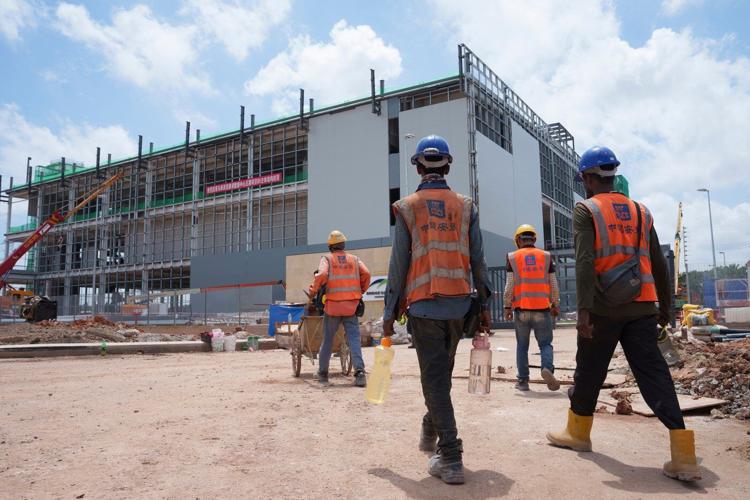
As Silicon Valley’s artificial intelligence boom triggers a global power strain, Southeast Asia’s new energy masterplan offers a pragmatic blueprint: integrating nuclear reactors with cross-border grids to sustain the digital future.
Across the tech corridors of Johor, Singapore, and West Java, massive server farms are quietly transforming Southeast Asia into the engine room of the global artificial intelligence economy. Every algorithmic query, large language model training run, and cloud computation requires staggering amounts of electricity. Yet, beneath this digital gold rush lies a uncomfortable physical reality: the region’s power grids are reaching their threshold, caught in a high-stakes collision between soaring energy demand and urgent net-zero climate imperatives.
For years, policy circles framed the energy transition as a binary choice between expanding weather-dependent solar and wind arrays or continuing a hazardous reliance on coal and natural gas. But the sheer scale of the AI boom has shattered this false dichotomy. Hyper-scale data centres require uninterrupted 24/7 baseload power—a standard that intermittency-prone renewables alone cannot guarantee without prohibitively expensive battery storage. To solve this dilemma, Southeast Asia is embarking on a bold pivot: embracing nuclear power as a foundational pillar of its upcoming regional energy architecture.
| “Small Modular Reactors represent a paradigm shift: providing clean, continuous baseload power directly adjacent to digital infrastructure clusters without straining fragile municipal grids.” |
The Shift Toward Small Modular Reactors
Unlike the gigawatt-scale conventional atomic plants of the twentieth century, which suffered from notorious construction delays and massive capital requirements, modern nuclear strategy centers on Small Modular Reactors (SMRs). Producing between 50 and 300 megawatts per unit, SMRs offer factory-fabricated scalability, advanced passive safety mechanisms, and a footprint compact enough to sit alongside industrial parks or sub-grid data hubs.
Across the Association of Southeast Asian Nations (ASEAN), member states are already establishing tactical readiness pathways:
- Vietnam: Re-engaging international vendor partnerships and updating its nuclear regulatory policy under International Atomic Energy Agency (IAEA) guidance to supply high-density manufacturing and processing corridors.
- Indonesia: Targeting early SMR deployments across its vast archipelago, offering off-grid clean electricity to power remote technological and industrial nodes outside Java.
- Malaysia: Reviving its Nuclear Energy Program Implementation Organization to support rapid data centre expansion in Johor and the Klang Valley while keeping power tariffs competitive.
- Singapore: Conducting rigorous feasibility studies into next-generation nuclear tech, paving the way for low-carbon energy imports through cross-border trade agreements.
Cross-Border Integration & Global Implications
The true strategic force multiplier lies in integrating nuclear energy into the multilateral ASEAN Power Grid (APG). By allowing nuclear-generated electricity to flow across borders alongside hydro and solar power, Southeast Asia can achieve grid resiliency that individual countries could never build alone. During dry seasons when hydroelectric output wanes, continuous nuclear generation keeps cross-border interconnectors energized and data centres operational.
For international policymakers in Washington and European capitals, Southeast Asia’s nuclear transition carries profound geopolitical implications. Western reactor developers must engage proactively with financing frameworks and regulatory assistance; failing to do so risks ceding civil nuclear leadership in the Indo-Pacific to state-backed entities from rival powers.
A Pragmatic Path Forward
Navigating this nuclear dawn will not be without hurdles. Updating legal safety frameworks, securing public trust, and unlocking private capital will require sustained international coordination. However, the economic incentive could not be clearer. In an era where computational power dictates national competitiveness, securing clean, reliable, and scalable energy is no longer just an environmental goal—it is a core national security imperative.
By aligning its digital ambition with atomic innovation under the new ASEAN Energy Masterplan, Southeast Asia is offering a valuable lesson to the world: the AI revolution does not have to compromise our climate targets—provided we have the courage to power it smartly.
Discover more from The Economy
Subscribe to get the latest posts sent to your email.

For decades, the global dominance of the U.S. dollar has rested on two primary pillars: deep, unencumbered liquid capital markets and an indispensable global financial messaging protocol known as SWIFT. When Beijing launched its e-CNY initiative, Western observers initially framed it as a central bank digital currency (CBDC) designed primarily for domestic surveillance, retail convenience, and financial inclusion.
However, recent strategic moves highlight a far more ambitious objective. As documented by the South China Morning Post, Beijing is actively leveraging Hong Kong as its central offshore laboratory to establish the infrastructure required for international cross-border digital yuan adoption.
The crucial strategic question is no longer whether China can engineer robust distributed ledger architecture, but whether an offshore financial hub operating under “One Country, Two Systems” can bridge the gap between rigid domestic capital controls and global institutional acceptance. To succeed, China must resolve the fundamental tension between absolute monetary sovereignty and the open networks required for international currency adoption.
1. The Paradox of the Offshore Laboratory
China’s monetary expansion faces a well-documented structural paradox. According to macroeconomic research from the Carnegie Endowment for International Peace, no currency can achieve true international reserve status without offering open capital accounts and deep, freely convertible liquidity. Yet, completely relaxing capital controls would expose China’s domestic banking system to volatile international capital flows and speculative pressures.
Hong Kong serves as the pressure valve and testing ground for this paradox:
- Legal & Regulatory Buffer: Hong Kong maintains a trusted common law judicial system and an independent monetary authority (Hong Kong Monetary Authority).
- Convertibility Bridge: It allows mainland authorities to test e-CNY settlement, cross-border retail links, and digital asset integration without opening mainland financial markets directly to global speculative shocks.
- Institutional Liquidity: As the world’s premier offshore renminbi hub, Hong Kong provides the institutional counterparties necessary to build real-world transaction volume.
“The digital yuan’s true test lies not in domestic retail adoption, but in whether foreign counterparties can settle cross-border trade without taking on unacceptable regulatory or capital risks.”
2. Wholesale Settlement and Project mBridge
While retail consumer wallets attract considerable media attention, the real geopolitical shift is occurring at the wholesale institutional level. Strategic initiatives like Project mBridge—developed in partnership with the Bank for International Settlements (BIS), the People’s Bank of China, and regional central banks—demonstrate how multi-CBDC platforms can streamline international trade.
As reported in market analyses by Bloomberg and trade finance studies covered by Reuters, multi-lateral CBDC platforms offer significant operational advantages:
- Elimination of Intermediaries: Direct ledger-to-ledger transactions bypass traditional correspondent banking networks.
- Speed and Efficiency: Cross-border settlement times are reduced from days to seconds.
- Cost Reduction: Transaction costs and foreign exchange spreads across regional trade corridors in Asia and the Middle East are dramatically lowered.
If commercial enterprises operating in Hong Kong can settle trade directly in e-CNY with instant finality, Beijing creates a compelling economic incentive for trade partners that operates independently of Western clearing networks.
3. Geopolitical Implications & The Road Ahead
Western policymakers and central bankers are monitoring these developments closely. Recent congressional testimony and Treasury reviews highlighted by Reuters reflect growing concern in Washington that alternative settlement rails could gradually erode the reach and enforcement of Western financial sanctions.
However, technological capability alone does not guarantee global currency dominance. Until foreign corporate treasuries and central banks have full confidence in converted currency liquidity, property rights, and transparent legal protections, the digital yuan will serve primarily as an efficient alternative mechanism for bilateral trade rather than an immediate replacement for the U.S. dollar.
Institutional Summary & Comparison
| Dimension | Conventional Retail Focus | Wholesale / Strategic Reality |
| Primary Mechanism | Retail e-CNY wallets for tourists & merchants | Multi-CBDC corridors (Project mBridge) & Project Ensemble |
| Core Objective | Domestic payments & payment app competition | Disintermediation of correspondent banking and SWIFT rails |
| Primary Barrier | Consumer habituation & merchant readiness | Capital controls, currency convertibility, and institutional trust |
Sources & Citations
- South China Morning Post: Beijing wants Hong Kong to sow the seeds for the digital yuan
- Bank for International Settlements (BIS): Central Bank Digital Currency (CBDC) & Cross-Border Payments Research
- Carnegie Endowment for International Peace: China’s Financial System and Capital Account Dynamics
- Bloomberg Financial Analysis: Global Macro & Digital Currency Integration
- Reuters News & Analysis: Cross-Border Settlement and Global Trade Finance
Discover more from The Economy
Subscribe to get the latest posts sent to your email.

Stock Market Crash 2026? What the November Rout Actually Tells Us

IMF Global Outlook 2027: The Recovery Is Real, but the Divide Is Growing

World Bank Debt Report 2026: The $9.4 Trillion Burden Behind the Recovery

Singapore Stock Market Outlook 2027: The STI’s Bank-and-Yield Test

Asian Stock Markets: Why the AI Rout Is Dividing the Region

Global Markets Today: The AI Sell-Off Has Become a Test of Liquidity

Global Finance 2027: Debt, Inflation and AI Are Pulling the Economy Apart

Brian Kemp’s Georgia Legacy: Economic Growth, Elections and the Costs of His Policy Choices

Dow Futures vs Dow Jones: What E-mini Contracts Really Tell You Before Wall Street Opens

China Tape Maker Stock Debut: Crown New Materials Soared 787%

Apple’s Earnings Beat Had a Catch: Look Past the Tariff Refund

Social Security Payments in November 2026: The Full Calendar and Two Important Changes

Johor–Singapore SEZ’s $21.8 Billion Bet: The Hard Part Starts Now

China’s 175 Trillion AI Tokens Reveal a Bigger Shift: The AI Boom

Crude Oil & Petroleum Market Analysis: OPEC+ Decisions and Price Forecasts

Top US Convenience Store Chains: Store Counts, EV Charging, and Sales Trends

Social Security Extra $90 Deposit: Who Qualifies for the October 2026 Medicare Rebate?

Gold Price Outlook 2026: The Forces Behind the Forecasts—and What Could Reverse Them

Stock Market Crash in 2026? Warning Signs, Scenarios and a Calm Investor Checklist

Anthropic Bans Sustained Abuse of Claude AI Under New Usage Policy Effective November 12, 2026

US–Iran Conflict in October 2026: Hormuz, Oil Prices and Diplomacy

US–China Critical Minerals Competition: Why a Trade Deal Cannot Fix Every Supply Risk

SSI November 2026 Payment: Why Benefits Arrive October 30

US–China AI Export Controls in 2026: Chips, Testing Rules and Corporate Risk

China’s AI Microdrama Boom: How Beijing Is Reshaping Global Media

EU vs UK Electric Vehicle Tariffs: Impact on Automotive Supply Chains & Consumer Prices

Pakistan IMF Programme 2026: Why Bailouts Keep Returning

Jeff Bezos Three-Day Workweek View: What He Really Said
-

 Markets & Finance10 months ago
Top 15 Stocks for Investment in 2026 in PSX: Your Complete Guide to Pakistan’s Best Investment Opportunities
-

 Analysis9 months ago
Johor’s Investment Boom: The Hidden Costs Behind Malaysia’s Most Ambitious Economic Surge
-

 Analysis9 months ago
Top 10 Stocks for Investment in PSX for Quick Returns in 2026
-

 Banks10 months ago
Best Investments in Pakistan 2026: Top 10 Low-Price Shares and Long-Term Picks for the PSX
-

 Analysis9 months ago
Brazil’s Rare Earth Race: US, EU, and China Compete for Critical Minerals as Tensions Rise
-

 Investment10 months ago
Top 10 Mutual Fund Managers in Pakistan for Investment in 2026: A Comprehensive Guide for Optimal Returns
-

 Global Economy10 months ago
15 Most Lucrative Sectors for Investment in Pakistan: A 2025 Data-Driven Analysis
-

 Global Economy10 months ago
Pakistan’s Export Goldmine: 10 Game-Changing Markets Where Pakistani Businesses Are Winning Big in 2025