
Analysis
Brazil’s Rare Earth Race: US, EU, and China Compete for Critical Minerals as Tensions Rise

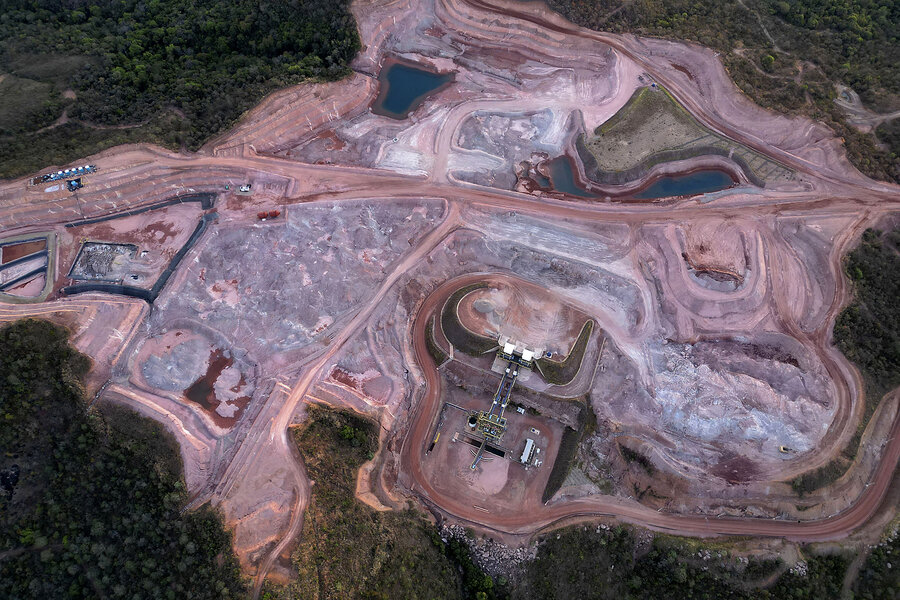
Beneath Brazil’s red earth lies a geopolitical powder keg that few Americans are paying attention to. While Washington obsesses over microchip factories and supply chain resilience, a more fundamental struggle is unfolding in South America—one that will determine whether the United States can credibly compete in the clean energy economy it claims to champion.
The prize is rare earth elements, the unglamorous but indispensable minerals that power everything from the iPhone in your pocket to the guidance systems in Patriot missiles. And in this contest for Brazil’s largely untapped reserves, America is discovering an uncomfortable truth: when it comes to securing the resources that will define the 21st century, we’re arriving late, spending reluctantly, and competing against a Chinese government that planned for this moment decades ago while we were distracted by other priorities.
The competition reached a new inflection point in recent months as diplomatic tensions, investment pledges, and competing visions for resource development collided in Brasília. What’s at stake extends far beyond mining rights: control over rare earths means control over the technologies that will define the 21st century, from wind turbines and electric vehicles to advanced weapons systems and renewable energy infrastructure.
Brazil’s Hidden Wealth: A Strategic Asset in Plain Sight
Brazil sits atop approximately 21 million tons of rare earth reserves, making it the world’s second-largest holder of these critical minerals after China’s commanding 44 million tons, according to data compiled by industry analysts. Yet despite this geological fortune, Brazil produces less than one percent of the world’s rare earths—a stark disconnect that has captured the attention of global powers seeking to reduce their dependence on Chinese supply chains.
The irony is not lost on Brazilian officials. “We have the resources beneath our feet that the world desperately needs,” remarked one mining industry executive in Minas Gerais, speaking on condition of anonymity. “The question is whether we can develop them fast enough, and with which partners.”
China currently controls approximately 70 percent of global rare earth mining and a staggering 90 percent of processing capacity, giving Beijing enormous leverage over supply chains that underpin everything from consumer electronics to military hardware. This dominance has prompted what analysts describe as the most significant rush for mineral security since the Cold War scramble for uranium.
America’s Belated Awakening
Washington’s engagement with Brazil rare earth deposits represents a dramatic strategic shift. For years, US policymakers largely ignored the vulnerabilities inherent in relying on Chinese-controlled rare earth supply chains. That complacency evaporated as tensions with Beijing escalated and the pandemic exposed the fragility of global supply networks.
The US has pledged between $465 million and $565 million to support Brazilian rare earth projects, with a particular focus on the Serra Verde operation in Goiás state—one of the largest undeveloped rare earth deposits outside China. This US investment in Brazil rare earths comes through a combination of Export-Import Bank financing, Development Finance Corporation support, and private sector partnerships facilitated by recent diplomatic engagement.
The timing is noteworthy. Relations between former President Trump and Brazilian President Luiz Inácio Lula da Silva were, to put it charitably, frosty. But as geopolitical realities shifted and both nations recognized their mutual interests in rare earth supply chain diversification, pragmatism has prevailed. Recent bilateral meetings have produced agreements on critical minerals cooperation, technology transfer, and environmental standards—though skeptics note that implementation remains uncertain.
“The Americans arrived late to the party,” observed a São Paulo-based geopolitical analyst, “but they’re trying to make up for lost time with checkbooks and promises of technological partnership.”
Europe’s Frustrations and China’s Long Game
The European Union, meanwhile, has found itself repeatedly outmaneuvered in what officials privately describe as a frustrating contest for Brazilian partnerships. Despite early interest and exploratory missions, EU China competition Brazil minerals has tilted toward Washington and Beijing, who have proven more willing to make concrete financial commitments and accept Brazil’s environmental conditions.
European representatives have complained, according to sources familiar with diplomatic exchanges, that US preemption of key deals has left the bloc scrambling for secondary opportunities. The EU’s Critical Raw Materials Act, announced with fanfare in 2023, aimed to secure diverse supply sources—but translating policy into projects has proven challenging when competitors move faster with larger financial packages.
China, for its part, has pursued what analysts call a “patient capital” strategy. Unlike the US with its recent surge of interest, Chinese companies have maintained a presence in Brazilian mining for over a decade. They’ve built relationships, navigated local politics, and positioned themselves as reliable partners unconcerned with the geopolitical lectures that sometimes accompany Western investment.
A recent report by the Center for Strategic and International Studies highlighted China’s methodical approach: securing minority stakes in multiple projects, offering processing technology that Brazil lacks, and coupling mineral investments with broader infrastructure development. “Beijing understands that influence is built through sustained engagement, not just one-off deals,” the report noted.
Brazil’s Delicate Balancing Act
Caught between competing suitors, Brazil has adopted what observers describe as a “multi-alignment strategy”—accepting investments from all sides while committing exclusively to none. President Lula’s administration has signaled openness to partnerships with the US, EU, and China, calculating that competition among external powers serves Brazilian interests by driving up investment and allowing Brasília to set terms.
This approach carries risks. Some Brazilian mining executives worry that trying to please everyone might result in regulatory gridlock or competing standards that slow development. Environmental groups, meanwhile, fear that the rush for Brazil critical minerals will override the country’s forest protection commitments and indigenous rights—concerns that have already slowed permitting for several projects.
Brazil’s Environmental Ministry has imposed stringent requirements on rare earth mining operations, including detailed impact assessments and community consultations. While these safeguards align with international best practices, they’ve frustrated investors accustomed to faster timelines. “Every month of delay is a month China extends its dominance,” warned one American executive working on rare earth supply chain diversification.
Yet Brazil’s cautious approach may prove prescient. The rare earth industry carries significant environmental risks—processing generates radioactive waste and toxic runoff. Moving too quickly could trigger the kind of ecological disasters that have plagued Chinese rare earth operations, undermining both local support and international partnerships.
The Economic and Security Stakes
The implications of this three-way competition extend well beyond quarterly earnings reports. Rare earth elements are essential for manufacturing permanent magnets used in electric vehicle motors, wind turbine generators, and a host of consumer electronics. They’re equally critical for defense applications: precision-guided missiles, jet engines, satellite communications, and radar systems all depend on rare earth components.
A comparison of global rare earth positions illustrates the challenge:
| Country/Region | Reserves (Million Tons) | Production Share | Processing Capacity |
|---|---|---|---|
| China | 44 | 70% | 90% |
| Brazil | 21 | <1% | Minimal |
| United States | 2.3 | ~15% | <10% |
| European Union | 1.2 | <1% | <5% |
This table, based on industry data compiled by Bloomberg and specialist mining analysts, reveals the enormous gap between potential and production. Brazil possesses roughly half of China’s reserves but produces a fraction of one percent of global output—a disparity that both represents opportunity and highlights the scale of investment required.
For the United States and European Union, reducing dependence on China rare earth dominance Brazil represents more than economic efficiency—it’s a national security imperative. Trade tensions between Washington and Beijing have already produced tariff wars, technology export controls, and sanctions that have rattled global markets. The prospect of China restricting rare earth exports as leverage, as it did briefly in 2010 during a territorial dispute with Japan, haunts Western defense planners.
“Imagine a scenario where conflict erupts over Taiwan,” suggested a retired Pentagon official now consulting on critical minerals strategy. “Within days, China could choke off rare earth supplies to the West. Our weapons systems would face severe component shortages within months. Brazil offers a partial solution—if we can help them develop production capacity quickly.”
Challenges on the Ground
Yet transforming Brazil’s geological potential into actual production faces formidable obstacles. Infrastructure remains inadequate in many mining regions, with poor roads and limited power supplies complicating operations. Brazil lacks the processing technology that China has refined over decades, meaning raw materials often need to be shipped abroad for refinement—defeating much of the supply chain diversification purpose.
Labor and expertise shortages present another challenge. Rare earth mining and processing require specialized skills that Brazil’s workforce currently lacks in sufficient numbers. Training programs and technology transfers are part of the US and EU investment packages, but developing expertise takes time.
Then there’s the question of market economics. China’s dominance has allowed it to control pricing, occasionally flooding markets to make competing projects financially unviable. Brazilian operations, with higher startup costs and smaller initial scales, could struggle to compete if Beijing decides to undercut prices strategically.
Environmental regulations, while crucial for sustainable development, add complexity and delay. The Serra Verde project, despite significant US backing, has faced repeated permitting challenges as regulators assess water usage impacts and community displacement concerns. Indigenous groups have filed legal challenges to several proposed mining operations, arguing that consultation processes were inadequate.
Looking Ahead: A Multipolar Mineral Future?
As trade tensions loom and the competition for Brazil’s rare earths intensifies, the ultimate outcome remains uncertain. The most likely scenario, according to geopolitical analysts at the Eurasia Group, involves all three powers maintaining some presence in Brazil’s rare earth sector, with different companies and projects aligned with different external partners.
This multipolar arrangement could serve Brazil’s interests by maximizing investment and limiting any single power’s leverage. But it could also create coordination challenges, competing standards, and political complications as global tensions ebb and flow.
What’s clear is that the quiet race for Brazil’s underground wealth has only just begun. As one Brazilian mining ministry official put it, leaning back in his Brasília office: “The world spent the last decade waking up to the rare earth problem. Now they’re all knocking on our door at once. We intend to answer carefully—but we will answer.”
For the United States, European Union, and China, Brazil represents a crucial test of their respective models for resource diplomacy. Washington offers financial muscle and security partnerships. Brussels promises regulatory alignment and technology standards. Beijing provides patient capital and no-questions-asked engagement.
Brazil, blessed with geological fortune and cursed with the attention it brings, must choose its partners wisely. The decisions made in Brasília over the coming years won’t just determine who extracts minerals from Brazilian soil—they’ll help shape the balance of power for decades to come.
Discover more from The Economy
Subscribe to get the latest posts sent to your email.


Beijing’s export-control probe into Meta’s acquisition of the agentic AI startup is the sharpest test yet of who owns the talent and technology produced by China’s restless entrepreneur class.
The transaction had looked like a clean escape. Manus, an artificial intelligence startup founded in Beijing, had spent the better part of two years engineering its own liberation: relocating its headquarters to Singapore, laying off its mainland staff, shuttering its Chinese offices, and raising money from Benchmark, one of Silicon Valley’s most storied venture capital firms. When Meta announced in late December that it would acquire Manus for over $2 billion—the social media giant’s third-largest deal in its history—the founders appeared to have navigated one of the most treacherous passages in global tech. They had moved, adapted, and escaped.
Then Beijing blinked last.
On Wednesday, Reuters confirmed reports from the Financial Times that China has restricted two co-founders of Manus from leaving the country, as regulators formally review whether Meta’s $2 billion acquisition violates China’s investment rules. MarketScreener What began in January as a procedural commerce ministry inquiry has hardened into something far more personal: exit bans on the individuals who built the product, signalling that Beijing regards the transfer of agentic AI capabilities to a Western technology giant not as a routine M&A transaction, but as a matter of national security.
The implications extend far beyond one startup and one deal.
What Is Manus—and Why Does Beijing Care?
Manus AI’s parent entity, Butterfly Effect, was founded in 2022 by serial entrepreneur Xiao Hong in Beijing, with operations in Wuhan. It was originally a fully Chinese company—founded in China, operated domestically, and run by Chinese founders. Triviumchina Its first product, Monica, was an AI-powered browser extension. Manus, its successor, was something more ambitious: an autonomous AI agent capable of independently browsing the web, executing code, generating reports, and managing complex workflows with minimal human direction.
From day one, the company targeted international users rather than the domestic market. Triviumchina Founder Xiao Hong, known professionally as “Red,” was explicit about why: overseas users’ willingness to pay for software was roughly five times that of Chinese users, and with payments denominated in dollars and an exchange rate of seven renminbi to the dollar, the foreign market was at least 35 times larger. Triviumchina
That calculus proved correct. Within eight months of launch, Manus reached $100 million in annual recurring revenue and draws 22 million monthly visits. WinBuzzer Rather than building its own frontier model, Manus focuses on orchestration and reliable task execution atop existing large language models WinBuzzer—a strategy that made it fast, capital-efficient, and deeply attractive to a company like Meta, which already owns the distribution infrastructure to deploy agents at planetary scale.
Worth more than $2 billion, the deal will be assessed for its consistency with relevant laws and regulations, Ministry of Commerce spokesman He Yadong said at a regular briefing. Bloomberg Regulators began examining possible national security implications shortly after the December announcement.
The reason Beijing cares is elementary: the episode highlights a dilemma for the Chinese authorities—how to get the balance right between promoting Chinese technology internationally and retaining some level of control over homegrown AI companies and founders. The Wire China
The Architecture of an Escape—and Its Limits
The Manus story is, at its core, a story about the limits of regulatory arbitrage in an era of competing superpowers.
Despite being founded by Chinese engineers and backed by Chinese investors, the company moved its headquarters to Singapore in June 2025. Its product became unavailable in China in July. Around the same time, Manus reportedly laid off its Chinese staff and closed its offices in the country. Rest of World The move fit a wider pattern that analysts have termed “Singapore-washing”—a strategy where Chinese tech firms move headquarters or core operations to Singapore to attract foreign investment and avoid regulatory constraints back home. Heavyweights like ByteDance and Shein have made this transition in the past. Rest of World
For Manus, the logic was particularly ruthless in its precision. The company took a series of decisive steps: rejecting capital from state-owned investors while raising a $75 million round led by Benchmark in April, and gutting its China operations before relocating to Singapore in June. Triviumchina Corporate records reviewed by The Wire China suggest the Singapore entity was incorporated as early as 2023, when they set up a firm called Butterfly Effect Pte, which is in turn wholly owned by Butterfly Effect Holding, a Cayman Islands company. The Wire China
Yet the escape was structurally incomplete. Data from WireScreen shows that Xiao remains the legal representative of Beijing Butterfly Effect Technology as well as its second-largest shareholder. The Wire China Beijing’s lawyers had their thread. Manus’s mainland-registered parent company, Butterfly Effect, remains under the founders’ control, and early-stage research and development were conducted in China—factors that could strengthen the argument that Chinese regulators still have a say. eWEEK
The charges now under investigation are expansive. Regulators are examining potential violations of rules governing cross-border currency flows, tax accounting, and overseas investments, in addition to the original export-control inquiry. Bloomberg The central legal question is whether Manus needed an export licence when it relocated its technology and team from Beijing to Singapore before Meta’s acquisition was announced. Beijing’s 2020 Export Control Law includes a catch-all provision covering any technology transfer that could endanger “national security or national interests”—terms deliberately left undefined to give regulators broad discretion. byteiota
A Geopolitical Prism, Not a Legal Dispute
To reduce this case to its legal dimensions would be to misunderstand it.
China’s review of Meta’s acquisition of Manus signals Beijing’s intent to more tightly police foreign involvement in sensitive technologies developed by Chinese entrepreneurs, as more founders move operations overseas to sidestep geopolitical scrutiny. South China Morning Post The review, according to analysts, could become a high-profile test case for China’s equivalent of the Committee on Foreign Investment in the United States—CFIUS—which vets and blocks inbound investment on national security grounds.
The valuation optics make Beijing’s frustration palpable. Chinese firms that offered to acquire Manus before Meta’s deal valued it at only tens of millions—two orders of magnitude below what Meta paid. WinBuzzer In other words, the Chinese market entirely failed to recognise or reward what Manus had built. It took a Californian buyer to attach a proper price to Chinese talent. That gap, more than any legal technicality, explains the emotional charge behind Beijing’s intervention.
One source cited by the Financial Times said the deal had drawn attention in Beijing precisely because it could incentivise other startups to relocate abroad to bypass domestic supervision. eWEEK The worry is systemic: if Manus succeeds, it becomes a template. Every ambitious Chinese AI founder with a global product and a Singapore residency permit becomes a potential national security liability.
This is the core tension that Beijing cannot resolve through regulation alone. The fundamental reason Manus AI wanted to move abroad was not U.S. investment restrictions, but weak domestic demand. Triviumchina Fixing that requires economic reforms, not exit bans.
Meta’s Exposure—and Its Strategy
For Meta, the Manus acquisition was never really about Manus alone.
Meta has said it will keep Manus independent while integrating its agents into Facebook, Instagram, and WhatsApp. WinBuzzer Xiao Hong, who goes by “Red,” was expected to report directly to Meta COO Javier Olivan Substack after the deal closed. The 100-person Manus team represented a concentrated bet on agentic AI—systems capable of acting autonomously in the world rather than simply answering questions.
Meta has pledged a clean break. Meta has pledged there will be no continuing Chinese ownership in Manus and that it will discontinue operations in China. WinBuzzer Its spokesperson Andy Stone stated that “the transaction complied fully with applicable law,” adding that Meta anticipates “an appropriate resolution to the inquiry.” WinBuzzer
Yet the company’s relationship with China is complicated by deep-seated mutual suspicion. Facebook has been blocked in mainland China since 2009. Mark Zuckerberg spent years attempting to court Beijing—learning Mandarin, establishing a brief corporate foothold in Hangzhou—before abandoning the effort. The Manus deal may represent a new phase: rather than seeking entry into China, Meta is actively extracting talent and technology from it.
Washington, for its part, views this positively. Chris McGuire, a former National Security official in the Biden administration, noted that what Manus shows is that there are going to be firms that choose to defect, and that their interests in operating at the cutting edge and making money are greater than in inherent fidelity to the Chinese state. The Wire China
Echoes of TikTok—but With a Different Anatomy
The Manus case invites comparison to the TikTok saga, but the parallel is instructive precisely where it breaks down.
ByteDance and TikTok faced American regulatory pressure to sever their Chinese ownership structure. The concern was that a Chinese parent company could access U.S. user data or manipulate the algorithm for political purposes. In the Manus case, the pressure runs in the opposite direction: it is Beijing demanding that a Singapore-registered company with a Chinese parent acknowledge Chinese jurisdiction.
Both cases, however, share a deeper commonality: the collapse of the fiction that corporate domicile determines national allegiance. Governments on both sides of the Pacific have concluded that a startup’s nationality is determined by the passport of its founders and the origin of its intellectual property—not by the address on its certificate of incorporation. The era of regulatory arbitrage through nominal relocation may be ending.
The Benchmark dimension adds yet another layer. The U.S. Treasury Department has reportedly been looking into Benchmark for its investment in Manus last year, before the company shifted its headquarters to Singapore. Rest of World In other words, the same transaction that triggered a Chinese export-control probe also attracted scrutiny from Washington’s outbound investment review framework. Manus finds itself squeezed from both directions—exactly the double bind that “Singapore-washing” was supposed to prevent.
The Exit Ban: A Message to Every Chinese Founder
The imposition of exit bans on Manus’s co-founders carries significance that transcends their personal circumstances.
Exit bans—the practice of prohibiting individuals from leaving China while under investigation—are a well-established instrument of Chinese enforcement. They have been used against foreign executives in financial disputes, against dissidents, and against individuals whose cooperation is sought in criminal or regulatory proceedings. Their application here, to the founders of a Singapore-incorporated AI startup that sold to an American company, suggests that Beijing has decided to treat the outward flow of Chinese AI talent as an enforcement matter rather than an economic question.
Chris Miller, a professor at Tufts University and author of Chip War, warned that if China deters China-founded startups from expanding internationally, that is a bad thing for the startup ecosystem. The more China relies on potential sticks to keep companies in line with its political priorities, the more that has real risks for China’s efforts to build and support its own ecosystem. The Wire China
The Brookings Institution’s Kyle Chan observed, as reported by WinBuzzer, that Beijing appears to be demanding public support from Chinese tech founders, leaving them unable to stay silent. WinBuzzer The message to every ambitious engineer contemplating a Singapore incorporation is unmistakable: your physical body remains subject to Chinese jurisdiction even after your company has been redomiciled elsewhere.
Three Scenarios for Investors and Policymakers
The resolution of the Manus-Meta review will likely follow one of three paths, each with distinct implications for the global AI competitive landscape.
Scenario One: Conditional Approval. Beijing extracts concessions—restrictions on transferring China-developed intellectual property to U.S. servers, ongoing reporting obligations, or a commitment to wind down the Chinese entity on a specified timeline—before granting clearance. This is the most probable outcome. It preserves Beijing’s claim to jurisdiction while allowing the deal to proceed, and avoids the international embarrassment of blocking an acquisition that Manus’s Singapore incorporation was specifically designed to facilitate.
Scenario Two: Protracted Delay. China drags out the investigation for six to twelve months, using regulatory uncertainty as negotiating leverage in broader U.S.-China diplomatic discussions. The uncertainty alone serves Beijing’s interests by making Western acquirers think twice before pursuing future acquisitions of Chinese-origin startups. Meta’s AI integration timeline slips; investor confidence in Singapore-domiciled Chinese AI companies erodes.
Scenario Three: An Unwinding. Regulators determine that Chinese export-control law was violated and seek to reverse or restructure the transaction. This is the least likely outcome—it would damage China’s startup ecosystem, signal that successful exits to Western companies are structurally impossible, and likely accelerate the brain drain it is designed to prevent. But it cannot be entirely discounted. The exit bans suggest Beijing is prepared to apply maximum pressure before revealing how far it is willing to go.
The Deeper Fault Line
The Manus case is, in the final analysis, a consequence of a structural failure rather than a legal dispute.
China built one of the world’s most dynamic AI startup ecosystems—technically sophisticated, capital-efficient, globally ambitious—and then created the conditions that made its best companies want to leave. Regulatory opacity, weak domestic demand for premium software, U.S. chip restrictions, and the ever-present risk of sudden political intervention drove founders like Xiao Hong to conclude that their only viable path to scale ran through Singapore and Silicon Valley.
Beijing now finds itself attempting to retrofit a sovereignty claim onto a company that had been rationally, legally, and methodically exiting its jurisdiction for years. The exit bans on Manus’s founders are less a legal remedy than an admission of failure—a government reaching for coercive tools because the market tools were inadequate, and the founders were smart enough to know it.
For the global AI industry, the lesson is stark. Capital is mobile, code can be moved, and companies can be reincorporated. But people—their bodies, their families, their residual corporate holdings—remain subject to the laws of the countries that produced them. In the age of AI nationalism, talent is the last and most contested asset of all.
Discover more from The Economy
Subscribe to get the latest posts sent to your email.
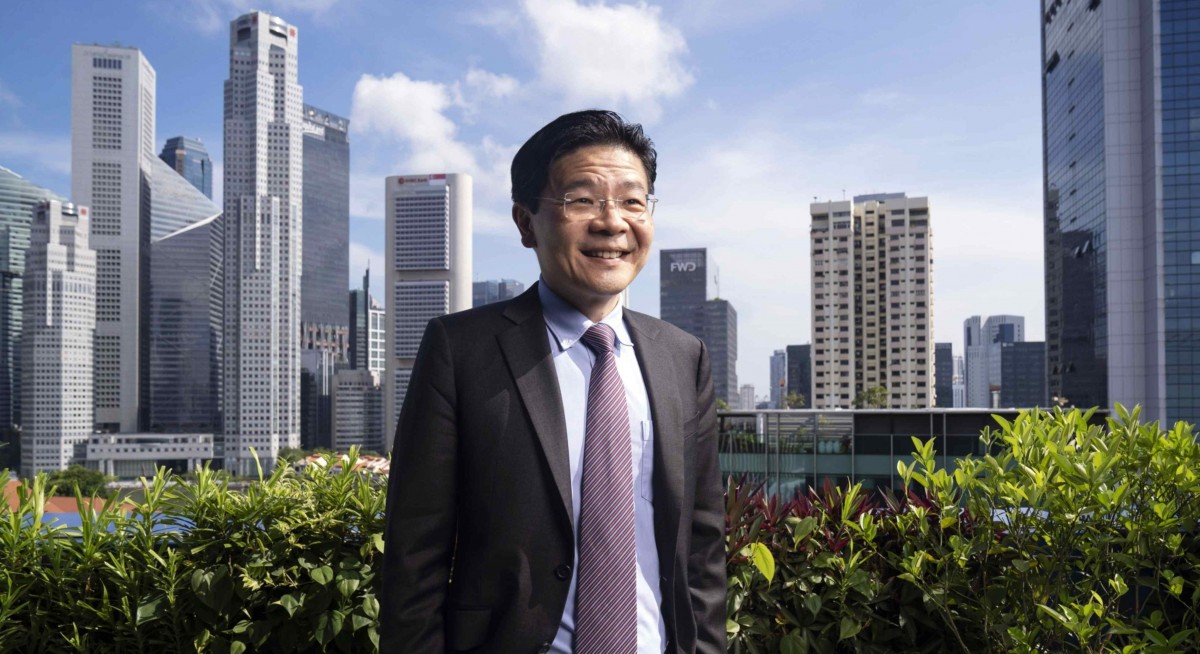
The city-state’s leader heads to “Asian Davos” as US-China rivalry reshapes every calculation in the Indo-Pacific
Every March, the small coastal town of Boao in China’s Hainan Province briefly becomes one of the most important rooms in the world. Finance ministers adjust their ties. Corporate chiefs rehearse their talking points. And the leaders who show up — and what they say — signal something real about where the world’s centre of economic gravity is heading.
This week, Singapore Prime Minister Lawrence Wong will be one of those leaders. Departing on March 25 for a four-day visit, Wong will deliver the keynote address at the Opening Plenary of the 2026 Boao Forum for Asia Annual Conference in Hainan, before travelling to Hong Kong to meet Chief Executive John Lee Ka-chiu and engage the city’s business community. Mothership.SG The itinerary is compact but dense with consequence — a carefully composed diplomatic score played in two movements.
The Stage: “Asian Davos” at 25
The Boao Forum for Asia is not merely China’s answer to Davos. It has become, over 25 years, an increasingly explicit instrument for shaping, not just discussing, Asia’s economic architecture People’s Daily — a forum where China translates its domestic policy ambitions for an international audience. This year, that function is sharper than ever.
The 2026 edition opens less than two weeks after China’s National People’s Congress formally adopted the 15th Five-Year Plan (2026–2030) People’s Daily, a document that will govern Chinese economic life for the rest of the decade. The forum’s theme — “Shaping a Shared Future: New Dynamics, New Opportunities, New Cooperation” — reflects both the profound transformations and growing uncertainties facing the world People’s Daily, with sessions spanning AI governance, green industrial policy, RCEP integration, and cross-border payment systems. Around 2,000 delegates from more than 60 countries and regions are attending, along with over 1,100 journalists People’s Daily.
There is an additional layer of meaning to this year’s venue. On December 18, 2025, Hainan launched island-wide special customs operations, formally becoming the world’s largest free trade port by area. People’s Daily For Singapore — itself a small, trade-dependent city-state whose prosperity is inseparable from the free movement of goods, capital, and ideas — the symbolism of delivering the keynote at that particular forum, on that particular island, in this particular geopolitical moment, is not accidental.
The Itinerary: Bilateral Depth Beyond the Podium
Wong’s Hainan programme extends well beyond the plenary stage. His agenda includes a welcome dinner hosted by the Hainan provincial government and the forum’s secretariat, as well as bilateral meetings with Zhao Leji, Chairman of the Standing Committee of the National People’s Congress, and Feng Fei, the Party Secretary of Hainan Province. The Standard
The meeting with Zhao Leji carries particular weight. As the third-ranking member of China’s Politburo Standing Committee, Zhao is not a figurehead. His portfolio includes legislative oversight and, crucially, inter-parliamentary diplomacy — a channel through which Beijing increasingly manages relationships with states it considers strategic partners rather than transactional counterparts. A bilateral with Zhao, rather than a junior minister, signals that Singapore retains a privileged lane of access in Beijing’s diplomatic hierarchy.
Following his Hainan engagements, Wong will travel to Hong Kong, where he is scheduled to meet Chief Executive John Lee Ka-chiu at Government House over a lunch hosted by Lee. South China Morning Post Wong will also visit key sites in the Northern Metropolis to gain a better understanding of Hong Kong’s economic and development trajectory and explore new opportunities for collaboration between the two cities, South China Morning Post according to Singapore’s Prime Minister’s Office.
The Strategic Context: Hedging as High Art
To understand what Wong is doing in Boao, it helps to understand what he was doing the week before. On March 17-18, Wong completed his first official visit to Japan as prime minister, during which Singapore and Japan announced an upgrade of their bilateral ties to a Strategic Partnership The Online Citizen, deepening cooperation across trade, defence, and emerging technologies.
Wong was direct about the sequencing. China, he noted, was aware of his visit to Japan and had continued to invite him to the Boao Forum in Hainan. The Online Citizen He framed Singapore’s approach with characteristic clarity: “Having good relations with one does not come at the expense of another. We can be friends with both China and Japan and America, for that matter. We want to maintain as many good friends as possible.” The Online Citizen
This is not naivety. It is a sophisticated hedging strategy that Singapore has refined over decades and that Wong is now codifying into a kind of doctrine. The city-state, which sits at the confluence of the world’s busiest shipping lanes and whose Chinese-majority population gives Beijing a perpetual interest in how it is governed, has long understood that its prosperity depends on never being forced to choose sides. In 2026, with US tariffs reshaping global supply chains, a growing string of leaders from developed economies visiting China South China Morning Post, and Washington signalling its own engagement (the White House announced that President Trump would travel to Beijing from March 31 to April 2), that doctrine is being stress-tested in real time.
Wong’s Boao appearance — coming immediately after the Japan Strategic Partnership and immediately before Trump’s China visit — positions Singapore precisely where it has always sought to be: visible, valued, and indispensable to every major player in the room.
The Hong Kong Dimension: More Than a Courtesy Call
The second leg of the trip deserves equal analytical attention. Singapore and Hong Kong occupy a peculiar relationship — they are simultaneously Asia’s two most globally integrated city-states, natural partners in financial services and logistics, and quiet rivals for the same pools of regional capital and talent.
Wong’s planned tour of Hong Kong’s Northern Metropolis is telling. The Northern Metropolis is Hong Kong’s most ambitious development project in a generation — a planned urban corridor stretching from the urban core to the Shenzhen border, envisioned as a technology and innovation hub, a logistics gateway, and a new residential district capable of accommodating 900,000 people. It is, in effect, Hong Kong’s answer to the question of how a city re-engineers its economic model after years of political disruption and capital flight. For a Singapore PM to visit and explicitly explore “new opportunities for collaboration” is a recognition that Hong Kong, under John Lee’s administration, is in the business of rebuilding — and that Singapore sees more to gain from partnership than from competition.
The business community meetings add another layer. Wong’s most recent trip to China was in June 2025, when he met President Xi Jinping and Premier Li Qiang and attended Summer Davos in Tianjin. South China Morning Post That visit was primarily Beijing-facing. This one brackets mainland engagement with substantive Hong Kong outreach — a signal to the private sector in both cities that Singapore views the Hong Kong-Singapore axis as a durable feature of the regional financial architecture, not a casualty of geopolitical anxiety.
The Bigger Picture: Multilateralism Under Pressure
At the BFA New Year Outlook 2026 event, forum chairman and former UN Secretary-General Ban Ki-moon warned that the world is becoming “more divided, more dangerous and less predictable.” CGTN It is against that backdrop that the Boao Forum’s 25th anniversary carries its particular urgency.
The Hainan Free Trade Port, with its island-wide independent customs operations advancing steadily, is emerging as a new gateway for international investment and cooperation. CGTN Sessions on the Regional Comprehensive Economic Partnership, Asia-Pacific integration, and cross-border payment systems reflect a shared determination to build regional “shock absorbers.” People’s Daily For Singapore, whose entire economic model is built on the assumption that rules-based, open trade systems will endure, these are not abstract debates. They are existential questions.
Wong’s keynote address is likely to thread several needles simultaneously: affirm Singapore’s commitment to multilateralism and ASEAN centrality; acknowledge China’s role as Asia’s indispensable economic engine without appearing supplicant; and signal to Western partners watching from afar that engagement is not endorsement. It is a speech that will be read not just in Beijing and Washington but in Jakarta, Kuala Lumpur, and New Delhi — capitals that watch Singapore’s diplomatic moves with the attention of students studying a master class.
Forward Outlook: What This Visit Signals for 2026 and Beyond
Three forward-looking observations bear emphasis.
First, the pace of Wong’s diplomatic engagements — Japan in March, Boao immediately after, and likely a succession of bilateral meetings through the APEC cycle — suggests that Singapore is deliberately front-loading its relationship capital in 2026, a year when US-China dynamics could shift dramatically in either direction depending on the trajectory of trade negotiations and Taiwan flashpoints.
Second, the Northern Metropolis visit hints at a potential deepening of Singapore-Hong Kong cooperation in specific sectors — fintech, green finance, and supply chain digitisation being the most obvious candidates — that would benefit from institutional frameworks rather than ad-hoc deal-making. Watch for announcements from the business community meetings.
Third, and most consequentially, Wong’s ability to be warmly received in Tokyo one week and keynote Boao the next, without apparent diplomatic friction from either capital, validates a model of middle-power statecraft that other ASEAN economies are quietly studying. In a world where the pressure to align is intensifying, Singapore’s demonstrated capacity to remain credibly engaged with all sides without being captured by any of them is, perhaps, its most valuable export.
In the end, the journey from Boao to Hong Kong in four days is less a travel itinerary than a statement of intent: that Singapore’s bet on an interconnected, cooperative Asia is not a relic of a more innocent era, but an active wager — one that Lawrence Wong is placing in real time, on the most watched diplomatic stages in the region.
The spring breeze moves across Boao every March. This year, what it carries is worth listening to carefully.
Discover more from The Economy
Subscribe to get the latest posts sent to your email.
Analysis
China’s 15th Five-Year Plan: Inside the Tech Masterplan Reshaping the World Economy by 2030
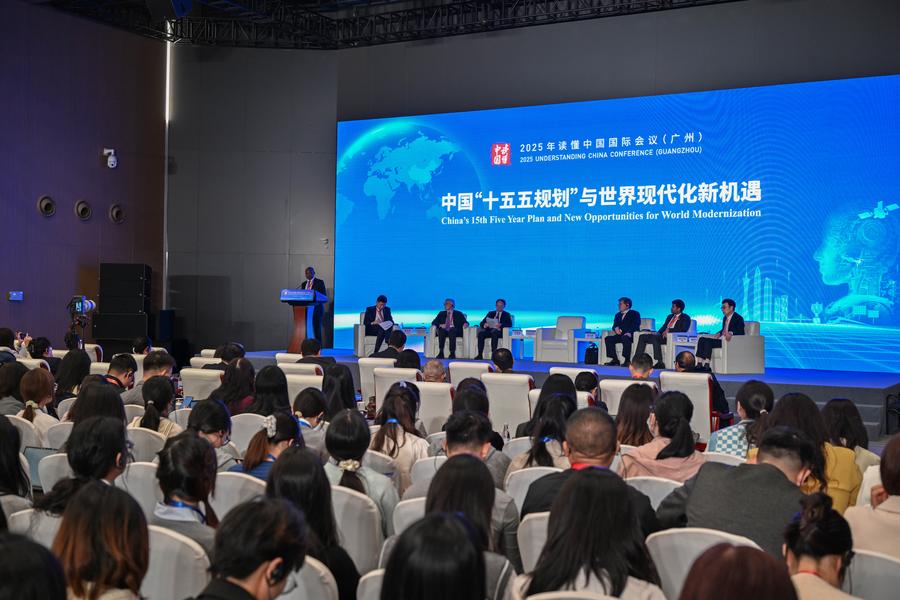
China’s 15th Five-Year Plan (2026–2030) maps a breathtaking tech transformation — humanoid robots, fusion power, 6G brain interfaces, and 109 mega-projects. Here’s what it means for the world.
On the morning of March 12, as delegates filtered out of Beijing’s Great Hall of the People clutching their customary red volumes, the world’s most consequential economic document had just been made official. China’s 15th Five-Year Plan — a 141-page blueprint covering 2026 to 2030 — was formally adopted by the National People’s Congress with the kind of bureaucratic solemnity that belies its radical ambition. The headlines, as usual, fixated on the GDP growth target of 4.5–5 percent, the lowest since China began publishing five-year plans in earnest, and moved on.
That was a mistake.
Strip away the deadening officialese — the ritual invocations of “new quality productive forces,” the calls for “industrial upgrading,” the exhortations toward “high-quality development” — and what emerges is something far more remarkable. China’s 15th FYP is effectively a state-sponsored moonshot program on a civilizational scale: skies dotted with delivery drones and flying taxis; hydrogen and fusion power plants supplying electricity to factories run by humanoid robots; quantum computers crunching problems that would take today’s machines the lifetime of the universe; 6G networks ultimately wired into human cognition itself. The document reads less like a communist planning instrument and more like the collected fever dreams of Silicon Valley’s most ambitious technologists — except it is backed by the full industrial and financial muscle of the world’s second-largest economy, and it has a deadline.
China’s New Quality Productive Forces: What the Jargon Actually Means
The phrase “new quality productive forces” (新质生产力) has been Xi Jinping’s preferred economic shorthand since 2023. In the 15th FYP, it becomes load-bearing architecture. The term translates, in practical terms, to a decisive pivot away from the debt-fuelled, steel-and-concrete model that powered China’s growth for three decades, and toward an economy built on frontier technology, high-value manufacturing, and innovation-led productivity gains.
According to the plan’s formal outline, China’s emerging pillar industries — spanning new-generation information technology, intelligent connected vehicles, advanced robotics, biomedicine, aerospace, and new materials — are expected to break the 10-trillion-yuan benchmark by 2030. Frontier technologies, meanwhile, are projected to generate an entirely new high-tech sector over the following decade. The government has also committed to increasing nationwide research and development spending by at least 7 percent annually — a pace that, if sustained, would push China’s total R&D expenditure to levels rivalling the United States by the early 2030s.
The sequencing matters. Where the 14th Five-Year Plan (2021–2025) led with technological innovation, the 15th plan places a modernized industrial system first. As the World Economic Forum observed, this reflects a hard-won practical lesson: turning laboratory breakthroughs into scalable, high-value production capacity is the true bottleneck, and Beijing intends to close it. This is less about acceleration and more about reengineering the vehicle itself.
The Embodied Intelligence Revolution: 150 Firms, One Trillion Yuan, and a Procurement Directive
Of all the plan’s technological targets, none is more striking — or more consequential for global manufacturing — than its treatment of humanoid robots and embodied artificial intelligence (具身智能). The term barely appeared in Chinese policy documents before 2023. In the 15th FYP, it commands its own dedicated inset box among the plan’s ten most prioritised “new industry tracks,” alongside integrated circuits, biomanufacturing, and commercial space.
The Diplomat’s primary-source analysis of the plan’s Box 3, Item 02 reveals language that is not aspirational but operational: China will “coordinate the layout of embodied intelligence training grounds, promote virtual-real fusion collaborative training and evolution, develop integrated big-brain/small-brain embodied models and algorithms, tackle key technologies in the body and core components, and accelerate the upgrade and deployment of humanoid robots.” That is a procurement directive, not a wish list.
The industrial reality underpinning this ambition is already formidable. In 2024, China installed 295,000 industrial robots — 54 percent of the global total — with an operational stock surpassing 2 million units. In the nascent humanoid segment, Chinese firms shipped roughly 90 percent of the world’s units in 2025, led by AgiBot (5,168 units), Unitree (over 4,200 units), and UBTech. More than 150 humanoid robot companies now operate in China. The government has committed a 1-trillion-yuan ($138 billion) state-backed fund to advancing humanoid robots, industrial automation, and embodied AI — a sum that dwarfs any comparable Western initiative.
The parallel with Elon Musk’s Optimus project is unavoidable. But where Tesla’s humanoid program represents a single company’s bet, China’s approach is a whole-of-nation mobilisation. The plan’s Chapter 13 establishes an “AI+” action plan as a cross-cutting national program covering six domains: science and technology, industrial development, consumer upgrades, social welfare, governance, and national security. Artificial intelligence appears more than 50 times in the 141-page document. The strategy is not to build the world’s best AI model — that remains, for now, a largely American contest — but to weave AI into the physical fabric of the economy more deeply and more quickly than any country has ever attempted.
The Low-Altitude Economy: When Drones Become Infrastructure
China’s “low-altitude economy” — a formal policy designation covering commercial drones, urban air mobility, flying taxis, and low-altitude logistics networks — is one of the 15th FYP’s most distinctive concepts, and one that has received insufficient attention in Western coverage.
The plan designates the low-altitude economy as a strategic emerging industry cluster. Multiple provincial governments, from Zhejiang to Inner Mongolia, have already allocated dedicated funding and industrial parks. The underlying logic is compelling: China’s vast geography, its already-dominant position in commercial drone manufacturing (EHang, XPeng AeroHT, and dozens of smaller firms), and its regulatory willingness to deploy technologies at scale give it structural advantages that Western regulators — still debating urban air traffic management frameworks — cannot easily replicate.
By 2030, Beijing envisages a multi-tier airspace management system capable of supporting millions of autonomous drone flights daily, encompassing last-mile delivery, agricultural monitoring, emergency services, and inter-city passenger transport. The economic prize is substantial. Chinese analysts estimate the low-altitude economy could generate 1.5 trillion yuan in annual output by the end of this decade.
Fusion, Hydrogen, and the Energy Backbone of a Tech Superpower
A technology economy of this ambition requires an equally ambitious energy supply. The 15th FYP earmarks hydrogen power and controlled nuclear fusion as “next-generation” energy technologies — a designation that reflects both strategic calculation and genuine scientific progress.
China’s ITER-adjacent fusion program and its Experimental Advanced Superconducting Tokamak (EAST) have already set world records for plasma duration. The 15th FYP provides the policy and financial framework to translate laboratory milestones toward commercial application. The plan’s 109 major engineering projects include dedicated energy infrastructure initiatives — offshore wind farms, coastal nuclear plants, and new power transmission corridors — designed to underpin the electricity demands of an AI-intensive economy.
The hydrogen dimension is particularly significant. Green hydrogen — produced via electrolysis powered by renewables — sits at the intersection of China’s clean energy surplus and its industrial decarbonisation agenda. The IDDRI notes that China’s solar manufacturing capacity now exceeds domestic consumption by a factor of three. That overcapacity is not merely a problem; it is a strategic asset, enabling green hydrogen costs to fall faster in China than anywhere else on earth.
Quantum, 6G, and the Brain-Computer Frontier
The 15th FYP’s most futuristic provisions — quantum computing, 6G communications, and brain-computer interfaces — are where its ambition most visibly strains against physical and ethical reality.
On quantum computing, Chinese research teams achieved significant milestones in photonic quantum computing and superconducting circuits during the 14th FYP period. The 15th FYP commits extraordinary-measures language — comparable, analysts note, to wartime mobilisation — to accelerating breakthroughs. The geopolitical stakes are profound: a functional cryptographically-relevant quantum computer would render most current encryption infrastructure obsolete overnight.
The plan’s 6G ambitions build on China’s commanding position in 5G standardisation. The plan explicitly targets 6G for development during the 2026–2030 period, with the ambition of integrating ultra-high-bandwidth wireless networks into medical devices, industrial systems, and — in the plan’s most provocative passage — brain-computer interfaces. The latter technology, already being developed by domestic firms alongside Neuralink-style devices, appears in the plan as a formal “future industry” alongside quantum technology and biomanufacturing. Its inclusion is not merely techno-utopian signalling. The Chatham House analysis notes that Beijing has elevated these frontier fields to the centre of its economic agenda, with fundamental breakthroughs treated as matters of national strategic priority.
The Semiconductor Pivot: Washington Hasn’t Noticed
One of the most analytically significant aspects of the 15th FYP has received almost no coverage in Western media. China has quietly abandoned the semiconductor self-sufficiency target established under Made in China 2025 — which called for 70 percent domestic chip production and which China missed by roughly 50 percentage points — and replaced it with a deployment metric: digital economy value-added at 12.5 percent of GDP by 2030, up from 10.5 percent in 2025.
The Diplomat’s forensic analysis of the 141-page plan document is striking in this regard: the word for “lithography machine” does not appear once. Neither do “wafer fab,” “extreme ultraviolet,” or “chip manufacturing.” What appears instead is a new strategic vocabulary. Artificial intelligence outnumbers references to integrated circuits by roughly 13 to 1. A new planning term has entered Five-Year Plan history for the first time: 模芯云用 — “model-chip-cloud-application” — encoding a full-stack deployment architecture.
This is not a retreat. The plan calls for “extraordinary measures” on advanced chip fabrication and continues to pursue domestic semiconductor production. But the strategic emphasis has shifted: from how many chips China produces to how deeply computing infrastructure penetrates the economy. The Biden-era export controls targeted the fabrication layer. China has restructured around the other three layers — models, cloud, and applications — where no equivalent countermeasures exist. Whether this represents genuine strategic evolution or an adaptation to inevitable constraints matters less than the operational reality: the infrastructure is being built, domestically and across the developing world via Belt and Road digital initiatives.
The Risks Beijing Isn’t Advertising
No premium analysis of China’s 15th FYP would be complete without confronting the formidable execution risks that the document — by design — underplays.
Overcapacity and involution. The plan acknowledges in unusually strong language the problem of destructive overcompetition — “involution” — in sectors from solar panels to electric vehicles. But enforcement remains politically fraught in an economy where most heavy industry is state-owned and local governments depend on factory employment for social stability. The IDDRI notes that China’s solar manufacturing capacity exceeds domestic consumption by a factor of three. The rest of the world should brace for continued waves of cost-competitive Chinese clean-technology exports.
The demographic constraint. A technology-heavy growth model is a rational response to a shrinking, ageing workforce. But it also demands a quality of human capital — software engineers, AI researchers, quantum physicists — that China is producing in enormous numbers, though not yet at the leading edge of all disciplines. The plan targets over 22 high-value invention patents per 10,000 people by 2030, up from 12 in the 14th FYP. Whether the quality matches the quantity remains an open question.
US export controls and the software gap. Even Beijing’s own technology industry acknowledges that software — operating systems, EDA tools, advanced compilers — remains the most vulnerable layer in China’s technology stack. The Diplomat’s analysis identifies this as the one constraint that US policy has targeted least effectively, and the one China finds hardest to domestically substitute. DeepSeek’s emergence at the start of 2026 demonstrated extraordinary ingenuity in working around hardware constraints, but the gap in frontier software tooling persists.
Energy demand and climate contradiction. An economy built on AI data centres, quantum computing, and electrified manufacturing will consume energy on a transformational scale. The plan’s GDP growth target of 4.5–5 percent, combined with a carbon intensity reduction target of only 17 percent by 2030, draws concern from climate analysts who note that China is likely to fall short of its Paris-aligned emissions commitments. The gap between Beijing’s green-technology leadership and its actual decarbonisation trajectory remains wide.
What This Means for the World
The 15th Five-Year Plan is not, as some Western commentators reflexively characterise it, merely another expression of authoritarian state capitalism paper-planning its way to an imagined future. Nor is it the unambiguous geopolitical threat that hawkish analysts in Washington and Brussels portray. It is something more complex and, in many ways, more consequential: the most coherent large-scale attempt by any government in history to engineer an economy’s transition from extensive to intensive growth through deliberate technological transformation.
For global supply chains, the implications are already unfolding. China installed more industrial robots in 2024 than the rest of the world combined. Its solar and wind manufacturing has structurally reduced the cost of renewable energy globally. Its AI deployment strategy — integrating models into factory floors, logistics networks, and healthcare systems — is generating productivity gains that are difficult to measure but impossible to ignore.
For the United States and Europe, the competitive challenge is genuine but not straightforwardly zero-sum. As Chatham House observes, Beijing has signalled that technological self-reliance and economic resilience are long-term strategic choices, not temporary responses to external pressure. The West’s instinct to restrict, contain, and decouple will shape Beijing’s incentives at the margins but will not fundamentally alter the trajectory of a plan backed by the savings of 1.4 billion people and the organisational capacity of a Leninist state that has repeatedly demonstrated its ability to execute at industrial scale.
For developing economies, China’s ambition may prove most immediately impactful. The plan explicitly targets the Global South as a market for Chinese computing infrastructure, clean technology, and eventually the fruits of the low-altitude economy. A proposed World AI Cooperation Organization and Belt and Road AI platform signal Beijing’s intent to make itself the technology partner of choice for countries locked out of the Silicon Valley ecosystem.
The deeper question — which no five-year plan can answer — is whether a system built on party control, information restriction, and the suppression of the kind of disruptive, bottom-up innovation that produced the internet, the smartphone, and now large language models can truly lead at the frontier. China’s own technology history offers a mixed verdict. It has been exceptional at scaling and deploying technologies invented elsewhere. It produced DeepSeek. It has not yet produced an iPhone.
By 2030, we will know considerably more. What is certain, today, is that the document adopted in Beijing’s Great Hall on March 12 deserves to be read — not in the deadening prose of its officialese, but in plain language, for what it is: the most ambitious attempt in human history to build a technology economy from the top down. Whether it succeeds or stumbles, it will reshape the world either way.
Discover more from The Economy
Subscribe to get the latest posts sent to your email.
-

 Markets & Finance3 months ago
Top 15 Stocks for Investment in 2026 in PSX: Your Complete Guide to Pakistan’s Best Investment Opportunities
-

 Banks2 months ago
Best Investments in Pakistan 2026: Top 10 Low-Price Shares and Long-Term Picks for the PSX
-

 Investment2 months ago
Top 10 Mutual Fund Managers in Pakistan for Investment in 2026: A Comprehensive Guide for Optimal Returns
-

 Asia3 months ago
China’s 50% Domestic Equipment Rule: The Semiconductor Mandate Reshaping Global Tech
-

 Analysis1 month ago
Top 10 Stocks for Investment in PSX for Quick Returns in 2026
-

 Global Economy3 months ago
Pakistan’s Export Goldmine: 10 Game-Changing Markets Where Pakistani Businesses Are Winning Big in 2025
-

 Global Economy3 months ago
15 Most Lucrative Sectors for Investment in Pakistan: A 2025 Data-Driven Analysis
-

 Global Economy3 months ago
What the U.S. Attack on Venezuela Could Mean for Oil and Canadian Crude Exports: The Economic Impact