
Markets & Finance
Pakistani Rupee’s Micro-Rebound: A Glimmer Amidst Global Volatility


In the intricate tapestry of global finance, even marginal shifts can signal profound underlying currents. This past Wednesday, the Pakistani Rupee (PKR) offered a subtle yet noteworthy performance, registering a fractional gain against the formidable US Dollar in the inter-bank market. Closing at 279.35 against the greenback, a shade stronger than Tuesday’s 279.36, this movement, though small, invites a deeper examination into the confluence of domestic economic factors and the turbulent international landscape. For seasoned international economists, policymakers, and discerning investors, understanding such nuances is paramount in navigating an increasingly interconnected world where geopolitical tremors and commodity price swings dictate market sentiment.
The Rupee’s Subtle Strengthening: A Closer Look
The marginal appreciation of the PKR, settling at 279.35, marks a welcome, albeit tentative, sign for an economy that has frequently grappled with currency depreciation. While a single-day gain of a paisa might seem inconsequential, it suggests a delicate balancing act, possibly influenced by targeted interventions or an easing of demand pressures. This movement occurs against a backdrop where Pakistan’s economic stability has been a recurring theme in global financial dialogues. The ongoing efforts by the State Bank of Pakistan and fiscal authorities to manage foreign exchange reserves and implement structural reforms are constantly under the scanner of institutions like the International Monetary Fund [ft.com]. Such incremental gains, therefore, are often interpreted as early indicators of either domestic policy effectiveness or shifts in market perception, however temporary.
The Dollar’s Unyielding Grip: Geopolitical Undercurrents
Internationally, the US Dollar continues to demonstrate remarkable resilience, a testament to its enduring status as a safe-haven asset amidst global uncertainty. On Wednesday, the dollar index, which benchmarks the USD against a basket of six major currencies, stood firm at 98.876. This figure notably inched away from a three-month peak achieved earlier in the week, reflecting persistent underlying strength. The primary catalyst for this unwavering demand appears to be the escalating geopolitical tensions surrounding the US-Israeli conflict with Iran. As traders adopt a cautious stance, awaiting clearer signals on the conflict’s trajectory, the dollar benefits from its perceived stability and liquidity.

This scenario illustrates a critical phenomenon: in times of heightened geopolitical risk, capital tends to flow into assets perceived as secure, irrespective of domestic economic indicators. The dollar’s strength, therefore, is less a reflection of exceptional US economic performance on this specific day and more a function of global risk aversion. The euro, despite gaining slightly to $1.16205, and sterling, trading 0.12% higher at $1.34305, remain susceptible to the broader dollar dominance, underscoring the Greenback’s gravitational pull on global currency markets. Even the risk-sensitive Australian dollar, hovering near a four-year high at $0.713, operates within this overarching framework of dollar influence.
Oil’s Rebound: A Volatile Equation
Adding another layer of complexity to the global financial calculus is the volatile trajectory of oil prices. After a steep decline on Tuesday, crude markets staged a significant rebound on Wednesday. Brent futures climbed $3.52, or 4%, to $91.32 a barrel, while US West Texas Intermediate (WTI) surged $3.69, or 4.4%, to $87.14 a barrel. This sharp recovery was fueled by market skepticism regarding the efficacy of the International Energy Agency’s (IEA) reported plan for a record release of oil reserves. The market’s apprehension suggests a belief that such a release might be insufficient to offset potential supply shocks stemming from the ongoing US-Israeli conflict with Iran.
The interplay between oil prices, geopolitical events, and currency valuations is undeniable. Higher oil prices can exacerbate inflationary pressures and widen current account deficits for oil-importing nations like Pakistan, potentially undermining currency stability. Conversely, for oil-exporting economies, a surge in crude can bolster foreign exchange earnings. The current rebound, driven by conflict fears, underscores the fragility of global supply chains and the immediate impact of geopolitical risk on essential commodities. For a nation like Pakistan, heavily reliant on imported energy, these upward movements in oil prices pose an inherent challenge to its economic planning and currency management [economist.com].
Domestic Market Dynamics: The Open vs. Inter-Bank Divide
While the inter-bank market showed a marginal gain for the PKR against the USD, the open market presented a slightly different picture. In the open market, the PKR gained 2 paise for buying against the USD, closing at 279.58, while selling remained unchanged at 280.41. This subtle divergence between the inter-bank and open market rates is a critical indicator for analysts. It often reflects supply-demand imbalances, speculative activity, or the effectiveness of regulatory oversight.
Furthermore, the PKR’s performance against other major currencies in the open market provides additional insights into domestic liquidity and sentiment. Against the Euro, the PKR saw a more pronounced gain, appreciating by 47 paise for buying (closing at 323.63) and 23 paise for selling (closing at 327.57). Similar gains were observed against the UAE Dirham (7 paise buying, 1 paisa selling, closing at 75.76 and 76.80 respectively) and the Saudi Riyal (7 paise buying, 2 paise selling, closing at 73.85 and 74.91 respectively). These broader gains suggest a possible strengthening of the Rupee against a basket of currencies, perhaps influenced by remittances or a temporary improvement in foreign exchange inflows. However, the persistent bid-offer spread in the open market indicates an underlying cautiousness among traders and a potential premium for foreign currency [reuters.com].
Navigating the Future: Outlook for the Pakistani Rupee
The marginal gain of the Pakistani Rupee on Wednesday, though seemingly minor, encapsulates the complex interplay of domestic policy, global economic forces, and escalating geopolitical tensions. For the discerning investor and policymaker, this fractional movement is not merely a number but a data point within a larger narrative of economic fragility and strategic resilience.
The long-term trajectory of the Pakistani Rupee, and indeed, many emerging market currencies, remains tethered to a delicate balance. Sustained gains will require not only robust macroeconomic management but also a degree of stability in the international arena. The unresolved geopolitical conflicts in the Middle East and the volatility in global commodity markets will continue to cast long shadows over currency valuations worldwide [foreignaffairs.com]. For Pakistan, continued reforms, efforts to boost exports, and attract foreign direct investment will be crucial in building genuine and lasting currency strength.
As we look ahead, the vigilance of the State Bank of Pakistan will be paramount in steering the currency through potential headwinds. While the immediate outlook is one of cautious optimism for the PKR, the broader global economic currents demand an agile and adaptive policy response. Investors will be keenly watching for signs of both internal economic improvements and external de-escalation to determine the true stability of the Pakistani Rupee in the months to come.
Discover more from The Economy
Subscribe to get the latest posts sent to your email.


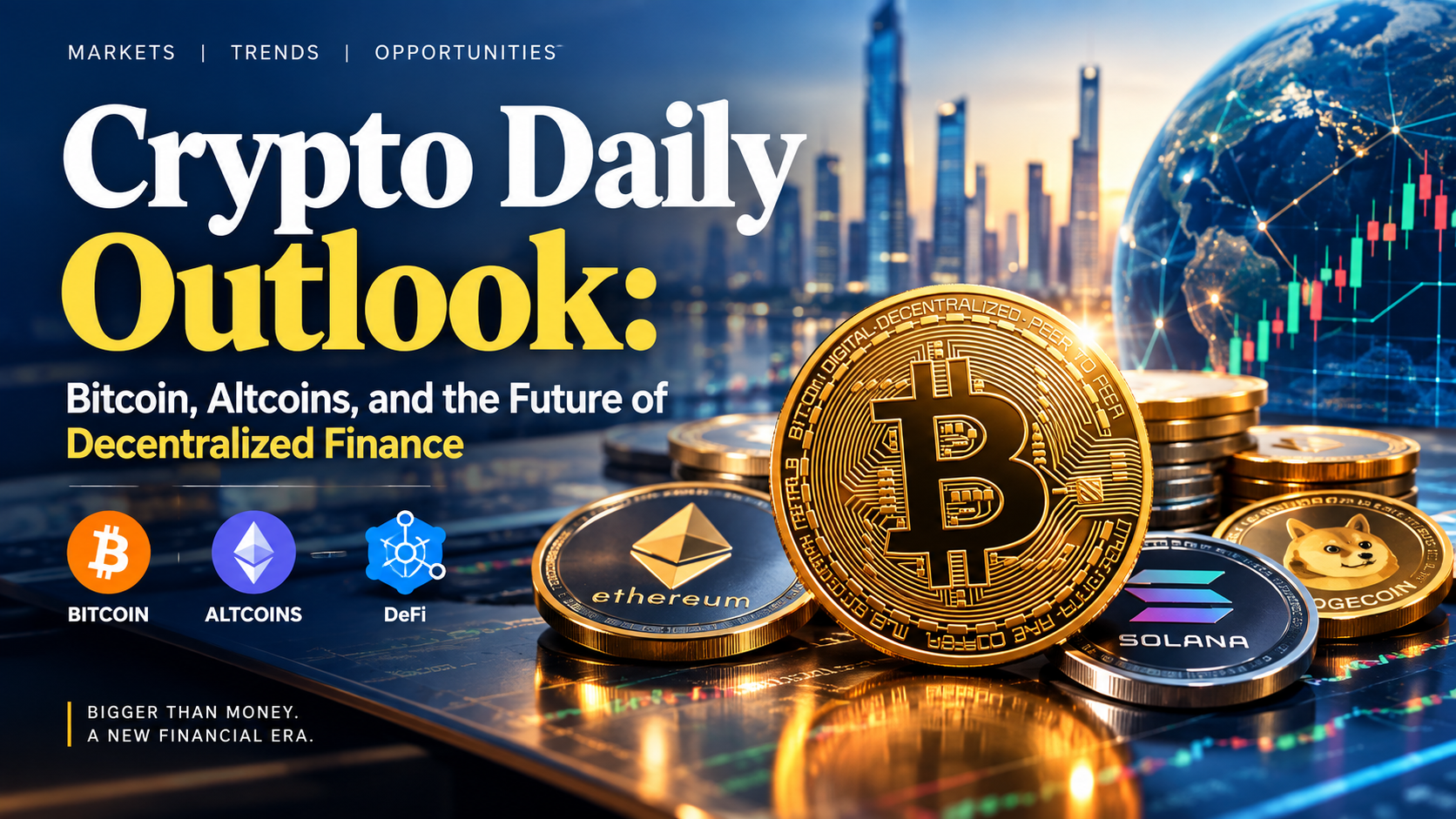
Bitcoin is doing something it hasn’t done cleanly all year: holding a range. After a brutal first half of 2026 and a sharp recovery through the summer, BTC has settled into the high-$70,000s heading into a week that could reshape U.S. crypto market structure for good. Here’s the full picture across Bitcoin, the major altcoins, and the DeFi regulatory fight that’s about to come to a head.
Bitcoin: From 21-Month Low to Cautious Recovery
Bitcoin’s 2026 has been a genuine round trip. After topping out at an all-time high near $128,200 in October 2025, BTC fell to roughly $58,000 by late June 2026 — a 21-month low — before staging a real recovery, climbing about 37% to touch $80,000 by late August, according to KuCoin’s market roundup. As of mid-September 2026, Bitcoin was trading in the $77,000–$79,000 range, per CoinDesk and Fortune’s daily price tracker, still roughly 37–39% below its October 2025 peak.
Bitcoin’s 2026 price arc:
| Date | Price | Note |
|---|---|---|
| Oct 6, 2025 | ~$128,200 | All-time high |
| Late June 2026 | ~$58,000 | 21-month low |
| Late August 2026 | ~$80,000 | +37% off the bottom |
| Sept 8, 2026 | $78,346 | |
| Sept 9, 2026 | $78,737 | Lost the $80,000 level after holding it for four sessions |
| Sept 11, 2026 | ~$77,200–$77,300 | Recovering as zcash-related leverage unwinds |
The macro backdrop is the dominant driver right now, more than crypto-native news. The Federal Reserve, under Chair Kevin Warsh, has held its policy rate at 3.50%–3.75% for five consecutive meetings in 2026 without a single cut, with the median 2026 dot plot sitting at 3.8% — pointing toward continued tightness rather than the easing cycle many crypto investors were positioned for, according to KuCoin’s analysis. August’s core CPI print, released mid-September, rose a faster-than-forecast 0.3% month-on-month, though the annual pace of 2.4% was the slowest since early 2021, per CoinDesk market coverage — a mixed signal that has kept the market betting on the possibility of a rate hike rather than a cut in the near term, an unusual dynamic for crypto markets historically primed for rate-cut tailwinds.
Altcoins: Ethereum, Solana, and XRP Hold Steady Amid Regulatory Noise
The broader altcoin market has been comparatively rangebound. As of September 11, 2026, Ethereum traded around $2,539, up 2.8% over 24 hours; XRP sat near $1.36–$1.39, roughly flat to slightly down; and Solana traded around $101–$104, according to Investing News Network’s crypto recap.
Major token snapshot (Sept 8–11, 2026):
| Token | Price | 24h Move |
|---|---|---|
| Bitcoin (BTC) | ~$77,000–$79,000 | Mixed |
| Ethereum (ETH) | ~$2,460–$2,540 | +2.8% (Sept 11) |
| XRP | ~$1.36–$1.39 | Roughly flat |
| Solana (SOL) | ~$101–$104 | +1% (Sept 11) |
| BNB | Under pressure | -3.4% in one session |
| Dogecoin (DOGE) | Under pressure | -4.3% in one session |
The ETF complex has meaningfully broadened beyond Bitcoin this year. Solana and XRP-linked ETF products each entered September 2026 with assets near $1.5 billion, according to KuCoin — a sign that institutional demand for regulated altcoin exposure is no longer a Bitcoin-only phenomenon, even as individual token prices remain well below their 2025 highs.
DeFi’s “Killer Use Case”: Institutional Credit
The most consequential DeFi development this month has come from the XRP Ledger rather than Ethereum. According to CoinMarketCap’s coverage of comments from Ripple’s product head, institutional credit is emerging as DeFi’s potential “killer use case” — new XRP Ledger amendments (XLS-65 and XLS-66) enable pooled vaults and fixed-term, uncollateralized lending, with underwriting handled off-chain while the loans themselves settle on-chain. The pitch is straightforward: bring institutional-grade lending mechanics onto a public ledger without forcing institutions to accept crypto-native over-collateralization requirements that don’t match how traditional credit underwriting works.
This is part of a broader pattern of DeFi maturing toward institutional rails rather than remaining a purely retail, yield-farming-driven segment. Ripple’s own treasury business — following its $1 billion acquisition of GTreasury in October 2025 and the April 2026 launch of Digital Asset Accounts — is layering AI-driven policy interpretation and analytics on top of these on-chain lending primitives, aimed squarely at corporate finance teams rather than retail DeFi users.
The Regulatory Cliffhanger: CLARITY Act Vote on September 15
The single biggest near-term catalyst for the entire crypto market is not a price level — it’s a Senate procedural vote. Senate Republicans released a revised, 630-page version of the Digital Asset Market Clarity Act on September 10, 2026, ahead of a pivotal procedural vote scheduled for September 15, according to Investing News Network. The updated bill specifically targets “decentralized-in-name-only” (DINO) protocols — platforms that claim decentralization but remain effectively controlled by an individual or corporate entity — requiring them to register with the CFTC.
Market participants remain skeptical the bill actually becomes law in 2026. CNBC reported that SALT CEO John Darsie told the Wyoming Blockchain Symposium in August that he is “a bit pessimistic about the Clarity Act being passed,” citing the difficulty of moving major legislation heading into midterm elections. The bill already missed one legislative window when the Senate adjourned for August recess without a vote.
Corporate and Institutional Flows to Watch
Beyond regulation, institutional capital continues flowing into crypto infrastructure. Nasdaq Ventures announced a $100 million investment in Payward, the parent company of Kraken, valuing the exchange at $21 billion, according to Investing News Network’s recap — one of several signs that traditional financial infrastructure players are taking direct equity stakes in crypto exchanges rather than simply building competing products.
Final Verdict
The crypto market’s “daily outlook” for mid-September 2026 is really a story about two collisions happening at once: a Federal Reserve that refuses to deliver the rate-cut tailwind crypto bulls were counting on, and a Senate that is finally forced to vote on the market-structure legislation the industry has wanted for years, with genuine uncertainty about whether it passes. Bitcoin’s technical picture — holding above its 200-day EMA near $72,800 while losing the psychologically important $80,000 level — reflects that tension directly. Short-term, expect continued chop around the $75,000–$82,000 range pending the September 15 CLARITY Act vote and the next FOMC decision; the DeFi institutional-credit narrative and altcoin ETF expansion remain the more durable, multi-quarter stories worth tracking independent of daily price action.
Discover more from The Economy
Subscribe to get the latest posts sent to your email.
Cryptocurrency
Anthony Scaramucci’s Crypto Prediction: Why MicroStrategy’s Move Is Bitcoin’s “iPhone Moment”

When Anthony Scaramucci calls something an “iPhone moment,” it’s worth asking what he means — and whether the comparison holds up against the data. The SkyBridge Capital founder used the phrase to describe MicroStrategy’s newest financial engineering move: a high-yield Perpetual Stretch Preferred Stock designed to package Bitcoin exposure in a format institutions can actually buy. Coming from one of Bitcoin’s most consistent institutional cheerleaders, the comment is both a marketing line and a genuine thesis about how Bitcoin adoption scales from here.
The Product: MicroStrategy’s Preferred Stock Play
In March 2026, MicroStrategy (Nasdaq: MSTR) — the software company turned Bitcoin treasury vehicle led by Michael Saylor — issued a Perpetual Stretch Preferred Stock tied directly to its Bitcoin strategy. Rather than relying purely on convertible debt or direct equity issuance to fund additional Bitcoin purchases, the structure packages Bitcoin-related risk and return into a preferred-equity format that is more familiar and operationally simpler for institutional allocators to hold, according to Yahoo Finance.
Scaramucci’s framing was direct: the structure is being positioned as a potential catalyst for broader global institutional adoption of Bitcoin exposure — his “iPhone moment” language implies this is the product that makes Bitcoin exposure genuinely mainstream and easy to distribute, the way the iPhone made mobile computing accessible to a non-technical mass market rather than just early adopters.
Scaramucci’s Broader Bitcoin Thesis in 2026
The preferred-stock comment sits inside a much longer running commentary from Scaramucci throughout 2026, and tracking his calls chronologically shows a consistent, if evolving, thesis.
Scaramucci’s 2026 Bitcoin commentary timeline:
| Date | Statement | Context |
|---|---|---|
| December 2025 | Bitcoin will “easily” reach $150K in 2026 | Made before the 2026 drawdown began |
| March 2026 | MicroStrategy’s preferred stock is Bitcoin’s “iPhone moment” | Institutional access framing |
| June 15, 2026 | Bitcoin can reclaim $70K by end of July | Contingent on regulatory momentum |
| June 17–20, 2026 | Rally expected late Q4 2026 into early 2027 | Defense of Saylor/Strategy amid drawdown |
According to Finbold’s reporting on his June 2026 CNBC interview, Scaramucci argued Bitcoin remains consistent with its historical four-year post-halving cycle, and that the current drawdown — roughly 50% from Bitcoin’s October 2025 all-time high — is milder than the 60–70% peak-to-trough crashes seen in prior cycles. His explanation: spot Bitcoin ETF inflows and broader institutional participation have “buffered” this cycle’s downside in a way retail-dominated cycles never experienced.
Defending Saylor: The Balance Sheet Argument
A recurring theme in Scaramucci’s 2026 commentary has been his defense of Michael Saylor’s Strategy against concerns that a prolonged Bitcoin downturn could force distressed selling of its holdings. Per Yahoo Finance’s report on his CNBC appearance, Scaramucci pointed to Strategy’s roughly $52 billion in Bitcoin holdings, about $1 billion in cash reserves, and no major debt maturities until 2028, as evidence the company has enough structural runway to weather further Bitcoin weakness without a forced liquidation event.
“You have to really understand the mechanisms of the balance sheet to understand that Bitcoin can go a lot lower, and he’s virtually not in trouble,” Scaramucci said, according to the same report. He also noted that Strategy’s stock continues to trade at a premium to its underlying Bitcoin holdings — a structural feature he described as providing “necessary arbitrage” opportunities for sophisticated investors, rather than a red flag.
How the Prediction Has Tracked Against Reality
Bitcoin’s actual 2026 price path offers a mixed scorecard for Scaramucci’s calls. The $150,000 target set in December 2025 has not materialized — Bitcoin instead fell from its October 2025 all-time high of roughly $128,200 to a 21-month low near $58,000 in late June 2026, according to KuCoin’s market analysis. His June 2026 call for a $70,000 reclaim by end of July, however, proved directionally accurate and arguably conservative: Bitcoin recovered roughly 37% off its June low to reach approximately $80,000 by late August 2026, and was trading in the high-$70,000s as of mid-September 2026.
Bitcoin’s actual 2026 price arc:
| Point | Level |
|---|---|
| All-time high (Oct 6, 2025) | ~$128,200 |
| 2026 low (late June) | ~$58,000 (21-month low) |
| Late August 2026 | ~$80,000 |
| Mid-September 2026 | ~$77,000–$79,000 |
The remaining, unresolved part of the thesis — a sustained rally beginning in late Q4 2026 into early 2027 — is still ahead of the market as of this writing, and depends heavily on a macro variable Scaramucci’s commentary has not fully priced: the Federal Reserve under Chair Kevin Warsh has held rates at 3.50%–3.75% for five consecutive meetings in 2026 with no cuts, a materially tighter backdrop than the rate-cutting cycle many crypto bulls expected entering the year.
Why the “iPhone Moment” Framing Matters Beyond MicroStrategy
The significance of Scaramucci’s comment isn’t really about MicroStrategy’s stock — it’s about the broader thesis that Bitcoin’s next leg of adoption depends on wrapping the asset in structures that traditional allocators, insurance companies, and pension funds can hold within existing mandates, rather than requiring them to custody Bitcoin directly. Preferred stock, spot ETFs, and increasingly diversified crypto ETF products (Solana and XRP ETFs each entered September 2026 with roughly $1.5 billion in assets, per KuCoin) all serve that same function: converting a historically retail- and crypto-native asset into something a conventional balance sheet can own.
Final Verdict
Scaramucci’s “iPhone moment” comment is best read as a bet on distribution, not price. His specific numerical Bitcoin price targets in 2026 have had a mixed track record — badly missing on $150K, more accurately calling the $70K recovery level — but his structural thesis, that institutional-friendly wrappers like MicroStrategy’s preferred stock expand who can hold Bitcoin exposure, is playing out in real time across ETFs and now preferred equity. Investors should treat his specific price and timing calls with appropriate skepticism given the track record, while recognizing that the underlying institutional-access thesis has real, verifiable momentum behind it.
Discover more from The Economy
Subscribe to get the latest posts sent to your email.

With the S&P 500 yielding a historically thin 1.2% and trading at a P/E above 31 following its 2025 rally, income-focused investors have been forced to look further afield. Europe and Asia’s blue-chip dividend payers are filling that gap — offering yields two to five times the U.S. benchmark, backed in many cases by decades of uninterrupted payout growth. Here is where the highest-quality income is actually sitting in 2026, and where headline yield is masking real risk.
Why U.S. Yields No Longer Cut It
The math is straightforward. As Sure Dividend notes, the S&P 500 closed out 2025 with a year-to-date total return of nearly 19%, pushing its price-to-earnings ratio above 31 and compressing yields across the board. Even reliable U.S. dividend growers now offer modest current income: NextEra Energy yields just 2.7% (though it is growing its payout at a 6% compound annual rate through 2028), Coca-Cola yields about 2.7%, and Mastercard — despite raising its dividend more than 9,500% since its first payment — yields a mere 0.7%, according to The Motley Fool. For investors who need current income rather than pure growth, that combination of high valuations and low yields has made the U.S. market a difficult place to build an income portfolio in 2026.
Europe: Insurance and Compounders Lead on Yield
European blue chips have emerged as the highest-conviction income allocation for 2026, according to screening data from Dividend Talk, which evaluates stocks on dividend safety, valuation, and long-term growth rather than headline yield alone.
Top European dividend stocks (verified June 17, 2026):
| Stock | Yield | Sector |
|---|---|---|
| Munich Re | 5.17% | Reinsurance |
| ASR Nederland | 5.15% | Insurance |
| Wolters Kluwer | 4.21% | Information services |
| Novo Nordisk | 4.10% | Pharmaceuticals |
| Fuchs Petrolub | — | Specialty lubricants |
| London Stock Exchange Group | — | Financial market infrastructure |
| Halma | — | Safety/health technology |
| RELX | — | Information/analytics |
| SAP | — | Enterprise software |
The critical distinction Dividend Talk draws is between yield and dividend safety. Munich Re, ASR Nederland, Wolters Kluwer, and Novo Nordisk all carry both an above-3.8% yield and a “Safe” or “Very Safe” internal safety rating, alongside multi-decade dividend records — meaning the yield is backed by durable free cash flow rather than a depressed share price masquerading as a bargain. That distinction matters most in the insurance names: Munich Re and ASR Nederland benefit structurally from higher reinsurance pricing following a run of costly global catastrophe years, giving their payouts unusually strong underlying support heading into 2026.
Asia: Banking and Semiconductor Leadership, With a Payout Caveat
Asian dividend stocks offer a different risk-reward profile, combining higher headline yields with more variable payout coverage. According to Analytics Insight’s 2026 Asia screen, DBS Group Holdings stands out with an estimated dividend yield of 5.4% to 6.1% — among the highest of any large-cap regional bank globally — supported by its wealth-management franchise, deep Southeast Asian deposit base, and digital banking scale.
Top Asian dividend stocks for 2026:
| Stock | Yield | Note |
|---|---|---|
| DBS Group Holdings | 5.4%–6.1% | Deep deposit base, wealth management scale |
| TSMC | Lower, growth-oriented | Semiconductor leadership, diversified cash flow |
| ITC | Moderate | Diversified conglomerate, business visibility |
| Anhui Heli | 3.3%–4.47% | Track payout coverage closely |
| Shibusawa Logistics | 3.3%–4.47% | Track payout coverage closely |
| Rheon | 3.3%–4.47% | Track payout coverage closely |
| Japan market payer (top-quartile yield) | ~4.0% | JPY 31/share; payout ratio 40.1% |
The caution flag in Asia sits with the smaller-cap names. Analytics Insight specifically flags that while stocks like Anhui Heli, Shibusawa Logistics, and Rheon offer attractive 3.3%–4.47% yields, investors need to verify free cash flow coverage before committing capital. One unnamed top-quartile Japanese dividend payer illustrates the risk clearly: its payout ratio of 40.1% suggests the dividend is covered by earnings but not comfortably by free cash flow, and its dividend history has been volatile over the past decade — a pattern that can quietly erode a portfolio’s income reliability even when the trailing yield looks attractive on a screener.
Building a 2026 Income Allocation: The Framework
The right approach for 2026 income investors is to treat yield as a starting filter, not a selection criterion. Analytics Insight’s own guidance is explicit: “investors should also consider key metrics such as payout ratio, free cash flow coverage, market position, and dividend consistency before investing” — a standard that immediately separates DBS, TSMC, and ITC (dependable large-cap options with strong business visibility) from the higher-yielding but less-established smaller names.
A practical due-diligence checklist before buying any high-yield stock in 2026:
- Payout ratio relative to earnings AND free cash flow — a dividend covered by earnings but not FCF is a warning sign, not a green light
- Dividend growth streak length — a multi-decade record (Novo Nordisk, RELX, SAP) filters out cyclical one-off high yields
- Sector tailwinds — European insurers are riding a hard reinsurance pricing cycle; Asian banks like DBS benefit from elevated regional rates and wealth inflows
- Currency exposure — unhedged EUR, SGD, and JPY dividend income introduces FX volatility that can offset or amplify the yield advantage over USD alternatives
Final Verdict
For income-focused investors priced out of a 1.2%-yielding, 31x-earnings S&P 500, Europe’s insurance and compounder names — led by Munich Re, ASR Nederland, Wolters Kluwer, and Novo Nordisk — currently offer the best combination of yield and safety available in developed markets. In Asia, DBS Group is the standout large-cap income name, while TSMC and ITC offer lower yields with stronger long-term visibility. The smaller Asian dividend payers can supplement a portfolio’s income but demand active monitoring of payout ratios rather than a buy-and-forget approach. The overarching 2026 lesson: geographic diversification into non-U.S. blue chips isn’t just a currency or growth play anymore — for income investors, it has become close to a necessity.
Discover more from The Economy
Subscribe to get the latest posts sent to your email.

Crypto Daily Outlook: Bitcoin, Altcoins, and the Future of Decentralized Finance

Anthony Scaramucci’s Crypto Prediction: Why MicroStrategy’s Move Is Bitcoin’s “iPhone Moment”

Best Dividend Stocks 2026: European & Asian Blue Chips

World Bank & IMF Reports 2026: Why the “3% Growth” Consensus Is Actually a Debate

Elon Musk’s Boring Company Hits $23B Valuation After UAE-Led $3 Billion Series D

Middle East War Economics 2026: Oil Prices & Energy Markets

PSX Forecast 2026: KSE-100, IMF Reviews & Geopolitics

Asian Markets Outlook 2026: China, Japan & Singapore Stocks

Global Economy 2026: IMF Growth, Inflation & Private Credit

Current Account Deficit (CAD) : Causes and Impact

Balance of Payments (BOP)

The Falkland Islands Dispute: Sovereign Wealth, Offshore Drilling, and Market Impacts

Gross Domestic Product (GDP): Nominal vs. Real

What is Inflation and the Consumer Price Index (CPI)?

State Farm’s $5B Dividend 2026: Who Qualifies & Payout Dates

US-China Relations in Q3 2026: Trade Tariffs and Supply Chain Risks

Gold’s Wild 2026: From a Record $5,600 Peak to a 24% Crash and Back Toward $4,500

Oil Surges as Strait of Hormuz Traffic Collapses Again

The Rocket That Won’t Quit: Inside SpaceX’s Falcon 9 Launch Machine

Bank of England Set to Hold Rates Through Year-End, Reuters Poll Shows

SpaceX Starship Flight 14: First Orbital Attempt & Starlink V3 Launch Explained

The 2026 Crypto Regulatory Shift: What It Means for Institutional Investors

AI Chip Stocks 2026: The Best Semiconductor Investments Beyond Marvell

Retail Earnings Week: What Home Depot, Target & Walmart Reveal

AI-Powered Training: The Next Multi-Billion Dollar Ecosystem in Fitness

Russia’s Black Sea Oil Exports Fall for a Fifth Straight Week

Top 30 Stocks for Investment in PSX for Massive ROI in 2026

Tween Back-to-School Trends 2026: What’s Driving the $85B Season
-

 Markets & Finance8 months ago
Top 15 Stocks for Investment in 2026 in PSX: Your Complete Guide to Pakistan’s Best Investment Opportunities
-

 Analysis7 months ago
Johor’s Investment Boom: The Hidden Costs Behind Malaysia’s Most Ambitious Economic Surge
-

 Analysis7 months ago
Top 10 Stocks for Investment in PSX for Quick Returns in 2026
-

 Analysis7 months ago
Brazil’s Rare Earth Race: US, EU, and China Compete for Critical Minerals as Tensions Rise
-

 Banks8 months ago
Best Investments in Pakistan 2026: Top 10 Low-Price Shares and Long-Term Picks for the PSX
-

 Investment8 months ago
Top 10 Mutual Fund Managers in Pakistan for Investment in 2026: A Comprehensive Guide for Optimal Returns
-

 Global Economy9 months ago
15 Most Lucrative Sectors for Investment in Pakistan: A 2025 Data-Driven Analysis
-

 Global Economy9 months ago
Pakistan’s Export Goldmine: 10 Game-Changing Markets Where Pakistani Businesses Are Winning Big in 2025