
Analysis
KSE-100 Sheds Over 300 Points After Volatile Trading at PSX as Oil Volatility and Iran Conflict Weigh on Sentiment

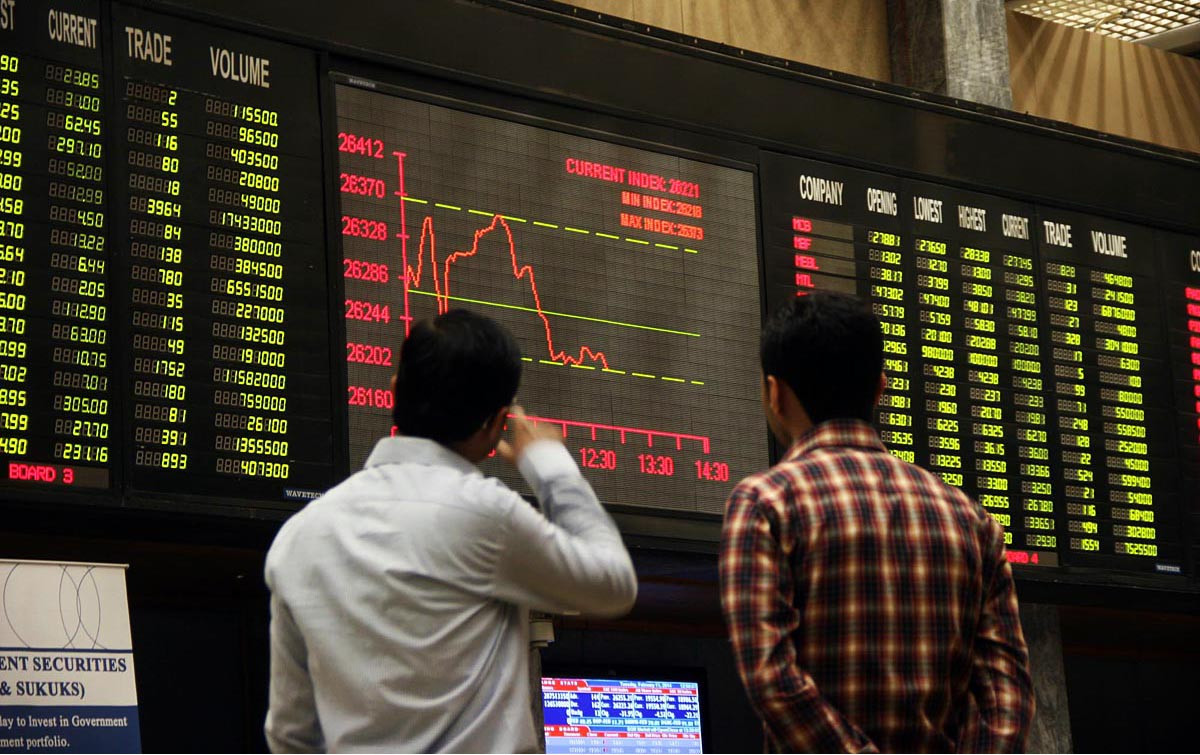
Pakistan’s benchmark KSE-100 Index tumbled 318 points to close at 155,858.47 amid profit-taking and geopolitical jitters over the US-Israeli war on Iran. Full analysis, laggards, gainers and global context.
Pakistan’s stock market offered a masterclass in contradictions on Wednesday. The KSE-100 index opened with genuine conviction — briefly soaring more than 2,000 points above Tuesday’s close before the bulls ran headlong into the same wall that has defined this week’s trading: crude oil swinging between the high-$70s and low-$90s within a single session, and a geopolitical crisis in the Persian Gulf that is rewriting the rules of global energy markets in real time. By the closing bell, the PSX benchmark index settled at 155,858.47, a net loss of 318.65 points, or 0.20%, in a session that traversed nearly 2,972 points of intraday range — a reminder that in Karachi, as in New York and Tokyo this week, tranquility is the riskiest posture of all.
The Session in Charts: From Early Surge to Mid-Day Collapse
The morning belonged to the optimists. Buoyed by the previous day’s extraordinary rebound — Tuesday’s +9,696.97 points gain of 6.62% to 156,177.12 had been one of the most dramatic single-session recoveries in the exchange’s recent history — buyers arrived early and with purpose. By 10:55 a.m., the KSE-100 intra-day high had reached 158,624.51, reflecting a market that was briefly pricing in de-escalation, dovish oil, and stabilising global risk appetite.
It did not last.
The tide turned somewhere between the late-morning tea break and the pre-lunch lull. Selling pressure, initially measured, gathered momentum through mid-session, and by 1:00 p.m. the early gains had been entirely surrendered. The KSE-100 intra-day low of 155,652.35 — reached before a modest stabilisation into the close — tells the story of an index that spent the afternoon clawing back ground it had already lost. The final print of 155,858.47 represents a market caught between warring impulses: a genuine appetite for recovery on one hand, and the gravitational pull of unresolved macro anxiety on the other.
KTrade Securities equity trader Ahmed Sheraz characterised the session as “volatile,” noting that “intermittent bouts of profit-taking” kept the index range-bound throughout the day, with global cues offering mixed signals at best. The Express Tribune
Heavyweights Drag the Benchmark
Key Laggards (combined erosion: ~634 index points)
| Stock | Sector |
|---|---|
| United Bank Limited (UBL) | Banking |
| Pakistan Petroleum Limited (PPL) | Oil & Gas |
| Oil & Gas Development Company (OGDC) | Oil & Gas |
| Meezan Bank Limited | Islamic Banking |
| Mari Petroleum Company Limited | Oil & Gas |
Key Gainers (combined contribution: ~577 index points)
| Stock | Sector |
|---|---|
| Engro Holdings Limited | Diversified |
| Bank AL Habib Limited | Banking |
| Askari Bank Limited | Banking |
The fingerprints of the KSE-100 laggards — United Bank Limited, PPL, and OGDC — tell a coherent story. Two of the three most destructive contributors to Wednesday’s decline were energy names, and their underperformance is inseparable from the wider crude oil drama playing out in real time. For PPL and OGDC in particular, the paradox is sharp: higher international oil prices theoretically boost upstream revenue, but the Pakistan stock exchange volatile session around energy stocks reflects something more complex — investor fear that sustained, geopolitically-driven price spikes will blow a hole through Pakistan’s import bill, pressuring the external account and, by extension, the currency, corporate margins, and policy rates simultaneously.
The banking sector presented a split verdict. UBL and Meezan Bank dragged from one side, while Bank AL Habib and Askari Bank provided meaningful offset from the other, suggesting selective repositioning rather than a wholesale sector rotation.
On the volume board, Bank of Punjab led all-share activity with 37.71 million shares traded, followed closely by K-Electric at 37.69 million and Cnergyico PK at 27.35 million shares. [Related: Pakistan’s banking sector outlook and dividend yields — read our analysis]
Global Backdrop: Oil, Iran and Investor Nerves
The impact of Iran war on PSX and oil prices has been the defining narrative of March 2026, and Wednesday’s session clarified rather than resolved it. Oil prices remain well below the near-$120 peak reached earlier in the week, hovering around $90 a barrel ahead of the G7 meeting convened to coordinate the proposed release of strategic petroleum reserves. Euronews
The catalyst for Wednesday’s brief crude retreat was significant. The International Energy Agency proposed what would be its largest-ever release of oil reserves, with Brent slipping to around $87 per barrel in Asian trade before recovering, while WTI hovered near $82.60 following the announcement. Bangladesh Sangbad Sangstha The decision — expected to exceed the 182 million barrels released after Russia’s invasion of Ukraine in 2022, which was itself a record TheStreet — underscores just how unprecedented the supply dislocation from the Strait of Hormuz closure has become.
Brent had settled at $94 per barrel on March 9, up roughly 50% from the start of the year and the highest since September 2023, as petroleum shipments through the Strait of Hormuz collapsed and some Middle East oil production was shut in entirely. U.S. Energy Information Administration That context makes Wednesday’s partial pullback look less like a trend reversal and more like a pause. One energy market analyst warned that if the conflict is not resolved by the end of the week, oil prices could spike back above $100 a barrel. CNBC
For Pakistan, a country that imports the majority of its petroleum requirements and whose currency reserves remain structurally sensitive to energy price shocks, this is not an abstract debate. Every sustained $10 rise in Brent drains roughly $2.5–3 billion annually from the current account — a calculation that sits at the heart of investor caution in Karachi. Topline Securities, in its market commentary, identified volatile international oil prices as a central driver of Wednesday’s range-bound, indecisive trading — a characterisation confirmed by the index’s inability to hold any of its early-session gains.
The broader Asian picture was more constructive: the MSCI Asia-Pacific ex-Japan index gained 1.6%, the Nikkei climbed 2.1%, and South Korea’s Kospi advanced a robust 3.2%, as regional markets absorbed the IEA news with cautious optimism. US futures added +0.4%, suggesting Wall Street was minded to at least stage a tentative recovery. The PSX market closes down 318 points even as this global tailwind was in evidence — a reflection of Pakistan’s particular vulnerability to the energy price channel relative to its Asian peers.
Rupee Holds Steady as Volumes Contract
Amid the noise, the Pakistani rupee provided a moment of unexpected quiet. The currency strengthened fractionally — gaining Re 0.01 to close at 279.35 against the US dollar — a stabilisation that, while modest, is meaningful given the inflationary and external account pressures that an energy shock of this magnitude typically imposes on frontier-market currencies.
Volume metrics were less reassuring. All-share turnover fell to 441.87 million shares from Tuesday’s 486.52 million, while the value of shares traded contracted from Rs 31.22 billion to Rs 24.98 billion — a decline of roughly 20% in a single session. When momentum fades on a rally day, volume typically tells you whether the retreat is orderly or panicked; Wednesday’s numbers suggest the former. Breadth was marginally positive: 216 issues advanced against 201 declining, with 60 unchanged — a 51/49 split that mirrors the psychological ambivalence visible in every hour of trading.
What Lies Ahead: Outlook for PSX Investors
The PSX benchmark index 155,858.47 closes Wednesday in a position that is neither technically broken nor convincingly repaired. The index has now shed more than 35,000 points from its all-time high of 191,032 recorded earlier in 2026 — a decline of roughly 18% that places it in correction territory by most conventional definitions. The severity of that move, however, must be understood against what has been a genuinely extraordinary geopolitical shock. Few global benchmarks have faced the direct headwinds of an active war in their country’s primary energy supply corridor while simultaneously managing a post-IMF-programme transition.
The tactical picture, as articulated by analysts across multiple brokerages, points to a “sell-on-strength, buy-on-dips” dynamic that could persist for weeks. The KSE-100 index today March 2026 is likely to remain hostage to three variables: the duration of the Strait of Hormuz disruption, the success or failure of the IEA’s record reserve release in capping crude, and — crucially — whether the IMF and State Bank of Pakistan signal policy continuity in response to the external account pressures building in real time.
Market strategists advise maintaining exposure to fundamentally strong sectors — banks, oil and gas, high-dividend names — while avoiding excessive positions in speculative or cyclical equities during this phase of elevated uncertainty. The Express Tribune
🗂 Quick-Reference Summary: Wednesday, 11 March 2026
| Metric | Value |
|---|---|
| KSE-100 Close | 155,858.47 |
| Change | −318.65 pts (−0.20%) |
| Intraday High | 158,624.51 |
| Intraday Low | 155,652.35 |
| All-Share Volume | 441.87 million shares |
| Total Value Traded | Rs 24.98 billion |
| Advancers / Decliners | 216 / 201 |
| PKR/USD | 279.35 (+Re 0.01) |
| Brent Crude | ~$87.89 (+0.2%) |
| WTI Crude | ~$83.47 |
| Previous Close (Tue) | 156,177.12 (+6.62%) |
For longer-horizon investors, the thesis remains intact but requires patience. Pakistan’s macro stabilisation story — the fiscal consolidation, falling inflation, FX reserve rebuilding — does not dissolve because of a two-week geopolitical convulsion. What it does is delay the timeline for re-rating, and raise the required risk premium for foreign participation. When the smoke clears over the Strait of Hormuz, and it will, the country that sat at KSE-100 index 101,598 just twelve months ago — now trading at 155,858.47 even after a bruising correction — will invite a second look.
Until then, the old market adage applies with unusual precision in Karachi this week: in uncertainty, breadth is your balance sheet.
Discover more from The Economy
Subscribe to get the latest posts sent to your email.



For decades, the global dominance of the U.S. dollar has rested on two primary pillars: deep, unencumbered liquid capital markets and an indispensable global financial messaging protocol known as SWIFT. When Beijing launched its e-CNY initiative, Western observers initially framed it as a central bank digital currency (CBDC) designed primarily for domestic surveillance, retail convenience, and financial inclusion.
However, recent strategic moves highlight a far more ambitious objective. As documented by the South China Morning Post, Beijing is actively leveraging Hong Kong as its central offshore laboratory to establish the infrastructure required for international cross-border digital yuan adoption.
The crucial strategic question is no longer whether China can engineer robust distributed ledger architecture, but whether an offshore financial hub operating under “One Country, Two Systems” can bridge the gap between rigid domestic capital controls and global institutional acceptance. To succeed, China must resolve the fundamental tension between absolute monetary sovereignty and the open networks required for international currency adoption.
1. The Paradox of the Offshore Laboratory
China’s monetary expansion faces a well-documented structural paradox. According to macroeconomic research from the Carnegie Endowment for International Peace, no currency can achieve true international reserve status without offering open capital accounts and deep, freely convertible liquidity. Yet, completely relaxing capital controls would expose China’s domestic banking system to volatile international capital flows and speculative pressures.
Hong Kong serves as the pressure valve and testing ground for this paradox:
- Legal & Regulatory Buffer: Hong Kong maintains a trusted common law judicial system and an independent monetary authority (Hong Kong Monetary Authority).
- Convertibility Bridge: It allows mainland authorities to test e-CNY settlement, cross-border retail links, and digital asset integration without opening mainland financial markets directly to global speculative shocks.
- Institutional Liquidity: As the world’s premier offshore renminbi hub, Hong Kong provides the institutional counterparties necessary to build real-world transaction volume.
“The digital yuan’s true test lies not in domestic retail adoption, but in whether foreign counterparties can settle cross-border trade without taking on unacceptable regulatory or capital risks.”
2. Wholesale Settlement and Project mBridge
While retail consumer wallets attract considerable media attention, the real geopolitical shift is occurring at the wholesale institutional level. Strategic initiatives like Project mBridge—developed in partnership with the Bank for International Settlements (BIS), the People’s Bank of China, and regional central banks—demonstrate how multi-CBDC platforms can streamline international trade.
As reported in market analyses by Bloomberg and trade finance studies covered by Reuters, multi-lateral CBDC platforms offer significant operational advantages:
- Elimination of Intermediaries: Direct ledger-to-ledger transactions bypass traditional correspondent banking networks.
- Speed and Efficiency: Cross-border settlement times are reduced from days to seconds.
- Cost Reduction: Transaction costs and foreign exchange spreads across regional trade corridors in Asia and the Middle East are dramatically lowered.
If commercial enterprises operating in Hong Kong can settle trade directly in e-CNY with instant finality, Beijing creates a compelling economic incentive for trade partners that operates independently of Western clearing networks.
3. Geopolitical Implications & The Road Ahead
Western policymakers and central bankers are monitoring these developments closely. Recent congressional testimony and Treasury reviews highlighted by Reuters reflect growing concern in Washington that alternative settlement rails could gradually erode the reach and enforcement of Western financial sanctions.
However, technological capability alone does not guarantee global currency dominance. Until foreign corporate treasuries and central banks have full confidence in converted currency liquidity, property rights, and transparent legal protections, the digital yuan will serve primarily as an efficient alternative mechanism for bilateral trade rather than an immediate replacement for the U.S. dollar.
Institutional Summary & Comparison
| Dimension | Conventional Retail Focus | Wholesale / Strategic Reality |
| Primary Mechanism | Retail e-CNY wallets for tourists & merchants | Multi-CBDC corridors (Project mBridge) & Project Ensemble |
| Core Objective | Domestic payments & payment app competition | Disintermediation of correspondent banking and SWIFT rails |
| Primary Barrier | Consumer habituation & merchant readiness | Capital controls, currency convertibility, and institutional trust |
Sources & Citations
- South China Morning Post: Beijing wants Hong Kong to sow the seeds for the digital yuan
- Bank for International Settlements (BIS): Central Bank Digital Currency (CBDC) & Cross-Border Payments Research
- Carnegie Endowment for International Peace: China’s Financial System and Capital Account Dynamics
- Bloomberg Financial Analysis: Global Macro & Digital Currency Integration
- Reuters News & Analysis: Cross-Border Settlement and Global Trade Finance
Discover more from The Economy
Subscribe to get the latest posts sent to your email.
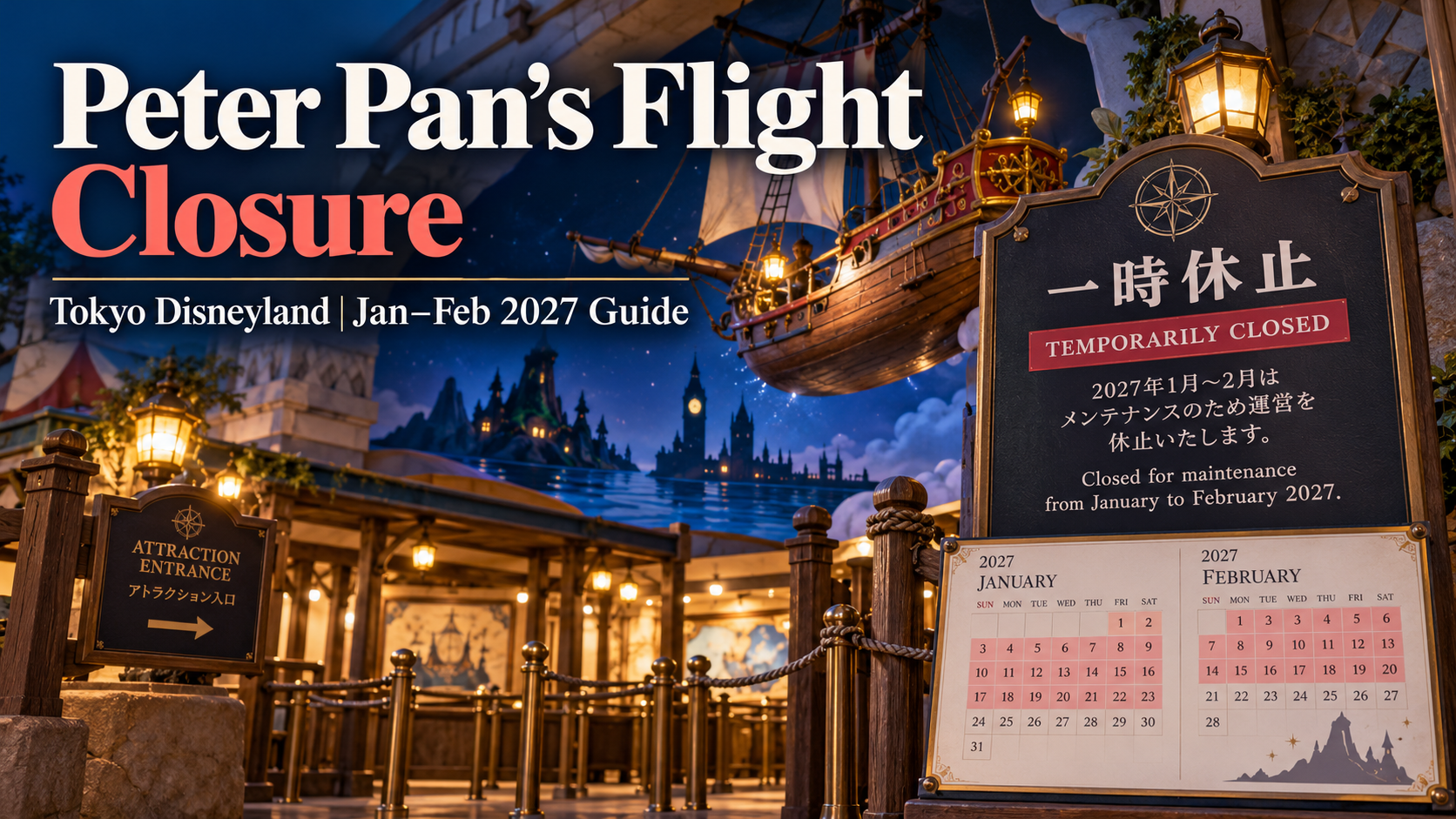
Guests planning a visit to Tokyo Disneyland in early 2027 should put one easily missed detail on their itinerary: Peter Pan’s Flight is scheduled to be temporarily closed from January 6 through February 2, 2027. The operator lists the dates both on its official attraction page and in the Tokyo Disneyland closure schedule. This is a scheduled interruption, not an announcement that the classic ride is being removed permanently. Travelers visiting on dates inside that window should assume the attraction will not be available unless Tokyo Disney Resort publishes a change.
The distinction matters because online references to “Peter Pan closing at Tokyo Disney” can confuse two different parks and two different experiences. Tokyo Disneyland’s Peter Pan’s Flight is a compact Fantasyland ride. Tokyo DisneySea has a separate, newer attraction called Peter Pan’s Never Land Adventure, with its own planned March 2027 maintenance period. The first planning step is making sure the information applies to the ticket you actually bought.
At a glance: what the operator currently says
| Planning question | Verified answer |
|---|---|
| Which attraction? | Peter Pan’s Flight |
| Which park? | Tokyo Disneyland, Fantasyland |
| Scheduled closure starts | January 6, 2027 |
| Scheduled closure ends | February 2, 2027 |
| Reopening expectation | After the listed closure window, subject to operator changes |
| Type of notice | Temporary closure; not announced as permanent |
| Where to recheck | Official attraction listing |
The dates are explicitly labeled as a temporary closure by Tokyo Disney Resort. Do not treat February 3 as an unconditional reopening guarantee: an operator may update maintenance information or temporarily suspend operations for other reasons. Check again shortly before travel and on the day you enter the park.
What is Peter Pan’s Flight?
Peter Pan’s Flight is a dark ride based on the familiar journey from London to Never Land. Guests sit in a flying pirate-ship vehicle that travels through a storybook environment. According to the operator’s ride information, it is in Fantasyland, lasts about two and a half minutes and carries two people per vehicle. It operates indoors and includes dark spaces. These details make it particularly appealing to families who want a gentle, classic Disney experience rather than a high-speed thrill ride.
There are restrictions worth noting even on operating days. The published guidance says a guest must be able to maintain a stable seated position independently and that children may not be held on an adult’s lap during the ride. If your group includes young children, anyone needing seating assistance or visitors uncomfortable with darkness, read the official description and accessibility guidance rather than assuming that the attraction suits everyone because it is short.
Short ride duration is not the same as short waiting time. Demand for well-known classics can vary with crowds, operating conditions and holiday schedules, so it is unwise to schedule a tight sequence of unrelated bookings around a predicted queue. The operator’s app and in-park staff can provide current operating information when the ride is available.
The dates around the closure are not interchangeable
A guest visiting January 5 has a fundamentally different planning position from someone arriving January 6. January 5 falls before the currently listed closure, while January 6 is its opening day. A February 2 visit falls on the final listed day of the maintenance window; February 3 is the earliest day after that window, not a contractual promise that the ride will run.
For a family staying at the resort for multiple days, the difference might be worth changing which day is assigned to Tokyo Disneyland. If one day is before January 6 and another is inside the closure, put Disneyland first if the classic Peter Pan ride is a must-do. But do not swap a park ticket or hotel reservation until you understand the applicable change and cancellation conditions. The economic cost of reshuffling an entire trip can exceed the benefit of experiencing one short ride.
A visitor traveling from overseas may be choosing between a single Disneyland day and a DisneySea day. In that case, consider the trip’s overall priorities. Someone who values vintage Fantasyland attractions may still prefer Disneyland even during the closure. Someone traveling expressly for an immersive Peter Pan adventure could be more interested in the DisneySea attraction—but must buy admission to that different park and verify its own operating schedule.
Other Tokyo Disneyland closures during the same period
The official park maintenance listing shows other attractions with early-2027 closure windows that may overlap your visit. At the time of this review, it lists Jungle Cruise: Wildlife Expeditions from January 6 through March 31, Splash Mountain from January 7 through February 4, and Haunted Mansion from January 8 through February 4. These are operator-published schedules, not independent predictions about refurbishment completion.
This makes the Peter Pan closure more significant for certain visitors than a single unavailable ride might suggest. A group that expected several classic experiences in one afternoon could find multiple priorities temporarily inaccessible. Conversely, the park contains many other attractions and entertainment offerings, and the attractions that remain open should be evaluated on their own current descriptions rather than guessed from historical schedules.
It is worth making a small “must ride / would enjoy / optional” list. Mark each attraction against the closure page. Then build flexibility around weather, performance calendars and queue variation. A plan with alternatives is more resilient than a rigid minute-by-minute schedule.
Better alternatives for different kinds of visitors
If the attraction’s appeal is gentle fantasy storytelling, explore other Fantasyland offerings listed in the official Tokyo Disneyland attraction directory. Filter for ride type and height or access restrictions, and read the current operating details. Do not assume that a neighboring attraction will be open merely because it is not listed in an older travel blog.
If the main attraction is Disney character immersion, devote time to character experiences, themed areas, shopping or scheduled entertainment that is actually available on your day. These can preserve the spirit of the trip without pretending they are substitutes for the ride itself. Some guests will prefer to spend the recovered time on a longer headliner; others may value an unhurried lunch and a park exploration that is less vulnerable to queues.
If the trip is built around Peter Pan specifically, Tokyo DisneySea’s Never Land Adventure may appear attractive. But it is not the same ride: it is a 3D boat-based experience in Fantasy Springs, with different restrictions and a different length. Tokyo Disney Resort’s DisneySea attraction page is the reliable way to compare them. Admission, access arrangements and the day’s capacity remain separate questions.
Parents should also avoid overstating the value of a replacement to children. “Another attraction has pirates” does not make it the planned Peter Pan experience. Setting expectations before entering the park is often more effective than negotiating disappointment in a crowded queue area.
Are refunds or ticket changes automatic?
The announcement of an attraction’s temporary closure does not itself demonstrate that every guest is entitled to a ticket refund or a date change. Theme-park tickets ordinarily grant admission subject to operating conditions, not a binding guarantee that every individual ride will operate. Actual ticket terms, package conditions and any operator-specific accommodation policy govern what can be changed.
Before buying or modifying a pass, review the official Tokyo Disney Resort ticket and reservations guidance and any reseller’s terms. A third-party package might combine transport, hotel rooms and tickets under separate cancellation rules. You should not rely on the statement “ride closed” as a universal reason for a penalty-free cancellation.
If your booking is complex, write down the name of the supplier, reservation reference, exact park date and type of admission. Seek a written answer before paying a change fee. This is particularly important if you plan to move only one day of a multi-day trip and keep the remainder unchanged.
Does Disney Premier Access help during the closure?
No paid queue-management product can make an attraction operate while it is closed. Disney Premier Access is a separate, paid tool for eligible operating experiences; eligibility and availability can change. The official Premier Access guide explains that places may sell out and that the price does not include park admission. It should not be marketed to families as a guaranteed workaround for a published maintenance closure.
The app can nevertheless be useful for other attractions and live operating information. If a ride is unavailable, remove it from the day’s queue-management plan and redirect attention to attractions genuinely offered that day. Check the current product terms before purchasing any additional access.
How to build a more reliable 2027 itinerary
Start with the official attraction closure list rather than the social-media version of it. Choose a date, read the list for the correct park, then check the pages for the two or three attractions most important to your group. If several favorites overlap with closures, compare another travel day, but preserve buffer time and cost limits.
Once you have a provisional itinerary, check whether your whole group can experience the alternatives. A family with a toddler and grandparents may have different needs from a group of teenagers. Ride seating rules, dark environments, height restrictions and walking distances deserve attention before buying optional upgrades.
A week before departure, look at the operator’s park calendar and attraction pages again. On the morning of your visit, follow current app information and staff instructions. Write down a backup plan that does not depend on a single ride reopening on the first conceivable day.
Quick visitor questions
Is Peter Pan’s Flight shutting permanently? The published notice says temporary closure January 6–February 2, 2027. It does not announce permanent removal.
Is it in Tokyo Disneyland or DisneySea? Peter Pan’s Flight is in Tokyo Disneyland’s Fantasyland. DisneySea has the separate Never Land Adventure.
Can I ride on February 2? The current listing includes February 2 in the closure window. Do not plan on riding that day.
Is February 3 the official reopening day? It is the first day after the presently announced closure period, assuming the dates are unchanged. Confirm the park’s live information rather than treating operation as guaranteed.
Should I change my trip? That depends on how important this specific ride is compared with hotel, flights, admission and other attractions. For most travelers, adjusting priorities within the same park is the lower-risk first option.
Final planning advice
This news is not a farewell to Peter Pan’s Flight. It is a defined, temporary gap in the operating calendar. The useful response is to check your exact visit date, compare the rides your family actually cares about and keep a realistic alternative ready. Tokyo Disneyland can still be an appealing destination during the listed closure; the difference between an enjoyable trip and a frustrating one may simply be accurate expectations.
Discover more from The Economy
Subscribe to get the latest posts sent to your email.

Key Takeaways
- Rolex’s secondary market rose approximately 7.9% year-over-year as of 2026 (per WatchCharts data) — trailing Patek Philippe (+16.2%) and Tudor (+11.4%) but still outperforming Audemars Piguet (+3.4%).
- Rolex raised U.S. retail prices 4–9% in January 2026 (steel models ~5.6%, gold models ~8.7%), narrowing the historical gap between retail and pre-owned pricing.
- Not every model appreciates: steel sports references (Submariner, GMT-Master II, Daytona) have held value far better than two-tone or widely available dress references like the standard Datejust.
- The Lady-Datejust posted the sharpest 2026 gain among tracked collections — up 22.73%, from roughly $9,269 to $11,376 — driven by demand for smaller, “everyday luxury” watches.
- Gold’s rise past $2,400/oz has directly lifted the investment case for Rolex’s precious-metal references (Day-Date, Sky-Dweller, Yacht-Master).
The Model-by-Model Picture
| Category | 2026 Trend |
|---|---|
| Lady-Datejust | +22.73% (strongest performer among tracked collections) |
| Steel sports models (Submariner, GMT-Master II) | Held value well; corrected from 2022 peak but stabilized above retail |
| Daytona | Corrected from highs above $50,000 to the mid-$30,000s; still among the most sought-after references |
| Two-tone/widely available Datejust | Flat to negative — “holds value” is an overstatement for this category |
| Gold references (Day-Date, Sky-Dweller) | Lifted by gold’s rise above $2,400/oz |
Why the “Rolex Always Appreciates” Myth Is Fading
The pandemic-era boom pushed some references — the Daytona above all — to speculative highs disconnected from historical norms. Since the March 2022 peak, steel sports models have compressed meaningfully, and dealers who bought inventory near the top have in some cases faced 20–40% markdowns on liquidation. The lesson for 2026 buyers: Rolex as a category is not a monolith. Value retention depends heavily on specific reference, condition, and whether the piece comes with box and papers (“full set”).
What’s Actually Driving 2026 Strength
- Retail price increases raise the floor. When a new Submariner retails at $10,050 (up from $9,500), a pre-owned example at $11,000–$12,000 suddenly represents a smaller premium — narrowing the gap without secondary prices actually moving.
- Supply discipline remains Rolex’s core lever. The brand has never confirmed production numbers, and secondary-market premiums remain entirely a function of Rolex’s own manufacturing decisions — a risk factor as much as a support.
- Certified Pre-Owned rollout. Rolex’s now fully rolled-out CPO program has changed how buyers transact in the used market, adding a layer of brand-verified legitimacy that supports pricing.
The Case for Rolex as a Portfolio Diversifier
Financial advisors increasingly frame luxury watches not as a replacement for equities or bonds, but as a tangible, historically low-correlation diversifier — one that carries its own risks (illiquidity, condition-dependent pricing, no yield) but has demonstrated multi-decade resilience for specific references.
Is Rolex a good investment in 2026?
It depends heavily on the specific reference. Steel sports models like the Submariner and Daytona have held or grown in value; two-tone and widely available dress models generally have not. Overall, Rolex’s secondary market rose about 7.9% year-over-year in 2026, trailing Patek Philippe but ahead of Audemars Piguet.
Discover more from The Economy
Subscribe to get the latest posts sent to your email.

Stock Market Crash 2026? What the November Rout Actually Tells Us

IMF Global Outlook 2027: The Recovery Is Real, but the Divide Is Growing

World Bank Debt Report 2026: The $9.4 Trillion Burden Behind the Recovery

Singapore Stock Market Outlook 2027: The STI’s Bank-and-Yield Test

Asian Stock Markets: Why the AI Rout Is Dividing the Region

Global Markets Today: The AI Sell-Off Has Become a Test of Liquidity

Global Finance 2027: Debt, Inflation and AI Are Pulling the Economy Apart

Brian Kemp’s Georgia Legacy: Economic Growth, Elections and the Costs of His Policy Choices

Dow Futures vs Dow Jones: What E-mini Contracts Really Tell You Before Wall Street Opens

China Tape Maker Stock Debut: Crown New Materials Soared 787%

Apple’s Earnings Beat Had a Catch: Look Past the Tariff Refund

Social Security Payments in November 2026: The Full Calendar and Two Important Changes

Johor–Singapore SEZ’s $21.8 Billion Bet: The Hard Part Starts Now

China’s 175 Trillion AI Tokens Reveal a Bigger Shift: The AI Boom

Crude Oil & Petroleum Market Analysis: OPEC+ Decisions and Price Forecasts

Top US Convenience Store Chains: Store Counts, EV Charging, and Sales Trends

Social Security Extra $90 Deposit: Who Qualifies for the October 2026 Medicare Rebate?

Gold Price Outlook 2026: The Forces Behind the Forecasts—and What Could Reverse Them

Stock Market Crash in 2026? Warning Signs, Scenarios and a Calm Investor Checklist

Anthropic Bans Sustained Abuse of Claude AI Under New Usage Policy Effective November 12, 2026

US–Iran Conflict in October 2026: Hormuz, Oil Prices and Diplomacy

US–China Critical Minerals Competition: Why a Trade Deal Cannot Fix Every Supply Risk

SSI November 2026 Payment: Why Benefits Arrive October 30

US–China AI Export Controls in 2026: Chips, Testing Rules and Corporate Risk

China’s AI Microdrama Boom: How Beijing Is Reshaping Global Media

EU vs UK Electric Vehicle Tariffs: Impact on Automotive Supply Chains & Consumer Prices

Pakistan IMF Programme 2026: Why Bailouts Keep Returning

Jeff Bezos Three-Day Workweek View: What He Really Said
-

 Markets & Finance10 months ago
Top 15 Stocks for Investment in 2026 in PSX: Your Complete Guide to Pakistan’s Best Investment Opportunities
-

 Analysis9 months ago
Johor’s Investment Boom: The Hidden Costs Behind Malaysia’s Most Ambitious Economic Surge
-

 Analysis9 months ago
Top 10 Stocks for Investment in PSX for Quick Returns in 2026
-

 Banks10 months ago
Best Investments in Pakistan 2026: Top 10 Low-Price Shares and Long-Term Picks for the PSX
-

 Analysis9 months ago
Brazil’s Rare Earth Race: US, EU, and China Compete for Critical Minerals as Tensions Rise
-

 Investment10 months ago
Top 10 Mutual Fund Managers in Pakistan for Investment in 2026: A Comprehensive Guide for Optimal Returns
-

 Global Economy10 months ago
15 Most Lucrative Sectors for Investment in Pakistan: A 2025 Data-Driven Analysis
-

 Global Economy10 months ago
Pakistan’s Export Goldmine: 10 Game-Changing Markets Where Pakistani Businesses Are Winning Big in 2025