
AI
Samsung’s AI Deals Target Apple’s Smartphone Lead

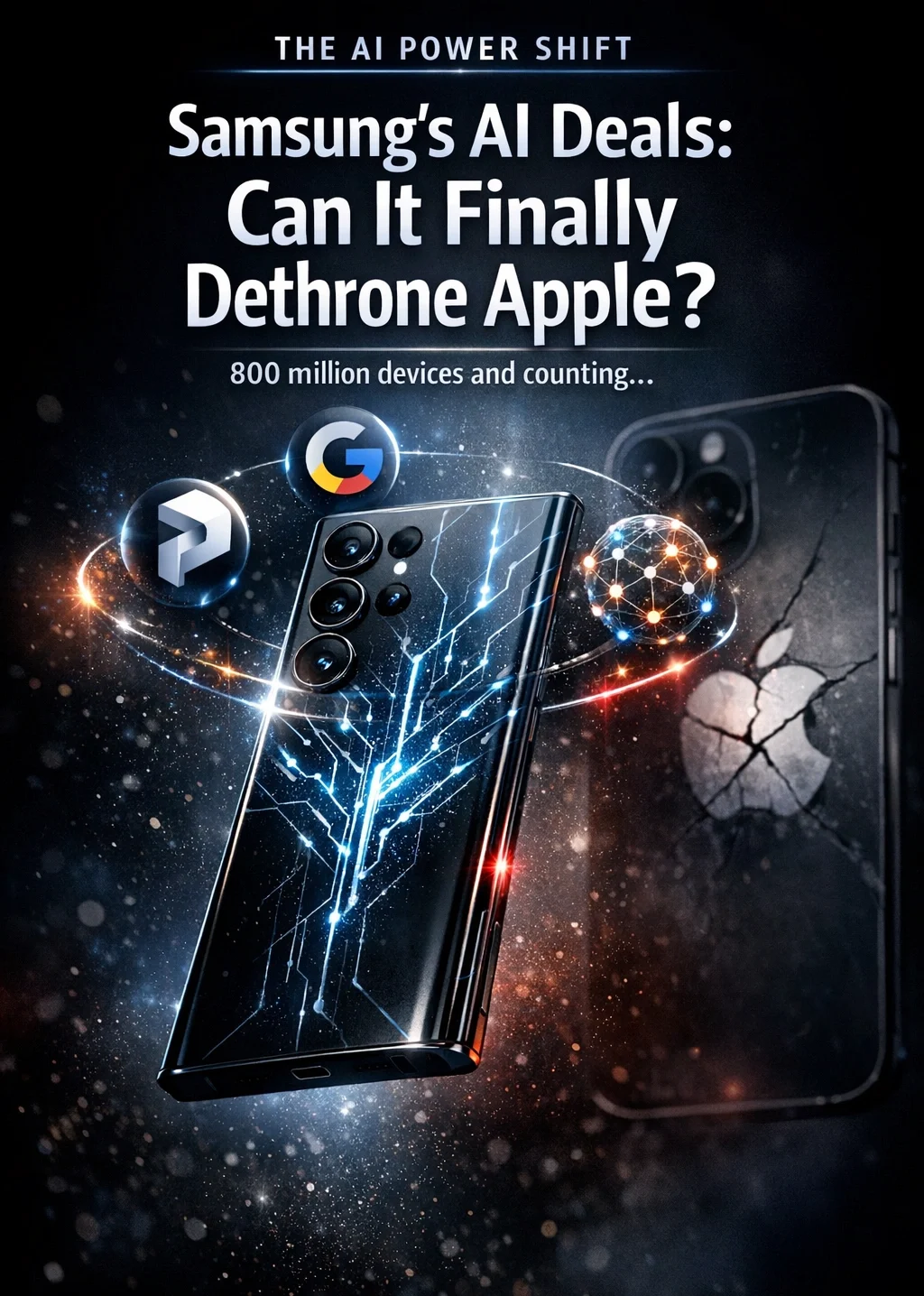
On a Tuesday evening in late February, a short post on Perplexity AI’s official changelog quietly announced the end of one era and the opening of another. The entry read: “Samsung’s Galaxy S26 is the first smartphone to integrate Perplexity’s APIs at the platform level. Bixby now uses Perplexity for real-time web search and advanced reasoning.” It ran to five bullet points. It was, by the understated conventions of developer documentation, one of the more consequential product announcements of 2026.
That integration — combined with the continued deep presence of Google Gemini across the Galaxy ecosystem and Samsung’s stated ambition to embed Galaxy AI into 800 million devices by December — crystallizes the strategic logic now driving the world’s largest smartphone maker. Samsung’s pursuit of Samsung AI deals is not a marketing exercise. It is a wholesale architectural bet: that the smartphone of the mid-2020s should function less like a single-vendor appliance and more like a fluid, open intelligence platform. The company that once trailed Apple on software coherence is now daring to redefine what smartphone software means.
“With 800 million Galaxy AI devices in its sights, a freshly inked partnership with Perplexity, and a multi-agent Galaxy S26 that hosts three AI engines simultaneously, Samsung is waging the most structurally ambitious challenge to Apple’s premium smartphone dominance in a decade — and betting that plurality, not purity, wins the intelligence era.“
The Scale Play: 800 Million and the Democratisation of AI
In January, Samsung’s new co-CEO T.M. Roh — who assumed the role in November 2025 — gave his first major press interview to Reuters, and he did not reach for nuance. “We will apply AI to all products, all functions, and all services as quickly as possible,” he said. The company had shipped Galaxy AI features to approximately 400 million mobile devices in 2025. The 2026 target is exactly double: 800 million smartphones, tablets, wearables, televisions and home appliances — a footprint that would, at a stroke, make Samsung the single largest distribution channel for consumer-facing generative AI anywhere on earth.
The internal evidence for this ambition is striking. Samsung’s own research shows that Galaxy AI brand awareness among its user base jumped from 30% to 80% in a single year — a pace of consumer adoption that, under normal conditions, takes half a decade. Among the features driving that recognition: real-time translation, generative image editing, voice transcription, and an overhauled search layer that surfaces results without requiring the user to open a browser. The raw numbers carry weight, but the direction matters more. AI is no longer a premium add-on on Samsung devices. It is being embedded as a default environmental layer, present in the background of everyday interactions whether the user invokes it explicitly or not.
Smartphone Market Snapshot — Q4 2025 / 2026 Forecast
| Metric | Figure | Source |
|---|---|---|
| Apple global market share, 2025 | 20% — #1 worldwide | Counterpoint Research |
| Apple iPhone units shipped, full-year 2025 | 247 million — a record | IDC |
| Expected global smartphone shipment change, 2026 | –12.9% | IDC, March 2026 revision |
| Projected 2026 smartphone market value | $579 billion — a record high | IDC |
| Samsung share of foldable market, Q3 2025 | ~66% | Counterpoint Research |
| Forecast average smartphone selling price, 2026 | $465 — up sharply on memory costs | IDC |
That context matters because 2026 is not a comfortable year in which to execute a volume ambition. IDC’s March 2026 market intelligence update revised the global shipment forecast to a decline of nearly 13% year-on-year — the steepest contraction in more than a decade, driven by what the firm’s vice president Francisco Jeronimo called “a tsunami-like shock originating in the memory supply chain.” The irony is acute: the same AI infrastructure buildout that Samsung is riding as a strategic tailwind is simultaneously squeezing memory supply, driving up component costs, and threatening to price mid-range Android devices out of reach for consumers in precisely the emerging markets where Samsung’s volume base is concentrated.
T.M. Roh acknowledged as much, telling Reuters that price increases were “inevitable” from the memory squeeze. Yet the long-term logic of the 800 million target may survive the short-term margin pain. Counterpoint Research’s Tarun Pathak noted that while the supply crunch would weigh on shipments, “Apple and Samsung are likely to remain resilient” given their supply-chain scale and premium-market exposure. In a contracting market, the strongest brands capture share. Samsung is making sure its brand is now, explicitly, an AI brand.
The Multi-Model Wager: Gemini, Perplexity, and the Open Ecosystem
The strategic heart of Samsung’s 2026 proposition arrived with the Galaxy S26, unveiled at Galaxy Unpacked on February 25. The device is the world’s first to run three independent, system-level AI agents simultaneously: Google Gemini, Samsung’s revamped Bixby, and now, via a partnership formally announced on February 21, Perplexity — accessible through the wake phrase “Hey Plex” or a long-press of the side button. Each agent has direct, OS-level permissions to interact with native Samsung applications including Notes, Calendar, Gallery, Clock and Reminders.
“Galaxy AI acts as an orchestrator, bringing together different forms of AI into a single, natural, cohesive experience.”
— Won-Joon Choi, President and COO, Samsung Mobile eXperience Business (Samsung Newsroom, February 2026)
The Perplexity integration is qualitatively different from a typical app pre-installation. As Dmitry Shevelenko, Perplexity’s Chief Business Officer, explained to Android Headlines, the Galaxy S26 marks the first time a non-Google entity has received OS-level access on a Samsung device — a structural concession Samsung would not have considered three years ago. Perplexity’s Sonar API now powers Bixby’s search backend; even users who never consciously interact with Perplexity are, in a sense, using it every time they ask Bixby a factual question that requires real-time web reasoning. Perplexity’s own changelog confirmed the integration shipped on February 27.
The philosophical departure from Silicon Valley orthodoxy is deliberate. Where Apple and Google construct closed, vertically integrated intelligence stacks — one vendor, one model, tightly controlled — Samsung is building what its COO describes as an “open and inclusive integrated AI ecosystem.” Its own internal research, cited at the Unpacked event, found that nearly eight in ten Galaxy users now rely on more than two types of AI agents. The multi-model strategy is, in this light, a direct reflection of observable consumer behaviour, not merely a technology preference. Whether it coheres as a seamless experience in practice remains the central execution question of 2026.
The technical foundation underpinning these ambitions is the Exynos 2600, built on Samsung’s 2nm gate-all-around process. Its neural processing unit reportedly runs on-device AI tasks more than twice as fast as its predecessor, enabling the “mixture of experts” model architecture that allows computationally heavy reasoning tasks to run locally without cloud latency. This matters for a specific class of user — in enterprise environments, in regions with unreliable connectivity, in cases where privacy-conscious consumers want their data to remain on-device. Samsung’s framing of its “Personal Data Engine” as a local, privacy-preserving learning layer is a direct response to Apple’s long-standing advantage on privacy messaging.
Apple’s Position: Market Leader, but AI Plays Catch-Up
Apple enters 2026 from a position of considerable market strength and uncomfortable strategic awkwardness. Counterpoint Research’s full-year 2025 data placed Apple as the world’s number-one smartphone vendor, with a 20% global share and the highest growth rate among the top five brands at 10% year-on-year. IDC similarly flagged a record 247 million units shipped, with Apple’s premium positioning insulating it from the mid-range pressures hammering Chinese Android manufacturers.
But in AI, the company that built its reputation on seamlessly integrated software finds itself, for the first time in a decade, in the awkward position of acknowledging that a partner can build better models than it can. On January 12, Apple and Google jointly announced a multi-year agreement worth a reported $1 billion annually, under which Google’s Gemini models and cloud infrastructure will power the next generation of Apple Foundation Models — the engine behind a long-delayed Siri overhaul. Apple had originally promised the revamped Siri for autumn 2024. Then spring 2025. Then late 2025. The partnership represents a candid, if corporate, admission that the internal timeline was broken.
As of early March, reports from Bloomberg and Mark Gurman suggest the Gemini-powered Siri features face further internal delays, with the most capable upgrade now expected in iOS 27 — potentially September 2026 at the earliest. Apple has told press the rollout remains on schedule for 2026, but the picture remains, as T3 described it, “slightly confusing.” In the meantime, Samsung has shipped three active AI agents on a flagship device and is expanding the feature set to older Galaxy models through software updates. The temporal gap between Samsung’s deployed capabilities and Apple’s promised ones is, at this moment, measurable in months at minimum.
There is also a notable structural paradox here. Samsung is both Apple’s fiercest smartphone competitor and, through its semiconductor division, one of Apple’s most critical supply-chain dependencies. Apple sources memory components — DRAM and NAND — from Samsung Semiconductor. The same global HBM shortage that is pressuring Samsung’s smartphone margins is simultaneously complicating Apple’s own component costs and forcing the company to delay the base iPhone model to early 2027, a scheduling shift IDC expects to pull iOS shipments down 4.2% next year. Both companies are, in this sense, victims of the same AI infrastructure gold rush — the insatiable demand for high-bandwidth memory from data centres crowding out the supply available for consumer devices.
The Korean Industrial Dimension
Analysts who track Samsung through a purely product-market lens often underestimate the degree to which its AI strategy is also a Korean industrial policy story. The shift toward on-device AI inference workloads — running models locally rather than routing queries to cloud servers — creates a “virtuous hardware loop,” as Samsung’s own briefing materials describe it: more on-device AI demands faster NPUs, which demands better memory, which directly benefits Samsung Semiconductor’s HBM4 ramp.
Samsung’s record profits of KRW 20.1 trillion (approximately $15 billion) in 2025 were powered as much by the chip division as by mobile, and the strategic logic connecting the two divisions is tightening. When Samsung ships an AI-intensive Galaxy S26 with Perplexity, Gemini and a local inference engine, it is simultaneously creating demand for the very memory products its semiconductor division makes. This vertical integration, rarely visible to the average consumer, is one of the more durable competitive advantages the company holds over Apple — which no longer manufactures memory — and over pure-play software companies entering the agentic AI era without a hardware base.
The Foldable Frontier and Wearables
Samsung’s AI ambitions extend beyond slab-form smartphones. The company controls roughly two-thirds of the global foldable market as of Q3 2025 and has three new foldable devices — including the Galaxy Z Fold 8, Galaxy Z Flip 8, and a reported third form factor — in carrier testing for a probable July or August 2026 launch. T.M. Roh told Reuters that while foldables have grown more slowly than anticipated, a “very high” repurchase rate within the category suggests deep user loyalty. He expects the segment to go mainstream within two to three years.
The integration of multi-agent Galaxy AI into foldables and wearables is where the platform logic becomes most compelling. A Galaxy Ring or Galaxy Watch user who already trusts Bixby for device control and Perplexity for research is a far stickier ecosystem participant than a consumer who merely uses a single AI feature on a flagship phone. IDC forecasts foldable market growth of 11% in 2027 even as the overall market contracts — the category’s resilience driven by exactly the AI-enhanced productivity use cases Samsung is now building.
Three Scenarios for the Smartphone AI Race
1. Samsung wins the volume war; Apple retains the value war
The most probable near-term outcome. Samsung’s 800 million AI device footprint makes it the dominant consumer AI distribution channel globally, while Apple’s delayed but eventually polished Gemini-Siri experience consolidates its premium lead. The smartphone market bifurcates into a Samsung-led mass-market AI layer and a smaller, higher-margin Apple intelligence tier.
2. The multi-model bet backfires
If the three-agent Galaxy S26 experience fails to cohere — if users find routing between “Hey Bixby,” “Hey Google,” and “Hey Plex” confusing rather than liberating — Samsung’s open-ecosystem pitch collapses into a cautionary tale about complexity. Apple’s eventual single, well-integrated Gemini-Siri upgrade becomes the benchmark against which Samsung’s plurality looks cluttered.
3. The memory crisis reshapes the competitive order
If the HBM shortage persists deep into 2027, smartphone ASPs rise sharply across the board. Chinese OEMs suffer most severely at the low end, Samsung loses volume in emerging markets, and Apple’s premium positioning and supply-chain relationships insulate it from the worst. The AI race becomes secondary to a supply-chain survival story.
The Deeper Competitive Question
There is a version of this story in which Samsung’s pursuit of AI partnerships is framed as a structural weakness — an acknowledgement that the company cannot build frontier models as effectively as Google, OpenAI or Anthropic, and must therefore license them. That framing misses the point. In the intelligence era, the scarcest resource is not the model — it is the hardware in hundreds of millions of consumers’ hands, the default integration that determines which AI a person uses without having to think about it.
Samsung has that hardware. What it has done in 2026, through the Gemini deepening, the Perplexity deal, and the Galaxy S26’s open multi-agent architecture, is monetise that hardware position by becoming indispensable to the AI companies that need consumer distribution. Perplexity, which launched only in 2022, has achieved through a single Samsung pre-install deal what would have required years of organic app-store growth. Google has secured default AI presence on Android devices at a scale that embarrasses any alternative model provider. Both companies are paying Samsung — in capability, in visibility, in strategic value — for access to the audience it has already built.
Apple, by contrast, is now in an unusual position: paying Google approximately $1 billion a year for AI capability on top of the billions it already pays Google for search placement, all while its own intelligence features run behind the delivery schedule its marketing department promised. The irony is not lost on analysts: the company most associated with vertical integration is now the one most exposed to a partner’s model development roadmap.
What the Samsung AI deals ultimately represent is a hypothesis about how the intelligence era will be won. Not through model supremacy alone, but through ecosystem breadth, hardware scale, and the willingness to let the best model for the moment — whatever it is, wherever it comes from — serve the user. Whether consumers validate that hypothesis, or whether they ultimately prefer the coherent simplicity of a single, trusted AI source, will determine the shape of the smartphone market for the remainder of this decade.
For now, Samsung has moved first, moved boldly, and moved at scale. The rest of the industry is watching the Galaxy S26 — three AIs, one device, an open ecosystem — to see if the future it promises is one consumers actually want.
Sources & References
- Reuters — “Samsung to Double AI Mobile Devices to 800 Million Units,” Jan. 5, 2026
- Samsung Newsroom — “Galaxy AI Expands Multi-Agent Ecosystem,” Feb. 20, 2026
- Perplexity AI Changelog — Galaxy S26 Integration, Feb. 27, 2026
- CNBC — “Apple Picks Google’s Gemini to Power AI-Powered Siri,” Jan. 12, 2026
- Google/Apple Joint Statement, Jan. 12, 2026
- IDC Worldwide Quarterly Mobile Phone Tracker — March 2026 Revision
- Counterpoint Research — Global Smartphone Market Share, Full-Year 2025
- Android Headlines — “Galaxy S26’s Perplexity AI Integration is Deeper Than You Think,” Feb. 2026
- TechCrunch — “Google’s Gemini to Power Apple’s AI Features Like Siri,” Jan. 12, 2026
- T3 — “Gemini-Powered Siri Still on Track for 2026,” Feb./Mar. 2026
Discover more from The Economy
Subscribe to get the latest posts sent to your email.


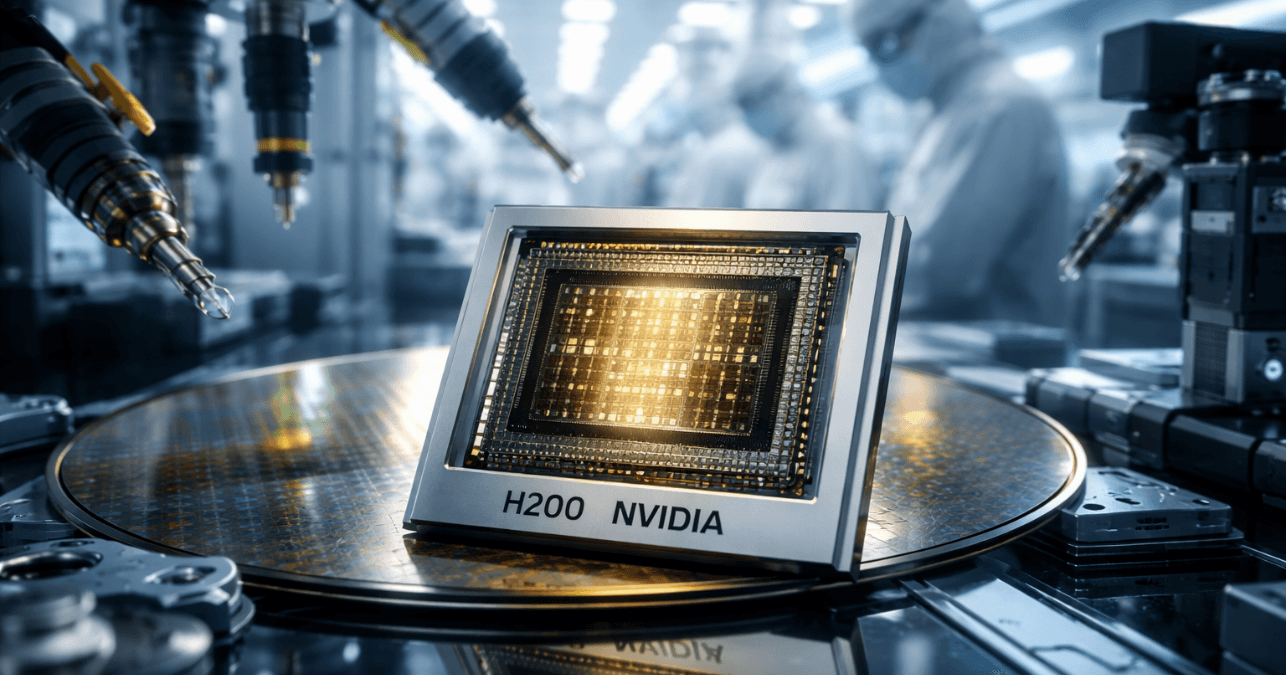
Nvidia has begun shipping its advanced H200 AI chips to China under a reversed US export policy, but the volumes moving so far are, in the words of a senior Commerce Department official, “trivial” — even as Chinese technology firms have collectively ordered more than two million units against a global Nvidia inventory of roughly 700,000.
A Policy Reversal That Remains Mostly Symbolic
Under Secretary of Commerce for Industry and Security Jeffrey Kessler told Congress on 14 July that H200 shipments to China remain minimal despite roughly $10 billion in approved licenses, according to TechTimes. Washington has approved sales to roughly ten Chinese firms — including Alibaba, Tencent, ByteDance, and JD.com — with each cleared buyer permitted to purchase up to 75,000 chips through Nvidia directly or via authorised distributors Lenovo and Foxconn.
The scale of pent-up Chinese demand dwarfs what can actually be delivered. Chinese technology companies have collectively ordered more than two million H200 chips for 2026, against Nvidia’s total global inventory of roughly 700,000 units — a supply gap severe enough to force emergency production discussions with TSMC to restart manufacturing of the older Hopper-generation chip architecture, according to the same TechTimes reporting.
Bipartisan Political Backlash in Washington
The limited shipments have nonetheless triggered a sharp political divide in Congress. Democratic Representative Gregory Meeks, the top Democrat on the House Foreign Affairs Committee, accused the administration of weakening safeguards by approving advanced AI chip licenses, describing export controls as being used as a bargaining chip in broader trade negotiations with China. Republican Representative Bill Huizenga separately criticised the Commerce Department over a reported loophole allowing Chinese subsidiaries operating outside mainland China to acquire the more advanced Blackwell-generation chips despite restrictions targeting the mainland market.
The Policy Architecture Is Genuinely Contradictory
The current framework traces back to a December 2025 announcement by President Trump permitting H200 sales to China, formally codified by the Commerce Department in January 2026 alongside conditions experts have called self-contradictory, according to detailed policy analysis from Semiconductor Insight. Those conditions include a 25% tariff on advanced AI chips meeting specific performance thresholds under Section 232 of the Trade Expansion Act, case-by-case licensing replacing a prior blanket presumption of denial, mandatory end-use certifications, and a volume cap estimated at roughly one million H200 units — about half of what Chinese buyers have already ordered.
The buyer list has continued to expand in recent weeks. Newly cleared purchasers include a unit of telecom equipment maker ZTE and a server assembly firm, alongside a cloud computing subsidiary of Kingsoft cleared to purchase competing AMD chips, according to Technetbook.
Why the Ambiguity Itself Is Costly
Perhaps the most consequential effect of the policy has been on long-term planning rather than near-term volume. Nvidia has not recovered the Chinese customer base it lost after roughly a year of regulatory uncertainty, as export controls introduced in 2022 and escalated under both the Biden and Trump administrations had already pushed the company’s China market share from roughly 95% toward zero, according to Semiconductor Insight’s analysis. Customers requiring long-term procurement certainty are reportedly reluctant to commit against a policy framework that could reverse again within months — while a bipartisan group of lawmakers has separately pushed Commerce Secretary Howard Lutnick and Secretary of State Marco Rubio toward a complete country-level ban on chipmaking equipment exports to China.
What It Means for Investors and the AI Supply Chain
For semiconductor investors, the H200 saga illustrates how thoroughly US-China technology policy has become entangled with broader trade diplomacy — a dynamic that leaves Nvidia’s China revenue outlook genuinely unpredictable regardless of near-term shipment volumes. For TSMC and its packaging partners, the emergency restart of Hopper-generation production lines signals capacity strain that may persist regardless of how the export-control debate ultimately resolves.
What to Watch
The Commerce Department’s enforcement posture on the reported Blackwell subsidiary loophole, along with any Congressional movement toward the proposed blanket equipment-export ban, will be the clearest signals of whether Washington’s China chip policy is heading toward further liberalisation or a renewed crackdown.
Discover more from The Economy
Subscribe to get the latest posts sent to your email.
AI
Anthropic Offers Up to $600,000 Salary for Critical IPO Role as AI Giant Prepares for Wall Street Debut
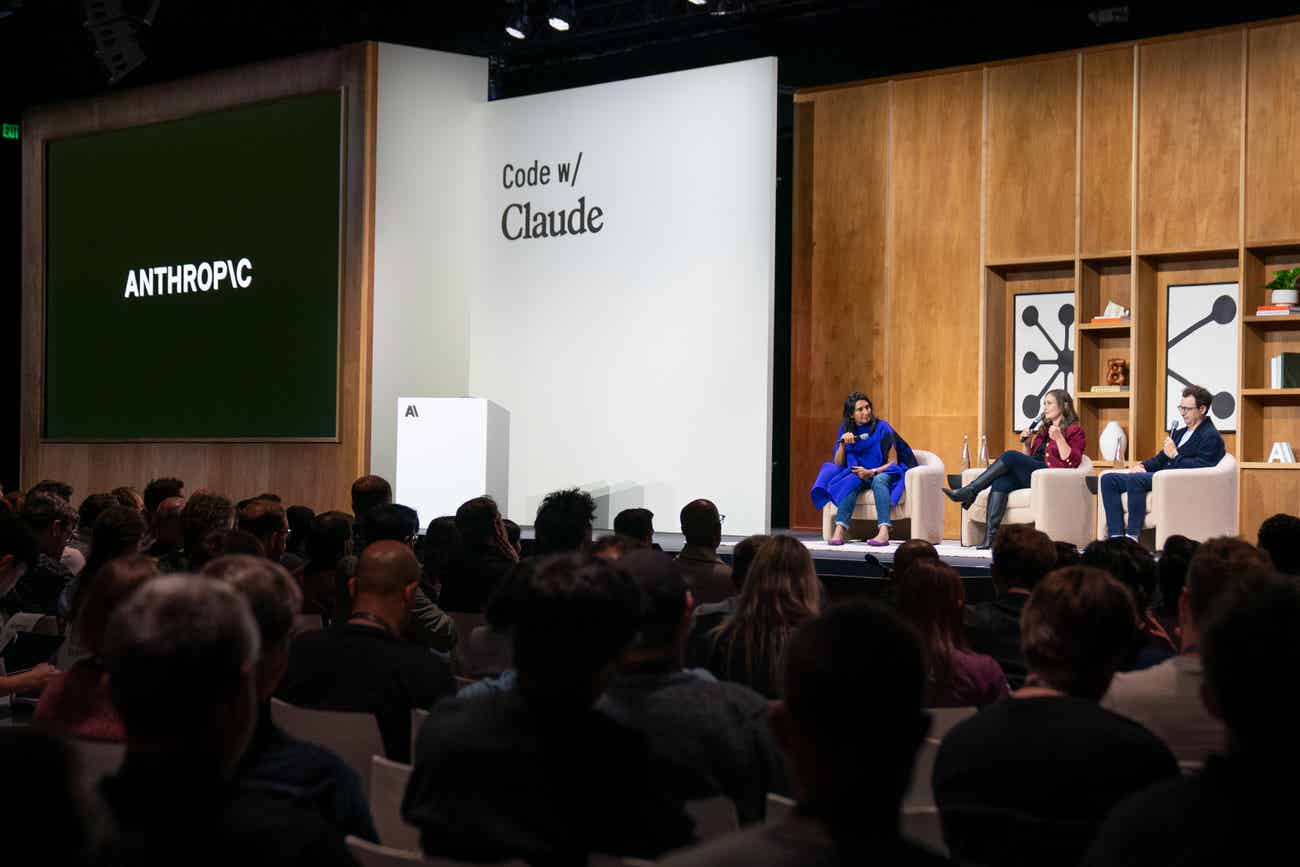
As anticipation builds around what could become one of the largest technology listings in recent history, artificial intelligence company Anthropic is offering an eye-catching base salary of up to $600,000 for a key investor relations position, underscoring how seriously the company is preparing for its expected initial public offering (IPO).
The San Francisco-based AI developer, best known for its Claude family of AI models, has posted a vacancy for a Director of Investor Relations with a base compensation ranging from $425,000 to $600,000, making it one of the most strategically important hires ahead of its anticipated public market debut. According to a report by Business Insider, the company is expected to pursue an IPO as early as fall 2026, following a surge in valuation and extraordinary revenue growth.
A Strategic Hire Ahead of a Landmark IPO
The investor relations director will be responsible for shaping Anthropic’s investment narrative, maintaining relationships with institutional investors, and helping Wall Street understand the company’s long-term strategy and financial outlook.
According to the job description, the successful candidate will:
- Develop Anthropic’s investment story for public markets.
- Serve as a primary liaison between executive leadership and investors.
- Analyze AI industry developments and communicate their financial implications.
- Support earnings communications, investor presentations, and regulatory disclosures.
- Work closely with the company’s newly appointed Head of Investor Relations.
The position reports into Kenneth Dorell, who joined Anthropic earlier this year after previously leading investor relations at Meta. His appointment reflects the company’s broader effort to build an experienced leadership team capable of navigating public market expectations.
Why Investor Relations Matters More Than Ever
While investor relations roles are common among public companies, they become especially significant during the transition from private to public ownership.
For Anthropic, the challenge extends beyond explaining quarterly financial results. The company must convince investors that its massive investments in AI research, computing infrastructure, and talent acquisition can translate into sustainable long-term growth.
Unlike many traditional software companies, Anthropic operates as a public benefit corporation, meaning it is legally committed to balancing shareholder returns with the responsible development of advanced artificial intelligence. The company’s official mission emphasizes building reliable, interpretable, and safe AI systems for the long-term benefit of society, according to the company’s website.
This dual mandate creates a unique communication challenge for investor relations executives, who must explain how commercial success aligns with responsible AI development.
AI Boom Drives Extraordinary Compensation
The offered salary highlights the increasingly fierce competition for executive talent across the AI industry.
Although a base salary of $600,000 is exceptional by conventional corporate standards, compensation at leading AI companies frequently includes stock awards, bonuses, and long-term incentives that can substantially increase total earnings.
Anthropic has become one of Silicon Valley’s fastest-growing companies, with demand for its enterprise AI products accelerating rapidly. The company’s coding assistant, Claude Code, has gained significant traction among software developers and businesses seeking AI-powered programming tools.
Recent reporting indicates that Anthropic’s annualized revenue has expanded dramatically as enterprise adoption of generative AI continues to accelerate, strengthening investor expectations ahead of a potential IPO.https://www.businessinsider.com/anthropic-ipo-hiring-investor-relations-director-2026-7
Preparing Wall Street for an Unconventional AI Company
Anthropic’s investor relations team faces a unique assignment.
Unlike mature technology companies with decades of operating history, frontier AI companies remain difficult to value because they invest billions of dollars annually in computing infrastructure, model training, and research talent while operating in a rapidly evolving competitive environment.
Potential investors will likely seek clarity on several key questions:
- Future profitability.
- Infrastructure spending.
- AI safety governance.
- Regulatory risks.
- Competitive positioning against OpenAI, Google, Meta, and xAI.
- Long-term monetization strategy.
The investor relations director will play a central role in translating these complex issues into a compelling investment thesis.
Strong Financial Momentum Strengthens IPO Expectations
Anthropic has emerged as one of the world’s most valuable privately held AI companies.
Backed by major investors including Amazon and Google, the company has attracted substantial funding over the past several years while rapidly expanding its enterprise customer base.
Its Claude models have become widely used for coding, research, enterprise automation, and business productivity, placing Anthropic among the strongest competitors to OpenAI.
The company’s remarkable financial momentum has fueled growing speculation that its IPO could become one of the defining public offerings of the AI era.
Competition for AI Talent Intensifies
The generous compensation package also reflects the broader battle for experienced executives across the artificial intelligence sector.
Companies developing frontier AI systems increasingly compete not only for elite researchers and engineers but also for specialists in finance, public markets, communications, and regulatory affairs.
As valuations continue climbing into the hundreds of billions of dollars, experienced executives capable of guiding companies through IPOs have become increasingly valuable.
Industry observers expect executive compensation across AI firms to remain elevated as competition intensifies.
The Bigger Picture
Anthropic’s decision to offer a base salary reaching $600,000 for an investor relations executive sends a clear signal that preparations for public markets are accelerating.
Beyond the headline salary, the recruitment reflects a broader transformation within the AI industry. As companies mature from venture-backed startups into global technology leaders, success increasingly depends not only on breakthrough research but also on convincing investors that enormous AI investments can produce sustainable long-term returns.
If Anthropic proceeds with its widely anticipated IPO, this investor relations hire could become one of the most influential behind-the-scenes roles in shaping how one of the world’s most valuable AI companies is introduced to public investors.
Sources
- Business Insider, Anthropic is offering a $600,000 salary for one of its most important IPO hires: https://www.businessinsider.com/anthropic-ipo-hiring-investor-relations-director-2026-7
- Anthropic, Official Company Website: https://www.anthropic.com/
Discover more from The Economy
Subscribe to get the latest posts sent to your email.
Anthropic is preparing for a possible October 2026 IPO with Morgan Stanley, Goldman Sachs and JPMorgan as lead underwriters, targeting a valuation close to or above $1 trillion — up from a $965 billion private valuation set in a May 2026 funding round. The listing would put Anthropic ahead of rival OpenAI, which has pushed its own IPO target from late 2026 into 2027.
Beyond the valuation headline
Most coverage of the Anthropic IPO has focused on a single number — the trillion-dollar valuation threshold. The more useful story for investors and market-watchers is the sequencing: why Anthropic is moving first, what its revenue trajectory actually looks like against that valuation, and what risks sit underneath the number that don’t show up in the headline.
Where things stand
Bankers working on Anthropic’s offering began scheduling meetings with prospective institutional investors in mid-July, according to reporting that cited people familiar with the process — a concrete signal that the company’s move toward a public listing, possible as early as October 2026, is advancing beyond speculation (CNBC via StartupHub; CNBC).
The valuation anchor is a $65 billion Series H funding round closed in May 2026, which pushed Anthropic’s post-money valuation to roughly $965 billion — surpassing OpenAI’s $852 billion valuation for the first time (CNBC; IG UK). Investment bankers and analysts widely expect the company to debut above the $1 trillion mark, assuming market conditions cooperate (IG UK).
Secondary-market pricing offers an early read on investor appetite: platforms tracking pre-IPO share transfers have shown an implied valuation range between roughly $1.05 trillion and $1.15 trillion, with one forecasting firm projecting a median first-day market capitalisation around $1.10 trillion — a 14% premium over the last private funding round (BitMEX).
The race against OpenAI
Timing is a deliberate part of the strategy. OpenAI also filed confidentially for an IPO but has since pushed its target from fall 2026 into 2027, giving Anthropic a window to list first (TheStreet). Being first matters for two structural reasons market analysts point to: the first mover sets the valuation benchmark the rest of the sector gets measured against, and it locks in institutional capital before broader AI-market sentiment has a chance to shift (TheStreet).
Prediction markets appear to be pricing that race directly: platform Kalshi has shown roughly a 72% probability of Anthropic listing before OpenAI, according to reporting (TheStreet).
The revenue math underneath the number
The valuation is aggressive relative to revenue by conventional software standards, though analysts describe it as within the range frontier AI companies have been commanding. Reported figures put Anthropic’s annualized revenue run-rate at roughly $47 billion as of May 2026, against the $965 billion private valuation — an implied multiple of around 20 times revenue (Luminix).
What stands out in the growth trajectory cited by analysts is its pace: the annualized run-rate reportedly moved from roughly $9 billion at the end of 2025 to $14 billion in February, $30 billion in April, and $47 billion by May — a rate of increase some analysts have described as effectively doubling every six weeks at points during that stretch (Luminix).
The consumer-versus-enterprise question
One structural risk analysts flag: Anthropic’s business is heavily weighted toward enterprise and API customers rather than consumer brand recognition. Estimates cited in investor analysis put ChatGPT’s share of consumer AI traffic at 53-68%, against roughly 2-6% for Claude (Luminix). That makes the IPO pitch to retail investors — who tend to reward consumer familiarity — different in kind from the enterprise-stickiness argument likely to anchor the institutional roadshow.
The SpaceX precedent looming over the deal
Anthropic’s timing follows closely behind SpaceX’s Nasdaq debut on June 12, 2026, which raised approximately $75 billion at a $1.77 trillion valuation under ticker SPCX. SpaceX shares have since fallen below their $135 IPO price — a data point IPO advisers and institutional buyers are reportedly weighing carefully as they assess how much premium markets will actually pay for a loss-making frontier technology company at IPO (StartupHub).
What’s confirmed versus speculative
It’s worth separating fact from forecast here. Confirmed: the confidential S-1 filing, the underwriter roster (Morgan Stanley, Goldman Sachs, JPMorgan), the $965 billion May funding round, and the ongoing investor meetings. Not yet confirmed: the actual offering price range, the exact IPO date, and the final valuation — none of which will be public until the S-1 is unsealed, expected in the lead-up to any autumn listing.
Anthropic has also taken an unusual defensive step ahead of the listing, warning multiple secondary-market platforms — including Forge, Hiive and Sydecar — that unauthorised transfers of its private shares are void and will not be recognised on the company’s books, a signal of how closely it is trying to control pre-IPO trading and pricing signals ahead of an official debut (IG UK).
The bottom line
For the nine markets covered in this analysis, the Anthropic listing is less a Silicon Valley story than a global capital-markets event: a trillion-dollar-plus debut would be among the largest IPOs in history, competing directly with OpenAI for the same pool of institutional capital and setting the valuation benchmark every subsequent AI listing — in the US, Singapore, the UK or elsewhere — will be measured against.
Discover more from The Economy
Subscribe to get the latest posts sent to your email.

Nvidia’s H200 Chips Are Finally Reaching China — In Numbers Too Small to Matter Yet

Oil Prices Fall as Strait of Hormuz Reopens: 2026 Update

Malaysia GDP Growth vs Stock Market: The 2026 Disconnect

Singapore MAS Tightens Policy as GDP Growth Hits 5.7%

Fed Holds Rates Under Warsh as Trump Rolls Out New Tariffs

Indonesia Financial Hub 2026: Can It Rival Singapore, Dubai?

Russia Fuel Shortages 2026: Inside a Cracking War Economy

China Politburo July 2026: Stimulus Signals Explained

Andy Burnham, UK Gilts and Mortgages: July 2026 Explainer

Pakistan’s 2026 Monsoon Floods Threaten Fragile Economic Recovery as Inflation Nears 9%

Pakistan Gulf Investment Outflows 2026: Peace Deal Stakes Explained

Canada Trade Diversification 2026: China, Indonesia, UAE Deals Explained

US Forced-Labour Tariffs on 60 Countries: The Hidden Trade Shock of 2026

Global Central Banks 2026: Fed, BoE and BoJ Decisions Could Reshape Markets

Carry Trade Unwind 2026: How the Yen’s Snapback Triggered a Global Margin Call

AI Bubble Warning 2026: Why BIS, IMF and Bank of England Fear a Market Crash

BRICS De‑Dollarization Strategy Takes Shape with $15 Billion Local‑Currency Push

The AI Super Bubble Is Ready to Burst

Russia Bans Diesel Exports 2026: Global Fuel Market Impact Explained

Strait of Hormuz Blockade 2026: Oil Prices Surge 9% as US-Iran Conflict Reignites

Private Credit Warning: Most BDCs Turn Unprofitable in 2026, Reuters Finds

IMF Cuts Pakistan Growth Forecast, Raises Inflation to 8.4%

Bitcoin $150k Milestone Achieved as US Sovereign Crypto Pivot Looms

Gulf Capital Retreat From Pakistan 2026: UAE Loan Freeze & What It Means

India Economic Rise 2026: How the Subcontinent Toppled Japan

Strait of Hormuz 2026: Why Markets Still Don’t Trust It’s Open

Gold Price Forecast 2026: Fed’s July 29 Decision and Record Central Bank Buying Explained

China Housing Market Turnaround: White‑List Model Stabilises Prices
-

 Markets & Finance7 months ago
Top 15 Stocks for Investment in 2026 in PSX: Your Complete Guide to Pakistan’s Best Investment Opportunities
-

 Analysis5 months ago
Johor’s Investment Boom: The Hidden Costs Behind Malaysia’s Most Ambitious Economic Surge
-

 Analysis5 months ago
Top 10 Stocks for Investment in PSX for Quick Returns in 2026
-

 Analysis6 months ago
Brazil’s Rare Earth Race: US, EU, and China Compete for Critical Minerals as Tensions Rise
-

 Banks6 months ago
Best Investments in Pakistan 2026: Top 10 Low-Price Shares and Long-Term Picks for the PSX
-

 Investment7 months ago
Top 10 Mutual Fund Managers in Pakistan for Investment in 2026: A Comprehensive Guide for Optimal Returns
-

 Global Economy7 months ago
15 Most Lucrative Sectors for Investment in Pakistan: A 2025 Data-Driven Analysis
-

 Global Economy7 months ago
Pakistan’s Export Goldmine: 10 Game-Changing Markets Where Pakistani Businesses Are Winning Big in 2025