Connect with us

Analysis

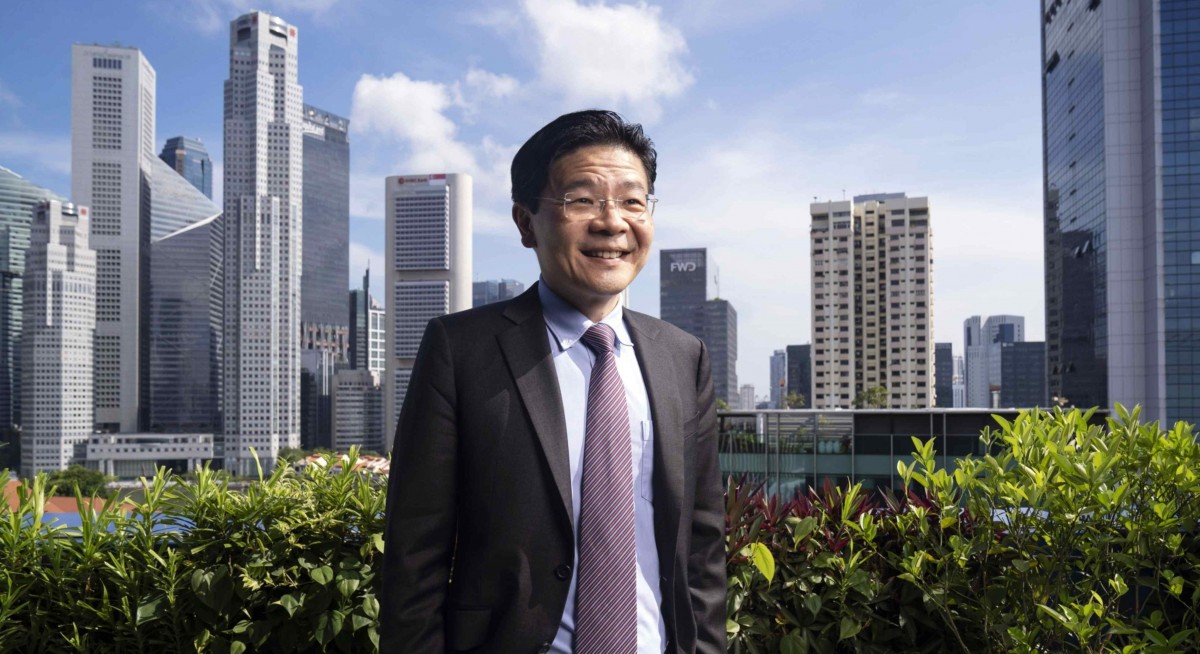
PM Wong at Boao Forum 2026: Singapore’s High-Stakes Pivot

Published

on

The city-state’s leader heads to “Asian Davos” as US-China rivalry reshapes every calculation in the Indo-Pacific

Every March, the small coastal town of Boao in China’s Hainan Province briefly becomes one of the most important rooms in the world. Finance ministers adjust their ties. Corporate chiefs rehearse their talking points. And the leaders who show up — and what they say — signal something real about where the world’s centre of economic gravity is heading.

This week, Singapore Prime Minister Lawrence Wong will be one of those leaders. Departing on March 25 for a four-day visit, Wong will deliver the keynote address at the Opening Plenary of the 2026 Boao Forum for Asia Annual Conference in Hainan, before travelling to Hong Kong to meet Chief Executive John Lee Ka-chiu and engage the city’s business community. Mothership.SG The itinerary is compact but dense with consequence — a carefully composed diplomatic score played in two movements.

The Stage: “Asian Davos” at 25

The Boao Forum for Asia is not merely China’s answer to Davos. It has become, over 25 years, an increasingly explicit instrument for shaping, not just discussing, Asia’s economic architecture People’s Daily — a forum where China translates its domestic policy ambitions for an international audience. This year, that function is sharper than ever.

The 2026 edition opens less than two weeks after China’s National People’s Congress formally adopted the 15th Five-Year Plan (2026–2030) People’s Daily, a document that will govern Chinese economic life for the rest of the decade. The forum’s theme — “Shaping a Shared Future: New Dynamics, New Opportunities, New Cooperation” — reflects both the profound transformations and growing uncertainties facing the world People’s Daily, with sessions spanning AI governance, green industrial policy, RCEP integration, and cross-border payment systems. Around 2,000 delegates from more than 60 countries and regions are attending, along with over 1,100 journalists People’s Daily.

There is an additional layer of meaning to this year’s venue. On December 18, 2025, Hainan launched island-wide special customs operations, formally becoming the world’s largest free trade port by area. People’s Daily For Singapore — itself a small, trade-dependent city-state whose prosperity is inseparable from the free movement of goods, capital, and ideas — the symbolism of delivering the keynote at that particular forum, on that particular island, in this particular geopolitical moment, is not accidental.

The Itinerary: Bilateral Depth Beyond the Podium

Wong’s Hainan programme extends well beyond the plenary stage. His agenda includes a welcome dinner hosted by the Hainan provincial government and the forum’s secretariat, as well as bilateral meetings with Zhao Leji, Chairman of the Standing Committee of the National People’s Congress, and Feng Fei, the Party Secretary of Hainan Province. The Standard

The meeting with Zhao Leji carries particular weight. As the third-ranking member of China’s Politburo Standing Committee, Zhao is not a figurehead. His portfolio includes legislative oversight and, crucially, inter-parliamentary diplomacy — a channel through which Beijing increasingly manages relationships with states it considers strategic partners rather than transactional counterparts. A bilateral with Zhao, rather than a junior minister, signals that Singapore retains a privileged lane of access in Beijing’s diplomatic hierarchy.

Following his Hainan engagements, Wong will travel to Hong Kong, where he is scheduled to meet Chief Executive John Lee Ka-chiu at Government House over a lunch hosted by Lee. South China Morning Post Wong will also visit key sites in the Northern Metropolis to gain a better understanding of Hong Kong’s economic and development trajectory and explore new opportunities for collaboration between the two cities, South China Morning Post according to Singapore’s Prime Minister’s Office.

The Strategic Context: Hedging as High Art

To understand what Wong is doing in Boao, it helps to understand what he was doing the week before. On March 17-18, Wong completed his first official visit to Japan as prime minister, during which Singapore and Japan announced an upgrade of their bilateral ties to a Strategic Partnership The Online Citizen, deepening cooperation across trade, defence, and emerging technologies.

Wong was direct about the sequencing. China, he noted, was aware of his visit to Japan and had continued to invite him to the Boao Forum in Hainan. The Online Citizen He framed Singapore’s approach with characteristic clarity: “Having good relations with one does not come at the expense of another. We can be friends with both China and Japan and America, for that matter. We want to maintain as many good friends as possible.” The Online Citizen

This is not naivety. It is a sophisticated hedging strategy that Singapore has refined over decades and that Wong is now codifying into a kind of doctrine. The city-state, which sits at the confluence of the world’s busiest shipping lanes and whose Chinese-majority population gives Beijing a perpetual interest in how it is governed, has long understood that its prosperity depends on never being forced to choose sides. In 2026, with US tariffs reshaping global supply chains, a growing string of leaders from developed economies visiting China South China Morning Post, and Washington signalling its own engagement (the White House announced that President Trump would travel to Beijing from March 31 to April 2), that doctrine is being stress-tested in real time.

Wong’s Boao appearance — coming immediately after the Japan Strategic Partnership and immediately before Trump’s China visit — positions Singapore precisely where it has always sought to be: visible, valued, and indispensable to every major player in the room.

The Hong Kong Dimension: More Than a Courtesy Call

The second leg of the trip deserves equal analytical attention. Singapore and Hong Kong occupy a peculiar relationship — they are simultaneously Asia’s two most globally integrated city-states, natural partners in financial services and logistics, and quiet rivals for the same pools of regional capital and talent.

Wong’s planned tour of Hong Kong’s Northern Metropolis is telling. The Northern Metropolis is Hong Kong’s most ambitious development project in a generation — a planned urban corridor stretching from the urban core to the Shenzhen border, envisioned as a technology and innovation hub, a logistics gateway, and a new residential district capable of accommodating 900,000 people. It is, in effect, Hong Kong’s answer to the question of how a city re-engineers its economic model after years of political disruption and capital flight. For a Singapore PM to visit and explicitly explore “new opportunities for collaboration” is a recognition that Hong Kong, under John Lee’s administration, is in the business of rebuilding — and that Singapore sees more to gain from partnership than from competition.

The business community meetings add another layer. Wong’s most recent trip to China was in June 2025, when he met President Xi Jinping and Premier Li Qiang and attended Summer Davos in Tianjin. South China Morning Post That visit was primarily Beijing-facing. This one brackets mainland engagement with substantive Hong Kong outreach — a signal to the private sector in both cities that Singapore views the Hong Kong-Singapore axis as a durable feature of the regional financial architecture, not a casualty of geopolitical anxiety.

The Bigger Picture: Multilateralism Under Pressure

At the BFA New Year Outlook 2026 event, forum chairman and former UN Secretary-General Ban Ki-moon warned that the world is becoming “more divided, more dangerous and less predictable.” CGTN It is against that backdrop that the Boao Forum’s 25th anniversary carries its particular urgency.

The Hainan Free Trade Port, with its island-wide independent customs operations advancing steadily, is emerging as a new gateway for international investment and cooperation. CGTN Sessions on the Regional Comprehensive Economic Partnership, Asia-Pacific integration, and cross-border payment systems reflect a shared determination to build regional “shock absorbers.” People’s Daily For Singapore, whose entire economic model is built on the assumption that rules-based, open trade systems will endure, these are not abstract debates. They are existential questions.

Wong’s keynote address is likely to thread several needles simultaneously: affirm Singapore’s commitment to multilateralism and ASEAN centrality; acknowledge China’s role as Asia’s indispensable economic engine without appearing supplicant; and signal to Western partners watching from afar that engagement is not endorsement. It is a speech that will be read not just in Beijing and Washington but in Jakarta, Kuala Lumpur, and New Delhi — capitals that watch Singapore’s diplomatic moves with the attention of students studying a master class.

Forward Outlook: What This Visit Signals for 2026 and Beyond

Three forward-looking observations bear emphasis.

First, the pace of Wong’s diplomatic engagements — Japan in March, Boao immediately after, and likely a succession of bilateral meetings through the APEC cycle — suggests that Singapore is deliberately front-loading its relationship capital in 2026, a year when US-China dynamics could shift dramatically in either direction depending on the trajectory of trade negotiations and Taiwan flashpoints.

Second, the Northern Metropolis visit hints at a potential deepening of Singapore-Hong Kong cooperation in specific sectors — fintech, green finance, and supply chain digitisation being the most obvious candidates — that would benefit from institutional frameworks rather than ad-hoc deal-making. Watch for announcements from the business community meetings.

Third, and most consequentially, Wong’s ability to be warmly received in Tokyo one week and keynote Boao the next, without apparent diplomatic friction from either capital, validates a model of middle-power statecraft that other ASEAN economies are quietly studying. In a world where the pressure to align is intensifying, Singapore’s demonstrated capacity to remain credibly engaged with all sides without being captured by any of them is, perhaps, its most valuable export.

In the end, the journey from Boao to Hong Kong in four days is less a travel itinerary than a statement of intent: that Singapore’s bet on an interconnected, cooperative Asia is not a relic of a more innocent era, but an active wager — one that Lawrence Wong is placing in real time, on the most watched diplomatic stages in the region.

The spring breeze moves across Boao every March. This year, what it carries is worth listening to carefully.


Discover more from The Economy

Subscribe to get the latest posts sent to your email.

Analysis

Walmart Corporate Layoffs 2026: 1,000 Tech Jobs Cut in Major AI Restructuring

Published

on

There is a particular kind of silence that settles over corporate campuses before layoffs become public.

It begins with blocked calendars, hastily arranged one-on-ones, leadership meetings that feel too carefully worded. Then come the memos. Then the calls. Then the realization that for some employees, years of institutional memory can be reduced to a severance packet and a relocation offer.

That silence arrived again at Walmart this week.

On May 12, the world’s largest retailer confirmed a significant corporate restructuring affecting roughly 1,000 employees, primarily across its global technology division, AI product teams, e-commerce fulfillment operations, and Walmart Connect, its fast-growing advertising business. Some workers are being laid off outright; others are being asked to relocate to Bentonville, Arkansas, or Northern California as the company consolidates decision-making and technical talent closer to its strategic centers of gravity.

For a company employing roughly 2.1 million people worldwide, the number is statistically tiny, barely 0.05% of its workforce. Yet Walmart corporate layoffs are never merely arithmetic. They are signals.

And this signal is clear: the future of retail will be built around fewer layers, faster decisions, and much heavier dependence on artificial intelligence.

The question is not whether Walmart is cutting jobs.

The real question is what kind of company it is trying to become.Walmart Layoffs 2026: What Happened

According to reporting from The Wall Street Journal and Reuters, Walmart is eliminating or relocating about 1,000 corporate workers as it consolidates overlapping teams across global technology and AI product functions.

The restructuring centers on several high-value areas:

  • Global technology and platform teams
  • AI product and design divisions
  • E-commerce fulfillment operations
  • Walmart Connect advertising operations
  • Select corporate support functions

Executives Suresh Kumar and Daniel Danker told employees in an internal memo that the company had moved from separate structures across Walmart U.S., Sam’s Club, and international markets toward “a unified way on a single, shared platform.” The goal, they said, was to “create once and scale globally,” reducing duplication and clarifying ownership.

Translation: too many teams were solving the same problem.

In a company as vast as Walmart, duplication is expensive. It slows execution. It creates internal competition. It weakens accountability.

Efficiency, in Bentonville, is not an abstract virtue. It is strategy.

This Is Not Walmart’s First Round of Corporate Job Cuts

The May 2026 Walmart corporate layoffs follow a similar round in 2025, when approximately 1,500 corporate employees were cut as the retailer sought to “remove layers and complexity,” according to internal communications reported at the time.

There were also earlier office consolidations:

  • Relocations from Hoboken, New Jersey
  • Office reductions in Charlotte, North Carolina
  • Pressure for more workers to be based in Bentonville
  • Closure of smaller satellite corporate hubs

This reflects a broader philosophy under CEO John Furner: simplify management, centralize authority, and reduce the sprawl that large organizations naturally accumulate.

Corporate America often speaks of “agility” as though it were a personality trait.

At Walmart’s scale, agility requires demolition.

The company is not shrinking. It is reassembling.

Walmart AI Restructuring: Is AI Replacing Jobs?

Officially, Walmart insists this is not about AI replacing humans.

A person familiar with the restructuring told Business Insider that the changes were “not driven by AI automation” but rather by organizational overlap and duplicated responsibilities.

That may be technically true.

But it is also incomplete.

AI does not need to directly eliminate a role to fundamentally alter employment. Sometimes it changes the architecture of work first.

Walmart has invested aggressively in artificial intelligence over the past two years:

  • AI-powered “super agents” for customer experience
  • Predictive inventory and fulfillment optimization
  • Enhanced supply-chain automation
  • Generative AI shopping assistants competing with Amazon’s Rufus
  • Expanded retail media intelligence within Walmart Connect

Last year, the company rolled out a suite of AI-powered systems designed to improve both customer-facing and internal operations.

When those systems mature, the need for duplicated human decision-making often declines.

Former CEO Doug McMillon had already warned investors that the future workforce would look different: fewer repetitive tasks, more technical specialization, and higher expectations for digital fluency.

This is the real impact of Walmart tech layoffs 2026.

AI is not replacing jobs in one dramatic moment. It is redrawing which jobs remain strategically valuable.

Why Bentonville and Hoboken Matter

The phrase “Walmart layoffs Bentonville Hoboken” is trending for a reason.

This is not simply a workforce reduction story. It is also a geography story.

Many affected workers are being asked to relocate to Bentonville or Northern California rather than remain in dispersed hubs like Hoboken.

That matters because relocation is often a softer form of attrition.

Not everyone can move.

Families have schools. Spouses have careers. Mortgages exist. Elder care is local. Life is stubbornly physical.

A relocation offer can function like a layoff without using the word.

For Walmart, centralization creates stronger execution. For employees, it can mean choosing between career continuity and personal stability.

That tension rarely appears in earnings calls, but it shapes the lived reality of restructuring.

Walmart vs Amazon: The Competitive Logic Behind the Cuts

No analysis of Walmart global technology layoffs makes sense without looking at Amazon.

Amazon remains the benchmark for operational precision in modern retail. Its advantage has never been simply e-commerce scale. It is infrastructure: logistics intelligence, cloud capability, machine learning maturity, and a culture that prizes technical velocity.

Walmart is trying to close that gap.

Under John Furner, the company is pursuing a more integrated digital model designed to compete not only with Amazon, but also with Costco, Target, and discount challengers like Aldi. Reuters noted that this restructuring is explicitly tied to that competitive pressure.

Walmart’s ambitions are larger than retail shelves:

  • Marketplace expansion
  • Retail media advertising
  • Fintech and financial services
  • Membership ecosystems
  • Data monetization
  • AI-powered commerce infrastructure

This is why Walmart Connect matters so much.

Advertising margins are far richer than grocery margins.

Every dollar earned from sponsored listings or ad targeting is strategically more valuable than a dollar earned from toothpaste.

The future Walmart may look less like a store and more like a platform that happens to sell groceries.

Investor Reaction and WMT Stock Outlook

Wall Street often treats layoffs as a sign of discipline rather than distress.

That is especially true when cuts are framed as strategic simplification rather than revenue weakness.

WMT investors are likely to interpret this move through three lenses:

1. Margin Protection

Corporate overhead is expensive. Streamlining tech and product teams improves operating leverage.

2. AI Execution

Markets reward companies that appear decisive in AI adoption, even when the near-term financial gains remain uncertain.

3. Leadership Confidence

John Furner is still defining his CEO tenure. Early restructuring signals seriousness.

Yet there is risk.

Layoffs can improve spreadsheets while damaging trust. High-performing technical talent has options. If Walmart becomes known less for innovation and more for abrupt internal churn, retention becomes harder.

In AI transformation, talent is not a cost center. It is the moat.

That lesson is easy to forget in quarterly reporting.

The Human Cost Behind Walmart Job Cuts Corporate

There is a dangerous habit in business journalism: treating layoffs as if they are clean strategic abstractions.

They are not.

They are weddings postponed. School districts reconsidered. Immigration plans disrupted. Parents explaining uncertainty to children while updating LinkedIn profiles at midnight.

On Reddit and employee forums, workers described early-morning meetings, relocation anxieties, and the familiar corporate ambiguity that precedes restructuring. Some responses were cynical, others resigned. Most were simply tired.

Walmart is right to pursue efficiency.

But efficiency has a social cost that does not disappear because it is rational.

Large employers shape not just markets, but communities.

Bentonville understands that better than most towns in America.

What Walmart Layoffs Mean for the Future of Retail AI

The impact of Walmart layoffs on retail AI reaches far beyond one company.

Across the sector, the same pattern is emerging:

  • Fewer middle-management layers
  • Greater concentration of technical decision-making
  • Increased demand for AI-literate operators
  • Less tolerance for redundant roles
  • Higher pressure for geographic centralization

Retail is becoming a software problem.

Warehouses are algorithms. Pricing is machine learning. Advertising is data science. Customer loyalty is increasingly an interface question.

The winners will not necessarily be the retailers with the biggest stores.

They will be the ones with the best systems.

That does not mean stores disappear. It means the center of power moves quietly from aisles to architecture.

Walmart understands this.

That is why these layoffs matter.

Conclusion: Small Cuts, Large Signal

A thousand jobs inside a 2.1 million-person workforce should not, in theory, define a company.

But sometimes small numbers reveal large truths.

Walmart corporate layoffs 2026 are not evidence of decline. They are evidence of transition.

The retailer is trying to become faster, leaner, and more technologically native in a world where scale alone is no longer enough. It wants to defend its dominance against Amazon, protect margins in a fragile consumer economy, and ensure that artificial intelligence becomes an operating advantage rather than a future threat.

That ambition is understandable.

But every restructuring raises the same enduring question: how do companies modernize without treating people as temporary obstacles to efficiency?

There is no elegant answer.

Only the obligation to ask it seriously.

Because the future of work is not being debated in conference panels.

It is being decided in calendar invites.


Discover more from The Economy

Subscribe to get the latest posts sent to your email.

Continue Reading

Analysis

BYD Flash Charging: The Five-Minute Bet Against Petrol

Published

on

Introduction: The Last Barrier to EV Adoption

Imagine pulling into a charging station, plugging in your electric vehicle, buying a coffee, and returning to find 400 kilometers of range already added.

For decades, that has been the fantasy of the EV industry: making charging feel less like waiting and more like refueling. In March, China’s BYD claimed it had finally crossed that threshold.

The world’s largest electric vehicle maker says its new BYD flash charging system can recharge compatible vehicles from 10% to 70% in just five minutes, and to nearly full capacity in under ten. At the Financial Times Future of the Car Summit this week, executive vice-president Stella Li put the ambition plainly: the technology allows BYD to “equally compete with the combustion engine today.”

That is not merely a product announcement. It is a strategic claim about the future of the global auto industry.

If range anxiety was the first obstacle to EV adoption, charging anxiety has become the second. Drivers may accept batteries; they still resist inconvenience. BYD’s wager is that if charging takes about as long as filling a petrol tank, the psychological advantage of internal combustion engines disappears.

For investors, policymakers, and rival carmakers from Tesla to Porsche, the question is no longer whether EVs will dominate, but who will control the infrastructure and economics of that transition.

BYD wants the answer to be: China.

Key Takeaways

  • BYD flash charging cuts EV charging time to near petrol refueling levels
  • The system uses 1,500kW megawatt charging, not solid-state batteries
  • BYD plans 20,000 domestic and 6,000 overseas chargers
  • Charging infrastructure, not chemistry alone, is the true competitive moat
  • The strategic target is not Tesla—it is the global petrol car market

The Technology Behind BYD Flash Charge Technology

How Fast Is BYD Flash Charging?

At the center of the announcement is BYD’s second-generation Blade Battery and its new 1,500kW FLASH Charging platform.

P=V×IP = V \times IP=V×I

That simple electrical relationship explains the breakthrough. BYD has raised both voltage and current dramatically.

Its system now operates on:

  • 1,000V high-voltage architecture
  • 1,500A charging current
  • Peak charging output: 1.5 megawatts (1,500kW)

That is roughly four times faster than the 350kW “ultra-fast” chargers common in Europe and the United States.

According to BYD’s official release:

  • 10% to 70% charge: 5 minutes
  • 10% to 97% charge: 9 minutes
  • At -30°C: charging time increases by only 3 minutes
  • Range delivered: up to 777 km depending on model and testing cycle

The company describes it as “fuel and electricity at the same speed,” a phrase repeated across investor presentations and public launches.

Is BYD Using Solid-State Batteries?

No, at least not yet.

Much of the market confusion comes from conflating “flash charging” with solid-state battery technology. BYD’s system still relies primarily on advanced lithium iron phosphate (LFP) chemistry, not solid-state cells.

That matters.

LFP batteries are cheaper, safer, and less dependent on nickel and cobalt supply chains dominated by geopolitical risk. BYD’s innovation lies less in exotic chemistry and more in system engineering:

  • improved thermal management
  • lower internal resistance
  • faster ion transport
  • high-voltage architecture
  • silicon carbide power chips
  • battery-buffered charging stations to reduce grid strain

This is classic BYD: vertical integration over technological spectacle.

Rather than waiting for solid-state commercialization, it has optimized existing chemistry for mass deployment.

That may be the smarter bet.

BYD Flash Charging vs Tesla Supercharger

The Competitive Landscape

The comparison investors immediately make is simple: BYD flash charging vs Tesla Supercharger.

Charging Speed Comparison

CompanyMax Charging PowerTypical 10–80% TimePlatform
BYD Flash Charging1,500kW~5–9 min1000V
Tesla V4 Supercharger~500kW expected~15–20 min400–800V
Porsche Taycan320kW~18 min800V
Hyundai E-GMP350kW~18 min800V
GM Ultium350kW~20 min800V
CATL Shenxing~4C–6C charging~10 min claimsBattery supplier

Tesla still leads in global charging network reliability and brand trust. But on raw charging speed, BYD’s claims are materially ahead.

That creates an uncomfortable reality for Western incumbents: the benchmark has moved.

BYD already surpassed Tesla in global EV volume and sold 4.6 million vehicles in 2025, becoming the world’s fifth-largest automaker by volume. It also overtook Volkswagen as China’s top-selling carmaker in 2024.

This is no longer a challenger story.

It is a scale story.

Petrol Refueling vs EV Charging

Petrol refueling still wins on simplicity:

  • universal infrastructure
  • predictable speed
  • decades of behavioral habit

But the time gap is shrinking.

A typical petrol refill takes 3–5 minutes.

BYD’s argument is not that EVs must be faster, only close enough that consumers stop caring.

That is strategically powerful.

China’s EV Dominance and the Geopolitical Race

Why This Matters Beyond Cars

China is not just leading EV manufacturing. It is increasingly setting the standards for the EV ecosystem itself.

BYD’s flash charging push comes as Beijing doubles down on industrial policy around batteries, charging networks, and grid modernization. Unlike Europe or the US, where charging networks are fragmented across operators, China can move with greater state-backed coordination.

BYD plans:

  • 20,000 flash charging stations across China
  • 6,000 overseas stations
  • global rollout beginning by the end of 2026

That infrastructure ambition matters as much as the battery.

Without compatible chargers, flash charging is merely a laboratory demo.

As TechCrunch noted, the “catch” is obvious: these speeds require BYD’s own megawatt chargers.

This mirrors Tesla’s earlier strategy: sell the car, own the charging moat.

Western Responses: Tariffs and Defensive Strategy

Europe and the US are responding with tariffs, subsidy redesigns, and industrial policy.

But tariffs do not solve a technology gap.

The European Union can slow Chinese imports. It cannot easily replicate China’s battery ecosystem overnight.

That is why companies like Stellantis are simultaneously lobbying against Chinese competition while seeking battery partnerships with Chinese suppliers.

Protectionism may buy time.

It does not create megawatt chargers.

What BYD Flash Charging Means for Consumers

Total Cost of Ownership Changes

Consumers rarely buy powertrains. They buy convenience.

If charging time falls dramatically, the economics of EV ownership improve in three ways:

1. Less Behavioral Friction

Long charging stops remain a hidden “cost” in consumer psychology.

Five-minute charging reduces that friction.

2. Lower Operating Costs

EVs already outperform petrol cars on fuel and maintenance over time.

The missing piece was time.

3. Higher Fleet Economics

Taxi operators, delivery fleets, and ride-hailing platforms care about uptime more than ideology.

Fast charging improves asset utilization, which directly improves profitability.

This is why BYD is already extending flash charging to ride-hiling and taxi-focused models.

That segment may prove more important than luxury sedans.

Mass adoption often starts with commercial fleets.

Challenges and Skepticism

The Infrastructure Problem

This is where optimism meets physics.

A 1.5MW charger is not just a faster plug. It is a grid event.

Large-scale deployment requires:

  • transformer upgrades
  • local storage buffers
  • distribution grid reinforcement
  • land access and permitting
  • standardization across charging systems

In Europe and the US, many regions still struggle to maintain reliable 150kW charging.

Jumping to 1,500kW is not incremental. It is structural.

Cost and Scalability

High-voltage architecture adds manufacturing complexity.

Ultra-fast charging also raises concerns around:

  • battery degradation
  • thermal runaway risk
  • charger capex
  • utilization economics

BYD insists Blade Battery 2.0 solves these issues through chemistry and thermal design, but real-world durability data will matter more than launch-day demos.

Analysts remain cautious.

A technology can be technically possible and commercially difficult at the same time.

Competition Is Already Responding

The irony of breakthrough technology is that it rarely remains proprietary for long.

Geely has already publicized charging speeds that appear even faster in controlled tests.

Battery swap advocates such as NIO argue swapping remains faster than any charging solution.

The race is moving quickly.

BYD may have moved first, but it may not stay alone.

Future Outlook: Is This the EV Tipping Point?

Ultra-Fast EV Charging 2026 and Beyond

The most important phrase in this debate is not “five-minute charging.”

It is “mass-produced.”

Prototype breakthroughs are common. Scaled infrastructure is rare.

If BYD can truly deploy tens of thousands of chargers while maintaining economics, it changes the industry’s center of gravity.

Analysts increasingly see charging speed, not battery range, as the next decisive battleground.

That favors companies with:

  • vertical integration
  • balance-sheet strength
  • domestic policy support
  • battery IP ownership

BYD has all four.

Its overseas target of 1.5 million vehicle sales in 2026 and goal for half its sales to come from international markets by 2030 reflect that confidence.

This is not just about selling cars.

It is about exporting an operating system for mobility.

Conclusion: The Real Competition Is Not Tesla

The easy headline is that BYD is taking on Tesla.

The harder truth is that BYD is targeting petrol.

That is the more consequential contest.

If charging becomes nearly invisible—fast, cheap, reliable—then internal combustion loses its final everyday advantage.

The winners will not simply be the companies with the best batteries, but those that control the full stack: chemistry, vehicles, software, and infrastructure.

Tesla proved that idea.

BYD is industrializing it.

And because it is doing so from China, with China’s manufacturing scale and policy backing behind it, the implications stretch far beyond autos.

They touch trade policy, energy security, industrial strategy, and the next phase of climate transition.

The question is no longer whether EVs can replace petrol cars.

It is who gets paid when they do.

FAQ: People Also Ask

1. How fast is BYD flash charging?

BYD says compatible vehicles can charge from 10% to 70% in five minutes and from 10% to 97% in about nine minutes using its 1,500kW FLASH Charging stations.

2. Is BYD flash charging faster than Tesla Supercharger?

Yes. On peak charging power, BYD’s 1,500kW system is significantly faster than Tesla’s current and near-term Supercharger network.

3. Does BYD use solid-state batteries?

No. BYD currently uses advanced LFP Blade Battery technology rather than solid-state batteries for flash charging.

4. Can BYD EVs compete with petrol cars now?

Charging speed is making that increasingly realistic. Combined with lower operating costs, fast charging reduces one of petrol’s biggest remaining advantages.

5. Will BYD flash charging work outside China?

BYD plans to deploy 6,000 overseas flash charging stations starting in Europe by the end of 2026.

6. Is ultra-fast charging bad for battery life?

Potentially, yes—but BYD says its new thermal management and battery chemistry minimize degradation. Long-term field data will be crucial.


Discover more from The Economy

Subscribe to get the latest posts sent to your email.

Continue Reading

Analysis

JPMorgan Investment Bank Reshuffle Signals a New Wall Street Power Structure for the AI Dealmaking Era

Published

on

For years, Wall Street succession planning resembled Renaissance court politics conducted in Patagonia vests: opaque, ritualized and freighted with implication. At JPMorgan Chase, however, leadership changes are rarely just about personnel. They are strategic signals — clues about where capital is flowing, where clients are anxious, and where Jamie Dimon believes the next decade of banking will be won.

The latest signal is unusually loud.

JPMorgan is preparing a sweeping reshuffle of its investment banking leadership, according to reports from the Financial Times and Reuters, elevating Dorothee Blessing, Kevin Foley and Jared Kaye into expanded co-head roles overseeing global investment banking. The reorganization also folds mergers-and-acquisitions operations more tightly into industry coverage teams — a structural shift with potentially profound implications for how the world’s largest bank competes in a market increasingly shaped by artificial intelligence, private capital and geopolitical fragmentation.

On paper, the move looks like classic Wall Street housekeeping after a blockbuster rebound in dealmaking. In reality, it appears to be something larger: a recalibration of JPMorgan’s operating model for a new era in corporate finance.

And perhaps, quietly, another chapter in the long prelude to the post-Dimon age.

The Reorganization: More Than a Personnel Shuffle

According to the Financial Times, JPMorgan will appoint three senior executives — Dorothee Blessing, Kevin Foley and Jared Kaye — as co-heads of global investment banking. Charles Bouckaert is expected to become global head of M&A, replacing veteran banker Anu Aiyengar, who will transition into the role of global chair of investment banking.

The timing is notable.

Global M&A volumes approached $1.7 trillion in the first four months of 2026, making it one of the strongest starts to a year since records began in the 1970s, according to FT reporting. JPMorgan’s own investment banking revenues rose sharply in the first quarter, aided by an AI-driven technology financing boom, revived sponsor activity and a reopening of equity capital markets after two subdued years.

The bank’s commercial and investment bank generated roughly $9 billion in quarterly net income, while investment banking fees climbed 28% year over year.

Yet strong markets alone do not explain the scale of the overhaul.

The deeper rationale appears operational. JPMorgan is reorganizing around integrated client coverage — bringing M&A bankers closer to sector specialists rather than maintaining advisory operations as a more centralized function. In practical terms, that means technology bankers, healthcare bankers and financial institutions teams will increasingly execute strategic transactions within vertically aligned ecosystems.

That mirrors a broader shift underway across elite investment banks.

For years, firms such as Goldman Sachs and Morgan Stanley prized star rainmakers capable of parachuting into virtually any mandate. Increasingly, however, clients want bankers who understand sector-specific AI disruption, supply-chain geopolitics, regulation, sovereign capital flows and data infrastructure economics simultaneously.

In other words: industry expertise is becoming as valuable as financial engineering.

JPMorgan’s reorganization is designed for precisely that environment.

Meet the New Power Triangle

Dorothee Blessing: The Diplomat-Strategist

Among the appointments, Dorothee Blessing may be the most consequential.

Currently global head of investment banking coverage, Blessing has emerged over the past several years as one of JPMorgan’s most influential senior executives. Before joining JPMorgan, she spent more than two decades at Goldman Sachs, where she became a partner and led investment banking in German-speaking Europe.

Her rise inside JPMorgan has been rapid and unusually international in flavor.

Blessing previously ran JPMorgan’s operations across Germany, Switzerland, Austria and the Nordics before becoming co-head of EMEA investment banking and later global coverage chief. Her reputation internally is that of a relationship-centric strategist — less theatrical than traditional Wall Street archetypes, but deeply trusted by multinational CEOs and sovereign-linked clients.

That matters.

The center of gravity in global investment banking has shifted. The biggest mandates increasingly involve cross-border industrial policy, AI infrastructure, energy transition financing and sovereign capital partnerships. Blessing’s European network and multinational credibility position JPMorgan well for that environment.

Her elevation is also symbolically important.

Despite years of diversity initiatives, global investment banking remains overwhelmingly male at the highest levels. Blessing becoming one of the most senior figures in JPMorgan’s advisory business marks a meaningful break from traditional Wall Street succession patterns.

Kevin Foley: The Capital Markets Operator

If Blessing represents strategic diplomacy, Kevin Foley embodies execution scale.

As JPMorgan’s global head of capital markets, Foley has overseen debt and equity financing operations during one of the most volatile macroeconomic stretches in modern finance: post-pandemic stimulus, rate shocks, regional banking stress, geopolitical conflict and the AI investment boom.

That experience is increasingly central to modern investment banking.

Today’s mega-deals are not merely advisory exercises. They are financing ecosystems involving syndicated debt, structured equity, private credit, sovereign wealth capital and derivatives overlays. The distinction between “capital markets” and “strategic advisory” has blurred dramatically.

By elevating Foley, JPMorgan is effectively acknowledging that financing capability is now core strategic infrastructure.

This could strengthen JPMorgan’s advantage against rivals such as Goldman Sachs and Citi, particularly in large-cap transactions where balance-sheet capacity matters as much as advisory prestige.

Jared Kaye: The Financial Institutions Insider

Jared Kaye, currently global co-head of the financial institutions group (FIG), brings a different strength: institutional connectivity.

FIG banking sits at the center of modern finance because banks, insurers, asset managers and fintech firms increasingly drive consolidation trends across the broader economy. Private credit expansion, insurance-linked capital, tokenized assets and digital payments are all reshaping competitive boundaries.

Kaye’s expertise becomes especially relevant as financial institutions race to integrate AI into compliance, underwriting and market infrastructure.

His promotion suggests JPMorgan expects financial-sector consolidation — and adjacent fintech acquisition activity — to accelerate meaningfully over the next several years.

Why This Matters Beyond JPMorgan

Leadership reshuffles on Wall Street often produce breathless headlines and limited long-term significance. This one feels different because it reflects three structural transformations occurring simultaneously.

1. Investment Banking Is Becoming an AI Infrastructure Business

The AI boom has already altered dealmaking patterns.

Technology companies are no longer merely buying software firms; they are acquiring compute capacity, energy assets, semiconductor supply chains and data-center infrastructure. Advisory mandates increasingly require understanding AI economics, regulatory scrutiny and sovereign technology policy.

Banks now need sector-specialist ecosystems rather than isolated rainmakers.

JPMorgan has invested aggressively in AI internally, deploying machine learning across risk management, compliance, trading and client analytics. Jamie Dimon has repeatedly framed AI as transformative rather than incremental, comparing its importance to the internet itself in prior shareholder communications.

The new structure aligns neatly with that philosophy.

2. The Return of the Universal Banking Model

For much of the post-2008 period, investment banking drifted toward specialization. Boutique advisory firms thrived while balance-sheet-heavy institutions focused on financing scale.

Now the pendulum is swinging back.

Clients increasingly want one institution capable of delivering advisory, financing, treasury, payments, markets and private capital access simultaneously. JPMorgan’s integrated model is arguably better suited to this environment than many rivals.

The reshuffle reinforces that positioning.

3. Succession Planning Is Quietly Accelerating

Jamie Dimon remains Wall Street’s dominant executive figure, but succession speculation has intensified as the 70-year-old chief executive approaches two decades atop JPMorgan.

Every senior appointment inside the bank is now interpreted through that lens.

While the current reshuffle concerns investment banking rather than the CEO succession directly, it nonetheless broadens the bench of globally recognized leaders beneath Dimon. That matters institutionally. JPMorgan’s greatest competitive advantage may not simply be scale or technology — it is managerial continuity.

Unlike rivals that have endured periodic leadership turbulence, JPMorgan has cultivated a reputation for disciplined internal succession architecture.

This move fits the pattern.

The Competitive Landscape: Goldman, Citi and the New Arms Race

JPMorgan enters the reshuffle from a position of unusual strength.

The bank remains near the top of global league tables in M&A, equity underwriting and debt capital markets. According to reporting by Financial News London, JPMorgan captured roughly 9.6% of global dealmaking fees this year, up from 8.6% previously.

Yet competition is intensifying.

Goldman Sachs

Goldman remains the prestige leader in pure strategic advisory. Its franchise still dominates many transformational boardroom mandates, especially in technology and sponsor-driven transactions.

But Goldman’s comparatively smaller balance sheet can be limiting in capital-intensive environments.

Citi

Citigroup, under its own restructuring efforts, has aggressively targeted senior talent. The departure of Vis Raghavan from JPMorgan to Citi underscored how fiercely contested elite investment banking leadership has become.

Morgan Stanley

Morgan Stanley continues to dominate in equity capital markets and maintains deep technology relationships, particularly with Silicon Valley clients benefiting from AI spending waves.

JPMorgan’s response appears clear: integrate more tightly, deepen sector specialization and leverage the bank’s unparalleled balance sheet.

Risks Beneath the Optimism

Still, reorganizations carry hazards.

Talent Retention Risk

Wall Street cultures remain intensely personal. Senior bankers often follow trusted managers rather than institutions. Any restructuring creates uncertainty around reporting lines, compensation and internal influence.

Competitors will almost certainly attempt to poach JPMorgan talent during the transition.

Execution Complexity

Integrating M&A more tightly into sector teams sounds elegant strategically. Operationally, however, it can create duplication, political friction and slower decision-making if responsibilities become blurred.

Cyclical Vulnerability

The dealmaking rebound underpinning this reshuffle could still prove fragile.

Inflation volatility, elevated oil prices and geopolitical tensions — particularly surrounding the Iran conflict and global trade fragmentation — remain material macro risks in 2026.

If capital markets weaken suddenly, reorganizations launched during boom conditions can quickly look mistimed.

What Clients and Dealmakers Should Watch

For corporate clients, the immediate impact will likely be subtle but meaningful.

Expect:

  • More integrated advisory-financing pitches
  • Greater sector specialization
  • Faster AI-focused strategic analysis
  • More aggressive cross-border deal execution
  • Deeper coordination between coverage and capital markets teams

Private equity firms may benefit particularly from JPMorgan’s increasingly unified financing ecosystem, especially as leveraged finance markets normalize.

Technology and infrastructure clients are also likely to receive heightened attention, reflecting where global capital expenditure growth is concentrating.

Internally, meanwhile, the reshuffle may accelerate generational turnover among senior managing directors — particularly those trained in older siloed advisory structures.

The Bigger Picture: Wall Street’s New Operating System

What JPMorgan is doing may ultimately prove less about organizational charts than about redefining how elite banking institutions function in an AI-saturated world.

For decades, investment banking revolved around information asymmetry. Bankers won because they possessed privileged access to market intelligence, financing networks and executive relationships.

AI is eroding parts of that moat.

What remains defensible is judgment, connectivity and execution scale.

JPMorgan’s new structure appears designed around exactly those attributes: integrated relationships, sector intelligence and institutional breadth.

It is a subtle but significant shift away from the cult of the individual rainmaker toward the architecture of the platform.

That may become the defining Wall Street trend of the next decade.

Outlook: A More Centralized, More Technological JPMorgan

In the near term, the reshuffle is likely to strengthen JPMorgan’s position in global investment banking.

The firm enters 2026 with:

  • Strong balance-sheet capacity
  • Rising investment banking revenues
  • Expanding AI capabilities
  • Broad international client relationships
  • Relatively stable executive continuity

The challenge will be preserving entrepreneurial energy within a more systematized organization.

Wall Street history is littered with banks that became too bureaucratic precisely when markets demanded creativity.

JPMorgan’s advantage under Dimon has been balancing scale with aggression — remaining large without becoming inert.

The Blessing-Foley-Kaye era will test whether that balance can endure into a more technologically fragmented financial system.

Conclusion

JPMorgan’s investment bank reshuffle is not merely another executive rotation inside a sprawling financial institution. It is a strategic adaptation to a changing global economy — one increasingly defined by AI infrastructure, geopolitical fragmentation, integrated financing and sector specialization.

By elevating Dorothee Blessing, Kevin Foley and Jared Kaye, the bank is betting that future investment banking leadership requires a blend of relationship intelligence, financing sophistication and institutional connectivity.

The move also reinforces a broader truth about JPMorgan under Jamie Dimon: the firm rarely reorganizes defensively. It reorganizes preemptively.

Whether this latest overhaul becomes a model for the rest of Wall Street will depend on one central question: can integrated banking platforms outperform the increasingly fragmented financial ecosystem emerging around them?

JPMorgan clearly believes the answer is yes.

And history suggests it is usually unwise to dismiss the bank when it starts rearranging the chessboard.


Sources


Discover more from The Economy

Subscribe to get the latest posts sent to your email.

Continue Reading

Trending

Copyright © 2025 The Economy, Inc . All rights reserved .

Discover more from The Economy

Subscribe now to keep reading and get access to the full archive.

Continue reading