
Analysis
PM Wong at Boao Forum 2026: Singapore’s High-Stakes Pivot

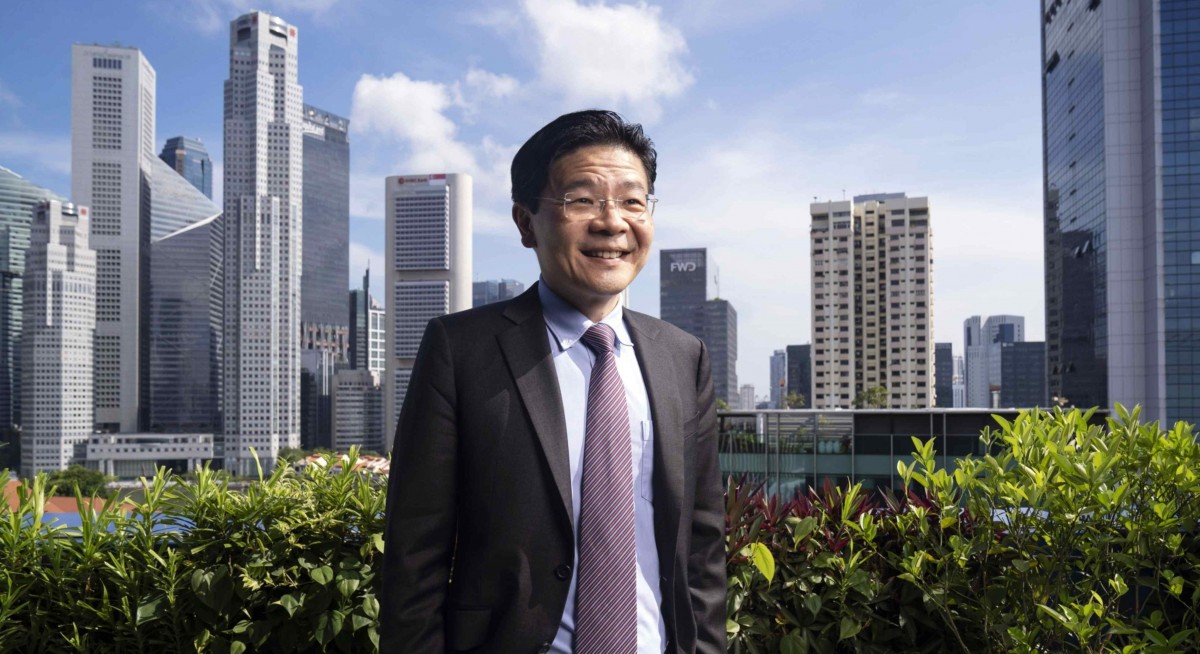
The city-state’s leader heads to “Asian Davos” as US-China rivalry reshapes every calculation in the Indo-Pacific
Every March, the small coastal town of Boao in China’s Hainan Province briefly becomes one of the most important rooms in the world. Finance ministers adjust their ties. Corporate chiefs rehearse their talking points. And the leaders who show up — and what they say — signal something real about where the world’s centre of economic gravity is heading.
This week, Singapore Prime Minister Lawrence Wong will be one of those leaders. Departing on March 25 for a four-day visit, Wong will deliver the keynote address at the Opening Plenary of the 2026 Boao Forum for Asia Annual Conference in Hainan, before travelling to Hong Kong to meet Chief Executive John Lee Ka-chiu and engage the city’s business community. Mothership.SG The itinerary is compact but dense with consequence — a carefully composed diplomatic score played in two movements.
The Stage: “Asian Davos” at 25
The Boao Forum for Asia is not merely China’s answer to Davos. It has become, over 25 years, an increasingly explicit instrument for shaping, not just discussing, Asia’s economic architecture People’s Daily — a forum where China translates its domestic policy ambitions for an international audience. This year, that function is sharper than ever.
The 2026 edition opens less than two weeks after China’s National People’s Congress formally adopted the 15th Five-Year Plan (2026–2030) People’s Daily, a document that will govern Chinese economic life for the rest of the decade. The forum’s theme — “Shaping a Shared Future: New Dynamics, New Opportunities, New Cooperation” — reflects both the profound transformations and growing uncertainties facing the world People’s Daily, with sessions spanning AI governance, green industrial policy, RCEP integration, and cross-border payment systems. Around 2,000 delegates from more than 60 countries and regions are attending, along with over 1,100 journalists People’s Daily.
There is an additional layer of meaning to this year’s venue. On December 18, 2025, Hainan launched island-wide special customs operations, formally becoming the world’s largest free trade port by area. People’s Daily For Singapore — itself a small, trade-dependent city-state whose prosperity is inseparable from the free movement of goods, capital, and ideas — the symbolism of delivering the keynote at that particular forum, on that particular island, in this particular geopolitical moment, is not accidental.
The Itinerary: Bilateral Depth Beyond the Podium
Wong’s Hainan programme extends well beyond the plenary stage. His agenda includes a welcome dinner hosted by the Hainan provincial government and the forum’s secretariat, as well as bilateral meetings with Zhao Leji, Chairman of the Standing Committee of the National People’s Congress, and Feng Fei, the Party Secretary of Hainan Province. The Standard
The meeting with Zhao Leji carries particular weight. As the third-ranking member of China’s Politburo Standing Committee, Zhao is not a figurehead. His portfolio includes legislative oversight and, crucially, inter-parliamentary diplomacy — a channel through which Beijing increasingly manages relationships with states it considers strategic partners rather than transactional counterparts. A bilateral with Zhao, rather than a junior minister, signals that Singapore retains a privileged lane of access in Beijing’s diplomatic hierarchy.
Following his Hainan engagements, Wong will travel to Hong Kong, where he is scheduled to meet Chief Executive John Lee Ka-chiu at Government House over a lunch hosted by Lee. South China Morning Post Wong will also visit key sites in the Northern Metropolis to gain a better understanding of Hong Kong’s economic and development trajectory and explore new opportunities for collaboration between the two cities, South China Morning Post according to Singapore’s Prime Minister’s Office.
The Strategic Context: Hedging as High Art
To understand what Wong is doing in Boao, it helps to understand what he was doing the week before. On March 17-18, Wong completed his first official visit to Japan as prime minister, during which Singapore and Japan announced an upgrade of their bilateral ties to a Strategic Partnership The Online Citizen, deepening cooperation across trade, defence, and emerging technologies.
Wong was direct about the sequencing. China, he noted, was aware of his visit to Japan and had continued to invite him to the Boao Forum in Hainan. The Online Citizen He framed Singapore’s approach with characteristic clarity: “Having good relations with one does not come at the expense of another. We can be friends with both China and Japan and America, for that matter. We want to maintain as many good friends as possible.” The Online Citizen
This is not naivety. It is a sophisticated hedging strategy that Singapore has refined over decades and that Wong is now codifying into a kind of doctrine. The city-state, which sits at the confluence of the world’s busiest shipping lanes and whose Chinese-majority population gives Beijing a perpetual interest in how it is governed, has long understood that its prosperity depends on never being forced to choose sides. In 2026, with US tariffs reshaping global supply chains, a growing string of leaders from developed economies visiting China South China Morning Post, and Washington signalling its own engagement (the White House announced that President Trump would travel to Beijing from March 31 to April 2), that doctrine is being stress-tested in real time.
Wong’s Boao appearance — coming immediately after the Japan Strategic Partnership and immediately before Trump’s China visit — positions Singapore precisely where it has always sought to be: visible, valued, and indispensable to every major player in the room.
The Hong Kong Dimension: More Than a Courtesy Call
The second leg of the trip deserves equal analytical attention. Singapore and Hong Kong occupy a peculiar relationship — they are simultaneously Asia’s two most globally integrated city-states, natural partners in financial services and logistics, and quiet rivals for the same pools of regional capital and talent.
Wong’s planned tour of Hong Kong’s Northern Metropolis is telling. The Northern Metropolis is Hong Kong’s most ambitious development project in a generation — a planned urban corridor stretching from the urban core to the Shenzhen border, envisioned as a technology and innovation hub, a logistics gateway, and a new residential district capable of accommodating 900,000 people. It is, in effect, Hong Kong’s answer to the question of how a city re-engineers its economic model after years of political disruption and capital flight. For a Singapore PM to visit and explicitly explore “new opportunities for collaboration” is a recognition that Hong Kong, under John Lee’s administration, is in the business of rebuilding — and that Singapore sees more to gain from partnership than from competition.
The business community meetings add another layer. Wong’s most recent trip to China was in June 2025, when he met President Xi Jinping and Premier Li Qiang and attended Summer Davos in Tianjin. South China Morning Post That visit was primarily Beijing-facing. This one brackets mainland engagement with substantive Hong Kong outreach — a signal to the private sector in both cities that Singapore views the Hong Kong-Singapore axis as a durable feature of the regional financial architecture, not a casualty of geopolitical anxiety.
The Bigger Picture: Multilateralism Under Pressure
At the BFA New Year Outlook 2026 event, forum chairman and former UN Secretary-General Ban Ki-moon warned that the world is becoming “more divided, more dangerous and less predictable.” CGTN It is against that backdrop that the Boao Forum’s 25th anniversary carries its particular urgency.
The Hainan Free Trade Port, with its island-wide independent customs operations advancing steadily, is emerging as a new gateway for international investment and cooperation. CGTN Sessions on the Regional Comprehensive Economic Partnership, Asia-Pacific integration, and cross-border payment systems reflect a shared determination to build regional “shock absorbers.” People’s Daily For Singapore, whose entire economic model is built on the assumption that rules-based, open trade systems will endure, these are not abstract debates. They are existential questions.
Wong’s keynote address is likely to thread several needles simultaneously: affirm Singapore’s commitment to multilateralism and ASEAN centrality; acknowledge China’s role as Asia’s indispensable economic engine without appearing supplicant; and signal to Western partners watching from afar that engagement is not endorsement. It is a speech that will be read not just in Beijing and Washington but in Jakarta, Kuala Lumpur, and New Delhi — capitals that watch Singapore’s diplomatic moves with the attention of students studying a master class.
Forward Outlook: What This Visit Signals for 2026 and Beyond
Three forward-looking observations bear emphasis.
First, the pace of Wong’s diplomatic engagements — Japan in March, Boao immediately after, and likely a succession of bilateral meetings through the APEC cycle — suggests that Singapore is deliberately front-loading its relationship capital in 2026, a year when US-China dynamics could shift dramatically in either direction depending on the trajectory of trade negotiations and Taiwan flashpoints.
Second, the Northern Metropolis visit hints at a potential deepening of Singapore-Hong Kong cooperation in specific sectors — fintech, green finance, and supply chain digitisation being the most obvious candidates — that would benefit from institutional frameworks rather than ad-hoc deal-making. Watch for announcements from the business community meetings.
Third, and most consequentially, Wong’s ability to be warmly received in Tokyo one week and keynote Boao the next, without apparent diplomatic friction from either capital, validates a model of middle-power statecraft that other ASEAN economies are quietly studying. In a world where the pressure to align is intensifying, Singapore’s demonstrated capacity to remain credibly engaged with all sides without being captured by any of them is, perhaps, its most valuable export.
In the end, the journey from Boao to Hong Kong in four days is less a travel itinerary than a statement of intent: that Singapore’s bet on an interconnected, cooperative Asia is not a relic of a more innocent era, but an active wager — one that Lawrence Wong is placing in real time, on the most watched diplomatic stages in the region.
The spring breeze moves across Boao every March. This year, what it carries is worth listening to carefully.
Discover more from The Economy
Subscribe to get the latest posts sent to your email.



Key Takeaways
- Rolex’s secondary market rose approximately 7.9% year-over-year as of 2026 (per WatchCharts data) — trailing Patek Philippe (+16.2%) and Tudor (+11.4%) but still outperforming Audemars Piguet (+3.4%).
- Rolex raised U.S. retail prices 4–9% in January 2026 (steel models ~5.6%, gold models ~8.7%), narrowing the historical gap between retail and pre-owned pricing.
- Not every model appreciates: steel sports references (Submariner, GMT-Master II, Daytona) have held value far better than two-tone or widely available dress references like the standard Datejust.
- The Lady-Datejust posted the sharpest 2026 gain among tracked collections — up 22.73%, from roughly $9,269 to $11,376 — driven by demand for smaller, “everyday luxury” watches.
- Gold’s rise past $2,400/oz has directly lifted the investment case for Rolex’s precious-metal references (Day-Date, Sky-Dweller, Yacht-Master).
The Model-by-Model Picture
| Category | 2026 Trend |
|---|---|
| Lady-Datejust | +22.73% (strongest performer among tracked collections) |
| Steel sports models (Submariner, GMT-Master II) | Held value well; corrected from 2022 peak but stabilized above retail |
| Daytona | Corrected from highs above $50,000 to the mid-$30,000s; still among the most sought-after references |
| Two-tone/widely available Datejust | Flat to negative — “holds value” is an overstatement for this category |
| Gold references (Day-Date, Sky-Dweller) | Lifted by gold’s rise above $2,400/oz |
Why the “Rolex Always Appreciates” Myth Is Fading
The pandemic-era boom pushed some references — the Daytona above all — to speculative highs disconnected from historical norms. Since the March 2022 peak, steel sports models have compressed meaningfully, and dealers who bought inventory near the top have in some cases faced 20–40% markdowns on liquidation. The lesson for 2026 buyers: Rolex as a category is not a monolith. Value retention depends heavily on specific reference, condition, and whether the piece comes with box and papers (“full set”).
What’s Actually Driving 2026 Strength
- Retail price increases raise the floor. When a new Submariner retails at $10,050 (up from $9,500), a pre-owned example at $11,000–$12,000 suddenly represents a smaller premium — narrowing the gap without secondary prices actually moving.
- Supply discipline remains Rolex’s core lever. The brand has never confirmed production numbers, and secondary-market premiums remain entirely a function of Rolex’s own manufacturing decisions — a risk factor as much as a support.
- Certified Pre-Owned rollout. Rolex’s now fully rolled-out CPO program has changed how buyers transact in the used market, adding a layer of brand-verified legitimacy that supports pricing.
The Case for Rolex as a Portfolio Diversifier
Financial advisors increasingly frame luxury watches not as a replacement for equities or bonds, but as a tangible, historically low-correlation diversifier — one that carries its own risks (illiquidity, condition-dependent pricing, no yield) but has demonstrated multi-decade resilience for specific references.
Is Rolex a good investment in 2026?
It depends heavily on the specific reference. Steel sports models like the Submariner and Daytona have held or grown in value; two-tone and widely available dress models generally have not. Overall, Rolex’s secondary market rose about 7.9% year-over-year in 2026, trailing Patek Philippe but ahead of Audemars Piguet.
Discover more from The Economy
Subscribe to get the latest posts sent to your email.

Navigating Mortgage and Loan Refinancing in a High-Yield Environment
Global public debt crossing critical thresholds has kept central bank policies volatile, resulting in fluctuating US Treasury yields throughout 2026. For homeowners and commercial property holders burdened by previous high-interest borrowing cycles, finding optimal refinance windows has become a high-stakes financial puzzle. Stalled disinflation and stubborn employment numbers mean rate cuts are incremental, requiring borrowers to act with precision.
Timing your mortgage or commercial loan refinance in this environment requires a deep understanding of yield curve movements and lender risk appetites.
Decoding 2026 Refinance Dynamics
The 10-Year Treasury Yield Benchmark
Mortgage rates continue to track closely with the 10-year US Treasury yield. When macroeconomic anxiety spikes debt issuance, yields rise, tightening consumer borrowing capacity. Savvy borrowers monitor weekly Treasury auctions to lock in rates during brief dip windows.
Hybrid ARMs and Alternative Structures
With fixed rates remaining elevated, 7/1 and 10/1 adjustable-rate mortgages (ARMs) have surged in popularity. These products offer lower initial monthly payments, giving borrowers breathing room until central bank easing cycles fully materialize.
| Loan Product | Current Rate Range | Best For | Key Risk Factor |
| 30-Year Fixed Mortgage | 6.2% – 6.8% | Long-term predictability | Higher initial monthly outlay |
| 7/1 Hybrid ARM | 5.5% – 5.9% | Short-term ownership / flipping | Rate reset risk after year 7 |
| Commercial Refinance | 7.0% – 8.2% | Corporate asset restructuring | Strict DSCR lender covenants |
Actionable Steps for Successful Refinancing
To maximize your chances of securing favorable refinance terms in a volatile market, follow a disciplined preparation strategy.
Boost Your Credit Score Immediately: Lenders in 2026 are applying stringent credit tiering; a 20-point increase can drop your APR by a crucial quarter-point.
Shop Regional Credit Unions: Smaller financial institutions often offer portfolio loans with more flexible underwriting than major national banks.
Calculate the Break-Even Point: Ensure your total closing costs are recouped through monthly savings within 24 months of closing.
“Market Strategist View: Refinancing in 2026 is an exercise in opportunistic timing. Borrowers must maintain immaculate financial profiles ready to strike the moment Treasury yields dip.”
Mastering the complexities of today’s debt environment ensures you can successfully lower your debt service costs and protect your long-term financial stability.
Discover more from The Economy
Subscribe to get the latest posts sent to your email.

The days of pulling generic auto insurance quotes based purely on your zip code and age are officially over. In 2026, insurance comparison engines are powered entirely by generative AI and real-time telematics. These platforms digest thousands of live data points—ranging from your driving smoothness via connected vehicle sensors to real-time traffic congestion patterns—to generate hyper-personalized premiums instantly.
For consumers, this evolution represents both a massive opportunity for savings and a hidden trap for penalty pricing. Understanding how AI algorithms evaluate risk is essential for anyone looking to lower their monthly auto insurance premiums.
How AI Comparison Engines Evaluate Your Risk Profile
Behavioral Telematics and Connected Cars
Modern cars stream performance data directly to insurance aggregators. Generative AI models analyze braking sharpness, acceleration curves, cornering G-forces, and phone distraction metrics. Drivers who maintain smooth, defensive habits are rewarded with dynamic rate cuts of up to 40% compared to traditional rating tiers.
Predictive Traffic and Weather Modeling
AI tools now cross-reference your daily commute route with predictive weather and accident probability models. If your standard parking location or driving corridor has a statistically higher incidence of uninsured motorist claims, your quotes will reflect that hyper-local risk assessment.
| Comparison Factor | Traditional Rating Model | 2026 Generative AI Model | Impact on Premium |
| Mileage & Usage | Annual estimated odometer reading | GPS tracking & live trip duration | High (up to 35% savings) |
| Driving Behavior | MVR driving record & accidents | Real-time braking, speed, & G-force | Critical (determines tier) |
| Vehicle Tech | Make, model, and safety rating | ADAS calibration & repair cost data | Moderate |
Strategies to Lower Your AI-Driven Insurance Quote
To outsmart the algorithm and secure the lowest possible premium in 2026, drivers must proactively manage their digital footprint on insurance platforms.
Opt-In for Telematics Trial Periods: Many insurers offer immediate 15% discounts just for installing their driving app; let it track safe habits for 30 days to lock in permanent savings.
Scrub Unverified Public Records: Ensure your motor vehicle report is free of clerical errors that AI risk models misinterpret as reckless behavior.
Compare AI Aggregators: Use platforms that integrate multi-carrier API feeds rather than single-brand comparison sites to find the best risk-adjusted rate.
“Industry Note: AI-driven pricing rewards transparency and precision. Drivers who actively manage their telematics data consistently out-save those relying on legacy quote calculators.”
Embracing AI comparison tools allows savvy policyholders to customize coverage limits precisely to their driving habits, eliminating wasted premium spend while ensuring robust protection.
Discover more from The Economy
Subscribe to get the latest posts sent to your email.

Global Banking Trends 2026: Digital Banks, AI and Compliance

Gold vs US Dollar vs Bitcoin in 2026: Inflation Hedge Compared

How Global Interest Rates Affect Savings, Loans and Investments

How to Invest During High Inflation: A Global Guide

Best Global Stocks to Watch in 2026: Four Sectors to Research

Pakistan’s 2027 Growth Strategy: Exports, AI, Energy and Jobs

Pakistan Economy FY2027: IMF Reform, Debt and Recovery Outlook

Global Interest Rates 2027: Risks for Pakistan’s Rupee and Debt

Energy Shock 2026–2027: Oil, Gas and Pakistan’s Economy

World Trade 2027: Tariffs, Supply Chains and Pakistan Exports

AI Investment Boom 2026–2027: Can Pakistan Capture the Upside?

Global Economy 2026–2027: What Slower Growth Means for Pakistan

Why Global Inflation Is Rising Again in 2026, and What It Means for Pakistan

Raast Pakistan 2026: Digital Payments, Fintech

Crude Oil & Petroleum Market Analysis: OPEC+ Decisions and Price Forecasts

World’s Largest Economies: Ranking the Top Global Powers

Pakistan Economy 2026: Inside the SBP’s Balancing Act

Silver Price Today: Why the Xi-Trump AI Standoff Is Fueling a Safe-Haven Rally

Oil Prices 2026: Inside the Hormuz Crisis That Won’t End

SpaceX IPO 2026: History’s Biggest Stock Debut?

Top US Convenience Store Chains: Store Counts, EV Charging, and Sales Trends

Algorithmic Dogfights: Why the U.S. and China Must Establish Rules of Engagement for Autonomous Air Power

Who Is Shivon Zilis? The Neuralink Executive at the Center of the Musk–OpenAI Trial

Global Economic Outlook 2026: 7 Forces Reshaping Markets, Trade and Business

Business Insurance: What Coverage You Actually Need and What It Costs in 2026

Corporate America Faces a New Debt Test as US Borrowing Costs Surge

Is AI a Stock Bubble in 2026? What the Data Shows

Social Security Extra $90 Deposit: Who Qualifies for the October 2026 Medicare Rebate?
-

 Markets & Finance10 months ago
Top 15 Stocks for Investment in 2026 in PSX: Your Complete Guide to Pakistan’s Best Investment Opportunities
-

 Analysis8 months ago
Johor’s Investment Boom: The Hidden Costs Behind Malaysia’s Most Ambitious Economic Surge
-

 Analysis8 months ago
Top 10 Stocks for Investment in PSX for Quick Returns in 2026
-

 Banks9 months ago
Best Investments in Pakistan 2026: Top 10 Low-Price Shares and Long-Term Picks for the PSX
-

 Analysis9 months ago
Brazil’s Rare Earth Race: US, EU, and China Compete for Critical Minerals as Tensions Rise
-

 Investment9 months ago
Top 10 Mutual Fund Managers in Pakistan for Investment in 2026: A Comprehensive Guide for Optimal Returns
-

 Global Economy10 months ago
15 Most Lucrative Sectors for Investment in Pakistan: A 2025 Data-Driven Analysis
-

 Global Economy10 months ago
Pakistan’s Export Goldmine: 10 Game-Changing Markets Where Pakistani Businesses Are Winning Big in 2025