
Analysis
Beyond the Strait: Why Global Trade Is Learning to Live Without Hormuz

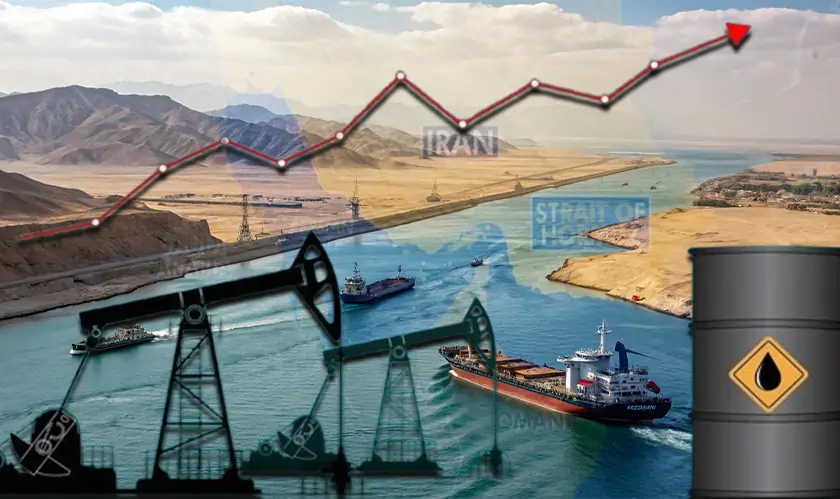
There is a peculiar irony embedded in the current catastrophe. The Strait of Hormuz, that 34-kilometre sliver of contested water between Iran and Oman, is right now the most consequential geography on earth. Brent crude briefly touched $126 a barrel in March 2026 — its highest level in four years — as tanker traffic through the strait collapsed toward zero, Iranian drones struck Fujairah’s storage tanks, and Washington threatened to “obliterate” Iranian power plants unless shipping resumed within 48 hours. The head of the International Energy Agency, Fatih Birol, called it the largest supply disruption in the history of the global oil market. He is probably right.
And yet, the thesis this crisis appears to confirm — that the Strait of Hormuz is an eternal, irreplaceable artery of civilisation — is precisely the thesis that the crisis itself is demolishing. Pain concentrates the mind. When 150 tankers anchored off Fujairah and the world scrambled for alternatives, it exposed not just the Strait’s centrality but the desperate fragility of any system built around a single chokepoint. The question that matters is not “how do we get oil through Hormuz today?” It is the one no panicked government in a war room is asking: “Will we still need to?”
The answer, over the arc of the next two decades, is increasingly no. And understanding why requires looking not at what is flowing through the Strait right now, but at what is flowing around it — in pipelines, rail corridors, liquefied natural gas tankers from Louisiana and Alberta, and electrons streaming through intercontinental fibre cables.
The Chokepoint That Could Never Be Replaced — Until It Suddenly Must Be
The numbers are genuinely staggering. According to the IEA, an average of 20 million barrels per day of crude and petroleum products transited the Strait in 2025 — representing roughly 25% of all seaborne oil trade and about 20% of global petroleum liquids consumption. Five countries — Iraq, Kuwait, Qatar, Bahrain, and Iran — have no meaningful pipeline bypass infrastructure whatsoever. The EIA estimates that roughly 14 million barrels per day are structurally locked to the maritime passage with no alternative route to global markets. Qatar and the UAE together account for nearly 20% of global LNG exports, almost all of it transiting Hormuz. Even fertiliser — that unglamorous linchpin of food security — flows through in quantity, representing up to 30% of internationally traded supply.
This dependency did not arise from carelessness. It arose from geology, economics, and decades of compounding infrastructure decisions. The Persian Gulf states sit atop the world’s most concentrated reserves, and the Strait is simply the only door out of the room. You cannot argue yourself out of geography.
But geography is only the stage. What plays out on it is a function of technology, capital, political will, and time. On all four dimensions, the structural case for Hormuz’s long-term indispensability is weakening — faster than most analysts, trapped in the urgent present, are willing to acknowledge.
The Energy Transition Is Not a Political Slogan. It Is a Supply Curve.
Start with demand. The IEA’s Oil 2025 report projects that demand for oil from combustible fossil fuels — the stuff that actually moves through tankers and pipelines — may peak as early as 2027. Global oil demand overall is forecast to reach a plateau around 105.5 million barrels per day by 2030, with annual growth already slowing from roughly 700,000 barrels per day in 2025–26 to a near-trickle thereafter. China — which absorbed more than two-thirds of global oil demand growth over the past decade and whose appetite once seemed boundless — is on track to see its oil demand peak before 2030, driven by an extraordinary surge in electric vehicle adoption, high-speed rail expansion, and structural economic rebalancing.
The numbers on clean energy investment are equally telling. In 2025, clean energy investment — renewables, nuclear, grids, storage, and electrification — reached roughly $2.2 trillion, twice the $1.1 trillion flowing to oil, natural gas, and coal combined. Global investment in data centres alone is expected to hit $580 billion in 2025, surpassing the entire annual budget for global oil supply. The energy system that those data centres will eventually run on is solar, wind, and nuclear — not crude from Kharg Island.
None of this means oil demand collapses overnight. The IEA’s Current Policies Scenario, restored in the 2025 World Energy Outlook, projects that global oil could continue growing until 2050 under today’s policy settings — a sobering reminder that transition is a trajectory, not a switch. But “trajectory” is the operative word. The direction is unambiguous. Every electric vehicle on the road — and the global EV fleet is projected to grow sixfold by 2035 in the IEA’s Stated Policies Scenario — is a barrel of oil that will never load onto a tanker and never transit the Strait of Hormuz. At scale, those barrels accumulate into a structural reduction in the Strait’s gravitational pull on global commerce.
The Corridors Rising in the Strait’s Shadow
Even before a single barrel of oil demand falls permanently, the physical architecture of global trade is being redrawn by corridors that deliberately circumvent Hormuz and its neighbourhood.
The most ambitious is the India-Middle East-Europe Economic Corridor (IMEC), which received a significant boost when President Trump and Prime Minister Modi jointly declared it “one of the greatest trade routes in all of history” in February 2025. A landmark EU-India trade deal signed in January 2026 further accelerated IMEC’s momentum, with construction on key rail, port, and highway segments having commenced in April 2025. IMEC is not just an oil bypass. It is a multimodal corridor linking Indian Ocean shipping to Gulf rail networks to Mediterranean ports — carrying container cargo, digital infrastructure (fibre cables), and clean energy flows. For the Gulf states, it represents something strategically profound: a pathway to becoming trade and green energy hubs rather than merely hydrocarbon exporters.
Turkey, meanwhile, is positioning itself as the indispensable energy corridor for a post-Hormuz world. Turkish Energy Minister Alparslan Bayraktar cited the Kirkuk-Ceyhan pipeline’s 1.5 million barrel-per-day capacity as a viable alternative, while flagging longer-term concepts including Qatari gas reaching Europe via Turkish pipeline infrastructure. TurkStream gas flows to Europe rose 22% year-on-year in March 2026, even as Hormuz choked. The current crisis is not disrupting Turkey’s corridor ambitions. It is turbocharging them.
Then there is LNG — the great wildcard in global energy trade. The very nature of liquefied natural gas makes it geographically flexible in a way that crude oil pipelines never can be. A cargo of LNG can load in Sabine Pass, Louisiana, and deliver to Tokyo, Marseille, or Mumbai, entirely indifferent to what happens in any given strait. New LNG projects surged in 2025, with approximately 300 billion cubic metres of new annual export capacity expected to come online by 2030 — a 50% increase — with roughly half being built in the United States. American LNG, arriving in Asia and Europe via the Atlantic and Pacific rather than the Persian Gulf, is quietly restructuring the energy map. When Qatari LNG is stranded behind a closed Hormuz, a cargo from Corpus Christi feels not like a supplement but like a successor.
What the Crisis Is Actually Teaching Us
Here is what the 2026 crisis reveals in sharp relief: the system’s Achilles heel is not the Strait itself, but the failure to invest seriously in alternatives before the emergency.
Saudi Arabia’s East-West pipeline (Petroline) reportedly has design capacity of up to 7 million barrels per day, yet was running at only 2 million barrels per day as of early 2026 — meaning five million barrels of daily bypass capacity sat idle for years due to infrastructure bottlenecks and the absence of political urgency. The UAE’s ADCOP pipeline to Fujairah, capable of 1.8 million barrels per day, is similarly underutilised — and its terminal has now been struck by drones. Iraq’s southern fields, which produce the bulk of its exportable crude, have no meaningful inland pipeline connection to the northern Kirkuk-Ceyhan route. Roughly 14 million barrels per day remain structurally dependent on a waterway that Iran can threaten to close — and periodically does.
The lesson is not that alternatives are impossible. It is that alternatives require decades of sustained political commitment to mature. The countries now scrambling are paying the compound interest on decisions deferred since 2019, when Houthi drones struck Aramco’s facilities and the world briefly panicked before moving on. The world should not move on this time.
The Digital Trade Revolution: Routes Without Geography
There is a third dimension to this shift that rarely appears in energy columns, because it is invisible, weightless, and does not require a tanker: the explosive growth of digital trade and the services economy.
Digital commerce — software, financial services, intellectual property, telemedicine, AI-enabled business services — now accounts for a substantial and rapidly growing share of global economic value. It flows through submarine cables and spectrum, not through straits. IMEC’s digital pillar — a network of new intercontinental fibre-optic cables — is explicitly designed to create an alternative data corridor that bypasses choke geographies entirely. As the share of economic activity that is digital continues to expand — accelerated by AI, remote work, and platform economies — the share of global GDP that depends on physical chokepoints like the Strait of Hormuz will shrink, structurally and inexorably.
This is not a utopian projection. It is already happening. India’s digital services exports exceeded $200 billion in 2025. Southeast Asian e-commerce platforms transact trillions annually. None of it cares whether tankers can get through 34 kilometres of contested Gulf waters.
Recommendations for Policymakers: The Strategic Imperatives
The 2026 crisis is a forcing function. The question is whether governments will use it. Here is what they should do:
Accelerate pipeline bypass capacity in the Gulf. Saudi Arabia should fast-track the Petroline to its announced 7 million barrel-per-day capacity and actively negotiate with Iraq and Kuwait to begin engineering — not just discussing — northern corridor alternatives. The infrastructure gap between design capacity and utilised capacity is, at this moment, unconscionable.
Fund IMEC, not just endorse it. India has yet to establish a dedicated implementing body or commit specific funds to IMEC. That must change. The corridor needs a multilateral financing mechanism — modelled on the Bretton Woods institutions but purpose-built for twenty-first-century connectivity — not merely high-level communiqués.
Accelerate the LNG diversification that already works. The U.S., Canada, Australia, and Qatar (where pipeline exports to Turkey could reduce Hormuz dependency) should be treated as a strategic consortium for global energy security. New LNG infrastructure approvals should be fast-tracked under energy security frameworks.
Price the risk of Hormuz dependency into investment decisions. Insurers and sovereign wealth funds should be required to model Hormuz-closure scenarios in energy asset valuations. The underpricing of chokepoint risk — as this crisis has devastatingly illustrated — is a market failure with systemic consequences.
Invest in demand-side transition with strategic urgency. Every percentage-point reduction in global oil demand reduces Hormuz’s leverage over the world economy. EV incentives, renewable energy deployment in emerging economies, and energy efficiency standards are not merely climate policies. They are geopolitical risk management.
The Arc of the Argument
Crises have a way of feeling permanent in their midst. The 1973 oil embargo reshaped energy policy for a generation. The 1979 Iranian revolution convinced analysts that Persian Gulf dependency was an eternal condition of industrial civilisation. Neither prognosis proved correct. Alternatives emerged. Technologies shifted. Demand patterns evolved.
The 2026 Hormuz crisis is the most serious test of the global energy system since the 1970s. The World Economic Forum’s Global Risks Report 2026 already identifies geoeconomic confrontation as a key driver reshaping global supply chains, noting that “securing access to critical inputs is increasingly being treated as a matter of economic and national security.” Governments and industries are hearing that message with a clarity that previous near-misses never produced.
The Strait of Hormuz will matter enormously for years — perhaps decades — to come. To claim otherwise would be to misread the current data. But its structural importance to the global economy is on a long, slow, inexorable decline, driven by the energy transition, the rise of alternative corridors, the geography-defying nature of digital commerce, and the hardwired human instinct to find another road when the old one is blocked.
The future of global trade will not be decided in the narrow waters between Oman and Iran. It will be decided in solar farms in Rajasthan, LNG terminals in Louisiana, fibre cable landing stations in Haifa and Marseille, and EV factories in Hefei. The chokepoint is a reminder of where we came from. What we build next determines where we go.
Discover more from The Economy
Subscribe to get the latest posts sent to your email.



Key Takeaways
- Rolex’s secondary market rose approximately 7.9% year-over-year as of 2026 (per WatchCharts data) — trailing Patek Philippe (+16.2%) and Tudor (+11.4%) but still outperforming Audemars Piguet (+3.4%).
- Rolex raised U.S. retail prices 4–9% in January 2026 (steel models ~5.6%, gold models ~8.7%), narrowing the historical gap between retail and pre-owned pricing.
- Not every model appreciates: steel sports references (Submariner, GMT-Master II, Daytona) have held value far better than two-tone or widely available dress references like the standard Datejust.
- The Lady-Datejust posted the sharpest 2026 gain among tracked collections — up 22.73%, from roughly $9,269 to $11,376 — driven by demand for smaller, “everyday luxury” watches.
- Gold’s rise past $2,400/oz has directly lifted the investment case for Rolex’s precious-metal references (Day-Date, Sky-Dweller, Yacht-Master).
The Model-by-Model Picture
| Category | 2026 Trend |
|---|---|
| Lady-Datejust | +22.73% (strongest performer among tracked collections) |
| Steel sports models (Submariner, GMT-Master II) | Held value well; corrected from 2022 peak but stabilized above retail |
| Daytona | Corrected from highs above $50,000 to the mid-$30,000s; still among the most sought-after references |
| Two-tone/widely available Datejust | Flat to negative — “holds value” is an overstatement for this category |
| Gold references (Day-Date, Sky-Dweller) | Lifted by gold’s rise above $2,400/oz |
Why the “Rolex Always Appreciates” Myth Is Fading
The pandemic-era boom pushed some references — the Daytona above all — to speculative highs disconnected from historical norms. Since the March 2022 peak, steel sports models have compressed meaningfully, and dealers who bought inventory near the top have in some cases faced 20–40% markdowns on liquidation. The lesson for 2026 buyers: Rolex as a category is not a monolith. Value retention depends heavily on specific reference, condition, and whether the piece comes with box and papers (“full set”).
What’s Actually Driving 2026 Strength
- Retail price increases raise the floor. When a new Submariner retails at $10,050 (up from $9,500), a pre-owned example at $11,000–$12,000 suddenly represents a smaller premium — narrowing the gap without secondary prices actually moving.
- Supply discipline remains Rolex’s core lever. The brand has never confirmed production numbers, and secondary-market premiums remain entirely a function of Rolex’s own manufacturing decisions — a risk factor as much as a support.
- Certified Pre-Owned rollout. Rolex’s now fully rolled-out CPO program has changed how buyers transact in the used market, adding a layer of brand-verified legitimacy that supports pricing.
The Case for Rolex as a Portfolio Diversifier
Financial advisors increasingly frame luxury watches not as a replacement for equities or bonds, but as a tangible, historically low-correlation diversifier — one that carries its own risks (illiquidity, condition-dependent pricing, no yield) but has demonstrated multi-decade resilience for specific references.
Is Rolex a good investment in 2026?
It depends heavily on the specific reference. Steel sports models like the Submariner and Daytona have held or grown in value; two-tone and widely available dress models generally have not. Overall, Rolex’s secondary market rose about 7.9% year-over-year in 2026, trailing Patek Philippe but ahead of Audemars Piguet.
Discover more from The Economy
Subscribe to get the latest posts sent to your email.

Navigating Mortgage and Loan Refinancing in a High-Yield Environment
Global public debt crossing critical thresholds has kept central bank policies volatile, resulting in fluctuating US Treasury yields throughout 2026. For homeowners and commercial property holders burdened by previous high-interest borrowing cycles, finding optimal refinance windows has become a high-stakes financial puzzle. Stalled disinflation and stubborn employment numbers mean rate cuts are incremental, requiring borrowers to act with precision.
Timing your mortgage or commercial loan refinance in this environment requires a deep understanding of yield curve movements and lender risk appetites.
Decoding 2026 Refinance Dynamics
The 10-Year Treasury Yield Benchmark
Mortgage rates continue to track closely with the 10-year US Treasury yield. When macroeconomic anxiety spikes debt issuance, yields rise, tightening consumer borrowing capacity. Savvy borrowers monitor weekly Treasury auctions to lock in rates during brief dip windows.
Hybrid ARMs and Alternative Structures
With fixed rates remaining elevated, 7/1 and 10/1 adjustable-rate mortgages (ARMs) have surged in popularity. These products offer lower initial monthly payments, giving borrowers breathing room until central bank easing cycles fully materialize.
| Loan Product | Current Rate Range | Best For | Key Risk Factor |
| 30-Year Fixed Mortgage | 6.2% – 6.8% | Long-term predictability | Higher initial monthly outlay |
| 7/1 Hybrid ARM | 5.5% – 5.9% | Short-term ownership / flipping | Rate reset risk after year 7 |
| Commercial Refinance | 7.0% – 8.2% | Corporate asset restructuring | Strict DSCR lender covenants |
Actionable Steps for Successful Refinancing
To maximize your chances of securing favorable refinance terms in a volatile market, follow a disciplined preparation strategy.
Boost Your Credit Score Immediately: Lenders in 2026 are applying stringent credit tiering; a 20-point increase can drop your APR by a crucial quarter-point.
Shop Regional Credit Unions: Smaller financial institutions often offer portfolio loans with more flexible underwriting than major national banks.
Calculate the Break-Even Point: Ensure your total closing costs are recouped through monthly savings within 24 months of closing.
“Market Strategist View: Refinancing in 2026 is an exercise in opportunistic timing. Borrowers must maintain immaculate financial profiles ready to strike the moment Treasury yields dip.”
Mastering the complexities of today’s debt environment ensures you can successfully lower your debt service costs and protect your long-term financial stability.
Discover more from The Economy
Subscribe to get the latest posts sent to your email.

The days of pulling generic auto insurance quotes based purely on your zip code and age are officially over. In 2026, insurance comparison engines are powered entirely by generative AI and real-time telematics. These platforms digest thousands of live data points—ranging from your driving smoothness via connected vehicle sensors to real-time traffic congestion patterns—to generate hyper-personalized premiums instantly.
For consumers, this evolution represents both a massive opportunity for savings and a hidden trap for penalty pricing. Understanding how AI algorithms evaluate risk is essential for anyone looking to lower their monthly auto insurance premiums.
How AI Comparison Engines Evaluate Your Risk Profile
Behavioral Telematics and Connected Cars
Modern cars stream performance data directly to insurance aggregators. Generative AI models analyze braking sharpness, acceleration curves, cornering G-forces, and phone distraction metrics. Drivers who maintain smooth, defensive habits are rewarded with dynamic rate cuts of up to 40% compared to traditional rating tiers.
Predictive Traffic and Weather Modeling
AI tools now cross-reference your daily commute route with predictive weather and accident probability models. If your standard parking location or driving corridor has a statistically higher incidence of uninsured motorist claims, your quotes will reflect that hyper-local risk assessment.
| Comparison Factor | Traditional Rating Model | 2026 Generative AI Model | Impact on Premium |
| Mileage & Usage | Annual estimated odometer reading | GPS tracking & live trip duration | High (up to 35% savings) |
| Driving Behavior | MVR driving record & accidents | Real-time braking, speed, & G-force | Critical (determines tier) |
| Vehicle Tech | Make, model, and safety rating | ADAS calibration & repair cost data | Moderate |
Strategies to Lower Your AI-Driven Insurance Quote
To outsmart the algorithm and secure the lowest possible premium in 2026, drivers must proactively manage their digital footprint on insurance platforms.
Opt-In for Telematics Trial Periods: Many insurers offer immediate 15% discounts just for installing their driving app; let it track safe habits for 30 days to lock in permanent savings.
Scrub Unverified Public Records: Ensure your motor vehicle report is free of clerical errors that AI risk models misinterpret as reckless behavior.
Compare AI Aggregators: Use platforms that integrate multi-carrier API feeds rather than single-brand comparison sites to find the best risk-adjusted rate.
“Industry Note: AI-driven pricing rewards transparency and precision. Drivers who actively manage their telematics data consistently out-save those relying on legacy quote calculators.”
Embracing AI comparison tools allows savvy policyholders to customize coverage limits precisely to their driving habits, eliminating wasted premium spend while ensuring robust protection.
Discover more from The Economy
Subscribe to get the latest posts sent to your email.

Is the Stock Market Open on Columbus Day 2026? NYSE, Nasdaq and Bonds Explained

Concert Ticket Prices in 2026: Dynamic Pricing, Fees and How to Buy Safely

High-Yield Savings Accounts in 2026: How to Compare APY Without Chasing a Headline

EU-China Trade Deal 2026: How Beijing and Brussels Avoided a Trade War—and Who Wins

Social Security 2027 COLA Announcement: Date, Formula and What Retirees Should Check

China’s AI Microdrama Boom: How Beijing Is Reshaping Global Media

Q3 2026 Earnings Preview: Can Record Profit Expectations Keep Wall Street’s Rally Alive?

Russia Diesel Deal 2026: Oil Prices and Inflation Risks

Fed Rates 2026: Treasury Yields, Bonds and SGOV Explained

S&P 500 Market Breadth 2026: Weak Rally or Rotation?

The AI Capex Boom: Data Centers Reshaping Growth

Palantir Stock in 2026: Extraordinary AI Growth

Tesla Physical AI 2026: Robotaxis, Optimus and TSLA Risks

NVIDIA’s AI Grip in 2026: Record Revenue Is Only Half the Investment Story

PSX Forecast 2026: KSE-100, IMF Reviews & Geopolitics

Middle East War Economics 2026: Oil Prices & Energy Markets

China Stocks Today: Are Big Economies in Asia Nearing a Market Bottom?

Crypto Daily Outlook: Bitcoin, Altcoins, and the Future of Decentralized Finance

Global Pension Systems Ranked: The World’s Best and Worst Retirement Frameworks

World’s Largest Economies: Ranking the Top Global Powers

Elon Musk’s Next Moves: Disrupting the 2026 Global Economy

Pakistan Economy 2026: Inside the SBP’s Balancing Act

GasBuddy Market Insights: How Crude Price Shifts Impact Local Fuel Cost Averages

World Bank & IMF Reports 2026: Why the “3% Growth” Consensus Is Actually a Debate

Global Equity Market Divergence: US Tech vs. European Dividend Stocks vs. Asian Growth

IMF & World Bank Global Economic Outlook: Growth Forecasts Across Europe and Asia

Crude Oil & Petroleum Market Analysis: OPEC+ Decisions and Price Forecasts

Silver Price Today: Why the Xi-Trump AI Standoff Is Fueling a Safe-Haven Rally
-

 Markets & Finance9 months ago
Top 15 Stocks for Investment in 2026 in PSX: Your Complete Guide to Pakistan’s Best Investment Opportunities
-

 Analysis8 months ago
Johor’s Investment Boom: The Hidden Costs Behind Malaysia’s Most Ambitious Economic Surge
-

 Analysis8 months ago
Top 10 Stocks for Investment in PSX for Quick Returns in 2026
-

 Banks9 months ago
Best Investments in Pakistan 2026: Top 10 Low-Price Shares and Long-Term Picks for the PSX
-

 Analysis8 months ago
Brazil’s Rare Earth Race: US, EU, and China Compete for Critical Minerals as Tensions Rise
-

 Investment9 months ago
Top 10 Mutual Fund Managers in Pakistan for Investment in 2026: A Comprehensive Guide for Optimal Returns
-

 Global Economy10 months ago
15 Most Lucrative Sectors for Investment in Pakistan: A 2025 Data-Driven Analysis
-

 Global Economy10 months ago
Pakistan’s Export Goldmine: 10 Game-Changing Markets Where Pakistani Businesses Are Winning Big in 2025