
Analysis
Iran Activates Its ‘Resistance Economy’ to Survive the War: How Tehran Is Rewriting the Rules of Economic Warfare in 2026

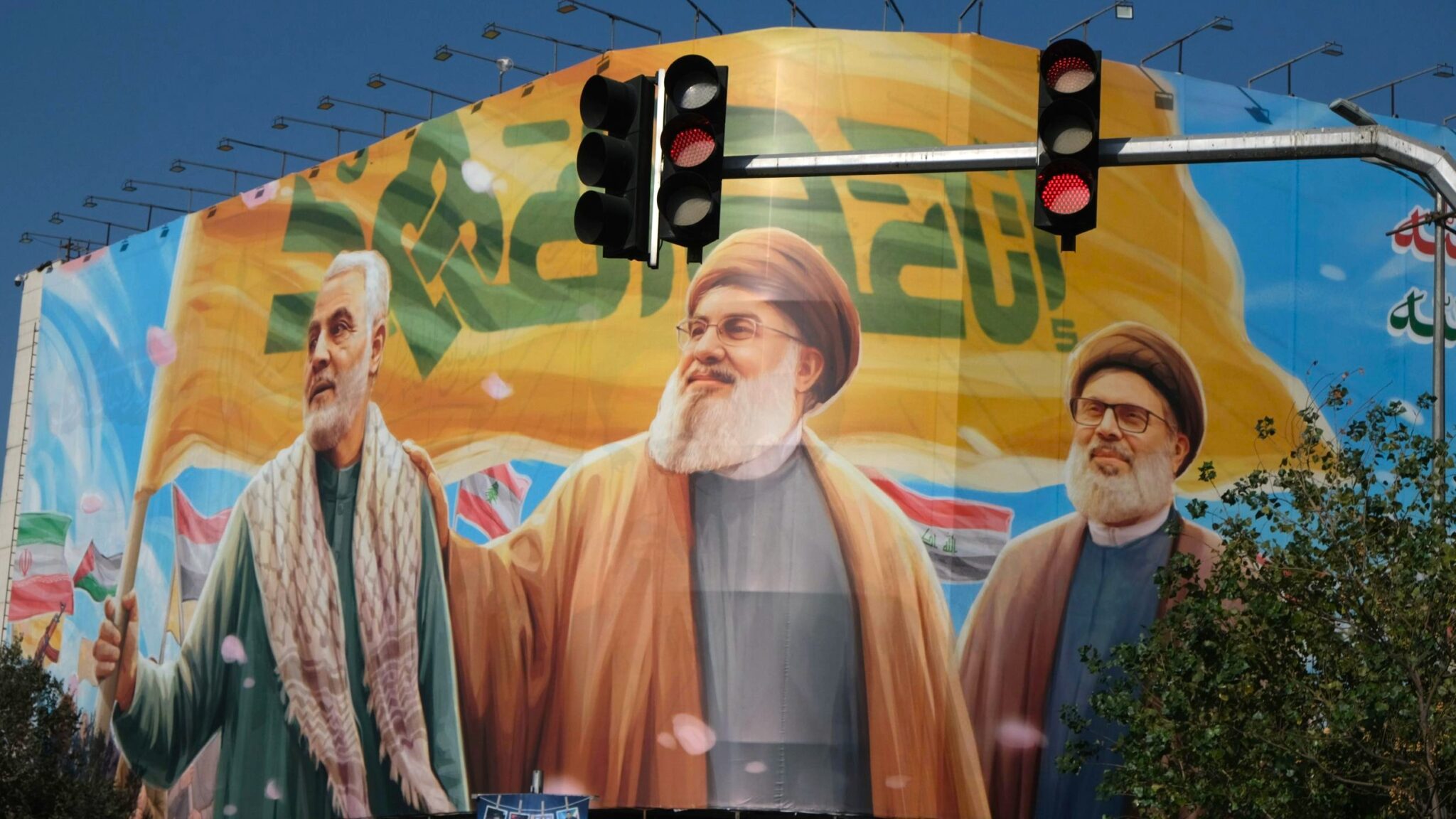
On the morning of Nowruz — Persian New Year, March 20, 2026 — a state television anchor read aloud a written statement from a man whose face the world has scarcely seen. Iran’s new Supreme Leader, Mojtaba Khamenei, had not appeared in public since ascending to the position following the assassination of his father, Ayatollah Ali Khamenei, at the start of a devastating US-Israeli military campaign on February 28. Yet his words carried enormous weight. He named the incoming year’s governing slogan: “Resistance Economy in the Shadow of National Unity and National Security.” At the very moment that Brent crude was trading above $100 a barrel — and the International Energy Agency was characterizing the Strait of Hormuz closure as the “greatest global energy security challenge in history” — Tehran had chosen not retreat, but doctrine.
This is not a crisis-management gambit. It is an ideology finding its moment.
The Origins and Evolution of Iran’s Resistance Economy
The phrase iqtisad-e moqavemati — resistance economy — has circulated in Iranian political discourse for over a decade. Ali Khamenei first introduced it formally around 2012, at the height of what Tehran characterized as the “economic war” waged by the Obama administration’s crippling oil embargo. The concept drew on a distinctly Iranian blend of revolutionary theology, post-war reconstruction memory, and third-world anti-imperialism: the idea that external pressure could be converted, almost alchemically, into self-sufficiency.
But for most of the decade between 2012 and 2022, the resistance economy remained closer to aspiration than architecture. Iranian economic policymakers — influenced by business lobbies and, during the Rouhani years, by a genuine belief that integration with the West was achievable — declined to implement the measures the doctrine implied: capital controls, import substitution industrialization, state-directed strategic reserves, and the dismantling of dollar dependency in trade settlement. What resilience the economy demonstrated was largely bottom-up: bazaaris improvising supply chains, engineers reverse-engineering sanctioned components, ordinary Iranians converting salaries into gold and dollars the moment they were paid.
The World Bank has documented what this failure to truly build the resistance economy produced: a “lost decade” of per-capita GDP growth between 2011 and 2020, contracting at an average annual rate of 0.6%. By early 2026, an estimated 22% to 50% of Iranians lived below the poverty line, while the Ministry of Social Welfare acknowledged that 57% of the population was experiencing some level of malnutrition. The rial, which traded at 70 to the dollar before the 1979 revolution, surpassed one million rials to the dollar in March 2025 — the least valuable currency on earth at that moment.
Then came the war. And with it, the pressure to finally build what had only been promised.
How the Post-12-Day War Reality Is Forcing Activation
The June 2025 “12-Day War” — Israel’s Operation Rising Lion and Iran’s retaliatory strikes — was devastating in ways that go beyond the military ledger. It targeted Iran’s nuclear infrastructure, killed senior commanders and scientists, and, alongside the January 2026 domestic protests that convulsed all 31 provinces, pushed an already fragile economy to the edge. The World Bank had projected Iran’s GDP would shrink 2.8% in 2026 before the full-scale war began on February 28. Now, with the Strait of Hormuz closed and oil supply disrupted by an estimated 8 million barrels per day, those forecasts are academic.
What the post-February 28 reality has done is collapse the ambiguity that previously surrounded Iran’s economic model. Before, there were two coexisting systems: a formal economy nominally integrated into global supply chains, and an informal IRGC-linked parallel economy operating through sanctions evasion. Now, with international marine insurers — the International Group of 12 P&I Clubs, covering 90% of ocean-going tonnage — having withdrawn cover for Hormuz transits, the formal economy has effectively been severed. What remains is the parallel system, now declared, by the Supreme Leader himself, to be the national model.
The macroeconomic data is harrowing. Inflation has surged to 45–60% in 2026, according to a mixed-methods analysis drawing on IMF, World Bank, and Central Bank of Iran data. Iran’s fiscal deficit now exceeds 10% of GDP. Food price inflation reached 105% by mid-March. The Central Bank issued its largest denomination banknote ever — 10 million rials — a monument to purchasing-power collapse. In Tehran’s Grand Bazaar, the commercial nerve center that has served as Iran’s economic barometer since the Safavid era, merchants whisper about a city divided: those with dollar accounts and IRGC connections, and everyone else.
Yet the regime has not collapsed. Understanding why requires looking at the other economy — the one that was never meant to be seen.
IRGC’s Shadow Empire: Sanctions Evasion 2.0
The Islamic Revolutionary Guard Corps controls approximately 50% of Iran’s oil export revenue, according to multiple independent analyses. That figure is the central fact of Iran’s wartime political economy. It explains why the civilian economy and the war machine now operate as two entirely separate systems — one visibly deteriorating, the other remarkably intact.
Since February 28, Iranian crude has continued flowing to China via what the Atlantic Council’s GeoEconomics Center calls the “Axis of Evasion”: a network of shadow fleet tankers operating with transponders disabled, flags altered, and GPS spoofed. Tanker-tracking data show that roughly 11.7 million barrels of Iranian crude reached Chinese refineries between February 28 and March 15 alone — none of it settled in dollars. Every barrel was cleared through China’s Cross-Border Interbank Payment System (CIPS), which processed the equivalent of $245 trillion in yuan-denominated transactions in 2025, a 43% increase from the prior year.
China absorbs roughly 90% of Iran’s oil exports. The buyers are not, for the most part, China’s major state oil companies, which remain wary of secondary sanctions. Instead, they are the “teapot” refineries — small, nominally independent processors clustered in Shandong province — which provide Beijing a degree of plausible deniability while maintaining deep operational links to state enterprises. The arrangement functions as a geopolitical subcontract: China gets discounted oil, Iran gets a lifeline, and the US Treasury’s secondary sanctions fall on entities too small to cause systemic bilateral damage.
The IRGC’s role in structuring these flows goes beyond logistics. Sanctioned shipping networks traced by Kharon researchers reveal elaborate webs of Hong Kong front companies, Shanghai ship management firms, and Barbados-flagged tankers operating as a coherent system — not a collection of opportunistic actors. Meanwhile, the Atlantic Council documents how Iran’s missile and drone production is sustained by Chinese chemical companies supplying precursors for solid rocket fuels through the same shadow supply chains that move crude. The resistance economy is not merely financial; it is industrial.
There is an older template here worth recalling. During the Iran-Iraq War of 1980–1988, the IRGC’s economic role expanded dramatically out of wartime necessity — and never contracted. The post-war privatizations of the 1990s, intended to modernize the economy, instead delivered state assets to IRGC-affiliated conglomerates, most notably Khatam al-Anbiya, the corps’ vast engineering arm. Each subsequent sanctions wave — 2012, 2018, 2025 — repeated the pattern: as foreign firms exited and private companies struggled, IRGC entities, with their currency access, informal trade routes, and political protection, were positioned to absorb what remained. The resistance economy is, in significant part, the IRGC economy with a new name.
Economic Trade-Offs: Survival vs. Collapse
The distinction between regime survival and national economic wellbeing has never been sharper. The IRGC’s parallel economy — oil revenues flowing through shadow infrastructure, yuan settlement systems, barter arrangements with Russia and Venezuela — can sustain the security apparatus and military operations for months, perhaps longer. But it cannot reverse the structural collapse of the civilian economy or prevent the poverty trap from deepening.
Data Box: Iran’s Economic Vital Signs, March 2026
- Inflation: 45–60% (IMF/World Bank estimates); food inflation at 105%
- Rial exchange rate: Above 1.4 million to the US dollar (pre-war 2026); crossed 1 million rials/USD in March 2025
- Fiscal deficit: Exceeding 10% of GDP
- GDP projection: Contraction of 2.8% in 2026 (pre-war; current estimates substantially worse)
- Oil export revenue (IRGC-controlled share): ~50%
- Iranian crude reaching China (Feb 28–Mar 15): ~11.7 million barrels
- Chinese crude imports from Iran (Jan–Feb 2026): ~1.13–1.20 million barrels/day
- Poverty rate: 22–50% of population below poverty line (March 2025 estimates)
- Malnutrition: 57% of Iranians experiencing some level of food insecurity (Ministry of Social Welfare)
What Mojtaba Khamenei’s Nowruz slogan is attempting is a political reframing of this bifurcation — presenting the civilian economy’s hardship not as evidence of state failure, but as collective sacrifice in a national security emergency. The framing has precedent: during the eight-year Iran-Iraq War, genuine popular solidarity was mobilized behind extraordinary material deprivation. Khamenei’s message explicitly invoked this memory, praising citizens who “combined fasting with jihad and established an extensive defensive line across the country.”
The critical variable is whether that solidarity holds. The January 2026 protests — which spread to all 31 provinces, driven initially by rial devaluation and food prices — demonstrated that the social contract is under severe stress. Those protests were suppressed by force. But the economic pressures that ignited them have intensified, not eased. Senior economist Masoud Nili, advisor to former president Rouhani, described the Iranian economy in April 2025 as “fundamentally broken from decades of corruption, lack of productivity, and over-reliance” on oil — a diagnosis that wartime mobilization cannot address.
The regime’s enduring wager, as one analyst put it precisely, is that the IRGC’s loyalty can be secured financially even as the civilian population bears the hardship. That calculation holds as long as shadow oil revenues continue to flow. Should the United States succeed in decisively disrupting the China-Iran oil corridor — through expanded secondary sanctions on Chinese entities or operational pressure on the shadow fleet — the arithmetic changes fundamentally.
What This Means for Global Energy, Oil Prices, and the New Multipolar Order
The closure of the Strait of Hormuz — through which roughly 20% of global oil supplies and significant LNG volumes normally transit — has produced what the IEA characterizes as the single largest supply disruption in the history of global oil markets. Brent crude surged from approximately $60 per barrel in January 2026 to above $100 within weeks of the February 28 outbreak of full-scale war. The IEA’s emergency release of 400 million barrels from strategic reserves — the largest such intervention in the agency’s history — has stabilized but not normalized markets.
The geopolitical implications extend well beyond oil prices. Tehran’s decision to allow Chinese tankers passage through the Strait while excluding Western shipping — and its reported consideration of opening the waterway to vessels agreeing to settle oil trades in yuan rather than dollars — represents the most operationally specific challenge to petrodollar dominance since that system was established in the 1970s. Previous de-dollarization discussions were theoretical. This one comes with a chokepoint, an operational shadow fleet, a functioning alternative payment infrastructure in yuan, and a geopolitical crisis without a clear resolution timeline.
China’s CIPS processed $245 trillion in 2025. The mBridge multi-CBDC platform — involving China, Hong Kong, Thailand, UAE, and Saudi Arabia — had surpassed $55 billion in transaction volume by early 2026. These are not yet existential challenges to the dollar-dominated system, which still handles roughly 89% of global foreign exchange trading. But they create the “leakage” infrastructure that complicates sanctions enforcement and, critically, demonstrates to middle powers watching the crisis that alternatives exist.
For Gulf states, the calculus is particularly complex. Saudi Arabia and the UAE have alternative, albeit limited, export routes that bypass Hormuz. But the damage to regional energy facilities and strategic commercial ports could cost $25 billion to repair, and the war risk premiums being absorbed by Asian importers — China, Japan, South Korea, and India account for 75% of the strait’s oil exports and 59% of its LNG — are already reshaping long-term supply contracts and accelerating the search for both alternative routes and alternative energy sources.
The 1970s energy crisis analogy is instructive but imperfect. That shock was primarily about price. This one involves price, sanctions architecture, payment system legitimacy, and great-power positioning simultaneously — a compound crisis that will outlast any ceasefire.
Can the Resistance Economy Outlast the Next Round of Maximum Pressure?
The answer depends on three variables whose trajectories are currently unknowable with precision.
First: the China-Iran oil corridor. Tehran is not surviving on ideology. It is surviving on approximately 1.1–1.5 million barrels per day of crude flowing to Chinese refineries, settled in yuan, through shadow infrastructure. US Treasury Secretary Scott Bessent signaled in mid-March 2026 that Washington might consider easing sanctions on some Iranian oil to relieve global energy pressures — a remarkable acknowledgment that the leverage operates in both directions. If the US tightens enforcement sufficiently to disrupt this corridor, the IRGC’s parallel economy begins to fracture. If it cannot, Iran sustains Hormuz pressure through the summer refill season and beyond.
Second: domestic political cohesion. Mojtaba Khamenei’s Nowruz message is as much a political document as an economic one. Analysts at the Eurasia Review note that his framing of the resistance economy is “overtly political — going beyond a mere mobilizing slogan” to “transform the economy into a function of internal steadfastness during wartime.” His legitimacy depends on persuading Iranians that this hardship is meaningful sacrifice, not elite mismanagement. A new supreme leader who has never appeared in public video since assuming power, consolidating authority after a dynastic succession that many Iranians view skeptically, faces an unusually fragile political foundation from which to ask for patience.
Third: the sanctions playbook of other pariah states. Iran is observing, and presumably learning from, Venezuela — whose president Nicolás Maduro was captured by the United States in January 2026, disrupting another important node in Iran’s sanctions evasion network. Russia’s experience — sustaining a war economy under sanctions by deploying similar shadow fleet tactics, yuan settlement, and BRICS payment infrastructure — offers both a model and a cautionary tale. Moscow’s resilience has been real but costly; its long-term growth trajectory has been fundamentally damaged.
Scenario Table: Iran’s Economic Trajectories, 2026–2028
| Scenario | Trigger Conditions | Economic Outcome | Probability Assessment |
|---|---|---|---|
| Managed Survival | Shadow oil flows intact; ceasefire within 6 months; partial Hormuz reopening | Inflation stabilizes 40–50%; GDP contracts 3–5%; IRGC economy intact | Moderate |
| Prolonged Attrition | Hormuz partially open; secondary sanctions tighten but don’t sever China corridor | Inflation 55–70%; GDP contracts 6–9%; civilian economy deteriorates sharply | Moderate-High |
| Escalation Spiral | Hormuz fully closed 6+ months; Chinese entities sanctioned; shadow fleet disrupted | GDP contraction 12–15%; IRGC economy fractures; social stability threatened | Low-Moderate |
| Negotiated Off-Ramp | US-Iran back-channel deal; partial sanctions relief for Hormuz opening | Inflation relief; oil export recovery; structural IRGC dominance unchanged | Low (near-term) |
Implications for 2026–2028
Tehran is not merely surviving. It is adapting in ways that will reshape the global sanctions playbook — and the task for policymakers, investors, and strategic analysts is to understand the adaptation, not merely to condemn the crisis.
For global energy markets: The Hormuz disruption has demonstrated the extraordinary fragility of the physical infrastructure underlying the global oil system. The political will to rebuild credible naval deterrence in the Gulf — already strained before the war — will face sustained testing. European energy security, already reshaped by Russia’s 2022 invasion of Ukraine, faces another structural adjustment: the realistic possibility that Hormuz transit could be weaponized again, on shorter notice, in future crises.
For the dollar-based financial system: The yuan oil settlement experiment is not a revolution. The dollar’s structural advantages — deep capital markets, rule of law, network effects — remain overwhelming. But Iran has demonstrated that the yuan-CIPS-mBridge infrastructure is operationally ready for crisis conditions. Each future sanctions confrontation will have this precedent available to actors seeking to evade dollar-denominated pressure. The marginal cost of sanctions evasion has fallen.
For the IRGC’s economic empire: The war has almost certainly accelerated the IRGC’s capture of what remains of Iran’s formal economy. As private businesses collapse under inflation and supply chain disruption, IRGC-linked entities — with their shadow trade routes, currency access, and political protection — absorb the wreckage. Post-war reconstruction, whenever it comes, will flow through the same institutions. The long-term growth trap this creates — an economy dominated by rent-seeking military-commercial conglomerates rather than competitive private enterprise — is the structural wound that no slogan, however elegantly framed, can heal.
For Iran’s people: The resistance economy’s deepest trade-off is rarely stated plainly in official communications. Self-sufficiency built on IRGC monopolies is not the same as national economic resilience. An economy in which 57% of citizens face malnutrition, the currency has lost 20,000 times its pre-revolutionary value, and food inflation runs at 105% is not resisting. It is enduring. The distinction matters enormously for the 90 million Iranians whose daily experience of the resistance economy is hunger, unemployment, and rolling blackouts — not the conceptual elegance of yuan settlement systems and shadow fleet logistics.
Mojtaba Khamenei, reading out his Nowruz message through a state television anchor while the world wondered whether he was even physically present, declared that his enemies had “been defeated.” The rial, the empty shelves, and the 7 million Iranians reported to have gone hungry tell a different story — one that the resistance economy, in all its strategic ingenuity, has yet to answer.
Discover more from The Economy
Subscribe to get the latest posts sent to your email.



Key Takeaways
- Rolex’s secondary market rose approximately 7.9% year-over-year as of 2026 (per WatchCharts data) — trailing Patek Philippe (+16.2%) and Tudor (+11.4%) but still outperforming Audemars Piguet (+3.4%).
- Rolex raised U.S. retail prices 4–9% in January 2026 (steel models ~5.6%, gold models ~8.7%), narrowing the historical gap between retail and pre-owned pricing.
- Not every model appreciates: steel sports references (Submariner, GMT-Master II, Daytona) have held value far better than two-tone or widely available dress references like the standard Datejust.
- The Lady-Datejust posted the sharpest 2026 gain among tracked collections — up 22.73%, from roughly $9,269 to $11,376 — driven by demand for smaller, “everyday luxury” watches.
- Gold’s rise past $2,400/oz has directly lifted the investment case for Rolex’s precious-metal references (Day-Date, Sky-Dweller, Yacht-Master).
The Model-by-Model Picture
| Category | 2026 Trend |
|---|---|
| Lady-Datejust | +22.73% (strongest performer among tracked collections) |
| Steel sports models (Submariner, GMT-Master II) | Held value well; corrected from 2022 peak but stabilized above retail |
| Daytona | Corrected from highs above $50,000 to the mid-$30,000s; still among the most sought-after references |
| Two-tone/widely available Datejust | Flat to negative — “holds value” is an overstatement for this category |
| Gold references (Day-Date, Sky-Dweller) | Lifted by gold’s rise above $2,400/oz |
Why the “Rolex Always Appreciates” Myth Is Fading
The pandemic-era boom pushed some references — the Daytona above all — to speculative highs disconnected from historical norms. Since the March 2022 peak, steel sports models have compressed meaningfully, and dealers who bought inventory near the top have in some cases faced 20–40% markdowns on liquidation. The lesson for 2026 buyers: Rolex as a category is not a monolith. Value retention depends heavily on specific reference, condition, and whether the piece comes with box and papers (“full set”).
What’s Actually Driving 2026 Strength
- Retail price increases raise the floor. When a new Submariner retails at $10,050 (up from $9,500), a pre-owned example at $11,000–$12,000 suddenly represents a smaller premium — narrowing the gap without secondary prices actually moving.
- Supply discipline remains Rolex’s core lever. The brand has never confirmed production numbers, and secondary-market premiums remain entirely a function of Rolex’s own manufacturing decisions — a risk factor as much as a support.
- Certified Pre-Owned rollout. Rolex’s now fully rolled-out CPO program has changed how buyers transact in the used market, adding a layer of brand-verified legitimacy that supports pricing.
The Case for Rolex as a Portfolio Diversifier
Financial advisors increasingly frame luxury watches not as a replacement for equities or bonds, but as a tangible, historically low-correlation diversifier — one that carries its own risks (illiquidity, condition-dependent pricing, no yield) but has demonstrated multi-decade resilience for specific references.
Is Rolex a good investment in 2026?
It depends heavily on the specific reference. Steel sports models like the Submariner and Daytona have held or grown in value; two-tone and widely available dress models generally have not. Overall, Rolex’s secondary market rose about 7.9% year-over-year in 2026, trailing Patek Philippe but ahead of Audemars Piguet.
Discover more from The Economy
Subscribe to get the latest posts sent to your email.

Navigating Mortgage and Loan Refinancing in a High-Yield Environment
Global public debt crossing critical thresholds has kept central bank policies volatile, resulting in fluctuating US Treasury yields throughout 2026. For homeowners and commercial property holders burdened by previous high-interest borrowing cycles, finding optimal refinance windows has become a high-stakes financial puzzle. Stalled disinflation and stubborn employment numbers mean rate cuts are incremental, requiring borrowers to act with precision.
Timing your mortgage or commercial loan refinance in this environment requires a deep understanding of yield curve movements and lender risk appetites.
Decoding 2026 Refinance Dynamics
The 10-Year Treasury Yield Benchmark
Mortgage rates continue to track closely with the 10-year US Treasury yield. When macroeconomic anxiety spikes debt issuance, yields rise, tightening consumer borrowing capacity. Savvy borrowers monitor weekly Treasury auctions to lock in rates during brief dip windows.
Hybrid ARMs and Alternative Structures
With fixed rates remaining elevated, 7/1 and 10/1 adjustable-rate mortgages (ARMs) have surged in popularity. These products offer lower initial monthly payments, giving borrowers breathing room until central bank easing cycles fully materialize.
| Loan Product | Current Rate Range | Best For | Key Risk Factor |
| 30-Year Fixed Mortgage | 6.2% – 6.8% | Long-term predictability | Higher initial monthly outlay |
| 7/1 Hybrid ARM | 5.5% – 5.9% | Short-term ownership / flipping | Rate reset risk after year 7 |
| Commercial Refinance | 7.0% – 8.2% | Corporate asset restructuring | Strict DSCR lender covenants |
Actionable Steps for Successful Refinancing
To maximize your chances of securing favorable refinance terms in a volatile market, follow a disciplined preparation strategy.
Boost Your Credit Score Immediately: Lenders in 2026 are applying stringent credit tiering; a 20-point increase can drop your APR by a crucial quarter-point.
Shop Regional Credit Unions: Smaller financial institutions often offer portfolio loans with more flexible underwriting than major national banks.
Calculate the Break-Even Point: Ensure your total closing costs are recouped through monthly savings within 24 months of closing.
“Market Strategist View: Refinancing in 2026 is an exercise in opportunistic timing. Borrowers must maintain immaculate financial profiles ready to strike the moment Treasury yields dip.”
Mastering the complexities of today’s debt environment ensures you can successfully lower your debt service costs and protect your long-term financial stability.
Discover more from The Economy
Subscribe to get the latest posts sent to your email.

The days of pulling generic auto insurance quotes based purely on your zip code and age are officially over. In 2026, insurance comparison engines are powered entirely by generative AI and real-time telematics. These platforms digest thousands of live data points—ranging from your driving smoothness via connected vehicle sensors to real-time traffic congestion patterns—to generate hyper-personalized premiums instantly.
For consumers, this evolution represents both a massive opportunity for savings and a hidden trap for penalty pricing. Understanding how AI algorithms evaluate risk is essential for anyone looking to lower their monthly auto insurance premiums.
How AI Comparison Engines Evaluate Your Risk Profile
Behavioral Telematics and Connected Cars
Modern cars stream performance data directly to insurance aggregators. Generative AI models analyze braking sharpness, acceleration curves, cornering G-forces, and phone distraction metrics. Drivers who maintain smooth, defensive habits are rewarded with dynamic rate cuts of up to 40% compared to traditional rating tiers.
Predictive Traffic and Weather Modeling
AI tools now cross-reference your daily commute route with predictive weather and accident probability models. If your standard parking location or driving corridor has a statistically higher incidence of uninsured motorist claims, your quotes will reflect that hyper-local risk assessment.
| Comparison Factor | Traditional Rating Model | 2026 Generative AI Model | Impact on Premium |
| Mileage & Usage | Annual estimated odometer reading | GPS tracking & live trip duration | High (up to 35% savings) |
| Driving Behavior | MVR driving record & accidents | Real-time braking, speed, & G-force | Critical (determines tier) |
| Vehicle Tech | Make, model, and safety rating | ADAS calibration & repair cost data | Moderate |
Strategies to Lower Your AI-Driven Insurance Quote
To outsmart the algorithm and secure the lowest possible premium in 2026, drivers must proactively manage their digital footprint on insurance platforms.
Opt-In for Telematics Trial Periods: Many insurers offer immediate 15% discounts just for installing their driving app; let it track safe habits for 30 days to lock in permanent savings.
Scrub Unverified Public Records: Ensure your motor vehicle report is free of clerical errors that AI risk models misinterpret as reckless behavior.
Compare AI Aggregators: Use platforms that integrate multi-carrier API feeds rather than single-brand comparison sites to find the best risk-adjusted rate.
“Industry Note: AI-driven pricing rewards transparency and precision. Drivers who actively manage their telematics data consistently out-save those relying on legacy quote calculators.”
Embracing AI comparison tools allows savvy policyholders to customize coverage limits precisely to their driving habits, eliminating wasted premium spend while ensuring robust protection.
Discover more from The Economy
Subscribe to get the latest posts sent to your email.

SpaceX Starship Achieves First Full Orbit on Historic 10-Hour Test Flight 14

Google’s $15B Finland AI Investment: Data Centers, Nuclear Power & Jobs

Fast Invoice Factoring: Rates, APR Math & Contract Traps

SOC 2 Type II Guide: Cost, Timeline & Compliance Companies

Hong Kong Wages Surge 3.4% in June: Sector Data & Analysis

Silver Price Today: Why the Xi-Trump AI Standoff Is Fueling a Safe-Haven Rally

Citibank & Dólar Estadounidense: Forex Playbook After the Xi-Trump Truce

How the Trump-Xi White House Summit Is Reshaping Mortgage Rates Today for Real Estate Investors

Indonesia Navigates Mega-Project Risks as China and Russia Eye the 2,772km Trans-Kalimantan Railway

Trump-Xi 2026 Summit Takeaways: The Trade Truce, Taiwan, and the AI Divide

Solar Panel Installation Cost in 2026: Why the Math Changed Overnight

Business Insurance: What Coverage You Actually Need and What It Costs in 2026

Auto Insurance Quotes: How to Get the Lowest Rate Without Losing Coverage

Huntington Online Banking: Full Features, Fees, and How It Compares in 2026

Top 30 Stocks for Investment in PSX for Massive ROI in 2026

SpaceX Starship Flight 14: First Orbital Attempt & Starlink V3 Launch Explained

Oil Prices Break $100 in 2026: Middle East Conflict & Energy Markets

BRICS+ Cross-Border Payments 2026: Interoperability Explained

Fidelity Investments Review 2026: SPAXX Yields & Zero-Fee Funds

Tween Back-to-School Trends 2026: What’s Driving the $85B Season

10-Year Treasury Yield Hits 4.80%: What It Means for Rates & Portfolios

Shein Clothes Quality & Safety in 2026: What Lab Tests Show

IMF & World Bank 2026 Global Economic Outlook: Growth, Inflation, Debt

China’s US$10.8 Billion Trade Shortcut: Why the Pinglu Canal Matters

High-CPM Finance Niches 2026: Publisher Monetization Blueprint

Middle East War Economics 2026: Oil Prices & Energy Markets

China Stocks Today: Are Big Economies in Asia Nearing a Market Bottom?

Social Security Trust Fund 2032: OASI Depletion Timeline Explained
-

 Markets & Finance9 months ago
Top 15 Stocks for Investment in 2026 in PSX: Your Complete Guide to Pakistan’s Best Investment Opportunities
-

 Analysis7 months ago
Johor’s Investment Boom: The Hidden Costs Behind Malaysia’s Most Ambitious Economic Surge
-

 Analysis7 months ago
Top 10 Stocks for Investment in PSX for Quick Returns in 2026
-

 Banks8 months ago
Best Investments in Pakistan 2026: Top 10 Low-Price Shares and Long-Term Picks for the PSX
-

 Analysis8 months ago
Brazil’s Rare Earth Race: US, EU, and China Compete for Critical Minerals as Tensions Rise
-

 Investment9 months ago
Top 10 Mutual Fund Managers in Pakistan for Investment in 2026: A Comprehensive Guide for Optimal Returns
-

 Global Economy9 months ago
15 Most Lucrative Sectors for Investment in Pakistan: A 2025 Data-Driven Analysis
-

 Global Economy9 months ago
Pakistan’s Export Goldmine: 10 Game-Changing Markets Where Pakistani Businesses Are Winning Big in 2025