
Analysis
Japan’s $36 Billion US Investment Bet: Energy, Diamonds, and the Architecture of a New Economic Alliance

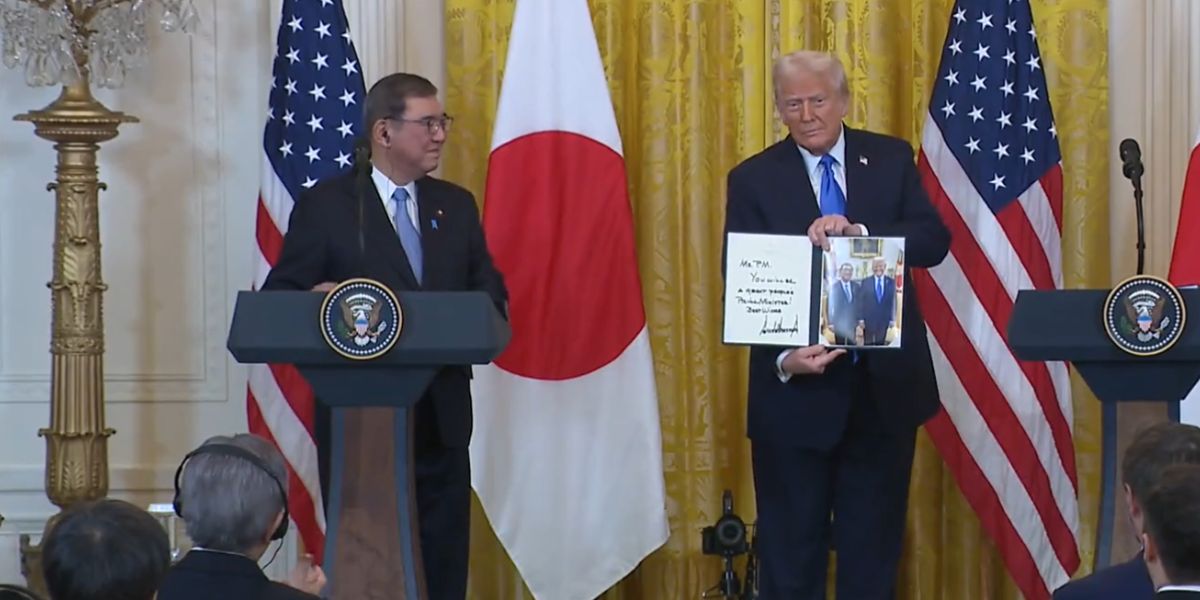
The first tranche of Tokyo’s $550 billion commitment lands in Ohio, Texas, and Georgia—and signals a deeper strategic realignment between two of the world’s most consequential economies.
When Donald Trump declared on Tuesday that America’s “massive trade deal with Japan has just launched,” the hyperbole was, for once, arguably proportionate to the moment. Japan has pledged nearly $36 billion in oil, gas, and critical mineral projects across Texas, Ohio, and Georgia—the opening installment of a landmark $550 billion US investment commitment made under a trade agreement in which Tokyo agreed to fund American-based projects in exchange for Trump reducing tariffs on most Japanese imports to 15%. CNBC
Three projects. Three states. And a geopolitical message directed as much at Beijing as at Wall Street.
The Centerpiece: A Natural Gas Colossus in Ohio
The crown jewel of this first tranche is not subtle. Commerce Secretary Howard Lutnick described the Portsmouth, Ohio power plant—valued at $33 billion and to be operated by SB Energy, a subsidiary of Japan’s SoftBank Group—as “the largest natural gas-fired generating facility in history,” with a planned capacity of 9.2 gigawatts. Baird Maritime
To appreciate the scale: if operated at full capacity, the plant would be the equivalent of nine nuclear reactors, or roughly the amount of power consumed by approximately 7.4 million homes on the largest US grid, PJM Interconnection. Yahoo Finance In an era of surging electricity demand driven by data centers and artificial intelligence infrastructure, this is not incidental timing.
Trump initially described the Ohio facility as a liquefied natural gas plant—a characterization that sowed some confusion, since Lutnick’s formal statement and the White House fact sheet described it as a natural gas power generation facility, not an LNG export terminal. Baird Maritime The distinction matters economically: power generation serves domestic demand; LNG exports serve foreign markets. The administration quickly clarified, but the episode underscored how fast-moving—and occasionally imprecise—this announcement was.
Texas and Georgia: Crude Oil and Critical Minerals
The second project is equally strategic in its implications. Japan will invest $2.1 billion in the Texas GulfLink deepwater crude oil export facility off the Texas coast, being developed by Dallas-based Sentinel Midstream. At full capacity, the project is expected to generate up to $30 billion in annual US crude exports, reinforcing America’s position as the world’s leading energy supplier. Baird Maritime
The third project is perhaps the most quietly consequential. A $600 million investment in a synthetic industrial diamond manufacturing facility in Georgia—involving Element Six, a subsidiary of De Beers—is designed to satisfy 100% of US demand for synthetic diamond grit, a critical input for advanced manufacturing and semiconductor production. Baird Maritime In Washington’s ongoing effort to build domestic supply chains for materials essential to chipmaking and defense, synthetic diamonds are a revealing choice: unglamorous, essential, and currently dominated by suppliers in China.
“One Very Special Word: Tariffs”
Trump’s framing of this deal is a deliberate piece of economic storytelling. “The scale of these projects are so large, and could not be done without one very special word, TARIFFS,” he wrote on social media. The claim is that the threat of punishing import duties—15% on most Japanese goods under the current agreement—incentivized Tokyo to redirect capital toward American soil rather than risk being locked out of the world’s largest consumer market.
Whether that logic holds under scrutiny is debatable. Japan was already the largest foreign holder of US Treasury securities and a substantial investor in American industry long before Trump’s second term. But what is undeniable is that the $550 billion commitment represents a structural shift—one that locks Japanese capital into American infrastructure at a moment when Washington is anxious to reduce its dependence on Chinese supply chains and attract anchor investors into its energy and industrial base.
Japanese Prime Minister Sanae Takaichi offered a complementary framing from Tokyo’s perspective: the projects strengthen the Japan-US alliance and are expected to bring increased sales and business expansion for Japanese companies. CNBC This is not charity—it is mutual interest expressed in concrete steel and capital.
The Broader Strategic Canvas
The investment package makes most sense when viewed through the lens of US-China competition. Washington’s anxiety about Chinese dominance in critical minerals—from rare earths to synthetic diamonds to battery components—has driven a sustained push to diversify supply chains toward allied nations. Japan, with its advanced manufacturing base, deep pockets, and geopolitical alignment with the US, is the natural partner for that project.
For Tokyo, the calculus is equally clear. Japan imports virtually all of its energy and is acutely sensitive to supply chain disruptions—a lesson the country absorbed painfully during the COVID-19 pandemic and the subsequent global semiconductor shortage. Investing in American energy infrastructure simultaneously hedges against future supply shocks, deepens the security relationship with Washington, and opens the door for Japanese firms like SoftBank to establish themselves as essential players in the US energy transition.
The emphasis on artificial intelligence is not incidental. The Ohio natural gas facility is designed to provide baseload power at a time of rapidly growing electricity demand from data centers built to support AI applications. Daily Times SoftBank’s founder Masayoshi Son has long positioned his company as a visionary investor in AI infrastructure; the Ohio plant is an extension of that bet, wrapped in the diplomatic packaging of a bilateral trade deal.
What $36 Billion Tells Us About the Remaining $514 Billion
The announcement raises as many questions as it answers. Japanese Chief Cabinet Secretary Minoru Kihara confirmed the projects Wednesday, noting that “both governments will continue to work closely together to fine-tune the details and ensure the speedy start of these projects.” Yahoo Finance That language—”fine-tune”—is the language of a deal still being constructed.
With $514 billion of the $550 billion commitment yet to be deployed, the architecture of the remaining investment remains opaque. Analysts will be watching closely for announcements in semiconductors, AI infrastructure, and the critical minerals sector more broadly—areas Prime Minister Takaichi specifically cited as pillars of the cooperation framework, alongside energy security.
The tariff structure, too, bears watching. The 15% rate on Japanese imports is meaningfully lower than the broader tariff regime Trump has applied to other trading partners, and it creates an incentive structure that other US allies—particularly in Europe and Southeast Asia—will study carefully. If Japan’s $550 billion commitment becomes a template, expect similar conversations with South Korea, Australia, and perhaps India.
A Deal With Depth—and Open Questions
There is something genuinely significant in this first tranche, beyond the headline numbers. The combination of energy infrastructure, critical minerals, and AI-linked power generation reflects a sophisticated understanding of where economic competition is heading—toward dominance in the inputs of the next industrial era, not merely the outputs.
The risks are real. A $33 billion natural gas plant requires years of permitting, construction, and operational ramp-up. Energy markets shift. Political winds turn. And the gap between announced investment and deployed capital has, historically, been large enough to swallow ambitions far grander than these.
But as opening statements go, $36 billion is a credible one. The Japan-US investment deal, for all its political theater, rests on a durable foundation: two mature democracies with complementary economic needs, a shared concern about strategic rivals, and enough capital between them to reshape the energy and industrial map of a continent. The question now is whether the remaining $514 billion follows—and on what terms.
That answer will define not just the US-Japan relationship, but the broader architecture of allied economic statecraft for the decade ahead.
Discover more from The Economy
Subscribe to get the latest posts sent to your email.



Key Takeaways
- Rolex’s secondary market rose approximately 7.9% year-over-year as of 2026 (per WatchCharts data) — trailing Patek Philippe (+16.2%) and Tudor (+11.4%) but still outperforming Audemars Piguet (+3.4%).
- Rolex raised U.S. retail prices 4–9% in January 2026 (steel models ~5.6%, gold models ~8.7%), narrowing the historical gap between retail and pre-owned pricing.
- Not every model appreciates: steel sports references (Submariner, GMT-Master II, Daytona) have held value far better than two-tone or widely available dress references like the standard Datejust.
- The Lady-Datejust posted the sharpest 2026 gain among tracked collections — up 22.73%, from roughly $9,269 to $11,376 — driven by demand for smaller, “everyday luxury” watches.
- Gold’s rise past $2,400/oz has directly lifted the investment case for Rolex’s precious-metal references (Day-Date, Sky-Dweller, Yacht-Master).
The Model-by-Model Picture
| Category | 2026 Trend |
|---|---|
| Lady-Datejust | +22.73% (strongest performer among tracked collections) |
| Steel sports models (Submariner, GMT-Master II) | Held value well; corrected from 2022 peak but stabilized above retail |
| Daytona | Corrected from highs above $50,000 to the mid-$30,000s; still among the most sought-after references |
| Two-tone/widely available Datejust | Flat to negative — “holds value” is an overstatement for this category |
| Gold references (Day-Date, Sky-Dweller) | Lifted by gold’s rise above $2,400/oz |
Why the “Rolex Always Appreciates” Myth Is Fading
The pandemic-era boom pushed some references — the Daytona above all — to speculative highs disconnected from historical norms. Since the March 2022 peak, steel sports models have compressed meaningfully, and dealers who bought inventory near the top have in some cases faced 20–40% markdowns on liquidation. The lesson for 2026 buyers: Rolex as a category is not a monolith. Value retention depends heavily on specific reference, condition, and whether the piece comes with box and papers (“full set”).
What’s Actually Driving 2026 Strength
- Retail price increases raise the floor. When a new Submariner retails at $10,050 (up from $9,500), a pre-owned example at $11,000–$12,000 suddenly represents a smaller premium — narrowing the gap without secondary prices actually moving.
- Supply discipline remains Rolex’s core lever. The brand has never confirmed production numbers, and secondary-market premiums remain entirely a function of Rolex’s own manufacturing decisions — a risk factor as much as a support.
- Certified Pre-Owned rollout. Rolex’s now fully rolled-out CPO program has changed how buyers transact in the used market, adding a layer of brand-verified legitimacy that supports pricing.
The Case for Rolex as a Portfolio Diversifier
Financial advisors increasingly frame luxury watches not as a replacement for equities or bonds, but as a tangible, historically low-correlation diversifier — one that carries its own risks (illiquidity, condition-dependent pricing, no yield) but has demonstrated multi-decade resilience for specific references.
Is Rolex a good investment in 2026?
It depends heavily on the specific reference. Steel sports models like the Submariner and Daytona have held or grown in value; two-tone and widely available dress models generally have not. Overall, Rolex’s secondary market rose about 7.9% year-over-year in 2026, trailing Patek Philippe but ahead of Audemars Piguet.
Discover more from The Economy
Subscribe to get the latest posts sent to your email.

Navigating Mortgage and Loan Refinancing in a High-Yield Environment
Global public debt crossing critical thresholds has kept central bank policies volatile, resulting in fluctuating US Treasury yields throughout 2026. For homeowners and commercial property holders burdened by previous high-interest borrowing cycles, finding optimal refinance windows has become a high-stakes financial puzzle. Stalled disinflation and stubborn employment numbers mean rate cuts are incremental, requiring borrowers to act with precision.
Timing your mortgage or commercial loan refinance in this environment requires a deep understanding of yield curve movements and lender risk appetites.
Decoding 2026 Refinance Dynamics
The 10-Year Treasury Yield Benchmark
Mortgage rates continue to track closely with the 10-year US Treasury yield. When macroeconomic anxiety spikes debt issuance, yields rise, tightening consumer borrowing capacity. Savvy borrowers monitor weekly Treasury auctions to lock in rates during brief dip windows.
Hybrid ARMs and Alternative Structures
With fixed rates remaining elevated, 7/1 and 10/1 adjustable-rate mortgages (ARMs) have surged in popularity. These products offer lower initial monthly payments, giving borrowers breathing room until central bank easing cycles fully materialize.
| Loan Product | Current Rate Range | Best For | Key Risk Factor |
| 30-Year Fixed Mortgage | 6.2% – 6.8% | Long-term predictability | Higher initial monthly outlay |
| 7/1 Hybrid ARM | 5.5% – 5.9% | Short-term ownership / flipping | Rate reset risk after year 7 |
| Commercial Refinance | 7.0% – 8.2% | Corporate asset restructuring | Strict DSCR lender covenants |
Actionable Steps for Successful Refinancing
To maximize your chances of securing favorable refinance terms in a volatile market, follow a disciplined preparation strategy.
Boost Your Credit Score Immediately: Lenders in 2026 are applying stringent credit tiering; a 20-point increase can drop your APR by a crucial quarter-point.
Shop Regional Credit Unions: Smaller financial institutions often offer portfolio loans with more flexible underwriting than major national banks.
Calculate the Break-Even Point: Ensure your total closing costs are recouped through monthly savings within 24 months of closing.
“Market Strategist View: Refinancing in 2026 is an exercise in opportunistic timing. Borrowers must maintain immaculate financial profiles ready to strike the moment Treasury yields dip.”
Mastering the complexities of today’s debt environment ensures you can successfully lower your debt service costs and protect your long-term financial stability.
Discover more from The Economy
Subscribe to get the latest posts sent to your email.

The days of pulling generic auto insurance quotes based purely on your zip code and age are officially over. In 2026, insurance comparison engines are powered entirely by generative AI and real-time telematics. These platforms digest thousands of live data points—ranging from your driving smoothness via connected vehicle sensors to real-time traffic congestion patterns—to generate hyper-personalized premiums instantly.
For consumers, this evolution represents both a massive opportunity for savings and a hidden trap for penalty pricing. Understanding how AI algorithms evaluate risk is essential for anyone looking to lower their monthly auto insurance premiums.
How AI Comparison Engines Evaluate Your Risk Profile
Behavioral Telematics and Connected Cars
Modern cars stream performance data directly to insurance aggregators. Generative AI models analyze braking sharpness, acceleration curves, cornering G-forces, and phone distraction metrics. Drivers who maintain smooth, defensive habits are rewarded with dynamic rate cuts of up to 40% compared to traditional rating tiers.
Predictive Traffic and Weather Modeling
AI tools now cross-reference your daily commute route with predictive weather and accident probability models. If your standard parking location or driving corridor has a statistically higher incidence of uninsured motorist claims, your quotes will reflect that hyper-local risk assessment.
| Comparison Factor | Traditional Rating Model | 2026 Generative AI Model | Impact on Premium |
| Mileage & Usage | Annual estimated odometer reading | GPS tracking & live trip duration | High (up to 35% savings) |
| Driving Behavior | MVR driving record & accidents | Real-time braking, speed, & G-force | Critical (determines tier) |
| Vehicle Tech | Make, model, and safety rating | ADAS calibration & repair cost data | Moderate |
Strategies to Lower Your AI-Driven Insurance Quote
To outsmart the algorithm and secure the lowest possible premium in 2026, drivers must proactively manage their digital footprint on insurance platforms.
Opt-In for Telematics Trial Periods: Many insurers offer immediate 15% discounts just for installing their driving app; let it track safe habits for 30 days to lock in permanent savings.
Scrub Unverified Public Records: Ensure your motor vehicle report is free of clerical errors that AI risk models misinterpret as reckless behavior.
Compare AI Aggregators: Use platforms that integrate multi-carrier API feeds rather than single-brand comparison sites to find the best risk-adjusted rate.
“Industry Note: AI-driven pricing rewards transparency and precision. Drivers who actively manage their telematics data consistently out-save those relying on legacy quote calculators.”
Embracing AI comparison tools allows savvy policyholders to customize coverage limits precisely to their driving habits, eliminating wasted premium spend while ensuring robust protection.
Discover more from The Economy
Subscribe to get the latest posts sent to your email.

Asian Markets Analysis: Navigating Volatility in China, Japan, and Singapore Stocks

Stagflation vs. Soft Landing: How Central Bank Rates Are Reshaping European and Asian Economies

IMF & World Bank Global Economic Outlook: Growth Forecasts Across Europe and Asia

Fed Rate Hike Projections vs. Trump’s Interest Rate Policy: What Global Markets Expect Next

Singapore Stocks: The Ultimate Safe Haven for Markets and Finance in 2026?

Marie Gluesenkamp Perez: How a Former Shop Owner’s Moderate Politics Are Shaping Tech and Economy Bills

The Future of Silicon: Supply Chain Vulnerabilities in the 2026 Tech Sector

Rolex Perpetual Market Value 2026: Why Luxury Watches Remain a Top Alternative Asset

PSX and KSE-100: How Pakistan’s Market Became One of Asia’s Best Performers

China Stocks vs. Japan Stocks: Where World Bank and IMF Data Point for 2027

Beyond Rhetoric: How the EU Is Deploying ‘All Tools’ to Rebalance Its €1 Billion-a-Day Trade Deficit with China

Elon Musk’s Next Moves: Disrupting the 2026 Global Economy

INTC Stock Forecast 2026: Can Intel’s Government-Backed Turnaround Hold?

Bitcoin Price Action in Q4 2026: Safe-Haven Asset or High-Risk Tech Play?

State Farm’s $5B Dividend 2026: Who Qualifies & Payout Dates

US-China Relations in Q3 2026: Trade Tariffs and Supply Chain Risks

Oil Surges as Strait of Hormuz Traffic Collapses Again

SpaceX Starship Flight 14: First Orbital Attempt & Starlink V3 Launch Explained

Bank of England Set to Hold Rates Through Year-End, Reuters Poll Shows

Top 30 Stocks for Investment in PSX for Massive ROI in 2026

The 2026 Crypto Regulatory Shift: What It Means for Institutional Investors

AI Chip Stocks 2026: The Best Semiconductor Investments Beyond Marvell

AI-Powered Training: The Next Multi-Billion Dollar Ecosystem in Fitness

Tween Back-to-School Trends 2026: What’s Driving the $85B Season

Russia’s Black Sea Oil Exports Fall for a Fifth Straight Week

Shein Clothes Quality & Safety in 2026: What Lab Tests Show

Global Chip Selloff Deepens: What’s Driving the Aug. 19 Semiconductor Rout

10-Year Treasury Yield Hits 4.80%: What It Means for Rates & Portfolios
-

 Markets & Finance8 months ago
Top 15 Stocks for Investment in 2026 in PSX: Your Complete Guide to Pakistan’s Best Investment Opportunities
-

 Analysis7 months ago
Johor’s Investment Boom: The Hidden Costs Behind Malaysia’s Most Ambitious Economic Surge
-

 Analysis7 months ago
Top 10 Stocks for Investment in PSX for Quick Returns in 2026
-

 Analysis7 months ago
Brazil’s Rare Earth Race: US, EU, and China Compete for Critical Minerals as Tensions Rise
-

 Banks8 months ago
Best Investments in Pakistan 2026: Top 10 Low-Price Shares and Long-Term Picks for the PSX
-

 Investment8 months ago
Top 10 Mutual Fund Managers in Pakistan for Investment in 2026: A Comprehensive Guide for Optimal Returns
-

 Global Economy9 months ago
15 Most Lucrative Sectors for Investment in Pakistan: A 2025 Data-Driven Analysis
-

 Global Economy9 months ago
Pakistan’s Export Goldmine: 10 Game-Changing Markets Where Pakistani Businesses Are Winning Big in 2025