
Analysis
Christine Lagarde’s Early ECB Exit: Europe’s Financial Future

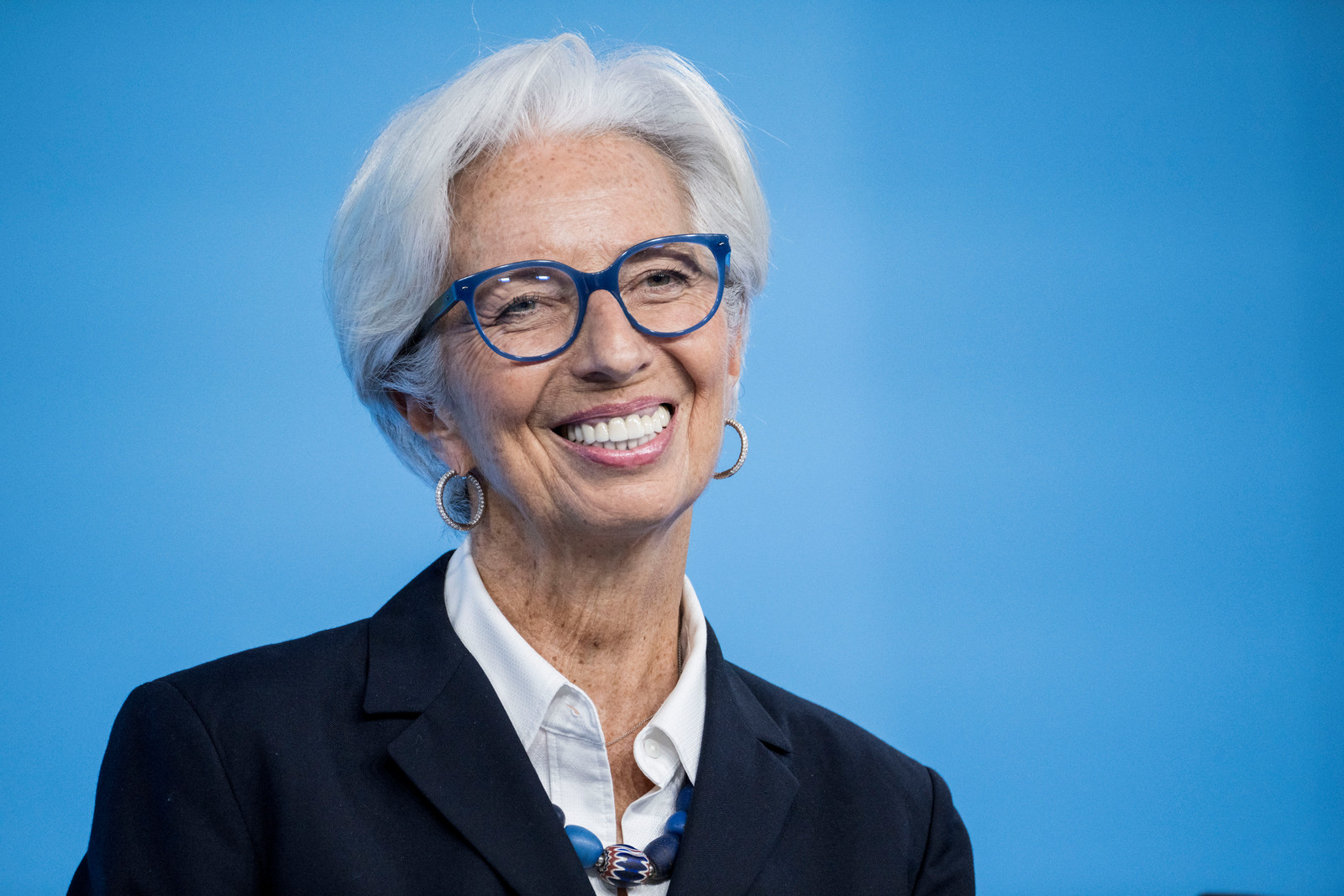
The Clock Starts in Frankfurt
Picture the ECB’s gleaming twin-tower headquarters on the eastern bank of the Main River in Frankfurt — a monument to European monetary union, to the idea that 20 nations can agree on the price of money. Inside, Christine Lagarde has spent six years navigating a pandemic, a war, a historic inflation surge, and the unsettling return of Trumpian trade aggression. Now, reportedly, she is preparing to hand the wheel to someone else — early.
According to the Financial Times, Lagarde wants to leave before the French presidential election in April 2027, which would allow Macron and German Chancellor Friedrich Merz to find her replacement together. Bloomberg The timing is deliberate, calculated, and — given what is at stake for the eurozone — arguably necessary.
The ECB itself moved swiftly to pour cold water on the story. An ECB spokesperson stated that “President Lagarde is totally focused on her mission and has not taken any decision regarding the end of her term.” The Irish Times But denials of this kind rarely kill a story with this much structural logic behind it.
Why the Timing Matters: France 2027 and the Far-Right Factor
To understand why Lagarde’s rumored early departure has rattled markets and captivated European diplomats, you need to understand what April 2027 represents.
The French presidential election will be crucial for the eurozone’s second-largest economy and the wider EU. Marine Le Pen, leader of the far-right Rassemblement National (RN), is consistently polling ahead of rivals, putting her in pole position for the final ballot. While Le Pen may be disqualified from running after being convicted of embezzling European Parliament funds, she has indicated her protégé Jordan Bardella would step in. Both Le Pen and Bardella are eurosceptics, which could complicate relations with European institutions such as the ECB. The Irish Times
This is the existential risk that frames everything. Under EU treaty rules, the appointment of the ECB president requires consensus among eurozone governments. If a Rassemblement National government were sitting in the Élysée Palace when Lagarde’s seat becomes vacant, Paris would have a seat — and potentially a veto — at the negotiating table. Rabobank’s head of FX strategy Jane Foley has noted that an early exit would prevent France’s National Rally party from playing a role in the selection of Lagarde’s successor. The party has called for the ECB to buy French government debt, which Foley sees as inflationary and damaging to the euro by undermining ECB credibility. Bloomberg
The logic, then, is not merely personal preference. It is institutional self-preservation at the highest level.
A Legacy Forged in Crisis
Before examining who might succeed Lagarde, it is worth pausing on what she is leaving behind — and why her departure, on whatever schedule it comes, will close one of the most turbulent chapters in ECB history.
Lagarde’s time at the ECB’s helm has been shaped by a series of crises, including the Covid-19 pandemic, Russia’s full-scale invasion of Ukraine, and a trade conflict with the US. Under her watch, eurozone inflation surged to close to 11 per cent in late 2022 as energy prices shot up in the wake of Russia’s attack on Ukraine and global supply chains suffered pandemic-related bottlenecks. The ECB raised interest rates from minus 0.5 per cent to 4 per cent in little more than a year. From mid-2024, the central bank lowered borrowing costs to 2 per cent as inflation fell back to the ECB’s 2 per cent medium-term target. The Irish Times
It was not a smooth ride. Lagarde faced early criticism for initially downplaying the inflation threat — a charge leveled by hawks in Germany and the Netherlands who wanted faster tightening. But by the time the ECB’s hiking cycle was complete, the institution had demonstrated it could act with the kind of decisive speed that once seemed impossible for a governing council of 26 members with conflicting national interests.
“European Central Bank President Christine Lagarde is expected to leave her post before completing her eight-year mandate in October 2027, according to a Financial Times report citing a person familiar with her thinking. The move, if confirmed, would allow French President Emmanuel Macron and German Chancellor Friedrich Merz to jointly select her successor before France’s pivotal April 2027 presidential election — one that could bring the far-right to power and reshape Europe’s institutional landscape.“
She also guided the ECB through an era in which central bank independence itself came under political pressure across the Western world — from Trump’s attacks on the Federal Reserve to debates in Rome and Budapest about the legitimacy of technocratic monetary governance. That Lagarde now seeks to secure her institution’s future by ensuring the successor-selection process stays in stable hands is entirely consistent with this instinct.
Macron’s Institutional Chess Game
This is not the first time Emmanuel Macron has maneuvered to shape the composition of European institutions before a political clock runs out.
Lagarde’s appointment as ECB president in the first place came after Macron and then-German Chancellor Angela Merkel struck a surprise deal in 2019. They agreed that Lagarde would take over the ECB, while German Defence Minister Ursula von der Leyen would become European Commission president. The Irish Times It was a masterstroke of European dealmaking — Macron securing the EU’s monetary helm for France while allowing Berlin to claim the Commission.
Seven years later, the outgoing French president appears to be engineering a sequel. Macron has moved to bulletproof other key posts ahead of 2027, recently naming a close ally to head the national auditor. The Irish Times Securing a friendly ECB president before leaving office would be the capstone of this institutional legacy-building.
For Friedrich Merz, newly ensconced in the chancellorship in Berlin, the stakes are equally high. Germany’s preference for monetary orthodoxy — low inflation, fiscal discipline, central bank independence — means Berlin has a deep interest in who sits atop the ECB. Merz, a market-oriented conservative, is likely to want a candidate with credibility on price stability rather than one amenable to political pressure.
Who Comes Next? The Successor Shortlist
Speculation over Lagarde’s replacement is already shaping boardroom conversations from Amsterdam to Madrid. Here is a snapshot of the leading contenders as understood by February 2026:
| Candidate | Background | Perceived Lean | Key Backer |
|---|---|---|---|
| Klaas Knot | Former Dutch central bank chief | Moderate hawk, consensus builder | Berlin |
| Pablo Hernández de Cos | Former Bank of Spain governor | Centrist | Southern eurozone |
| Isabel Schnabel | ECB Executive Board member | Hawkish | Germany |
| Joachim Nagel | Bundesbank president | Hawkish | Germany |
Current sentiment, as gauged by an FT poll in December, suggests that Klaas Knot and Pablo Hernández de Cos are the most probable successors. Knot is increasingly viewed as the “Goldilocks” candidate: a seasoned veteran who has transitioned from a strict inflation hawk to a more moderate, consensus-building figure. He is particularly attractive to Berlin, as German Chancellor Friedrich Merz may prefer backing a like-minded Dutchman over the political complexity of appointing a German. Euronews
Schnabel’s name carries weight given her intellectual heft and inside knowledge of ECB operations, and ECB executive board member Isabel Schnabel has said she is interested in the job, and people briefed on Bundesbank president Joachim Nagel’s thinking said he was also keen on the role. The Irish Times
The eventual choice will be a product of negotiations involving not just Paris and Berlin, but Rome, Madrid, Amsterdam, and the other 16 eurozone capitals. Each will be seeking to trade support for the ECB presidency against concessions elsewhere — EU budget posts, regulatory appointments, trade policy positions.
What It Means for the Euro and Eurozone Stability
Markets responded to the FT report with cautious interest rather than alarm — a sign that investors broadly welcome clarity over ambiguity in the ECB succession. A smooth, pro-independence transition would reassure bond markets that the ECB’s credibility, hard-won through the painful rate hikes of 2022-2023, will be preserved.
The alternative — a chaotic succession fight amid a French political earthquake — is the tail risk that keeps European economists awake at night. An early departure by Lagarde could narrow the field of candidates vying to succeed her, Bloomberg noted, with the timing of her exit likely to shape which political coalitions can rally behind competing nominees. Bloomberg
There is also the question of policy continuity. The ECB currently sits at 2 per cent on its deposit facility rate — effectively at what most policymakers consider neutral territory. The next president will inherit a Eurozone economy navigating sluggish growth, the ongoing shock of Trump-era tariffs on European goods, and the transition to a new defense spending paradigm as Germany and others ramp up military budgets. Whoever takes the helm will need both the intellectual framework and the political capital to handle these pressures without compromising the inflation mandate.
The Broader Stakes: ECB Independence in a Populist Age
Step back further, and Lagarde’s reported maneuvering illuminates a deeper anxiety in European technocratic circles: that the institutions built to insulate monetary policy from political pressure are increasingly vulnerable to the very political forces their designers feared.
The architects of the Maastricht Treaty in the early 1990s designed the ECB to be uniquely independent — its president serves a single, non-renewable eight-year term precisely to prevent political patronage cycles. But that design assumed a relatively stable European political landscape. It did not fully anticipate the scenario now unfolding: a French election that could hand the keys of government to a party explicitly hostile to the ECB’s mandate.
Lagarde’s move — if confirmed — is a reminder that institutional independence is never self-enforcing. It requires active stewardship, sometimes including decisions that bend the rules of formal neutrality in order to preserve the substance of it.
The ECB’s Official Line — and What to Read Into It
It bears repeating that the ECB has formally denied Lagarde has taken any decision. A spokesperson told Euronews the claims are untrue, adding that Lagarde will remain focused on her mission. Euronews
But there is a difference between a decision not yet taken and an intention not yet formalized. Multiple credible outlets — the Financial Times, Bloomberg, and others — are reporting the same essential contours from sources familiar with Lagarde’s thinking. In the world of European central banking, where discretion is elevated to an art form, that level of convergence is meaningful.
Any early departure would trigger complex negotiations among euro area member states, as senior EU economic posts are typically balanced along political and national lines. Belga News Agency Those negotiations, by all accounts, are precisely what Lagarde is hoping to enable — while the current balance of power in Paris and Berlin still favors outcomes she can live with.
Conclusion: A Graceful Exit, or a Necessary One?
Christine Lagarde came to the ECB after a distinguished career at the IMF, where she navigated the Eurozone debt crisis and built a reputation as a skilled political operator as much as a monetary policymaker. She will leave — whether in 2026 or 2027 — having steered the eurozone through its greatest inflationary shock in decades.
Whether her early departure is an act of institutional statesmanship or an admission that the political winds have become too threatening to ignore is, in some ways, a distinction without a difference. In the Europe of 2026, the two amount to the same thing.
What is certain is that the race to succeed her — quiet, coded, conducted over diplomatic dinners from Brussels to Frankfurt — is now well and truly underway. For investors, for Eurozone governments, and for the 340 million citizens who use the euro, the identity of the next ECB president may well shape the economic weather of the next decade.
The only question is how much time Lagarde — and Macron — have left to make sure they like the forecast.
Discover more from The Economy
Subscribe to get the latest posts sent to your email.



Navigating Mortgage and Loan Refinancing in a High-Yield Environment
Global public debt crossing critical thresholds has kept central bank policies volatile, resulting in fluctuating US Treasury yields throughout 2026. For homeowners and commercial property holders burdened by previous high-interest borrowing cycles, finding optimal refinance windows has become a high-stakes financial puzzle. Stalled disinflation and stubborn employment numbers mean rate cuts are incremental, requiring borrowers to act with precision.
Timing your mortgage or commercial loan refinance in this environment requires a deep understanding of yield curve movements and lender risk appetites.
Decoding 2026 Refinance Dynamics
The 10-Year Treasury Yield Benchmark
Mortgage rates continue to track closely with the 10-year US Treasury yield. When macroeconomic anxiety spikes debt issuance, yields rise, tightening consumer borrowing capacity. Savvy borrowers monitor weekly Treasury auctions to lock in rates during brief dip windows.
Hybrid ARMs and Alternative Structures
With fixed rates remaining elevated, 7/1 and 10/1 adjustable-rate mortgages (ARMs) have surged in popularity. These products offer lower initial monthly payments, giving borrowers breathing room until central bank easing cycles fully materialize.
| Loan Product | Current Rate Range | Best For | Key Risk Factor |
| 30-Year Fixed Mortgage | 6.2% – 6.8% | Long-term predictability | Higher initial monthly outlay |
| 7/1 Hybrid ARM | 5.5% – 5.9% | Short-term ownership / flipping | Rate reset risk after year 7 |
| Commercial Refinance | 7.0% – 8.2% | Corporate asset restructuring | Strict DSCR lender covenants |
Actionable Steps for Successful Refinancing
To maximize your chances of securing favorable refinance terms in a volatile market, follow a disciplined preparation strategy.
Boost Your Credit Score Immediately: Lenders in 2026 are applying stringent credit tiering; a 20-point increase can drop your APR by a crucial quarter-point.
Shop Regional Credit Unions: Smaller financial institutions often offer portfolio loans with more flexible underwriting than major national banks.
Calculate the Break-Even Point: Ensure your total closing costs are recouped through monthly savings within 24 months of closing.
“Market Strategist View: Refinancing in 2026 is an exercise in opportunistic timing. Borrowers must maintain immaculate financial profiles ready to strike the moment Treasury yields dip.”
Mastering the complexities of today’s debt environment ensures you can successfully lower your debt service costs and protect your long-term financial stability.
Discover more from The Economy
Subscribe to get the latest posts sent to your email.

The days of pulling generic auto insurance quotes based purely on your zip code and age are officially over. In 2026, insurance comparison engines are powered entirely by generative AI and real-time telematics. These platforms digest thousands of live data points—ranging from your driving smoothness via connected vehicle sensors to real-time traffic congestion patterns—to generate hyper-personalized premiums instantly.
For consumers, this evolution represents both a massive opportunity for savings and a hidden trap for penalty pricing. Understanding how AI algorithms evaluate risk is essential for anyone looking to lower their monthly auto insurance premiums.
How AI Comparison Engines Evaluate Your Risk Profile
Behavioral Telematics and Connected Cars
Modern cars stream performance data directly to insurance aggregators. Generative AI models analyze braking sharpness, acceleration curves, cornering G-forces, and phone distraction metrics. Drivers who maintain smooth, defensive habits are rewarded with dynamic rate cuts of up to 40% compared to traditional rating tiers.
Predictive Traffic and Weather Modeling
AI tools now cross-reference your daily commute route with predictive weather and accident probability models. If your standard parking location or driving corridor has a statistically higher incidence of uninsured motorist claims, your quotes will reflect that hyper-local risk assessment.
| Comparison Factor | Traditional Rating Model | 2026 Generative AI Model | Impact on Premium |
| Mileage & Usage | Annual estimated odometer reading | GPS tracking & live trip duration | High (up to 35% savings) |
| Driving Behavior | MVR driving record & accidents | Real-time braking, speed, & G-force | Critical (determines tier) |
| Vehicle Tech | Make, model, and safety rating | ADAS calibration & repair cost data | Moderate |
Strategies to Lower Your AI-Driven Insurance Quote
To outsmart the algorithm and secure the lowest possible premium in 2026, drivers must proactively manage their digital footprint on insurance platforms.
Opt-In for Telematics Trial Periods: Many insurers offer immediate 15% discounts just for installing their driving app; let it track safe habits for 30 days to lock in permanent savings.
Scrub Unverified Public Records: Ensure your motor vehicle report is free of clerical errors that AI risk models misinterpret as reckless behavior.
Compare AI Aggregators: Use platforms that integrate multi-carrier API feeds rather than single-brand comparison sites to find the best risk-adjusted rate.
“Industry Note: AI-driven pricing rewards transparency and precision. Drivers who actively manage their telematics data consistently out-save those relying on legacy quote calculators.”
Embracing AI comparison tools allows savvy policyholders to customize coverage limits precisely to their driving habits, eliminating wasted premium spend while ensuring robust protection.
Discover more from The Economy
Subscribe to get the latest posts sent to your email.

Despite decades of bans and strict handling mandates, asbestos remains a silent killer across legacy manufacturing plants, shipyards, and modern green-energy infrastructure retrofits. In 2026, regulatory changes by the EPA and tightened occupational health standards have triggered a fresh wave of mesothelioma litigation. Manufacturers attempting to fast-track industrial transitions are encountering catastrophic oversight, exposing workers to legacy toxins and opening corporate parent companies to unprecedented liability.
Navigating a mesothelioma claim in 2026 requires understanding how modern industrial supply chains intersect with historical exposure. Trusts established decades ago are being audited under stricter transparency laws, altering payout ratios and accelerating fast-track settlements for terminally ill plaintiffs.
Modern Industrial Exposure Hotspots
Green Retrofitting and Renewable Energy Infrastructure
A primary source of 2026 asbestos exposure occurs during the decommissioning and retrofitting of older industrial facilities for renewable energy production. Workers insulating electrical grids, modernizing HVAC systems, or upgrading manufacturing floors frequently disturb encapsulated asbestos materials that were improperly documented or ignored during facility audits.
Automotive and Aerospace Supply Chains
With advanced manufacturing booming, workers handling specialized friction materials, gaskets, and heat shields face ongoing risks. Supply chain tracing has become more sophisticated, allowing legal teams to pinpoint exact corporate entities responsible for raw material distribution across multinational borders.
| Industry Sector | Primary Exposure Risk | Legal Venue / Trust | Avg. Claim Value Range |
| Green Energy Retrofit | Disturbed insulation, pipe lagging | Federal Tort / Manufacturer Trust | $1.2M – $3.5M |
| Shipbuilding & Marine | Boiler insulation, structural seals | Asbestos Bankruptcy Trusts | $800K – $2.4M |
| Automotive Manufacturing | Brake components, high-heat gaskets | Third-Party Product Liability | $600K – $1.8M |
Securing Maximum Compensation: Steps for Plaintiffs
Time is of the essence in mesothelioma cases. Plaintiffs and their families must act decisively to secure financial recovery before statutes of limitations expire.
Retain Specialized Counsel: Work exclusively with national mesothelioma law firms possessing deep historical databases of asbestos-containing products.
Audit Employment History: Document every job site, supervisor name, and equipment brand encountered throughout your career.
Expedite Medical Filings: Secure a formal pathological diagnosis quickly to qualify for expedited trust fund distribution and priority trial settings.
“Expert Insight: Modern asbestos litigation is no longer just about historical tracking; it is about holding modern corporations accountable for failing to conduct rigorous environmental safety audits before initiating industrial retrofits.”
By combining meticulous work history reconstruction with aggressive multi-trust filings, victims can secure substantial financial relief to cover specialized immunotherapy and family support.
Discover more from The Economy
Subscribe to get the latest posts sent to your email.

Beyond Rhetoric: How the EU Is Deploying ‘All Tools’ to Rebalance Its €1 Billion-a-Day Trade Deficit with China

Elon Musk’s Next Moves: Disrupting the 2026 Global Economy

INTC Stock Forecast 2026: Can Intel’s Government-Backed Turnaround Hold?

Bitcoin Price Action in Q4 2026: Safe-Haven Asset or High-Risk Tech Play?

The Target Pokémon x Owala Drop: Everything to Know Before It Sells Out

The U.S. Just Confirmed It Has Weapons in Space — Here’s What It Means for Defense Stocks

IRS 2027 Tax Bracket Projections: How to Get Ahead of Bracket Creep

Dow Jones vs. Middle East Tensions: How Wall Street Is Pricing In a 2026 Conflict Nobody Saw Coming

Bank of England’s September 17 Decision: Will UK Interest Rates Finally Move?

Inflation Is Outpacing Wage Growth Again: What It Means for Your Paycheck

10-Year Treasury Yield Tops 5%: What It Means for Mortgages, Stocks, and the Fed

Ceasefire Negotiations in 2026: Predicting the Rebound of European and Asian Economies

Emerging Markets Update: The Impact of World Bank Policies on PSX Stability

Costco Oil Shortage 2026: Will Prices Double for All Synthetic Motor Oils?

State Farm’s $5B Dividend 2026: Who Qualifies & Payout Dates

US-China Relations in Q3 2026: Trade Tariffs and Supply Chain Risks

Gold’s Wild 2026: From a Record $5,600 Peak to a 24% Crash and Back Toward $4,500

Oil Surges as Strait of Hormuz Traffic Collapses Again

Bank of England Set to Hold Rates Through Year-End, Reuters Poll Shows

SpaceX Starship Flight 14: First Orbital Attempt & Starlink V3 Launch Explained

Top 30 Stocks for Investment in PSX for Massive ROI in 2026

The 2026 Crypto Regulatory Shift: What It Means for Institutional Investors

AI Chip Stocks 2026: The Best Semiconductor Investments Beyond Marvell

AI-Powered Training: The Next Multi-Billion Dollar Ecosystem in Fitness

Tween Back-to-School Trends 2026: What’s Driving the $85B Season

Russia’s Black Sea Oil Exports Fall for a Fifth Straight Week

Global Chip Selloff Deepens: What’s Driving the Aug. 19 Semiconductor Rout

Shein Clothes Quality & Safety in 2026: What Lab Tests Show
-

 Markets & Finance8 months ago
Top 15 Stocks for Investment in 2026 in PSX: Your Complete Guide to Pakistan’s Best Investment Opportunities
-

 Analysis7 months ago
Johor’s Investment Boom: The Hidden Costs Behind Malaysia’s Most Ambitious Economic Surge
-

 Analysis7 months ago
Top 10 Stocks for Investment in PSX for Quick Returns in 2026
-

 Analysis7 months ago
Brazil’s Rare Earth Race: US, EU, and China Compete for Critical Minerals as Tensions Rise
-

 Banks8 months ago
Best Investments in Pakistan 2026: Top 10 Low-Price Shares and Long-Term Picks for the PSX
-

 Investment8 months ago
Top 10 Mutual Fund Managers in Pakistan for Investment in 2026: A Comprehensive Guide for Optimal Returns
-

 Global Economy9 months ago
15 Most Lucrative Sectors for Investment in Pakistan: A 2025 Data-Driven Analysis
-

 Global Economy9 months ago
Pakistan’s Export Goldmine: 10 Game-Changing Markets Where Pakistani Businesses Are Winning Big in 2025