
AI
How AI, Delivery Drones Helped China Cut Logistics Costs to a New Low

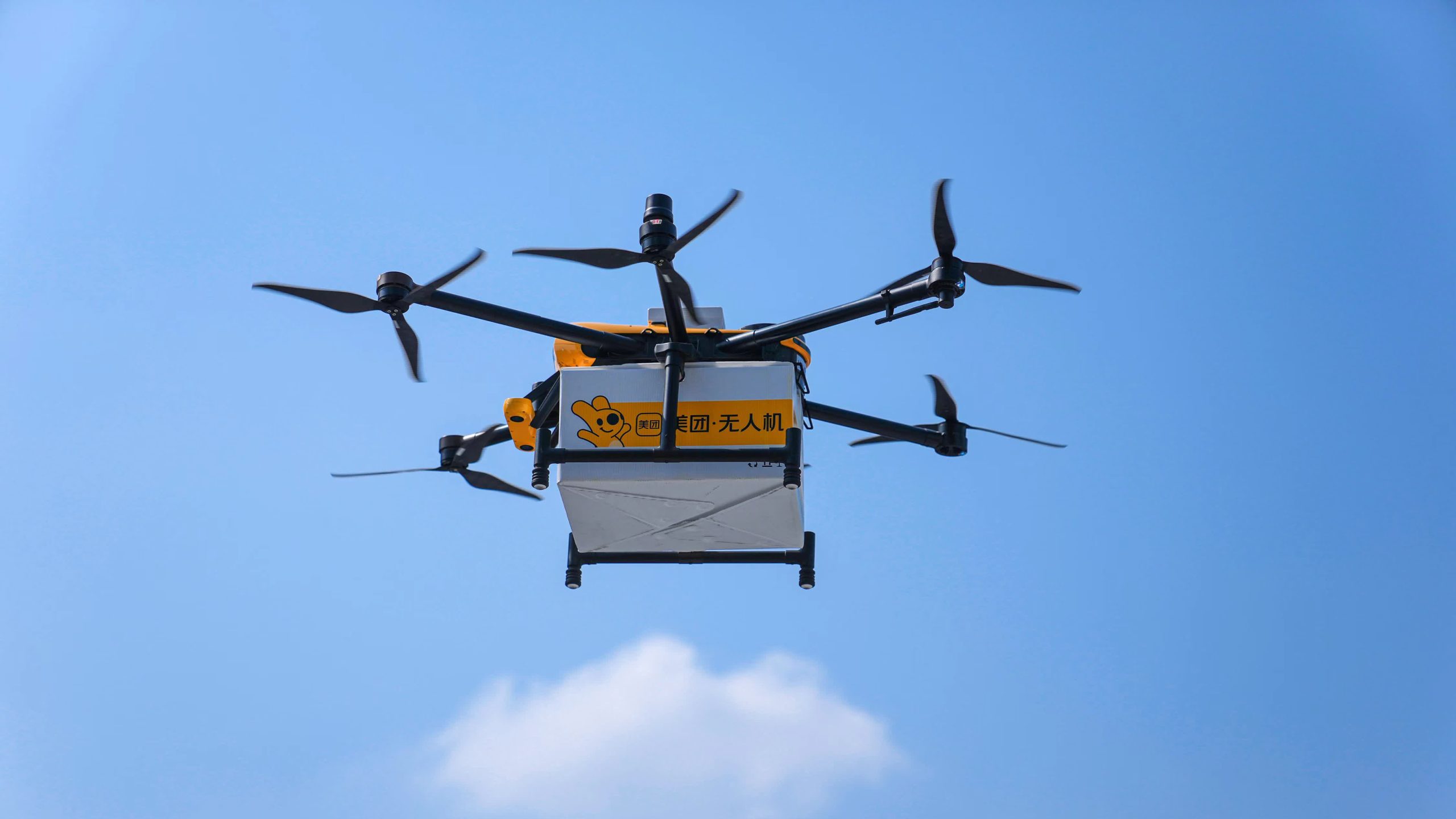
China’s logistics costs fell to 13.9% of GDP in 2025, a record low driven by AI route optimization and delivery drones reducing expenses by 30-50% in key sectors.
Imagine in rural Jiangsu Province, a package containing life-saving medication lands precisely at a remote village health clinic—delivered not by a courier navigating treacherous mountain roads, but by an autonomous drone that completed the 40-kilometer journey in just 18 minutes. What once took four hours now happens before breakfast, at a fraction of the cost. This isn’t science fiction. It’s the new reality of China’s logistics revolution, and it’s reshaping the world’s largest supply chain into one of its most efficient.
A Historic Milestone in Supply Chain Efficiency
China’s logistics costs-to-GDP ratio fell to 13.9% in 2025, dropping below the 14% threshold for the first time, according to the National Development and Reform Commission (NDRC). This translates to 13.9 yuan (US$2.01) spent on logistics for every 100 yuan of economic output—a crucial benchmark of supply chain efficiency that signals Beijing’s transformation of the world’s largest logistics market from a volume-driven behemoth into a precision-tuned ecosystem.
The achievement marks a 0.8 percentage point improvement since the end of the 13th Five-Year Plan period (2016-2020) and reflects steady improvements in logistics infrastructure, coordination and cost control. Yet context matters: while the United States maintains logistics costs at approximately 8.7-8.8% of GDP, China’s ratio remains elevated by comparison, suggesting significant headroom for further optimization.
Beijing isn’t resting on its laurels. The government is targeting a further reduction to around 13.5% by 2027, part of a broader push to boost overall economic efficiency as the nation confronts slowing growth and mounting global economic pressures.
The AI Advantage: Intelligence Meets Infrastructure
The path to this record low wasn’t paved with traditional infrastructure alone—it was coded into algorithms and trained into neural networks. Artificial intelligence has emerged as the invisible hand guiding China’s logistics transformation, touching everything from warehouse automation to real-time route optimization.
Consider the textile manufacturer Fu Yefei in Shaoxing, Zhejiang Province. His company previously hemorrhaged 30,000 yuan monthly on in-house drivers plagued by empty return trips and inefficient routing. After adopting intelligent logistics platforms, AI-powered matching systems reduced transportation costs by nearly 70% while boosting delivery efficiency by over 50%. The platform’s AI bridges information gaps between shippers and carriers, optimizing load matching with a 92% success rate across 1.86 million daily orders.
This isn’t an isolated case. Across China’s logistics landscape, AI is delivering measurable impact:
Route Optimization at Scale: Machine learning algorithms process real-time traffic data, weather patterns, and historical delivery information to dynamically adjust routes. A 2025 DHL report found that AI-driven route optimization can cut fuel use by up to 15%, translating to major cost savings and reduced environmental impact. In China’s context, where JD Logistics operates across thousands of routes daily, these efficiency gains compound into hundreds of millions in annual savings.
Predictive Analytics: AI systems forecast demand patterns, enabling logistics companies to position inventory strategically and avoid costly last-minute shipments. JD Logistics’ regional distribution hubs have cut delivery times by eight hours on average across platforms, reducing warehouse space requirements and associated costs.
Warehouse Automation: Unstaffed warehouses powered by AI-controlled robotics have become increasingly common. JD.com founder Liu Qiangdong projects that with AI and robotics integration, China’s social logistics costs could drop from over 14% to less than 10% of GDP within five years—a transformation that would save the economy hundreds of billions of yuan annually.
Industry analyses suggest AI implementation in logistics enables cost reductions between 10% and 25% across operational pools such as last-mile delivery, sorting, and warehouse management, with aggregate improvements in earnings before income and taxes of 1% to 2%—significant uplifts for an industry operating on razor-thin margins.
The Drone Economy: China’s Low-Altitude Revolution
While AI optimizes existing infrastructure, delivery drones are creating entirely new logistics corridors—quite literally above the gridlocked streets below. China’s “low-altitude economy,” encompassing drones and electric vertical take-off and landing (eVTOL) aircraft flying below 1,000 meters, has evolved from experimental trials to commercial reality with remarkable speed.
The numbers tell a compelling story. Meituan’s drone delivery services had opened 53 delivery routes in major cities including Shenzhen, Beijing, Shanghai, Guangzhou, and Nanjing by the end of 2024, completing over 450,000 orders. The food delivery giant secured China’s first nationwide low-altitude logistics operating certificate in April 2025, positioning it to scale drone deliveries across the country.
JD.com has been equally aggressive. The e-commerce giant tested drone delivery networks in Jiangsu, Shaanxi, and Sichuan, reducing shipping times by up to 70% for rural customers. In January 2025, JD unveiled its lightweight urban model JDX20 drone and has been testing deliveries in cities such as Nanjing, Shanghai, Xi’an and Guangzhou.
SF Express, China’s leading logistics provider, demonstrates the technology’s maturity. In the Guangdong-Hong Kong-Macau Greater Bay Area, SF’s drone operations range between 800 and 2,000 daily take-offs, with daily deliveries exceeding 12,000 times—a scale that transitions drones from novelty to necessity.
The economic impact extends beyond speed. Drones eliminate the need for costly last-mile vehicle fleets, reduce labor requirements, and bypass traffic congestion that plagues traditional delivery. For rural and remote areas where infrastructure remains limited, drones provide access that simply wasn’t economically viable before. Beijing’s drone delivery service at the Badaling section of the Great Wall reduces human labor costs while enhancing visitor experience by delivering refreshments and emergency supplies in minutes.
Healthcare logistics has emerged as a particularly impactful application. In October 2024, Hefei launched a drone-based blood delivery route connecting Luyang Blood Donation Center to the Anhui Provincial Blood Center, helping reduce critical delivery times that can mean the difference between life and death.
The Broader Technology Stack
AI and drones don’t operate in isolation—they’re part of a comprehensive digital transformation reshaping China’s logistics infrastructure:
Multimodal Transport Optimization: Strategic integration of sea-rail intermodal transport has slashed transit times. The “China-Europe Express” shipping route has cut transit time from 38 to 26 days through coordinated rail-sea operations, with containers transferring from trains to ships without reloading—significantly reducing logistics costs.
IoT and Real-Time Visibility: Internet of Things sensors throughout the supply chain provide unprecedented transparency, enabling dynamic adjustments and reducing exceptions. Companies report improvements in on-time delivery rates exceeding 20% through enhanced visibility alone.
Autonomous Vehicles: Beyond drones, ground-based autonomous delivery vehicles are proliferating. By the end of 2024, Meituan’s street-legal autonomous delivery vehicles had completed nearly 5 million orders, primarily in dense urban pilot zones, making it one of the world’s largest real-world autonomous delivery operations.
The Global Context: Efficiency Gaps and Opportunities
China’s 13.9% logistics costs-to-GDP ratio represents significant progress, but global comparisons reveal both the achievement and the challenge ahead. The United States maintains logistics costs at 8.7-8.8% of GDP, while Japan operates at just 3.8% of GDP—one of the world’s most efficient logistics systems.
The gap isn’t merely academic—it represents hundreds of billions in potential economic value. Every percentage point reduction in China’s logistics costs frees capital for productive investment elsewhere in the economy. China’s logistics sector anticipates reducing national logistics costs by 300 billion yuan in 2025, providing substantial support for manufacturing sector growth.
Several structural factors explain China’s higher ratio. The nation’s vast geography—with production often concentrated in coastal regions while consumption spreads across diverse interior markets—inherently increases logistics complexity. Infrastructure quality, while improving rapidly, still lags developed economies in some regions. Labor costs, though rising, remain relatively low compared to advanced automation benefits, sometimes reducing incentives for rapid technology adoption.
Yet these same factors make China’s achievement more remarkable. The country has managed to drive down costs while handling unprecedented volume—China handled 132 billion express delivery parcels in 2023, more than the rest of the world combined.
Challenges on the Horizon
Despite impressive progress, significant obstacles remain. Industry-wide penetration and depth of intelligent operations lag behind those of leading global logistics companies, while some high-end technologies continue to depend on imported components—creating potential vulnerabilities in supply chains and limiting China’s technological sovereignty.
Regulatory Hurdles: Low-altitude airspace management remains complex, with safety protocols and flight path approvals creating bottlenecks for drone expansion. Each new route requires extensive regulatory review, slowing scalability.
Payload Limitations: Current drone models typically carry 5-10 kg, restricting their use to lightweight goods. This limits applications to specific use cases and prevents drones from displacing traditional delivery for bulk shipments.
Weather Dependence: Adverse conditions—heavy rain, strong winds, fog—can ground drone fleets, creating service reliability concerns that undermine customer confidence.
Urban Congestion: While drones bypass ground traffic, urban environments present their own challenges. Tall buildings, electromagnetic interference, and crowded airspace complicate navigation and raise safety concerns.
Infrastructure Investment: Scaling AI and drone systems requires substantial capital outlays at a time when China’s economic growth is moderating. Most AI use cases reach deployment within 6 to 12 months, with initial investments generally around €0.5 million to €1 million per application.
Data Privacy and Security: AI-driven logistics systems collect vast amounts of data on movement patterns, consumption behaviors, and supply chain operations—raising important questions about privacy protection and cybersecurity that regulators are still addressing.
The Road to 13.5%: What Comes Next
Beijing’s target of 13.5% by 2027 appears achievable based on current trajectories, but reaching developed-economy efficiency levels will require sustained innovation and investment. The blueprint is taking shape:
Expanded Drone Corridors: Shenzhen launched 94 new drone logistics routes in 2024, bringing the total to over 200 operational corridors and completing 600,000 flights. Guangzhou aims to develop a 150 billion RMB low-altitude economy by 2027. Expect this model to replicate across other major metropolitan areas.
Next-Generation AI: Current systems optimize existing operations, but emerging technologies promise transformation. Generative AI could revolutionize demand forecasting, while quantum computing might solve complex routing problems that remain computationally intensive today.
5G and Beyond: Enhanced connectivity enables real-time coordination of drone swarms, autonomous vehicle fleets, and warehouse robots—creating truly integrated logistics networks that operate with minimal human intervention.
Green Logistics: Environmental pressure is mounting. Electric drones and vehicles, optimized routes that minimize fuel consumption, and AI systems that reduce waste all align with China’s carbon neutrality goals while cutting costs—a rare convergence of environmental and economic incentives.
Cross-Border Expansion: Meituan plans to establish four to five new drone delivery routes in Shanghai before the end of 2025, including routes that cross the Huangpu River, while expanding internationally with multiple routes planned for Dubai Marina. Chinese logistics innovations are going global, potentially reshaping international supply chains.
Conclusion: The Logistics Advantage in a Multipolar World
China’s logistics efficiency gains matter far beyond domestic markets. In an era of geopolitical fragmentation and supply chain resilience concerns, the ability to move goods faster and cheaper translates directly into economic competitiveness. As the United States grapples with logistics costs that have stabilized at a new baseline 1-2 percentage points above pre-COVID levels and faces structural pressures from nearshoring and tariff uncertainties, China’s continued progress in logistics optimization provides a strategic advantage.
The convergence of AI and drones represents more than incremental improvement—it’s the foundation of a fundamentally different logistics paradigm. Where once efficiency meant optimizing truck routes and warehouse layouts, tomorrow’s gains will come from algorithms that predict demand before orders are placed, drones that deliver before customers know they need something, and autonomous systems that coordinate across modalities with superhuman precision.
China’s journey from 14.1% to 13.9% may seem modest—just 0.2 percentage points. But in an economy approaching $19 trillion, that represents tens of billions in freed capital, millions of hours saved, and a blueprint for how technology can reimagine one of humanity’s oldest challenges: getting things from here to there.
The race to 13.5% is underway. The rest of the world would be wise to watch closely.
Sources:
- China Daily: China’s logistics costs-to-GDP ratio hits record low in 2025
- South China Morning Post: How AI, delivery drones helped China cut logistics costs to a new low
- Ningbo Daily: Reduced logistics costs help release China’s economic vitality
- Chinadaily: Tech giants target unmanned logistics
- MN Shipping: China’s Drone Logistics Revolution in 2025
- DHL/McKinsey: AI-driven route optimization reports
- TRADLINX: $2.6 Trillion and Rising: What U.S. Logistics Costs Reveal
- FreightWaves: Logistics GDP share rose in ’24
- Cargoson: How Big is the Logistics Market?
Discover more from The Economy
Subscribe to get the latest posts sent to your email.


AI
Anthropic Offers Up to $600,000 Salary for Critical IPO Role as AI Giant Prepares for Wall Street Debut

As anticipation builds around what could become one of the largest technology listings in recent history, artificial intelligence company Anthropic is offering an eye-catching base salary of up to $600,000 for a key investor relations position, underscoring how seriously the company is preparing for its expected initial public offering (IPO).
The San Francisco-based AI developer, best known for its Claude family of AI models, has posted a vacancy for a Director of Investor Relations with a base compensation ranging from $425,000 to $600,000, making it one of the most strategically important hires ahead of its anticipated public market debut. According to a report by Business Insider, the company is expected to pursue an IPO as early as fall 2026, following a surge in valuation and extraordinary revenue growth.
A Strategic Hire Ahead of a Landmark IPO
The investor relations director will be responsible for shaping Anthropic’s investment narrative, maintaining relationships with institutional investors, and helping Wall Street understand the company’s long-term strategy and financial outlook.
According to the job description, the successful candidate will:
- Develop Anthropic’s investment story for public markets.
- Serve as a primary liaison between executive leadership and investors.
- Analyze AI industry developments and communicate their financial implications.
- Support earnings communications, investor presentations, and regulatory disclosures.
- Work closely with the company’s newly appointed Head of Investor Relations.
The position reports into Kenneth Dorell, who joined Anthropic earlier this year after previously leading investor relations at Meta. His appointment reflects the company’s broader effort to build an experienced leadership team capable of navigating public market expectations.
Why Investor Relations Matters More Than Ever
While investor relations roles are common among public companies, they become especially significant during the transition from private to public ownership.
For Anthropic, the challenge extends beyond explaining quarterly financial results. The company must convince investors that its massive investments in AI research, computing infrastructure, and talent acquisition can translate into sustainable long-term growth.
Unlike many traditional software companies, Anthropic operates as a public benefit corporation, meaning it is legally committed to balancing shareholder returns with the responsible development of advanced artificial intelligence. The company’s official mission emphasizes building reliable, interpretable, and safe AI systems for the long-term benefit of society, according to the company’s website.
This dual mandate creates a unique communication challenge for investor relations executives, who must explain how commercial success aligns with responsible AI development.
AI Boom Drives Extraordinary Compensation
The offered salary highlights the increasingly fierce competition for executive talent across the AI industry.
Although a base salary of $600,000 is exceptional by conventional corporate standards, compensation at leading AI companies frequently includes stock awards, bonuses, and long-term incentives that can substantially increase total earnings.
Anthropic has become one of Silicon Valley’s fastest-growing companies, with demand for its enterprise AI products accelerating rapidly. The company’s coding assistant, Claude Code, has gained significant traction among software developers and businesses seeking AI-powered programming tools.
Recent reporting indicates that Anthropic’s annualized revenue has expanded dramatically as enterprise adoption of generative AI continues to accelerate, strengthening investor expectations ahead of a potential IPO.https://www.businessinsider.com/anthropic-ipo-hiring-investor-relations-director-2026-7
Preparing Wall Street for an Unconventional AI Company
Anthropic’s investor relations team faces a unique assignment.
Unlike mature technology companies with decades of operating history, frontier AI companies remain difficult to value because they invest billions of dollars annually in computing infrastructure, model training, and research talent while operating in a rapidly evolving competitive environment.
Potential investors will likely seek clarity on several key questions:
- Future profitability.
- Infrastructure spending.
- AI safety governance.
- Regulatory risks.
- Competitive positioning against OpenAI, Google, Meta, and xAI.
- Long-term monetization strategy.
The investor relations director will play a central role in translating these complex issues into a compelling investment thesis.
Strong Financial Momentum Strengthens IPO Expectations
Anthropic has emerged as one of the world’s most valuable privately held AI companies.
Backed by major investors including Amazon and Google, the company has attracted substantial funding over the past several years while rapidly expanding its enterprise customer base.
Its Claude models have become widely used for coding, research, enterprise automation, and business productivity, placing Anthropic among the strongest competitors to OpenAI.
The company’s remarkable financial momentum has fueled growing speculation that its IPO could become one of the defining public offerings of the AI era.
Competition for AI Talent Intensifies
The generous compensation package also reflects the broader battle for experienced executives across the artificial intelligence sector.
Companies developing frontier AI systems increasingly compete not only for elite researchers and engineers but also for specialists in finance, public markets, communications, and regulatory affairs.
As valuations continue climbing into the hundreds of billions of dollars, experienced executives capable of guiding companies through IPOs have become increasingly valuable.
Industry observers expect executive compensation across AI firms to remain elevated as competition intensifies.
The Bigger Picture
Anthropic’s decision to offer a base salary reaching $600,000 for an investor relations executive sends a clear signal that preparations for public markets are accelerating.
Beyond the headline salary, the recruitment reflects a broader transformation within the AI industry. As companies mature from venture-backed startups into global technology leaders, success increasingly depends not only on breakthrough research but also on convincing investors that enormous AI investments can produce sustainable long-term returns.
If Anthropic proceeds with its widely anticipated IPO, this investor relations hire could become one of the most influential behind-the-scenes roles in shaping how one of the world’s most valuable AI companies is introduced to public investors.
Sources
- Business Insider, Anthropic is offering a $600,000 salary for one of its most important IPO hires: https://www.businessinsider.com/anthropic-ipo-hiring-investor-relations-director-2026-7
- Anthropic, Official Company Website: https://www.anthropic.com/
Discover more from The Economy
Subscribe to get the latest posts sent to your email.

Anthropic is preparing for a possible October 2026 IPO with Morgan Stanley, Goldman Sachs and JPMorgan as lead underwriters, targeting a valuation close to or above $1 trillion — up from a $965 billion private valuation set in a May 2026 funding round. The listing would put Anthropic ahead of rival OpenAI, which has pushed its own IPO target from late 2026 into 2027.
Beyond the valuation headline
Most coverage of the Anthropic IPO has focused on a single number — the trillion-dollar valuation threshold. The more useful story for investors and market-watchers is the sequencing: why Anthropic is moving first, what its revenue trajectory actually looks like against that valuation, and what risks sit underneath the number that don’t show up in the headline.
Where things stand
Bankers working on Anthropic’s offering began scheduling meetings with prospective institutional investors in mid-July, according to reporting that cited people familiar with the process — a concrete signal that the company’s move toward a public listing, possible as early as October 2026, is advancing beyond speculation (CNBC via StartupHub; CNBC).
The valuation anchor is a $65 billion Series H funding round closed in May 2026, which pushed Anthropic’s post-money valuation to roughly $965 billion — surpassing OpenAI’s $852 billion valuation for the first time (CNBC; IG UK). Investment bankers and analysts widely expect the company to debut above the $1 trillion mark, assuming market conditions cooperate (IG UK).
Secondary-market pricing offers an early read on investor appetite: platforms tracking pre-IPO share transfers have shown an implied valuation range between roughly $1.05 trillion and $1.15 trillion, with one forecasting firm projecting a median first-day market capitalisation around $1.10 trillion — a 14% premium over the last private funding round (BitMEX).
The race against OpenAI
Timing is a deliberate part of the strategy. OpenAI also filed confidentially for an IPO but has since pushed its target from fall 2026 into 2027, giving Anthropic a window to list first (TheStreet). Being first matters for two structural reasons market analysts point to: the first mover sets the valuation benchmark the rest of the sector gets measured against, and it locks in institutional capital before broader AI-market sentiment has a chance to shift (TheStreet).
Prediction markets appear to be pricing that race directly: platform Kalshi has shown roughly a 72% probability of Anthropic listing before OpenAI, according to reporting (TheStreet).
The revenue math underneath the number
The valuation is aggressive relative to revenue by conventional software standards, though analysts describe it as within the range frontier AI companies have been commanding. Reported figures put Anthropic’s annualized revenue run-rate at roughly $47 billion as of May 2026, against the $965 billion private valuation — an implied multiple of around 20 times revenue (Luminix).
What stands out in the growth trajectory cited by analysts is its pace: the annualized run-rate reportedly moved from roughly $9 billion at the end of 2025 to $14 billion in February, $30 billion in April, and $47 billion by May — a rate of increase some analysts have described as effectively doubling every six weeks at points during that stretch (Luminix).
The consumer-versus-enterprise question
One structural risk analysts flag: Anthropic’s business is heavily weighted toward enterprise and API customers rather than consumer brand recognition. Estimates cited in investor analysis put ChatGPT’s share of consumer AI traffic at 53-68%, against roughly 2-6% for Claude (Luminix). That makes the IPO pitch to retail investors — who tend to reward consumer familiarity — different in kind from the enterprise-stickiness argument likely to anchor the institutional roadshow.
The SpaceX precedent looming over the deal
Anthropic’s timing follows closely behind SpaceX’s Nasdaq debut on June 12, 2026, which raised approximately $75 billion at a $1.77 trillion valuation under ticker SPCX. SpaceX shares have since fallen below their $135 IPO price — a data point IPO advisers and institutional buyers are reportedly weighing carefully as they assess how much premium markets will actually pay for a loss-making frontier technology company at IPO (StartupHub).
What’s confirmed versus speculative
It’s worth separating fact from forecast here. Confirmed: the confidential S-1 filing, the underwriter roster (Morgan Stanley, Goldman Sachs, JPMorgan), the $965 billion May funding round, and the ongoing investor meetings. Not yet confirmed: the actual offering price range, the exact IPO date, and the final valuation — none of which will be public until the S-1 is unsealed, expected in the lead-up to any autumn listing.
Anthropic has also taken an unusual defensive step ahead of the listing, warning multiple secondary-market platforms — including Forge, Hiive and Sydecar — that unauthorised transfers of its private shares are void and will not be recognised on the company’s books, a signal of how closely it is trying to control pre-IPO trading and pricing signals ahead of an official debut (IG UK).
The bottom line
For the nine markets covered in this analysis, the Anthropic listing is less a Silicon Valley story than a global capital-markets event: a trillion-dollar-plus debut would be among the largest IPOs in history, competing directly with OpenAI for the same pool of institutional capital and setting the valuation benchmark every subsequent AI listing — in the US, Singapore, the UK or elsewhere — will be measured against.
Discover more from The Economy
Subscribe to get the latest posts sent to your email.

Singapore’s non-oil domestic exports rose 20.7% year-on-year in June 2026, driven by a 115.4% surge in integrated circuit shipments tied to AI demand, even as a separate and less-covered trade story unfolds next door: Malaysia-Indonesia bilateral trade is projected to grow 10% to US$29.3 billion in 2026, powered by expanding halal-sector cooperation.
The story most coverage is missing
Regional business press has extensively covered Singapore’s semiconductor export boom. What’s had far less coverage is the parallel, non-tech growth engine developing in the halal trade corridor between Malaysia and Indonesia — a structural, policy-driven trade relationship that is scaling steadily even as the AI trade headlines dominate attention.
Singapore: the AI supply chain’s export barometer
Singapore’s June non-oil domestic exports climbed 20.7% year-on-year, with integrated circuit exports jumping 115.4% and disk media products and personal computers rising 170.9% and 95.8% respectively — a direct read on how deeply the AI infrastructure buildout is flowing through the city-state’s electronics trade (VietnamPlus/VNA). Non-electronic exports told a different story, falling 2.9% in June after a 17.7% rise in May, mainly on weaker shipments of non-monetary gold, petrochemicals and food preparations — evidence the export strength is narrowly concentrated in the AI-linked segment rather than broad-based.
Singapore’s economic gravitational pull on its neighbours is intensifying too: a joint study by the Singapore Business Federation, Restaurant Association of Singapore and Singapore Retailers Association found Singaporean consumers are projected to spend an additional S$1.05 billion (roughly US$810 million) annually in Johor Bahru, just across the Malaysian border — a cross-border consumption pattern that is becoming a meaningful line item in regional retail planning (VietnamPlus/VNA).
The halal corridor: a steadier, policy-built growth story
While AI exports grab headlines, Malaysia’s bilateral trade with Indonesia is forecast to grow 10% to US$29.3 billion in 2026, according to Malaysia’s Chargé d’Affaires in Jakarta, Farzamie Sarkawi — up from US$26.61 billion in 2025, itself a 5.3% increase on the year before (BusinessToday Malaysia).
The driver is structural rather than cyclical: a halal Memorandum of Cooperation signed by the two countries in 2023 established mutual recognition of halal certification, easing product movement and market access across sectors. Sarkawi described the arrangement as delivering “positive progress” through knowledge exchange, training and improved market access for businesses in both countries (BusinessToday Malaysia). The ambition extends beyond the bilateral relationship: intra-D-8 trade — spanning the eight-nation Developing 8 bloc of Muslim-majority economies — currently runs between US$150 billion and US$160 billion annually, with a stated target of US$500 billion by 2030.
The macro backdrop: a region growing, unevenly
The Asian Development Bank’s July 2026 outlook shows Indonesia’s growth forecast holding steady at 5.2% for both 2026 and 2027, while Malaysia’s outlook is unchanged at 4.6% for 2026 and 4.5% for 2027 (ADB). Regional growth leadership, per McKinsey’s Q1 2026 review, sits with Indonesia, Singapore and Vietnam, while the Philippines lagged as domestic challenges weighed on activity (McKinsey).
Indonesia’s investment story has particular momentum: foreign direct investment grew for a second consecutive quarter, rising 8.1% to 249.9 trillion rupiah (roughly US$14.5 billion) in the first quarter of 2026, with Singapore remaining Indonesia’s largest single foreign investor at US$4.6 billion, ahead of China, Japan, Hong Kong and the United States (McKinsey). Realised investment for full-year 2025 reached a record Rp1,931.2 trillion (about US$120.7 billion), exceeding the government’s own target, driven by downstream industrial projects outside Java (BERNAMA).
Indonesia’s central bank has flagged currency management as an active watch item, signalling readiness to step up both onshore and offshore FX intervention to curb rupiah weakness and keep inflation within its 2026-2027 target band (McKinsey). Foreign investment in Indonesian government bonds has nonetheless rebounded, with net inflows of 17.7 trillion rupiah following outflows in the first quarter, alongside cumulative foreign holdings of 174 trillion rupiah in Bank Indonesia Rupiah Securities (BERNAMA).
Institutional context: Singapore’s coming ASEAN chairmanship
Adding a governance dimension to the economic picture, Singapore is set to take over the ASEAN chairmanship from the Philippines in 2027, with Prime Minister Lawrence Wong pledging a smooth transition — a leadership handover that will shape how the bloc coordinates trade and investment policy, including the halal-corridor and semiconductor-trade dynamics described above, through the second half of the decade (BERNAMA).
The bottom line
Southeast Asia’s 2026 growth story is not a single narrative but two distinct, converging tracks: a high-velocity, AI-linked export boom concentrated in Singapore’s electronics trade, and a steadier, policy-engineered halal-sector trade corridor between Malaysia and Indonesia that is quietly scaling toward a $500 billion bloc-wide target by 2030. Investors and policymakers tracking only the semiconductor headlines risk missing the second, structurally more durable growth engine sitting right alongside it.
Discover more from The Economy
Subscribe to get the latest posts sent to your email.

Global Central Banks 2026: Fed, BoE and BoJ Decisions Could Reshape Markets

Gulf Capital Retreat From Pakistan 2026: UAE Loan Freeze & What It Means

Pakistan’s Most Reliable Export Is Its People: Remittances Hit $41.6 Billion, Overtaking Total Exports

Indonesia’s Confidence Problem: Record Investment, a Sinking Rupiah, and a Widening Credibility Gap

Down But Not Out: Inside the Slow Sinking of Russia’s War Economy

China’s Growth Slips to a Four-Year Low: Why Beijing Still Won’t Pull the Stimulus Trigger

The Johor-Singapore Corridor: How Malaysia Became Southeast Asia’s AI Infrastructure Powerhouse

Canada’s Economy ‘On Pause’: Inside the CUSMA Deadline That Passed Without a Deal

Dubai’s Millionaire Magnet: How the UAE Turned Middle East Turmoil Into a Capital Safe-Haven Boom

Britain’s Sixth Prime Minister in a Decade: What Starmer’s Exit Means for Gilts, Sterling and Your Portfolio

Anthropic Offers Up to $600,000 Salary for Critical IPO Role as AI Giant Prepares for Wall Street Debut

EU Readies Crisis Team for Potential China Rare Earths Stand-Off as Supply Chain Risks Mount

Singapore Weighs Hedge Fund Tax Cuts to Counter Hong Kong’s Growing Financial Challenge

Facebook and Instagram Experience Global Outage

Carry Trade Unwind 2026: How the Yen’s Snapback Triggered a Global Margin Call

AI Bubble Warning 2026: Why BIS, IMF and Bank of England Fear a Market Crash

BRICS De‑Dollarization Strategy Takes Shape with $15 Billion Local‑Currency Push

Male Labor Force Participation Rate 2026: Why Men Are Leaving & Economic Impact

The AI Super Bubble Is Ready to Burst

Russia Bans Diesel Exports 2026: Global Fuel Market Impact Explained

Strait of Hormuz Blockade 2026: Oil Prices Surge 9% as US-Iran Conflict Reignites

IMF Cuts Pakistan Growth Forecast, Raises Inflation to 8.4%

Private Credit Warning: Most BDCs Turn Unprofitable in 2026, Reuters Finds
Gulf Capital Retreat From Pakistan 2026: UAE Loan Freeze & What It Means

Bitcoin $150k Milestone Achieved as US Sovereign Crypto Pivot Looms

India Economic Rise 2026: How the Subcontinent Toppled Japan

Strait of Hormuz 2026: Why Markets Still Don’t Trust It’s Open

China Housing Market Turnaround: White‑List Model Stabilises Prices
-

 Markets & Finance7 months ago
Top 15 Stocks for Investment in 2026 in PSX: Your Complete Guide to Pakistan’s Best Investment Opportunities
-

 Analysis5 months ago
Johor’s Investment Boom: The Hidden Costs Behind Malaysia’s Most Ambitious Economic Surge
-

 Analysis5 months ago
Top 10 Stocks for Investment in PSX for Quick Returns in 2026
-

 Analysis6 months ago
Brazil’s Rare Earth Race: US, EU, and China Compete for Critical Minerals as Tensions Rise
-

 Banks6 months ago
Best Investments in Pakistan 2026: Top 10 Low-Price Shares and Long-Term Picks for the PSX
-

 Investment7 months ago
Top 10 Mutual Fund Managers in Pakistan for Investment in 2026: A Comprehensive Guide for Optimal Returns
-

 Global Economy7 months ago
15 Most Lucrative Sectors for Investment in Pakistan: A 2025 Data-Driven Analysis
-

 Global Economy7 months ago
Pakistan’s Export Goldmine: 10 Game-Changing Markets Where Pakistani Businesses Are Winning Big in 2025