
AI
Algorithmic Dogfights: Why the U.S. and China Must Establish Rules of Engagement for Autonomous Air Power

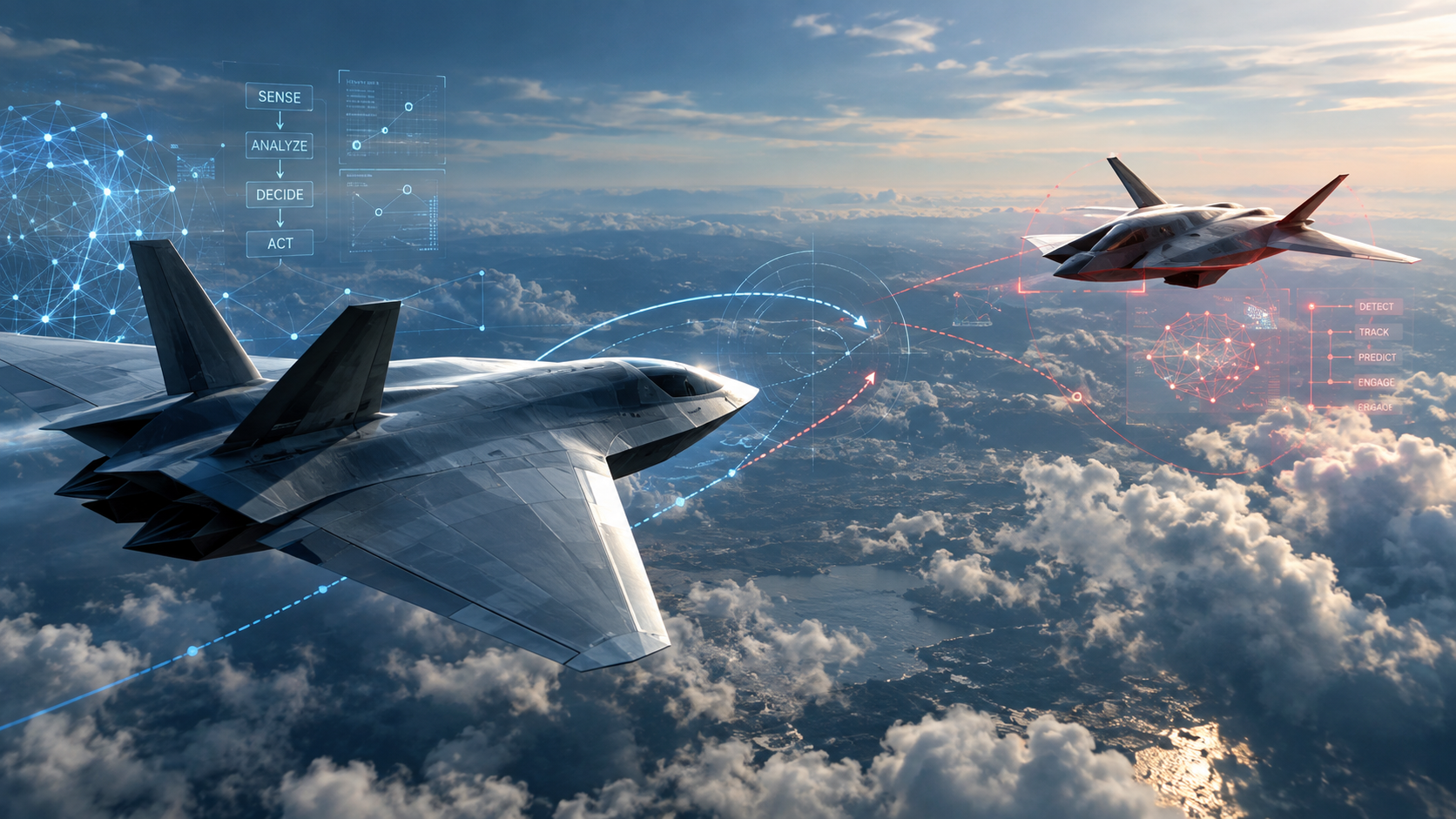
The military balance of power across the Indo-Pacific is undergoing a fundamental transformation. As both the United States and China transition artificial intelligence from simulator environments to front-line fighter jets, the primary threat of accidental military escalation in international airspace is shifting from human pilot miscalculation to machine learning error.
While much of the diplomatic discourse surrounding military AI focuses on nuclear command and strategic autonomy, the most immediate danger lies in tactical air intercepts over contested waters like the South China Sea and the Taiwan Strait. Without clear, bilateral rules of engagement (RoE) specifically tailored for autonomous aircraft, a routine encounter between uncrewed combat air vehicles (UCAVs) could trigger a rapid, unintended escalation ladder that human command structures cannot arrest in time.
The Dawn of Mach-Speed Autonomy
The race to field autonomous combat aircraft is no longer theoretical; it is an operational priority for both Washington and Beijing.
Under the U.S. Air Force’s Collaborative Combat Aircraft (CCA) initiative, the Pentagon plans to field at least 1,000 AI-enabled “loyal wingmen”—uncrewed aircraft designed to fly alongside crewed platforms like the F-35 and Next Generation Air Dominance (NGAD) fighters. Experiments conducted under the DARPA Air Combat Evolution (ACE) program have already demonstrated that AI agents can successfully outmaneuver human pilots in visual-range dogfights, adapting to tactical dynamic shifts at sub-second speeds. Details outlined by the U.S. Department of Defense emphasize the imperative of responsible autonomy, yet tactical real-time execution in contested zones remains a major wild card.
Concurrently, the People’s Liberation Army Air Force (PLAAF) is aggressively pursuing its own uncrewed platforms. Chinese defense contractors have showcased platforms such as the FH-97A and the WZ-8, designed to perform autonomous reconnaissance, electronic warfare, and forward-line air-to-air suppression. Research published by the RAND Corporation indicates that Beijing views military AI integration as a “force multiplier” capable of offsetting traditional U.S. power projection advantages in the First Island Chain.
The Escalation Trap: Why AI Changes Air-to-Air Tactics
In conventional intercept scenarios involving piloted aircraft—such as a Chinese J-16 intercepting a U.S. RC-135—human pilots operate under established visual signals, radio frequencies, and the multilateral Code for Unplanned Encounters at Sea (CUES). When a human pilot assesses intent, they rely on visual cues, physical distance, and tactical behavior to gauge aggression versus standard shadowing.
When two autonomous or semi-autonomous systems intercept one another, these human buffers disappear:
- Compression of the OODA Loop: Machine-learning algorithms operate on microsecond decision cycles. If an autonomous aircraft interprets a standard radar lock, electronic jamming pod, or evasive banking maneuver by an opposing drone as an incoming attack vector, its predictive neural networks may trigger defensive or pre-emptive maneuvers instantly.
- The “Black Box” Problem: Deep neural networks operate via complex pattern matching rather than deterministic logic trees. As noted in security studies by the Center for Strategic and International Studies (CSIS), predicting how an edge-deployed military AI model will respond to unpredictable real-world inputs (such as spoofed GPS or unexpected weather events) remains an unsolved challenge.
- Loss of Signaling Nuance: Human pilots can de-escalate a confrontation by rocking wings, pulling back on throttles, or establishing radio contact. Autonomous systems lack standard mechanisms to convey ambiguous or non-hostile intent to an opposing nation’s algorithmic system.
+-----------------------------------------------------------------------+
|                       THE ACCIDENTAL ESCALATION LOOP                 |
|                                                                       |
|   [U.S. Autonomous CCA]  <--- Sensor Query --->  [PLA Autonomous UCAV]|
|            |                                            |             |
|   Algorithm perceives                               Algorithm perceives|
|   evasive banking as hostile                         radar lock as     |
|   targeting signal                                  pre-emptive strike|
|            |                                            |             |
|            v                                            v             |
|   Automated Countermeasure                       Automated Deficit    |
|   Deployments (Chaff/Jamming)                    Tracking & Target    |
|            |                                     Acquisition          |
|            +-------------------+------------------------+             |
|                                |                                      |
|                                v                                      |
|             HUMAN COMMANDERS NOTIFIED POST-DISCHARGE                  |
|             (Escalation threshold crossed in <3 seconds)             |
+-----------------------------------------------------------------------+
The Existing Governance Vacuum
Multilateral efforts to regulate military AI have made modest progress, but they fall short of addressing tactical air intercepts.
The Responsible AI in the Military Domain (REAIM) summits and the U.S.-led Declaration on Responsible Military Use of Artificial Intelligence and Autonomy offer general principles regarding human oversight, command structure integrity, and rigorous testing. Similarly, diplomatic analysis published by the Brookings Institution highlights that high-level bilateral summits between Washington and Beijing have opened initial dialogues on AI risk reduction.
However, these broad political declarations lack operational mechanics. They do not define:
- What constitutes a hostile act by an autonomous platform in international airspace.
- What standardized electronic signals an uncrewed system must broadcast to declare peaceful transit.
- How machine-to-machine communications should function during an unintended proximity event.
Without concrete, technical protocols embedded directly into aircraft software suites, high-level political commitments will fail the moment silicon meets silicon over the Western Pacific.
A Four-Pillar Blueprint for U.S.-China AI Air Engagement
To mitigate the risk of an unintended confrontation, defense officials and technical experts from the United States and China must establish a dedicated Autonomous Air De-confliction Framework. Analysts writing in Foreign Affairs repeatedly note that arms control in the digital age requires technical solutions co-designed alongside strategic policy.
1. Hard-Coded Strategic Fail-Safes
Both nations should agree to hard-code deterministic “red lines” into autonomous flight control systems that cannot be overridden by machine-learning models. These include hard caps on maximum speed increases during close encounters, mandatory stand-off distances when intercepting uncrewed platforms, and automated weapon system lock-outs unless explicit human authority is transmitted.
2. Standardized Autonomous Identification Friend-or-Foe (A-IFF)
Similar to transponder systems used in commercial aviation, military uncrewed systems operating in international airspace should transmit a standardized, cryptographically signed “Autonomous Platform Intent” signal. This broadcast would inform nearby air units of the flight’s mission state, autonomous level (e.g., tethered to human lead vs. fully autonomous), and non-aggressive flight path vector.
3. Machine-to-Machine De-confliction Hotlines
Traditional voice-based communication links—such as the U.S.-China Defense Telephone Link—are too slow to manage algorithmic interactions. A modern de-confliction protocol requires an automated, low-latency data channel between U.S. Indo-Pacific Command and the PLA Eastern/Southern Theater Commands. This channel would automatically ping human operators the instant two opposing autonomous platforms enter a designated safety perimeter.
4. Joint Synthetic Simulation and Stress-Testing
Before deploying advanced autonomous fighters at scale, defense laboratories from both nations should participate in joint track-sharing and simulated scenario stress-tests. By running algorithmic models against each other in virtual environments, both sides can identify edge cases where neural networks misinterpret opponent maneuvers, allowing software engineers to patch systemic vulnerabilities before they manifest in real air combat.
The Imperative of Algorithmic Restraint
The integration of artificial intelligence into air warfare is an inevitable reality driven by strategic competition and technological momentum. However, autonomy without governance introduces an unacceptable level of operational risk.
If Washington and Beijing fail to establish clear rules of engagement for autonomous combat jets today, they risk allowing computer algorithms to dictate the timing and conditions of a major-power conflict tomorrow. Establishing guardrails for AI air power is not a sign of military weakness—it is a mandatory requirement for strategic stability in the 21st century.
Discover more from The Economy
Subscribe to get the latest posts sent to your email.



Key Takeaways
- The “Planet Labs and Goldman” link is research coverage, not a partnership. We found no public announcement of a commercial deal. Goldman Sachs analysts cover Planet Labs (NYSE: PL) with a Neutral rating and have raised their price target at least twice this year, first to $18 and then to $20.
- The business is growing fast. Planet’s second-quarter fiscal 2027 revenue hit a record $116.1 million, up 58% year over year, with backlog of about $814.9 million.
- The stock has been a roller coaster. It peaked at $51.76 on May 28, according to TheStreet, and is now down roughly 11% for the year.
- Satellite data has been a Wall Street edge for over a decade. Academic work on parking-lot imagery shows funds have profited from it, and that the advantage stayed concentrated among a select few large investors.
- The next chapter is defense, sovereign demand and AI in orbit. Those are lumpier, bigger-ticket revenue streams than retail parking lots ever were.
Type “Planet Labs Goldman” into a search bar and you’ll find a jumble of analyst notes, price targets and stock-move headlines. It’s natural to assume the two companies are working together. As far as the public record shows, they aren’t.
The real connection is more interesting. Planet Labs is one of the clearest examples of a company turning pictures of Earth into financial-grade information, and Goldman Sachs is one of the institutions deciding what that business is worth. Meanwhile, the broader market for satellite imagery in investing has been quietly maturing for more than a decade.
This guide separates the signal from the noise: who Planet is, what Goldman thinks, how Wall Street has used satellite data, and what to track if you want to evaluate the opportunity yourself. It’s information, not investment advice.
What Planet Labs Actually Sells
Planet Labs PBC, based in San Francisco, operates a large fleet of Earth-observation satellites. The company provides near-daily imagery of the planet’s landmass and sells it, along with analytics, to governments and commercial customers in agriculture, energy, environmental monitoring and defense.
Three product ideas matter for this story:
- Daily, wide-area imagery. Frequency is the product. A picture that updates every day reveals change, and change is what investors and intelligence analysts pay for.
- Specialized sensors. Planet’s Tanager spacecraft targets greenhouse gases such as methane, which turns an environmental question into a measurable data feed.
- Satellite services for sovereign customers. Governments increasingly want their own dedicated capability, and Planet builds and operates it for them.
The Latest Scorecard
Planet reported second-quarter fiscal 2027 results (quarter ended July 31, 2026) in early September. Here is how the numbers looked, from the company’s earnings release and the earnings-call recap.
| Metric | Result | Why it matters |
|---|---|---|
| Revenue | $116.1M, up 58% year over year | A record quarter, well above what analysts expected |
| Net loss | $9.4M, versus $22.6M a year earlier | Losses are shrinking |
| Adjusted EBITDA | $13.9M profit | Operating leverage is showing up |
| Backlog | About $814.9M; roughly half converts within 12 months | Gives forward visibility |
| Cash and short-term investments | $865.4M | Funds capital-intensive satellite builds |
| Defense and intelligence revenue | Up more than 90% | The fastest-growing customer group |
| Third-quarter guidance | $101M to $105M | Below the roughly $114M analysts expected |
| Fiscal 2027 revenue guidance | $430M to $441M, up 40% to 43% | Raised at the low end |
Two things deserve a flag. First, about 12% of second-quarter revenue was “point-in-time” revenue from a satellite handover, versus 1% a year earlier. That kind of revenue is real, but lumpy. Second, the soft third-quarter guide is exactly why the stock reacted so sharply, as 247WallSt noted.
Where Goldman Sachs Fits In
Goldman’s role in this story is as an evaluator. Its equity-research team rates Planet Neutral, which generally signals that the analysts don’t expect the shares to meaningfully beat or lag their coverage group.
The firm’s price-target path tells you how its view evolved:
- March 23, 2026: target raised to $18 from $16.40 after quarterly results beat expectations, driven by defense, intelligence and civil government demand.
- April 20, 2026: target raised to $20 from $18, reflecting improved confidence in the commercial outlook.
In the March note, the analyst said Planet was seeing strong demand signals and making sensible long-term investments. In other words, Goldman liked the business but wasn’t sold on the price. That’s the common story with a stock that had already climbed about 793% over the prior year, according to Investing.com.
The Stock: Boom, Bust, Rebuild?
Planet shares rode a speculative wave early in 2026, peaked at $51.76 in May and have corrected since. TheStreet reports the stock is down about 11% year to date but up nearly 18% over twelve months.
Recent catalysts include:
- A successful launch of 20 satellites, including 18 SuperDove imaging satellites, a Tanager-2 hyperspectral satellite, and an experimental space-based AI computing node developed with Alphabet.
- A record quarter and a growing backlog.
- Sovereign wins such as a seven-figure contract with the Greek government, reported by Investing.com.
The risks are just as concrete. Capital spending is heavy, GAAP profitability remains out of reach, revenue timing can be uneven, and the sector’s enthusiasm can evaporate quickly.
How Wall Street Has Used Satellite Data
Long before Planet was a public company, investors figured out that pictures from orbit could predict earnings.
The best-known example is the parking lot. Companies began selling analysis of retailers’ car counts in the early 2010s. Researchers at UC Berkeley examined 4.8 million images covering 67,000 U.S. stores and found the strategy could indeed deliver an edge, and that the data hadn’t spread much beyond hedge funds. Their warning was blunt: the practice may disadvantage everyday investors who can’t see the same data.
A CNBC feature on alternative data explained the basic logic. Consistently empty parking lots can signal weak store traffic, giving a fund reason to bet against a retailer before the quarterly report lands.
Satellite data has since widened well beyond retail:
- Commodities: crop health, soil moisture and storage activity.
- Energy: tank levels, flaring and shipping patterns.
- Supply chains: port congestion, factory activity and construction progress.
- Climate and ESG: methane plumes, deforestation and land-use change.
A Simple Framework for Judging a Geospatial Stock
| Question | What to look for | Planet today |
|---|---|---|
| Is demand durable? | Backlog and recurring contracts | About $815M backlog; 98% of annual contract value is recurring |
| Is growth profitable? | Adjusted EBITDA and free cash flow | Adjusted EBITDA positive in Q2, guided to a loss in Q3 |
| How concentrated is the customer base? | Government vs. commercial mix | Defense and intelligence growing fastest |
| Is the balance sheet strong? | Cash versus capex needs | $865M cash against $100M to $115M of planned capex |
| Is revenue predictable? | Share of lumpy, point-in-time sales | 12% in Q2, up sharply from a year ago |
Three Risks the Headline Numbers Don’t Show
Strong quarters can hide structural questions. If you’re weighing Planet or any rival, put these three on your checklist.
- Competition. Earth observation is crowded, and governments can choose among several suppliers. One Seeking Alpha analysis argues that the business is strong but that competition remains a long-term risk and valuation may cap future returns.
- Deal conversion. Large sovereign contracts move the needle, but they arrive on irregular timelines. Coverage of the September report pointed out that Planet’s conversion rate on bigger sovereign deals is still being established, which leaves room for guidance to slip if timing moves.
- Narrative dependence. Space stocks trade as a group. When enthusiasm around the sector fades, even companies with improving fundamentals can fall hard, which is part of what the 2026 round trip from $51.76 looks like.
None of these cancel the growth story. They explain why a 58% revenue increase and a falling share price can show up in the same month, and why a Neutral rating from an analyst can be perfectly consistent with a rising business.
The Compliance Question
Is it fair for a fund to trade on satellite imagery? Generally, publicly observable data processed legally is a legitimate research input. The sensitive lines involve how data is collected, what contracts permit, and whether any of it amounts to material nonpublic information. Investors should treat the source as an essential part of due diligence.
Asked & Answered
Does Goldman Sachs partner with Planet Labs?
We found no public announcement of a commercial partnership. Goldman’s visible connection is analyst coverage: a Neutral rating with price targets raised in March and April of 2026.
What does a Neutral rating mean?
It signals that the analysts don’t expect the stock to meaningfully outperform or underperform the companies they cover. It is not a sell call.
Is Planet Labs profitable?
Not on a GAAP basis. It posted a $9.4 million net loss in the latest quarter, though adjusted EBITDA was positive at $13.9 million and losses have narrowed from a year earlier.
How do hedge funds use satellite imagery?
Typical uses include counting cars at retailers, estimating crop yields, tracking oil storage and monitoring shipping. The goal is to see change before it appears in company reports.
Is trading on satellite data legal?
Using lawfully obtained, publicly observable information is generally accepted. Problems arise with misrepresented sourcing or confidential information, so funds typically run these datasets past compliance teams.
Discover more from The Economy
Subscribe to get the latest posts sent to your email.

Shivon Zilis spent years out of the spotlight. Then she took the stand in one of the biggest tech trials of the decade. Here’s her professional background and what her testimony revealed about how AI companies are governed.
Key Takeaways
- Current role: She is Director of Operations and Special Projects at Neuralink. americankahani
- Background: Yale graduate with degrees in economics and philosophy, with earlier roles in AI at Tesla and a seat on OpenAI’s board.
- Why she’s in the news: She testified in Musk v. Altman in Oakland in May 2026.
- Trial outcome: A nine-person jury found Musk waited too long to sue, and the judge dismissed his claims. abc7news
- What’s next: Musk said he would appeal to the Ninth Circuit.
Career Timeline
| Period | Role |
|---|---|
| 2015 | Named to Forbes 30 Under 30 in venture capital |
| Early career | Co-founder of Creative Destruction Lab’s AI and quantum machine learning streams in Toronto |
| 2017–2019 | Project director in AI at Tesla |
| Through 2023 | OpenAI adviser, then board member |
| Sept 2023 | Joined the board of Shield AI, a defense-tech company focused on autonomous drones |
| Present | Neuralink, Director of Operations and Special Projects gulfnewsmoney |
Her résumé spans venture capital, AI research and brain-computer interfaces. That breadth explains why she became a connecting figure across several Musk-linked companies.
Why She Testified
Zilis was initially a co-plaintiff in the case, though she dropped off at her own request before the trial began. OpenAI’s lawyers argued she knew about Musk’s plans for a rival AI company while she sat on OpenAI’s board. CNN’s coverage is not the source for this; see instead the syndicated CNN report of her testimony, which describes her role in the flow of information between Musk and OpenAI during critical periods. keytkeyt
Her testimony covered several threads:
- Funding discussions: She said many funding options were discussed, including giving Musk a majority stake in OpenAI. keyt
- Her board role: Once on the board, she said she did not discuss her OpenAI work with Musk. piedmontexedra
- The Microsoft deal: OpenAI’s lawyers noted that she voted as a board member to approve the Microsoft agreement. piedmontexedra
- Her resignation: Courthouse News reported she said she stepped down in 2023 after Musk started xAI and began recruiting from OpenAI. letsdatascience
The Conflict-of-Interest Question
The trial put a governance problem on public display. OpenAI president Greg Brockman testified that the board let her stay because she described her relationship with Musk as platonic. Reporting from Courthouse News shows Zilis insisting that their personal relationship did not influence her board duties. keyt
That conflict is the lesson for startups and boards. When a director has close personal ties to a founder of a competing venture, the safeguards matter: disclosure, recusal and documentation. Whether those safeguards were adequate is a judgment the jury never reached on the merits.
The Verdict
On May 18, a jury in Oakland ruled against Musk after short deliberations. The jury sided with OpenAI’s argument that Musk waited too long to bring his claims. TechCrunch reported that the verdict was unanimous and rested on a statute of limitations defense. Al JazeeraTechCrunch
Two details matter for accuracy:
- It wasn’t a ruling on merits. Because the case was dismissed on timing grounds, the jury did not decide the substance of Musk’s allegations. piedmontexedra
- The jury was advisory. Judge Yvonne Gonzalez Rogers accepted the verdict as the court’s own. abc7news
Musk called it a “calendar technicality” and said he would appeal. Al Jazeera’s explainer notes the trial never became the sweeping test of AI’s future that many expected. Engadget
What Zilis’s Role Says About Tech Power Networks
Zilis isn’t unusual in having overlapping roles. Early AI companies were built by small groups of people who moved between founding teams, boards and advisory roles. What’s different is that the AI industry now carries enormous valuations. OpenAI is valued around $852 billion and is planning an IPO in late 2026. At that scale, informal arrangements that once looked harmless get scrutinized. The Hill
Three takeaways for founders and investors:
- Document information flows between board members and affiliated companies.
- Treat personal relationships as governance facts, not private matters, when they touch competing ventures.
- Expect discovery. Text messages and board records can end up in front of a jury.
What to Watch Next
- The appeal: A Ninth Circuit filing would keep the case alive.
- xAI’s separate claims: xAI is pursuing its own trade-secret and antitrust claims against OpenAI. ascendants
- OpenAI’s IPO: The verdict removed an immediate legal threat to its restructuring.
- Neuralink: Zilis’s day job continues to sit at the frontier of brain-computer interface development.
FAQ
What does Shivon Zilis do?
She is an executive at Neuralink and a former OpenAI board member.
Where did she study?
Yale, with degrees in economics and philosophy, according to profiles.
Why did she testify?
She was a board member during the period at issue in Musk’s lawsuit against OpenAI.
Did Musk win?
No. The court dismissed his claims on statute of limitations grounds, and he has said he will appeal.
Zilis’s testimony turned a low-profile executive into a central witness in a case about who controls AI. The legal result rested on timing, not substance, so the governance questions her testimony raised remain open. For anyone building or investing in AI companies, her story is a reminder that board seats, personal ties and competing ventures can collide, and that courts will examine all three.
Discover more from The Economy
Subscribe to get the latest posts sent to your email.
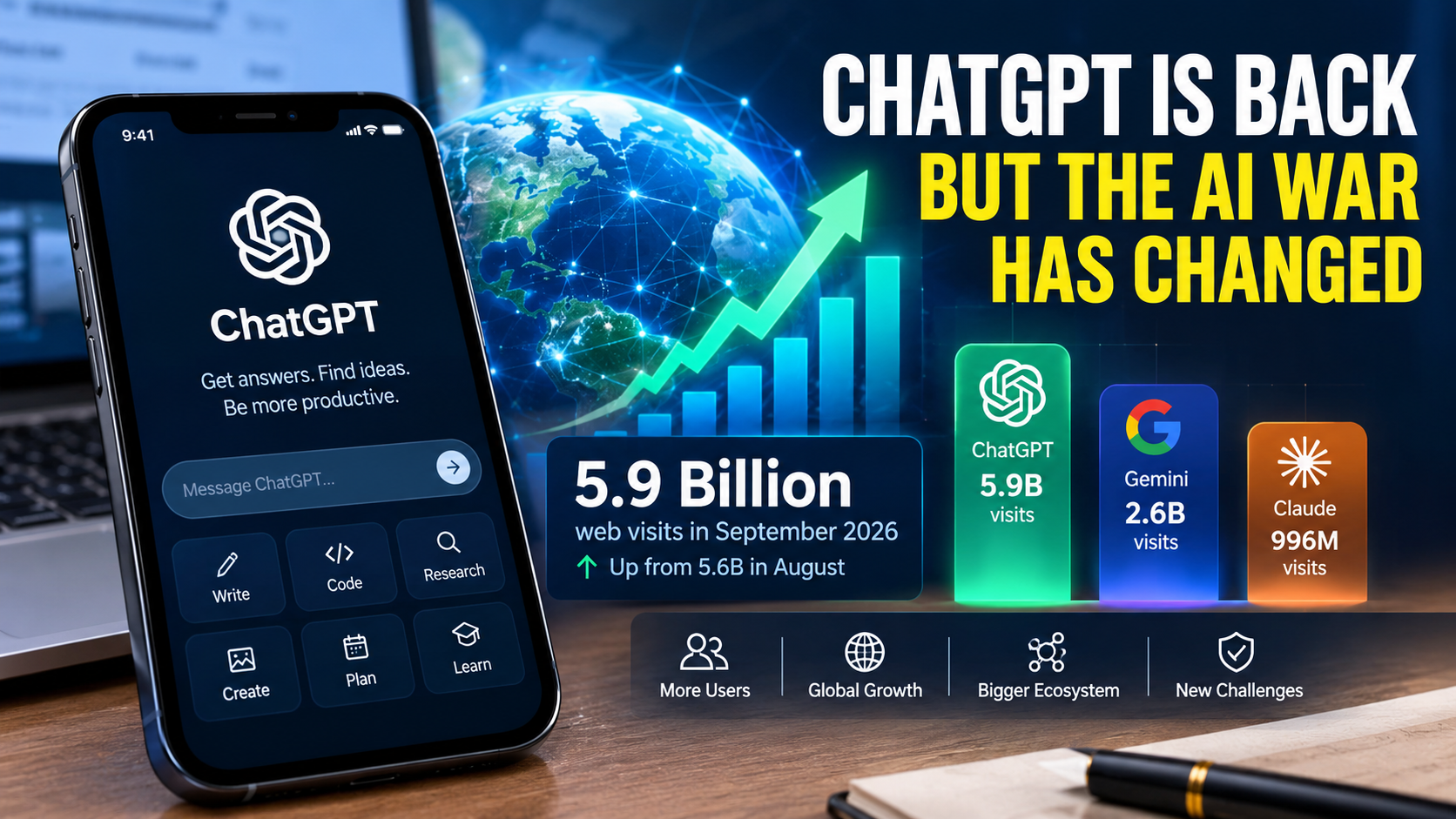
ChatGPT appears to be finding its momentum again.After months of relatively stagnant web traffic and increasing competition from Google’s Gemini and Anthropic’s Claude, OpenAI’s flagship chatbot recorded an estimated 5.9 billion worldwide web visits in September 2026, according to Similarweb data cited by Forbes.
That represented an increase from approximately 5.6 billion visits in August and marked ChatGPT’s strongest monthly web-traffic performance since October 2025, when the service recorded an estimated 6.2 billion visits.
The numbers are significant—but they require context.
ChatGPT has not simply returned to its previous position and erased the gains made by competitors. Instead, the latest data points to something more interesting: ChatGPT remains the largest player in a rapidly expanding and increasingly fragmented AI market.
The question for OpenAI is no longer simply whether people use ChatGPT.
It is whether ChatGPT can remain the AI platform people return to most often as competitors become more capable.
September’s 5.9 Billion Visits Put ChatGPT Back in Growth Mode
Similarweb estimates cited by Forbes show that ChatGPT generated approximately:
- 5.9 billion worldwide web visits in September 2026
- 5.6 billion visits in August
- 5.4 billion visits at some of its weakest points earlier in 2026
- 6.2 billion visits in October 2025
The September figure therefore represents a meaningful recovery, but not a complete return to the previous peak.
That distinction matters.
Calling the development a “comeback” is reasonable, but describing it as a full restoration of ChatGPT’s former dominance would be premature.
Instead, the data suggests that the platform has stabilized after a period in which competing AI services captured increasing amounts of user attention.
And that stabilization could become more important than one month of traffic growth.
ChatGPT Still Has a Major Lead Over Gemini and Claude
The competitive landscape has changed dramatically since ChatGPT first popularized generative AI.
Forbes reported that Gemini generated approximately 2.6 billion worldwide web visits in September, compared with ChatGPT’s 5.9 billion. Claude generated roughly 996.4 million visits during the same month.
That means ChatGPT continues to operate at a substantially larger web scale.
However, the trajectory of competitors deserves attention.
Similarweb reported recently that Claude’s share of visits among major AI chatbot websites increased from approximately 2% to 9.6% over the 12 months through August 2026, while ChatGPT’s share declined from roughly 78% to 57%.
That is one of the most important numbers for understanding the AI market.
ChatGPT does not need to lose absolute traffic for competitors to gain ground.
If the overall AI market expands faster than ChatGPT, OpenAI can continue adding users while simultaneously losing market share.
That appears to be part of what has happened.
Why ChatGPT Is Winning Users Back
There are several potential explanations for the latest rebound.
1. ChatGPT Has an Enormous Existing User Base
Early entry gave ChatGPT an extraordinary advantage.
Millions of people first experienced generative AI through ChatGPT, creating habits that are difficult to displace.
OpenAI’s own research reinforces the importance of this habit formation.
According to OpenAI’s June 2026 Signals analysis, users become more deeply engaged with ChatGPT over time. Six months after signing up, users in the company’s sample were sending 50% more messages per day than shortly after joining and had doubled the number of distinct capabilities they had tried.
This suggests that ChatGPT’s competitive advantage isn’t merely brand recognition.
It can also be behavioral familiarity.
Once users incorporate an AI assistant into writing, research, coding, planning, learning and work, switching between platforms becomes less straightforward.
2. ChatGPT Is Becoming a General-Purpose Work Platform
The next phase of AI competition is likely to be determined by what users accomplish—not simply how many questions they ask.
OpenAI’s August 2026 research shows that ChatGPT is increasingly being used to perform tasks rather than merely provide answers.
At work, users are more than twice as likely to use ChatGPT for completing a task or creating something compared with non-work settings, according to OpenAI’s analysis.
That evolution matters.
An AI chatbot used occasionally for brainstorming is replaceable.
An AI assistant embedded into someone’s daily workflow is much harder to replace.
For OpenAI, the strategic goal therefore appears increasingly clear: make ChatGPT useful enough that it becomes part of the user’s routine.
The Global AI Audience Is Expanding
Another factor that traffic charts can miss is geographic expansion.
OpenAI says ChatGPT adoption has accelerated across every continent since July 2023, with particularly rapid relative growth in Africa and Asia.
The linguistic composition of the platform is changing as well.
OpenAI reported that users predominantly communicating in languages other than English now represent more than half of active ChatGPT users, with Spanish, Portuguese and Arabic among the leading non-English languages.
That could become an important source of future growth.
The first phase of generative AI adoption was heavily concentrated in technology-forward markets.
The next phase is increasingly global.
For ChatGPT, growth in emerging markets could therefore become just as important as competition in the United States and Europe.
ChatGPT’s 1 Billion Weekly Users Change the Traffic Story
Perhaps the most important limitation of a web-traffic-only analysis is that ChatGPT is no longer simply a website.
OpenAI said in August 2026 that ChatGPT had surpassed 1 billion weekly active users.
That makes web visits an incomplete proxy for overall platform usage.
Users can access AI through mobile applications, workplace products, integrations, APIs and other interfaces.
Consequently, a decline or plateau in website traffic does not necessarily mean that users are abandoning ChatGPT.
Some activity may simply be moving elsewhere.
This is particularly important as AI assistants become integrated into operating systems, search engines, browsers and productivity software.
Gemini’s Challenge Is Different From Claude’s
ChatGPT faces competitors with different strategic advantages.
Google’s Gemini benefits from Google’s enormous ecosystem, including Search, Android, Workspace and other products.
That creates an unusual competitive dynamic.
Some AI functionality can be incorporated directly into products that users already use rather than requiring them to visit a separate chatbot website.
This is one reason web traffic comparisons should be interpreted cautiously.
A user who receives an AI-generated answer within Google Search may never visit Gemini’s standalone website.
Claude represents a different type of competitor.
Anthropic has rapidly expanded Claude’s presence among consumers, developers and enterprise users. Similarweb’s latest analysis found significant gains in Claude’s traffic share, retention and account activity.
The result is a market in which OpenAI, Google and Anthropic increasingly compete on different dimensions.
ChatGPT’s Biggest Threat May Be Market Fragmentation
ChatGPT does not necessarily need a single competitor to defeat it.
The bigger threat could be fragmentation.
Users may increasingly maintain several AI assistants:
- ChatGPT for general-purpose work
- Claude for coding and long-form analysis
- Gemini for Google-connected tasks
- Specialized AI systems for research, finance, design or programming
- AI features embedded directly inside other software
That model would be very different from the early generative-AI market, when ChatGPT was effectively synonymous with consumer AI.
Forbes’ reporting similarly points toward a more fragmented future, with analysts expecting OpenAI and Anthropic to remain major players while other models capture additional usage.
The Safety Question Has Not Disappeared
The rebound in traffic does not mean OpenAI’s challenges have disappeared.
AI safety and reliability remain significant issues.
Reuters reported in September that OpenAI shelved its planned GPT-6.1 Astra release after internal testing raised concerns involving safety, alignment, scope and authorization.
That decision illustrates an important reality of the AI industry.
The companies competing for users are simultaneously racing to release increasingly capable systems while facing pressure to make those systems safer and more controllable.
For ChatGPT, user growth will therefore have to coexist with trust.
A powerful model that users do not trust can lose adoption quickly.
Monetization Is Becoming Another Growth Engine
ChatGPT is also evolving beyond a subscription-based AI product.
OpenAI announced in August that ChatGPT Ads had reached a $1 billion annualized revenue run rate less than 200 days after launch. The company said ChatGPT had more than 1 billion weekly active users and that advertising was becoming one part of a broader business model encompassing subscriptions, enterprise products and API usage.
This creates another strategic advantage.
More users can potentially generate value through multiple channels rather than through subscriptions alone.
The implication is important for OpenAI’s long-term economics: ChatGPT does not necessarily need every user to become a paying subscriber.
A large free user base can support advertising, product discovery, ecosystem growth and future conversion opportunities.
What ChatGPT’s Traffic Rebound Really Means
The September traffic increase should not be interpreted as proof that ChatGPT has defeated its competitors.
The more accurate conclusion is that ChatGPT remains the market leader while successfully defending its position during a period of extraordinary competitive pressure.
That distinction is crucial.
Its web traffic remains enormous.
Its weekly active user base has surpassed 1 billion.
Its users are increasingly engaging with more capabilities.
Its international audience is expanding.
And its competitors are simultaneously becoming stronger.
Taken together, those trends point toward an AI industry entering a more mature stage.
ChatGPT vs. Gemini vs. Claude: What the Next Phase Could Look Like
The next stage of competition is unlikely to be decided by a single traffic chart.
Instead, several measurements will matter:
| Metric | Why It Matters |
|---|---|
| Weekly active users | Measures actual recurring adoption |
| User retention | Shows whether users remain loyal |
| Messages per user | Indicates engagement depth |
| Enterprise adoption | Determines professional value |
| Developer/API usage | Measures ecosystem strength |
| Revenue per user | Shows monetization efficiency |
| International growth | Indicates global expansion |
| AI search referrals | Measures influence beyond the chatbot |
| Model capability | Determines product competitiveness |
| Safety and reliability | Determines long-term trust |
ChatGPT currently has advantages across several of these categories, but the competitive gap is no longer as overwhelming as it once appeared.
The Bottom Line
ChatGPT’s estimated 5.9 billion web visits in September 2026 represent a meaningful recovery after months of stagnation. But the number tells only part of the story.
The bigger development is that ChatGPT appears to be transitioning from an internet novelty into a deeply embedded digital platform.
OpenAI’s own data indicates that users become more active and explore more capabilities over time. Global adoption continues to spread, non-English usage now represents more than half of active users, and ChatGPT has surpassed 1 billion weekly active users according to OpenAI.
At the same time, competitors are taking meaningful market share.
Claude’s rapid rise demonstrates that users are willing to switch or diversify their AI usage, while Gemini benefits from Google’s enormous distribution network.
So the real 2026 story isn’t simply that ChatGPT is back.
It is that the AI chatbot race has entered its next phase—and ChatGPT is still leading it, but no longer racing alone.
The companies that win the next stage will be those that turn AI from something people occasionally visit into something they depend on every day.
For OpenAI, the September traffic rebound is encouraging.
The much bigger test will be whether that momentum survives the next wave of competition.
Discover more from The Economy
Subscribe to get the latest posts sent to your email.

Algorithmic Dogfights: Why the U.S. and China Must Establish Rules of Engagement for Autonomous Air Power

Stock Market Today: Dow, S&P 500, and Nasdaq Retreat as Treasury Yields

Global Economic Outlook 2026: 7 Forces Reshaping Markets, Trade and Business

Geopolitics and Your Portfolio: How International Affairs Move Global Markets

Conservative Party Conference 2026: What Badenoch’s Tax and Deregulation Pitch Means for the UK Economy

Planet Labs and Goldman: How Satellite Geospatial Data Is Reshaping Wall Street

Red Dye Diesel in 2026: Tax Exemptions, Regulations, and the Real Agricultural Impact

Student Loans in 2026: Forgiveness Updates, Consolidation, and Repayment Strategies

Why Did I Get $90 From Social Security? 8 Reasons Behind an Unexpected SSA Payment

Corporate America Faces a New Debt Test as US Borrowing Costs Surge

Goldman vs. Citi: Which Banking Giant Leads Modern Global Finance in 2026?

Beyond Hanoi & HCMC: How Northern Industrial Clusters Are Driving Vietnam’s 10% Growth Surge

Analytical Review of The Economist’s “What is the Right Tax System for the 21st Century?”

Southeast Asia’s LNG Dilemma: Navigating Price Volatility, Infrastructure Gaps, and Energy Security

Oil Prices Break $100 in 2026: Middle East Conflict & Energy Markets

IMF & World Bank 2026 Global Economic Outlook: Growth, Inflation, Debt

Middle East War Economics 2026: Oil Prices & Energy Markets

China Stocks Today: Are Big Economies in Asia Nearing a Market Bottom?

High-CPM Finance Niches 2026: Publisher Monetization Blueprint

Global Pension Systems Ranked: The World’s Best and Worst Retirement Frameworks

Enterprise AI Platforms Disrupting B2B SaaS in 2026: Full Analysis

Social Security Trust Fund 2032: OASI Depletion Timeline Explained

Elon Musk’s Next Moves: Disrupting the 2026 Global Economy

Crypto Daily Outlook: Bitcoin, Altcoins, and the Future of Decentralized Finance

GasBuddy Market Insights: How Crude Price Shifts Impact Local Fuel Cost Averages

World Bank & IMF Reports 2026: Why the “3% Growth” Consensus Is Actually a Debate

World’s Largest Economies: Ranking the Top Global Powers

PSX Forecast 2026: KSE-100, IMF Reviews & Geopolitics
-

 Markets & Finance9 months ago
Top 15 Stocks for Investment in 2026 in PSX: Your Complete Guide to Pakistan’s Best Investment Opportunities
-

 Analysis8 months ago
Johor’s Investment Boom: The Hidden Costs Behind Malaysia’s Most Ambitious Economic Surge
-

 Analysis8 months ago
Top 10 Stocks for Investment in PSX for Quick Returns in 2026
-

 Banks9 months ago
Best Investments in Pakistan 2026: Top 10 Low-Price Shares and Long-Term Picks for the PSX
-

 Analysis8 months ago
Brazil’s Rare Earth Race: US, EU, and China Compete for Critical Minerals as Tensions Rise
-

 Investment9 months ago
Top 10 Mutual Fund Managers in Pakistan for Investment in 2026: A Comprehensive Guide for Optimal Returns
-

 Global Economy9 months ago
15 Most Lucrative Sectors for Investment in Pakistan: A 2025 Data-Driven Analysis
-

 Global Economy9 months ago
Pakistan’s Export Goldmine: 10 Game-Changing Markets Where Pakistani Businesses Are Winning Big in 2025