
Industory
Beyond Hanoi & HCMC: How Northern Industrial Clusters Are Driving Vietnam’s 10% Growth Surge

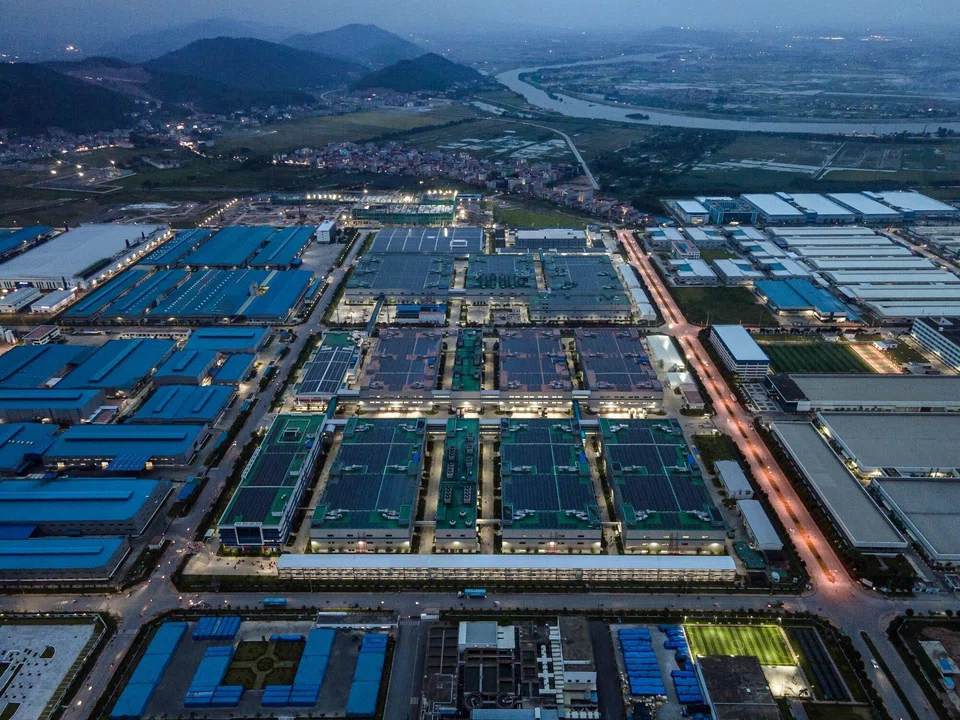
Vietnam’s economy is undergoing a structural transformation. While Tier-1 metropolitan hubs like Hanoi and Ho Chi Minh City maintain steady growth, a cluster of high-tech northern industrial provinces is driving the national economy toward a 10% annual GDP target.
According to official economic data tracked by the General Statistics Office of Vietnam, national real GDP expanded by 9.95% YoY in Q3, pushing cumulative nine-month growth to 9.01%. This momentum is fueled by a global electronics capital expenditure cycle, rising tech trade surpluses, and record-setting foreign direct investment (FDI).
1. The Northern Growth Phenomenon: Regional Divergence
Out of Vietnam’s 34 provinces and municipality-level cities, 12 recorded double-digit Gross Regional Domestic Product (GRDP) growth over the first nine months of the year—seven of which are located in Northern Vietnam.
While Hanoi (+8.85% GRDP) and Ho Chi Minh City (+9.06% GRDP) were weighed down by service-heavy transitions and real estate recalibrations, northern manufacturing hubs surged ahead:
- Quảng Ninh: 12.88% GRDP growth, driven by renewable energy manufacturing, industrial park expansion, and deep-water port logistics.
- Hải Phòng: >12.00% GRDP growth, supported by $3.1 billion in incoming FDI and industrial output expansion of 15.5% YoY.
- Bắc Ninh & Thái Nguyên: Benefited from high-capacity consumer electronics, semiconductor packaging, and mobile device manufacturing cycles.
Data compiled by the World Bank and the Asian Development Bank underscores that northern provinces are benefiting from their structural alignment with global technology capex.
| Region / Economic Hub | Q1–Q3 GRDP Growth Rate | Primary Industrial Drivers | Major Global Investors |
| Quảng Ninh | 12.88% | Port Logistics, High-Tech Manufacturing, Green Energy | Jinko Solar, Foxconn |
| Hải Phòng | >12.00% | Automotive, Electronics, Seaport & Logistics | LG Group, VinFast, Pegatron |
| Bắc Ninh | >11.50% | Consumer Electronics, Semiconductor Assembly | Samsung Electronics, Amkor Technology |
| Thái Nguyên | >10.80% | Mobile Hardware & Electronic Components | Samsung, Hansol Electronics |
| Hanoi (Tier-1 City) | 8.85% | Finance, Services, Software, Retail | Canon, Honda, Domestic Services |
| Ho Chi Minh City (Tier-1) | 9.06% | Financial Services, Commerce, Light Industry | Intel, Nidec, Logistics |
2. Structural Catalysts: Why Northern Vietnam Leads Tech Manufacturing
A. Seamless Cross-Border Logistics with Southern China
Northern industrial corridors (Hanoi–Hải Phòng–Quảng Ninh) share direct highway links to the border gates of Lạng Sơn and Móng Cái. This direct connection to China’s industrial powerhouse in Shenzhen and the Pearl River Delta enables same-day transport of critical raw components, silicon wafers, and sub-assemblies, a logistical advantage that southern or central provinces cannot replicate.
B. Multi-Modal Transport & Free Trade Zones
Hải Phòng stands out as the only northern locality offering direct access across all five primary transport modes: sea, road, rail, inland waterways, and air. The development of the Hải Phòng Free Trade Zone and the expansion of the Lạch Huyện Deep-Water Seaport allow mother vessels to bypass feeder ports and sail directly to North American and European markets, drastically lowering freight costs and transit times.
C. The Tech FDI Wave: Electronics & Semiconductors
According to global FDI metrics published by Investment Monitor, approved foreign direct investment into Vietnam surged 76.4% YoY to surpass $50.3 billion, with disbursed FDI reaching $21 billion.
The surge in trade performance is highlighted by specific high-tech export categories:
- Computers, Electronics & Components: Surged 59.6% YoY to $123.7 billion.
- Phones, Smart Devices & Components: Rose 18.8% YoY to $51.8 billion.
Together, these two categories generated approximately 40% of total national exports and nearly two-thirds of the total year-on-year increase in merchandise trade.
3. Key Operational Challenges & Strategic Outlook
Despite high growth rates, northern industrial hubs face structural bottlenecks that require ongoing management:
- Power Grid Resilience & Clean Energy Transitions: High-density semiconductor packaging and electronics assembly require uninterrupted, clean power. Ongoing investments in high-voltage transmission lines connecting central energy projects to northern industrial parks are critical to prevent seasonal grid strain.
- Skilled Engineering Talent Shortages: The rapid shift from manual assembly to advanced testing, packaging, and high-precision component production requires rapid upskilling of local engineers and technicians.
- Supply Chain Deepening: To maximize local value addition, Vietnam’s industrial policy focuses on nurturing local Tier-2 and Tier-3 suppliers to integrate into global supply chains dominated by foreign OEMs.
Market consensus data aggregated by Trading Economics and institutional research confirms that as global technology manufacturers continue diversifying under China+1 strategies, Northern Vietnam’s industrial cluster remains a primary beneficiary of foreign direct investment in Southeast Asia.
Discover more from The Economy
Subscribe to get the latest posts sent to your email.



Nvidia’s stock has fallen sharply in November 2026, driven by governance reports involving CEO Jensen Huang, concern about slower U.S. data center construction, and doubts about whether hyperscaler AI spending can keep rising. The company reports fiscal third-quarter results on November 17, and options markets were pricing an unusually large move of about 10.6% in either direction. Investors now need to separate the business, which remains strong on reported guidance, from the sentiment and governance risks that drove the selloff.
Key Takeaways
- Nvidia shares fell about 9.3% on November 5, 2026, their largest one-day drop in a year, according to Trefis.
- On November 9, shares fell 4.3%, wiping out roughly $190 billion in market value, after reports of an investigation into whether an alleged Chinese intelligence operation targeted Huang, per MarketPulse.
- Nvidia’s board announced an independent investigation on November 8 while expressing confidence in Huang, according to InvestingLive.
- Nvidia’s revenue guidance for the quarter was about $108 billion, plus or minus 2%.
- Options markets priced a move of about ±10.6% around earnings, above the stock’s 10-year average earnings-day move of ±7.8%.
What Happened in November
The selloff came in stages. Nvidia fell 4.22% on October 30, then about 7% over the five sessions ending November 4, according to Crypto Briefing. The 9.3% drop on November 5 was the largest in a year.
Three drivers overlapped:
- AI spending doubts. Investors questioned whether hyperscaler capex, which has been Nvidia’s main demand driver, can keep growing as cash flow tightens. (See our article on AI infrastructure sustainability for detail.)
- Data center constraints. Local moratoriums and ballot measures against data centers threaten to slow construction, and construction timing drives chip orders. (See our article on data center backlash.)
- Governance headlines. Reports about the investigation and about the board’s deliberations over Huang’s leadership added a company-specific risk premium.
Reports have said that Nvidia’s board was preparing to consider changes in leadership, according to a Wall Street Journal report summarized by InvestingLive. That report is unconfirmed by the company as of this writing, and editors should verify the latest board statements before publication.
The Business Picture Has Not Broken
Nvidia’s operating results remain strong by most measures. Analysts expect revenue and earnings per share to rise roughly 90% year over year for the quarter, and guidance points to continued growth. The stock’s forward price-to-earnings ratio has also been described as near a five-year low, which some investors see as a sign that expectations have reset.
Still, guidance quality matters more than the headline. Investors will focus on three items.
Data center revenue and hyperscaler orders. Growth in sales to large cloud customers is the clearest signal of whether AI infrastructure spending is sustaining.
Gross margin. Analysts have flagged rising memory prices as a pressure on gross margin, which some estimates place in the 71% to 72% range. A margin decline would matter as much as a revenue miss.
China exposure. Nvidia’s guidance has excluded most China data center sales, according to coverage from TIKR. Any update on export restrictions or China demand could move the stock.
What to Watch on November 17
Earnings are scheduled for about 4:20 p.m. Eastern Time, with a conference call at 5 p.m. Eastern. Focus on the following:
- Actual revenue versus the roughly $108 billion guide, and the size of the next-quarter guide
- Commentary on customer demand, particularly from hyperscalers and enterprises
- Data center timing and power constraints, which determine when orders convert to revenue
- Any update on the governance investigation, including statements about leadership
- Capital allocation, including buybacks and any change in investment plans
Expect volatility. The options-implied move of about 10.6% means a double-digit change is plausible in either direction.
Valuation: Why Some Analysts See Value
Valuation is the main debate. Bulls argue that the stock trades near its cheapest forward earnings multiple in five years while earnings have roughly doubled. Bears argue that the multiple is cheap only if earnings keep growing, which depends on AI spending that is now under scrutiny.
Two points keep this debate balanced. First, a lower multiple can reflect legitimate concerns rather than a bargain. Second, a strong quarterly report does not resolve longer-term questions about demand durability and competition. Nvidia has faced competitors such as AMD and Broadcom, and some investors rotated toward those names during the selloff.
Risks to Keep in View
- Concentration. Nvidia is one of the largest companies in the market, so its moves affect index funds and retirement accounts.
- Governance uncertainty. An unresolved investigation or leadership change could cause further volatility regardless of operating results.
- Customer concentration. A large share of revenue comes from a small number of hyperscalers, whose spending plans can shift.
- Policy risk. Export controls, data center moratoriums, and AI regulation could slow demand.
Frequently Asked Questions
Why did Nvidia stock fall in November 2026? Several factors combined: a sharp drop on November 5 tied to AI spending doubts, reports about an investigation involving CEO Jensen Huang, and concern that data center construction could slow due to local opposition.
When does Nvidia report earnings? Nvidia is scheduled to release fiscal third-quarter 2027 results on November 17, 2026, at about 4:20 p.m. Eastern Time, with a call at 5 p.m. Eastern.
What is Nvidia’s revenue guidance? Coverage cites guidance of about $108 billion, plus or minus 2%, for the quarter. Check the company’s official release for the exact figure.
Is Jensen Huang leaving Nvidia? Nvidia’s board announced an independent investigation and expressed confidence in Huang on November 8. A Wall Street Journal report said the board was preparing to consider leadership changes. No change had been confirmed by the company as of this writing.
Is Nvidia stock cheap now? Analysts disagree. Some point to a forward multiple near a five-year low. Others argue the multiple reflects risks to growth. This article does not offer investment advice.
What should I watch besides the headline earnings number? Gross margin, data center revenue, guidance for the next quarter, and any update on the governance investigation.
Conclusion: The Report Will Not End the Debate
Nvidia’s November 17 report is important, but no single quarter will settle whether the AI investment cycle is durable. Investors should look for evidence of continued demand, margin stability, and clarity on governance. Expect volatility around the report, and avoid making large decisions based on a single day’s price action.
Discover more from The Economy
Subscribe to get the latest posts sent to your email.
AMD Chief Executive Officer Lisa Su has explicitly repositioned the company as a “data center first” enterprise after the data-center segment nearly doubled year-over-year and reached approximately two-thirds of total revenue. Speaking after the third-quarter 2026 results, she stated that server revenue is expected to double in 2027 and that data-center AI revenue will grow even faster than the already-elevated expectations set only 90 days earlier. Yahoo Finance
Third-quarter revenue reached $13.4 billion, up 45 percent year-over-year, with data-center sales of roughly $8.5 billion. Gaming revenue fell about 40 percent, underscoring the internal shift in priorities. Large multi-year GPU agreements, some accompanied by warrants that give major customers potential equity upside, further illustrate the strategic bet on AI infrastructure. Observer
Table of Contents
- What Did Lisa Su Mean by “Data Center First”?
- How Strong Has Recent Data-Center Performance Been?
- What Is the Detailed 2027 Financial and Product Outlook?
- How Do the Customer Warrants and Multi-Year Deals Work?
- What Supply, Cost and Capacity Constraints Remain?
- How Does AMD’s Position Compare with Nvidia’s?
- What Are the Principal Risks to the 2027 Targets?
- What Does the Shift Mean for Consumer GPUs and Other Segments?
- Key Takeaways
- Frequently Asked Questions
What Did Lisa Su Mean by “Data Center First”?
In a Yahoo Finance interview days after the earnings release, Su stated: “We are a data center first company; that is our profile.” She added that customers need substantially more computing power to run AI applications and that AMD’s ambition is to be the best partner to the largest users of compute in the world. The remark reflects both the current revenue mix and the allocation of engineering, supply-chain and capital resources going forward. PCMag
How Strong Has Recent Data-Center Performance Been?
Data-center revenue rose nearly 100 percent year-over-year in the third quarter and accounted for approximately 64 percent of AMD’s total sales. Management guided for a further sequential increase of roughly 50 percent in the fourth quarter. Growth is being driven by Instinct GPU accelerators and EPYC server CPUs. The sharp decline in gaming revenue highlights the deliberate reallocation of priorities and wafer capacity. VideoCardz summary of Yahoo Finance interview
What Is the Detailed 2027 Financial and Product Outlook?
Su told investors that overall server revenue is expected to double year-over-year in 2027. Data-center AI revenue is projected to grow faster than the forecast given one quarter earlier. By 2027 the data-center business is expected to represent more than 80 percent of company-wide revenue. The company is already seeing demand run ahead of available supply for its latest accelerators and rack-scale systems. Yahoo Finance
How Do the Customer Warrants and Multi-Year Deals Work?
AMD has signed multi-year supply agreements that include warrants allowing certain customers to purchase AMD shares if volume and stock-price conditions are met. The arrangement with Meta, for example, covers up to six gigawatts of GPUs and includes warrants for up to 160 million shares. Similar structures have been discussed with other large buyers. The warrants give hyperscalers a direct economic interest in AMD’s success as their deployments scale, aligning incentives beyond a pure supplier-customer relationship. Observer
What Supply, Cost and Capacity Constraints Remain?
Advanced packaging, high-bandwidth memory, substrates and overall wafer capacity remain tight. Su has acknowledged that customer demand currently exceeds AMD’s ability to supply and that the company is working aggressively to expand output through 2027. These constraints, rather than lack of design wins, are the principal limit on near-term revenue growth.
How Does AMD’s Position Compare with Nvidia’s?
Nvidia continues to hold the majority of spending on the highest-end AI training GPUs and benefits from a mature software ecosystem. AMD is growing faster off a smaller base, gaining credible design wins in both training and inference, and using commercial structures such as warrants to deepen customer relationships. The “data center first” framing signals an intent to compete more directly for large-scale deployments rather than remain a secondary supplier.
What Are the Principal Risks to the 2027 Targets?
- Inability to expand supply (packaging, memory, wafers) quickly enough
- A slowdown or deferral in hyperscaler and sovereign AI capital expenditure
- Intensifying competition or pricing pressure from Nvidia
- Execution risk on new rack-scale systems and software improvements
- Export-control or geopolitical restrictions that affect certain customers
What Does the Shift Mean for Consumer GPUs and Other Segments?
With data-center products receiving priority for advanced process nodes, packaging and memory, availability and pricing of consumer graphics cards are likely to remain constrained. Gaming and client revenues are not being abandoned, but they are no longer the primary drivers of investment or growth targets.
Revenue Mix and Outlook Snapshot
| Segment | Q3 2026 Approximate Share | 2027 Direction | Primary Driver |
|---|---|---|---|
| Data Center | ~64 % | >80 % of total revenue | AI GPUs + EPYC CPUs |
| Client | Modest | Stable to moderate | Ryzen processors |
| Gaming | Declining | Secondary priority | Consoles & discrete GPUs |
Key Takeaways
- Lisa Su has explicitly labeled AMD a “data center first” company.
- Data-center revenue nearly doubled year-over-year and already represents roughly two-thirds of sales.
- 2027 guidance calls for server revenue to double and AI revenue to grow even faster than previously expected.
- Data center is projected to exceed 80 percent of total company revenue in 2027.
- Multi-year deals with customer warrants align hyperscaler incentives with AMD’s growth.
- Supply constraints remain the main near-term bottleneck.
- Consumer GPU availability is likely to stay tight as data-center priority rises.
Frequently Asked Questions
Is AMD exiting the gaming or client PC markets?
No. Those businesses continue, but data center is now the clear strategic, financial and resource-allocation priority.
How fast is the AI-specific portion of data-center revenue growing?
Faster than management projected 90 days earlier; Su highlighted clear acceleration.
Will the customer warrants dilute existing shareholders?
Dilution occurs only if the large purchase-volume and stock-price conditions are met—i.e., only if substantial growth materializes.
What is the single biggest risk to the 2027 outlook?
The ability to expand supply of advanced packaging, high-bandwidth memory and wafers quickly enough to meet demand.
How does AMD’s 2027 guidance compare with Nvidia’s trajectory?
Both companies are capacity-constrained. AMD is growing from a smaller base and is explicitly targeting share gains in large-scale AI deployments.
Does “data center first” mean consumer graphics cards will become more expensive or scarce?
Prioritization of data-center products for leading-edge capacity makes continued tightness in consumer GPU supply a reasonable expectation.
When did Su make the “data center first” statement?
In a Yahoo Finance interview in early November 2026, immediately after the Q3 earnings release.
Conclusion
Lisa Su’s declaration that AMD is now a “data center first” company crystallizes a transformation already visible in the financial results. For technology investors and industry observers the quantitative 2027 targets—server revenue doubling and data center exceeding 80 percent of sales—together with the innovative customer-warrant structures, provide clear milestones against which progress can be measured. Supply expansion remains the critical execution variable. If AMD can convert its current design wins and capacity additions into sustained shipments through 2027, the strategic pivot will have succeeded in establishing the company as a credible large-scale competitor in AI infrastructure. The next several quarters of delivery against both customer commitments and internal supply plans will be decisive.
Discover more from The Economy
Subscribe to get the latest posts sent to your email.

SoftBank Group recorded an approximately $3.7 billion loss from advance payments and contract adjustments for power-generation equipment intended for artificial-intelligence data-centre projects in the United States. The charge was a principal contributor to a fiscal second-quarter net loss of roughly $7 billion—the company’s first quarterly loss in nearly two years. Reuters
Through a related entity, SoftBank had reserved substantial gas-turbine manufacturing capacity at a time of acute scarcity. Reports indicated reservations exceeding 13 gigawatts—more than the output of six Hoover Dams. When project specifications later changed, SoftBank wrote down large non-refundable advances and associated modification costs. Days earlier Elon Musk had publicly claimed SoftBank was defaulting on turbine orders; SoftBank’s chief financial officer categorically rejected the assertion. Wall Street Journal
The episode supplies one of the clearest financial illustrations to date of both the scarcity value of power equipment in the AI build-out and the execution risk of over-committing capital before designs are finalised.
Table of Contents
- How Did the $3.7 Billion Loss Arise?
- What Volume of Turbines and Capacity Had SoftBank Reserved?
- Which Entity and Projects Were Involved?
- How Does This Relate to AI Data-Center Power Demand?
- What Did Management Say About the “Default” Allegations?
- Are There Any Offsetting Recoveries or Future Rebates?
- What Does the Loss Signal for the Broader AI Infrastructure Build-Out?
- How Have Markets and Analysts Reacted?
- Key Takeaways
- Frequently Asked Questions
How Did the $3.7 Billion Loss Arise?
A SoftBank-affiliated vehicle made cumulative advance payments of approximately $9.5 billion for US power-generation equipment by 30 September 2026. When technical requirements and project timelines evolved, a substantial portion of those advances could not be refunded. The recognised loss comprised roughly $2.85 billion of non-refundable advances plus approximately $0.88 billion of contract-modification and settlement costs, totalling near $3.7 billion. Reuters
The charge was recorded in the fiscal second quarter and formed part of the wider ¥1.12 trillion ($7.1 billion) net loss. Bloomberg
What Volume of Turbines and Capacity Had SoftBank Reserved?
Contemporary reporting, led by The Wall Street Journal, indicated that SoftBank had reserved more than 13 gigawatts of gas-turbine capacity between late 2025 and early 2026. That volume equates to the output of more than six Hoover Dams and exceeded the immediate needs of projects then under firm development. The majority of the reservations were placed with GE Vernova. Wall Street Journal
Which Entity and Projects Were Involved?
The procurement vehicle has been identified in reporting as Silver Bands 7 LLC (or a similarly named SoftBank- and Vision Fund II-backed entity). The equipment was destined for multiple US AI data-center developments, including a large-scale project in Ohio linked to broader Japan–US energy and technology arrangements. SoftBank later clarified that the specific $3.7 billion charge was not solely attributable to any single named project. Reuters
How Does This Relate to AI Data-Center Power Demand?
Training and inference clusters for frontier AI models consume extraordinary amounts of electricity. Developers have competed aggressively to secure both grid connections and on-site generation equipment. SoftBank’s large early reservations were an attempt to guarantee supply in a market where turbine lead times had lengthened dramatically and reservation fees had risen. The subsequent write-down demonstrates that final engineering specifications and construction timelines can diverge materially from the assumptions used when capacity was first locked in. Underlying demand for power has not disappeared; the loss reflects a mismatch of scale and timing. Bloomberg
What Did Management Say About the “Default” Allegations?
On 6 November 2026 Elon Musk posted that SoftBank was “defaulting on their turbine orders.” During the subsequent earnings briefing, Chief Financial Officer Yoshimitsu Goto stated that the claim was “simply not correct at all” and that no default had occurred. Management characterised the actions as a deliberate review and resizing of procurement commitments as project requirements evolved, not a failure to honour contractual obligations. Reuters
Are There Any Offsetting Recoveries or Future Rebates?
SoftBank retains contractual rights to conditional rebates of up to $2.1 billion on future equipment purchases over ten years. These potential rebates have not been recognised as assets in the current financial statements because their realisation depends on subsequent order volumes and the satisfaction of specified conditions. Any future recovery would therefore appear in later periods. Reuters
What Does the Loss Signal for the Broader AI Infrastructure Build-Out?
The charge is a concrete data point on execution risk inside the AI power supply chain. Turbine manufacturers have enjoyed strong pricing power; customers that place oversized, non-refundable reservations can face stranded costs when plans change. Other hyperscalers, data-center developers and infrastructure investors are likely to re-examine the cancellation terms, phasing and sizing of their own advance commitments. At the same time, the episode does not imply that the fundamental shortage of power for AI workloads has eased.
How Have Markets and Analysts Reacted?
The earnings miss and the turbine-related charge added to existing investor caution about the pace, cost and return profile of AI infrastructure spending. SoftBank’s shares and those of related AI-exposed names experienced volatility around the release. Analysts have focused on whether the remaining reservations and any future rebates can improve the economics of the US projects, and on the wider implications for power-equipment pricing and availability.
Approximate Composition of the $3.7 Billion Charge
| Component | Approximate Amount | Accounting Treatment |
|---|---|---|
| Non-refundable advance payments | $2.85 billion | Written down |
| Contract modifications and settlements | $0.88 billion | Expensed |
| Total recognised loss | ~$3.7 billion | Included in Q2 results |
| Potential future rebates | Up to $2.1 billion | Contingent, not recognised |
Key Takeaways
- SoftBank recorded a roughly $3.7 billion loss on scaled-back reservations of power-generation equipment for US AI data centers.
- The charge helped drive a quarterly net loss of about $7 billion.
- Reservations reportedly exceeded 13 GW—well above the needs of then-finalised projects.
- Management explicitly denied any default on turbine orders.
- Conditional rebates of up to $2.1 billion on future purchases exist but remain unbooked.
- The episode highlights both the scarcity of gas turbines and the financial risk of over-ordering before specifications are locked.
- Underlying AI-related electricity demand remains robust; the loss is one of timing and scale.
Frequently Asked Questions
Did SoftBank default on its gas-turbine orders?
No. Chief Financial Officer Yoshimitsu Goto stated clearly that no default occurred and that the claim was incorrect.
How much of the advance payments can still be recovered?
SoftBank holds rights to conditional rebates of up to $2.1 billion over ten years; realisation is uncertain and has not been recognised.
Which US projects were linked to the equipment?
Multiple AI data-center developments, including frequent references to a large Ohio site. SoftBank has clarified that the charge is not tied exclusively to any single project.
Does the write-down mean demand for AI data-center power is weakening?
No. It reflects an over-reservation relative to finalised specifications, not a collapse in electricity demand.
Who was the main turbine supplier?
Reporting has identified GE Vernova as the primary counterparty for the bulk of the reservations.
How did Elon Musk’s comment affect the story?
Musk’s public claim of default drew additional attention; SoftBank’s immediate and categorical denial on the earnings call became part of the official record.
What should other data-center developers learn from this?
Advance payments for long-lead power equipment carry material cancellation or resizing risk. Phased commitments, flexible contractual terms and tighter alignment between reservations and final engineering are prudent.
Will the loss affect SoftBank’s ability to fund future AI projects?
The company retains substantial resources and continues to pursue large-scale infrastructure investments; the charge is significant but not described as existential.
Conclusion
SoftBank’s $3.7 billion turbine-related loss is among the most tangible financial consequences yet recorded of the global race to power artificial-intelligence data centers. For finance, energy and technology audiences the episode demonstrates both the extreme scarcity value of gas turbines and the real cost of committing capital at scale before project specifications are final. While management has rejected any suggestion of default and retains the possibility of future rebates, the charge stands as a cautionary marker for every participant in the AI infrastructure build-out. Subsequent reporting on rebate realisation, the status of remaining reservations and the progress of the underlying US projects will determine whether the loss remains an isolated mis-calculation or becomes a broader reference point for execution risk in the sector.
Discover more from The Economy
Subscribe to get the latest posts sent to your email.

Open Banking Trends 2026: What Consumers Should Know

Nvidia After the Selloff: What to Watch Before Earnings

Black Friday 2026 Early Deals: A Data-Driven Shopping Guide

Fed Policy Path 2027: Rate Expectations After the Hold

Asia’s Economic Resilience in 2026: The Strategic Blueprint for Sustaining the Global Growth Engine

Credit Scoring Changes 2026: What Mortgage Buyers Need to Know

10-Year Treasury Yield Outlook for 2027 After the Democratic Sweep

Is the AI Infrastructure Boom Sustainable? A Reality Check

Disability Insurance Demand in 2026: Who’s Buying and Why

What the 2026 Midterms Mean for Treasury Yields and Bond Markets

Payroll Outlook After the Midterms: 2027 Tax Changes, Compliance Risks and AI Trends

Lisa Su: AMD Is Now a “Data Center First Company” – 2027 Outlook

Reasons for Falling US Gas Prices in November 2026: A Seasonal Shift

SoftBank’s $3.7 Billion Turbine Loss: What the AI Power Bet Reveals

Dow Jones Today: Dow Slips 237 Points After the Worst Day Since April 2025

US–Iran Conflict in October 2026: Hormuz, Oil Prices and Diplomacy

Pakistan IMF Programme 2026: Why Bailouts Keep Returning

SSI November 2026 Payment: Why Benefits Arrive October 30

Singapore Stock Market Outlook 2027: The STI’s Bank-and-Yield Test

2027 Federal Tax Brackets: New IRS Rates and Standard Deductions Explained

IMF Global Outlook 2027: The Recovery Is Real, but the Divide Is Growing

World Bank Debt Report 2026: The $9.4 Trillion Burden Behind the Recovery

Stock Market Crash 2026? What the November Rout Actually Tells Us

KSE-100 Index 2026: Is Pakistan’s Stock-Market Recovery Sustainable?

Germany–France ‘Made in Europe’ Deal Could Reshape China’s EV Ambitions

Global Markets Today: The AI Sell-Off Has Become a Test of Liquidity

Zhuhai Airshow 2026: How China’s Stealth Jets, Drones and Missiles Are Redrawing Global Air Power

Singapore’s Bank Sell-Off Is Really a Test of What Stability Is Worth
-

 Markets & Finance10 months ago
Top 15 Stocks for Investment in 2026 in PSX: Your Complete Guide to Pakistan’s Best Investment Opportunities
-

 Analysis9 months ago
Johor’s Investment Boom: The Hidden Costs Behind Malaysia’s Most Ambitious Economic Surge
-

 Analysis9 months ago
Top 10 Stocks for Investment in PSX for Quick Returns in 2026
-

 Banks10 months ago
Best Investments in Pakistan 2026: Top 10 Low-Price Shares and Long-Term Picks for the PSX
-

 Analysis9 months ago
Brazil’s Rare Earth Race: US, EU, and China Compete for Critical Minerals as Tensions Rise
-

 Investment10 months ago
Top 10 Mutual Fund Managers in Pakistan for Investment in 2026: A Comprehensive Guide for Optimal Returns
-

 Global Economy11 months ago
15 Most Lucrative Sectors for Investment in Pakistan: A 2025 Data-Driven Analysis
-

 Global Economy11 months ago
Pakistan’s Export Goldmine: 10 Game-Changing Markets Where Pakistani Businesses Are Winning Big in 2025