
Analysis
Iran Ceasefire Opens Strait of Hormuz: What Trump’s Deal Means

The Ceasefire That Nearly Didn’t Happen — and Why It Changes Everything
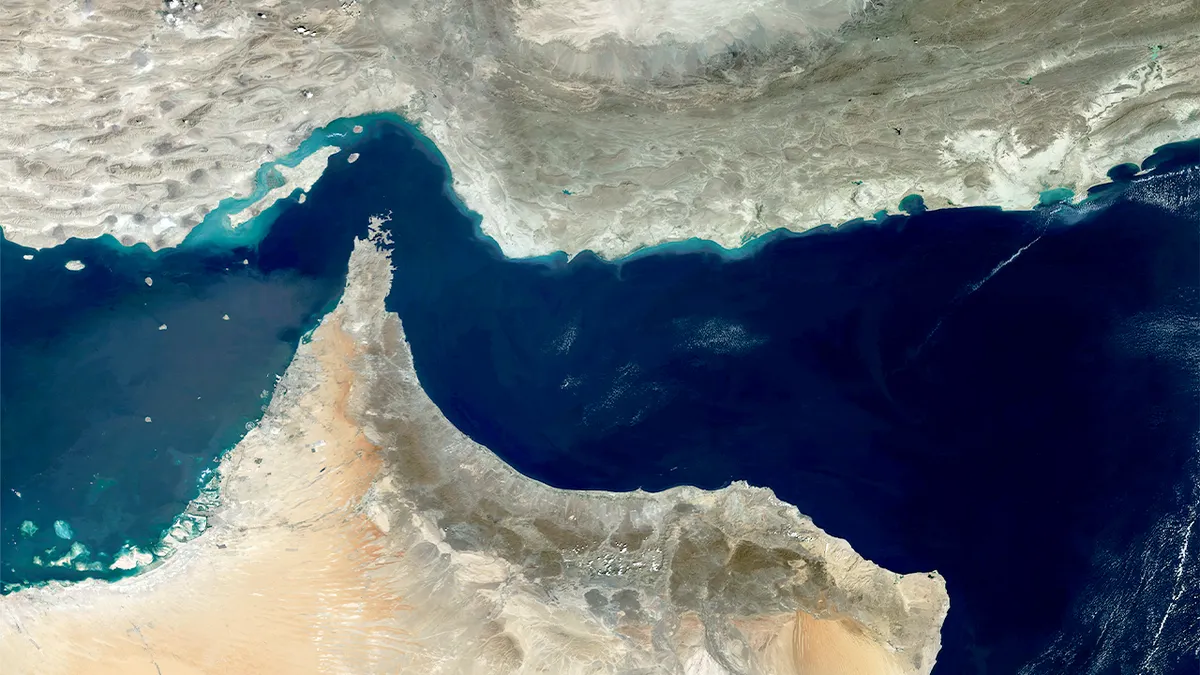
It was, in the bluntest possible terms, a civilization held to ransom. For forty days, the United States and Israel had struck Iran with a ferocity not seen since the Second World War — bridges, power plants, universities, military installations reduced to rubble. Iran had responded by sealing the Strait of Hormuz, the 21-mile chokepoint through which roughly a fifth of the world’s daily oil supply once flowed freely, triggering what the International Energy Agency has characterized as the single largest disruption to global oil markets in recorded history. Then, with less than two hours before Donald Trump’s deadline to rain “obliteration” on what remained of Iranian civilian infrastructure, Islamabad performed a diplomatic miracle.
Pakistan Prime Minister Shehbaz Sharif asked Trump to extend his deadline by two weeks and simultaneously urged Tehran to reopen the strait as a goodwill gesture, framing the appeal in terms of giving diplomacy time to run its course. CNBC It worked. Trump announced a two-week, double-sided ceasefire on the condition that Iran agree to the “complete, immediate, and safe opening of the Strait of Hormuz,” citing a 10-point Iranian peace proposal as “a workable basis on which to negotiate.” Axios
The phrase “workable basis” — anodyne to the casual reader — is, in the diplomatic lexicon of great-power competition, nothing short of seismic.
What Iran’s 10-Point Plan Actually Contains — and What It Reveals
Strip away the triumphalist messaging from both Tehran and Washington, and Iran’s 10-point proposal reads less like a peace plan and more like a maximalist opening bid from a government that has been bombed back to the pre-digital age and knows it. The plan, as spelled out by Iran’s Supreme National Security Council, includes controlled passage through the Strait of Hormuz coordinated with Iranian armed forces, the necessity of ending the war against all components of the “resistance axis,” and the withdrawal of U.S. combat forces from all regional bases and positions. NBC News It also calls for lifting all sanctions, releasing Iranian assets frozen abroad, and full payment of Iran’s war-related damages. CNBC
This is not, on any plain reading, a document the Trump administration will sign in its current form. But it is a document designed to do something far more subtle: establish Iran as a state with agency, leverage, and a coherent strategic vision — even in defeat. The Supreme National Security Council’s accompanying claim that “nearly all war objectives have been achieved” NBC News is partly face-saving theater, but it also carries a kernel of uncomfortable truth. Iran has demonstrated, unambiguously, that it holds a hand no adversary can entirely trump: physical control over the jugular vein of global energy.
The ten points, read against the backdrop of six weeks of unprecedented aerial bombardment, constitute a negotiating position, not a capitulation. Tehran knows this. Washington, if it is honest with itself, knows it too.
Pakistan’s Quiet Triumph — and the New Architecture of Mediation
Before this week, Pakistan’s role in the great-power theatre of the Middle East was largely peripheral. Islamabad was a regional pivot — important to Washington for counterterrorism cooperation, to Beijing for the China-Pakistan Economic Corridor — but not a player in the first rank of Middle East diplomacy. That calculus has been permanently revised. The truce, brokered by Pakistan, follows fierce exchanges of airstrikes, missile attacks, and threats that saw unprecedented strikes on Gulf nations, disrupted global shipping routes, and heightened fears of a prolonged confrontation. Al Jazeera
Sharif’s intervention succeeded precisely because it offered both parties something neither could offer themselves: a procedural exit. Trump needed a formula that did not look like backing down; Iran needed survival with the rhetorical scaffolding of victory. Pakistan provided the ladder for both men to descend. Peace talks are expected to begin in Islamabad on Friday, with Vice President JD Vance likely to lead the American delegation. Axios
This is diplomatically significant beyond the immediate crisis. It signals that the post-American-unipolar world is not simply a world dominated by Chinese or Russian mediation — as Riyadh’s 2023 rapprochement with Tehran, brokered by Beijing, suggested. Pakistan’s success here introduces a new variable: middle powers, credibly positioned as neither adversaries nor puppets of Washington, may now carry decisive diplomatic weight in conflicts where the principal parties have exhausted their bilateral channels.
Beijing, ever quick to register shifts in multilateral architecture, moved with characteristic swiftness. China’s Foreign Ministry spokesperson said Beijing “welcomes the ceasefire agreement” and will “support the mediation efforts” by Pakistan and other parties, noting that Chinese Foreign Minister Wang Yi had held 26 phone calls with counterparts from relevant countries. ABC News That is not the statement of a bystander — it is the statement of a great power carefully positioning itself as indispensable to whatever comes next.
The Oil Market Shock: Anatomy of a Historic Selloff
The market reaction was, in a word, violent — and that violence was entirely rational.
WTI, the U.S. crude benchmark, tumbled almost 16% to $95 a barrel — still well above the $67 level it settled at on February 27, before the war began. Brent crude futures, the global oil benchmark, dropped 14% to $93.8 a barrel. CNN For context: Dated Brent — the global benchmark for physical barrels — had reached its highest recorded price of $144.42, according to S&P Global Platts, surpassing even the 2008 financial crisis peak. Axios And the selloff itself made history: analysts described it as the biggest one-day free fall in oil prices since the 1991 Gulf War. Axios
The arithmetic of the disruption explains the arithmetic of the relief. The war in the Middle East — and the effective closure of the crucial Strait of Hormuz — has caused the biggest oil supply shock on record, choking off roughly 12 million to 15 million barrels of crude oil a day. CNN As of Tuesday, 187 tankers laden with 172 million barrels of seaborne crude and refined oil products remained inside the Gulf, according to Kpler, a global trade intelligence firm. CNN
That backlog does not clear overnight. Ports are congested, tanker routing is scrambled, and insurance premiums — which had rendered the Strait commercially prohibitive — will not normalize until underwriters are satisfied that the ceasefire is durable. Tehran has in recent weeks reportedly charged some shipping companies a $2 million fee to guarantee safe passage through the strait. CNN Iranian foreign minister Araghchi’s confirmation that safe transit would be possible “via coordination with Iran’s Armed Forces” Axios is careful language — it preserves Iranian control as a structural fact, regardless of the ceasefire’s duration. As one economist noted, that amounts to a de facto partial nationalization of the world’s most important shipping corridor.
For investors navigating the aftermath: the relief rally is real, but it is pricing in a best-case scenario that two weeks of fragile diplomacy has not yet warranted. Energy sector equities that surged 40-100% year-to-date will face significant profit-taking. Airlines, petrochemical manufacturers, and consumer-facing retailers stand to benefit materially from every dollar of sustained oil price decline. But position sizing in either direction should be calibrated to the probability of the Islamabad talks collapsing — which, given the chasm between Washington’s core demands on Iran’s nuclear program and Tehran’s insistence on full sanctions relief, remains non-trivial.
The Stock Market Surge: Reading the Signal Correctly
Stocks surged across regions: South Korea’s Kospi jumped over 5%, Japan’s Nikkei rose 4%, Hong Kong’s Hang Seng gained more than 2%, and the pan-European Stoxx 600 climbed 3.6%. Futures tied to the Dow Jones Industrial Average rose by 967 points, S&P 500 futures added 2.1%, and Nasdaq 100 futures climbed 2.3%. CNBC
The equity market’s interpretation is straightforward: lower energy costs are a global stimulus. But sophisticated investors should separate the signal from the noise here. The stock market is not pricing a peace deal — it is pricing the possibility of a peace deal, which is a materially different thing. As one market analyst from eToro observed, “TACO is becoming less of a joke and more of a trading strategy across markets. Investors have seen enough last-minute pivots to know that a two-week deadline isn’t necessarily what it seems.” CNBC
The persistence of gold’s bid — spot gold rose 2.2% to $4,803.83 per ounce even as risk assets rallied CNBC — tells the more cautious half of the story. Institutional money is hedging. The relief rally and the haven bid are running simultaneously, which is the market’s elegant way of saying: we want to believe this, but we’ve been burned before.
The Quiet Winners — and the One Uncomfortable Loser Nobody Is Naming
History’s great turning points always redistribute power in ways that the initial headlines obscure. This ceasefire is no exception.
Pakistan emerges with diplomatic capital it will spend for years. Islamabad is now, demonstrably, a credible interlocutor between Washington and Tehran — a status no amount of lobbying or bilateral summitry could have purchased.
China emerges with its multilateral positioning validated. Beijing’s five-point Chinese-Pakistani peace framework, its 26 diplomatic phone calls, its quiet shuttle diplomacy in the Gulf — all of it contributed to the architecture that made the Pakistani intervention possible. The belt-and-road world, Beijing will quietly argue, is a more stable world.
Tehran — counterintuitively — emerges with its deterrence posture partially rehabilitated. The clerical establishment that many analysts, not least in Tel Aviv and Washington, expected to collapse under military pressure has survived. Its control over the Strait of Hormuz has been demonstrated as real, not rhetorical. Whatever the outcome of the Islamabad talks, that leverage does not disappear when the ceasefire expires.
The uncomfortable loser — the entity most conspicuously absent from the diplomatic success narrative — is Israel. The office of Israeli Prime Minister Benjamin Netanyahu announced that while Israel supports the United States’ two-week ceasefire with Iran, the deal does not include the fighting between Israel’s military and Iranian-backed groups in Lebanon. CBS News Netanyahu’s carve-out on Lebanon reveals a government that found itself outmaneuvered by a diplomatic process it could not control — partners in the military campaign, bystanders in its resolution.
The Road to Islamabad: What a Durable Deal Would Actually Require
The next two weeks are not, as Trump’s Truth Social effusions might suggest, a straightforward path to the “Golden Age of the Middle East.” They are a negotiation of extraordinary complexity, with parties whose core demands are structurally incompatible at the outset.
Washington’s irreducible minimum — shared explicitly by Netanyahu, who said the U.S. “is committed to achieving” the goal of ensuring Iran “no longer poses a nuclear, missile and terror threat” ABC News — is a verifiable end to Iran’s nuclear program. Tehran’s irreducible minimum, embedded in its 10-point plan, is the lifting of all sanctions and the normalization of its economy. Bridging those positions in fourteen days is not diplomacy; it is alchemy.
What Islamabad can realistically deliver is a framework agreement — a set of principles broad enough for both sides to claim success, specific enough to extend the ceasefire and return tanker traffic to the Strait, and ambiguous enough to defer the hard questions about nuclear verification, sanctions architecture, and Iran’s regional proxy network. That is not nothing. In the history of this particular conflict, it would be a great deal.
Vice President Vance, addressing critics within the Iranian system who are “lying about the nature of the ceasefire,” said: “If the Iranians are willing, in good faith, to work with us, I think we can make an agreement.” Axios That conditional is doing a lot of work. It is also, for now, the most honest assessment available of where things actually stand.
What This Means for Global Energy Security — the Structural Question That Survives Any Deal
Even if the Islamabad talks succeed beyond all reasonable expectation, this crisis has exposed a structural vulnerability in the architecture of global energy security that no ceasefire can paper over.
A single nation — Iran — demonstrated that it could, with conventional military and asymmetric naval tools, effectively halt nearly a quarter of the world’s seaborne oil trade and push global benchmark prices to record highs within weeks. The response from OPEC, from Washington, from the IEA’s emergency reserves mechanism, from alternative routing through the Cape of Good Hope — none of it came close to compensating for what the Strait’s closure removed.
The strategic conclusion is unavoidable: the concentration of global energy transit through the Strait of Hormuz is an unacceptable systemic risk, and the post-ceasefire world — whatever shape it takes — will accelerate investments in alternative infrastructure, strategic reserve capacity, and the long-term energy transition away from Persian Gulf dependence. For sovereign wealth funds, infrastructure investors, and the energy majors themselves, the crisis of 2026 has clarified the investment case for resilience in ways that no analyst report could have achieved.
The Hormuz gambit may be over. The lesson it taught the world is just beginning to sink in.
Discover more from The Economy
Subscribe to get the latest posts sent to your email.



Key Takeaways
- Rolex’s secondary market rose approximately 7.9% year-over-year as of 2026 (per WatchCharts data) — trailing Patek Philippe (+16.2%) and Tudor (+11.4%) but still outperforming Audemars Piguet (+3.4%).
- Rolex raised U.S. retail prices 4–9% in January 2026 (steel models ~5.6%, gold models ~8.7%), narrowing the historical gap between retail and pre-owned pricing.
- Not every model appreciates: steel sports references (Submariner, GMT-Master II, Daytona) have held value far better than two-tone or widely available dress references like the standard Datejust.
- The Lady-Datejust posted the sharpest 2026 gain among tracked collections — up 22.73%, from roughly $9,269 to $11,376 — driven by demand for smaller, “everyday luxury” watches.
- Gold’s rise past $2,400/oz has directly lifted the investment case for Rolex’s precious-metal references (Day-Date, Sky-Dweller, Yacht-Master).
The Model-by-Model Picture
| Category | 2026 Trend |
|---|---|
| Lady-Datejust | +22.73% (strongest performer among tracked collections) |
| Steel sports models (Submariner, GMT-Master II) | Held value well; corrected from 2022 peak but stabilized above retail |
| Daytona | Corrected from highs above $50,000 to the mid-$30,000s; still among the most sought-after references |
| Two-tone/widely available Datejust | Flat to negative — “holds value” is an overstatement for this category |
| Gold references (Day-Date, Sky-Dweller) | Lifted by gold’s rise above $2,400/oz |
Why the “Rolex Always Appreciates” Myth Is Fading
The pandemic-era boom pushed some references — the Daytona above all — to speculative highs disconnected from historical norms. Since the March 2022 peak, steel sports models have compressed meaningfully, and dealers who bought inventory near the top have in some cases faced 20–40% markdowns on liquidation. The lesson for 2026 buyers: Rolex as a category is not a monolith. Value retention depends heavily on specific reference, condition, and whether the piece comes with box and papers (“full set”).
What’s Actually Driving 2026 Strength
- Retail price increases raise the floor. When a new Submariner retails at $10,050 (up from $9,500), a pre-owned example at $11,000–$12,000 suddenly represents a smaller premium — narrowing the gap without secondary prices actually moving.
- Supply discipline remains Rolex’s core lever. The brand has never confirmed production numbers, and secondary-market premiums remain entirely a function of Rolex’s own manufacturing decisions — a risk factor as much as a support.
- Certified Pre-Owned rollout. Rolex’s now fully rolled-out CPO program has changed how buyers transact in the used market, adding a layer of brand-verified legitimacy that supports pricing.
The Case for Rolex as a Portfolio Diversifier
Financial advisors increasingly frame luxury watches not as a replacement for equities or bonds, but as a tangible, historically low-correlation diversifier — one that carries its own risks (illiquidity, condition-dependent pricing, no yield) but has demonstrated multi-decade resilience for specific references.
Is Rolex a good investment in 2026?
It depends heavily on the specific reference. Steel sports models like the Submariner and Daytona have held or grown in value; two-tone and widely available dress models generally have not. Overall, Rolex’s secondary market rose about 7.9% year-over-year in 2026, trailing Patek Philippe but ahead of Audemars Piguet.
Discover more from The Economy
Subscribe to get the latest posts sent to your email.

Navigating Mortgage and Loan Refinancing in a High-Yield Environment
Global public debt crossing critical thresholds has kept central bank policies volatile, resulting in fluctuating US Treasury yields throughout 2026. For homeowners and commercial property holders burdened by previous high-interest borrowing cycles, finding optimal refinance windows has become a high-stakes financial puzzle. Stalled disinflation and stubborn employment numbers mean rate cuts are incremental, requiring borrowers to act with precision.
Timing your mortgage or commercial loan refinance in this environment requires a deep understanding of yield curve movements and lender risk appetites.
Decoding 2026 Refinance Dynamics
The 10-Year Treasury Yield Benchmark
Mortgage rates continue to track closely with the 10-year US Treasury yield. When macroeconomic anxiety spikes debt issuance, yields rise, tightening consumer borrowing capacity. Savvy borrowers monitor weekly Treasury auctions to lock in rates during brief dip windows.
Hybrid ARMs and Alternative Structures
With fixed rates remaining elevated, 7/1 and 10/1 adjustable-rate mortgages (ARMs) have surged in popularity. These products offer lower initial monthly payments, giving borrowers breathing room until central bank easing cycles fully materialize.
| Loan Product | Current Rate Range | Best For | Key Risk Factor |
| 30-Year Fixed Mortgage | 6.2% – 6.8% | Long-term predictability | Higher initial monthly outlay |
| 7/1 Hybrid ARM | 5.5% – 5.9% | Short-term ownership / flipping | Rate reset risk after year 7 |
| Commercial Refinance | 7.0% – 8.2% | Corporate asset restructuring | Strict DSCR lender covenants |
Actionable Steps for Successful Refinancing
To maximize your chances of securing favorable refinance terms in a volatile market, follow a disciplined preparation strategy.
Boost Your Credit Score Immediately: Lenders in 2026 are applying stringent credit tiering; a 20-point increase can drop your APR by a crucial quarter-point.
Shop Regional Credit Unions: Smaller financial institutions often offer portfolio loans with more flexible underwriting than major national banks.
Calculate the Break-Even Point: Ensure your total closing costs are recouped through monthly savings within 24 months of closing.
“Market Strategist View: Refinancing in 2026 is an exercise in opportunistic timing. Borrowers must maintain immaculate financial profiles ready to strike the moment Treasury yields dip.”
Mastering the complexities of today’s debt environment ensures you can successfully lower your debt service costs and protect your long-term financial stability.
Discover more from The Economy
Subscribe to get the latest posts sent to your email.

The days of pulling generic auto insurance quotes based purely on your zip code and age are officially over. In 2026, insurance comparison engines are powered entirely by generative AI and real-time telematics. These platforms digest thousands of live data points—ranging from your driving smoothness via connected vehicle sensors to real-time traffic congestion patterns—to generate hyper-personalized premiums instantly.
For consumers, this evolution represents both a massive opportunity for savings and a hidden trap for penalty pricing. Understanding how AI algorithms evaluate risk is essential for anyone looking to lower their monthly auto insurance premiums.
How AI Comparison Engines Evaluate Your Risk Profile
Behavioral Telematics and Connected Cars
Modern cars stream performance data directly to insurance aggregators. Generative AI models analyze braking sharpness, acceleration curves, cornering G-forces, and phone distraction metrics. Drivers who maintain smooth, defensive habits are rewarded with dynamic rate cuts of up to 40% compared to traditional rating tiers.
Predictive Traffic and Weather Modeling
AI tools now cross-reference your daily commute route with predictive weather and accident probability models. If your standard parking location or driving corridor has a statistically higher incidence of uninsured motorist claims, your quotes will reflect that hyper-local risk assessment.
| Comparison Factor | Traditional Rating Model | 2026 Generative AI Model | Impact on Premium |
| Mileage & Usage | Annual estimated odometer reading | GPS tracking & live trip duration | High (up to 35% savings) |
| Driving Behavior | MVR driving record & accidents | Real-time braking, speed, & G-force | Critical (determines tier) |
| Vehicle Tech | Make, model, and safety rating | ADAS calibration & repair cost data | Moderate |
Strategies to Lower Your AI-Driven Insurance Quote
To outsmart the algorithm and secure the lowest possible premium in 2026, drivers must proactively manage their digital footprint on insurance platforms.
Opt-In for Telematics Trial Periods: Many insurers offer immediate 15% discounts just for installing their driving app; let it track safe habits for 30 days to lock in permanent savings.
Scrub Unverified Public Records: Ensure your motor vehicle report is free of clerical errors that AI risk models misinterpret as reckless behavior.
Compare AI Aggregators: Use platforms that integrate multi-carrier API feeds rather than single-brand comparison sites to find the best risk-adjusted rate.
“Industry Note: AI-driven pricing rewards transparency and precision. Drivers who actively manage their telematics data consistently out-save those relying on legacy quote calculators.”
Embracing AI comparison tools allows savvy policyholders to customize coverage limits precisely to their driving habits, eliminating wasted premium spend while ensuring robust protection.
Discover more from The Economy
Subscribe to get the latest posts sent to your email.

Peso Mexicano vs Dólar Estadounidense: A Practical USD/MXN Guide for October 2026

Is the Stock Market Open on Columbus Day 2026? NYSE, Nasdaq and Bonds Explained

Concert Ticket Prices in 2026: Dynamic Pricing, Fees and How to Buy Safely

High-Yield Savings Accounts in 2026: How to Compare APY Without Chasing a Headline

EU-China Trade Deal 2026: How Beijing and Brussels Avoided a Trade War—and Who Wins

Social Security 2027 COLA Announcement: Date, Formula and What Retirees Should Check

China’s AI Microdrama Boom: How Beijing Is Reshaping Global Media

Q3 2026 Earnings Preview: Can Record Profit Expectations Keep Wall Street’s Rally Alive?

Russia Diesel Deal 2026: Oil Prices and Inflation Risks

Fed Rates 2026: Treasury Yields, Bonds and SGOV Explained

S&P 500 Market Breadth 2026: Weak Rally or Rotation?

The AI Capex Boom: Data Centers Reshaping Growth

Palantir Stock in 2026: Extraordinary AI Growth

Tesla Physical AI 2026: Robotaxis, Optimus and TSLA Risks

PSX Forecast 2026: KSE-100, IMF Reviews & Geopolitics

Middle East War Economics 2026: Oil Prices & Energy Markets

China Stocks Today: Are Big Economies in Asia Nearing a Market Bottom?

Crypto Daily Outlook: Bitcoin, Altcoins, and the Future of Decentralized Finance

Global Pension Systems Ranked: The World’s Best and Worst Retirement Frameworks

World’s Largest Economies: Ranking the Top Global Powers

Elon Musk’s Next Moves: Disrupting the 2026 Global Economy

Pakistan Economy 2026: Inside the SBP’s Balancing Act

GasBuddy Market Insights: How Crude Price Shifts Impact Local Fuel Cost Averages

World Bank & IMF Reports 2026: Why the “3% Growth” Consensus Is Actually a Debate

Global Equity Market Divergence: US Tech vs. European Dividend Stocks vs. Asian Growth

IMF & World Bank Global Economic Outlook: Growth Forecasts Across Europe and Asia

Crude Oil & Petroleum Market Analysis: OPEC+ Decisions and Price Forecasts

Silver Price Today: Why the Xi-Trump AI Standoff Is Fueling a Safe-Haven Rally
-

 Markets & Finance9 months ago
Top 15 Stocks for Investment in 2026 in PSX: Your Complete Guide to Pakistan’s Best Investment Opportunities
-

 Analysis8 months ago
Johor’s Investment Boom: The Hidden Costs Behind Malaysia’s Most Ambitious Economic Surge
-

 Analysis8 months ago
Top 10 Stocks for Investment in PSX for Quick Returns in 2026
-

 Banks9 months ago
Best Investments in Pakistan 2026: Top 10 Low-Price Shares and Long-Term Picks for the PSX
-

 Analysis8 months ago
Brazil’s Rare Earth Race: US, EU, and China Compete for Critical Minerals as Tensions Rise
-

 Investment9 months ago
Top 10 Mutual Fund Managers in Pakistan for Investment in 2026: A Comprehensive Guide for Optimal Returns
-

 Global Economy10 months ago
15 Most Lucrative Sectors for Investment in Pakistan: A 2025 Data-Driven Analysis
-

 Global Economy10 months ago
Pakistan’s Export Goldmine: 10 Game-Changing Markets Where Pakistani Businesses Are Winning Big in 2025