
Fintech & Global Finance
The End of Visa and Mastercard’s Monopoly? Rise of Alternatives


Concerns over economic sovereignty are driving a global push to create alternatives to Visa and Mastercard. From BRICS payment systems to CBDCs, here is the complete picture of the financial infrastructure revolution underway in 2026.
The Invisible Infrastructure That Runs the World
Every time you tap your credit card, swipe at a terminal, or pay online, a transaction flows through a network that most people never think about — a duopoly controlled by two American companies: Visa and Mastercard. Together, they process trillions of dollars in transactions annually, connecting over 100 million merchant locations across 200 countries.
For decades, this arrangement was simply the background infrastructure of global commerce. Now it is a geopolitical flashpoint. Concerns over economic sovereignty are fueling a global search for alternatives to Visa and Mastercard. The Iran war, US sanctions policy, and the dollar’s role as a financial weapon have combined to create unprecedented urgency — from Moscow to Beijing to Riyadh to New Delhi — for payment systems that cannot be switched off by Washington.
The Weaponization Moment: How the Iran War Changed the Calculus
The 2026 US-Iran conflict provided the clearest demonstration yet of what financial exclusion looks like in practice. When the United States launched airstrikes against Iran in February 2026, sanctions were tightened almost simultaneously. Iranian entities were cut off from SWIFT, the international messaging system for bank transfers. Visa and Mastercard suspended operations for Iranian-linked institutions. Trade with Iran — which many Asian nations depended on for energy — was financially complicated overnight.
For policymakers from India to Indonesia to Turkey, watching Iran get cut off from global payment infrastructure was not an abstract lesson. It was a direct preview of what could happen to them if they were ever on the wrong side of US foreign policy. The race to build alternatives has been accelerating ever since.
The Alternatives Taking Shape
BRICS Pay and Regional Systems: The BRICS bloc — Brazil, Russia, India, China, South Africa, and its newer members — has been developing a cross-border payment system that bypasses both SWIFT and US dollar settlement. Progress has been slow, but the political will is stronger than ever. China’s CIPS (Cross-Border Interbank Payment System) already handles renminbi-denominated transactions and is expanding.
Central Bank Digital Currencies (CBDCs): Over 130 countries are now in some stage of CBDC development. China’s digital yuan (e-CNY) is the most advanced, with tens of millions of users and cross-border pilots underway with several Asian nations. The Bank for International Settlements is facilitating a “mBridge” project linking central bank digital currencies across multiple jurisdictions, designed explicitly to reduce dependence on dollar-denominated correspondent banking.
India’s UPI Global Expansion: India’s Unified Payments Interface has become the world’s largest real-time payment system domestically and is now being extended internationally, with partnerships in Singapore, the UAE, France, and several African nations. It represents a model of national payment sovereignty that other emerging markets are studying.
Regional Card Networks: The Middle East has seen accelerated development of regional card networks following the Iran crisis. Gulf states, acutely aware of their own potential vulnerability to sanctions, have been investing in payment infrastructure that routes domestically rather than through New York correspondent banks.
Why This Matters for the Dollar
The dollar’s role as the world’s reserve currency has been underpinned in part by the dollar-dominated infrastructure of global payments and trade finance. If significant volumes of international trade — particularly commodity trade — shift to payment systems that bypass dollar settlement, the structural demand for dollars would decline over time.
This is a long-term, slow-moving process rather than an imminent disruption. Visa and Mastercard’s network effects, the liquidity of dollar markets, and the trust built over decades are enormous advantages that no emerging competitor can replicate quickly. But the direction of travel is clear, and the Iran crisis has significantly accelerated the timeline.
For the United States, the challenge is existential at the margins: the more aggressively it uses financial exclusion as a geopolitical tool, the more it incentivizes the world to build systems that reduce its leverage. The dollar dilemma is real and growing.
FAQ
Q: Why are countries trying to build Visa/Mastercard alternatives? Primarily for economic sovereignty — to ensure that US sanctions policy cannot cut off their access to global payments. The Iran war demonstrated in real time how quickly American financial infrastructure can be used as a weapon. Countries from China to India to Brazil are developing alternatives to reduce this vulnerability.
Q: What is a CBDC? A Central Bank Digital Currency is a digital form of a country’s official currency, issued and backed by the central bank. Unlike cryptocurrencies, CBDCs are centrally controlled and can be programmed with specific features. Many countries are developing CBDCs partly as a tool for reducing dependence on US-dominated payment infrastructure.
Q: Can any system realistically replace Visa and Mastercard? In the near term, no. Visa and Mastercard’s network effects, global merchant acceptance, and consumer trust make them extremely difficult to displace. But the alternatives being built are not trying to replace them globally — they are trying to create parallel corridors for specific trade relationships that can function outside US financial oversight.
Discover more from The Economy
Subscribe to get the latest posts sent to your email.


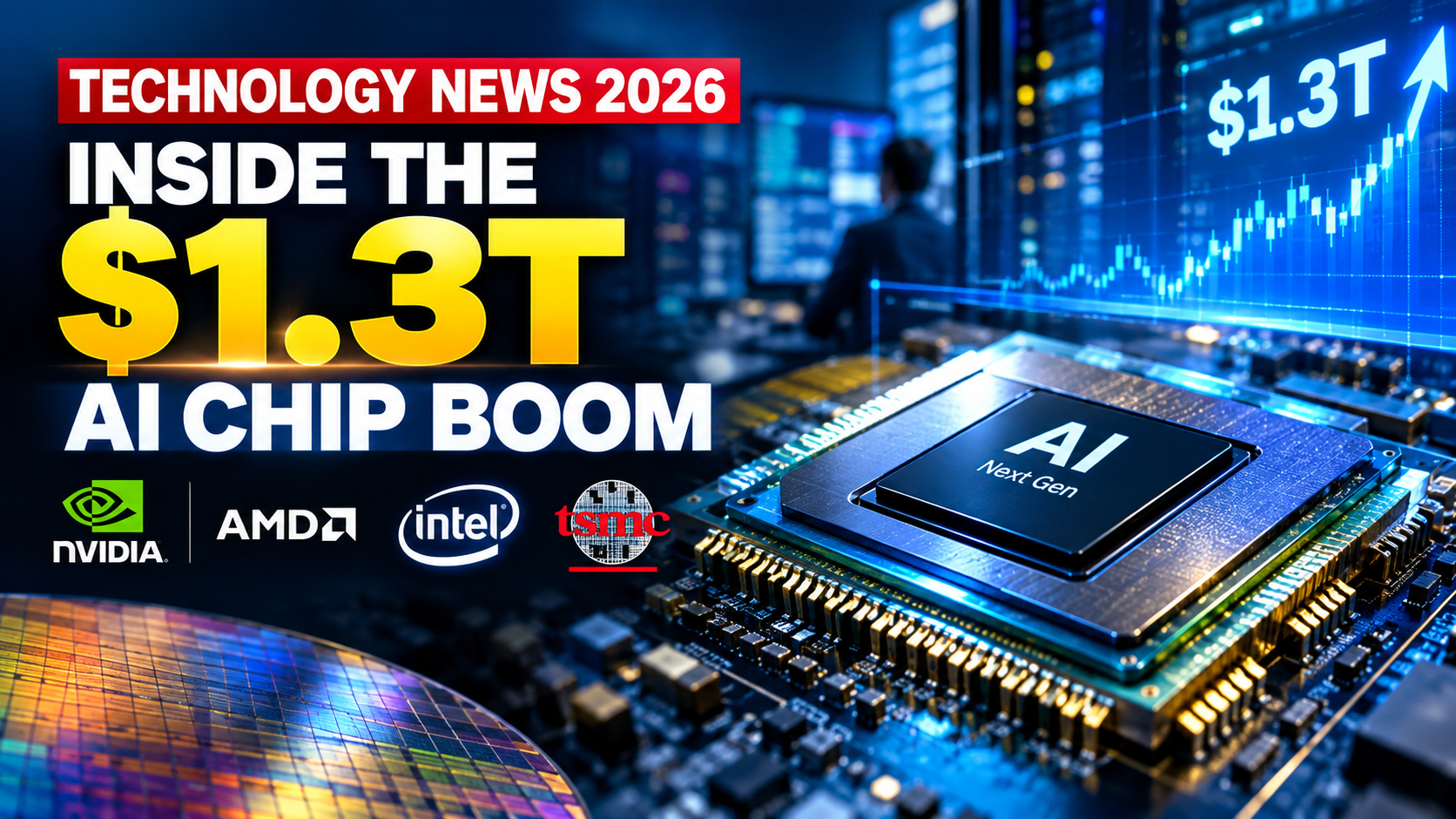
How big is the AI chip industry in 2026? Global semiconductor revenue is projected to exceed $1.3 trillion in 2026 — a 64% increase and the fastest growth the industry has recorded in more than 20 years, according to research firm Gartner. That would mark a third consecutive year of double-digit growth for the sector, driven by surging demand for AI processing, data-center infrastructure, and rising memory prices, per Gartner senior principal analyst Rajeev Rajput.
That single statistic captures why “technology news” in 2026 is really one story told through dozens of companies: an unprecedented, sustained capital-spending cycle built around artificial intelligence infrastructure.
Hyperscalers Are the Engine
The chip boom is being funded almost entirely by a handful of technology giants. Alphabet, Amazon, Microsoft, and Meta — the hyperscalers building the cloud infrastructure that AI models run on — have collectively committed more than $700 billion in 2026 capital spending, according to reporting relayed through Yahoo Finance’s technology desk. Alphabet alone spent $35.67 billion on capital expenditure in a single quarter — more than double the prior year’s pace — while its Google Cloud backlog nearly doubled to over $460 billion. Amazon led quarterly spending at $44.2 billion as AWS grew 28%, and Microsoft’s fiscal third-quarter capex rose 84% year-over-year to $30.88 billion as its AI revenue run rate surpassed $37 billion annually.
Featured Snippet Target: The four largest U.S. hyperscalers — Alphabet, Amazon, Microsoft, and Meta — are on pace to spend over $700 billion combined on AI infrastructure in 2026, a figure Reuters’ Morning Bid podcast described as rising “all the time” and directly responsible for surging demand for AI chips and data-center equipment.
That spending has increasingly shifted from being funded purely by operating cash flow to relying on debt and equity markets. Alphabet’s June 2026 equity raise — combining Class A common stock, Class C capital stock, and mandatory convertible preferred shares — ranks as the largest single AI-funding capital raise in market history, according to market commentary circulated via KuCoin’s research desk. Goldman Sachs has characterized this as a structural shift from a low-cost-of-capital “Modern” cycle to a higher-volatility “Post-Modern” one, in which markets increasingly reward capital expenditure over share buybacks — S&P 500 companies posted 24% year-on-year capex growth in the second quarter of 2026 alongside a 1% decline in gross buybacks.
Nvidia’s Next Move — and Who’s Chasing It
Nvidia remains the chip industry’s dominant supplier, and its next-generation product cycle is central to 2026’s technology narrative. The company introduced its Rubin CPX GPU — built for massive-context AI workloads capable of handling million-token software coding and generative-video tasks — with availability expected by the end of 2026, according to trade coverage from DigiTimes. Competitors are racing to diversify the supply chain around Nvidia’s dominance: AMD is preparing new product launches with OpenAI as a customer, Broadcom and OpenAI are targeting mass production of custom AI silicon in 2026, and Broadcom separately secured a $10 billion custom-chip production order from a major new customer, according to the same industry reporting.
China’s chip ecosystem is developing along a parallel, more insulated track. Huawei and Cambricon Technologies are together projected to ship over a million AI chips by 2026, with JPMorgan forecasting Huawei alone shipping 600,000 to 650,000 units, as Beijing pushes to reduce reliance on U.S.-made chips amid ongoing export restrictions.
Where the Growth Is Concentrated
Analysts covering the sector point to datacenter accelerators as the single largest growth pocket within the broader chip market — that segment alone is projected to exceed $300 billion in 2026, according to industry analysis from TechInsights, with knock-on effects spanning process technology (including the industry’s push toward 2-nanometer manufacturing), advanced packaging techniques, and power infrastructure needed to run increasingly energy-intensive AI data centers.
That last point — power — has become a genuine bottleneck rather than a footnote. Industry commentary increasingly frames electricity supply and cooling capacity, not chip fabrication itself, as the binding constraint on how quickly AI infrastructure can scale, positioning data-center operators and power-infrastructure companies as unexpected beneficiaries of the AI boom alongside the chipmakers themselves.
The Risk Beneath the Boom
Not every voice in the technology sector is unreservedly bullish on the pace of spending. Analysis circulated through Charles Schwab’s market commentary notes that three hyperscalers — Alphabet, Amazon, and Meta — now account for roughly 70% of the S&P 500’s expected 2026 earnings growth, meaning the index’s apparent 500-company diversification offers less real downside protection than investors might assume if AI capital spending fails to convert into earnings at the pace currently priced in.
That concentration risk has already produced volatility. Mid-September market commentary from CNBC noted bond yields spiking and AI-linked stocks selling off even as broader investor sentiment stayed constructive on equities overall — an early signal that markets are starting to price a wider range of outcomes for the AI capex cycle than the unbroken bull run of the year’s first half suggested.
The Bottom Line
Technology news in 2026 is dominated by a single, self-reinforcing cycle: hyperscaler capital spending is driving record semiconductor demand, chipmakers are racing to keep pace with that demand through new architectures and expanded manufacturing, and financial markets are increasingly rewarding — and increasingly questioning — the sustainability of spending at this scale. Whether that questioning turns into a genuine correction depends on whether AI infrastructure investment converts into earnings growth fast enough to justify the capital already committed.
Next step: Track quarterly hyperscaler capex guidance alongside chipmaker order backlogs — the gap between the two, more than any single product launch, is the clearest early signal of whether 2026’s AI infrastructure boom is accelerating or beginning to plateau.
Discover more from The Economy
Subscribe to get the latest posts sent to your email.
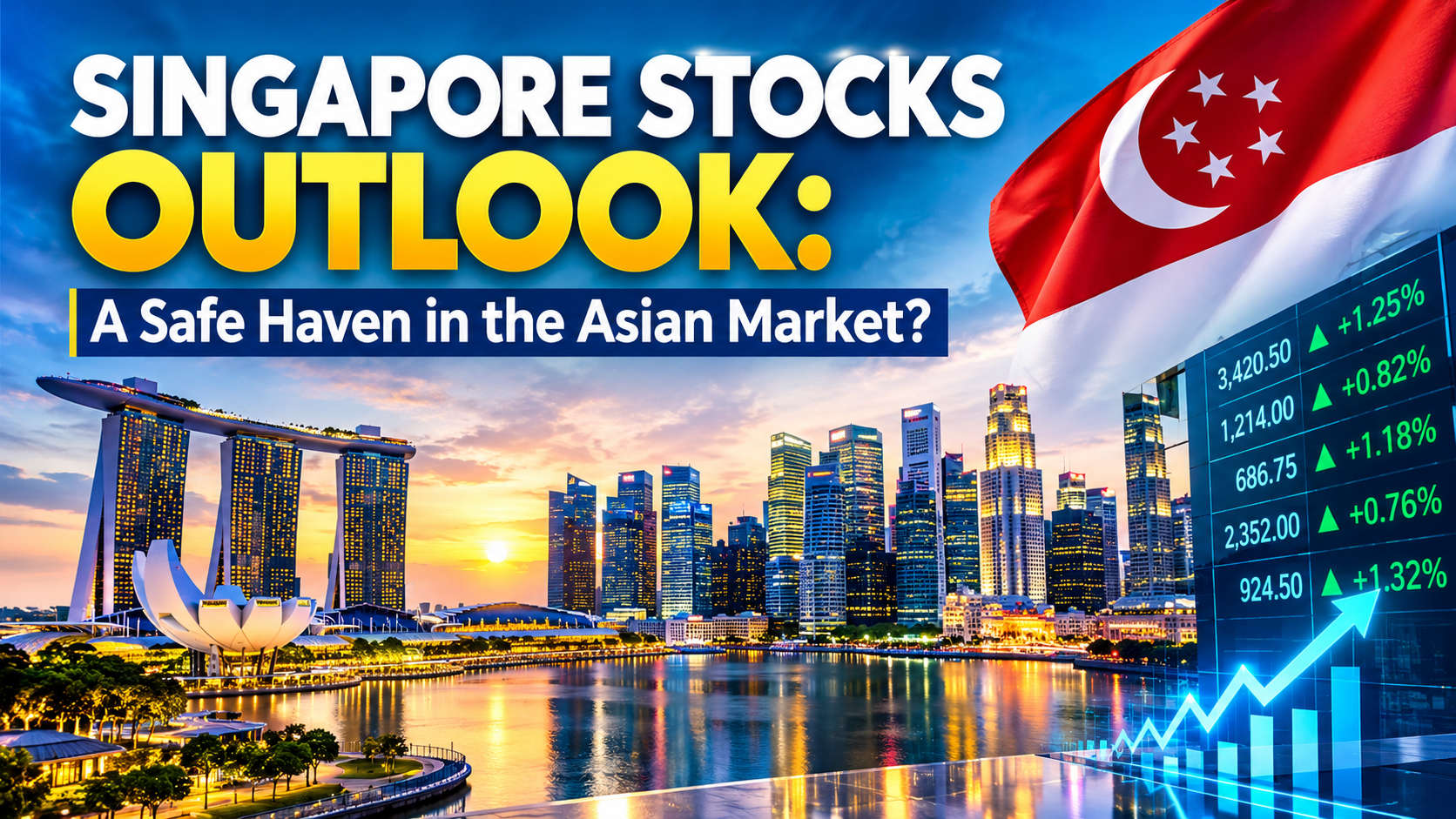
Singapore’s equity market spent 2026 quietly doing what almost no other Asian market managed: going up in a straight line.
The Straits Times Index closed at an all-time high of 5,801.96 on 4 September 2026 — up roughly 35% over the past year. For context, the index started the year around 4,895.
The question is no longer whether Singapore has performed. It is whether a market trading at record highs can still be described as defensive.
Key Takeaways
- Record territory: the STI peaked at 5,801.96 on 4 September 2026 after starting the year near 4,900.
- Banks did the heavy lifting. DBS posted record quarterly income above S$6 billion and net profit of S$3.08 billion in Q2 2026.
- Macro backdrop is solid. Singapore’s GDP grew 4.8% in 2025, accelerating from 4.4% in 2024.
- The safe-haven label is now conditional. After a 35% run, valuation risk has replaced valuation support.
- Oil is the live threat. The index is absorbing the same energy shock rattling global markets.
How Singapore Got to a Record
The STI’s ascent through 2026 has been remarkably orderly.
| Date | STI Level | Context |
|---|---|---|
| Nov 2025 | 4,473 | Fresh high on Wall Street rebound |
| Dec 2025 | 4,579 | Post-Fed cut rally |
| Jan 2026 | 4,934 | All-time high, +27.86% over 12 months |
| 4 Sep 2026 | 5,801.96 | Record close, +35% year-on-year |
| Sep 2026 | ~5,730 | Consolidation below the peak |
The January leg was macro-driven. Preliminary figures showed the economy grew 4.8% in 2025 while non-oil domestic exports rose 4.8%, exceeding official forecasts of around 2.5%.
The Monetary Authority of Singapore then held policy steady while raising both core and headline inflation forecasts to 1%–2% for the year, signalling confidence in resilient GDP growth.
What Is Actually Driving the Index
1. Banks, Overwhelmingly
Singapore’s three banks dominate index weight, and their earnings have been exceptional. DBS — Singapore’s largest bank, operating across 19 markets including Greater China, Southeast Asia and South Asia — crossed S$6 billion in quarterly total income for the first time in Q2 2026, up 6% year-on-year to S$6.09 billion, with net profit up 9% to a record S$3.08 billion.
Notably, this came despite net interest income falling 2%. Fee income and wealth management are carrying the load as rate tailwinds fade.
2. Global Risk Appetite
The STI’s record coincided with the S&P 500 reaching an intraday high above 7,800 points in August. Singapore is a high-beta expression of global risk sentiment more often than investors acknowledge.
3. Capital Seeking Stability in Asia
With China flat, Hong Kong lagging and Japan volatile, Singapore has absorbed regional allocations looking for rule-of-law certainty, dividend yield and currency stability.
Does the Safe-Haven Thesis Still Hold?
The case for Singapore as a defensive Asian allocation rests on four pillars.
Dividend yield. The STI has historically offered yields well above regional averages, anchored by banks, REITs and telecoms. Yield support is real but compresses as prices rise — a 35% price gain mechanically cuts the yield by roughly a quarter.
Currency management. MAS manages the Singapore dollar against a trade-weighted basket rather than setting interest rates directly. This has historically dampened imported inflation and currency volatility for foreign investors.
Institutional quality. Transparent regulation, reliable disclosure and deep index infrastructure. FTSE Russell calculates the STI jointly with SPH Media Trust and SGX Group, with quarterly reviews that keep the benchmark representative.
Sector composition. Banks, REITs, industrials and telecoms — cash-generative businesses with visible payouts rather than speculative growth.
Where the Thesis Weakens
Singapore is an open, trade-dependent economy. It cannot decouple from a global slowdown. The World Bank projects global growth slowing to 2.5% in 2026, the lowest rate since the pandemic, with the Middle East conflict driving sharp energy price increases.
Singapore imports all of its energy. An index at record highs facing an oil shock is not a defensive position — it is a leveraged one.
The Three Stocks Framework
Rather than name specific buys, consider the three archetypes that dominate STI investing decisions:
| Archetype | Example Profile | Bull Case | Risk |
|---|---|---|---|
| The bank | DBS, OCBC, UOB | Record profits, strong capital, rising fee income | Net interest margin compression as rates fall |
| The defensive retailer | Sheng Siong | Inflation-resistant demand, low debt | Limited growth runway |
| The exchange | SGX | Benefits from volatility and listing activity | Structurally thin domestic IPO pipeline |
A record share price does not automatically mean a stock is expensive. The real test is whether earnings growth, cash flow and competitive position have kept pace with the price.
For Singapore’s banks in 2026, they largely have. That is what separates this rally from a pure multiple expansion.
Practical Considerations for Investors
- Decide on currency exposure. SGD strength has added to foreign-currency returns. That works both ways.
- Check the index review calendar. The September 2026 quarterly review brought no changes to STI constituents, with the next review in December.
- Understand what you are buying. An STI ETF is approximately 40% banks. That is a concentrated financial sector bet.
- Weigh yield against price. After a 35% run, entry yield is meaningfully lower than it was twelve months ago.
- Watch MAS statements. Policy shifts move this market faster than earnings do.
What This Means for the Global Market in 2027
Safe haven is a relative term, not an absolute one. Singapore has been defensive relative to China’s stagnation and Japan’s volatility — not relative to cash. At record highs after a 35% gain, the downside protection argument is considerably weaker than it was in January.
Bank earnings face a turning point. DBS’s Q2 showed net interest income already falling while fee income compensated. If global rates decline through 2027, the fee engine must carry more weight.
Singapore benefits from regional fragmentation. Every escalation in US–China technology disputes strengthens Singapore’s position as a neutral financial and logistics hub. That is a structural, multi-year tailwind.
Energy remains the vulnerability. With the Strait of Hormuz situation unresolved and European gas benchmarks elevated, a trade-dependent, energy-importing economy carries a specific exposure that its defensive reputation obscures.
Watch the listing pipeline. Singapore’s long-standing weakness is a thin domestic IPO market. Any meaningful improvement would broaden the index beyond financials and change the investment case materially.
Frequently Asked Questions
What is the Straits Times Index at now?
The STI closed at a record 5,801.96 on 4 September 2026 and has since consolidated near 5,730. It is up roughly 35% over the past year.
Are Singapore stocks a safe investment?
Singapore offers strong institutional quality, dividend yield and currency stability. However, after a 35% annual gain, valuation risk is higher and the economy remains exposed to energy prices and global trade.
Which Singapore stocks pay the best dividends?
Banks, REITs and telecoms have historically anchored the STI’s yield. Entry yields have compressed as prices have risen, so verify current figures before investing.
Why did the STI hit a record high in 2026?
Record bank profits, resilient 4.8% GDP growth in 2025, supportive MAS policy, and capital rotating into Singapore from weaker regional markets.
Discover more from The Economy
Subscribe to get the latest posts sent to your email.
Fintech & Global Finance
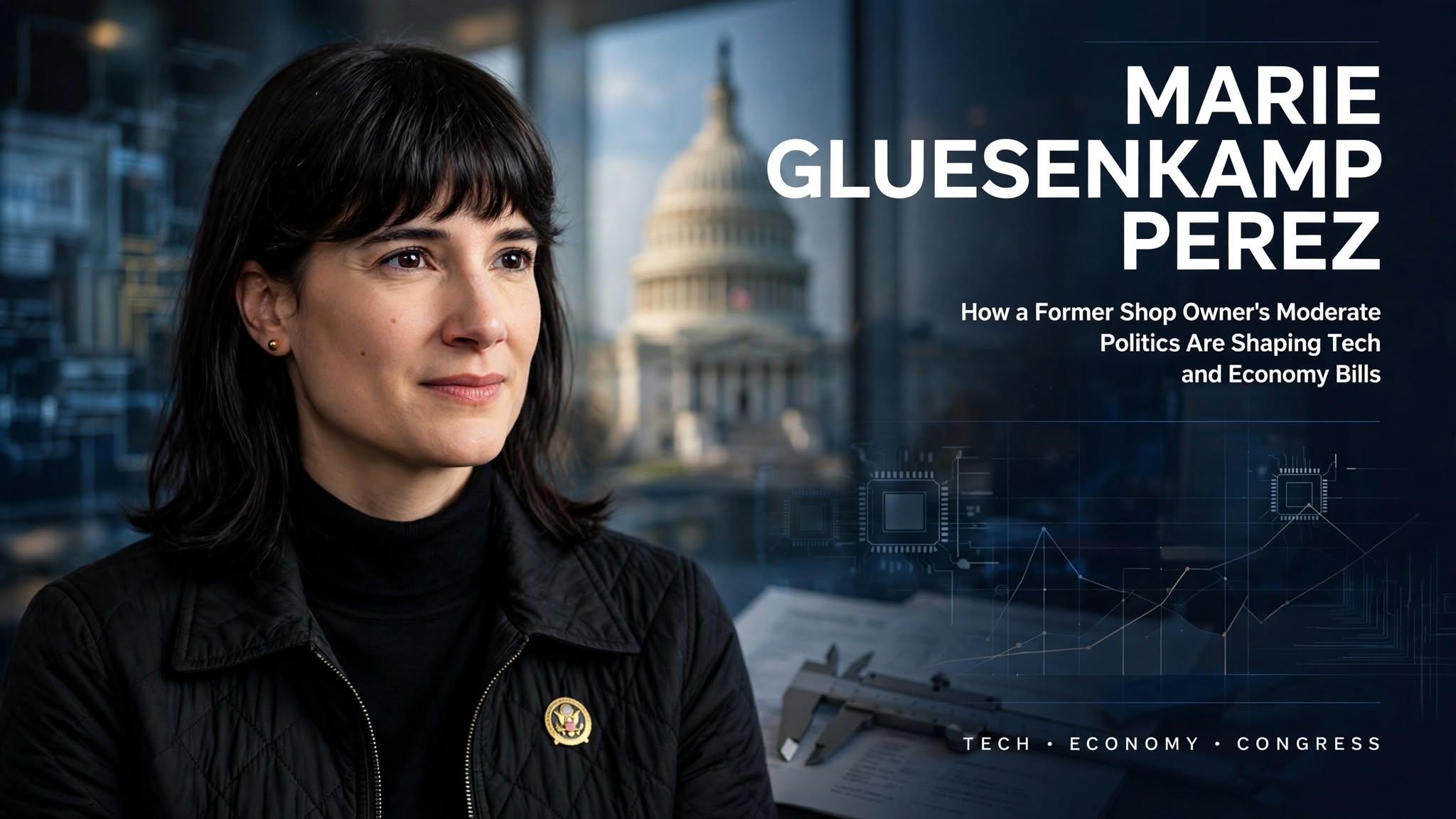
Marie Gluesenkamp Perez: How a Former Shop Owner’s Moderate Politics Are Shaping Tech and Economy Bills
Key Takeaways
- Rep. Marie Gluesenkamp Perez (D-WA-3), a former auto repair shop co-owner, has built a legislative record centered on right-to-repair, trades workforce development, and semiconductor manufacturing funding.
- She helped secure a $105 million federal investment for Analog Devices, including $80 million for Pacific Northwest projects, to modernize domestic semiconductor fabrication — reinforcing Washington’s “Silicon Forest” manufacturing base.
- Described as one of the House’s most centrist Democrats, she sits in the Problem Solvers Caucus, the Blue Dog Coalition, and the Congressional Hispanic Caucus, and serves on the House Appropriations Committee.
- She is seeking a third term in the 2026 midterms against Republican John Braun, the Washington State Senate minority leader.
- Her legislative approach consistently favors practical, trade-oriented policy over ideological framing — a positioning that has made her a notable swing-district data point heading into November.
From Auto Shop to Appropriations Committee
Gluesenkamp Perez co-owned an auto repair and machine shop with her husband before her 2022 upset win over Republican Joe Kent, a race she repeated and won again in 2024. That hands-on business background has directly shaped her legislative priorities: she has pushed bipartisan right-to-repair legislation for agricultural equipment, introduced the Fairness for the Trades Act to expand 529 education savings plans to cover trade-career tools, and worked to ease regulatory burdens on small businesses like the one she used to run.
The Semiconductor Funding Win
In one of her more tangible economy-facing wins, Gluesenkamp Perez — alongside Washington Senators Patty Murray and Maria Cantwell — helped secure $105 million for Analog Devices to modernize domestic chip fabrication, with $80 million specifically benefiting Pacific Northwest facilities, including an expansion in Camas. The investment targets mature-node semiconductors used in automotive, healthcare, aerospace, defense, and consumer electronics — chips that are less headline-grabbing than AI accelerators but arguably more embedded in everyday supply chains (a theme covered in our companion piece on 2026 silicon supply chain risk).
Where She Sits Politically
Caucus memberships tell their own story: Problem Solvers Caucus, Blue Dog Coalition, and Congressional Hispanic Caucus place her firmly in the House’s center-right Democratic lane. She has been publicly described as one of the chamber’s most centrist Democrats, willing to break from party lines on specific votes. Her appropriations work has focused heavily on constituent-level wins — from mobile home energy-efficiency provisions to Secure Rural Schools reauthorization — over broader ideological legislation.
2026 Midterm Context
Gluesenkamp Perez is defending her seat in Washington’s 3rd Congressional District against John Braun, the Washington State Senate’s Republican minority leader — a race widely watched as a bellwether for how centrist Democrats in competitive districts perform in the 2026 midterms.
What is Marie Gluesenkamp Perez known for in Congress?
Rep. Gluesenkamp Perez (D-WA-3) is known for centrist, trades- and small-business-focused legislation, including right-to-repair bills and a $105 million semiconductor manufacturing investment for the Pacific Northwest. She sits on the House Appropriations Committee and is seeking a third term in 2026 against Republican John Braun.
Discover more from The Economy
Subscribe to get the latest posts sent to your email.

Solar Panel Installation Cost in 2026: Why the Math Changed Overnight

Business Insurance: What Coverage You Actually Need and What It Costs in 2026

Auto Insurance Quotes: How to Get the Lowest Rate Without Losing Coverage

Huntington Online Banking: Full Features, Fees, and How It Compares in 2026

Apply for a Bank Account Online: What You Need and How Long It Actually Takes

World’s Largest Economies: Ranking the Top Global Powers

Business Loan: A Complete 2026 Guide to Rates, Types, and Qualifying

Fast Invoice Factoring: How to Turn Unpaid Invoices Into Cash Within 24 Hours

Investment Banking Services: What They Cost and How to Choose the Right Firm in 2026

Structured Settlement Loan: What “Cash Now” Offers Actually Cost You

DUI Attorney: Why Your First Call After an Arrest Should Never Be to the Court

Personal Injury Lawyer: A Complete Guide to Filing Your Claim in 2026

Commercial Vehicle Accident Lawyer: Holding Companies Accountable Beyond the Driver

Inside the White House Feud: How Trump’s Allies Are Painting Anthropic’s Dario Amodei as the Face of ‘AI Doomerism’

Top 30 Stocks for Investment in PSX for Massive ROI in 2026

SpaceX Starship Flight 14: First Orbital Attempt & Starlink V3 Launch Explained

Oil Prices Break $100 in 2026: Middle East Conflict & Energy Markets

Fidelity Investments Review 2026: SPAXX Yields & Zero-Fee Funds

AI Chip Stocks 2026: The Best Semiconductor Investments Beyond Marvell

BRICS+ Cross-Border Payments 2026: Interoperability Explained

Tween Back-to-School Trends 2026: What’s Driving the $85B Season

10-Year Treasury Yield Hits 4.80%: What It Means for Rates & Portfolios

Shein Clothes Quality & Safety in 2026: What Lab Tests Show

China’s US$10.8 Billion Trade Shortcut: Why the Pinglu Canal Matters

MRVL Earnings 2026: Why Marvell Sank Despite Beating Estimates

IMF & World Bank 2026 Global Economic Outlook: Growth, Inflation, Debt

High-CPM Finance Niches 2026: Publisher Monetization Blueprint

Middle East War Economics 2026: Oil Prices & Energy Markets
-

 Markets & Finance9 months ago
Top 15 Stocks for Investment in 2026 in PSX: Your Complete Guide to Pakistan’s Best Investment Opportunities
-

 Analysis7 months ago
Johor’s Investment Boom: The Hidden Costs Behind Malaysia’s Most Ambitious Economic Surge
-

 Analysis7 months ago
Top 10 Stocks for Investment in PSX for Quick Returns in 2026
-

 Banks8 months ago
Best Investments in Pakistan 2026: Top 10 Low-Price Shares and Long-Term Picks for the PSX
-

 Analysis8 months ago
Brazil’s Rare Earth Race: US, EU, and China Compete for Critical Minerals as Tensions Rise
-

 Investment9 months ago
Top 10 Mutual Fund Managers in Pakistan for Investment in 2026: A Comprehensive Guide for Optimal Returns
-

 Global Economy9 months ago
15 Most Lucrative Sectors for Investment in Pakistan: A 2025 Data-Driven Analysis
-

 Global Economy9 months ago
Pakistan’s Export Goldmine: 10 Game-Changing Markets Where Pakistani Businesses Are Winning Big in 2025