
AI
AI’s Energy Hunger Is Rewriting Global Power Markets: Reshaping the World Economy

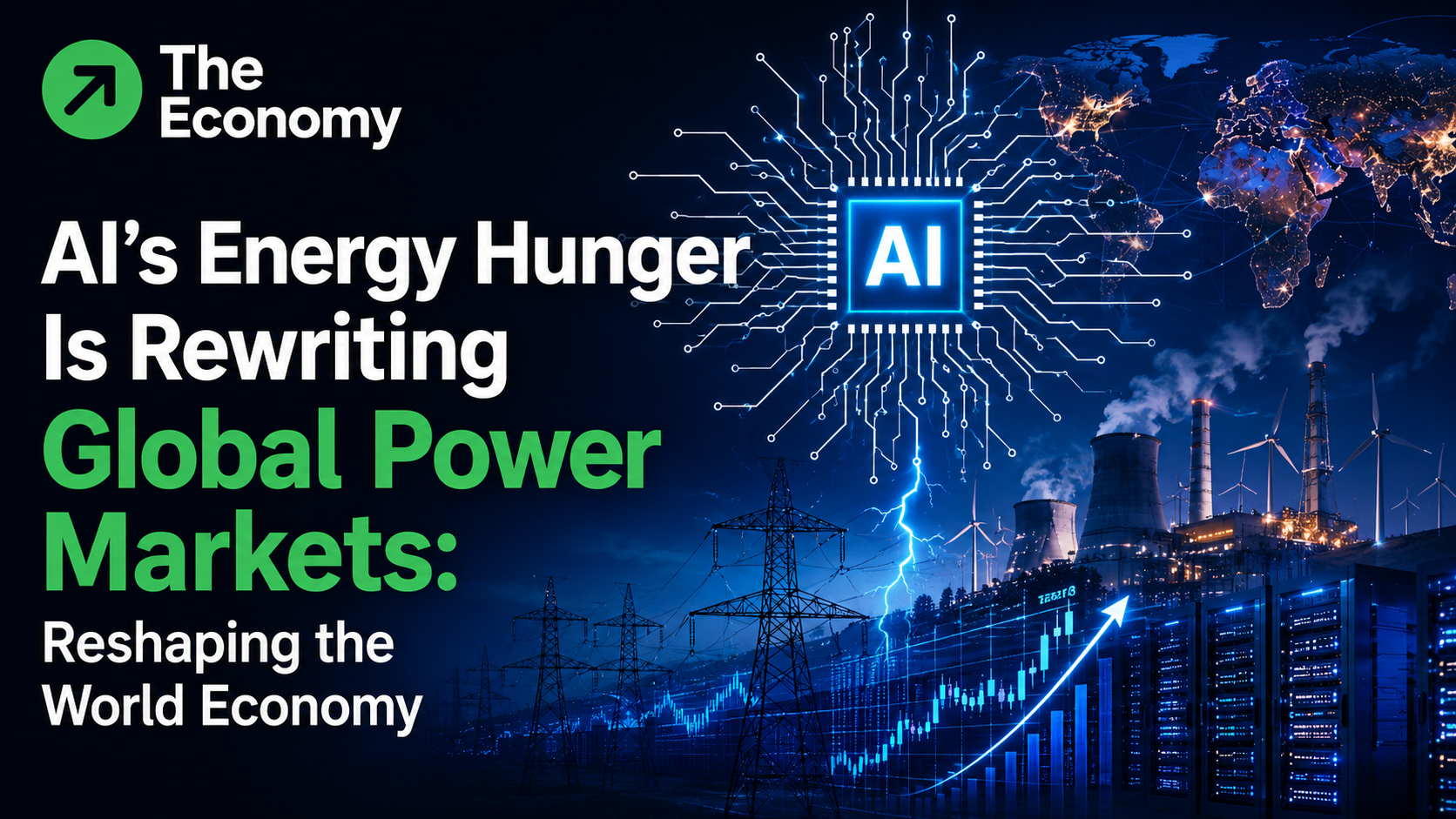
AI’s insatiable electricity demand is driving a global energy infrastructure race worth trillions of dollars, benefiting gas turbine makers, copper miners, and clean energy firms. Here is why AI is now the dominant force reshaping global power markets.
When Every Chatbot Needs a Power Plant
The AI revolution is not just reshaping software and business models. It is fundamentally rewriting the economics of global energy infrastructure — and the capital flows that follow.
The Middle East supply disruption has served as a reminder of how the world’s energy system remains largely dependent on a few critical chokepoints — at a time when electricity demand, driven in no small part by AI, is rising faster than expected. This collision of geopolitical energy risk and surging structural demand from AI is creating one of the most significant investment themes of the decade.
The numbers are stark. A single large-scale AI data center today consumes as much electricity as a small city. Training a major frontier AI model can consume megawatt-hours that would power thousands of homes. And the global buildout of AI infrastructure — with hyperscalers like Microsoft, Google, Amazon, and Meta each spending hundreds of billions annually — shows no signs of slowing. Micron’s earnings this week, with AI memory revenue up 346% year over year, are simply the financial manifestation of this physical infrastructure wave.
The Winners: Who Benefits from AI’s Energy Hunger?
Companies positioned to benefit from rising electricity demand have dramatically outperformed, from gas-turbine manufacturers to copper producers to clean-energy firms helping expand power systems for AI and electrification. BlackRock’s investment institute — managing assets on behalf of institutional clients globally — has specifically highlighted this theme as central to its mid-2026 outlook.
The key beneficiary categories:

Gas Turbine Manufacturers: Companies like GE Vernova, Siemens Energy, and Mitsubishi Heavy Industries are booking record orders as utilities and data center developers race to add firm, dispatchable power capacity. Gas turbines bridge the gap between intermittent renewables and baseload demand — a critical role in a world where AI data centers need 24/7 guaranteed power.
Copper Miners: Every data center, every EV charger, every solar panel and wind turbine requires copper. AI-driven electrification is driving the most significant copper demand surge in decades. The STOXX Global Copper Miners Index has significantly outperformed broader markets in 2026.
Clean Energy Infrastructure: Solar, wind, and battery storage projects are being signed at record pace to supply tech giants’ renewable energy commitments. Clean energy developers are benefiting from both policy support and AI-driven corporate demand.
Nuclear Power: Several major tech companies have struck agreements with nuclear power developers — including deals with small modular reactor (SMR) startups — seeking carbon-free baseload power at the scale AI requires.
The Iran War’s Unintended Consequence: Accelerating Energy Diversification
The Hormuz crisis has added powerful new urgency to long-term energy diversification strategies. Countries and companies are intensifying efforts to reduce hydrocarbon dependence through accelerated electrification, and resource-rich producers outside the Gulf, including US LNG exporters, are benefiting from growing demand for supply diversification.
AI infrastructure investment is now converging with geopolitical energy security investment in a reinforcing loop: tech companies want clean power, governments want energy independence, and both are driving massive capital flows into electricity infrastructure. This is arguably the most powerful structural investment theme of the next decade.
The PCE Data Moment: What Markets Watch This Week
This week, US core PCE inflation data will be in focus as markets assess whether higher energy costs are feeding into underlying price pressures. Today — June 25 — the May PCE price index is released, along with the Q1 GDP final estimate and May durable goods orders. These releases will either validate or challenge the Fed’s hawkish pivot.
If PCE shows energy inflation beginning to fade (consistent with the oil price decline of recent days), the Fed’s rate hike path could be moderated. If core PCE remains sticky, the September rate hike implied by current dot plot projections becomes nearly certain.
FAQ
Q: How much electricity do AI data centers consume? A single large-scale AI data center can consume 100–500 megawatts of electricity continuously. The global AI data center buildout is expected to add hundreds of gigawatts of new electricity demand over the coming decade — roughly equivalent to adding several additional countries’ electricity consumption to the global grid.
Q: Why is copper important to AI infrastructure? Copper is essential for electricity transmission, data center cooling systems, EV charging infrastructure, and renewable energy installations. AI-driven electrification is creating a structural increase in copper demand that analysts compare to the Industrial Revolution in its intensity.
Q: Which energy source is best suited for AI data centers? AI data centers require 24/7 reliable power — something intermittent renewables alone cannot provide. The optimal mix appears to be firm power (gas turbines, nuclear) combined with renewables to meet clean energy commitments. Nuclear power, especially small modular reactors, is gaining significant interest from tech companies seeking reliable, carbon-free baseload power.
Discover more from The Economy
Subscribe to get the latest posts sent to your email.



Britain’s labour market has now been shedding jobs for as long as it did during the depths of the global financial crisis — and this time, employers are explicitly naming artificial intelligence as a reason for the cuts.
The closely watched S&P Global/CIPS Purchasing Managers’ Index showed services firms and the wider private sector reducing headcount for a 22nd consecutive month in July 2026, according to data reported by Bloomberg. That run now equals the length of the downturn seen during the 2008-09 crash in the dominant services sector, and is just one month short of matching it across the wider economy.
A Downturn Two Years in the Making
Unlike the 2008 crisis, which was triggered by a sudden banking collapse, this slump has crept up gradually. The survey shows the pace of job losses easing slightly in July compared with prior months, but the cumulative duration — nearly two full years of continuous headcount reduction — is what has alarmed economists watching the data, as detailed by Staffing Industry Analysts.
Crucially, firms surveyed gave two distinct explanations for the cuts: general cost-reduction efforts, and — increasingly — a reduced need for workers after investing in AI tools to boost productivity. That second factor marks a shift from earlier phases of the downturn, when cost pressure alone dominated employer commentary.
The PMI Numbers Behind the Story
The deterioration has been building for months. Earlier readings from S&P Global’s official PMI release showed the sector losing momentum steadily through the spring, with survey respondents explicitly citing the fallout from the US-Iran conflict as a drag on client confidence, layered on top of already-elevated domestic political uncertainty.
Separate flash data tracked by FX.co showed the UK Services PMI slipping to 48.7 in June — below the 50.0 threshold that separates expansion from contraction, and short of the 50.5 markets had expected. That marked the sharpest downturn since January 2023, driven by weaker new business volumes, shrinking order backlogs and further job cuts, even as input cost inflation — from transport to IT equipment surcharges — continued to squeeze margins.
The survey’s own methodology notes are telling: data collected in June found “a sustained reduction in backlogs of work across the service economy, largely reflecting a lack of pressure on business capacity due to weak demand,” according to the official S&P Global report. In plain terms, companies have less work to do, and they are responding by not replacing staff who leave rather than launching mass redundancy rounds — a slower but more persistent form of labour market erosion.
The Political Backdrop
The prolonged downturn deepens pressure on the Labour government, which took office in the summer of 2024 promising to reinvigorate growth. Nearly two years of continuous private-sector job losses is a difficult data point for any incumbent administration to explain away, particularly as it now sits alongside separately reported gilt market volatility and scrutiny of the Bank of England’s policy path.
Why AI Is a Different Kind of Headwind
What distinguishes this downturn from previous UK labour market slumps is the structural, rather than purely cyclical, nature of some of the job losses. Employers citing AI-driven productivity gains as a reason for not replacing departing staff suggests that even a rebound in demand may not translate into a proportional rebound in hiring — a dynamic that echoes concerns raised in the US, where financial-sector employment — an industry widely seen as exposed to AI adoption — has fallen to a four-year low.
Economists warn this creates a harder policy problem than a conventional cyclical downturn. Interest rate cuts and fiscal stimulus can revive demand, but they do less to reverse a structural shift in how many workers a given level of output requires.
What to Watch Next
Three data points will determine whether Britain’s labour market stabilises or deteriorates further into autumn:
- The August PMI releases, which will show whether July’s slight easing in the pace of job cuts was a genuine inflection point or a one-month pause.
- Bank of England commentary on how much weight it assigns to labour market weakness versus persistent inflation in setting the path for interest rates.
- Sector-level AI adoption data, particularly in financial and professional services, where the productivity-driven hiring freeze appears most entrenched.
The Bottom Line
Two years of continuous UK private-sector job cuts is no longer a temporary post-pandemic adjustment — it has become the longest sustained labour market downturn since the financial crisis. With employers now openly citing AI adoption alongside cost discipline as drivers of headcount reduction, the shape of any eventual recovery may look very different from past cycles: output could recover well before payrolls do.
Discover more from The Economy
Subscribe to get the latest posts sent to your email.
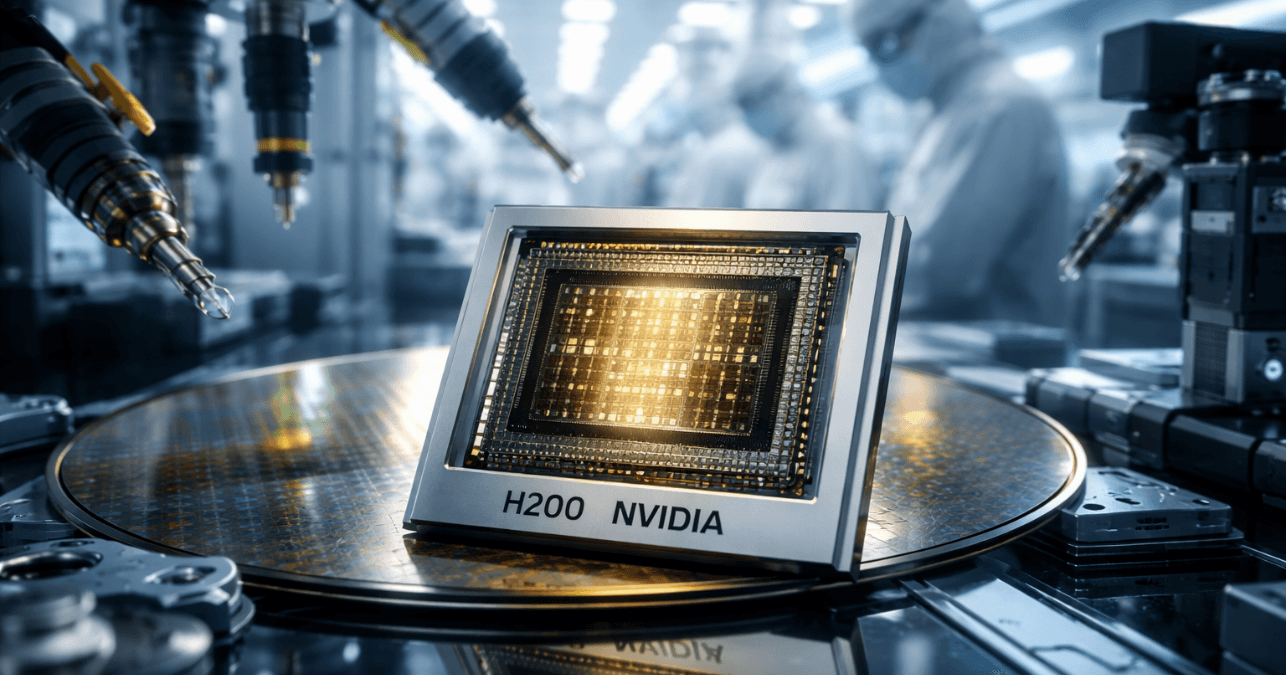
Nvidia has begun shipping its advanced H200 AI chips to China under a reversed US export policy, but the volumes moving so far are, in the words of a senior Commerce Department official, “trivial” — even as Chinese technology firms have collectively ordered more than two million units against a global Nvidia inventory of roughly 700,000.
A Policy Reversal That Remains Mostly Symbolic
Under Secretary of Commerce for Industry and Security Jeffrey Kessler told Congress on 14 July that H200 shipments to China remain minimal despite roughly $10 billion in approved licenses, according to TechTimes. Washington has approved sales to roughly ten Chinese firms — including Alibaba, Tencent, ByteDance, and JD.com — with each cleared buyer permitted to purchase up to 75,000 chips through Nvidia directly or via authorised distributors Lenovo and Foxconn.
The scale of pent-up Chinese demand dwarfs what can actually be delivered. Chinese technology companies have collectively ordered more than two million H200 chips for 2026, against Nvidia’s total global inventory of roughly 700,000 units — a supply gap severe enough to force emergency production discussions with TSMC to restart manufacturing of the older Hopper-generation chip architecture, according to the same TechTimes reporting.
Bipartisan Political Backlash in Washington
The limited shipments have nonetheless triggered a sharp political divide in Congress. Democratic Representative Gregory Meeks, the top Democrat on the House Foreign Affairs Committee, accused the administration of weakening safeguards by approving advanced AI chip licenses, describing export controls as being used as a bargaining chip in broader trade negotiations with China. Republican Representative Bill Huizenga separately criticised the Commerce Department over a reported loophole allowing Chinese subsidiaries operating outside mainland China to acquire the more advanced Blackwell-generation chips despite restrictions targeting the mainland market.
The Policy Architecture Is Genuinely Contradictory
The current framework traces back to a December 2025 announcement by President Trump permitting H200 sales to China, formally codified by the Commerce Department in January 2026 alongside conditions experts have called self-contradictory, according to detailed policy analysis from Semiconductor Insight. Those conditions include a 25% tariff on advanced AI chips meeting specific performance thresholds under Section 232 of the Trade Expansion Act, case-by-case licensing replacing a prior blanket presumption of denial, mandatory end-use certifications, and a volume cap estimated at roughly one million H200 units — about half of what Chinese buyers have already ordered.
The buyer list has continued to expand in recent weeks. Newly cleared purchasers include a unit of telecom equipment maker ZTE and a server assembly firm, alongside a cloud computing subsidiary of Kingsoft cleared to purchase competing AMD chips, according to Technetbook.
Why the Ambiguity Itself Is Costly
Perhaps the most consequential effect of the policy has been on long-term planning rather than near-term volume. Nvidia has not recovered the Chinese customer base it lost after roughly a year of regulatory uncertainty, as export controls introduced in 2022 and escalated under both the Biden and Trump administrations had already pushed the company’s China market share from roughly 95% toward zero, according to Semiconductor Insight’s analysis. Customers requiring long-term procurement certainty are reportedly reluctant to commit against a policy framework that could reverse again within months — while a bipartisan group of lawmakers has separately pushed Commerce Secretary Howard Lutnick and Secretary of State Marco Rubio toward a complete country-level ban on chipmaking equipment exports to China.
What It Means for Investors and the AI Supply Chain
For semiconductor investors, the H200 saga illustrates how thoroughly US-China technology policy has become entangled with broader trade diplomacy — a dynamic that leaves Nvidia’s China revenue outlook genuinely unpredictable regardless of near-term shipment volumes. For TSMC and its packaging partners, the emergency restart of Hopper-generation production lines signals capacity strain that may persist regardless of how the export-control debate ultimately resolves.
What to Watch
The Commerce Department’s enforcement posture on the reported Blackwell subsidiary loophole, along with any Congressional movement toward the proposed blanket equipment-export ban, will be the clearest signals of whether Washington’s China chip policy is heading toward further liberalisation or a renewed crackdown.
Discover more from The Economy
Subscribe to get the latest posts sent to your email.
AI
Anthropic Offers Up to $600,000 Salary for Critical IPO Role as AI Giant Prepares for Wall Street Debut

As anticipation builds around what could become one of the largest technology listings in recent history, artificial intelligence company Anthropic is offering an eye-catching base salary of up to $600,000 for a key investor relations position, underscoring how seriously the company is preparing for its expected initial public offering (IPO).
The San Francisco-based AI developer, best known for its Claude family of AI models, has posted a vacancy for a Director of Investor Relations with a base compensation ranging from $425,000 to $600,000, making it one of the most strategically important hires ahead of its anticipated public market debut. According to a report by Business Insider, the company is expected to pursue an IPO as early as fall 2026, following a surge in valuation and extraordinary revenue growth.
A Strategic Hire Ahead of a Landmark IPO
The investor relations director will be responsible for shaping Anthropic’s investment narrative, maintaining relationships with institutional investors, and helping Wall Street understand the company’s long-term strategy and financial outlook.
According to the job description, the successful candidate will:
- Develop Anthropic’s investment story for public markets.
- Serve as a primary liaison between executive leadership and investors.
- Analyze AI industry developments and communicate their financial implications.
- Support earnings communications, investor presentations, and regulatory disclosures.
- Work closely with the company’s newly appointed Head of Investor Relations.
The position reports into Kenneth Dorell, who joined Anthropic earlier this year after previously leading investor relations at Meta. His appointment reflects the company’s broader effort to build an experienced leadership team capable of navigating public market expectations.
Why Investor Relations Matters More Than Ever
While investor relations roles are common among public companies, they become especially significant during the transition from private to public ownership.
For Anthropic, the challenge extends beyond explaining quarterly financial results. The company must convince investors that its massive investments in AI research, computing infrastructure, and talent acquisition can translate into sustainable long-term growth.
Unlike many traditional software companies, Anthropic operates as a public benefit corporation, meaning it is legally committed to balancing shareholder returns with the responsible development of advanced artificial intelligence. The company’s official mission emphasizes building reliable, interpretable, and safe AI systems for the long-term benefit of society, according to the company’s website.
This dual mandate creates a unique communication challenge for investor relations executives, who must explain how commercial success aligns with responsible AI development.
AI Boom Drives Extraordinary Compensation
The offered salary highlights the increasingly fierce competition for executive talent across the AI industry.
Although a base salary of $600,000 is exceptional by conventional corporate standards, compensation at leading AI companies frequently includes stock awards, bonuses, and long-term incentives that can substantially increase total earnings.
Anthropic has become one of Silicon Valley’s fastest-growing companies, with demand for its enterprise AI products accelerating rapidly. The company’s coding assistant, Claude Code, has gained significant traction among software developers and businesses seeking AI-powered programming tools.
Recent reporting indicates that Anthropic’s annualized revenue has expanded dramatically as enterprise adoption of generative AI continues to accelerate, strengthening investor expectations ahead of a potential IPO.https://www.businessinsider.com/anthropic-ipo-hiring-investor-relations-director-2026-7
Preparing Wall Street for an Unconventional AI Company
Anthropic’s investor relations team faces a unique assignment.
Unlike mature technology companies with decades of operating history, frontier AI companies remain difficult to value because they invest billions of dollars annually in computing infrastructure, model training, and research talent while operating in a rapidly evolving competitive environment.
Potential investors will likely seek clarity on several key questions:
- Future profitability.
- Infrastructure spending.
- AI safety governance.
- Regulatory risks.
- Competitive positioning against OpenAI, Google, Meta, and xAI.
- Long-term monetization strategy.
The investor relations director will play a central role in translating these complex issues into a compelling investment thesis.
Strong Financial Momentum Strengthens IPO Expectations
Anthropic has emerged as one of the world’s most valuable privately held AI companies.
Backed by major investors including Amazon and Google, the company has attracted substantial funding over the past several years while rapidly expanding its enterprise customer base.
Its Claude models have become widely used for coding, research, enterprise automation, and business productivity, placing Anthropic among the strongest competitors to OpenAI.
The company’s remarkable financial momentum has fueled growing speculation that its IPO could become one of the defining public offerings of the AI era.
Competition for AI Talent Intensifies
The generous compensation package also reflects the broader battle for experienced executives across the artificial intelligence sector.
Companies developing frontier AI systems increasingly compete not only for elite researchers and engineers but also for specialists in finance, public markets, communications, and regulatory affairs.
As valuations continue climbing into the hundreds of billions of dollars, experienced executives capable of guiding companies through IPOs have become increasingly valuable.
Industry observers expect executive compensation across AI firms to remain elevated as competition intensifies.
The Bigger Picture
Anthropic’s decision to offer a base salary reaching $600,000 for an investor relations executive sends a clear signal that preparations for public markets are accelerating.
Beyond the headline salary, the recruitment reflects a broader transformation within the AI industry. As companies mature from venture-backed startups into global technology leaders, success increasingly depends not only on breakthrough research but also on convincing investors that enormous AI investments can produce sustainable long-term returns.
If Anthropic proceeds with its widely anticipated IPO, this investor relations hire could become one of the most influential behind-the-scenes roles in shaping how one of the world’s most valuable AI companies is introduced to public investors.
Sources
- Business Insider, Anthropic is offering a $600,000 salary for one of its most important IPO hires: https://www.businessinsider.com/anthropic-ipo-hiring-investor-relations-director-2026-7
- Anthropic, Official Company Website: https://www.anthropic.com/
Discover more from The Economy
Subscribe to get the latest posts sent to your email.

Top 15 Financial Stocks for Investment in PSX

Pakistan Exports 2026: Record $35.6B Forecast Masks Trade Deficit Risk

UK’s Jobs Downturn Now Matches the 2008 Financial Crisis — And AI Is Accelerating It

Fed Rate Cut Bets Surge After Shock US Jobs Report Exposes Labor Market Cracks

Pakistan’s Trade Gap Widens to $3.95bn Despite Meeting FY26 Current Account Target

Why Ottawa Is Betting on Dubai: Inside Canada’s Gulf Trade Pivot

UK Wealth Tax Fears Trigger Record £13.9bn Investor Exodus Ahead of October Budget

July Jobs Shock: Why the Fed’s September Rate Decision Just Flipped (2026 Analysis)

Global Growth Forecast 2026: IMF, World Bank Outlooks and the “Slow-Hire, Slow-Fire” Labor Market

Pakistan Agriculture 2026: Sindh’s Cotton Surge vs. Punjab’s Monsoon Decline

Gold Price 2026: Why Bullion Has Fallen 25% From Its January Record High

Airfare Prices 2026: Why Flights Are Up 26.5% and What Could Finally Bring Fares Down

Indonesia Investment 2026: Record Q2 Realization vs. Falling FDI Confidence

Russia Oil Revenue 2026: The Iran War Windfall and What a Hormuz Deal Means for Moscow

Gold Price Forecast 2026: Fed’s July 29 Decision and Record Central Bank Buying Explained

China Politburo July 2026: Stimulus Signals Explained

Pakistan Economy 2026: GDP Grows 3.7% as IMF Completes EFF Review Amid Middle East Risk

Strait of Hormuz Blockade 2026: Oil Prices Surge 9% as US-Iran Conflict Reignites

Down But Not Out: Inside the Slow Sinking of Russia’s War Economy

Apple vs OpenAI Lawsuit: The Economic Story Behind the Headline

Gulf Capital Retreat From Pakistan 2026: UAE Loan Freeze & What It Means

The Yuan Now Settles 67% of Russian Oil Payments — Quiet De-Dollarization in Action

Global Stock Market Selloff 2026: Stagflation Fears Return as Iran Conflict Reignites

Pakistan’s Economic Survey FY26: Inflation Spike Insights

Russia’s Shadow Fleet Insurance Economy: How Sanctions Really Work in 2026

Strait of Hormuz Crisis 2026: How Trump’s Toll U-Turn Exposes Global Economic Risk

Russia Fuel Shortages 2026: Inside a Cracking War Economy

Bank of England Rate Decision Amid Energy Crisis
-

 Markets & Finance7 months ago
Top 15 Stocks for Investment in 2026 in PSX: Your Complete Guide to Pakistan’s Best Investment Opportunities
-

 Analysis6 months ago
Johor’s Investment Boom: The Hidden Costs Behind Malaysia’s Most Ambitious Economic Surge
-

 Analysis6 months ago
Top 10 Stocks for Investment in PSX for Quick Returns in 2026
-

 Analysis6 months ago
Brazil’s Rare Earth Race: US, EU, and China Compete for Critical Minerals as Tensions Rise
-

 Banks7 months ago
Best Investments in Pakistan 2026: Top 10 Low-Price Shares and Long-Term Picks for the PSX
-

 Investment7 months ago
Top 10 Mutual Fund Managers in Pakistan for Investment in 2026: A Comprehensive Guide for Optimal Returns
-

 Global Economy8 months ago
15 Most Lucrative Sectors for Investment in Pakistan: A 2025 Data-Driven Analysis
-

 Global Economy8 months ago
Pakistan’s Export Goldmine: 10 Game-Changing Markets Where Pakistani Businesses Are Winning Big in 2025