
AI
The AI Revolution Needs Atomic Power. Southeast Asia Is Ready to Build It.

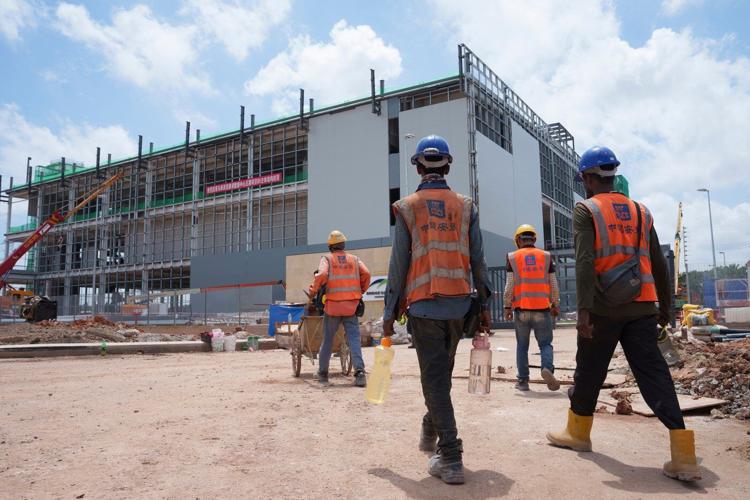
As Silicon Valley’s artificial intelligence boom triggers a global power strain, Southeast Asia’s new energy masterplan offers a pragmatic blueprint: integrating nuclear reactors with cross-border grids to sustain the digital future.
Across the tech corridors of Johor, Singapore, and West Java, massive server farms are quietly transforming Southeast Asia into the engine room of the global artificial intelligence economy. Every algorithmic query, large language model training run, and cloud computation requires staggering amounts of electricity. Yet, beneath this digital gold rush lies a uncomfortable physical reality: the region’s power grids are reaching their threshold, caught in a high-stakes collision between soaring energy demand and urgent net-zero climate imperatives.
For years, policy circles framed the energy transition as a binary choice between expanding weather-dependent solar and wind arrays or continuing a hazardous reliance on coal and natural gas. But the sheer scale of the AI boom has shattered this false dichotomy. Hyper-scale data centres require uninterrupted 24/7 baseload power—a standard that intermittency-prone renewables alone cannot guarantee without prohibitively expensive battery storage. To solve this dilemma, Southeast Asia is embarking on a bold pivot: embracing nuclear power as a foundational pillar of its upcoming regional energy architecture.
| “Small Modular Reactors represent a paradigm shift: providing clean, continuous baseload power directly adjacent to digital infrastructure clusters without straining fragile municipal grids.” |
The Shift Toward Small Modular Reactors
Unlike the gigawatt-scale conventional atomic plants of the twentieth century, which suffered from notorious construction delays and massive capital requirements, modern nuclear strategy centers on Small Modular Reactors (SMRs). Producing between 50 and 300 megawatts per unit, SMRs offer factory-fabricated scalability, advanced passive safety mechanisms, and a footprint compact enough to sit alongside industrial parks or sub-grid data hubs.
Across the Association of Southeast Asian Nations (ASEAN), member states are already establishing tactical readiness pathways:
- Vietnam: Re-engaging international vendor partnerships and updating its nuclear regulatory policy under International Atomic Energy Agency (IAEA) guidance to supply high-density manufacturing and processing corridors.
- Indonesia: Targeting early SMR deployments across its vast archipelago, offering off-grid clean electricity to power remote technological and industrial nodes outside Java.
- Malaysia: Reviving its Nuclear Energy Program Implementation Organization to support rapid data centre expansion in Johor and the Klang Valley while keeping power tariffs competitive.
- Singapore: Conducting rigorous feasibility studies into next-generation nuclear tech, paving the way for low-carbon energy imports through cross-border trade agreements.
Cross-Border Integration & Global Implications
The true strategic force multiplier lies in integrating nuclear energy into the multilateral ASEAN Power Grid (APG). By allowing nuclear-generated electricity to flow across borders alongside hydro and solar power, Southeast Asia can achieve grid resiliency that individual countries could never build alone. During dry seasons when hydroelectric output wanes, continuous nuclear generation keeps cross-border interconnectors energized and data centres operational.
For international policymakers in Washington and European capitals, Southeast Asia’s nuclear transition carries profound geopolitical implications. Western reactor developers must engage proactively with financing frameworks and regulatory assistance; failing to do so risks ceding civil nuclear leadership in the Indo-Pacific to state-backed entities from rival powers.
A Pragmatic Path Forward
Navigating this nuclear dawn will not be without hurdles. Updating legal safety frameworks, securing public trust, and unlocking private capital will require sustained international coordination. However, the economic incentive could not be clearer. In an era where computational power dictates national competitiveness, securing clean, reliable, and scalable energy is no longer just an environmental goal—it is a core national security imperative.
By aligning its digital ambition with atomic innovation under the new ASEAN Energy Masterplan, Southeast Asia is offering a valuable lesson to the world: the AI revolution does not have to compromise our climate targets—provided we have the courage to power it smartly.
Discover more from The Economy
Subscribe to get the latest posts sent to your email.



China’s explosive growth in AI usage marks a pivotal turn from building models to putting them to work. But conflicting token estimates, soaring infrastructure bills and weak pricing power complicate the story of a technological breakthrough.
For years, the global artificial-intelligence contest was measured by the scale of models being trained: the number of parameters, the sophistication of chips and the cost of the next spectacular breakthrough. China’s latest figures suggest that a different contest is moving to the centre of the industry. The question is no longer only who can build the smartest machine. It is who can afford to run intelligent software, continuously, for millions of customers and across entire industrial systems.
A report released on October 31 by the China Centre for Information Industry Development (CCID), a research organisation linked to the Ministry of Industry and Information Technology, says data used to run AI models — known as inference — has overtaken the data used to train them. The institute reported more than 175 trillion daily token calls by June 2026, more than 1,000 times the volume at the beginning of 2024, according to the South China Morning Post’s November 2 account.
That is a meaningful marker of adoption, but it should not be confused with proof that China now leads the world in AI computing, or that the companies processing those tokens are earning attractive profits. More importantly, the milestone is not quite as new as the headlines imply.
The overlooked fact: China had reported the crossover months earlier
On April 29, 2026, China’s National Data Administration published findings from its 2025 national data-resource survey. The government announcement said the combined volume of data used for AI training and inference in 2025 reached 199.48 exabytes, of which 101.34 exabytes was attributed to inference. By subtraction, training accounted for roughly 98.14 exabytes. Inference therefore represented approximately 50.8% of the measured total.
The government had already described this as the first time inference-data volume exceeded training-data volume. October’s CCID statement is better understood as further evidence of the shift, not the first public announcement that it had happened.
A second complication is that the latest usage estimates do not agree. CCID’s figure is more than 175 trillion daily token calls in June. Yet an October 12 report carried by Xinhua, citing the National Data Administration, says average daily token calls had surpassed 500 trillion by June. A separate late-October analysis from the China Academy of Information and Communications Technology likewise described daily token consumption of roughly 500 trillion.
The two figures differ by nearly a factor of three if the lower one is treated as 175 trillion. That does not automatically mean one report is wrong: they may cover different providers, kinds of token traffic or counting methods. But the publicly available accounts do not reconcile their scope well enough to justify treating either number as a complete, directly comparable measure of national AI activity.
What China’s AI figures actually measure
| Indicator | Reported figure | Period | How to interpret it |
|---|---|---|---|
| Training and inference data combined | 199.48 exabytes | Full year 2025 | Total reported data volume, not GPU computation |
| Data attributed to inference | 101.34 exabytes | Full year 2025 | About 50.8% of that measured total |
| Data attributed to training | About 98.14 exabytes | Full year 2025 | Calculated as the difference, not separately quoted |
| Daily token calls | 100 trillion | End of 2025 | National Data Administration historical figure |
| Daily token calls | More than 175 trillion | June 2026 | CCID-reported figure |
| Daily token calls or consumption | More than/about 500 trillion | June 2026 | Reported separately by official and industry sources; scope may differ |
| Generative-AI users | More than 700 million | End of June 2026 | People counted as users, not necessarily daily active users |
Sources: China’s National Data Administration, SCMP reporting on CCID, Xinhua on token activity, and Xinhua on generative-AI users. Different units and samples should not be merged into a single growth series.
Training versus inference: why this distinction changes the business model
Training is the expensive process through which a model learns statistical patterns from vast datasets. It typically requires intensive computing over a defined period. Inference begins after a model is deployed: each time a customer asks a chatbot a question, a coding assistant edits a program or an automated agent reviews an invoice, the model consumes and produces tokens.
A token is a unit of information a model processes, often a fragment of a word in text applications. Token size and significance vary across models and content types. An inference request can contain input tokens, generate output tokens, and involve repeated internal steps. A token count is not a count of human questions, customers, or completed tasks.
The economics are different. Training costs can be concentrated in large projects. Inference creates recurring bills that rise with usage, the length of requests, model complexity and the number of steps an AI agent takes. A business deploying a model across thousands of employees must manage this expense every working day.
Crucially, more inference data than training data does not establish that inference consumes more electricity, GPU-hours, or capital than training. Data volume, token throughput and computational operations are different measures. A credible comparison would require consistent definitions, coverage of private deployments and evidence on actual computing workloads.
What the crossover does indicate is a change in industrial emphasis: companies are trying to make AI useful at scale, rather than treating new model launches as the only measure of progress.
China’s advantage may be practical deployment, not just frontier performance
China has several reasons to push the economics of inference. It has a large domestic digital market, major cloud platforms, a dense industrial base and government policies aimed at deploying AI in manufacturing. As of June 2026, China had more than 700 million generative-AI users, according to official reporting. That figure suggests a broad potential market, although it does not reveal how often each person uses the technology or what they pay.
China’s factories are an especially consequential test. The government said in November 2025 that it had already established more than 500 excellence-level smart factories. A January 2026 industrial AI action plan called for wider use of large models in manufacturing by 2027. Such applications could include quality inspection, maintenance scheduling, technical documentation, inventory decisions, and specialized industrial assistants.
But the number of designated factories or pilot projects is not a productivity statistic. The real evidence will come from improvements in defect rates, downtime, energy consumption, output per worker and return on investment — independently measured against meaningful baselines. A laboratory demonstration, a government designation and a self-sustaining commercial deployment are three different achievements.
The underlying competitive context has also changed. Stanford University’s 2026 AI Index found that the performance gap between leading US and Chinese models had narrowed dramatically; as of March 2026, the best US model led by 2.7% on the benchmark comparison used by the report. This is not evidence that all models are equivalent in reliability, safety or specialized tasks. It does mean that price, accessibility, and the quality of integration increasingly influence purchasing decisions.
Cheap AI could become China’s greatest export — and its profit trap
Chinese developers including DeepSeek, Alibaba’s Qwen, Moonshot and Z.ai have helped normalise an alternative to buying every inference call from an expensive proprietary frontier model. An organisation can use an open-weight model, customise it for a particular task, or run lower-cost models for routine work while reserving premium systems for difficult questions.
The Financial Times reported in 2026 that companies in the US and Europe were using Chinese models to reduce costs and increase flexibility. This represents more than a marketing victory: it creates the possibility that Chinese AI technology can spread globally through applications even where Chinese consumer chatbots are not dominant.
There is a paradox, however. As Reuters Breakingviews observed in April, selling enormous quantities of inexpensive tokens can become a race to the bottom. If suppliers compete chiefly on price, usage may soar while the margin earned on each additional token contracts. If models become interchangeable, much of the economic value may accrue to the businesses that own customer relationships, data, workflows, and distribution—not necessarily to the model developers.
Consider a simple, hypothetical example: an enterprise processes 100 million billable tokens daily. At $0.50 per million tokens, its model-usage bill is $50 a day. At $5 per million, it is $500 a day. That is a tenfold difference before accounting for input-output pricing, caching, infrastructure, review and support. This is an illustration, not a quotation of any vendor’s current price.
But price per token is not the same as cost per successful task. A weaker model that repeatedly fails, requires human correction or makes multiple retries could cost more than a premium model that gets the job done once. Enterprises will increasingly measure the cost of a verified outcome, not simply the cost of generating a million tokens.
The revenue test: more tokens do not automatically mean more profit
China’s cloud giants are already demonstrating both the opportunity and the tension. In its April–June 2026 quarter, Alibaba’s cloud and AI-computing revenue rose 45% to 48.44 billion yuan, while capital expenditure increased to 67.68 billion yuan as the company expanded AI infrastructure, according to Reuters. Revenue growth is genuine demand; the spending also shows how much capacity providers must build in pursuit of that demand.
That is not proof that Alibaba’s AI operation is unprofitable — the revenue and capital-spending figures are not directly comparable profit measures. It is a reminder that an attractive market can still generate poor returns if servers, electricity, financing and depreciation absorb too much of the revenue.
Nor is the profitability question confined to China. The Financial Times has examined whether cheaper model usage will expand the AI market enough to justify the industry’s enormous infrastructure commitments. The optimistic case resembles the Jevons paradox: cheaper AI enables so many new tasks that total consumption rises. The pessimistic case is that efficiency drives prices down faster than revenue grows, leaving excess capacity and disappointing shareholder returns.
The relevant questions for investors are therefore less theatrical than the headline token count: What share of usage is paid? What is gross margin after serving the model? Are enterprise customers renewing contracts? How much hardware sits idle outside peak periods? Can providers sustain quality and latency while prices fall?
The hidden constraint: chips, power and memory
An AI service can be inexpensive only if the physical systems behind it remain reliable. Inference at national scale requires accelerators, networking equipment, high-bandwidth memory, cooling systems, software optimisation and a steady electricity supply.
The International Energy Agency’s updated 2026 assessment forecasts worldwide data-centre electricity use rising from 485 terawatt-hours in 2025 to about 950 TWh in 2030. It says AI-focused data-centre electricity consumption could triple over that period. The same report notes that energy use per simple AI task has become dramatically more efficient, but video generation, advanced reasoning and agentic workloads may require vastly more energy than a basic text response.
This is the central paradox of efficient AI: making each individual request cheaper may stimulate so many additional requests — and more computationally demanding ones — that total infrastructure requirements still rise.
China’s local chip industry may benefit from steady inference demand, particularly where software can be tuned to domestic accelerators. Yet advanced chip and memory constraints have not disappeared. Restricted access to leading-edge US technology creates incentives to optimise algorithms, use domestic hardware and manage capacity carefully. None of those strategies automatically eliminates the performance and supply-chain advantages held by competitors.
A practical benchmark for an AI provider should combine tokens per second, time to first response, task accuracy, reliability, security and energy efficiency. A fast but unreliable service can be an expensive bargain.
The US-China rivalry is shifting from benchmarks to ecosystems
For the United States, the strength of frontier-model laboratories, advanced semiconductors, enterprise software distribution and high-value commercial customers remains formidable. For China, low-cost models, industrial applications, a large domestic market and manufacturing depth provide a different route to global influence.
Neither model is guaranteed to win outright. The Stanford AI Index reports that the US invested far more private capital in AI in 2025, although private-investment measures understate China’s wider state-backed financing channels. Meanwhile, the Financial Times’ reporting on international adoption suggests that customers may increasingly use several providers rather than committing their entire businesses to a single AI ecosystem.
Trade policy adds another complication. Reuters reported on October 28 that China had proposed restrictions on exporting certain advanced AI technologies and expertise, while generally allowing overseas clients to access models through cloud services. Those proposals were not yet final at the time of reporting. Taken together with US chip controls, such policies could determine not just who develops the technology but where it can be hosted, modified and operated.
AI competition is thus becoming a contest over ecosystems: hardware, model weights, cloud infrastructure, operating costs, national rules, developer tools and trusted customer relationships. The lowest sticker price will matter, but so will the ability to offer dependable service across borders.
What this means for Pakistan and other emerging economies
The new emphasis on inference may be more important for emerging markets than the pursuit of ever-larger frontier models. Pakistan, for example, does not need to build a trillion-dollar AI training ecosystem to deploy useful tools for agriculture, export manufacturing, customer service, health administration, financial compliance or Urdu and regional-language applications.
The World Bank’s World Development Report 2026 argues that developing countries should concentrate on adopting and adapting AI for local conditions instead of assuming that building frontier models is a necessary first step. It also warns that electricity, connectivity, skills, appropriate local data and institutions can be more decisive constraints than the availability of a fashionable chatbot.
For Pakistani firms, affordable inference could make automation and specialised digital services more accessible. But purchasing an AI subscription is not itself productivity growth. Companies will need secure data-handling practices, careful evaluation in local languages, workers who can supervise systems and evidence that deployments actually save time or improve results.
The opportunity is not simply to consume more tokens. It is to convert affordable intelligence into better services and competitive businesses.
Five indicators that will reveal whether China’s inference boom is sustainable
The next stage of the AI race will be easier to assess if companies and policymakers release consistent data on five measures:
- Comparable token activity: input and output tokens, coverage of public and private deployments, and definitions that explain divergent national estimates.
- Verified business value: revenue from paying customers, renewal rates, and savings or productivity gains measured after accounting for human oversight.
- True inference economics: cost and gross margin per successfully completed task, rather than the headline price of a token.
- Infrastructure efficiency: accelerator utilisation, latency, failure rates, electricity consumption and the ability to serve peaks in demand.
- International reach: genuine overseas enterprise adoption, model portability and the effect of trade, security and data-governance restrictions.
Until those measures become more transparent, the token boom should be read as compelling evidence of activity and adoption — but only partial evidence of financial value.
The real milestone is economic, not numerical
China’s AI crossover has symbolic significance. It marks a moment when using AI appears to have become at least as important, in one national data-volume measure, as preparing the models themselves. The April 2026 evidence shows the transition was already visible in the previous year’s data; the October figures suggest the market is accelerating, albeit under inconsistent definitions.
The next winners may not be the firms that announce the largest models or print the most astonishing token totals. They may be the ones that turn abundant computation into something scarcer: reliable outcomes customers will pay for, at a price that produces durable profits.
The future of artificial intelligence will not be decided by how many tokens machines generate. It will be decided by how much value those tokens create.
Frequently asked questions
What is AI inference, and how does it differ from training?
Training builds or updates an AI model using examples and computing resources. Inference is the process of running the deployed model to answer requests, analyse information or complete tasks. Training and inference can both be expensive, but their operating patterns differ.
Did China’s AI inference data first exceed training data in October 2026?
No. A Chinese government announcement on April 29, 2026, had already reported that inference accounted for 101.34 exabytes of the 199.48 exabytes of combined AI training and inference data measured for 2025. The October announcement reinforced a previously reported crossover.
Does China use 175 trillion or 500 trillion AI tokens a day?
Both numbers appeared in 2026 reporting about June activity, but they came from different official or research sources and have not been publicly reconciled in the accounts reviewed. They should not be treated as interchangeable without matching definitions, time windows and coverage.
Does using more AI tokens mean a country has stronger AI models?
No. Token volume measures activity under a particular counting method. Model capability requires separate assessment of accuracy, reasoning, reliability, safety and performance in useful tasks.
Will cheaper AI inference reduce electricity demand?
It can reduce the energy needed for a specific task, but overall electricity consumption may still increase if more people adopt AI or shift to more computationally intensive services. The IEA projects global data-centre electricity use to roughly double between 2025 and 2030.
Which companies could benefit from an inference-led AI economy?
Potential beneficiaries include cloud platforms, accelerator and memory suppliers, networking and power-equipment manufacturers, model-optimisation firms and businesses that use AI to deliver valuable services. Benefiting from greater usage does not necessarily mean earning higher margins.
Discover more from The Economy
Subscribe to get the latest posts sent to your email.

Why investors punished Google while largely sparing Microsoft—and what the historic sell-off reveals about the economics of artificial intelligence.
Wall Street has spent years rewarding technology companies for promising an artificial intelligence revolution. On October 29, it sent one of the revolution’s largest financiers a brutally different message: innovation may be impressive, but investors still expect a return on their money.
In a single trading session, approximately $500 billion evaporated from Alphabet’s stock market valuation. Shares in Google’s parent company plunged 12.6 percent, their worst one-day performance since the company’s public listing in 2004.
The extraordinary sell-off came after a quarter that, by many conventional measures, should have been cause for celebration. Alphabet reported revenue of $127.6 billion, a 25 percent increase from a year earlier. Its cloud division more than doubled its revenue. Operating income rose 30 percent.
Yet investors responded not with applause but with alarm.
The explanation lies in a troubling contradiction at the heart of the AI economy. The industry’s technological ambitions are accelerating faster than its capacity to translate those ambitions into cash.
What happened to Alphabet was not simply an earnings disappointment. It was a warning that the financial rules governing Silicon Valley’s AI investment boom may be changing.
And the contrasting treatment of Microsoft, which reported results on the same evening, offers an illuminating explanation.
The $500 Billion Warning
Alphabet’s financial results, released on October 28, exposed an uncomfortable imbalance.
The company generated $42.3 billion in operating cash flow during the third quarter. But it spent $51.4 billion on capital expenditure, primarily technical infrastructure. That left negative free cash flow of approximately $9.1 billion.
The previous quarter had produced a free-cash-flow deficit of $5.9 billion.
Two consecutive quarters in which capital investment exceeded internally generated operating cash represent a significant change in the financial profile of a business long celebrated for converting digital advertising into enormous amounts of cash.
The numbers are particularly striking because Alphabet’s investment programme shows little sign of slowing.
Management maintained its capital-expenditure forecast of $195 billion to $205 billion for 2026 and warned that spending would rise significantly again in 2027.
For investors, this raises a question that no amount of enthusiasm about large language models can easily answer: How much investment will be required before the financial rewards become commensurate with the costs?
The market was not reacting merely to the size of the expenditure. It was reacting to the possibility that infrastructure commitments could continue rising faster than the cash available to finance them.
There is, however, an essential distinction.
Alphabet is not a financially distressed company. According to its third-quarter regulatory filing, it held approximately $265 billion in cash, cash equivalents and marketable securities at the end of September, although that total included substantial equity holdings, including restricted SpaceX shares.
Its free cash flow over the preceding 12 months remained positive at $19.7 billion.
Moreover, an approximately $8.7 billion loss on equity securities—largely associated with SpaceX—depressed reported earnings without representing an equivalent quarterly operating cash outflow.
These distinctions matter. A temporary cash-flow deficit is not proof of impending insolvency, just as a large accounting profit is not proof that every investment creates economic value.
Alphabet has the resources to continue financing its ambitions. What investors are questioning is the price shareholders must pay for those ambitions, and the returns they will ultimately receive.
The market’s message is therefore more subtle than a rejection of AI: extraordinary financial capacity no longer guarantees unlimited investor patience.
Why Microsoft Escaped the Same Punishment
Microsoft’s earnings announcement provided a revealing contrast.
The company reported quarterly revenue of $92.3 billion, up 19 percent, while Azure revenue grew 48 percent.
It generated approximately $58 billion in operating cash flow and recorded $18.6 billion in positive free cash flow, despite capital expenditures of $45.2 billion.
Microsoft’s share price finished October 29 almost unchanged, declining approximately 0.2 percent.
That relative resilience was not because Microsoft had abandoned infrastructure spending. Nor was its investment programme fundamentally modest.
The company was continuing to commit extraordinary sums to data centres, processors and cloud infrastructure. Management projected approximately $170 billion in capital expenditures for calendar 2026, with some capacity deliveries delayed.
The distinction was that Microsoft’s operating cash generation continued to cover its cash capital investment, providing a financial cushion that Alphabet lacked during the latest quarter.
Microsoft also presented investors with a more immediately visible commercial connection between infrastructure and revenue.
Azure sells computing capacity directly to business customers. Microsoft can monetize AI through cloud consumption, enterprise software, development platforms and productivity subscriptions.
The relationship between customer demand, computational capacity and revenue is not perfectly transparent, but it is relatively straightforward.
When a business buys additional Azure computing capacity, Microsoft can demonstrate the associated revenue. That does not guarantee attractive returns on capital, but it offers investors a clearer path toward measuring them.
Alphabet faces a more complicated challenge.
Its infrastructure must support cloud customers, AI-model development and a vast collection of consumer services. Much of the expenditure is directed toward transforming products that users already access, including Search.
In those businesses, greater AI usage does not automatically produce a corresponding increase in revenue.
Nevertheless, the argument that Microsoft can finance its AI expansion entirely from internally generated cash also requires qualification.
On October 29, Microsoft priced a $25 billion offering of senior unsecured notes, with proceeds available for general corporate purposes, potentially including capital expenditure.
Even one of the industry’s strongest cash generators has chosen to supplement its financial resources through capital markets.
The real distinction is therefore not between companies that borrow and those that do not.
It is between companies whose investors remain confident in the relationship between investment, operating cash generation and future returns—and those for which that relationship has become harder to forecast.
Google’s Most Dangerous AI Problem Is Its Greatest Business
The more consequential challenge may lie beneath Alphabet’s capital expenditure.
Google’s search engine remains one of the most profitable commercial platforms ever created. For decades, its advertising model has depended on a remarkably efficient transaction: users express an intention, advertisers compete for their attention, and Google collects revenue.
Artificial intelligence threatens to alter that relationship.
Alphabet reported that Google Search and other advertising revenue grew 12 percent to approximately $63.4 billion in the third quarter, down from 17 percent growth in the preceding quarter.
The slowdown was not solely attributable to AI. Company executives pointed to currency effects and changing advertising patterns in specific industries, with foreign exchange identified as the largest factor.
But they also acknowledged that lower monetization in Google’s AI Mode was contributing to the deceleration.
This is the economic dilemma at the centre of Google’s transformation.
Traditional search presents users with advertisements alongside links to external websites. AI-powered search increasingly attempts to answer questions within Google’s own interface.
These experiences can be more useful, more conversational and more engaging. But the established commercial architecture does not transfer automatically.
A user who receives a comprehensive AI-generated answer may have less reason to click on conventional search results. Advertisers may need different formats to reach that user. Google must discover how to generate sufficient revenue from those interactions without compromising their usefulness.
Chief Executive Sundar Pichai has said AI investments are helping produce the fastest year-over-year growth in search queries in five years.
He has also reported that queries in AI Mode are, on average, three times longer than traditional searches.
Longer queries do not necessarily mean three times the computational cost. But they illustrate how significantly the product is changing.
The crucial question is whether this increased engagement can become sufficiently profitable engagement.
If Google’s new AI services attract greater usage but generate less advertising revenue per interaction, the company faces a double challenge: increasing infrastructure costs alongside uncertainty about monetization.
That possibility makes Alphabet’s situation different from a conventional infrastructure investment cycle.
Google is not merely building a new business. It is spending heavily to reinvent an existing one, partly to defend it against technologies that could undermine its established advantages.
And that creates a difficult strategic calculation.
Moving too slowly risks allowing competitors to redefine how consumers discover information. Moving too quickly could weaken the economics of the search business that finances Google’s technological ambitions.
For Alphabet, therefore, the cost of AI is not limited to servers, chips and electricity.
It also includes the possibility of disrupting one of the world’s most successful advertising models before an equally profitable successor is firmly established.
The Case Against Wall Street’s Verdict
There is a powerful counterargument to the market’s reaction.
Alphabet’s latest earnings contained evidence that its AI investments are already producing substantial commercial results.
Google Cloud revenue increased 103 percent to $30.7 billion, while the division’s operating income climbed from approximately $3.6 billion to $11.1 billion.
These are not the financial results of a business experiencing a collapse in AI demand.
They suggest that Alphabet is gaining meaningful commercial traction.
Importantly, the company said sales of its tensor processing unit systems made a significant contribution to Cloud’s expansion. Such hardware sales are not economically identical to recurring cloud-service revenue, and investors should distinguish between them when evaluating future growth.
Even so, the improvement in operating income is difficult to dismiss.
Alphabet has also built substantial expertise across semiconductor design, AI models, cloud infrastructure and consumer distribution.
Its ability to combine these capabilities may ultimately create advantages that narrower competitors struggle to replicate.
And large infrastructure investments frequently require cash long before their economic benefits become visible.
Data centres may take years to build and operate at full capacity. Customers may increase their spending gradually as applications move beyond experimentation into widespread deployment.
Judging a multiyear investment programme solely by two quarters of negative free cash flow would be shortsighted.
Indeed, if Alphabet’s investments strengthen its cloud business, improve the economics of inference and preserve Google’s position in search, the present spending surge could ultimately appear justified.
The difficulty is that investors must evaluate these possibilities before the returns become fully measurable.
That is what makes the debate so consequential.
The question is not whether Alphabet possesses valuable technology or whether demand for AI infrastructure exists. Its latest cloud results provide compelling evidence of both.
The question is whether today’s investment will earn sufficient returns to justify the company’s valuation after allowing for operating costs, depreciation, financing requirements and technological obsolescence.
That is a substantially higher standard than simply demonstrating rapid revenue growth.
The AI Boom Has Entered Its Financing Era
Alphabet’s experience is part of a much broader transformation in the economics of America’s largest technology companies.
The industry’s leading platforms are committing sums once associated with national infrastructure programmes.
Meta expects capital expenditures of $135 billion to $145 billion in 2026. It also reported negative free cash flow of approximately $2.1 billion in the third quarter.
Amazon’s October 29 results revealed a $42.4 billion free-cash-flow outflow over the preceding 12 months, despite AWS revenue growing 39 percent in the third quarter. Amazon maintained plans for approximately $220 billion in cash capital expenditures in 2026.
The enormous scale of these commitments suggests that AI is moving from a software-led innovation cycle into something closer to an industrial investment cycle.
Building the infrastructure requires land, electricity, cooling systems, semiconductors, financing and years of planning.
It also introduces risks unfamiliar to investors accustomed to the exceptional profitability of asset-light internet businesses.
An AI accelerator purchased today may become less economically competitive as newer processors arrive. Data-centre capacity must attract customers at prices sufficient to recover its cost. Electricity and cooling requirements can place lasting pressure on operating margins.
Accounting profits may remain strong while cash is tied up in new infrastructure.
Nor is the industry insulated from the cost of capital.
When borrowing becomes more expensive, when investors demand higher returns or when economic uncertainty affects enterprise spending, projects that once appeared compelling can become less attractive.
This does not mean an AI investment bubble must inevitably burst. Technological revolutions can deliver extraordinary productivity gains and create profitable businesses.
But history offers no guarantee that every company financing a technological revolution will capture a proportionate share of its economic benefits.
Railways transformed trade. Telecommunications transformed communication. The internet transformed commerce.
In each case, society’s long-term gains and the financial returns available to particular investors were not always the same thing.
Artificial intelligence may prove no different.
The Next Test Is Not Revenue Growth. It Is Return on Capital.
Investors should now demand more useful answers from technology companies than ever-larger announcements of capital expenditure.
How much additional revenue is generated by each dollar invested in computing infrastructure?
How quickly does new capacity reach commercially productive utilization?
Are businesses earning attractive margins after accounting for depreciation, energy, financing and maintenance?
And perhaps most importantly for Alphabet, can AI-powered search eventually produce revenue per user interaction comparable to—or better than—the traditional model it is replacing?
These questions matter more than headline declarations about model capabilities or user engagement.
Alphabet’s forthcoming fourth-quarter results, including further guidance on 2027 capital expenditure, will provide another opportunity to assess whether spending is beginning to stabilize relative to cash generation.
Microsoft will face similar scrutiny, especially as delayed GPU capacity becomes available and its own financing requirements increase.
The market’s relative tolerance toward Microsoft should not be mistaken for permanent immunity.
If AI revenue growth disappoints, or if capital requirements continue escalating faster than cash flow, even the strongest balance sheets will be tested.
There is another possibility, of course.
If AI adoption accelerates, infrastructure becomes more efficient and companies successfully develop profitable products, today’s expenditure could support years of earnings growth.
That outcome remains plausible.
But the burden of proof is shifting from technological promise to financial performance.
The End of Silicon Valley’s Blank Cheque
Alphabet’s historic sell-off may ultimately be remembered not as the moment Wall Street abandoned artificial intelligence, but as the moment it began taking the technology’s economics seriously.
The company did not lose roughly $500 billion in market value because its engineers had failed to build compelling AI products. It lost that value because investors became less confident about how much future cash shareholders would receive from the investments required to commercialize them.
Microsoft’s comparative resilience demonstrates the importance of that distinction. Investors were more willing to tolerate enormous capital commitments when supported by strong operating cash flow and clearer monetization prospects.
But Microsoft is not exempt from the same arithmetic, and Alphabet is far from defeated by it.
The real reckoning lies ahead.
Silicon Valley has successfully convinced the world that artificial intelligence will reshape how businesses operate and how people live.
Now it must prove that the economics of building that future will reward those paying for it.
For years, the defining question of the AI boom was who could build the most powerful technology. The defining question now is who can turn that technology into sustainable cash returns.
That is not the end of the AI revolution.
It may be the beginning of its financial maturity.
Discover more from The Economy
Subscribe to get the latest posts sent to your email.
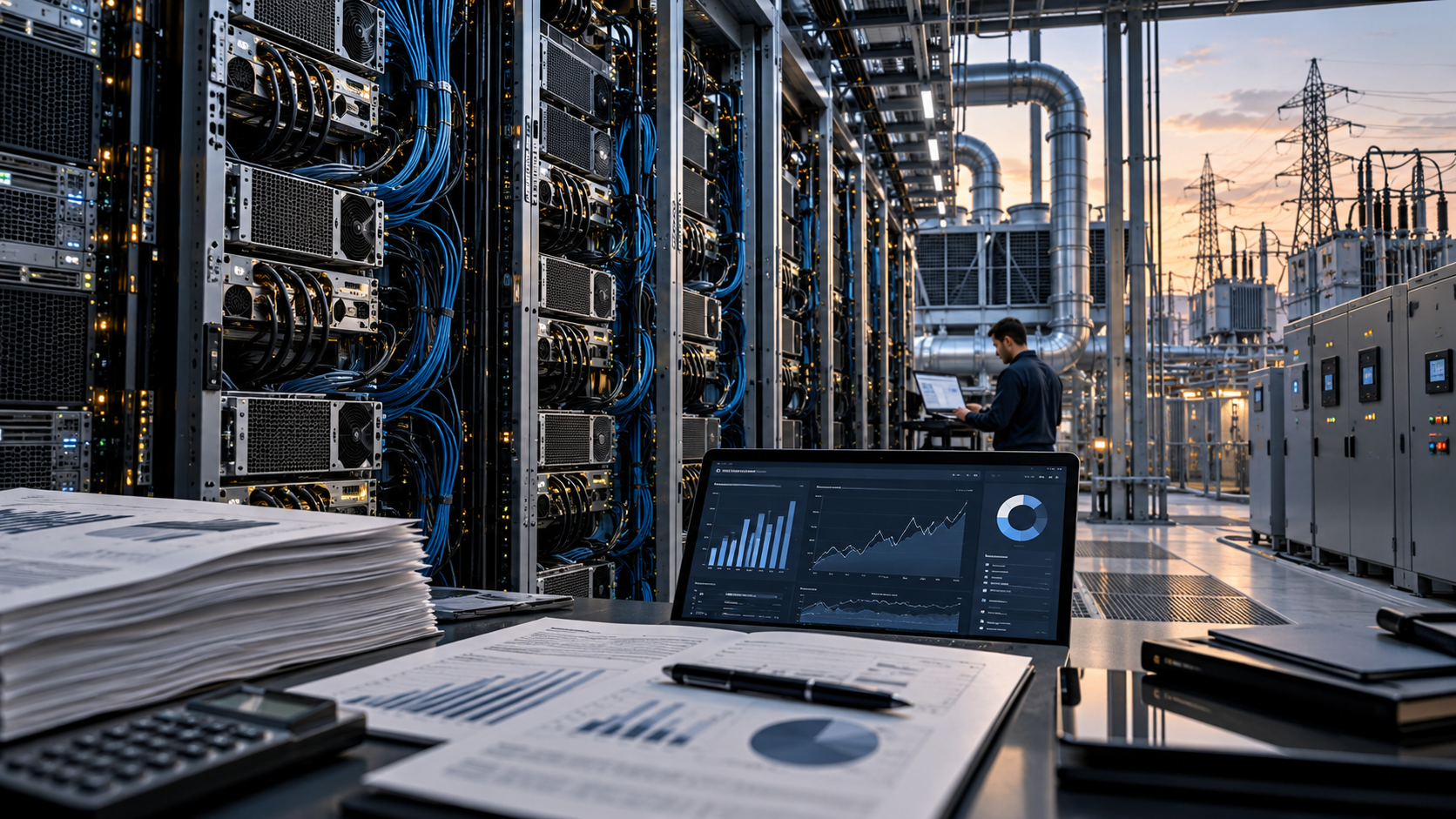
An AI neocloud can announce billions of dollars of contracted demand and still face a dangerous financial squeeze. The business typically commits large amounts of capital to graphics processing units, networking hardware, data-center facilities, electricity and financing well before every installed GPU begins generating revenue. If customers use the capacity intensively and pay on time, the model can produce attractive operating leverage. If hardware arrives late, sits idle or loses value quickly, financial costs do not wait for demand to recover.
That tension is the central question in neocloud economics in 2026. An important real-world reference is the second-quarter report by CoreWeave, which disclosed around $104 billion in revenue backlog at June 30, 2026 and rapid expansion in infrastructure spending. A backlog provides visibility but is not cash already received, booked profit or a guarantee that hardware will be deployed on schedule. Investors should follow the money from purchase commitment through installation, utilization, billing, cash collection and debt service.
What an AI neocloud actually sells
A neocloud primarily offers accelerated compute capacity, often optimized for training and serving large AI systems. Customers can rent GPU clusters and the supporting networking, storage, software and operations needed to use them. Some agreements reserve substantial capacity over time; others are more exposed to usage or shorter contract duration. The seller is not necessarily producing proprietary AI models. Its principal economic product may be reliable access to expensive compute.
The model differs from that of the biggest diversified cloud companies. A hyperscaler can spread data-center assets over many services, customers and uses. A specialist may offer a strong technical product while being more concentrated in AI infrastructure and dependent on a smaller set of important customers. Concentration can accelerate growth when large clients sign agreements, but it can also magnify a cancellation, renegotiation or project delay.
Providers vary considerably. A modern dedicated AI cluster with high-speed interconnects is not interchangeable with a small assortment of standalone graphics cards. Training requires systems that exchange large volumes of information efficiently; inference may be optimized differently. Capacity quality, energy availability and networking topology can all affect the price customers are willing to pay.
Follow the life of a GPU, not just the booking headline
There are six economically meaningful stages. First, a neocloud signs a customer commitment or forecasts demand. Second, it orders equipment and secures data-center capacity. Third, facilities and electrical systems become ready. Fourth, GPUs are installed, tested and connected. Fifth, customers actually consume or reserve the service under their contracts. Sixth, the neocloud collects cash while continuing to pay for electricity, people, maintenance, financing and future equipment.
A problem at any handoff can destroy expected margin. A delivery delay keeps the company from billing for some capacity but may not eliminate its facility, interest or operating costs. A data-center power delay can leave valuable hardware waiting. A customer shifting workloads to a different architecture can weaken expected pricing. Even fully installed machines may be subject to planned maintenance, software deployment or other non-billable periods.
The CoreWeave Form 10-Q discusses capital investment, operating risks and business concentration. This is why a careful comparison examines realized utilization and cash-flow generation, not only contracted GPU counts or announced megawatts.
Backlog is visibility, not a bank account
CoreWeave stated that its backlog reached approximately $104 billion at the end of Q2 2026. Its official earnings release separately explained that the disclosed backlog did not include more than $25 billion in net new customer commitments added in early Q3. These figures demonstrate demand and long-term contracting, but treating them as the company’s current revenue would be incorrect.
A contracted backlog must turn into recognized revenue according to delivery and availability requirements. That conversion can span years. Contracts may have conditions, customer concentration or renegotiation and timing risks. Even when the client eventually pays in full, the neocloud might finance new equipment long before the payment is received. The timing of cash is as consequential as its contractual total.
Investors should therefore ask four questions: What share of backlog is expected to be recognized in the next twelve months? What has to be constructed or purchased before billing? How much cash will customers pay upfront or during deployment? And what remedies or flexibility exist if delivery is delayed? Not all disclosures answer each question. Where details are unavailable, valuation should not quietly assume the most favorable response.
An illustrative one-thousand-GPU unit-economics model
Consider a fictional 1,000-GPU deployment. The following assumptions are teaching tools, not a quote from an equipment supplier, a current rental tariff, CoreWeave guidance or a forecast for any listed company. Assume total installed hardware and associated capital cost of $50 million, depreciated economically over four years; a blended realized billable rate of $4.00 per GPU-hour; annualized utilization of 75%; power and site operating cost of $8 million annually; and annual financing cost of $3 million. Ignore taxes, overhead not listed and capital structure complexities for the first pass.
The 1,000 GPUs offer 8.76 million available GPU-hours per year (1,000 × 24 × 365). At 75% utilization, the billable hours are 6.57 million. Multiplied by $4, annual revenue would be $26.28 million. Annual equipment depreciation on a straight-line four-year illustrative basis is $12.5 million.
| Fictional fleet economics | Annual amount |
|---|---|
| Maximum available GPU-hours | 8.76 million |
| Billable hours at 75% utilization | 6.57 million |
| Revenue at $4 per billable hour | $26.28 million |
| Power and site costs | ($8.00 million) |
| Economic equipment depreciation | ($12.50 million) |
| Financing expense | ($3.00 million) |
| Remainder before omitted costs and tax | $2.78 million |
This remainder is not EBITDA, GAAP net income or free cash flow. EBITDA would exclude depreciation and interest; free cash flow must account for actual capital expenditures, debt payments and working capital. The example instead shows how narrow the cushion can be even when revenue looks substantial relative to hourly prices.
The model also assumes every unit has the same billable economic value, which is rarely true across product types, chip generations and contracted discounts. It omits network expansion, insurance, personnel, spare equipment, downtime penalties and refresh investment. The omissions mean actual all-in profitability could be lower under these specific assumptions, not that every neocloud necessarily earns this margin.
Utilization can change everything
Holding the $4 hourly rate and $23.5 million combined modeled annual costs constant, utilization has a powerful effect. At 50%, annual revenue would be $17.52 million, yielding an illustrative $5.98 million shortfall before other costs. At 75%, the modeled remainder is $2.78 million. At 90%, revenue would be $31.54 million, creating roughly $8.04 million before omitted expenses.
| Fictional annual utilization | Revenue | Remainder after modeled costs |
|---|---|---|
| 50% | $17.52m | −$5.98m |
| 75% | $26.28m | +$2.78m |
| 90% | $31.54m | +$8.04m |
These amounts are arithmetic scenarios, not actual reported occupancy or profitability. They also show why the definition of utilization matters. A provider may report time when equipment is committed to a customer, physical computing activity, or billable capacity; those measures can differ significantly. An enterprise paying for a reserved cluster may support revenue even when the GPUs are not running at maximum physical workload intensity. Conversely, a spot market may show intense usage with unpredictable prices.
The quality of demand matters just as much as the reported percentage. Long-term take-or-pay-style agreements can make billing more predictable, subject to exact contract terms, but may lock in pricing at levels that later look unattractive if energy or replacement costs rise. Short-term capacity can capture scarcity premiums, but it is exposed to new supply and workload migration.
Power is a financing problem as well as an engineering problem
GPU operations depend on electricity, cooling, transformers, network links and resilient facility design. Electricity consumption rises with high-power accelerators and associated equipment, but nameplate power is not identical to average billable energy draw. The data-center power usage effectiveness measure can help describe total facility electricity relative to IT equipment electricity, yet it is not a complete proxy for margin.
A company that has obtained equipment but lacks grid interconnection is not free to deploy it anywhere. Interconnection queues, substations and available generation can impose genuine bottlenecks. Local tariffs, electricity contracts and the ability to curtail load during stress affect operations. A seemingly small change in power price becomes material across large capacity blocks.
Some providers build or lease facility infrastructure, others contract through colocation partners. Both structures create obligations. Leasing may transfer certain facility construction risks but does not remove power and availability constraints. Owned infrastructure may offer more control while increasing capital needs. Investors need to distinguish megawatts reserved, megawatts ready and megawatts actively producing revenue.
Why GPU depreciation is unusually contentious
Conventional depreciation allocates equipment cost over an estimated useful life for accounting purposes. Economic obsolescence is different. Accelerators may remain physically operational for years while newer products deliver more compute per watt, improved networking or a lower cost per unit of useful AI work. If customers shift workloads toward newer equipment, an older cluster may require a price discount before its accounting book value has fully depreciated.
The correct useful life depends on technology, workloads, customer demand and resale markets; no universal answer applies to every GPU model. It is therefore dangerous to compare companies solely on adjusted EBITDA, which adds back depreciation. A cash-intensive operator can report high adjusted EBITDA while continuously reinvesting heavily to refresh an increasingly competitive fleet.
An analyst can test a four-year depreciation estimate against more pessimistic three-year replacement economics or a longer six-year life. A three-year model increases annual cost on $50 million of assets from $12.5 million to about $16.7 million, reducing the hypothetical annual remainder by about $4.2 million if all other assumptions remain fixed. That sensitivity is large relative to the model’s $2.78 million cushion at 75% utilization. The point is not that three years must be correct; it is that technology-life assumptions can overwhelm a valuation.
Leverage changes the payoff profile
Infrastructure companies can finance equipment and facilities through secured loans, leasing, convertible notes, equity issuance and customer-backed arrangements. Debt can accelerate expansion while contracts appear attractive, but fixed interest and principal obligations become painful if operating cash arrives late. It also matters whether collateral can be resold easily or whether lenders may require more security when market conditions deteriorate.
CoreWeave’s 2026 SEC filing gives investors original details to analyze, including material debt, contractual obligations and risks. Its scale and financing profile should not be applied automatically to every smaller GPU provider. Some firms may be much less leveraged, while others could be more reliant on a small number of funders or customers.
Excess leverage has a second-order effect: creditors, not only shareholders, can gain influence over capital allocation. A provider might be forced to preserve liquidity, slow a profitable expansion or issue equity at an unfavorable price. In a stress case, a customer could remain willing to rent GPUs while the balance sheet still prevents a company from funding their installation.
Customer concentration is a double-edged sword
Signing a multi-year agreement with a large AI laboratory or hyperscaler can validate a neocloud’s technology and support financing. It can also make financial results heavily dependent on a few customers’ investment priorities. A large client might develop its own capacity, diversify among suppliers, negotiate discounts or modify workloads as new hardware generations arrive.
Revenue recognition can be especially lumpy when a cluster becomes available after a long construction period. A growing backlog may therefore coexist with periods of compressed margins, particularly when multiple facilities ramp at the same time. Compare the company’s actual cash receipts and working-capital movements over several quarters instead of treating a single record backlog figure as evidence that these transitions are riskless.
A helpful due-diligence question is whether new customers broaden the revenue base faster than the largest existing customers increase their spending. Expansion from giant buyers can be profitable, but a diversification claim deserves measurable evidence. Customer anonymity may limit public assessment; in that case the unanswered concentration risk should be acknowledged.
Pricing power can disappear even while AI demand rises
AI demand is not a single market. An older GPU may be suitable for some inference tasks but unattractive for the most demanding model training. Dedicated high-speed clusters can command different prices from loosely connected cards. Prices depend on generation, geographic availability, service reliability, contract length and software support. The rental market may also become more competitive as hyperscalers and specialist providers bring new capacity online.
A company could see total AI compute demand rise while its revenue per older GPU-hour declines. In such a world, a high utilization rate might not rescue the original projected economics. The relevant metric is revenue per unit of total invested capital over the equipment’s actual useful life, after operating and financing costs—not merely GPU-hours sold.
Conversely, a specialized operator may create a premium by offering fast cluster deployment, predictable performance and support for demanding workloads. Those service attributes can distinguish a neocloud from a commodity equipment rental. The advantage must eventually appear in pricing, customer retention or lower operating cost, not just in marketing claims about purpose-built infrastructure.
A framework for comparing public and private providers
A serious assessment should start with contracted revenue, the timing of its recognition, and how much additional capital is necessary to fulfill it. Next come realized pricing and the company’s definition of utilization. The third layer is capital structure: gross debt, interest expense, maturity timing, restricted cash and the ability to finance additional capacity. The fourth is technical: hardware age, network speed, failure rates and the energy economics of facilities. Finally, assess who is buying the capacity and whether their commitments are diversified.
One useful ratio is capital expenditure divided by revenue, though its interpretation varies substantially between a company in initial construction and a mature operator. Another is operating cash flow versus capital expenditure over several years. Neither should be used without explaining leases and financing flows. Growth may justify spending ahead of demand, but investors must establish when cash conversion is expected.
For a startup without SEC filings, diligence is harder. Ask management for cohort utilization, contract coverage by calendar year, true all-in power costs and a capex schedule that includes networking and facilities. If those numbers are unavailable, higher uncertainty is the appropriate conclusion. Assumed precision does not become trustworthy just because it is presented in a spreadsheet.
Questions readers ask
Are AI neoclouds profitable?
Some operations can generate positive economics, but profitability differs by provider, contract structure, equipment cost, power cost and accounting treatment. High revenue growth or adjusted EBITDA is not proof of positive free cash flow. Review audited statements and reconciliations for any specific company.
Is a $100 billion backlog the same as $100 billion in sales?
No. Backlog represents expected future revenue under contractual arrangements and defined assumptions. Recognition and collection occur over time and require delivery. CoreWeave’s cited approximately $104 billion backlog was a company-specific measure as of June 30, 2026, not an industry total or already-collected cash.
What is the biggest risk: electricity or GPU prices?
Both can be significant, but the dominant risk varies. A power-constrained build may fail before it bills a single hour; a fully operating fleet may suffer when rental prices decline or customers favor newer hardware. Debt obligations can amplify either problem.
The central investment question
Neoclouds can be valuable infrastructure providers in an expanding market, but they are not passive beneficiaries of AI enthusiasm. Their returns depend on connecting expensive capital assets to paying workloads quickly, keeping those assets relevant, and surviving the financing gap between construction and cash collection. A disciplined investor should be able to describe how backlog becomes billable capacity, and how billable capacity becomes free cash after debt and replacement equipment. Everything else is an incomplete growth story.
Discover more from The Economy
Subscribe to get the latest posts sent to your email.

China’s 175 Trillion AI Tokens Reveal a Bigger Shift: The AI Boom

The Philippines’ Stagflation Trap: Higher Interest Rates

Alphabet’s $500 Billion Reckoning: Wall Street Is Losing Patience With the AI Boom

4 Reasons Why China’s Trade Concessions to Europe Will Not Solve the Crisis

The AI Revolution Needs Atomic Power. Southeast Asia Is Ready to Build It.

Zhuhai Airshow 2026: How China’s Stealth Jets, Drones and Missiles Are Redrawing Global Air Power

The $8 Billion Runway: China’s Strategic Bet on Guangzhou and the Future of Aviation

The Sandbox Imperium: Why Beijing’s Digital Yuan Needs Hong Kong

Gold at the $4,000 Line: Possible December Fed Hike

Oil at $100+: Hormuz, a Qatari Peace Draft and the Iran Deadline

The Fed’s 10-2 Hold: Why Two Dissenters Wanted a Rate Hike

SBP Raises Policy Rate to 12%: What It Means for Your Loans, Savings and Business

IMF’s $1.2bn Staff-Level Deal: What Pakistan Promised on Surplus

Decoding the DBS–BCA Merger Rumour: Market Volatility, Strategic Realities

Crude Oil & Petroleum Market Analysis: OPEC+ Decisions and Price Forecasts

Top US Convenience Store Chains: Store Counts, EV Charging, and Sales Trends

Social Security Extra $90 Deposit: Who Qualifies for the October 2026 Medicare Rebate?

Who Is Shivon Zilis? The Neuralink Executive at the Center of the Musk–OpenAI Trial

Gold Price Outlook 2026: The Forces Behind the Forecasts—and What Could Reverse Them

Algorithmic Dogfights: Why the U.S. and China Must Establish Rules of Engagement for Autonomous Air Power

Corporate America Faces a New Debt Test as US Borrowing Costs Surge

Global Economic Outlook 2026: 7 Forces Reshaping Markets, Trade and Business

Stock Market Crash in 2026? Warning Signs, Scenarios and a Calm Investor Checklist

Geopolitics and Your Portfolio: How International Affairs Move Global Markets

Stock Market Today: Dow, S&P 500, and Nasdaq Retreat as Treasury Yields

Anthropic Bans Sustained Abuse of Claude AI Under New Usage Policy Effective November 12, 2026

US–Iran Conflict in October 2026: Hormuz, Oil Prices and Diplomacy

Why Did I Get $90 From Social Security? 8 Reasons Behind an Unexpected SSA Payment
-

 Markets & Finance10 months ago
Top 15 Stocks for Investment in 2026 in PSX: Your Complete Guide to Pakistan’s Best Investment Opportunities
-

 Analysis8 months ago
Johor’s Investment Boom: The Hidden Costs Behind Malaysia’s Most Ambitious Economic Surge
-

 Analysis9 months ago
Top 10 Stocks for Investment in PSX for Quick Returns in 2026
-

 Banks10 months ago
Best Investments in Pakistan 2026: Top 10 Low-Price Shares and Long-Term Picks for the PSX
-

 Analysis9 months ago
Brazil’s Rare Earth Race: US, EU, and China Compete for Critical Minerals as Tensions Rise
-

 Investment10 months ago
Top 10 Mutual Fund Managers in Pakistan for Investment in 2026: A Comprehensive Guide for Optimal Returns
-

 Global Economy10 months ago
15 Most Lucrative Sectors for Investment in Pakistan: A 2025 Data-Driven Analysis
-

 Global Economy10 months ago
Pakistan’s Export Goldmine: 10 Game-Changing Markets Where Pakistani Businesses Are Winning Big in 2025