
Tech Companies
The 2026 Global Smartphone Market: AI Integration and Competitor Analysis


The 2026 smartphone market is doing something unusual. It is shrinking and growing more valuable at the same time.
Fewer phones will ship, but each one costs more. A memory chip shortage, driven by demand from AI data centers, is behind much of the change.
Here is what the data shows, who is winning and what to watch before you buy or invest.
Key Takeaways
- Record decline: IDC forecasts a 16.7% fall in 2026 shipments to just over 1 billion units, the steepest annual drop on record. IDC
- Value still rises: Total market value should grow 6.3% to $613 billion because higher prices offset lower volume. IDC
- Memory is the culprit: Memory costs are up sharply and now dominate the cost of low-end phones.
- Premium wins: Apple and Samsung are holding up better than budget Android brands.
- Foldables are the growth story: Apple’s entry is lifting the category.
Why Smartphone Shipments Are Falling
The main driver is a memory shortage that began in late 2025. Chipmakers have shifted capacity toward data-center and AI products, leaving less for phones.
IDC says memory costs are up nearly 300% from a year ago and now make up over 65% of the bill of materials at the low end. IDC
That is why budget phones are hit hardest. IDC has said the sub-$100 segment, about 171 million devices, is likely to become permanently uneconomical. BizTechReports
Second-quarter data confirms the trend. Q2 2026 shipments fell 7.4% year on year to 276.3 million units, the second straight quarterly decline. IDC expects the second half to be worse, with a forecast 27.2% drop. IDC
The Numbers at a Glance
| Indicator | Figure | Source |
|---|---|---|
| 2026 shipments | Just over 1 billion (down 16.7%) | IDC, latest forecast |
| 2026 market value | $613 billion (up 6.3%) | IDC |
| Record average price | About $550 (June forecast) | IDC |
| Foldables 2026 | 22.9 million units (up 12.6%) | IDC |
| Foldables 2027 | About 27 million units | IDC |
IDC’s June forecast pointed to a record average selling price of $550, up $100 from last year. Forecasts have been revised more than once this year, so check for updates. IDC
AI Integration: Marketing Story or Real Value?
Every major brand now sells “AI phones.” The features fall into three groups.
- On-device features: Summaries, translation, photo editing and voice tools that run locally.
- Cloud-assisted assistants: Features that need a connection and often a subscription.
- Chip and memory upgrades: Phones need more RAM to run AI models well.
There is a paradox here. AI features want more memory, while the AI boom is making memory scarce and expensive.
For buyers, the practical test is simple. Ask whether the AI feature works offline, whether it costs extra and whether it changes your daily use.
Competitor Analysis: Who Is Winning?
The market has split. Samsung and Apple show resilience in premium segments, while Xiaomi, OPPO and vivo face shipment declines. BigGo Finance
| Vendor Group | Position | Key Exposure |
|---|---|---|
| Apple | Strong premium demand; entering foldables | High prices; China competition |
| Samsung | Resilient flagship and foldable line | Memory is also its own business |
| Xiaomi, OPPO, vivo | Under pressure | Heavy low- and mid-range mix |
| Huawei | Growing in China | Ecosystem limits abroad |
Apple and the Foldable Effect
Apple’s move into foldables is the biggest product story of the year. IDC says Apple’s entry turned a segment that was about to decline into the industry’s fastest-growing part. IDC
IDC forecasts Apple will ship more than 17 million foldable iPhones by 2027, roughly 40% of the global foldables market. IDC
Emerging Markets Take the Hit
Cheap phones are where the pain concentrates. IDC notes the decline is heaviest at the bottom of the market, so emerging markets will absorb the most pain. Buyers in regions that rely on entry-level devices face fewer choices and higher prices. IDC
Smartphone Buying Guide for 2026
If you plan to upgrade, consider these steps.
- Buy sooner if you need a mid-range phone. Prices are more likely to rise than fall before mid-2027.
- Check trade-in offers. Carriers and brands use trade-ins to soften higher prices.
- Prioritize storage and battery over headline AI features.
- Compare financing terms. Zero-interest plans can hide higher device prices.
What This Means for the Global Market in 2027
Coverage of the current slump rarely looks past it. Here is what to watch.
A slow recovery. IDC’s June forecast pointed to a further 1.1% decline in 2027 and a 5.5% rebound in 2028 as memory supply normalizes. Expect a long trough rather than a quick bounce. IDC
Consolidation. IDC expects smaller vendors to exit. Investors should look for balance sheet strength.
A new pricing floor. Memory prices are projected to stabilize by mid-2027, but not to return to earlier levels. Cheap smartphones may not come back. BizTechReports
Foldables scaling. With Apple in the category, suppliers of hinges and flexible displays may see rising volumes.
Investment angle. Memory makers benefit from tight supply. Handset makers face margin pressure. Diversified exposure matters.
Frequently Asked Questions
Will smartphone prices go up in 2026?
Yes, on average. IDC expects a record average selling price as memory costs rise and vendors focus on higher-priced models.
Why is the smartphone market shrinking?
A memory chip shortage is the main cause. Chipmakers are prioritizing AI data centers, which raises costs for phone makers.
Which smartphone brands are doing best?
Apple and Samsung are holding up best thanks to premium demand. Budget-focused Android brands are struggling most.
Are foldable phones worth buying in 2026?
They are the one growing category, and Apple’s entry is boosting it. They still cost more, so weigh durability and price first.
Discover more from The Economy
Subscribe to get the latest posts sent to your email.


Fintech & Global Finance
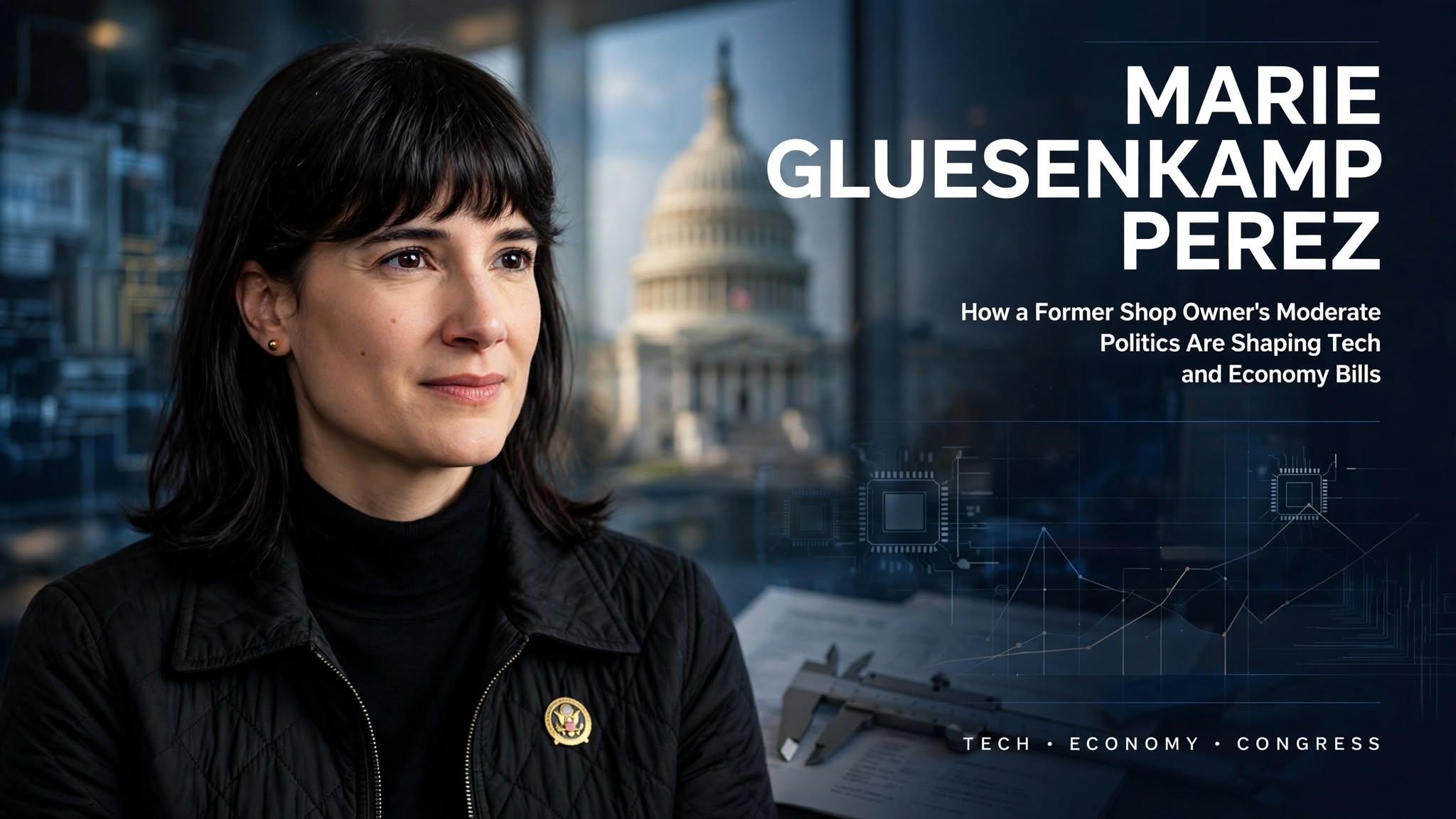
Marie Gluesenkamp Perez: How a Former Shop Owner’s Moderate Politics Are Shaping Tech and Economy Bills
Key Takeaways
- Rep. Marie Gluesenkamp Perez (D-WA-3), a former auto repair shop co-owner, has built a legislative record centered on right-to-repair, trades workforce development, and semiconductor manufacturing funding.
- She helped secure a $105 million federal investment for Analog Devices, including $80 million for Pacific Northwest projects, to modernize domestic semiconductor fabrication — reinforcing Washington’s “Silicon Forest” manufacturing base.
- Described as one of the House’s most centrist Democrats, she sits in the Problem Solvers Caucus, the Blue Dog Coalition, and the Congressional Hispanic Caucus, and serves on the House Appropriations Committee.
- She is seeking a third term in the 2026 midterms against Republican John Braun, the Washington State Senate minority leader.
- Her legislative approach consistently favors practical, trade-oriented policy over ideological framing — a positioning that has made her a notable swing-district data point heading into November.
From Auto Shop to Appropriations Committee
Gluesenkamp Perez co-owned an auto repair and machine shop with her husband before her 2022 upset win over Republican Joe Kent, a race she repeated and won again in 2024. That hands-on business background has directly shaped her legislative priorities: she has pushed bipartisan right-to-repair legislation for agricultural equipment, introduced the Fairness for the Trades Act to expand 529 education savings plans to cover trade-career tools, and worked to ease regulatory burdens on small businesses like the one she used to run.
The Semiconductor Funding Win
In one of her more tangible economy-facing wins, Gluesenkamp Perez — alongside Washington Senators Patty Murray and Maria Cantwell — helped secure $105 million for Analog Devices to modernize domestic chip fabrication, with $80 million specifically benefiting Pacific Northwest facilities, including an expansion in Camas. The investment targets mature-node semiconductors used in automotive, healthcare, aerospace, defense, and consumer electronics — chips that are less headline-grabbing than AI accelerators but arguably more embedded in everyday supply chains (a theme covered in our companion piece on 2026 silicon supply chain risk).
Where She Sits Politically
Caucus memberships tell their own story: Problem Solvers Caucus, Blue Dog Coalition, and Congressional Hispanic Caucus place her firmly in the House’s center-right Democratic lane. She has been publicly described as one of the chamber’s most centrist Democrats, willing to break from party lines on specific votes. Her appropriations work has focused heavily on constituent-level wins — from mobile home energy-efficiency provisions to Secure Rural Schools reauthorization — over broader ideological legislation.
2026 Midterm Context
Gluesenkamp Perez is defending her seat in Washington’s 3rd Congressional District against John Braun, the Washington State Senate’s Republican minority leader — a race widely watched as a bellwether for how centrist Democrats in competitive districts perform in the 2026 midterms.
What is Marie Gluesenkamp Perez known for in Congress?
Rep. Gluesenkamp Perez (D-WA-3) is known for centrist, trades- and small-business-focused legislation, including right-to-repair bills and a $105 million semiconductor manufacturing investment for the Pacific Northwest. She sits on the House Appropriations Committee and is seeking a third term in 2026 against Republican John Braun.
Discover more from The Economy
Subscribe to get the latest posts sent to your email.
Key Takeaways
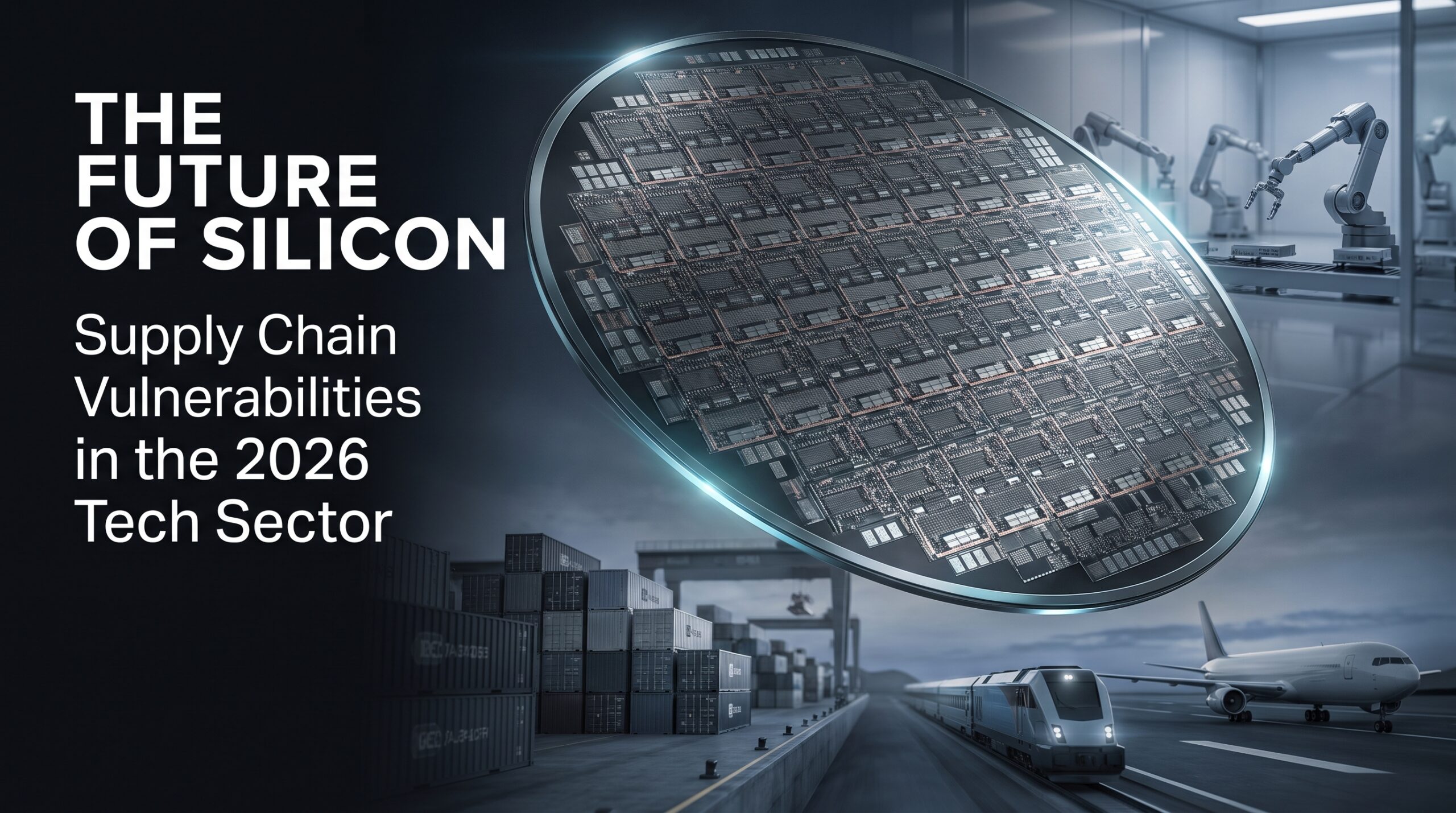
- The 2026 chip shortage is real but selective — concentrated in High-Bandwidth Memory (HBM), advanced DRAM, and leading-edge logic, not chips broadly.
- Micron has stated the HBM shortage is expected to persist beyond 2026, driven by explosive AI data center demand.
- The critical bottlenecks have shifted downstream from raw fabrication to advanced packaging and memory — meaning more wafer capacity alone won’t solve the problem.
- Maritime risk in the Taiwan Strait and Red Sea has pushed semiconductor logistics costs up an estimated 15–22% in 2026, lengthening Asia-Europe transit times by 7–10 days.
- China’s export restrictions on critical materials like tungsten, germanium, and gallium are creating additional strategic bottlenecks layered on top of the AI-driven memory crunch.
- New CHIPS Act-funded U.S. fabs won’t meaningfully ease the tightest categories until 2027–2028 at the earliest — the physical build time for leading-edge capacity simply can’t be compressed.
Where the Bottleneck Actually Sits
A common misconception is that the 2026 shortage mirrors the 2021–22 pandemic-era chip crunch. It doesn’t. That shortage was broad and driven by a demand shock across consumer electronics and automotive. The 2026 shortage is narrower and structural:
| Bottleneck | Why It’s Constrained |
|---|---|
| High-Bandwidth Memory (HBM) | AI data center demand has created what Micron calls an “unprecedented” shortage |
| Advanced packaging | Needed to assemble high-performance GPUs; capacity hasn’t kept pace with demand |
| Conventional DRAM | Inventories at major suppliers dropped below 10 days’ supply in parts of 2026 |
| Rare/critical materials (tungsten, germanium, gallium) | China export restrictions have tightened global availability |
The Geopolitical Layer
Roughly 60% of the world’s advanced chips are produced in Taiwan, concentrating both manufacturing risk and shipping risk in one geography. Combined with Red Sea shipping disruptions, average Asia-Europe transit times have lengthened by 7–10 days, and semiconductor-specific logistics costs are up an estimated 15–22% in 2026. Add the Middle East conflict’s effect on energy costs (covered in our companion Dow Jones piece), and the picture is one of compounding — not isolated — supply pressure.
The “Just-in-Case” Shift
The response from both governments and companies has been a structural pivot away from decades of “just-in-time” efficiency toward “just-in-case” resilience — building redundant capacity and diversified sourcing even where it’s less cost-efficient. This is the core justification behind trillions of dollars in reshoring investment, including CHIPS Act-funded fabs in the U.S., though most analysts agree the tightest categories (HBM, leading-edge logic) won’t see meaningful relief before 2027–2028.
Who Benefits, and Who’s Exposed
- Beneficiaries: Memory suppliers (Micron, SK Hynix, Samsung) are described as clear financial winners of the current cycle, as scarcity pushes pricing power in their favor.
- Exposed: Automakers and industrial buyers, who compete directly with data-center operators for constrained memory and packaging capacity — and who, as the 2025 Nexperia disruption showed, remain vulnerable even to shortages of low-cost, seemingly minor components.
Why is there a chip shortage in 2026?
The 2026 shortage is concentrated in High-Bandwidth Memory, advanced packaging, and leading-edge logic chips — driven primarily by explosive AI data center demand rather than a broad pandemic-style shortage. Relief for the tightest categories isn’t expected before 2027–2028, as new fab capacity takes years to build and qualify.
Discover more from The Economy
Subscribe to get the latest posts sent to your email.

Elon Musk’s ambitious underground transit venture is officially scaling up its global footprint. The Boring Company has closed a massive $3 billion Series D funding round, catapulting its valuation to $23 billion. This represents a staggering four-fold increase from its $5.7 billion valuation in 2022.
Led by the United Arab Emirates (UAE) alongside a syndicate of heavyweight tech investors, this capital injection signals a decisive shift from a localized Las Vegas demonstration project to an international, multi-city infrastructure enterprise.
The Middle Eastern Pivot: A $3 Billion War Chest
The Series D round wasn’t just a capital raise; it was a strategic alignment. The UAE spearheaded the investment, joined by a roster of tier-one venture capital and private equity firms, including Sequoia Capital, Andreessen Horowitz (a16z), and Singapore’s state-owned Temasek. Additional participation came from Valor Equity Partners, Vy Capital, and Baron Capital.
The UAE’s role as the lead investor is deeply intertwined with its status as The Boring Company’s premier international customer. The funding is earmarked to deploy over 150 kilometers of underground infrastructure across the Emirates. This massive undertaking builds upon the foundation of the Dubai Loop, a project that was solidified at the World Governments Summit.
| Project Phase | Details | Estimated Cost |
| Dubai Pilot | 6.4 km route with 4 stations linking DIFC and Dubai Mall | ~$154 Million |
| Full UAE Network | >150 km of interconnected underground transit | TBD |
Manufacturing of precast tunnel segments for the Dubai pilot has already commenced, with active tunnel boring expected to begin in late 2026.
Scaling the Loop: Vegas, Nashville, and Beyond
While the Middle East represents the frontier of expansion, The Boring Company is simultaneously aggressively scaling its domestic operations in the United States.
- The Vegas Loop Expansion: Las Vegas remains the company’s operational showcase. Having already transported over four million passengers, the network recently added Tesla Cybertrucks to its autonomous fleet. Clark County regulators have greenlit a massive expansion, entitling the network to 123 stations, complete with a dedicated connector to the Harry Reid International Airport.
- Music City Loop (Nashville): Moving beyond the softer soils of Nevada, the company has broken ground in Nashville, Tennessee. Following regulatory approval in early 2026, crews are actively operating two Prufrock machines concurrently. This marks the company’s first foray into complex, hard-rock tunneling.
Prufrock and the Autonomous R&D Push
A significant portion of the new capital is allocated for aggressive hiring across engineering, operations, and production to scale the Prufrock tunnel-boring platforms.
The Boring Company’s core value proposition isn’t just digging holes—it’s automating the excavation process to drastically reduce costs and timelines. Recent milestones indicate that ring-building has become fully autonomous. Heavy concrete segments are now placed with millimeter precision via remote monitoring from the company’s Global Operations Control Center in Texas, effectively demonstrating “Zero-People-in-Tunnel” continuous mining.
For Musk, the mission remains philosophical as much as it is mechanical. In a statement accompanying the funding announcement, he noted: “Defeating traffic is the ultimate boss battle. Even the most powerful humans in the world cannot defeat traffic.”
With a $23 billion valuation and sovereign wealth backing, The Boring Company now has the financial firepower to test whether silicon valley automation can finally conquer legacy urban congestion.
Discover more from The Economy
Subscribe to get the latest posts sent to your email.

Fidelity Crypto vs. Traditional Brokerages: A Guide for Modern Investors

The 2026 Global Smartphone Market: AI Integration and Competitor Analysis

SpaceX IPO: How Aerospace Is Reshaping Tech Startup News

Fidelity Investments Review: Maximizing Returns in a Volatile Stock Market

How Crypto Transformed the Trump Fortune: A $1.4 Billion Financial Breakdown

Global Pension Systems Ranked: The World’s Best and Worst Retirement Frameworks

Global Supply Chain Vulnerabilities: From Eurasian Trade Corridors to Food Consumer Recalls

Why 5% U.S. Treasury Yields Signal a Global Market Regime Shift.

Federal Reserve Defies White House Pressure: Inside Trump’s Demand for Sub-1% Interest Rates After Historic 2026 Rate Hike

How Rising Interest Rates Impact Gig Economy Apps: DoorDash, Uber, and Urban Services

GasBuddy Market Insights: How Crude Price Shifts Impact Local Fuel Cost Averages

DoorDash Driver Payouts, Fee Structures, and Market Competition Analysis

OPINION:Breaking the 3.5% Growth Trap: How Pakistan Can Build a High-Productivity Export Economy

Global Equity Market Divergence: US Tech vs. European Dividend Stocks vs. Asian Growth

State Farm’s $5B Dividend 2026: Who Qualifies & Payout Dates

US-China Relations in Q3 2026: Trade Tariffs and Supply Chain Risks

SpaceX Starship Flight 14: First Orbital Attempt & Starlink V3 Launch Explained

Top 30 Stocks for Investment in PSX for Massive ROI in 2026

The 2026 Crypto Regulatory Shift: What It Means for Institutional Investors

AI Chip Stocks 2026: The Best Semiconductor Investments Beyond Marvell

AI-Powered Training: The Next Multi-Billion Dollar Ecosystem in Fitness

Tween Back-to-School Trends 2026: What’s Driving the $85B Season

Oil Prices Break $100 in 2026: Middle East Conflict & Energy Markets

10-Year Treasury Yield Hits 4.80%: What It Means for Rates & Portfolios

Shein Clothes Quality & Safety in 2026: What Lab Tests Show

Fidelity Investments Review 2026: SPAXX Yields & Zero-Fee Funds

MRVL Earnings 2026: Why Marvell Sank Despite Beating Estimates

China’s US$10.8 Billion Trade Shortcut: Why the Pinglu Canal Matters
-

 Markets & Finance9 months ago
Top 15 Stocks for Investment in 2026 in PSX: Your Complete Guide to Pakistan’s Best Investment Opportunities
-

 Analysis7 months ago
Johor’s Investment Boom: The Hidden Costs Behind Malaysia’s Most Ambitious Economic Surge
-

 Analysis7 months ago
Top 10 Stocks for Investment in PSX for Quick Returns in 2026
-

 Analysis8 months ago
Brazil’s Rare Earth Race: US, EU, and China Compete for Critical Minerals as Tensions Rise
-

 Banks8 months ago
Best Investments in Pakistan 2026: Top 10 Low-Price Shares and Long-Term Picks for the PSX
-

 Investment8 months ago
Top 10 Mutual Fund Managers in Pakistan for Investment in 2026: A Comprehensive Guide for Optimal Returns
-

 Global Economy9 months ago
15 Most Lucrative Sectors for Investment in Pakistan: A 2025 Data-Driven Analysis
-

 Global Economy9 months ago
Pakistan’s Export Goldmine: 10 Game-Changing Markets Where Pakistani Businesses Are Winning Big in 2025