
Startups
Pakistan’s Startup Revival: How Hybrid Financing Drove a $74 Million Surge in 2025

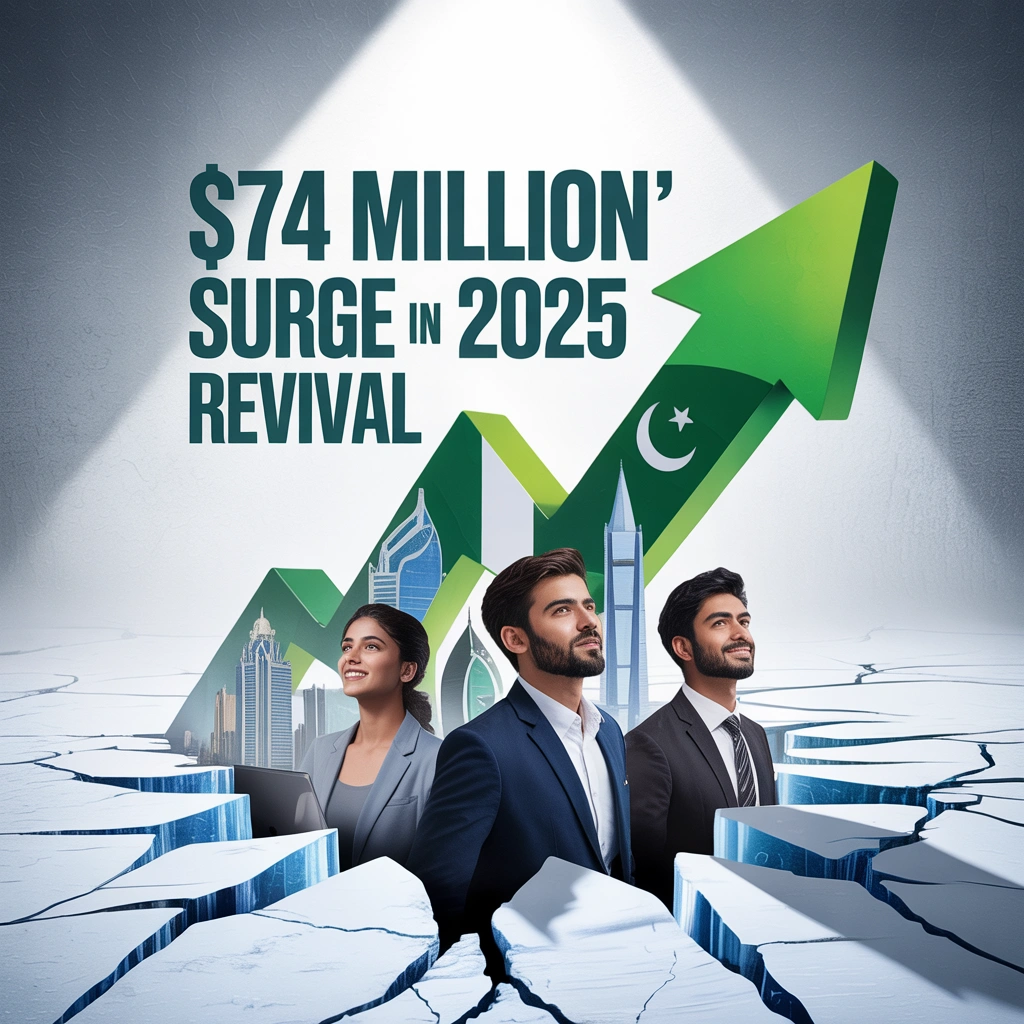
After years of contraction, a strategic pivot to debt-equity blends signals maturation—not just survival—in one of South Asia’s most resilient tech ecosystems
In early April 2025, Omer bin Ahsan faced a familiar dilemma. The founder of Haball, a Karachi-based fintech enabling shariah-compliant supply chain financing, had spent months courting investors for a pre-Series A round. Traditional venture capital appetite remained tepid—Pakistan startup funding 2025 had opened with a dismal $196,000 across three disclosed deals in Q1, marking the ecosystem’s lowest quarterly performance in years. Yet Ahsan’s company had processed over $3 billion in payments since inception, serving nearly 8,000 small and medium enterprises across sectors from retail to aerospace. The fundamentals were solid. What Pakistan lacked wasn’t viable startups—it was capital willing to deploy at scale.
By late April, Haball announced a $52 million raise, comprising $5 million in equity from Zayn VC and a strategic $47 million financing component from Meezan Bank, Pakistan’s largest Islamic financial institution. The structure was a watershed: not pure venture equity, but a hybrid blend of ownership and debt, calibrated to minimize dilution while leveraging established banking infrastructure. It was also emblematic of a broader shift reshaping Pakistan’s startup landscape—one driven less by Silicon Valley playbooks and more by local pragmatism forged through years of macroeconomic turbulence.
When the year closed, Invest2Innovate’s full-year report revealed that Pakistani startups raised over $74 million across 16 deals in 2025, a 121% increase from $33.5 million in 2024. The headline figure, however, concealed the more profound transformation: $66.04 million came through hybrid financing models blending debt, quasi-equity, and structured instruments, while just $8.18 million represented pure equity. It was the clearest signal yet that Pakistan’s startup ecosystem, battered by three years of funding drought and global venture capital winter, had evolved a distinctly localized survival—and growth—mechanism.
The Numbers in Context: Recovery, Not Rebound
To understand Pakistan startup funding 2025, one must first grasp where the ecosystem stood. Between 2021 and 2023, Pakistani startups rode a wave of global liquidity, raising $347 million and $331 million in 2021 and 2022 respectively, according to Data Darbar, a Karachi-based research firm tracking venture activity since 2015. Then came the correction. Funding collapsed 77% to $75.6 million in 2023 amid Federal Reserve rate hikes and a global venture pullback, then tumbled further to $42.5 million in 2024—a nadir unseen since the ecosystem’s nascent years.
The 2025 recovery to $74 million, while encouraging, remained well below pre-2023 peaks. Yet the composition mattered more than the quantum. Data Darbar, in a parallel year-end analysis, reported that pure equity funding reached $36.6 million across 10 disclosed rounds—a 63% increase from 2024’s $22.5 million. The discrepancy between Invest2Innovate’s $74 million total and Data Darbar’s $36.6 million equity-only figure reflects differing methodologies: Invest2Innovate counts all capital deployed, including debt-like instruments, whereas Data Darbar isolates traditional venture equity.
Both narratives are true. Pakistani startups raised more total capital in 2025, but the structure of that capital had fundamentally changed. Consider the quarterly trajectory:
- Q1 2025: $196,000 disclosed (3 deals). A paralytic start as investors awaited IMF program clarity.
- Q2 2025: $58 million, dominated by Haball’s $52 million hybrid round.
- Q3 2025: $15.2 million across six deals, featuring BusCaro’s $2 million hybrid deal and Trukkr’s $10 million mixed equity-debt raise.
- Q4 2025: Modest, sub-$1 million disclosed volumes, but critical for structural shifts—KalPay secured shariah-compliant structured debt from Accelerate Prosperity, while agritech Agrilift and creator economy platform Echooo AI both raised debt financing.
The average disclosed equity deal size climbed to approximately $3.7 million, up from previous years, signaling that investors—when they did commit—deployed more concentrated capital into fewer, higher-conviction bets. This is the hallmark of market maturation: selectivity over spray-and-pray.
Key Deals and Winners: The 2025 Titans
Haball: The Hybrid Pioneer
Haball’s $52 million raise was the defining transaction of 2025. The fintech, founded in 2017, provides digital invoicing, payment collection, tax compliance, and working capital to SMEs—functions critical in a market where less than 5% of small businesses access traditional bank financing. By structuring its round as $5 million in equity plus $47 million in strategic financing from Meezan Bank, Haball achieved two objectives: securing growth capital without excessive dilution, and validating hybrid models as viable for scaling B2B fintechs in emerging markets.
The company plans to enter Saudi Arabia’s $9 billion supply chain finance market in 2025, with further Gulf Cooperation Council (GCC) expansion eyed for 2026. As CEO Omer bin Ahsan noted, “We’re responding to clear market demand for shariah-compliant SME-focused digital financial services”—a thesis resonating not just in Pakistan but across MENA’s Islamic finance corridors.
MedIQ: Female-Founded, GCC-Bound
In April, Dr. Saira Siddique’s MedIQ raised $6 million in a Series A led by Qatar’s Rasmal Ventures and Saudi Arabia’s Joa Capital. The healthtech, born from Siddique’s personal experience navigating Pakistan’s fragmented healthcare system while recovering from paralysis, offers a digitally integrated hybrid ecosystem—telehealth, e-pharmacy, AI-powered facility digitization, and insurance backend automation.
MedIQ’s trajectory underscores a critical trend: Pakistani startups pivoting to GCC markets not as Plan B, but as core strategy. With over 10 million customers served in Pakistan and EBITDA-positive operations, MedIQ exemplifies the product-market fit achievable when founders solve genuine, large-scale inefficiencies. The raise also marked a milestone for gender diversity—female-led startups captured $8.8 million (24%) of 2025’s total equity funding, per Data Darbar, a notable improvement in a historically male-dominated ecosystem.
Mobility, Fintech, and the Long Tail
Beyond mega-rounds, 2025 saw seed-stage activity across diverse verticals:
- BusCaro (mobility): $2 million hybrid deal, female-founded, addressing intercity transport inefficiencies.
- Metric (fintech): $1.3 million seed for infrastructure finance enablement.
- ScholarBee (edtech): $350,000 convertible note, targeting affordable learning platforms.
- Qist Bazaar (fintech BNPL): Rs55 million (~$196,000) disclosed portion of a larger Series A from Bank Alfalah.
- Shadiyana (wedding-tech): $800,000 pre-seed, tapping Pakistan’s multi-billion-dollar wedding industry.
- Myco.io (Web3): $1.5 million, reflecting nascent but persistent interest in decentralized tech.
These transactions, while modest individually, signaled ecosystem resilience. Founders were fundraising—just under radically different assumptions than 2021’s exuberance.
The Hybrid Financing Revolution: Necessity Becomes Strategy
Why did Pakistan startup funding 2025 pivot so decisively to hybrid models? The answer lies in supply-demand asymmetries and risk-adjusted returns.
On the supply side, traditional venture capital remained scarce. Global VC funding reached $512.6 billion in 2025, up 30.8% year-over-year, but concentration was extreme: AI captured 46.4% of Q3 2025 global VC, with mega-rounds ($500M+) to Anthropic, xAI, and others dominating deployment. Emerging markets outside India and select MENA hubs saw limited allocations. Pakistan, with its history of political volatility and currency risk, struggled to compete for the shrinking pool of “generalist” VC dollars.
On the demand side, Pakistani startups needed capital, but on terms preserving founder control. After witnessing down rounds and fire-sale exits across the region during 2022-2024’s contraction, founders sought structures minimizing dilution. Debt or quasi-debt instruments—repayable at fixed schedules with or without convertible features—offered that optionality.
Enter hybrid financing: structures blending equity stakes with revenue-based financing, shariah-compliant murabaha (cost-plus) arrangements, supply chain receivables financing, or convertible notes with conservative caps. Haball’s model epitomizes this: Zayn VC took equity exposure, betting on upside, while Meezan Bank deployed a $47 million financing facility tied to Haball’s transaction volumes—essentially supply chain capital leveraging Haball’s platform as intermediary.
For investors like Meezan Bank, the appeal is clear: lower risk than pure equity, secured by tangible cash flows, and aligned with Islamic banking mandates prohibiting interest (riba) yet permitting profit-sharing and asset-backed financing. For startups, it’s growth capital without governance concessions. For the ecosystem, it’s a localization of financing norms—adapting global venture structures to Pakistan’s financial and regulatory realities.
Sector Spotlight: Where the Money Flowed
Fintech: Still the Heavyweight
Fintech dominated Pakistani startups funding 2025, accounting for the largest share of both disclosed equity and hybrid capital. Beyond Haball and Metric, the sector includes Qist Bazaar (BNPL), KalPay (shariah-compliant payments), and established players like Bazaar Technologies, which acquired rival Keenu in late 2025, signaling consolidation.
Pakistan’s fintech appeal is structural: Islamic banking assets reached Rs9,689 billion ($34.54 billion) by mid-2024, representing 18.8% of banking sector assets, with the State Bank targeting 30% by 2028. Digital payments via Raast, Pakistan’s instant payment system, surged, and SME financing gaps remained vast. Fintechs offering compliance-friendly, digitally native solutions tapped into multi-billion-dollar addressable markets.
Healthtech: The Female Founder Vanguard
Healthtech emerged as the second most-funded sector, led by MedIQ’s $6 million and complemented by seed rounds for diagnostics and preventive health startups. Pakistan’s healthcare system—fragmented, cash-based, and inaccessible to rural populations—presents massive digitization opportunities. Telemedicine uptake accelerated post-pandemic, and corporate health insurance mandates are slowly expanding coverage.
Notably, female founders have disproportionately shaped healthtech: MedIQ (Dr. Saira Siddique), Sehat Kahani (Drs. Sara Saeed Khurram and Iffat Zafar Aga, which raised $2.7 million in 2023), and emerging players like Ailaaj and Marham. Women comprise 74% of MedIQ’s user base, per Arab News interviews—a demographic underserved by traditional clinic models requiring male accompaniment or lengthy travel in conservative regions.
Edtech, Mobility, and Climate: Early-Stage Activity
Edtech startups like ScholarBee secured convertible notes, targeting affordable skill development for Pakistan’s youth bulge (over 60% of the population under 30). Mobility players like BusCaro and Trukkr raised hybrid rounds to address intercity transport and logistics inefficiencies. Climate-linked ventures—Agrilift (agritech) and energy platforms—attracted debt financing from impact-focused vehicles like Accelerate Prosperity, reflecting growing alignment between climate resilience mandates (Pakistan is among the world’s most climate-vulnerable nations) and venture deployment.
Web3 and IoT saw niche activity (Myco.io, undisclosed IoT deals), indicating experimentation persists despite limited exits and regulatory ambiguity.
Global and Macroeconomic Backdrop: Pakistan’s Stabilization Gambit
Pakistan startup funding 2025 unfolded against a volatile but ultimately stabilizing macroeconomic canvas. The country entered 2025 under its 25th IMF program since 1950—a 37-month Extended Fund Facility (EFF) approved in August 2024, coupled with a 28-month Resilience and Sustainability Facility (RSF) targeting climate vulnerabilities.
By year-end, the IMF’s second EFF review in December 2025 confirmed progress: Pakistan achieved a primary fiscal surplus of 1.3% of GDP in FY25, inflation fell from 26% in 2024 to 4.7% over the year’s first ten months, and gross foreign reserves climbed from $9.4 billion (August 2024) to $14.5 billion by year-end—projected to reach $21 billion in 2026. The State Bank of Pakistan cut policy rates by 1,100 basis points since June 2025, easing borrowing costs.
These improvements mattered. Investor confidence, globally, correlates with macroeconomic stability and reserve adequacy. Pakistan’s first current account surplus in 14 years, achieved in FY25, signaled reduced external vulnerabilities. Yet GDP growth remained tepid—2.7% in FY25, projected 3.2% for FY26—barely outpacing population growth. For startups, the message was mixed: stability had returned, but explosive growth remained distant.
Comparatively, India’s startup ecosystem raised $3.1 billion in Q1 2025 alone, dwarfing Pakistan’s full-year $36.6 million equity tally. Pakistan’s total VC funding since 2015—approximately $1.037 billion across 368 deals, per Invest2Innovate—pales against India’s $161 billion deployed since 2014. The gap is structural: India’s scale, deeper capital markets, and diaspora networks create self-reinforcing flywheel effects Pakistan lacks.
Yet within emerging markets, context matters. Southeast Asia saw VC funding drop 42% YoY to $1.71 billion in H1 2025, while Africa’s $676 million (up 56%) remained concentrated in Nigeria, Kenya, and Egypt. Pakistan’s $74 million, while modest, outperformed its own recent trough—and the hybrid financing pivot offers a replicable playbook for markets where traditional VC flows remain constrained.
Challenges Ahead: The Structural Headwinds
Despite 2025’s recovery, Pakistan’s startup ecosystem confronts formidable obstacles:
Limited Domestic Capital
Institutional venture capital remains nascent. Gobi Partners’ Techxila Fund II ($50 million, announced Q4 2024) and Sarmayacar’s Climaventures Fund ($40 million target, $15 million anchor from UN’s Green Climate Fund) represent progress, but Pakistan lacks the density of local VC firms—family offices, pension funds, and corporate venture arms—that India, Indonesia, or even Kenya enjoy. Without robust domestic LP pools, international investors’ risk perceptions dominate, and Pakistan’s geopolitical optics (terrorism concerns, political instability) deter allocations.
Regulatory and Infrastructure Gaps
Startups cite slow regulatory approvals, opaque tax frameworks, and energy/internet outages as persistent friction. The IMF’s 2025 Governance and Corruption Diagnostic estimated Pakistan loses 5-6.5% of GDP annually to “elite capture”—policy distortions favoring entrenched interests. For startups, this manifests as uneven playing fields: established businesses leverage connections for subsidies or licenses, while digital-first ventures navigate bureaucratic mazes.
The State Bank of Pakistan has made strides—Raast adoption, licensing frameworks for digital invoicing (Haball was the first fintech to receive such a license from the Federal Board of Revenue)—but broader structural reforms lag. State-owned enterprise (SOE) losses hemorrhage fiscal resources that could otherwise fund innovation, and privatization efforts (e.g., Pakistan International Airlines) proceed glacially.
Talent Retention and Brain Drain
Pakistan produces over 15,000 IT graduates annually, yet emigration rates are high. Gulf markets, Europe, and North America offer salaries multiples higher than local startups can afford. Top founders increasingly “de-risk” by incorporating in Dubai or Delaware, maintaining development teams in Pakistan but moving corporate entities offshore—a pragmatic but double-edged strategy that limits ecosystem depth.
Exit Drought
Pakistan has recorded zero venture-backed IPOs since Careem’s 2019 acquisition by Uber (a $3.1 billion exit, though Careem was Dubai-domiciled). Without consistent exits—IPOs, strategic acquisitions, or secondary sales—early investors cannot realize returns, limiting LP appetite to reinvest. The absence of a Nasdaq-style tech exchange or active M&A market (few multinational acquirers operate locally at scale) perpetuates this cycle.
Future Outlook: Toward 2026 and Beyond
What does Pakistan startup funding 2025’s hybrid pivot augur for the ecosystem’s next phase?
Optimistic Case: The hybrid model becomes a sustainable competitive advantage. If Haball successfully scales across GCC, MedIQ replicates Pakistan learnings in Saudi Arabia, and debt-equity blends prove scalable for B2B SaaS, logistics, and agritech verticals, Pakistan could carve a niche as a “hybrid capital lab” for emerging markets. Islamic finance alignment is non-trivial: GCC investors managing trillions in shariah-compliant assets seek deployment opportunities, and Pakistani startups fluent in murabaha, tawarruq, and wakalah structures have first-mover advantages.
Further, macroeconomic stability—if sustained—creates virtuous cycles. Lower inflation and interest rates reduce cost of capital, IMF program credibility attracts development finance institutions (DFIs) and multilateral capital, and sectoral growth (IT exports surpassed $3.2 billion in FY25, per government data) generates wealth reinvestable locally.
Cautious Case: 2025’s recovery is a dead-cat bounce. If global VC remains concentrated in AI and developed markets, Pakistani startups continue battling for scraps. Hybrid financing, while pragmatic, may limit upside—debt requires repayment, constraining burn rates and growth velocity. Founders opting for conservative capital structures might achieve profitability but miss transformative scale. Meanwhile, India’s ecosystem compounds advantages, Gulf markets attract Pakistani founders directly, and the domestic market’s 240.5 million people remains fragmented by low digital penetration and purchasing power.
The likeliest path lies between extremes. Pakistan’s startup ecosystem in 2025 demonstrated resilience, adaptability, and strategic pragmatism. It won’t replicate India’s scale or Silicon Valley’s density, but it could build sustainable, profitable tech businesses solving real problems for Pakistan’s SMEs, diaspora, and underserved populations—and increasingly, for GCC markets seeking culturally aligned solutions.
Key signposts for 2026 include:
- Fund Formation: Will local LPs (family offices, corporates) launch more $20-50 million seed/early-stage vehicles? Climaventures and Techxila II are starts, but scale matters.
- Exits: Any M&A activity (e.g., Bazaar-Keenu)? Secondary sales via platforms like Forge/EquityZen?
- Government Policy: Will the new administration (post-2024 elections) deliver on promised tax incentives, streamlined approvals, or tech-zone infrastructure?
- GCC Traction: Do Haball, MedIQ, and others convert Saudi/UAE market entry into revenue scale validating cross-border models?
Azfar Hussain, Project Director at National Incubation Center Karachi, captured the moment succinctly: “2025 marked a period of correction and maturity. Capital became more selective, filtering out hype-driven ventures while strengthening founders focused on solving real-world problems. Growth in 2026 will increasingly favor founders who invest in governance, product depth, and regional scalability rather than pursuing rapid expansion or vanity metrics.”
Conclusion: A Pivot, Not a Peak
The story of Pakistan startup funding 2025 is not one of triumphant return to 2021’s heady days. It is, instead, a narrative of adaptation—founders and investors recalibrating expectations, structures, and strategies in response to prolonged capital scarcity and macroeconomic volatility. The pivot to hybrid financing, far from signaling weakness, reflects ecosystem maturation: recognition that sustainable growth, not blitzscaling on cheap capital, suits Pakistan’s current conditions.
When Omer bin Ahsan closed Haball’s $52 million round in April, or Dr. Saira Siddique secured MedIQ’s $6 million in May, they weren’t just fundraising—they were validating new templates. Templates where debt and equity coexist, where Islamic finance principles align with venture returns, where regional expansion to GCC markets complements domestic consolidation, and where profitability timelines matter as much as user acquisition curves.
For Pakistan’s digital economy—still nascent, still fragile, still shadowed by structural challenges—2025’s $74 million across hybrid and equity instruments represents neither arrival nor defeat. It is progress, incremental but real, toward an ecosystem that may never match India’s scale but could nonetheless produce resilient, profitable businesses improving millions of lives. In venture capital, as in geopolitics, survival itself can be a victory. Pakistan’s startups, battered by funding winters and macro headwinds, survived 2025—and in doing so, they sowed seeds for the next phase of growth.
The question is no longer whether Pakistan can build a startup ecosystem. It already has one. The question is whether it can sustain, deepen, and scale what 2025’s hybrid financing surge began.
This analysis synthesizes data from Invest2Innovate, Data Darbar, IMF reports, KPMG Venture Pulse, MAGNiTT, and reporting by Business Recorder, The Express Tribune, Arab News, Financial Times, and other premium sources. All figures current as of January 2026.
Discover more from The Economy
Subscribe to get the latest posts sent to your email.



The KSE-100 index collapsed 9.57% on March 2, 2026 — its worst-ever single-day absolute loss — as US-Israel strikes on Iran triggered a PSX bloodbath, oil shock, and global market panic. Here’s the full breakdown.
Key Facts at a Glance
| Metric | Value |
|---|---|
| KSE-100 Closing Value (Mar 2, 2026) | 151,972.99 |
| Points Lost (Single Day) | 16,089.17 |
| Percentage Decline | 9.57% |
| Intraday Low | 151,747.96 |
| Circuit Breaker Triggered | 9:22 AM PKT |
| Brent Crude (Day’s High) | ~$82.00/barrel |
| Gold | $5,327/oz (+1%) |
| Previous Close (Feb 28) | 168,062.17 |
| Drawdown from Jan 2026 Peak | ~19% |
It began not with the opening bell, but with silence — the particular, loaded silence of traders staring at screens as the world they priced for had, overnight, become a different one entirely. By 9:22 on a Monday morning in Karachi, the Pakistan Stock Exchange had effectively declared an emergency, triggering a mandatory trading halt after the benchmark KSE-100 index plummeted 15,071 points — nearly 9% — in less than half an hour of trading. When markets finally closed, the KSE-100 had shed 16,089 points to settle at 151,972.99, a decline of 9.57% that constitutes the worst absolute single-day loss in the exchange’s history.
This was no ordinary correction. This was the market’s verdict on a new and dangerous world.
The Trigger: When Washington and Tel Aviv Changed the Calculus
The proximate cause was a seismic geopolitical event that investors had feared but hoped would remain theoretical. Over the weekend of February 28–March 1, 2026, the United States and Israel launched what the White House described as “major combat operations” in Iran, reportedly killing Supreme Leader Ayatollah Ali Khamenei in the opening strikes. Tehran’s response was swift and broad: retaliatory missile barrages targeting US military installations across the Gulf, with blasts reported in the UAE, Qatar, Bahrain, Kuwait, Jordan, and Saudi Arabia.
Dubai International Airport was briefly engulfed in chaos, with footage showing people fleeing a smoke-filled passageway as Iran’s missile salvos — mostly intercepted — sent shockwaves through Gulf infrastructure. President Trump, characteristically blunt, suggested the campaign could last another four weeks.

For energy markets, the threat to the Strait of Hormuz was the true horror. Roughly 15 million barrels of crude oil per day — approximately 20% of the world’s total oil supply — transit the Strait daily, making it the planet’s most consequential energy chokepoint. Marine tracking sites showed tankers piling up on either side, unable to obtain insurance for the voyage. Brent crude surged 9% to $79.41 a barrel in early Monday trading, while West Texas Intermediate climbed 8.6% to $72.79 — the steepest single-day energy price spike since the brief Israel-Iran war of 2025.
The PSX Collapse: Anatomy of a Historic KSE-100 Plunge
Pakistan, as a major net oil importer and a nation whose western border already simmers with Afghan tensions, sits at an especially exposed node in this crisis network. The market did not wait for analysis.
The benchmark index closed at 151,972.99, plunging 16,089.17 points or 9.57% in a single session. It traded within a wild intraday range of 7,580 points, recording a high of 159,328.59 and a low of 151,747.96, reflecting extreme volatility throughout the session. Total trading volume surged to 479.70 million shares.
Monday’s decline marks the KSE-100’s highest-ever single-day fall in absolute terms. Historically, the largest percentage decline was on June 1, 1998 at 12.4%, but due to the lower base of the index at that time, it does not rank in the top ten for absolute point drops. Today’s crash, in sheer numerical magnitude, stands alone.
The circuit breaker fired at 9:22 AM after the KSE-30 fell 5% from its previous close. Following the resumption of trading around 10:22 AM, strong recovery momentum briefly emerged, pushing the index more than 6,000 points higher from its intraday floor — before selling pressure re-emerged and erased those gains.
Market breadth told a brutal story: of the 100 index companies, only one closed higher, 98 declined, and one remained unchanged. The heaviest individual drags were Fauji Fertilizer Company (-1,595 pts), UBL (-1,301 pts), Engro Holdings (-886 pts), Hub Power (-718 pts), and Meezan Bank (-681 pts).
Sector Damage (Index Points Lost):
| Sector | Points Eroded |
|---|---|
| Commercial Banks | 5,031.81 |
| Fertilizer | 2,192.22 |
| Oil & Gas Exploration | 1,715.57 |
| Cement | 1,428.11 |
| Investment Companies/Securities | 982.42 |
Pakistan’s Particular Vulnerability
Why did Karachi suffer so much more than London, Frankfurt, or New York? The answer is structural, not merely psychological.
Pakistan imports the vast majority of its energy needs. Every $10 rise in the per-barrel price of crude translates to roughly $2.5 billion in additional annual import costs — a meaningful sum for an economy currently navigating IMF-supervised stabilisation. Analysts were quick to connect the dots: “Elevated oil prices are highly detrimental to Pakistan’s external account, and persistently high commodity prices are likely to trigger a new wave of inflation,” said Waqas Ghani, Head of Research at JS Global.
The country was already navigating a dual-front stress test. Pakistan’s Defence Minister had described the situation with Afghanistan as tantamount to “open war,” and the KSE-100 has now fallen nearly 19% from its record high of 189,166.83 set in January 2026, edging dangerously close to the 20% threshold commonly associated with a formal bear market.
In the week before Monday’s collapse, the index had already shed 5,107 points — a 2.9% weekly decline. The PSX crash of March 2 was therefore not a surprise attack on a healthy market, but a breaking point on an already-fractured one.
The Global Picture: A Coordinated Rout
Pakistan’s pain was severe, but it was not isolated. Global markets opened the week sharply lower after the US-Israel strikes on Iran rattled investors across every time zone. In the US, S&P 500 futures were down 1.1%, Nasdaq 100 futures fell 1.5%, and the Dow Jones futures slid 1.1%. In Europe, the pan-European Stoxx 600 fell nearly 1.8% during Monday’s session.
Asian markets joined the rout: India’s Sensex fell 1.3%, Taiwan’s benchmark lost 0.9%, and Singapore’s dropped 2.3%. Bangkok’s SET fell 4%, while the UAE and Kuwait temporarily closed their own stock markets entirely, citing “exceptional circumstances.”
Gold surged to $5,408.10 per ounce — a 3.1% single-day gain — as the classic safe-haven flight took hold. The US dollar strengthened against most emerging-market currencies, adding a secondary pressure on Pakistan’s rupee and its debt-servicing capacity.
Standard Chartered’s Global Head of Research Eric Robertsen noted that investors had already been underpricing geopolitical risk, pointing to commodity-linked currencies outperforming as markets began pricing exposure to scarce resources and terms-of-trade winners.
What Analysts and Economists Are Saying
The bull case for containment: Quantum Strategy’s David Roche argued that the market impact depends almost entirely on duration. If the conflict remains short and contained, he noted, the risk-off move and oil spike could be brief — referencing the June 2025 pattern, when Israel struck Iranian nuclear sites and equities sold off sharply at the open before recovering once it became clear the Strait of Hormuz was not disrupted.
The bear case for escalation: Goldman Sachs estimated that oil prices could blow past $100 a barrel if there is an extended disruption to Strait of Hormuz flows — a scenario with severe implications for Pakistan’s current account and inflation trajectory.
The structural concern: Arif Habib Limited (AHL), in its latest note, highlighted that despite the near-term pressure, the tail-end of March typically marks the beginning of a seasonally bullish period for the KSE-100, and that following an almost 15% drawdown, the index appears poised for a rebound towards the 175,000 level, with sustained support above 165,000 likely to underpin such a move.
Recovery Scenarios: Three Possible Paths Forward
Scenario 1 — Swift De-escalation (30–45 days) If the US-Iran conflict remains largely aerial and does not close the Strait of Hormuz, global oil markets could retrace sharply. Pakistan would benefit from falling crude prices, a stabilizing rupee, and renewed risk appetite for frontier markets. KSE-100 recovery to 165,000–170,000 is plausible by April.
Scenario 2 — Prolonged Campaign (60–90 days) A sustained conflict, particularly one that throttles Strait of Hormuz traffic, would push Brent above $90–100, forcing Pakistan to burn through foreign exchange reserves at an accelerated pace and potentially triggering an emergency IMF review. The KSE-100 could test support at 140,000.
Scenario 3 — Regime Change and Uncertainty The death of Ayatollah Khamenei opens a power vacuum scenario in Iran that few analysts have priced. Ben Emons of FedWatch Advisors argued that leadership strikes in Tehran raise regime-change tail risks and leave an uncertain endgame — potentially the most destabilizing medium-term outcome for all regional markets, including PSX.
Actionable Insights for Investors
This is not a moment for panic, but it is a moment for precision. Here is what the data suggests:
1. Energy-linked plays carry double risk. Pakistani oil marketing companies and refineries face margin compression from higher crude costs even as revenues appear to rise in PKR terms. The sector’s net impact is negative for most listed names.
2. Banks face a credit cycle test. Commercial banks, which bore the largest index-point losses today, face rising non-performing loan risk if a fresh inflation cycle materializes. However, their healthy net interest margins — built during the high-rate era — provide a buffer. Selectively accumulating quality names on dips remains a viable strategy.
3. Fertilizer stocks are caught in a vice. Higher natural gas costs (linked to LNG imports) and falling farm-gate prices from commodity pressure could squeeze margins. Fauji Fertilizer’s 1,595-point drag on the index today reflects this anxiety.
4. Technicals matter now. AHL’s observation that the KSE-100 remains 7% above its 200-day moving average is significant — it represents a long-term structural support that institutional investors will defend. Breach of 145,000 would mark genuine capitulation territory.
5. Watch the Strait, not just the headlines. The single most important variable for Pakistan’s macro outlook over the next 30–60 days is not battlefield developments, but whether marine traffic through the Strait of Hormuz normalizes. A functional strait = manageable oil shock. A blocked strait = crisis conditions.
The Bigger Picture
Pakistan’s PSX bloodbath today is, in one sense, a microcosm of a broader truth about the global economy in 2026: the world has underpriced geopolitical risk for years, and it is now receiving the bill. From Karachi to Frankfurt, from the Gulf tanker lanes to Wall Street’s futures desks, the US-Israel strikes on Iran have created a risk-repricing event of genuine historical significance.
The Pakistan Stock Exchange, with its volatile frontier-market character, tends to price these shocks faster and harder than more liquid peers. That same characteristic means it tends to recover faster when clarity returns. The question Pakistani investors — and the government — must answer urgently is: what decisions, made today, preserve the most options for that recovery?
Discover more from The Economy
Subscribe to get the latest posts sent to your email.
Let’s Explore how Pakistan’s fintech startups are transforming financial inclusion, payments, SME lending, and digital banking in 2026—with real data, key players, and policy insights driving the country’s $4B startup ecosystem.
Picture Amna, a small-scale textile vendor in Faisalabad’s crowded bazaar. Three years ago, she kept her earnings in a tin box under the shop counter—unbanked, invisible to the formal economy, and locked out of credit. Today, she processes supplier invoices digitally, accesses working capital within 24 hours, and tracks her cash flow on a smartphone app. Amna didn’t walk into a bank branch. A startup came to her.
This is the quiet revolution reshaping Pakistan’s financial landscape. With VC-backed startups now collectively valued at around $4 billion—up 3.6 times since 2020—Pakistan’s growth rate outpaces larger ecosystems including India, New York, and Dubai, positioning it among emerging “New Frontier” tech markets Profit by Pakistan Today. Yet for all the momentum, no unicorn has emerged yet, the funding gap at growth stages remains acute, and roughly 85% of transactions still move in cash. The gap between potential and reality is precisely where startups are doing their most consequential work.
Here are seven ways Pakistan’s tech startups are rewriting the rules of finance in 2026—and why global investors and policymakers should be paying close attention.
1. Expanding Financial Inclusion Beyond Urban Walls
Pakistan’s financial exclusion problem is, at its core, a distribution problem. Traditional banks have concentrated their branch networks in major cities, leaving vast swathes of rural Punjab, interior Sindh, and Balochistan underserved. Pakistan aims to increase adult financial inclusion to 75% by 2028, up from 64% currently, with 143 million broadband and 193 million cellular subscribers forming the digital infrastructure to get there. Invest2Innovate
Startups are filling this gap with mobile-first models that don’t require a bank branch, a credit history, or even a formal ID in some pilots. Easypaisa—Pakistan’s largest mobile wallet—has evolved from simple bill payments into a comprehensive financial super-app covering government disbursements, QR payments, and international remittances. JazzCash serves tens of millions of users across peri-urban and rural markets. Meanwhile, newer entrants like Paymo are targeting digital-native youth with social banking features designed for Gen Z’s financial behaviours.
The economics here are compelling on a global scale. Bangladesh’s bKash built a $2 billion enterprise on mobile financial services for an underserved population—a playbook Pakistan’s ecosystem is now iterating and improving upon. The difference is that Pakistan’s startups are layering artificial intelligence and embedded finance on top of basic wallet infrastructure, building toward something more sophisticated than simple cash transfers.
2. Reinventing B2B Payments and Supply Chain Finance
If consumer fintech is the visible face of Pakistan’s digital finance revolution, B2B infrastructure is its beating engine. Haball is perhaps the most striking example. The Karachi-based fintech has raised a $52 million Pre-Series A round led by Zayn VC and backed by Meezan Bank, scaled its platform to handle over $3 billion in payments, and disbursed more than $110 million in financing to thousands of SMEs and multinational clients. Daftarkhwan
What Haball is doing—digitizing the order-to-cash cycle across Pakistan’s vast informal supply chains—addresses a structural inefficiency that has cost the economy billions in idle working capital and reconciliation errors. By automating invoicing, digitizing trade flows, and embedding Shariah-compliant financing into the transaction itself, Haball turns every payment into a data point for underwriting the next loan.
The implications extend well beyond individual deals. Pakistan’s informal sector accounts for over 40% of GDP, and much of that informality is driven by opaque supply chains and the friction of cash. When startups digitize these flows, they don’t just solve a payments problem—they bring entire economic layers into visibility, taxation, and formal credit assessment for the first time.
3. Accelerating Digital Remittances and Cross-Border Finance
Remittances are Pakistan’s economic lifeline. At roughly $30 billion annually, they outpace foreign direct investment and are equivalent to nearly 8% of GDP. Yet the infrastructure carrying this money has historically been dominated by expensive incumbents—hawala networks and legacy wire services that extract 5–7% in transfer fees from workers sending money home from the Gulf, UK, and North America.
Startups are beginning to disrupt this. Platforms like SadaPay are digitizing international remittances, reducing friction and cost for Pakistani diaspora communities. Invest2Innovate The company’s trajectory also illustrates the ecosystem’s volatility—SadaPay faced staff reductions following its acquisition by Turkish fintech Papara, underscoring how consolidation is beginning to reshape the competitive landscape even in early-stage markets.
Pakistan’s Raast instant payment system, launched by the State Bank of Pakistan and inspired by India’s Unified Payments Interface, is now the backbone connecting digital remittance platforms to beneficiary accounts in real time. The combination of a robust central rails infrastructure and agile startup players building on top of it creates the conditions for the kind of remittance cost compression India achieved within five years of launching UPI—a development that could redirect hundreds of millions of dollars in annual transfer fees back into Pakistani household budgets.
4. Unlocking Capital for Small and Medium Enterprises
SMEs account for roughly 90% of businesses in Pakistan and contribute around 40% of GDP, yet they receive less than 10% of total bank credit. The reasons are well-documented: lack of collateral, informal accounting, no credit history, and risk-averse bank lending desks that simply aren’t calibrated for small-ticket loans. This is where Pakistan’s credit-tech and embedded finance startups are making their most economically significant interventions.
Startups like CreditBook provide micro-loans to SMEs and individuals excluded from traditional banking, while Abhi innovates payroll financing, NayaPay supports SME financial management, and Mahana Wealth promotes saving among the underserved. Invest2Innovate Abhi, founded in 2021, has now raised $57.8 million for its financial wellness platform—making it one of the best-capitalised fintech startups in the country.
The pivot toward hybrid financing models is itself a structural innovation. Pakistan’s startups raised approximately $74.2 million in reported funding in 2025, almost double the funds mobilised in 2024, with the increase driven by hybrid financing—combinations of equity and debt—replacing the previous equity-only funding approach. Business Recorder This mirrors what development finance institutions have long advocated: blended finance structures that reduce first-loss risk and unlock private capital at scale. When applied at the SME lending level, the same logic holds.
5. Building Regulatory Infrastructure That Enables—Not Just Constrains—Innovation
A startup ecosystem is only as strong as the regulatory framework it operates within. Pakistan has not always been known for nimble financial regulation, but the State Bank of Pakistan has been quietly constructing an architecture that is beginning to attract serious attention.
The SBP’s regulatory sandbox, launched to allow fintechs to test innovations under controlled conditions without full licensing requirements, has been central to this shift. SBP’s frameworks have created a supportive environment, positioning Pakistan as a promising fintech market. Invest2Innovate The central bank’s digital banking licensing framework, which has drawn applications from a growing cohort of neobank candidates, represents a further commitment to structured innovation rather than arbitrary prohibition.
Globally, the contrast with peer markets is instructive. Bangladesh’s fintech growth was turbocharged by its own regulatory openness to mobile financial services—a decade ago, a decision considered brave at the time. Nigeria’s central bank took a more restrictive path and watched significant fintech capital flow to Ghana and Kenya instead. Pakistan’s regulators appear to have absorbed these lessons, even if implementation speed remains a work in progress. One of the most notable structural shifts in 2026 is the rise of hybrid financing models and growing interest from bilateral and multilateral development finance institutions in supporting Pakistan’s startup ecosystem. Startup
6. Driving Islamic Fintech as a Global Differentiator
Pakistan is home to 230+ million Muslims, and its financial system has a constitutional obligation to move toward interest-free models. This is not merely a regulatory constraint—it is a market opportunity of extraordinary scale that global Islamic finance players have barely begun to exploit at the retail level.
Haball’s Shariah-compliant supply chain financing is one marker of this trend. But the opportunity extends much further: Murabaha-structured digital lending, Musharaka-based equity crowdfunding, and Sukuk tokenization on blockchain rails are all adjacent spaces where Pakistani startups have structural advantages that competitors in secular financial systems simply don’t possess.
Islamic fintech, AI-driven credit systems, open banking, and cross-border payments are identified as the four major growth frontiers for Pakistan’s fintech ecosystem. Startup With the global Islamic finance industry valued at over $3 trillion and growing at 10–12% annually, Pakistani startups that develop credible, scalable models in this space are building for an export market as much as a domestic one—positioning Pakistan as a potential hub for Islamic fintech products serving markets from Indonesia to Morocco.
7. Creating Jobs, Skills, and a Self-Sustaining Innovation Flywheel
Economic ecosystems don’t grow linearly—they compound. The most durable contribution Pakistan’s tech startup sector is making to its financial ecosystem isn’t any single product or funding round. It is the accumulation of human capital: engineers, product managers, compliance specialists, data scientists, and founders gaining experience that will seed the next generation of ventures.
There are now 170+ VC-backed startups across Pakistan, with 13 “Colts” generating $25–100 million in annual revenue and 17 breakouts having raised between $15 million and $100 million. Startup Each of these companies is a training ground. When engineers leave Haball or NayaPay to start their own ventures, they carry institutional knowledge—of regulatory navigation, of underwriting logic, of enterprise sales in a cash-heavy economy—that accelerates their next company’s time to product-market fit.
Funding to female-founded or co-founded startups nearly doubled, rising from $5.5 million in 2024 to $10.1 million in 2025 Business Recorder, though the average deal size for women-led ventures remains smaller, signalling that inclusion in the ecosystem is widening even as capital parity remains elusive. This trajectory matters: research from McKinsey and the IFC consistently shows that more diverse founding teams produce more resilient companies and broader economic multipliers.
The Road Ahead: From Momentum to Transformation
Pakistan’s fintech story in 2026 is one of real but fragile progress. The country’s $4 billion ecosystem could scale rapidly over the next five to seven years with deeper growth capital and large exits—but the funding gap at later stages remains the primary bottleneck, with no company yet earning more than $100 million in annual revenue or reaching unicorn status. Profit by Pakistan Today
The comparison with India is both inspiring and sobering. India’s fintech ecosystem generated over $9 billion in venture funding in 2021 alone, supported by a government that treated UPI as strategic infrastructure and built policy frameworks that pulled private capital in behind. Pakistan’s policymakers have the blueprint. What they lack is the same scale of conviction in execution.
For international investors—particularly development finance institutions, Gulf sovereign wealth funds, and impact-oriented funds looking at frontier markets—Pakistan represents a rare combination: a massive underserved population, a young and mobile-connected demographic pyramid, a regulatory environment trending toward openness, and startup teams with demonstrably world-class technical ambition. The risk is real. So is the asymmetry.
A Call to Action
For policymakers: Accelerate the implementation of open banking frameworks and extend the SBP’s digital banking licensing to include regionally focused neobanks targeting rural communities. Treat financial infrastructure—Raast, digital identity, data-sharing rails—as public goods requiring sustained government investment, not one-time pilot programmes.
For investors: The window for early growth-stage capital in Pakistan’s fintech sector is open and underappreciated. The startups that survive the current funding gap will emerge stronger, leaner, and with defensible market positions. Patient capital with local ecosystem partnerships is the model that will generate both returns and development impact.
For entrepreneurs: The infrastructure is improving. The regulatory environment is becoming more navigable. The market is enormous, largely untapped, and increasingly digital. Pakistan’s first fintech unicorn is not a question of whether—it is a question of when, and who.
Amna in Faisalabad is already there. The rest of Pakistan’s financial system is catching up to her.
Sources and data cited from: Pakistan Tech Report, Dealroom.co & inDrive, January 2026; invest2innovate (i2i) 2025 Ecosystem Report; i2i Fintech Landscape Report; Tracxn Pakistan FinTech Data, January 2026; Daftarkhwan: Top Pakistani Startups 2026; Startup.pk VC Ecosystem Report; World Bank Financial Inclusion Data.
Discover more from The Economy
Subscribe to get the latest posts sent to your email.
Acquisitions
Anwar’s High-Stakes Gamble: The RM11 Billion Sunway-IJM Takeover Testing Malaysia’s Economic Divide
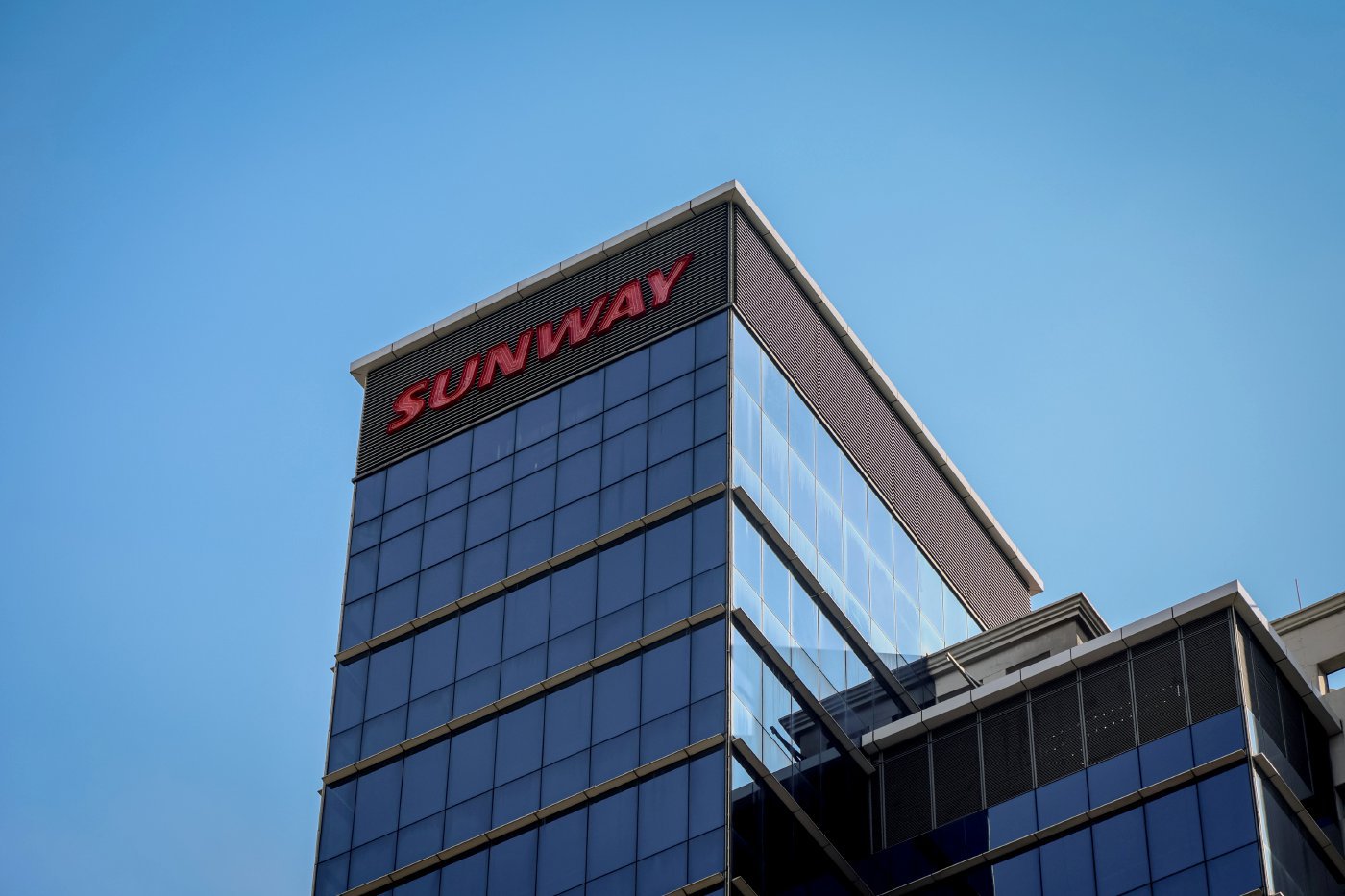
A blockbuster bid by billionaire Jeffrey Cheah’s Sunway Group to absorb construction giant IJM has ignited a ferocious debate about race, capital, and who really controls Malaysia’s economic future—just as the country edges toward a pivotal election cycle.
There are corporate deals, and then there are deals that hold up a mirror to an entire nation. The RM11 billion bid by Sunway Berhad for IJM Corporation is emphatically the latter. On the surface, it is a straightforward consolidation play in a sector long overdue for rationalisation. Dig a little deeper, and you find a collision of race politics, institutional shareholder power, and the ambitions of a prime minister still navigating the treacherous waters of multiracial governance.
When Sunway launched its takeover offer on January 12, 2026, valuing IJM at approximately RM11 billion—or around US$2.71 billion—the financial logic seemed sound. A combined entity would command a market capitalisation approaching RM50 billion, vaulting into the top ten on Bursa Malaysia and creating what proponents call a genuine national construction and property champion capable of competing regionally. But the weeks since have been anything but smooth, as bumiputera advocacy groups, opposition politicians, and state investment funds have raised uncomfortable questions about what this merger means for Malay economic ownership in a sector long considered strategically sensitive.
The Deal: What Is Actually on the Table
Sunway’s offer values each IJM share at roughly RM2.60, a premium of approximately 17 percent over IJM’s three-month volume-weighted average price prior to the announcement. IJM shareholders, many of whom have watched the stock languish for years amid rising input costs and a sluggish domestic construction pipeline, initially responded with cautious optimism. IJM’s share price surged past RM2.50 in the days following the announcement before settling into a holding pattern as political controversy deepened.
Sunway itself entered the year trading at a market capitalisation of roughly RM38 billion, buoyed by strong recurring income from its integrated townships and healthcare assets. The combined group would hold property, construction, infrastructure, and quarrying operations across Malaysia, India, the Middle East, and Australia—a conglomerate of genuine regional heft.
IJM also brings a balance sheet that makes the deal attractive beyond pure scale. With cash reserves exceeding RM2 billion and a healthy order book underpinned by ongoing infrastructure projects, it is not a distressed asset. That, paradoxically, has sharpened the controversy: critics ask why a profitable, bumiputera-linked institution should be absorbed into a group whose founder and controlling shareholder, Tan Sri Jeffrey Cheah, is an ethnic Chinese tycoon.
Jeffrey Cheah, Anwar Ibrahim, and the Racial Arithmetic
Few figures in Malaysian business carry the symbolic weight of Jeffrey Cheah. The founder of Sunway Group built his fortune from tin-mining wastelands in Selangor into one of the country’s most admired integrated townships, and has channelled hundreds of millions into education philanthropy through the Jeffrey Cheah Foundation. He is, by any measure, a Malaysian success story.
But success in Malaysia has always been read through a racial lens, and Cheah’s Chinese identity sits awkwardly against the backdrop of a deal that many bumiputera groups see as a dilution of Malay corporate ownership. IJM, while not a state-linked enterprise in the strictest sense, counts the Employees Provident Fund (EPF) and Permodalan Nasional Berhad (PNB)—two of the country’s largest state-backed institutional investors—among its most significant shareholders. Both funds carry an implicit mandate to protect and grow bumiputera wealth.
As reported by Bloomberg, the deal has drawn scrutiny precisely because it tests the limits of how far market logic can override the country’s affirmative ownership framework. PNB, which manages assets on behalf of bumiputera Malaysians, has not publicly declared its position. Its silence has been deafening.
For Prime Minister Anwar Ibrahim, the deal presents a political calculation of extraordinary delicacy. Anwar has staked much of his Madani economic agenda on attracting foreign investment, liberalising ownership rules, and projecting Malaysia as a modern, meritocratic economy. Approving a merger that creates a stronger, more competitive national champion aligns neatly with that narrative. But his political survival rests on a coalition that includes UMNO, whose grassroots remain deeply invested in the premise that bumiputera economic gains must be protected—sometimes at the expense of market efficiency.
UMNO Youth has been among the most vocal critics, with its leadership publicly questioning whether the government should allow what they characterise as a transfer of strategic assets from the bumiputera sphere to non-bumiputera control. The language has been incendiary in places, tapping into anxieties that predate the merger by decades but have found fresh urgency in an environment where Malay voter sentiment ahead of the 2026-2028 election cycle is increasingly volatile.
The Institutional Shareholders: EPF’s Quiet Power Play
Perhaps the most intriguing subplot involves the EPF. In the weeks following Sunway’s January announcement, market observers noted that the pension fund—which is the single largest institutional investor on Bursa Malaysia—had been quietly accumulating Sunway shares. As reported by The Edge Malaysia, EPF’s purchases were interpreted by some analysts as a signal that the fund was positioning itself to benefit from a deal it quietly endorses, while others read it as a hedge against the uncertainty a prolonged takeover battle creates.
The EPF’s dual role as a Sunway shareholder and an IJM shareholder creates an inherent tension. A higher offer price benefits its IJM position; a successful merger and subsequent re-rating of the combined entity would benefit its Sunway position. The fund’s leadership has maintained strict public silence, consistent with its fiduciary mandate, but the market is watching its every filing.
PNB presents a different profile. As the custodian of Amanah Saham Bumiputera (ASB) and related funds, it carries an explicitly race-conscious mandate that makes a straightforward commercial calculation more politically fraught. If PNB tenders its IJM shares to Sunway, it will face intense criticism from bumiputera advocacy groups regardless of the financial merit. If it withholds, it may be accused of undermining shareholder value for political reasons.
Regulatory Overhang: MACC and the Graft Question
Adding further turbulence, the Malaysian Anti-Corruption Commission (MACC) has been conducting investigations related to procurement irregularities in the construction sector—investigations that, while not directly targeted at either Sunway or IJM, have cast a shadow over the broader industry. Opposition politicians have not been slow to connect these investigations to the merger narrative, suggesting that a mega-consolidation could create opacity rather than accountability in public project awards.
These allegations remain unproven, and both Sunway and IJM have categorically denied any wrongdoing. But in the court of public opinion—particularly among Malay-majority voter blocs who are already sceptical of large Chinese-controlled conglomerates—the suggestion of graft, however tenuous, is politically potent.
The Financial Case: Why the Numbers Still Argue for Consolidation
Strip away the politics, and the economic logic for consolidation remains compelling.
Pre- and Post-Merger Snapshot (estimated, 2026):
| Metric | Sunway (standalone) | IJM (standalone) | Combined Entity (projected) |
|---|---|---|---|
| Market Cap | ~RM38 billion | ~RM11 billion | ~RM50 billion |
| Order Book | ~RM8 billion | ~RM12 billion | ~RM20 billion |
| Cash Reserves | ~RM3 billion | >RM2 billion | ~RM5+ billion |
| Bursa Ranking | Top 20 | Outside Top 20 | Top 10 |
| Regional Presence | MY, India, ME | MY, India, Australia | Significantly expanded |
Malaysia’s construction sector has been fragmented for too long. Dozens of mid-tier contractors compete for the same government contracts, undercutting margins and limiting investment in technology and sustainability. A combined Sunway-IJM entity would have the balance sheet to pursue large-scale infrastructure projects—including potential MRT extensions, Johor-Singapore Rapid Transit System works, and data centre construction—at a scale that smaller competitors cannot match.
As Reuters reported when the bid was announced, the merger is explicitly intended to create a “Malaysian building champion” capable of competing with regional giants from South Korea, Japan, and China that have long dominated Southeast Asian infrastructure. The argument is not merely financial; it is strategic.
Stakeholder Perspectives: A Divided Chorus
Institutional investors broadly favour the deal, citing synergy potential and the premium on offer. Foreign portfolio investors, in particular, have welcomed any signal that Malaysia is willing to allow market-driven consolidation over politically motivated intervention.
Bumiputera advocacy groups remain opposed, framing the merger as a symbolic retreat from the New Economic Policy’s goals of redistributive ownership. Their concern is less about Sunway’s competence than about the precedent: if EPF and PNB are seen to facilitate a transfer of a bumiputera-associated asset to a Chinese-controlled group, it emboldens similar deals in other sectors.
Industry executives, speaking privately, tend to regard the political opposition as short-sighted. One senior figure in the construction supply chain, speaking on condition of anonymity, described the fragmentation of the sector as “a luxury we can no longer afford” given the scale of infrastructure investment required to sustain Malaysia’s economic development targets.
Opposition politicians, from both the right and left flanks, have found unlikely common cause in scrutinising the deal—though for very different reasons. Perikatan Nasional has leaned into the bumiputera ownership argument; Parti Sosialis Malaysia has questioned the concentration of market power.
The Political Clock: 2026 and Beyond
The offer closes on April 6, 2026. That date matters enormously. Malaysia’s next general election is constitutionally due by 2028, but the political calendar is fluid; state elections and the underlying fragility of Anwar’s coalition mean that every major policy decision carries electoral freight.
A government that approves or tacitly facilitates this merger risks alienating a segment of the Malay electorate that sees bumiputera corporate ownership as non-negotiable. A government that blocks or delays it risks signalling to international capital that Malaysia remains a prisoner of ethnic economic politics—precisely the image Anwar has worked to overcome since taking office.
As Channel News Asia noted in its coverage, the controversy has exposed a fault line in Malaysia’s economic governance that no amount of Madani branding fully papers over: the tension between a market-oriented economic vision and the redistributive commitments baked into the country’s political DNA.
Three Scenarios for What Comes Next
Scenario One: The Deal Proceeds, Largely Intact. EPF and PNB tender their shares, the offer closes on schedule in April, and the combined entity lists as one of Bursa’s largest companies. Politically, Anwar absorbs short-term criticism from UMNO backbenchers but points to the resulting national champion as evidence of his economic competence. Markets respond positively.
Scenario Two: A Revised Offer with Bumiputera Conditions. Under pressure from state funds and the government, Sunway sweetens the deal—either by raising the offer price or by committing to structural conditions such as a minimum bumiputera board representation, a ring-fenced bumiputera vendor programme, or a stake reserved for PNB in the combined entity. This is the most politically elegant outcome, though it sets a precedent for race-conditioned M&A that will unsettle foreign investors.
Scenario Three: The Deal Collapses. State funds decline to tender, Sunway fails to achieve the thresholds required for compulsory acquisition, and IJM remains independent. The immediate market reaction would be negative for both stocks. More significantly, it would signal to the region that Malaysia’s affirmative ownership framework remains a structural constraint on market-driven consolidation—a message with long-term consequences for capital allocation.
The Bigger Picture
What makes the Sunway-IJM saga so revealing is not the deal itself but the anxieties it has brought to the surface. Malaysia’s economy has long operated on an implicit bargain: Chinese capital provides commercial dynamism; bumiputera institutions provide political legitimacy; and the government manages the intersection between the two. That bargain is under strain, not because any one actor has behaved badly, but because the world has changed around it.
Regional competition is intensifying. Infrastructure capital is flowing to markets with clearer rules. And a generation of Malaysian investors—bumiputera and otherwise—is increasingly asking whether the inherited framework serves their financial interests or merely their symbolic ones.
The answer Anwar and his government provide in the coming weeks, whether through action or studied inaction, will echo well beyond the construction sector. It will say something fundamental about whether Malaysia is prepared to let economic logic lead—and whether, in the year 2026, it can afford the luxury of letting politics decide.
The offer period for Sunway’s takeover bid for IJM Corporation closes April 6, 2026. Regulatory and shareholder decisions in the intervening weeks will determine whether Malaysia’s most politically charged corporate deal in years reshapes the country’s economic landscape—or exposes the limits of its reform ambitions.
Discover more from The Economy
Subscribe to get the latest posts sent to your email.
-

 Markets & Finance2 months ago
Top 15 Stocks for Investment in 2026 in PSX: Your Complete Guide to Pakistan’s Best Investment Opportunities
-

 Analysis4 weeks ago
Brazil’s Rare Earth Race: US, EU, and China Compete for Critical Minerals as Tensions Rise
-

 Investment2 months ago
Top 10 Mutual Fund Managers in Pakistan for Investment in 2026: A Comprehensive Guide for Optimal Returns
-

 Banks2 months ago
Best Investments in Pakistan 2026: Top 10 Low-Price Shares and Long-Term Picks for the PSX
-

 Asia2 months ago
China’s 50% Domestic Equipment Rule: The Semiconductor Mandate Reshaping Global Tech
-

 Global Economy2 months ago
Pakistan’s Export Goldmine: 10 Game-Changing Markets Where Pakistani Businesses Are Winning Big in 2025
-

 Global Economy2 months ago
What the U.S. Attack on Venezuela Could Mean for Oil and Canadian Crude Exports: The Economic Impact
-

 Global Economy2 months ago
15 Most Lucrative Sectors for Investment in Pakistan: A 2025 Data-Driven Analysis