
Startups
Pakistan’s Startup Revival: How Hybrid Financing Drove a $74 Million Surge in 2025

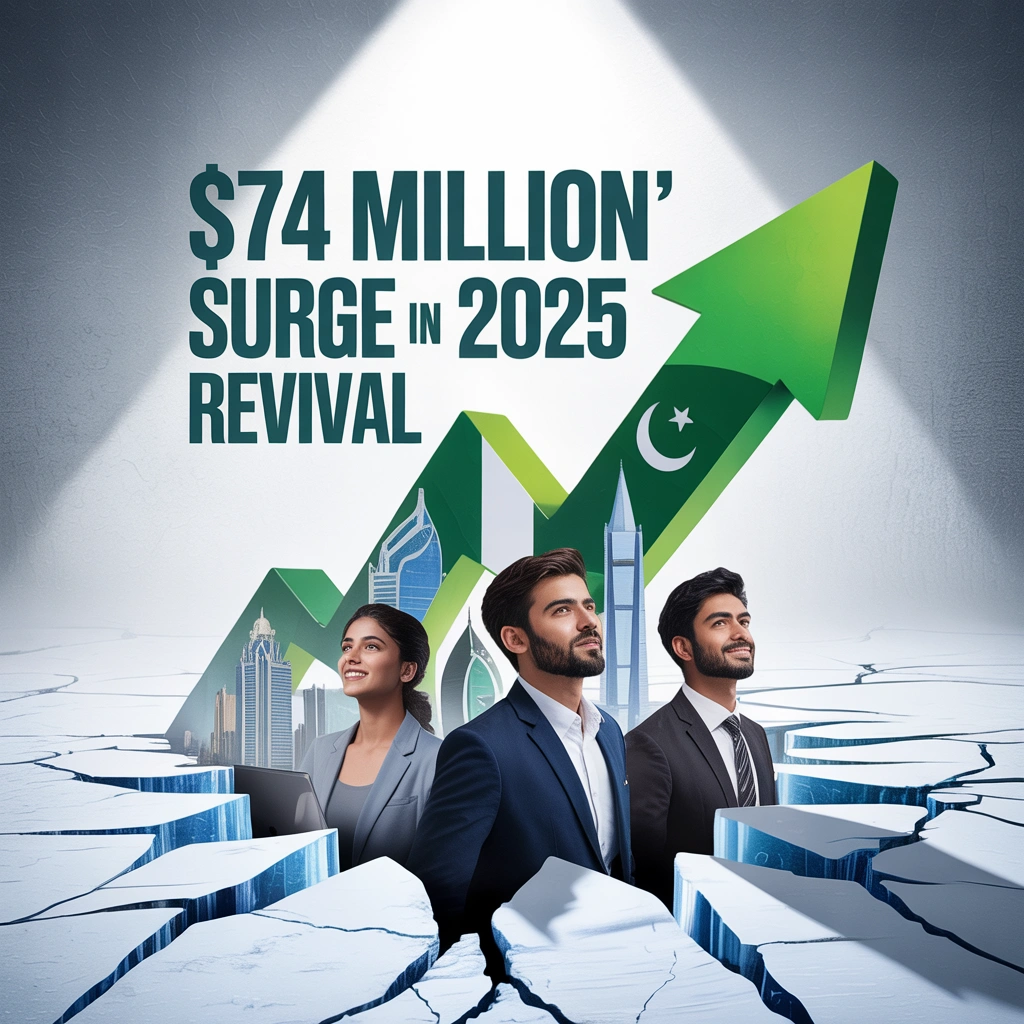
After years of contraction, a strategic pivot to debt-equity blends signals maturation—not just survival—in one of South Asia’s most resilient tech ecosystems
In early April 2025, Omer bin Ahsan faced a familiar dilemma. The founder of Haball, a Karachi-based fintech enabling shariah-compliant supply chain financing, had spent months courting investors for a pre-Series A round. Traditional venture capital appetite remained tepid—Pakistan startup funding 2025 had opened with a dismal $196,000 across three disclosed deals in Q1, marking the ecosystem’s lowest quarterly performance in years. Yet Ahsan’s company had processed over $3 billion in payments since inception, serving nearly 8,000 small and medium enterprises across sectors from retail to aerospace. The fundamentals were solid. What Pakistan lacked wasn’t viable startups—it was capital willing to deploy at scale.
By late April, Haball announced a $52 million raise, comprising $5 million in equity from Zayn VC and a strategic $47 million financing component from Meezan Bank, Pakistan’s largest Islamic financial institution. The structure was a watershed: not pure venture equity, but a hybrid blend of ownership and debt, calibrated to minimize dilution while leveraging established banking infrastructure. It was also emblematic of a broader shift reshaping Pakistan’s startup landscape—one driven less by Silicon Valley playbooks and more by local pragmatism forged through years of macroeconomic turbulence.
When the year closed, Invest2Innovate’s full-year report revealed that Pakistani startups raised over $74 million across 16 deals in 2025, a 121% increase from $33.5 million in 2024. The headline figure, however, concealed the more profound transformation: $66.04 million came through hybrid financing models blending debt, quasi-equity, and structured instruments, while just $8.18 million represented pure equity. It was the clearest signal yet that Pakistan’s startup ecosystem, battered by three years of funding drought and global venture capital winter, had evolved a distinctly localized survival—and growth—mechanism.
The Numbers in Context: Recovery, Not Rebound
To understand Pakistan startup funding 2025, one must first grasp where the ecosystem stood. Between 2021 and 2023, Pakistani startups rode a wave of global liquidity, raising $347 million and $331 million in 2021 and 2022 respectively, according to Data Darbar, a Karachi-based research firm tracking venture activity since 2015. Then came the correction. Funding collapsed 77% to $75.6 million in 2023 amid Federal Reserve rate hikes and a global venture pullback, then tumbled further to $42.5 million in 2024—a nadir unseen since the ecosystem’s nascent years.
The 2025 recovery to $74 million, while encouraging, remained well below pre-2023 peaks. Yet the composition mattered more than the quantum. Data Darbar, in a parallel year-end analysis, reported that pure equity funding reached $36.6 million across 10 disclosed rounds—a 63% increase from 2024’s $22.5 million. The discrepancy between Invest2Innovate’s $74 million total and Data Darbar’s $36.6 million equity-only figure reflects differing methodologies: Invest2Innovate counts all capital deployed, including debt-like instruments, whereas Data Darbar isolates traditional venture equity.
Both narratives are true. Pakistani startups raised more total capital in 2025, but the structure of that capital had fundamentally changed. Consider the quarterly trajectory:
- Q1 2025: $196,000 disclosed (3 deals). A paralytic start as investors awaited IMF program clarity.
- Q2 2025: $58 million, dominated by Haball’s $52 million hybrid round.
- Q3 2025: $15.2 million across six deals, featuring BusCaro’s $2 million hybrid deal and Trukkr’s $10 million mixed equity-debt raise.
- Q4 2025: Modest, sub-$1 million disclosed volumes, but critical for structural shifts—KalPay secured shariah-compliant structured debt from Accelerate Prosperity, while agritech Agrilift and creator economy platform Echooo AI both raised debt financing.
The average disclosed equity deal size climbed to approximately $3.7 million, up from previous years, signaling that investors—when they did commit—deployed more concentrated capital into fewer, higher-conviction bets. This is the hallmark of market maturation: selectivity over spray-and-pray.
Key Deals and Winners: The 2025 Titans
Haball: The Hybrid Pioneer
Haball’s $52 million raise was the defining transaction of 2025. The fintech, founded in 2017, provides digital invoicing, payment collection, tax compliance, and working capital to SMEs—functions critical in a market where less than 5% of small businesses access traditional bank financing. By structuring its round as $5 million in equity plus $47 million in strategic financing from Meezan Bank, Haball achieved two objectives: securing growth capital without excessive dilution, and validating hybrid models as viable for scaling B2B fintechs in emerging markets.
The company plans to enter Saudi Arabia’s $9 billion supply chain finance market in 2025, with further Gulf Cooperation Council (GCC) expansion eyed for 2026. As CEO Omer bin Ahsan noted, “We’re responding to clear market demand for shariah-compliant SME-focused digital financial services”—a thesis resonating not just in Pakistan but across MENA’s Islamic finance corridors.
MedIQ: Female-Founded, GCC-Bound
In April, Dr. Saira Siddique’s MedIQ raised $6 million in a Series A led by Qatar’s Rasmal Ventures and Saudi Arabia’s Joa Capital. The healthtech, born from Siddique’s personal experience navigating Pakistan’s fragmented healthcare system while recovering from paralysis, offers a digitally integrated hybrid ecosystem—telehealth, e-pharmacy, AI-powered facility digitization, and insurance backend automation.
MedIQ’s trajectory underscores a critical trend: Pakistani startups pivoting to GCC markets not as Plan B, but as core strategy. With over 10 million customers served in Pakistan and EBITDA-positive operations, MedIQ exemplifies the product-market fit achievable when founders solve genuine, large-scale inefficiencies. The raise also marked a milestone for gender diversity—female-led startups captured $8.8 million (24%) of 2025’s total equity funding, per Data Darbar, a notable improvement in a historically male-dominated ecosystem.
Mobility, Fintech, and the Long Tail
Beyond mega-rounds, 2025 saw seed-stage activity across diverse verticals:
- BusCaro (mobility): $2 million hybrid deal, female-founded, addressing intercity transport inefficiencies.
- Metric (fintech): $1.3 million seed for infrastructure finance enablement.
- ScholarBee (edtech): $350,000 convertible note, targeting affordable learning platforms.
- Qist Bazaar (fintech BNPL): Rs55 million (~$196,000) disclosed portion of a larger Series A from Bank Alfalah.
- Shadiyana (wedding-tech): $800,000 pre-seed, tapping Pakistan’s multi-billion-dollar wedding industry.
- Myco.io (Web3): $1.5 million, reflecting nascent but persistent interest in decentralized tech.
These transactions, while modest individually, signaled ecosystem resilience. Founders were fundraising—just under radically different assumptions than 2021’s exuberance.
The Hybrid Financing Revolution: Necessity Becomes Strategy
Why did Pakistan startup funding 2025 pivot so decisively to hybrid models? The answer lies in supply-demand asymmetries and risk-adjusted returns.
On the supply side, traditional venture capital remained scarce. Global VC funding reached $512.6 billion in 2025, up 30.8% year-over-year, but concentration was extreme: AI captured 46.4% of Q3 2025 global VC, with mega-rounds ($500M+) to Anthropic, xAI, and others dominating deployment. Emerging markets outside India and select MENA hubs saw limited allocations. Pakistan, with its history of political volatility and currency risk, struggled to compete for the shrinking pool of “generalist” VC dollars.
On the demand side, Pakistani startups needed capital, but on terms preserving founder control. After witnessing down rounds and fire-sale exits across the region during 2022-2024’s contraction, founders sought structures minimizing dilution. Debt or quasi-debt instruments—repayable at fixed schedules with or without convertible features—offered that optionality.
Enter hybrid financing: structures blending equity stakes with revenue-based financing, shariah-compliant murabaha (cost-plus) arrangements, supply chain receivables financing, or convertible notes with conservative caps. Haball’s model epitomizes this: Zayn VC took equity exposure, betting on upside, while Meezan Bank deployed a $47 million financing facility tied to Haball’s transaction volumes—essentially supply chain capital leveraging Haball’s platform as intermediary.
For investors like Meezan Bank, the appeal is clear: lower risk than pure equity, secured by tangible cash flows, and aligned with Islamic banking mandates prohibiting interest (riba) yet permitting profit-sharing and asset-backed financing. For startups, it’s growth capital without governance concessions. For the ecosystem, it’s a localization of financing norms—adapting global venture structures to Pakistan’s financial and regulatory realities.
Sector Spotlight: Where the Money Flowed
Fintech: Still the Heavyweight
Fintech dominated Pakistani startups funding 2025, accounting for the largest share of both disclosed equity and hybrid capital. Beyond Haball and Metric, the sector includes Qist Bazaar (BNPL), KalPay (shariah-compliant payments), and established players like Bazaar Technologies, which acquired rival Keenu in late 2025, signaling consolidation.
Pakistan’s fintech appeal is structural: Islamic banking assets reached Rs9,689 billion ($34.54 billion) by mid-2024, representing 18.8% of banking sector assets, with the State Bank targeting 30% by 2028. Digital payments via Raast, Pakistan’s instant payment system, surged, and SME financing gaps remained vast. Fintechs offering compliance-friendly, digitally native solutions tapped into multi-billion-dollar addressable markets.
Healthtech: The Female Founder Vanguard
Healthtech emerged as the second most-funded sector, led by MedIQ’s $6 million and complemented by seed rounds for diagnostics and preventive health startups. Pakistan’s healthcare system—fragmented, cash-based, and inaccessible to rural populations—presents massive digitization opportunities. Telemedicine uptake accelerated post-pandemic, and corporate health insurance mandates are slowly expanding coverage.
Notably, female founders have disproportionately shaped healthtech: MedIQ (Dr. Saira Siddique), Sehat Kahani (Drs. Sara Saeed Khurram and Iffat Zafar Aga, which raised $2.7 million in 2023), and emerging players like Ailaaj and Marham. Women comprise 74% of MedIQ’s user base, per Arab News interviews—a demographic underserved by traditional clinic models requiring male accompaniment or lengthy travel in conservative regions.
Edtech, Mobility, and Climate: Early-Stage Activity
Edtech startups like ScholarBee secured convertible notes, targeting affordable skill development for Pakistan’s youth bulge (over 60% of the population under 30). Mobility players like BusCaro and Trukkr raised hybrid rounds to address intercity transport and logistics inefficiencies. Climate-linked ventures—Agrilift (agritech) and energy platforms—attracted debt financing from impact-focused vehicles like Accelerate Prosperity, reflecting growing alignment between climate resilience mandates (Pakistan is among the world’s most climate-vulnerable nations) and venture deployment.
Web3 and IoT saw niche activity (Myco.io, undisclosed IoT deals), indicating experimentation persists despite limited exits and regulatory ambiguity.
Global and Macroeconomic Backdrop: Pakistan’s Stabilization Gambit
Pakistan startup funding 2025 unfolded against a volatile but ultimately stabilizing macroeconomic canvas. The country entered 2025 under its 25th IMF program since 1950—a 37-month Extended Fund Facility (EFF) approved in August 2024, coupled with a 28-month Resilience and Sustainability Facility (RSF) targeting climate vulnerabilities.
By year-end, the IMF’s second EFF review in December 2025 confirmed progress: Pakistan achieved a primary fiscal surplus of 1.3% of GDP in FY25, inflation fell from 26% in 2024 to 4.7% over the year’s first ten months, and gross foreign reserves climbed from $9.4 billion (August 2024) to $14.5 billion by year-end—projected to reach $21 billion in 2026. The State Bank of Pakistan cut policy rates by 1,100 basis points since June 2025, easing borrowing costs.
These improvements mattered. Investor confidence, globally, correlates with macroeconomic stability and reserve adequacy. Pakistan’s first current account surplus in 14 years, achieved in FY25, signaled reduced external vulnerabilities. Yet GDP growth remained tepid—2.7% in FY25, projected 3.2% for FY26—barely outpacing population growth. For startups, the message was mixed: stability had returned, but explosive growth remained distant.
Comparatively, India’s startup ecosystem raised $3.1 billion in Q1 2025 alone, dwarfing Pakistan’s full-year $36.6 million equity tally. Pakistan’s total VC funding since 2015—approximately $1.037 billion across 368 deals, per Invest2Innovate—pales against India’s $161 billion deployed since 2014. The gap is structural: India’s scale, deeper capital markets, and diaspora networks create self-reinforcing flywheel effects Pakistan lacks.
Yet within emerging markets, context matters. Southeast Asia saw VC funding drop 42% YoY to $1.71 billion in H1 2025, while Africa’s $676 million (up 56%) remained concentrated in Nigeria, Kenya, and Egypt. Pakistan’s $74 million, while modest, outperformed its own recent trough—and the hybrid financing pivot offers a replicable playbook for markets where traditional VC flows remain constrained.
Challenges Ahead: The Structural Headwinds
Despite 2025’s recovery, Pakistan’s startup ecosystem confronts formidable obstacles:
Limited Domestic Capital
Institutional venture capital remains nascent. Gobi Partners’ Techxila Fund II ($50 million, announced Q4 2024) and Sarmayacar’s Climaventures Fund ($40 million target, $15 million anchor from UN’s Green Climate Fund) represent progress, but Pakistan lacks the density of local VC firms—family offices, pension funds, and corporate venture arms—that India, Indonesia, or even Kenya enjoy. Without robust domestic LP pools, international investors’ risk perceptions dominate, and Pakistan’s geopolitical optics (terrorism concerns, political instability) deter allocations.
Regulatory and Infrastructure Gaps
Startups cite slow regulatory approvals, opaque tax frameworks, and energy/internet outages as persistent friction. The IMF’s 2025 Governance and Corruption Diagnostic estimated Pakistan loses 5-6.5% of GDP annually to “elite capture”—policy distortions favoring entrenched interests. For startups, this manifests as uneven playing fields: established businesses leverage connections for subsidies or licenses, while digital-first ventures navigate bureaucratic mazes.
The State Bank of Pakistan has made strides—Raast adoption, licensing frameworks for digital invoicing (Haball was the first fintech to receive such a license from the Federal Board of Revenue)—but broader structural reforms lag. State-owned enterprise (SOE) losses hemorrhage fiscal resources that could otherwise fund innovation, and privatization efforts (e.g., Pakistan International Airlines) proceed glacially.
Talent Retention and Brain Drain
Pakistan produces over 15,000 IT graduates annually, yet emigration rates are high. Gulf markets, Europe, and North America offer salaries multiples higher than local startups can afford. Top founders increasingly “de-risk” by incorporating in Dubai or Delaware, maintaining development teams in Pakistan but moving corporate entities offshore—a pragmatic but double-edged strategy that limits ecosystem depth.
Exit Drought
Pakistan has recorded zero venture-backed IPOs since Careem’s 2019 acquisition by Uber (a $3.1 billion exit, though Careem was Dubai-domiciled). Without consistent exits—IPOs, strategic acquisitions, or secondary sales—early investors cannot realize returns, limiting LP appetite to reinvest. The absence of a Nasdaq-style tech exchange or active M&A market (few multinational acquirers operate locally at scale) perpetuates this cycle.
Future Outlook: Toward 2026 and Beyond
What does Pakistan startup funding 2025’s hybrid pivot augur for the ecosystem’s next phase?
Optimistic Case: The hybrid model becomes a sustainable competitive advantage. If Haball successfully scales across GCC, MedIQ replicates Pakistan learnings in Saudi Arabia, and debt-equity blends prove scalable for B2B SaaS, logistics, and agritech verticals, Pakistan could carve a niche as a “hybrid capital lab” for emerging markets. Islamic finance alignment is non-trivial: GCC investors managing trillions in shariah-compliant assets seek deployment opportunities, and Pakistani startups fluent in murabaha, tawarruq, and wakalah structures have first-mover advantages.
Further, macroeconomic stability—if sustained—creates virtuous cycles. Lower inflation and interest rates reduce cost of capital, IMF program credibility attracts development finance institutions (DFIs) and multilateral capital, and sectoral growth (IT exports surpassed $3.2 billion in FY25, per government data) generates wealth reinvestable locally.
Cautious Case: 2025’s recovery is a dead-cat bounce. If global VC remains concentrated in AI and developed markets, Pakistani startups continue battling for scraps. Hybrid financing, while pragmatic, may limit upside—debt requires repayment, constraining burn rates and growth velocity. Founders opting for conservative capital structures might achieve profitability but miss transformative scale. Meanwhile, India’s ecosystem compounds advantages, Gulf markets attract Pakistani founders directly, and the domestic market’s 240.5 million people remains fragmented by low digital penetration and purchasing power.
The likeliest path lies between extremes. Pakistan’s startup ecosystem in 2025 demonstrated resilience, adaptability, and strategic pragmatism. It won’t replicate India’s scale or Silicon Valley’s density, but it could build sustainable, profitable tech businesses solving real problems for Pakistan’s SMEs, diaspora, and underserved populations—and increasingly, for GCC markets seeking culturally aligned solutions.
Key signposts for 2026 include:
- Fund Formation: Will local LPs (family offices, corporates) launch more $20-50 million seed/early-stage vehicles? Climaventures and Techxila II are starts, but scale matters.
- Exits: Any M&A activity (e.g., Bazaar-Keenu)? Secondary sales via platforms like Forge/EquityZen?
- Government Policy: Will the new administration (post-2024 elections) deliver on promised tax incentives, streamlined approvals, or tech-zone infrastructure?
- GCC Traction: Do Haball, MedIQ, and others convert Saudi/UAE market entry into revenue scale validating cross-border models?
Azfar Hussain, Project Director at National Incubation Center Karachi, captured the moment succinctly: “2025 marked a period of correction and maturity. Capital became more selective, filtering out hype-driven ventures while strengthening founders focused on solving real-world problems. Growth in 2026 will increasingly favor founders who invest in governance, product depth, and regional scalability rather than pursuing rapid expansion or vanity metrics.”
Conclusion: A Pivot, Not a Peak
The story of Pakistan startup funding 2025 is not one of triumphant return to 2021’s heady days. It is, instead, a narrative of adaptation—founders and investors recalibrating expectations, structures, and strategies in response to prolonged capital scarcity and macroeconomic volatility. The pivot to hybrid financing, far from signaling weakness, reflects ecosystem maturation: recognition that sustainable growth, not blitzscaling on cheap capital, suits Pakistan’s current conditions.
When Omer bin Ahsan closed Haball’s $52 million round in April, or Dr. Saira Siddique secured MedIQ’s $6 million in May, they weren’t just fundraising—they were validating new templates. Templates where debt and equity coexist, where Islamic finance principles align with venture returns, where regional expansion to GCC markets complements domestic consolidation, and where profitability timelines matter as much as user acquisition curves.
For Pakistan’s digital economy—still nascent, still fragile, still shadowed by structural challenges—2025’s $74 million across hybrid and equity instruments represents neither arrival nor defeat. It is progress, incremental but real, toward an ecosystem that may never match India’s scale but could nonetheless produce resilient, profitable businesses improving millions of lives. In venture capital, as in geopolitics, survival itself can be a victory. Pakistan’s startups, battered by funding winters and macro headwinds, survived 2025—and in doing so, they sowed seeds for the next phase of growth.
The question is no longer whether Pakistan can build a startup ecosystem. It already has one. The question is whether it can sustain, deepen, and scale what 2025’s hybrid financing surge began.
This analysis synthesizes data from Invest2Innovate, Data Darbar, IMF reports, KPMG Venture Pulse, MAGNiTT, and reporting by Business Recorder, The Express Tribune, Arab News, Financial Times, and other premium sources. All figures current as of January 2026.
Discover more from The Economy
Subscribe to get the latest posts sent to your email.


India’s quick-commerce revolution has mastered delivering groceries in 10 minutes. Now, a Bengaluru-based startup is betting it can do the exact same thing with freshly cooked food.
Swish, a rapidly growing food delivery platform, just secured $24 million in a fresh funding round led by Bertelsmann India Investments (BII). Heavyweight existing investors, including Accel, Bain Capital Ventures, and Hara Global, also doubled down on the round, signaling massive confidence in a model that attempts to solve the oldest problem in food delivery: the trade-off between speed and quality.
The Problem: The “Aggregator” Bottleneck
Currently, the Indian food delivery market is dominated by aggregators who act purely as middlemen. They take your order, send it to an independent restaurant, and dispatch a gig worker to pick it up.
The result? Unpredictable wait times, high platform fees, and food that often arrives cold after spending 40 minutes in transit.
“An average Indian consumer consumes food 90–100 times a month, but orders online only 4 times out of it,” explained Aniket Shah, Co-founder and CEO of Swish. Shah, along with co-founders Ujjwal Sukheja and Saran S., realized that to fix food delivery, they couldn’t just build a better app—they had to own the entire process.
The Swish Solution: Full-Stack Ownership
Instead of relying on third-party restaurants, Swish operates a tightly integrated network of neighborhood cloud kitchens. Each kitchen serves a hyper-local radius of just about one kilometer.
Because Swish controls the ingredients, cooks the food, and manages its own fleet of delivery riders, they eliminate the friction of the middleman. The results over the last six months have been staggering:
- Lightning Speed: Over 80% of Swish orders are delivered in under 15 minutes.
- Explosive Growth: The platform’s monthly order volume has tripled since March, crossing the 1 million mark.
- Vast Variety: Their menu has expanded to over 250 SKUs across 20+ food categories.
How Swish Compares to Traditional Delivery
| Feature | Traditional Aggregators | The Swish Model |
| Kitchen Operations | Third-party restaurants | 100% Owned “Neighborhood Kitchens” |
| Delivery Time | 30–55 minutes | 10–15 minutes |
| Supply Chain | Fragmented | Vertically integrated |
| Service Radius | 5–10 kilometers | Hyper-local (~1 kilometer) |
What’s Next for Swish?
With $24 million in fresh capital, Swish isn’t just staying in Bengaluru. The company has already expanded operations into the Delhi NCR region—including Gurugram, Noida, and Ghaziabad—and plans to use the funds to aggressively densify its kitchen network and upgrade its supply chain infrastructure.
Pankaj Makkar, Managing Director at Bertelsmann India Investments, perfectly summarized the investor thesis behind the massive check: “The country’s largest consumer businesses will be built by founders willing to own the entire problem rather than a convenient slice of it… Everyday food is the biggest under-served category in Indian consumption, and it has remained that way because no one has managed freshness, affordability, and convenience at the same time.”
As competition in India’s quick-commerce sector reaches a boiling point, Swish is proving that when you control the kitchen, you control the clock.
Discover more from The Economy
Subscribe to get the latest posts sent to your email.

The abrupt closure of multiple Denny’s locations in Minnesota and Wisconsin signals a systemic crisis in casual dining. M15 Inc.’s collapse highlights the combination of escalating commercial real estate debt, persistent food inflation, and softening consumer foot traffic. Overleveraged franchisees are collapsing under interest rates established during the zero-interest-rate policy era, facing unsustainable debt servicing requirements.
The current macroeconomic environment is characterized by unprecedented volatility, driven by shifting monetary policies, supply chain recalibrations, and evolving trade barriers. As central banks navigate the delicate balance between curbing inflation and preventing deep recessions, emerging markets face asymmetric risks. Developing economies must rigorously manage their foreign exchange reserves while calibrating import duties and trade frameworks—often leveraging insights from national tariff commissions to protect domestic industries without stifling vital foreign direct investment. This delicate equilibrium directly impacts global liquidity, equity valuations, and sovereign debt yields. The restructuring of global supply chains, initially sparked by geopolitical friction, has now become a structural reality. Corporations are transitioning from ‘just-in-time’ manufacturing to ‘just-in-case’ inventory management, fundamentally altering capital expenditure cycles. Furthermore, the integration of advanced digital tracking and open-source intelligence is allowing multinational firms to better anticipate supply shocks, although the cost of implementing these technologies creates new barriers to entry for smaller enterprises. Ultimately, the intersection of foreign policy and economic strategy is tighter than ever, with trade tariffs and sanctions acting as primary instruments of geopolitical leverage.
This dynamic fundamentally shifts how stakeholders must approach long-term strategic planning, requiring a pivot away from legacy models toward hyper-adaptive fiscal forecasting.
2. Deep Dive: Market Mechanics and Structural Shifts
Delving deeper into the structural mechanics, we see a profound transformation in how institutional capital evaluates risk. Historically, geographic diversification offered a reliable hedge against localized downturns. Today, however, the rapid transmission of financial shocks across borders—facilitated by highly integrated banking networks and algorithmic trading—means that systemic risk is virtually ubiquitous. Asset managers are heavily scrutinizing cash flow durability, favoring sectors with inelastic demand characteristics. The regulatory environment is also tightening. Heightened scrutiny over data privacy, antitrust concerns in the technology sector, and rigorous ESG (Environmental, Social, and Governance) compliance mandates are forcing companies to overhaul their operational frameworks. These compliance costs are inevitably passed down to the consumer, fueling core inflationary pressures. Concurrently, the labor market is undergoing a structural shift. The automation of routine tasks, coupled with the rising premium on specialized technical and analytical skills, is widening the productivity gap between different segments of the workforce. For policymakers and corporate strategists alike, navigating this landscape requires a nuanced understanding of these intersecting vectors, moving beyond traditional econometric models to incorporate real-time, alternative data sources.
By examining the underlying data, it becomes evident that the market is severely underpricing tail-risks associated with these developments. Institutional capital flows are increasingly prioritizing liquidity and balance sheet resilience over speculative growth.
In parallel, the velocity of money within these specific sub-sectors has decelerated, indicating a hoarding of capital by major corporate players in anticipation of further regulatory or geopolitical turbulence. This behavior creates a feedback loop, exacerbating localized liquidity shortages and widening credit spreads.
3. Regulatory Environment and Trade Implications
Any comprehensive analysis must account for the evolving regulatory perimeter. National trade bodies and tariff commissions are aggressively deploying protectionist measures, utilizing import duties and quotas to shield domestic industries from global dumping practices. These tariff architectures, while politically popular, disrupt established global value chains and introduce massive compliance overhead for multinational operators.
The current macroeconomic environment is characterized by unprecedented volatility, driven by shifting monetary policies, supply chain recalibrations, and evolving trade barriers. As central banks navigate the delicate balance between curbing inflation and preventing deep recessions, emerging markets face asymmetric risks. Developing economies must rigorously manage their foreign exchange reserves while calibrating import duties and trade frameworks—often leveraging insights from national tariff commissions to protect domestic industries without stifling vital foreign direct investment. This delicate equilibrium directly impacts global liquidity, equity valuations, and sovereign debt yields. The restructuring of global supply chains, initially sparked by geopolitical friction, has now become a structural reality. Corporations are transitioning from ‘just-in-time’ manufacturing to ‘just-in-case’ inventory management, fundamentally altering capital expenditure cycles. Furthermore, the integration of advanced digital tracking and open-source intelligence is allowing multinational firms to better anticipate supply shocks, although the cost of implementing these technologies creates new barriers to entry for smaller enterprises. Ultimately, the intersection of foreign policy and economic strategy is tighter than ever, with trade tariffs and sanctions acting as primary instruments of geopolitical leverage.
Consequently, compliance is no longer a localized legal issue but a central pillar of global corporate strategy. Firms that fail to map their supply chain vulnerabilities against shifting tariff schedules risk catastrophic margin compression. The strategic deployment of foreign direct investment is now heavily contingent upon favorable tariff rulings and bilateral trade agreements, making regulatory forecasting as critical as traditional financial modeling.
4. Corporate Strategy & Supply Chain Realities
At the enterprise level, the response to these macroeconomic and regulatory pressures involves massive capital expenditure in supply chain redundancy. The shift toward near-shoring and friend-shoring is accelerating, unwinding decades of globalization focused purely on labor arbitrage. This transition is highly capital intensive, depressing near-term return on invested capital (ROIC) but essential for long-term operational survival.
Delving deeper into the structural mechanics, we see a profound transformation in how institutional capital evaluates risk. Historically, geographic diversification offered a reliable hedge against localized downturns. Today, however, the rapid transmission of financial shocks across borders—facilitated by highly integrated banking networks and algorithmic trading—means that systemic risk is virtually ubiquitous. Asset managers are heavily scrutinizing cash flow durability, favoring sectors with inelastic demand characteristics. The regulatory environment is also tightening. Heightened scrutiny over data privacy, antitrust concerns in the technology sector, and rigorous ESG (Environmental, Social, and Governance) compliance mandates are forcing companies to overhaul their operational frameworks. These compliance costs are inevitably passed down to the consumer, fueling core inflationary pressures. Concurrently, the labor market is undergoing a structural shift. The automation of routine tasks, coupled with the rising premium on specialized technical and analytical skills, is widening the productivity gap between different segments of the workforce. For policymakers and corporate strategists alike, navigating this landscape requires a nuanced understanding of these intersecting vectors, moving beyond traditional econometric models to incorporate real-time, alternative data sources.
Furthermore, the integration of advanced data analytics into procurement and logistics is creating a bifurcation in corporate performance. Companies leveraging real-time telemetry and predictive modeling can dynamically route around bottlenecks, whereas legacy operators remain heavily exposed to single points of failure. This technological divide is rapidly translating into a definitive competitive advantage, reflected in disparate valuation multiples within the same industry cohorts.
5. Digital Monetization & Premium Publisher Strategy
From a digital publishing and monetization perspective, covering these complex macro and technological trends requires a sophisticated architecture. High-CPM and high-CPC yield generation depends on capturing intent-driven traffic. Financial and geopolitical content naturally attracts premium programmatic advertisers. Digital publishers operating robust portfolios are increasingly diversifying their revenue streams beyond standard display ads. By integrating specialized publisher networks, such as Coin.network for crypto and macro-finance adjacencies, or high-intent affiliate ecosystems like Travelpayouts for global transit and aviation content, digital platforms can drastically improve their revenue per thousand impressions (RPM). Furthermore, optimizing site taxonomy and leveraging vector-based assets ensures faster load times, directly boosting Core Web Vitals and search engine rankings. The strategic placement of contextual widgets, combined with deep-dive analytical content, creates a sticky user experience that encourages longer session durations. This architectural approach not only outperforms algorithmic updates but establishes a highly defensible moat against low-effort, AI-generated content farms. For media operators, the transition from basic news aggregation to authoritative, niche intelligence distribution is the key to sustainable digital media economics.
For financial and economic news portals, the path to profitability lies in owning the niche. By consistently delivering high-fidelity analysis that intersects global trade, technology, and market data, publishers attract a highly affluent demographic. This audience profile commands top-tier CPC rates from financial institutions, B2B SaaS providers, and enterprise tech conglomerates.
Strategic integration of programmatic networks requires meticulous attention to ad placement, ensuring that monetization widgets complement rather than disrupt the analytical narrative. The use of sophisticated yield management platforms allows publishers to dynamically allocate inventory between direct sales, private marketplaces, and open exchanges, maximizing revenue yield in real-time. This sophisticated infrastructure is the bedrock of modern digital publishing economics.
6. Future Outlook and Risk Assessment
The current macroeconomic environment is characterized by unprecedented volatility, driven by shifting monetary policies, supply chain recalibrations, and evolving trade barriers. As central banks navigate the delicate balance between curbing inflation and preventing deep recessions, emerging markets face asymmetric risks. Developing economies must rigorously manage their foreign exchange reserves while calibrating import duties and trade frameworks—often leveraging insights from national tariff commissions to protect domestic industries without stifling vital foreign direct investment. This delicate equilibrium directly impacts global liquidity, equity valuations, and sovereign debt yields. The restructuring of global supply chains, initially sparked by geopolitical friction, has now become a structural reality. Corporations are transitioning from ‘just-in-time’ manufacturing to ‘just-in-case’ inventory management, fundamentally altering capital expenditure cycles. Furthermore, the integration of advanced digital tracking and open-source intelligence is allowing multinational firms to better anticipate supply shocks, although the cost of implementing these technologies creates new barriers to entry for smaller enterprises. Ultimately, the intersection of foreign policy and economic strategy is tighter than ever, with trade tariffs and sanctions acting as primary instruments of geopolitical leverage.
Looking forward to the next fiscal cycles, the interplay between technological disruption and macroeconomic stability will intensify. Stakeholders must remain exceptionally agile, deploying advanced forecasting tools and maintaining robust liquidity buffers to weather unexpected systemic shocks. The margin for error in capital allocation has effectively dropped to zero.
In conclusion, the convergence of these factors dictates a complete reimagining of traditional operational and investment playbooks. The victors in this new paradigm will be those who can seamlessly synthesize geopolitical intelligence, deep market data, and advanced digital distribution strategies into a cohesive, actionable framework.
Discover more from The Economy
Subscribe to get the latest posts sent to your email.

The Bureau of Alcohol, Tobacco, Firearms and Explosives confirmed on August 26, 2026, that a ransomware gang breached a standalone computer system containing active criminal investigation data, a “major incident” under federal guidelines that triggered mandatory Congressional notification — and by September 1, leaked files reviewed by CNN and an independent cybersecurity researcher appeared to expose ATF investigative targets, phone communication analyses, and case details tied to armed robbery, arson, explosives, and homicide investigations, including a significant cluster from the agency’s Houston Field Division.
Timeline: From Ransom Deadline to Public Leak
The breach became public in stages over roughly a week:
August 26, 2026: The Qilin ransomware gang — a Russian-speaking ransomware-as-a-service operation — added ATF to its dark web leak site, listing the federal agency alongside five other victims, primarily from industrial and manufacturing sectors. The same day, ATF issued a press release confirming it was responding to “a cybersecurity incident affecting a standalone system.” The Department of Justice designated the event a “major incident” under federal guidelines, a formal classification requiring notification to Congress.
Late August 2026: Qilin’s initial listing did not include published sample data, file trees, or other typical proof-of-breach materials, and ATF’s own statement did not name Qilin by name at all — the attribution came entirely from the ransomware group’s own leak-site post and subsequent media reporting.
August 31–September 1, 2026: After ATF reportedly missed a 72-hour ransom deadline, Qilin published roughly 6.3GB of data to its dark web leak site. Independent cybersecurity researcher Ron Fabela, along with CNN’s review of the material, found the dumped files appeared to include information on targets of past ATF investigations and analyses of their phone communications, corresponding in some cases to specific ATF agents and the high-profile cases they had apparently worked on.
What the Leaked Files Reportedly Contain
According to Fabela’s analysis, the leaked data covers investigations related to armed robbery, arson, explosives, and homicide. A significant portion of the referenced cases fall under the ATF’s Houston Field Division specifically. ATF itself has been notably cautious in its public characterization of the material, stating it “cannot confirm the authenticity, nature, or scope of the material at issue” and that it is working with the Department of Justice and other federal partners to assess the claims and determine appropriate next steps.
ATF’s Official Position: Containment and Scope Limitations
Throughout its public communications, ATF has consistently emphasized that the breach was contained to a single, isolated system. The agency stated there was “no indication that the incident has affected the ATF enterprise network, the ATF eForms system, or any other ATF system,” and separately confirmed the affected standalone system was not connected to other ATF operational infrastructure, including case management systems or laboratory systems. ATF has maintained that its ability to carry out its core law enforcement mission has not been impacted by the incident.
Immediately upon discovering the intrusion, ATF said it cut off access to the affected system and initiated incident-response and forensic activities. The agency has also asked for public assistance, urging anyone with information about the breach to call its tipline at 1-888-ATF-TIPS.
Why This Breach Carries Unusual National Security Weight
The nature of ATF’s mission gives this particular breach a distinct risk profile compared to many corporate ransomware incidents. ATF investigations routinely target firearms trafficking networks, violent gangs, bomb makers, terror suspects, and individuals under investigation for domestic violence-related firearms offenses. Leaked information about the inner workings of these investigations — including which individuals are under scrutiny and what evidence investigators have gathered against them — could expose confidential informants, compromise ongoing investigations, and in some cases create direct safety risks for both the investigative targets whose data was exposed and the ATF agents who worked those cases.
Under federal law, a “major” cyber incident designation is generally reserved for breaches that could harm U.S. national security, foreign relations, or economic security, or that could result in demonstrable harm to public confidence, civil liberties, or public health and safety — meaning ATF’s classification of this incident reflects a serious assessment of its potential downstream consequences, not merely a bureaucratic formality.
Part of a Broader Pattern of Federal Law Enforcement Breaches
The ATF incident is not occurring in isolation. It lands amid a documented wave of intrusions targeting federal law enforcement and homeland security infrastructure throughout 2026. In March 2026, the FBI disclosed that China-linked hackers had infiltrated its Digital Collection System Network — the infrastructure used to manage court-authorized wiretaps and FISA surveillance warrants — in an incident investigators attributed to a vendor supply-chain compromise. Separately, a broader Cybernews investigation found that more than 75% of U.S. government websites suffered some form of data breach in 2025, exposing everything from employee credentials to sensitive internal information across federal agencies.
Historical precedent within the justice and law enforcement sector reinforces the pattern: a 2023 ransomware attack on the U.S. Marshals Service affected personal information tied to the subjects of the service’s investigations, and that same year, hackers breached an FBI New York field office computer system used in child exploitation investigations, reportedly including a system tied to the Jeffrey Epstein investigation.
Who Is Qilin?
Qilin, previously tracked under the name Agenda, is among the most prolific ransomware-as-a-service operations active in 2025–2026, with reported claims against 885 total victims listed on its dark web leak site as of early August 2026. As a ransomware-as-a-service operation, Qilin provides its ransomware infrastructure to affiliated criminal groups in exchange for a share of any extorted proceeds, a business model that has made it one of the most active and geographically diverse ransomware brands currently tracked by cybersecurity researchers.
Practical Guidance Emerging From the Incident
Cybersecurity analysts and legal commentators tracking the breach have offered specific, audience-targeted guidance in its wake:
- Federal contractors working with justice-sector systems should expect stricter multi-factor authentication and VPN access reviews in the near term.
- Defense attorneys handling firearms-related cases should monitor court dockets for discovery disputes that may arise tied to the incident, since compromised investigative files could affect evidentiary chains in active prosecutions.
- Journalists and members of the public are cautioned against republishing unverified Qilin-sourced samples as authenticated ATF records without independent agency confirmation, given ATF’s own stated inability to confirm the authenticity of the leaked material.
- General public should be skeptical of social media posts claiming to offer “leaked ATF gun owner lists,” a recurring scam pattern that tends to emerge following firearms-agency data breach headlines, regardless of whether such lists have any connection to the actual leaked material.
Key Takeaways
- ATF confirmed a ransomware breach of a standalone system on August 26, 2026, later designated a “major incident” requiring Congressional notification.
- The Qilin ransomware gang published approximately 6.3GB of data after ATF reportedly missed a 72-hour ransom deadline.
- Independent analysis suggests the leaked files include information on ATF investigative targets, phone communication analyses, and cases involving armed robbery, arson, explosives, and homicide, with a concentration tied to the Houston Field Division.
- ATF maintains the breach was isolated to a standalone system and did not affect its core operational infrastructure, including case management or eForms systems.
- The incident is part of a broader documented pattern of cyberattacks against U.S. federal law enforcement and government systems throughout 2025–2026.
Frequently Asked Questions
What data was exposed in the ATF breach?
Leaked files reviewed by independent researchers and journalists appear to include information on ATF investigative targets, phone communication analyses, and case details related to armed robbery, arson, explosives, and homicide investigations, with a significant portion tied to the Houston Field Division.
Who is responsible for the ATF hack?
The Russian-speaking ransomware group Qilin claimed responsibility by listing ATF on its dark web leak site; ATF’s own public statements have not directly named or confirmed Qilin as the responsible party.
Did the ATF breach affect the agency’s core operations?
ATF states the breach was confined to a standalone system not connected to its enterprise network, eForms system, or other operational infrastructure, and that its ability to carry out its mission was not impacted.
Discover more from The Economy
Subscribe to get the latest posts sent to your email.

Beyond Paper Wealth: Unpacking Donald Trump’s Multibillion-Dollar Liquidity and Legal Crisis

Bitcoin & XRP 2026: Inside Crypto’s Institutional Era

Global Economy 2026: IMF Growth, AI Stocks & Market Risk

China’s Local Debt Race Against Time: Why Economists Demand Central Action Before the Deflation Window Closes

Money News: How to Protect Your Portfolio From Global Inflation

World Bank Projections: Emerging vs. Big Economies of Asia

IMF Reports 2026: What the Latest Data Means for the Global Economy

Singapore Stocks Outlook: A Safe Haven in the Asian Market?

China Stocks vs. Japan Stocks: Where Should You Invest in Late 2026?

VIX Index Explained: How to Trade Wall Street’s Fear Gauge Today

Commercial vs Residential Real Estate: Which Wins in 2026?

Presidential Stock Market Performance: How Trump’s Second Term Compares to History

2026 Real Estate Market News: Are We Heading for a Correction?

Bitcoin Price Forecast 2026–2027: Will the 4-Year Cycle Hold?

Top 30 Stocks for Investment in PSX for Massive ROI in 2026

SpaceX Starship Flight 14: First Orbital Attempt & Starlink V3 Launch Explained

AI Chip Stocks 2026: The Best Semiconductor Investments Beyond Marvell

The 2026 Crypto Regulatory Shift: What It Means for Institutional Investors

Tween Back-to-School Trends 2026: What’s Driving the $85B Season

Oil Prices Break $100 in 2026: Middle East Conflict & Energy Markets

Fidelity Investments Review 2026: SPAXX Yields & Zero-Fee Funds

AI-Powered Training: The Next Multi-Billion Dollar Ecosystem in Fitness

10-Year Treasury Yield Hits 4.80%: What It Means for Rates & Portfolios

BRICS+ Cross-Border Payments 2026: Interoperability Explained

Shein Clothes Quality & Safety in 2026: What Lab Tests Show

MRVL Earnings 2026: Why Marvell Sank Despite Beating Estimates

China’s US$10.8 Billion Trade Shortcut: Why the Pinglu Canal Matters

IMF & World Bank 2026 Global Economic Outlook: Growth, Inflation, Debt
-

 Markets & Finance9 months ago
Top 15 Stocks for Investment in 2026 in PSX: Your Complete Guide to Pakistan’s Best Investment Opportunities
-

 Analysis7 months ago
Johor’s Investment Boom: The Hidden Costs Behind Malaysia’s Most Ambitious Economic Surge
-

 Analysis7 months ago
Top 10 Stocks for Investment in PSX for Quick Returns in 2026
-

 Analysis8 months ago
Brazil’s Rare Earth Race: US, EU, and China Compete for Critical Minerals as Tensions Rise
-

 Banks8 months ago
Best Investments in Pakistan 2026: Top 10 Low-Price Shares and Long-Term Picks for the PSX
-

 Investment8 months ago
Top 10 Mutual Fund Managers in Pakistan for Investment in 2026: A Comprehensive Guide for Optimal Returns
-

 Global Economy9 months ago
15 Most Lucrative Sectors for Investment in Pakistan: A 2025 Data-Driven Analysis
-

 Global Economy9 months ago
Pakistan’s Export Goldmine: 10 Game-Changing Markets Where Pakistani Businesses Are Winning Big in 2025