
Oil Markets
Oil Trades Close to $100 After Attacks in Gulf — Ships and Energy Infrastructure

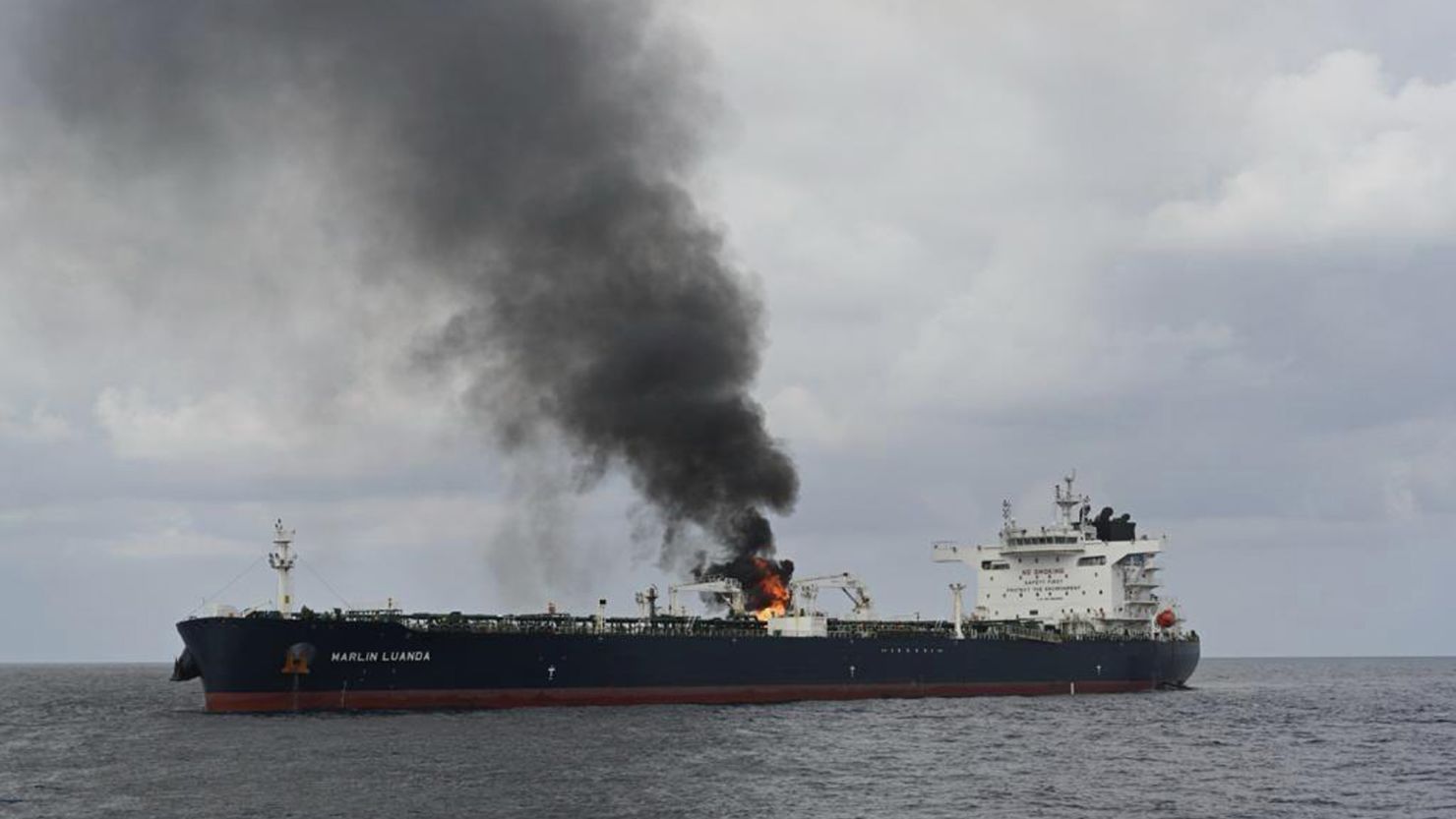
The Persian Gulf woke before dawn to the glow of burning tankers.
By the time London’s oil traders logged their terminals on Thursday morning, Brent crude futures had surged 6.2% to $97.66 a barrel at around midday London time, after earlier breaching the $100 threshold CNBC — a psychologically devastating milestone that analysts had warned of since the first U.S. and Israeli bombs fell on Iranian territory thirteen days ago. Brent is now up approximately 38% over what it cost when the war started on February 28. Spectrum News 1 For the global economy, still nursing the wounds of post-pandemic inflation, the arithmetic is brutal.
This is no longer a regional skirmish. It is a systemic energy shock of a kind not witnessed since the Arab oil embargo of 1973 — and, on several metrics, already surpassing it.
The Anatomy of Thursday’s Attacks: From Basra to Dubai Creek
Three ships were hit by unknown projectiles in the Persian Gulf early Thursday, according to the United Kingdom Maritime Trade Operations Center. One container ship was struck off the coast of Jebel Ali, United Arab Emirates, causing a small fire onboard. Two tankers were also hit near Al Basrah, Iraq, and were set ablaze — though all crew members were reported safe. UPI
Iran’s Islamic Revolutionary Guard Corps claimed one of those strikes with characteristic theatricality. IRGC footage showed the moment the Safesea Vishnu, a Marshall Islands-flagged vessel, was struck. In the footage, a man can be heard shouting declarations of victory in Khamenei’s name. U.S. News & World Report The vessel’s operators and cargo have not been publicly confirmed, but maritime intelligence sources say it was carrying refined products bound for South Asia.
The strikes on Iraqi waters represent a significant escalation. The two tankers hit near Basra’s southern port area marked the first oil-related strike reported in Iraqi waters since the war began. KPBS Iran, which maintains deep influence over Baghdad, appeared willing to inflict economic pain on a nominal ally — a signal of how far Tehran is prepared to go.
Iran also caused a blaze near Bahrain’s international airport on Muharraq Island, targeted a major Saudi oil field with a drone, and forced Iraq to halt operations at all of its oil terminals. In Kuwait, a drone struck a residential building, wounding two people. In Dubai, firefighters extinguished a blaze at a tower in Dubai Creek Harbour after a drone hit. Washington Times
Iran flouted a U.N. Security Council resolution from the previous day demanding that it halt strikes on its Gulf neighbours. Spectrum News 1 Tehran’s message, delivered not in diplomatic cables but in drone wreckage, was unmistakable: no external legal architecture will constrain its campaign.
The Hormuz Chokepoint: 20 Million Barrels a Day on the Knife’s Edge
The Strait of Hormuz — a 33-kilometre-wide channel between the Iranian coast and the tip of Oman — is the jugular vein of the global oil economy. About 20% of global oil consumption passes through the strait. NPR That is roughly 20 million barrels per day, supplying refineries from Rotterdam to Riyadh to Yokohama.
Iran has not needed a formal naval blockade to achieve an effective halt. By deploying selective drone and rocket attacks, Tehran has been enough to make shipping companies and the insurers who underwrite them balk at the risk of sending ships through the strait, resulting in what amounts to a total halt of tanker traffic. NPR
Strategists noted oil prices were trading higher precisely because there appears to be no end in sight to supply disruptions through the Strait of Hormuz. Dutch bank ING stated in a research note: “The only way to see oil prices trade lower on a sustained basis is by getting oil flowing through the Strait of Hormuz. Failing to do so means that the market highs are still ahead of us.” CNBC
Prices have already demonstrated what “ahead of us” can look like. Brent crude spiked to nearly $120 a barrel on Sunday before retreating NBC News — a foretaste of what a prolonged closure portends.
| Brent Crude Price | Date / Context |
|---|---|
| ~$72/barrel | February 27, 2026 (pre-war) |
| ~$80/barrel | March 1–2 (war day 1–2, Hormuz halts) |
| ~$120/barrel | March 8 (Sunday spike, infrastructure fears) |
| $97–100/barrel | March 12 (current, post-IEA release) |
| $120–150/barrel | Analysts’ worst-case if closure persists 60+ days |
The IEA’s Historic Intervention — and Why Markets Are Unconvinced
In an attempt to calm markets, the International Energy Agency announced that its member countries will release a combined 400 million barrels of oil from emergency reserves — the largest coordinated stock drawdown in the organization’s history. IEA Executive Director Fatih Birol called the oil market challenges “unprecedented in scale.” UPI
The U.S. confirmed it will release 172 million barrels from the Strategic Petroleum Reserve, roughly 40% of the total, to be released gradually over about four months. KPBS
And yet: oil remains above $95 a barrel. The market’s verdict on the IEA intervention is, politely, sceptical.
The reasons are structural. Strategic stockpiles are held separately by each IEA member country, meaning technical and logistical constraints could slow the flow of barrels. As one analyst noted: “Four hundred million is a big number… but this is the largest oil supply disruption since at least the 1970s, so we need a lot of oil, and we need it quickly.” CNBC
The intervention also carries an inadvertent signal. The very scale of the release — unprecedented in the IEA’s 52-year history — telegraphs the severity of the threat. Releasing 400 million barrels does not inspire calm when markets understand it implies a supply hole that may be measured in billions.
Iran’s Strategic Logic — and the Pressure Calculus
Understanding Tehran’s campaign requires understanding its objective. Iran is attempting to inflict enough global economic pain to pressure the United States and Israel to halt their bombardment, which started the war on February 28. Iran’s president has said its attacks would continue until Iran receives security guarantees against another assault — indicating that even a ceasefire or U.S. declaration of victory might not halt the conflict. Spectrum News 1
Iran’s parliamentary speaker, Mohammad Bagher Qalibaf, threatened that any attempt to take Iranian islands would “make the Persian Gulf run with the blood of invaders,” adding that “the blood of American soldiers is Trump’s personal responsibility.” Spectrum News 1
President Trump, for his part, has sent contradictory signals. He told supporters “we won” but also vowed to “finish the job,” claiming Iran is “virtually destroyed.” NBC News Markets, which require clarity above all, have responded to this ambiguity with volatility.
Iran has been able to load an estimated 18.5 million barrels of oil for shipment since the start of the war, the vast majority from Kharg Island in the Persian Gulf and bound for China U.S. News & World Report — indicating Tehran retains some export capacity even as it attacks its neighbours’ shipping. The asymmetry is deliberate: Iran exports through the Gulf while making the Gulf uninhabitable for everyone else.
Ripple Effects: Insurance, Inflation, and the Hidden Costs
The price of crude is only the most visible wound. The secondary and tertiary effects are spreading through the global economy with the relentless logic of a supply shock.
War-Risk Insurance Premiums have become prohibitive for voyages anywhere near the Arabian Sea. Lloyd’s of London market sources indicate war-risk surcharges have risen by a factor of ten since February 28 for Gulf-adjacent routes. Ships rerouting around the Cape of Good Hope add 10 to 14 days and roughly $1–2 million in additional fuel and operating costs per voyage.
Aviation Fuel Surcharges are already being quietly implemented by Gulf carriers and Asian airlines with heavy Middle East exposure. Jet fuel, which tracks closely to crude oil, has surged in sympathy. Carriers operating long-haul routes through Dubai, Abu Dhabi, and Doha face acute cost pressures.
Fertiliser and Food Prices face an underappreciated risk. The Gulf region is a critical source of sulphur, a by-product of petroleum refining used to produce sulphuric acid and ultimately fertiliser. Disruptions to Gulf refinery output will tighten sulphur markets within weeks, creating a secondary shock to agricultural input costs that will appear in food prices two to three seasons later.
Emerging Market Vulnerability is acute. India and Pakistan — both heavily dependent on Gulf crude — face twin shocks: higher import bills in depreciating currencies and rising food inflation. South Asian central banks that have spent years rebuilding post-pandemic credibility now face a demand for rate increases at precisely the moment their economies are most fragile.
Meanwhile, banks across the region have stepped up precautions after Iran threatened Gulf banking interests linked to the U.S. and Israel. HSBC closed all branches in Qatar until further notice, and Citibank told staff to evacuate offices in the Dubai International Financial Centre. NBC News The financial system, not just the energy system, is beginning to price in sustained conflict.
Three Scenarios: Where Oil Goes From Here
Base Case ($95–110/barrel, 4–8 weeks): Conflict continues at current intensity. The IEA reserve release provides partial relief. Strait of Hormuz remains de facto closed but Iran does not formally announce a blockade. OPEC’s spare capacity — concentrated in Saudi Arabia and the UAE, both now directly under Iranian drone attack — is partially mobilised but logistics constrain delivery. Brent oscillates between $95 and $110. Global GDP growth loses 0.5–0.8 percentage points. Recession risk remains elevated but contained.
Best Case ($75–85/barrel, 6–10 weeks): A U.S.-brokered ceasefire, possibly via Qatari intermediaries, produces a temporary halt. Iran receives informal security assurances. Hormuz reopens to commercial traffic under a naval escort regime. Reserve releases bridge the supply gap. Markets price relief rapidly and overshoot to the downside before stabilising.
Worst Case ($130–160/barrel, 3–6 months): U.S. strikes on Kharg Island — currently the subject of intense speculation — destroy Iran’s primary export terminal. Tehran responds with a formal naval blockade and mine-laying operation in Hormuz. Saudi Aramco’s Shaybah field suffers serious damage. The global economy enters recession. Central banks face their worst nightmare: a stagflationary spiral demanding simultaneously higher rates to fight inflation and lower rates to combat recession.
ING’s strategists have noted that market highs are “still ahead” if the strait remains blocked CNBC — a warning that the $100 threshold breached Thursday may, in retrospect, look like a modest data point on a chart still heading north.
The Geopolitical Dimension: China, India, and Europe’s Scramble
Iranian oil shipments bound for China continued even as Tehran attacked Gulf shipping U.S. News & World Report, creating an extraordinary diplomatic tension. Beijing has deep financial exposure to Iranian crude under long-standing shadow-fleet arrangements, and a genuine interest in seeing the conflict end — but not at the price of publicly endorsing American military objectives.
For Europe, the calculus is different and more immediately painful. The continent spent three years weaning itself off Russian gas after Ukraine; it cannot afford a parallel crisis in its oil supply chains. German industry, already battered by high energy costs, faces a new existential test.
The Kremlin has said discussions are taking place between Moscow and Washington about ways of cooperating to stabilise energy markets reeling from the effective closure of the Strait of Hormuz NBC News — a geopolitical development of stunning irony, given that Russia and the United States remain adversaries across multiple other theatres.
The Bottom Line
Thirteen days into the most consequential Middle East conflict since the 2003 invasion of Iraq, the global energy system is operating without its most critical artery. Brent crude prices spiked to nearly $120 a barrel on Sunday before retreating UPI, and the forces that drove them there — Iranian drone capacity, Hormuz paralysis, infrastructure vulnerability, and political intransigence on all sides — have not diminished.
The IEA’s 400-million-barrel intervention is historic in scale and admirable in coordination. It is also, as markets are making plain, insufficient in isolation. Reserve releases buy time. They do not move tankers. They do not clear minefields. They do not negotiate peace.
Until a diplomatic architecture emerges that can credibly reopen twenty miles of international waterway, every metric of global economic health — inflation, growth, trade, food security — will be held hostage to the glow of burning ships on the Persian Gulf at dawn.
Discover more from The Economy
Subscribe to get the latest posts sent to your email.


Analysis
The Strait of Hormuz Gambit: France and Italy Court Tehran as $100 Oil Reshapes Europe’s Energy Calculus
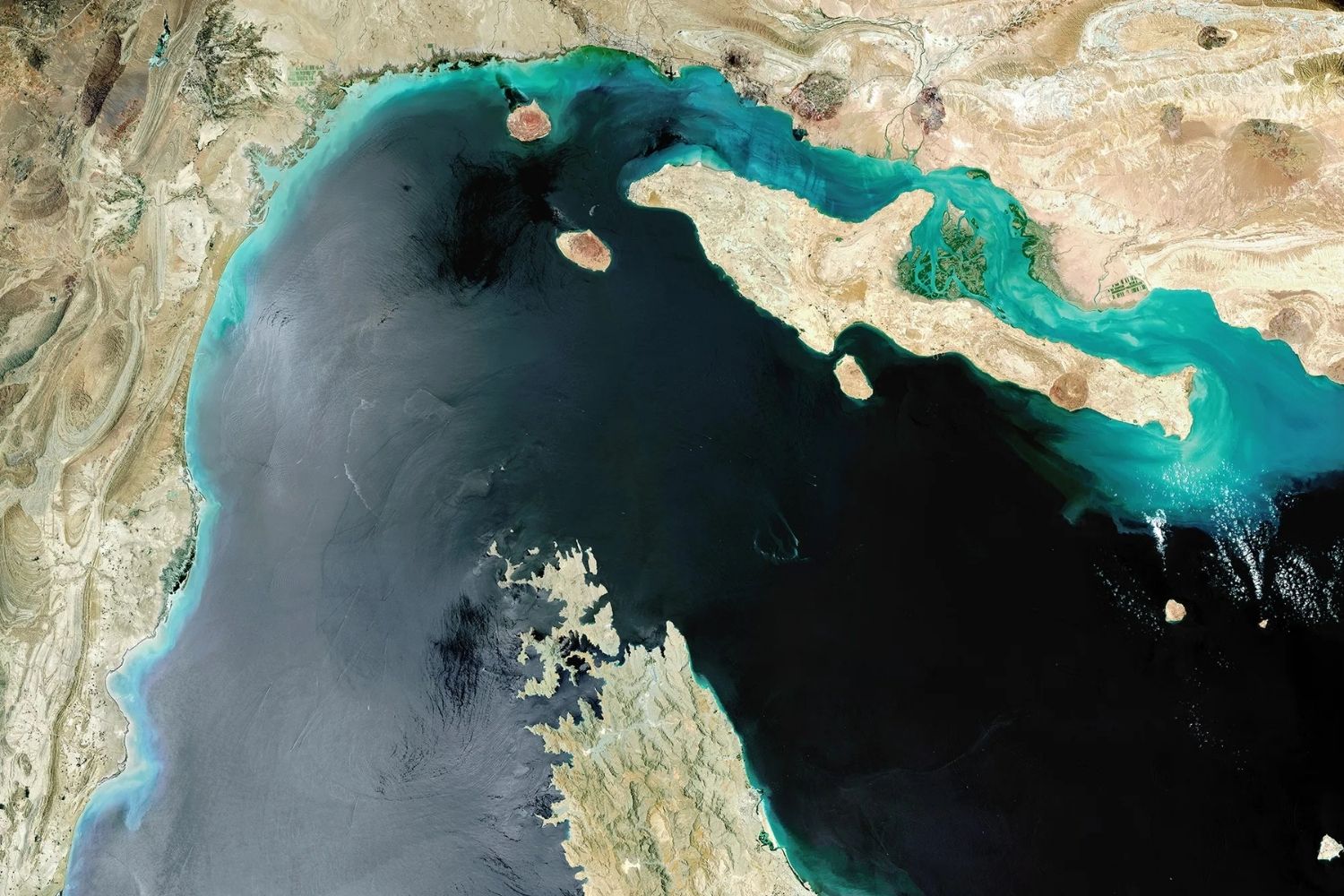
As Iran’s new Supreme Leader Mojtaba Khamenei hardens his vow to keep the world’s most critical chokepoint sealed, Paris and Rome are quietly probing backdoor channels to Tehran — gambling that economic pragmatism can outlast ideological defiance.
It begins, as most modern crises do, with a tanker. The MV Rozana, a Turkish-flagged bulk carrier, sat motionless in the Gulf of Oman for eleven days — impounded, warned off, then finally released — a floating symbol of the geopolitical paralysis that has descended on the most consequential 21 miles of ocean on earth. The Strait of Hormuz blockage 2026 has ceased to be a contingency scenario whispered about in insurance boardrooms. It is, as of this writing, an operative fact of the global economy — and its gravitational pull on European energy policy is becoming impossible to ignore.
Crude oil prices have now surged past $100 per barrel, a threshold that once triggered recessions and reshuffled governments. European natural gas prices have spiked 75 percent since January 1st, according to market data tracked by the International Energy Agency, straining household budgets from Lisbon to Warsaw and throwing a wrench into the European Central Bank’s already fragile inflation projections.
Against this backdrop, two of the eurozone’s largest economies have done something that would have been unthinkable twelve months ago: they have opened, cautiously and without fanfare, exploratory diplomatic talks with the Islamic Republic of Iran — not through formal channels, but through the kind of back-room conversations that rarely appear in official readouts. The stakes, for both sides, could not be higher.
A Closed Strait and a Continent Holding Its Breath
The decision by Iran’s new Supreme Leader, Mojtaba Khamenei, to maintain his predecessor’s posture of maximum pressure — and indeed to double down on it with a formal vow that the strait will remain closed to vessels deemed complicit with U.S.-Israeli operations — has effectively transformed the Hormuz crisis from a military standoff into a long-term structural shock. Roughly 20 percent of the world’s traded oil and a significant share of liquefied natural gas flows through the strait. Every additional week of closure compounds the damage.
The European energy crisis Iran has exposed the limits of the continent’s post-Ukraine diversification strategy. European buyers rerouted toward American LNG and Norwegian pipeline gas after 2022; those supplies are now strained, over-contracted, and insufficiently elastic to absorb the Gulf shock. Storage levels in Germany, France, and Italy — typically robust heading into spring — are running below their five-year seasonal averages.
For Italy in particular, the exposure is acute. Rome has over recent years cultivated significant energy trade relationships with Gulf producers, and the abrupt disruption of those flows has landed with particular force on industrial consumers in the Po Valley. Italy’s Defense Minister Guido Crosetto, a pragmatist by instinct and a straight-talker by reputation, has become an unexpectedly prominent voice in framing the terms of Europe’s dilemma.
| “We are not naive about who we are dealing with. But a closed Hormuz is not in anyone’s interest — including Iran’s. There are conversations worth having.” — Italy’s Defence Minister Guido Crosetto, in remarks to Italian broadcasters, March 2026 |
The French Equation: Macron’s ‘Defensive’ Pivot
French President Emmanuel Macron has been characteristically careful with his public framing. In a statement delivered following an Élysée briefing with senior defense and energy advisers, Macron described France’s posture in the region as strictly “defensive” — emphasizing the protection of commercial shipping and European crews rather than any offensive alignment with the U.S.-Israeli operation. He pointedly left the door open to France providing naval escorts to commercial vessels, “should conditions allow and tensions meaningfully ease.”
That conditional phrasing is doing considerable diplomatic work. Read one way, it signals to Tehran that Paris is not irrevocably committed to a militarized approach — that there remains a lane for negotiation. Read another way, it reassures domestic audiences and NATO allies that France has not abandoned solidarity with Western partners. This studied ambiguity is a Macron signature, and in the current context it functions as an invitation to talk.
Behind the scenes, according to sources familiar with the discussions who declined to be named given their sensitivity, French diplomatic envoys have made informal contact with Iranian interlocutors through third-country intermediaries — a channel that has historically run through Oman and, more recently, through Qatar. The substance of those contacts, if substantive at all, has not been disclosed. But their mere existence marks a significant departure from the EU’s public stance of solidarity with sanctions enforcement.
The EU Aspides Mission: Naval Shield or Diplomatic Liability?
The EU’s Operation Aspides, the naval protection mission currently deployed in the Red Sea, was designed to guard commercial shipping against Houthi drone and missile attacks — a mission whose mandate does not formally extend to the Persian Gulf. Its presence has, however, created a complicated optics problem for European capitals now seeking to signal non-belligerence toward Tehran.
Iran’s foreign ministry has repeatedly characterized Aspides as a de facto extension of the U.S.-Israeli operational posture — a charge European commanders categorically reject, pointing to Aspides’ defensive rules of engagement and its documented refusals to intercept Houthi assets targeting non-European vessels. The distinction may be legally sound and operationally meaningful, but it carries little weight in the information environment that shapes Tehran’s calculus.
For France and Italy, the challenge is to decouple their energy diplomacy from their security posture without appearing to fracture NATO or EU cohesion. Both governments have signaled, with varying degrees of subtlety, that they are willing to explore a functional separation: Aspides continues its mandated mission in the Red Sea, while separate bilateral diplomatic tracks pursue safe passage Iran talks focused on restoring civilian shipping through Hormuz under a temporary, negotiated framework.
What Would a ‘Safe Passage’ Framework Actually Look Like?
The theoretical architecture being discussed — according to three diplomatic sources and one senior EU official spoken to for this piece — would involve a time-limited, monitored arrangement under which designated commercial vessels carrying European cargo would be granted passage through the strait in exchange for a package of economic inducements to Iran. These could include the unfreezing of certain EU-held Iranian assets, partial suspension of specific financial sanctions, and a European commitment to formally distance itself from any expanded military operations in the Gulf theater.
The model draws, loosely, on historical precedents: the 1987-88 convoy arrangements during the first Tanker War, and more recently on the JCPOA’s phased confidence-building mechanisms. Whether Mojtaba Khamenei — whose authority is still consolidating and whose ideological positioning has been markedly harder than his father’s in recent months — would entertain such an arrangement is deeply uncertain.
Energy market analysts at Wood Mackenzie and S&P Global Commodity Insights are currently assigning a less than 30 percent probability to a meaningful Hormuz reopening within the next 90 days. That number is doing serious work in European government budget offices, where the fiscal cost of sustained high energy prices is now being modeled as a structural rather than transitory shock.
$100 Oil and the European Fiscal Reckoning
The economic arithmetic is brutal and familiar. The crude oil price surge Middle East has pushed headline inflation figures in the eurozone back above 4 percent after two years of painstaking disinflation — a development the ECB’s governing council will be forced to address at its next scheduled meeting. Rate cut expectations that were fully priced in for the second quarter of 2026 have now been effectively repriced out, dealing a secondary blow to heavily indebted sovereigns like Italy, which carries a debt-to-GDP ratio comfortably above 140 percent.
France is navigating its own version of fiscal constraint. The government’s 2026 budget, already the subject of a bruising parliamentary fight, was constructed on an oil-price assumption of $75 per barrel. Every $10 increment above that baseline translates into approximately €4 billion in additional subsidy and relief expenditure if Paris chooses to shield consumers — which, heading into a domestic political cycle, it almost certainly will.
The German economy, still digesting the structural trauma of the 2022 energy shock, is particularly exposed through its industrial sector. German industrial output data published by the Federal Statistics Office showed a renewed contraction in February — the third consecutive monthly decline — with energy-intensive manufacturers citing input cost volatility as the primary brake on investment decisions. The Hormuz crisis has, in other words, arrived at the worst possible moment for European economic momentum.
| “The strait is not merely a geographic fact. It is a lever. And right now, Tehran is the only hand on it.” — Senior EU energy security official, speaking on background, Brussels, March 2026 |
Tehran’s Leverage — and Its Limits
It would be a mistake to read Iran’s position as one of pure strategic strength. The Hormuz closure has inflicted significant self-harm on the Iranian economy, which depends on the strait not only for its own oil exports — currently illegal under sanctions but practically disrupted regardless — but for the import of essential goods including foodstuffs and industrial inputs. The humanitarian and economic pressure on the Iranian population, already considerable after years of sanctions, has intensified sharply.
Mojtaba Khamenei’s vow to keep the strait closed is as much a consolidation move as it is a strategic calculation — a signal to hardliners within the Islamic Revolutionary Guard Corps that the new supreme leadership will not repeat what they characterize as his predecessor’s willingness to make concessions under pressure. Walking back that vow, even partially, carries significant domestic political risk. Any framework that Europe proposes must therefore offer Tehran a face-saving mechanism — language that frames any reopening as a sovereign Iranian decision rather than a capitulation to foreign pressure.
That framing challenge is, arguably, where European diplomacy has its most distinctive comparative advantage. Unlike Washington, which is formally a party to the ongoing conflict, or Jerusalem, whose relationship with Tehran is structurally zero-sum, Paris and Rome can present themselves as neutral economic interlocutors — parties whose primary interest is the restoration of commercial normality rather than regime change or strategic containment. Whether Tehran finds that framing credible is another matter entirely.
The Broader Geopolitical Fault Lines
Washington’s Shadow
Any European diplomatic initiative toward Iran will need to navigate the weight of the transatlantic relationship. Washington has not publicly objected to European exploratory contacts with Tehran — partly because the Biden-era diplomatic architecture never entirely foreclosed dialogue tracks, and partly because the current administration has its own quiet interest in off-ramps that do not require a formal U.S. climbdown. But private communications from the State Department to European capitals have been notably pointed about the risks of being seen to undercut coordinated pressure.
The Gulf Arab Calculus
Saudi Arabia and the UAE — both of which have significant economic interests in the restoration of Hormuz traffic — are watching the European initiative with a mixture of hope and anxiety. Riyadh has its own backchannel to Tehran, normalized through the 2023 Chinese-brokered rapprochement, but that channel has gone cold since the current conflict escalated. A successful European mediation that restored Hormuz passage without addressing Iran’s regional posture more broadly would leave Gulf states in a structurally worse position — bearing the geopolitical cost without benefiting from the strategic reconfiguration.
China’s Quiet Role
Beijing, characteristically, is playing a longer game. China remains Iran’s largest oil customer and has the most direct economic interest in Hormuz reopening. Its influence over Tehran is real but not unlimited, and it has been notably reluctant to spend that influence in ways that benefit European or American interests without reciprocal concessions on Taiwan or South China Sea policy. The absence of Chinese pressure on Tehran has been, from a European perspective, one of the more frustrating strategic facts of the past three months.
The Road Ahead: Scenarios and Probabilities
Three broad scenarios are worth mapping. The first — a relatively rapid negotiated framework producing a partial Hormuz reopening within 60 days — remains possible but requires alignment between European economic incentives, Iranian domestic politics, and U.S. acquiescence that is difficult to engineer simultaneously. Energy market futures are not currently pricing this scenario.
The second scenario — a prolonged closure lasting through Q3 2026, with intermittent partial openings tied to tactical Iranian leverage plays — is where the balance of probability currently sits. In this scenario, European governments face sustained fiscal pressure, the ECB’s pivot is delayed further, and the diplomatic initiatives from Paris and Rome produce incremental but insufficient progress.
The third scenario — an escalation that extends the conflict into the broader Gulf theater, potentially drawing in additional regional actors and further disrupting global energy infrastructure — is the tail risk that keeps energy security planners awake. Its probability is low but non-negligible, and its consequences would dwarf the current disruption.
Conclusion: The Limits of Backdoor Diplomacy in an Age of Hard Constraints
France and Italy’s tentative courtship of Tehran is less a coherent diplomatic strategy than an improvised response to an energy emergency with no clean solutions. It reflects the structural vulnerability of European economies to Middle Eastern energy dynamics — a vulnerability that two decades of diversification initiatives have ameliorated but not eliminated. It also reflects a harder truth: that in a multipolar world where the United States has chosen active belligerence and China has chosen studied abstention, Europe’s window of diplomatic utility may be narrower than its ambitions.
The Strait of Hormuz blockage 2026 is, in the final analysis, a stress test of European strategic autonomy — not in the military sense that has dominated EU defence debates, but in the more fundamental sense: can European governments translate economic weight and diplomatic credibility into influence over a crisis they did not create and cannot unilaterally resolve? The answer, over the coming weeks, will carry consequences extending well beyond the energy balance sheets of Paris and Rome.
For international economists and strategic risk analysts, the key variable to watch is not the headline oil price — which is a lagging indicator of decisions already made — but the state of the Omani and Qatari intermediary channels. When those channels begin to produce substantive rather than exploratory dialogue, markets will know before governments announce it. And the shape of that dialogue will determine whether 2026 is remembered as the year Europe finally converted economic interdependence into geopolitical leverage, or the year it discovered, again, how far those two things can diverge.
KEY SOURCES & FURTHER READING
• Reuters: Oil Markets & Hormuz Closure Coverage (March 2026)
• Financial Times: Europe’s Backdoor Iran Talks (FT Energy Security)
• S&P Global Commodity Insights: Hormuz Risk Assessment Q1 2026
• Reuters: German Industrial Output Contraction, March 2026
Discover more from The Economy
Subscribe to get the latest posts sent to your email.
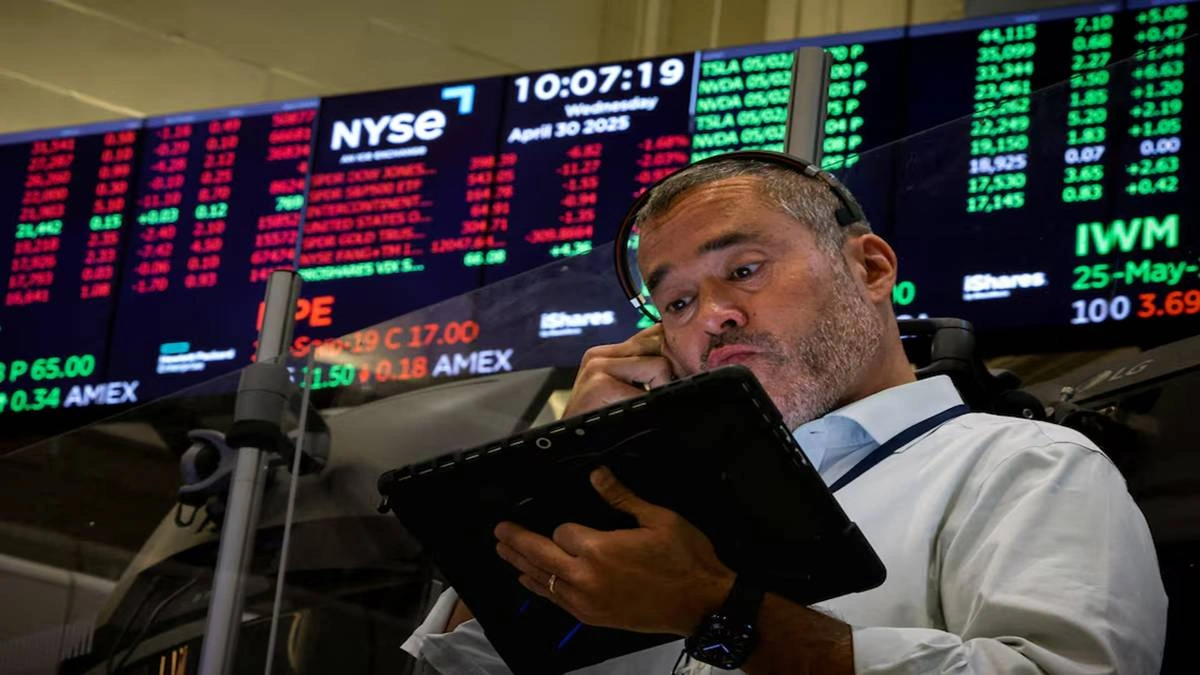
The Dubai Financial Market General Index closed at 5,518 points on Wednesday, March 12, shedding 3.64% — or 208 points — in a single session, extending a rout that has now erased gains accumulated across much of 2025. Over the past month, the Abu Dhabi benchmark has declined 9.41% TRADING ECONOMICS, while the DFM index has repeatedly tested the floor of a 5% daily circuit-breaker that both exchanges imposed at the start of the conflict. The selloff is no longer a panic reflex. It is a considered repricing of risk in a region that had spent four years selling itself as the world’s most stable emerging-market destination.
Dubai’s main share index fell 3.6% on Thursday, dragged down by a 4.9% decline in blue-chip developer Emaar Properties and an equivalent 4.9% drop in top lender Emirates NBD. ZAWYA In Abu Dhabi, the picture was no less grim. The Abu Dhabi index dropped 2.3%, with Aldar Properties losing 4% and Abu Dhabi Islamic Bank declining 5%. ZAWYA First Abu Dhabi Bank, the UAE’s largest lender, slid to within a hair of the daily maximum loss threshold, joining a growing roster of blue-chips that have collectively surrendered months of outperformance in less than a fortnight.
Why UAE Stocks Are Falling in March 2026: The Fear Calculus
To understand why Emaar Properties — a stock that reached a 21-year high in early February — is now on its third consecutive near-maximum decline, one must follow the logic of contagion rather than fundamentals. The company’s towers still stand. Dubai’s skyline has not changed. But the risk premium that investors attach to every square metre of luxury real estate in the Gulf has shifted seismically.
Emaar derives roughly one-fifth of its revenue from malls, hospitality and entertainment AGBI — divisions acutely sensitive to footfall, tourist confidence, and the continued willingness of the 11 million expatriates who fill Dubai’s towers and hotels to remain. A military spokesperson said on Wednesday that Iran would target US- and Israel-linked economic and banking interests in the region following an attack on an Iranian bank. ZAWYA For institutional investors already underweight the region, that statement provided all the permission needed to cut exposure further.
Citigroup and Standard Chartered told Dubai staff to work from home after beginning office evacuations CNBC, a symbolic moment that landed harder on investor psychology than any index print. When global banks physically withdraw staff from a financial centre, the message to equity allocators is unambiguous.
The infrastructure dimension is also concrete, not theoretical. A projectile struck a container ship 35 nautical miles north of Jebel Ali — one of the world’s busiest ports — causing a small fire, according to UK Maritime Trade Operations. Meanwhile, a drone fell onto a building near Dubai Creek Harbour. ZAWYA Jebel Ali handles roughly 80% of the UAE’s non-oil imports. A disruption there is not a geopolitical footnote; it is a direct assault on the logistics architecture of the emirate’s entire re-export economy.
Mojtaba Khamenei’s First Comments: Stock Market Reaction Explained
In a development that deepened investor anxiety, Iranian state media released the first public statement attributed to new Supreme Leader Ayatollah Mojtaba Khamenei, in which he vowed that Iran should keep leveraging its stranglehold on the Strait of Hormuz and continue attacks on targets in Gulf Arab nations. CBS News The statement arrived as markets were already digesting a week of escalatory signals. Its significance lies not just in content but in authorship: the new supreme leader’s first act of economic warfare signalling suggests that any near-term de-escalation will require more than a ceasefire conversation. It will require a fundamental re-ordering of the regional security architecture.
Iran’s IRGC says it will not allow “a litre of oil” through the Strait of Hormuz, with a spokesperson warning that oil prices could reach $200 per barrel Al Jazeera — a figure that sounds hyperbolic until one recalls that Brent crude has already crossed the $100 threshold for the first time since 2022. On Thursday, the price of a barrel of Brent crude climbed 9.2% to settle at $100.46 CBS News, vindicating the most pessimistic energy analysts who warned that the Hormuz closure would ultimately overwhelm the IEA’s release of 400 million barrels from strategic reserves.
Strait of Hormuz Closure Impact on UAE Economy: The Real Arithmetic
Here is the geopolitical paradox at the centre of this crisis: the UAE is simultaneously a victim of Iran’s Hormuz strategy and a country whose fiscal model depends on the smooth functioning of that same waterway. The Strait of Hormuz has experienced effective closure since February 28, with tanker traffic dropping approximately 70% initially before falling to near zero Wikipedia, according to vessel-tracking data. The UAE’s Fujairah export pipeline offers a partial bypass, but as energy analysts at Kpler note, terminal infrastructure at Jeddah limits throughput, and these alternative routes could sustain only a portion of displaced volume but would not offset a full Strait closure. Kpler
The knock-on effects extend well beyond crude oil. Aluminum is among the biggest non-petroleum casualties; in 2025, the Middle East accounted for roughly 21% of global output, and fertilizer shipments transiting the Strait have sent urea prices soaring from $475 per metric ton to $680 per metric ton. CNBC For a country that has positioned itself as a global logistics hub, a supply-chain rupture of this magnitude is not merely inflationary — it is reputational. As the Financial Times has reported, the narrative of Dubai as the world’s “superconnector” is facing its most serious challenge since the 2009 debt crisis.
“We’re now facing what looks like the biggest energy crisis since the oil embargo in the 1970s,” said Helima Croft, global head of commodity strategy at RBC Capital Markets. NPR That framing resonates across every boardroom in the Gulf right now. The 1973 embargo reshaped the geopolitical order. A sustained Hormuz closure — even a partial one extending through the spring — risks doing something analogous to the post-2020 Gulf diversification narrative.
How Iran Attacks Affect Dubai Real Estate Stocks: Sector Winners and Losers
Losers: Real Estate and Banking
The damage to UAE property stocks is both mechanical and psychological. Dubai off-plan projects accounted for roughly 65% of 2025 sales, with foreign buyers critical to market stability. International Business Times Those buyers — the Russian billionaires, Indian entrepreneurs, European wealth managers, and Chinese investors who drove Dubai residential prices up 60% between 2022 and early 2025 — are now watching from a safe distance. Analysts at Citi said that Emaar and Aldar were most at risk of EPS growth deterioration, while Emirates NBD and National Bank of Kuwait had the biggest downside risk in banking. “Valuation impact could potentially be more severe as stocks derate driven by increased perceived equity risk premium,” the bank said. CNBC
Bond markets, a vital source of funding for UAE developers, are now largely closed to new borrowing as costs rise across the sector. Outlook Luxe A senior real-estate banker at Reuters acknowledged that a planned capital raising was postponed this week — a small data point with large implications for a sector accustomed to selling off-plan inventory within hours of launch.
Relative Winners: Saudi Aramco and Energy Producers
Saudi Arabian stocks have outperformed this week, with Riyadh’s index up 0.6%. Saudi Aramco hit an 11-month high on Tuesday as investors bet surging oil prices would translate into higher profits. Aramco can re-route much of its crude output to a Red Sea port via pipeline, circumventing the effective Hormuz blockade. AGBI As Bloomberg has tracked, the divergence between UAE stocks and Saudi energy names captures the fundamental tension of the moment: high oil is simultaneously the cure and the disease, depending entirely on which side of the Hormuz closure you sit.
Defense, cybersecurity, and gold have performed their traditional crisis roles globally. The VIX has climbed above 27 and the 10-year Treasury yield has edged up 6.5 basis points to 4.27%, reflecting a market pricing in stagflationary risk rather than a clean growth shock.
Trump’s Iran Criticism and UAE Investor Sentiment
President Donald Trump has consistently projected confidence that the conflict will resolve rapidly — a posture that has done little to calm markets. Trump indicated the conflict could last “four to five weeks,” raising concerns of prolonged regional instability. Business Standard More puzzling for Gulf markets has been Trump’s decision to simultaneously encourage commercial shipping to transit the Strait of Hormuz while declining to formally escort those vessels — a gap between rhetoric and operational commitment that insurers and ship operators have judged harshly.
The president said at a women’s history event at the White House that the situation in Iran is moving along “very rapidly.” CBS News Gulf investors, watching Brent cross $100 and Emaar shed nearly 15% of its market capitalisation in two weeks, might be forgiven for a degree of scepticism.
The divergence between Washington’s public optimism and the market’s verdict matters enormously for UAE investor sentiment, because the UAE’s credibility as a neutral hub — its entire economic proposition for the last decade — has rested on the tacit assumption that great-power politics would not land on its doorstep. They have.
Forward-Looking Outlook: De-escalation Scenarios vs. Prolonged War
Scenario 1: Rapid De-escalation (4–6 Weeks)
A negotiated ceasefire brokered through Omani or Qatari channels — the traditional back-channels of US-Iran diplomacy — would allow Hormuz to reopen and insurance premiums to normalise within weeks. Under this scenario, Goldman Sachs economists project that US inflation would rise by approximately 0.8 percentage points and GDP growth would be trimmed by 0.3 percentage points Axios, manageable discomfort rather than a structural break. UAE property stocks could recover sharply — foreign buyers with deferred demand tend to surge back into perceived-value plays when the security fog lifts.
Scenario 2: Prolonged Conflict (3–6 Months)
Oxford Economics modelled a scenario in which oil averages $140 a barrel for two months — a “breaking point” for the world economy that would push the eurozone, UK, and Japan into contraction and create an economic standstill in the US. Axios Under this scenario, Dubai’s property market faces a structural reset: not a crash necessarily, but a repricing of the “safe haven” premium that has underpinned valuations. The off-plan model — built on the expectation of continuous foreign capital inflows — comes under existential pressure.
Most shipping companies have decided to route around the southern tip of Africa rather than through the strait Wikipedia, adding weeks to transit times and billions to freight costs. If that rerouting persists into summer, the damage to Jebel Ali’s transshipment volumes — and to Dubai’s self-image as the world’s logistics fulcrum — becomes structural, not cyclical.
The honest assessment: the UAE’s extraordinary diversification story — its pivot from oil to finance, tourism, logistics, and real estate — has made it wealthier and more resilient than almost any comparable Gulf state. It has also made it more exposed to exactly the kind of shock that the Iran war represents: a demand-side confidence crisis affecting precisely those foreign investors and expatriates whose spending underwrites the diversification miracle.
Investor Implications: What to Watch Next
- Hormuz shipping data (tracked by Kpler and MarineTraffic): any sustained uptick in tanker transit volume would be the most credible early signal of de-escalation
- UAE CDS spreads and sovereign bond yields: credit markets tend to front-run equity recovery
- Emaar off-plan sales data: a bellwether for foreign buyer confidence — a drop of more than 30% sustained over four weeks would indicate structural demand deterioration
- IRGC statements on Mojtaba Khamenei’s directives: the new supreme leader’s strategic posture toward Hormuz is the single most important variable in this conflict
- Trump–Gulf summit signals: any diplomatic framework involving direct US-Iran talks could catalyse a sharp rally in UAE equities
FAQ: UAE Stocks and the Iran Conflict
Why are UAE stocks falling in March 2026? UAE stocks are falling because Iran’s retaliatory strikes on UAE territory following US-Israeli attacks on Iran have raised fears of prolonged conflict. The closure of the Strait of Hormuz, direct infrastructure damage in Dubai and Abu Dhabi, and the flight of foreign investor capital have combined to push the DFM index down more than 10% since late February. The Dubai index closed at 5,518 on March 12, a loss of 3.64% in a single session.
What is the impact of the Strait of Hormuz closure on the UAE economy? The Strait of Hormuz carries roughly 20% of the world’s crude oil and significant LNG volumes. Its effective closure since March 2 has disrupted the UAE’s oil exports, halted activity at Jebel Ali port, and elevated insurance and freight costs sharply. The UAE’s Fujairah bypass pipeline provides partial relief but cannot handle the full volume of Hormuz traffic. Prolonged closure risks permanent damage to Dubai’s logistics and re-export hub status.
What has Mojtaba Khamenei said about the stock market and the Iran conflict? Mojtaba Khamenei, Iran’s new supreme leader following his father’s death in the February 28 US-Israeli strikes, issued his first public statement via state media urging Iran to maintain its stranglehold on the Strait of Hormuz and continue attacks on Gulf Arab nations. The statement significantly reduced expectations of a near-term ceasefire and accelerated the selloff in UAE and regional equities.
How much have Emaar Properties shares fallen? Emaar Properties has suffered three consecutive sessions of near-maximum allowable daily declines of 5% since UAE markets reopened following their emergency two-day closure. The stock, which hit a 21-year peak in early February 2026, has erased approximately 15% of its market value since the conflict erupted, as foreign investors reassess the risk premium attached to Dubai real estate in a wartime environment.
Will UAE stocks recover? Recovery depends almost entirely on the trajectory of the Iran conflict. A ceasefire within four to six weeks — the scenario Trump has publicly suggested — would likely trigger a sharp rebound in UAE equities, as underlying fundamentals remain strong. A prolonged conflict lasting months, however, risks structural repricing of Gulf risk premiums, particularly for real estate developers and banks with large foreign ownership bases.
Discover more from The Economy
Subscribe to get the latest posts sent to your email.
Analysis
Rupee Records Gain Against US Dollar: Currency Settles at 279.31 as Safe-Haven Dollar Hits Highest Level Since November Amid Iran Conflict Turmoil
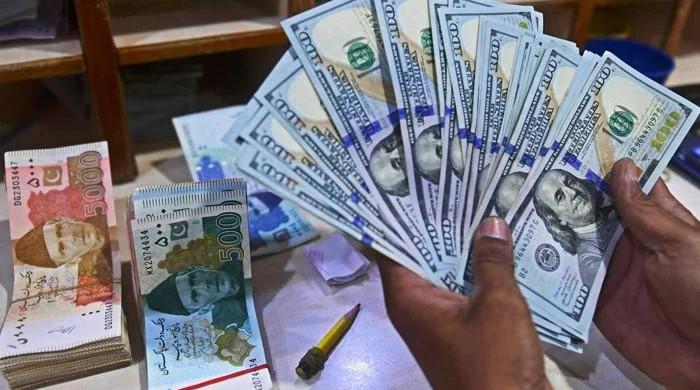
On the trading floors of Karachi’s inter-bank market Friday morning, a single pip of movement — from 279.32 to 279.31 — told a story far larger than its decimal-place modesty suggests. Outside those air-conditioned dealing rooms, Pakistani families were already absorbing the downstream tremors of a war being fought thousands of miles away: liquefied natural gas supplies from Qatar disrupted, fuel costs creeping upward, and grocery bills tightening in a country that imports nearly 40 percent of its energy needs. Yet the rupee, against all intuition, held its ground — and even nudged fractionally stronger against the world’s most sought-after safe-haven currency.
That currency, the US dollar, was having rather a good week of its own. The dollar index (DXY), which measures the greenback against a basket of six major peers, climbed to its highest reading since November — touching 99.63 in early Asian trading on Friday, down just 0.04 percent intraday but on track for a weekly advance of 0.8 percent. It was the dollar’s second consecutive weekly gain since the United States and Israel launched joint strikes on Iran on February 28, triggering the largest disruption to global oil supplies since the Suez Crisis of 1956.
How the rupee managed a marginal appreciation against this resurgent dollar — and what that tells us about Pakistan’s precarious economic moment — is a question that requires both a currency trader’s precision and a geopolitical historian’s sweep.
Why the Rupee Defied the Dollar’s Safe-Haven Surge
The immediate answer to the PKR exchange rate puzzle lies in momentum and managed stability rather than fundamental strength. Pakistan’s inter-bank rupee rate today reflects the State Bank of Pakistan’s (SBP) continued intervention framework, which has sought to prevent the kind of disorderly depreciation that scarred the country during its 2023 balance-of-payments crisis. The currency settled at 279.31 USD to PKR on Thursday’s close, a fractional improvement from 279.32 the previous session — a gain so slim it would barely register as a rounding error were it not for the context surrounding it.
Yet context is everything. The Pakistan rupee rate today is holding within a remarkably narrow band even as emerging-market currencies across South and Southeast Asia are taking a battering from dollar strength and surging import bills. The Indonesian rupiah has weakened sharply; the Indian rupee has come under pressure; the Sri Lankan currency remains fragile. Against this backdrop, PKR stability is, in relative terms, a modest achievement.
Three factors explain the rupee’s resilience. First, the SBP has maintained a managed float that caps excessive short-term volatility, acting as a buffer against external shocks. Second, remittance inflows — Pakistan’s economic lifeline — have held firm as the Pakistani diaspora in Gulf states, the United Kingdom, and North America continues to send money home, partly drawn by more favourable exchange-rate conditions than existed twelve months ago. Third, and perhaps most counterintuitively, the partial easing of import demand due to Pakistan’s economic slowdown has somewhat reduced pressure on the current account, lessening the appetite for dollars in the inter-bank market.
Iran War Turmoil and the Dollar Index at 11-Month High
The dollar’s current strength is a story of dual engines firing simultaneously, and understanding it requires grasping something that would have seemed paradoxical even five years ago: the United States is now a net energy exporter.
When the Bloomberg Dollar Spot Index staged its biggest two-day rally in nearly a year following the onset of the Iran conflict, analysts pointed to two reinforcing dynamics. The first was the classic flight-to-quality response — when global investors grow fearful, they buy dollars, US Treasuries, and other liquid dollar-denominated assets. The second was structural: because the US now produces more energy than it consumes, surging oil prices are an economic tailwind for America, not the headwind they once were.
“Not only are high oil prices no longer a headwind for the dollar,” Paul Weller, a foreign exchange strategist cited by S&P Global Market Intelligence, noted, “but they’re arguably now a tailwind, especially when accompanied by a risk-off safe-haven bid.” Jane Foley, head of foreign exchange research at Rabobank, was equally direct: the Iran conflict has settled the debate about whether the dollar retains its safe-haven status after a bruising year of de-dollarisation narratives. It emphatically does.
The DXY’s reading of 99.63 — the highest since November 2025 — came after the dollar had climbed roughly 2.1 percent from its late-February levels, when the index was closer to 96. The conflict’s second week has seen Iran’s new Supreme Leader Mojtaba Khamenei pledge to maintain the effective closure of the Strait of Hormuz — the narrow waterway through which approximately a fifth of global oil supplies normally transits. Every credible threat to extend that closure sends another wave of capital into the dollar’s embrace.
For Pakistan, the consequences run deeper than any single exchange-rate print. Elisabeth Colleran, co-head of the emerging markets debt team at Loomis Sayles, captured the dynamic precisely: when global volatility spikes, the dollar rallies, and all other currencies — “euro included” — are pushed down. For a frontier-market economy still in the midst of an IMF stabilisation programme, that means tighter financial conditions, narrower room for monetary easing, and a structurally more expensive import bill.
Oil at $100+ a Barrel: Mixed Blessings for Pakistan as US Exports Energy
Brent May futures settled around $100.56 a barrel on Friday — up just 0.1 percent intraday but poised for a weekly gain of approximately 9 percent, one of the sharpest weekly moves in years. WTI April contracts were slightly softer at $95.57, off 0.2 percent, headed for a 7 percent weekly advance despite the US Treasury’s Thursday issuance of a 30-day general licence permitting purchases of previously sanctioned Russian crude stranded at sea.
The IEA’s emergency release of a record 400 million barrels from strategic reserves — the largest such move in history — has done little more than paper over a structural deficit. As the CNN analysis noted, that 400 million barrels covers only approximately 26 days of supply lost through Hormuz disruption, and Iran’s new leadership has signalled no intention of reopening the strait.
For Pakistan, this creates a toxic arithmetic. The country imports 40 percent of its energy needs and relied particularly heavily on LNG from Qatar — supplies that have been severed by the conflict, according to PBS NewsHour. Economists Gareth Leather and Mark Williams at Capital Economics have argued that rather than cutting interest rates to offer relief to a slowing economy, the SBP may be compelled to raise them — because persistently higher energy prices threaten to reignite inflation that has remained uncomfortably elevated by regional standards.
The bitter irony is that oil at $100 per barrel is simultaneously enriching America’s energy producers and quietly crushing Pakistan’s households. A country that once benefited from relatively cheap Gulf hydrocarbons now finds itself paying a geopolitical premium it neither caused nor controls.
Key data points at a glance:
- Brent crude (May futures): $100.56 | +9% weekly gain
- WTI crude (April futures): $95.57 | +7% weekly gain
- Pakistan energy import dependency: ~40% of total needs
- LNG from Qatar: effectively disrupted since Feb. 28
Yen, Euro and Sterling: The Other Casualties of Safe-Haven Flight
Pakistan is not alone in watching its currency wilt before the dollar’s current authority. The major G10 pairs tell a consistent story of asymmetric impact.
The euro traded at $1.1525, up just 0.13 percent intraday but near its weakest level since November — pressured by FXStreet data showing EUR/USD losing ground for three consecutive sessions as the Hormuz closure stoked stagflationary fears across the eurozone, which imports the vast majority of its energy.
The Japanese yen offered the most dramatic signal of stress: USD/JPY climbed to 159.43 on Thursday — its weakest since January 14 — before pulling back slightly to 159.08 (+0.17%). Japan’s vulnerability is structural: as a massive net energy importer, every dollar-per-barrel increase in oil translates directly into a larger import bill and a weaker yen. Markets are watching closely for signs of Bank of Japan intervention; the 160 level, which triggered intervention in 2024, remains the psychological tripwire.
Sterling held relatively better at $1.3356 (+0.11%), buoyed in part by the UK’s comparatively more balanced energy position and the Bank of England’s hawkish recent signalling. But the pound, too, is tracking lower against the dollar on a weekly basis.
The pattern is unmistakable: the Iran conflict has triggered what one analyst from the 2026 Middle East crisis coverage aptly described as a “Stagflationary Risk-Off” shift — one where traditional safe havens like Japanese government bonds and even gold are struggling, and the dollar, uniquely insulated by America’s energy exporter status, stands almost alone as the credible refuge.
What This Means for Pakistani Importers, Exporters and SBP Policy
For Pakistani businesses and households navigating the interbank rupee rate in real time, the current configuration presents a split-screen reality.
Importers face a double squeeze: a stronger dollar raises the cost of dollar-denominated purchases even before the commodity price effect, and that commodity price effect — in energy, petrochemicals, edible oils, and fertilisers — is itself ferocious. Up to 30 percent of global fertiliser exports, including urea and phosphates, transit the Strait of Hormuz. Pakistani farmers, already grappling with climate disruption, will face higher input costs precisely when food security concerns are mounting globally.
Exporters, particularly in Pakistan’s critical textile sector, stand to benefit modestly from a structurally weaker rupee over time — more rupees per dollar earned means higher local-currency revenues. But the benefit is partially eroded by higher energy costs in production, and by the global demand uncertainty that accompanies any prolonged oil shock. If the conflict persists and oil reaches the $120-130 range that Chatham House analysts consider plausible in a more severe scenario, the net export benefit quickly becomes ambiguous.
For the SBP, the policy calculus is exquisitely uncomfortable. Pakistan’s ongoing IMF programme — agreed in the wake of the 2023 crisis — requires fiscal consolidation, reserve accumulation, and a degree of exchange-rate flexibility. The current period tests all three simultaneously: capital outflows from emerging markets, higher import costs threatening the current account, and inflation pressures that could derail the path toward lower interest rates that Pakistani businesses desperately need.
The central bank’s managed float has bought it credibility and stability. The question for the weeks ahead is whether that credibility can be sustained as global conditions tighten further.
Outlook: Will the Rupee’s Streak Continue in 2026?
The honest answer is: it depends far more on Tehran and Washington than on Karachi.
Three scenarios present themselves. In the most benign — a rapid ceasefire or diplomatic resolution, oil returning toward pre-conflict levels of $60-70 per barrel within weeks — Pakistan would likely see continued rupee stability, possible SBP rate cuts in the second half of the year, and manageable pressure on its IMF programme. Chatham House’s analysts suggest that in this scenario, inflation in energy-importing economies rises by only around 0.5 percentage points above pre-conflict forecasts for 2026.
In a medium scenario — conflict persisting for several months, oil stabilising in the $90-100 range — Pakistan would face a prolonged squeeze. The current account would deteriorate, the SBP would be forced to delay any monetary easing, and the rupee’s current stability would require more active management. Remittance inflows from Gulf-based workers — a critical buffer — could also come under pressure if Gulf economies begin to feel the strain of production cuts and regional instability.
In the worst-case scenario — a prolonged closure of the Strait of Hormuz, oil at $130 or above, and a sustained dollar rally past 100 on the DXY — Pakistan’s position becomes genuinely alarming. Its IMF support would remain vital but potentially insufficient to absorb both a terms-of-trade shock and a global risk-off environment simultaneously.
There are structural wildcards, too. The China-Pakistan Economic Corridor (CPEC), which has delivered significant renewable-energy infrastructure to Pakistan, is now being viewed through a new lens: every solar panel and wind turbine installed under CPEC reduces Pakistan’s exposure to the very oil-price volatility that is currently ravaging its economy. The Stimson Center’s Dan Markey, quoted by Inside Climate News, has argued that Pakistan will have “every reason to turn to China for renewable energy technologies” in the wake of this crisis — a strategic pivot with profound long-term implications for the CPEC relationship and for Pakistan’s energy autonomy.
The rupee vs dollar March 2026 picture is ultimately a microcosm of the broader global realignment underway. A fractional gain of one pip in the inter-bank market feels almost quaint against the backdrop of a region at war, oil markets in convulsion, and a global safe-haven hierarchy being stress-tested in real time. But markets, like history, move in cumulative inches before they lurch in miles. Pakistani policymakers — and the businesses and families who depend on them — would do well to watch both.
Discover more from The Economy
Subscribe to get the latest posts sent to your email.
-

 Markets & Finance2 months ago
Top 15 Stocks for Investment in 2026 in PSX: Your Complete Guide to Pakistan’s Best Investment Opportunities
-

 Analysis1 month ago
Brazil’s Rare Earth Race: US, EU, and China Compete for Critical Minerals as Tensions Rise
-

 Banks2 months ago
Best Investments in Pakistan 2026: Top 10 Low-Price Shares and Long-Term Picks for the PSX
-

 Investment2 months ago
Top 10 Mutual Fund Managers in Pakistan for Investment in 2026: A Comprehensive Guide for Optimal Returns
-

 Asia2 months ago
China’s 50% Domestic Equipment Rule: The Semiconductor Mandate Reshaping Global Tech
-

 Global Economy3 months ago
Pakistan’s Export Goldmine: 10 Game-Changing Markets Where Pakistani Businesses Are Winning Big in 2025
-

 Analysis3 weeks ago
Top 10 Stocks for Investment in PSX for Quick Returns in 2026
-

 Global Economy2 months ago
What the U.S. Attack on Venezuela Could Mean for Oil and Canadian Crude Exports: The Economic Impact