
Analysis
JPMorgan Investment Bank Reshuffle Signals a New Wall Street Power Structure for the AI Dealmaking Era

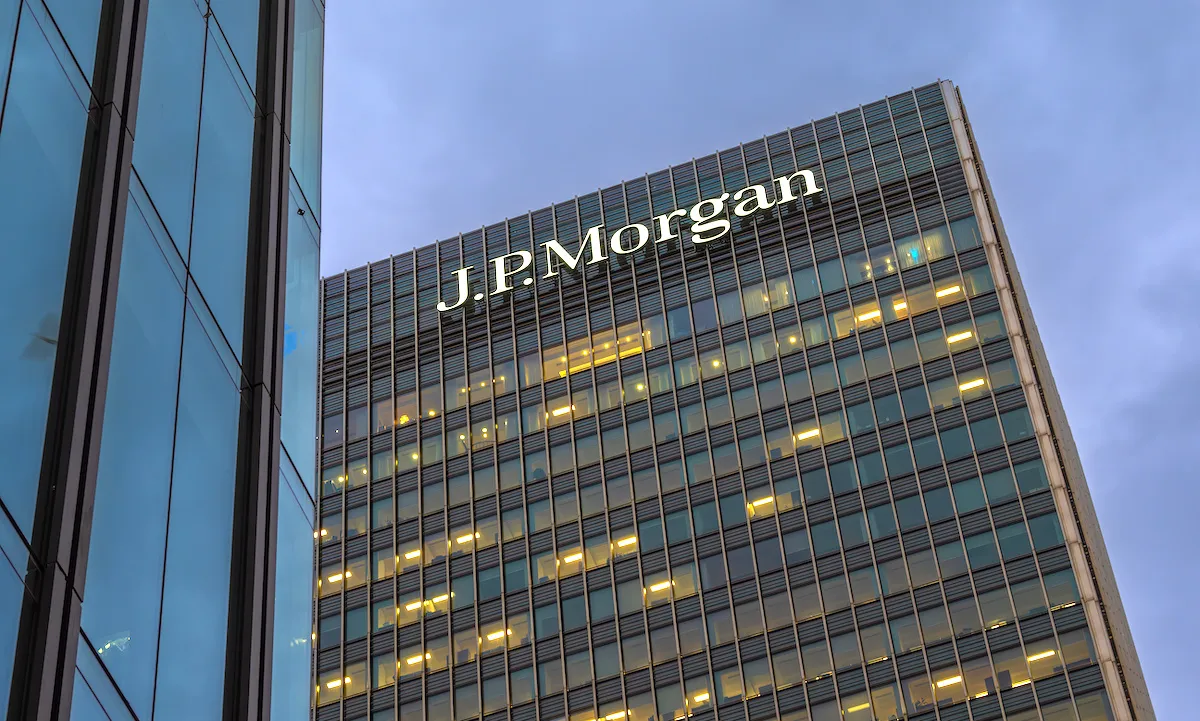
For years, Wall Street succession planning resembled Renaissance court politics conducted in Patagonia vests: opaque, ritualized and freighted with implication. At JPMorgan Chase, however, leadership changes are rarely just about personnel. They are strategic signals — clues about where capital is flowing, where clients are anxious, and where Jamie Dimon believes the next decade of banking will be won.
The latest signal is unusually loud.
JPMorgan is preparing a sweeping reshuffle of its investment banking leadership, according to reports from the Financial Times and Reuters, elevating Dorothee Blessing, Kevin Foley and Jared Kaye into expanded co-head roles overseeing global investment banking. The reorganization also folds mergers-and-acquisitions operations more tightly into industry coverage teams — a structural shift with potentially profound implications for how the world’s largest bank competes in a market increasingly shaped by artificial intelligence, private capital and geopolitical fragmentation.
On paper, the move looks like classic Wall Street housekeeping after a blockbuster rebound in dealmaking. In reality, it appears to be something larger: a recalibration of JPMorgan’s operating model for a new era in corporate finance.
And perhaps, quietly, another chapter in the long prelude to the post-Dimon age.
The Reorganization: More Than a Personnel Shuffle
According to the Financial Times, JPMorgan will appoint three senior executives — Dorothee Blessing, Kevin Foley and Jared Kaye — as co-heads of global investment banking. Charles Bouckaert is expected to become global head of M&A, replacing veteran banker Anu Aiyengar, who will transition into the role of global chair of investment banking.
The timing is notable.
Global M&A volumes approached $1.7 trillion in the first four months of 2026, making it one of the strongest starts to a year since records began in the 1970s, according to FT reporting. JPMorgan’s own investment banking revenues rose sharply in the first quarter, aided by an AI-driven technology financing boom, revived sponsor activity and a reopening of equity capital markets after two subdued years.
The bank’s commercial and investment bank generated roughly $9 billion in quarterly net income, while investment banking fees climbed 28% year over year.
Yet strong markets alone do not explain the scale of the overhaul.
The deeper rationale appears operational. JPMorgan is reorganizing around integrated client coverage — bringing M&A bankers closer to sector specialists rather than maintaining advisory operations as a more centralized function. In practical terms, that means technology bankers, healthcare bankers and financial institutions teams will increasingly execute strategic transactions within vertically aligned ecosystems.
That mirrors a broader shift underway across elite investment banks.
For years, firms such as Goldman Sachs and Morgan Stanley prized star rainmakers capable of parachuting into virtually any mandate. Increasingly, however, clients want bankers who understand sector-specific AI disruption, supply-chain geopolitics, regulation, sovereign capital flows and data infrastructure economics simultaneously.
In other words: industry expertise is becoming as valuable as financial engineering.
JPMorgan’s reorganization is designed for precisely that environment.
Meet the New Power Triangle
Dorothee Blessing: The Diplomat-Strategist
Among the appointments, Dorothee Blessing may be the most consequential.
Currently global head of investment banking coverage, Blessing has emerged over the past several years as one of JPMorgan’s most influential senior executives. Before joining JPMorgan, she spent more than two decades at Goldman Sachs, where she became a partner and led investment banking in German-speaking Europe.
Her rise inside JPMorgan has been rapid and unusually international in flavor.
Blessing previously ran JPMorgan’s operations across Germany, Switzerland, Austria and the Nordics before becoming co-head of EMEA investment banking and later global coverage chief. Her reputation internally is that of a relationship-centric strategist — less theatrical than traditional Wall Street archetypes, but deeply trusted by multinational CEOs and sovereign-linked clients.
That matters.
The center of gravity in global investment banking has shifted. The biggest mandates increasingly involve cross-border industrial policy, AI infrastructure, energy transition financing and sovereign capital partnerships. Blessing’s European network and multinational credibility position JPMorgan well for that environment.
Her elevation is also symbolically important.
Despite years of diversity initiatives, global investment banking remains overwhelmingly male at the highest levels. Blessing becoming one of the most senior figures in JPMorgan’s advisory business marks a meaningful break from traditional Wall Street succession patterns.
Kevin Foley: The Capital Markets Operator
If Blessing represents strategic diplomacy, Kevin Foley embodies execution scale.
As JPMorgan’s global head of capital markets, Foley has overseen debt and equity financing operations during one of the most volatile macroeconomic stretches in modern finance: post-pandemic stimulus, rate shocks, regional banking stress, geopolitical conflict and the AI investment boom.
That experience is increasingly central to modern investment banking.
Today’s mega-deals are not merely advisory exercises. They are financing ecosystems involving syndicated debt, structured equity, private credit, sovereign wealth capital and derivatives overlays. The distinction between “capital markets” and “strategic advisory” has blurred dramatically.
By elevating Foley, JPMorgan is effectively acknowledging that financing capability is now core strategic infrastructure.
This could strengthen JPMorgan’s advantage against rivals such as Goldman Sachs and Citi, particularly in large-cap transactions where balance-sheet capacity matters as much as advisory prestige.
Jared Kaye: The Financial Institutions Insider
Jared Kaye, currently global co-head of the financial institutions group (FIG), brings a different strength: institutional connectivity.
FIG banking sits at the center of modern finance because banks, insurers, asset managers and fintech firms increasingly drive consolidation trends across the broader economy. Private credit expansion, insurance-linked capital, tokenized assets and digital payments are all reshaping competitive boundaries.
Kaye’s expertise becomes especially relevant as financial institutions race to integrate AI into compliance, underwriting and market infrastructure.
His promotion suggests JPMorgan expects financial-sector consolidation — and adjacent fintech acquisition activity — to accelerate meaningfully over the next several years.
Why This Matters Beyond JPMorgan
Leadership reshuffles on Wall Street often produce breathless headlines and limited long-term significance. This one feels different because it reflects three structural transformations occurring simultaneously.
1. Investment Banking Is Becoming an AI Infrastructure Business
The AI boom has already altered dealmaking patterns.
Technology companies are no longer merely buying software firms; they are acquiring compute capacity, energy assets, semiconductor supply chains and data-center infrastructure. Advisory mandates increasingly require understanding AI economics, regulatory scrutiny and sovereign technology policy.
Banks now need sector-specialist ecosystems rather than isolated rainmakers.
JPMorgan has invested aggressively in AI internally, deploying machine learning across risk management, compliance, trading and client analytics. Jamie Dimon has repeatedly framed AI as transformative rather than incremental, comparing its importance to the internet itself in prior shareholder communications.
The new structure aligns neatly with that philosophy.
2. The Return of the Universal Banking Model
For much of the post-2008 period, investment banking drifted toward specialization. Boutique advisory firms thrived while balance-sheet-heavy institutions focused on financing scale.
Now the pendulum is swinging back.
Clients increasingly want one institution capable of delivering advisory, financing, treasury, payments, markets and private capital access simultaneously. JPMorgan’s integrated model is arguably better suited to this environment than many rivals.
The reshuffle reinforces that positioning.
3. Succession Planning Is Quietly Accelerating
Jamie Dimon remains Wall Street’s dominant executive figure, but succession speculation has intensified as the 70-year-old chief executive approaches two decades atop JPMorgan.
Every senior appointment inside the bank is now interpreted through that lens.
While the current reshuffle concerns investment banking rather than the CEO succession directly, it nonetheless broadens the bench of globally recognized leaders beneath Dimon. That matters institutionally. JPMorgan’s greatest competitive advantage may not simply be scale or technology — it is managerial continuity.
Unlike rivals that have endured periodic leadership turbulence, JPMorgan has cultivated a reputation for disciplined internal succession architecture.
This move fits the pattern.
The Competitive Landscape: Goldman, Citi and the New Arms Race
JPMorgan enters the reshuffle from a position of unusual strength.
The bank remains near the top of global league tables in M&A, equity underwriting and debt capital markets. According to reporting by Financial News London, JPMorgan captured roughly 9.6% of global dealmaking fees this year, up from 8.6% previously.
Yet competition is intensifying.
Goldman Sachs
Goldman remains the prestige leader in pure strategic advisory. Its franchise still dominates many transformational boardroom mandates, especially in technology and sponsor-driven transactions.
But Goldman’s comparatively smaller balance sheet can be limiting in capital-intensive environments.
Citi
Citigroup, under its own restructuring efforts, has aggressively targeted senior talent. The departure of Vis Raghavan from JPMorgan to Citi underscored how fiercely contested elite investment banking leadership has become.
Morgan Stanley
Morgan Stanley continues to dominate in equity capital markets and maintains deep technology relationships, particularly with Silicon Valley clients benefiting from AI spending waves.
JPMorgan’s response appears clear: integrate more tightly, deepen sector specialization and leverage the bank’s unparalleled balance sheet.
Risks Beneath the Optimism
Still, reorganizations carry hazards.
Talent Retention Risk
Wall Street cultures remain intensely personal. Senior bankers often follow trusted managers rather than institutions. Any restructuring creates uncertainty around reporting lines, compensation and internal influence.
Competitors will almost certainly attempt to poach JPMorgan talent during the transition.
Execution Complexity
Integrating M&A more tightly into sector teams sounds elegant strategically. Operationally, however, it can create duplication, political friction and slower decision-making if responsibilities become blurred.
Cyclical Vulnerability
The dealmaking rebound underpinning this reshuffle could still prove fragile.
Inflation volatility, elevated oil prices and geopolitical tensions — particularly surrounding the Iran conflict and global trade fragmentation — remain material macro risks in 2026.
If capital markets weaken suddenly, reorganizations launched during boom conditions can quickly look mistimed.
What Clients and Dealmakers Should Watch
For corporate clients, the immediate impact will likely be subtle but meaningful.
Expect:
- More integrated advisory-financing pitches
- Greater sector specialization
- Faster AI-focused strategic analysis
- More aggressive cross-border deal execution
- Deeper coordination between coverage and capital markets teams
Private equity firms may benefit particularly from JPMorgan’s increasingly unified financing ecosystem, especially as leveraged finance markets normalize.
Technology and infrastructure clients are also likely to receive heightened attention, reflecting where global capital expenditure growth is concentrating.
Internally, meanwhile, the reshuffle may accelerate generational turnover among senior managing directors — particularly those trained in older siloed advisory structures.
The Bigger Picture: Wall Street’s New Operating System
What JPMorgan is doing may ultimately prove less about organizational charts than about redefining how elite banking institutions function in an AI-saturated world.
For decades, investment banking revolved around information asymmetry. Bankers won because they possessed privileged access to market intelligence, financing networks and executive relationships.
AI is eroding parts of that moat.
What remains defensible is judgment, connectivity and execution scale.
JPMorgan’s new structure appears designed around exactly those attributes: integrated relationships, sector intelligence and institutional breadth.
It is a subtle but significant shift away from the cult of the individual rainmaker toward the architecture of the platform.
That may become the defining Wall Street trend of the next decade.
Outlook: A More Centralized, More Technological JPMorgan
In the near term, the reshuffle is likely to strengthen JPMorgan’s position in global investment banking.
The firm enters 2026 with:
- Strong balance-sheet capacity
- Rising investment banking revenues
- Expanding AI capabilities
- Broad international client relationships
- Relatively stable executive continuity
The challenge will be preserving entrepreneurial energy within a more systematized organization.
Wall Street history is littered with banks that became too bureaucratic precisely when markets demanded creativity.
JPMorgan’s advantage under Dimon has been balancing scale with aggression — remaining large without becoming inert.
The Blessing-Foley-Kaye era will test whether that balance can endure into a more technologically fragmented financial system.
Conclusion
JPMorgan’s investment bank reshuffle is not merely another executive rotation inside a sprawling financial institution. It is a strategic adaptation to a changing global economy — one increasingly defined by AI infrastructure, geopolitical fragmentation, integrated financing and sector specialization.
By elevating Dorothee Blessing, Kevin Foley and Jared Kaye, the bank is betting that future investment banking leadership requires a blend of relationship intelligence, financing sophistication and institutional connectivity.
The move also reinforces a broader truth about JPMorgan under Jamie Dimon: the firm rarely reorganizes defensively. It reorganizes preemptively.
Whether this latest overhaul becomes a model for the rest of Wall Street will depend on one central question: can integrated banking platforms outperform the increasingly fragmented financial ecosystem emerging around them?
JPMorgan clearly believes the answer is yes.
And history suggests it is usually unwise to dismiss the bank when it starts rearranging the chessboard.
Sources
- Financial Times report
- Reuters coverage
- Bloomberg Law report
- JPMorgan executive biography: Dorothee Blessing
- Financial News London analysis
- JPMorgan 2026 investment banking outlook
Discover more from The Economy
Subscribe to get the latest posts sent to your email.



Singapore has spent the past two years becoming one of the primary beneficiaries of the global AI infrastructure buildout, alongside Taiwan’s semiconductor sector. The city-state’s role as a data-center hub allowed it to capture significant capital inflows even as the broader labour-market impact of that investment stayed limited, given how capital-intensive AI infrastructure spending tends to be (J.P. Morgan Private Bank).
Why the AI cycle didn’t stay contained to Singapore
What is changing in 2026 is the geography of that investment. J.P. Morgan’s Asia outlook notes Southeast Asian economies — traditionally anchored in commodities and export manufacturing — are now aligning more closely with the global AI investment cycle by deepening involvement in higher-value areas: infrastructure, hardware and complementary supply chains (J.P. Morgan Private Bank).
Land constraints in Singapore make expansion difficult, which is precisely where the Johor-Singapore Special Economic Zone becomes central to the region’s AI investment thesis rather than a side story.
The Johor SEZ as capacity release valve
Johor has launched a 7,300-acre innovation sandbox as part of the new special economic zone bordering Singapore, explicitly designed to combine Johor’s land and scale with Singapore’s capital and speed, according to the state investment committee’s chair (Fortune). One local official described the ambition bluntly: the zone is meant to be more than “an industrial park with a nicer brochure” (Fortune).
Malaysia’s structural beneficiary position
Malaysia’s electrical and electronics sector already accounts for roughly 40% of the country’s total exports, with semiconductors comprising about 65% of E&E exports — positioning Malaysia as a structural beneficiary of the AI-linked shift in regional trade, according to J.P. Morgan’s Asia analysis (J.P. Morgan Private Bank). Malaysia’s economy minister has framed 2026 explicitly as a year of “execution” for the Anwar administration as it tries to lock in these policy gains (Fortune).
Monetary policy backdrop supports the buildout
Asian central banks spent much of 2025 easing policy and are entering the final stages of that cycle in 2026, shifting more of the growth-support burden to fiscal policy — a backdrop J.P. Morgan expects to support stronger domestic credit growth and consumer demand across the region, reinforcing rather than competing with the AI capital cycle (J.P. Morgan Private Bank).
The regional risk to watch
Most of the region avoided the brunt of 2025’s tariff shock thanks to exemptions on semiconductors, electronics and pharmaceuticals, but that exemption structure remains a policy choice in Washington rather than a permanent feature — meaning the Singapore-Johor AI corridor’s growth case still carries meaningful US trade-policy risk that investors should not discount simply because 2025’s tariffs were absorbed relatively smoothly (J.P. Morgan Private Bank).
Discover more from The Economy
Subscribe to get the latest posts sent to your email.

Dubai’s transformation from oil-adjacent trading post to global capital hub is no longer a talking point — it is a measurable trend. The emirate’s newly launched Economic Survey 2026 shows GDP climbing to $265 billion alongside rising employment, while international family offices are gathering for the Family Office Summit Dubai 2026 as the city cements its position as a family-wealth hub (Gateway Group; Arabian Business).
The non-oil growth engine
The UAE enters 2026 with the World Bank projecting national growth of roughly 5%, well above the global average, driven substantially by 5.3% expansion in the non-oil sector (Barchart). Technology, green energy and healthcare are the top-performing sectors, and 64% of UAE executives expect trade volumes to exceed 2025 levels — confidence underpinned by the country’s expanding network of Comprehensive Economic Partnership Agreements (Barchart). Historically, oil production accounted for half of Dubai’s GDP; today it contributes less than 1% (Wikipedia/Economy of Dubai).
Why family offices specifically are relocating
The Family Office Summit Dubai 2026 is drawing international participants precisely because the emirate has built regulatory infrastructure — inside jurisdictions like the DIFC — designed to attract exactly this category of capital. As one DIFC executive noted, incentives alone are no longer enough to win global finance; institutional credibility and regulatory clarity now matter more, which explains why firms such as Sixth Street have opened Abu Dhabi offices as global investment houses deepen their Middle East presence (Gateway Group).
Infrastructure is compounding the pull
Beyond finance, the UAE’s infrastructure build-out is reinforcing the wealth-hub thesis. Etihad Rail’s Abu Dhabi–Fujairah passenger service and the Madinat Zayed and Liwa station openings, arriving ahead of schedule, signal a state execution model that investors increasingly cite as a differentiator versus regional peers (GCC Business Watch). Dubai has also rolled out a AED 1 billion economic support package aimed at business liquidity and resilience amid regional geopolitical headwinds (GCC Business Watch).
The regional competition for capital
Dubai’s rise is happening alongside — not in isolation from — a broader Gulf capital race. Saudi Arabia’s economy is set for stronger growth per IMF assessments, and Gulf sovereign and corporate capital is increasingly being deployed across sectors from AI infrastructure to green growth commitments, meaning Dubai’s wealth-hub status will need continual reinforcement rather than passive maintenance (GCC Business Watch).
The bottom line for investors
For family offices weighing jurisdiction, Dubai’s pitch in 2026 combines three elements rarely available together: near-zero effective taxation, a non-oil economy growing faster than most G20 peers, and physical and financial infrastructure being built ahead of demand rather than in reaction to it. That combination — not simply low tax rates — is what is now pulling global family wealth toward the emirate.
Discover more from The Economy
Subscribe to get the latest posts sent to your email.
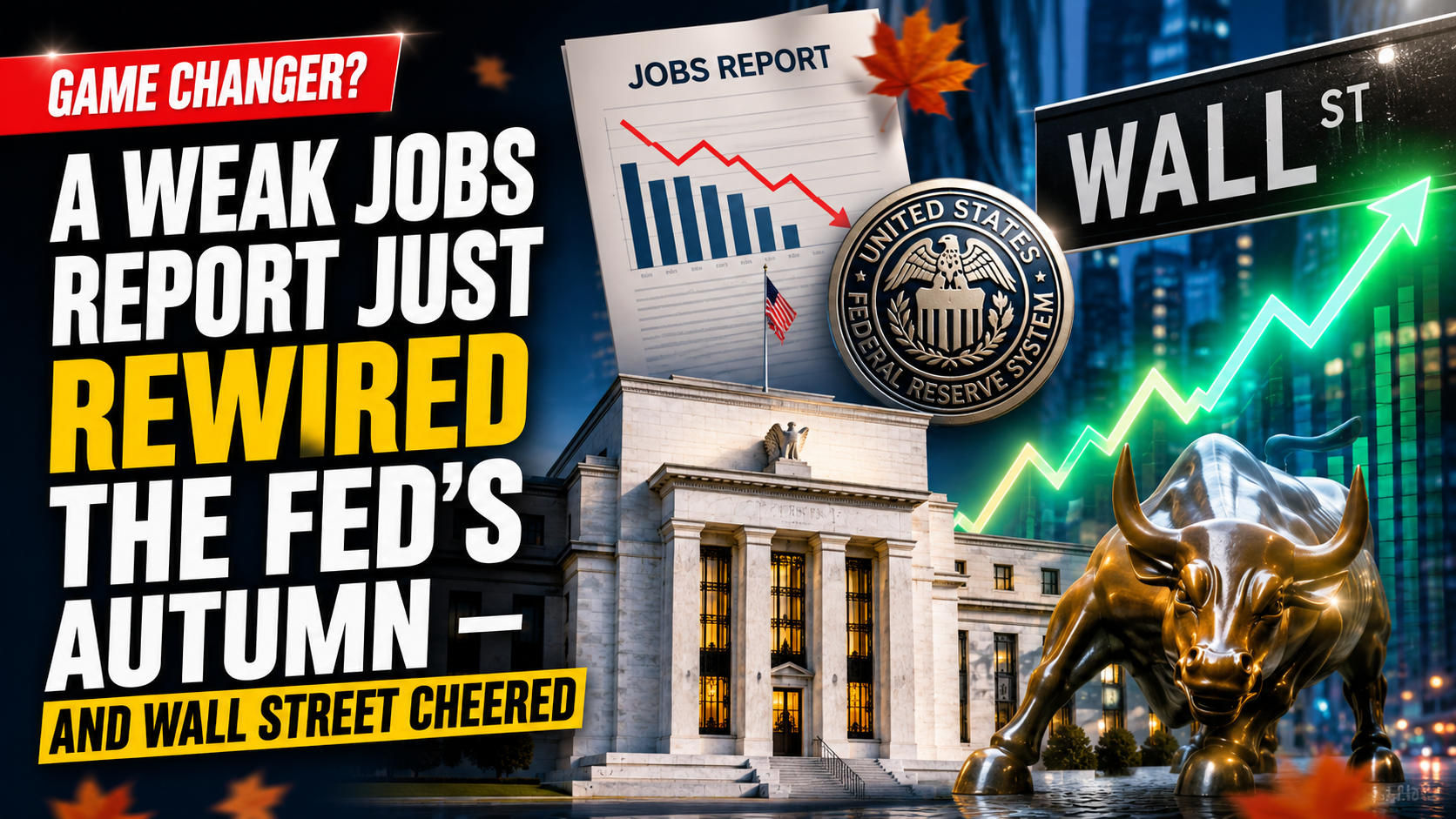
American payrolls contracted by 23,000 in July, a stunning miss against consensus expectations of an 80,000 gain, while the unemployment rate ticked down to 4.1% — a combination that reads less like resilience than like a shrinking labour force (e-Morning Coffee). The labour-force participation rate fell to its lowest level in fifty years outside the pandemic, a structural detail markets have been slower to price than the headline payrolls miss (e-Morning Coffee).
Why bad news was good news for stocks
The market reaction was immediate and largely one-directional: Treasury yields fell across the curve, growth stocks recaptured months of losses in a single session, and rate-hike probability for the September and November FOMC meetings collapsed toward zero (Clearbrook). The S&P 500 posted its best weekly performance since the spring’s Iran-ceasefire rally, gaining 3.59%, with Information Technology leading all sectors at +7.22% — its largest single-week advance of 2026 — powered by the combination of a strong Apple earnings print and the sharp repricing of Fed expectations (Clearbrook).
The rally was notably broad rather than concentrated in mega-cap technology: the equal-weighted S&P 500 advanced 2.43%, Materials gained 5.61%, Industrials rose 3.03%, and the Russell Micro Cap index — which benefits disproportionately from lower rate expectations given its more leveraged constituents — surged 5.77% (Clearbrook). Growth stocks also outperformed value for the week, though value still leads decisively on a year-to-date basis, 23.48% versus growth’s 5.68% (Clearbrook).
The Fed’s dissenters, suddenly exposed
Perhaps the most consequential detail is political rather than statistical: three FOMC members who had dissented in favour of an immediate rate hike just a week before the report was released now find themselves in a significantly weakened position within the committee (Clearbrook). A single data print has shifted the internal balance of the Fed’s policy debate heading into September.
This is the third straight “cruel summer”
What distinguishes 2026 from a one-off shock is the pattern. In each of the last two years, a comparable summer weakening in US employment data has pushed the Federal Reserve into a short cycle of rate cuts — meaning July’s contraction fits a now-recognisable seasonal-plus-structural trend rather than standing as an isolated anomaly (Bloomberg).
What to watch next
Two threads now dominate the September calendar: whether the Fed opts for a standard 25-basis-point cut or moves more aggressively given the depth of the labour miss, and whether the falling participation rate — rather than the unemployment rate — becomes the metric investors and policymakers watch most closely. A shrinking labour force can flatter the headline unemployment number while masking real economic softness, and that distinction will shape how credible the “soft landing” narrative remains through year-end.
Discover more from The Economy
Subscribe to get the latest posts sent to your email.

Singapore’s AI Boom Is Now a Two-Country Story

Why Global Family Offices Are Converging on Dubai in 2026

A Weak Jobs Report Just Rewired the Fed’s Autumn — And Wall Street Cheered

Britain’s Fragile Rebound Meets a Budget Deadline and a Trump Ultimatum

Pakistan’s Economy Grew 3.7% — So Why Doesn’t It Feel Like a Recovery?

Top 15 Financial Stocks for Investment in PSX

Pakistan Exports 2026: Record $35.6B Forecast Masks Trade Deficit Risk

UK’s Jobs Downturn Now Matches the 2008 Financial Crisis — And AI Is Accelerating It

Fed Rate Cut Bets Surge After Shock US Jobs Report Exposes Labor Market Cracks

Pakistan’s Trade Gap Widens to $3.95bn Despite Meeting FY26 Current Account Target

Why Ottawa Is Betting on Dubai: Inside Canada’s Gulf Trade Pivot

UK Wealth Tax Fears Trigger Record £13.9bn Investor Exodus Ahead of October Budget

July Jobs Shock: Why the Fed’s September Rate Decision Just Flipped (2026 Analysis)

Global Growth Forecast 2026: IMF, World Bank Outlooks and the “Slow-Hire, Slow-Fire” Labor Market

Gold Price Forecast 2026: Fed’s July 29 Decision and Record Central Bank Buying Explained

China Politburo July 2026: Stimulus Signals Explained

Pakistan Economy 2026: GDP Grows 3.7% as IMF Completes EFF Review Amid Middle East Risk

Strait of Hormuz Blockade 2026: Oil Prices Surge 9% as US-Iran Conflict Reignites

Down But Not Out: Inside the Slow Sinking of Russia’s War Economy

Apple vs OpenAI Lawsuit: The Economic Story Behind the Headline

Gulf Capital Retreat From Pakistan 2026: UAE Loan Freeze & What It Means

Global Stock Market Selloff 2026: Stagflation Fears Return as Iran Conflict Reignites

Pakistan’s Economic Survey FY26: Inflation Spike Insights

Russia Fuel Shortages 2026: Inside a Cracking War Economy

Russia’s Shadow Fleet Insurance Economy: How Sanctions Really Work in 2026

Strait of Hormuz Crisis 2026: How Trump’s Toll U-Turn Exposes Global Economic Risk

Bank of England Rate Decision Amid Energy Crisis

Russia’s War Economy Model Is Starting to Crack, Think Tank Warns
-

 Markets & Finance7 months ago
Top 15 Stocks for Investment in 2026 in PSX: Your Complete Guide to Pakistan’s Best Investment Opportunities
-

 Analysis6 months ago
Johor’s Investment Boom: The Hidden Costs Behind Malaysia’s Most Ambitious Economic Surge
-

 Analysis6 months ago
Top 10 Stocks for Investment in PSX for Quick Returns in 2026
-

 Analysis6 months ago
Brazil’s Rare Earth Race: US, EU, and China Compete for Critical Minerals as Tensions Rise
-

 Banks7 months ago
Best Investments in Pakistan 2026: Top 10 Low-Price Shares and Long-Term Picks for the PSX
-

 Investment7 months ago
Top 10 Mutual Fund Managers in Pakistan for Investment in 2026: A Comprehensive Guide for Optimal Returns
-

 Global Economy8 months ago
15 Most Lucrative Sectors for Investment in Pakistan: A 2025 Data-Driven Analysis
-

 Global Economy8 months ago
Pakistan’s Export Goldmine: 10 Game-Changing Markets Where Pakistani Businesses Are Winning Big in 2025