
Analysis
JPMorgan Investment Bank Reshuffle Signals a New Wall Street Power Structure for the AI Dealmaking Era

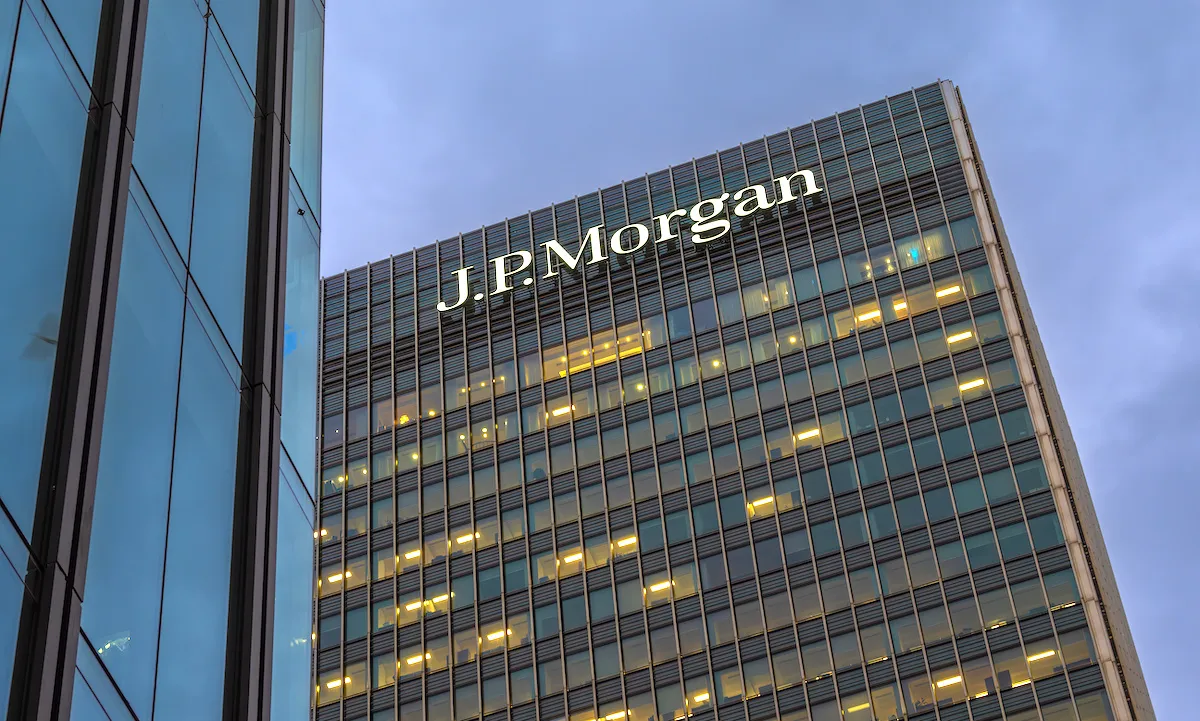
For years, Wall Street succession planning resembled Renaissance court politics conducted in Patagonia vests: opaque, ritualized and freighted with implication. At JPMorgan Chase, however, leadership changes are rarely just about personnel. They are strategic signals — clues about where capital is flowing, where clients are anxious, and where Jamie Dimon believes the next decade of banking will be won.
The latest signal is unusually loud.
JPMorgan is preparing a sweeping reshuffle of its investment banking leadership, according to reports from the Financial Times and Reuters, elevating Dorothee Blessing, Kevin Foley and Jared Kaye into expanded co-head roles overseeing global investment banking. The reorganization also folds mergers-and-acquisitions operations more tightly into industry coverage teams — a structural shift with potentially profound implications for how the world’s largest bank competes in a market increasingly shaped by artificial intelligence, private capital and geopolitical fragmentation.
On paper, the move looks like classic Wall Street housekeeping after a blockbuster rebound in dealmaking. In reality, it appears to be something larger: a recalibration of JPMorgan’s operating model for a new era in corporate finance.
And perhaps, quietly, another chapter in the long prelude to the post-Dimon age.
The Reorganization: More Than a Personnel Shuffle
According to the Financial Times, JPMorgan will appoint three senior executives — Dorothee Blessing, Kevin Foley and Jared Kaye — as co-heads of global investment banking. Charles Bouckaert is expected to become global head of M&A, replacing veteran banker Anu Aiyengar, who will transition into the role of global chair of investment banking.
The timing is notable.
Global M&A volumes approached $1.7 trillion in the first four months of 2026, making it one of the strongest starts to a year since records began in the 1970s, according to FT reporting. JPMorgan’s own investment banking revenues rose sharply in the first quarter, aided by an AI-driven technology financing boom, revived sponsor activity and a reopening of equity capital markets after two subdued years.
The bank’s commercial and investment bank generated roughly $9 billion in quarterly net income, while investment banking fees climbed 28% year over year.
Yet strong markets alone do not explain the scale of the overhaul.
The deeper rationale appears operational. JPMorgan is reorganizing around integrated client coverage — bringing M&A bankers closer to sector specialists rather than maintaining advisory operations as a more centralized function. In practical terms, that means technology bankers, healthcare bankers and financial institutions teams will increasingly execute strategic transactions within vertically aligned ecosystems.
That mirrors a broader shift underway across elite investment banks.
For years, firms such as Goldman Sachs and Morgan Stanley prized star rainmakers capable of parachuting into virtually any mandate. Increasingly, however, clients want bankers who understand sector-specific AI disruption, supply-chain geopolitics, regulation, sovereign capital flows and data infrastructure economics simultaneously.
In other words: industry expertise is becoming as valuable as financial engineering.
JPMorgan’s reorganization is designed for precisely that environment.
Meet the New Power Triangle
Dorothee Blessing: The Diplomat-Strategist
Among the appointments, Dorothee Blessing may be the most consequential.
Currently global head of investment banking coverage, Blessing has emerged over the past several years as one of JPMorgan’s most influential senior executives. Before joining JPMorgan, she spent more than two decades at Goldman Sachs, where she became a partner and led investment banking in German-speaking Europe.
Her rise inside JPMorgan has been rapid and unusually international in flavor.
Blessing previously ran JPMorgan’s operations across Germany, Switzerland, Austria and the Nordics before becoming co-head of EMEA investment banking and later global coverage chief. Her reputation internally is that of a relationship-centric strategist — less theatrical than traditional Wall Street archetypes, but deeply trusted by multinational CEOs and sovereign-linked clients.
That matters.
The center of gravity in global investment banking has shifted. The biggest mandates increasingly involve cross-border industrial policy, AI infrastructure, energy transition financing and sovereign capital partnerships. Blessing’s European network and multinational credibility position JPMorgan well for that environment.
Her elevation is also symbolically important.
Despite years of diversity initiatives, global investment banking remains overwhelmingly male at the highest levels. Blessing becoming one of the most senior figures in JPMorgan’s advisory business marks a meaningful break from traditional Wall Street succession patterns.
Kevin Foley: The Capital Markets Operator
If Blessing represents strategic diplomacy, Kevin Foley embodies execution scale.
As JPMorgan’s global head of capital markets, Foley has overseen debt and equity financing operations during one of the most volatile macroeconomic stretches in modern finance: post-pandemic stimulus, rate shocks, regional banking stress, geopolitical conflict and the AI investment boom.
That experience is increasingly central to modern investment banking.
Today’s mega-deals are not merely advisory exercises. They are financing ecosystems involving syndicated debt, structured equity, private credit, sovereign wealth capital and derivatives overlays. The distinction between “capital markets” and “strategic advisory” has blurred dramatically.
By elevating Foley, JPMorgan is effectively acknowledging that financing capability is now core strategic infrastructure.
This could strengthen JPMorgan’s advantage against rivals such as Goldman Sachs and Citi, particularly in large-cap transactions where balance-sheet capacity matters as much as advisory prestige.
Jared Kaye: The Financial Institutions Insider
Jared Kaye, currently global co-head of the financial institutions group (FIG), brings a different strength: institutional connectivity.
FIG banking sits at the center of modern finance because banks, insurers, asset managers and fintech firms increasingly drive consolidation trends across the broader economy. Private credit expansion, insurance-linked capital, tokenized assets and digital payments are all reshaping competitive boundaries.
Kaye’s expertise becomes especially relevant as financial institutions race to integrate AI into compliance, underwriting and market infrastructure.
His promotion suggests JPMorgan expects financial-sector consolidation — and adjacent fintech acquisition activity — to accelerate meaningfully over the next several years.
Why This Matters Beyond JPMorgan
Leadership reshuffles on Wall Street often produce breathless headlines and limited long-term significance. This one feels different because it reflects three structural transformations occurring simultaneously.
1. Investment Banking Is Becoming an AI Infrastructure Business
The AI boom has already altered dealmaking patterns.
Technology companies are no longer merely buying software firms; they are acquiring compute capacity, energy assets, semiconductor supply chains and data-center infrastructure. Advisory mandates increasingly require understanding AI economics, regulatory scrutiny and sovereign technology policy.
Banks now need sector-specialist ecosystems rather than isolated rainmakers.
JPMorgan has invested aggressively in AI internally, deploying machine learning across risk management, compliance, trading and client analytics. Jamie Dimon has repeatedly framed AI as transformative rather than incremental, comparing its importance to the internet itself in prior shareholder communications.
The new structure aligns neatly with that philosophy.
2. The Return of the Universal Banking Model
For much of the post-2008 period, investment banking drifted toward specialization. Boutique advisory firms thrived while balance-sheet-heavy institutions focused on financing scale.
Now the pendulum is swinging back.
Clients increasingly want one institution capable of delivering advisory, financing, treasury, payments, markets and private capital access simultaneously. JPMorgan’s integrated model is arguably better suited to this environment than many rivals.
The reshuffle reinforces that positioning.
3. Succession Planning Is Quietly Accelerating
Jamie Dimon remains Wall Street’s dominant executive figure, but succession speculation has intensified as the 70-year-old chief executive approaches two decades atop JPMorgan.
Every senior appointment inside the bank is now interpreted through that lens.
While the current reshuffle concerns investment banking rather than the CEO succession directly, it nonetheless broadens the bench of globally recognized leaders beneath Dimon. That matters institutionally. JPMorgan’s greatest competitive advantage may not simply be scale or technology — it is managerial continuity.
Unlike rivals that have endured periodic leadership turbulence, JPMorgan has cultivated a reputation for disciplined internal succession architecture.
This move fits the pattern.
The Competitive Landscape: Goldman, Citi and the New Arms Race
JPMorgan enters the reshuffle from a position of unusual strength.
The bank remains near the top of global league tables in M&A, equity underwriting and debt capital markets. According to reporting by Financial News London, JPMorgan captured roughly 9.6% of global dealmaking fees this year, up from 8.6% previously.
Yet competition is intensifying.
Goldman Sachs
Goldman remains the prestige leader in pure strategic advisory. Its franchise still dominates many transformational boardroom mandates, especially in technology and sponsor-driven transactions.
But Goldman’s comparatively smaller balance sheet can be limiting in capital-intensive environments.
Citi
Citigroup, under its own restructuring efforts, has aggressively targeted senior talent. The departure of Vis Raghavan from JPMorgan to Citi underscored how fiercely contested elite investment banking leadership has become.
Morgan Stanley
Morgan Stanley continues to dominate in equity capital markets and maintains deep technology relationships, particularly with Silicon Valley clients benefiting from AI spending waves.
JPMorgan’s response appears clear: integrate more tightly, deepen sector specialization and leverage the bank’s unparalleled balance sheet.
Risks Beneath the Optimism
Still, reorganizations carry hazards.
Talent Retention Risk
Wall Street cultures remain intensely personal. Senior bankers often follow trusted managers rather than institutions. Any restructuring creates uncertainty around reporting lines, compensation and internal influence.
Competitors will almost certainly attempt to poach JPMorgan talent during the transition.
Execution Complexity
Integrating M&A more tightly into sector teams sounds elegant strategically. Operationally, however, it can create duplication, political friction and slower decision-making if responsibilities become blurred.
Cyclical Vulnerability
The dealmaking rebound underpinning this reshuffle could still prove fragile.
Inflation volatility, elevated oil prices and geopolitical tensions — particularly surrounding the Iran conflict and global trade fragmentation — remain material macro risks in 2026.
If capital markets weaken suddenly, reorganizations launched during boom conditions can quickly look mistimed.
What Clients and Dealmakers Should Watch
For corporate clients, the immediate impact will likely be subtle but meaningful.
Expect:
- More integrated advisory-financing pitches
- Greater sector specialization
- Faster AI-focused strategic analysis
- More aggressive cross-border deal execution
- Deeper coordination between coverage and capital markets teams
Private equity firms may benefit particularly from JPMorgan’s increasingly unified financing ecosystem, especially as leveraged finance markets normalize.
Technology and infrastructure clients are also likely to receive heightened attention, reflecting where global capital expenditure growth is concentrating.
Internally, meanwhile, the reshuffle may accelerate generational turnover among senior managing directors — particularly those trained in older siloed advisory structures.
The Bigger Picture: Wall Street’s New Operating System
What JPMorgan is doing may ultimately prove less about organizational charts than about redefining how elite banking institutions function in an AI-saturated world.
For decades, investment banking revolved around information asymmetry. Bankers won because they possessed privileged access to market intelligence, financing networks and executive relationships.
AI is eroding parts of that moat.
What remains defensible is judgment, connectivity and execution scale.
JPMorgan’s new structure appears designed around exactly those attributes: integrated relationships, sector intelligence and institutional breadth.
It is a subtle but significant shift away from the cult of the individual rainmaker toward the architecture of the platform.
That may become the defining Wall Street trend of the next decade.
Outlook: A More Centralized, More Technological JPMorgan
In the near term, the reshuffle is likely to strengthen JPMorgan’s position in global investment banking.
The firm enters 2026 with:
- Strong balance-sheet capacity
- Rising investment banking revenues
- Expanding AI capabilities
- Broad international client relationships
- Relatively stable executive continuity
The challenge will be preserving entrepreneurial energy within a more systematized organization.
Wall Street history is littered with banks that became too bureaucratic precisely when markets demanded creativity.
JPMorgan’s advantage under Dimon has been balancing scale with aggression — remaining large without becoming inert.
The Blessing-Foley-Kaye era will test whether that balance can endure into a more technologically fragmented financial system.
Conclusion
JPMorgan’s investment bank reshuffle is not merely another executive rotation inside a sprawling financial institution. It is a strategic adaptation to a changing global economy — one increasingly defined by AI infrastructure, geopolitical fragmentation, integrated financing and sector specialization.
By elevating Dorothee Blessing, Kevin Foley and Jared Kaye, the bank is betting that future investment banking leadership requires a blend of relationship intelligence, financing sophistication and institutional connectivity.
The move also reinforces a broader truth about JPMorgan under Jamie Dimon: the firm rarely reorganizes defensively. It reorganizes preemptively.
Whether this latest overhaul becomes a model for the rest of Wall Street will depend on one central question: can integrated banking platforms outperform the increasingly fragmented financial ecosystem emerging around them?
JPMorgan clearly believes the answer is yes.
And history suggests it is usually unwise to dismiss the bank when it starts rearranging the chessboard.
Sources
- Financial Times report
- Reuters coverage
- Bloomberg Law report
- JPMorgan executive biography: Dorothee Blessing
- Financial News London analysis
- JPMorgan 2026 investment banking outlook
Discover more from The Economy
Subscribe to get the latest posts sent to your email.



Key Takeaways
- Rolex’s secondary market rose approximately 7.9% year-over-year as of 2026 (per WatchCharts data) — trailing Patek Philippe (+16.2%) and Tudor (+11.4%) but still outperforming Audemars Piguet (+3.4%).
- Rolex raised U.S. retail prices 4–9% in January 2026 (steel models ~5.6%, gold models ~8.7%), narrowing the historical gap between retail and pre-owned pricing.
- Not every model appreciates: steel sports references (Submariner, GMT-Master II, Daytona) have held value far better than two-tone or widely available dress references like the standard Datejust.
- The Lady-Datejust posted the sharpest 2026 gain among tracked collections — up 22.73%, from roughly $9,269 to $11,376 — driven by demand for smaller, “everyday luxury” watches.
- Gold’s rise past $2,400/oz has directly lifted the investment case for Rolex’s precious-metal references (Day-Date, Sky-Dweller, Yacht-Master).
The Model-by-Model Picture
| Category | 2026 Trend |
|---|---|
| Lady-Datejust | +22.73% (strongest performer among tracked collections) |
| Steel sports models (Submariner, GMT-Master II) | Held value well; corrected from 2022 peak but stabilized above retail |
| Daytona | Corrected from highs above $50,000 to the mid-$30,000s; still among the most sought-after references |
| Two-tone/widely available Datejust | Flat to negative — “holds value” is an overstatement for this category |
| Gold references (Day-Date, Sky-Dweller) | Lifted by gold’s rise above $2,400/oz |
Why the “Rolex Always Appreciates” Myth Is Fading
The pandemic-era boom pushed some references — the Daytona above all — to speculative highs disconnected from historical norms. Since the March 2022 peak, steel sports models have compressed meaningfully, and dealers who bought inventory near the top have in some cases faced 20–40% markdowns on liquidation. The lesson for 2026 buyers: Rolex as a category is not a monolith. Value retention depends heavily on specific reference, condition, and whether the piece comes with box and papers (“full set”).
What’s Actually Driving 2026 Strength
- Retail price increases raise the floor. When a new Submariner retails at $10,050 (up from $9,500), a pre-owned example at $11,000–$12,000 suddenly represents a smaller premium — narrowing the gap without secondary prices actually moving.
- Supply discipline remains Rolex’s core lever. The brand has never confirmed production numbers, and secondary-market premiums remain entirely a function of Rolex’s own manufacturing decisions — a risk factor as much as a support.
- Certified Pre-Owned rollout. Rolex’s now fully rolled-out CPO program has changed how buyers transact in the used market, adding a layer of brand-verified legitimacy that supports pricing.
The Case for Rolex as a Portfolio Diversifier
Financial advisors increasingly frame luxury watches not as a replacement for equities or bonds, but as a tangible, historically low-correlation diversifier — one that carries its own risks (illiquidity, condition-dependent pricing, no yield) but has demonstrated multi-decade resilience for specific references.
Is Rolex a good investment in 2026?
It depends heavily on the specific reference. Steel sports models like the Submariner and Daytona have held or grown in value; two-tone and widely available dress models generally have not. Overall, Rolex’s secondary market rose about 7.9% year-over-year in 2026, trailing Patek Philippe but ahead of Audemars Piguet.
Discover more from The Economy
Subscribe to get the latest posts sent to your email.

Navigating Mortgage and Loan Refinancing in a High-Yield Environment
Global public debt crossing critical thresholds has kept central bank policies volatile, resulting in fluctuating US Treasury yields throughout 2026. For homeowners and commercial property holders burdened by previous high-interest borrowing cycles, finding optimal refinance windows has become a high-stakes financial puzzle. Stalled disinflation and stubborn employment numbers mean rate cuts are incremental, requiring borrowers to act with precision.
Timing your mortgage or commercial loan refinance in this environment requires a deep understanding of yield curve movements and lender risk appetites.
Decoding 2026 Refinance Dynamics
The 10-Year Treasury Yield Benchmark
Mortgage rates continue to track closely with the 10-year US Treasury yield. When macroeconomic anxiety spikes debt issuance, yields rise, tightening consumer borrowing capacity. Savvy borrowers monitor weekly Treasury auctions to lock in rates during brief dip windows.
Hybrid ARMs and Alternative Structures
With fixed rates remaining elevated, 7/1 and 10/1 adjustable-rate mortgages (ARMs) have surged in popularity. These products offer lower initial monthly payments, giving borrowers breathing room until central bank easing cycles fully materialize.
| Loan Product | Current Rate Range | Best For | Key Risk Factor |
| 30-Year Fixed Mortgage | 6.2% – 6.8% | Long-term predictability | Higher initial monthly outlay |
| 7/1 Hybrid ARM | 5.5% – 5.9% | Short-term ownership / flipping | Rate reset risk after year 7 |
| Commercial Refinance | 7.0% – 8.2% | Corporate asset restructuring | Strict DSCR lender covenants |
Actionable Steps for Successful Refinancing
To maximize your chances of securing favorable refinance terms in a volatile market, follow a disciplined preparation strategy.
Boost Your Credit Score Immediately: Lenders in 2026 are applying stringent credit tiering; a 20-point increase can drop your APR by a crucial quarter-point.
Shop Regional Credit Unions: Smaller financial institutions often offer portfolio loans with more flexible underwriting than major national banks.
Calculate the Break-Even Point: Ensure your total closing costs are recouped through monthly savings within 24 months of closing.
“Market Strategist View: Refinancing in 2026 is an exercise in opportunistic timing. Borrowers must maintain immaculate financial profiles ready to strike the moment Treasury yields dip.”
Mastering the complexities of today’s debt environment ensures you can successfully lower your debt service costs and protect your long-term financial stability.
Discover more from The Economy
Subscribe to get the latest posts sent to your email.

The days of pulling generic auto insurance quotes based purely on your zip code and age are officially over. In 2026, insurance comparison engines are powered entirely by generative AI and real-time telematics. These platforms digest thousands of live data points—ranging from your driving smoothness via connected vehicle sensors to real-time traffic congestion patterns—to generate hyper-personalized premiums instantly.
For consumers, this evolution represents both a massive opportunity for savings and a hidden trap for penalty pricing. Understanding how AI algorithms evaluate risk is essential for anyone looking to lower their monthly auto insurance premiums.
How AI Comparison Engines Evaluate Your Risk Profile
Behavioral Telematics and Connected Cars
Modern cars stream performance data directly to insurance aggregators. Generative AI models analyze braking sharpness, acceleration curves, cornering G-forces, and phone distraction metrics. Drivers who maintain smooth, defensive habits are rewarded with dynamic rate cuts of up to 40% compared to traditional rating tiers.
Predictive Traffic and Weather Modeling
AI tools now cross-reference your daily commute route with predictive weather and accident probability models. If your standard parking location or driving corridor has a statistically higher incidence of uninsured motorist claims, your quotes will reflect that hyper-local risk assessment.
| Comparison Factor | Traditional Rating Model | 2026 Generative AI Model | Impact on Premium |
| Mileage & Usage | Annual estimated odometer reading | GPS tracking & live trip duration | High (up to 35% savings) |
| Driving Behavior | MVR driving record & accidents | Real-time braking, speed, & G-force | Critical (determines tier) |
| Vehicle Tech | Make, model, and safety rating | ADAS calibration & repair cost data | Moderate |
Strategies to Lower Your AI-Driven Insurance Quote
To outsmart the algorithm and secure the lowest possible premium in 2026, drivers must proactively manage their digital footprint on insurance platforms.
Opt-In for Telematics Trial Periods: Many insurers offer immediate 15% discounts just for installing their driving app; let it track safe habits for 30 days to lock in permanent savings.
Scrub Unverified Public Records: Ensure your motor vehicle report is free of clerical errors that AI risk models misinterpret as reckless behavior.
Compare AI Aggregators: Use platforms that integrate multi-carrier API feeds rather than single-brand comparison sites to find the best risk-adjusted rate.
“Industry Note: AI-driven pricing rewards transparency and precision. Drivers who actively manage their telematics data consistently out-save those relying on legacy quote calculators.”
Embracing AI comparison tools allows savvy policyholders to customize coverage limits precisely to their driving habits, eliminating wasted premium spend while ensuring robust protection.
Discover more from The Economy
Subscribe to get the latest posts sent to your email.

Solar Panel Installation Cost in 2026: Why the Math Changed Overnight

Business Insurance: What Coverage You Actually Need and What It Costs in 2026

Auto Insurance Quotes: How to Get the Lowest Rate Without Losing Coverage

Huntington Online Banking: Full Features, Fees, and How It Compares in 2026

Apply for a Bank Account Online: What You Need and How Long It Actually Takes

World’s Largest Economies: Ranking the Top Global Powers

Business Loan: A Complete 2026 Guide to Rates, Types, and Qualifying

Fast Invoice Factoring: How to Turn Unpaid Invoices Into Cash Within 24 Hours

Investment Banking Services: What They Cost and How to Choose the Right Firm in 2026

Structured Settlement Loan: What “Cash Now” Offers Actually Cost You

DUI Attorney: Why Your First Call After an Arrest Should Never Be to the Court

Personal Injury Lawyer: A Complete Guide to Filing Your Claim in 2026

Commercial Vehicle Accident Lawyer: Holding Companies Accountable Beyond the Driver

Inside the White House Feud: How Trump’s Allies Are Painting Anthropic’s Dario Amodei as the Face of ‘AI Doomerism’

Top 30 Stocks for Investment in PSX for Massive ROI in 2026

SpaceX Starship Flight 14: First Orbital Attempt & Starlink V3 Launch Explained

Oil Prices Break $100 in 2026: Middle East Conflict & Energy Markets

AI Chip Stocks 2026: The Best Semiconductor Investments Beyond Marvell

Fidelity Investments Review 2026: SPAXX Yields & Zero-Fee Funds

BRICS+ Cross-Border Payments 2026: Interoperability Explained

Tween Back-to-School Trends 2026: What’s Driving the $85B Season

10-Year Treasury Yield Hits 4.80%: What It Means for Rates & Portfolios

Shein Clothes Quality & Safety in 2026: What Lab Tests Show

China’s US$10.8 Billion Trade Shortcut: Why the Pinglu Canal Matters

MRVL Earnings 2026: Why Marvell Sank Despite Beating Estimates

IMF & World Bank 2026 Global Economic Outlook: Growth, Inflation, Debt

High-CPM Finance Niches 2026: Publisher Monetization Blueprint

Middle East War Economics 2026: Oil Prices & Energy Markets
-

 Markets & Finance9 months ago
Top 15 Stocks for Investment in 2026 in PSX: Your Complete Guide to Pakistan’s Best Investment Opportunities
-

 Analysis7 months ago
Johor’s Investment Boom: The Hidden Costs Behind Malaysia’s Most Ambitious Economic Surge
-

 Analysis7 months ago
Top 10 Stocks for Investment in PSX for Quick Returns in 2026
-

 Banks8 months ago
Best Investments in Pakistan 2026: Top 10 Low-Price Shares and Long-Term Picks for the PSX
-

 Analysis8 months ago
Brazil’s Rare Earth Race: US, EU, and China Compete for Critical Minerals as Tensions Rise
-

 Investment9 months ago
Top 10 Mutual Fund Managers in Pakistan for Investment in 2026: A Comprehensive Guide for Optimal Returns
-

 Global Economy9 months ago
15 Most Lucrative Sectors for Investment in Pakistan: A 2025 Data-Driven Analysis
-

 Global Economy9 months ago
Pakistan’s Export Goldmine: 10 Game-Changing Markets Where Pakistani Businesses Are Winning Big in 2025